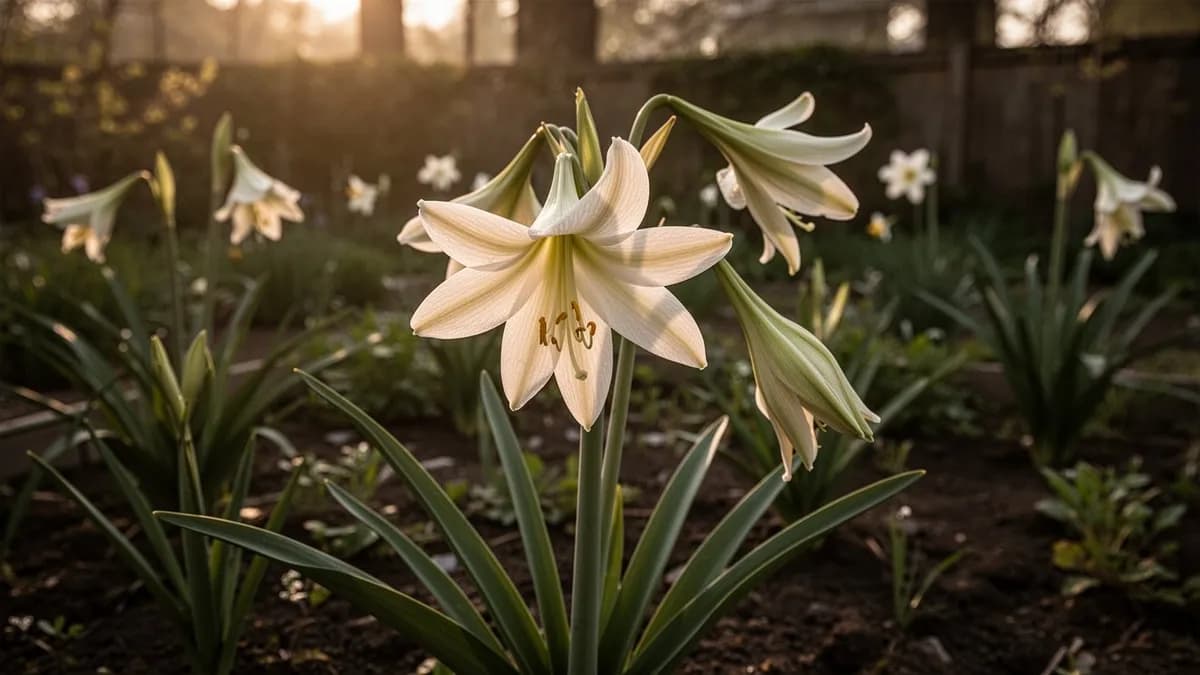
Foxtail Lily
Eremurus stenophyllus
At a Glance
A spectacular bulb sending up towering spires of starry yellow, orange, pink, or white flowers that can reach six feet or more. Foxtail lilies require excellent drainage and a dry summer dormancy, making them ideal for gravel gardens and raised beds. Plant the octopus-like tuberous roots carefully on a mound of grit to prevent crown rot.
Planting & Harvest Calendar
Growth Stages
From Seed to Harvest
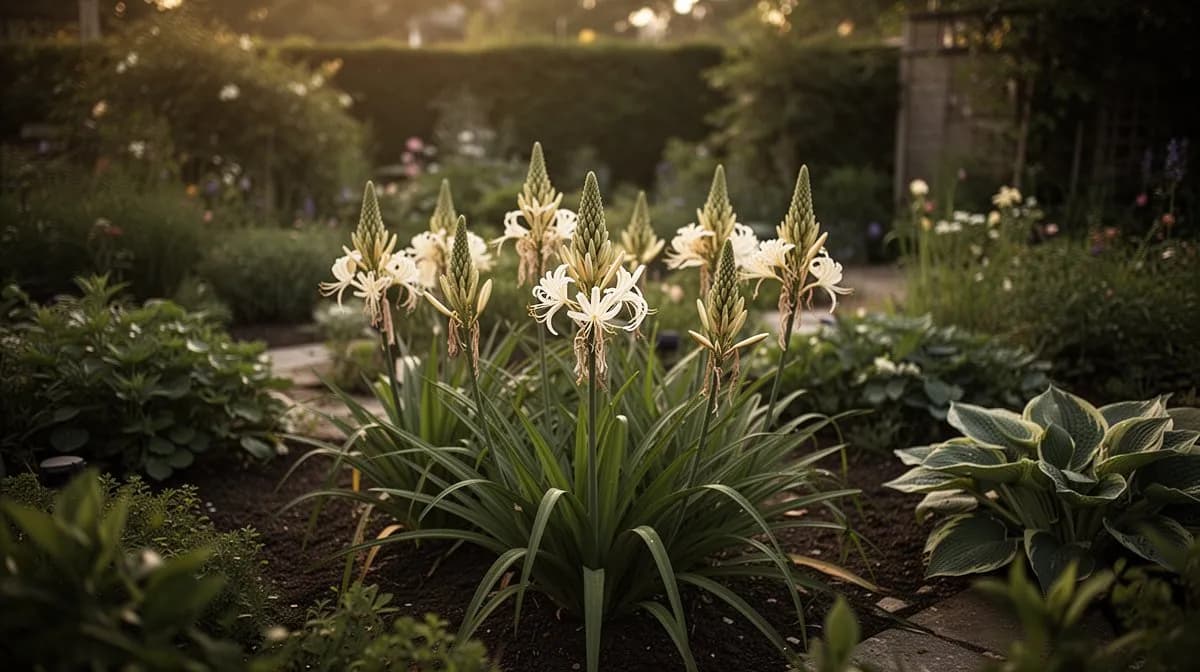
Root Crown Planting
Days 0–14
Plant the fleshy, octopus-like root crowns in autumn, setting them on a mound of coarse sand or grit in a wide hole about 15 cm deep. The brittle roots radiate outward and must be handled carefully to avoid snapping. Space crowns 60 to 90 cm apart to allow room for mature clumps.
💡 Care Tip
Place a thin layer of sharp sand both below and above the crown to prevent water pooling around the dormant buds, which are highly susceptible to winter rot in heavy soils.
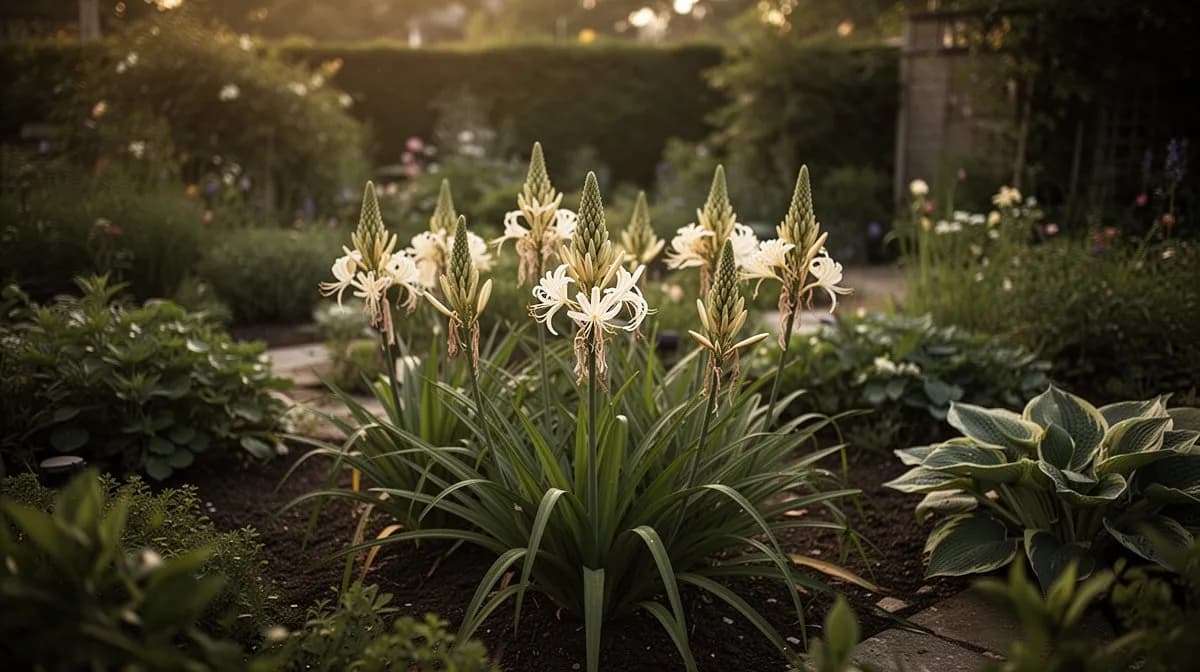
The distinctive spider-like root crown should be planted on a mound of sand to ensure proper drainage
Monthly Care Calendar
What to do each month for your Foxtail Lily
May
You are hereEnsure adequate moisture as flower spikes begin to develop. Secure stakes to growing spikes with soft ties. Watch for aphids on the tender developing buds and treat promptly if found.
Did You Know?
Fascinating facts about Foxtail Lily
Eremurus gets its common name 'foxtail lily' from the bushy, elongated shape of its flower spike, which resembles the tail of a fox waving in the breeze.
Plant eremurus roots in autumn, handling the brittle, octopus-like tuberous roots with extreme care to avoid snapping them. Dig a wide, shallow hole and create a mound of coarse grit or gravel in the center. Spread the roots evenly over the mound with the central crown sitting just at or slightly below soil level. Backfill with a mixture of garden soil and sharp grit to ensure perfect drainage around the crown.
Foxtail lilies demand full sun and excellent drainage above all else. They originate from the dry steppes of Central Asia and require a dry summer dormancy period to thrive. Raised beds, gravel gardens, and south-facing slopes are ideal locations. Heavy clay soil must be extensively amended with gravel and sand or the roots will rot.
Protect emerging growth from late frosts in spring by covering shoots with a thick layer of straw or dry fern fronds, as the young growth is frost-tender even though the roots are hardy. Remove protection once the risk of hard frost has passed. Stake tall varieties in exposed locations to prevent the magnificent flower spires from toppling in wind. Avoid disturbing established plants, as the roots resent being moved.
Eremurus, commonly known as foxtail lily or desert candle, is a genus of roughly 50 species in the family Asphodelaceae, native to the dry, open steppe grasslands and rocky slopes of Central Asia. The genus ranges from Turkey and Iran through Afghanistan, Pakistan, and into the western Himalayas, with the greatest species diversity found in the mountains and high plateaus of Turkmenistan, Uzbekistan, and Tajikistan. These plants evolved to thrive in continental climates with cold, dry winters and hot, arid summers, developing thick fleshy root crowns that store water and nutrients during long periods of dormancy. Archaeological and ethnobotanical evidence shows that local peoples have used eremurus for centuries. The starchy roots of several species, particularly Eremurus aucherianus and Eremurus spectabilis, were traditionally boiled and processed to extract a strong natural adhesive used in bookbinding, shoemaking, and textile work across the Silk Road trading regions. Young leaves and shoots of certain species were also gathered as an early spring vegetable, valued as one of the first green foods available after harsh Central Asian winters. Eremurus was introduced to European horticulture in the mid-nineteenth century, when plant collectors sent specimens back from expeditions to Persia and the Russian Empire. The genus quickly gained popularity in English and Dutch gardens for its extraordinary vertical flower spikes, which could tower above conventional border perennials. Prominent hybridisers, notably Sir Michael Foster in England and the Shelford nursery, developed the Shelford Hybrids and later the Ruiter Hybrids in the Netherlands during the early twentieth century, producing the wide palette of colours available to gardeners today including white, cream, yellow, apricot, pink, and deep orange cultivars.
Eremurus can be grown from seed sown fresh in autumn in deep pots of gritty compost. Seeds require winter cold stratification and typically germinate erratically over one to two springs. Grow seedlings on in deep containers for at least two years before planting out, as the developing root system needs depth. Plants from seed take four to six years to reach flowering size, so this is a method for the patient gardener. Division of established clumps in autumn is faster but still requires careful handling.
Eremurus demands sharply drained, sandy or gravelly soil with a pH of 6.5 to 8.0. Heavy clay is its worst enemy and must be thoroughly amended with gravel, sharp sand, and compost. Raised beds filled with a free-draining mix are often the best solution. Apply a light dressing of bone meal at planting time and a balanced granular feed in early spring as growth begins. Avoid high-nitrogen fertilizers which promote lush foliage but weak stems.
Check Your Zone
See if Foxtail Lily is suitable for your location.
-20°C – 35°C
-4°F – 95°F
Eremurus is remarkably cold-hardy during winter dormancy, tolerating temperatures down to minus 20 degrees Celsius when the root crown is well-drained and protected by mulch. However, emerging spring shoots are highly frost-sensitive and can be damaged at temperatures below minus 2 degrees Celsius. During the active growing season, the plant thrives in temperatures between 15 and 30 degrees Celsius. Summer dormancy allows it to endure dry heat up to 35 degrees Celsius. The critical requirement is dry conditions during dormancy; cold combined with wet soil is far more damaging than cold alone.
Common issues affecting Foxtail Lily and how to prevent and treat them organically.
Crown rot from poor drainage is the leading cause of failure, particularly in clay soils and wet winter climates. Late spring frosts can damage emerging shoots, potentially ruining the current year's display. The brittle roots snap easily during planting or transplanting, reducing the plant's vigor. Tall varieties require staking in windy locations, and slugs can devastate young spring growth if not controlled early.
Eremurus makes a dramatic vertical statement in gravel gardens alongside alliums, achillea, and ornamental grasses. Plant mid-border with lower perennials in front to disguise the modest basal foliage. They pair beautifully with Mediterranean plants like lavender, rosemary, and catmint that share their preference for dry, well-drained conditions. The towering spires create stunning contrasts with mounding or horizontal plant forms.
Position eremurus at the rear of borders where their towering spikes rise above shorter perennials
- 1Always plant eremurus root crowns in autumn on a generous mound of coarse horticultural sand or grit to ensure the central bud sits above any standing water during winter rains.
- 2Handle the brittle, fleshy roots very carefully during planting and division, as broken roots are slow to regenerate and damaged crowns may fail to establish.
- 3Choose a planting site in full sun with excellent drainage; eremurus will not tolerate heavy clay soils or waterlogged conditions during dormancy.
- 4Protect emerging spring shoots from late frosts with horticultural fleece, as even a brief hard frost can destroy the growing point and eliminate that season's flower spike.
- 5Stake tall cultivars early in the growing season using a sturdy single cane positioned 10 cm from the emerging spike to prevent wind damage once the heavy flower head develops.
- 6Allow all foliage to die back naturally after flowering; cutting green leaves prematurely robs the root crown of the energy reserves it needs for next year's growth.
- 7Keep the planting area dry during summer dormancy by avoiding irrigation and, in wet-summer climates, consider covering the dormant crown area with a temporary rain shield.
- 8Divide congested clumps every 4 to 5 years in early autumn, replanting divisions immediately with the roots spread evenly over a sand mound at the same depth as the original crown.
- 9Interplant with summer-flowering perennials such as hardy geraniums, nepeta, or ornamental grasses to disguise the bare gap left when eremurus foliage dies back in midsummer.
- 10If growing from seed, sow fresh seed in autumn in deep pots of gritty compost and expect germination the following spring, with flowering size plants developing after 4 to 6 years of patient cultivation.
Cut eremurus spikes for dramatic arrangements when the lowest quarter of flowers have opened and upper buds are still tightly closed. Use sharp secateurs to cut stems at their base. The towering spikes make extraordinary focal points in large-scale arrangements and can reach four to six feet in the right conditions. Place in deep, heavy vases to support the tall stems. Flowers last seven to ten days in water if the water is changed every two days.
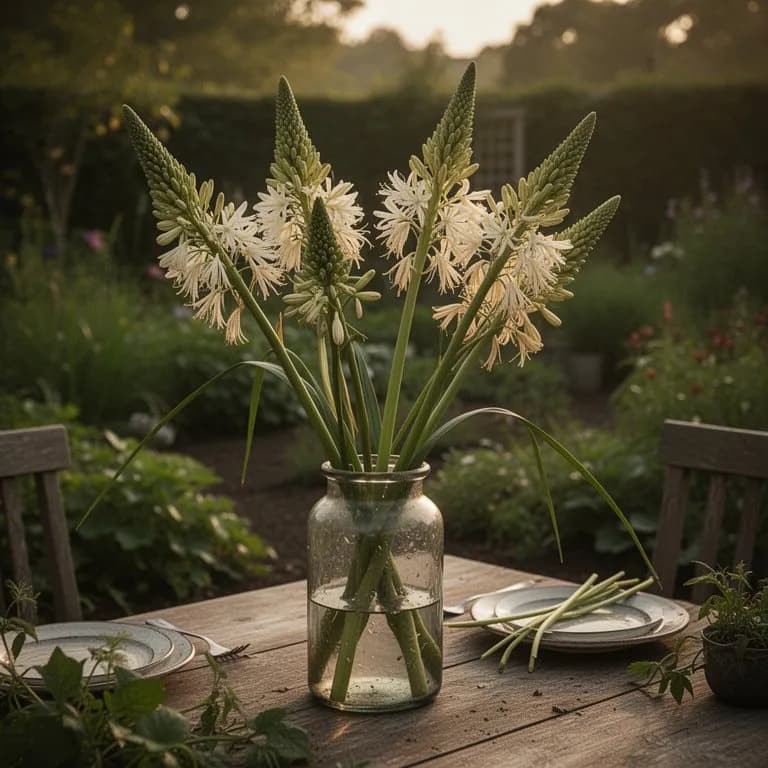
After flowering, round seed capsules develop along the stalk and can be collected for propagation
Eremurus roots are best left undisturbed in the ground, where they resent being moved once established. If you must divide or relocate, do so in early autumn when the plant is fully dormant. Handle the brittle roots with extreme care and replant immediately on a grit mound. Dried flower spikes can be preserved for everlasting arrangements by cutting when half open and hanging upside down in a dark, dry, well-ventilated space.
Plan your garden with ease
Love growing Foxtail Lily? Use our free garden planner to design your beds, track planting dates, and get personalized care reminders.
Nutritional Info
Per 100g serving
35
Calories
Health Benefits
- Young spring shoots and leaves of select species such as Eremurus spectabilis are eaten as a traditional vegetable in parts of Central Asia
- The shoots are a source of dietary fibre and provide moderate amounts of vitamin C and potassium
- Root starch has historically been extracted and used as a binding agent rather than consumed directly as food
- Nutritional data is approximate and based on ethnobotanical studies of wild-harvested shoots in their native range
- Not widely cultivated as a food crop; ornamental garden varieties should not be assumed to be edible without expert identification
💰 Why Grow Your Own?
A single eremurus root crown costs between 5 and 15 dollars depending on the cultivar, but once established it will multiply and produce increasingly impressive flower displays for 15 to 20 years or more. Mature clumps can be divided every four to five years, yielding several new plants from each original crown at no additional cost. Compared to purchasing tall cut flowers for indoor arrangements, growing your own eremurus provides dramatic stems worth 10 to 20 dollars each from florists, delivering substantial savings for flower arranging enthusiasts over time.
Quick Recipes
Simple recipes using fresh Foxtail Lily
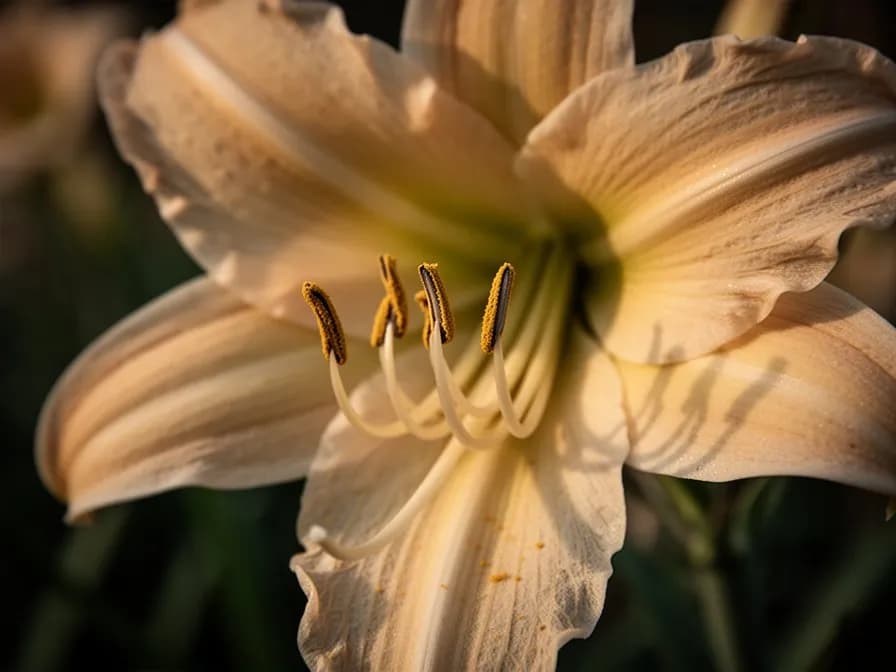
Dried Eremurus Flower Arrangement
20 minutes plus 2 weeks drying timeHarvest eremurus flower stalks just as the last florets at the top are fading and the lower seed pods have formed. Hang them upside down in a warm, dry, well-ventilated space for two weeks until fully dried. The stalks retain their architectural shape and subtle colour, making striking additions to tall dried flower arrangements.
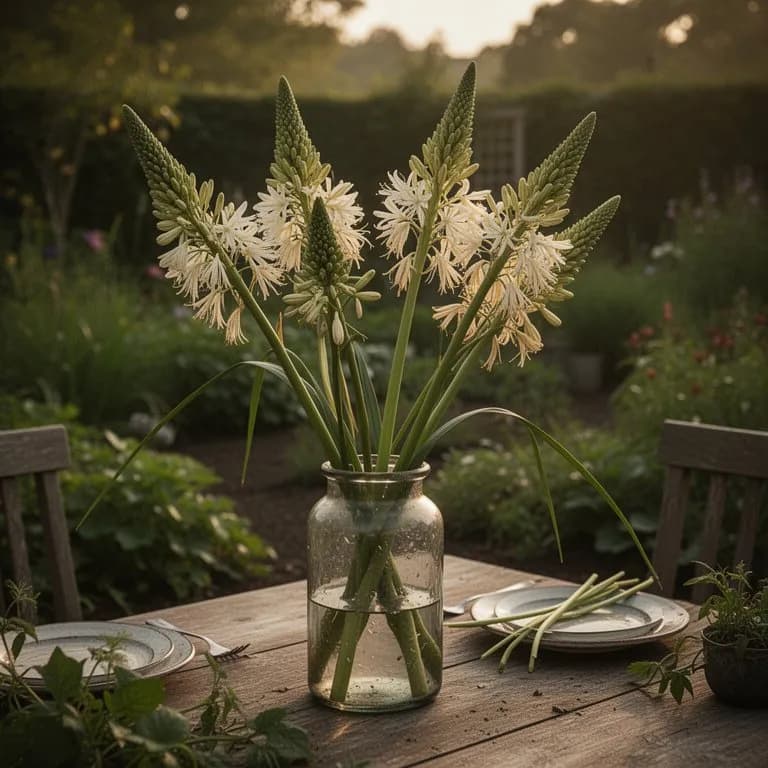
Eremurus Seed Pod Wreath
45 minutes plus drying time for podsCollect mature eremurus seed stalks in late summer once the capsules have turned golden brown. Cut the stalks into sections and wire them onto a wreath frame, alternating with dried grasses and seed heads from other perennials. The round seed pods add wonderful texture and a natural sculptural quality to autumn and winter door wreaths.
Eremurus Cut Flower Display
15 minutesCut eremurus spikes in the morning when the lower third of the florets have opened for the longest vase life. Place them immediately into deep, cool water with floral preservative. Their towering height makes them ideal as the centrepiece of large arrangements paired with lower flowers such as peonies, delphiniums, or roses.
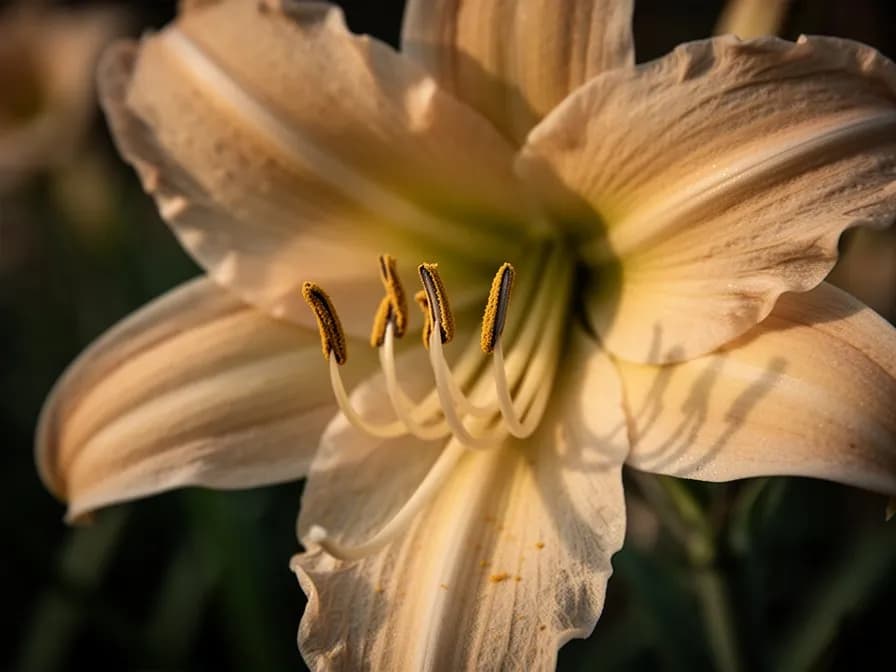
Eremurus seed heads dry beautifully and provide architectural interest in dried flower arrangements
Yield & Spacing Calculator
See how many Foxtail Lily plants fit in your garden bed based on the recommended 60cm spacing.
4
Foxtail Lily plants in a 4×4 ft bed
2 columns × 2 rows at 60cm spacing
Popular Varieties
Some of the most popular foxtail lily varieties for home gardeners, each with unique characteristics.
Cleopatra
A spectacular hybrid reaching four to five feet with burnt orange flowers that fade to apricot, one of the most popular garden eremurus.
Pinokkio
A compact hybrid at three feet with vivid orange flowers, well-suited to smaller gardens and less prone to wind damage.
Ruiter Hybrids
A mixed strain offering spires in shades of yellow, orange, pink, and white, all reaching impressive heights of four to six feet.
Stenophyllus
The species form with bright golden-yellow flowers on three-foot stems, more compact and drought-tolerant than many hybrids.
Planting a mix of Eremurus varieties creates a stunning tapestry of colour in early to midsummer
When should I plant Foxtail Lily?
Plant Foxtail Lily in September, October. It takes approximately 365 days to reach maturity, with harvest typically in May, June, July.
What are good companion plants for Foxtail Lily?
Foxtail Lily grows well alongside Ornamental Allium, Red Hot Poker, Yarrow. Companion planting can improve growth, flavor, and natural pest control.
What hardiness zones can Foxtail Lily grow in?
Foxtail Lily thrives in USDA hardiness zones 5 through 8. With greenhouse protection, it may be grown in zones 3 through 9.
How much sun does Foxtail Lily need?
Foxtail Lily requires Full Sun (6-8h+). This means at least 6-8 hours of direct sunlight daily.
How far apart should I space Foxtail Lily?
Space Foxtail Lily plants 60cm (24 inches) apart for optimal growth and air circulation.
What pests and diseases affect Foxtail Lily?
Common issues include Crown Rot, Slugs, Aphids. Prevention through good garden practices like crop rotation, proper spacing, and companion planting is the best approach. See the detailed pests and diseases section above for symptoms, prevention, and treatment for each.
How do I store Foxtail Lily after harvest?
Eremurus roots are best left undisturbed in the ground, where they resent being moved once established. If you must divide or relocate, do so in early autumn when the plant is fully dormant. Handle the brittle roots with extreme care and replant immediately on a grit mound. Dried flower spikes can b...
What are the best Foxtail Lily varieties to grow?
Popular varieties include Cleopatra, Pinokkio, Ruiter Hybrids, Stenophyllus. Each has unique characteristics suited to different growing conditions and culinary preferences. See the varieties section above for detailed descriptions.
What soil does Foxtail Lily need?
Eremurus demands sharply drained, sandy or gravelly soil with a pH of 6.5 to 8.0. Heavy clay is its worst enemy and must be thoroughly amended with gravel, sharp sand, and compost. Raised beds filled with a free-draining mix are often the best solution. Apply a light dressing of bone meal at plantin...
Why did my eremurus not flower this year even though the foliage grew well?
The most common reasons are insufficient sun exposure, a crown that is still too young or too small to bloom, or frost damage to the emerging flower bud in early spring. Eremurus needs full sun and a well-established root crown with adequate energy reserves to produce a flower spike. Newly planted crowns often take one to two years to settle in before flowering. Ensure the plant receives at least six hours of direct sunlight daily and protect emerging shoots from late frosts.
How do I prevent my eremurus root crown from rotting over winter?
Root rot is almost always caused by excess moisture around the dormant crown. Plant on a raised mound of coarse sand or grit so water drains away quickly. In heavy clay soils, consider raising the entire bed or planting in a deep container with excellent drainage. Apply a loose mulch of dry straw or bracken for insulation but avoid moisture-retentive materials like bark mulch directly over the crown. In regions with very wet winters, a temporary glass or plastic rain cover placed over the crown area can shed excess water.
When is the best time to plant eremurus root crowns?
The ideal planting time is early to mid autumn, typically September to October in the Northern Hemisphere. This gives the fleshy roots time to establish and anchor into the soil before winter dormancy sets in. Autumn-planted crowns will begin producing spring growth the following year. Avoid spring planting, as the crowns break dormancy very early and transplanting actively growing plants disrupts root development and often delays flowering by a full season.
Can I grow eremurus in containers?
Yes, but it requires a very large, deep container at least 40 cm wide and 40 cm deep to accommodate the spreading root crown. Use a very free-draining compost mix with at least 30 percent added grit or perlite. Place the container in full sun and water regularly during the growing season, then keep it almost completely dry during summer and winter dormancy. Container-grown plants may need winter protection in cold regions, as pot-grown roots are more exposed to freezing temperatures than those in the ground.
How do I divide an established eremurus clump?
Divide in early autumn when the plant is fully dormant. Carefully lift the entire clump with a garden fork, taking care not to snap the brittle roots. Gently separate the crowns by hand or with a clean knife, ensuring each division has at least two or three healthy growing points and a good set of intact roots. Replant divisions immediately at the same depth on a fresh sand mound, spacing them 60 to 90 cm apart. Water once after planting and then keep dry until spring growth begins.
Are eremurus plants toxic to pets or children?
Eremurus is not generally listed among highly toxic garden plants, and there are no widely reported cases of serious poisoning in humans or domestic animals. However, the plant is not commonly consumed outside of specific ethnobotanical traditions in Central Asia, and ornamental cultivars should not be assumed safe to eat. As with any unfamiliar plant, it is sensible to keep it out of reach of small children and to discourage pets from chewing on the foliage or roots. If ingestion occurs and symptoms develop, contact a medical professional or veterinarian.
Ready to Grow Foxtail Lily?
Add Foxtail Lily to your garden plan and start designing your perfect layout.

Vladimir Kusnezow
Gardener and Software Developer
Zone 6b gardener. Growing vegetables and fruits in soil and hydroponics for 6 years. I built PlotMyGarden to plan my own gardens.
Jump to Section