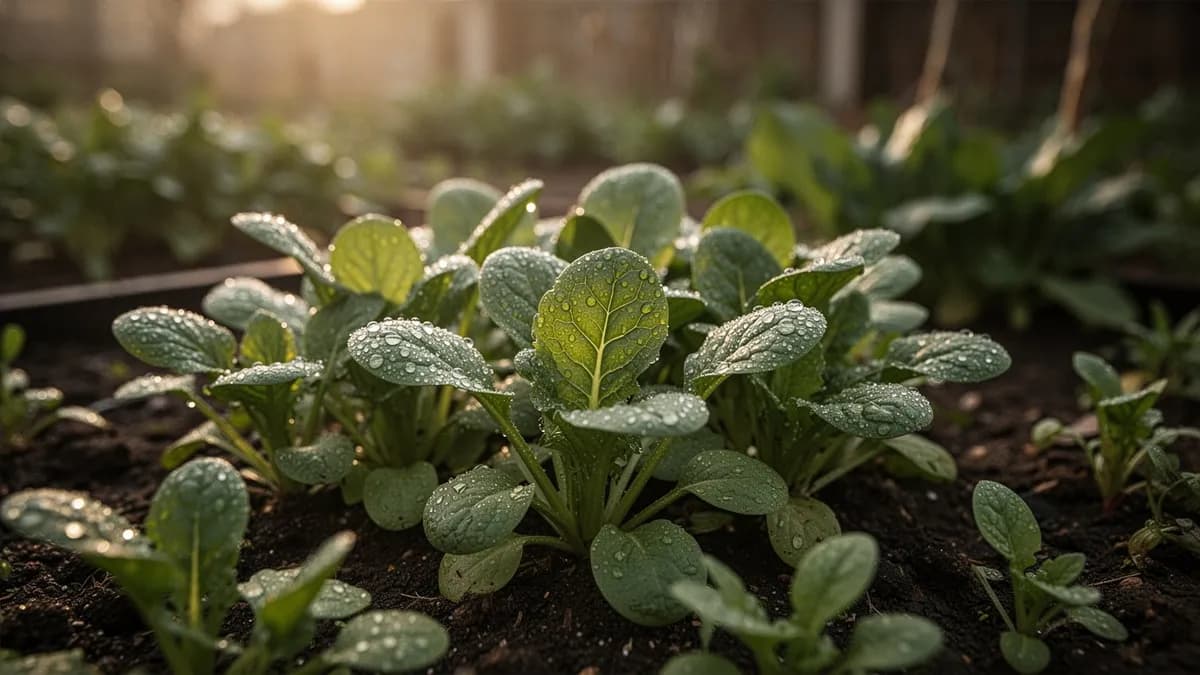
Garden Cress
Lepidium sativum
At a Glance
One of the fastest-growing vegetables, ready to harvest as microgreens in just 7 days or as full-sized leaves in two weeks. Leaves have a peppery, tangy flavor reminiscent of mustard and watercress, excellent as a garnish or sandwich green. Can be grown on a windowsill on damp paper towels without soil for the simplest possible indoor garden. Succession sow every week for a continuous supply of fresh, zesty greens.
Planting & Harvest Calendar
Growth Stages
From Seed to Harvest
Sowing
Days 0–2
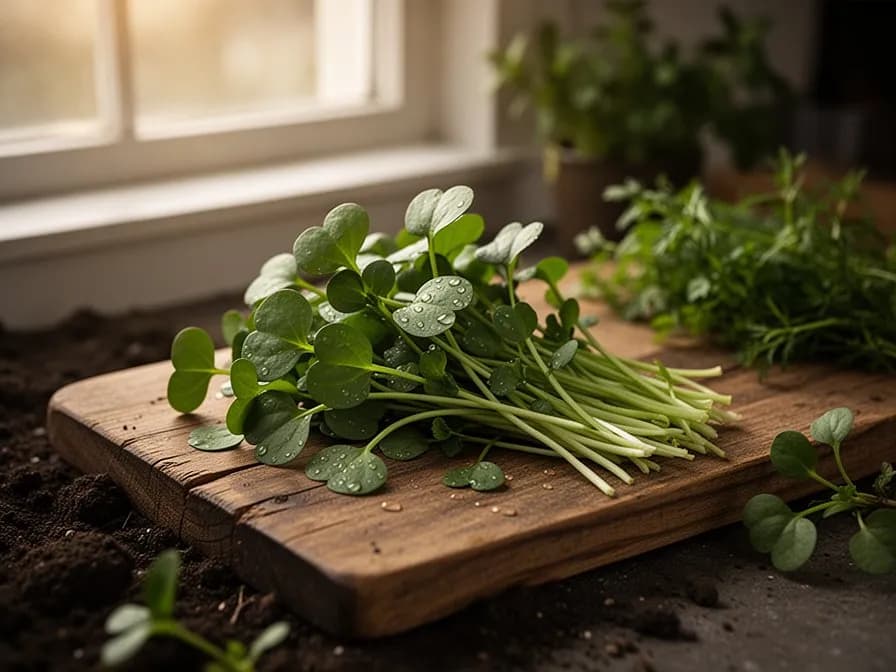
Seeds are scattered densely on moist soil, paper towels, or growing mats. Within hours of contact with water, garden cress seeds develop a mucilaginous gel coating that anchors them in place and retains moisture. White radicle roots emerge within 24-48 hours, making cress one of the fastest-germinating edible plants.
💡 Care Tip
Sow seeds thickly — about 1 seed per square centimetre — on any moist surface. No need to cover with soil; cress seeds germinate best with light exposure. Mist gently to keep consistently damp but not waterlogged.
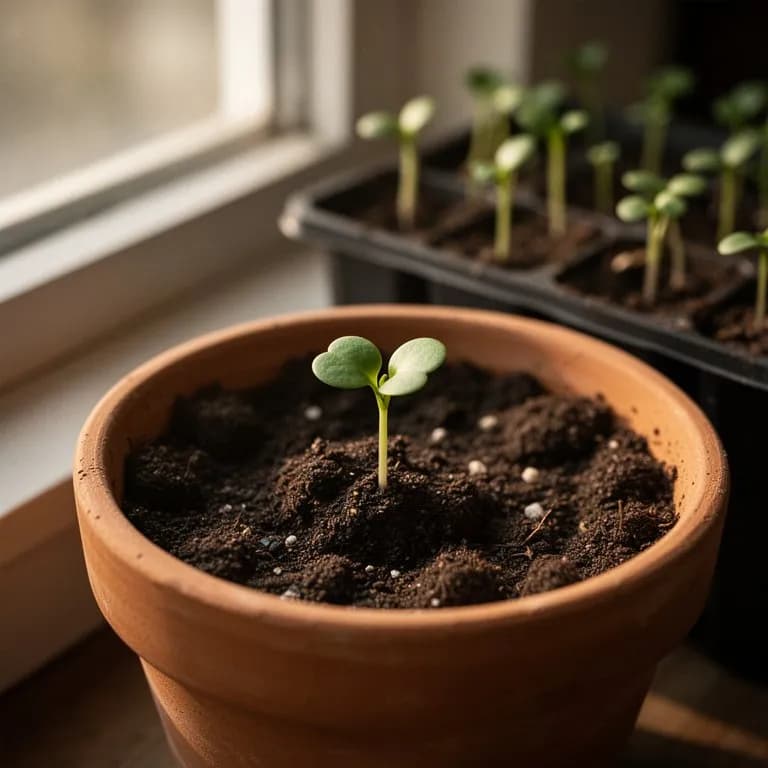
Garden cress sprouts appear within 2-3 days of sowing — one of the fastest-germinating edibles
Monthly Care Calendar
What to do each month for your Garden Cress
May
You are hereContinue outdoor succession sowings in cooler climates. In warm regions, shift to partly shaded locations as temperatures rise. Harvest regularly — frequent cutting delays bolting. Keep soil consistently moist; cress wilts rapidly when dry.
Did You Know?
Fascinating facts about Garden Cress
Garden cress (Lepidium sativum) is one of the fastest-growing edible plants on Earth — seeds germinate in 24-48 hours and produce harvestable microgreens in just 7-10 days, making it the ultimate instant-gratification crop for impatient gardeners.
Garden cress is one of the fastest-growing salad crops, ready to harvest in just 7 to 14 days for microgreens or 15 to 20 days for baby greens. Sow seeds thickly on the surface of moist soil or growing medium, pressing gently. Seeds germinate in 2 to 3 days at 55 to 70 degrees Fahrenheit, requiring no cover as they need light.
For continuous production, sow a new batch every 5 to 7 days on a windowsill, in trays, or directly in the garden. Garden cress can be grown year-round indoors on a damp paper towel, cotton pad, or shallow tray of compost. It requires minimal space and no special equipment.
Outdoor sowings work well in spring and fall when temperatures are cool. Cress bolts rapidly in warm weather above 75 degrees, so it is best suited to quick-harvest microgreen production during summer. Keep the growing medium consistently moist, as cress wilts and becomes bitter if allowed to dry out. No fertilization is needed for microgreen production.
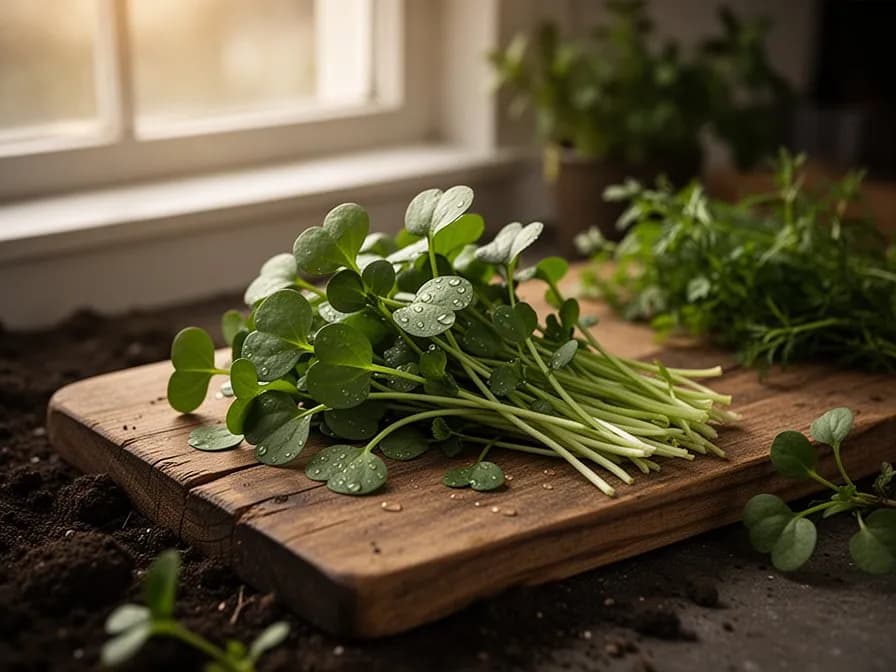
Garden cress thrives on windowsills year-round, needing no special equipment or grow lights
Garden cress (Lepidium sativum) is native to western Asia and northeastern Africa, with its likely centre of origin spanning from modern-day Iran and Turkey through to Ethiopia and Eritrea. Archaeological evidence suggests cultivation began in ancient Persia at least 2,500 years ago, where cress was valued both as a culinary herb and a medicinal plant. The ancient Persians used the seeds and leaves in remedies for digestive ailments, coughs, and skin conditions — traditions documented in early Persian medical texts.
The ancient Greeks and Romans adopted garden cress enthusiastically. The Greek physician Dioscorides recorded its medicinal uses in the first century AD, and Roman soldiers reportedly ate cress before battle, believing it imparted courage and vitality. The Romans likely introduced garden cress to Britain and northern Europe during their conquests, where it found an ideal cool, moist climate and became naturalised across the continent.
During the Middle Ages, garden cress was cultivated in monastery herb gardens throughout Europe as both food and medicine. Its rapid growth and minimal requirements made it valuable during lean winter months when fresh greens were scarce. By the Victorian era, commercial cress production was established in England, particularly in Hampshire's chalk stream valleys, and street vendors sold bundles of fresh cress throughout London. The classic egg and cress sandwich became a fixture of English tea culture.
Today, garden cress is grown worldwide as a salad green, microgreen, and sprouting seed. It remains particularly popular in the United Kingdom, Germany, the Netherlands, France, India, and Iran. In the Indian subcontinent, cress seeds (known as halim or aliv) are widely used in traditional medicine and cuisine, especially in postpartum nutrition for new mothers. Modern interest in microgreens and urban farming has given garden cress a renaissance, as its ability to produce nutritious food in tiny spaces with minimal equipment makes it ideal for apartment gardeners, classroom projects, and year-round indoor growing.
Sow seeds directly on the surface of moist growing medium and press gently without covering. Seeds germinate in 2 to 3 days at 55 to 70 degrees Fahrenheit. For windowsill growing, scatter seeds on a damp paper towel in a shallow tray. Mist daily to keep moist. Seeds can also be sprouted in a jar like alfalfa sprouts. Sow new batches every 5 to 7 days for continuous supply.
Garden cress has minimal soil requirements due to its fast growth cycle. For outdoor growing, any well-drained garden soil is suitable. For indoor microgreen production, use clean seed-starting mix, coconut coir, or even damp paper towels. No fertilization is needed for microgreen and baby green production. For larger plants grown to maturity, apply a light balanced fertilizer at sowing.
Check Your Zone
See if Garden Cress is suitable for your location.
10°C – 20°C
50°F – 68°F
Garden cress is a cool-season crop that performs best between 10-20°C (50-68°F). Seeds germinate rapidly even in cool conditions — as low as 5°C (41°F) — though optimal germination occurs at 15-20°C (59-68°F). Growth is fastest and flavour is best in cool weather. Above 24°C (75°F), cress bolts rapidly, becoming bitter and leggy. Below freezing, foliage is damaged but established roots can survive brief frost down to about -5°C (23°F). Indoor microgreen growing at typical room temperature of 18-22°C (64-72°F) works year-round.
Common issues affecting Garden Cress and how to prevent and treat them organically.
The main challenge is timing, as cress grows so fast that it can bolt and become bitter before harvest if not watched closely. Drying out causes immediate wilting and bitterness. Damping off disease can destroy dense sowings in humid, poorly ventilated conditions. Seeds germinate so readily that they can be difficult to manage in terms of quantity.
Garden cress is grown so quickly that companion planting is largely unnecessary. When grown outdoors, it works well as a quick catch crop between slower-growing vegetables. Plant between rows of carrots, onions, or brassicas that take months to mature. Avoid planting near other fast-bolting brassicas in warm weather.
- 1No soil required for microgreens. Garden cress grows perfectly on damp paper towels, cotton wool, coir mats, or even a wet sponge. This makes it the ultimate apartment and classroom crop — all you need is a shallow container, moisture, and a bright spot.
- 2Sow thickly for the best microgreen harvest. Unlike most vegetables, cress performs best when seeds are packed closely together — about 1 seed per square centimetre. The dense mat of roots holds everything together for easy cutting at harvest time.
- 3Succession sow every 5-7 days for a non-stop supply. Because cress grows so fast, a single sowing is consumed quickly. Keep 3-4 trays going at different stages so you always have cress ready to harvest while the next batch is growing.
- 4Keep cress constantly moist but never waterlogged. The shallow root system dries out rapidly, especially on paper towels or in small containers. Mist once or twice daily or bottom-water trays by pouring a thin layer of water into the saucer below.
- 5Grow in cool conditions and partial shade for the best flavour. Heat above 24°C (75°F) causes rapid bolting and bitterness. In summer, grow indoors in an air-conditioned room or place outdoor containers in morning-sun-only positions.
- 6Harvest at the microgreen stage (7-10 days) for the sweetest, mildest flavour. The peppery bite intensifies as the plant matures. For a stronger mustard-like kick, let plants grow to 10-15 cm before cutting — but know that once true leaves appear, bolting is not far behind.
- 7Try the eggshell method for a fun project or gift. Fill clean eggshell halves with damp cotton wool, sow cress seeds on top, and place in an egg cup on a windowsill. Sprouts appear in days, creating charming 'cress heads' — perfect for children and as living table decorations.
- 8Save your own seeds easily. Allow a few plants to bolt, flower, and produce seed pods. Once pods turn tan and dry, crush them gently to release the tiny seeds. Home-saved cress seeds remain viable for 3-5 years and one flowering plant produces enough seed for hundreds of future trays.
For microgreens, cut cress with scissors when seedlings are 1 to 2 inches tall with their first true leaves, typically 7 to 10 days after sowing. For baby greens, allow plants to reach 3 to 4 inches and harvest entire plants or cut leaves individually. The peppery flavor intensifies as plants mature. Harvest promptly before flowering for the best texture and mildest flavor.
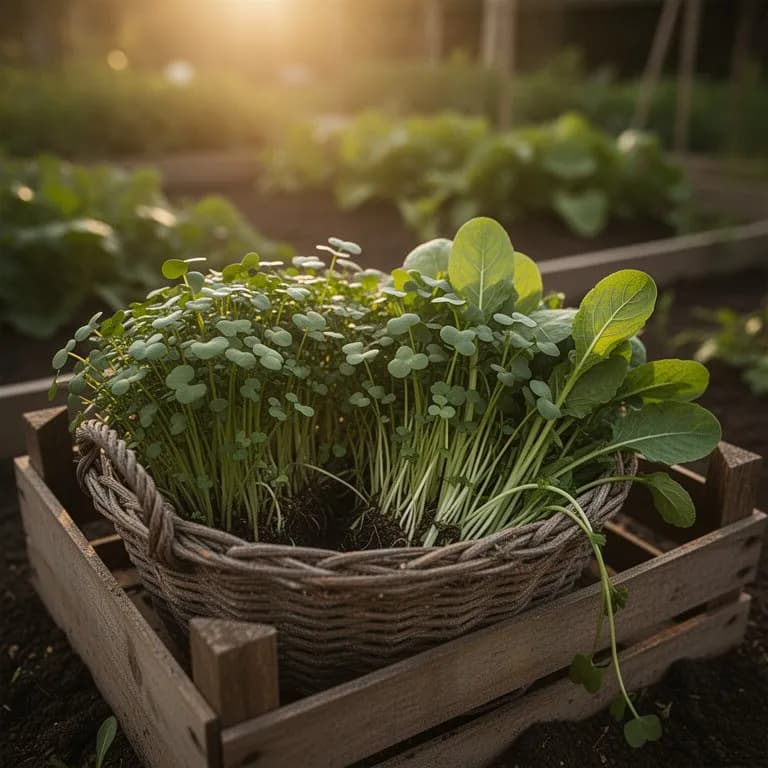
Harvest garden cress by snipping leaves just above soil level — the plant often regrows for a second cutting
Garden cress is highly perishable and best used immediately after cutting. Store briefly in the refrigerator for up to 3 days in a sealed container with damp paper towel. Cress does not freeze or dry well. Growing successive small batches every few days ensures a constant fresh supply. Purchase seeds in bulk for year-round indoor microgreen production.
Plan your garden with ease
Love growing Garden Cress? Use our free garden planner to design your beds, track planting dates, and get personalized care reminders.
Nutritional Info
Per 100g serving
32
Calories
Health Benefits
- Extraordinarily rich in vitamin A, providing 138% of the daily value per 100g — one of the highest concentrations among common leafy greens, supporting vision, immune function, and skin health
- Excellent source of vitamin C at 77% of the daily value per 100g, surpassing oranges by weight, boosting immune defence and collagen production
- Outstanding source of vitamin K, providing over 500% of the daily value per 100g — essential for blood clotting and bone mineralisation
- Rich in iron (1.3mg per 100g) and the vitamin C content dramatically enhances non-heme iron absorption, making cress an efficient plant-based iron source
- Contains significant amounts of calcium (81mg per 100g) and manganese, supporting bone health and enzyme function
- High in glucosinolates — the same cancer-protective sulphur compounds found in broccoli and other cruciferous vegetables — which break down into bioactive isothiocyanates during chewing
💰 Why Grow Your Own?
A single packet of garden cress seeds (typically 5-10g containing 2,000-5,000 seeds) costs $2-4 and can produce dozens of microgreen trays over several months. Fresh-cut cress and microgreens sell for $3-6 per small punnet (25-50g) at supermarkets and farmers markets. Growing your own from one seed packet can yield cress worth $50-100 at retail prices. The savings are even more dramatic compared to 'living cress' punnets ($2-4 each) — a single seed packet replaces 20-40 of these store-bought trays. No special equipment is needed: a shallow dish, paper towel, and a windowsill are all it takes.
Quick Recipes
Simple recipes using fresh Garden Cress
Classic Egg and Cress Sandwiches
15 minThe quintessential British afternoon tea sandwich — creamy egg salad paired with the sharp, peppery bite of fresh garden cress on soft white bread. Simple, elegant, and endlessly satisfying. The cress must be freshly cut for the best flavour and crunch.
Garden Cress and Potato Soup
30 minA vibrant green soup with a velvety texture and a gentle peppery warmth. The cress is stirred in at the very end and barely cooked to preserve its bright colour and fresh mustard-like flavour. Serve with a swirl of cream and extra cress on top.
Cress Pesto with Toasted Walnuts
10 minA bold, peppery twist on traditional basil pesto — garden cress gives this sauce a mustardy kick that pairs brilliantly with pasta, grilled fish, or spread on crusty bread. The walnuts add earthy depth and healthy fats.
The iconic British egg and cress sandwich — a teatime staple since the Victorian era
Yield & Spacing Calculator
See how many Garden Cress plants fit in your garden bed based on the recommended 10cm spacing.
144
Garden Cress plants in a 4×4 ft bed
12 columns × 12 rows at 10cm spacing
Popular Varieties
Some of the most popular garden cress varieties for home gardeners, each with unique characteristics.
Curled Cress
The most common variety with finely curled, bright green leaves and a sharp peppery flavor.
Broadleaf Cress
Larger, flat leaves with a milder flavor than curled types, better for salads and garnishing.
Persian Cress
A variety popular in Middle Eastern cuisine with robust flavor and slightly larger leaves.
Garden cress has a sharp, peppery flavor similar to watercress. Classic uses include the traditional British egg and cress sandwich. Use as a garnish for soups, salads, and canapes. Mix into cream cheese or butter for a peppery spread. Add to green salads, smoothies, and grain bowls for a spicy note. The flavor pairs well with eggs, smoked fish, and mild cheeses.
When should I plant Garden Cress?
Plant Garden Cress in March, April, September, October. It takes approximately 14 days to reach maturity, with harvest typically in April, May, October, November.
What are good companion plants for Garden Cress?
Garden Cress grows well alongside Radish, Lettuce. Companion planting can improve growth, flavor, and natural pest control.
What hardiness zones can Garden Cress grow in?
Garden Cress thrives in USDA hardiness zones 2 through 10. With greenhouse protection, it may be grown in zones 1 through 11.
How much sun does Garden Cress need?
Garden Cress requires Partial Sun (3-6h). This means 3-6 hours of sunlight, ideally morning sun with afternoon shade.
How far apart should I space Garden Cress?
Space Garden Cress plants 10cm (4 inches) apart for optimal growth and air circulation.
What pests and diseases affect Garden Cress?
Common issues include Flea Beetles, Damping Off, Aphids. Prevention through good garden practices like crop rotation, proper spacing, and companion planting is the best approach. See the detailed pests and diseases section above for symptoms, prevention, and treatment for each.
How do I store Garden Cress after harvest?
Garden cress is highly perishable and best used immediately after cutting. Store briefly in the refrigerator for up to 3 days in a sealed container with damp paper towel. Cress does not freeze or dry well. Growing successive small batches every few days ensures a constant fresh supply. Purchase seed...
What are the best Garden Cress varieties to grow?
Popular varieties include Curled Cress, Broadleaf Cress, Persian Cress. Each has unique characteristics suited to different growing conditions and culinary preferences. See the varieties section above for detailed descriptions.
What soil does Garden Cress need?
Garden cress has minimal soil requirements due to its fast growth cycle. For outdoor growing, any well-drained garden soil is suitable. For indoor microgreen production, use clean seed-starting mix, coconut coir, or even damp paper towels. No fertilization is needed for microgreen and baby green pro...
Can I grow garden cress without soil or a garden?
Absolutely — garden cress is one of the few food crops that grows perfectly without any soil at all. Scatter seeds on damp paper towels, cotton wool, coir mats, or even a wet kitchen sponge in a shallow container. Place on a bright windowsill and mist daily. You will have harvestable microgreens in 7-10 days. No garden, balcony, grow lights, or special equipment required. This makes cress ideal for apartments, classrooms, office desks, and anyone who wants fresh greens with zero outdoor space.
Why did my garden cress bolt so quickly and turn bitter?
Garden cress is a cool-season annual that bolts (sends up a flower stalk) rapidly in response to heat, long days, and moisture stress. Temperatures above 24°C (75°F) trigger bolting within days. To delay bolting, grow in cool conditions (10-20°C), provide afternoon shade outdoors, keep soil consistently moist, and harvest frequently. In warm weather, focus on quick indoor microgreen crops harvested at 7-10 days — they are always tender and mild regardless of outdoor conditions.
Is garden cress the same as watercress?
No — garden cress (Lepidium sativum) and watercress (Nasturtium officinale) are different species in the same Brassicaceae family. Garden cress is grown in soil or on moist surfaces and has a sharper, more mustard-like flavour. Watercress grows in running water or very wet conditions and has a milder, slightly more bitter taste. Garden cress is far easier to grow at home since it needs no aquatic setup. Both are highly nutritious and share a peppery character, but they are not interchangeable in cultivation.
How often can I harvest garden cress, and will it regrow?
Microgreen-stage cress (harvested at 7-10 days by cutting just above the growing medium) generally does not regrow because there are no true leaves left to power new growth. However, if you let plants grow to 10-15 cm with several sets of true leaves and cut above the lowest pair, they will often regrow for one additional harvest within 1-2 weeks. For a continuous supply, succession sowing new trays every 5-7 days is more reliable and productive than attempting to regrow cut plants.
Are garden cress seeds the same as the cress seeds used in Indian drinks and desserts?
Yes — garden cress seeds (known as halim, aliv, or chandrasur in various Indian languages) are widely used in Indian and Persian cuisine. When soaked in water, the seeds develop a thick mucilaginous gel similar to chia or basil seeds. They are traditionally added to milk-based drinks (such as halim kheer), desserts, and ladoo for their perceived health benefits, particularly for boosting iron and calcium. The same seeds you sow for microgreens on your windowsill are the ones used in these traditional recipes.
Can I grow garden cress outdoors year-round?
In mild climates (USDA zones 8-10) with cool winters and temperate summers, outdoor cress can be grown nearly year-round with succession sowing. In hot summers anywhere, outdoor cress bolts too quickly to be practical — switch to indoor growing during the warm months. In cold climates (zones 3-7), outdoor cress grows well from early spring through late autumn, and cold frames or cloches can extend the season further. Indoor windowsill growing fills the winter gap in any climate, making cress a truly year-round crop regardless of where you live.
Ready to Grow Garden Cress?
Add Garden Cress to your garden plan and start designing your perfect layout.

Vladimir Kusnezow
Gardener and Software Developer
Zone 6b gardener. Growing vegetables and fruits in soil and hydroponics for 6 years. I built PlotMyGarden to plan my own gardens.
Jump to Section