Lapins Cherry
Prunus avium 'Lapins'
At a Glance
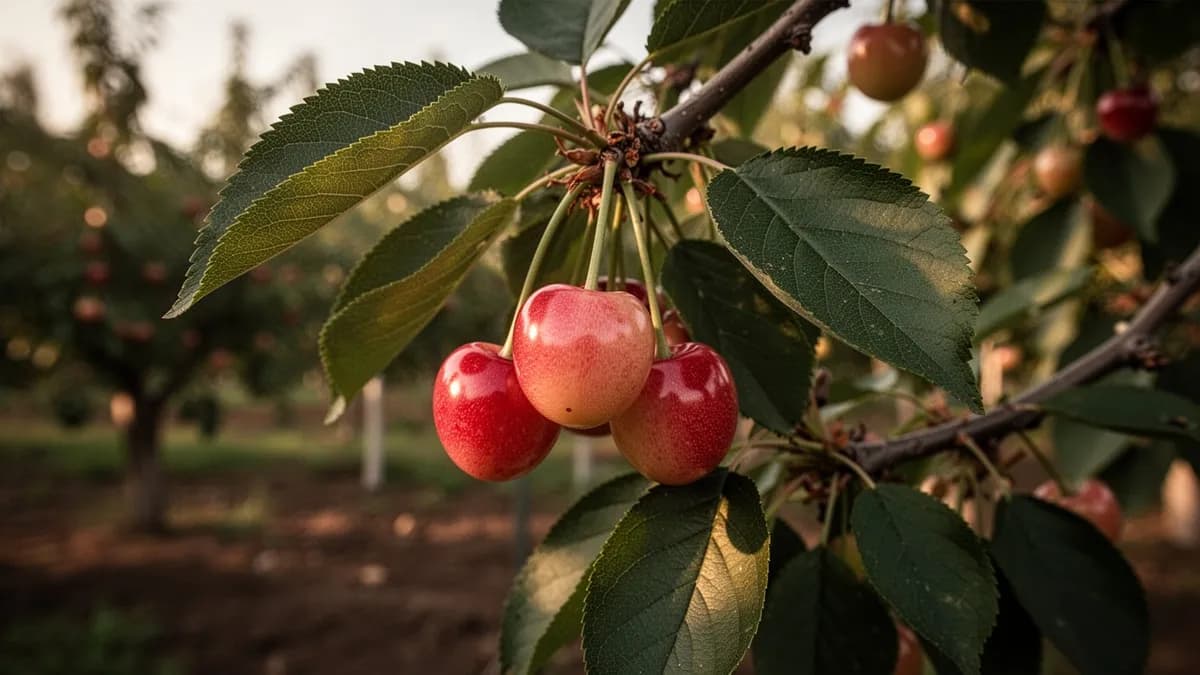
A self-fertile sweet cherry producing large, dark red fruits with excellent flavor and crack resistance, making it ideal for home gardens. Lapins ripens about two weeks after Bing and is one of the most reliable self-pollinating cherry varieties. The tree is vigorous and productive, performing well on dwarfing rootstocks for smaller spaces.
Planting & Harvest Calendar
Growth Stages
From Seed to Harvest
Winter Dormancy
Days 0–60
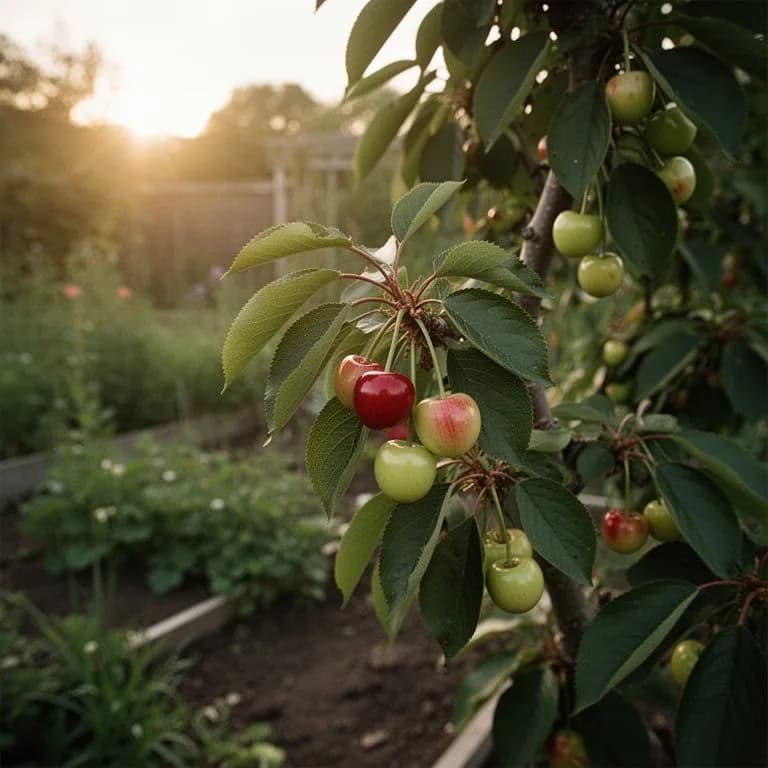
Lapins enters a deep dormancy after leaf fall, with all above-ground growth suspended and the root system only gently active. During this period the tree accumulates the chill hours — typically 800–1,000 hours below 7 °C — that are physiologically required before it can break dormancy and flower successfully. Without meeting this chilling requirement, blossom will be patchy, delayed, and poorly timed, leading to weak fruit set regardless of conditions during flowering. Lapins is reliably cold-hardy in dormancy to around -20 °C.
💡 Care Tip
Apply a dormant oil spray on a dry, mild day above 4 °C to smother overwintering scale insect eggs and red spider mite eggs on the bark. Inspect branches closely for sunken, discoloured canker lesions exuding amber gum — cut back any affected wood to healthy tissue at least 15 cm below the stained area and dispose of removed material away from the garden. Fit a grease band around the trunk to intercept climbing winter moth.
Monthly Care Calendar
What to do each month for your Lapins Cherry
June
You are hereNo specific care tasks for this month.
Netting the entire canopy two weeks before fruit colours is essential — birds will strip a ripe Lapins tree in hours if unprotected
Did You Know?
Fascinating facts about Lapins Cherry
Lapins was bred at the Agriculture Canada Research Station in Summerland, British Columbia, and released in 1983 — it is a cross between Van, one of the great commercial sweet cherries of the 20th century, and Stella, the first confirmed self-fertile sweet cherry variety ever developed.
Lapins cherry trees perform best in full sun with well-drained, deep loamy soil at pH 6.0-7.0. Plant bare-root trees in late winter, spacing standard trees 20-25 feet apart or 10-14 feet on semi-dwarfing rootstocks like Gisela 6. As a self-fertile variety, Lapins does not require a pollinizer, though cross-pollination with another sweet cherry can increase yields.
Provide consistent deep watering weekly during the growing season, tapering off as fruit colors to reduce cracking. Lapins needs 700-800 chill hours and is slightly more crack-resistant than Bing. Train to an open-center form with 3-4 well-spaced scaffold branches. Prune in late winter to remove crossing branches and maintain an open canopy for light penetration.
Apply a balanced fertilizer in early spring before bud break. Net trees before fruit begins coloring to protect from birds. Lapins benefits from thinning heavy fruit clusters to improve size and reduce biennial bearing. Monitor for brown rot during humid weather and apply preventive fungicides at bloom.
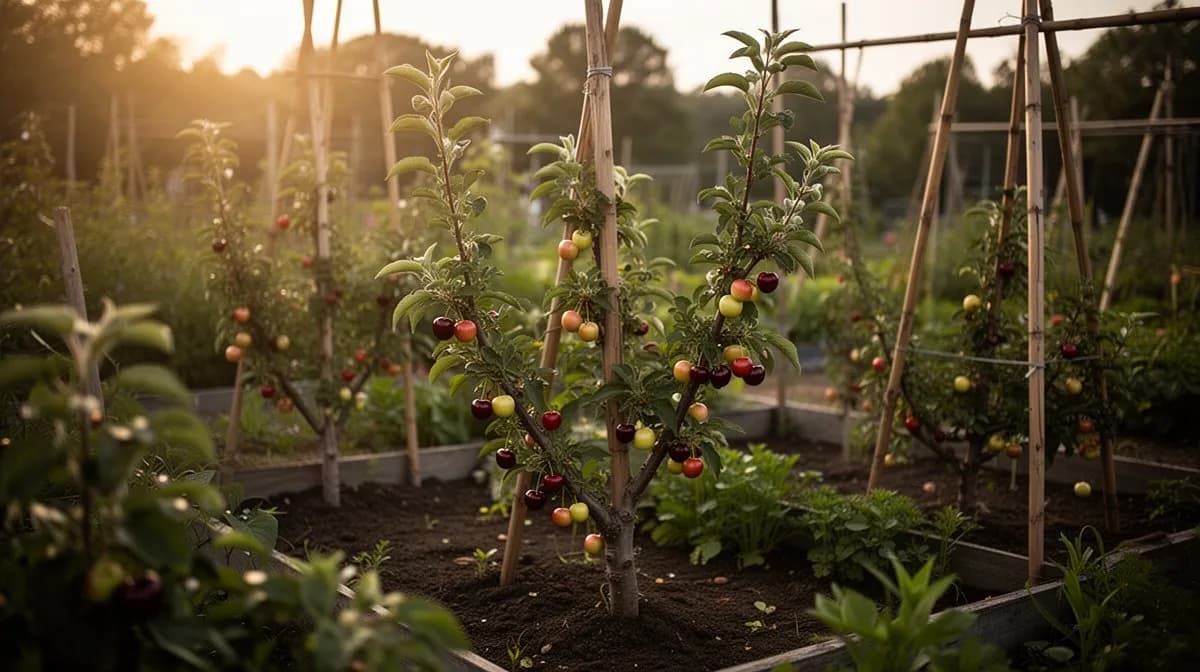
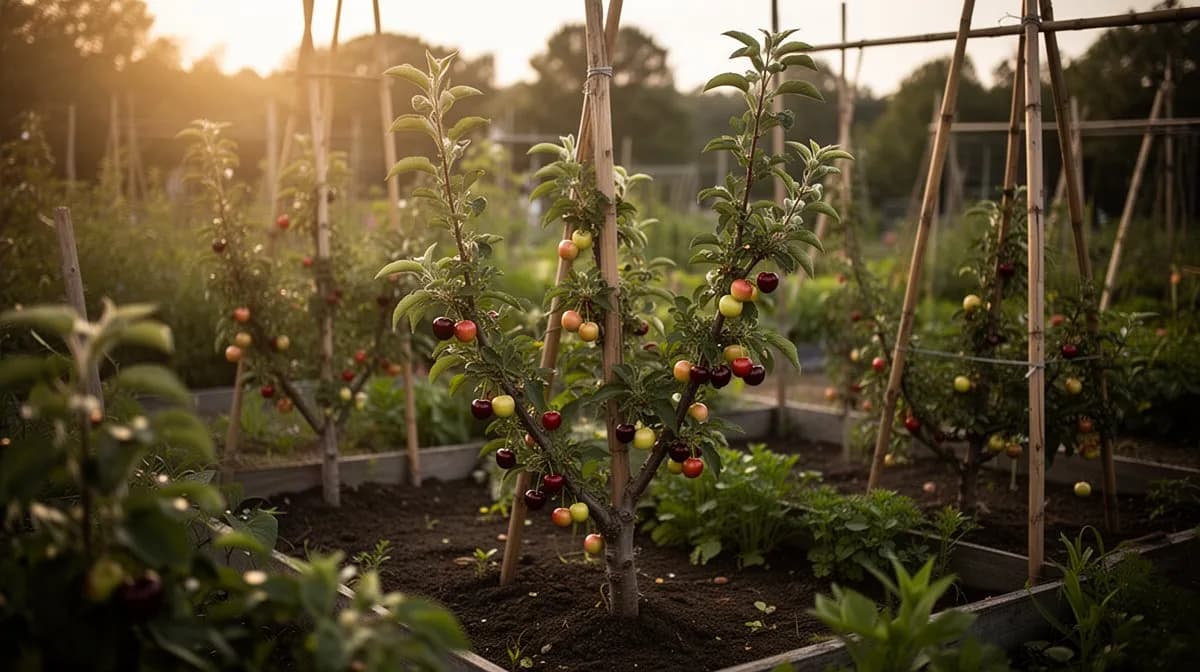
Lapins on Colt rootstock reaches 4.5–6 metres and develops a naturally spreading canopy well-suited to fan training or open-vase pruning
Lapins cherry was developed at the Agriculture Canada Research Station in Summerland, British Columbia, released to the public in 1983 after years of careful selection within the programme's fruit breeding work. It is a deliberate cross between two landmark varieties: Van, a firm, rich, mid-season sweet cherry from Washington State that became one of the most widely planted commercial varieties of the 20th century, and Stella, the variety that made history as the first confirmed self-fertile sweet cherry ever developed — also bred at Summerland and released in 1968.
The significance of that parentage cannot be overstated. Sweet cherries (Prunus avium) are almost universally self-infertile in their wild and traditional cultivated forms, requiring cross-pollination from a compatible second variety to set fruit. This limitation had constrained cherry growing for centuries, forcing growers to plant multiple trees and manage compatible variety combinations. Stella broke this barrier for the first time, and Lapins inherited and consolidated this self-fertility while combining it with the larger fruit size and firm flesh quality of Van — producing a variety that offered everything commercial and home growers wanted in a single tree.
The broader story of cherry cultivation from which Lapins emerged stretches back thousands of years. The wild sweet cherry, Prunus avium, is native to the temperate forests between the Black Sea and the Caspian Sea — in the region of modern Turkey, Georgia, and Armenia — and wild specimens still grow throughout Europe and western Asia. Archaeological evidence places human consumption of wild cherries at least 8,000 years ago. The Romans formalized cherry cultivation in Europe, and by the medieval period monasteries across northern and central Europe maintained extensive cherry orchards, selecting and preserving superior fruiting types.
European settlers carried cherry cultivation to North America in the 17th century, and by the 19th century the Pacific Northwest — Washington State, Oregon, and British Columbia — had been identified as climatically ideal for sweet cherry production. The dry summers, fertile soils, and cold winters of this region provided exactly what cherries needed, and a substantial commercial industry developed there. It was within this Pacific Northwest tradition that the Summerland Research Station was established and that the sequence of breeding work leading to Stella and then Lapins took place.
Following its release, Lapins spread rapidly across the cherry-growing world. It is now planted commercially and in home orchards across the United Kingdom, continental Europe, New Zealand, Australia, Chile, and throughout North America, valued universally for the same three qualities: confirmed self-fertility, large and very firm fruit, and late-season harvest timing that extends the fresh cherry season further than almost any other widely available variety.
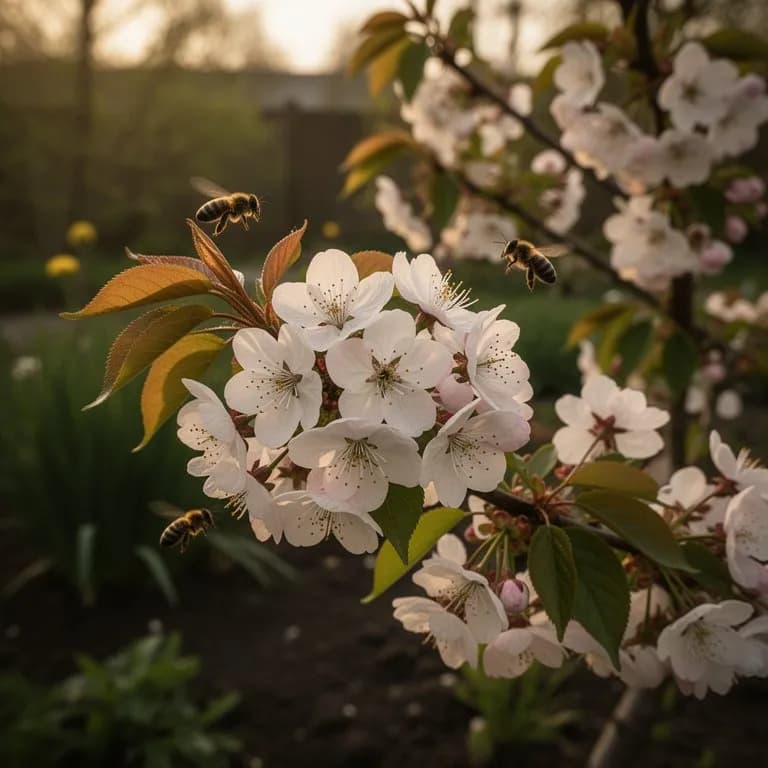
Lapins produces heavy blossom in mid-spring, its self-fertile flowers needing no pollination partner to set a full crop
Lapins cherries do not come true from seed and must be propagated by grafting. To grow rootstock from pits, clean seeds from fully ripe fruit and cold-stratify in damp peat moss at 34-40°F for 90-150 days. Plant stratified seeds one inch deep in spring in well-drained seed-starting mix. Graft Lapins scion wood onto one-year-old seedling rootstock or onto Gisela 5 or 6 clonal rootstocks for size control using whip-and-tongue grafting in late winter.
Lapins prefers deep, well-drained sandy loam soil with pH 6.0-7.0. Avoid heavy clay soils that retain water around roots. Fertilize in early spring with a balanced 10-10-10 formula, about one pound per inch of trunk diameter. Supplement with calcium to strengthen fruit cell walls and reduce cracking. Apply boron at bloom if deficiency is suspected. Maintain a 3-4 inch mulch ring of wood chips around the tree, keeping mulch away from the trunk.
Check Your Zone
See if Lapins Cherry is suitable for your location.
-20°C – 32°C
-4°F – 90°F
Lapins is cold-hardy to approximately -20 °C when fully dormant in winter, making it suitable for most temperate climates in USDA hardiness zones 5–7 and equivalent RHS zones. However, like all sweet cherries, it is highly vulnerable to frost damage during the blossom period — temperatures as low as -1 °C to -2 °C for a few hours when flowers are fully open can destroy the majority of the potential crop, even though Lapins flowers somewhat later than many varieties, providing some natural mitigation against early spring frosts. Lapins requires 800–1,000 chill hours (hours below 7 °C) during winter dormancy to break dormancy and flower reliably — insufficient chilling leads to erratic, staggered blossom and poor fruit set the following season. Optimal growing-season temperatures for fruit development and sugar accumulation are 16–24 °C. Sustained temperatures above 32 °C during fruit development can cause sunscald, uneven ripening, and reduced fruit quality.
Common issues affecting Lapins Cherry and how to prevent and treat them organically.
While more crack-resistant than Bing, Lapins can still split in prolonged rain during ripening. The vigorous growth habit requires regular pruning to prevent overcrowding in the canopy. Bird damage remains a significant threat without netting. Young trees may produce excessive vegetative growth at the expense of fruit if over-fertilized with nitrogen. Gummosis on the trunk often indicates stress from physical damage or disease.
Chives and garlic planted nearby help deter aphids with their pungent aroma. Low-growing clovers or vetch between rows fix nitrogen and provide ground cover. Tansy and yarrow attract beneficial parasitic wasps that prey on cherry pests. Avoid proximity to walnuts and butternuts, which exude juglone. Borage planted nearby attracts pollinators during bloom, though Lapins is self-fertile.
- 1Choose your planting site with great care — Lapins demands well-drained soil in full sun. It is among the most intolerant of all fruit trees to waterlogged roots, which leads rapidly to root rot, crown rot, and death. A gently sloping, south-facing position is ideal, providing both maximum sun and natural cold-air drainage away from the blossom in spring. Never plant in a frost hollow or on heavy, poorly drained clay without first installing land drains.
- 2Lapins is genuinely self-fertile, so a single tree will produce a full crop without any pollination partner — but it can also serve as a universal pollinator for most other mid- to late-season sweet cherry varieties, making it an excellent anchor choice if you intend to plant two or more cherry trees and want to cover pollination requirements for other less self-reliant varieties in your collection.
- 3Select your rootstock to match your space and intended management. Gisela 5 keeps Lapins to a very manageable 3–4 metres, ideal for home gardens, netting, and safe ladder-free or low-ladder harvesting. Colt produces a tree of 4.5–6 metres — suitable for larger spaces and slightly higher yields. Avoid planting Lapins on its own roots or on vigorous standard rootstocks unless you have extensive space and equipment, as the resulting trees can reach 8–15 metres, making netting and harvest difficult.
- 4Prune Lapins only during late summer — July or August immediately after harvest — while the weather is warm and dry and wounds can heal rapidly. Sweet cherries are uniquely susceptible to silver leaf disease (Chondrostereum purpureum) and bacterial canker (Pseudomonas syringae), both of which enter through pruning cuts and are far more infectious during the cool, wet conditions of autumn and winter. This is one of the most important management rules for growing sweet cherries successfully and is frequently the cause of tree decline in gardens where it is ignored.
- 5Deploy bird netting over the entire canopy at least two weeks before the cherries begin to show colour — in practice this means having the netting in place from mid-June in most UK and northern European locations. Lapins ripens late, which means it may encounter determined birds that have already learned where the fruit is from watching earlier varieties ripen. Fine-mesh netting of 15–20 mm fixed at the base is the only reliably effective protection; reflective devices, fake owls, and noise deterrents provide only days of effect before birds habituate to them.
- 6Fan training Lapins against a south- or southwest-facing wall or solid fence is one of the best approaches for smaller gardens. The reflected warmth from the wall advances ripening by 1–2 weeks and can coax good crops in slightly marginal climates. The constrained form makes annual pruning easier to execute precisely, makes netting the flat canopy straightforward, and creates one of the most visually striking features in a kitchen garden during spring blossom. Wall-trained trees require horizontal training wires at 30–40 cm intervals from 30 cm above ground to 2 metres.
- 7Maintain perfectly even, consistent soil moisture throughout the fruit development and ripening period — from fruitlet formation through to harvest. Lapins is susceptible to fruit splitting if there is a sudden uptake of water by the skin after a dry period, whether caused by heavy rain or inconsistent irrigation. Install drip irrigation or soaker hoses at the root zone to deliver water steadily at a controlled rate. Avoid all overhead irrigation once fruit is colouring. If heavy rain is forecast and your soil is already moist, do not irrigate beforehand, and consider temporary drainage improvements if your site is prone to pooling.
- 8Feed Lapins with a potassium-rich fertiliser — such as sulphate of potash — applied around the drip line in late summer after harvest to support fruit bud formation for the following season and to harden the wood before winter. In early spring at bud break, apply a balanced granular fertiliser to support flowering and early growth. Avoid high-nitrogen feeds in mid- to late summer as they promote soft, sappy late-season growth that is more susceptible to winter damage and fungal disease.
- 9Inspect the bark and branch junctions regularly for amber or reddish-brown gum exuding from sunken, discoloured areas — the classic sign of bacterial canker. Act immediately and cut back affected wood to clean, healthy tissue at least 15 cm below any visible staining in the wood, disposing of removed material away from the garden. Sterilise cutting tools between cuts with a dilute bleach solution or methylated spirits. Apply a grafting wax or proprietary wound sealant to all large cuts to slow reinfection. Trees that develop extensive canker can be treated successfully if caught early, but those with girdling lesions around the trunk are unlikely to recover.
- 10For container growing, use the largest pot practical — minimum 60 litres — filled with a loam-based compost such as John Innes No. 3 mixed with 20–25% perlite or coarse grit for drainage. Container-grown Lapins on Gisela 5 or Pixie rootstock can thrive on a sunny patio and produce worthwhile crops, but requires watering once or twice daily during hot summer weather and feeding with a liquid balanced fertiliser every 2 weeks during the growing season. Repot every 2–3 years, root-pruning to maintain vigour and prevent the tree becoming pot-bound.
Lapins cherries ripen in mid-July, about two weeks after Bing. Fruit turns deep dark red to near-black when fully ripe and should be firm with a sweet flavor. Pick with stems attached by gently lifting and twisting. Harvest in morning when temperatures are cool for best keeping quality. A mature dwarf tree yields 30-50 pounds, while standard trees produce 80-120 pounds. Refrigerate immediately after picking.
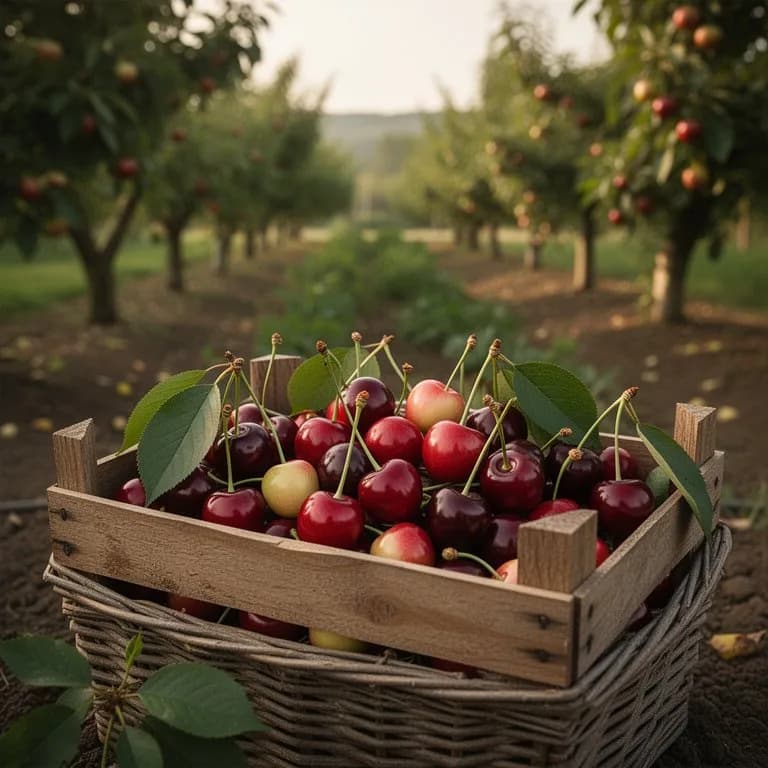
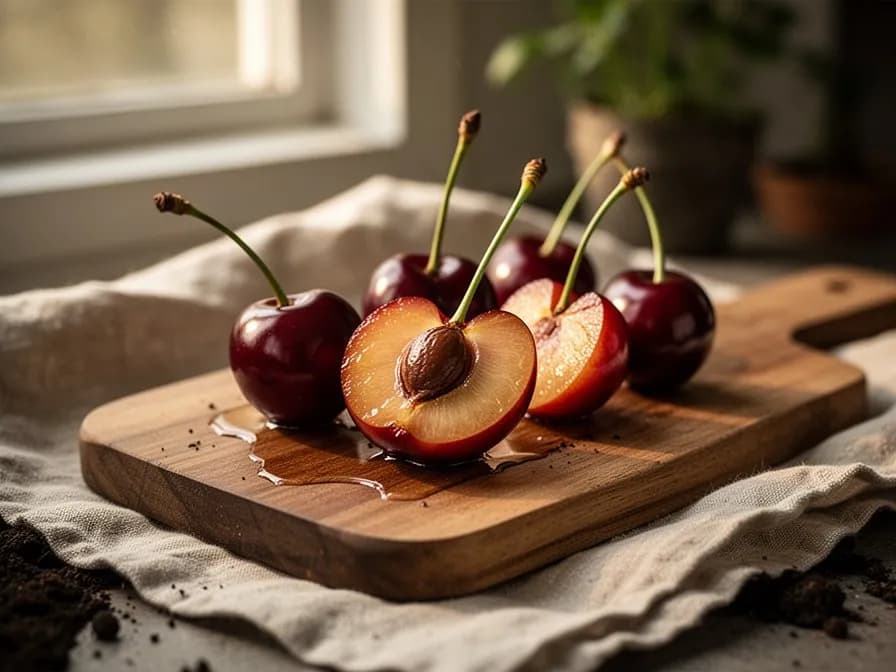
At full ripeness, Lapins cherries develop a rich mahogany-red to near-black colour and a firm, sweet flesh with small pits
Lapins cherries keep 10-14 days refrigerated at 32-34°F due to their crack-resistant, firm flesh. Their excellent firmness makes them ideal for freezing whole or pitted. They can be dried, canned in light syrup, or made into preserves and cherry butter. Lapins is well-suited for making cherry liqueur, kirsch, and cherry juice concentrate due to its high sugar content and intense color.
Plan your garden with ease
Love growing Lapins Cherry? Use our free garden planner to design your beds, track planting dates, and get personalized care reminders.
Nutritional Info
Per 100g serving
63
Calories
Health Benefits
- Lapins cherries at full ripeness develop Brix readings of 18–22°, among the highest for any sweet cherry variety, reflecting an exceptional concentration of natural sugars and dissolved solids that also correlates with higher polyphenol and anthocyanin content
- Rich in anthocyanins — particularly cyanidin-3-glucoside and cyanidin-3-rutinoside — which are powerful plant pigments and antioxidants shown in clinical studies to reduce markers of systemic inflammation and oxidative stress
- One of very few food sources of naturally occurring melatonin, the hormone that regulates the sleep-wake cycle, with research supporting improvements in sleep duration and quality from regular cherry consumption
- Contains quercetin, kaempferol, and chlorogenic acid — polyphenolic flavonoids with documented anti-inflammatory and cardioprotective activity that may reduce the risk of gout attacks by lowering serum uric acid levels
- Low glycaemic index of approximately 22, producing a slow, sustained rise in blood glucose compared to most other fruits, supporting blood sugar regulation in people managing type 2 diabetes or insulin sensitivity issues
- Provides useful amounts of potassium (222 mg per 100 g), copper, and manganese, supporting cardiovascular health, connective tissue integrity, and antioxidant enzyme function respectively
💰 Why Grow Your Own?
Fresh Lapins cherries, as a premium late-season sweet variety with large fruit size, consistently attract higher retail prices than earlier or more generic varieties — typically £6–£10 per kilogram in the UK at peak season and $5–$8 per pound at quality greengrocers or farmers markets in North America. A single semi-dwarf Lapins tree on Gisela 5, costing £30–£65 to purchase from a specialist nursery, will yield 15–25 kg per season at full productive maturity. At conservative retail prices of £7 per kilogram, this represents a harvest value of £105–£175 per year. Over the 20–30 productive years of a well-maintained tree, the cumulative value of home-grown Lapins cherries can exceed £2,500–£5,000 — and home-harvested fruit picked at genuine peak ripeness delivers a flavour and sweetness quality that commercially harvested Lapins, which is invariably picked slightly underripe for shipping durability, rarely matches.
Quick Recipes
Simple recipes using fresh Lapins Cherry
Lapins Cherry and Dark Chocolate Brownies
20 minutes prep + 25 minutes bakingDense, fudgy dark chocolate brownies with whole pitted Lapins cherries pressed into the batter before baking. The sweetness and firmness of Lapins at high Brix holds up beautifully through oven heat, creating pockets of intense fruit in each slice — a combination reminiscent of the classic Black Forest flavour pairing. Use 70% dark chocolate for the deepest contrast with the cherries. Serve warm with creme fraiche or at room temperature as a portable treat.
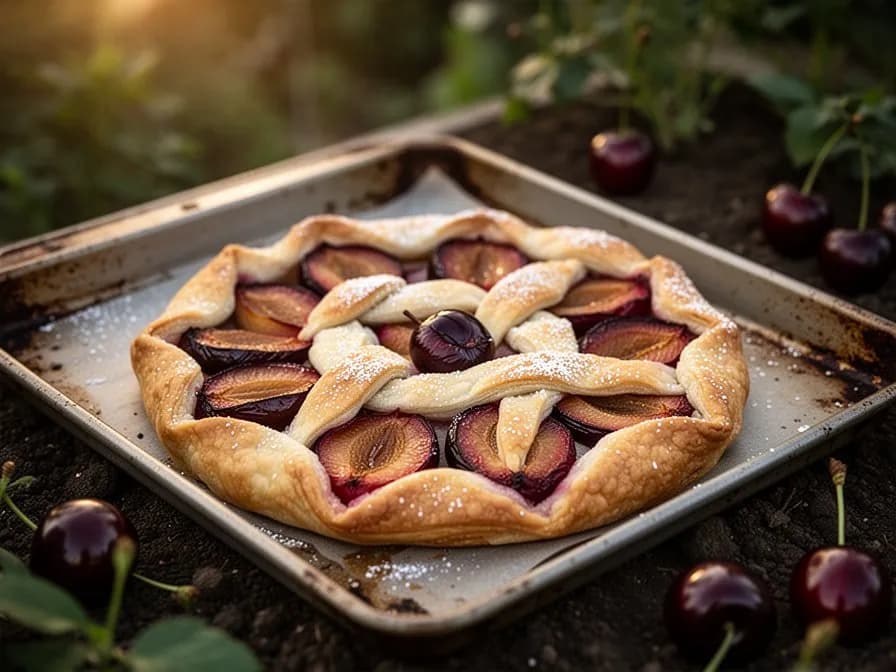
Lapins Cherry Refrigerator Jam
30 minutes + 1 hour coolingA quick, no-pectin, refrigerator-style preserve made from the intense natural sweetness of Lapins cherries, which at high Brix require less added sugar than other varieties. Unlike traditional preserving, this jam is not processed for shelf stability — it lives in the fridge and is consumed within four weeks, retaining a much fresher, more vibrant flavour and brighter colour than long-cooked preserves. Outstanding on sourdough toast, stirred through Greek yoghurt, or used as a glaze for roasted duck breast.
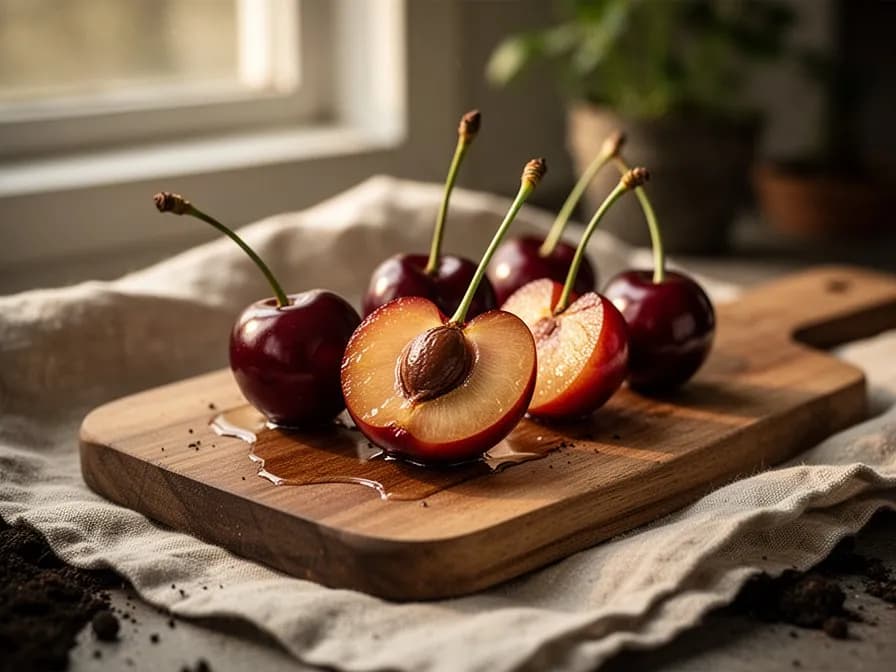
Fresh Lapins Cherry Salsa
15 minutesA quick, no-cook fresh salsa that showcases the firm texture and high sugar-acid balance of ripe Lapins cherries. Sweet fruit, sharp lime, fresh chilli, and herbs create a vibrant condiment that works beautifully with grilled salmon, seared duck breast, pork tacos, or simply served with good tortilla chips. Best made 30 minutes ahead and allowed to macerate briefly so the flavours integrate. Lapins' firmness means it holds its shape and texture rather than turning mushy, which is critical for a good salsa.
Yield & Spacing Calculator
See how many Lapins Cherry plants fit in your garden bed based on the recommended 500cm spacing.
0
Lapins Cherry plants in a 4×4 ft bed
0 columns × 0 rows at 500cm spacing
Popular Varieties
Some of the most popular lapins cherry varieties for home gardeners, each with unique characteristics.
Lapins (Standard)
The original Canadian-bred self-fertile sweet cherry with large, dark red, crack-resistant fruit.
Staccato
A newer self-fertile cherry from the same Summerland breeding program, ripening later with excellent firmness.
Sweetheart
Another self-fertile Summerland selection ripening very late with bright red, large fruit.
Skeena
A Lapins-type self-fertile cherry with very large fruit and similar dark color and late-season timing.
Lapins cherries are superb for fresh eating, with their large size and firm, sweet flesh. They work beautifully in cherry tarts, cobblers, and pies, holding their shape well when baked. Their firm texture makes them ideal for chocolate-dipped cherries and fruit salads. They also produce deeply colored cherry juice and make outstanding cherry jam.
When should I plant Lapins Cherry?
Plant Lapins Cherry in February, March. It takes approximately 1460 days to reach maturity, with harvest typically in July.
What are good companion plants for Lapins Cherry?
Lapins Cherry grows well alongside Chives, Garlic. Companion planting can improve growth, flavor, and natural pest control.
What hardiness zones can Lapins Cherry grow in?
Lapins Cherry thrives in USDA hardiness zones 5 through 8. With greenhouse protection, it may be grown in zones 3 through 9.
How much sun does Lapins Cherry need?
Lapins Cherry requires Full Sun (6-8h+). This means at least 6-8 hours of direct sunlight daily.
How far apart should I space Lapins Cherry?
Space Lapins Cherry plants 500cm (197 inches) apart for optimal growth and air circulation.
What pests and diseases affect Lapins Cherry?
Common issues include Brown Rot, Cherry Fruit Fly, Powdery Mildew. Prevention through good garden practices like crop rotation, proper spacing, and companion planting is the best approach. See the detailed pests and diseases section above for symptoms, prevention, and treatment for each.
How do I store Lapins Cherry after harvest?
Lapins cherries keep 10-14 days refrigerated at 32-34°F due to their crack-resistant, firm flesh. Their excellent firmness makes them ideal for freezing whole or pitted. They can be dried, canned in light syrup, or made into preserves and cherry butter. Lapins is well-suited for making cherry liqueu...
What are the best Lapins Cherry varieties to grow?
Popular varieties include Lapins (Standard), Staccato, Sweetheart, Skeena. Each has unique characteristics suited to different growing conditions and culinary preferences. See the varieties section above for detailed descriptions.
What soil does Lapins Cherry need?
Lapins prefers deep, well-drained sandy loam soil with pH 6.0-7.0. Avoid heavy clay soils that retain water around roots. Fertilize in early spring with a balanced 10-10-10 formula, about one pound per inch of trunk diameter. Supplement with calcium to strengthen fruit cell walls and reduce cracking...
Is Lapins truly self-fertile, or do I still need a second cherry tree for a good crop?
Lapins is genuinely and reliably self-fertile — unlike most sweet cherry varieties, which require a different compatible variety flowering simultaneously within 15–30 metres to set fruit, Lapins produces pollen capable of fertilising its own flowers. A single Lapins tree will produce a full, commercially viable crop without any pollination partner. This is one of the variety's most important characteristics and is the primary reason it was released from the Summerland breeding programme in 1983. That said, bee and insect activity during flowering still significantly improves the evenness and completeness of fruit set across the canopy — open flowers visited by bees will set fruit more reliably than those relying entirely on wind or self-pollination — so planting in a garden with good pollinator activity remains beneficial. Lapins also functions as an effective pollination partner for many other mid- to late-season sweet cherry varieties if you are growing more than one tree.
Why do Lapins cherries split and crack just before they are fully ripe?
Cherry fruit splitting is caused by the rapid absorption of water through the skin following a period of dry weather — when the tree suddenly takes up large amounts of moisture after a dry spell, the flesh expands faster than the skin can accommodate and the skin ruptures. The trigger is typically heavy rain falling on dry soil, or a sudden shift from no irrigation to heavy irrigation. Prevention requires maintaining perfectly even, consistent soil moisture throughout the fruit development and ripening period — drip irrigation or soaker hoses at the root zone are the ideal delivery method. Avoid overhead irrigation once fruit is colouring. If heavy rain is forecast after a dry period, ensure the soil has been kept uniformly moist in the preceding week so the uptake rate is gradual. Harvest promptly once Lapins reaches full colour — while Lapins has good fruit-holding ability and is more crack-resistant than many older varieties, very ripe fruit with a thin skin will split more readily than slightly early-picked fruit.
When exactly does Lapins ripen, and how do I know when to pick?
Lapins is a late-season sweet cherry, typically ripening in late July to mid-August in the UK and northern Europe, and in mid to late July in warmer climates such as the Pacific Northwest, Mediterranean, New Zealand, and Australia. It ripens 2–3 weeks after mid-season varieties like Stella and 4–6 weeks after early varieties like Burlat. Exact timing varies by 2–3 weeks depending on your local climate, the spring temperature profile, and the specific site. Ripe Lapins cherries are large, firm, and have developed a deep mahogany-red to near-black colour across the entire skin. Do not rely on colour alone — taste is the definitive test. A ripe Lapins cherry should be sweet, full-flavoured, and dense with juice, with a Brix reading of 18–22° if you have a refractometer. One of Lapins' valuable practical traits is that ripe fruit holds on the tree without softening or dropping for 7–10 days after reaching full colour, giving a generous harvest window.
How do I protect Lapins cherries from birds effectively?
Physical exclusion using fine-mesh netting (15–20 mm mesh) draped over and secured tightly around the entire canopy is the only reliably effective protection against birds. All other deterrents — reflective tape, fake owls, scarers, and noise devices — provide only brief protection of a few days before birds habituate and ignore them. Netting must cover the complete canopy with no gaps and be secured at the base to prevent birds accessing from below. Deploy netting at least two weeks before fruit begins to show any colour change — once cherries start to colour, birds locate them within hours. Because Lapins ripens late in the season, birds feeding in your garden may already be familiar with the tree from watching earlier varieties. On dwarf trees on Gisela 5, this is manageable with a simple frame of bamboo canes and netting clipped in place. For larger trees, a permanent walk-in fruit cage offers the most practical long-term solution.
What rootstock should I choose when buying a Lapins cherry tree?
The most important decision when purchasing a Lapins tree is choosing the right rootstock for your space and management intentions. Gisela 5 is the most popular dwarfing rootstock for home gardens, producing a tree of 3–4 metres that is manageable without tall ladders, easy to net completely, and early to bear — typically producing its first meaningful crop within 2–3 years of planting. Gisela 6 produces a slightly larger tree of 3.5–5 metres with somewhat higher yields. Colt is a semi-vigorous rootstock producing a tree of 4.5–6 metres — suitable for larger gardens, providing good yields and moderate management demands. Mazzard and F.12/1 are vigorous rootstocks producing large trees of 7–15 metres that are suitable only for spacious orchards or parkland planting where netting is not required and ladders are acceptable — these are rarely appropriate for domestic gardens. If space is very limited or you intend to grow in a container, Lapins on Pixie rootstock can be kept to 1.8–2.5 metres.
How long before my newly planted Lapins tree produces a meaningful crop?
A Lapins tree on Gisela 5 rootstock will typically begin producing a small token crop of a few hundred grams to 1–2 kg in years 2–3 after planting. A first genuinely useful harvest of 3–8 kg can be expected from years 4–5 onwards on this rootstock, and the tree will continue increasing its yield annually until reaching full productive maturity at approximately 8–12 years, when well-managed specimens on suitable sites can yield 15–25 kg per season. On Colt rootstock the tree grows more vigorously and the same progression occurs over a slightly longer timeline, but the ultimate yield at full maturity is correspondingly higher. On very dwarfing rootstocks like Pixie, yield potential is more limited. Every additional year of careful pruning, consistent feeding, and reliable irrigation accelerates the tree towards its productive potential — neglect in early years delays this considerably.
Ready to Grow Lapins Cherry?
Add Lapins Cherry to your garden plan and start designing your perfect layout.

Vladimir Kusnezow
Gardener and Software Developer
Zone 6b gardener. Growing vegetables and fruits in soil and hydroponics for 6 years. I built PlotMyGarden to plan my own gardens.
Jump to Section