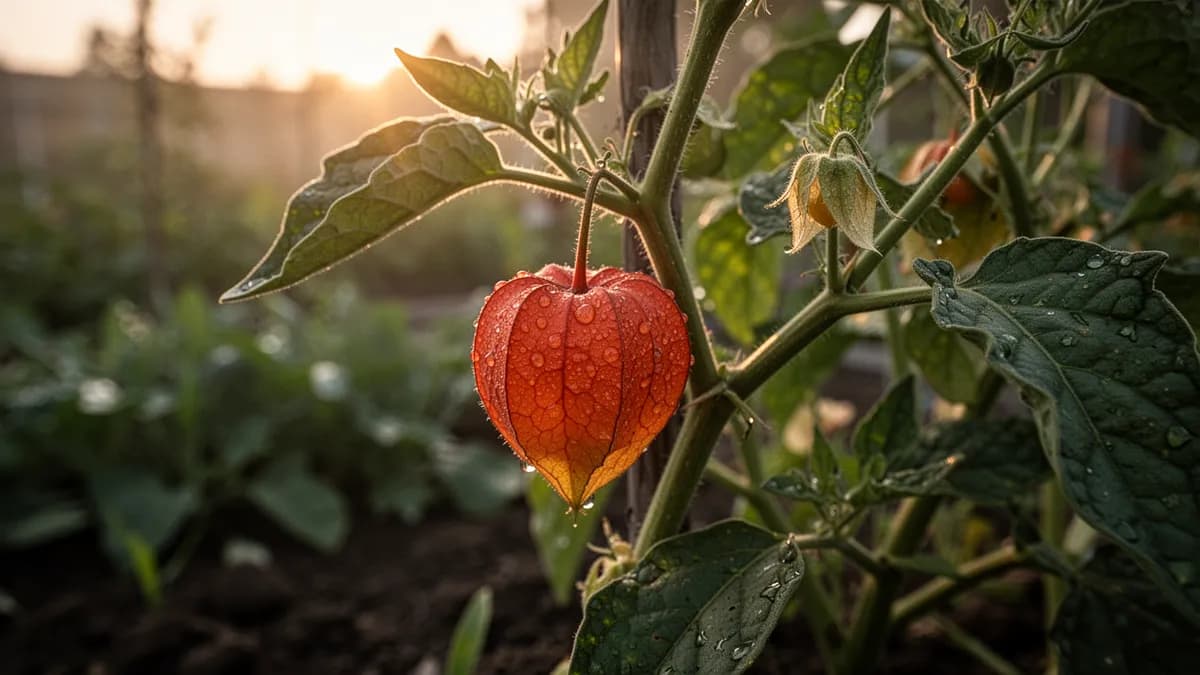
Cape Gooseberry
Physalis peruviana
At a Glance
It's planting season for Cape Gooseberry! Start planning your garden now.
A South American relative of the ground cherry producing golden berries enclosed in papery husks with a sweet-tart tropical flavor. Plants grow three to four feet tall and wide, benefiting from staking or caging to keep fruit off the ground. Start seeds indoors 6 to 8 weeks early as they need a long warm season to produce ripe fruit. Harvest when husks turn papery brown and fruits drop naturally for peak sweetness.
Planting & Harvest Calendar
Growth Stages
From Seed to Harvest
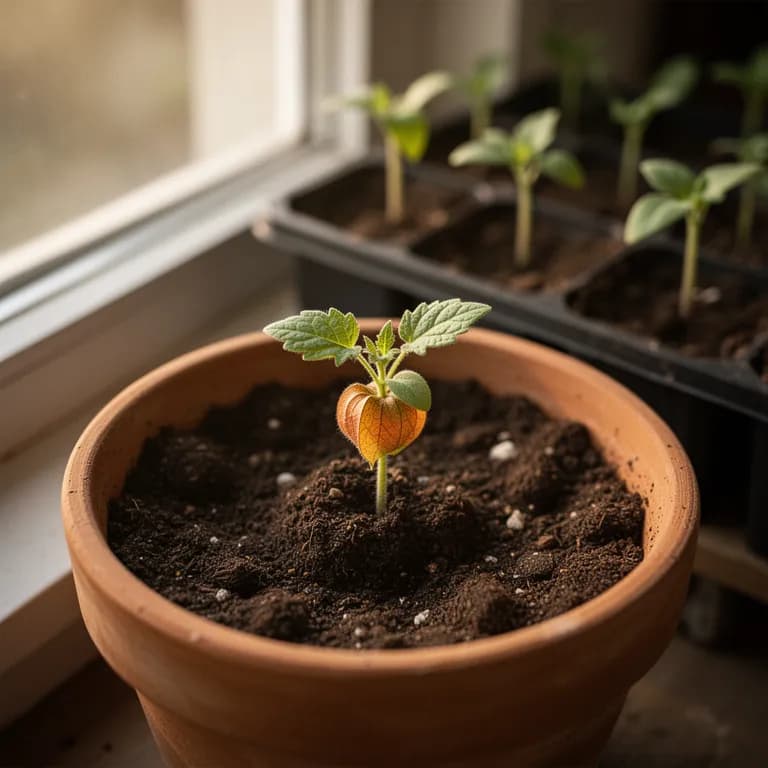
Seed Starting
Days 0–21
Cape gooseberry seeds are tiny (smaller than tomato seeds) and require light and warmth to germinate. Surface-sow on moist seed-starting mix without covering deeply. Germination is slow and irregular, typically taking 14-21 days at optimal temperatures. The first seedlings appear with small, rounded cotyledon leaves.
💡 Care Tip
Maintain consistent warmth of 20-25°C (68-77°F) using a heat mat. Press seeds gently into the surface and cover with only a dust-thin layer of vermiculite. Keep evenly moist with a mist sprayer — never let the surface dry out. Be patient, as germination can stagger over several weeks.
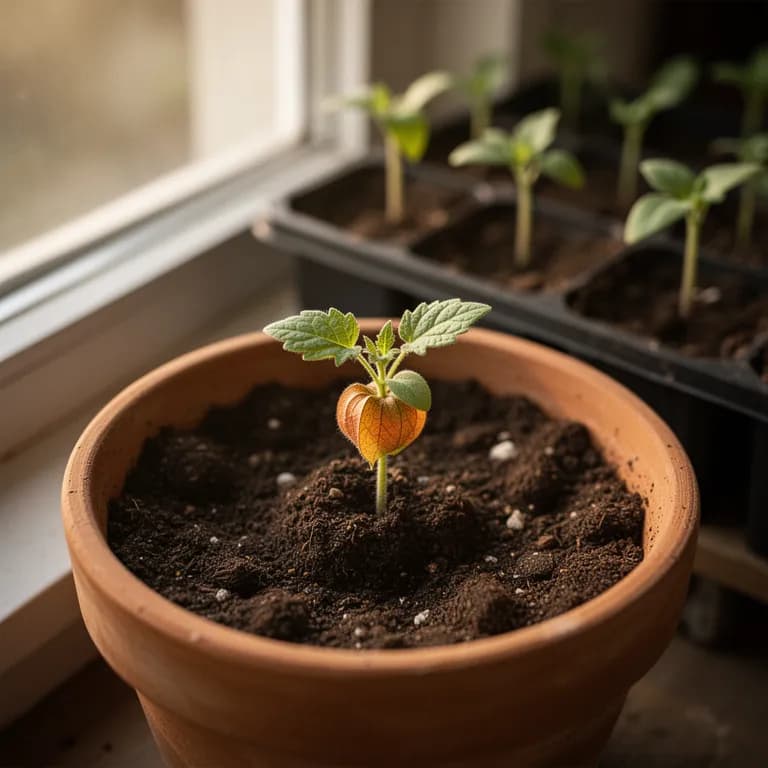
Cape gooseberry seedlings resemble their tomato relatives with soft, velvety leaves
Monthly Care Calendar
What to do each month for your Cape Gooseberry
May
You are herePrimary transplanting month for most zones. Plant out after all frost risk has passed and night temperatures stay above 10°C (50°F). Space 60-90 cm apart. Water deeply at planting and mulch around the base to retain moisture.
Did You Know?
Fascinating facts about Cape Gooseberry
Cape gooseberries are not gooseberries at all — they belong to the nightshade family (Solanaceae) and are more closely related to tomatoes, tomatillos, and potatoes than to true gooseberries. Their name comes from the Cape of Good Hope in South Africa, where the fruit became widely cultivated in the early 1800s.
Cape gooseberries thrive in warm, sunny locations with well-drained soil. Start seeds indoors 6 to 8 weeks before the last frost date, sowing them on the surface of moist seed-starting mix since they need light to germinate. Maintain temperatures between 70 and 75 degrees Fahrenheit for optimal germination, which typically takes 2 to 3 weeks.
Transplant seedlings outdoors after all danger of frost has passed and nighttime temperatures remain consistently above 50 degrees Fahrenheit. Space plants 24 to 36 inches apart in rows 3 to 4 feet apart. Install stakes or small cages at planting time to support the bushy growth habit. Mulch around plants to retain moisture and suppress weeds.
Water regularly during the growing season, providing about 1 inch per week. Reduce watering slightly as fruits begin to ripen to concentrate flavor. Side-dress with a balanced fertilizer every 4 to 6 weeks. In zones 8 to 11, plants may overwinter and become short-lived perennials. In cooler zones, treat them as annuals or grow in large containers that can be moved indoors before frost.
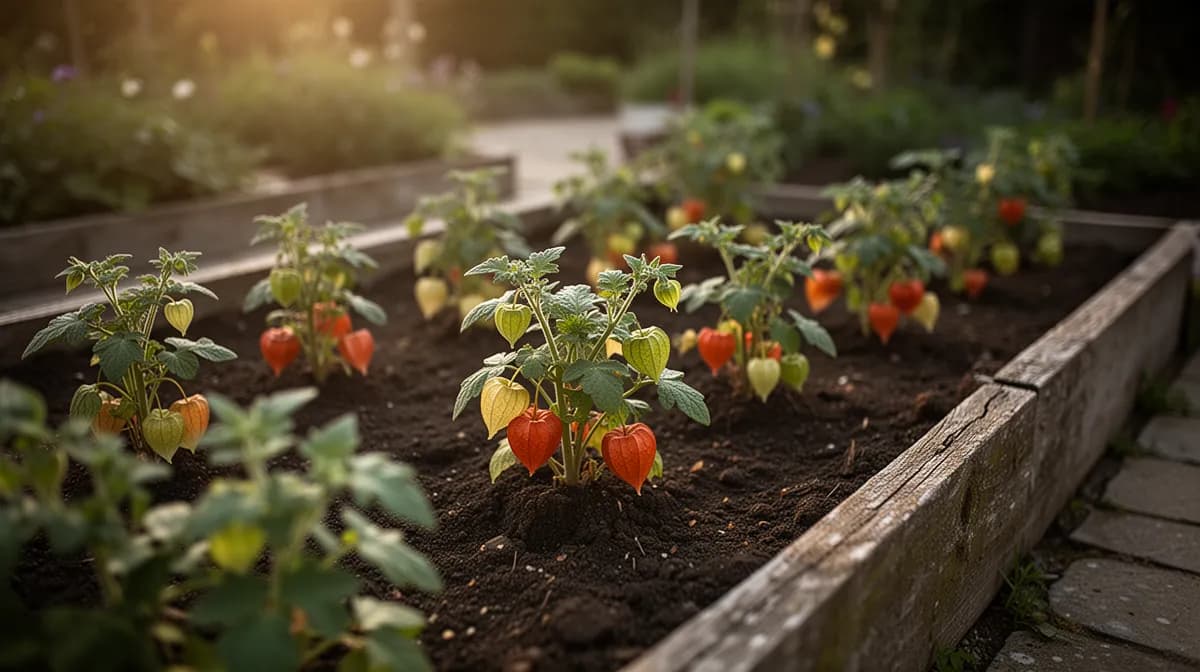
A mature cape gooseberry plant can spread 60-90 cm wide and produces hundreds of fruits
The cape gooseberry (Physalis peruviana) originated in the highlands of Peru, Ecuador, and Colombia, where it has been cultivated for thousands of years in the Andean mountain valleys at elevations of 1,500-3,000 meters. Archaeological evidence and historical accounts confirm that the Inca civilization prized the fruit, cultivating it alongside potatoes, quinoa, and other native crops in the terraced agricultural systems of the Sacred Valley. Wild populations of Physalis peruviana still grow throughout the Andean highlands, and the fruit remains an important part of traditional diets in Peru, Colombia, and Ecuador.
European explorers encountered the fruit during the Spanish conquest of South America in the 16th century, and seeds were carried to Europe, Africa, and Asia over the following centuries. The fruit gained its common English name from the Cape of Good Hope region of South Africa, where it was widely cultivated by the early 1800s and became naturalized. British settlers in the Cape Colony valued the fruit for its long shelf life, high pectin content for jam making, and its ability to grow in relatively poor soils. From South Africa, the cape gooseberry spread to Australia, New Zealand, India, and Southeast Asia, often naturalizing in subtropical and tropical highland areas.
Today, Colombia is the world's largest commercial producer of cape gooseberries, cultivating them primarily in the cool Andean departments of Boyaca and Cundinamarca for export to European markets, where the fruit commands premium prices as an exotic garnish and dessert ingredient. South Africa, Zimbabwe, Kenya, India, and China are also significant producers. In temperate climates like Europe and North America, the cape gooseberry is grown as a warm-season annual, treated much like a tomato, and has become increasingly popular among home gardeners and specialty growers seeking unusual and rewarding fruits.
Sow seeds indoors 6 to 8 weeks before the last expected frost date. Press seeds lightly onto the surface of moist seed-starting mix without covering, as they require light for germination. Maintain soil temperature between 70 and 75 degrees Fahrenheit using a heat mat. Germination is slow, typically taking 14 to 21 days. Keep the growing medium consistently moist but not waterlogged. Transplant seedlings to individual pots once they have two sets of true leaves, and harden off over 7 to 10 days before planting outdoors.
Cape gooseberries prefer well-drained, moderately fertile soil with a pH between 6.0 and 7.0. Amend heavy clay soils with compost and perlite to improve drainage. Apply a balanced 10-10-10 fertilizer at planting time and side-dress every 4 to 6 weeks during the growing season. Avoid excessive nitrogen, which promotes leaf growth at the expense of fruit production. A light application of bone meal or rock phosphate encourages fruiting.
Check Your Zone
See if Cape Gooseberry is suitable for your location.
15°C – 25°C
59°F – 77°F
Cape gooseberry is a cool-highland tropical plant that prefers moderate warmth rather than extreme heat. The ideal growing range is 15-25°C (59-77°F), reflecting its Andean highland origins at 1,500-3,000 meters elevation. Above 30°C (86°F), fruit set declines and plants become stressed. Below 10°C (50°F), growth stalls. The plant is killed by frost but tolerates cool nights better than most other Solanaceae family members. In tropical lowlands, it performs best at higher elevations where temperatures are naturally moderated.
Common issues affecting Cape Gooseberry and how to prevent and treat them organically.
Plants may become leggy and sprawling without adequate support, causing fruit to contact the ground and rot. Insufficient warmth and short growing seasons in northern climates can prevent fruit from ripening fully. Overwatering leads to root rot and bland-tasting fruit. Poor pollination in greenhouse settings may result in low fruit set. Birds and small mammals are attracted to ripe fruit and may need netting for protection.
Cape gooseberries grow well alongside tomatoes, basil, and marigolds, which help repel aphids and whiteflies. Avoid planting near fennel, which inhibits growth of most nightshade family members. Nasturtiums serve as excellent trap crops, drawing aphids away from cape gooseberry plants. Herbs like parsley and chives planted nearby attract beneficial pollinators and predatory insects.
- 1Start seeds very early — 8-10 weeks before last frost. Cape gooseberry has a long season from seed to fruit (120-140 days), so the earlier you start indoors, the longer your harvest window will be. In short-season climates, this early start is essential for any harvest at all.
- 2Surface-sow seeds and do not bury them. Cape gooseberry seeds require light for germination. Press gently into moist seed-starting mix and cover with the thinnest possible layer of vermiculite. Mist regularly and maintain 20-25°C (68-77°F) for best germination in 14-21 days.
- 3Treat cape gooseberry plants exactly like indeterminate tomatoes for support. They become large, sprawling bushes that benefit greatly from tomato cages, stakes, or a trellis system. Unsupported plants will sprawl along the ground, making fruit collection difficult and increasing disease risk.
- 4Pinch growing tips when young plants reach 15-20 cm tall to encourage branching. More branches mean more flowering nodes and ultimately more fruit. A well-branched plant can have dozens of fruits developing simultaneously at different stages.
- 5Do not overfeed with nitrogen. Like tomatoes, excess nitrogen produces beautiful foliage but delays flowering and reduces fruit set. Use a balanced fertilizer during early growth, then switch to a high-potassium feed (such as tomato fertilizer) once flowering begins.
- 6Collect ripe fruits from the ground daily. Cape gooseberries self-harvest by dropping when ripe — this is normal and desirable. Place a layer of clean straw mulch beneath plants to cushion fallen fruits and prevent soil splash and slug damage.
- 7Save plants from frost by potting up and overwintering indoors. Cape gooseberries are perennial in frost-free climates, and a plant that survives winter will produce much earlier and more heavily in its second year. A cool, bright greenhouse or conservatory is ideal.
- 8Never eat green, unripe cape gooseberries. Like all Physalis species, the unripe fruit and the leaves contain solanine and other glycoalkaloids that can cause gastrointestinal distress. Only eat fruits that have turned fully golden-orange inside a dry, papery husk.
Cape gooseberries are ready to harvest when the papery husk turns from green to a dry, straw-brown color and the fruit inside is golden-orange. Fruits often drop naturally when ripe, so placing mulch or a ground cover beneath plants helps keep them clean. Gently twist ripe fruits from the stem or collect fallen berries daily. Taste-test a few berries to confirm peak sweetness before a large harvest. Leave the husks intact for longer storage life.
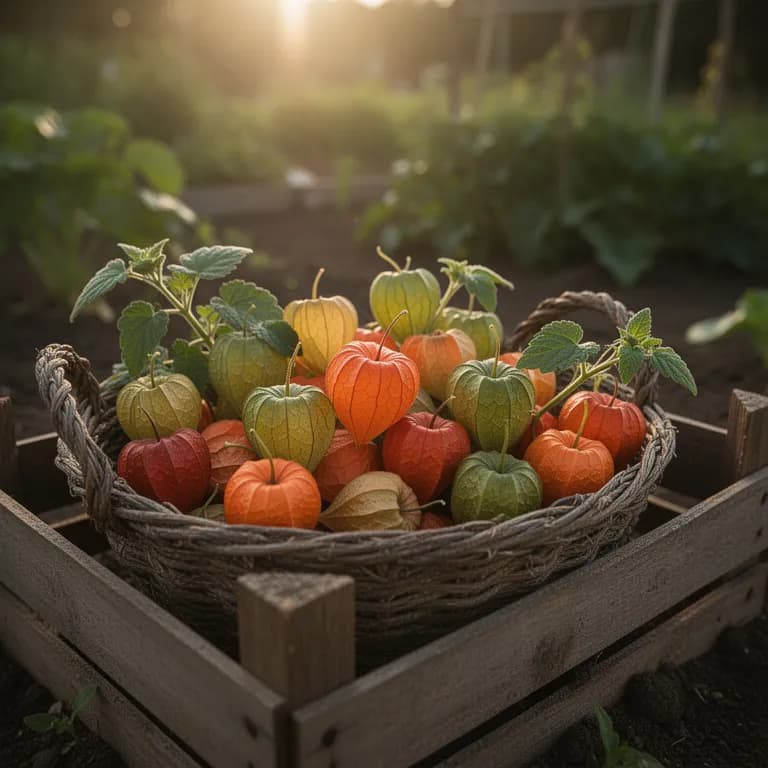
Perfectly ripe fruits turn deep golden-orange and the husks dry to a parchment-like texture
Fresh cape gooseberries with intact husks store for up to 2 weeks in the refrigerator at around 40 degrees Fahrenheit. Remove husks and rinse only before use. For longer preservation, spread berries on a tray to freeze individually, then transfer to freezer bags for up to 12 months. They also make excellent jams, chutneys, and dried snacks. Dehydrate at 135 degrees Fahrenheit for 10 to 12 hours until chewy like raisins.
Plan your garden with ease
Love growing Cape Gooseberry? Use our free garden planner to design your beds, track planting dates, and get personalized care reminders.
Nutritional Info
Per 100g serving
53
Calories
Health Benefits
- Exceptionally rich in beta-carotene and vitamin A, providing 14% of the daily value per 100g — important for eye health, immune function, and skin integrity
- Good source of vitamin C at 12% of the daily value, supporting immune defense and acting as a powerful antioxidant
- Contains withanolides, unique bioactive compounds shared with its relative ashwagandha, that have demonstrated anti-inflammatory and immune-modulating properties in research studies
- Provides phosphorus and iron in meaningful amounts, supporting bone health and oxygen transport in the blood
- Rich in B-vitamins including niacin (B3) and thiamine (B1), essential for energy metabolism and nervous system function
- Contains pectin and soluble fiber that support digestive health and may help regulate cholesterol absorption
💰 Why Grow Your Own?
Fresh cape gooseberries are a premium specialty fruit, typically selling for $6-12 per 100g punnet at gourmet grocers and farmers markets — making them one of the most expensive fresh fruits per kilogram. A single plant producing 1-3 kg of fruit represents $60-360 worth of berries at retail prices. Growing from seed costs under $3, making cape gooseberries one of the highest return-on-investment crops for home gardeners. Dried cape gooseberries sell for $15-25 per 200g bag, and homemade cape gooseberry jam or chutney makes a highly valued artisan gift.
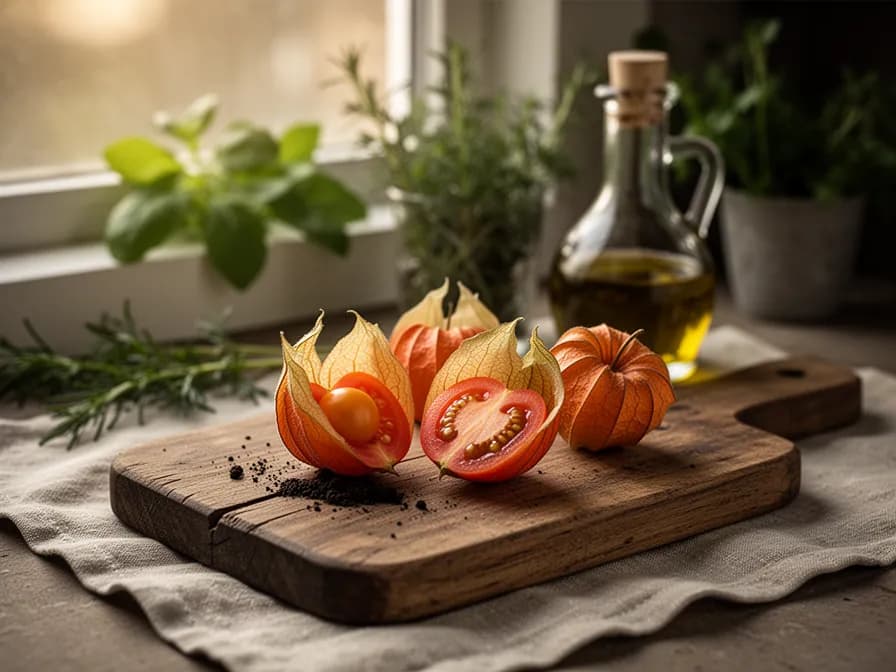
Each marble-sized fruit is packed with vitamins A and C and a unique sweet-tart flavor
Quick Recipes
Simple recipes using fresh Cape Gooseberry
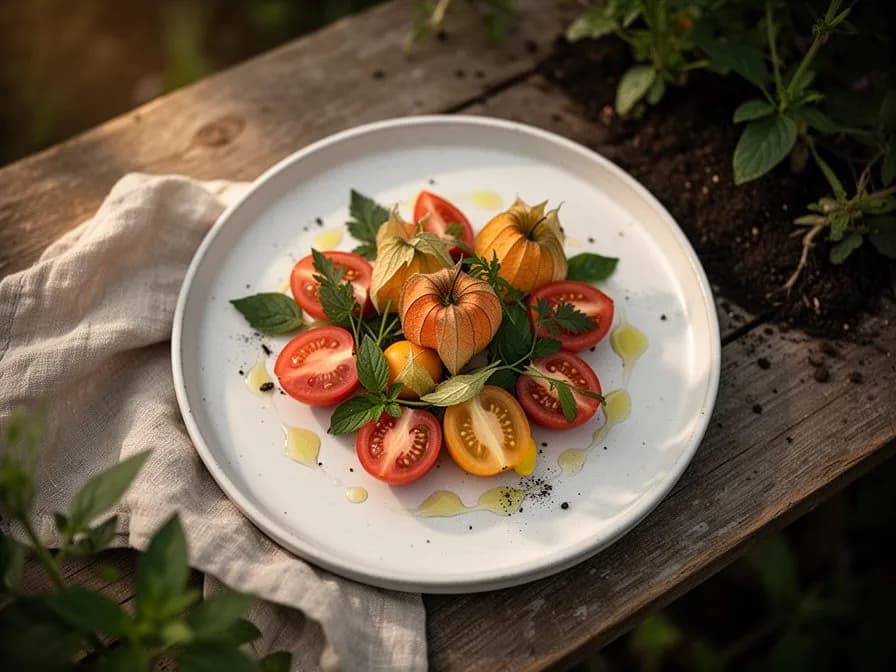
Cape Gooseberry and Ginger Jam
40 minA beautifully golden, tangy-sweet jam with a hint of warm ginger that showcases cape gooseberry's naturally high pectin content. This jam sets easily without added pectin, and the flavor is reminiscent of tropical passionfruit with a citrus finish.
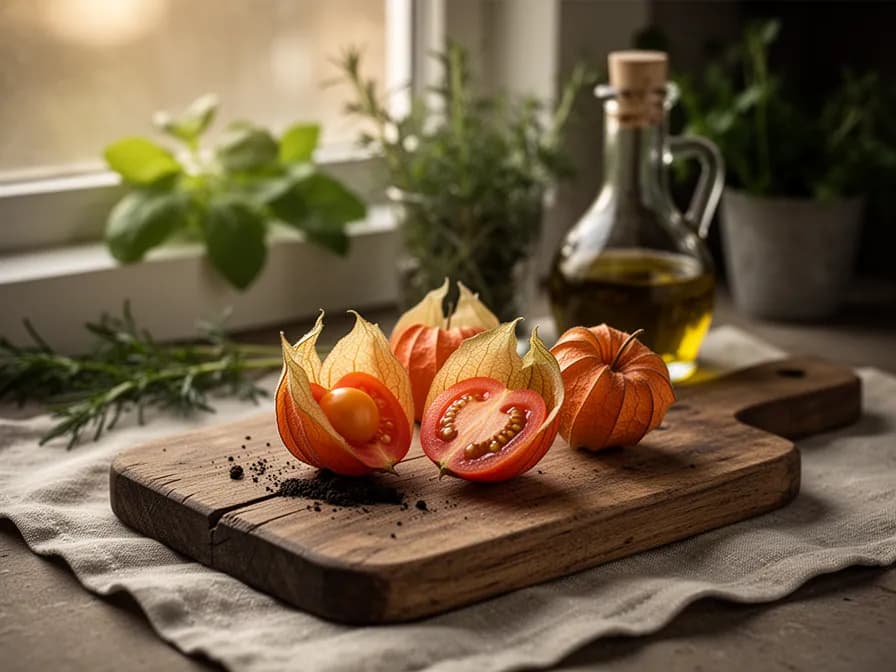
Chocolate-Dipped Cape Gooseberries
20 minAn elegant dessert or gift where ripe cape gooseberries are dipped in tempered dark chocolate, using their natural papery husks as decorative handles. The combination of bittersweet chocolate and tart fruit is stunning at dinner parties.
Cape Gooseberry Salsa
15 minA vibrant, tangy salsa that pairs beautifully with grilled fish, chicken, or tortilla chips. The sweet-tart cape gooseberries replace tomatoes for a unique twist on a classic, adding a bright tropical note.
Cape gooseberry jam captures the fruit's unique tropical flavor with a beautiful golden color
Yield & Spacing Calculator
See how many Cape Gooseberry plants fit in your garden bed based on the recommended 60cm spacing.
4
Cape Gooseberry plants in a 4×4 ft bed
2 columns × 2 rows at 60cm spacing
Popular Varieties
Some of the most popular cape gooseberry varieties for home gardeners, each with unique characteristics.
Giant Poha Berry
Produces larger-than-average fruits with intense sweet-tart flavor, ideal for fresh eating and preserves.
Goldenberry
A commercial selection with uniform, high-yielding plants and consistently sweet golden berries.
Aunt Molly's
An heirloom ground cherry variety with smaller but exceptionally sweet pineapple-flavored fruits.
Schoenbrunn Gold
A European selection known for vigorous growth and reliable production in shorter growing seasons.
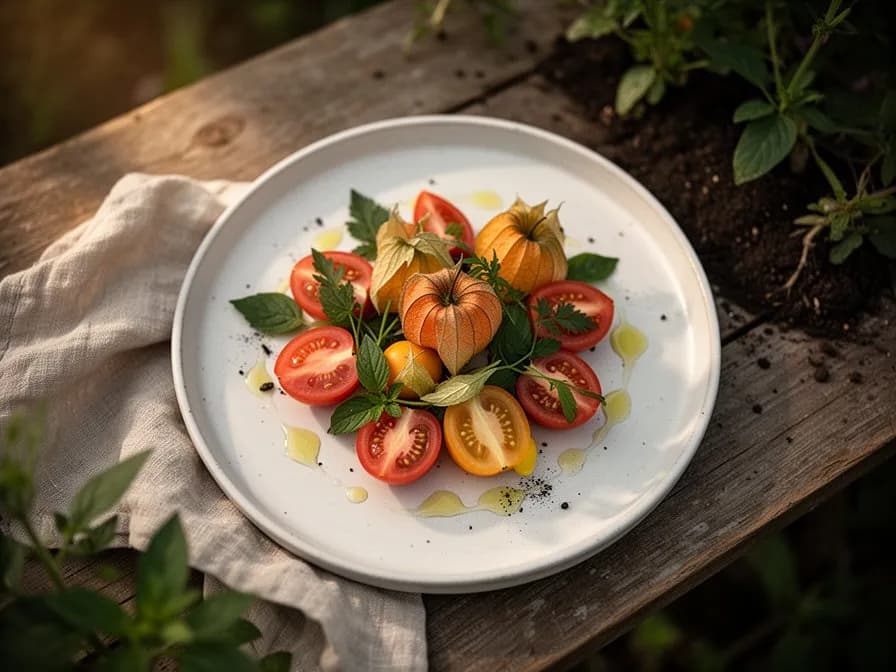
Cape gooseberries are delicious eaten fresh, their sweet-tart flavor pairing well with chocolate, cheese, and tropical fruits. They make exceptional jams, chutneys, and pie fillings. Dip them in chocolate for an elegant dessert or use them in salads and salsas. The berries can be dried like raisins for trail mix or baked into muffins and tarts.
When should I plant Cape Gooseberry?
Plant Cape Gooseberry in March, April, May. It takes approximately 90 days to reach maturity, with harvest typically in August, September, October.
What are good companion plants for Cape Gooseberry?
Cape Gooseberry grows well alongside Tomato, Basil. Companion planting can improve growth, flavor, and natural pest control.
What hardiness zones can Cape Gooseberry grow in?
Cape Gooseberry thrives in USDA hardiness zones 8 through 11. With greenhouse protection, it may be grown in zones 6 through 12.
How much sun does Cape Gooseberry need?
Cape Gooseberry requires Full Sun (6-8h+). This means at least 6-8 hours of direct sunlight daily.
How far apart should I space Cape Gooseberry?
Space Cape Gooseberry plants 60cm (24 inches) apart for optimal growth and air circulation.
What pests and diseases affect Cape Gooseberry?
Common issues include Aphids, Whiteflies, Powdery Mildew, Root Rot. Prevention through good garden practices like crop rotation, proper spacing, and companion planting is the best approach. See the detailed pests and diseases section above for symptoms, prevention, and treatment for each.
How do I store Cape Gooseberry after harvest?
Fresh cape gooseberries with intact husks store for up to 2 weeks in the refrigerator at around 40 degrees Fahrenheit. Remove husks and rinse only before use. For longer preservation, spread berries on a tray to freeze individually, then transfer to freezer bags for up to 12 months. They also make e...
What are the best Cape Gooseberry varieties to grow?
Popular varieties include Giant Poha Berry, Goldenberry, Aunt Molly's, Schoenbrunn Gold. Each has unique characteristics suited to different growing conditions and culinary preferences. See the varieties section above for detailed descriptions.
What soil does Cape Gooseberry need?
Cape gooseberries prefer well-drained, moderately fertile soil with a pH between 6.0 and 7.0. Amend heavy clay soils with compost and perlite to improve drainage. Apply a balanced 10-10-10 fertilizer at planting time and side-dress every 4 to 6 weeks during the growing season. Avoid excessive nitrog...
How do I know when cape gooseberries are ripe?
Ripe cape gooseberries announce themselves by dropping from the plant — this natural self-harvesting is the most reliable indicator. The papery husk should be fully dry and straw-colored (not green), and when you peel it back, the berry inside should be deep golden-orange, slightly soft to the touch, and fragrant. Green or pale yellow fruits are unripe and mildly toxic — never eat them. Fruits that have dropped with still-green husks can be left at room temperature to ripen further over 1-2 weeks.
Can I grow cape gooseberries in containers?
Yes, cape gooseberries grow well in large containers of at least 20-30 liters (5-8 gallons). Use a rich, well-draining potting mix and install a sturdy tomato cage at planting time. Place in full sun and water consistently — containers dry out faster than garden beds. Feed every two weeks with liquid tomato fertilizer once flowering starts. Container growing has the added advantage of allowing you to move plants indoors before frost to extend the harvest or overwinter them for a second productive year.
How long can I store cape gooseberries after harvest?
This is one of cape gooseberry's most remarkable qualities. Fruits stored in their intact papery husks at room temperature will keep for 2-3 months — far longer than almost any other fresh fruit. The husk acts as a natural modified-atmosphere package that slows ripening and protects against moisture loss and physical damage. For even longer storage, refrigerate husked fruits for up to 4 months. Once the husk is removed, use fruits within a week. This exceptional shelf life made cape gooseberries a valued provision fruit for long sea voyages in the 18th and 19th centuries.
Are cape gooseberries the same as ground cherries or tomatillos?
They are close relatives but different species. Cape gooseberry (Physalis peruviana) produces golden-orange fruits about the size of a large marble with a sweet-tart, tropical flavor. Ground cherry (Physalis pruinosa) is smaller, sweeter, and matures faster but stores for only a few weeks. Tomatillo (Physalis philadelphica) is larger, green, and savory rather than sweet — it is the base for Mexican salsa verde. All three share the characteristic papery husk but differ significantly in flavor, size, and culinary use.
Why are my cape gooseberry plants flowering but not setting fruit?
Poor fruit set is usually caused by temperature extremes, inadequate pollination, or nutritional imbalance. Cape gooseberries prefer moderate temperatures of 15-25°C (59-77°F) — sustained heat above 30°C (86°F) impairs pollen viability. Gently shake flowering plants to improve self-pollination on still, windless days. Excessive nitrogen fertilizer promotes foliage at the expense of fruiting — switch to a high-potassium feed. Also ensure consistent moisture, as drought stress causes flower drop.
Can cape gooseberry plants survive winter outdoors?
Only in frost-free climates (USDA zones 10-11) can cape gooseberries survive winter outdoors reliably, and even then a heavy mulch layer around the root zone is advisable. In zones 8-9, plants may survive mild winters with heavy mulch and frost cloth protection but this is not guaranteed. In colder zones, the best strategy is to dig up plants before first frost, pot them into large containers, and overwinter in a cool, bright greenhouse or conservatory at 5-10°C (41-50°F). Second-year plants produce much earlier and more heavily than first-year seedlings.
Ready to Grow Cape Gooseberry?
Add Cape Gooseberry to your garden plan and start designing your perfect layout.

Vladimir Kusnezow
Gardener and Software Developer
Zone 6b gardener. Growing vegetables and fruits in soil and hydroponics for 6 years. I built PlotMyGarden to plan my own gardens.
Jump to Section