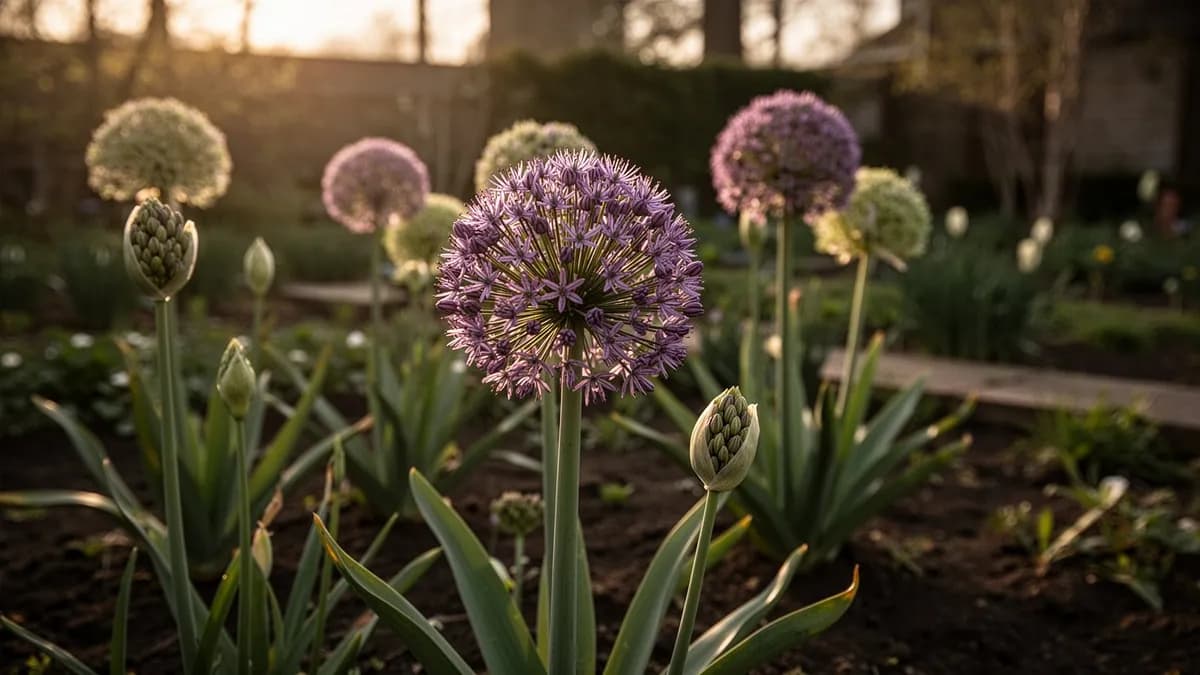
Ornamental Allium
Allium giganteum
At a Glance
A spectacular ornamental onion with large purple globe-shaped flower heads on tall, leafless stems that dry beautifully. Giant alliums create dramatic focal points in borders and the dried seed heads remain attractive for months. Interplant with perennials that will hide the yellowing foliage as it dies back after flowering.
Planting & Harvest Calendar
Growth Stages
From Seed to Harvest
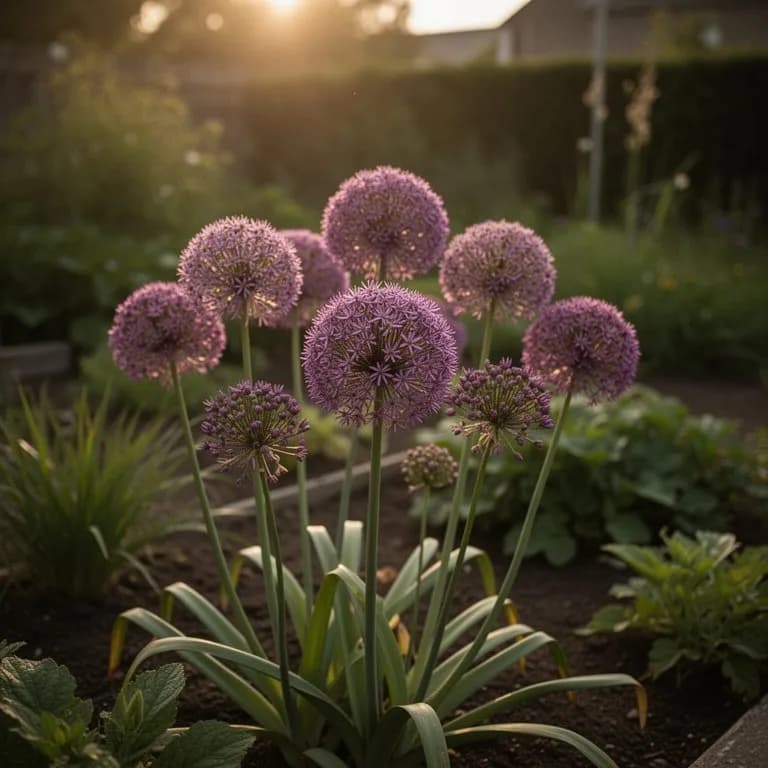
Bulb Dormancy & Root Establishment
Days 0–60
After autumn planting, the bulb begins developing a strong root system underground while remaining dormant above the soil surface. Root growth continues as long as soil temperatures stay above freezing.
💡 Care Tip
Water the planting area thoroughly after placing the bulbs. Apply a 5-8 cm layer of mulch to insulate the soil and maintain consistent moisture during root establishment.
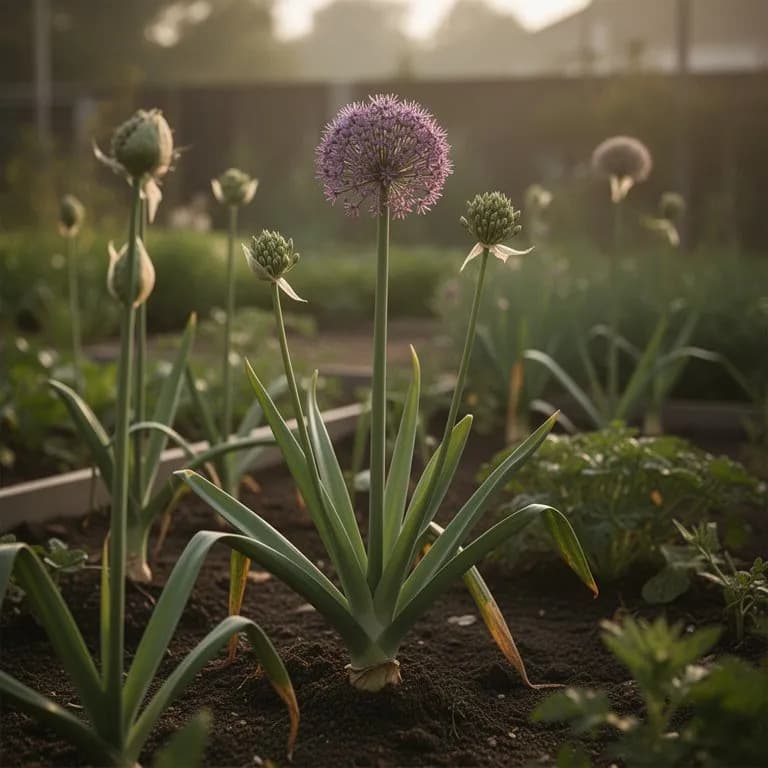
Allium foliage appears in early spring, producing broad strap-shaped leaves before the flower stalks emerge.
Monthly Care Calendar
What to do each month for your Ornamental Allium
April
You are hereNo specific care tasks for this month.
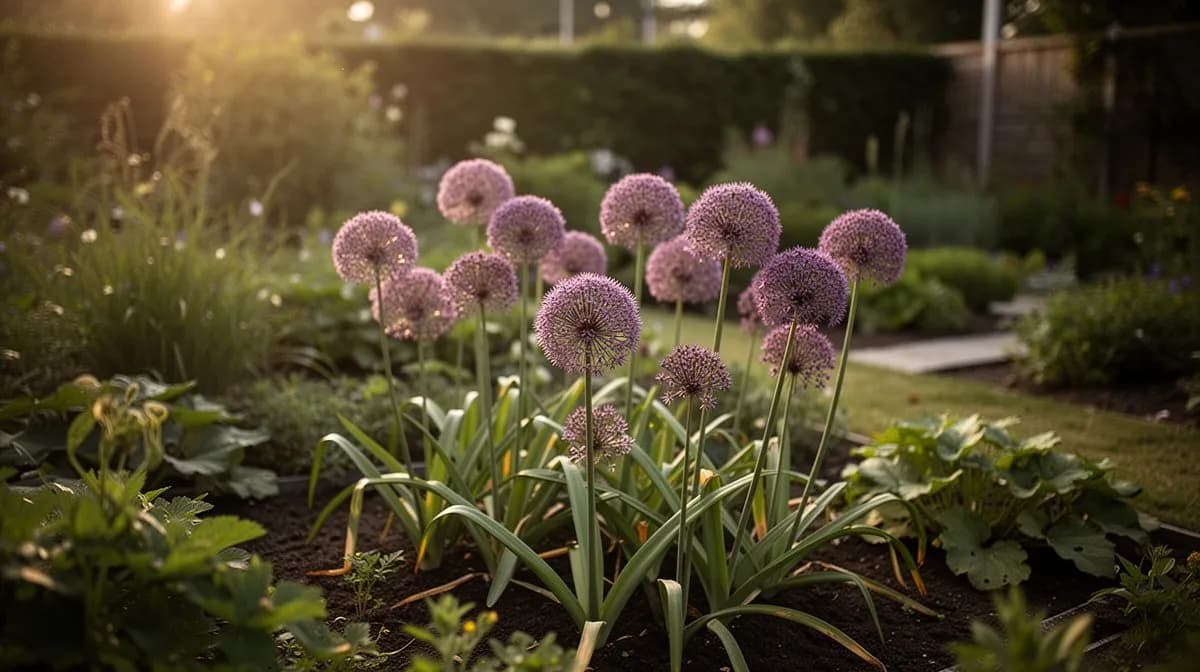
Dried allium seed heads catch frost beautifully, adding winter interest to the dormant garden.
Did You Know?
Fascinating facts about Ornamental Allium
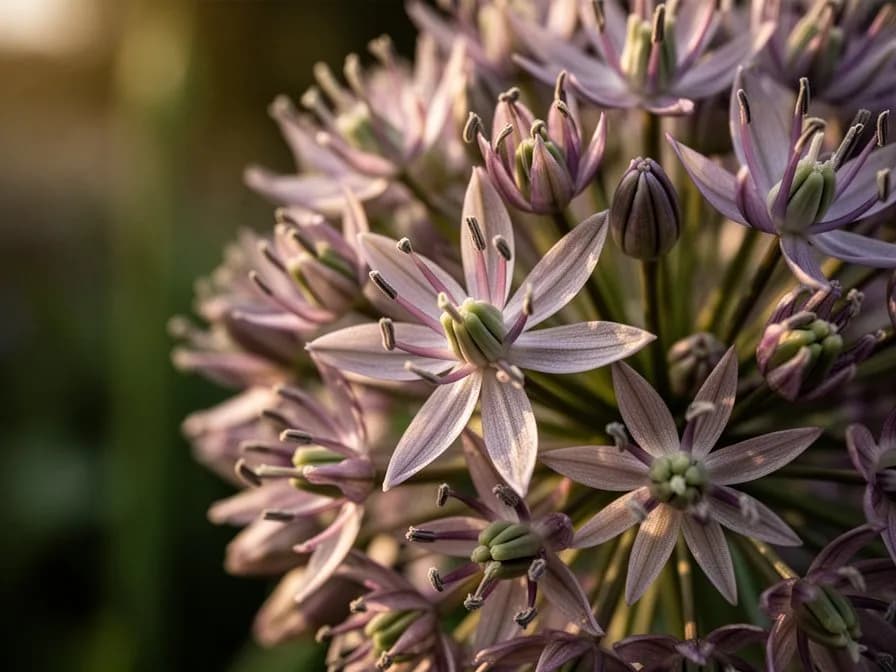
Giant allium flower heads are composed of hundreds of individual tiny star-shaped florets, with a single Allium giganteum globe containing up to 2,000 miniature flowers.
Plant ornamental allium bulbs in autumn, setting them three times as deep as the bulb is tall—typically 6-8 inches for giant allium species. Choose a sunny, well-drained location as wet winter soil will rot the bulbs. Space large varieties 8-12 inches apart to allow each globe room to display fully.
Allium foliage begins to yellow and die back even before the flowers open, which is perfectly normal. The key design strategy is to interplant with bushy perennials—catmint, hardy geraniums, or ornamental grasses—that will camouflage the declining foliage while the spectacular flower heads float above.
Once established, ornamental alliums are remarkably low-maintenance. They are naturally deer and rabbit resistant due to their onion-family chemistry, and they rarely suffer from diseases. Leave spent flower heads on the plant—the architectural dried seed heads are beautiful through summer and into autumn, adding structure to the winter garden.
Ornamental alliums originate from the dry, mountainous regions of Central and Western Asia, with the greatest diversity of wild species found across modern-day Turkey, Iran, Afghanistan, and the highlands of Turkmenistan and Uzbekistan. The giant allium, Allium giganteum, is native to the meadows and rocky slopes of Central Asia, particularly in regions spanning from Iran through to the western Himalayas, where it grows at elevations between 1,500 and 2,500 metres. These habitats experience cold winters with snow cover followed by warm, dry summers, which explains the plant's preference for well-drained soil and its natural summer dormancy cycle. The cultivation of alliums for ornamental purposes has a long history intertwined with their culinary relatives. Ancient civilisations across the Middle East and Mediterranean grew various allium species, but it was during the Ottoman Empire period from the 14th to 17th centuries that ornamental varieties began to be deliberately selected and bred for their decorative flower heads. European plant collectors and botanists encountered giant alliums during expeditions to Central Asia in the 19th century. The Russian botanist Eduard Regel formally described Allium giganteum in 1883 from specimens collected in the mountains near Tashkent. From the late 19th century onward, Dutch bulb growers began producing ornamental alliums commercially, developing hybrid cultivars with larger, more vividly coloured flower heads and stronger stems. By the mid-20th century, ornamental alliums had become established garden plants across Europe and North America. Modern breeding programmes have produced dozens of named cultivars including popular varieties such as Purple Sensation, Globemaster, and Ambassador, which offer improved flower size, colour intensity, and garden performance over wild species.
Many ornamental alliums self-sow freely if seed heads are left in place. Collect ripe seed in late summer when pods split open. Sow immediately in pots of gritty compost, barely covering the seed. Leave pots outdoors for natural cold stratification over winter. Seedlings emerge in spring as thin, grass-like shoots. Grow on in pots for two years before planting out. Seed-grown alliums typically take 3-4 years to reach flowering size, depending on species.
Plant allium bulbs in autumn, about 15 cm deep and 20 cm apart for best results.
Ornamental alliums thrive in any well-drained soil with a pH of 5.5-7.0. They tolerate poor, rocky, and sandy soils better than rich, heavy clay. In heavy soils, add generous amounts of grit to prevent winter waterlogging. A single application of bone meal at planting time provides adequate nutrition. Avoid high-nitrogen fertilizers, which promote lush foliage at the expense of flowers.
Check Your Zone
See if Ornamental Allium is suitable for your location.
-25°C – 30°C
-13°F – 86°F
Ornamental allium bulbs are extremely cold-hardy, tolerating winter soil temperatures down to -25 degrees Celsius when dormant, making them suitable for USDA zones 4 through 8. During the active growing season in spring, they thrive in daytime temperatures between 10 and 25 degrees Celsius. Prolonged summer heat above 30 degrees Celsius is well tolerated once the bulb has entered dormancy. Good winter chill with temperatures below 5 degrees Celsius for at least eight to ten weeks is essential for triggering strong spring growth and flowering.
Common issues affecting Ornamental Allium and how to prevent and treat them organically.
The biggest frustration is the unsightly yellowing foliage that appears while flowers are at their peak. This is inherent to the plant, not a cultural problem—plan companion plantings accordingly. Bulbs that fail to flower are usually planted too shallowly or in too much shade. Very large varieties like Globemaster may produce only foliage in their first year as they establish. Overcrowded clumps bloom less—divide every 3-4 years.
Ornamental alliums are the quintessential companion for cottage-garden perennials. Plant among catmint, salvia, and hardy geraniums, which disguise the yellowing allium foliage while creating a beautiful purple-blue color scheme. Roses and alliums bloom together beautifully, and alliums help deter aphids from roses due to their sulfur compounds. Pair with ornamental grasses like Stipa for a naturalistic, meadow-style planting.
- 1Plant allium bulbs at a depth of three times the bulb diameter in autumn, ideally six to eight weeks before the first expected frost to allow strong root establishment.
- 2Choose a planting site with full sun and excellent drainage, as allium bulbs are highly susceptible to rot in waterlogged soils, particularly during their summer dormancy period.
- 3Interplant with low-growing perennials such as hardy geraniums, nepeta, or lavender to disguise the allium foliage, which begins to yellow and look untidy even before the flowers fully open.
- 4Apply a thin layer of bone meal or bulb-specific fertiliser to the planting hole at the time of planting to encourage strong root development and robust spring growth.
- 5Avoid overhead watering once flower stalks begin to develop, as trapped moisture in the hollow stems can encourage botrytis and other fungal diseases.
- 6Leave the foliage in place until it has completely yellowed and dried, even though it looks unsightly, because the leaves are photosynthesising and channelling energy back into the bulb for next season.
- 7Mark the location of dormant bulbs with small stakes or plant labels during summer, as it is easy to forget their position and accidentally damage them when planting other things.
- 8If growing in heavy clay soil, dig a generous planting hole and add a handful of horticultural grit beneath each bulb to improve localised drainage and reduce the risk of basal rot.
- 9Protect emerging spring foliage from slugs and snails by scattering organic slug pellets or placing copper tape barriers around the planting area, as young allium leaves are a favourite target.
- 10Divide congested clumps every three to four years in early autumn to maintain flowering vigour, replanting the offset bulblets immediately at the same depth as the parent bulb.
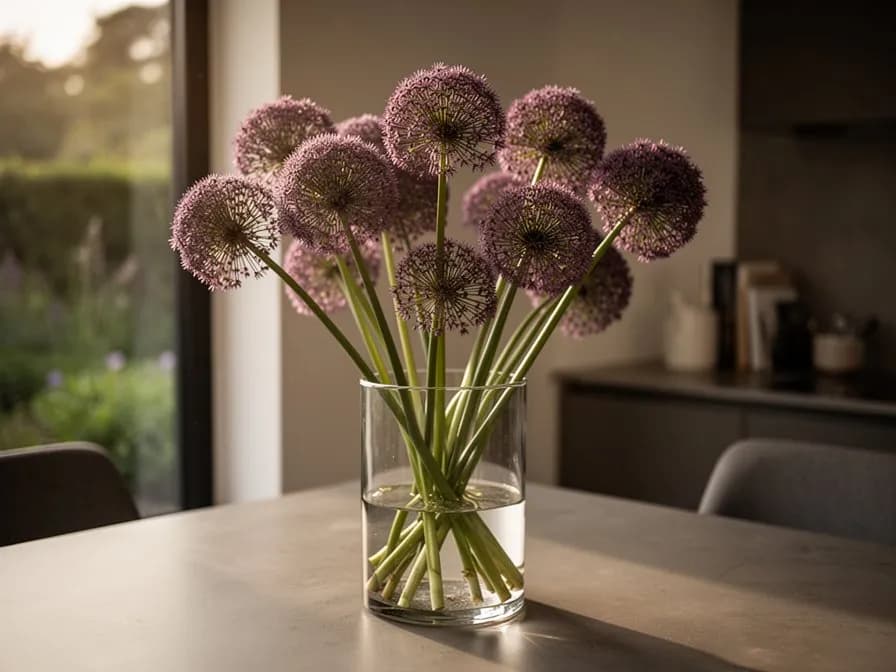
Cut allium flowers for fresh arrangements when about three-quarters of the tiny florets in the globe have opened. Cut stems as long as possible in the early morning. The flowers last 7-10 days in the vase. For dried arrangements, cut stems when all florets have opened and hang upside down in a dark, dry, well-ventilated space for two to three weeks. The dried seed heads maintain their spherical shape beautifully and can be spray-painted for decorative use.
Leave spent flower heads in place for striking architectural interest through autumn and winter.
Ornamental allium bulbs are fully hardy in zones 4-8 and should be left in the ground year-round where they will multiply naturally. If dividing congested clumps, lift in late summer when dormant, separate offsets, and replant immediately at the correct depth. Store any surplus bulbs briefly in a cool, dry place in mesh bags. Dried seed heads can be collected for indoor arrangements and will last indefinitely.
Plan your garden with ease
Love growing Ornamental Allium? Use our free garden planner to design your beds, track planting dates, and get personalized care reminders.
Nutritional Info
Per 100g serving
34
Calories
Health Benefits
- Ornamental alliums are primarily grown for display rather than consumption, but their leaves and flowers are technically edible with a mild onion-like flavour.
- Like all alliums, they contain organosulphur compounds including allicin, which has documented antimicrobial and antioxidant properties.
- The florets can be separated from the flower head and used as an edible garnish for salads, adding both visual appeal and a subtle onion taste.
- Allium species are a natural source of quercetin, a flavonoid antioxidant associated with anti-inflammatory benefits.
- The green foliage, when young and tender, can be used similarly to chive tops in cooking, though it has a stronger flavour.
💰 Why Grow Your Own?
A single ornamental allium bulb costs between 2 and 8 dollars depending on variety, but each bulb produces offset bulblets annually, allowing you to multiply your collection for free. After three to four years, a single bulb can yield eight to twelve new plants through division. Dried allium seed heads sold by florists for arrangements often cost 5 to 10 dollars per stem, so growing your own provides significant savings for crafting and decorating. A well-established clump of giant alliums also eliminates the need for expensive annual bedding plants in that garden area, as they return reliably for a decade or more with minimal care.
Quick Recipes
Simple recipes using fresh Ornamental Allium
Allium Floret Garnish Salad
10 minutesA fresh spring salad using separated ornamental allium florets as a stunning edible garnish. The tiny purple flowers add a mild onion bite and dramatic visual flair to mixed greens.
Allium Blossom Butter
15 minutesA compound butter infused with ornamental allium florets, perfect for spreading on crusty bread or melting over grilled vegetables and steaks. The florets impart a delicate onion flavour and flecks of purple colour.
Pickled Allium Flower Buds
20 minutes plus 48 hours restingYoung allium flower buds, harvested just before they open, are pickled in a light vinegar brine to create a caper-like condiment. They develop a tangy, mildly onion-flavoured bite that complements charcuterie boards and sandwiches.
Yield & Spacing Calculator
See how many Ornamental Allium plants fit in your garden bed based on the recommended 20cm spacing.
36
Ornamental Allium plants in a 4×4 ft bed
6 columns × 6 rows at 20cm spacing
Popular Varieties
Some of the most popular ornamental allium varieties for home gardeners, each with unique characteristics.
Allium 'Globemaster'
Enormous 8-10 inch violet-purple globes on 3-foot stems. One of the largest and longest-blooming ornamental alliums.
Allium 'Purple Sensation'
Rich deep-purple 4-inch globes on slender stems. Excellent value, naturalizes well, and ideal for mass planting.
Allium cristophii (Star of Persia)
Metallic silvery-purple flower heads up to 10 inches across with widely spaced, star-shaped florets. Spectacular when dried.
Allium sphaerocephalon (Drumstick Allium)
Compact egg-shaped heads that turn from green to deep burgundy. Elegant and graceful on slender 2-foot stems.
Allium 'Mount Everest'
Pristine white 6-inch globes on sturdy 3-foot stems. A stunning contrast to purple allium varieties in mixed plantings.
When should I plant Ornamental Allium?
Plant Ornamental Allium in September, October. It takes approximately 240 days to reach maturity, with harvest typically in May, June, July.
What are good companion plants for Ornamental Allium?
Ornamental Allium grows well alongside Tulip, Rose, Lavender. Companion planting can improve growth, flavor, and natural pest control.
What hardiness zones can Ornamental Allium grow in?
Ornamental Allium thrives in USDA hardiness zones 4 through 8. With greenhouse protection, it may be grown in zones 2 through 9.
How much sun does Ornamental Allium need?
Ornamental Allium requires Full Sun (6-8h+). This means at least 6-8 hours of direct sunlight daily.
How far apart should I space Ornamental Allium?
Space Ornamental Allium plants 20cm (8 inches) apart for optimal growth and air circulation.
What pests and diseases affect Ornamental Allium?
Common issues include Allium Leaf Miner, White Rot, Downy Mildew. Prevention through good garden practices like crop rotation, proper spacing, and companion planting is the best approach. See the detailed pests and diseases section above for symptoms, prevention, and treatment for each.
How do I store Ornamental Allium after harvest?
Ornamental allium bulbs are fully hardy in zones 4-8 and should be left in the ground year-round where they will multiply naturally. If dividing congested clumps, lift in late summer when dormant, separate offsets, and replant immediately at the correct depth. Store any surplus bulbs briefly in a co...
What are the best Ornamental Allium varieties to grow?
Popular varieties include Allium 'Globemaster', Allium 'Purple Sensation', Allium cristophii (Star of Persia), Allium sphaerocephalon (Drumstick Allium), Allium 'Mount Everest'. Each has unique characteristics suited to different growing conditions and culinary preferences. See the varieties section above for detailed descriptions.
What soil does Ornamental Allium need?
Ornamental alliums thrive in any well-drained soil with a pH of 5.5-7.0. They tolerate poor, rocky, and sandy soils better than rich, heavy clay. In heavy soils, add generous amounts of grit to prevent winter waterlogging. A single application of bone meal at planting time provides adequate nutritio...
When is the best time to plant ornamental allium bulbs?
Plant ornamental allium bulbs in autumn, from mid-September through November, at least six to eight weeks before your region's first expected hard frost. This timing allows the bulbs to develop a strong root system before the ground freezes while keeping them dormant above ground. Planting too early in warm soil can cause premature top growth that may be damaged by winter cold.
Why do my allium leaves turn yellow before the flowers fully open?
This is completely normal allium behaviour and not a sign of disease or poor health. Ornamental alliums naturally begin redirecting energy from their foliage into the developing flower stalk and bloom. The lower leaves start yellowing from the tips while the flower bud is still developing. Interplanting with low-growing companion perennials is the best solution to hide the declining foliage while the flowers take centre stage.
Do ornamental alliums come back every year?
Yes, ornamental alliums are true perennial bulbs that return reliably year after year in USDA hardiness zones 4 through 8. With proper planting depth, good drainage, and the foliage allowed to die back naturally, most giant allium varieties will flower consistently for eight to twelve years. They also multiply by producing offset bulblets, gradually forming larger clumps over time.
Are ornamental alliums toxic to pets?
All allium species, including ornamental varieties, contain organosulphur compounds that are toxic to dogs and cats if ingested in significant quantities. Symptoms can include gastrointestinal upset, drooling, lethargy, and in severe cases damage to red blood cells. While pets rarely eat enough of the foliage or bulbs to cause serious harm due to the unpleasant taste, it is sensible to plant ornamental alliums in areas not frequented by pets or to supervise animals around the plants.
How do I dry allium seed heads for floral arrangements?
Allow the flower heads to remain on the plant until the florets have fully faded and the stalk has begun to dry and turn straw-coloured, usually four to six weeks after peak bloom. Cut the stems at the desired length on a dry day, strip any remaining foliage, and hang them upside down in a well-ventilated, dry, dark space for two to three weeks. Once fully dried, the seed heads will hold their shape indefinitely and can be displayed naturally or spray-painted for decorative effects.
Can ornamental alliums be grown in containers?
Ornamental alliums can be grown successfully in containers, though giant varieties need large pots at least 30 cm deep and 40 cm wide to accommodate their root systems. Use a free-draining compost mix with added perlite or grit, and ensure the container has adequate drainage holes. Container-grown alliums may need winter protection in cold climates, as potted bulbs are more exposed to freezing temperatures than those planted in the ground. Move containers to a sheltered spot or insulate them with bubble wrap during severe cold spells.
Ready to Grow Ornamental Allium?
Add Ornamental Allium to your garden plan and start designing your perfect layout.

Vladimir Kusnezow
Gardener and Software Developer
Zone 6b gardener. Growing vegetables and fruits in soil and hydroponics for 6 years. I built PlotMyGarden to plan my own gardens.
Jump to Section