Roter Mangold
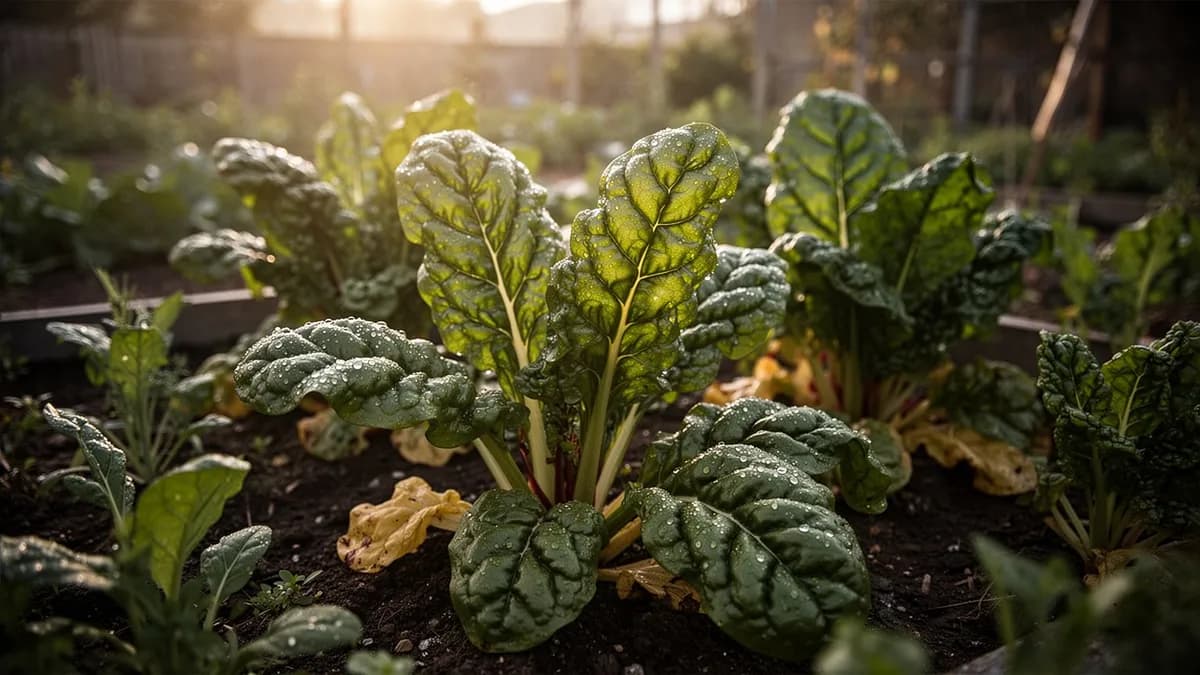
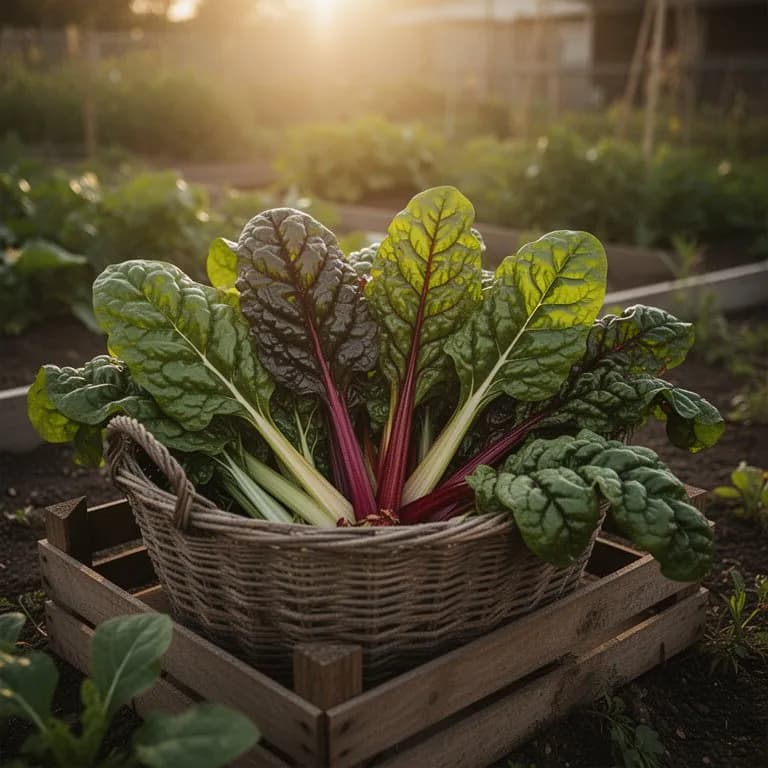
Eine beeindruckende Mangoldsorte mit tiefkarmesinroten Stielen und dunkelgrünen, rot geäderten Blättern, die ebenso dekorativ wie essbar ist.





Auf dieser SeiteÜberblick
Roter Mangold im Überblick
Eine beeindruckende Mangoldsorte mit tiefkarmesinroten Stielen und dunkelgrünen, rot geäderten Blättern, die ebenso dekorativ wie essbar ist. Der Geschmack ist etwas süßer als bei weißstieligem Mangold, mit zarten Blättern und knackigen, sellerieartigen Stielen, die separat gegart werden. Die Pflanzen sind vom Frühling bis zum Herbst ertragreich und vertragen sowohl leichten Frost als auch mäßige Hitze. Ernten Sie regelmäßig die äußeren Blätter, um die kontinuierliche Produktion von frischem, farbenfrohem Wachstum zu fördern.
Wann Roter Mangold pflanzen
Säen Sie die Samen für frühe Pflanzungen von Februar bis März in Modulen drinnen aus oder säen Sie von April bis Juli direkt ins Freiland. Pflanzen Sie die Samen 2 cm tief in feuchte Erde. Jedes Samenknäuel produziert mehrere Sämlinge, daher auf den kräftigsten ausdünnen. Die Keimung dauert 7-14 Tage bei 15-25°C. Das Einweichen der Samen für vier Stunden vor der Aussaat verbessert die Keimrate. Gewöhnen Sie drinnen gezogene Sämlinge über eine Woche ab, bevor Sie sie nach dem letzten Frost ins Freiland setzen. Pflanzen Sie die Pflanzen in alle Richtungen 30 cm voneinander entfernt.
Dein Roter Mangold-Jahr
Abgestimmt auf Zone 7 · typische Saison · Frost geht um den 2. Apr. und kehrt um den 1. Nov. zurück
Roter Mangold Mär – Mai pflanzen, Mai – Okt ernten. Beachte die Pflanzmethoden unten und wähle dein Klima für passende Zeiträume.
So baust du Roter Mangold an
Roter Mangold ist eine zweijährige Pflanze, die einjährig angebaut wird und sowohl für ihr auffälliges Erscheinungsbild als auch für ihre zuverlässige Produktivität geschätzt wird. Säen Sie die Samen von März bis Mai direkt ins Freiland, 2 cm tief und 30 cm voneinander entfernt in Reihen mit 40 cm Abstand. Jeder Mangoldsamen ist eigentlich ein Samenknäuel, daher sollten Sie auf einen kräftigen Sämling pro Stelle ausdünnen, wenn die Pflanzen 5 cm groß sind. Die Keimung erfolgt in 7-14 Tagen bei 10-25°C. Das Einweichen der Samen über Nacht vor der Aussaat beschleunigt die Keimung.
Mangold ist bemerkenswert anpassungsfähig und verträgt sowohl Halbschatten als auch volle Sonne. Die Pflanzen bevorzugen gleichmäßige Feuchtigkeit und nährstoffreichen Boden für das produktivste Wachstum. Die tiefkarmesinroten Stiele und dunkelgrünen, rot geäderten Blätter machen Roten Mangold dekorativ genug für Blumenrabatten und Kübelbepflanzungen. Die Pflanzen erreichen 40-60 cm Höhe und produzieren bei regelmäßiger Ernte kontinuierlich vom späten Frühling bis zum Herbst.
Beginnen Sie mit der Ernte der äußeren Blätter, wenn sie 20-25 cm lang sind, und lassen Sie stets den zentralen Vegetationspunkt und mindestens vier innere Blätter stehen, um das Nachwachsen zu fördern. Dieser Schnitt-und-Nachwuchs-Ansatz hält die Pflanzen monatelang produktiv. Mangold verträgt leichten Frost, und der Geschmack verbessert sich sogar nach einer Berührung mit Kälte. In milden Wintern können Pflanzen überwintern und eine kurze Frühjahrsernte liefern, bevor sie schießen. Schützen Sie die Pflanzen bei strengem Frost mit Vlies für eine verlängerte Ernte.
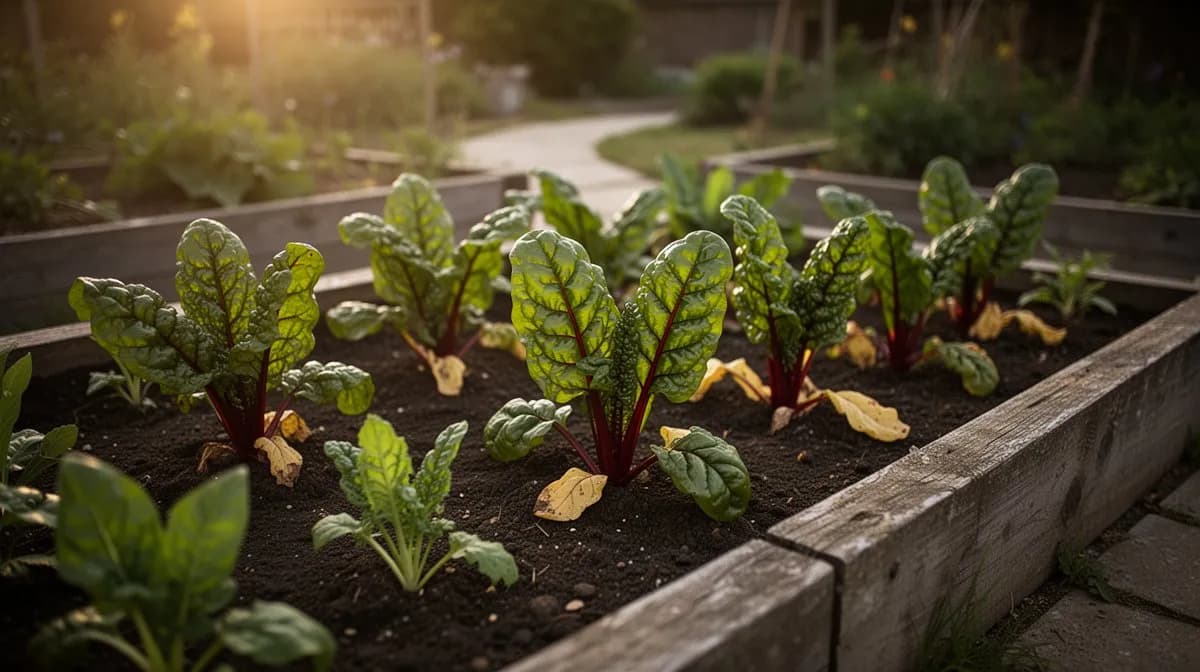
32 Pflanzen passen in ein Beet von 120 × 240 cm
Roter Mangold braucht 30 cm Platz pro Pflanze. Der Planer hält diesen Abstand für dich ein — jede Pflanze, jedes Beet.
Die besten Nachbarn für Roter Mangold
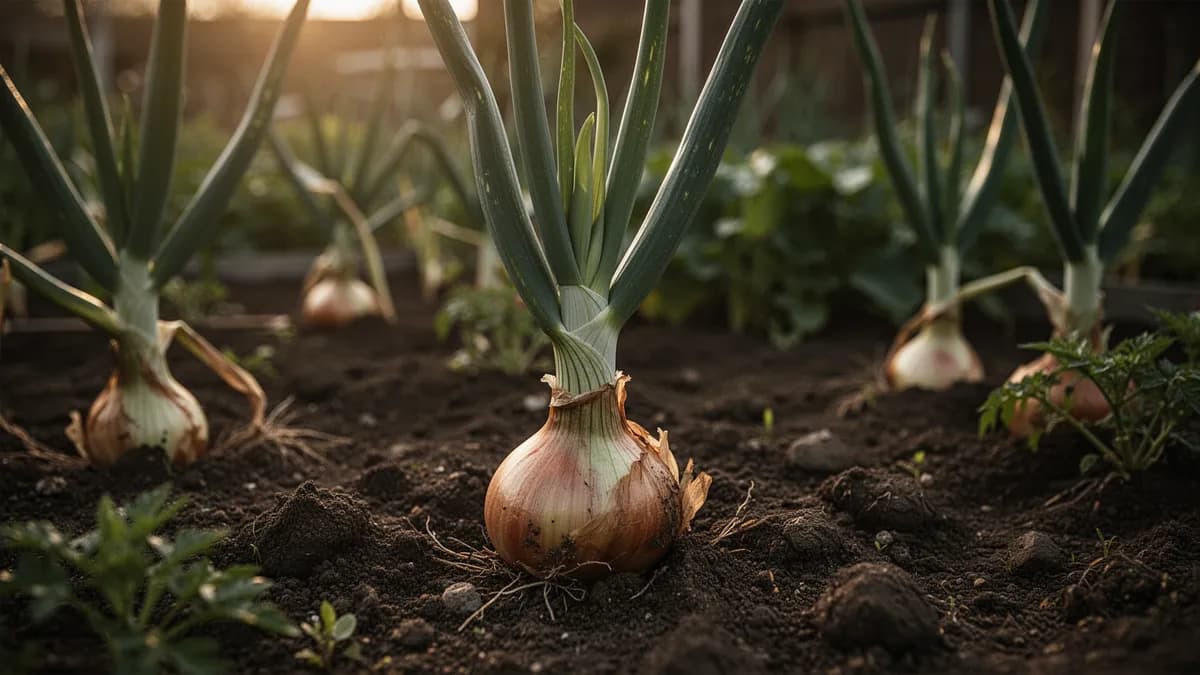
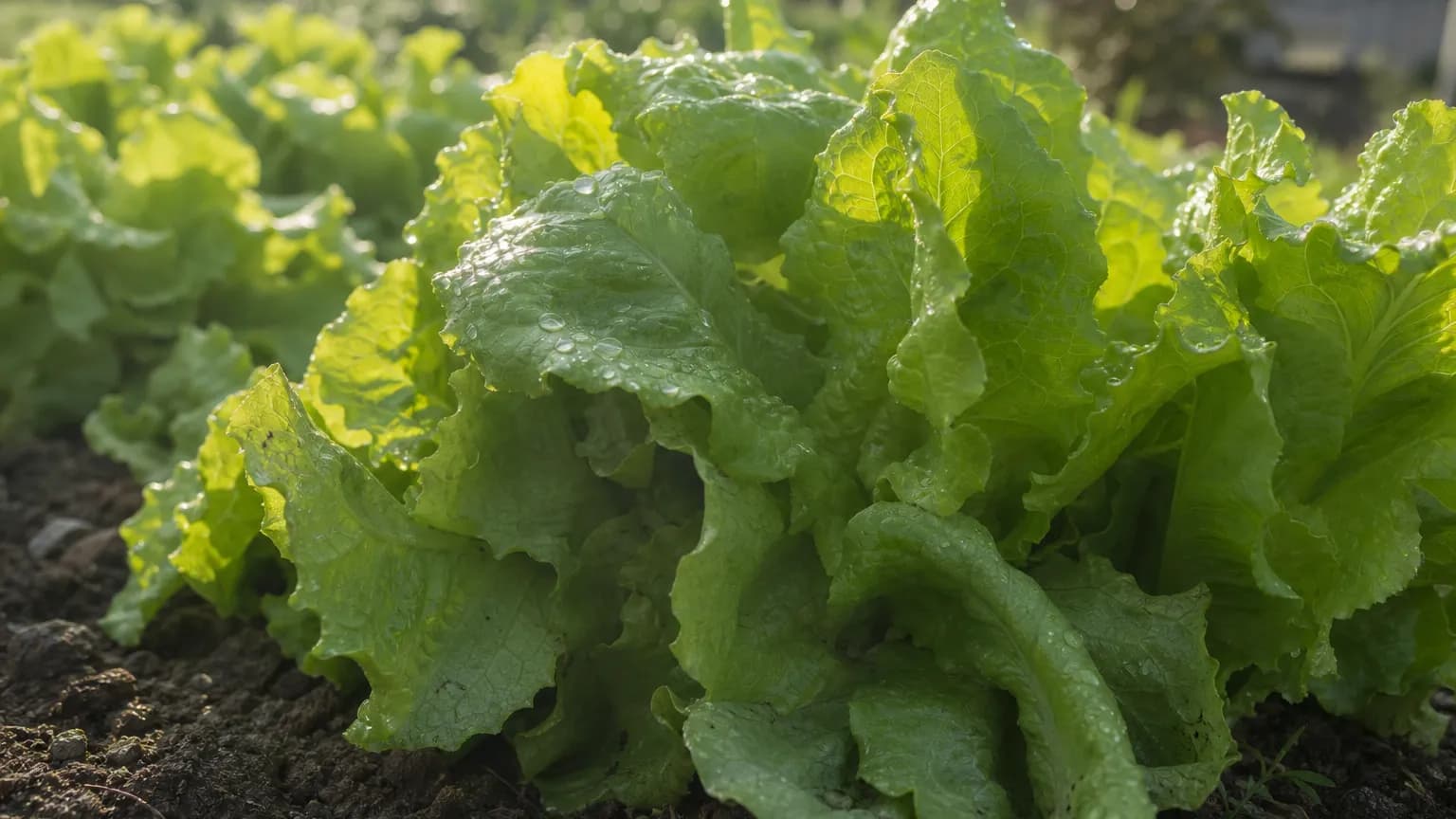
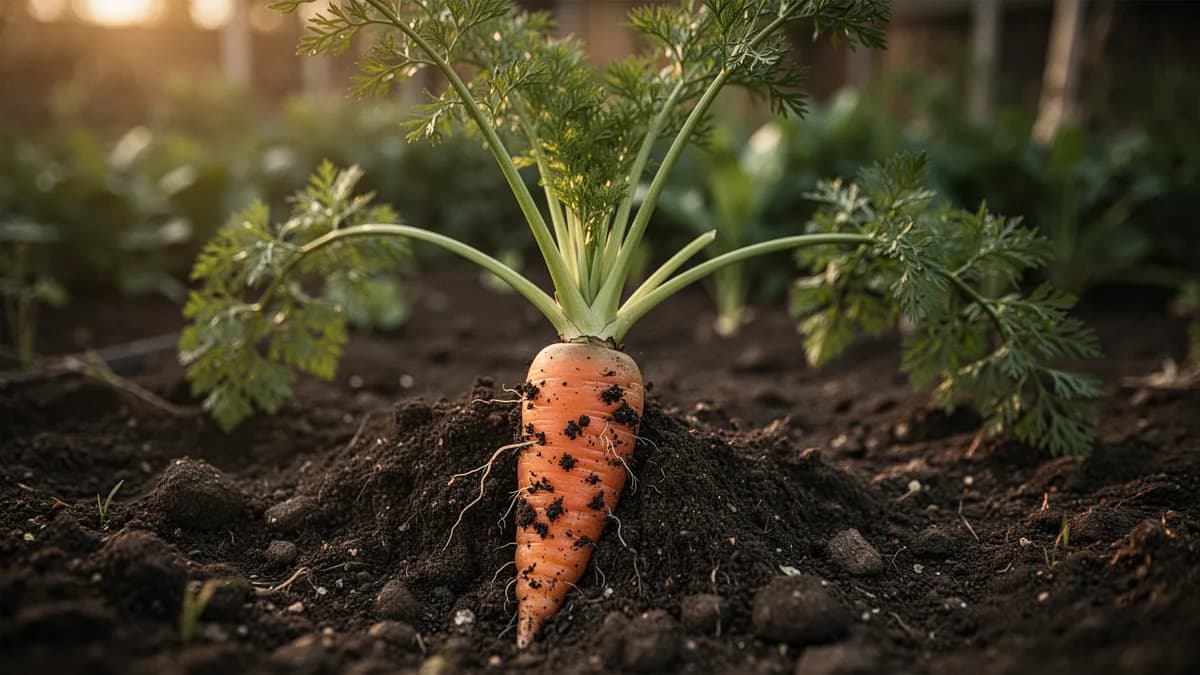
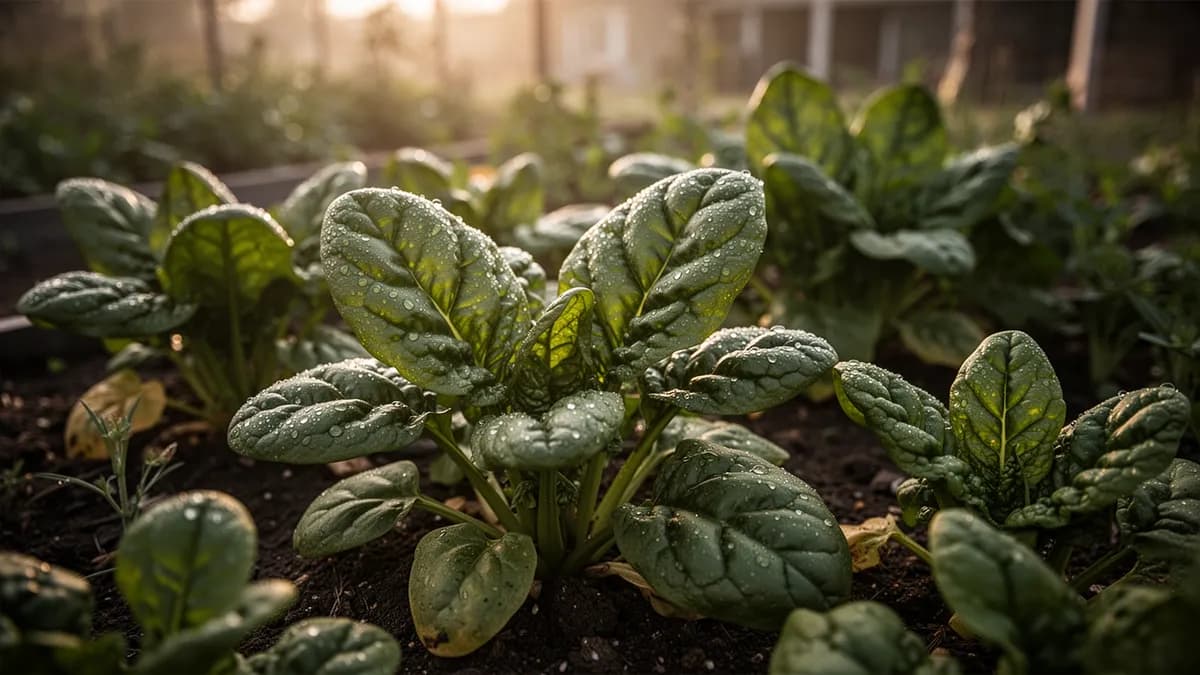
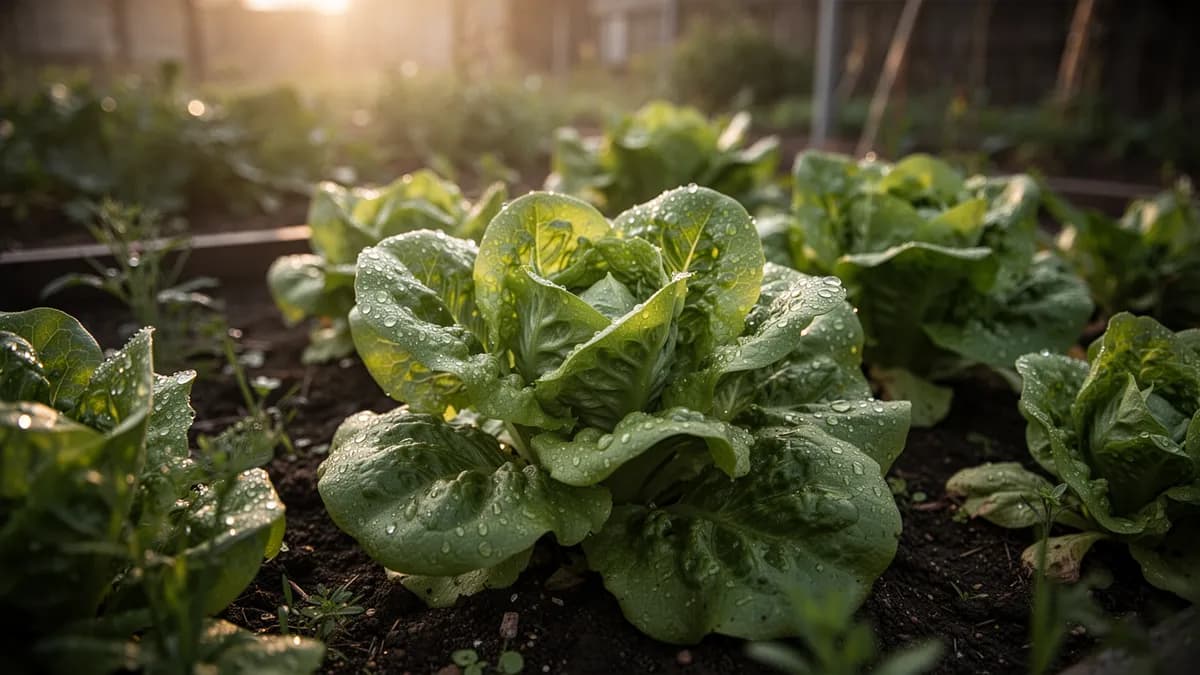
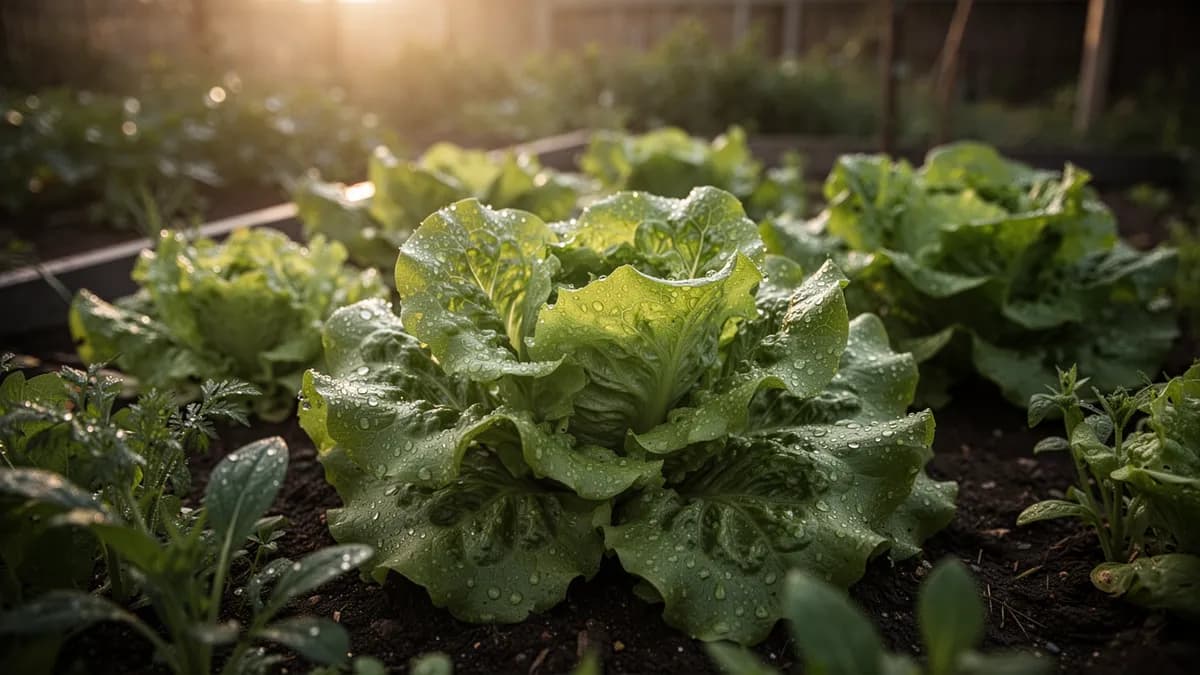
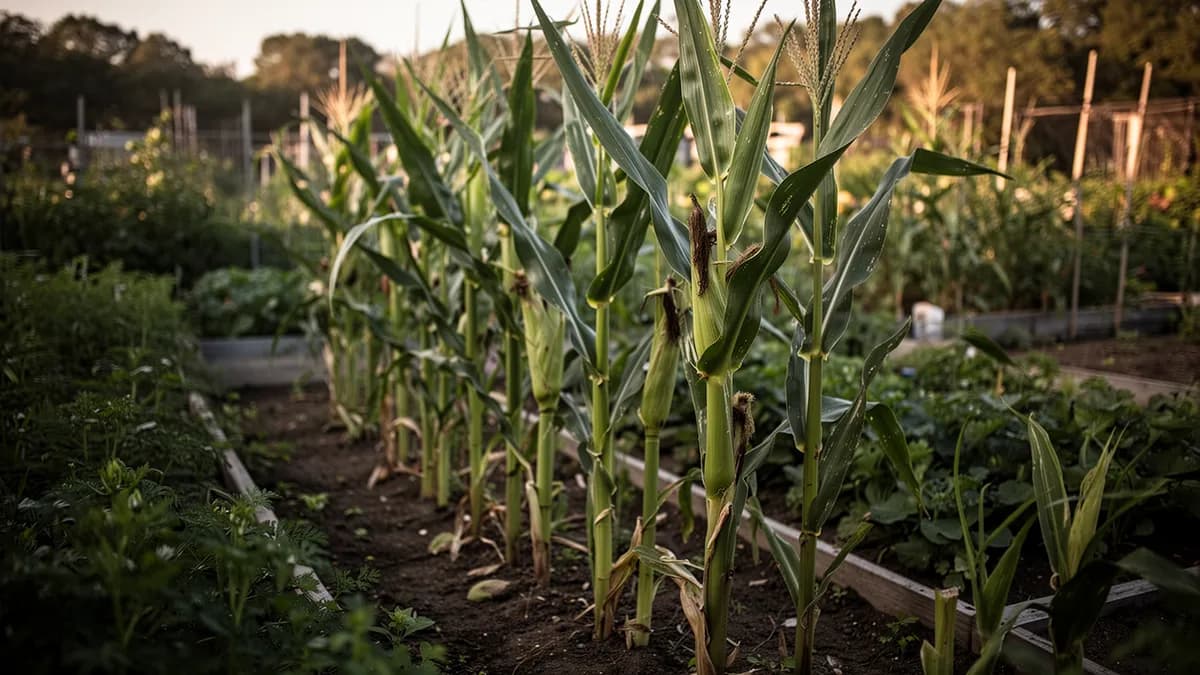
Roter Mangold wächst gut neben Zwiebeln und Knoblauch, die Minierfliegen und andere Schädlinge abschrecken. Salat profitiert vom leichten Schatten, den Mangolds große Blätter werfen. Karotten sind gute Nachbarn, da sie verschiedene Bodentiefen nutzen. Vermeiden Sie das Pflanzen in der Nähe von Mais, der um dieselben Nährstoffe konkurriert. Bohnen und Erbsen in der Nähe binden Stickstoff im Boden, was dem starkzehrenden Mangold zugutekommt. Tagetes zwischen dem Mangold gepflanzt helfen, Blattläuse abzuwehren und Nützlinge anzulocken.
Zwiebel gehört daneben. Mais nicht.
Altes Gärtnerwissen, geprüft an der echten Nachbartabelle von Roter Mangold — teste jede Pflanze, die du anbaust.
Probiere Roter Mangold direkt hier im Beet
Ein echtes Planer-Beet, Roter Mangold steht schon drin. Tippe einen Begleiter an, platziere ihn und sieh, wie die Nachbarschaftsprüfung antwortet — grün für gute Nachbarn, rot bei Streit.


Passende Anbau-Ratgeber
Richtig düngen
Roter Mangold gedeiht in nährstoffreichem, feuchtigkeitsspeicherndem Boden mit einem pH-Wert von 6,0-7,5. Arbeiten Sie vor der Pflanzung reichlich gut verrotteten Kompost oder Mist ein, um die von Mangold bevorzugten nährstoffreichen Bedingungen zu schaffen. Geben Sie bei der Pflanzung einen ausgewogenen Granulatdünger. Düngen Sie alle drei Wochen während der Wachstumszeit mit einem stickstoffreichen Flüssigdünger nach, um üppiges Blattwachstum zu fördern. Mulchen Sie rund um die Pflanzen, um die Bodenfeuchtigkeit zu erhalten und Unkraut zu unterdrücken. Für Kübel verwenden Sie eine nährstoffreiche Universalerde und düngen Sie regelmäßig.
Ideale Temperatur
Winterhärtezone-Kompatibilität
Von der Saat zur Ernte, Schritt für Schritt
Samenkeimung
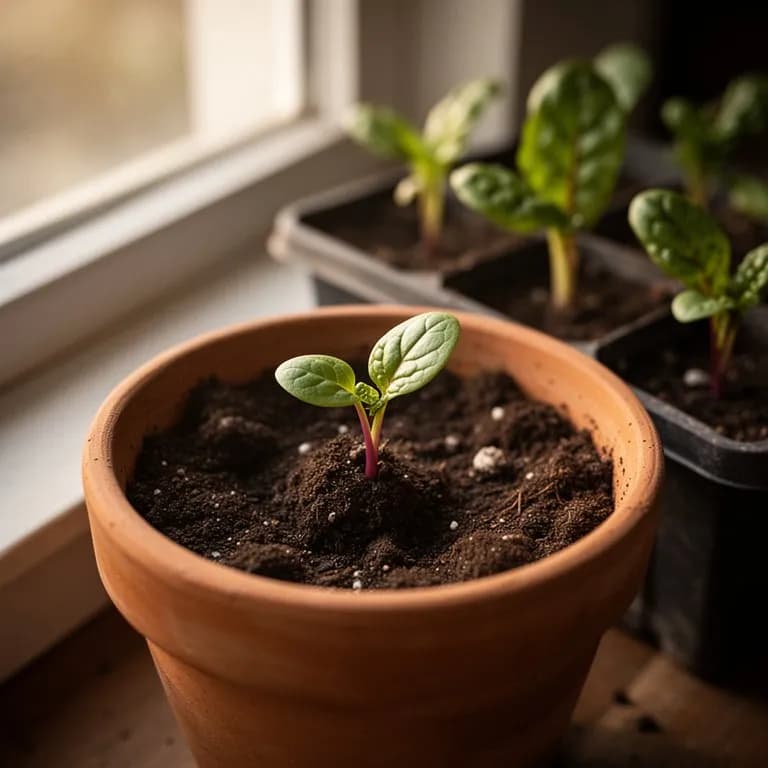
Mangoldsamen sind eigentlich Mehrkeimknäuel (jeder "Samen" ist eine getrocknete Frucht mit 2-4 Embryonen), sodass häufig mehrere Sämlinge an einer Stelle aufgehen. Die Keimung erfolgt in 7-14 Tagen bei Bodentemperaturen von 10-30°C (50-85°F). Die ersten Keimblätter erscheinen hellgrün, aber die rote Färbung der winzigen Stiele ist fast sofort sichtbar.
Sämlingsentwicklung
Echte Blätter erscheinen mit ihrer charakteristisch leicht gekrausten Textur und markanten roten Äderung. Die Stiele beginnen ihre tiefkarmesinrote Farbe zu entwickeln. Die Pfahlwurzel etabliert sich, was das Umpflanzen zunehmend erschwert. Sämlinge sind frosthart und vertragen leichte Fröste bis -3°C (27°F).
Schnelles Blattwachstum
Die Pflanzen treten in kräftiges Wachstum ein und produzieren 1-2 neue äußere Blätter pro Woche. Die Rosette aus großen, dunkelgrünen Blättern auf leuchtend roten Stielen dehnt sich auf 30-45 cm Durchmesser aus. Die Blätter werden zunehmend kraus und entwickeln eine glänzende Oberfläche. In dieser Phase ist die dekorative Schönheit der Pflanze am eindrucksvollsten.
Erste Ernte
Die äußeren Blätter erreichen ihre volle Größe von 25-35 cm Länge und sind bereit für die erste Schnitt-und-Nachwuchs-Ernte. Die Pflanze hat eine kräftige zentrale Krone entwickelt, aus der kontinuierlich neue Blätter hervortreten. Die Blattfarbe vertieft sich mit zunehmendem Alter – die Stiele nehmen ein intensives Rubinrot an, das im Sonnenlicht fast zu leuchten scheint.
Erweiterte Produktion
Bei regelmäßiger Ernte tritt der Rote Mangold in eine lange Produktionsphase von 3-5 Monaten ein. Die Pflanze erzeugt kontinuierlich neue Blätter aus der Mitte der Rosette. Eine einzelne Pflanze kann über eine volle Saison 3-5 kg Blätter produzieren. Die Pflanzen vertragen leichte Herbstfröste, und kältegestresste Blätter entwickeln oft einen süßeren, konzentrierteren Geschmack.
Schießen und Samenbildung
Als Zweijährige schießt der Rote Mangold typischerweise (bildet einen hohen Blütenstängel) in seinem zweiten Frühjahr, nachdem er Winterkälte erfahren hat, oder im ersten Jahr, wenn er längere Kälte gefolgt von steigenden Temperaturen ausgesetzt war. Der Blütenstängel kann 90-120 cm hoch werden und produziert kleine, windbestäubte grüne Blüten, gefolgt von Knäueln korkiger Samenfrüchte.
Weichen Sie die Samenknäuel 2-4 Stunden in warmem Wasser ein, um die Keimung zu beschleunigen. Säen Sie 1-2 cm tief und 5 cm auseinander. Dünnen Sie auf den kräftigsten Sämling pro Knäuel aus, sobald echte Blätter erscheinen – die ausgedünnten Sprossen sind essbare Microgreens.
Roter Mangold Monat für Monat pflegen
Was du jeden Monat für deine Roter Mangold tun solltest
Oktober
Aktueller MonatDie Ernte bei Herbstpflanzungen wird intensiver. Im Frühling gepflanzter Mangold produziert durch leichte Fröste weiter – Kälteexposition verbessert sogar den Geschmack, da Stärke in Zucker umgewandelt wird. In den Zonen 4-6 bringen Sie eine dicke Mulchschicht auf, um die Erntezeit zu verlängern.
Immer wissen, was jetzt im Garten zu tun ist
Eine E-Mail zum Monatsanfang: was du jetzt säen, pflanzen und anpacken solltest — für deine Roter Mangold und alles, was drumherum wächst. Dazu ein kurzer Startkurs, der dich vor den klassischen Fehlern bewahrt.
- Was jetzt zu tun ist
- Passend zu deiner Saison
- Startkurs inklusive
Roter Mangold ernten
Beginnen Sie mit der Ernte von Rotem Mangold, wenn die äußeren Blätter 20-25 cm lang sind, typischerweise 55-60 Tage nach der Aussaat. Brechen oder schneiden Sie die äußeren Blätter an der Basis ab und lassen Sie die innere Rosette junger Blätter intakt, damit sie weiterwächst. Ernten Sie regelmäßig alle paar Tage, um die Neuproduktion anzuregen. Sowohl die karmesinroten Stiele als auch die dunkelgrünen Blätter sind essbar, brauchen aber unterschiedliche Garzeiten, daher sollten Sie sie zum Kochen trennen. Junge Blätter können bei 10-15 cm für Salate gepflückt werden. Die Pflanzen produzieren bis zum strengen Frost weiter.
angenommen, du pflanzt zu Beginn des Zeitraums — trage dein tatsächliches Datum ein
Ernte Roter Mangold zügig, dann trägt die Pflanze weiter.
Lagerung & Konservierung
Lagern Sie frischen Mangold ungewaschen in einem Plastikbeutel im Kühlschrank bis zu einer Woche. Die Stiele bleiben länger knackig als die Blätter, trennen Sie sie daher, wenn Sie länger als ein paar Tage lagern möchten. Zum Einfrieren blanchieren Sie Blätter und Stiele getrennt, da sie unterschiedliche Blanchierzeiten haben: zwei Minuten für Blätter, drei Minuten für Stiele. In Eiswasser abschrecken, abtropfen lassen und in Gefrierbeutel füllen – haltbar bis zu acht Monate. Gefrorener Mangold eignet sich am besten für gekochte Gerichte. Mangold kann auch getrocknet werden, um ihn Suppen und Eintöpfen hinzuzufügen.
Was schiefgeht — und die Lösung
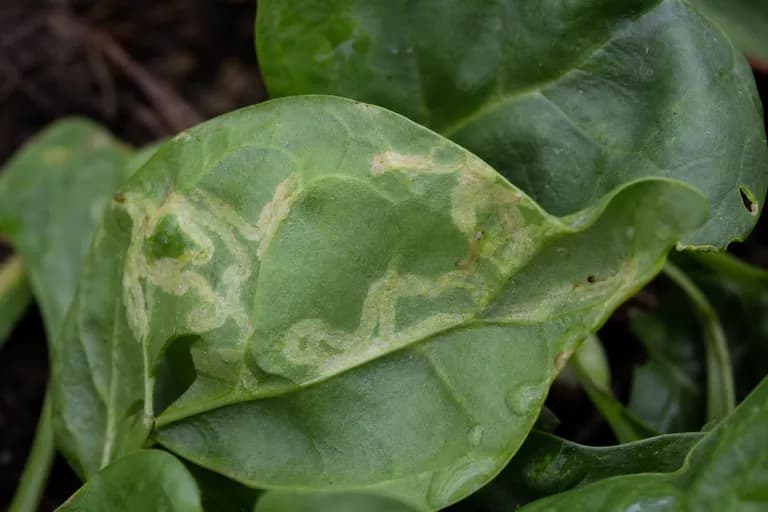
Minierfliegen
SchädlingBraune oder weiße Tunnel und Flecken innerhalb der Blätter, wo Larven zwischen den Blattoberflächen fressen. Betroffene Stellen werden papierartig.
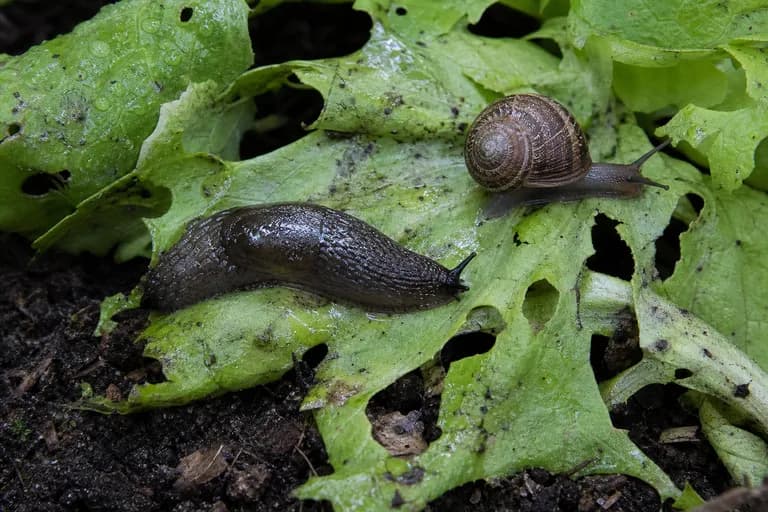
Schnecken und Nacktschnecken
SchädlingUnregelmäßige Löcher in den Blättern, besonders bei jungen Pflanzen. Sämlinge können vollständig gefressen werden. Schleimspuren rund um die Pflanzen.
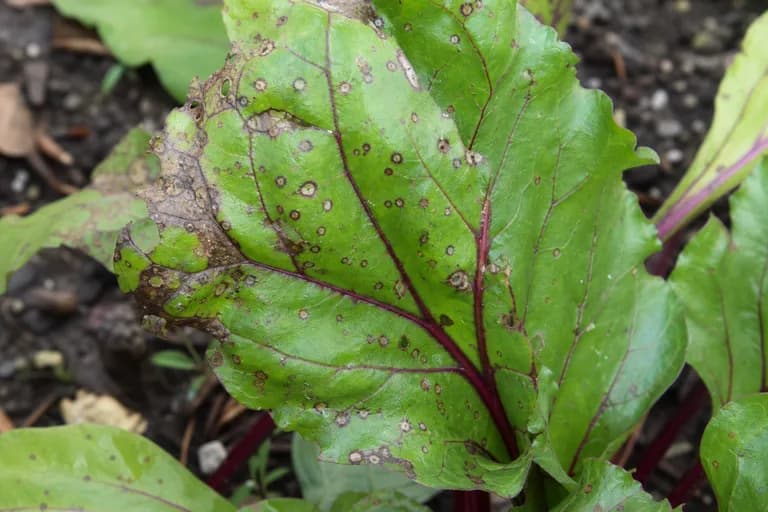
Cercospora-Blattfleckenkrankheit
KrankheitKleine, runde Flecken mit grauen Zentren und dunkelbraunen oder violetten Rändern auf den Blättern. Die Flecken können bei schwerem Befall verschmelzen.
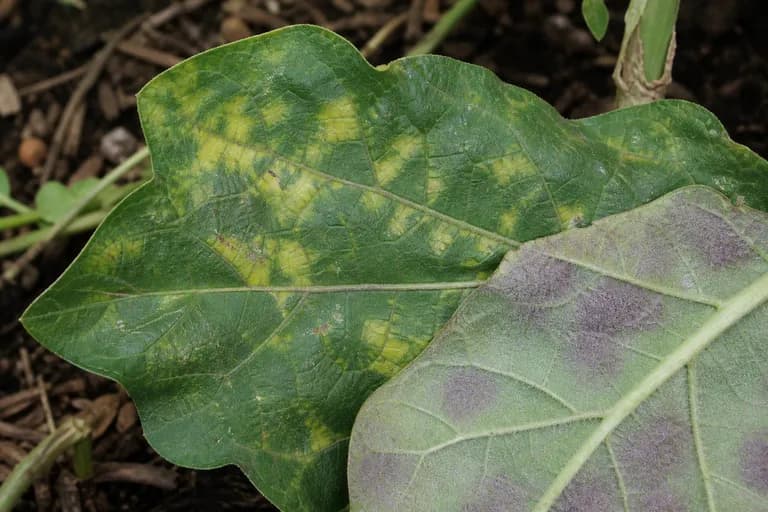
Falscher Mehltau
KrankheitGelbe Flecken auf den Blattoberseiten mit grau-violettem, flaumigem Bewuchs auf der Unterseite, besonders bei kühlem, feuchtem Wetter.
Fehlerbehebung bei häufigen Problemen
Minierfliegen sind das hartnäckigste Problem und erzeugen unansehnliche Fraßgänge in den Blättern. Der Anbau unter Netz ist die beste Vorbeugung. Schießen kann auftreten, wenn Pflanzen im Frühjahr Kälteeinbrüche gefolgt von wärmerem Wetter erleben oder unter Trockenstress leiden. Halten Sie die Bewässerung gleichmäßig, um dies zu verhindern. Das rote Pigment in den Stielen kann bei extremer Hitze verblassen, bieten Sie daher in sehr heißen Klimazonen Nachmittagsschatten. Überbepflanzung führt zu kleineren Blättern und erhöhtem Krankheitsdruck. Magnesiummangel zeigt sich als Vergilbung zwischen den Blattadern.
Anbautipps
- Trennen Sie Stiele und Blätter beim Kochen – sie haben sehr unterschiedliche Texturen und Garzeiten. Beginnen Sie mit den gewürfelten Stielen 3-4 Minuten bevor Sie die Blätter hinzufügen. Diese eine Technik verwandelt Mangold von "wässrigem Spinat" in ein Gericht mit zwei verschiedenen, perfekt gegarten Komponenten.
- Säen Sie alle 3-4 Wochen vom frühen Frühling bis zur Sommermitte Mangoldsamen für durchgehend zarte Babyblätter. Obwohl eine einzelne Pflanze monatelang produziert, liefern jüngere Pflanzen die zartesten Blätter für Salate.
- Roter Mangold eignet sich hervorragend für den Kübelanbau. Verwenden Sie einen Topf von mindestens 30 cm Breite und Tiefe pro Pflanze, füllen Sie ihn mit nährstoffreicher Blumenerde und stellen Sie ihn an einen Platz mit 5-6 Stunden Sonne. Im Kübel gezogener Mangold produziert etwas kleinere, aber ebenso aromatische Blätter.
- Minierfliegen sind der Schädling Nummer eins – ihre Larven tunneln zwischen den Blattoberflächen und hinterlassen sichtbare helle Spuren. Entfernen und vernichten Sie befallene Blätter sofort (nicht kompostieren). Beugen Sie künftigem Befall mit leichtem Vlies vor, das direkt nach dem Umpflanzen aufgelegt wird.
- Ernten Sie äußere Blätter, indem Sie den Stiel nahe der Basis greifen und mit einer leichten Drehung nach unten ziehen, oder schneiden Sie mit einem sauberen Messer. Reißen Sie niemals Blätter von der Krone ab, da dies den Vegetationspunkt beschädigt und Krankheiten begünstigt. Lassen Sie stets mindestens 5 innere Blätter an der Pflanze.
- Pflanzen Sie Roten Mangold zusammen mit Blumen und Kräutern in Zierbeete – er ist wahrhaftig eine der schönsten essbaren Pflanzen. Die tiefroten Stiele kontrastieren spektakulär mit gelben Tagetes, silbrigem Staubigen Müller oder violettem Basilikum. Verwenden Sie ihn als auffällige Mittelpunkpflanze in Kübelkombinationen.
- Für die süßesten, zartesten Blätter planen Sie Ihre Haupternten bei kühlem Wetter – Frühlings- und Herbstkulturen schmecken durchweg besser als die im Hochsommer. Wenn Sie im Sommer anbauen, bieten Sie in Zone 7 und wärmer Nachmittagsschatten.
- Blanchieren und Einfrieren ist die beste Konservierungsmethode. Blanchieren Sie Blätter 2 Minuten und Stiele 3 Minuten getrennt, schrecken Sie sie in Eiswasser ab, lassen Sie sie gründlich abtropfen und frieren Sie sie flach in Beuteln ein. Gefrorener Mangold behält seinen Nährwert 10-12 Monate und eignet sich perfekt für gekochte Gerichte.
Bau deine beste Roter Mangold an — und alles drumherum.
Starte heute kostenlos. Lege deine Beete an, setze deine Roter Mangold ein und lass PlotMyGarden Timing, Abstände, Begleiter und Erinnerungen von der Saat bis zum Erntekorb übernehmen.
Finde deine Roter Mangold
Ruby Red
Die klassische Sorte mit tiefkarmesinroten Stielen und dunkelgrünen Blättern, zuverlässig und weit verbreitet.
Rhubarb Chard
Kräftig rote Stiele, die an Rhabarber erinnern, mit großen, krausen dunkelgrünen Blättern. Sehr dekorativ.
Bright Lights
Eine Regenbogenmischung mit roten, orangefarbenen, gelben, rosa und weißen Stielen für ein farbenfrohes Erscheinungsbild.
Magenta Sunset
Leuchtend magenta-rosa Stiele mit glänzend grünen Blättern, etwas kompakterer Wuchs.
Vulcan
Tiefrote Stiele mit glänzender Oberfläche, schossfest und besonders ertragreich über eine lange Erntezeit.
Roter Mangold ist eines der kosteneffizientesten Gemüse für den Eigenanbau. Ein Samentütchen kostet 2-4 € und ergibt 30-50 Pflanzen – weit mehr als die meisten Familien benötigen. Frischer Mangold kostet im Supermarkt 3-5 € pro Bund und auf dem Wochenmarkt 4-7 €, wobei ein einzelner Bund typischerweise 300-400 g wiegt. Eine gut gepflegte Pflanze, die 3-5 kg pro Saison produziert, ersetzt 8-15 gekaufte Bunde im Wert von 24-75 €. Der Anbau von nur 4-6 Pflanzen kann pro Saison leicht 100-300 € einsparen, und da Mangold nach jeder Ernte nachwächst, ist keine Nachsaat wie bei Salat oder Spinat nötig.
Schnelle Rezepte
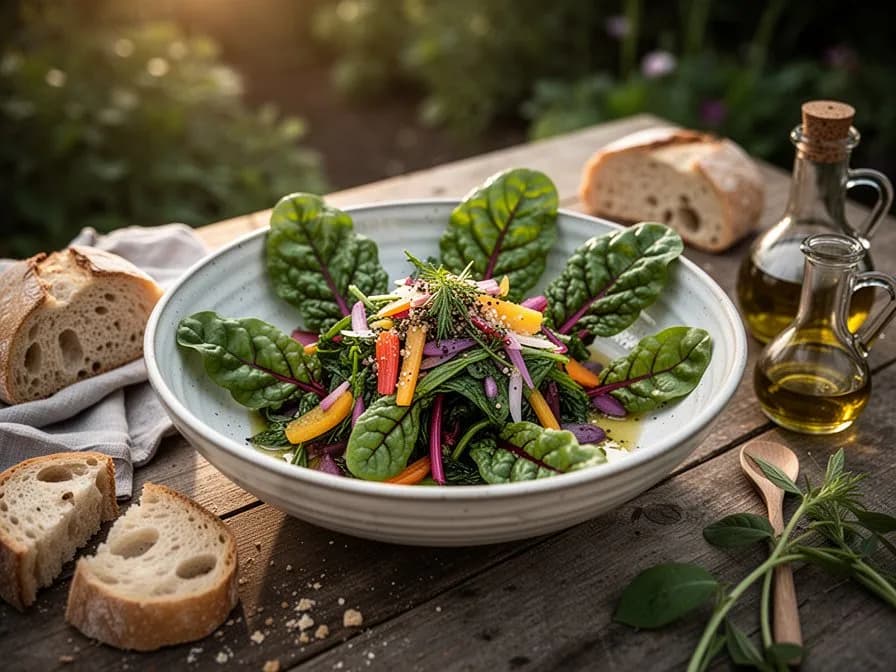
Knoblauch-Mangold mit Zitrone
12 Min.Die klassische Zubereitung für frischen Mangold – Stiele und Blätter werden getrennt gegart, um für jede Komponente die perfekte Textur zu erzielen. Die Stiele bleiben leicht knackig, während die Blätter zu seidigen Streifen zusammenfallen, verfeinert mit frischer Zitrone und Knoblauch.
7 ZutatenRoter Mangold-Gratin mit weißen Bohnen
40 Min.Ein herzhaftes Ofengericht, bei dem gewelkter Roter Mangold mit cremigen weißen Bohnen, Knoblauch und einer goldenen Semmelbrösel-Parmesan-Kruste geschichtet wird. Die Mangoldstiele sorgen für einen angenehmen Texturkontrast und ihre rote Farbe zieht in die Bohnen ein – eine wunderschöne Präsentation.
7 ZutatenEingelegte Rote Mangoldstiele
15 Min. + 24 Std. EinlegenWerfen Sie diese wunderschönen rubinroten Stiele nicht weg! Schnell eingelegte Mangoldstiele nehmen in der Salzlake ein leuchtendes Magenta an und entwickeln eine säuerliche Knackigkeit, die es mit jedem Glas aus dem Laden aufnehmen kann. Sie sind eine atemberaubende Garnitur und ein köstlicher Snack direkt aus dem Glas.
9 ZutatenKulinarische Verwendung
Roter Mangold ist vielseitig in der Küche. Trennen Sie Stiele von Blättern, da sie unterschiedliche Garzeiten benötigen. Braten Sie die Stiele drei bis vier Minuten mit Knoblauch und Olivenöl an, dann fügen Sie die Blätter für weitere zwei Minuten hinzu. Verwenden Sie junge Blätter roh in Salaten, wo sie Farbe und milden, erdigen Geschmack hinzufügen. Die karmesinroten Stiele sind wunderschön in Gratins, Quiches und Pfannengerichten. Blanchieren und als Wickel anstelle von Weinblättern verwenden. Mangold harmoniert gut mit Knoblauch, Zitrone, Muskatnuss und gereiftem Käse.
Was drinsteckt
Gesundheitsvorteile
- Eine der reichhaltigsten Nahrungsquellen für Vitamin K, das über 300 % des Tageswertes pro 100 g liefert – essenziell für die Kalziumregulierung in den Knochen, die ordnungsgemäße Blutgerinnung, und neuere Forschungen verknüpfen eine ausreichende Vitamin-K-Zufuhr mit einem verringerten Risiko für kardiovaskuläre Verkalkung.
- Die Betalain-Pigmente, die einzigartig für die roten Stiele und Adern des Roten Mangolds sind, haben in Laborstudien gezeigt, dass sie die Phase-II-Entgiftungsenzyme des Körpers unterstützen und helfen, potenziell schädliche Verbindungen zu neutralisieren und auszuscheiden.
- Außergewöhnlich reich an Vitamin A als Beta-Carotin (122 % TW pro 100 g), das entscheidend für die Erhaltung gesunder Sehkraft, die Unterstützung der Immunzellproduktion und den Schutz der Haut vor UV-Schäden ist.
- Enthält Syringasäure, eine phenolische Verbindung, die auf ihre Fähigkeit untersucht wurde, die Aktivität des Enzyms Alpha-Glucosidase zu hemmen, was zur Regulierung des Blutzuckerspiegels nach Mahlzeiten beitragen kann – ein wertvolles Lebensmittel für Menschen mit Diabetes.
- Reich an Nitraten, die der Körper in Stickstoffmonoxid umwandelt, ein Molekül, das Blutgefäße entspannt und den Blutdruck senkt – der regelmäßige Verzehr nitratreicher Blattgemüse wie Mangold wird mit einem verringerten kardiovaskulären Risiko in Verbindung gebracht.
- Liefert eine Kombination aus Magnesium (20 % TW), Kalium (11 % TW) und Kalzium, die Muskel- und Nervenfunktion, den Elektrolythaushalt unterstützt und möglicherweise Muskelkrämpfe beim Sport reduziert.
Woher Roter Mangold stammt
Mangold (Beta vulgaris subsp. vulgaris) stammt von der wilden Meerbete (Beta vulgaris subsp. maritima) ab, einer robusten Küstenpflanze, die noch heute wild an den Küsten des Mittelmeers und des atlantischen Europas wächst. Die Domestizierung dieser Art ist eine der bemerkenswertesten Geschichten der Landwirtschaft – aus einem einzigen wilden Vorfahren züchteten Menschen sowohl Wurzelrüben als auch Blattmangold, indem sie über Tausende von Jahren unterschiedliche Merkmale selektierten.
Die alten Griechen kultivierten Mangold mindestens seit dem 4. Jahrhundert v. Chr., und Aristoteles beschrieb speziell Sorten mit farbigen Stielen. Die Römer bauten Mangold extensiv an und verbreiteten ihn in ihrem gesamten Reich. Nach dem Fall Roms überdauerte Mangold in Klostergärten im gesamten mittelalterlichen Europa, geschätzt als Nahrung und Medizin. Arabische Agrarwissenschaftler verfeinerten seinen Anbau und führten verbesserte Sorten in Nordafrika und auf der Iberischen Halbinsel während des Islamischen Goldenen Zeitalters ein.
Rubin- und rotstielige Mangoldsorten sind seit der Antike dokumentiert, aber die intensive, gleichmäßige Karmesinfarbe des modernen Roten Mangolds wurde durch selektive Züchtung im 20. Jahrhundert entwickelt. Die Sorte 'Rhubarb Chard' (auch als Ruby Red oder Ruby Chard verkauft) wurde in den 1950er Jahren breit verfügbar und gewann Beliebtheit sowohl bei Gemüsegärtnern als auch bei Zierpflanzenliebhabern für ihre außergewöhnliche visuelle Anziehungskraft. Heute wird Roter Mangold weltweit angebaut und ist ein fester Bestandteil von Wochenmärkten, Restaurantküchen und Hausgärten. Er ist besonders beliebt in der mediterranen, nahöstlichen und südasiatischen Küche, wo Blattgemüse mit kräftigen Stielen geschätzte Zutaten sind.
Roter Mangold: Schon gewusst?
Faszinierende Fakten über Roter Mangold
Trotz seines Namens hat Mangold keine besondere Verbindung zur Schweiz. Die Bezeichnung "Swiss" wurde von einem Botaniker des 19. Jahrhunderts hinzugefügt, um ihn vom französischen Spinat zu unterscheiden – die Pflanze stammt tatsächlich aus dem Mittelmeerraum, wahrscheinlich aus Sizilien oder den Küstengebieten Südeuropas und Nordafrikas.
Roter Mangold: Fragen & Antworten
Wann sollte ich Roter Mangold pflanzen?
Was sind gute Begleitpflanzen für Roter Mangold?
In welchen Winterhärtezonen kann Roter Mangold wachsen?
Wie viel Sonne braucht Roter Mangold?
Welchen Abstand sollte ich zwischen Roter Mangold lassen?
Welche Schädlinge und Krankheiten befallen Roter Mangold?
Wie lagere ich Roter Mangold nach der Ernte?
Was sind die besten Roter Mangold-Sorten zum Anbauen?
Welchen Boden braucht Roter Mangold?
Was ist der Unterschied zwischen Rotem Mangold und Regenbogen-Mangold?
Kann ich Roten Mangold roh im Salat essen?
Warum schießt und blüht mein Roter Mangold?
Wie frosthart ist Roter Mangold?
Ist Roter Mangold mit Roter Bete verwandt? Können sie sich gegenseitig bestäuben?
Wie halte ich Roten Mangold die ganze Saison über produktiv, ohne dass er zäh oder bitter wird?
Du hast die Theorie gelesen. Jetzt baue sie auf Autopilot an.
Alles, was Roter Mangold knifflig macht — das Timing, die Abstände, die Begleiter, das Erntefenster — genau das übernimmt PlotMyGarden für dich, für jede Pflanze im Garten.
Ein Plan, der dein Wetter kennt
Standort einmal festlegen. Aussaat-, Dünge- und Erntedaten rund um deinen echten letzten Frosttermin und die Live-Vorhersage — kein Raten mehr nach Saattüte.
Aus dem Abschnitt „Pflanzzeit“Beetplaner per Drag & Drop
Beete auf einem Raster gestalten. Jede Pflanze rastet im richtigen Abstand ein, und du siehst die ganze Saison, bevor du einen Cent für Saatgut ausgibst.
Aus dem Abschnitt „Anbau“Begleiter-Konflikte früh erkannt
Über 200 gute und schlechte Kombinationen werden beim Pflanzen live geprüft — so landet ein saisonruinierender Fehler nie in der Erde.
Aus dem Abschnitt „Begleiter“Erinnerungen, nach denen du wirklich handelst
„Gieß die Bohnen.“ „Heute ernten, bevor's umschlägt.“ Pünktlich, konkret und auf deine echten Pflanzen bezogen.
Aus dem Abschnitt „Ernte“Staffel-Aussaat, geplant
Sechs Wochen ernten statt sechs Tage? Die App verteilt deine Aussaaten automatisch und erinnert dich, wenn der nächste Satz fällig ist.
Aus dem Abschnitt „Pflanzzeit“Ein Verlauf, der schlauer wird
Jede protokollierte Ernte bringt der App deinen Garten bei. Der Plan fürs nächste Jahr startet bei dem, was in deinem Boden wirklich funktioniert hat.
Aus dem Abschnitt „Überblick“Pflanze diese neben Roter Mangold
Weitere Blattgemüse
Halte Roter Mangold von diesen fern
Gartenpläne mit Roter Mangold
Bau deine beste Roter Mangold an — und alles drumherum.
Starte heute kostenlos. Lege deine Beete an, setze deine Roter Mangold ein und lass PlotMyGarden Timing, Abstände, Begleiter und Erinnerungen von der Saat bis zum Erntekorb übernehmen.