Lechuga Mantecosa
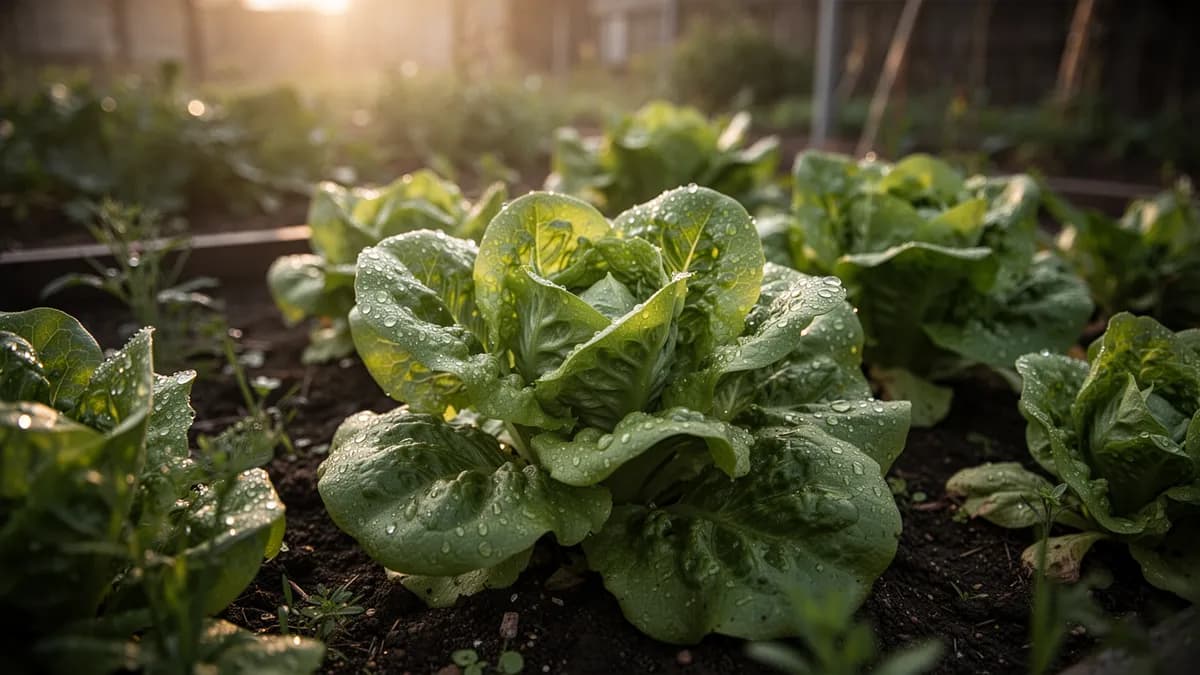
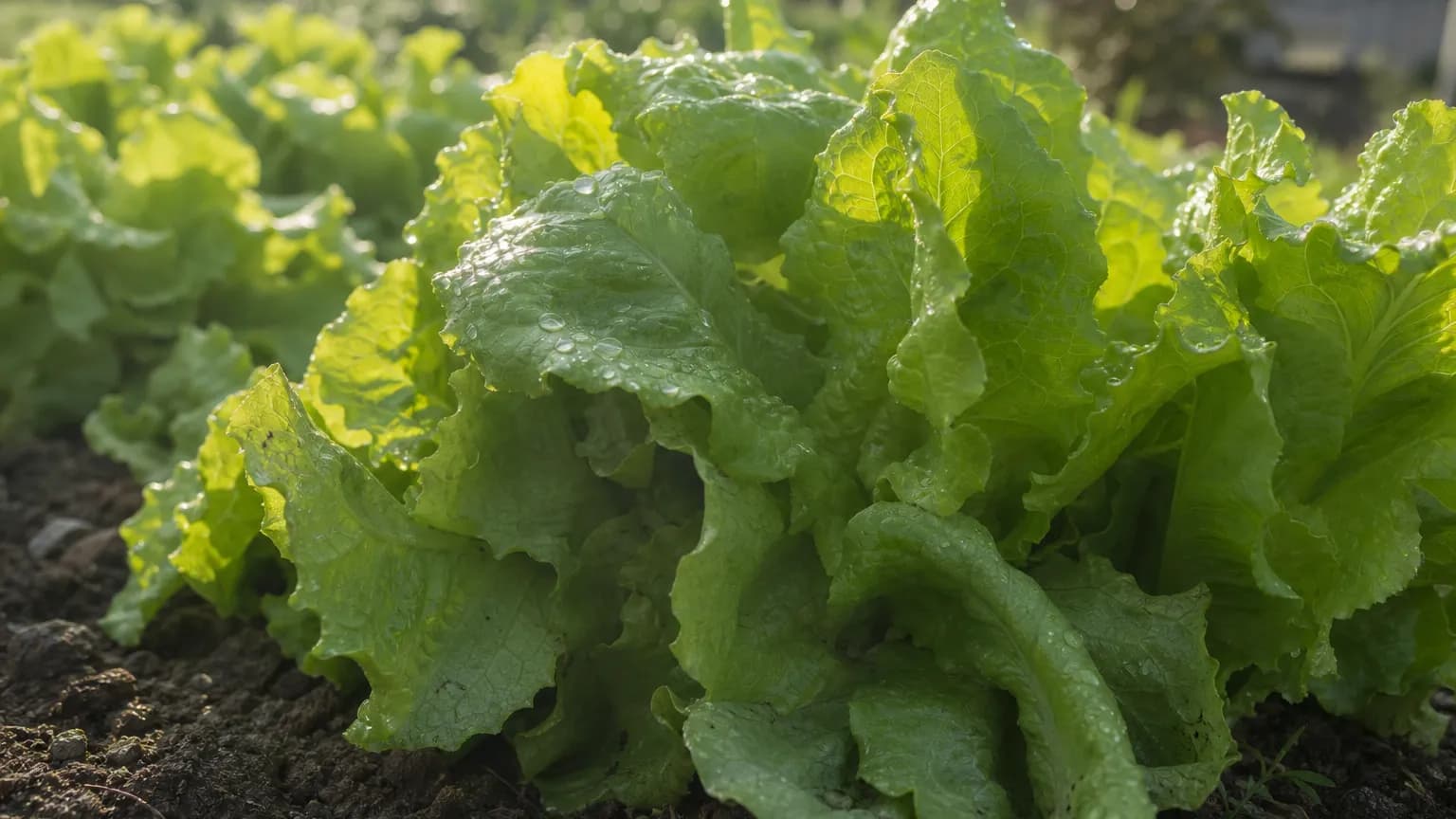
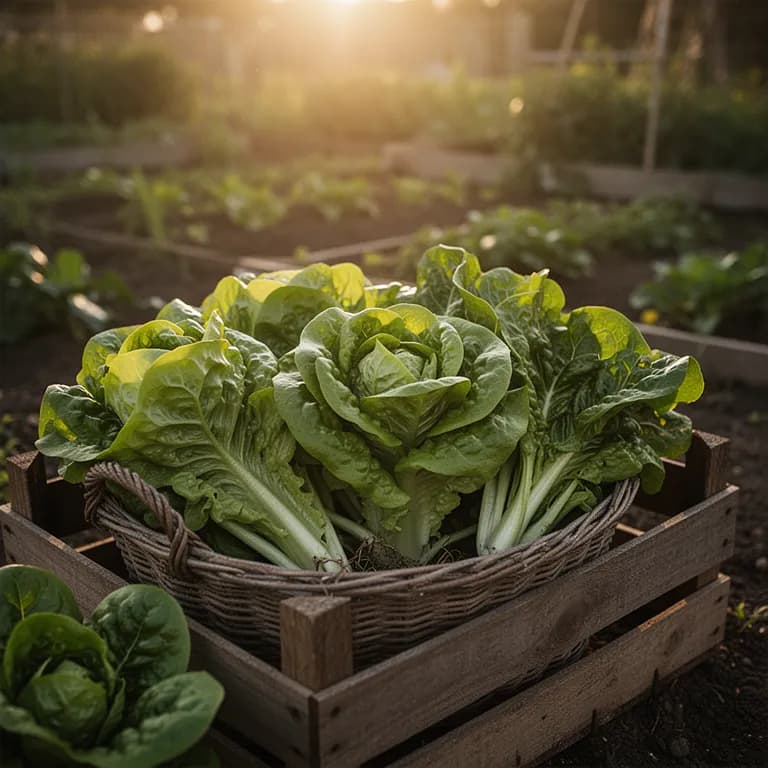
La lechuga mantecosa o butterhead (Lactuca sativa var. capitata) forma cabezas sueltas y redondeadas con hojas extraordinariamente tiernas, suaves y de textura sedosa, casi mantecosa al tacto.





En esta páginaResumen
Conoce Lechuga Mantecosa
La lechuga mantecosa o butterhead (Lactuca sativa var. capitata) forma cabezas sueltas y redondeadas con hojas extraordinariamente tiernas, suaves y de textura sedosa, casi mantecosa al tacto. Es una de las lechugas más finas y delicadas, apreciada en la alta gastronomía europea por su sabor dulce y suave. Las variedades más conocidas incluyen la Boston y la Bibb, ambas ideales para ensaladas elegantes y presentaciones gourmet.
Cuándo plantar Lechuga Mantecosa
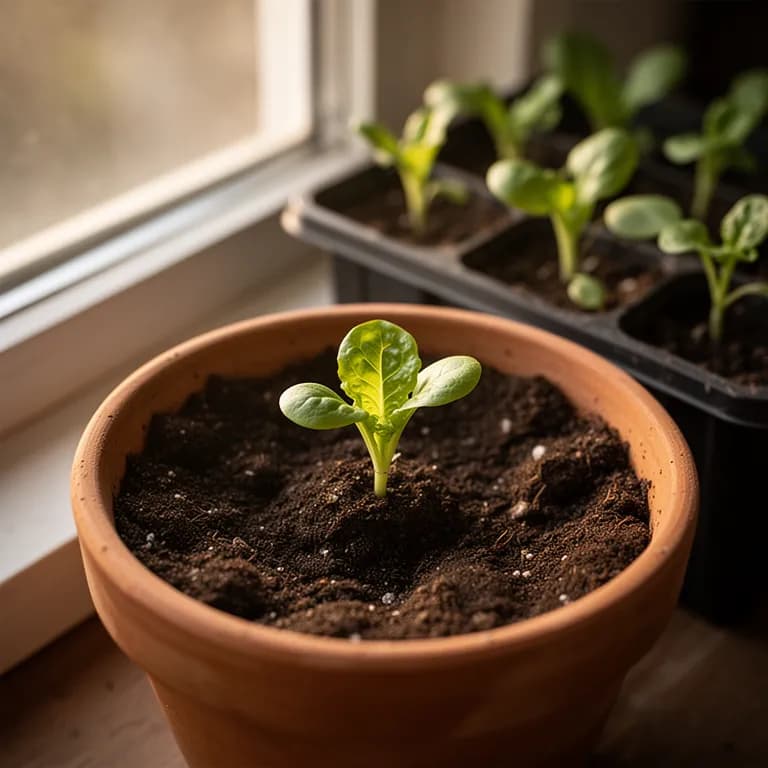
Siembre las semillas sobre la superficie de un sustrato fino y húmedo, presionando ligeramente sin cubrir, ya que necesitan exposición a la luz para germinar. Mantenga el sustrato húmedo a una temperatura de 15 a 18 °C; la germinación se produce en 5 a 10 días. Evite temperaturas superiores a 25 °C, que pueden inhibir la germinación por termodormancia. Transplante las plántulas al exterior cuando tengan 3 a 4 hojas verdaderas, endureciéndolas gradualmente durante 5 a 7 días.
Tu año de Lechuga Mantecosa
Ajustado a Zona 7 · temporada típica · la helada se va hacia el 2 abr y vuelve hacia el 1 nov
Planta Lechuga Mantecosa Mar – May, Ago – Sep y cosecha May – Jul, Oct – Nov. Consulta los métodos de plantación y elige tu clima para adaptar los periodos.
Cómo cultivar Lechuga Mantecosa
La lechuga mantecosa es un cultivo de clima fresco que prospera con temperaturas entre 13 y 18 °C. Siembre las semillas en interiores de 4 a 6 semanas antes de la última helada o directamente en el huerto en primavera temprana. Las semillas requieren luz para germinar, por lo que deben depositarse sobre la superficie del sustrato húmedo y presionarse suavemente sin cubrir. La germinación ocurre en 5 a 10 días a temperaturas de 15 a 20 °C.
Trasplante las plántulas al exterior cuando tengan 4 hojas verdaderas, espaciándolas de 20 a 25 cm en todas las direcciones. La lechuga mantecosa tiene un sistema radicular superficial y delicado, por lo que requiere riego frecuente y suave para mantener el suelo uniformemente húmedo. Aplique un acolchado orgánico fino (paja, hojas trituradas) de 3 a 5 cm para conservar la humedad y mantener las hojas inferiores limpias.
Para una cosecha continua durante la temporada, realice siembras sucesivas cada 2 semanas. Proteja las plantas del sol intenso del mediodía con malla de sombra al 30-40% durante los períodos más cálidos, ya que el calor excesivo provoca espigado prematuro y hojas amargas. En otoño, las plantaciones tardías pueden protegerse con campanas o túneles bajos para extender la temporada hasta las primeras heladas.
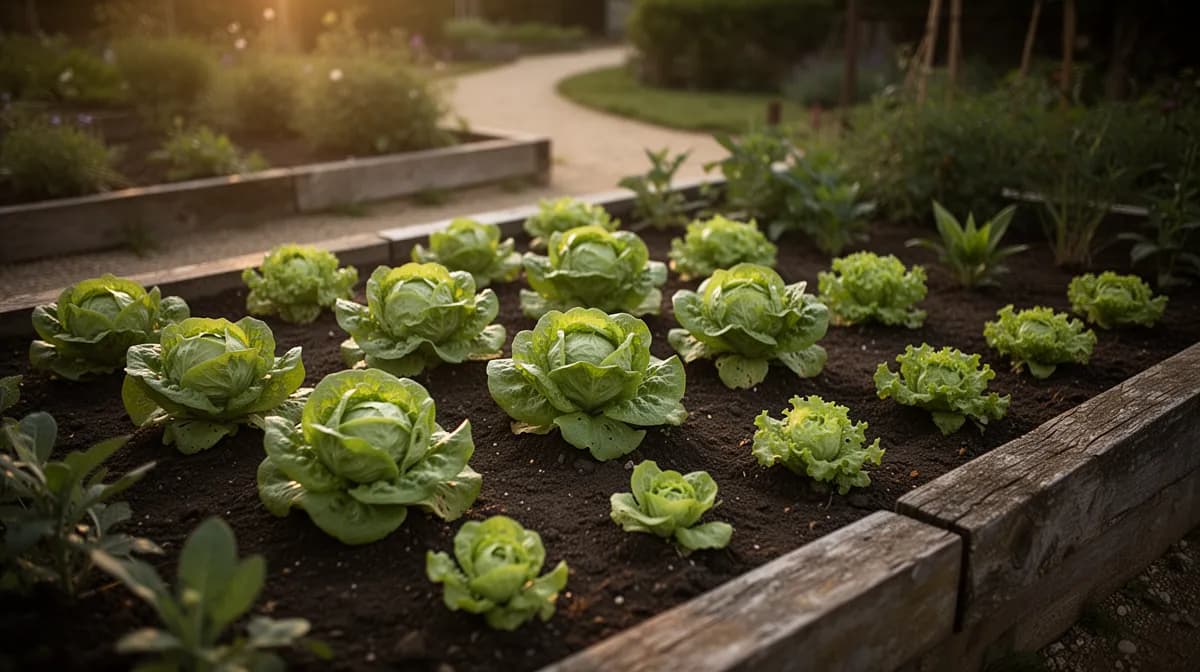
36 plantas caben en un bancal de 120 × 240 cm
Cada Lechuga Mantecosa pide 25 cm de margen. El planificador guarda ese marco por ti — cada planta, cada bancal.
Los mejores vecinos de Lechuga Mantecosa
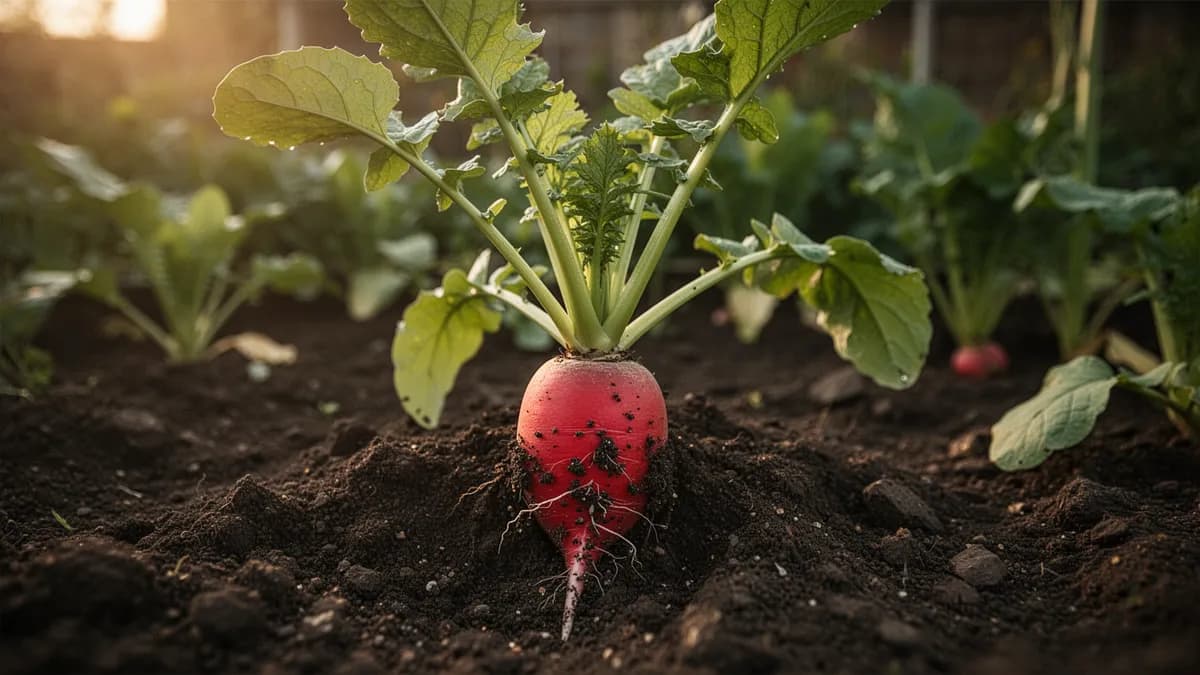
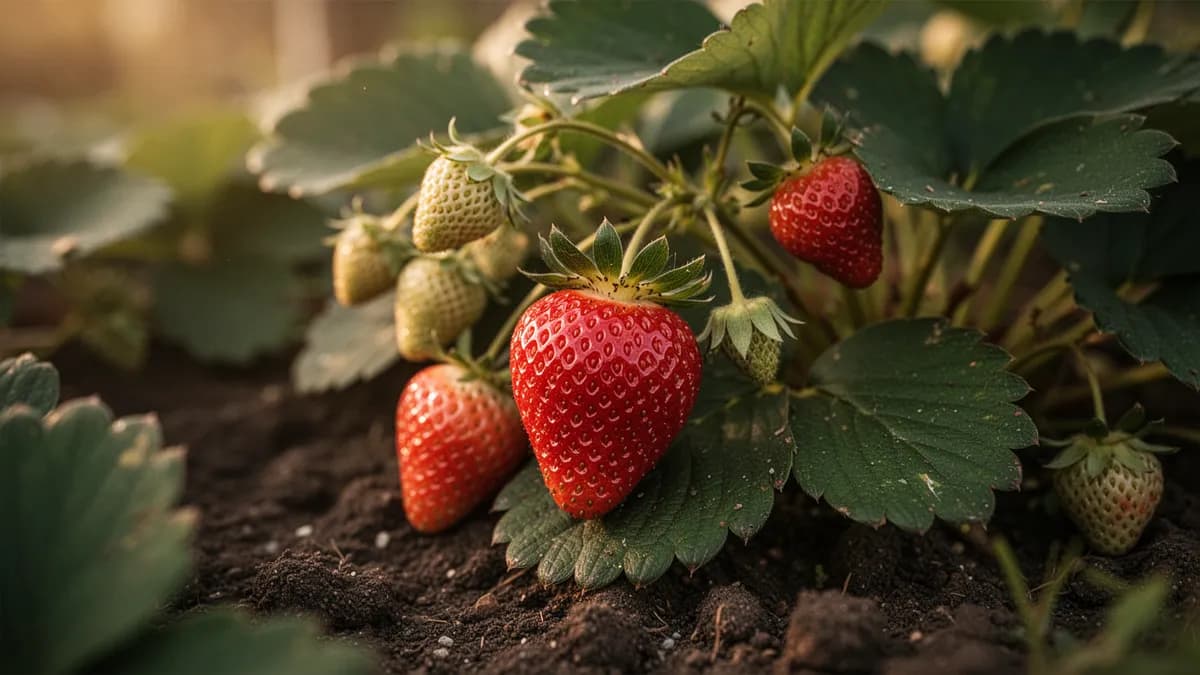
Los rábanos y las zanahorias son excelentes compañeros de la lechuga mantecosa, ya que sus raíces profundas no compiten con el sistema radicular superficial de la lechuga y ayudan a romper el suelo compactado. Las hierbas aromáticas como el cebollín y el eneldo repelen pulgones de forma natural. Las fresas también son buenas vecinas, creando una cobertura del suelo beneficiosa. Evite plantar cerca de apio o perejil en grandes cantidades.
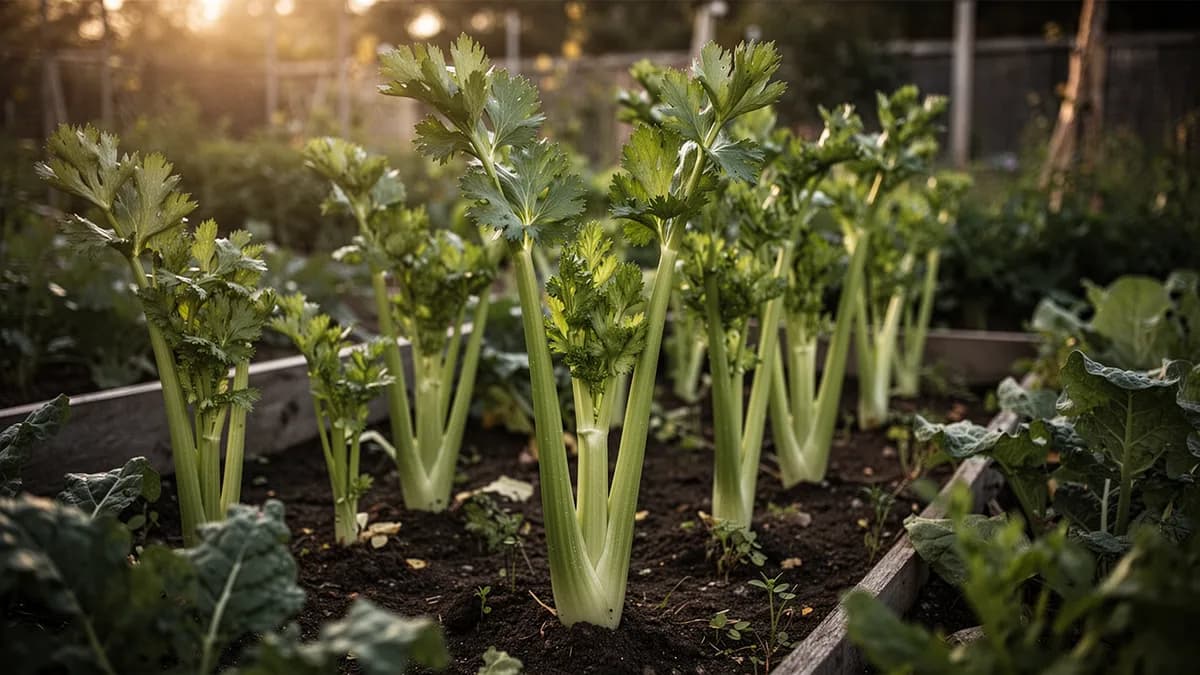
Zanahoria va a su lado. Apio no.
Saber de huerto de siempre, cotejado con la tabla real de Lechuga Mantecosa — prueba cualquier planta que cultives.
Prueba Lechuga Mantecosa en un bancal, aquí mismo
Un bancal real del planificador con Lechuga Mantecosa ya plantado. Toca una planta compañera para colocarla y mira cómo responde la comprobación de vecinos: verde para buenos vecinos, rojo si hay conflicto.


Guías de cultivo relacionadas
Abónalo bien
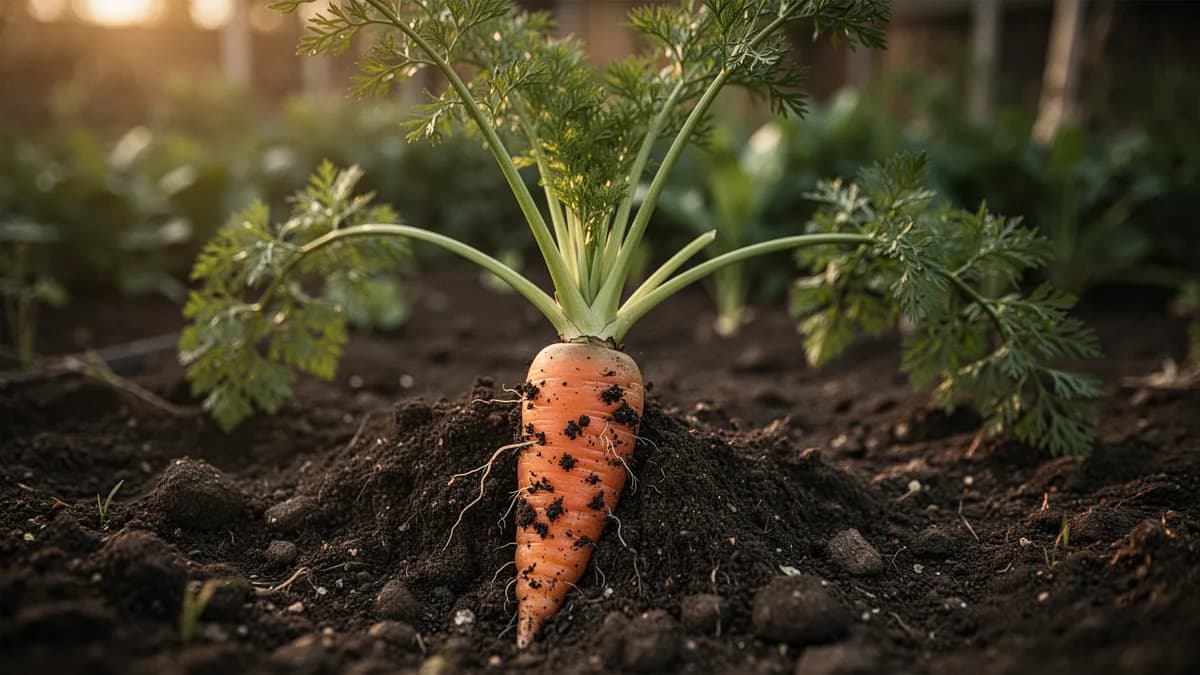
La lechuga mantecosa prefiere suelos ligeros, fértiles, ricos en humus y bien drenados con un pH de 6,0 a 7,0. Enriquezca el suelo con compost maduro antes de plantar para asegurar una buena retención de humedad y una textura suelta que facilite el crecimiento de las raíces delicadas. Fertilice cada 2 a 3 semanas con un abono líquido equilibrado rico en nitrógeno para promover un crecimiento foliar rápido y suave.
Temperatura ideal
Compatibilidad de zonas de rusticidad
De la semilla a la cosecha, etapa por etapa
Germinación
Las semillas diminutas brotan en la superficie del suelo y necesitan luz para activar la germinación. Primero emergen delicadas radículas blancas, que se anclan en el medio de cultivo, seguidas por un par de cotiledones pequeños y redondeados que se abren para comenzar la fotosíntesis.
Desarrollo de plántula
Aparecen las primeras hojas verdaderas con su forma redondeada y ligeramente ahuecada característica. Las plántulas desarrollan una roseta compacta de 3-5 hojas y empiezan a establecer un sistema radicular poco profundo pero extendido. El crecimiento es constante en condiciones frescas.
Formación de roseta
La planta produce una roseta extendida de hojas cada vez más grandes y tiernas. Las hojas externas crecen amplias y abiertas, mientras que las internas empiezan a curvarse hacia dentro. La característica textura mantequillosa se hace evidente cuando las hojas se engrosan ligeramente y desarrollan un aspecto suave, casi aceitoso.
Formación de la cabeza
Las hojas internas se pliegan suavemente sobre el centro, formando el corazón blando y blanqueado por el que se valora la lechuga butterhead. La cabeza nunca llega a ser tan compacta como la de una lechuga iceberg: permanece suelta y flexible. Las hojas interiores se vuelven verde amarillento pálido por el auto-blanqueo y desarrollan un sabor más dulce y delicado.
Cosecha
La cabeza se siente llena y las hojas interiores están tiernas y blanqueadas. La planta está en su punto óptimo de calidad y sabor. Si se deja demasiado tiempo, especialmente con el aumento del calor, el centro empezará a alargarse cuando la planta inicie la floración, produciendo un tallo floral y volviendo las hojas amargas.
Mantén la superficie del suelo constantemente húmeda con un pulverizador. No cubras las semillas: la lechuga butterhead necesita luz para germinar. Mantén temperaturas entre 13-18°C; por encima de 27°C las semillas entran en termodormancia y no brotan.
Cuidar Lechuga Mantecosa mes a mes
Qué hacer cada mes para tu Lechuga Mantecosa
Octubre
Mes actualHarvest fall-planted heads as they mature. In mild climates, continue sowing for winter harvest. Apply row cover or cold frame protection for late-season plants. Butterhead tolerates light frost (down to -2°C / 28°F), which can actually improve sweetness.
Ten claro qué hacer en tu huerto, cada mes
Un correo al empezar cada mes: qué sembrar, plantar y hacer ahora mismo — para tu Lechuga Mantecosa y todo lo que crece alrededor. Más un breve curso inicial para esquivar los errores clásicos.
- Qué hacer ahora mismo
- Ajustado a tu temporada
- Curso inicial incluido
Cosechar Lechuga Mantecosa
Coseche la lechuga mantecosa cuando las cabezas se sientan llenas y suavemente firmes al tacto, generalmente de 55 a 70 días después de la siembra. Corte la cabeza completa a nivel del suelo con un cuchillo afilado por la mañana temprano, cuando las hojas están más turgentes y crujientes. Alternativamente, coseche hojas exteriores individuales para prolongar la producción.
se supone que plantas al comenzar el periodo — indica tu fecha real
Cosecha cuando la cabeza se sienta llena y las hojas interiores estén tiernas, normalmente 50-60 días desde la siembra.
Almacenamiento y conservación
Lave las hojas con cuidado bajo agua fría, séquelas delicadamente con una centrifugadora de ensaladas y envuélvalas en papel de cocina húmedo dentro de una bolsa de plástico en el cajón de verduras del refrigerador. Las cabezas enteras se conservan hasta 5 a 7 días, pero las hojas sueltas deben consumirse en 2 a 3 días. La lechuga mantecosa no es apta para congelación ni conserva, por lo que debe disfrutarse fresca.
Qué falla — y cómo solucionarlo
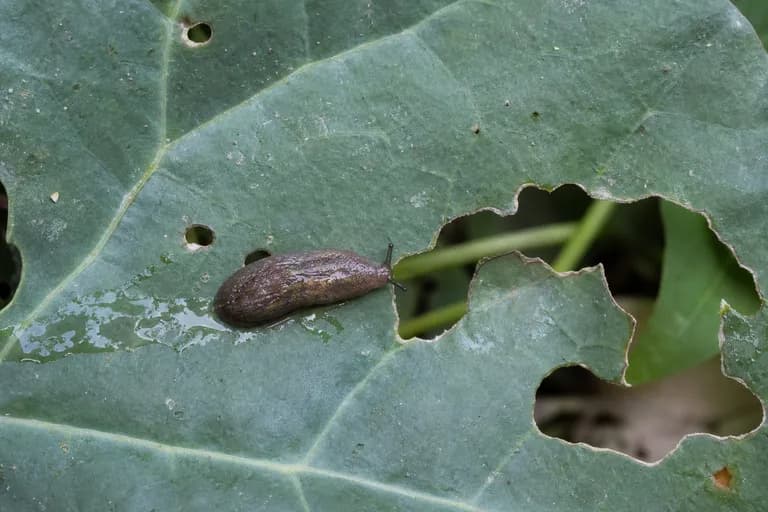
Babosas y caracoles
PlagaAgujeros irregulares y bordes roídos en las hojas tiernas, con rastros plateados de baba visibles en la mañana. Las hojas internas de la cabeza también pueden verse afectadas, especialmente en noches húmedas y frescas.
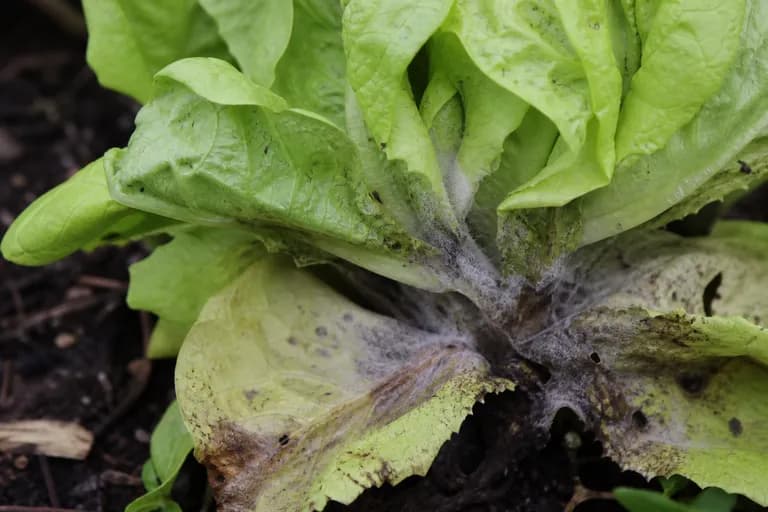
Podredumbre gris (Botrytis cinerea)
EnfermedadManchas acuosas de color marrón en las hojas inferiores y la base de la cabeza, cubiertas por un moho gris aterciopelado característico. La infección avanza rápidamente en condiciones frías y húmedas, pudiendo destruir toda la cabeza.
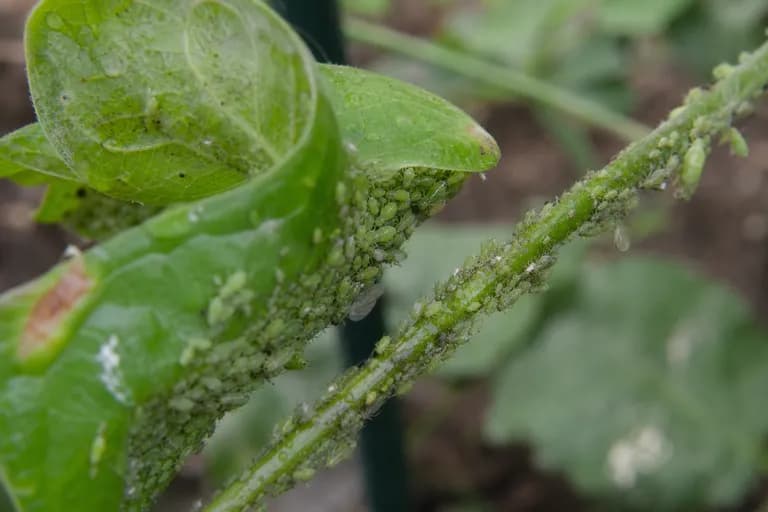
Pulgón verde (Myzus persicae)
PlagaColonias de pequeños insectos verdes o rosados en el envés de las hojas tiernas y en el cogollo, causando enrulamiento de las hojas, crecimiento atrofiado y producción de melaza pegajosa que favorece la fumagina.
Solución de problemas comunes
El espigado prematuro es el principal problema, causado por temperaturas superiores a 22 °C, días largos de verano y estrés hídrico, que provocan que la planta florezca prematuramente y las hojas se vuelvan amargas e incomestibles. La quemadura de las puntas (tipburn) se manifiesta como bordes marrones en las hojas internas de la cabeza, especialmente durante periodos de crecimiento rápido. La lechuga mantecosa también es muy sensible al exceso de humedad en la base, que favorece la pudrición del cuello.
Consejos de cultivo
- Succession plant every 2 weeks from early spring through late spring, then again from late summer through fall. This single technique transforms butterhead from a one-time harvest into a continuous supply lasting 6-8 months in most climates.
- Light is essential for germination — never bury butterhead seeds. Scatter them on the surface of moist soil and press gently to ensure seed-to-soil contact. Covering with even 3mm of soil can reduce germination rates by 50% or more.
- In warm weather (above 27°C / 80°F), pre-chill seeds in the refrigerator for 24-48 hours before sowing. Butterhead lettuce seeds enter thermodormancy at high temperatures and simply will not germinate without this cold treatment.
- Provide afternoon shade in any climate where temperatures regularly exceed 21°C (70°F). Use 30-50% shade cloth, plant on the east side of taller crops, or use companion plants like trellised peas or pole beans as living shade structures.
- Water at soil level only — never overhead. Butterhead's cupped leaves trap water in the crown, creating ideal conditions for gray mold (Botrytis) and soft rot. Drip irrigation or careful hand-watering at the base is essential.
- Mulch with straw, shredded leaves, or compost to maintain cool, moist soil conditions. Butterhead's shallow root system (top 15 cm of soil) is highly sensitive to temperature fluctuations, and mulch buffers these swings effectively.
- Harvest the entire head by cutting at the base rather than pulling, which disturbs neighboring plants. Alternatively, pick outer leaves from 30 days onward for a prolonged harvest — the plant will continue producing new leaves from the center for weeks.
- For the sweetest flavor, grow butterhead in fall rather than spring. Cooling temperatures cause the plant to accumulate sugars as a natural antifreeze, producing heads that are noticeably sweeter and more tender than spring-grown lettuce.
Cultiva tu mejor Lechuga Mantecosa — y todo lo que la rodea.
Empieza un plan gratis hoy. Diseña tus bancales, coloca tu Lechuga Mantecosa y deja que PlotMyGarden gestione el momento, el espaciado, las asociaciones y los recordatorios de la semilla a la cesta.
Elige tu Lechuga Mantecosa
Buttercrunch
Variedad ganadora del premio All-America Selections, con cabezas compactas de hojas verde oscuro gruesas y crujientes con un corazón cremoso. Buena tolerancia al calor y resistente al espigado. Madura en 50 a 65 días.
Bibb (Limestone)
Variedad heirloom de cabezas pequeñas y elegantes originaria de Kentucky, con hojas verde claro extremadamente tiernas y dulces. Es el estándar de referencia para la lechuga mantecosa de calidad gourmet. Madura en 55 a 60 días.
Tom Thumb
Variedad miniatura heredada del siglo XIX que forma cabezas compactas del tamaño de una pelota de tenis, perfectas para porciones individuales y cultivo en macetas. Hojas suaves y dulces. Madura en 48 a 55 días.
Merveille des Quatre Saisons
Variedad heredada francesa con hojas verdes teñidas de rojo burdeos intenso, formando cabezas hermosas y ornamentales. Sabor excepcional, dulce y mantecoso. Tolerante al frío y al calor moderado. Madura en 58 a 65 días.
A packet of butterhead lettuce seeds ($2-4) contains 500-1,000 seeds — enough to grow an entire season of salads through succession planting. A single mature organic butterhead head sells for $3-5 at farmers' markets and $2-4 at grocery stores. Growing just 20 heads over a season (easily achievable with succession planting) saves $40-80 compared to buying organic. The freshness and flavor difference between garden-harvested and store-bought butterhead, which wilts within days of harvest, is dramatic.
Recetas rápidas
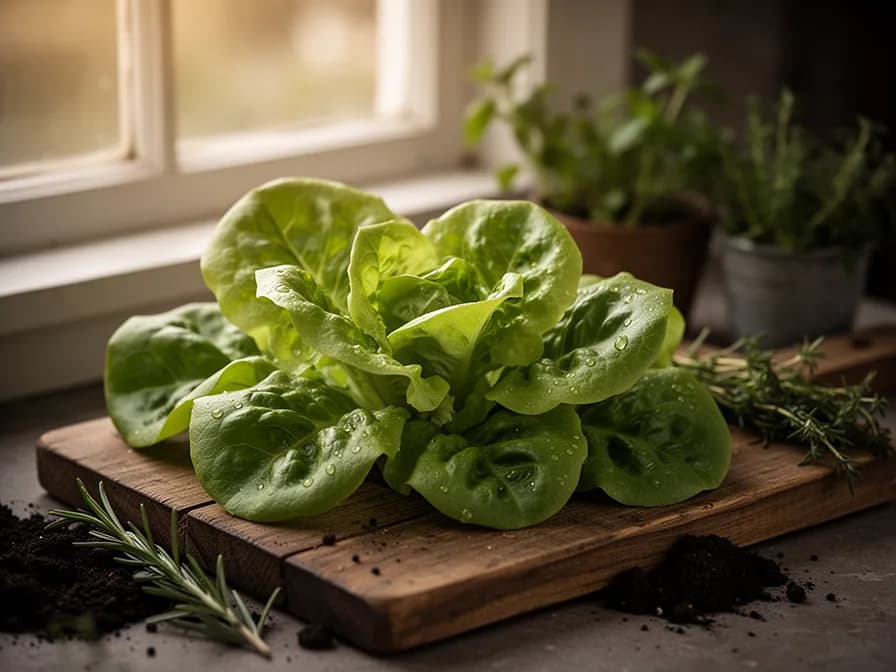
Classic Butterhead Lettuce Wraps
15 minWhole butterhead leaves make naturally perfect cups for savory fillings. Fill with seasoned ground chicken or tofu, crunchy vegetables, and a sweet-spicy sauce for an elegant, low-carb appetizer or light meal that highlights the leaf's tender, pliable texture.
9 ingredientes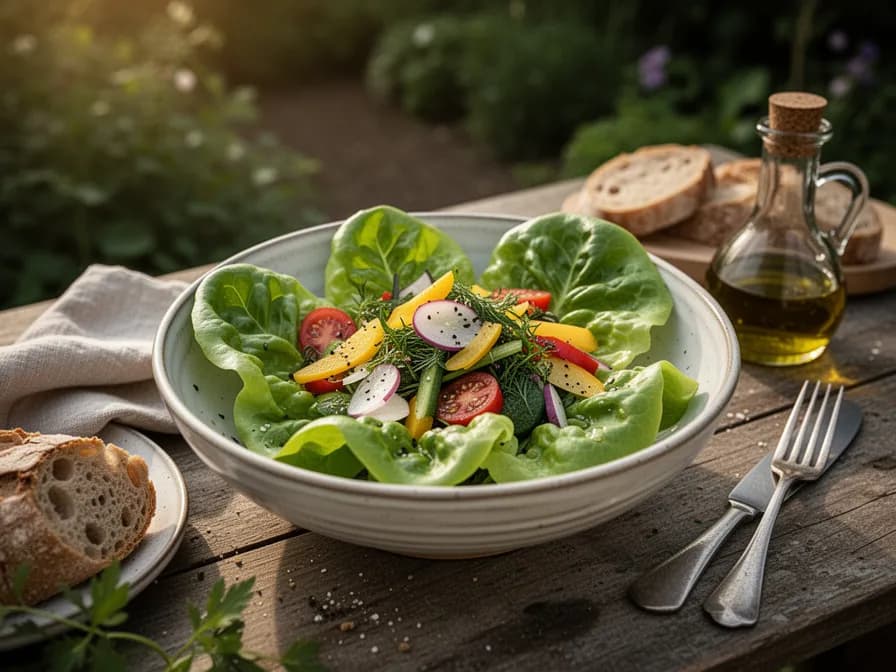
French Butterhead Salad with Dijon Vinaigrette
10 minA refined Parisian-style salad that lets the silky leaves take center stage. Whole butterhead leaves are gently dressed with a tangy Dijon mustard vinaigrette, topped with fresh herbs and shaved radishes. Simplicity at its most elegant.
8 ingredientesButterhead, Avocado and Citrus Salad
12 minA bright, refreshing salad that pairs the buttery softness of the lettuce with creamy avocado and juicy citrus segments. A light lemon-olive oil dressing ties everything together without masking the lettuce's delicate flavor.
8 ingredientesUsos culinarios
Las hojas tiernas y delicadas de la lechuga mantecosa son perfectas para ensaladas finas donde se aprecie su textura sedosa y su sabor dulce y suave. Sus hojas en forma de copa son ideales para crear envoltorios (wraps) con rellenos asiáticos, tacos de lechuga o barquitas con ensaladilla. También es excelente como base de platos elegantes, en sándwiches gourmet y como guarnición decorativa en restauración de alta cocina.
Qué contiene
Beneficios para la salud
- Exceptionally rich in Vitamin A as beta-carotene — a single head provides over 100% of daily needs, supporting vision health, skin cell renewal, and immune defense.
- High in Vitamin K (102 mcg per 100g), which plays a critical role in blood clotting and helps direct calcium into bones rather than arteries, supporting cardiovascular health.
- Contains folate (73 mcg per 100g), a B-vitamin essential for DNA synthesis and cell division, particularly important during pregnancy for preventing neural tube defects.
- The high water content (96%) combined with potassium (238mg per 100g) supports hydration and healthy blood pressure levels, making it an excellent food for cardiovascular health.
- Provides lactucarium compounds in its milky sap, which have mild sedative and analgesic properties — traditional herbalists have long used lettuce tea as a natural sleep aid.
- Low in oxalates compared to spinach and kale, making its iron and calcium more bioavailable and suitable for people prone to kidney stones.
De dónde viene Lechuga Mantecosa
Lettuce has one of the longest cultivation histories of any vegetable, with roots stretching back over 4,500 years. Wild lettuce (Lactuca serriola), the prickly ancestor of all cultivated lettuce, is native to the Mediterranean basin and the Middle East. The ancient Egyptians were the first to domesticate lettuce around 2680 BC, initially growing tall, bolt-prone plants for their oil-rich seeds rather than their leaves. Wall paintings in Egyptian tombs depict lettuce as a sacred plant associated with the fertility god Min.
The Greeks and Romans transformed lettuce into a leafy salad crop through centuries of selective breeding. The Romans favored soft-leaved heading types — the likely ancestors of modern butterhead varieties — and spread lettuce cultivation throughout their empire. The Latin name 'Lactuca' comes from 'lac' (milk), referring to the milky sap that oozes when stems are cut.
Butterhead lettuce as a distinct type emerged in European gardens during the 16th and 17th centuries, particularly in France, the Netherlands, and England, where gardeners selected for the softest, most tender heading varieties. France became the epicenter of butterhead breeding, producing dozens of named varieties by the 1800s. The variety 'Merveille des Quatre Saisons' (Marvel of Four Seasons), still grown today, dates to at least 1885. In America, the 'Bibb' variety bred in Kentucky in the 1860s became the standard for butterhead quality and remains widely grown. Today, butterhead lettuce is the most popular lettuce type in European markets, while it holds a growing niche in North America where crunchier romaine and iceberg have traditionally dominated.
Lechuga Mantecosa: ¿sabías que?
Datos fascinantes sobre Lechuga Mantecosa
The name 'butterhead' comes from the texture, not the taste — the leaves have an almost oily, slippery smoothness that feels like butter between your fingers, caused by a thin layer of natural plant oils on the leaf surface.
Lechuga Mantecosa: preguntas frecuentes
¿Cuándo debo plantar Lechuga Mantecosa?
¿Cuáles son buenas plantas acompañantes para Lechuga Mantecosa?
¿En qué zonas de rusticidad puede crecer Lechuga Mantecosa?
¿Cuánto sol necesita Lechuga Mantecosa?
¿A qué distancia debo espaciar Lechuga Mantecosa?
¿Qué plagas y enfermedades afectan a Lechuga Mantecosa?
¿Cómo almaceno Lechuga Mantecosa después de la cosecha?
¿Cuáles son las mejores variedades de Lechuga Mantecosa para cultivar?
¿Qué suelo necesita Lechuga Mantecosa?
Why does my butterhead lettuce taste bitter?
Can I grow butterhead lettuce in containers?
How do I prevent my butterhead lettuce from bolting?
What is the difference between Bibb and Boston butterhead lettuce?
Is butterhead lettuce good for hydroponic growing?
How do I store butterhead lettuce to keep it fresh longest?
Acabas de leer la teoría. Ahora cultívala en piloto automático.
Todo lo que hace que Lechuga Mantecosa sea delicado — el momento, el espaciado, las asociaciones, la ventana de cosecha — es justo lo que PlotMyGarden resuelve por ti, para cada planta de tu huerto.
Un plan que conoce tu clima
Indica tu ubicación una vez. Recibe fechas de siembra, abonado y cosecha basadas en tu última helada real y el pronóstico en vivo — sin adivinar con un sobre genérico.
De la sección “Cuándo plantar”Planificador de bancales de arrastrar y soltar
Diseña bancales sobre una cuadrícula. Cada planta encaja con su espaciado correcto y ves toda la temporada antes de gastar un céntimo en semillas.
De la sección “Cultivo”Conflictos de asociación, detectados a tiempo
Más de 200 buenas y malas combinaciones comprobadas en vivo mientras plantas — para que un error que arruine la temporada nunca llegue a la tierra.
De la sección “Asociaciones”Recordatorios que sí vas a seguir
“Riega las judías.” “Recoge hoy antes de que se pase.” Oportunos, concretos y ligados a las plantas que de verdad cultivas.
De la sección “Cosecha”Escalonado, programado
¿Quieres cosechar seis semanas en vez de seis días? Reparte tus siembras automáticamente y te avisa cuando toca el siguiente lote.
De la sección “Cuándo plantar”Un registro que se vuelve más listo
Cada cosecha que registras le enseña tu huerto. El plan del año que viene parte de lo que de verdad funcionó en tu suelo, no en un manual.
De la sección “Resumen”Planta estos junto a Lechuga Mantecosa
Más Hortalizas de hoja
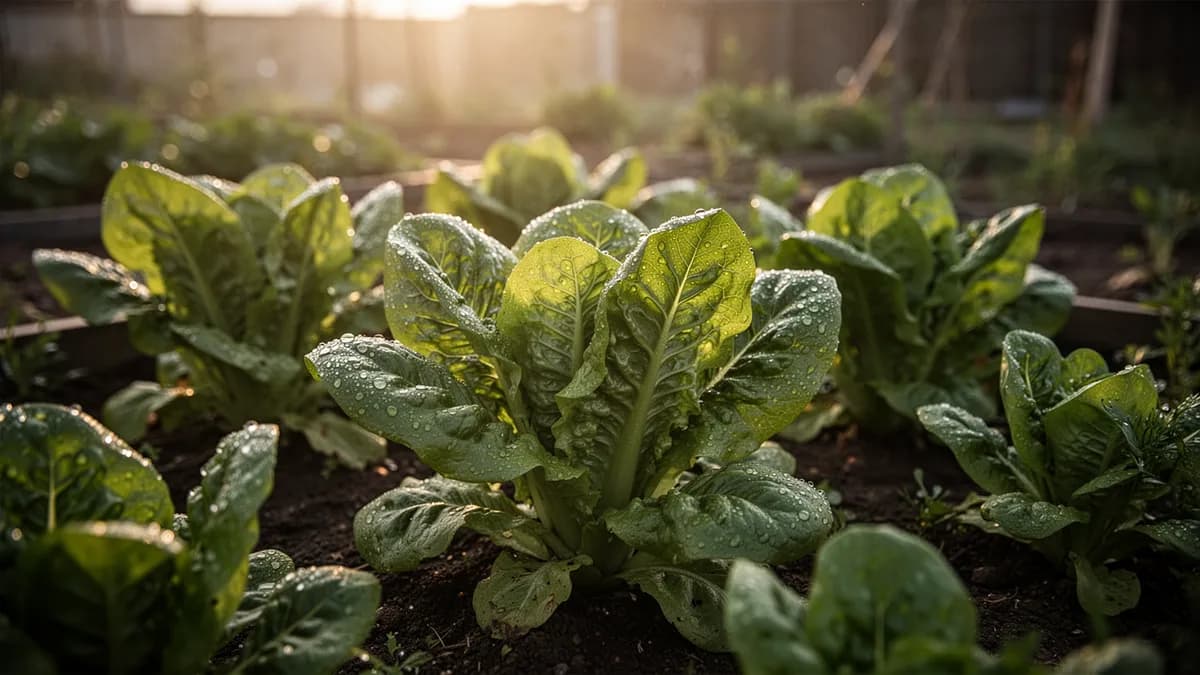
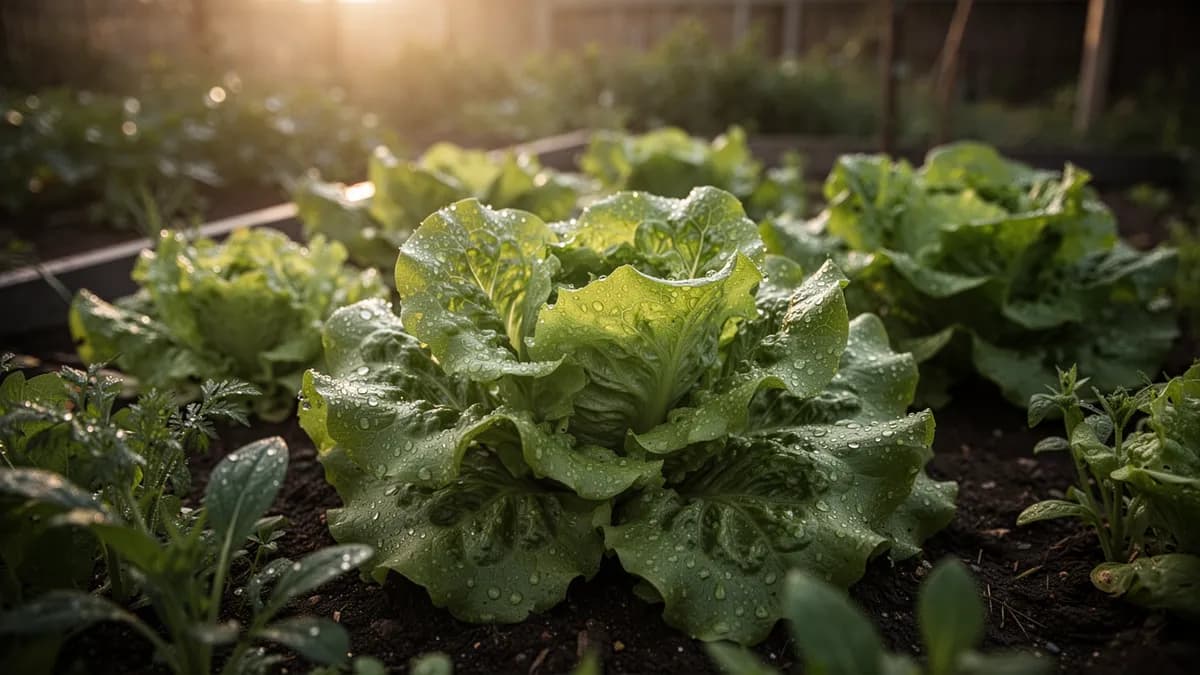
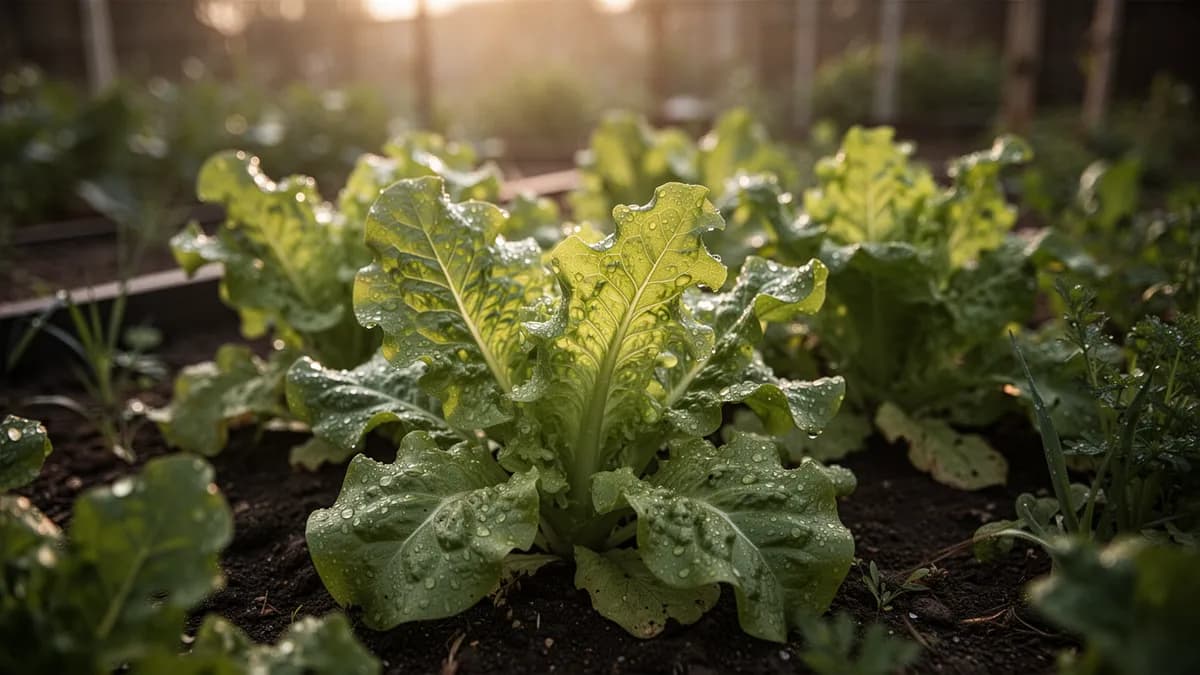
Mantén Lechuga Mantecosa lejos de estos
Diseños de jardín con Lechuga Mantecosa
Cultiva tu mejor Lechuga Mantecosa — y todo lo que la rodea.
Empieza un plan gratis hoy. Diseña tus bancales, coloca tu Lechuga Mantecosa y deja que PlotMyGarden gestione el momento, el espaciado, las asociaciones y los recordatorios de la semilla a la cesta.