Sedum
Una vivaz suculenta con hojas gruesas y carnosas y cabezuelas florales planas que atraen mariposas a finales del verano y en otoño.





En esta páginaResumen
Conoce Sedum
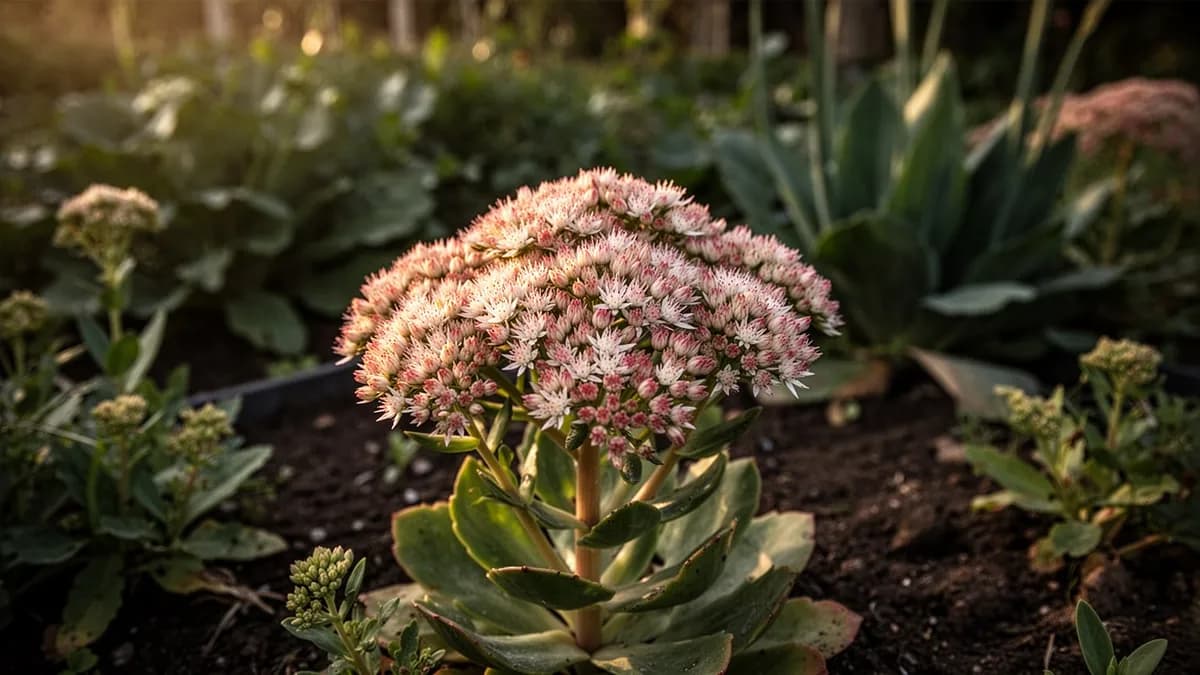
Una vivaz suculenta con hojas gruesas y carnosas y cabezuelas florales planas que atraen mariposas a finales del verano y en otoño. El sedum es una de las vivaces mas tolerantes a la sequia, prospera en suelos pobres y secos y requiere casi ningun mantenimiento. Deje las atractivas cabezuelas de semillas en pie durante el invierno para aportar interes estructural y corte la planta a comienzos de la primavera.
Cuándo plantar Sedum
Los sedums de bordura altos se propagan con mas facilidad por division o esquejes de tallo que por semilla. Para dividir, levante las matas en primavera, separelas en secciones con raiz y replante de inmediato. Los esquejes de tallo son sorprendentemente faciles: corte secciones de 10-15 cm de tallo en verano, deje que el extremo cortado cicatrice durante un dia y despues insiertalas en compost granuloso. Enraizan rapido y pueden pasarse a maceta en pocas semanas. Incluso las hojas que caen al suelo pueden enraizar y formar plantas nuevas. Sembrar es posible, pero innecesario dada la facilidad de la propagacion vegetativa.
Tu año de Sedum
Ajustado a Zona 7 · temporada típica · la helada se va hacia el 2 abr y vuelve hacia el 1 nov
Planta Sedum Mar – Abr, Sep y cosecha Ago – Oct. Consulta los métodos de plantación y elige tu clima para adaptar los periodos.
Cómo cultivar Sedum
El sedum (recientemente reclasificado como Hylotelephium para las variedades altas) es la vivaz de bajo mantenimiento por excelencia y prospera en condiciones que matarian a la mayoria de las otras plantas de jardin. Los sedums de bordura altos crecen 45-60 cm con tallos gruesos y carnosos y hojas suculentas gris verdosas o purpuras rematadas por amplias cabezuelas planas que abren desde finales del verano hasta el otono. Estas floraciones de final de temporada son un iman para mariposas, abejas y otros polinizadores.
Plante a pleno sol en cualquier suelo bien drenado: de hecho, el sedum rinde mejor en suelos pobres, ligeros y pedregosos que en condiciones de jardin ricos. El exceso de fertilidad y humedad produce un crecimiento debil y lacio que se abre por el centro. Una vez establecido, no necesita riego suplementario salvo en sequias extremas. El sedum es una de las mejores opciones para cubiertas verdes, jardines de grava y borduras secas donde el riego es poco practico.
Deje las cabezuelas secas en pie durante el invierno: adquieren tonos marron rojizo muy atractivos y lucen espectaculares con la escarcha o la nieve. Corte toda la planta hasta ras de suelo a comienzos de la primavera, justo cuando surgen los nuevos brotes en la base. La planta casi no requiere cuidados continuos: no necesita entutorado, ni desbotonado, ni division (aunque puede dividirse cada 4-5 anos si las matas se hacen grandes). Si los tallos se vencen a mitad de temporada, normalmente significa que el suelo es demasiado rico o que la planta necesita mas sol.
10 plantas caben en un bancal de 120 × 240 cm
Cada Sedum pide 45 cm de margen. El planificador guarda ese marco por ti — cada planta, cada bancal.
Los mejores vecinos de Sedum
El sedum es un companero natural para otras vivaces de final de temporada, como equinaceas, black-eyed Susans, graminias ornamentales y asters. Juntas crean una exhibicion otoñal espectacular mientras aportan nectar vital de fin de temporada para los polinizadores. El follaje gris verdoso o purpura complementa la artemisa plateada, la festuca azul y la salvia purpura. En jardines de grava, combine con otras plantas tolerantes a la sequia, como milenrama, lavanda y alliums. El sedum combina bien con los bulbos de primavera: sus brotes emergentes son lo bastante bajos para no competir con narcisos y tulipanes.
Equinácea va a su lado.
Saber de huerto de siempre, cotejado con la tabla real de Sedum — prueba cualquier planta que cultives.
Prueba Sedum en un bancal, aquí mismo
Un bancal real del planificador con Sedum ya plantado. Toca una planta compañera para colocarla y mira cómo responde la comprobación de vecinos: verde para buenos vecinos, rojo si hay conflicto.


Guías de cultivo relacionadas


Abónalo bien
El sedum prospera en suelos pobres o moderadamente fertiles, bien drenados y de practicamente cualquier tipo: arenosos, pedregosos, franco-arenosos o incluso rocosos. Crece bien con un pH de 6.0-8.0 y tolera condiciones alcalinas. No enriquezca el suelo con compost ni estiercol, porque demasiada fertilidad provoca un crecimiento debil y lacio. Si planta en arcilla pesada, anada abundante grava o arena gruesa para mejorar el drenaje. No hace falta abonado regular; si el crecimiento parece pobre, basta con una aplicacion ligera de fertilizante bajo en nitrogeno en primavera. Las plantas en contenedor necesitan una mezcla granulosa y muy drenante con poca materia organica.
Temperatura ideal
Compatibilidad de zonas de rusticidad
De la semilla a la cosecha, etapa por etapa
Propagacion y enraizamiento
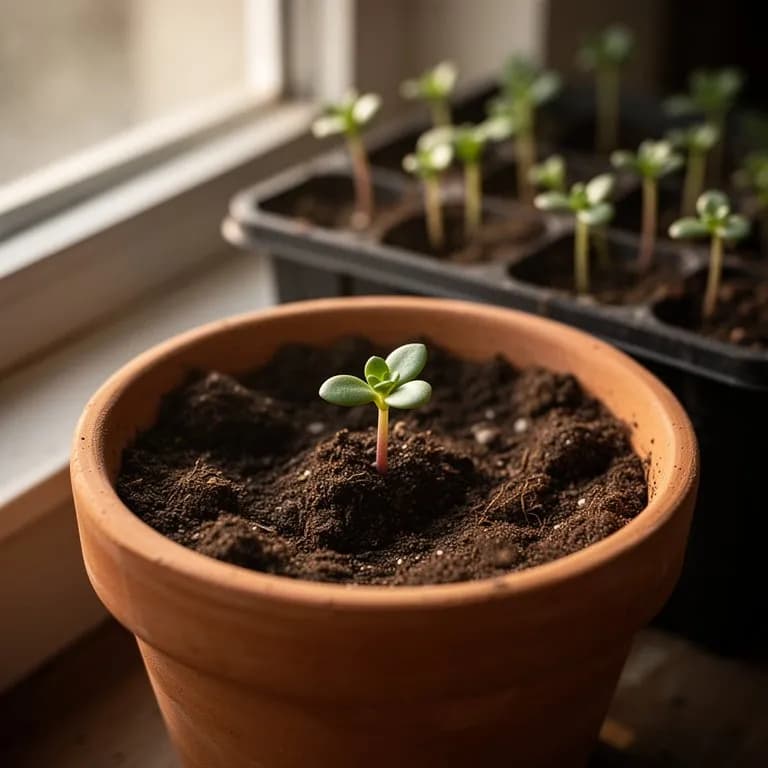
El sedum se propaga con mas frecuencia por esquejes de tallo o de hoja que por semilla. Los esquejes cicatrizan en uno a tres dias y despues comienzan a producir raices adventicias cuando se colocan sobre un sustrato granuloso y bien drenado o se presionan apenas contra el. La division de matas maduras en primavera es otro metodo fiable.
Fase de establecimiento
Los esquejes ya enraizados empiezan a producir nuevos pares de hojas y pequenas rosetas. El sistema radicular se expande en el suelo circundante y la planta comienza a desarrollar su caracteristico follaje suculento. Los tipos rastreros empiezan a emitir tallos laterales, mientras que las variedades erguidas desarrollan una estructura central mas fuerte.
Crecimiento vegetativo activo
La planta crece con vigor a lo largo de finales de primavera y verano, produciendo un follaje denso. Los sedums rastreros (Sedum acre, S. spurium) se extienden hacia afuera formando mantos de hasta 30 cm de ancho. Los tipos erguidos, como Hylotelephium spectabile, desarrollan tallos gruesos de 45 a 60 cm de altura con hojas carnosas azul verdosas o burdeos.
Formacion de capullos y floracion
Los capullos florales se forman como racimos densos, planos o redondeados (corimbos) en las puntas de los tallos desde mediados hasta finales del verano. Los capullos suelen ser verde palido y van tomando color poco a poco. Los sedums erguidos como Autumn Joy pasan de verde a rosa y luego a rosa cobrizo a lo largo de varias semanas, ofreciendo una exhibicion prolongada de agosto a octubre.
Formacion de semillas y senescencia
Despues de la polinizacion, las flores se secan hasta adquirir un atractivo tono marron rojizo y permanecen en los tallos durante el invierno. Las semillas son diminutas y se dispersan por el viento. El follaje de los tipos erguidos caducos muere hasta las rosetas basales, mientras que los tipos rastreros perennes conservan sus mantos de hojas durante el invierno en la mayoria de los climas.
Dormancia invernal
Los sedums erguidos entran en dormancia completa y solo se ven en la superficie del suelo yemas basales o pequenas rosetas. Los tipos rastreros perennes siguen presentes pero crecen muy lentamente. El sistema radicular permanece vivo y resiste el frio hasta la zona USDA 3 para la mayoria de las especies, tolerando temperaturas de hasta menos 40 grados Celsius.
Deje secar los esquejes durante 24-48 horas antes de colocarlos sobre un suelo arenoso apenas humedo. No los entierre en profundidad; el contacto con la superficie basta para que enraicen. Mantengalos con luz brillante indirecta y pulverice ligeramente cada pocos dias hasta que las raices se establezcan.
Cuidar Sedum mes a mes
Qué hacer cada mes para tu Sedum
Octubre
Mes actualDeje que las cabezuelas marchitas permanezcan en la planta para aportar interes invernal. Recoja semillas si lo desea sacudiendo las cabezuelas secas dentro de una bolsa de papel.
Ten claro qué hacer en tu huerto, cada mes
Un correo al empezar cada mes: qué sembrar, plantar y hacer ahora mismo — para tu Sedum y todo lo que crece alrededor. Más un breve curso inicial para esquivar los errores clásicos.
- Qué hacer ahora mismo
- Ajustado a tu temporada
- Curso inicial incluido
Cosechar Sedum
Las cabezuelas de sedum pueden cortarse para arreglos frescos o secos. Para flores frescas, corte cuando las cabezuelas planas esten totalmente coloreadas pero antes de que las flores individuales empiecen a marchitarse. Los tallos gruesos y el follaje suculento duran bien en agua durante 7-10 dias. Para secarlas, corte cuando las flores esten en su punto maximo de color: se secan al aire perfectamente, de pie en un jarron sin agua, adquiriendo poco a poco tonos marron calido. Las cabezuelas secas mantienen su forma durante muchos meses.
se supone que plantas al comenzar el periodo — indica tu fecha real
Cosecha Sedum a tiempo y la planta sigue produciendo.
Almacenamiento y conservación
Las cabezuelas de sedum se secan de forma natural en la planta si se dejan en pie durante el invierno. Para arreglos secos de interior, corte los tallos en plena floracion y simplemente coloquelos erguidos en un jarron seco; no hace falta colgarlos ni darles ningun tratamiento especial. Los tallos gruesos y suculentos se deshidratan lentamente, lo que permite que las cabezuelas conserven su forma con gran belleza. Las cabezuelas secas de sedum mantienen su forma durante 6-12 meses. Tambien puede prensar flores individuales para proyectos de manualidades o pulverizar las cabezuelas secas con pintura metalizada para decoraciones festivas.
Qué falla — y cómo solucionarlo
Pudricion de la corona
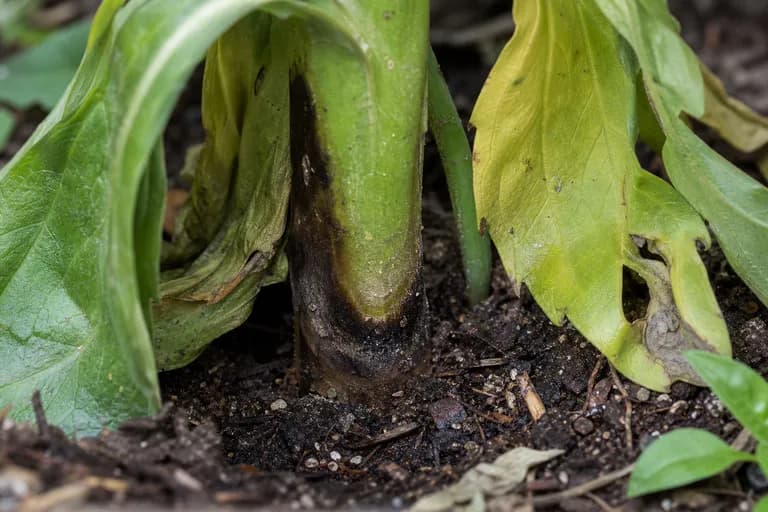
EnfermedadLos tallos se vuelven blandos y pastosos en la base, el follaje amarillea y la planta colapsa. Es mas frecuente en suelos humedos y pesados o durante periodos prolongados de humedad.
Pulgones
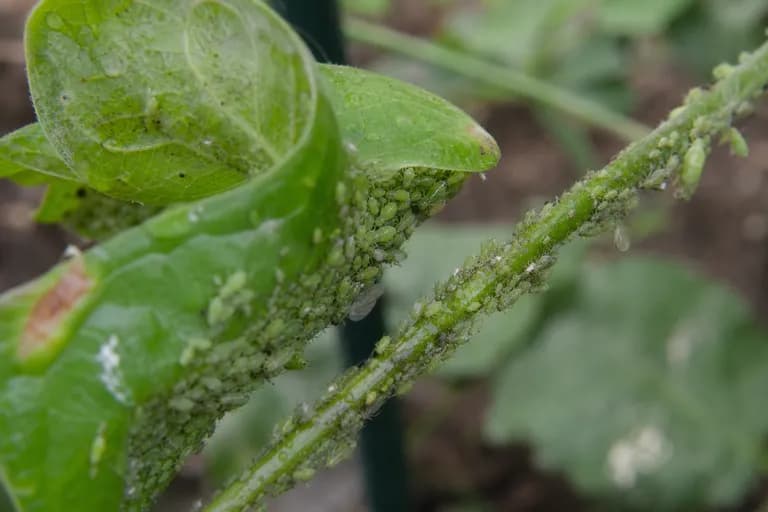
PlagaPulgones verdes o negros agrupados en los capullos y las puntas de los tallos a finales del verano, que a veces deforman las flores antes de que se abran por completo.
Cochinillas algodonosas
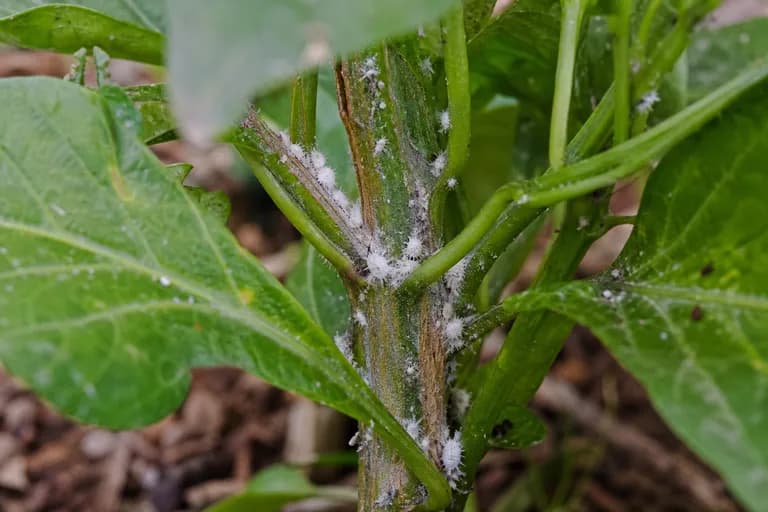
PlagaMasas algodonosas blancas en las axilas de las hojas y en los tallos. Los insectos chupan la savia, debilitan la planta y dejan melaza pegajosa.
Solución de problemas comunes
El crecimiento lacio que se abre por el centro y cae hacia afuera es la queja mas comun, provocada por demasiada sombra, suelo rico o humedad excesiva. La solucion es un entorno mas pobre y mas sol. En casos graves, ayuda la tecnica del 'Chelsea chop': corte los tallos en un tercio a finales de mayo para producir un crecimiento mas compacto y autosostenido. La pudricion de raices en suelos humedos de invierno es letal; asegure un drenaje adecuado. El sedum casi no presenta plagas ni enfermedades serias en condiciones bien drenadas, lo que lo convierte en una de las vivaces mas faciles de cultivar.
Consejos de cultivo
- Plante sedum en el suelo mas pobre y mas grueso que tenga disponible. El suelo de jardin rico y el compost hacen que las variedades altas se venzan y que los tipos rastreros se vuelvan ralos y alargados en lugar de formar mantos densos.
- Asegure al menos seis horas diarias de sol directo pleno. Los sedums cultivados a la sombra pierden su porte compacto y los colores vivos del follaje, se alargan y se vuelven propensos a enfermedades funguicas.
- Riegue con moderacion y solo durante periodos de sequia prolongada de tres semanas o mas. El exceso de riego es la causa mas comun del fracaso del sedum y conduce a pudricion de raices y colapso de tallos.
- Mejore el drenaje en suelos arcillosos pesados incorporando arena gruesa, perlita o grava fina en una proporcion de al menos una parte de enmienda por una parte de suelo nativo antes de plantar.
- Despunte las variedades altas de Hylotelephium en un tercio a finales de mayo o principios de junio para producir tallos mas cortos y robustos que mantengan erguidas sus grandes cabezuelas sin necesidad de entutorado.
- Propague el sedum simplemente colocando esquejes de tallo sobre la superficie de un suelo grueso y granular. Los esquejes enraizaran en los nudos sin enterrarlos, lo que hace que la multiplicacion masiva sea extremadamente sencilla.
- Separe las variedades rastreras de sedum entre 15-25 cm para plantaciones de cubresuelos. En una temporada de crecimiento y con buenas condiciones se entrelazaran hasta formar un manto continuo.
- Aplique una capa fina de grava gruesa o grava de guijarros alrededor de las coronas de las variedades erguidas para evitar que la humedad permanezca en contacto con los tallos durante el tiempo humedo, reduciendo el riesgo de pudricion de la corona.
- Retire con rapidez cualquier brote verde revertido de cultivares variegados como Sedum Atlantis o Sedum Tricolor, ya que los brotes verdes son mas vigorosos y acabaran dominando las partes variegadas.
- Deje las cabezuelas secas en los sedums erguidos durante el invierno para dar alimento a las aves granivoras y anadir interes estructural al jardin en reposo. Corte la planta a comienzos de la primavera antes de que empiece el nuevo crecimiento basal.
Cultiva tu mejor Sedum — y todo lo que la rodea.
Empieza un plan gratis hoy. Diseña tus bancales, coloca tu Sedum y deja que PlotMyGarden gestione el momento, el espaciado, las asociaciones y los recordatorios de la semilla a la cesta.
Elige tu Sedum
Hylotelephium 'Autumn Joy' (syn. 'Herbstfreude')
El sedum clasico de bordura con flores rosas que envejecen hacia tonos bronce cobrizo, un clasico del jardin que ha sido una de las vivaces preferidas durante decadas.
Hylotelephium 'Matrona'
Impresionantes tallos y hojas gris purpura con cabezuelas florales rosas, uno de los sedums mas ornamentales por la combinacion de follaje y flor.
Hylotelephium 'Purple Emperor'
Follaje de un purpura oscuro casi negro coronado por flores rosa intenso, creando un acento oscuro y dramatico en borduras y macetas soleadas.
Hylotelephium spectabile 'Iceberg'
Cabezuelas florales blancas puras sobre follaje verde claro, una eleccion elegante para jardines blancos y jardines de luz de luna.
El sedum es uno de los cubresuelos perennes mas rentables disponibles, ya que una sola planta comprada puede dividirse y propagarse en docenas de plantas nuevas en una o dos temporadas de crecimiento sin coste adicional. Los esquejes de tallo y de hoja enraizan con facilidad sin tratamientos hormonales, lo que permite cubrir grandes superficies de forma economica. En cubiertas verdes, las instalaciones de sedum reducen los costes de calefaccion entre un 10 y un 15% en invierno gracias al aislamiento adicional y los costes de refrigeracion entre un 25 y un 40% en verano al reducir la temperatura de la cubierta hasta en 30 grados Celsius en comparacion con los tejados oscuros convencionales.
Recetas rápidas
Guarnicion de ensalada con toque picante de stonecrop
5 minutosUn pequeno puñado de hojas frescas de Sedum album o Sedum reflexum anade un bocado crujiente y ligeramente picante cuando se esparce sobre ensaladas verdes mixtas, de forma similar a anadir mastuerzo o hojas de capuchina. Uselo con moderacion como hierba de acento y no como ingrediente principal.
5 ingredientes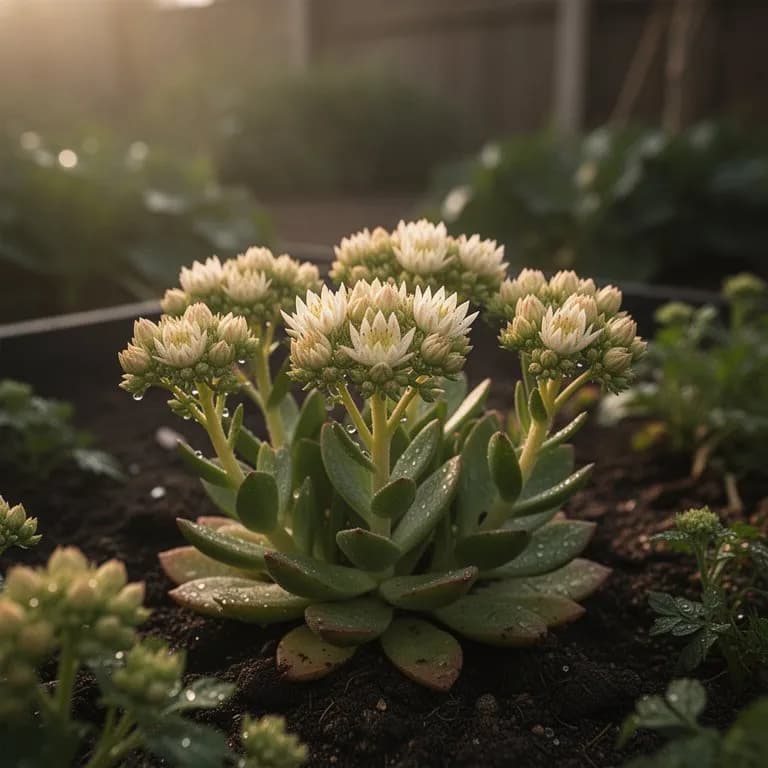
Cataplasma de hojas de sedum (preparacion herbal tradicional)
10 minutosUn remedio popular europeo tradicional que utiliza la savia mucilaginosa y refrescante de las hojas de Sedum telephium (orpine) para aliviar quemaduras leves, picaduras de insectos y pequenos cortes. Las hojas machacadas liberan una sustancia gelatinosa similar en textura al aloe vera.
3 ingredientesBocados de stonecrop encurtido
15 minutos mas 24 horas de reposoLos brotes jovenes de Sedum reflexum ligeramente encurtidos en una salmuera sencilla de vinagre crean un condimento agrio y crujiente que historicamente se disfrutaba en algunas zonas rurales de Francia e Inglaterra. La textura suculenta resiste bien el encurtido y el toque naturalmente acido de las hojas complementa la salmuera.
7 ingredientesQué contiene
Beneficios para la salud
- Las hojas de Sedum telephium contienen compuestos mucilaginosos que proporcionan un efecto refrescante y calmante cuando se aplican de forma topica sobre quemaduras leves y picaduras de insectos, funcionando de manera similar al gel de aloe vera.
- Los herbolarios tradicionales usaban Sedum acre en dosis muy pequenas como diuretico suave y regulador de la presion arterial, aunque su uso moderno debe abordarse con cautela debido a la presencia de alcaloides.
- El alto contenido de agua y las propiedades astringentes suaves de las hojas machacadas de sedum se han utilizado historicamente en la medicina popular para reducir la inflamacion y favorecer la cicatrizacion de pequenos cortes y abrasiones.
- Cultivar sedum como cubierta verde o muro vivo contribuye a mejorar la calidad del aire al filtrar particulas y absorber dioxido de carbono, aportando beneficios respiratorios indirectos a los ocupantes del edificio.
- Cuidar sedum en jardines e instalaciones de cubiertas verdes ofrece beneficios de terapia horticola de bajo impacto, reduciendo el estres gracias a una experiencia de jardineria gratificante y de poco mantenimiento, adecuada para personas con movilidad reducida.
- Las cubiertas verdes de sedum reducen el efecto de isla de calor urbana hasta en 2 grados Celsius en las zonas circundantes, disminuyendo indirectamente los riesgos para la salud relacionados con el calor en la poblacion urbana durante las olas de calor estivales.
De dónde viene Sedum
Sedum es uno de los generos mas grandes de la familia Crassulaceae, y engloba mas de 400 especies de plantas suculentas nativas de regiones templadas y subtropicales de todo el hemisferio norte. La mayor diversidad de especies se encuentra en las regiones montanosas de Asia central y oriental, la cuenca mediterranea y Mexico. Los sedums silvestres colonizan afloramientos rocosos, paredes de acantilados, praderas secas y suelos pobres donde pocas otras plantas pueden sobrevivir, testimonio de su extraordinaria tolerancia a la sequia y su adaptabilidad. Las pruebas arqueologicas sugieren que Sedum acre ya se cultivaba en techos de turba escandinavos desde la epoca vikinga, en torno a los siglos IX y X, donde cumplia la doble funcion de aislar las viviendas y proporcionar una superficie viva resistente al fuego. En la herbolaria medieval europea, Sedum telephium (hoy reclasificado como Hylotelephium telephium) se conocia como livelong u orpine y se valoraba por sus propiedades cicatrizantes. Los boticarios prescribian cataplasmas de hojas machacadas para quemaduras, hemorroides e inflamaciones cutaneas. La planta tambien se asociaba con la magia popular; en algunas partes de Inglaterra y Alemania, se colgaban ramitas de orpine en las casas en la Noche de San Juan como amuleto de adivinacion amorosa. El interes horticola moderno por el sedum se disparo a finales del siglo XX, impulsado por la investigacion pionera sobre cubiertas verdes del botanico aleman Stephan Brenneisen y del paisajista Peter Latz. Las directrices alemanas FLL establecidas en los anos 90 codificaron los sistemas extensivos de cubierta verde basados en sedum, que desde entonces se han adoptado en Europa, Norteamerica y Asia oriental. Hoy el sedum es el genero mas importante comercialmente para cubiertas verdes, y cultivares como Autumn Joy, Dragon's Blood y Angelina se encuentran entre las vivaces mas vendidas en todo el mundo.
Sedum: ¿sabías que?
Datos fascinantes sobre Sedum
El sedum es una de las plantas mas utilizadas en cubiertas verdes de todo el mundo porque una capa de 10 cm de sustrato con sedum puede pesar solo 80 kg por metro cuadrado cuando esta saturada, lo que lo hace apto para cubiertas no disenhadas para cargas pesadas.
Sedum: preguntas frecuentes
¿Cuándo debo plantar Sedum?
¿Cuáles son buenas plantas acompañantes para Sedum?
¿En qué zonas de rusticidad puede crecer Sedum?
¿Cuánto sol necesita Sedum?
¿A qué distancia debo espaciar Sedum?
¿Qué plagas y enfermedades afectan a Sedum?
¿Cómo almaceno Sedum después de la cosecha?
¿Cuáles son las mejores variedades de Sedum para cultivar?
¿Qué suelo necesita Sedum?
Es toxico el sedum para gatos, perros u otras mascotas?
Por que mi sedum alto se vence y se abre por el centro?
Puedo cultivar sedum en el tejado como cubierta verde?
Como propago sedum a partir de esquejes?
Cual es la diferencia entre Sedum y Hylotelephium?
El sedum atrae a los polinizadores?
Acabas de leer la teoría. Ahora cultívala en piloto automático.
Todo lo que hace que Sedum sea delicado — el momento, el espaciado, las asociaciones, la ventana de cosecha — es justo lo que PlotMyGarden resuelve por ti, para cada planta de tu huerto.
Un plan que conoce tu clima
Indica tu ubicación una vez. Recibe fechas de siembra, abonado y cosecha basadas en tu última helada real y el pronóstico en vivo — sin adivinar con un sobre genérico.
De la sección “Cuándo plantar”Planificador de bancales de arrastrar y soltar
Diseña bancales sobre una cuadrícula. Cada planta encaja con su espaciado correcto y ves toda la temporada antes de gastar un céntimo en semillas.
De la sección “Cultivo”Conflictos de asociación, detectados a tiempo
Más de 200 buenas y malas combinaciones comprobadas en vivo mientras plantas — para que un error que arruine la temporada nunca llegue a la tierra.
De la sección “Asociaciones”Recordatorios que sí vas a seguir
“Riega las judías.” “Recoge hoy antes de que se pase.” Oportunos, concretos y ligados a las plantas que de verdad cultivas.
De la sección “Cosecha”Escalonado, programado
¿Quieres cosechar seis semanas en vez de seis días? Reparte tus siembras automáticamente y te avisa cuando toca el siguiente lote.
De la sección “Cuándo plantar”Un registro que se vuelve más listo
Cada cosecha que registras le enseña tu huerto. El plan del año que viene parte de lo que de verdad funcionó en tu suelo, no en un manual.
De la sección “Resumen”Planta estos junto a Sedum
Más Perennes
Diseños de jardín con Sedum
Cultiva tu mejor Sedum — y todo lo que la rodea.
Empieza un plan gratis hoy. Diseña tus bancales, coloca tu Sedum y deja que PlotMyGarden gestione el momento, el espaciado, las asociaciones y los recordatorios de la semilla a la cesta.