American Purple Top Rutabaga
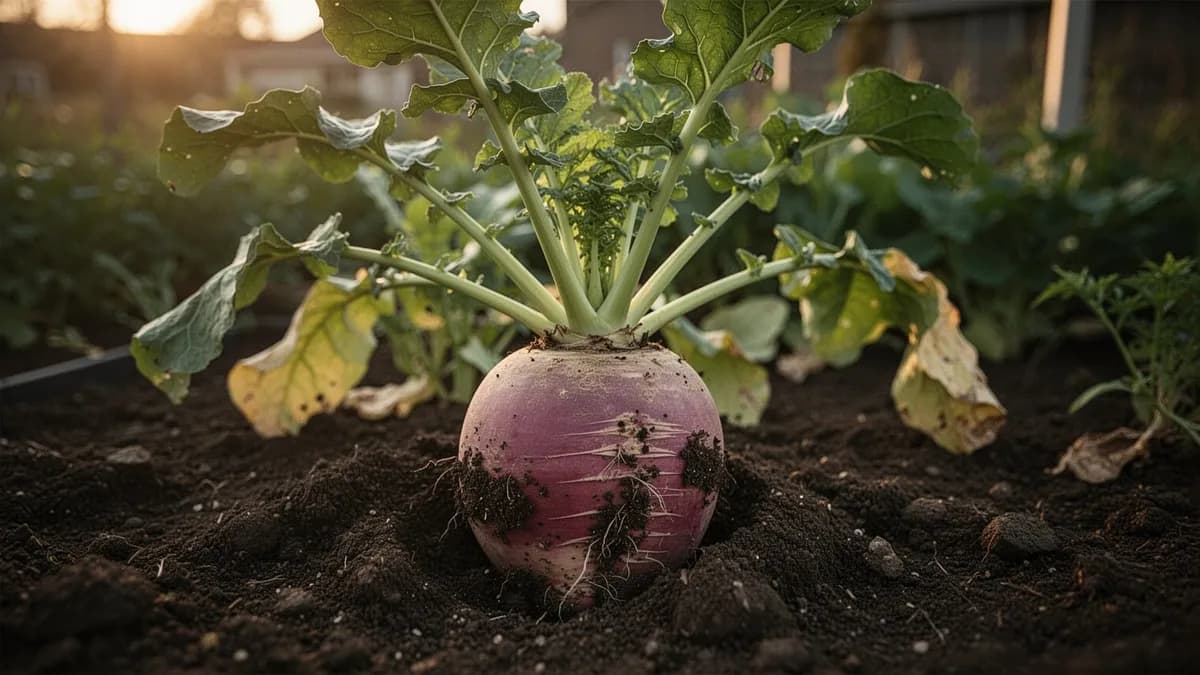
The classic American rutabaga with purple-topped, yellow-fleshed roots that are sweeter and larger than turnips.





On this pageOverview
Meet American Purple Top Rutabaga
The classic American rutabaga with purple-topped, yellow-fleshed roots that are sweeter and larger than turnips. Best planted in midsummer for fall harvest, as cool weather and light frost dramatically improve the sweet, buttery flavor. Roots can grow to softball size without becoming woody, and store for months in a cool root cellar. Excellent roasted, mashed, or added to stews as a nutritious, low-calorie potato alternative.
When to plant American Purple Top Rutabaga
Direct sow rutabaga seeds outdoors in midsummer, about 90 days before the expected first fall frost. Sow half an inch deep and one inch apart in rows 18 to 24 inches apart. Seeds germinate in 7 to 14 days. Thin seedlings progressively to a final spacing of six to eight inches apart. Rutabagas can also be started indoors four to six weeks before transplanting but direct sowing is preferred as transplants may develop forked roots. Keep seedbeds consistently moist.
Your American Purple Top Rutabaga Year
Composed for Zone 7 · typical seasons · frost passes Apr 2, returns Nov 1
Plant American Purple Top Rutabaga May – Jul, pick Sep – Nov. Check the planting methods below and set your climate to personalize these windows.
How to grow American Purple Top Rutabaga
Rutabagas are best planted in midsummer for a fall harvest, as they need cool weather to develop their characteristic sweet, buttery flavor. Sow seeds directly outdoors about 90 days before the first expected fall frost, placing them half an inch deep and one inch apart in rows 18 to 24 inches apart. Seeds germinate in seven to fourteen days. Thin seedlings to six to eight inches apart once they have several true leaves.
Rutabagas are heavy feeders that benefit from rich, well-prepared soil. Work in several inches of compost before planting and side-dress with balanced fertilizer at midseason. Keep the soil consistently moist, especially during root swelling, as drought stress causes woody, bitter roots. Mulch around plants to maintain moisture and keep soil temperatures cool during the late summer heat.
As fall approaches, the roots sweeten dramatically after exposure to light frosts. Rutabagas can withstand temperatures down to about 20 degrees Fahrenheit before serious damage occurs. In mild climates, leave roots in the ground and harvest as needed through winter with a heavy mulch layer. In colder zones, harvest before hard freezes and store in a cool root cellar. Roots often reach four to six inches in diameter and can weigh over two pounds.
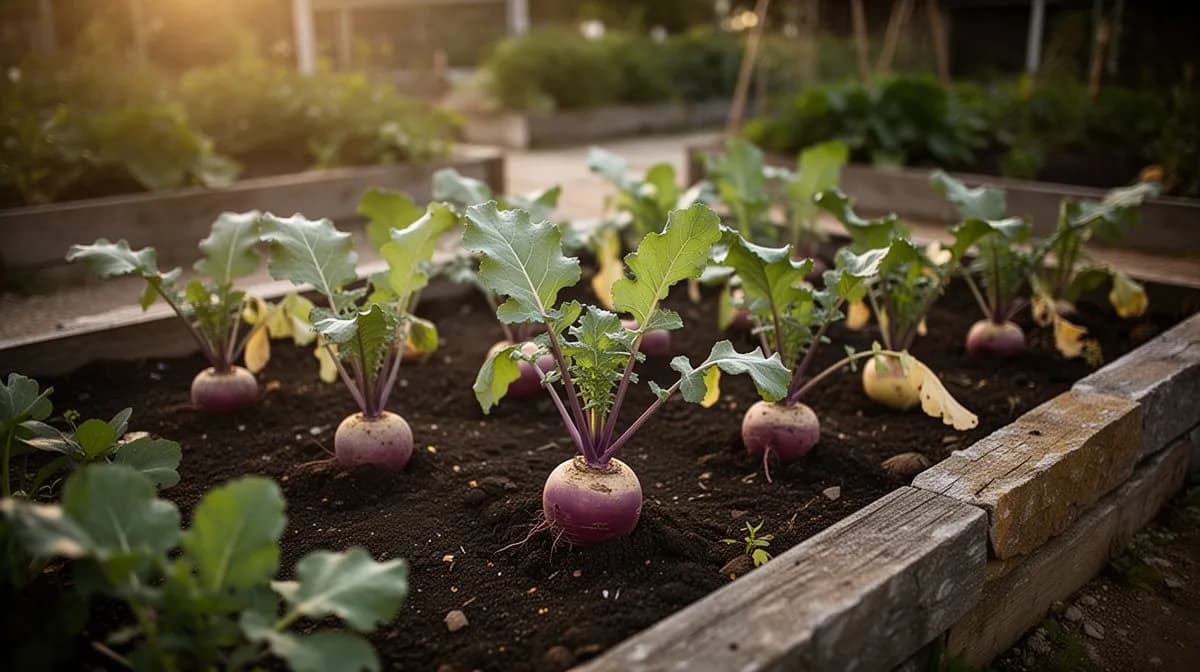
72 plants fit a 4 × 8 ft bed
Each American Purple Top Rutabaga wants 20 cm of elbow room. The planner keeps that spacing for you — every plant, every bed.
American Purple Top Rutabaga's best neighbours
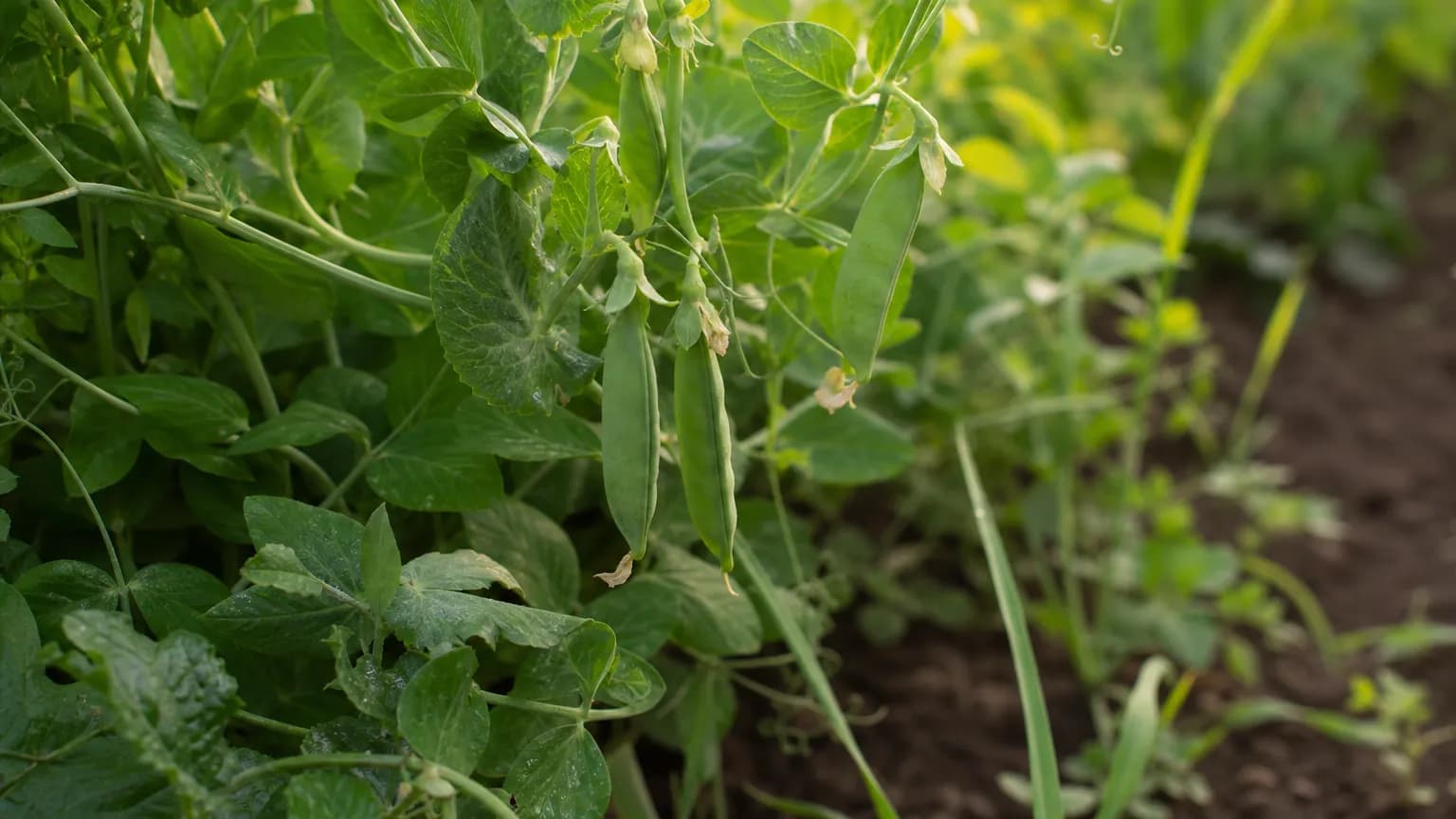
Rutabagas grow well with peas and beans that fix nitrogen in the soil. Onions and garlic planted nearby help repel cabbage root maggot flies. Avoid planting near other brassicas like cabbage, broccoli, and kale that share pests and diseases. Keep away from potatoes which compete for similar nutrients and growing space. Herbs like dill and chamomile attract beneficial insects that prey on common rutabaga pests.
Peas belongs beside it. Potato doesn't.
Old growers' knowledge, checked against American Purple Top Rutabaga's real companion table below — test any plant you're growing.
Try American Purple Top Rutabaga in a bed — right here
A real planner bed with American Purple Top Rutabaga already in it. Tap a companion to place it and watch the pairing checks answer — green for good neighbours, red for a clash.


Related growing guides
Feed it well
Rutabagas need fertile, well-drained soil with a pH of 6.0 to 7.5. Work in generous amounts of compost or aged manure before planting. Avoid rocky or compacted soil that causes misshapen roots. Apply a balanced 10-10-10 fertilizer at planting and side-dress when plants are about six inches tall. Boron deficiency causes brown heart in rutabagas, so apply borax at one tablespoon per 100 square feet if boron deficiency is suspected in your area.
Ideal Temperature
Hardiness Zone Compatibility
From seed to harvest, stage by stage
Seed Starting
Rutabaga seeds are small and round, germinating in 5-10 days in cool to moderate soil. The first pair of broad cotyledon leaves emerges, looking similar to other brassica seedlings. Seeds should be sown directly outdoors about 90-120 days before the first expected fall frost, as rutabagas need a long, cool growing season to develop full-sized roots.
Seedling Growth
True leaves develop with the characteristic blue-green, waxy appearance that distinguishes rutabaga from turnip. Leaves are slightly lobed and smooth. The seedling establishes a strong taproot system during this phase, making thinning essential before plants compete for space.
Vegetative Growth
The plant produces a rosette of large, vigorous blue-green leaves that can reach 30-40 cm tall. The foliage canopy grows dense enough to shade out most weeds. Below the soil, the taproot begins to thicken as the plant stores carbohydrates produced by its abundant foliage.
Root Swelling
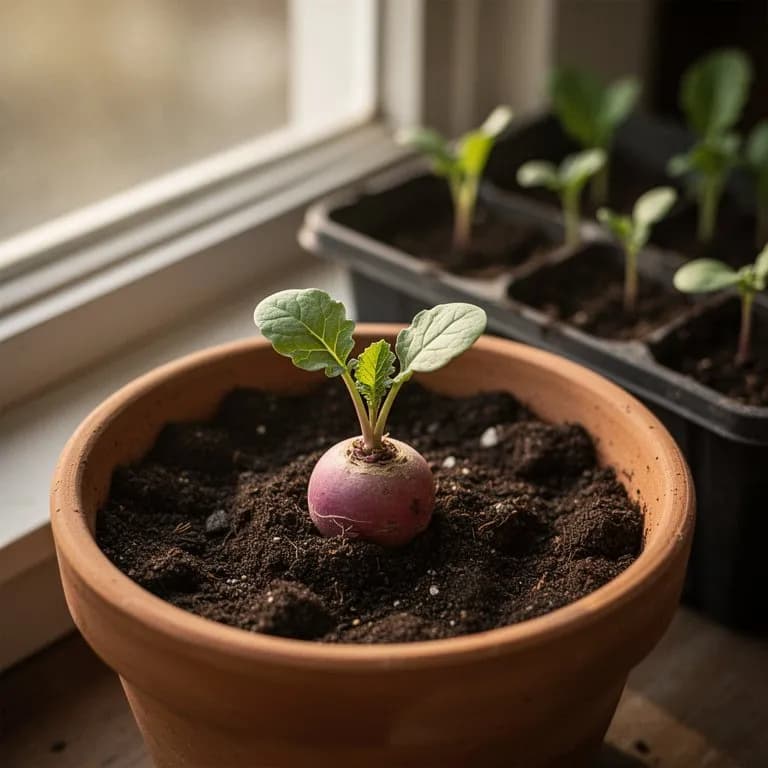
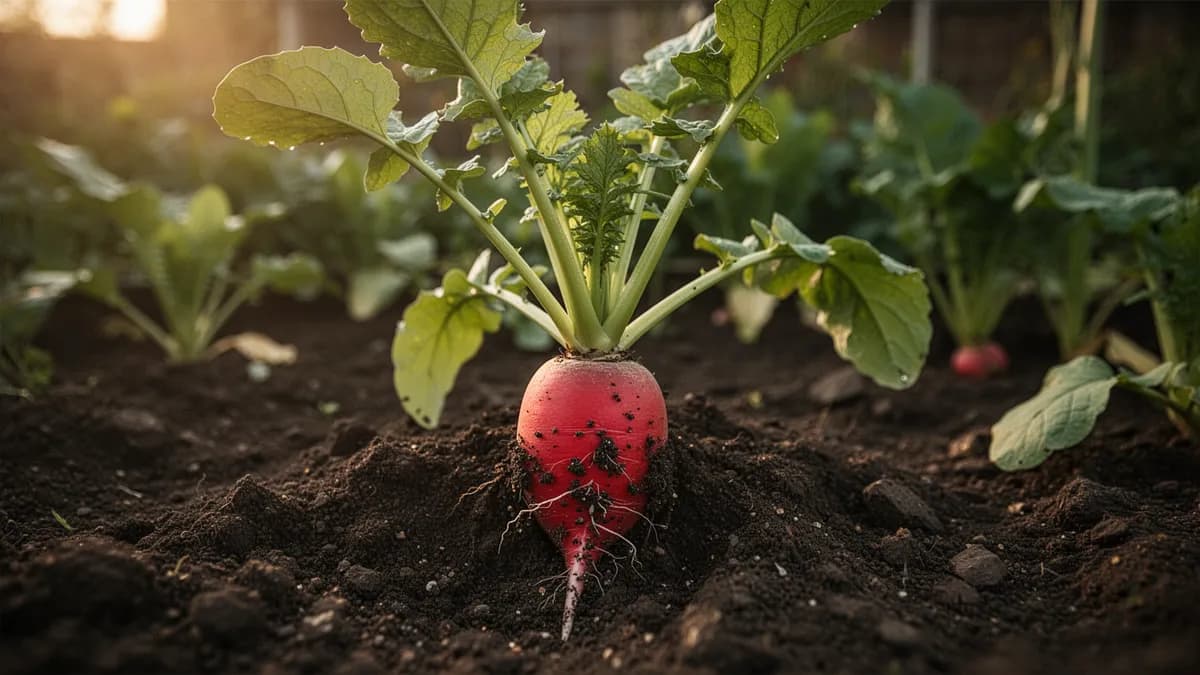
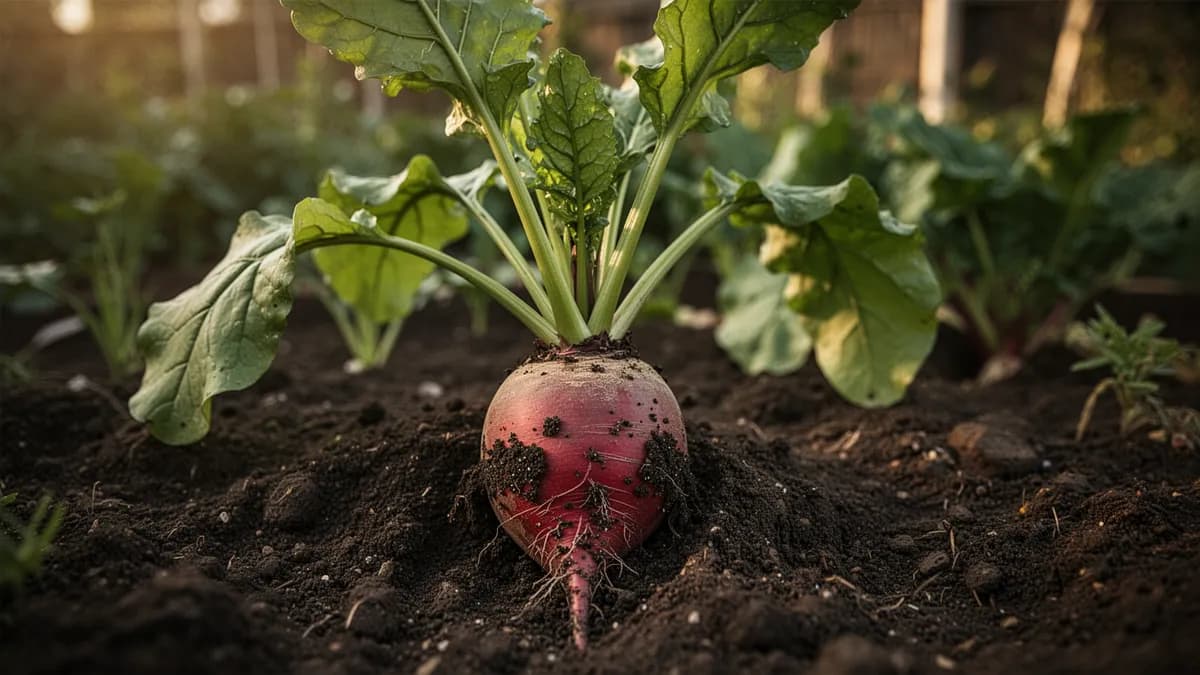
The root begins swelling rapidly, pushing above the soil line to reveal the distinctive purple crown where sunlight hits the exposed skin. Below the soil, the root develops its creamy yellow to golden flesh. The globe-shaped root expands to 8-12 cm in diameter during this critical phase.
Maturation and Harvest
Roots reach full size of 10-15 cm (4-6 inches) in diameter, weighing 0.5-1.5 kg each. Flavor improves dramatically after the first light frosts, which trigger the plant to convert starches into sugars as a natural antifreeze response. The root skin firms up and develops its full purple-over-yellow coloring.
Sow seeds 1 cm (1/2 inch) deep in loose, well-drained soil. Keep the seedbed consistently moist until germination — dry soil leads to patchy, uneven emergence. Avoid starting indoors, as rutabagas resent transplanting due to their sensitive taproot.
Caring for American Purple Top Rutabaga month by month
What to do each month for your American Purple Top Rutabaga
October
You are herePrime harvest month in most zones. Harvest after one or two light frosts for the sweetest flavor. Twist off foliage, brush off soil, and cure roots at cool room temperature for 2-3 days before transferring to cold storage. Roots can remain in the ground until temperatures drop below -5°C (23°F).
Know exactly what to do in your garden — every month
One email at the start of each month: what to sow, plant, and tackle right now — for your American Purple Top Rutabaga and everything growing around it. Plus a short starter course that helps you dodge the classic mistakes.
- What to do, right now
- Matched to your season
- Starter course included
Harvesting American Purple Top Rutabaga
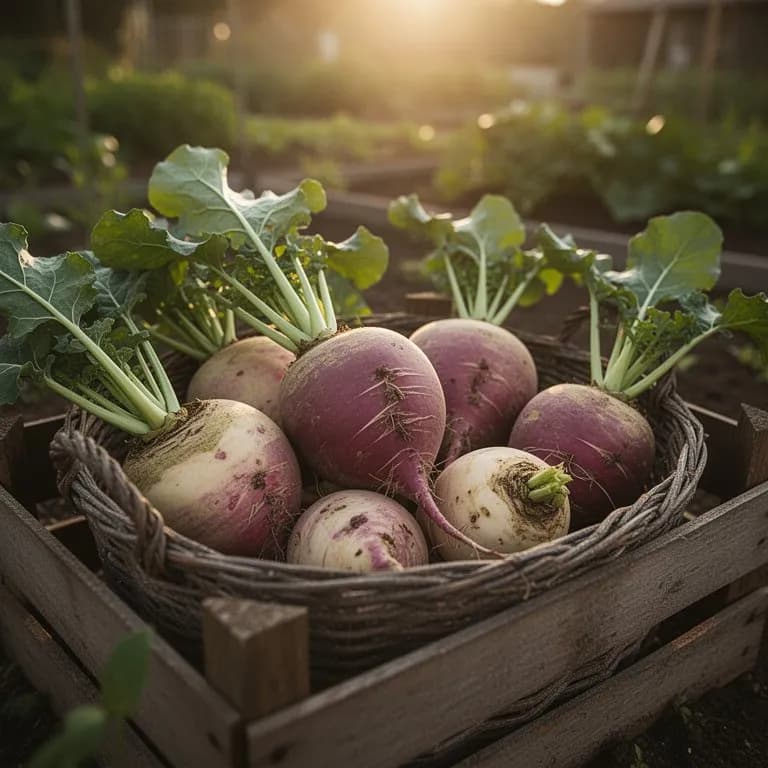
Rutabagas reach harvest maturity in about 90 days but taste best after several light frosts have sweetened the roots. Harvest when roots are three to five inches in diameter by loosening soil with a garden fork and pulling. Roots can be left in the ground into early winter in mild climates with a thick mulch layer. In colder zones, harvest before the ground freezes solid. Trim tops to half an inch and brush off soil.
assuming you plant when the window opens — set your real date
Pick American Purple Top Rutabaga promptly and the plant keeps producing.
Storage & Preservation
Rutabagas are excellent storage vegetables. Coat roots lightly with food-grade wax to prevent moisture loss, or store unwaxed in perforated plastic bags in the refrigerator for up to three months. In a root cellar at 32 to 40 degrees with high humidity, they keep for four to six months. For freezing, peel, cube, and blanch for three minutes before packing in freezer bags. Mashed rutabaga also freezes well for later use.
What goes wrong — and the fix
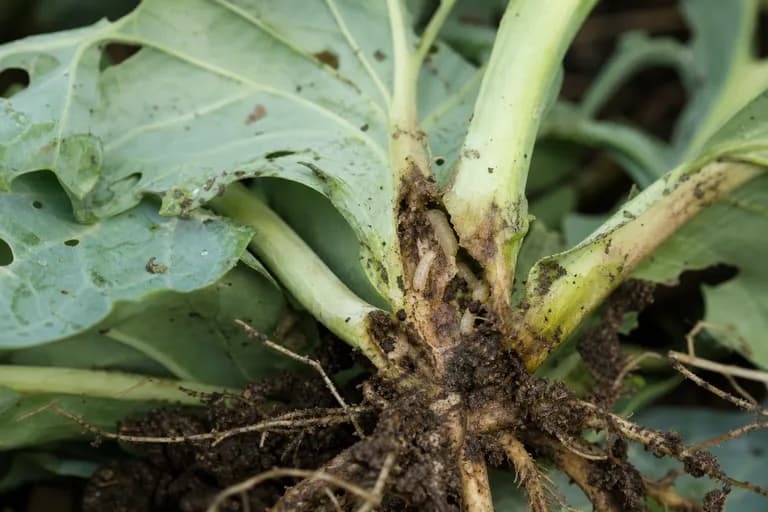
Cabbage Root Maggot
PestLarvae tunnel into roots causing brown, wormy channels. Plants may wilt and show stunted growth.
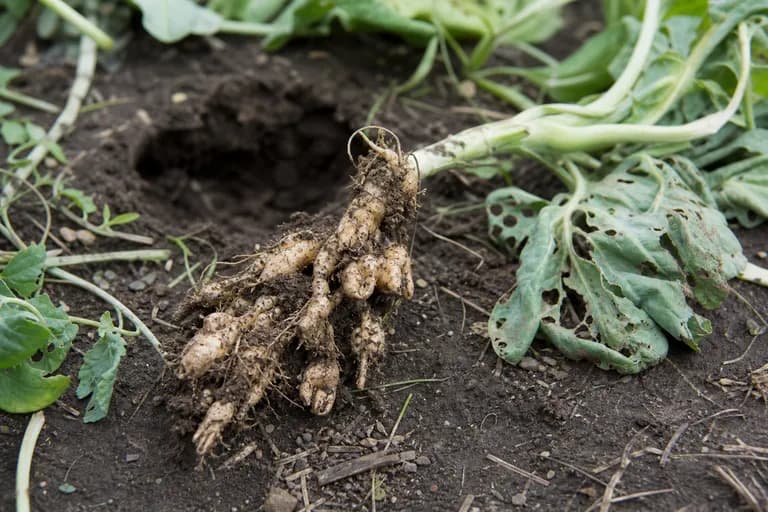
Clubroot
DiseaseSwollen, distorted roots with club-like galls. Plants wilt during warm days and may yellow.
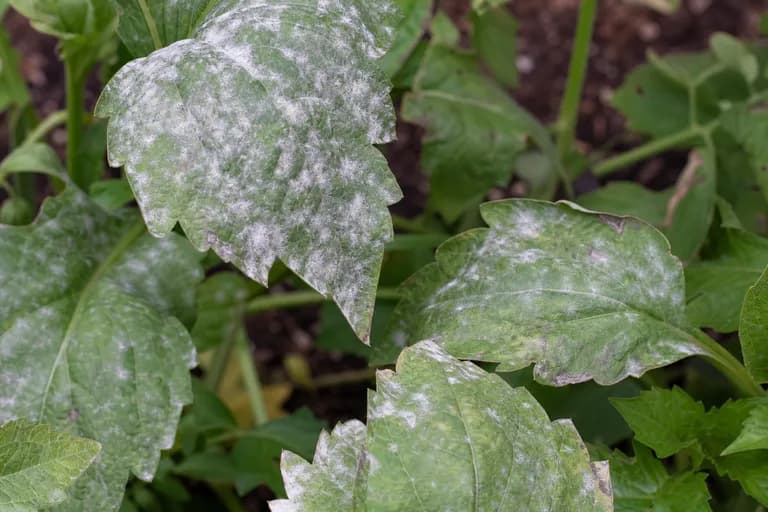
Powdery Mildew
DiseaseWhite powdery coating on leaves that spreads rapidly in humid conditions. Affected leaves yellow and die, reducing root size.
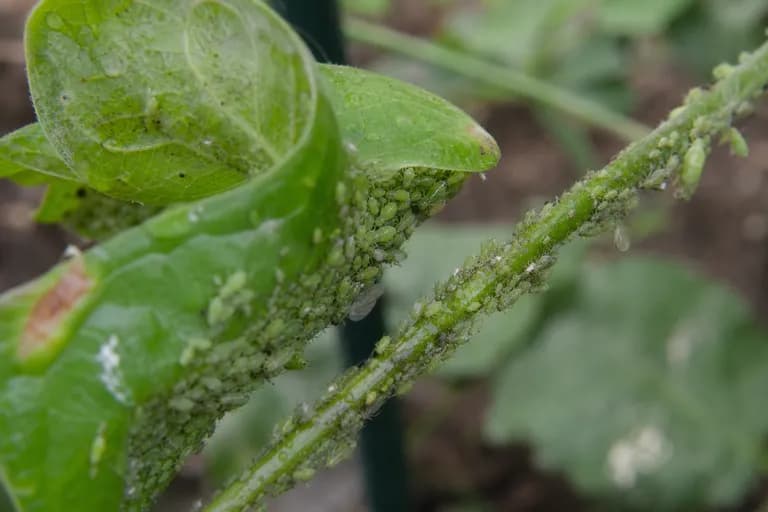
Aphids
PestClusters of gray-green aphids on leaf undersides causing leaf curling, yellowing, and sticky honeydew residue.
Troubleshooting Common Problems
Bitter or woody roots usually result from hot weather or drought stress during root development. Always time plantings for cool-season maturity. Brown heart, a corky brown discoloration inside the root, indicates boron deficiency and can be prevented with borax application. Clubroot is a serious concern in areas with acidic soil. Root maggots are the primary insect pest and require preventive measures rather than reactive treatment.
Growing Tips
- Time your planting for a fall harvest — this is the single most important decision for rutabaga quality. Count back 90-120 days from your average first fall frost date and direct-sow seeds on that date. Roots that mature in cool weather are dramatically sweeter and more tender than those maturing in summer heat.
- Do not transplant rutabagas. Like most root crops, they develop the best-shaped, smoothest roots when direct-sown in place. Transplanting damages the taproot and leads to forked, misshapen, or stunted roots. Always sow seeds directly where they will grow.
- Prepare loose, deep, rock-free soil before planting. Work compost into the top 30 cm (12 inches) and remove any stones larger than a marble. Rocks and hard soil clumps cause rutabaga roots to fork, crack, or develop irregular shapes.
- Thin ruthlessly to 15-20 cm (6-8 inches) apart once seedlings have 3-4 true leaves. Crowded rutabagas produce small, undersized roots that are not worth the garden space. Use scissors to snip unwanted seedlings rather than pulling them to avoid disturbing neighboring roots.
- Apply boron if your soil is deficient — boron deficiency causes 'brown heart,' a condition where the interior of the root develops hollow, brown, corky patches that ruin the crop. Dissolve 1 tablespoon of household borax in 4 liters of water and apply along 30 meters of row before planting.
- Mulch around plants with straw or shredded leaves once they are well established. Mulch retains moisture, suppresses weeds, and keeps the soil cool in late summer — all conditions that help rutabagas develop the smooth, dense roots gardeners prize.
- Leave roots in the ground through the first fall frosts. Frost exposure converts stored starches to sugars, producing the sweet, mellow flavor that makes rutabaga a beloved winter vegetable. Harvest before the ground freezes solid, however, as deeply frozen soil makes extraction impossible and hard freezes damage the root.
- For the longest storage life, harvest on a dry day and allow roots to air-dry for 2-3 days in a cool, shaded area before storing. Trim foliage to 2 cm stubs but do not wash — just brush off loose soil. Store at 0-2°C (32-35°F) with 90-95% humidity. Properly stored rutabagas keep for 4-6 months.
Grow your best American Purple Top Rutabaga yet — and everything around it.
Start a free plan today. Lay out your beds, drop in your American Purple Top Rutabaga, and let PlotMyGarden handle the timing, spacing, companions and reminders from seed to harvest basket.
Pick your American Purple Top Rutabaga
American Purple Top
The standard variety with purple tops and creamy yellow flesh. Large, uniform roots with excellent sweet flavor after frost.
Laurentian
Canadian variety with strong purple coloring and fine-grained yellow flesh. Good storage qualities and reliable cold-climate performance.
Joan
A newer variety with improved uniformity and disease resistance. Sweet, fine-grained flesh with good keeping quality.
Helenor
European variety with excellent clubroot resistance. Produces smooth, globe-shaped roots with mild, sweet flavor.
Rutabaga seeds cost just $2-4 per packet, with each packet containing enough seeds for 60-100 plants. A single rutabaga at the grocery store costs $2-4, so even a modest planting of 10-15 roots saves $20-50 per season. The real savings come from storage — homegrown rutabagas kept in a cool root cellar or refrigerator provide fresh, vitamin-C-rich vegetables for 4-6 months through winter, reducing grocery trips and replacing expensive out-of-season produce. Growing your own also gives you access to the superior flavor of frost-kissed, freshly harvested roots that no store-bought rutabaga can match.
Quick recipes
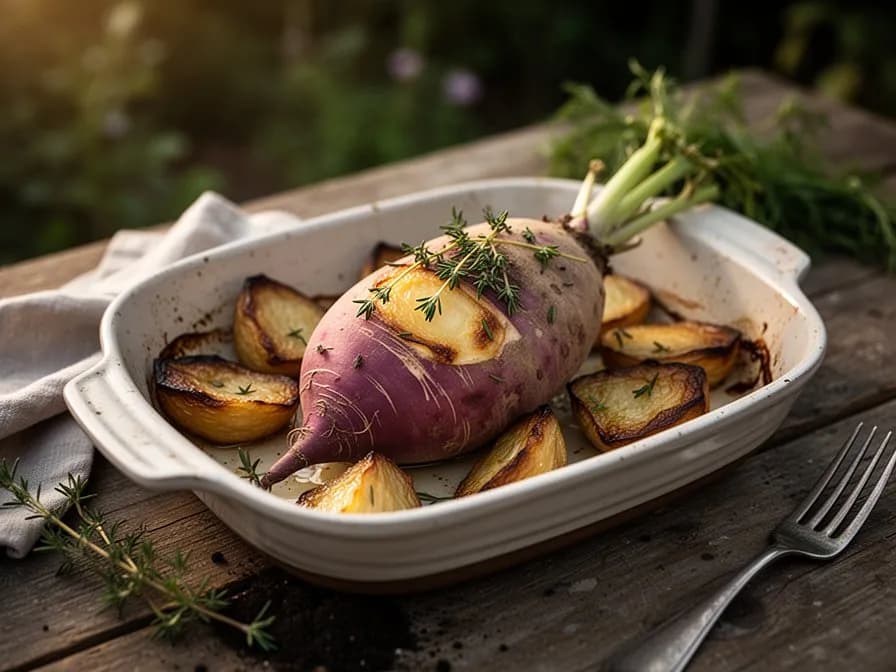
Classic Mashed Rutabaga with Butter and Chives
35 minSilky, golden mashed rutabaga with a naturally sweet, earthy flavor that rivals mashed potatoes with a fraction of the carbohydrates. A pat of butter and fresh chives elevate this humble root into an elegant side dish worthy of any holiday table.
6 ingredientsHoney-Roasted Rutabaga Cubes
45 minRutabaga cubes roasted at high heat until caramelized and golden brown on the edges, then finished with a light drizzle of honey and a sprinkle of fresh thyme. The roasting intensifies the natural sweetness and creates irresistible crispy corners.
6 ingredientsRutabaga and Potato Gratin
60 minThinly sliced rutabaga layered with potatoes in a rich, creamy garlic sauce and baked until bubbly and golden on top. The rutabaga adds a subtle sweetness and peppery depth that transforms an ordinary gratin into something extraordinary.
7 ingredientsCulinary Uses
Rutabagas shine when roasted until caramelized, developing a sweet, nutty flavor with crispy edges. Mash with butter, cream, and a touch of nutmeg for a classic side dish. Add cubed rutabaga to beef stew, pot roast, and hearty soups. Make rutabaga fries by cutting into sticks and baking until crispy. Combine with potatoes in a half-and-half mash for lighter texture.
What's inside
Health Benefits
- Rutabaga is an excellent source of vitamin C, providing 28% of the daily value per 100g — making it one of the best root vegetables for supporting immune function during the cold and flu season when fresh fruits are less available.
- Contains glucosinolates, the sulfur-containing compounds characteristic of cruciferous vegetables, which break down into biologically active compounds (isothiocyanates) that are being studied extensively for their potential anticancer properties.
- Rich in potassium (305mg per 100g) while being naturally low in sodium, supporting healthy blood pressure regulation and reducing the risk of cardiovascular disease.
- Significantly lower in calories and carbohydrates than potatoes (37 vs. 77 calories per 100g), making rutabaga an excellent substitute for those managing blood sugar, following low-carb diets, or aiming for weight control.
- Good source of both soluble and insoluble dietary fiber (2.3g per 100g), promoting healthy digestion, feeding beneficial gut bacteria, and helping maintain steady blood sugar levels after meals.
- Provides manganese and phosphorus, two minerals essential for strong bones, energy metabolism, and proper functioning of enzymes involved in antioxidant defense throughout the body.
Where American Purple Top Rutabaga comes from
Rutabaga (Brassica napus var. napobrassica) is a relatively young vegetable in botanical terms, believed to have originated as a natural cross between the turnip (Brassica rapa) and wild cabbage (Brassica oleracea) sometime during the late Middle Ages in Europe. The exact location of its origin is debated, but most evidence points to Scandinavia or Russia, where both parent species grew in close proximity in medieval garden plots. The Swiss botanist Gaspard Bauhin provided the first known written description of rutabaga in 1620, noting it growing in Sweden.
The vegetable spread rapidly across Northern Europe during the 17th and 18th centuries, becoming a dietary staple in Sweden, Finland, Scotland, and the Baltic states — regions where its cold hardiness made it invaluable as a winter food. Swedish farmers championed its cultivation so effectively that it became known as the 'Swedish turnip' or simply 'swede' throughout the British Isles. Rutabaga arrived in North America in the early 1800s, where it was embraced by farmers in New England and Canada for the same reasons Europeans valued it: it grew well in cool climates, tolerated poor soils, survived frost, and stored through entire winters in root cellars.
The American Purple Top variety was developed in the United States during the 19th century and became the dominant cultivar for home gardens and commercial production across North America. Its distinctive purple crown and creamy yellow flesh made it easy to distinguish from turnips at market. While rutabaga's popularity declined in the mid-20th century as grocery stores made warm-weather produce available year-round, it has experienced a revival among home gardeners and chefs who appreciate its versatility, nutritional value, and the fact that it thrives during the fall and winter months when few other fresh vegetables can be harvested from the garden.
American Purple Top Rutabaga: did you know?
Fascinating facts about American Purple Top Rutabaga
Rutabaga is a natural hybrid between a cabbage and a turnip (Brassica napus var. napobrassica) — a cross that likely occurred spontaneously in medieval European gardens, combining the turnip's root-forming ability with the cabbage's hardiness and nutritional density.
American Purple Top Rutabaga questions, answered
When should I plant American Purple Top Rutabaga?
What are good companion plants for American Purple Top Rutabaga?
What hardiness zones can American Purple Top Rutabaga grow in?
How much sun does American Purple Top Rutabaga need?
How far apart should I space American Purple Top Rutabaga?
What pests and diseases affect American Purple Top Rutabaga?
How do I store American Purple Top Rutabaga after harvest?
What are the best American Purple Top Rutabaga varieties to grow?
What soil does American Purple Top Rutabaga need?
What is the difference between a rutabaga and a turnip?
Why are my rutabagas woody and bitter instead of sweet?
Why are my rutabaga roots cracked or forked?
Can I eat rutabaga leaves as well as the root?
How do I store rutabagas through the winter?
When is the best time to plant rutabaga seeds?
You just read the theory. Now grow it on autopilot.
Everything that makes American Purple Top Rutabaga fiddly — the timing, the spacing, the companions, the harvest window — is exactly what PlotMyGarden handles for you, for every plant in your garden.
A plan that knows your weather
Set your location once. Get sow, feed and harvest dates built around your real last-frost date and live forecast — no more guessing from a generic seed packet.
From the “When to plant” sectionDrag-and-drop bed planner
Design beds on a grid. Every plant snaps to its proper spacing, and you can see your whole season laid out before you spend a cent on seed.
From the “Growing guide” sectionCompanion conflicts, caught early
200+ good-and-bad pairings checked live as you plant — so a season-wrecking mistake never makes it into the ground.
From the “Companions” sectionReminders you'll actually act on
“Water the beans.” “Pick today before it turns.” Timely, specific, and tied to the plants you're really growing.
From the “Harvest” sectionSuccession, scheduled
Want a harvest for six weeks, not six days? It spaces your sowings automatically and reminds you when each new block is due.
From the “When to plant” sectionA record that gets smarter
Every harvest you log teaches it your garden. Next year's plan starts from what actually worked in your soil, not a textbook's.
From the “Overview” sectionPlant these alongside American Purple Top Rutabaga
More Root Vegetables
Keep American Purple Top Rutabaga away from these
Grow your best American Purple Top Rutabaga yet — and everything around it.
Start a free plan today. Lay out your beds, drop in your American Purple Top Rutabaga, and let PlotMyGarden handle the timing, spacing, companions and reminders from seed to harvest basket.