Easter Egg Radish
A colorful radish mix producing round roots in red, pink, purple, white, and violet from a single seed packet.





On this pageOverview
Meet Easter Egg Radish
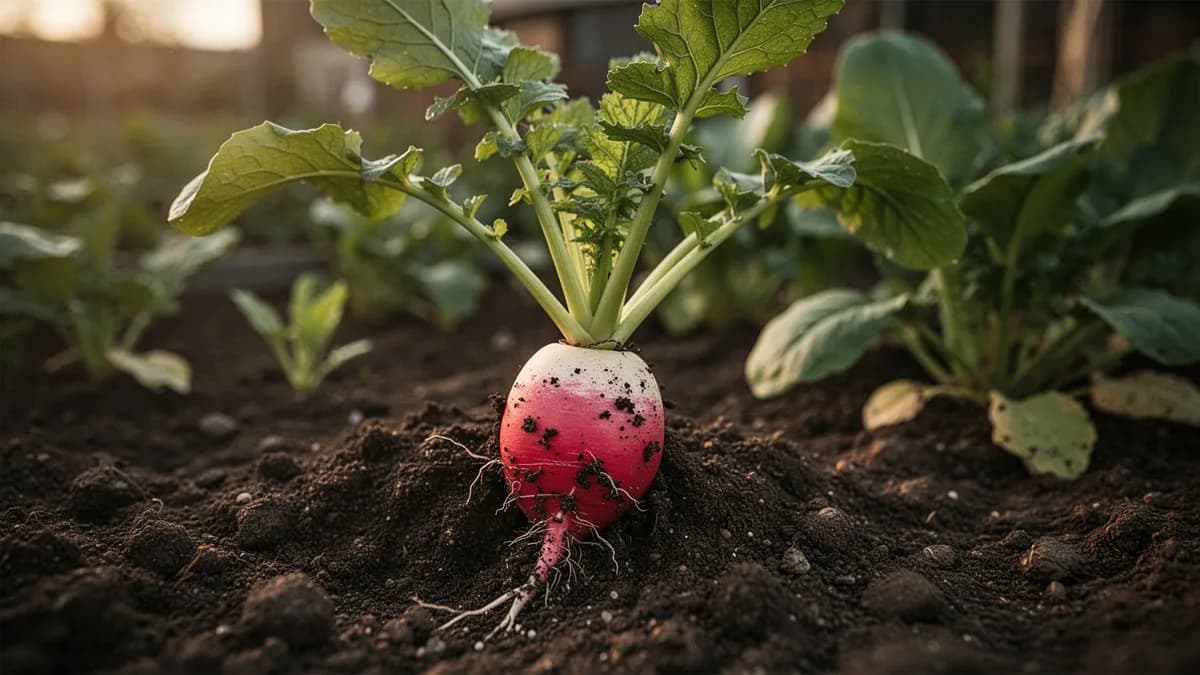
A colorful radish mix producing round roots in red, pink, purple, white, and violet from a single seed packet. All colors have the same mild, crisp flavor and mature at the same rate for a rainbow harvest. Perfect for introducing children to gardening with the surprise of discovering different colored roots at harvest time. Quick-growing and reliable, these make an attractive addition to crudite platters.
When to plant Easter Egg Radish
Direct sow Easter Egg radish seeds outdoors as soon as the soil can be worked in spring. Sow half an inch deep and one inch apart. Seeds germinate quickly in three to seven days even in cool soil. Thin to two inches apart for proper root development. These radishes do not transplant well, so always sow in place. For a fun children's garden project, let kids sow their own rows and track which colors they harvest. Start fall plantings eight to ten weeks before the first expected frost.
Your Easter Egg Radish Year
Composed for Zone 7 · typical seasons · frost passes Apr 2, returns Nov 1
Plant Easter Egg Radish Mar – Apr, Aug – Sep, pick Apr – May, Sep – Oct. Check the planting methods below and set your climate to personalize these windows.
How to grow Easter Egg Radish
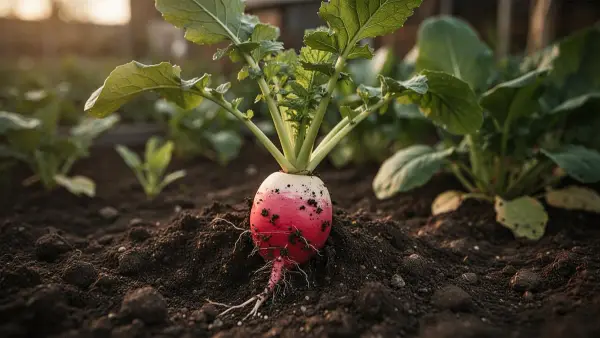
Easter Egg radishes grow just as easily as any spring radish variety. Direct sow seeds half an inch deep and one inch apart in rows or scatter-sow in a wide bed as soon as the soil can be worked in spring. Seeds germinate in three to seven days. Thin seedlings to two inches apart for round, well-formed roots. The mix typically includes red, pink, purple, white, and violet varieties that all mature at roughly the same rate.
These radishes thrive in cool weather with temperatures between 50 and 65 degrees Fahrenheit. Water consistently to promote steady, even growth and prevent cracking or pithy texture. A light application of compost worked into the soil before planting is all the fertility these quick-growing roots need. Avoid nitrogen-heavy fertilizers that encourage leafy tops at the expense of root development.
For an extended harvest, sow new rows every seven to ten days through spring and again from late summer into fall. Skip midsummer plantings when heat causes bolting and poor root quality. In mild climates, fall sowings often produce the sweetest, most flavorful roots. The colorful mix makes these particularly appealing for children's gardens and school garden programs where the surprise element of different colors keeps young gardeners engaged.
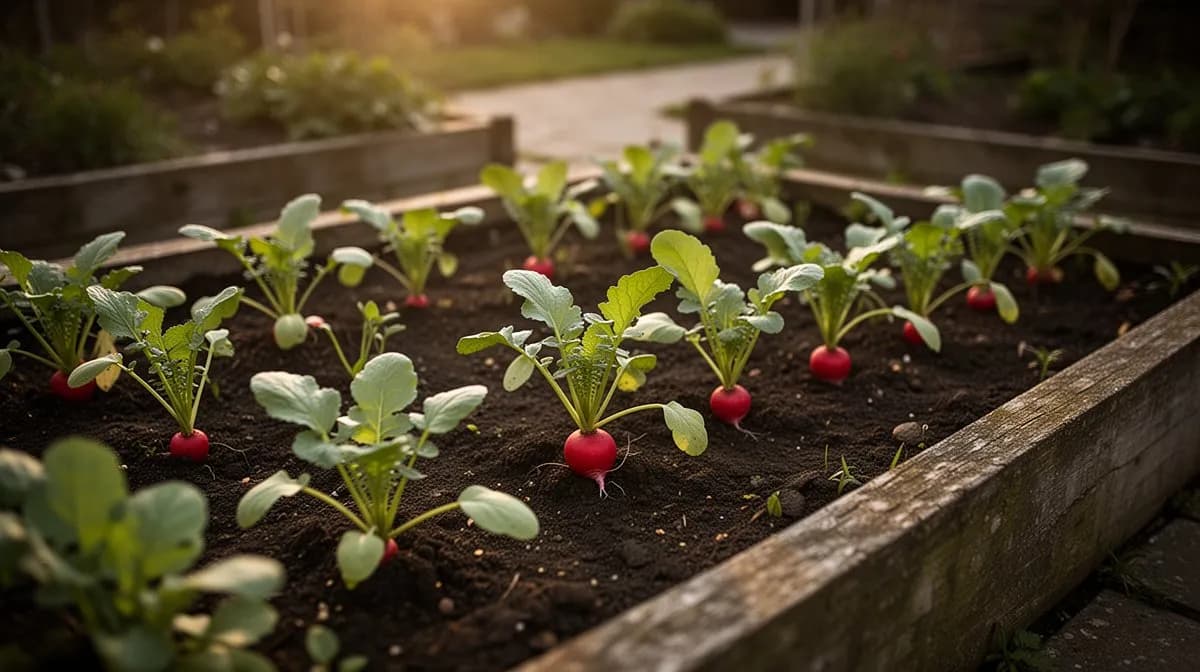
1152 plants fit a 4 × 8 ft bed
Each Easter Egg Radish wants 5 cm of elbow room. The planner keeps that spacing for you — every plant, every bed.
Easter Egg Radish's best neighbours
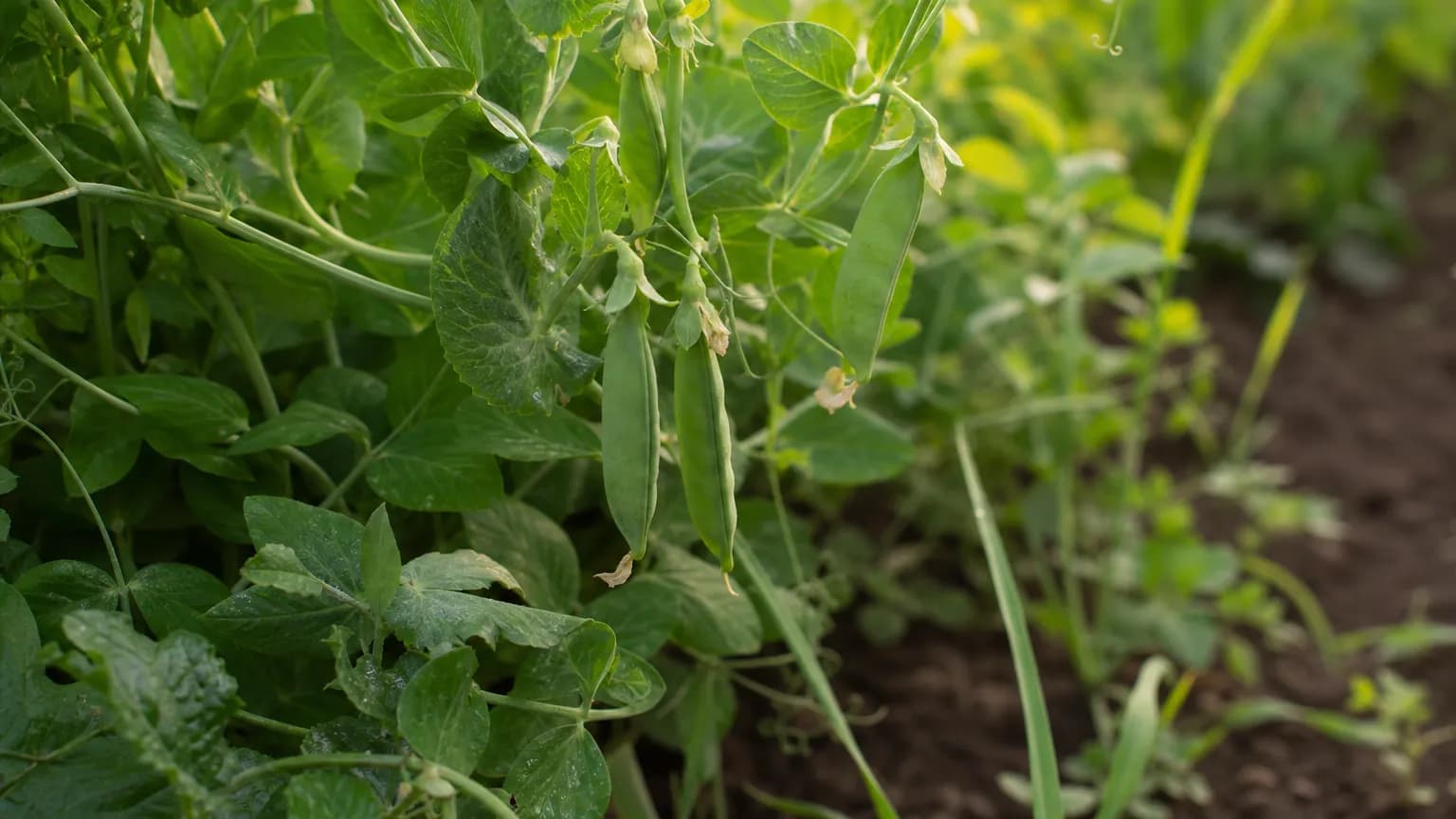
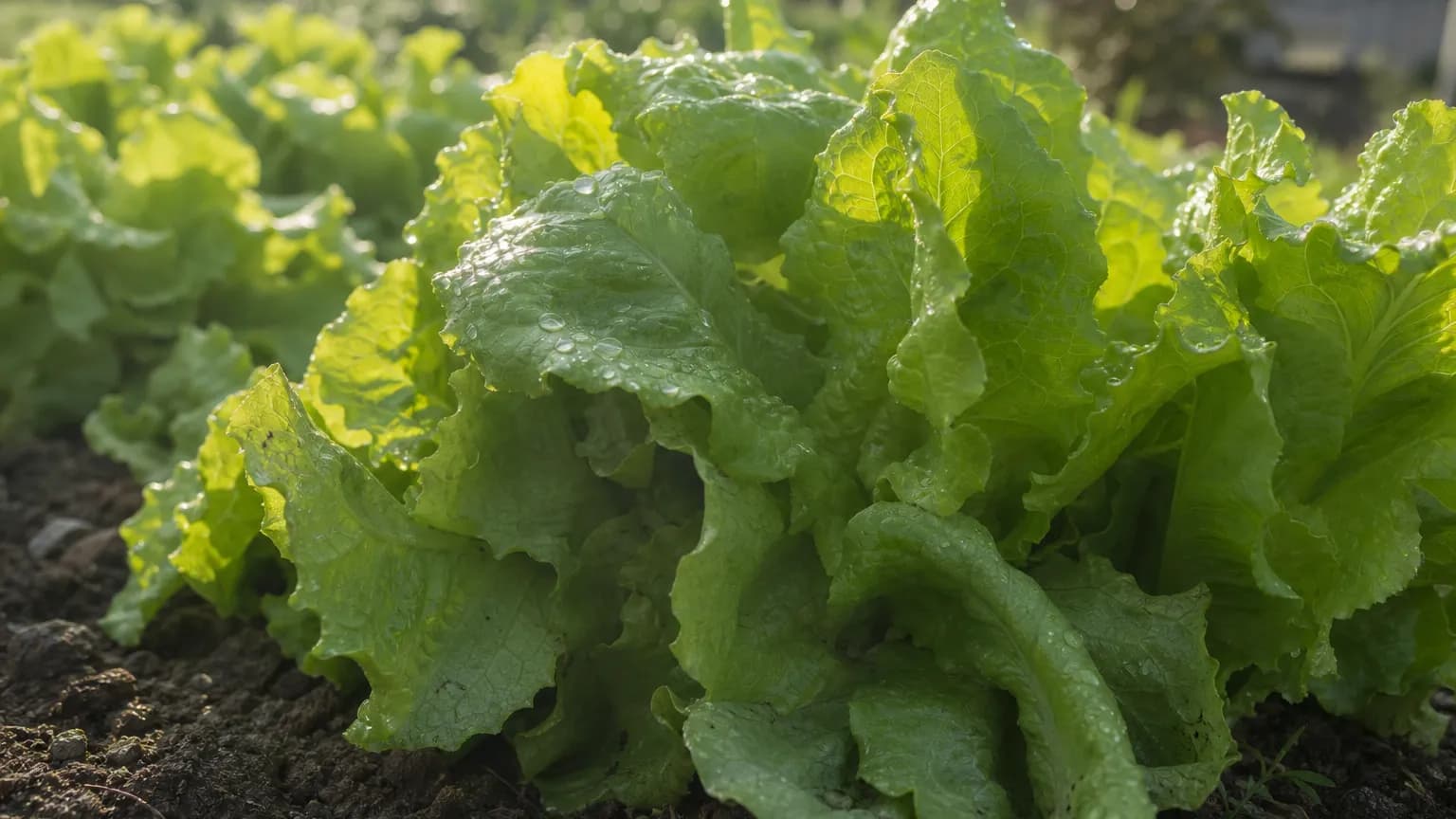
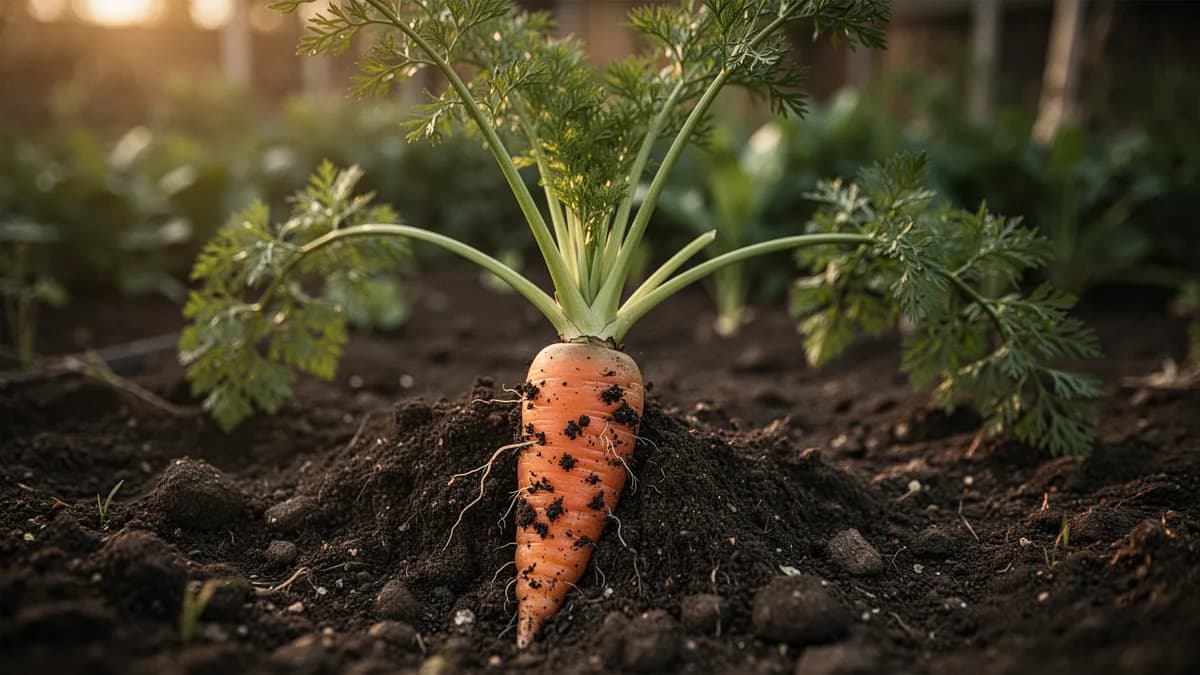
Like all radishes, Easter Egg varieties make excellent companions for slow-growing crops. Plant alongside carrots and parsnips to mark rows and loosen soil. They grow well with lettuce, spinach, peas, and beans in cool-weather beds. The quick harvest cycle frees up space for main crops before competition becomes an issue. Avoid planting near hyssop or other brassicas that share pests. Succession plantings between rows of longer-season crops maximize garden productivity.
Peas belongs beside it.
Old growers' knowledge, checked against Easter Egg Radish's real companion table below — test any plant you're growing.
Try Easter Egg Radish in a bed — right here
A real planner bed with Easter Egg Radish already in it. Tap a companion to place it and watch the pairing checks answer — green for good neighbours, red for a clash.


Related growing guides
Feed it well
Easter Egg radishes prefer loose, well-drained soil rich in organic matter. Sandy loam produces the smoothest, roundest roots. Amend heavy clay with compost and sand to improve drainage and texture. Maintain soil pH between 6.0 and 7.0. These quick-growing radishes need minimal fertilizer. A light application of balanced compost worked into the top few inches before sowing provides sufficient nutrition. Avoid high-nitrogen fertilizers.
Ideal Temperature
Hardiness Zone Compatibility
From seed to harvest, stage by stage
Germination
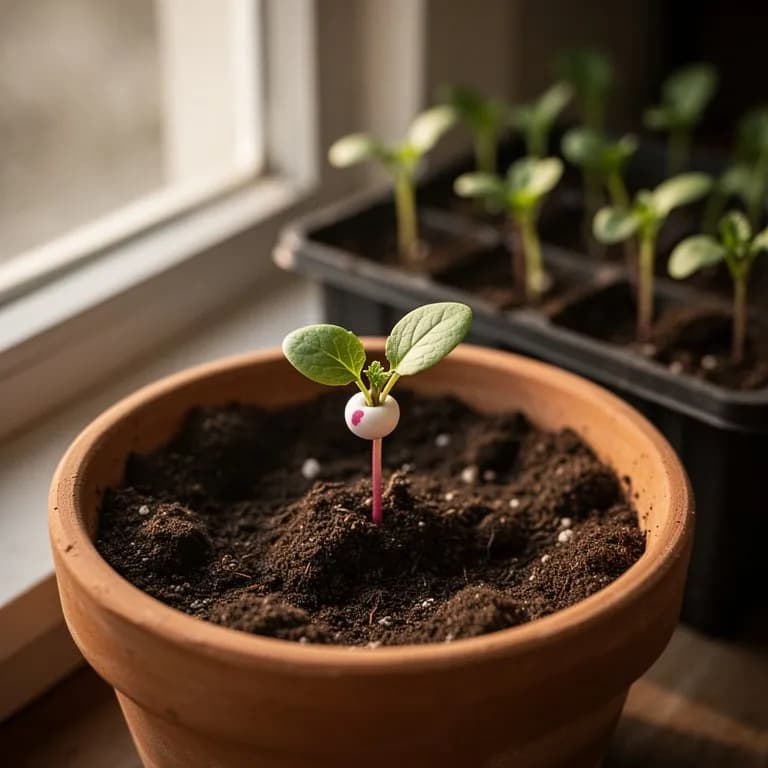
Radish seeds are among the fastest germinating of any garden vegetable. Within 3-5 days of sowing, the pale radicle root pushes downward while rounded cotyledon leaves unfurl above the soil surface. Seeds germinate readily in soil temperatures as low as 4°C (40°F), though the optimal range is 10-18°C (50-65°F).
Leaf Development
True leaves emerge with a rough, slightly lobed texture distinctly different from the smooth cotyledons. The taproot begins to elongate and thicken below the soil surface. Foliage develops rapidly in cool weather, forming a small rosette of 4-6 leaves that powers the root-swelling phase ahead.
Root Swelling
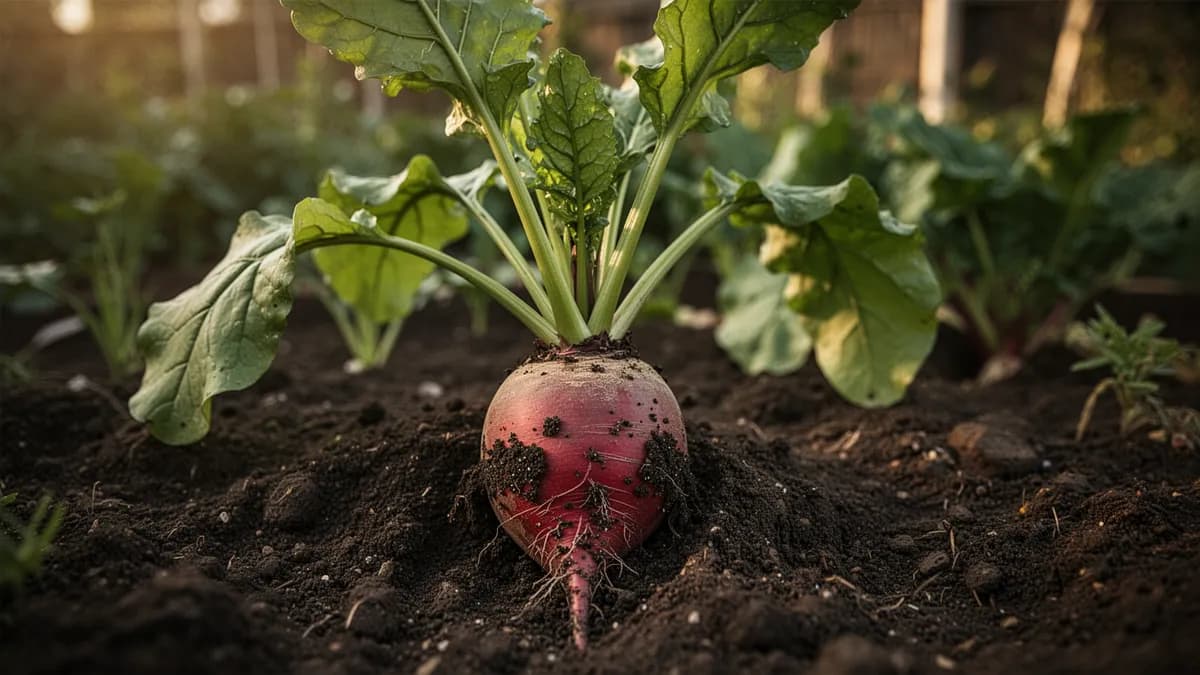
The hypocotyl rapidly expands into the familiar round radish shape. This is the critical stage where the characteristic Easter Egg colors develop — each root randomly expresses one of the mix's color genes, producing red, purple, pink, violet, or white skin. The root swells noticeably day by day, often pushing slightly above the soil line.
Harvest Window
Roots reach their ideal harvest size of 2.5-4 cm (1-1.5 inches) in diameter. The flesh is at peak crispness and the peppery flavor is bright but not overly hot. The harvest window for spring radishes is narrow — typically only 5-7 days before quality declines and roots become pithy or woody.
Bolting (Overmature)
If left in the ground past their prime, radishes send up a central flower stalk that rapidly elongates to 60-90 cm. Small four-petaled flowers in white or pale lavender attract pollinators. The root becomes woody, hollow, and inedibly hot. While this ends root quality, the developing seed pods (called 'rat tail') are themselves edible and crunchy.
Sow seeds directly outdoors 1 cm (½ inch) deep and 2.5 cm (1 inch) apart. Keep the soil consistently moist but not waterlogged during germination. There is no need to start radishes indoors — they resent transplanting and grow so quickly that direct sowing is always best.
Caring for Easter Egg Radish month by month
What to do each month for your Easter Egg Radish
October
You are hereHarvest autumn-sown radishes at their peak. In mild-winter zones, continue sowing for late-season harvests. Protect late-season plantings from early frosts with row cover fabric, which can extend the growing season by 2-3 weeks.
Know exactly what to do in your garden — every month
One email at the start of each month: what to sow, plant, and tackle right now — for your Easter Egg Radish and everything growing around it. Plus a short starter course that helps you dodge the classic mistakes.
- What to do, right now
- Matched to your season
- Starter course included
Harvesting Easter Egg Radish
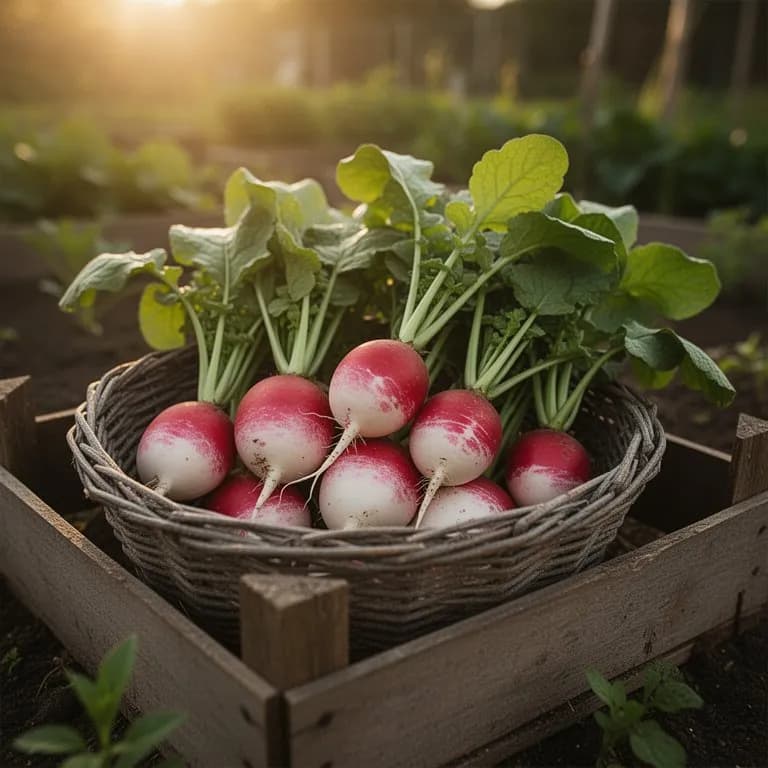
Easter Egg radishes are ready to harvest in about 25 days when roots are one to two inches in diameter. The surprise element is part of the fun, as you will not know which color you are pulling until the root emerges from the soil. Harvest promptly once roots reach size, as they become pithy and hot-flavored if left too long. Pull by grasping the leaf base firmly and pulling straight up. Check the bed daily once the first roots mature.
assuming you plant when the window opens — set your real date
Pick Easter Egg Radish promptly and the plant keeps producing.
Storage & Preservation
Cut off leaves immediately after harvest to prevent them from drawing moisture out of the roots. Store unwashed radishes in a perforated plastic bag in the refrigerator for up to two weeks. For the crispest texture, place trimmed radishes in a jar of cold water in the fridge. Easter Egg radishes make beautiful pickled radishes, their various colors creating a stunning jar. Quick pickle in rice vinegar with sugar and salt for a refrigerator pickle lasting several weeks.
What goes wrong — and the fix

Flea Beetles
PestTiny round holes peppered across leaves, giving a shot-hole appearance. Seedlings may be killed by severe infestations.
Root Maggots
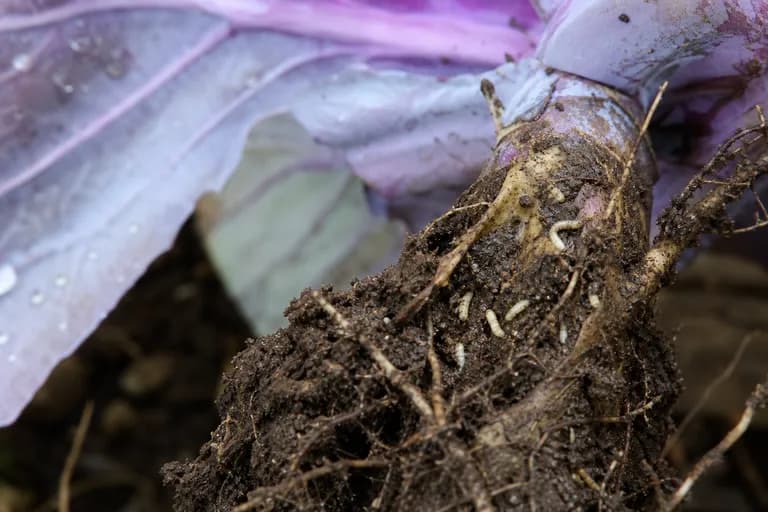
PestWhite larvae tunneling through roots, leaving brown trails and causing secondary rot. Roots become wormy and inedible.

Downy Mildew
DiseaseYellow patches on upper leaf surfaces with grayish-purple fuzzy growth underneath. Leaves may wilt and die in humid conditions.
Troubleshooting Common Problems
The same issues that affect all spring radishes apply here. Heat causes rapid bolting and poor root development, so time plantings for cool weather. Leaving roots in the ground past maturity produces hollow, pithy, excessively peppery radishes. Inconsistent watering leads to cracked or misshapen roots. Some gardeners find that certain colors in the mix germinate or mature at slightly different rates. Flea beetles are the primary pest concern for seedlings.
Growing Tips
- Direct sow always — never transplant. Radishes develop a slender taproot from day one, and any disturbance to this root causes forked, misshapen, or stunted roots. Sow seeds exactly where you want them to grow and thin to proper spacing.
- Thin ruthlessly and early. Once seedlings have their first true leaves, thin to 5 cm (2 inches) apart without hesitation. Overcrowded radishes produce only leaves and no usable roots — this is the single most common reason for radish failure in home gardens.
- Prepare the soil deeply and remove all stones, clumps, and debris to a depth of at least 15 cm (6 inches). Radish roots fork and deform around any obstruction they encounter. Loose, friable soil is the foundation of perfectly round, smooth radishes.
- Maintain consistent, even moisture throughout the entire 25-30 day growing cycle. Even a single day of drought stress followed by heavy watering causes roots to crack and split. Water lightly and frequently rather than deeply and infrequently.
- Avoid high-nitrogen fertilizers, which promote lush leafy tops at the expense of root development. Radishes grow so quickly that they need very little supplemental feeding — a bed amended with compost before planting provides everything they need.
- Succession plant every 10-14 days from early spring through late May, then resume in mid-August through October. This provides a continuous harvest and avoids the feast-or-famine cycle of a single large planting that all matures at once.
- Harvest promptly at 2.5-4 cm diameter — do not wait for radishes to grow larger. Unlike many root vegetables, radishes decline rapidly once they pass peak maturity. Check daily during the harvest window, as roots can go from perfect to pithy in just 2-3 days.
- Use radishes as companion plants throughout the garden. Interplant with slow-growing carrots and parsnips to mark rows, tuck them between transplanted tomatoes and peppers as a catch crop, or plant around squash hills where their scent helps deter cucumber beetles.
Grow your best Easter Egg Radish yet — and everything around it.
Start a free plan today. Lay out your beds, drop in your Easter Egg Radish, and let PlotMyGarden handle the timing, spacing, companions and reminders from seed to harvest basket.
Pick your Easter Egg Radish
Easter Egg II
Improved blend with more uniform sizing across all colors. Includes red, white, pink, purple, and violet roots in balanced proportions.
Rainbow Mix
Similar multicolor blend with slightly larger roots. Some mixes include bicolor varieties for even more visual interest.
Sparkler
A bicolor variety with red tops and white bottoms. Often included in Easter Egg mixes for additional color variety.
Plum Purple
Solid purple variety with white flesh. One of the most striking individual colors found in Easter Egg blends.
A packet of Easter Egg radish seeds costs $2-4 and contains 200-500 seeds — enough for an entire season of succession plantings. At grocery store prices of $3-5 per bunch (typically 8-10 radishes), even a single row of home-grown radishes pays for the seed packet many times over. The real savings multiply with succession planting: six sowings from one packet can yield 120+ radishes worth $36-60 at retail. Because radishes mature in under 30 days, they also serve as valuable interplanting and catch crops that generate yield from garden space that would otherwise sit empty between main-season plantings.
Quick recipes
Rainbow Radish and Butter Tartines
10 minThe classic French snack that celebrates the radish in its purest form — thinly sliced Easter Egg radishes fanned across good crusty bread spread with salted butter. The cool butter mellows the peppery bite while the colorful slices make each tartine a small work of art.
6 ingredientsQuick-Pickled Easter Egg Radishes
15 min + 1 hr restA vibrant refrigerator pickle that intensifies the radishes' natural colors into stunning jewel tones. The quick brine tames the raw heat into a tangy, crisp condiment perfect for tacos, grain bowls, sandwiches, and charcuterie boards. Pink and red radishes turn the brine a beautiful magenta.
8 ingredientsRoasted Easter Egg Radishes with Herbs
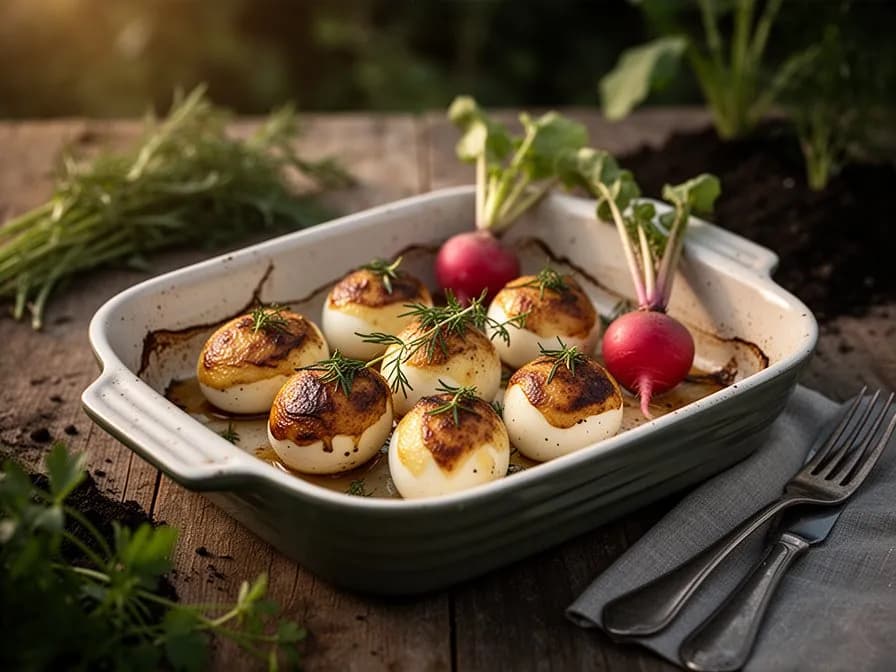
25 minRoasting completely transforms radishes from sharp and peppery to mellow, sweet, and almost turnip-like. The high heat caramelizes the natural sugars while the colorful skins soften but retain their hue. A revelation for anyone who thinks they dislike radishes.
8 ingredientsCulinary Uses
The multicolored roots make Easter Egg radishes a visual standout on crudite platters and in salads. Slice thinly across different colored roots for a confetti-like salad garnish. Quick pickle the various colors separately for a stunning condiment display. Roast mixed colors together with olive oil and sea salt. The mild flavor works well with butter on fresh bread or as a crunchy topping for tacos.
What's inside
Health Benefits
- Radishes are exceptionally low in calories (just 16 per 100g) while providing satisfying crunch and flavor, making them an ideal snack for weight management — virtually unlimited consumption without caloric impact.
- Rich in glucosinolates and isothiocyanates — the sulfur compounds that create the peppery taste — which have demonstrated anticancer properties in laboratory studies, particularly against stomach, colon, and breast cancer cell lines.
- The anthocyanin pigments in purple and red Easter Egg varieties are potent antioxidants linked to reduced cardiovascular inflammation, improved blood vessel function, and lower risk of heart disease in epidemiological studies.
- Good source of vitamin C at 16% of the daily value per 100g, supporting immune defense, collagen synthesis for healthy skin and joints, and enhanced iron absorption from plant-based foods when eaten together.
- Contains compounds that stimulate bile production and support liver function — traditional medicine systems from Ayurveda to European herbalism have used radish juice as a digestive tonic and liver cleanser for centuries.
- Provides dietary fiber that feeds beneficial gut bacteria and supports regular digestion, while the high water content (95%) contributes to hydration and helps maintain healthy kidney function.
Where Easter Egg Radish comes from
The radish (Raphanus sativus) is one of humanity's oldest cultivated vegetables, with origins tracing back to Southeast Asia and the eastern Mediterranean region. Wild forms of the species still grow across western Asia from Turkey to central China. Radishes were domesticated independently in several regions, and by 2500 BCE they were a well-established crop in ancient Egypt — historical records suggest radish, onion, and garlic were staple foods for the workers who built the Great Pyramids. From Egypt, radish cultivation spread throughout the ancient Mediterranean world. The Greeks and Romans prized radishes and developed multiple varieties, with the Roman naturalist Pliny the Elder documenting round, long, and wild forms in his first-century writings.
The Easter Egg radish mix is a modern seed industry creation that captures the diversity of spring radish breeding in a single, playful packet. It typically blends four to six open-pollinated varieties — Cherry Belle (red), Plum Purple, White Globe, Pink Beauty, and similar cultivars — each selected for similar maturity timing (25-30 days) so the entire mix can be harvested at once. The concept emerged from American seed companies in the latter half of the 20th century, designed to add visual excitement to salads and gardens while introducing growers to the full spectrum of radish colors.
Radishes have played a practical role in agriculture well beyond their value as food. Farmers have long used fast-growing radishes as cover crops to break up compacted soil with their taproots, suppress weeds, and recycle nutrients. The daikon and oilseed radish varieties can penetrate hardpan clay to depths of 60 cm or more, earning them the nickname 'tillage radishes.' In home gardens, radishes serve as trap crops for flea beetles and as row markers for slow-germinating seeds. Today, radishes are grown on every inhabited continent, with China, Japan, South Korea, and India leading world production. The Easter Egg mix remains one of the most popular home garden radish offerings, beloved for its speed, simplicity, and the childlike delight of discovering which color each root will be.
Easter Egg Radish: did you know?
Fascinating facts about Easter Egg Radish
Easter Egg radishes are not a single variety but a carefully blended seed mix of multiple radish cultivars selected to produce a rainbow of colors — red, purple, violet, pink, and white — from the same packet. Each seed is genetically predetermined to produce one color, making every harvest a colorful surprise.
Easter Egg Radish questions, answered
When should I plant Easter Egg Radish?
What are good companion plants for Easter Egg Radish?
What hardiness zones can Easter Egg Radish grow in?
How much sun does Easter Egg Radish need?
How far apart should I space Easter Egg Radish?
What pests and diseases affect Easter Egg Radish?
How do I store Easter Egg Radish after harvest?
What are the best Easter Egg Radish varieties to grow?
What soil does Easter Egg Radish need?
Why do my Easter Egg radishes produce all leaves and no roots?
Can I grow Easter Egg radishes in containers?
Why are my radishes woody, pithy, or hollow inside?
Will all the colors in the mix taste the same?
How do I store harvested Easter Egg radishes to keep them crisp?
Are the radish greens (tops) edible?
You just read the theory. Now grow it on autopilot.
Everything that makes Easter Egg Radish fiddly — the timing, the spacing, the companions, the harvest window — is exactly what PlotMyGarden handles for you, for every plant in your garden.
A plan that knows your weather
Set your location once. Get sow, feed and harvest dates built around your real last-frost date and live forecast — no more guessing from a generic seed packet.
From the “When to plant” sectionDrag-and-drop bed planner
Design beds on a grid. Every plant snaps to its proper spacing, and you can see your whole season laid out before you spend a cent on seed.
From the “Growing guide” sectionCompanion conflicts, caught early
200+ good-and-bad pairings checked live as you plant — so a season-wrecking mistake never makes it into the ground.
From the “Companions” sectionReminders you'll actually act on
“Water the beans.” “Pick today before it turns.” Timely, specific, and tied to the plants you're really growing.
From the “Harvest” sectionSuccession, scheduled
Want a harvest for six weeks, not six days? It spaces your sowings automatically and reminds you when each new block is due.
From the “When to plant” sectionA record that gets smarter
Every harvest you log teaches it your garden. Next year's plan starts from what actually worked in your soil, not a textbook's.
From the “Overview” sectionPlant these alongside Easter Egg Radish
More Root Vegetables
Grow your best Easter Egg Radish yet — and everything around it.
Start a free plan today. Lay out your beds, drop in your Easter Egg Radish, and let PlotMyGarden handle the timing, spacing, companions and reminders from seed to harvest basket.