Schwarzer Rettich
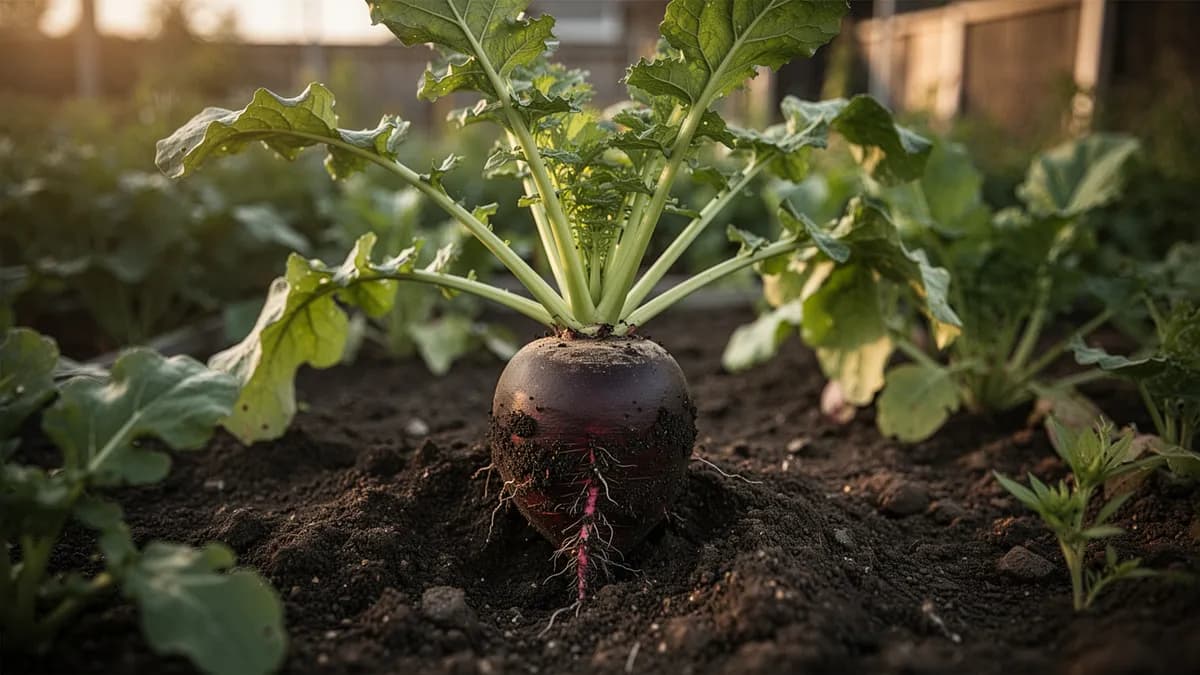
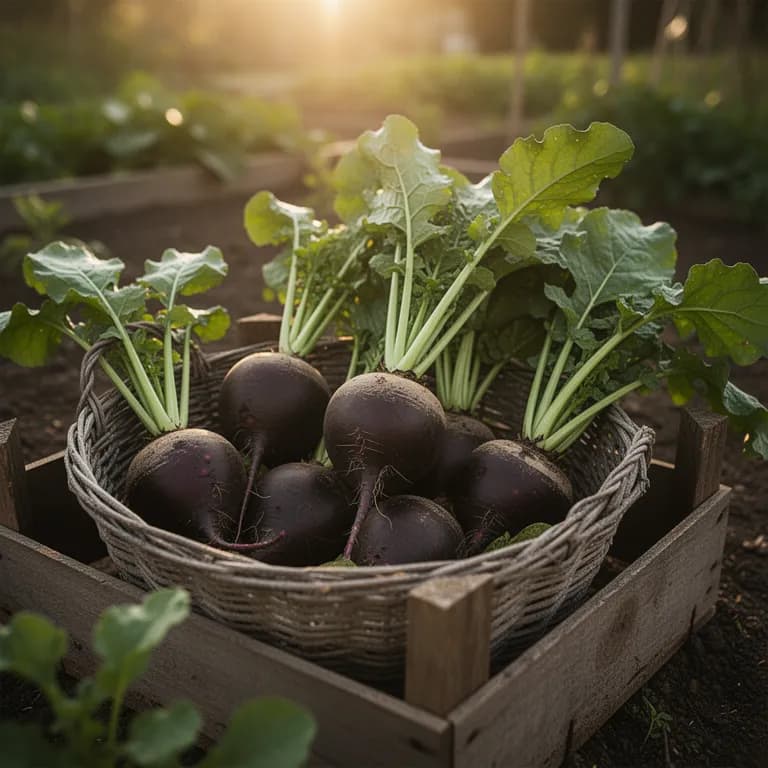
Ein großer Winterrettich mit rauer, kohlschwarzer Schale und knackigem, scharfem weißem Fruchtfleisch, das beim Kochen milder wird.





Auf dieser SeiteÜberblick
Schwarzer Rettich im Überblick
Ein großer Winterrettich mit rauer, kohlschwarzer Schale und knackigem, scharfem weißem Fruchtfleisch, das beim Kochen milder wird. Schwarze Rettiche werden in der osteuropäischen Küche wegen ihres kräftigen Geschmacks und ihrer hervorragenden Lagerfähigkeit über den Winter geschätzt. Sie sind deutlich intensiver im Geschmack als Frühlingsradieschen und werden traditionell gerieben in Salaten verwendet oder zu Saft gepresst als Hausmittel bei Atemwegserkrankungen. Säen Sie im Spätsommer für die Herbsternte und lagern Sie die Rüben an einem kühlen, feuchten Ort, wo sie sich mehrere Monate halten.
Wann Schwarzer Rettich pflanzen
Immer Direktsaat, etwa 1,5 cm tief, im Hochsommer (Juli–August) für die Herbsternte. Die Samen keimen schnell innerhalb von 5–7 Tagen. Vereinzeln Sie auf 10–15 cm Abstand. Säen Sie nicht im Frühling, da lange Tage zum Schossen führen, bevor sich die Wurzeln entwickeln können. Planen Sie die Aussaat so, dass die Wurzeln bei kühlem Herbstwetter reifen. Samen bleiben 4–5 Jahre keimfähig.
Dein Schwarzer Rettich-Jahr
Abgestimmt auf Zone 7 · typische Saison · Frost geht um den 2. Apr. und kehrt um den 1. Nov. zurück
Schwarzer Rettich Jul – Sep pflanzen, Okt – Dez ernten. Beachte die Pflanzmethoden unten und wähle dein Klima für passende Zeiträume.
So baust du Schwarzer Rettich an
Säen Sie Schwarzen Rettich direkt ins Freiland, etwa 1,5 cm tief, von Mitte Juli bis Anfang September. Die Samen keimen innerhalb von 5–7 Tagen bei 12–24°C. Vereinzeln Sie die Sämlinge auf 10–15 cm Abstand in Reihen mit 30–45 cm Abstand. Schwarze Rettiche benötigen kühles Wetter, um ihre dichten, scharfen Wurzeln zu entwickeln, und sollten während der abkühlenden Herbsttemperaturen zur Reife gelangen.
Schwarze Rettiche sind größer und langsamer wachsend als Frühlingsradieschen und benötigen 55–70 Tage bis zur Ernte. Sie brauchen tiefgründigen, lockeren Boden, der mindestens 25 cm tief bearbeitet wurde. Gießen Sie gleichmäßig für ein ebenmäßiges Wachstum und vermeiden Sie Trockenstress, der den ohnehin schon scharfen Geschmack noch verstärkt. Eine leichte Düngung mit ausgewogenem Dünger ist ausreichend.
Ernten Sie vor den ersten starken Frösten für die beste Lagerqualität. Schwarze Rettiche sind hervorragende Winterlager-Gemüse und wurden historisch als Grundnahrungsmittel für den Winter angebaut. Die dicke, schwarze Schale schützt das knackige, weiße Fruchtfleisch während der langen Lagerung. Leichter Frost verbessert den Geschmack, indem er einen Teil der Schärfe reduziert.
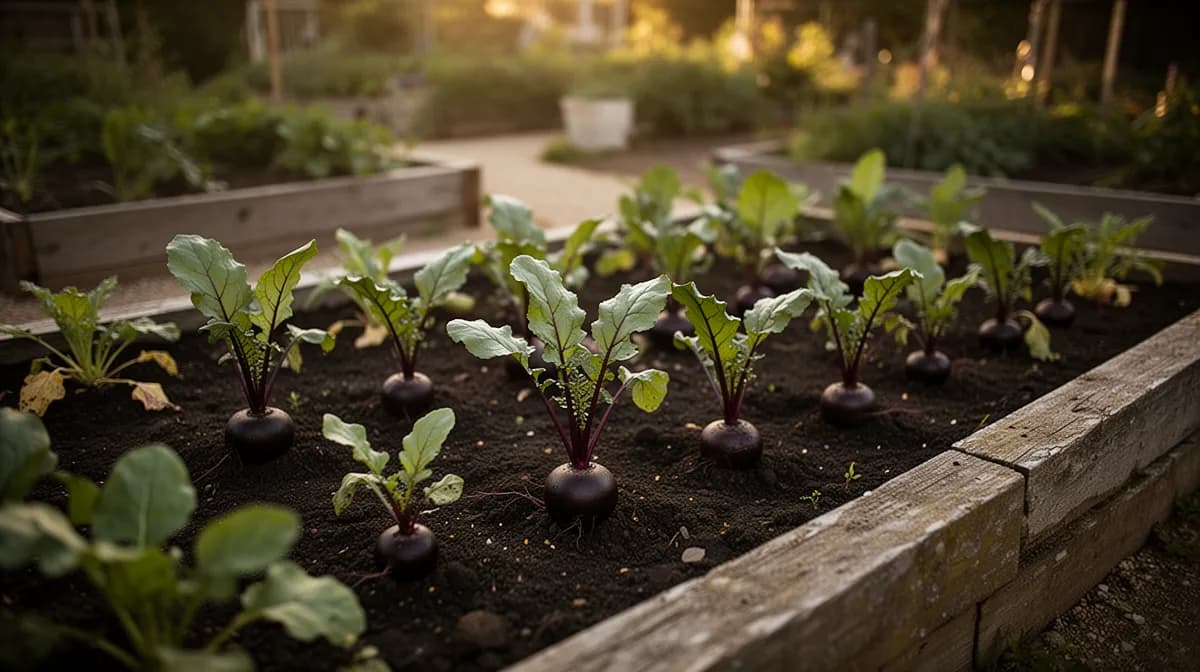
128 Pflanzen passen in ein Beet von 120 × 240 cm
Schwarzer Rettich braucht 15 cm Platz pro Pflanze. Der Planer hält diesen Abstand für dich ein — jede Pflanze, jedes Beet.
Die besten Nachbarn für Schwarzer Rettich
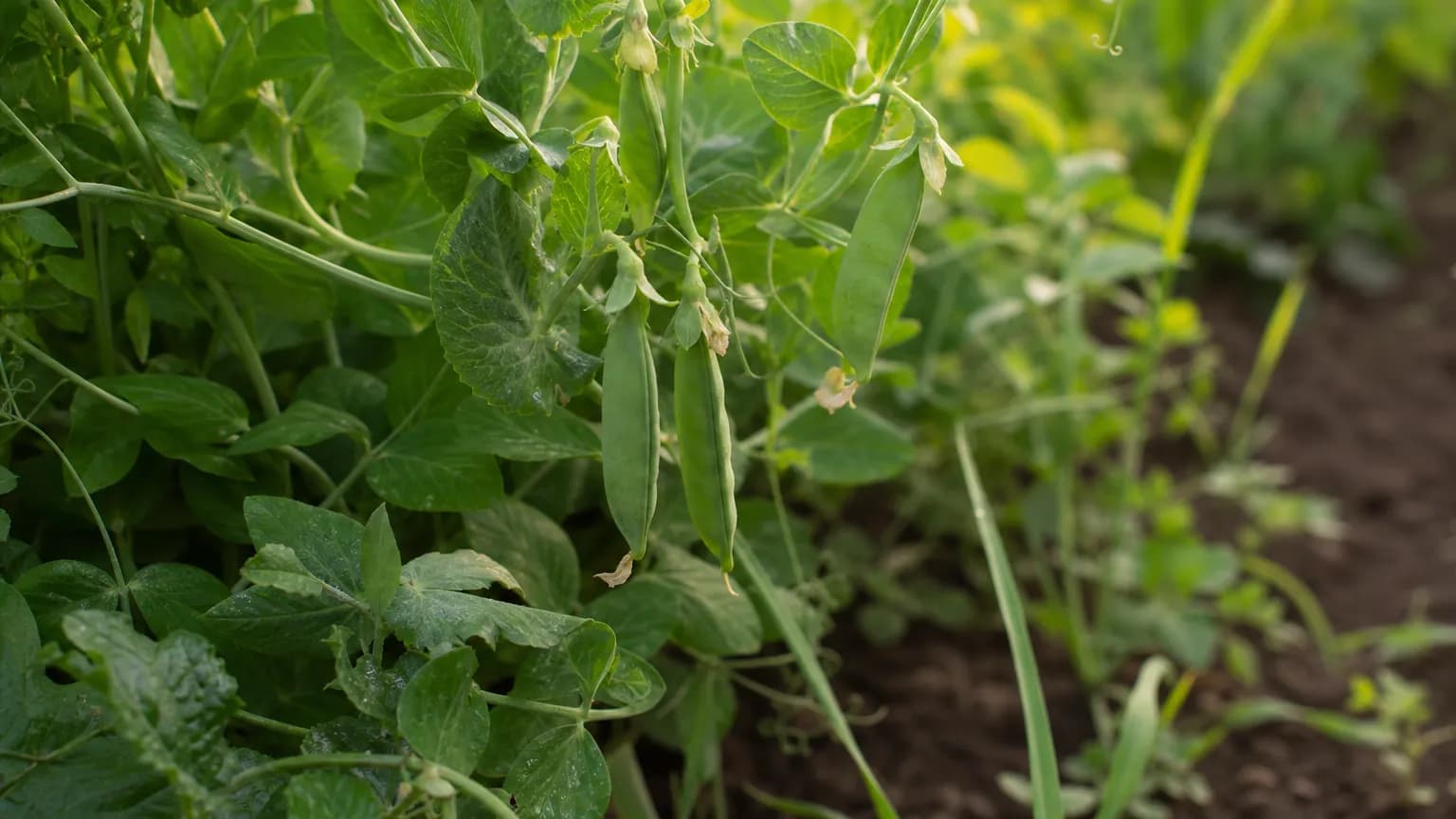
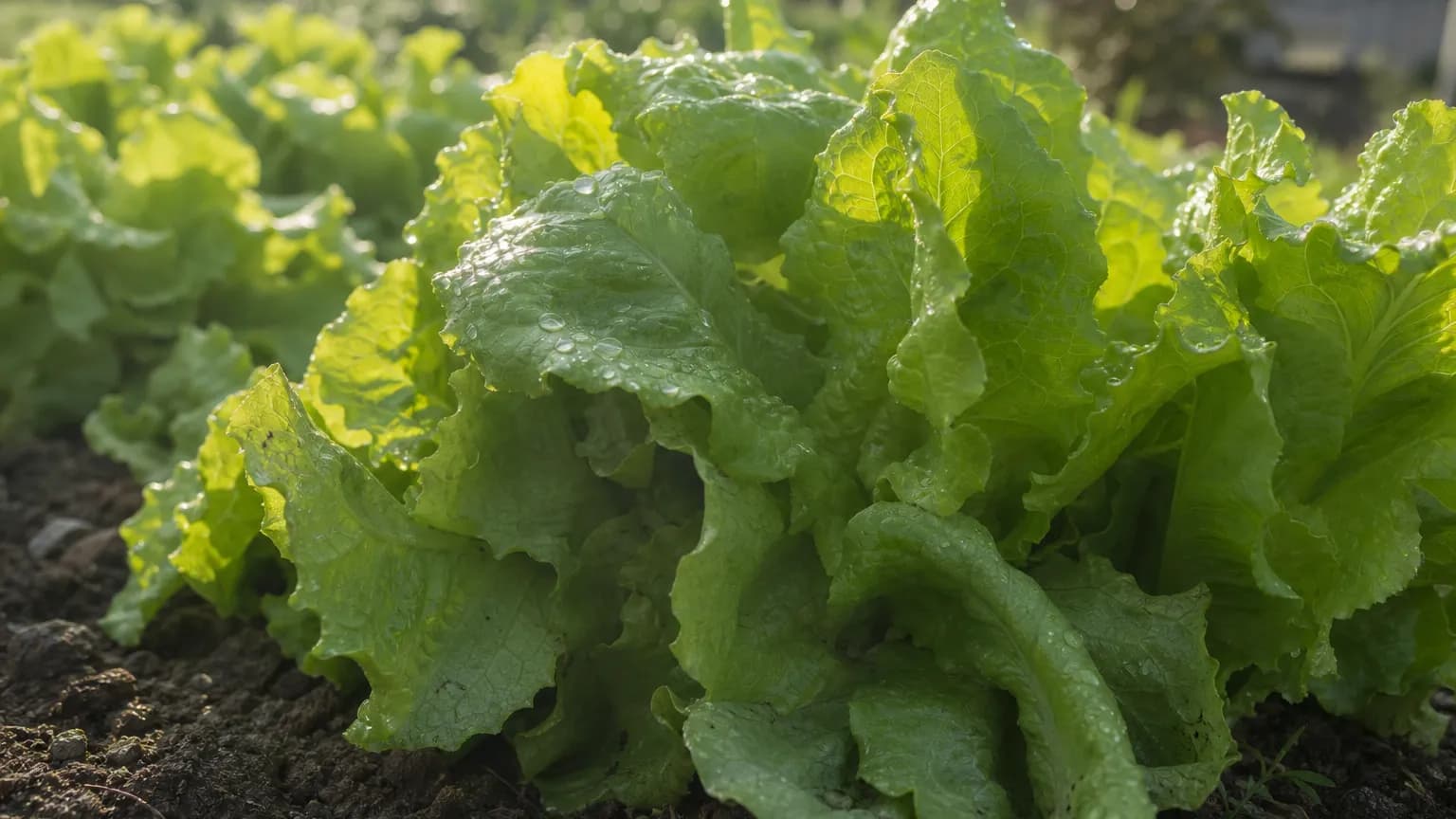
Schwarze Rettiche gedeihen gut zusammen mit Salat, Spinat, Erbsen und anderen Kulturen der kühlen Jahreszeit. Pflanzen Sie sie als Herbstkultur nach Sommergemüse. Die großen Wurzeln helfen, verdichteten Boden aufzulockern. Vermeiden Sie die Pflanzung neben anderen Kreuzblütlern. Der starke Geruch kann einige Schädlinge von benachbarten Kulturen fernhalten.
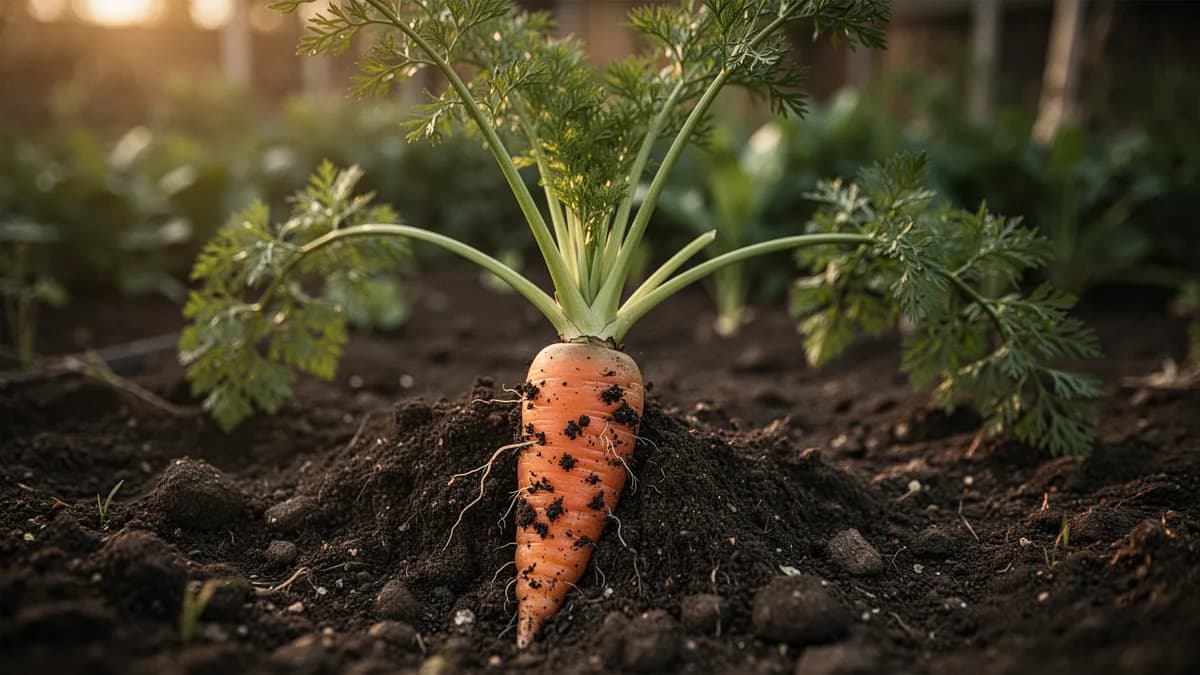
Karotte gehört daneben.
Altes Gärtnerwissen, geprüft an der echten Nachbartabelle von Schwarzer Rettich — teste jede Pflanze, die du anbaust.
Probiere Schwarzer Rettich direkt hier im Beet
Ein echtes Planer-Beet, Schwarzer Rettich steht schon drin. Tippe einen Begleiter an, platziere ihn und sieh, wie die Nachbarschaftsprüfung antwortet — grün für gute Nachbarn, rot bei Streit.


Passende Anbau-Ratgeber
Richtig düngen
Schwarze Rettiche benötigen tiefgründigen, lockeren, gut durchlässigen Boden mit einem pH-Wert von 6,0–7,0. Bearbeiten Sie den Boden mindestens 25 cm tief. Verbessern Sie ihn mit Kompost, aber vermeiden Sie frischen Mist. Bringen Sie bei der Aussaat einen leichten, ausgewogenen Dünger aus. Vermeiden Sie übermäßigen Stickstoff. Gleichmäßige Feuchtigkeit mildert den scharfen Geschmack. Sandiger Lehmboden bringt die besten Wurzeln hervor. Entfernen Sie Steine, um Verkrüppelung zu verhindern.
Ideale Temperatur
Winterhärtezone-Kompatibilität
Von der Saat zur Ernte, Schritt für Schritt
Keimung
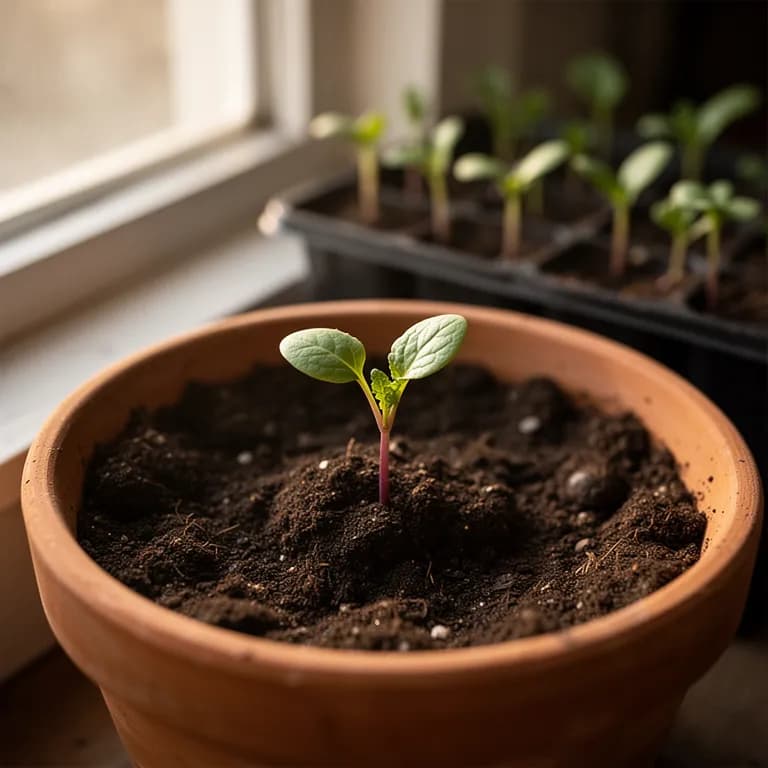
Die Samen keimen schnell bei kühlen bis gemäßigten Bodentemperaturen von 10–20°C. Runde Keimblätter schieben sich innerhalb von 4–7 Tagen durch die Oberfläche. Schwarzer Rettich keimt zuverlässig auch in der Hitze des Spätsommers, wenn der Boden feucht gehalten wird.
Blattentwicklung
Echte Blätter entwickeln sich mit der rauen, gelappten Form, die typisch für Kreuzblütler ist. Die Rosette wächst kräftig, und die junge Pfahlwurzel beginnt unter der Erde anzuschwellen. Vereinzeln Sie die Sämlinge in diesem Stadium auf 10–15 cm Abstand.
Wurzelverdickung
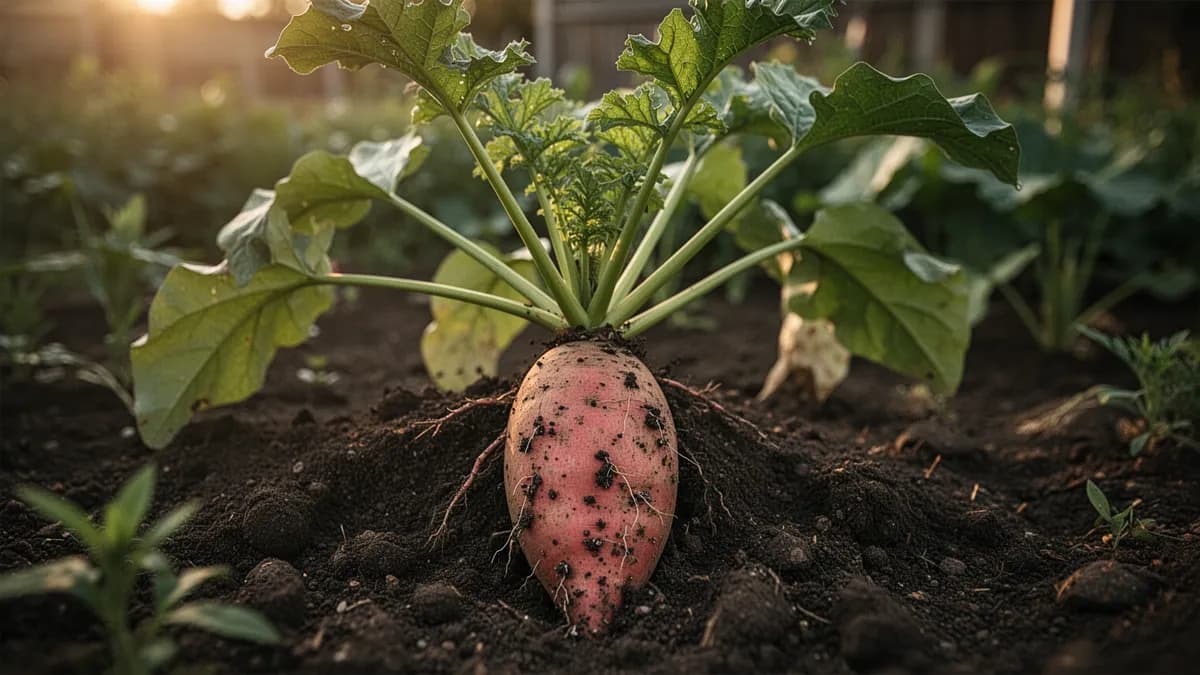
Die Pfahlwurzel verdickt sich rasch, und die dunkle Schale beginnt ihre charakteristische raue, korkartige Textur zu entwickeln. Die Wurzelkrone kann über die Erdlinie hinausragen. Die Blätter sind jetzt groß und ausladend.
Reifung
Die Wurzeln erreichen 8–10 cm Durchmesser mit dichtem, knackigem weißem Fruchtfleisch. Die schwarze Schale wird zäher und dient als natürlicher Schutzpanzer für die lange Lagerung. Kühlere Herbsttemperaturen mildern den scharfen Geschmack.
Ernte und Lagerung
Die Wurzeln sind vollständig ausgereift mit festem, dichtem Fruchtfleisch und dicker schwarzer Schale. Ernten Sie, bevor der Boden hart durchfriert. Ordentlich geerntete Wurzeln können 3–4 Monate unter kühlen, feuchten Bedingungen gelagert werden.
Säen Sie die Samen 1 cm tief und halten Sie den Boden bis zum Auflaufen gleichmäßig feucht. Vermeiden Sie Verkrustung, indem Sie die Saatreihe leicht mit feinem Kompost abdecken.
Schwarzer Rettich Monat für Monat pflegen
Was du jeden Monat für deine Schwarzer Rettich tun solltest
Oktober
Aktueller MonatBeginnen Sie mit der Ernte, wenn die Wurzeln 8–10 cm Durchmesser erreichen. Lockern Sie den Boden vor dem Herausziehen mit einer Grabegabel. Kürzen Sie das Laub auf 2 cm. Beginnen Sie mit dem Nachreifen und Lagern der geernteten Wurzeln in feuchtem Sand oder perforierten Beuteln.
Immer wissen, was jetzt im Garten zu tun ist
Eine E-Mail zum Monatsanfang: was du jetzt säen, pflanzen und anpacken solltest — für deine Schwarzer Rettich und alles, was drumherum wächst. Dazu ein kurzer Startkurs, der dich vor den klassischen Fehlern bewahrt.
- Was jetzt zu tun ist
- Passend zu deiner Saison
- Startkurs inklusive
Schwarzer Rettich ernten
Ernten Sie Schwarze Rettiche, wenn die Wurzeln 8–10 cm Durchmesser erreicht haben, in der Regel 55–70 Tage nach der Aussaat. Die raue, dunkelschwarze Schale sollte sich fest anfühlen. Lockern Sie die Erde vor dem Herausziehen mit einer Grabegabel. Ernten Sie, bevor der Boden hart durchfriert. Kürzen Sie das Laub auf etwa 2 cm. Wurzeln, die zu lange in warmem Boden verbleiben, werden übermäßig scharf und holzig. Nach dem ersten Frost geerntete Rüben sind milder als im Sommer gewachsene.
angenommen, du pflanzt zu Beginn des Zeitraums — trage dein tatsächliches Datum ein
Ernte Schwarzer Rettich zügig, dann trägt die Pflanze weiter.
Lagerung & Konservierung
Schwarze Rettiche sind außergewöhnlich lagerfähig. Lagern Sie sie ungewaschen in perforierten Beuteln im Kühlschrank für 2–3 Monate, oder in feuchtem Sand im Erdkeller bei 0–4°C für bis zu 4 Monate. Die dicke schwarze Schale verhindert die Austrocknung bei langer Lagerung. Reiben und fermentieren Sie die Rüben mit Salz für ein probiotisches Würzmittel. In Scheiben schneiden und dörren für Chips. In Essiglake einlegen für einen würzig-scharfen Rettich.
Was schiefgeht — und die Lösung
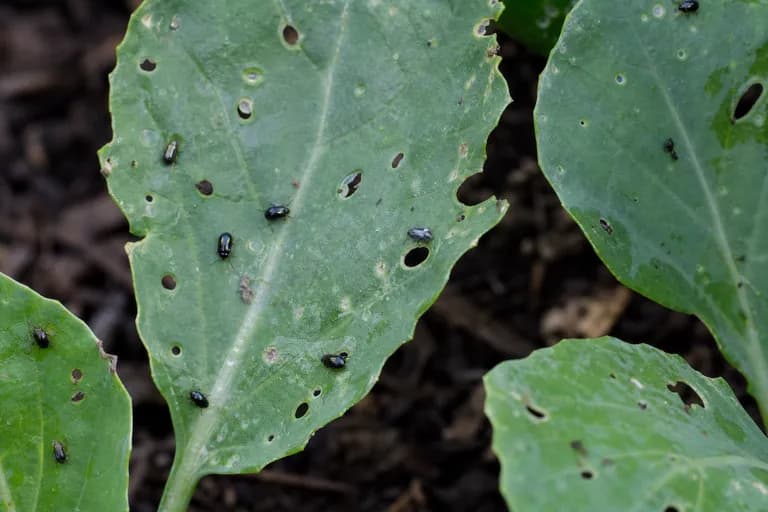
Erdflöhe
SchädlingKleine Schrotschusslöcher in den Blättern, besonders bei Keimlingen.
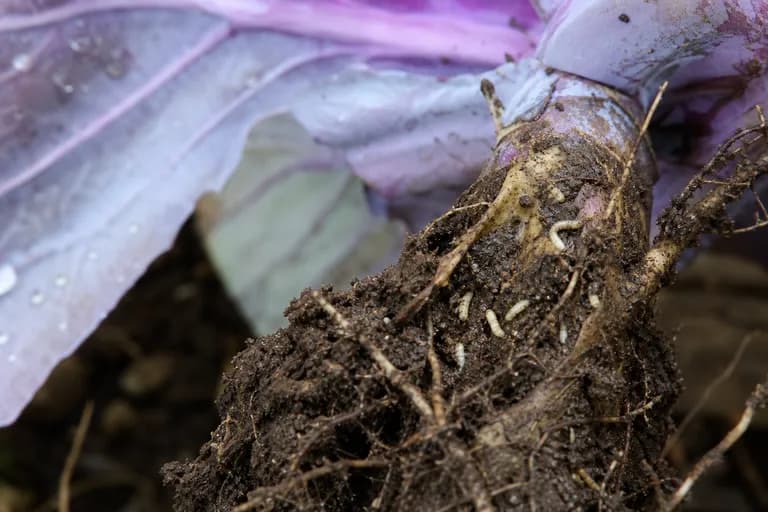
Kohlfliege (Wurzelmaden)
KrankheitGänge in den Wurzeln, weiche Stellen, Maden im Fruchtfleisch sichtbar.
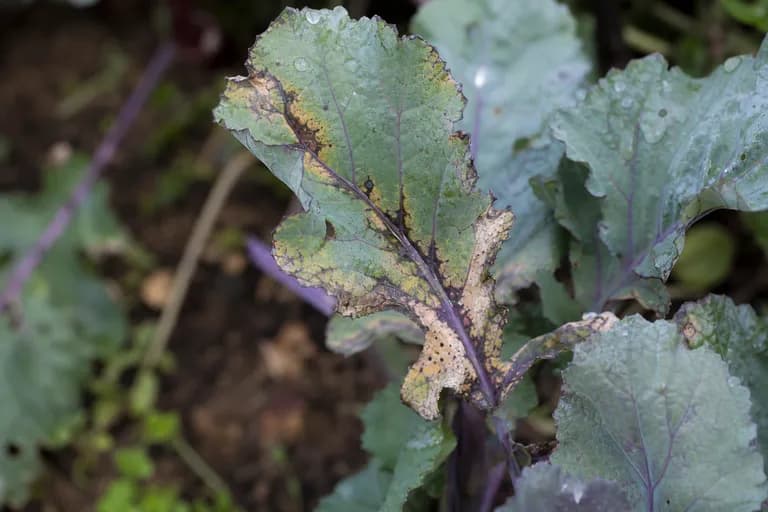
Schwarzfäule
KrankheitV-förmige gelbe Läsionen an den Blatträndern, geschwärzte Blattadern.
Fehlerbehebung bei häufigen Problemen
Die extreme Schärfe schreckt manche Gärtner ab; der Anbau bei kühlem Wetter und die Ernte nach Frost reduziert die Schärfe. Holzige, hohle Kerne entwickeln sich bei überreifen Rüben oder bei Anbau in heißem Wetter. Rissbildung durch ungleichmäßiges Gießen. Verkrüppelte Wurzeln durch steinigen Boden. Der kräftige Geschmack ist gewöhnungsbedürftig; führen Sie ihn schrittweise ein. Erdflöhe schädigen Keimlinge; verwenden Sie Vliesabdeckungen.
Anbautipps
- Das Timing ist entscheidend — säen Sie Schwarzen Rettich im Hochsommer (Juli–August), damit die Wurzeln in den abkühlenden Temperaturen des Herbstes reifen. Eine Frühlingsaussaat scheitert fast immer, da die länger werdenden Tage das Schossen auslösen, bevor sich die Wurzeln richtig entwickeln.
- Tiefgründige Bodenvorbereitung ist entscheidend. Bearbeiten Sie das Beet mindestens 25 cm tief und entfernen Sie jeden Stein, jedes Wurzelfragment und jede Erdklumpe. Jedes Hindernis im Boden führt zu gegabelten, missgeformten Wurzeln, die schwer zu schälen und zu lagern sind.
- Vereinzeln Sie konsequent auf 10–15 cm Abstand. Schwarze Rettichwurzeln sind viel größer als Frühlingsradieschen, und zu dicht stehende Pflanzen bringen kleine, zähe Wurzeln hervor, die nur scharf, aber substanzlos sind.
- Gießen Sie gleichmäßig, aber maßvoll. Trockenstress führt dazu, dass die Wurzeln einen intensiv scharfen, fast bitteren Geschmack und eine holzige Textur entwickeln. Umgekehrt führt Übergießen zu Rissbildung und wässrigem, geschmacklosem Fruchtfleisch. Streben Sie gleichmäßig feuchten Boden an.
- Vermeiden Sie frischen Mist oder stickstoffreichen Dünger, der üppiges Blattwachstum auf Kosten der Wurzelentwicklung fördert und Verkrüppelung verursachen kann. Eine leichte Gabe von reifem Kompost bei der Aussaat ist ausreichend.
- Verwenden Sie Vliesabdeckungen von der Aussaat bis zum ersten Monat, um Sämlinge vor Erdflöhen zu schützen, die junge Kreuzblütlerpflanzen mit ihrem charakteristischen Schrotschussschaden verwüsten können.
- Ernten Sie nach den ersten leichten Frösten für den besten Geschmack. Kälte bewirkt, dass die Pflanze Stärke in Zucker umwandelt, was die scharfe Schärfe merklich mildert. Ernten Sie jedoch vor starkem Frost — durchgefrorene Wurzeln werden matschig.
- Waschen Sie die Wurzeln nach der Ernte nicht, um die längste Lagerfähigkeit zu erzielen. Bürsten Sie einfach lose Erde ab, kürzen Sie das Laub auf 2 cm und packen Sie die Rüben in feuchten (nicht nassen) Sand an einem kühlen Ort. Gewaschene Wurzeln verderben wesentlich schneller.
Bau deine beste Schwarzer Rettich an — und alles drumherum.
Starte heute kostenlos. Lege deine Beete an, setze deine Schwarzer Rettich ein und lass PlotMyGarden Timing, Abstände, Begleiter und Erinnerungen von der Saat bis zum Erntekorb übernehmen.
Finde deine Schwarzer Rettich
Runder Schwarzer Winterrettich
Kugelförmig mit pechschwarzer Schale und knackigem weißem Fruchtfleisch. Die häufigste Sorte mit kräftigem, scharfem Geschmack.
Langer Schwarzer Winterrettich
Längliche Wurzeln bis zu 20 cm lang. Etwas milder als runde Sorten. Gut zum Schneiden in Scheiben.
Noir Gros de Paris
Französische Erbsorte mit großen, runden Rüben. Dichtes Fruchtfleisch mit hervorragender Lagerfähigkeit.
Eine Packung Schwarze-Rettich-Samen kostet 2–4 € und enthält 200–500 Samen — genug für mehrere Anbaujahre. Eine einzelne 3-Meter-Reihe kann 20–30 Wurzeln (5–10 kg) ergeben, die auf dem Wochenmarkt 15–30 € wert sind, da Schwarzer Rettich als Spezialität für 3–5 € pro Pfund gehandelt wird. Die außergewöhnliche Lagerfähigkeit von 3–4 Monaten bedeutet, dass Sie einmal ernten und den ganzen Winter frisch essen, wodurch Sie teure Wintergemüsepreise vermeiden.
Schnelle Rezepte
Osteuropäischer Rettichsalat
15 Min.Eine traditionelle mittel- und osteuropäische Vorspeise. Der scharfe Schwarze Rettich wird geschält, grob gerieben und mit Sauerrahm, Salz und einem Hauch Honig angemacht, um die Schärfe auszubalancieren. Auf dunklem Roggenbrot serviert, ist er ein beliebter Winterstarter in Deutschland, Polen und Russland.
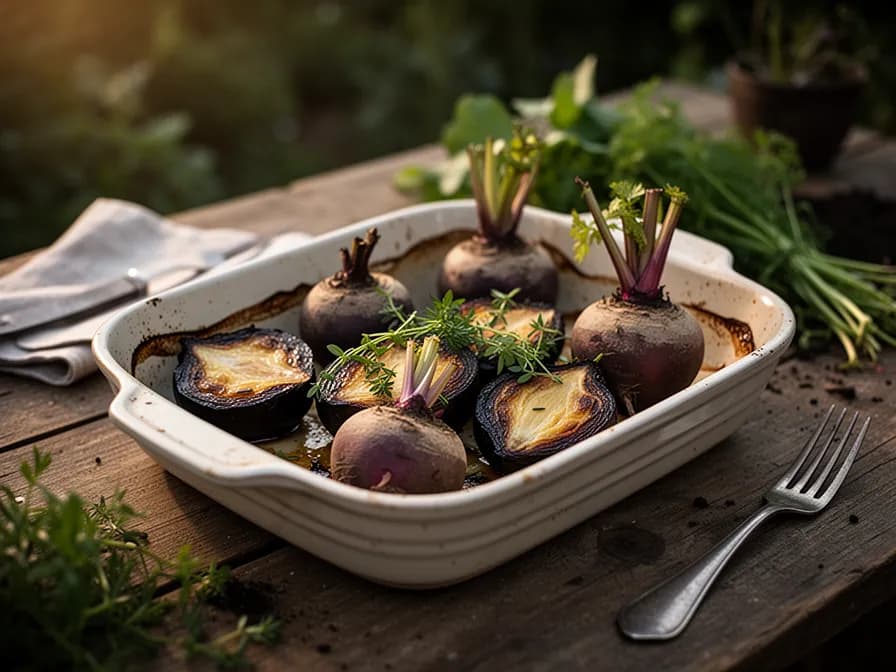
7 ZutatenGeröstete Schwarze Rettichspalten
35 Min.Das Rösten verwandelt den Schwarzen Rettich vollständig und zähmt die scharfe Schärfe zu einer milden, leicht süßen Erdigkeit, die an Steckrüben erinnert. In Spalten geschnitten, mit Olivenöl und Kräutern vermischt und goldbraun und zart geröstet — eine Offenbarung für alle, die rohen Schwarzen Rettich als zu intensiv empfinden.
7 ZutatenRettich-Hustensaft (Rettichsaft)
12 Stunden (passiv)Ein jahrhundertealtes deutsches und osteuropäisches Hausmittel. Ein ganzer Schwarzer Rettich wird ausgehöhlt, mit Honig gefüllt und über Nacht stehen gelassen. Der Honig zieht den Saft heraus und bildet einen natürlichen Sirup, der traditionell zur Linderung von Husten und Halsschmerzen in den Wintermonaten verwendet wird.
3 ZutatenKulinarische Verwendung
Schwarzer Rettich hat eine kräftige, meerrettichähnliche Schärfe, die in der osteuropäischen und deutschen Küche geschätzt wird. Roh gerieben und mit Sauerrahm gemischt als traditionelles Würzmittel. Dünn geschnitten und gesalzen, um Feuchtigkeit zu entziehen und den Geschmack zu mildern. Auf Sandwiches mit dunklem Brot servieren. Geröstet, um die Schärfe zu mildern. In der Volksmedizin traditionell zur Unterstützung der Verdauung und Atemwege verwendet. Hervorragend in Wintersalaten mit Äpfeln und Walnüssen.
Was drinsteckt
Gesundheitsvorteile
- Reich an Vitamin C, wobei 100 g etwa ein Drittel des Tagesbedarfs decken — entscheidend für die Immunabwehr während der Wintermonate, in denen Schwarzer Rettich traditionell verzehrt wird.
- Enthält hohe Mengen an Glucosinolaten, schwefelhaltigen Verbindungen, die bei der Verdauung in Isothiocyanate umgewandelt werden und aktiv auf ihr Potenzial zur Hemmung des Krebszellwachstums untersucht werden.
- Wird in der europäischen Pflanzenheilkunde traditionell als Choleretikum eingesetzt — Schwarzer-Rettich-Saft regt die Gallenproduktion und den Gallenfluss an und unterstützt die Leberfunktion und Fettverdauung. Moderne Studien haben diesen Effekt bestätigt.
- Der beträchtliche Ballaststoffgehalt (sowohl löslich als auch unlöslich) fördert eine gesunde Verdauung, unterstützt regelmäßigen Stuhlgang und nährt nützliche Darmbakterien.
- Enthält natürliche antimikrobielle Verbindungen, die in Laborstudien nachweislich bestimmte Bakterien- und Pilzstämme hemmen, was teilweise seine traditionelle Verwendung als Volksheilmittel bei Atemwegsinfektionen erklärt.
- Liefert eine gute Quelle für Kalium und Magnesium — Mineralstoffe, die für die Herz-Kreislauf-Gesundheit, die Blutdruckregulation und eine ordnungsgemäße Muskelfunktion unerlässlich sind.
Woher Schwarzer Rettich stammt
Der Schwarze Rettich (Raphanus sativus var. niger) gehört zu den ältesten kultivierten Gemüsearten der Welt, mit Wurzeln, die mindestens 4.500 Jahre in den östlichen Mittelmeerraum und nach Westasien zurückreichen. Altägyptische Aufzeichnungen aus der Zeit um 2500 v. Chr. beschreiben, wie Rettiche als Teil der Verpflegung an Pyramidenarbeiter verteilt wurden — zusammen mit Knoblauch und Zwiebeln — und archäologische Funde deuten darauf hin, dass es sich um große, scharfe Sorten handelte, die dem heutigen Schwarzen Rettich viel ähnlicher waren als den kleinen, milden Frühlingsradieschen.
Von Ägypten aus verbreitete sich der Anbau in der gesamten antiken Welt. Griechische Ärzte, darunter Dioskurides, verschrieben Schwarzen Rettich gegen Verdauungsbeschwerden und Gallenleiden. Römische Agrarschriftsteller dokumentierten mehrere Sorten und notierten den runden spanischen Schwarzen Rettich, der bis heute beliebt ist. Nach dem Untergang Roms wurde der Anbau des Schwarzen Rettichs in Klostergärten in Mittel- und Nordeuropa fortgeführt, wo Mönche ihn sowohl als Heilpflanze als auch als eines der wenigen frischen Gemüse schätzten, die sich den ganzen langen Winter über lagern ließen.
Der Schwarze Rettich wurde tief in den Esskulturen Deutschlands, Österreichs, Polens, Russlands und Tschechiens verwurzelt — Regionen, in denen harte Winter Kulturpflanzen mit herausragender Lagerfähigkeit erforderten. In Bayern reicht die Tradition, Schwarzen Rettich in dünne, durchscheinende Spiralen zu hobeln und gesalzen zum Weizenbier zu servieren, Jahrhunderte zurück und ist bis heute ein Biergartenklassiker. In Russland und Polen war geriebener Schwarzer Rettich mit Sauerrahm oder Honig eine verbreitete Vorspeise und ein Volksheilmittel.
Mit dem Aufkommen moderner Landwirtschaft und Kühltechnik verschwand der Schwarze Rettich aus dem kommerziellen Großanbau und wurde durch mildere, schneller wachsende Frühlingsradieschen ersetzt. Allerdings erlebt er eine Renaissance bei Liebhabern alter Sorten, Köchen der Bauernhof-zur-Tafel-Bewegung und Naturheilkunde-Enthusiasten, die seinen intensiven Geschmack, seine bemerkenswerte Lagerfähigkeit und seine gut dokumentierten medizinischen Eigenschaften schätzen.
Schwarzer Rettich: Schon gewusst?
Faszinierende Fakten über Schwarzer Rettich
Der Schwarze Rettich gehört zu den ältesten kultivierten Rettichsorten — es gibt Belege für seine Verwendung im alten Ägypten um 2500 v. Chr., wo er zusammen mit Zwiebeln und Knoblauch an die Pyramidenbauer verfüttert wurde.
Schwarzer Rettich: Fragen & Antworten
Wann sollte ich Schwarzer Rettich pflanzen?
Was sind gute Begleitpflanzen für Schwarzer Rettich?
In welchen Winterhärtezonen kann Schwarzer Rettich wachsen?
Wie viel Sonne braucht Schwarzer Rettich?
Welchen Abstand sollte ich zwischen Schwarzer Rettich lassen?
Welche Schädlinge und Krankheiten befallen Schwarzer Rettich?
Wie lagere ich Schwarzer Rettich nach der Ernte?
Was sind die besten Schwarzer Rettich-Sorten zum Anbauen?
Welchen Boden braucht Schwarzer Rettich?
Warum ist mein Schwarzer Rettich so unglaublich scharf und fast ungenießbar?
Kann ich Schwarzen Rettich im Frühling statt im Herbst anbauen?
Wie lagere ich Schwarzen Rettich, damit er den ganzen Winter hält?
Ist Schwarzer Rettich wirklich medizinisch wirksam, oder ist das nur Volksglaube?
Was ist der Unterschied zwischen runden und langen Schwarzen-Rettich-Sorten?
Du hast die Theorie gelesen. Jetzt baue sie auf Autopilot an.
Alles, was Schwarzer Rettich knifflig macht — das Timing, die Abstände, die Begleiter, das Erntefenster — genau das übernimmt PlotMyGarden für dich, für jede Pflanze im Garten.
Ein Plan, der dein Wetter kennt
Standort einmal festlegen. Aussaat-, Dünge- und Erntedaten rund um deinen echten letzten Frosttermin und die Live-Vorhersage — kein Raten mehr nach Saattüte.
Aus dem Abschnitt „Pflanzzeit“Beetplaner per Drag & Drop
Beete auf einem Raster gestalten. Jede Pflanze rastet im richtigen Abstand ein, und du siehst die ganze Saison, bevor du einen Cent für Saatgut ausgibst.
Aus dem Abschnitt „Anbau“Begleiter-Konflikte früh erkannt
Über 200 gute und schlechte Kombinationen werden beim Pflanzen live geprüft — so landet ein saisonruinierender Fehler nie in der Erde.
Aus dem Abschnitt „Begleiter“Erinnerungen, nach denen du wirklich handelst
„Gieß die Bohnen.“ „Heute ernten, bevor's umschlägt.“ Pünktlich, konkret und auf deine echten Pflanzen bezogen.
Aus dem Abschnitt „Ernte“Staffel-Aussaat, geplant
Sechs Wochen ernten statt sechs Tage? Die App verteilt deine Aussaaten automatisch und erinnert dich, wenn der nächste Satz fällig ist.
Aus dem Abschnitt „Pflanzzeit“Ein Verlauf, der schlauer wird
Jede protokollierte Ernte bringt der App deinen Garten bei. Der Plan fürs nächste Jahr startet bei dem, was in deinem Boden wirklich funktioniert hat.
Aus dem Abschnitt „Überblick“Pflanze diese neben Schwarzer Rettich
Weitere Wurzelgemüse
Bau deine beste Schwarzer Rettich an — und alles drumherum.
Starte heute kostenlos. Lege deine Beete an, setze deine Schwarzer Rettich ein und lass PlotMyGarden Timing, Abstände, Begleiter und Erinnerungen von der Saat bis zum Erntekorb übernehmen.