Moss Phlox
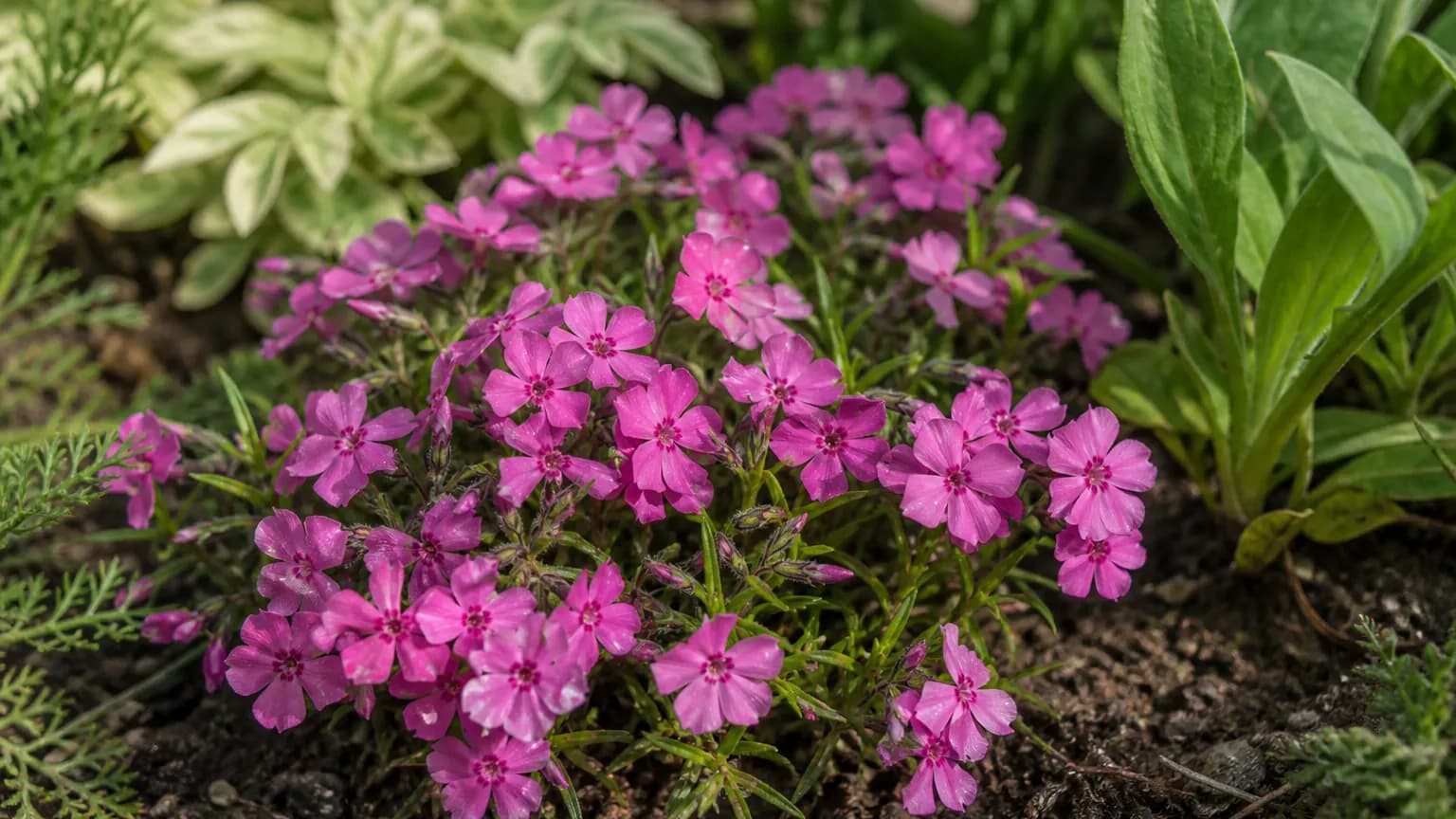
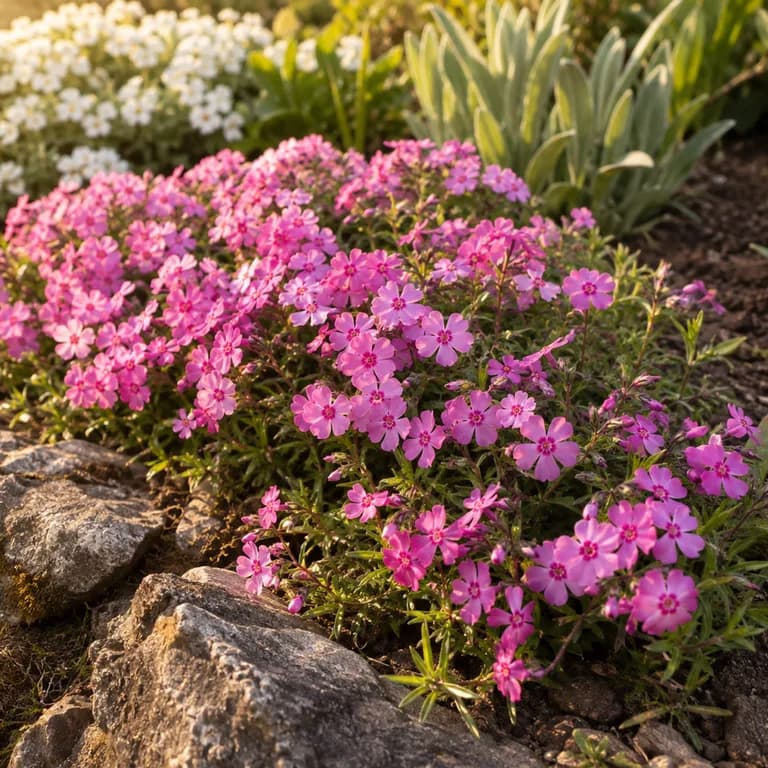
An evergreen creeping perennial whose mossy, needle-like foliage is completely smothered by a sheet of starry pink, lavender-blue, or white flowers for two to three weeks in mid-spring.





On this pageOverview
Meet Moss Phlox
An evergreen creeping perennial whose mossy, needle-like foliage is completely smothered by a sheet of starry pink, lavender-blue, or white flowers for two to three weeks in mid-spring. Depending on the region it is known as Creeping Phlox, Moss Pink, Ground Pink, Mountain Pink, Flowering Moss, or Rock Phlox, names that capture both its moss-like mats and its love of rocky, sharply drained ground. Plants stay just 10-15cm tall but spread 30-60cm wide, making Moss Phlox a classic ground cover for rock gardens, slopes, retaining walls, and border fronts. Grow it in full sun in lean, gritty soil and shear the mats back by half right after flowering to keep them dense and floriferous for decades.
When to plant Moss Phlox
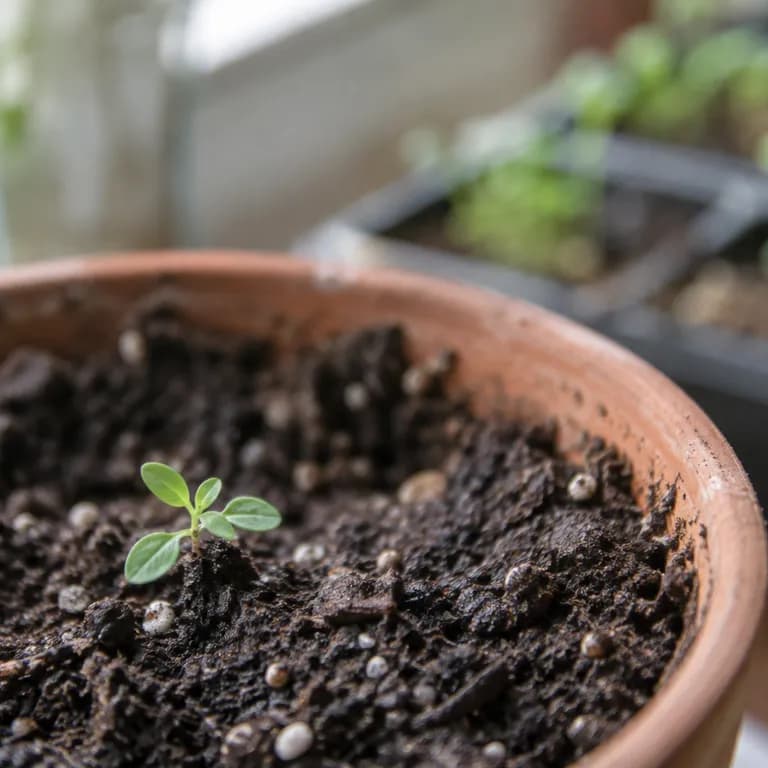
Division and cuttings are far easier than seed, but Moss Phlox can be raised from seed with patience. The seed needs four to six weeks of cold, moist stratification—mix it with damp sand and refrigerate before sowing. Sow indoors six to eight weeks before the last frost, barely covering the seed, and keep at 18-21C; germination is erratic, typically taking ten to thirty days with around six in ten seeds sprouting. Prick seedlings into individual pots and grow on in bright light, hardening off for a week before planting out after frost. Seedlings take two to three years to reach flowering size, and seed-raised plants vary in flower color. Alternatively, direct sow in late autumn and let winter provide the stratification naturally. Named cultivars such as 'Emerald Blue' must be propagated vegetatively to stay true to type.
Your Moss Phlox Year
Composed for Zone 7 · typical seasons · frost passes Apr 2, returns Nov 1
Plant Moss Phlox Jan – Apr, Sep – Nov, pick Apr – May. Check the planting methods below and set your climate to personalize these windows.
How to grow Moss Phlox
Moss Phlox (Phlox subulata) is a low, mat-forming perennial native to the dry rocky slopes, ledges, and sandy barrens of eastern North America. Its slender stems are clothed in awl-shaped evergreen leaves—subulata means awl-shaped—that build a dense, moss-like cushion 10-15cm tall. For two to three weeks in April and May the foliage vanishes beneath thousands of five-petaled flowers in pink, magenta, lavender-blue, or white, a spring spectacle that rivals any bulb display. Hardy in USDA zones 3-9, a single plant spreads 30-60cm and knits with its neighbors into a seamless flowering carpet.
Success depends almost entirely on drainage and sun. Plant in full sun—at least six hours daily—in average to lean, sharply drained soil; sandy, gravelly, or rocky ground is ideal, and the plant tolerates both slightly acidic and alkaline conditions. Wet, heavy clay, especially in winter, is the one condition Moss Phlox will not forgive. Space plants 30cm apart so they grow together within one to two seasons. Water new plantings weekly during their first growing season, then reserve irrigation for droughts of three weeks or more; established mats are remarkably drought-tolerant. Skip rich compost and high-nitrogen feeding, which produce loose, leafy growth with few flowers.
Pruning is simple but essential: within two weeks of the bloom finishing, shear the entire mat back by about half using hedge shears or a string trimmer. This removes the spent flowers, eliminates the straggly brown stems that mats develop if left untouched, and stimulates a flush of dense fresh growth that often carries a light scatter of rebloom in late summer. Every three to four years, or whenever the center of a clump turns woody and dies out, lift the vigorous outer sections with a spade or fork in early spring or September and replant them 30cm apart. Mulch with a thin layer of gravel rather than bark, which traps moisture against the crowns and invites rot.
32 plants fit a 4 × 8 ft bed
Each Moss Phlox wants 30 cm of elbow room. The planner keeps that spacing for you — every plant, every bed.
Moss Phlox's best neighbours
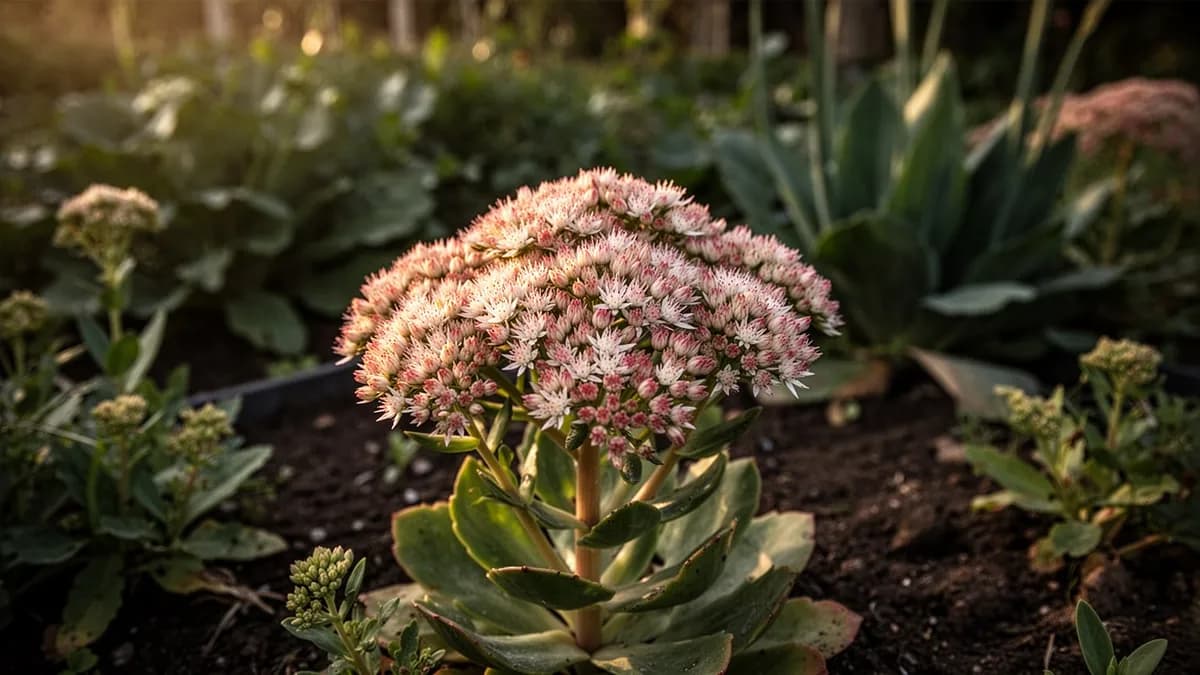
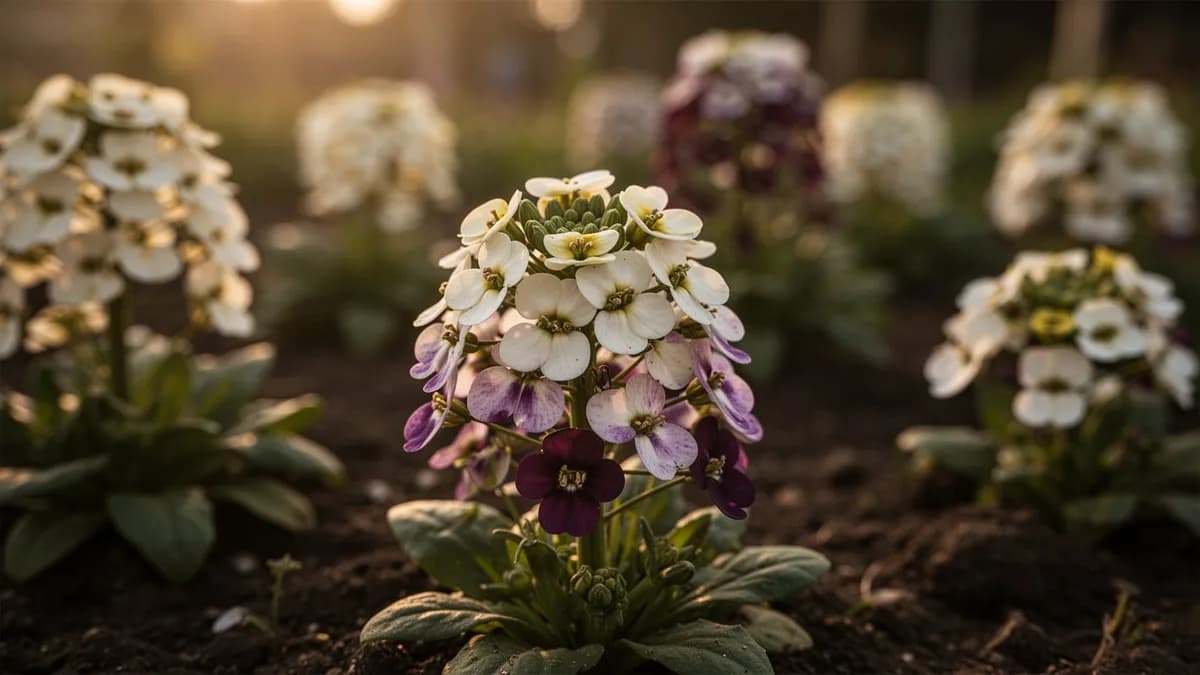
Moss Phlox shares its tastes—full sun, lean soil, and modest water—with sedum, alyssum, and dianthus, and the four knit together into a classic, low-maintenance sun carpet: phlox sheets the ground in April and May, alyssum and dianthus carry color into summer, and sedum takes over from late summer into fall. Spring bulbs are natural partners, as daffodils, species tulips, and grape hyacinths flower through the mat while the phlox foliage discreetly covers their dying leaves. It also spills beautifully over retaining walls and between stepping stones alongside dwarf iris, thyme, and low ornamental grasses. Avoid crowding it against aggressive spreaders or lush, frequently irrigated border perennials—the rich, moist conditions they enjoy are exactly what Moss Phlox dislikes.
Sedum belongs beside it.
Old growers' knowledge, checked against Moss Phlox's real companion table below — test any plant you're growing.
Try Moss Phlox in a bed — right here
A real planner bed with Moss Phlox already in it. Tap a companion to place it and watch the pairing checks answer — green for good neighbours, red for a clash.


Related growing guides
Feed it well
Moss Phlox thrives in average to lean, sharply drained soil—sandy, gravelly, or rocky ground suits it perfectly—and it tolerates a wide pH range from about 5.5 to 8.0, including alkaline limestone soils. Avoid rich, heavily amended beds: excessive fertility, especially nitrogen, produces loose, leafy mats with sparse bloom and invites powdery mildew. In clay soils, plant on a slope or in a raised bed and work coarse grit or fine gravel into the top 15-20cm rather than adding compost. Feeding is rarely necessary; if growth looks weak in spring, a light dusting of a balanced slow-release fertilizer as growth begins is sufficient. A thin gravel mulch keeps crowns dry, suppresses weeds until the mat closes, and sets off the flowers beautifully.
Ideal Temperature
Hardiness Zone Compatibility
From seed to harvest, stage by stage
Propagation and Rooting
Moss Phlox is most often started from nursery plugs, divisions, or softwood cuttings rather than seed. Five to eight centimeter cuttings taken in late spring root within two to three weeks in a gritty medium, while divisions of the mat's vigorous outer edge are the fastest route of all. Seed needs four to six weeks of cold stratification and sprouts erratically over ten to thirty days.
Establishment Phase
Newly set plants push fresh green growth tips from the stem ends while the shallow, fibrous root system spreads outward through the top layer of soil. Growth looks modest above ground in the first weeks because the plant is investing in roots; by the end of the phase the stems begin to lengthen and branch in earnest.
Bud Formation and Spring Bloom
Flower buds cluster at the stem tips in early spring and open over a few days into a solid sheet of five-petaled blossoms in pink, magenta, lavender-blue, or white. Peak bloom lasts two to three weeks, typically April into May, and the flowers draw early butterflies and hummingbird moths at a time when little else is in flower.
Post-Bloom Vegetative Spread
Once flowering finishes, the plant puts its energy into vegetative growth: stems lengthen, branch, and root where they touch moist soil, thickening the mat and expanding it outward at up to 30-60cm per year. This is also the moment for the most important maintenance task of the year—the annual shear.
Autumn Root Growth
Cooler days slow top growth, but the roots keep expanding well into autumn, which makes September an excellent month to plant, transplant, and divide. The evergreen foliage holds green to bronze-green, and the plant sets next spring's flower buds at the stem tips.
Winter Evergreen Dormancy
Moss Phlox is semi-evergreen to evergreen, holding its mossy mats through winter in zones 3-9, though the foliage often bronzes or turns purplish in hard weather. The plant is fully hardy to about minus 40C, but winter wet at the crowns—not cold—is what kills it.
Root cuttings in a half-sand, half-compost mix kept barely moist in bright shade, and pot them up once new growth appears. Harden off nursery plants outdoors for a week, then plant at the same depth they grew in the pot, 30cm apart, into weed-free ground.
Caring for Moss Phlox month by month
What to do each month for your Moss Phlox
September
You are hereThe best month to plant, move, and divide moss phlox—about six weeks before hard frost. Lift mats whose centers have died out, replant the vigorous outer sections 30cm apart, and water them in well.
Know exactly what to do in your garden — every month
One email at the start of each month: what to sow, plant, and tackle right now — for your Moss Phlox and everything growing around it. Plus a short starter course that helps you dodge the classic mistakes.
- What to do, right now
- Matched to your season
- Starter course included
Harvesting Moss Phlox
The real harvest of Moss Phlox is its spring flower show, but the short flowering stems also cut well for miniature posies and low table arrangements. Cut 8-12cm sprigs in the cool of early morning when about half the buds on each stem have opened, and condition them in cool water for several hours before arranging; they last four to six days in a vase. Once the display fades, give the whole mat its annual working over: shear everything back by half to remove the spent flower stems before they turn brown and shabby. The trimmings compost readily, and the mat answers with a dense cushion of fresh growth within a few weeks.
assuming you plant when the window opens — set your real date
Pick Moss Phlox promptly and the plant keeps producing.
What goes wrong — and the fix
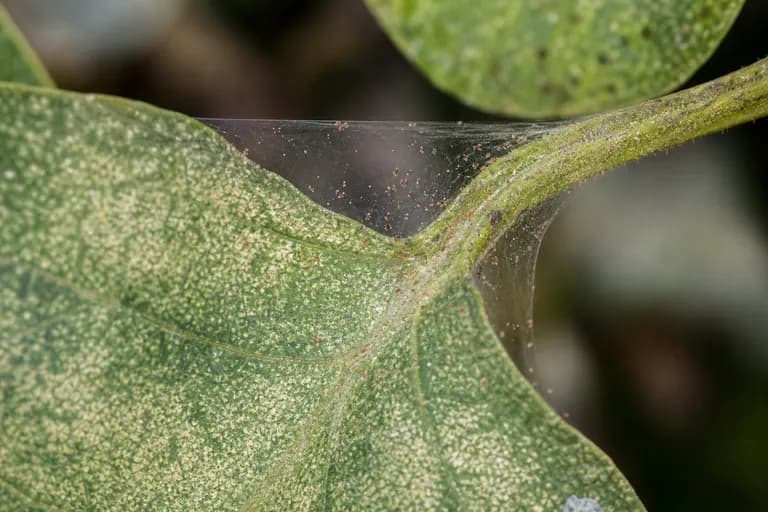
Spider Mites
PestFine pale stippling on the foliage that progresses to dull, bronzed, scorched-looking patches, with fine silk webbing between stems during hot, dry weather.
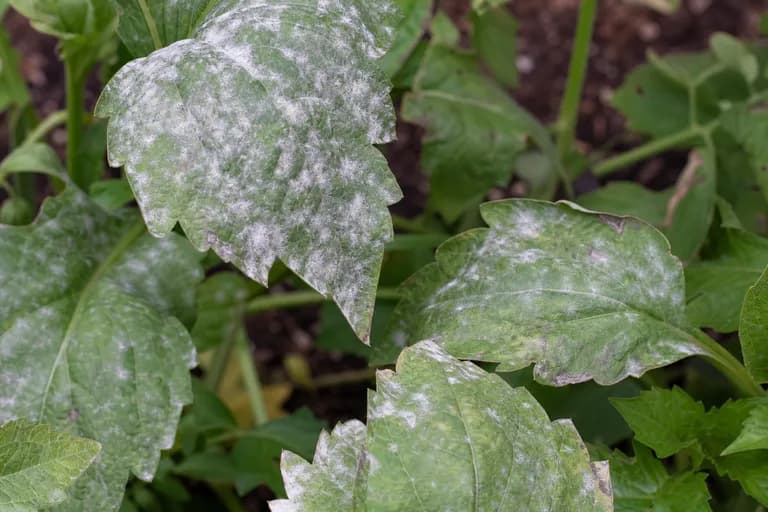
Powdery Mildew
DiseaseA white, floury coating on leaves and stems appearing in late summer, usually during warm, humid spells. Far less troublesome here than on tall garden phlox.
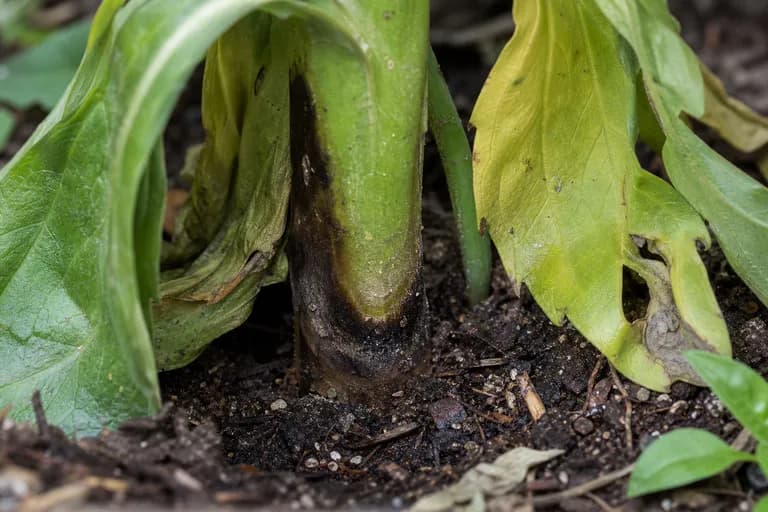
Crown Rot
DiseaseSections of the mat—often the center—yellow, brown, and die out, with stems soft and dark at the base. Worst in heavy, wet soil and during damp winters.
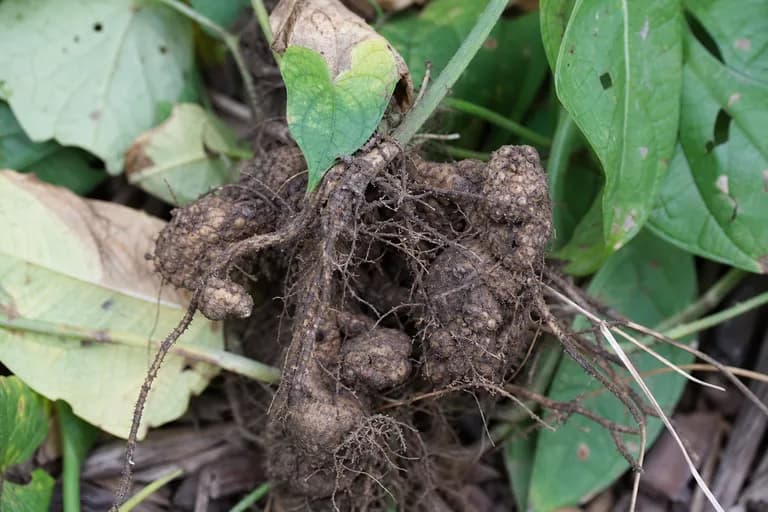
Stem Nematodes
PestShoot tips become swollen, twisted, and stunted with distorted leaves, and infested patches decline in irregular, slowly spreading areas.
Troubleshooting Common Problems
The most frequent complaint is a brown, dead center in an older mat—usually simple aging of the woody interior, sometimes crown rot in wet soil; lift, divide, and replant the vigorous outer sections to renew it. Sparse flowering almost always traces to too much shade, too-rich soil, or skipping the annual post-bloom shearing. Straggly mats with bare, woody stems and tufted ends have simply gone years without being cut back; shear them hard right after bloom to reset. In hot, dry summers spider mites can bronze the foliage, and in humid regions powdery mildew may appear in late summer, though neither is usually fatal. Winter wind scorch—bronzed, burned patches—occurs on exposed sites in zones 3-4 when snow cover is lacking; plants nearly always grow out of it by late spring.
Growing Tips
- Plant Moss Phlox in the sharpest-draining spot you have—a slope, raised bed, wall top, or gravel garden. Crown rot in wet winter soil kills more plants than cold ever will.
- Give it full sun: six hours or more of direct light. In shade the mats grow loose and open, and the famous sheet of bloom thins to a scattered few flowers.
- Shear the whole mat back by half within two weeks of the bloom finishing. This single annual habit keeps the cushions dense, removes shabby spent stems, and often brings a light second flush in late summer.
- Keep the soil lean. Rich compost and high-nitrogen fertilizer push soft, leafy growth with few flowers and make powdery mildew far more likely.
- Space plants 30cm apart; they knit into a seamless carpet in one to two seasons. Underplant with daffodils, species tulips, or grape hyacinths that flower through the mat before the phlox takes over.
- Water weekly through the first growing season, then step back—established mats need irrigation only after three or more weeks without rain. Deep, infrequent watering beats frequent sprinkling.
- Divide every three to four years, or whenever the center of the mat turns woody and dies out. Discard the dead middle and replant the vigorous outer sections 30cm apart.
- Mulch with a thin layer of gravel or grit, never bark or leaves, which trap moisture against the crowns and invite rot. Gravel also keeps the needle foliage clean and shows off the flowers.
- In humid climates, give mats open air flow and avoid overhead watering to keep powdery mildew from gaining a foothold in late summer.
- Plant two or three cultivars together—'Emerald Blue' beside 'Snowflake' and 'Scarlet Flame', for example—for a striped or patchwork carpet effect in spring.
Grow your best Moss Phlox yet — and everything around it.
Start a free plan today. Lay out your beds, drop in your Moss Phlox, and let PlotMyGarden handle the timing, spacing, companions and reminders from seed to harvest basket.
Pick your Moss Phlox
Phlox subulata 'Emerald Blue'
Low cushions of emerald-green foliage covered in lavender-blue flowers; one of the most widely planted cultivars, spreading 30-45cm and blooming heavily in April and May.
Phlox subulata 'Candy Stripe'
White flowers boldly striped with pink, like a candy cane; a compact, free-flowering mat that reads pink-and-white from a few paces away.
Phlox subulata 'Scarlet Flame'
Intense rosy-red, star-shaped flowers over creeping, needle-like evergreen foliage; one of the strongest reds available in the species.
Phlox subulata 'Snowflake'
Pure white starry flowers that sheet the mat like a late snowfall; excellent for cooling hot color schemes and pairing with darker cultivars.
Phlox subulata 'Amazing Grace'
White flowers with a deep pink to red central eye, giving a striking two-tone effect; vigorous and notably floriferous.
Phlox subulata 'Emerald Pink'
Clear pink blooms over dense emerald cushions; a reliable, fast-spreading choice for banks, walls, and rock garden pockets.
Where Moss Phlox comes from
Moss Phlox belongs to a genus of about sixty species, nearly all of them native to North America. Phlox subulata itself grows wild across eastern North America, from the sandy pine barrens of the Atlantic coastal plain to the rocky slopes and shale outcrops of the Appalachian Mountains, thriving in thin, fast-draining soils where few competitors can keep pace. Early settlers knew it as a familiar spring wildflower of dry banks and open woods, and its sheets of bloom remain a celebrated sight in Appalachian wildflower country each April.
European gardeners took up the plant soon after Carl Linnaeus formally described it in his Species Plantarum of 1753. By the nineteenth century it had become indispensable in the new fashion for rock gardens and alpine plantings, valued for clothing stone and gravel with sheets of color at the very start of the gardening year. Twentieth-century nurseries selected the compact, intensely colored forms grown today, among them lavender-blue 'Emerald Blue', striped 'Candy Stripe', deep red 'Scarlet Flame', and pure white 'Snowflake'.
Today Moss Phlox is one of the most widely planted ground covers in temperate gardens worldwide. Its drought tolerance, evergreen cover, and ability to stabilize soil have made it a standard for slopes, green roofs, retaining walls, and gravel gardens, while the native plant movement has given it fresh prominence as an ecologically valuable early-season nectar source. Few perennials ask so little and return so much.
Moss Phlox: did you know?
Fascinating facts about Moss Phlox
The genus name Phlox comes from the Greek word for flame, while subulata means awl-shaped—a nod to the narrow, needle-like evergreen leaves that give the plant its mossy look.
Moss Phlox questions, answered
When should I plant Moss Phlox?
What are good companion plants for Moss Phlox?
What hardiness zones can Moss Phlox grow in?
How much sun does Moss Phlox need?
How far apart should I space Moss Phlox?
What pests and diseases affect Moss Phlox?
What are the best Moss Phlox varieties to grow?
What soil does Moss Phlox need?
Is moss phlox the same as garden phlox?
Why is the center of my moss phlox dying out?
Should I cut back moss phlox after it blooms?
Why is my moss phlox not blooming well?
Is moss phlox deer resistant?
Can I grow moss phlox on a slope or over a wall?
You just read the theory. Now grow it on autopilot.
Everything that makes Moss Phlox fiddly — the timing, the spacing, the companions, the harvest window — is exactly what PlotMyGarden handles for you, for every plant in your garden.
A plan that knows your weather
Set your location once. Get sow, feed and harvest dates built around your real last-frost date and live forecast — no more guessing from a generic seed packet.
From the “When to plant” sectionDrag-and-drop bed planner
Design beds on a grid. Every plant snaps to its proper spacing, and you can see your whole season laid out before you spend a cent on seed.
From the “Growing guide” sectionCompanion conflicts, caught early
200+ good-and-bad pairings checked live as you plant — so a season-wrecking mistake never makes it into the ground.
From the “Companions” sectionReminders you'll actually act on
“Water the beans.” “Pick today before it turns.” Timely, specific, and tied to the plants you're really growing.
From the “Harvest” sectionSuccession, scheduled
Want a harvest for six weeks, not six days? It spaces your sowings automatically and reminds you when each new block is due.
From the “When to plant” sectionA record that gets smarter
Every harvest you log teaches it your garden. Next year's plan starts from what actually worked in your soil, not a textbook's.
From the “Overview” sectionPlant these alongside Moss Phlox
More Perennials
Grow your best Moss Phlox yet — and everything around it.
Start a free plan today. Lay out your beds, drop in your Moss Phlox, and let PlotMyGarden handle the timing, spacing, companions and reminders from seed to harvest basket.