Moringa
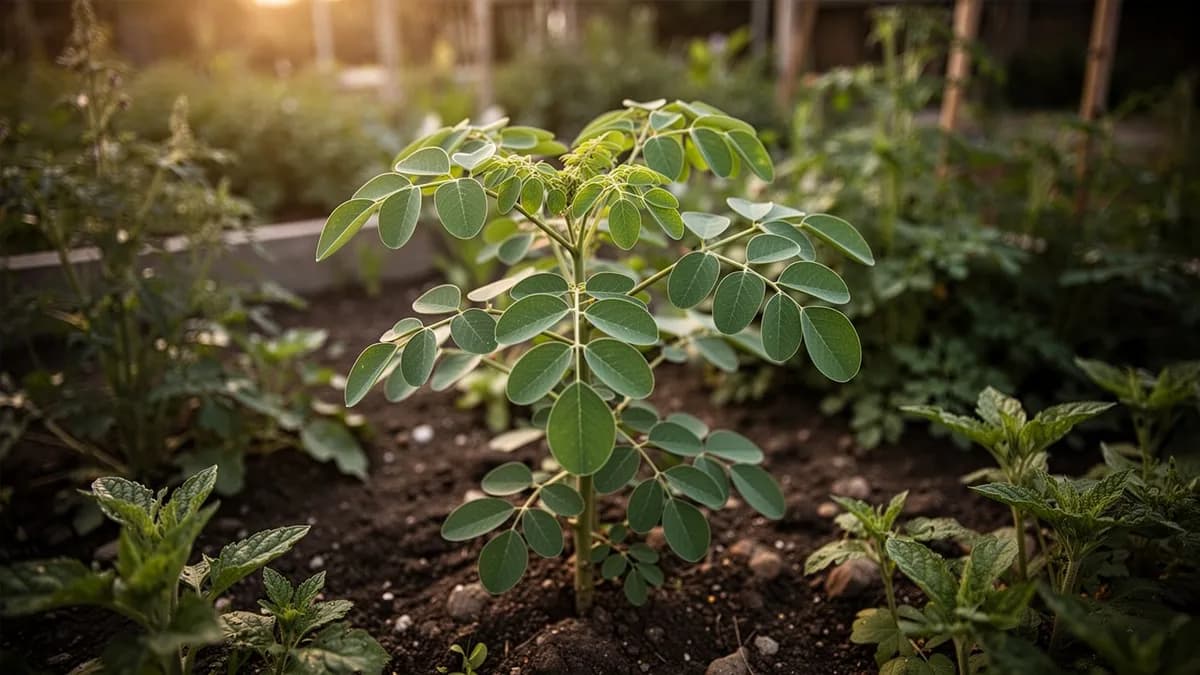
Ein schnell wachsender tropischer Baum, der wegen seiner außergewöhnlich nährstoffreichen Blätter als Wunderbaum bezeichnet wird und für Tees, Smoothies und zum Kochen verwendet wird.





Auf dieser SeiteÜberblick
Moringa im Überblick
Ein schnell wachsender tropischer Baum, der wegen seiner außergewöhnlich nährstoffreichen Blätter als Wunderbaum bezeichnet wird und für Tees, Smoothies und zum Kochen verwendet wird. Moringa-Blätter enthalten mehr Vitamin C als Orangen, mehr Kalzium als Milch und mehr Eisen als Spinat pro Gewicht. Anbau in warmen Klimazonen bei voller Sonne und gut durchlässigem Boden, mit kräftigem Rückschnitt zur Erhaltung einer erntbaren Höhe.
Wann Moringa pflanzen
Moringa ist bemerkenswert einfach aus Samen zu ziehen und keimt in 5–10 Tagen ohne besondere Behandlung. Säen Sie Samen 2 cm tief in warme, feuchte Anzuchterde bei 25–30 °C. Samen können direkt an ihren endgültigen Standort gesät werden, sobald der Boden gründlich erwärmt ist. Für einen frühen Start in gemäßigten Klimazonen säen Sie 4–6 Wochen vor dem letzten Frost drinnen in tiefe Töpfe, da sich die Pfahlwurzel schnell entwickelt. Pflanzen Sie vorsichtig um, ohne das Wurzelsystem zu stören. Moringa kann auch durch Hartholzstecklinge von 1–2 m Länge vermehrt werden, die direkt in den Boden gesteckt werden – diese etablieren sich und produzieren Blätter schneller als Sämlinge.
Dein Moringa-Jahr
Abgestimmt auf Zone 7 · typische Saison · Frost geht um den 2. Apr. und kehrt um den 1. Nov. zurück
Säe Moringa Apr – Jun, ernte Jan – Dez. Stell unten dein Klima ein und jedes Datum auf dieser Tafel passt sich an.
So baust du Moringa an
Moringa oleifera, oft als Trommelstockbaum oder Wunderbaum bezeichnet, ist eine schnell wachsende tropische Art, die in den Ausläufern des Himalaya beheimatet ist und weltweit wegen ihres außergewöhnlichen Nährwerts kultiviert wird. Unter idealen Bedingungen kann Moringa im ersten Jahr 3–5 Meter wachsen und gehört damit zu den am schnellsten wachsenden Bäumen der Erde. Er gedeiht in heißen, trockenen Klimazonen und ist nach der Etablierung bemerkenswert trockenheitstolerant.
Pflanzen Sie an einem vollsonnigen Standort in gut durchlässigem Boden, nachdem jegliche Frostgefahr vorüber ist. Moringa toleriert arme, sandige Böden, wächst aber am schnellsten in fruchtbaren, lehmigen Verhältnissen. Vermeiden Sie staunasse Bereiche – die fleischige Pfahlwurzel des Baumes fault in stehendem Wasser. In gemäßigten Klimazonen kann Moringa als einjährige Pflanze oder in einem großen Kübel kultiviert werden, der in einem warmen Gewächshaus überwintert werden kann, da jeglicher Frost ihn abtötet.
Der Schlüssel zur produktiven Nutzung von Moringa als Kräutergartenpflanze ist ein konsequenter Rückschnitt. Ohne Schnitt wird er schnell zu einem schlanken Baum mit Blättern, die zu hoch zum Erreichen sind. Schneiden Sie den Hauptstamm auf 1–1,5 Meter zurück, wenn er 2 Meter erreicht, und schneiden Sie den Neuaustrieb regelmäßig weiter zurück. Dies erzwingt Verzweigung und hält das Laub in leicht erntbarer Reichweite. Der Baum wächst nach dem Schnitt schnell nach und produziert während der warmen Jahreszeit kontinuierlich zarte, nährstoffreiche Blätter.
2 Pflanzen passen in ein Beet von 120 × 240 cm
Moringa braucht 120 cm Platz pro Pflanze. Der Planer hält diesen Abstand für dich ein — jede Pflanze, jedes Beet.
Passende Anbau-Ratgeber
Richtig düngen
Moringa ist bekanntermaßen anspruchslos hinsichtlich der Bodenqualität und wächst in armen, sandigen oder steinigen Böden, wo nur wenige andere Nutzpflanzen gedeihen. Für maximale Blattproduktion bieten Sie jedoch fruchtbaren, gut durchlässigen Lehm mit einem pH-Wert von 6,0–7,5. Arbeiten Sie vor der Pflanzung Kompost ein und mulchen Sie jährlich nach. Vermeiden Sie schwere Tonböden, die Wasser um die Wurzeln stauen. Füttern Sie Kübelpflanzen während der Wachstumsperiode alle zwei Wochen mit einem ausgewogenen Flüssigdünger. Im Boden stehende Bäume in fruchtbarem Boden benötigen nach dem ersten Jahr selten zusätzliche Düngung.
Ideale Temperatur
Winterhärtezone-Kompatibilität
Von der Saat zur Ernte, Schritt für Schritt
Samenkeimung
Moringa-Samen keimen schnell, oft innerhalb von 5–12 Tagen, wenn sie 2 cm tief in warmen, feuchten Boden gepflanzt werden. Das Einweichen der Samen über Nacht in lauwarmem Wasser beschleunigt die Keimung erheblich. Samen können auch in Töpfen gestartet und nach der Etablierung umgepflanzt werden. Die Bodentemperatur sollte für eine zuverlässige Keimung mindestens 20 °C betragen.
Sämlings-Etablierung
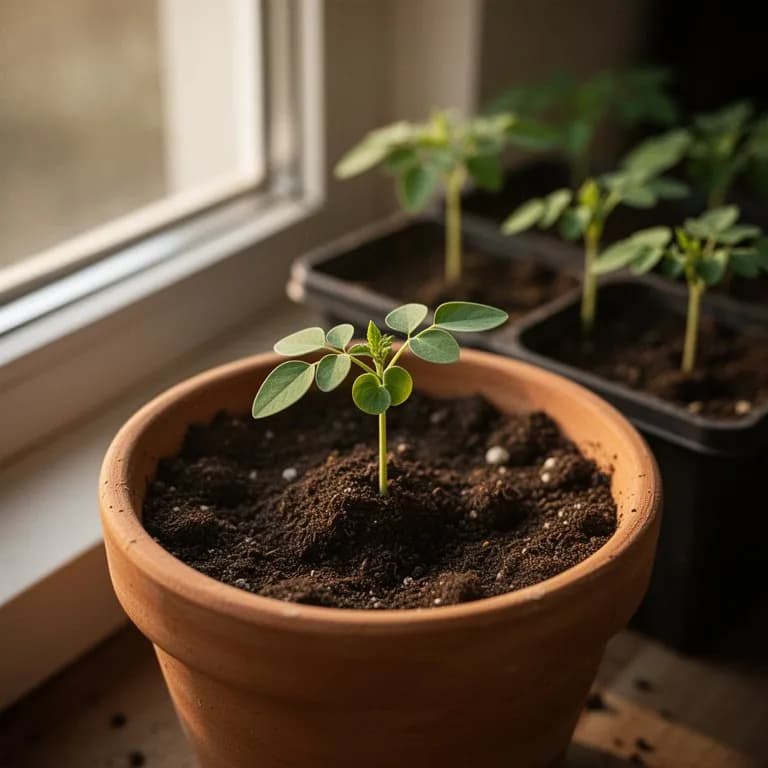
Sämlinge entwickeln ihre ersten Sätze zarter gefiederter Blätter und wachsen schnell, wobei sie oft innerhalb des ersten Monats 30–60 cm erreichen. Die Pfahlwurzel etabliert sich rasch, verankert die Pflanze und sucht Feuchtigkeit tief im Boden. Die Stämme sind in diesem Stadium weich und krautig.
Schnelles vegetatives Wachstum
Moringa tritt in eine explosive Wachstumsphase ein und kann unter idealen Bedingungen im ersten Jahr 3–5 Meter wachsen. Der Stamm verdickt sich und die Äste breiten sich aus. Die Blätter werden größer und zahlreicher, und die Pflanze beginnt, ihre charakteristische offene, luftige Krone zu entwickeln. In dieser Phase sollte mit dem regelmäßigen Schnitt begonnen werden, um Buschigkeit zu fördern.
Erste Blüte
Unter tropischen Bedingungen kann Moringa innerhalb von 6–8 Monaten nach der Aussaat blühen. Büschel duftender, cremig-weißer Blüten erscheinen an den Astspitzen und Blattachseln. Jede Blüte hat fünf Blütenblätter und produziert reichlich Nektar, der Bienen, Schmetterlinge und Kolibris anlockt. Die Blüten sind essbar und haben einen milden, leicht süßen Geschmack.
Schotenentwicklung
Nach der Bestäubung entwickeln sich lange, schlanke grüne Schoten, die 30–60 cm lang werden können. Diese Trommelstockschoten enthalten Reihen runder Samen, umgeben von zartem, essbarem Fruchtfleisch. Die Schoten reifen über mehrere Wochen und werden am besten geerntet, solange sie noch grün und zart sind, bevor die Außenschale faserig und holzig wird.
Ausgereifte Produktion
Ein gut etablierter Moringa-Baum erreicht seine volle Produktionskapazität und liefert reichlich Blätter, Blüten und Schoten während der gesamten warmen Jahreszeit. In tropischen Klimazonen setzt sich die Produktion ganzjährig fort. Der Baum entwickelt eine korkige Rinde und einen robusten Stamm. Bei regelmäßigem Schnitt behält der Baum eine handliche Höhe von 2–4 Metern und produziert dichtes, buschiges Laub, das ideal für häufige Blattternten ist.
Halten Sie den Boden während der Keimung gleichmäßig feucht, aber nicht staunass. Säen Sie Samen in tropischen Klimazonen direkt im Freien oder beginnen Sie in gemäßigten Zonen 6–8 Wochen vor dem letzten Frost drinnen.
Moringa Monat für Monat pflegen
Was du jeden Monat für deine Moringa tun solltest
August
Aktueller MonatKeine spezifischen Pflegeaufgaben für diesen Monat.
Immer wissen, was jetzt im Garten zu tun ist
Eine E-Mail zum Monatsanfang: was du jetzt säen, pflanzen und anpacken solltest — für deine Moringa und alles, was drumherum wächst. Dazu ein kurzer Startkurs, der dich vor den klassischen Fehlern bewahrt.
- Was jetzt zu tun ist
- Passend zu deiner Saison
- Startkurs inklusive
Moringa ernten
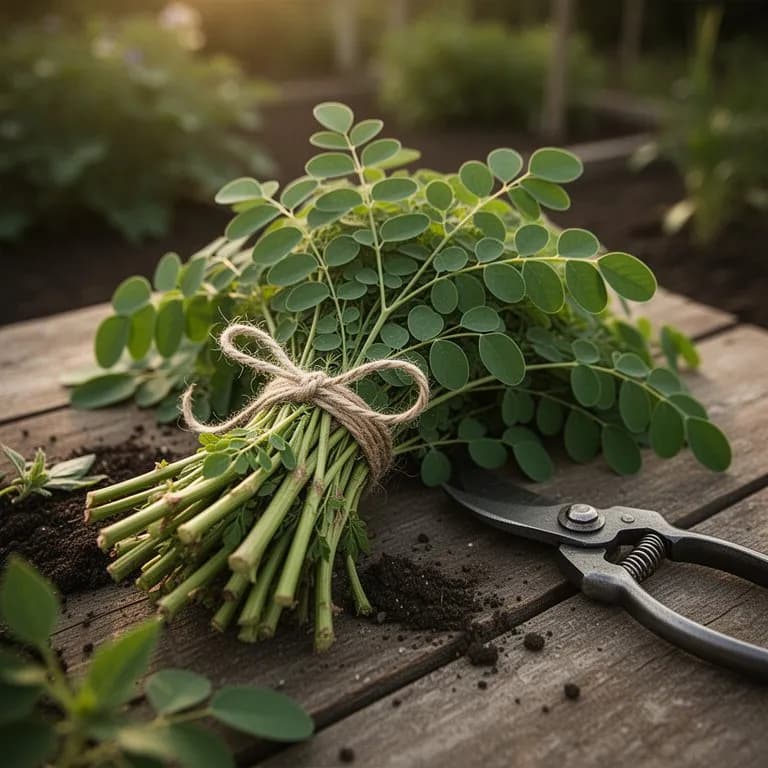
Beginnen Sie mit der Ernte der Moringa-Blätter, sobald der Baum gut etabliert ist und mehrere Äste hat, typischerweise 2–3 Monate nach der Pflanzung. Pflücken Sie regelmäßig einzelne gefiederte Blätter oder schneiden Sie zarte Triebspitzen, um die weitere Verzweigung zu fördern. Die Blätter sind am nährstoffreichsten, wenn sie jung und zart sind – ältere Blätter werden zäher und leicht bitter. Für große Ernten schneiden Sie ganze Äste um ein Drittel zurück und streifen die Fiederblättchen von den Stielen ab. Moringa produziert in tropischen Klimazonen ganzjährig und in warm-gemäßigten Zonen während des gesamten Sommers.
angenommen, du säst, sobald das Aussaatfenster öffnet — trag dein echtes Datum ein
Ernte Moringa zügig, dann trägt die Pflanze weiter.
Lagerung & Konservierung
Frische Moringa-Blätter welken schnell und sollten innerhalb von 2–3 Tagen nach der Ernte verbraucht werden, wenn sie im Kühlschrank aufbewahrt werden. Zur Langzeitkonservierung trocknen Sie die Blätter im Schatten oder in einem Dörrgerät bei 40–50 °C – vermeiden Sie direkte Sonneneinstrahlung, die Nährstoffe und Farbe abbaut. Streifen Sie getrocknete Fiederblättchen von den Stielen und zerkleinern oder pulverisieren Sie sie in einem Mixer. Lagern Sie Moringa-Pulver in luftdichten, lichtundurchlässigen Behältern fern von Hitze und Licht. Richtig getrocknetes und gelagertes Moringa-Pulver behält seinen Nährwert 6–12 Monate lang. Blätter können auch blanchiert und eingefroren werden, um sie Smoothies und gekochten Gerichten hinzuzufügen.
Was schiefgeht — und die Lösung
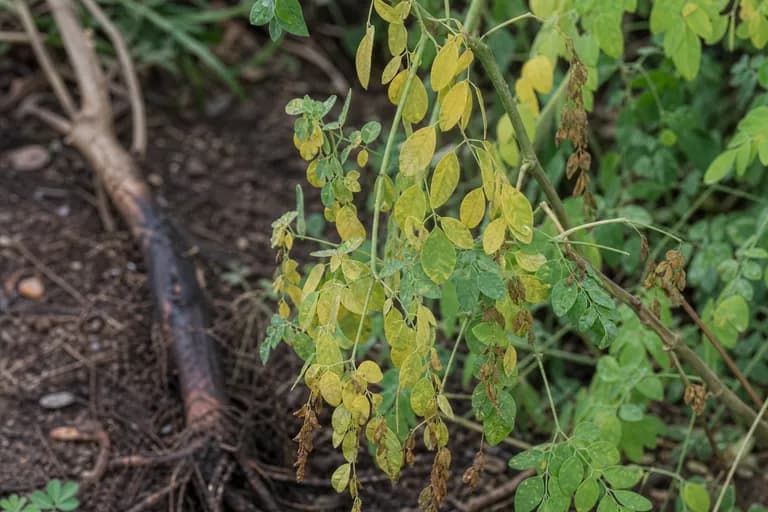
Diplodia-Wurzelfäule
KrankheitWelken und Vergilben des Laubs trotz ausreichender Bewässerung, gefolgt von Aststerben. Wurzeln erscheinen beim Freilegen dunkel und verfault.
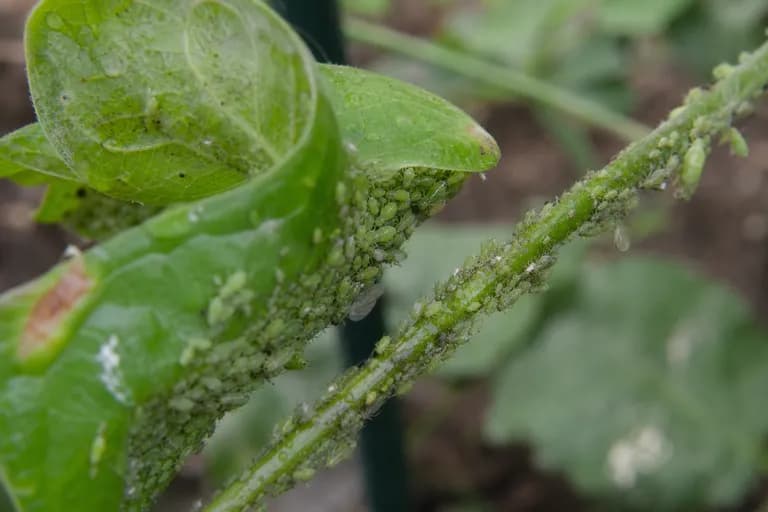
Blattläuse
SchädlingAnsammlungen kleiner grüner oder schwarzer Insekten an Neutrieben und Blattunterseiten. Eingerollte junge Blätter und klebriger Honigtau-Rückstand.
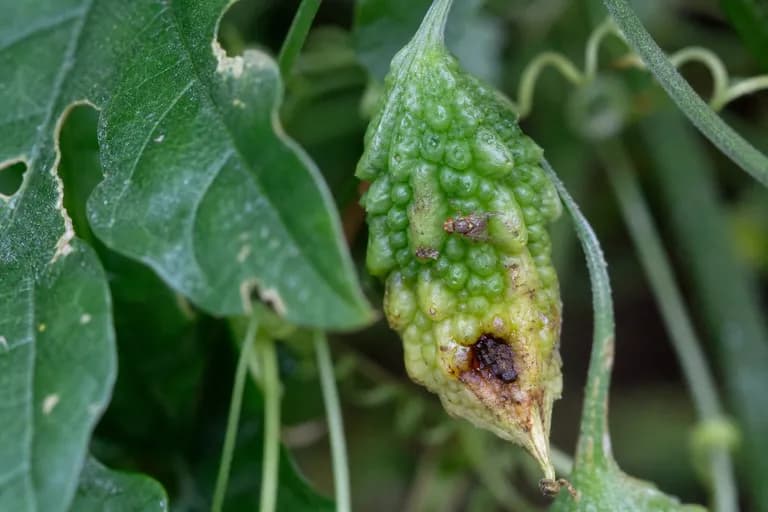
Fruchtfliege
SchädlingMaden in Samenschoten, die vorzeitiges Abfallen und Faulen verursachen. Kleine Einstichstellen an sich entwickelnden Schoten, an denen Eier abgelegt wurden.
Fehlerbehebung bei häufigen Problemen
Frostempfindlichkeit ist die Haupteinschränkung – Moringa wird selbst bei leichtem Frost bis zum Boden abgetötet und kann längere Frostperioden nicht überleben. In gemäßigten Klimazonen behandeln Sie ihn als einjährige Pflanze und ziehen jeden Frühling neue Pflanzen aus Samen, die in nur 5–10 Tagen keimen. Überwässerung ist die häufigste Todesursache, besonders in Kübeln – die fleischigen Wurzeln faulen schnell in staunassem Boden. Langes, unverzweigtes Wachstum resultiert aus unzureichendem Schnitt; schneiden Sie regelmäßig und kräftig zurück, um eine buschige Form und erreichbare Blätter zu erhalten.
Anbautipps
- Weichen Sie Moringa-Samen 12–24 Stunden in lauwarmem Wasser ein, bevor Sie sie pflanzen, um die harte Samenschale aufzuweichen und die Keimung um mehrere Tage zu beschleunigen. Pflanzen Sie Samen 2 cm tief in warmen, feuchten Boden bei Temperaturen über 20 °C.
- Wählen Sie den sonnigsten Platz in Ihrem Garten mit mindestens 6–8 Stunden direkter Sonneneinstrahlung. Moringa hat sich unter tropischen Bedingungen entwickelt und produziert im Schatten oder Halbschatten nicht gut.
- Pflanzen Sie in sandigen, gut durchlässigen Boden. Moringas Pfahlwurzel ist sehr anfällig für Fäulnis in staunassem oder schwerem Tonboden. Verbessern Sie Tonböden großzügig mit Sand und Kompost oder pflanzen Sie in Hochbeete für bessere Drainage.
- Kneifen oder schneiden Sie die Haupttriebspitze, wenn Ihre Moringa 60–90 cm groß ist, um seitliche Verzweigung zu erzwingen. Wiederholen Sie dies alle paar Wochen mit neuen Astspitzen, um eine buschige, mehrstämmige Pflanze zu schaffen, die weit mehr erntbare Blätter produziert.
- Gießen Sie während Trockenperioden einmal wöchentlich tief, aber vermeiden Sie Überwässerung. Moringa ist nach der Etablierung bemerkenswert trockenheitstolerant, und zu viel Feuchtigkeit ist die häufigste Ursache für Misserfolg. Lassen Sie den Boden zwischen den Bewässerungen abtrocknen.
- In gemäßigten Klimazonen kultivieren Sie Moringa in großen Kübeln (mindestens 40–50 Liter), damit die Pflanze vor dem ersten Frost ins Haus gebracht werden kann. Schneiden Sie vor dem Einräumen auf 60 cm zurück und stellen Sie sie an ein helles, nach Süden ausgerichtetes Fenster.
- Ernten Sie Blätter häufig, indem Sie zarte Astspitzen von 30–45 cm Länge schneiden. Diese Kappungstechnik stimuliert kräftigen Neuaustrieb und hält den Baum auf einer handhabbaren Höhe. Streifen Sie niemals alle Blätter von einem einzelnen Ast auf einmal ab.
- Moringa benötigt sehr wenig Dünger. Eine leichte Gabe von ausgewogenem Kompost oder abgelagertem Mist einmal zu Beginn der Wachstumsperiode ist ausreichend. Übermäßiger Stickstoff fördert schwaches, spargelig wachsendes Wachstum auf Kosten der Blattdichte.
- Schützen Sie junge Sämlinge vor starkem Wind, der die weichen Stämme brechen kann. Verwenden Sie Stützstäbe oder einen Windschutz, bis der Stamm einen Durchmesser von 2–3 cm erreicht hat. Ausgewachsene Bäume sind durch ihr flexibles Holz recht windresistent.
- Um Moringa-Blätter zu trocknen, streifen Sie Fiederblättchen von den Stielen und verteilen Sie sie in einer einzigen Schicht auf Gitterschirmen in einem schattigen, gut belüfteten Bereich. Vermeiden Sie direkte Sonneneinstrahlung während des Trocknens, da UV-Licht Vitamine abbaut und die Blätter braun werden lässt. Die Blätter trocknen in 2–3 Tagen und können dann zu Pulver gemahlen werden.
Bau deine beste Moringa an — und alles drumherum.
Starte heute kostenlos. Lege deine Beete an, setze deine Moringa ein und lass PlotMyGarden Timing, Abstände, Begleiter und Erinnerungen von der Saat bis zum Erntekorb übernehmen.
Finde deine Moringa
PKM 1
Eine indische Sorte, die für hohen Blattertrag und frühen Fruchtansatz entwickelt wurde, mit Schoten, die innerhalb von 6–8 Monaten erscheinen. Die am weitesten verbreitete kommerzielle Sorte.
PKM 2
Eine verbesserte Sorte, die sehr lange Samenschoten von bis zu 120 cm produziert, hauptsächlich für die Trommelstock-(Schoten-)Produktion selektiert.
Moringa oleifera 'Dwarf'
Eine kompakte Auslese, die nur 2–3 Meter erreicht, ideal für den Kübelanbau und Hausgärten mit begrenztem Platzangebot.
Moringa stenopetala
Afrikanischer Moringa oder Kohlbaum, eine nah verwandte Art mit größeren Blättern und leicht anderem Geschmack, sehr beliebt in Ostafrika.
Ein einzelner Moringa-Baum, der aus einem Samen für weniger als 1 € gezogen wird, kann pro Ernte 400–600 Gramm frische Blätter produzieren, wobei während der Wachstumsperiode mehrere Ernten pro Monat möglich sind. Getrocknetes Moringa-Pulver wird im Einzelhandel für 30–60 € pro Pfund verkauft, während ein gesunder Baum jährlich 1–2 kg getrocknetes Pulver liefern kann. Über eine einzelne Wachstumsperiode kann ein Moringa-Baum 50–120 € an gekauftem Pulver und frischem Grün einsparen. In tropischen Klimazonen, in denen Moringa mehrjährig ist, produziert ein einzelner Baum 20–30 Jahre lang und liefert Tausende von Euro an Nährwert aus einer anfänglichen Investition von praktisch nichts.
Schnelle Rezepte
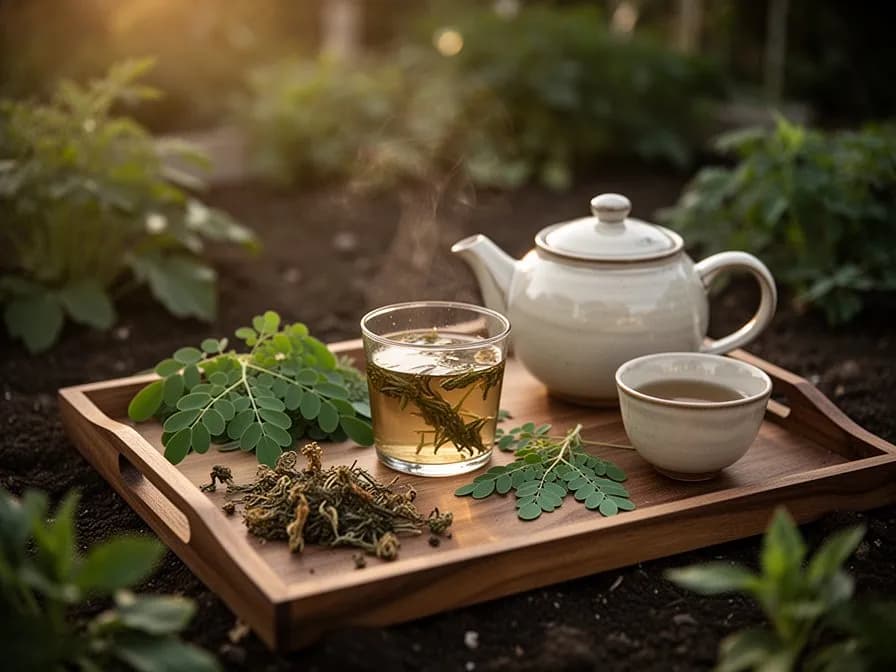
Moringa-Grüner-Smoothie
5 Min.Ein lebhafter, nährstoffreicher Smoothie, der eine volle Portion Grünzeug in einem cremigen, natürlich süßen Getränk liefert. Die Banane und Mango überdecken jede Bitterkeit des Moringa und schaffen einen tropisch schmeckenden Smoothie, der voller Vitamine, Mineralien und pflanzlichem Protein steckt. Ein ausgezeichnetes schnelles Frühstück oder Erholungsgetränk nach dem Training.
6 ZutatenMoringa-Blätter-Pfanne (Malunggay Guisado)
20 Min.Ein traditionelles, von der philippinischen Küche inspiriertes Pfannengericht, das Moringa-Blätter mit Knoblauch, Zwiebel und Tomate sautiert präsentiert. Dieses einfache, nahrhafte Gericht ist voller Protein und Eisen und eignet sich perfekt als Beilage oder leichte Mahlzeit, serviert über gedämpftem Reis. Frische Moringa-Blätter fallen schnell zusammen wie Spinat und nehmen herzhafte Aromen wunderbar auf.
7 Zutaten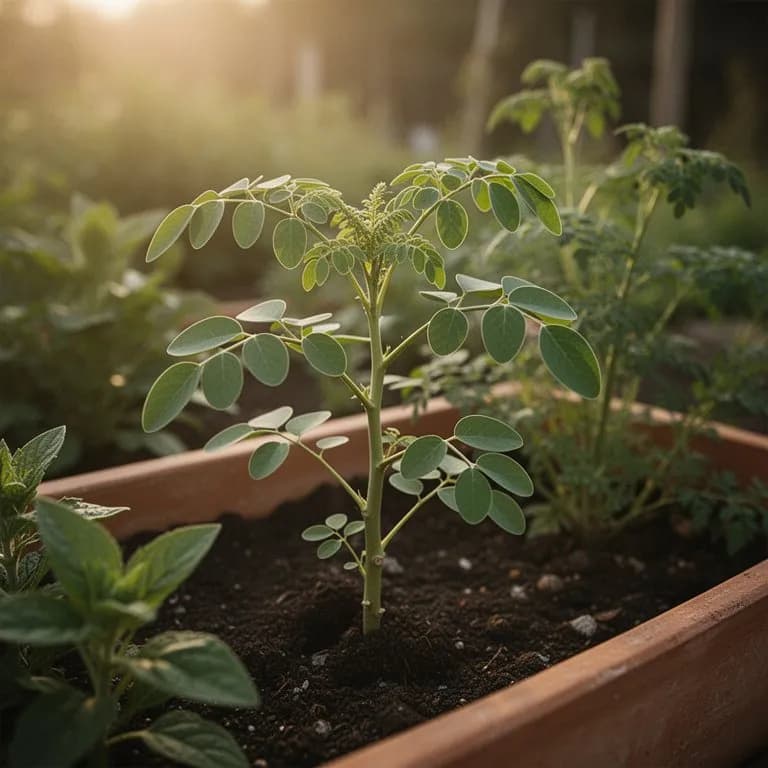
Moringa-Pesto
10 Min.Eine Superfood-Variante des klassischen Basilikum-Pestos, bei der die Hälfte des Basilikums durch frische Moringa-Blätter ersetzt wird, was eine milde erdige Tiefe und einen erheblichen Nährwert-Boost verleiht. Dieses leuchtend grüne Pesto passt wunderbar zu Pasta, als Aufstrich auf Toast, über geröstetem Gemüse oder in Suppen gerührt für einen schnellen Geschmacks- und Nährstoffkick.
8 ZutatenKulinarische Verwendung
Moringa-Blätter sind ein Nährstoff-Kraftpaket, das in unzähligen Gerichten weltweit verwendet wird. Fügen Sie frische Blätter zu Pfannengerichten, Suppen, Omeletts und Currys hinzu, wie Sie es mit Spinat tun würden. Die Blätter ergeben einen nahrhaften Grüntee mit mildem, erdigem Geschmack. Moringa-Pulver wird in Smoothies gemixt, in Energiekugeln gemischt, in Haferflocken gerührt und Brot- und Nudeltteig hinzugefügt. Junge Samenschoten (Trommelstöcke) sind ein Grundgemüse der indischen und südostasiatischen Küche, verwendet in Sambar und Dal. Die reifen Samen können wie Nüsse geröstet werden.
Was drinsteckt
Gesundheitsvorteile
- Moringa-Blätter sind außergewöhnlich reich an Antioxidantien wie Quercetin und Chlorogensäure, die helfen, freie Radikale zu neutralisieren und chronische Entzündungen reduzieren können, die mit Herzerkrankungen, Diabetes und bestimmten Krebsarten in Verbindung stehen.
- Studien deuten darauf hin, dass Moringa-Blattextrakt helfen kann, den Blutzuckerspiegel zu senken, indem er die Insulinempfindlichkeit verbessert und die Glukoseaufnahme im Darm reduziert, was potenzielle Unterstützung für Menschen mit Typ-2-Diabetes bietet.
- Der hohe Eisen- und Folatgehalt in Moringa-Blättern unterstützt die gesunde Bildung roter Blutkörperchen und kann helfen, Eisenmangelanämie vorzubeugen, insbesondere bei schwangeren Frauen und Personen mit pflanzlicher Ernährung.
- Moringa enthält Isothiocyanate und andere bioaktive Verbindungen, die in Laborstudien entzündungshemmende Wirkungen gezeigt haben und möglicherweise helfen, Schwellungen, Schmerzen und Entzündungen in Gelenken und Geweben zu reduzieren.
- Der regelmäßige Verzehr von Moringa-Blättern wurde in klinischen Studien mit verbesserten Cholesterinwerten in Verbindung gebracht, mit Senkungen des LDL-Cholesterins und der Triglyceride, die das Risiko für Herz-Kreislauf-Erkrankungen senken können.
- Moringa wird in vielen Kulturen traditionell als Galaktagogum verwendet, und neuere Forschungen unterstützen seine Rolle bei der Steigerung der Muttermilchproduktion bei stillenden Müttern, wenn es regelmäßig als Nahrungsmittel oder Nahrungsergänzungsmittel konsumiert wird.
Woher Moringa stammt
Moringa oleifera stammt ursprünglich aus den sub-himalayischen Regionen Nordindiens, insbesondere aus den Ausläufern des heutigen Uttarakhand, Uttar Pradesh und Teilen Pakistans und Nepals. Von diesen Ausläufern aus verbreitete sich Moringa vor Tausenden von Jahren über den gesamten indischen Subkontinent und wurde tief in der ayurvedischen Medizin verankert, wo Praktiker über 300 Krankheiten dokumentierten, die mit Moringa-Zubereitungen behandelt werden konnten. Alte Sanskrit-Texte, die auf etwa 2000 v. Chr. datiert werden, erwähnen Moringa als geschätzte Heilpflanze, und die Pflanze wurde in Hausgärten in ganz Indien sowohl als Nahrung als auch als Medizin kultiviert. Die alten Ägypter schätzten Moringa-Samenöl, bekannt als Behenöl, wegen seiner außergewöhnlichen Stabilität und verwendeten es als Kosmetikbasis und Hautschutz gegen das raue Wüstenklima. Griechische und römische Zivilisationen begegneten Moringa über Handelsrouten mit Indien und Ägypten, und römische Aufzeichnungen beschreiben seine Verwendung als Parfümbasis und Verdauungshilfe. Arabische Händler trugen Moringa entlang der Gewürzrouten nach Ostafrika, wo er eingebürgert und in traditionelle Nahrungssysteme und Volksmedizin integriert wurde. Portugiesische und spanische Kolonisatoren führten Moringa im 16. und 17. Jahrhundert in die Karibik, Mittel- und Südamerika ein, wo er sich leicht an tropische Tieflandbedingungen anpasste. Im 20. Jahrhundert erlangte Moringa weltweite Aufmerksamkeit, als internationale Entwicklungsorganisationen seine außergewöhnliche Nährstoffdichte und sein Potenzial zur Bekämpfung von Mangelernährung in ernährungsunsicheren Regionen erkannten. Organisationen wie die Weltgesundheitsorganisation, UNICEF und zahlreiche NGOs haben den Moringa-Anbau in ganz Subsahara-Afrika, Südostasien und Mittelamerika als nachhaltige, kostengünstige Lösung für Mikronährstoffmangel gefördert. Heute wird Moringa kommerziell in Indien, den Philippinen, Indonesien, Nigeria, Ghana, Haiti und vielen anderen tropischen und subtropischen Ländern angebaut, wobei Indien etwa 80 Prozent des weltweiten Moringa-Blattangebots produziert. Seine bemerkenswerte Anpassungsfähigkeit an arme Böden, Trockenheit und Hitze stellt sicher, dass Moringa weiterhin in neue Anbauregionen weltweit expandiert.
Moringa: Schon gewusst?
Faszinierende Fakten über Moringa
Moringa wird manchmal als ‚Wunderbaum' bezeichnet, weil nahezu jeder Teil der Pflanze essbar oder nützlich ist, einschließlich der Blätter, Blüten, Schoten, Samen, Rinde und Wurzeln.
Moringa: Fragen & Antworten
Wann sollte ich Moringa pflanzen?
In welchen Winterhärtezonen kann Moringa wachsen?
Wie viel Sonne braucht Moringa?
Welchen Abstand sollte ich zwischen Moringa lassen?
Welche Schädlinge und Krankheiten befallen Moringa?
Wie lagere ich Moringa nach der Ernte?
Was sind die besten Moringa-Sorten zum Anbauen?
Welchen Boden braucht Moringa?
Kann ich Moringa in einem kalten Klima mit Frost anbauen?
Sind Moringa-Blätter roh essbar und wie schmecken sie?
Wie oft kann ich Moringa-Blätter vom selben Baum ernten?
Welche Schädlinge und Krankheiten befallen Moringa und wie bekämpfe ich sie?
Wie stelle ich Moringa-Pulver zu Hause her?
Kann Moringa zusammen mit anderem Gemüse als Begleitpflanze angebaut werden?
Du hast die Theorie gelesen. Jetzt baue sie auf Autopilot an.
Alles, was Moringa knifflig macht — das Timing, die Abstände, die Begleiter, das Erntefenster — genau das übernimmt PlotMyGarden für dich, für jede Pflanze im Garten.
Ein Plan, der dein Wetter kennt
Standort einmal festlegen. Aussaat-, Dünge- und Erntedaten rund um deinen echten letzten Frosttermin und die Live-Vorhersage — kein Raten mehr nach Saattüte.
Aus dem Abschnitt „Pflanzzeit“Beetplaner per Drag & Drop
Beete auf einem Raster gestalten. Jede Pflanze rastet im richtigen Abstand ein, und du siehst die ganze Saison, bevor du einen Cent für Saatgut ausgibst.
Aus dem Abschnitt „Anbau“Begleiter-Konflikte früh erkannt
Über 200 gute und schlechte Kombinationen werden beim Pflanzen live geprüft — so landet ein saisonruinierender Fehler nie in der Erde.
Aus dem Abschnitt „Begleiter“Erinnerungen, nach denen du wirklich handelst
„Gieß die Bohnen.“ „Heute ernten, bevor's umschlägt.“ Pünktlich, konkret und auf deine echten Pflanzen bezogen.
Aus dem Abschnitt „Ernte“Staffel-Aussaat, geplant
Sechs Wochen ernten statt sechs Tage? Die App verteilt deine Aussaaten automatisch und erinnert dich, wenn der nächste Satz fällig ist.
Aus dem Abschnitt „Pflanzzeit“Ein Verlauf, der schlauer wird
Jede protokollierte Ernte bringt der App deinen Garten bei. Der Plan fürs nächste Jahr startet bei dem, was in deinem Boden wirklich funktioniert hat.
Aus dem Abschnitt „Überblick“Weitere Teekräuter
Bau deine beste Moringa an — und alles drumherum.
Starte heute kostenlos. Lege deine Beete an, setze deine Moringa ein und lass PlotMyGarden Timing, Abstände, Begleiter und Erinnerungen von der Saat bis zum Erntekorb übernehmen.