Mesclun
A traditional Provencal baby-leaf salad mix of lettuce, endive, arugula, and chervil, sown densely and cut young.






On this pageOverview
Meet Mesclun
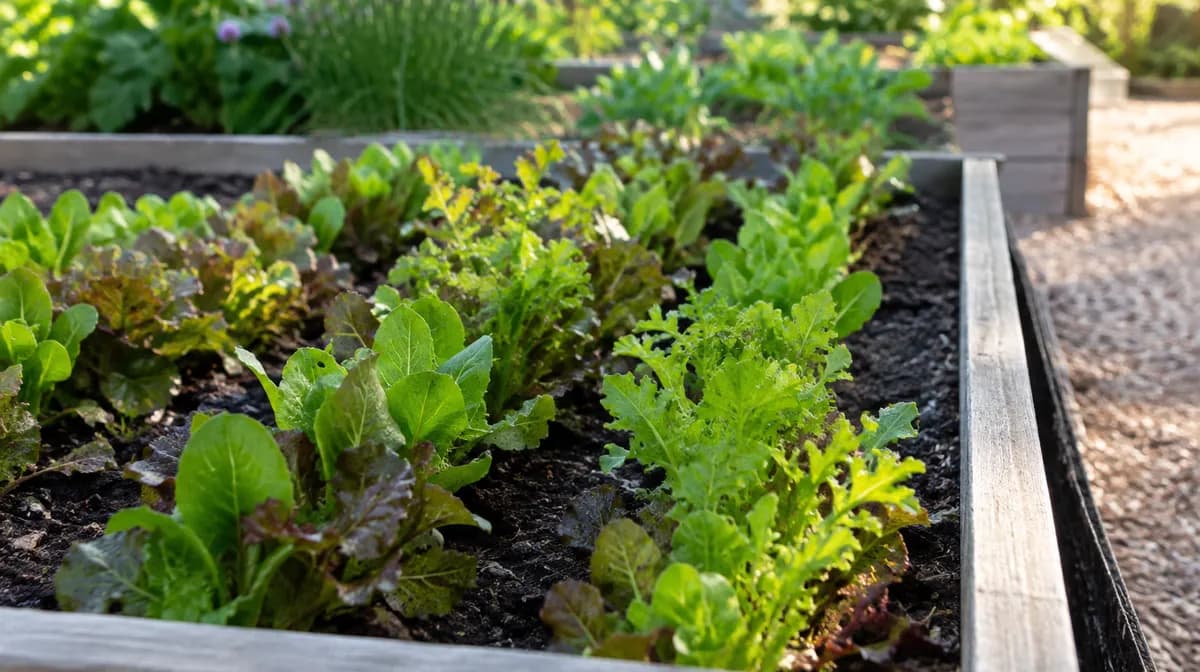
A traditional Provencal baby-leaf salad mix of lettuce, endive, arugula, and chervil, sown densely and cut young. Mesclun is a blend, not a single variety — the diversity of leaf shapes, colors, and flavors is the whole point. Broadcast the seed mix in wide bands and harvest by cutting leaves at 10-15 cm tall; the bed regrows for two to three cut-and-come-again harvests. Sow a fresh strip every two to three weeks for a continuous supply of tender salad greens from spring through fall.
When to plant Mesclun
Mesclun is almost always direct-sown, because the dense broadcast sowing that defines the crop cannot be reproduced with transplants. Sow outdoors from 2-4 weeks before the last frost: rake the bed smooth, broadcast the seed mix at roughly 20-30 seeds per 30 cm of band, and cover with no more than 6 mm of fine soil or sifted compost — the lettuce component needs near-surface sowing and light to germinate well. Keep the surface moist until emergence, 4-10 days at 10-18°C. In late summer heat, pre-chill the seed packet in the refrigerator for 2-3 days and sow in the evening to dodge thermodormancy in the lettuce fraction. If you want a head start in February or March, sow the mix into shallow flats or wide pots indoors under lights at 15-18°C, then move the entire container outside at the two-true-leaf stage and cut straight from it — container mesclun needs no transplanting at all.
Your Mesclun Year
Composed for Zone 7 · typical seasons · frost passes Apr 2, returns Nov 1
Plant Mesclun Feb – May, Aug – Sep, pick Apr – Jun, Sep – Nov. Check the planting methods below and set your climate to personalize these windows.

How to grow Mesclun
Mesclun is one of the most forgiving crops a gardener can grow, precisely because it is harvested so young that most problems never have time to develop. Direct-sow the seed mix as soon as the soil can be worked in spring, broadcasting it densely in bands or beds rather than in single rows — aim for roughly 20-30 seeds per 30 cm of band, about 6 mm deep. Germination takes 4-10 days at soil temperatures of 10-18°C. Because mesclun is a blend of species that germinate at slightly different rates, the bed fills in over two weeks and no thinning is needed; the close spacing is intentional and produces the tender, upright baby leaves the mix is designed for.
The single most important mesclun technique is succession sowing. Each sowing gives you two to three weeks of prime harvests before the leaves grow past baby size and the faster species begin to bolt. Sow a fresh band every 2-3 weeks from early spring until late spring, pause or move to shade during midsummer heat, then resume sowings in late summer for fall harvests. In zones 4-9, this rhythm yields fresh greens from April through November. Mesclun tolerates light frost, and cool fall nights actually sweeten the leaves.
Keep the seedbed consistently moist — the blend's shallow roots and dense canopy dry out quickly, and water stress makes the leaves tough and bitter. Water gently in the morning at soil level. A 2-3 cm layer of fine compost or vermicompost worked into the top 10 cm before each sowing is usually all the feeding these fast crops need. In containers, use a quality potting mix and a wide, shallow pot at least 15 cm deep; mesclun is arguably the best container salad crop because you can sow thickly and cut the whole pot at once.
288 plants fit a 4 × 8 ft bed
Each Mesclun wants 10 cm of elbow room. The planner keeps that spacing for you — every plant, every bed.
Mesclun's best neighbours
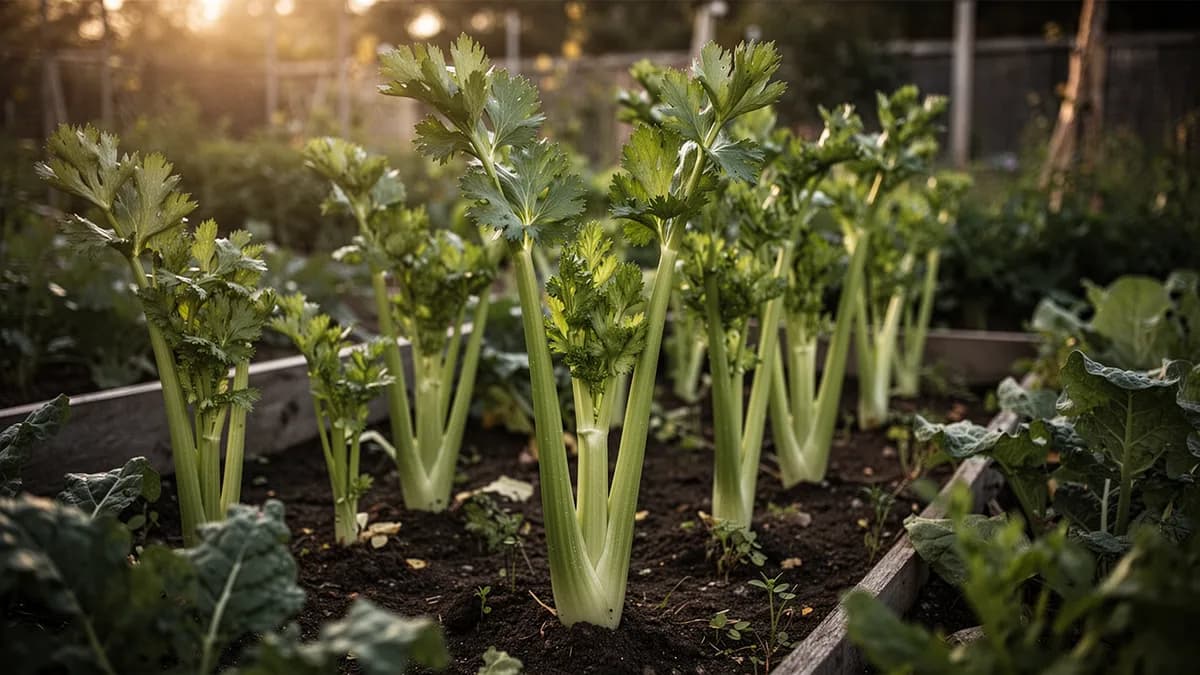
Mesclun shares the cool-season niche and shallow rooting of its own lettuce component, so the same companions apply. Radishes sown in the same bed germinate in days, mark the bands, loosen the crust for finer mesclun seed, and are pulled before the greens need the space — the classic nurse crop. Spinach interplanted nearby matures on a similar schedule and shares identical watering needs, simplifying bed care. Carrots are excellent neighbors: the mesclun canopy shades the soil and keeps carrot seedbeds moist while carrots root far below the shallow greens. Lettuce sown alongside extends the harvest as larger heads after the baby mix is finished. Avoid sowing next to celery, which competes aggressively for the same nutrients and root zone and can harbor the same aphid species.
Lettuce belongs beside it. Celery doesn't.
Old growers' knowledge, checked against Mesclun's real companion table below — test any plant you're growing.
Try Mesclun in a bed — right here
A real planner bed with Mesclun already in it. Tap a companion to place it and watch the pairing checks answer — green for good neighbours, red for a clash.


Related growing guides


Feed it well
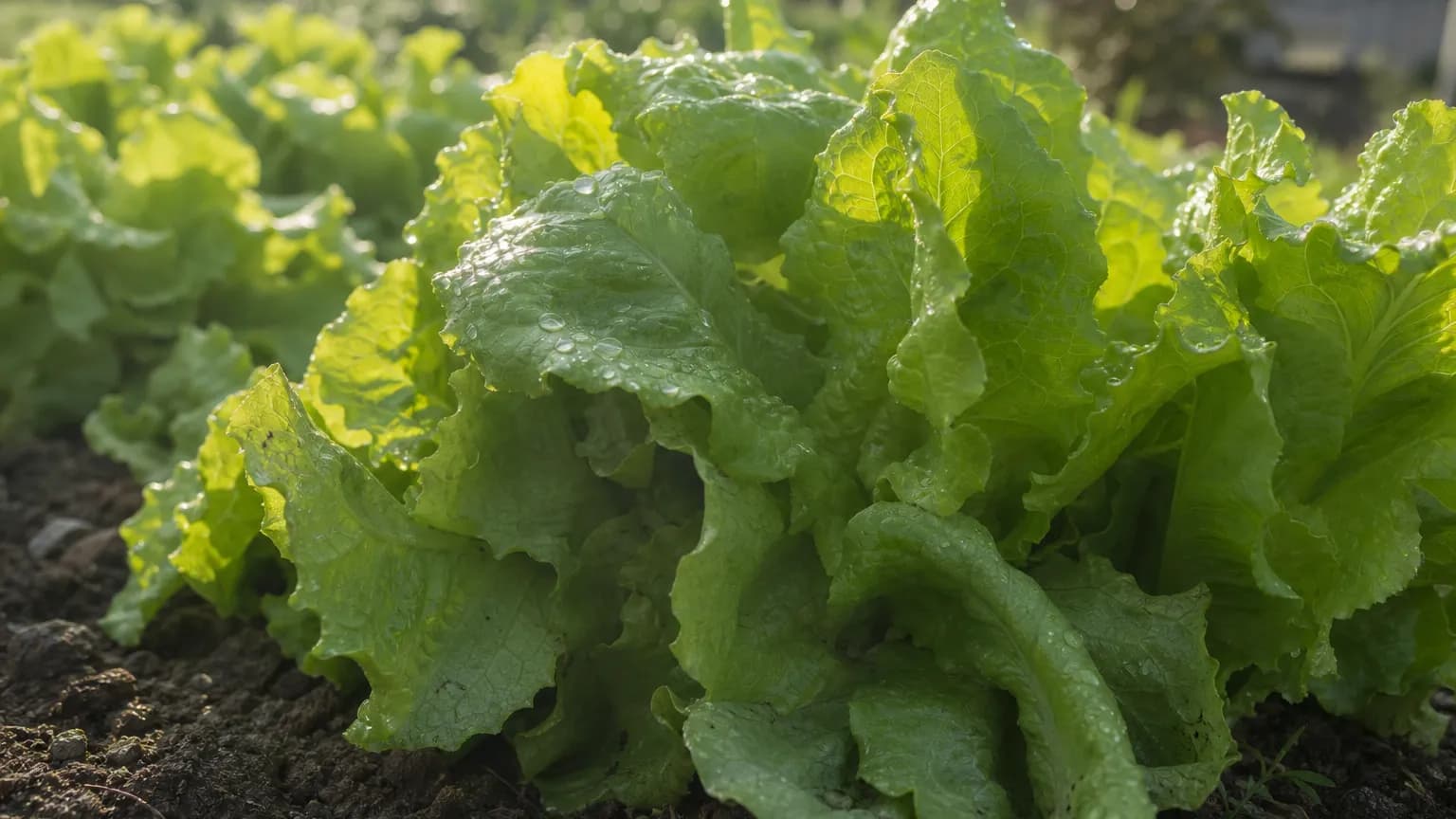
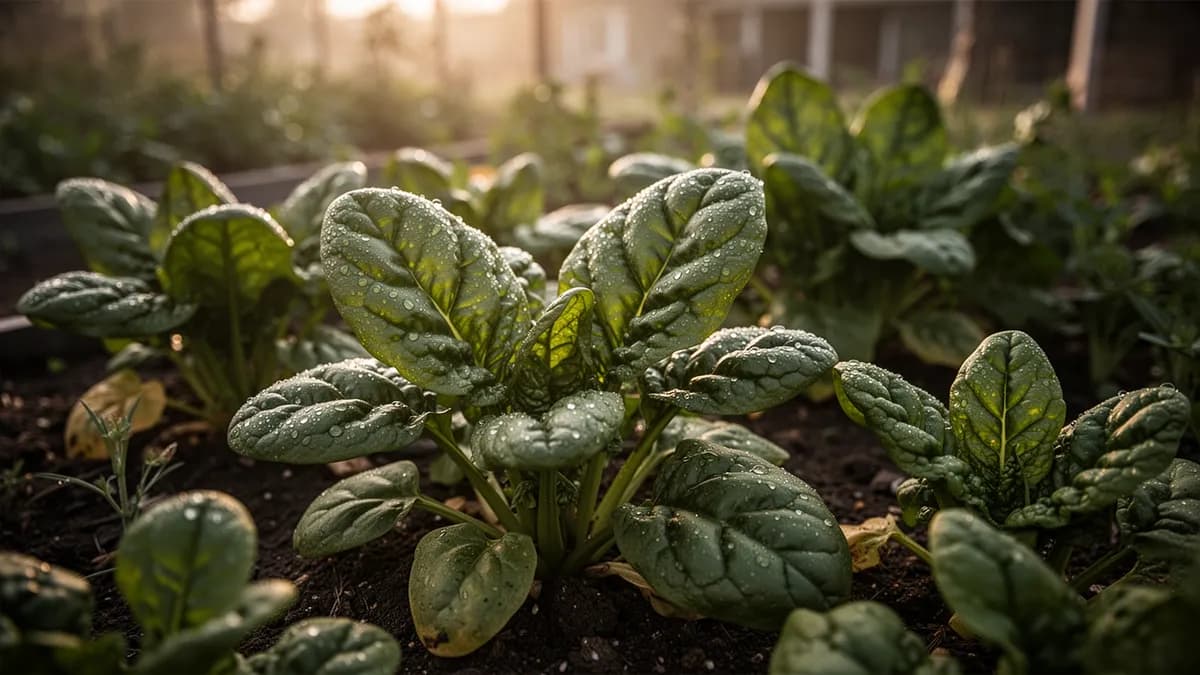
Mesclun performs best in fertile, well-drained loam rich in organic matter with a pH of 6.0-7.0, but its short 30-day lifecycle makes it far less demanding than most vegetables. Work 2-3 cm of finished compost into the top 10 cm of the bed before each sowing — this light feeding is usually sufficient because the crop is cut before heavy nutrient demand begins. If regrowth after the first cutting looks pale or slow, water in a dilute fish emulsion or compost tea to push the second flush. Avoid fresh manure and heavy nitrogen, which produce watery, bland, nitrate-heavy leaves. In containers, a quality potting mix with a small charge of slow-release fertilizer covers the entire crop cycle.
Ideal Temperature
Hardiness Zone Compatibility
From seed to harvest, stage by stage
Seed Germination
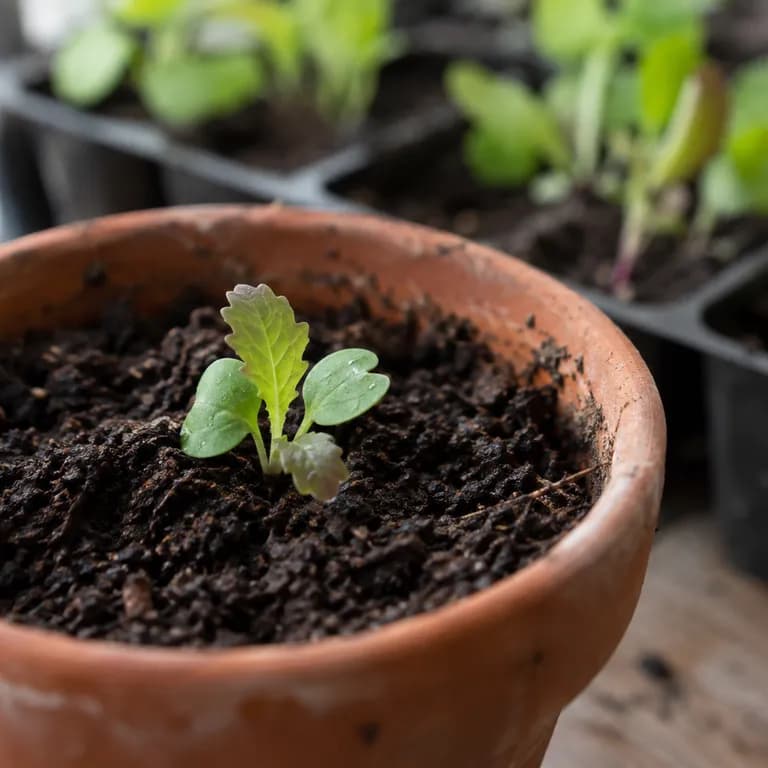
The blend's components sprout in sequence — arugula and mustards first at 3-4 days, lettuces and endive at 4-7 days, chervil slowest at up to 10 days. The band looks patchy at first, then fills in as every species emerges.
Seedling Establishment
Seedlings push out their first true leaves and the band closes into a miniature canopy. Growth is rapid in cool weather. This is the most vulnerable window for slugs, flea beetles, and drying out.
Leaf Development
The blend hits its stride: leaves elongate to 5-10 cm and the mix's character emerges — frilly endive, oak-shaped lettuce, lobed arugula. The faster species begin outpacing the slower ones, shifting the balance of flavors day by day.
First Harvest
Leaves reach the ideal baby size of 10-15 cm — peak tenderness, sweetness, and color. The whole band is cut 2-3 cm above the crowns with scissors. Expect 100-150 g of mixed leaves per 30 cm of band per cutting.
Bolting and Renewal
The fast components — arugula, mustards, then lettuce — send up flower stalks, and leaves turn narrow, tough, and bitter. The sowing has given its harvest; quality now drops daily.
Keep the seedbed surface consistently moist and never let it crust over — with near-surface sowing, even one dry afternoon can kill germinating seeds. Do not thin; dense spacing is the design.
Caring for Mesclun month by month
What to do each month for your Mesclun
September
You are hereFall mesclun thrives — sow the final successions and harvest earlier plantings at their sweet, cool-weather best. Flavor is superb as chilly nights concentrate sugars in the leaves.
Know exactly what to do in your garden — every month
One email at the start of each month: what to sow, plant, and tackle right now — for your Mesclun and everything growing around it. Plus a short starter course that helps you dodge the classic mistakes.
- What to do, right now
- Matched to your season
- Starter course included
Harvesting Mesclun
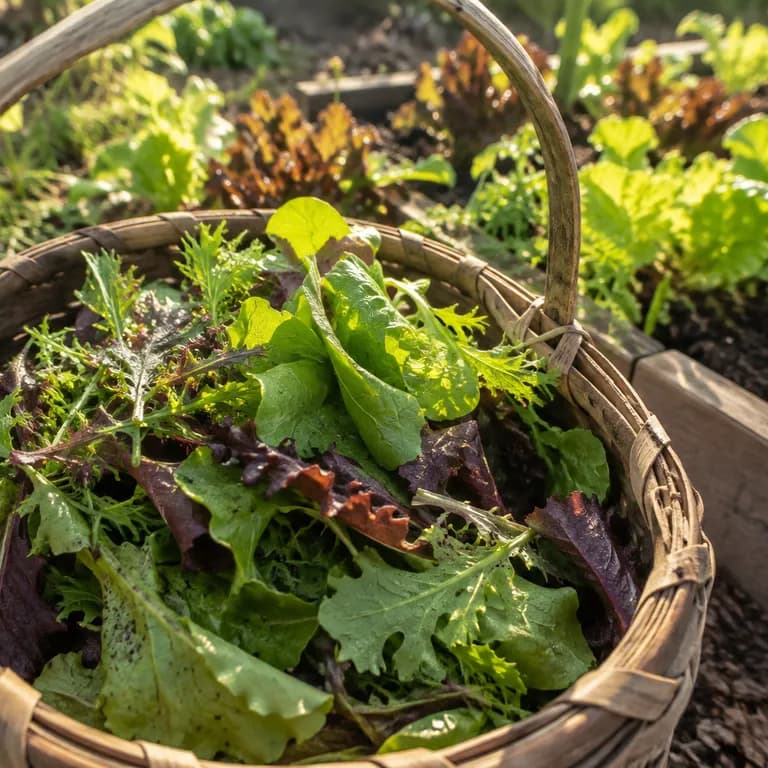
Begin harvesting 25-35 days after sowing, as soon as the leaves reach 10-15 cm tall — this is the cut-and-come-again baby-leaf stage where flavor and tenderness peak. Cut the entire band with sharp scissors or a harvest knife 2-3 cm above the crown, leaving the growing point intact; the bed will regrow for a second and often a third cutting over the following two to three weeks. Harvest in the cool morning hours when leaves are crispest and sweetest. Rinse, spin dry, and use promptly. Once the fastest components (usually arugula and mustards) begin sending up flower stalks, cut the whole band, clear it, and rely on your next succession sowing — bolting baby greens turn bitter quickly.
assuming you plant when the window opens — set your real date
Leaves 10-15 cm tall, before any flower stalks appear on the arugula or mustard components.
Storage & Preservation
Baby mesclun leaves are at their best within hours of cutting and store poorly compared to head lettuces. Washed, thoroughly spun-dry leaves keep 2-4 days in the refrigerator in a loosely closed bag or container lined with a paper towel to absorb moisture. Do not pack leaves tightly or store them wet — bruised, damp baby greens turn slimy fast. Mesclun cannot be frozen, canned, or dried usefully, so the only real preservation strategy is the sowing calendar: small, frequent succession sowings every 2-3 weeks guarantee a fresh supply and eliminate the need to store anything.
What goes wrong — and the fix
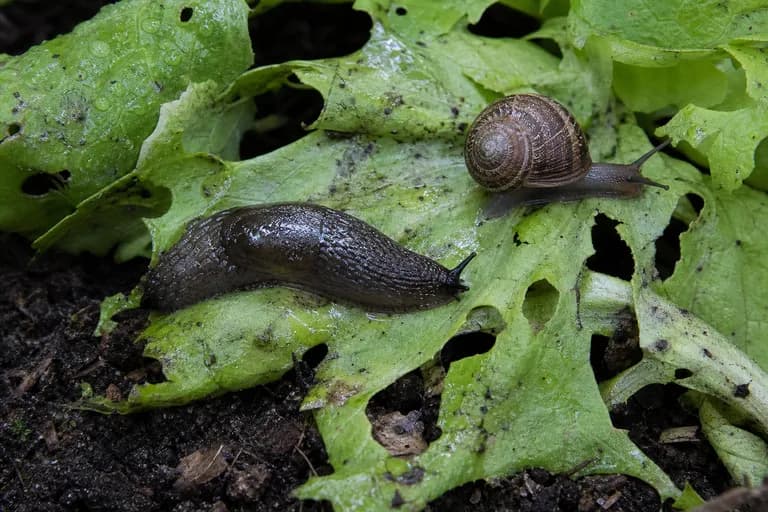
Slugs and Snails
PestIrregular holes chewed in tender baby leaves, especially overnight, with silvery slime trails on the soil surface. Because mesclun is sown densely and harvested young, even moderate slug damage can ruin an entire band within days.
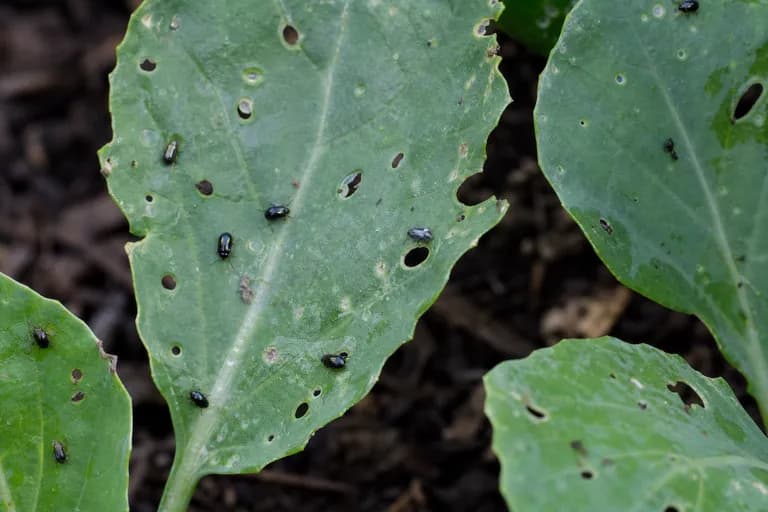
Flea Beetles
PestTiny round shot-holes peppered across leaves, especially on the arugula and mustard components of the mix, which flea beetles strongly prefer. Seedlings can be stunted or killed when beetle populations are high in warm, dry spring weather.

Aphids
PestClusters of small green, black, or gray soft-bodied insects on leaf undersides and growing tips, causing leaves to curl and pucker. Sticky honeydew coats foliage and attracts sooty mold — a serious cosmetic problem on a crop eaten raw.

Downy Mildew
DiseasePale yellow angular patches on upper leaf surfaces with grayish-purple fuzzy growth on the undersides, spreading fast in cool, humid weather. Densely sown mesclun beds with poor airflow are especially vulnerable in spring and fall.
Troubleshooting Common Problems
Bolting is the number-one mesclun complaint, and it hits blends unevenly — the arugula and mustard components flower first, often just weeks after germination in long, hot days, turning the whole mix sharp and bitter. Prevention is timing rather than rescue: sow in the cool windows of spring and fall, provide afternoon shade or 30-40% shade cloth in warm spells, and cut early and often. Once flower stalks appear, clear the band and sow again. Bitter or tough leaves usually mean the crop was cut too late or grew under heat and water stress. Baby leaves cut at 10-15 cm in cool weather are sweet and tender; the same mix cut at 20 cm in July is not. Keep the bed evenly moist and tighten your harvest schedule. Uneven germination across the band is normal with blends — lettuce, endive, arugula, and chervil sprout at different speeds and temperatures, so the mix fills in over 10-14 days. Bare patches usually indicate a crusted or dried-out seedbed; keep the surface moist until all components are up. Crowding-related disease (bottom rot, downy mildew) appears when dense sowings stay wet for long periods. Water at soil level in the morning, and if a section collapses into slime, cut out the affected area plus a margin and improve airflow before resowing. Leggy, pale growth in spring means insufficient light — mesclun tolerates partial shade but still needs at least 4 hours of direct sun or bright light to produce compact, flavorful leaves.
Growing Tips
- Succession sow a fresh band every 2-3 weeks from early spring through fall — this single habit matters more than any other for mesclun, because each sowing peaks for just two to three weeks.
- Cut the whole band with scissors 2-3 cm above the crown at 10-15 cm tall. A clean cut preserves the growing point; tearing or pulling ruins the regrowth flush.
- Do not thin mesclun — the dense stand is intentional and produces the tender, upright baby leaves the blend is designed for. Crowding is a feature, not a flaw.
- Expect uneven emergence: arugula sprouts in 3-4 days, chervil can take 10. Judge germination at two weeks, not three days, before assuming a band failed.
- In summer, pre-chill the seed packet in the refrigerator for 2-3 days and sow in the evening — the lettuce component refuses to germinate in soil above 25°C.
- Grow mesclun in wide, shallow containers (15 cm deep) on a patio — it is the single best container salad crop, and you can move the pot into shade as heat arrives.
- Taste a leaf every few days starting around day 20. Baby greens move from perfect to past-prime in less than a week, and your palate is the only reliable harvest timer.
- Cover new sowings with fine-mesh row cover immediately if flea beetles are present — the arugula in the mix is their favorite food in the entire garden.
- After the final fall cutting, sow a cover crop or mulch the bed — the quick 30-day cycle means mesclun beds can host three or four different crops per year.
Grow your best Mesclun yet — and everything around it.
Start a free plan today. Lay out your beds, drop in your Mesclun, and let PlotMyGarden handle the timing, spacing, companions and reminders from seed to harvest basket.
Pick your Mesclun
Provencal Mesclun
The original blend from Provence: roughly two parts loose-leaf or cutting lettuce to one part each of arugula, chervil, and curly endive. Mild, nutty, and slightly bitter in balance, with tender texture that holds up as weather warms. The benchmark against which all other mixes are judged.
Mild Mesclun Mix
A gentle blend of red and green loose-leaf lettuces, romaine types, and mild brassica greens like pak choi. Sweet and tender with no peppery bite — the best choice for children and for pairing with delicate dressings. Ready to cut in about 20-30 days.
Spicy Mesclun Mix
A zesty blend heavy on arugula, mustards, mizuna, and peppery cress, balanced with lettuces. Bold, pungent flavor that stands up to strong vinaigrettes, grilled meats, and aged cheeses. The mustards bolt first in heat — cut this mix on the early side.
Misticanza
The traditional Italian counterpart from Piedmont: about five parts lettuce to four parts assorted chicories, including radicchio. Pleasantly bitter, colorful, and sophisticated — the classic base for insalata mista. Excellent in fall, when cool weather tames the chicory bitterness.
Asian Mesclun
A tangy blend of Asian greens — mizuna, tatsoi, komatsuna, mibuna, and red mustard — sometimes with baby pak choi. Frilly textures and flavors from mild to wasabi-like. Fast-growing and cold-tolerant, ideal for the first and last sowings of the season.
Store-bought baby salad mix costs $5-8 per 150 g clamshell and wilts within days. A $4 packet of mesclun seed sows 6-8 meters of bands — easily 15-20 clamshell-equivalent harvests worth $75-150, each one fresher and more diverse than anything packaged. With cut-and-come-again regrowth plus 2-3 week succession sowing, a single square meter of bed can keep a household in premium salad greens from April through November for the price of two seed packets.
Quick recipes

Provencal Mesclun Salad with Warm Goat Cheese
20 minThe classic bistro salad of the mix's homeland: fresh mesclun tossed in walnut vinaigrette, topped with rounds of goat cheese toasted on baguette slices, plus walnuts and a drizzle of honey.
9 ingredients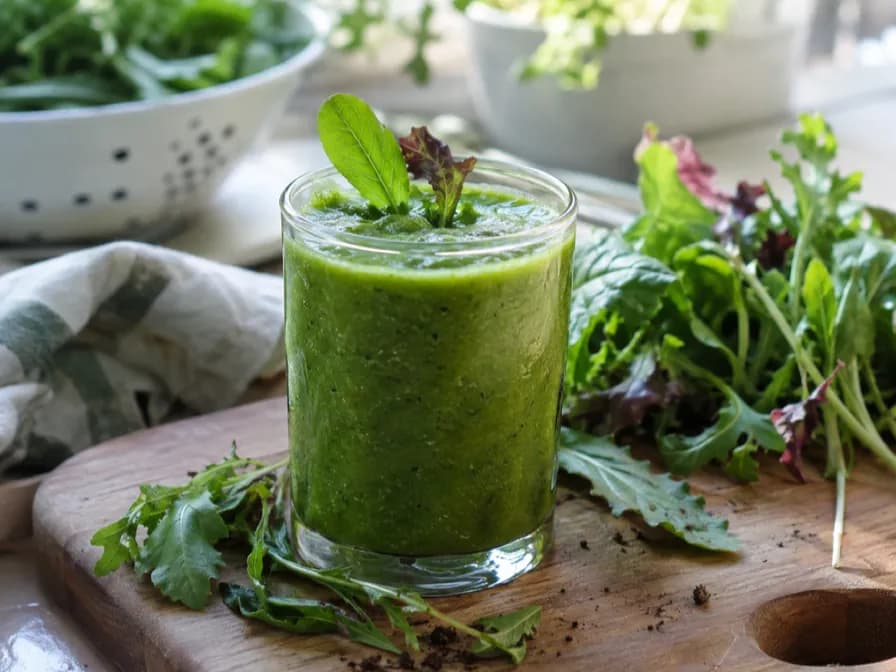
Grilled Chicken over Mesclun
25 minSliced grilled chicken breast served hot over a bed of mesclun with shaved Parmesan and lemon vinaigrette — the warm meat gently wilts the peppery arugula and mustard leaves in the mix.
8 ingredientsLast-Minute Wilted Mesclun Pasta
15 minHot pasta tossed off the heat with olive oil, garlic, and a full bowl of mesclun — the sturdier leaves wilt like spinach while the tender ones stay fresh, giving two textures in one dish.
8 ingredientsCulinary Uses
Mesclun is the foundation of the mixed-green salad bowl: a handful of baby leaves needs nothing more than a good vinaigrette — the classic Provencal pairing is walnut oil, red wine vinegar, and Dijon mustard. The blend's built-in contrast of mild lettuce, nutty chervil, bitter endive, and peppery arugula means a simple dressing works better than heavy ones that mask the diversity. Add shaved Parmesan, toasted walnuts or pine nuts, soft goat cheese, sliced pears or apples, and edible flowers for the classic bistro presentation.
Beyond the salad bowl, mesclun works as a fresh bed for grilled fish, chicken, or steak, where the heat gently wilts the leaves — a deliberate and delicious effect. Tossed into hot pasta with olive oil and garlic at the last second, the sturdier components wilt like spinach. Baby leaves top pizzas after baking, fill sandwiches and wraps, and blend into green smoothies. Avoid cooking mesclun long; its value is freshness, texture, and the interplay of flavors.
Because every cut contains several species, each harvest tastes slightly different — the mix shifts as faster-growing arugula and mustards gain on the lettuces. Many gardeners harvest sections of the bed a few days apart deliberately to enjoy the blend at different balances.
What's inside
Health Benefits
- The multi-species blend delivers a broader nutrient spectrum than any single salad green — vitamins A, C, and K, folate, calcium, and iron in one serving
- Vitamin K from the lettuce and endive components supports healthy blood clotting and plays a central role in bone calcium metabolism
- Beta-carotene and lutein in the dark green leaves support eye health and may reduce the risk of age-related macular degeneration
- Glucosinolates in the arugula and mustard fractions are converted in the body to compounds studied for supporting the body's natural detoxification enzymes
- High water and fiber content at very low calorie density promotes satiety and digestive regularity, making mesclun ideal for weight-conscious diets
- Folate from endive and chervil supports DNA synthesis and is especially important during pregnancy
Where Mesclun comes from
Mesclun originated in the market gardens around Nice and Provence in southern France, where growers sold fresh-cut mixtures of young lettuce, endive, arugula, and chervil at morning markets. The name comes from the Provencal verb 'mesclar', to mix. Unlike most vegetables, mesclun was never a single domesticated species but a cultural technique: sow several compatible greens together, cut them young with scissors, and let the bed regrow for another pass.
The tradition stayed regional for centuries, with each area guarding its own formula — the Provencal blend of lettuce, arugula, chervil, and curly endive being the best documented. Italy developed its parallel tradition, the misticanza of Piedmont, built on lettuces and bitter chicories including radicchio.
Mesclun went global remarkably late. American chefs traveling in France in the 1970s brought the idea home, and by the 1980s California growers such as the founders of the baby-greens industry had transformed the French market-garden mix into 'spring mix' — now one of the best-selling salad products in North America. For home gardeners, mesclun remains what it always was: the easiest, fastest way to turn a square meter of soil into weeks of salad.
Mesclun: did you know?
Fascinating facts about Mesclun
The word 'mesclun' comes from the Provencal 'mesclum', meaning mixture — it entered English food writing only in the 1970s when American chefs discovered the French market-garden tradition.
Mesclun questions, answered
When should I plant Mesclun?
What are good companion plants for Mesclun?
What hardiness zones can Mesclun grow in?
How much sun does Mesclun need?
How far apart should I space Mesclun?
What pests and diseases affect Mesclun?
How do I store Mesclun after harvest?
What are the best Mesclun varieties to grow?
What soil does Mesclun need?
Why did my mesclun bolt so quickly?
Is mesclun a plant or a mix?
How many times can I cut the same mesclun bed?
Can I grow mesclun in containers?
Why did only some of my mesclun seeds come up?
Is store-bought 'spring mix' the same as mesclun?
You just read the theory. Now grow it on autopilot.
Everything that makes Mesclun fiddly — the timing, the spacing, the companions, the harvest window — is exactly what PlotMyGarden handles for you, for every plant in your garden.
A plan that knows your weather
Set your location once. Get sow, feed and harvest dates built around your real last-frost date and live forecast — no more guessing from a generic seed packet.
From the “When to plant” sectionDrag-and-drop bed planner
Design beds on a grid. Every plant snaps to its proper spacing, and you can see your whole season laid out before you spend a cent on seed.
From the “Growing guide” sectionCompanion conflicts, caught early
200+ good-and-bad pairings checked live as you plant — so a season-wrecking mistake never makes it into the ground.
From the “Companions” sectionReminders you'll actually act on
“Water the beans.” “Pick today before it turns.” Timely, specific, and tied to the plants you're really growing.
From the “Harvest” sectionSuccession, scheduled
Want a harvest for six weeks, not six days? It spaces your sowings automatically and reminds you when each new block is due.
From the “When to plant” sectionA record that gets smarter
Every harvest you log teaches it your garden. Next year's plan starts from what actually worked in your soil, not a textbook's.
From the “Overview” sectionPlant these alongside Mesclun
More Leafy Greens
Keep Mesclun away from these
Grow your best Mesclun yet — and everything around it.
Start a free plan today. Lay out your beds, drop in your Mesclun, and let PlotMyGarden handle the timing, spacing, companions and reminders from seed to harvest basket.