Reina de los prados
Elegante planta perenne de zonas húmedas con nubes de flores cremosas de dulce fragancia, históricamente la fuente del ácido salicílico que inspiró la aspirina.





En esta páginaResumen
Conoce Reina de los prados
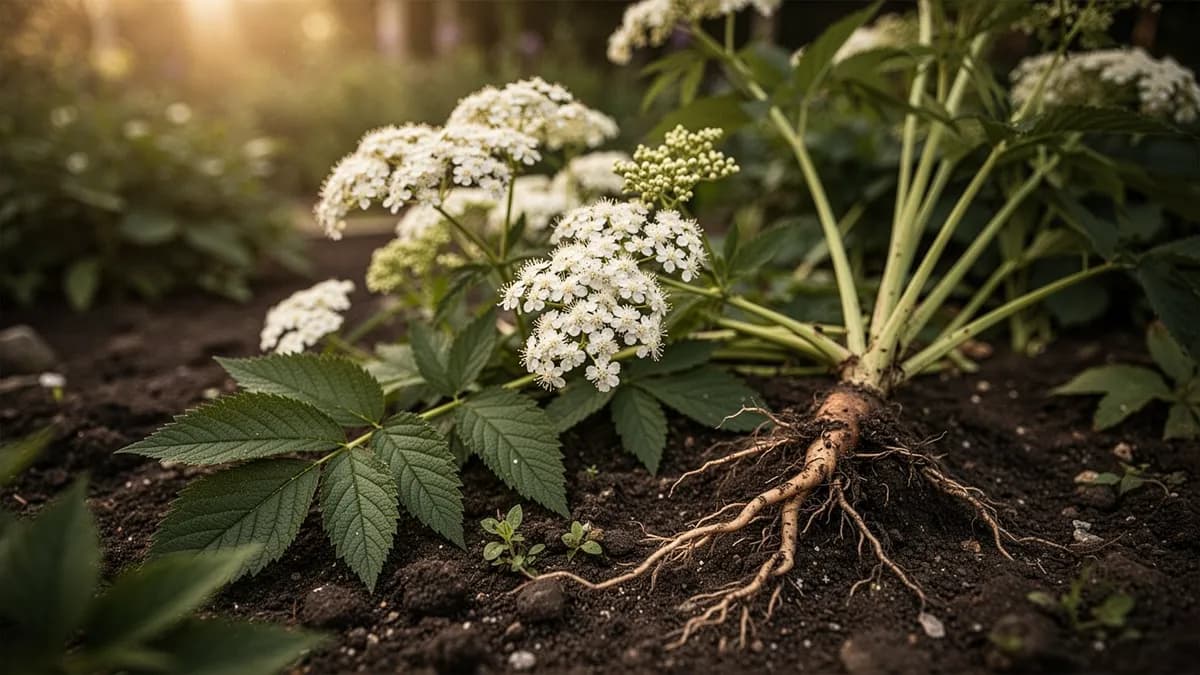
Elegante planta perenne de zonas húmedas con nubes de flores cremosas de dulce fragancia, históricamente la fuente del ácido salicílico que inspiró la aspirina. La reina de los prados prospera en prados húmedos, orillas de arroyos y jardines de lluvia, donde su aroma a almendra y miel perfuma el aire veraniego. Cosecha los extremos floridos para infusiones usadas tradicionalmente para apoyar la salud digestiva y articular.
Cuándo plantar Reina de los prados
Siembre las semillas de reina de los prados en la superficie de una mezcla húmeda para semilleros en otoño o a principios de primavera — las semillas necesitan luz y estratificación en frío. Si siembra en primavera, estratifique en frío durante 4-6 semanas en el frigorífico. La germinación tarda 2-4 semanas a 15-20 °C. Las plántulas crecen de forma moderada y pueden florecer en el segundo año. La división de los grupos establecidos en primavera u otoño es el método de propagación más fácil y rápido. Las plántulas de siembra espontánea aparecen alrededor de las plantas maduras en condiciones de humedad óptimas.
Tu año de Reina de los prados
Ajustado a Zona 7 · temporada típica · la helada se va hacia el 2 abr y vuelve hacia el 1 nov
Planta Reina de los prados Mar – May y cosecha Jun – Ago. Consulta los métodos de plantación y elige tu clima para adaptar los periodos.

Cómo cultivar Reina de los prados
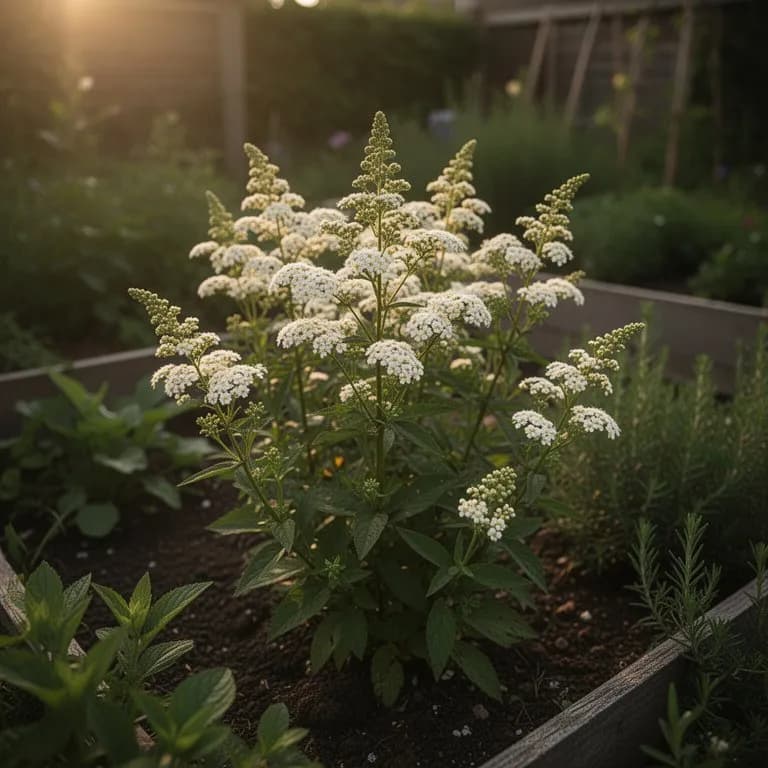
La reina de los prados es una elegante planta perenne de zonas húmedas con plumosos penachos de flores blanco-crema que emiten una dulce y deliciosa fragancia a almendra y miel — uno de los aromas más exquisitos del jardín de hierbas. Con un porte de 60-120 cm y hojas pinnadas profundamente nervadas, prospera en prados húmedos, orillas de arroyos y jardines de lluvia. Históricamente relevante como la planta de la que se aisló por primera vez el ácido salicílico, inspirando el desarrollo de la aspirina. Plante a semisombra en suelo húmedo o encharcado, con una separación de 45 cm entre plantas.
Proporcione un suelo rico y con buena retención de humedad, y riegue de forma constante — la reina de los prados no tolera la sequía. Prospera en las condiciones húmedas de los prados naturales, orillas de arroyos y zonas pantanosas donde la mayoría de las plantas de jardín no sobreviven. En jardines convencionales, plántela en zonas bajas que retengan la humedad, o en jardines de lluvia donde el agua pluvial se concentra de forma natural.
Los esponjosos racimos de flores cremosas aparecen de principios a mediados del verano y persisten durante semanas, atrayendo una gran diversidad de polinizadores. Toda la planta es aromática: las hojas huelen a gaulteria al estrujarlas y las flores desprenden esa dulce fragancia a miel y almendra que convirtió a la reina de los prados en la hierba preferida para esparcir en las estancias medievales. Se dice que la reina Isabel I la prefería por encima de todas las demás hierbas aromáticas para sus aposentos.
10 plantas caben en un bancal de 120 × 240 cm
Cada Reina de los prados pide 45 cm de margen. El planificador guarda ese marco por ti — cada planta, cada bancal.
Los mejores vecinos de Reina de los prados
La reina de los prados crece de forma natural junto a otras plantas amantes de la humedad en prados encharcados y a orillas de arroyos. Excelentes compañeras son la valeriana, el eupatorio, la hierba de San Patricio y la caléndula de marisma. En jardines de lluvia, plántela con otras especies autóctonas de zonas húmedas para el máximo beneficio ecológico. La dulce fragancia atrae a polinizadores e insectos beneficiosos, potenciando la productividad de los cultivos cercanos. Los altos y plumosos penachos florales sirven de elegante telón de fondo para las compañeras de menor porte.
Valeriana va a su lado.
Saber de huerto de siempre, cotejado con la tabla real de Reina de los prados — prueba cualquier planta que cultives.
Prueba Reina de los prados en un bancal, aquí mismo
Un bancal real del planificador con Reina de los prados ya plantado. Toca una planta compañera para colocarla y mira cómo responde la comprobación de vecinos: verde para buenos vecinos, rojo si hay conflicto.


Guías de cultivo relacionadas
Abónalo bien
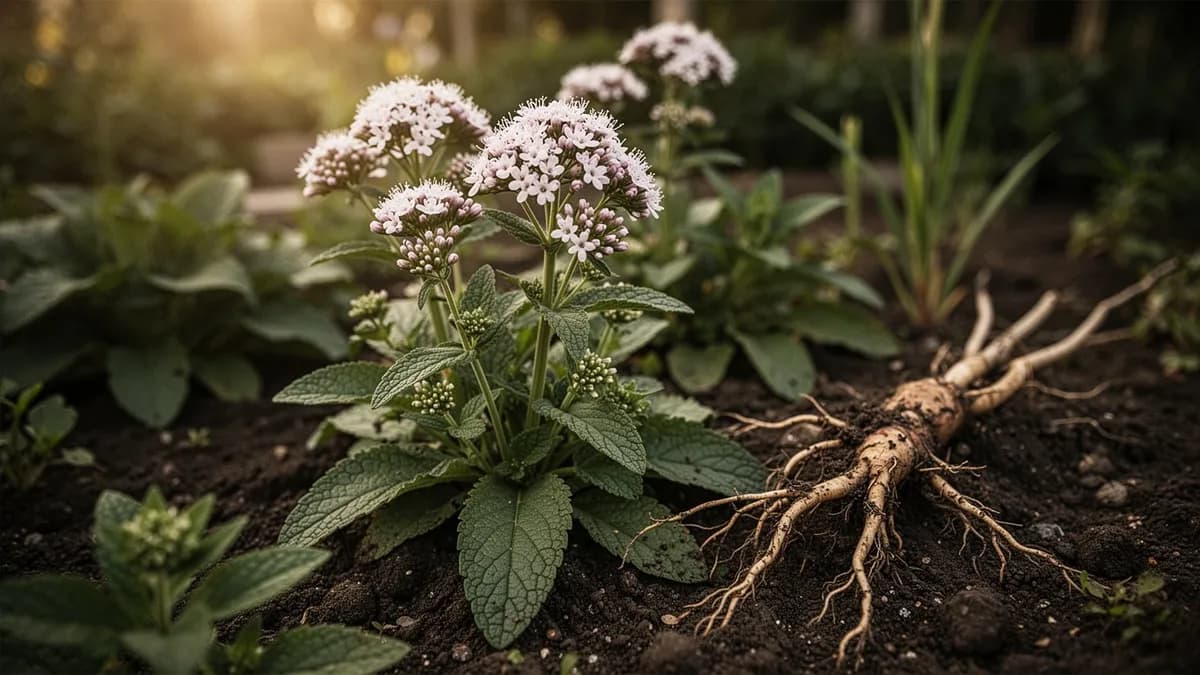
Cultive en suelo rico, húmedo o encharcado con pH 5.5-7.0. Enmiende con abundante compost para optimizar la retención de humedad y la fertilidad. Mantenga el suelo constantemente húmedo — esta planta de zonas húmedas sufre en condiciones secas. Excelente para jardines de lluvia, jardines de barro y plantaciones en orillas de arroyos. Abone anualmente con una capa superficial de compost en primavera. En macetas (no es lo ideal salvo que sean muy grandes), mantenga el sustrato permanentemente húmedo.
Temperatura ideal
Compatibilidad de zonas de rusticidad
De la semilla a la cosecha, etapa por etapa
Dormancia y desarrollo radicular
Durante el invierno, el vigoroso sistema radicular rizomatoso de la reina de los prados reposa bajo la superficie del suelo. Los gruesos rizomas rastreros almacenan reservas de energía y se expanden lentamente de forma lateral, generando nuevos puntos de crecimiento para la temporada venidera. En inviernos suaves, la corona puede conservar algunas hojas basales que persisten a ras del suelo.
Emergencia primaveral
Cuando la temperatura del suelo alcanza los 8-10 °C en marzo o abril, los brotes con tintes rojizos brotan del rizoma. Las hojas compuestas y pinnadas se despliegan en pares a lo largo de tallos erguidos, cada hoja compuesta por 2-5 pares de folíolos aserrados con un folíolo terminal más grande. Los característicos enveses foliares plateados se hacen visibles a medida que el follaje se expande.
Crecimiento vegetativo
Los tallos crecen rápidamente hasta alcanzar 60-120 cm de altura, volviéndose fibrosos y a menudo teñidos de rojo o púrpura intenso. El follaje se llena de exuberantes hojas compuestas profundamente nervadas que, al estrujarse, liberan un agradable aroma similar a la gaulteria, debido al contenido de salicilato de metilo. La planta forma matas densas y frondosas que pueden extenderse 60 cm o más.
Floración
De junio a agosto, densos y ramificados racimos (cimas) de minúsculas flores blanco-crema se abren en los extremos de los tallos. Cada flor individual mide apenas 4-8 mm de diámetro, pero cientos se agrupan en esponjosas cabezas en forma de nube de hasta 25 cm de diámetro. La fragancia es intensamente dulce — una compleja mezcla de miel, almendra y espino blanco que se propaga en las brisas cálidas y atrae a abejas, sírfidos y escarabajos.
Desarrollo de semillas
Tras la polinización, las cabezas florales desarrollan racimos de pequeños aquenios firmemente enroscados que se retuercen entre sí en un patrón característico de sacacorchos. Las semillas pasan del verde al marrón oscuro a medida que maduran. Esta formación espiral de semillas inspiró el antiguo nombre inglés 'bridewort' y contribuyó al nombre del género Spiraea (ahora Filipendula).
Senescencia y preparación invernal
A medida que las temperaturas descienden en otoño, el follaje amarillea y los tallos se secan convirtiéndose en tallos rígidos y marrones. Las cabezas de semillas secas mantienen su carácter ornamental durante el invierno. Bajo tierra, los rizomas han almacenado energía suficiente para la próxima temporada y pueden haber extendido la colonia entre 15-30 cm. La planta es completamente resistente hasta -30 °C y no requiere protección invernal en la mayoría de los climas.
Aplique una capa de 5-8 cm de mantillo de hojas o corteza compostada sobre las plantas establecidas a finales de otoño para aislar los rizomas y mantener la humedad del suelo. Evite los acolchados de arcilla pesada que se compactan y dificultan la emergencia primaveral.
Cuidar Reina de los prados mes a mes
Qué hacer cada mes para tu Reina de los prados
Octubre
Mes actualEl follaje comienza a morir de forma natural. Deje los tallos en pie para añadir interés invernal y proporcionar hábitat a los insectos. Aplique un último acolchado de hojarasca alrededor de la base de las plantas.
Ten claro qué hacer en tu huerto, cada mes
Un correo al empezar cada mes: qué sembrar, plantar y hacer ahora mismo — para tu Reina de los prados y todo lo que crece alrededor. Más un breve curso inicial para esquivar los errores clásicos.
- Qué hacer ahora mismo
- Ajustado a tu temporada
- Curso inicial incluido
Cosechar Reina de los prados
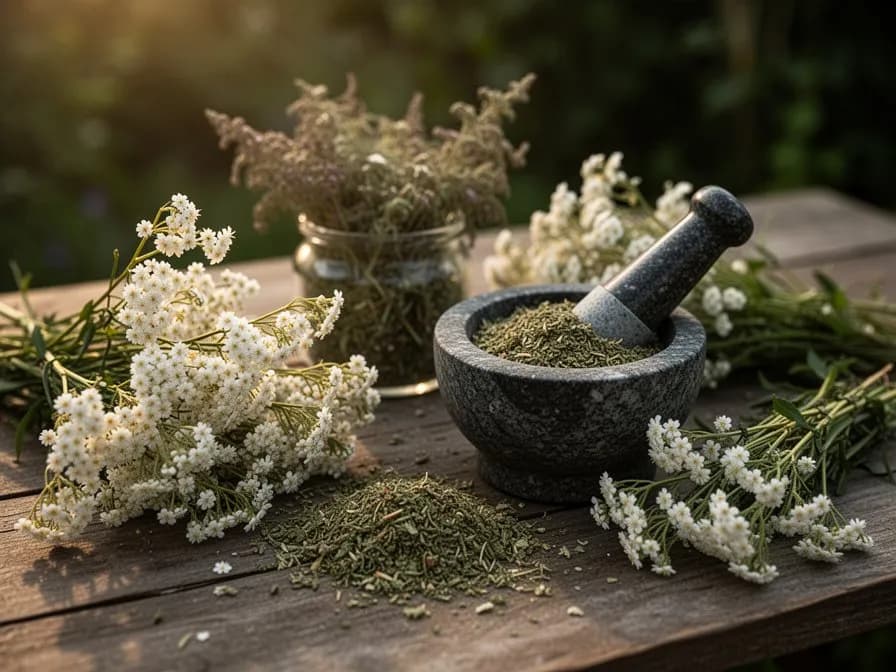
Coseche los extremos floridos de la reina de los prados cuando los racimos estén en plena floración y la fragancia alcance su punto máximo. Corte los 20-30 cm superiores incluyendo las flores y las hojas altas. La cosecha matutina captura el mayor contenido de aceites volátiles. Para la infusión se usan tanto las flores como las hojas — las flores tienen un sabor más dulce mientras que las hojas son más activas medicinalmente. Seque con rapidez colgando pequeños manojos en un lugar cálido, oscuro y bien ventilado para preservar la delicada fragancia y los compuestos activos.

se supone que plantas al comenzar el periodo — indica tu fecha real
Cosecha Reina de los prados a tiempo y la planta sigue produciendo.
Almacenamiento y conservación
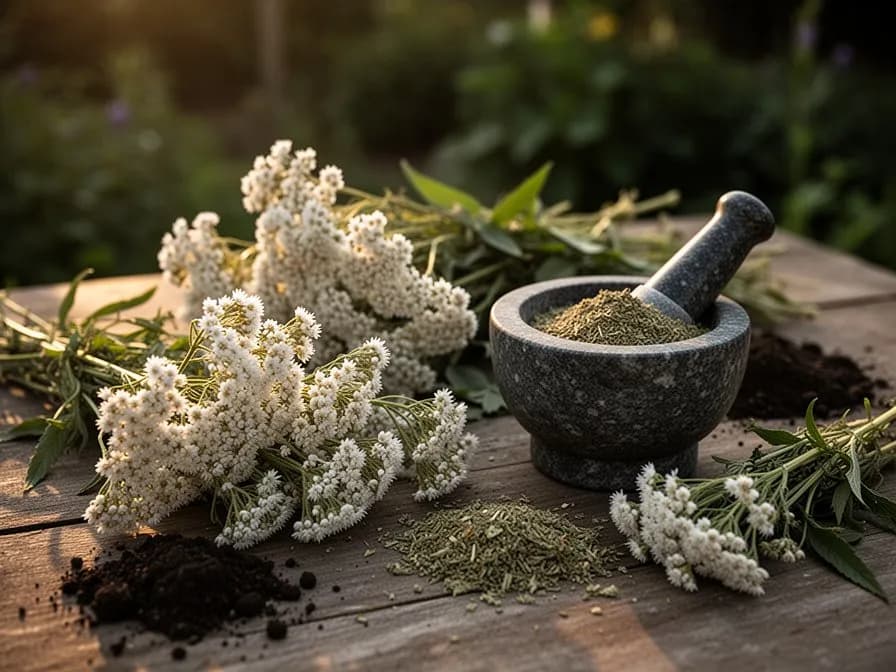
Seque la reina de los prados colgando pequeños manojos boca abajo en un lugar cálido, oscuro y bien ventilado durante 1-2 semanas. Las flores secas conservan gran parte de su dulce fragancia y elaboran una deliciosa infusión con sabor a miel. Guárdelas en tarros herméticos alejados de la luz hasta un año. Prepare una tintura con los extremos floridos frescos en alcohol para obtener la preparación más activa medicinalmente. Infusione las flores frescas en miel para obtener un endulzante fragante y calmante. Las flores secas también se usan en popurrís y saquitos aromáticos.
Qué falla — y cómo solucionarlo
Oídio
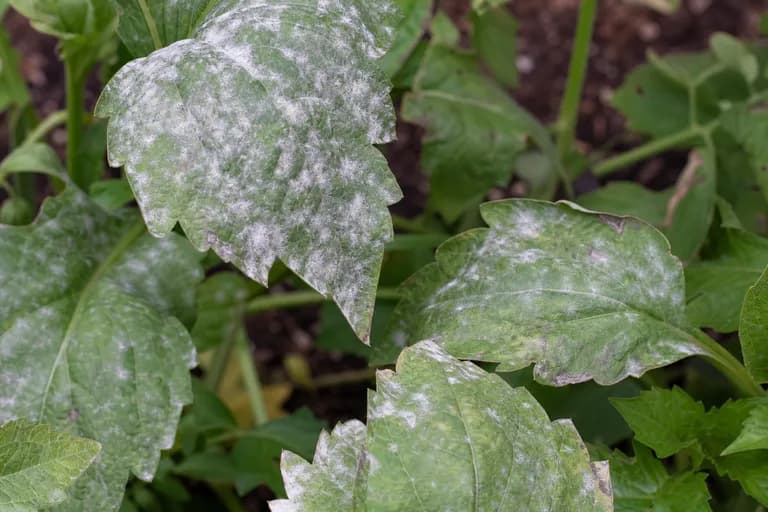
EnfermedadRecubrimiento blanco polvoriento en las hojas a finales del verano, especialmente cuando el suelo se seca o la circulación del aire es deficiente.
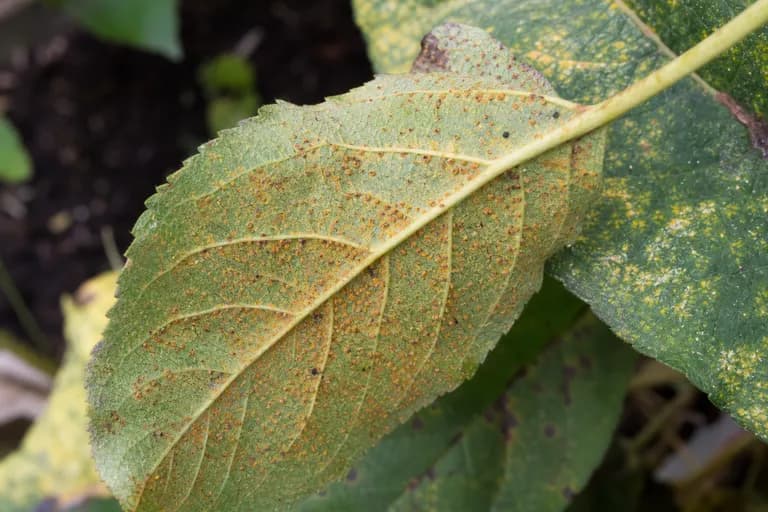
Roya
EnfermedadManchas marrón-anaranjadas en el envés de las hojas, amarillamiento de la cara superior y caída prematura de las hojas.
Solución de problemas comunes
No tolera el suelo seco — la sequía provoca un rápido deterioro, oídio y escasa floración. En condiciones de mucha humedad puede extenderse más de lo deseado mediante la expansión de rizomas; divídala regularmente para controlarla. La dulce fragancia atrae a algunos visitantes, pero puede resultar abrumadora en espacios cerrados. Las plantas se vuelven laxas con demasiada sombra; asegure al menos algo de luz solar directa. El oídio a finales del verano es frecuente pero en su mayoría es cosmético.
Consejos de cultivo
- Plante la reina de los prados a pleno sol o semisombra en suelo constantemente húmedo y rico en humus con un pH de 6.0-7.5 — crece de forma natural junto a arroyos y en prados húmedos, por lo que la humedad fiable es el factor más importante para el éxito.
- La reina de los prados tolera condiciones pantanosas que pudrirían a la mayoría de las plantas perennes de jardín, lo que la convierte en idónea para jardines de lluvia, márgenes de estanques y zonas con drenaje deficiente que son difíciles de plantar con otras especies.
- La propagación por división de rizomas en primavera es mucho más fácil y rápida que a partir de semillas — basta con levantar una sección de la masa radicular rastrante con una pala afilada, asegurándose de que cada pieza tenga al menos tres yemas de crecimiento, y replantarla a la misma profundidad.
- Si va a cultivar a partir de semillas, siembre semillas frescas en la superficie de compost húmedo en otoño y deje la bandeja al exterior durante el invierno — las semillas de reina de los prados requieren varias semanas de estratificación en frío y luz para germinar en primavera.
- Riegue abundantemente durante los períodos secos, especialmente en las dos primeras temporadas. Las plantas establecidas en terreno naturalmente húmedo son en gran medida autosuficientes, pero la reina de los prados en bordes de jardín más secos necesitará riego suplementario durante todo el verano.
- Corte todos los tallos a ras del suelo a finales de febrero o principios de marzo antes de que aparezca el nuevo crecimiento. Los tallos secos proporcionan un valioso refugio invernal para los insectos beneficiosos, así que resista la tentación de ordenar el jardín en otoño.
- Aplique cada primavera un acolchado de hojarasca o compost bien maduro alrededor de la base — esto imita los suelos ricos en materia orgánica del hábitat natural húmedo de la planta y retiene la humedad fundamental.
- Vigile la aparición de oídio en las hojas bajas durante veranos húmedos con mala circulación del aire. Aumente el espaciado entre plantas, evite el riego por aspersión y retire las hojas afectadas con prontitud para evitar su propagación.
- La reina de los prados puede extenderse vigorosamente a través de sus rizomas rastreros en condiciones óptimas. Conténgala plantándola dentro de una barrera enterrada (una maceta sin fondo o zócalo de pizarra hundido 30 cm en el suelo) si el espacio es limitado.
- Coseche las flores para máxima potencia cuando dos tercios del racimo estén abiertos, cortando por la mañana después de que se haya evaporado el rocío. Seque las cabezas florales con rapidez en un espacio cálido y aireado lejos de la luz solar directa para preservar el color y el contenido de aceites esenciales.
Cultiva tu mejor Reina de los prados — y todo lo que la rodea.
Empieza un plan gratis hoy. Diseña tus bancales, coloca tu Reina de los prados y deja que PlotMyGarden gestione el momento, el espaciado, las asociaciones y los recordatorios de la semilla a la cesta.
Elige tu Reina de los prados
Filipendula ulmaria (Reina de los prados común)
La especie medicinal estándar con plumosos penachos de flores cremosas. Fuente de ácido salicílico. Fragancia dulce a almendra y miel.
Filipendula ulmaria 'Aurea'
Forma ornamental de hojas doradas con follaje chartreuse. Las mismas flores fragantes. Muy llamativa en bordes sombreados.
Filipendula vulgaris (Filipéndula)
Especie emparentada que tolera condiciones más secas. Flores blancas en plantas más compactas. Perfil medicinal diferente.
Las flores secas de reina de los prados se venden entre 8 y 15 dólares los 50 g en herbolarios y tiendas de hierbas en línea. Una mata establecida produce 200-400 g de flores secas por temporada, lo que representa un valor anual de 30-120 dólares en hierba seca. Una vez plantada, la reina de los prados requiere casi ningún insumo más allá del agua y se extiende libremente, proporcionando una cosecha cada vez mayor. Cultivarla en casa también garantiza la frescura y la pureza — aspectos importantes para una hierba medicinal cuya potencia se degrada con la edad y el almacenamiento.
Recetas rápidas
Infusión de flores de reina de los prados
10 minutosUna fragante infusión herbal con aroma a miel que realza el delicado sabor a almendra-vainilla de la reina de los prados. Esta tisana tradicional se ha utilizado durante siglos como suave digestivo y remedio para el dolor de cabeza. Prepárela más bien ligera que fuerte — los taninos pueden volverse amargos si se deja en infusión demasiado tiempo.
4 ingredientesAromatizante de hidromiel con reina de los prados
30 minutos (más la fermentación)La reina de los prados es la hierba original del hidromiel — sus flores aportan un carácter complejo, enmielado y almendrado al hidromiel casero que el lúpulo simplemente no puede replicar. Este sencillo método de infusión añade la reina de los prados durante la fermentación secundaria para obtener el sabor más refinado sin extraer taninos en exceso.
4 ingredientesJarabe de flores de reina de los prados
25 minutos (más infusión de una noche)Este jarabe dorado captura la exquisita fragancia a miel y almendra de la reina de los prados en una forma versátil. Úselo sobre panna cotta, mézclelo en agua con gas para obtener una soda floral, añádalo a cócteles, o utilícelo como calmante jarabe para la garganta en temporada de resfriados. Los salicilatos naturales le confieren un suave beneficio medicinal junto a su encanto culinario.
5 ingredientesQué contiene
Beneficios para la salud
- Contiene salicilatos naturales que proporcionan efectos antiinflamatorios y analgésicos suaves de origen vegetal — la reina de los prados se ha utilizado durante siglos para aliviar dolores de cabeza, dolores articulares y musculares sin los duros efectos secundarios gástricos de la aspirina sintética
- El alto contenido en taninos (en particular rugosinas y elagitaninos) protege y suaviza la mucosa gástrica, haciendo de la reina de los prados una de las pocas hierbas antiinflamatorias recomendadas tradicionalmente para personas con estómagos sensibles o molestias gástricas leves
- Los compuestos flavonoides, incluidos la quercetina y el kaempferol, actúan como potentes antioxidantes, ayudando a neutralizar los radicales libres, reducir el estrés oxidativo y apoyar la salud cardiovascular a lo largo del tiempo
- Los herbolarios tradicionales utilizan la reina de los prados como suave diurético y hierba depurativa, favoreciendo la función renal y ayudando a reducir la retención de líquidos y las molestias urinarias leves
- Los compuestos mucilaginosos de las flores alivian las membranas mucosas inflamadas de todo el tracto digestivo, proporcionando alivio del ardor de estómago, el reflujo ácido y la gastritis leve
- La infusión de reina de los prados se ha utilizado como febrífugo (reductor de fiebre) tradicional en el norte de Europa durante siglos — los salicilatos naturales favorecen la transpiración y ayudan a bajar la temperatura corporal elevada durante resfriados y gripes
De dónde viene Reina de los prados
La reina de los prados (Filipendula ulmaria) es originaria de Europa y Asia occidental, con un área de distribución que va desde Islandia y las Islas Británicas hacia el este a través de la Eurasia templada hasta Mongolia y partes del noroeste de China. Se ha naturalizado en el noreste de Norteamérica, donde escapó de los jardines de hierbas coloniales. La planta prospera en prados húmedos, orillas de arroyos, brezales y bordes de bosques húmedos — en cualquier lugar con suelo fértil y consistentemente húmedo.
La evidencia arqueológica sitúa el uso humano de la reina de los prados en al menos 4.000 años de antigüedad. Se han encontrado restos de polen y flores en yacimientos funerarios de la Edad del Bronce en toda Gran Bretaña e Irlanda, incluido el famoso enterramiento campaniforme de Ashgrove, Fife (c. 2000 a. C.), donde las flores de reina de los prados forraban la tumba y posiblemente se usaron para preparar una bebida ritual fermentada. Hallazgos similares en múltiples yacimientos del Neolítico y la Edad del Bronce sugieren que la planta tuvo un profundo significado ceremonial.
Los druidas consideraban a la reina de los prados entre sus hierbas más sagradas. A lo largo de la Europa medieval sirvió como hierba aromática para esparcir en el suelo — sus flores se depositaban en el pavimento, se introducían en colchones y se añadían al agua de lavado por sus cualidades antisépticas y aromáticas. Se convirtió en la principal hierba aromatizante del hidromiel y la cerveza antes de que el lúpulo ganara protagonismo, y el probable origen de su nombre inglés es 'meodu-swete' (hierba del hidromiel) en inglés antiguo.
La mayor contribución de la reina de los prados a la medicina moderna llegó en 1838, cuando un químico italiano aisló ácido salicílico de sus yemas florales. En 1897, Felix Hoffmann en Bayer utilizó este descubrimiento como base para sintetizar el ácido acetilsalicílico — la aspirina. El propio nombre del fármaco honra a la planta: 'a' de acetilo y 'spirina' de Spiraea, antiguo género de la reina de los prados. Esto convierte a la reina de los prados en una de las plantas medicinales históricamente más significativas de la farmacopea occidental, directamente responsable de uno de los medicamentos más ampliamente utilizados en el mundo.
Reina de los prados: ¿sabías que?
Datos fascinantes sobre Reina de los prados
La reina de los prados era una de las tres hierbas consideradas más sagradas por los antiguos druidas, junto con la menta acuática y la verbena — juntas se usaban en ceremonias de purificación ritual.
Reina de los prados: preguntas frecuentes
¿Cuándo debo plantar Reina de los prados?
¿Cuáles son buenas plantas acompañantes para Reina de los prados?
¿En qué zonas de rusticidad puede crecer Reina de los prados?
¿Cuánto sol necesita Reina de los prados?
¿A qué distancia debo espaciar Reina de los prados?
¿Qué plagas y enfermedades afectan a Reina de los prados?
¿Cómo almaceno Reina de los prados después de la cosecha?
¿Cuáles son las mejores variedades de Reina de los prados para cultivar?
¿Qué suelo necesita Reina de los prados?
¿Es segura la reina de los prados para personas alérgicas a la aspirina?
¿Puedo cultivar la reina de los prados en un parterre de jardín normal que no sea pantanoso?
¿Cuándo y cómo debo cosechar las flores de reina de los prados para uso herbal?
¿Cómo se extiende la reina de los prados y se puede volver invasora?
¿Cuál es la relación entre la reina de los prados y la aspirina?
¿Puedo usar también las hojas de la reina de los prados además de las flores?
Acabas de leer la teoría. Ahora cultívala en piloto automático.
Todo lo que hace que Reina de los prados sea delicado — el momento, el espaciado, las asociaciones, la ventana de cosecha — es justo lo que PlotMyGarden resuelve por ti, para cada planta de tu huerto.
Un plan que conoce tu clima
Indica tu ubicación una vez. Recibe fechas de siembra, abonado y cosecha basadas en tu última helada real y el pronóstico en vivo — sin adivinar con un sobre genérico.
De la sección “Cuándo plantar”Planificador de bancales de arrastrar y soltar
Diseña bancales sobre una cuadrícula. Cada planta encaja con su espaciado correcto y ves toda la temporada antes de gastar un céntimo en semillas.
De la sección “Cultivo”Conflictos de asociación, detectados a tiempo
Más de 200 buenas y malas combinaciones comprobadas en vivo mientras plantas — para que un error que arruine la temporada nunca llegue a la tierra.
De la sección “Asociaciones”Recordatorios que sí vas a seguir
“Riega las judías.” “Recoge hoy antes de que se pase.” Oportunos, concretos y ligados a las plantas que de verdad cultivas.
De la sección “Cosecha”Escalonado, programado
¿Quieres cosechar seis semanas en vez de seis días? Reparte tus siembras automáticamente y te avisa cuando toca el siguiente lote.
De la sección “Cuándo plantar”Un registro que se vuelve más listo
Cada cosecha que registras le enseña tu huerto. El plan del año que viene parte de lo que de verdad funcionó en tu suelo, no en un manual.
De la sección “Resumen”Planta estos junto a Reina de los prados
Más Hierbas medicinales
Diseños de jardín con Reina de los prados
Cultiva tu mejor Reina de los prados — y todo lo que la rodea.
Empieza un plan gratis hoy. Diseña tus bancales, coloca tu Reina de los prados y deja que PlotMyGarden gestione el momento, el espaciado, las asociaciones y los recordatorios de la semilla a la cesta.