Lychee
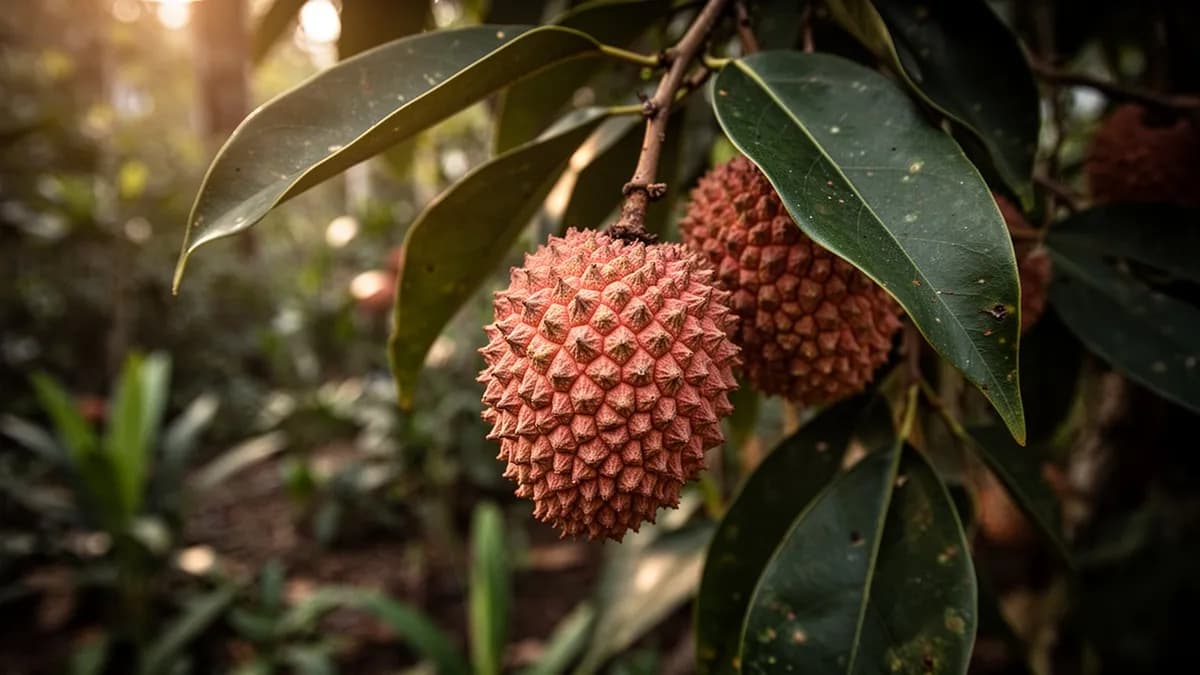
An evergreen subtropical tree producing clusters of bumpy red-skinned fruits with translucent, fragrant, juicy flesh.





On this pageOverview
Meet Lychee
An evergreen subtropical tree producing clusters of bumpy red-skinned fruits with translucent, fragrant, juicy flesh. Lychees require a cool, dry winter period to initiate flowering, followed by warm, humid conditions for fruit development. They are slow to establish and may take five or more years to produce their first crop.
When to plant Lychee
Lychee seeds lose viability quickly and should be planted within days of extraction from the fruit. Clean the seed and plant it horizontally about one inch deep in moist, well-draining potting mix. Keep warm at 75 to 85 degrees Fahrenheit and consistently moist. Germination occurs in one to four weeks. Seedling trees are not true to type and may take ten or more years to fruit, so grafted or air-layered trees are strongly preferred for fruit production.
Your Lychee Year
Composed for Zone 7 · typical seasons · frost passes Apr 2, returns Nov 1
Plant Lychee Mar – May, pick May – Jul. Check the planting methods below and set your climate to personalize these windows.
How to grow Lychee
Lychee trees perform best in warm subtropical climates with distinct cool and dry winter periods that trigger flowering. Choose a planting site with full sun and protection from strong winds, as lychee branches are somewhat brittle. Dig a hole three times wider than the root ball and amend heavy clay soils with compost to improve drainage. Water deeply after planting and maintain consistent moisture during the first two years.
Lychees are sensitive to soil pH and prefer slightly acidic conditions between 5.0 and 5.5. Apply a thick layer of organic mulch extending to the drip line to conserve moisture and suppress weeds. Fertilize young trees every two months with a balanced fertilizer, switching to a low-nitrogen, high-potassium formula once trees begin fruiting. Avoid excessive nitrogen, which promotes vegetative growth at the expense of flowers.
Pruning should be done immediately after harvest to shape the canopy and remove dead or crossing branches. This timing allows new growth to mature before the next flowering cycle. Lychee trees are shallow-rooted and sensitive to waterlogging, so ensure excellent drainage. In areas with occasional light frost, protect young trees with frost cloth during cold snaps.
Lychee needs more room than a 4 × 8 ft bed gives
Each Lychee wants 600 cm of elbow room. The planner keeps that spacing for you — every plant, every bed.
Related growing guides
Feed it well
Lychees require well-draining, acidic soil with a pH of 5.0 to 5.5. They do not tolerate alkaline conditions, which cause iron and manganese deficiencies. Amend alkaline soils with sulfur and use acidifying fertilizers. Apply a complete fertilizer formulated for acid-loving tropical fruit trees three to four times per year. Supplement with chelated iron and manganese if leaf yellowing occurs. Organic matter in the form of compost or aged manure improves soil structure and nutrient retention.
Ideal Temperature
Hardiness Zone Compatibility
From seed to harvest, stage by stage
Seedling / Establishment
Lychee begins as a slow-growing seedling or air-layered cutting. During the first year, the plant focuses almost entirely on root development and establishing a sturdy root system. Foliage flushes appear in waves of bronze-red new growth that gradually matures to dark glossy green.
Juvenile Growth
Years two and three bring accelerated canopy development. The tree produces multiple flush cycles each year, with each new flush hardening off before the next emerges. Branching structure becomes more defined, and the tree begins to resemble its mature form. No fruiting occurs at this stage.
Pre-Flowering Stress Period
Mature lychee trees require a cool, dry stress period in autumn and winter to initiate flower bud formation. Temperatures between 10–15°C (50–59°F) for 4–6 weeks, combined with reduced irrigation, signal the tree to shift from vegetative growth to reproductive mode.
Flowering & Pollination
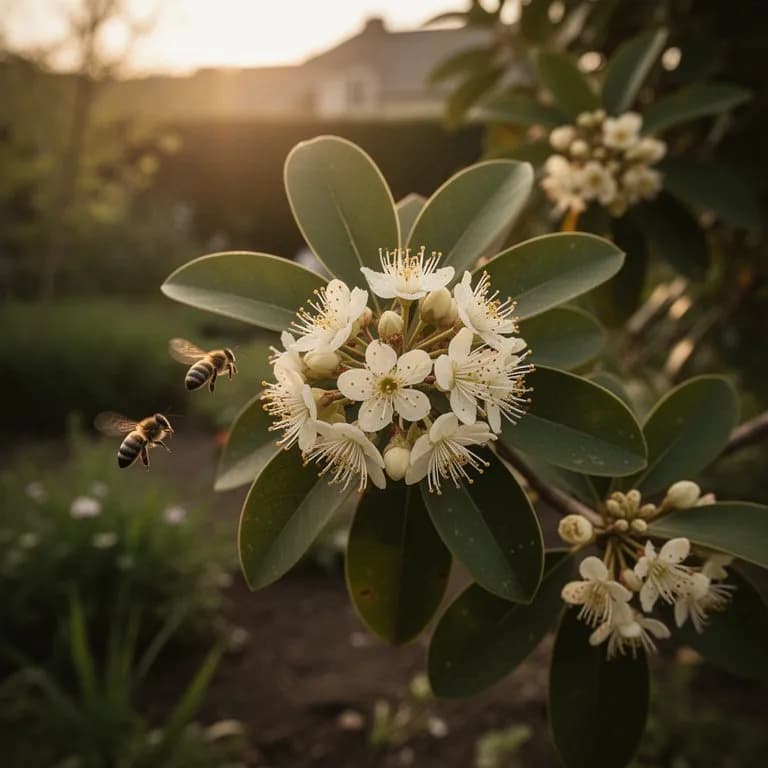
In late winter to early spring, the tree erupts in large panicles of small, fragrant, yellowish-white flowers. Each panicle can contain hundreds to thousands of individual flowers. Lychee flowers are visited by bees and other pollinators. Both male and female flowers appear on the same panicle, making cross-pollination between trees beneficial.
Fruit Development
After successful pollination, small green fruits develop rapidly. They undergo a critical cell-division phase in the first few weeks, then expand dramatically over the following 10–12 weeks. The fruit skin transitions from green to yellow-green and finally to the characteristic pink-red or crimson color as sugars accumulate.
Ripening & Harvest
Lychees ripen approximately 90–120 days after flower set. Ripe fruits display a fully colored, bright red or pink skin (variety dependent), are firm yet slightly yielding to the touch, and emit a sweet floral fragrance. The entire cluster ripens within a short window of 1–2 weeks.
Post-Harvest Rest & Flush
After harvest, the tree enters a period of vigorous vegetative flushing as it replenishes energy reserves. This post-harvest flush is critical for setting next year's crop. The tree produces one or more strong growth flushes before the onset of the autumn stress period.
Keep the root zone consistently moist but never waterlogged. Protect from direct afternoon sun during the hottest months and from any frost. Avoid fertilizing heavily during the first few months to prevent root burn.
Caring for Lychee month by month
What to do each month for your Lychee
October
You are hereBegin the cool-dry stress period. Irrigate only when leaves show slight wilting. Do not fertilize. Remove any late vegetative flushes that emerge, as they will not harden before winter and may interfere with flower initiation.
Know exactly what to do in your garden — every month
One email at the start of each month: what to sow, plant, and tackle right now — for your Lychee and everything growing around it. Plus a short starter course that helps you dodge the classic mistakes.
- What to do, right now
- Matched to your season
- Starter course included
Harvesting Lychee
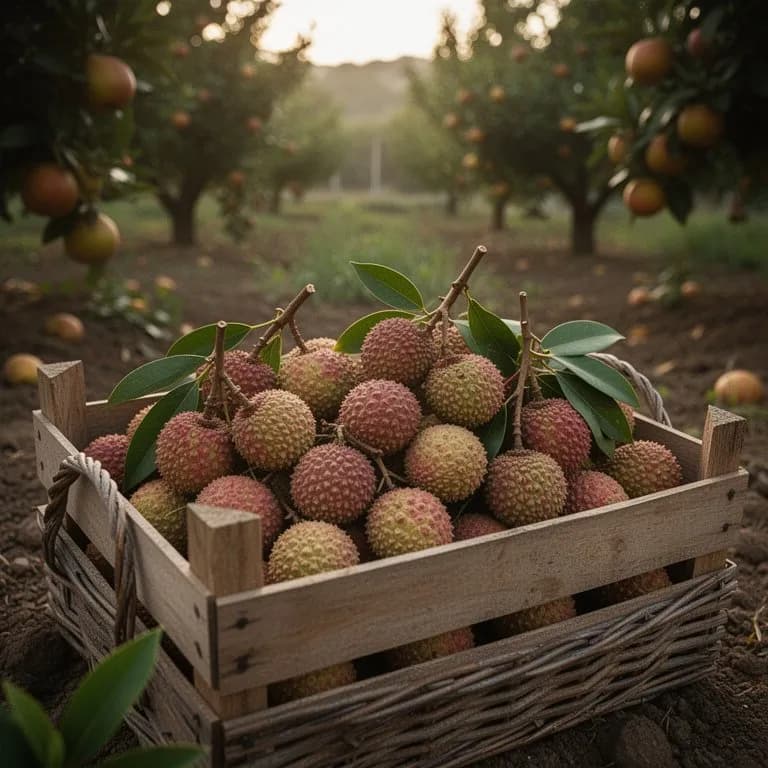
Lychees are ready to harvest when the skin turns fully red or pink depending on variety and the bumps flatten slightly. Taste-test a fruit to confirm sweetness, as lychees do not ripen further after picking. Harvest entire clusters by cutting the panicle stem with pruning shears, keeping a short section of branch attached. Pick in the morning when fruit temperatures are cool. Handle gently to avoid bruising the delicate skin.
assuming you plant when the window opens — set your real date
Pick Lychee promptly and the plant keeps producing.
Storage & Preservation
Fresh lychees are highly perishable and should be refrigerated immediately after harvest in a perforated plastic bag, where they keep for one to two weeks. The skin will darken with refrigeration but the flesh remains good. For longer storage, freeze whole unpeeled lychees for up to six months. Lychees can also be dried in their shells to produce a raisin-like product, or canned in light syrup. Peeled and pitted lychees freeze well in syrup packs.
What goes wrong — and the fix
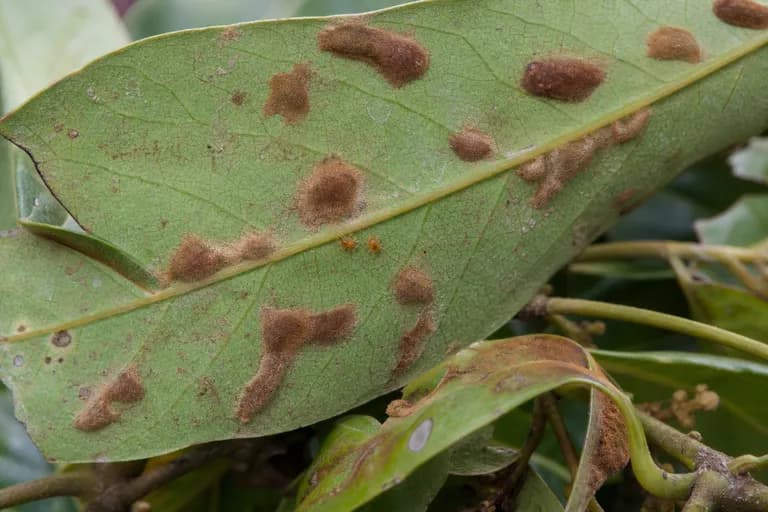
Lychee Erinose Mite
PestVelvety brown or reddish-brown galls on the underside of leaves, curling and distortion of new growth, reduced fruit set.
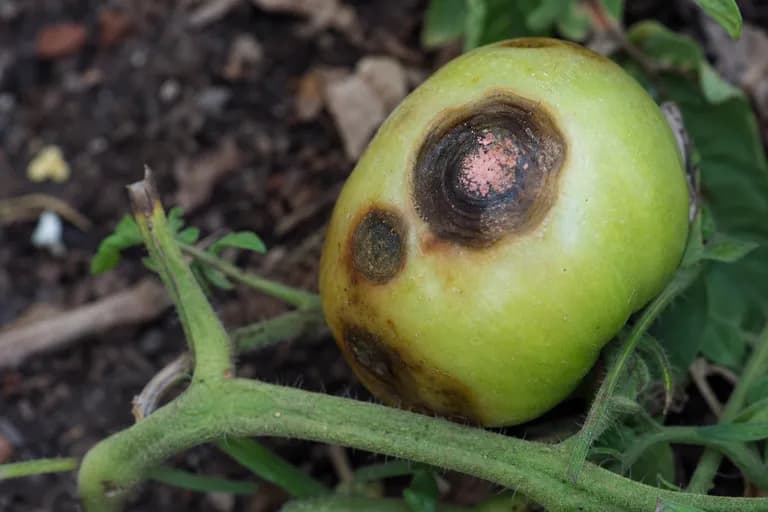
Anthracnose
DiseaseDark brown spots on leaves and fruit skin, fruit cracking and rotting, premature fruit drop during wet weather.
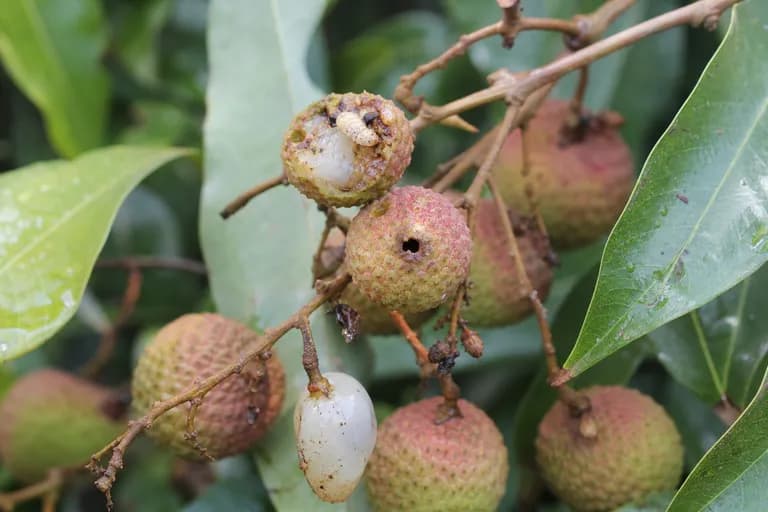
Lychee Fruit Borer
PestSmall entry holes in developing fruit, larvae feeding inside the seed cavity, premature fruit drop and frass at the stem end.
Troubleshooting Common Problems
Poor fruit set is the most common complaint and usually results from insufficient winter chilling, excessive nitrogen fertilization, or warm wet weather during flowering. Fruit cracking occurs when heavy rain follows a dry period during fruit development. Lychee trees are slow to establish and may take five to ten years to produce a meaningful crop. Sunburn can damage exposed fruit, so maintain adequate canopy density. Salt sensitivity limits planting near coastal areas with salt spray.
Growing Tips
- Always choose a grafted or air-layered tree from a reputable nursery rather than growing from seed—grafted trees fruit years earlier, produce true-to-type fruit, and are far more predictable in quality and yield.
- Lychee demands full sun for at least 8 hours a day; shaded trees grow lushly but rarely fruit well, so select your planting site carefully and do not allow surrounding trees to overshadow the canopy as it matures.
- Consistent soil moisture during fruit development is critical—fluctuating wet-dry cycles during the 10–12 weeks of fruit expansion are the primary cause of fruit cracking and splitting, which ruins the harvest.
- Never skip the autumn-winter cool-dry stress period; if your climate does not naturally provide 4–6 weeks of cool temperatures and reduced rainfall, you may need to withhold irrigation deliberately to simulate this stress and trigger flower initiation.
- Lychee is highly sensitive to waterlogged soils and root rot—always plant in well-draining soil or raised mounds, and never allow the root zone to sit in standing water, especially during the cooler months.
- Feed with a balanced fertilizer (e.g., 6-6-6 with micronutrients) three times per year during the growing season—once after the cool period ends in late winter, again after fruit set, and finally immediately after harvest to fuel the critical post-harvest flush.
- Container growing is viable in cooler climates using a large pot of at least 100–200 liters; choose a dwarf or slow-growing variety, and move the container to a cool but frost-free location in winter to simulate the stress period required for flowering.
- Lychee foliage flushes in waves of bronze-red new growth that is extremely tender and attractive to aphids—monitor flush cycles closely and treat early aphid colonies with a strong water jet or diluted neem oil spray before populations explode.
- Light post-harvest pruning improves the structure of the canopy, removes dead or crossing wood, and encourages a well-branched framework that will carry heavier future crops—but avoid heavy pruning, which can delay the next fruiting season.
- Mulch the root zone generously with 10–15 cm (4–6 inches) of organic mulch, keeping it away from the trunk, to conserve soil moisture, moderate root temperature, suppress weeds, and gradually improve soil organic matter as the mulch breaks down.
Grow your best Lychee yet — and everything around it.
Start a free plan today. Lay out your beds, drop in your Lychee, and let PlotMyGarden handle the timing, spacing, companions and reminders from seed to harvest basket.
Pick your Lychee
Brewster
A vigorous, large tree producing medium-sized fruit with good flavor. One of the most widely planted varieties in Florida, though it can be an alternate bearer.
Mauritius
A reliable heavy producer with medium-sized fruit that has a small seed and sweet, aromatic flesh. Good choice for home gardens due to consistent bearing.
Emperor
Produces the largest fruits of any lychee variety, with excellent sweet flavor. Trees are compact and begin bearing at a younger age than most varieties.
Sweetheart
A dwarf variety suitable for container growing, producing small to medium fruits with exceptionally sweet flesh. Self-fertile and bears at a young age.
Fresh lychees are a premium fruit in most Western markets, often retailing for $6–$12 per pound when imported, and premium fresh lychees during peak season can reach $15 or more per pound at specialty stores. A single mature, well-established lychee tree in a suitable climate can yield 45–100 kg (100–220 lbs) of fruit annually, representing a potential market value of $600–$2,400 or more from a single tree each season. Beyond raw fruit, home growers can produce lychee preserves, dried lychees, and lychee-infused products at a fraction of retail cost. Even in containers, a productive lychee tree typically recoups its initial investment within 3–5 fruiting seasons and continues to produce for decades, offering an outstanding long-term return for the dedicated home orchardist.
Quick recipes
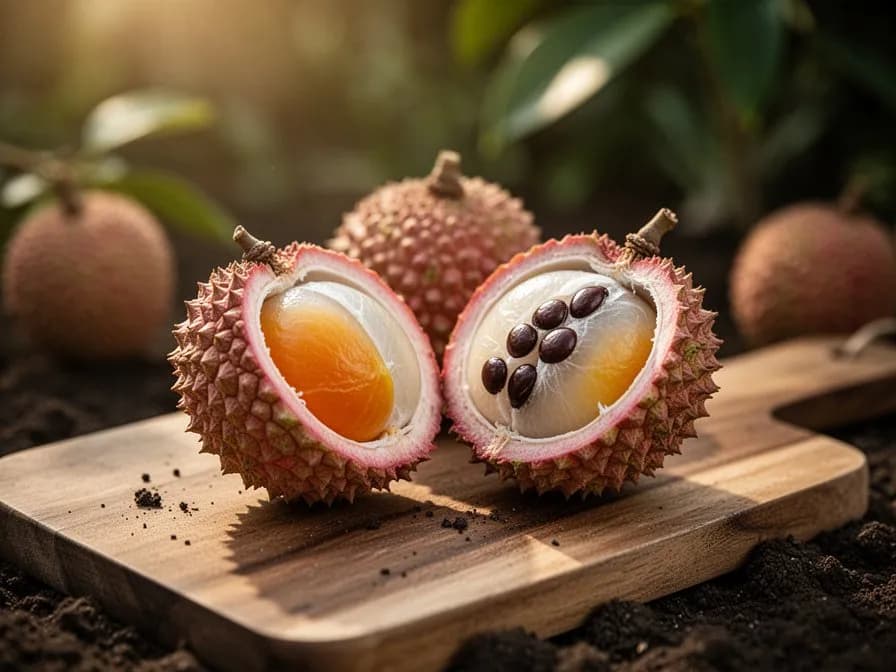
Lychee and Rose Water Sorbet
15 minutes (plus 4 hours freezing)A fragrant, refreshing frozen dessert that highlights lychee's natural floral perfume. Blended with a touch of rose water and lime juice, this elegant sorbet requires no ice cream maker and showcases the fruit beautifully.
6 ingredients
Thai Lychee and Prawn Salad
20 minutesA vibrant sweet-savory salad combining fresh lychees with succulent prawns, crisp cucumber, fresh herbs, and a punchy lime-fish sauce dressing. A classic pairing in Southeast Asian cuisine that balances sweetness, acidity, and heat in every bite.
9 ingredientsLychee Mocktail with Lemongrass and Mint
10 minutesA refreshing and fragrant non-alcoholic drink perfect for warm days. Lychee juice is blended with lemongrass syrup, fresh mint, and sparkling water for a sophisticated garden cocktail that makes the most of a fresh harvest.
6 ingredientsCulinary Uses
Fresh lychees are eaten out of hand by peeling the bumpy skin to reveal the translucent, juicy flesh surrounding a single seed. They are used in fruit salads, cocktails, and desserts. Lychee pairs well with coconut, lime, and ginger in Asian-inspired dishes. The fruit is commonly used in sorbets, ice cream, and jellies. Dried lychees are enjoyed as a sweet snack throughout Southeast Asia.
What's inside
Health Benefits
- Exceptional vitamin C content supports immune function, collagen synthesis, and wound healing—one serving can meet your entire daily vitamin C requirement
- Rich in antioxidant polyphenols, particularly proanthocyanidins and rutin, which help neutralize free radicals and protect cells from oxidative stress
- Contains oligonol, a unique polyphenol form found in lychee that research suggests may improve blood circulation and reduce post-exercise fatigue
- Provides potassium and magnesium, electrolytes that support healthy heart rhythm, blood pressure regulation, and muscle function
- B vitamins including folate support DNA synthesis and repair, making lychee a beneficial fruit during pregnancy and periods of rapid cell growth
- High water content combined with natural sugars and electrolytes makes lychee an excellent natural hydration aid in hot climates and after physical activity
Where Lychee comes from
The lychee (Litchi chinensis) is one of the oldest and most revered fruits of East Asia, with a cultivation history stretching back at least 2,000 years in the subtropical provinces of southern China. The earliest written records of the lychee appear during the Han Dynasty (206 BCE–220 CE), when the fruit was already regarded as a luxury delicacy fit for emperors. Historical accounts describe Tang Dynasty Emperor Xuanzong ordering fresh lychees transported by relay horsemen from Guangdong province to the imperial capital, a journey of over 1,000 kilometers, simply to please his beloved consort Yang Guifei—a story that has made the lychee an enduring symbol of imperial indulgence and devoted love in Chinese culture.
For centuries, lychee cultivation was confined to southern China and parts of northern Vietnam, where the combination of tropical heat, winter cool spells, and monsoon rainfall created ideal growing conditions. The fruit remained largely unknown to the outside world until Portuguese sailors and merchants began trading in the region in the 16th century, gradually introducing lychee to other parts of Asia, Africa, and eventually the Americas.
By the 17th and 18th centuries, lychee cultivation had spread to India, particularly Bengal and Bihar, where the fruit found a warm welcome and became deeply embedded in local culinary traditions. French missionaries brought the tree to Réunion island in the Indian Ocean in 1764, from which it spread across the broader Indian Ocean region. Lychee arrived in Florida around 1883 and in Hawaii shortly after, and today the United States maintains small but thriving commercial lychee industries in Florida, Hawaii, and California.
Modern lychee production is dominated by China, which accounts for the vast majority of the global harvest, followed by India, Vietnam, Thailand, South Africa, and Madagascar. Over 100 named cultivars have been developed, ranging from the famous 'Brewster' and 'Mauritius' varieties common in Western markets to prized Chinese varieties like 'Nuomici' (Glutinous Rice Lychee) and 'Guiwei' (Cinnamon Smell), which command premium prices for their exceptional flavor. The lychee remains one of the world's most beloved tropical fruits, celebrated across cultures for its uniquely perfumed sweetness and delicate translucent flesh.
Lychee: did you know?
Fascinating facts about Lychee
Lychee trees can live for hundreds of years—some trees in China are documented to be over 1,000 years old and are still producing fruit today.
Lychee questions, answered
When should I plant Lychee?
What hardiness zones can Lychee grow in?
How much sun does Lychee need?
How far apart should I space Lychee?
What pests and diseases affect Lychee?
How do I store Lychee after harvest?
What are the best Lychee varieties to grow?
What soil does Lychee need?
Why is my lychee tree growing beautifully but never producing any fruit?
How do I know when lychees are ripe and ready to harvest?
Can I grow lychee in a pot or container if I live in a cooler climate?
What is the best soil pH and type for growing lychee?
How long does it take for a lychee tree to produce fruit?
Why are the leaves on my lychee tree turning yellow?
You just read the theory. Now grow it on autopilot.
Everything that makes Lychee fiddly — the timing, the spacing, the companions, the harvest window — is exactly what PlotMyGarden handles for you, for every plant in your garden.
A plan that knows your weather
Set your location once. Get sow, feed and harvest dates built around your real last-frost date and live forecast — no more guessing from a generic seed packet.
From the “When to plant” sectionDrag-and-drop bed planner
Design beds on a grid. Every plant snaps to its proper spacing, and you can see your whole season laid out before you spend a cent on seed.
From the “Growing guide” sectionCompanion conflicts, caught early
200+ good-and-bad pairings checked live as you plant — so a season-wrecking mistake never makes it into the ground.
From the “Companions” sectionReminders you'll actually act on
“Water the beans.” “Pick today before it turns.” Timely, specific, and tied to the plants you're really growing.
From the “Harvest” sectionSuccession, scheduled
Want a harvest for six weeks, not six days? It spaces your sowings automatically and reminds you when each new block is due.
From the “When to plant” sectionA record that gets smarter
Every harvest you log teaches it your garden. Next year's plan starts from what actually worked in your soil, not a textbook's.
From the “Overview” sectionMore Tropical Fruits
Grow your best Lychee yet — and everything around it.
Start a free plan today. Lay out your beds, drop in your Lychee, and let PlotMyGarden handle the timing, spacing, companions and reminders from seed to harvest basket.