Arabian Jasmine
A tender, semi-climbing evergreen shrub bearing clusters of intensely fragrant white flowers that open at dusk and perfume the evening air.





On this pageOverview
Meet Arabian Jasmine
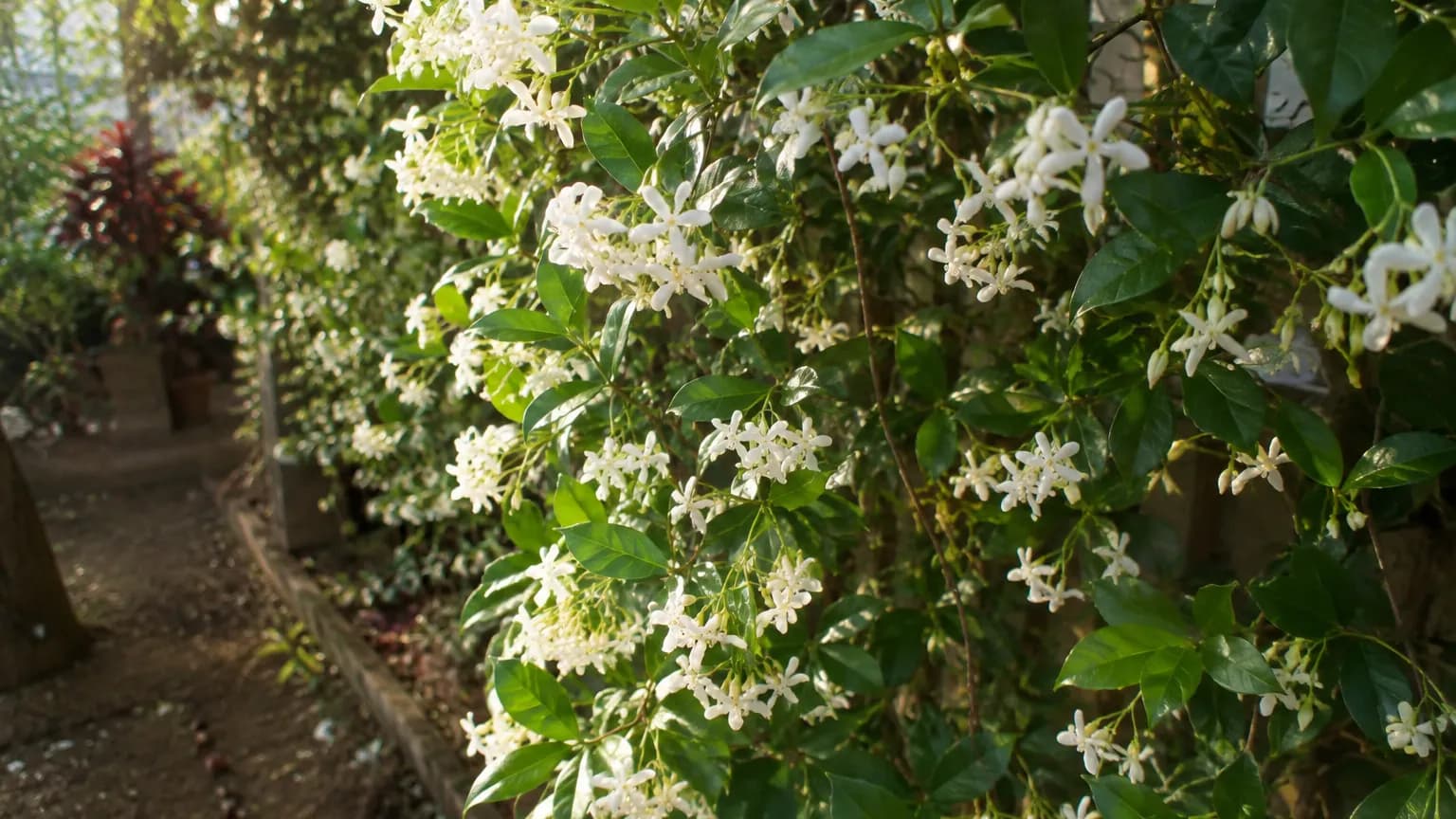
A tender, semi-climbing evergreen shrub bearing clusters of intensely fragrant white flowers that open at dusk and perfume the evening air. Arabian jasmine is the blossom used to scent jasmine tea and the national flower of the Philippines, where it is known as sampaguita and strung into garlands and leis. Outside zones 9 to 11 it is best grown in a container that summers on the patio and overwinters on a bright, cool windowsill. With warmth, regular feeding, and a small trellis for support, it blooms in repeated flushes from early summer into autumn.
When to plant Arabian Jasmine
Arabian jasmine is almost never grown from seed — seed is rarely set, especially on double-flowered cultivars, and seedlings are slow and variable. Propagate instead from semi-ripe stem cuttings taken in summer. Cut 8 to 10 centimeter sections of non-flowering shoots, remove the lower leaves, dip the base in rooting hormone, and insert into a moist, free-draining mix of perlite and coir. Keep at 20 to 25 degrees Celsius with high humidity and bright, indirect light; roots form in four to six weeks. Simple layering also works well: peg a low stem into a neighboring pot of compost and sever it from the parent once rooted, usually after six to eight weeks.
Your Arabian Jasmine Year
Composed for Zone 7 · typical seasons · frost passes Apr 2, returns Nov 1
Plant Arabian Jasmine Mar – May, pick Jun – Sep. Check the planting methods below and set your climate to personalize these windows.
How to grow Arabian Jasmine
Plant Arabian jasmine in spring, once all danger of frost has passed, in rich, well-drained, slightly acidic soil. Choose a bright position with four to six hours of sun, ideally gentle morning sun with light afternoon shade in hot climates. In zones 9 to 11 it can live outdoors permanently, forming a shrubby, semi-climbing mound one to two meters tall; everywhere else, grow it in a container of at least 30 to 40 centimeters so it can spend winter indoors. Provide a small trellis or obelisk — the plant scrambles rather than clings, so tie in the longest stems loosely as they extend.
Keep the root zone evenly moist during the growing season, watering containers whenever the top few centimeters of compost dry out, but never leave the pot standing in water. Feed every two weeks from spring through late summer with a balanced liquid fertilizer, switching to a high-potash formula once buds appear. Arabian jasmine relishes humidity; indoors, stand the pot on a pebble tray and mist the foliage occasionally, especially in heated rooms. From autumn onward move plants to their winter quarters — bright and cool at 10 to 15 degrees Celsius — water sparingly, and stop feeding until spring.
Pruning is simple but essential, because flowers form on new growth. Cut the whole plant back by about a third in late winter, just before growth resumes, to keep it compact and floriferous. After each summer flush fades, pinch out the stem tips and shorten any long, bare canes to encourage the branching that carries the next wave of buds. Repot container plants every two to three years in spring, moving up only one pot size, and top-dress with fresh compost in the years between.
2 plants fit a 4 × 8 ft bed
Each Arabian Jasmine wants 90 cm of elbow room. The planner keeps that spacing for you — every plant, every bed.
Arabian Jasmine's best neighbours
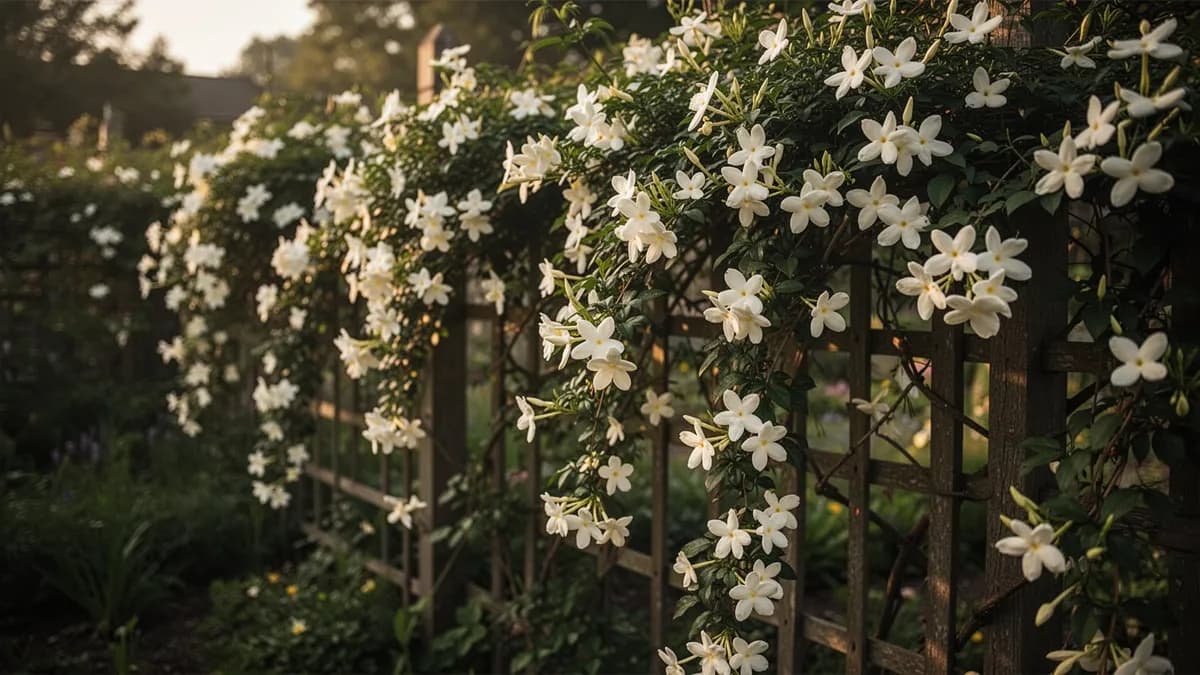
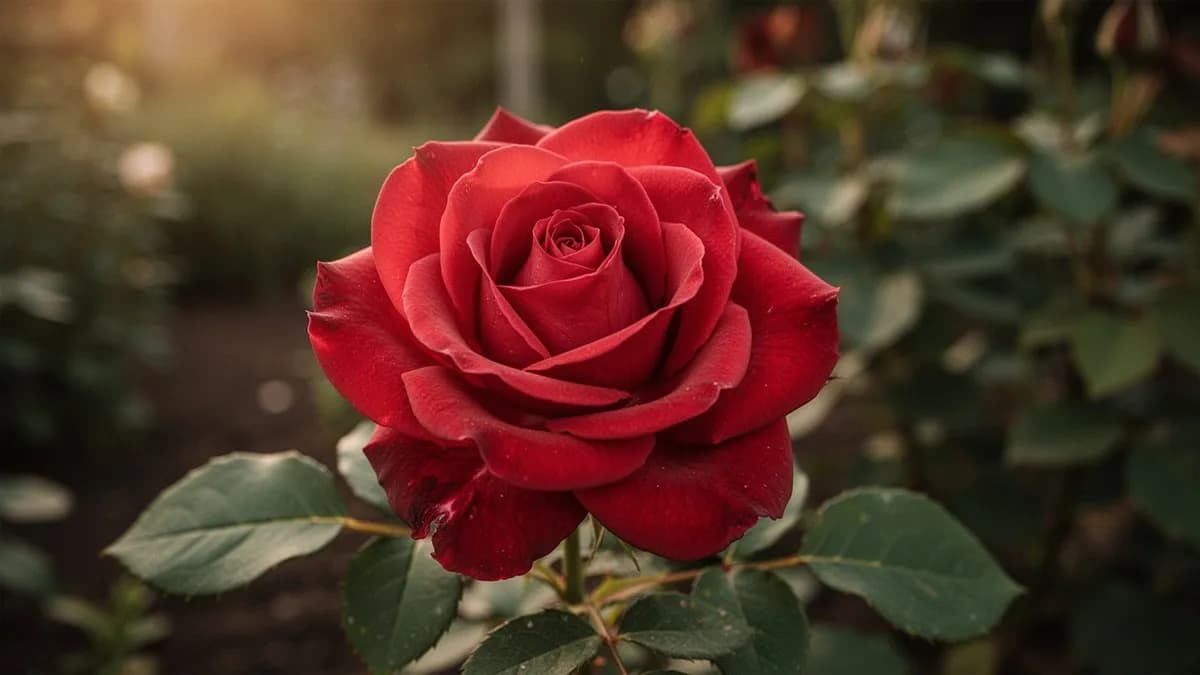
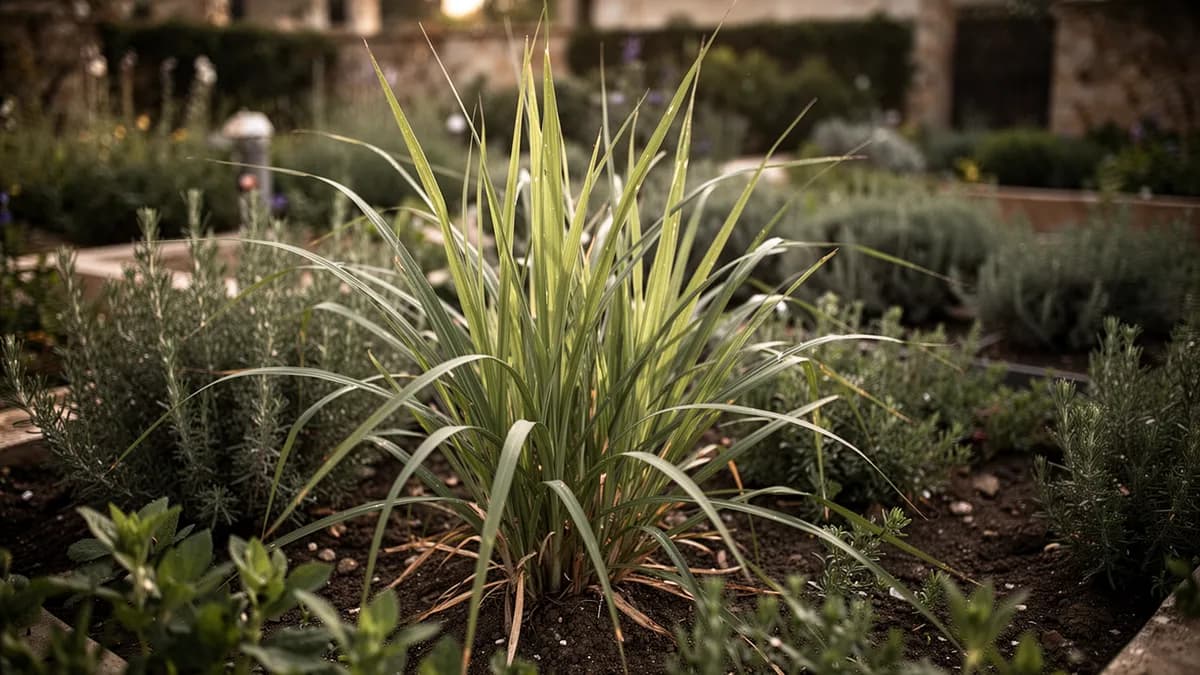
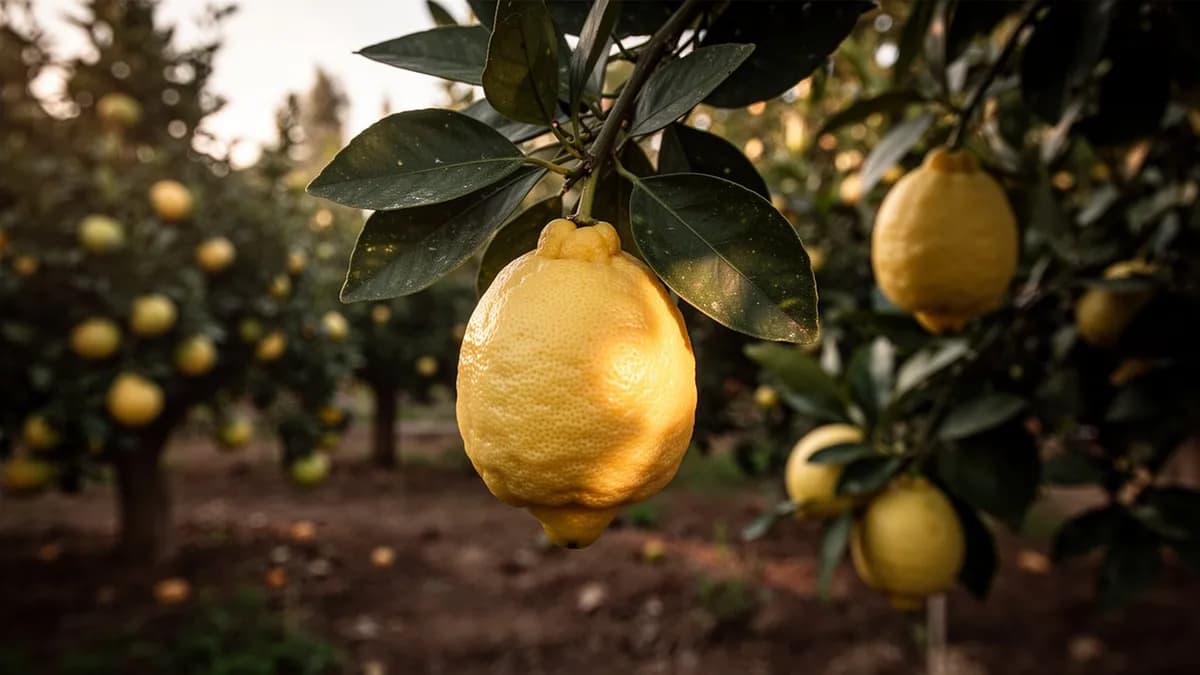
Arabian jasmine belongs where its evening perfume can be enjoyed — beside a patio door, along the path to a seating area, or in a container below an open window. It pairs naturally with roses and lavender in a fragrance garden, and with other tender container plants such as lemon trees and lemongrass that share the same bright, cool winter quarters. Where winters are too cold for J. sambac to stay outside, star jasmine (Trachelospermum jasminoides) makes a hardier outdoor stand-in with a similar look and scent. Avoid crowding it with vigorous twiners on the same small trellis; its slender stems are easily overwhelmed.
Star Jasmine belongs beside it.
Old growers' knowledge, checked against Arabian Jasmine's real companion table below — test any plant you're growing.
Try Arabian Jasmine in a bed — right here
A real planner bed with Arabian Jasmine already in it. Tap a companion to place it and watch the pairing checks answer — green for good neighbours, red for a clash.


Related growing guides
Feed it well
Arabian jasmine grows best in a fertile, humus-rich but sharply drained loam with a pH of 5.5 to 6.5. In containers, use a high-quality potting compost lightened with perlite or fine bark; on alkaline soils, grow in pots of ericaceous compost to avoid lime-induced chlorosis. Feed every two weeks from April to September with a balanced liquid fertilizer, and switch to a high-potash tomato feed once flower buds form. Stop feeding entirely from October to February. An annual spring top-dressing of composted bark or leaf mold keeps the root zone cool and evenly moist.
Ideal Temperature
Hardiness Zone Compatibility
From seed to harvest, stage by stage
Rooting the Cutting
Arabian jasmine is normally started from a semi-ripe cutting rather than seed. An 8 to 10 centimeter section of non-flowering stem, stripped of its lower leaves and dipped in rooting hormone, is inserted into a moist mix of perlite and coir. Kept warm at 20 to 25 degrees Celsius with high humidity, the cutting forms roots in four to six weeks. New leaf growth from the stem nodes is the first sign that rooting has succeeded.
Establishment & Potting On
Once rooted, the young plant is potted on into a 12 to 15 centimeter pot of slightly acidic, free-draining compost. Growth concentrates on building a root system and pushing the first strong shoots. Pinching out the very tip of each shoot once or twice in this phase builds the branching that will later carry flower buds. By the end of this phase the plant is a bushy young shrub 20 to 30 centimeters tall.
Vegetative Growth & Training
With warm days and regular feeding the plant pushes out long, flexible stems clothed in glossy, dark green oval leaves. This is the moment to give the plant its permanent support — a small trellis, obelisk, or hoop — and to tie in the longest stems loosely, since Arabian jasmine scrambles rather than clinging by itself. Stems left unsupported arch outward and form a mounding shrub, which is equally attractive in a wide pot.
First Flower Flush
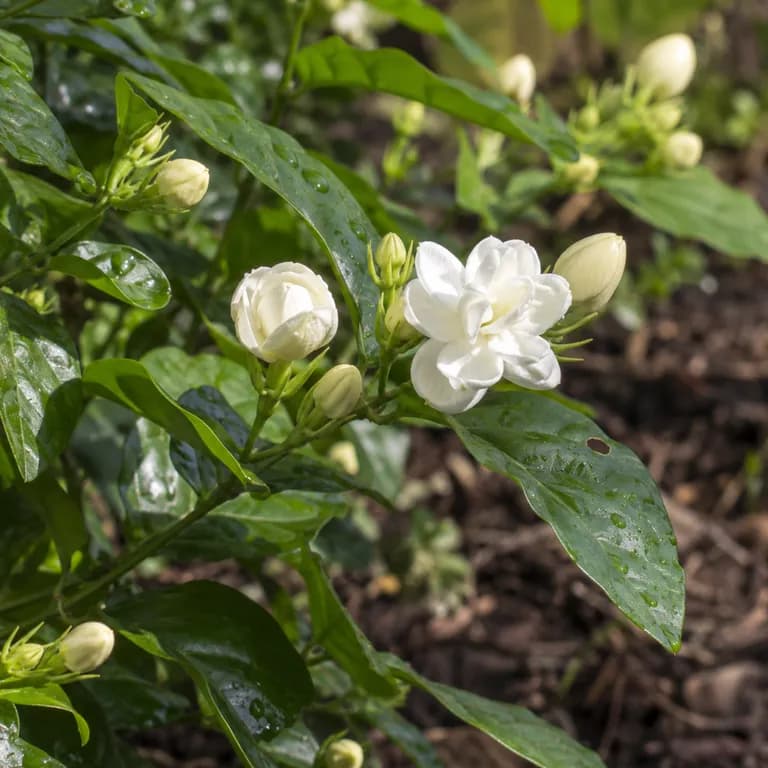
Given a warm, bright summer, a cutting-started plant flowers in its first year. Clusters of pointed white buds form at the shoot tips, opening at dusk into waxy, starry flowers whose perfume peaks at night. A single flush lasts two to three weeks, and after a short pause — especially if spent shoots are pinched back — another follows. From June through September a happy plant is rarely out of bloom.
Mature Blooming Shrub
From the second year onward the plant builds a woody framework and flowers ever more heavily, blooming in repeated flushes from early summer into autumn. A mature specimen reaches one to two meters in a large container and carries hundreds of blossoms across the season. In zones 9 to 11 it can live outdoors year-round; elsewhere it moves between patio and winter quarters with the seasons.
Long-Term Container Specimen
A well-kept Arabian jasmine lives and blooms for fifteen years or more, slowly developing a gnarled, characterful framework of woody stems. Old plants flower reliably every summer and repay a spring routine of repotting or top-dressing, hard pruning, and fresh feeding. Every two to three years, root-pruning and a return to the same pot keeps a large specimen at a manageable size.
Keep cuttings in bright, indirect light — direct sun scorches them before roots form. Maintain humidity with a vented cover or daily misting, and keep the mix just moist, never wet. Bottom heat speeds rooting considerably.
Caring for Arabian Jasmine month by month
What to do each month for your Arabian Jasmine
September
You are hereEnjoy the last flushes as the nights begin to cool. Reduce feeding to a final weak dose and let the growth harden off. Before nights drop below about 10 degrees Celsius, prepare the winter quarters and inspect the plant thoroughly for pests so nothing is carried indoors. In zones 9 to 11, flowering often continues into October.
Know exactly what to do in your garden — every month
One email at the start of each month: what to sow, plant, and tackle right now — for your Arabian Jasmine and everything growing around it. Plus a short starter course that helps you dodge the classic mistakes.
- What to do, right now
- Matched to your season
- Starter course included
Harvesting Arabian Jasmine
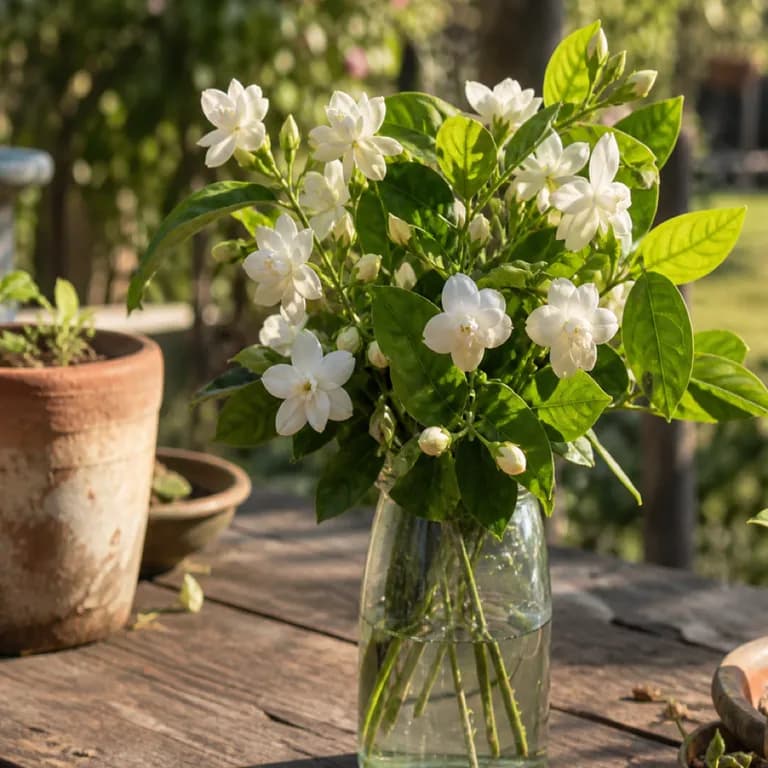
Harvest Arabian jasmine in two different ways depending on the intended use. For tea scenting, pick the tight, unopened buds in the early morning — they will open the same evening and release their fragrance into the tea. Layer the buds with loose green or white tea in an airtight tin overnight and lift them out in the morning, repeating with fresh blossoms for a stronger scent. For leis and garlands, harvest half-open flowers in the cool of the evening when the perfume is at its peak, and string them immediately with a fine needle and thread. Regular picking every day or two during a flush keeps the plant producing new buds; expect the heaviest harvests from June through September.
assuming you plant when the window opens — set your real date
Pick Arabian Jasmine promptly and the plant keeps producing.
What goes wrong — and the fix
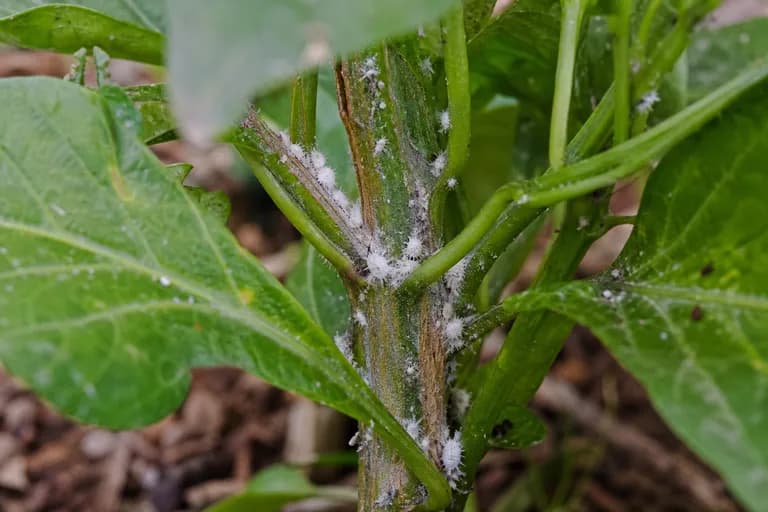
Mealybugs
PestWhite cottony masses clustered in leaf axils and on stem joints, sticky honeydew on leaves, and sooty mold developing on the honeydew. Heavily infested plants weaken and drop leaves.
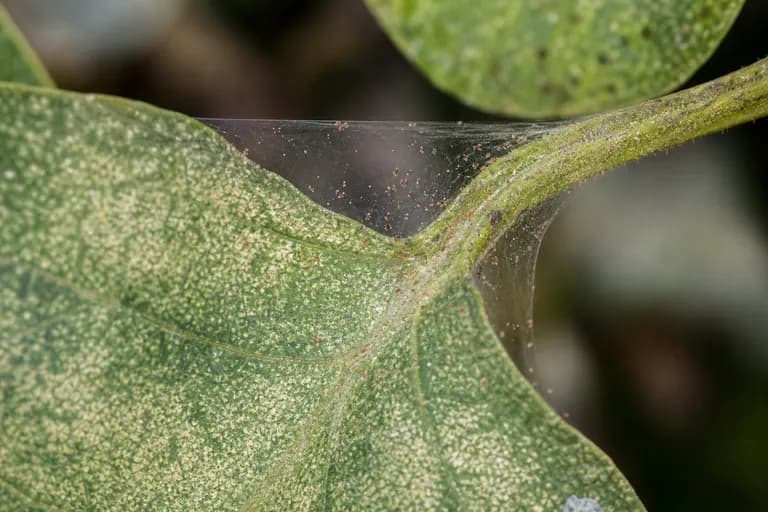
Spider Mites
PestFine stippling and dull, bronzed foliage, with delicate webbing on leaf undersides and shoot tips. Worst in hot, dry indoor air during winter.
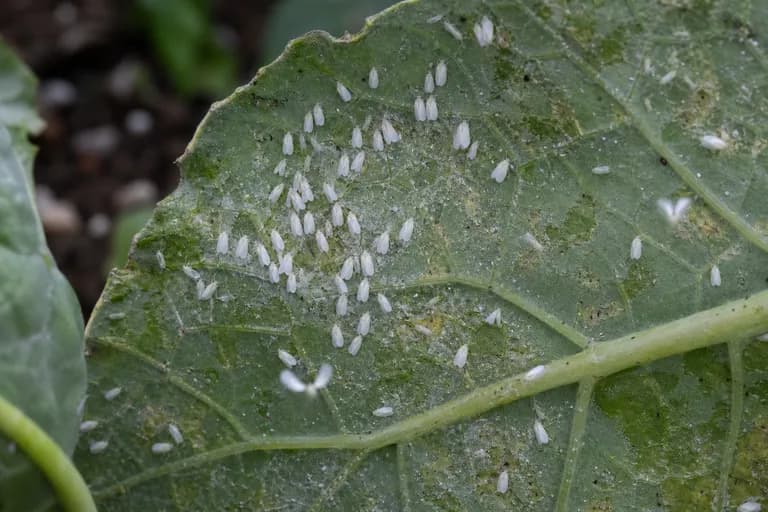
Whiteflies
PestClouds of tiny white moth-like insects that rise when the plant is disturbed, sticky honeydew on foliage, and yellowing leaves on heavily infested growth.
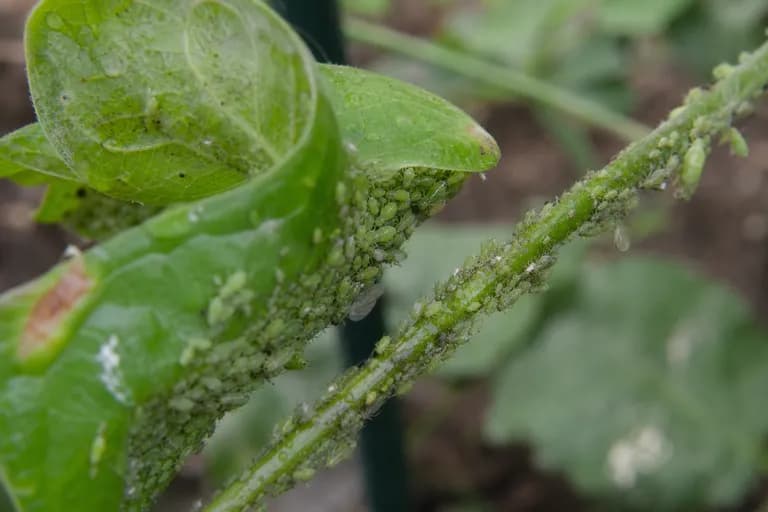
Aphids
PestClusters of small green or black insects on soft new shoots and flower buds, distorted young growth, and sticky honeydew that attracts ants and sooty mold.
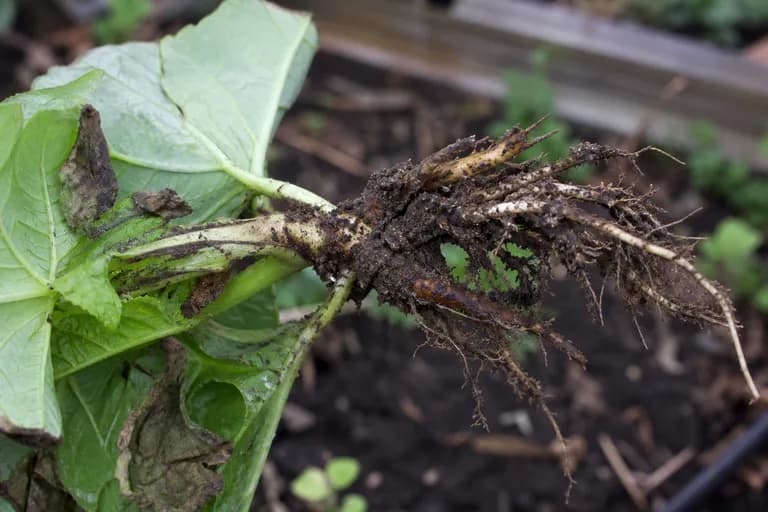
Root Rot
DiseaseWilting despite moist soil, yellowing and dropping lower leaves, blackened mushy roots, and a sour smell from the compost.
Troubleshooting Common Problems
Bud drop is the classic Arabian jasmine complaint — the plant aborts flower buds when it is moved, when temperatures swing sharply, or when indoor air is hot and dry, so keep conditions steady and raise humidity. Yellowing leaves with green veins signal lime-induced chlorosis on alkaline soils or in exhausted potting compost; repot or feed with chelated iron. Leggy plants that refuse to flower are almost always short of light — move them to the brightest position available. In winter, warm and dim living rooms cause weak, drawn growth and leaf fall; a cool, bright rest at 10 to 15 degrees Celsius produces a far better plant the following summer.
Growing Tips
- Plant in spring after all frost danger into fertile, well-drained, slightly acidic soil; anywhere colder than zone 9, keep it in a 30 to 40 centimeter container that can move indoors for winter.
- Give four to six hours of sun — gentle morning sun with light afternoon shade is ideal in hot climates — and shelter the plant from strong, drying wind.
- Keep the root zone evenly moist but never waterlogged; container plants may need water daily during summer heat.
- Feed every two weeks from April to September, switching to a high-potash tomato feed as soon as flower buds appear.
- Prune hard by about a third in late winter — flowers form only on new growth — and pinch shoot tips after each flush to force the branching that carries the next bloom.
- Provide a small trellis or obelisk and tie in the longest stems loosely; Arabian jasmine scrambles and will not cling on its own.
- Overwinter indoors bright and cool at 10 to 15 degrees Celsius with minimal water; a warm, dark living room produces leggy growth and bud drop.
- Raise humidity around indoor plants with a pebble tray or occasional misting — dry air invites spider mites and makes buds abort.
- Harvest buds little and often throughout a flush; regular picking is the surest way to keep the plant setting new buds until autumn.
Grow your best Arabian Jasmine yet — and everything around it.
Start a free plan today. Lay out your beds, drop in your Arabian Jasmine, and let PlotMyGarden handle the timing, spacing, companions and reminders from seed to harvest basket.
Pick your Arabian Jasmine
Maid of Orleans
The most widely grown form, with single to semi-double white flowers and almost continuous blooming in warmth — the traditional flower for leis and tea scenting.
Grand Duke of Tuscany
Fully double, carnation-like rosettes with an exceptionally rich perfume. Slower growing and shrubbier than the species, a prized collector's cultivar.
Belle of India
Elegant semi-double flowers with elongated petals, much grown in India for garlands, temple offerings, and bridal hair adornment.
Mysore Mulli
A fast-growing, strongly vining selection with abundant double flowers — the best choice for quickly covering a small trellis.
Arabian Nights
A compact, free-flowering double cultivar well suited to pots and windowsills, blooming heavily through the summer months.
Where Arabian Jasmine comes from
Jasminum sambac is believed to be native to tropical South Asia, probably the eastern Himalayan foothills and the Indian subcontinent, where it has been cultivated for well over a thousand years. From India it spread east into Southeast Asia and westward along the trade routes of Persian and Arab merchants — a journey reflected in its common name, Arabian jasmine, and in the botanical epithet sambac, which derives from the Arabic zanbaq. The genus name Jasminum itself traces back to the Persian yasamin.
The plant reached China many centuries ago and found a second home in Fujian province, where the craft of scenting tea with its blossoms — layering fresh flowers with dried tea leaves so the fragrance transfers overnight — developed during the Song dynasty and was perfected under the Ming. Today the region around Hengzhou in Guangxi is the world's largest producer of jasmine flowers for tea. In the Philippines, where the flower became deeply woven into daily life and courtship, it was proclaimed the national flower in 1934; in the nineteenth century it was carried onward to Hawaii, where it took the name pikake and became a signature flower of the lei tradition.
Across South and Southeast Asia the flower remains part of everyday and religious life — offered in temples, braided into bridal hair, and sold by the string in flower markets from Madurai to Manila. European and American gardeners adopted it in the nineteenth century as a prized greenhouse and conservatory plant, a role it still fills anywhere winters are cold. Modern cultivars such as Grand Duke of Tuscany and Maid of Orleans are selections of that long horticultural heritage, and because the double forms are sterile, each one is a direct, cutting-grown descendant of plants cherished centuries ago.
Arabian Jasmine: did you know?
Fascinating facts about Arabian Jasmine
Arabian jasmine is the national flower of the Philippines, where it is called sampaguita and strung into leis and garlands; it is also one of the national flowers of Indonesia, known there as melati putih.
Arabian Jasmine questions, answered
When should I plant Arabian Jasmine?
What are good companion plants for Arabian Jasmine?
What hardiness zones can Arabian Jasmine grow in?
How much sun does Arabian Jasmine need?
How far apart should I space Arabian Jasmine?
What pests and diseases affect Arabian Jasmine?
What are the best Arabian Jasmine varieties to grow?
What soil does Arabian Jasmine need?
Why is my Arabian jasmine dropping its flower buds?
How do I overwinter Arabian jasmine in a cold climate?
What is the difference between Arabian jasmine and star jasmine?
Can I scent tea with my own homegrown flowers?
Why won't my Arabian jasmine bloom?
Is Arabian jasmine safe around pets?
You just read the theory. Now grow it on autopilot.
Everything that makes Arabian Jasmine fiddly — the timing, the spacing, the companions, the harvest window — is exactly what PlotMyGarden handles for you, for every plant in your garden.
A plan that knows your weather
Set your location once. Get sow, feed and harvest dates built around your real last-frost date and live forecast — no more guessing from a generic seed packet.
From the “When to plant” sectionDrag-and-drop bed planner
Design beds on a grid. Every plant snaps to its proper spacing, and you can see your whole season laid out before you spend a cent on seed.
From the “Growing guide” sectionCompanion conflicts, caught early
200+ good-and-bad pairings checked live as you plant — so a season-wrecking mistake never makes it into the ground.
From the “Companions” sectionReminders you'll actually act on
“Water the beans.” “Pick today before it turns.” Timely, specific, and tied to the plants you're really growing.
From the “Harvest” sectionSuccession, scheduled
Want a harvest for six weeks, not six days? It spaces your sowings automatically and reminds you when each new block is due.
From the “When to plant” sectionA record that gets smarter
Every harvest you log teaches it your garden. Next year's plan starts from what actually worked in your soil, not a textbook's.
From the “Overview” sectionPlant these alongside Arabian Jasmine
More Climbing Flowers
Grow your best Arabian Jasmine yet — and everything around it.
Start a free plan today. Lay out your beds, drop in your Arabian Jasmine, and let PlotMyGarden handle the timing, spacing, companions and reminders from seed to harvest basket.