Honigbusch
Ein südafrikanischer Fynbos-Strauch, der von Natur aus süßen, honiggeschmackigen, koffeinfreien Kräutertee verwandt mit Rooibos produziert.





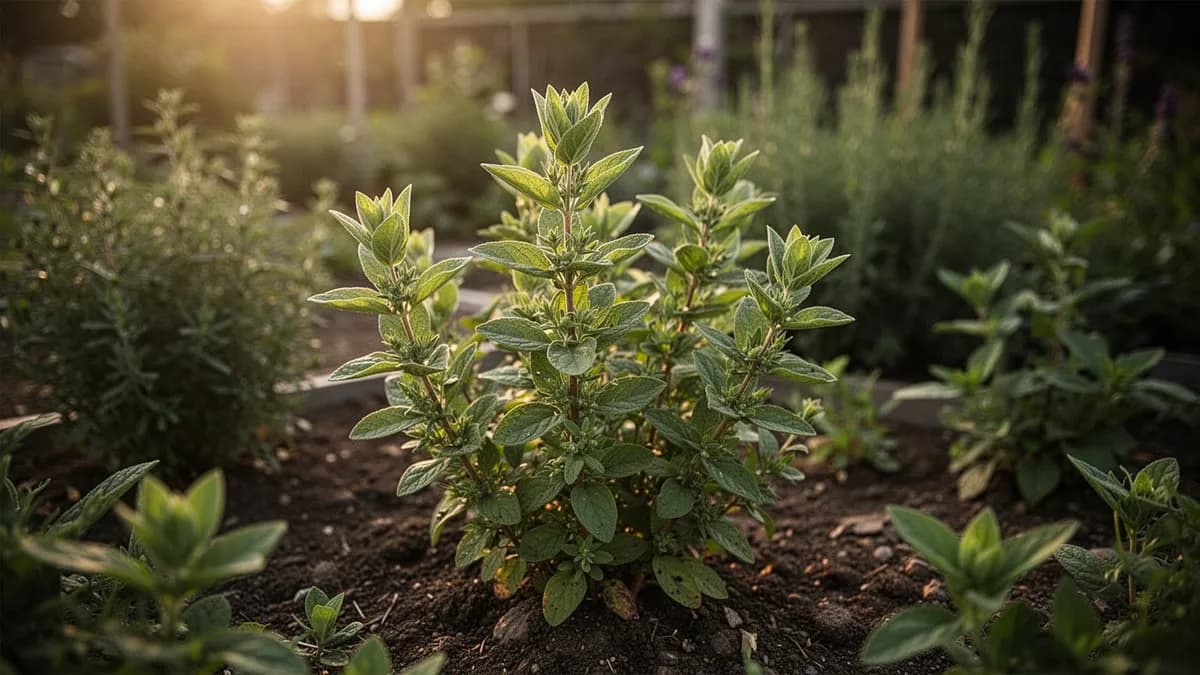
Auf dieser SeiteÜberblick
Honigbusch im Überblick
Ein südafrikanischer Fynbos-Strauch, der von Natur aus süßen, honiggeschmackigen, koffeinfreien Kräutertee verwandt mit Rooibos produziert. Honigbusch-Tee hat einen weicheren, süßeren Geschmack als Rooibos mit Noten von Honig, Karamell und Trockenfrüchten. Pflanzen Sie ihn in saurem, gut durchlässigem Sandboden in voller Sonne, um seinen natürlichen südafrikanischen Küstenlebensraum nachzuahmen.
Wann Honigbusch pflanzen
Honigbusch-Samen haben eine harte Samenschale, die vor der Aussaat skarifiziert werden muss. Ritzen Sie die Samenschale mit einer Feile an oder weichen Sie die Samen in heißem Wasser bei 80 Grad Celsius für mehrere Minuten ein und lassen Sie sie dann über Nacht abkühlen. Säen Sie skarifizierte Samen 1 cm tief in eine gut durchlässige, saure Aussaatmischung aus Torf und Perlit. Halten Sie sie feucht, aber nicht nass, bei 18–22 Grad Celsius. Die Keimung erfolgt in drei bis sechs Wochen, kann aber unregelmäßig sein. Das Beimpfen des Bodens mit Fynbos-Wurzelknöllchenbakterien verbessert die Keimlingsestablierung. Pflanzen Sie um, wenn die Keimlinge mehrere echte Blätter haben, und behandeln Sie die Wurzeln vorsichtig.
Dein Honigbusch-Jahr
Abgestimmt auf Zone 7 · typische Saison · Frost geht um den 2. Apr. und kehrt um den 1. Nov. zurück
Honigbusch Mär – Mai pflanzen, Feb – Apr ernten. Beachte die Pflanzmethoden unten und wähle dein Klima für passende Zeiträume.
So baust du Honigbusch an
Honigbusch ist ein Leguminosen-Strauch, der im Fynbos-Biom der südafrikanischen Provinzen Westkap und Ostkap beheimatet ist. Er ist an nährstoffarme, saure Sandböden und ein mediterranes Klima mit trockenen Sommern und feuchten Wintern angepasst. In geeigneten Zonen 9–11 pflanzen Sie in voller Sonne mit hervorragender Drainage, um seinen natürlichen Küstengebirgslebensraum nachzubilden.
Bereiten Sie Pflanzlöcher mit einer Mischung aus grobem Sand, Perlit und saurem Kompost vor. Fügen Sie keinen Kalk oder nährstoffreiche Ergänzungen hinzu, da sich Honigbusch an magere Böden angepasst hat und übermäßige Nährstoffe die Pflanze schädigen können. Gießen Sie während der Anwachsphase mäßig, dann reduzieren Sie die Bewässerung, sobald die Pflanzen eingewurzelt sind, da reifer Honigbusch trockenheitstolerant ist. Übermäßiges Gießen und schlechte Drainage sind die Hauptursachen für Pflanzenversagen.
Honigbusch wächst als mehrstämmiger Strauch, der 1–2,5 Meter hoch wird, mit dreiteiligen Blättern und süß duftenden gelben Blüten, die Bienen und andere Bestäuber anlocken. Die Pflanze braucht lange, um sich zu etablieren, und benötigt zwei bis drei Jahre, um eine erntereife Größe zu erreichen. Schneiden Sie nach der Blüte leicht zurück, um die Form zu erhalten und frisches Wachstum zu fördern. In frostgefährdeten Gebieten bieten Sie Winterschutz oder kultivieren Sie in großen Containern, die geschützt werden können. Wie alle Fynbos-Pflanzen ist Honigbusch feuerangepasst und kann sich nach einem Brand aus dem Wurzelstock regenerieren.
2 Pflanzen passen in ein Beet von 120 × 240 cm
Honigbusch braucht 90 cm Platz pro Pflanze. Der Planer hält diesen Abstand für dich ein — jede Pflanze, jedes Beet.
Die besten Nachbarn für Honigbusch
Honigbusch passt natürlich zu anderen südafrikanischen Fynbos-Pflanzen wie Rooibos, Buchu und Proteas, die ähnliche Anforderungen an sauren, gut durchlässigen Sandboden und volle Sonne teilen. Als stickstofffixierende Leguminose verbessert Honigbusch die Bodenfruchtbarkeit für Nachbarpflanzen. In Gärten mit mediterranem Klima kombinieren Sie ihn mit Rosmarin, Lavendel und anderen trockenheitstoleranten Kräutern. Vermeiden Sie die Kombination mit feuchtigkeitsliebenden oder kalkbodenliebenden Pflanzen, die unvereinbare Wachstumsbedingungen erfordern.
Rooibos gehört daneben.
Altes Gärtnerwissen, geprüft an der echten Nachbartabelle von Honigbusch — teste jede Pflanze, die du anbaust.
Probiere Honigbusch direkt hier im Beet
Ein echtes Planer-Beet, Honigbusch steht schon drin. Tippe einen Begleiter an, platziere ihn und sieh, wie die Nachbarschaftsprüfung antwortet — grün für gute Nachbarn, rot bei Streit.


Passende Anbau-Ratgeber
Richtig düngen
Honigbusch benötigt sehr gut durchlässigen, sauren Boden mit einem pH-Wert von 4,5 bis 6,0, der die sandigen, nährstoffarmen Fynbos-Böden Südafrikas nachahmt. Verwenden Sie eine Mischung aus grobem Flusssand, Perlit und saurem Kompost. Als Leguminose fixiert Honigbusch seinen eigenen Stickstoff durch Wurzelknöllchenbakterien und benötigt keinen Stickstoffdünger. Vermeiden Sie phosphorreiche Dünger, da Fynbos-Pflanzen an phosphorarme Böden angepasst sind und unter Toxizität leiden können. Eine leichte jährliche Schwefelgabe hilft, die Bodensäure aufrechtzuerhalten.
Ideale Temperatur
Winterhärtezone-Kompatibilität
Von der Saat zur Ernte, Schritt für Schritt
Samenvorbereitung und Aussaat
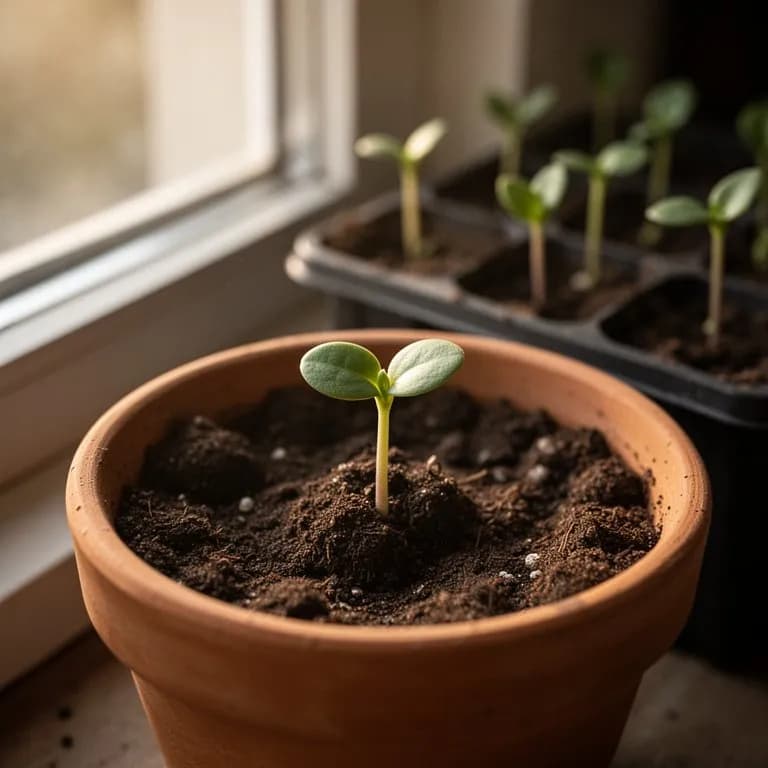
Honigbusch-Samen haben eine harte, undurchlässige Samenschale, die vor der Aussaat skarifiziert werden muss. Ritzen Sie jeden Samen mit einer scharfen Klinge an oder weichen Sie ihn in heißem Wasser (80 °C) mehrere Minuten ein und pflanzen Sie ihn dann 1–2 cm tief in eine gut durchlässige, saure Aussaatmischung. Die Keimung ist langsam und unregelmäßig und dauert oft 2–6 Wochen.
Keimung und Keimlingsentwicklung
Keimlinge erscheinen langsam und bilden kleine dreiteilige Blätter an dünnen Stängeln. Das Wachstum ist in dieser Phase bescheiden, da die Pflanze Energie in die Entwicklung eines tiefen Wurzelsystems investiert. Keimlinge sind empfindlich und anfällig für Überwässerung und schwere Böden.
Vegetatives Wachstum
Die junge Pflanze entwickelt holzige Stängel und eine zunehmende Krone aus hellgrünen dreiteiligen Blättern. Das Wurzelwachstum beschleunigt sich, wenn die Pflanze Mykorrhiza-Verbindungen eingeht. Am Ende des ersten Jahres erreicht die Pflanze typischerweise eine Höhe von 30–50 cm.
Etabliertes Wachstum und Verzweigung
Im zweiten Jahr wird der Strauch robuster und buschiger, verzweigt sich frei und bildet dichteres Laub. Die Stängel werden zunehmend holzig mit einer markanten rotbraunen Rinde. Die Pflanze kann je nach Art und Wachstumsbedingungen 1–1,5 Meter Höhe erreichen.
Erste Blüte
Honigbusch produziert seine ersten Blüten typischerweise im zweiten oder dritten Jahr. Büschel süß duftender, leuchtend gelber schmetterlingsförmiger Blüten erscheinen entlang der Stängel im Frühling und Frühsommer und locken Bienen und andere Bestäuber an. Die Blüten verströmen einen markanten honigartigen Duft.
Reifes Erntestadium
Ab dem dritten Jahr ist der Strauch reif genug für regelmäßige Ernten. Der gesamte oberirdische Teil aus Stängeln, Blättern und Blüten kann bis auf etwa 30 cm über dem Boden zurückgeschnitten werden. Die Pflanze regeneriert sich kräftig aus der holzigen Basis und dem etablierten Wurzelsystem.
Regeneration und laufende Produktion
Nach der Ernte wächst Honigbusch von der Basis nach und produziert innerhalb weniger Monate frische Stängel und Laub. In seinem natürlichen Lebensraum spiegelt dies die Regeneration nach Bränden wider. Eine gut gepflegte Pflanze kann über Jahrzehnte hinweg erntbare Erträge in einem 2–3-jährigen Rotationszyklus liefern.
Behandeln Sie die Samen mit einer Rauchprimer-Lösung oder setzen Sie sie rauchbehandeltem Wasser aus, da Honigbusch an die Regeneration nach Bränden angepasst ist und Rauchchemikalien die Keimung erheblich stimulieren.
Honigbusch Monat für Monat pflegen
Was du jeden Monat für deine Honigbusch tun solltest
Oktober
Aktueller MonatDie Blüte beginnt an reifen Pflanzen. Genießen Sie die leuchtend gelben Blüten und beobachten Sie die Bestäuberaktivität. Dies ist der ideale Zeitpunkt, um Stängel mit Blüten für den süßesten Honigbusch-Tee zu ernten. Verarbeiten Sie geerntetes Material umgehend.
Immer wissen, was jetzt im Garten zu tun ist
Eine E-Mail zum Monatsanfang: was du jetzt säen, pflanzen und anpacken solltest — für deine Honigbusch und alles, was drumherum wächst. Dazu ein kurzer Startkurs, der dich vor den klassischen Fehlern bewahrt.
- Was jetzt zu tun ist
- Passend zu deiner Saison
- Startkurs inklusive
Honigbusch ernten
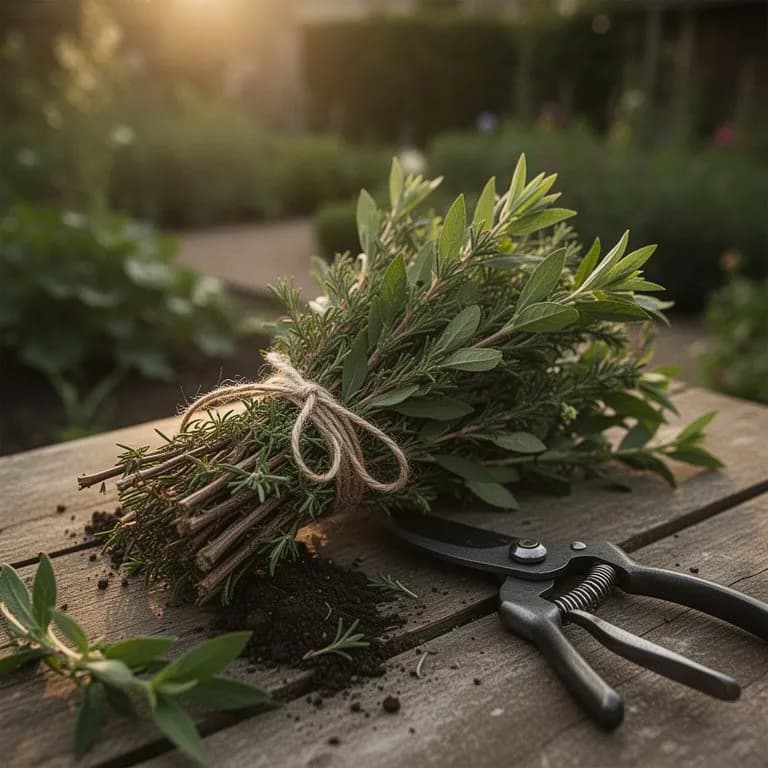
Ernten Sie Honigbusch-Stängel und -Blätter, wenn die Pflanze mindestens zwei bis drei Jahre alt und gut etabliert ist. Schneiden Sie junge Stängel mit Blättern während der Blütezeit im Spätsommer bis Frühherbst, wenn die Aromastoffe der Pflanze am konzentriertesten sind. Schneiden Sie die Stängel auf etwa ein Drittel der Pflanzenhöhe zurück und lassen Sie genügend Wachstum für die Erholung übrig. Bündeln Sie geschnittene Stängel und fermentieren Sie diese vor dem Trocknen, um den charakteristischen honigsüßen Geschmack zu entwickeln. Unfermentierter Honigbusch-Tee ist grün und grasig.
angenommen, du pflanzt zu Beginn des Zeitraums — trage dein tatsächliches Datum ein
Ernte Honigbusch zügig, dann trägt die Pflanze weiter.
Lagerung & Konservierung
Die traditionelle Honigbusch-Verarbeitung umfasst das Schneiden von Stängeln und Blättern in kleine Stücke, das Anfeuchten, dann das Aufhäufen und Abdecken zur Fermentation bei 60–70 Grad Celsius für zwei bis drei Tage, bis sich die Farbe von Grün zu einem tiefen Rotbraun verändert. Verteilen Sie das fermentierte Material zum Trocknen in der Sonne oder einem Dörrgerät. Lagern Sie getrockneten, fermentierten Honigbusch in luftdichten Behältern, geschützt vor Licht und Feuchtigkeit. Richtig verarbeiteter Honigbusch-Tee hält bis zu zwei Jahre ohne nennenswerten Geschmacksverlust.
Was schiefgeht — und die Lösung
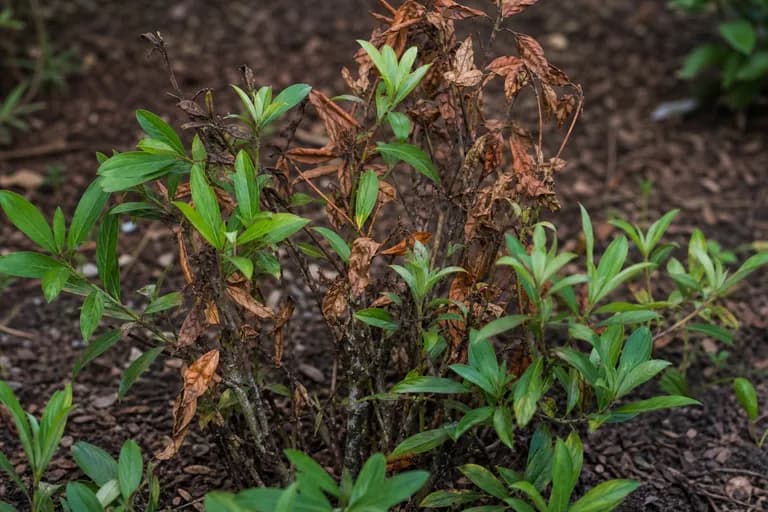
Wurzelfäule (Phytophthora cinnamomi)
KrankheitPlötzliches Welken und Braunfärbung des Laubes, dunkle verfärbte Wurzeln, Pflanzenzusammenbruch, besonders in warmen, feuchten Perioden
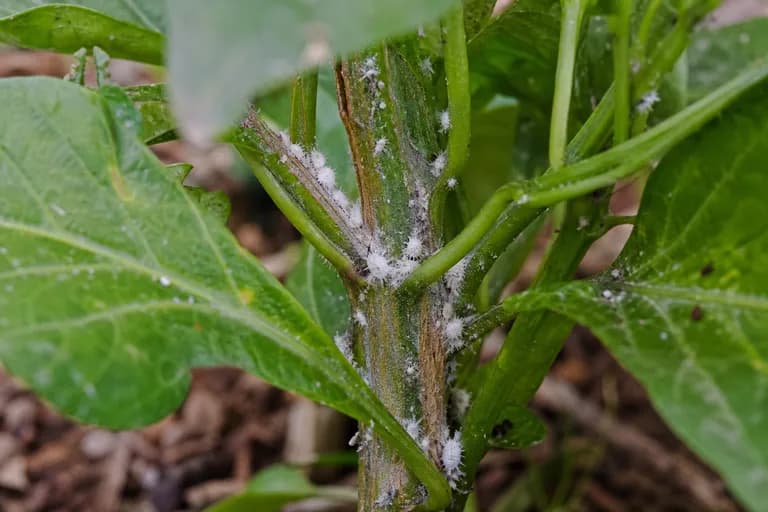
Schmierläuse
SchädlingWeiße, watteähnliche Massen in Blattachseln und entlang der Stängel, klebriger Honigtau-Rückstand, Rußtau auf Blättern, gehemmtes Wachstum an betroffenen Zweigen
Fehlerbehebung bei häufigen Problemen
Übermäßiges Gießen und schlecht entwässerter Boden sind die Hauptursachen für das Scheitern von Honigbusch, was schnell zu tödlicher Wurzelfäule führt. Alkalischer Boden oder Leitungswasser mit hohem pH-Wert verursacht Chlorose und Verfall. Übermäßige Düngung, insbesondere mit Phosphor, kann für diese an Fynbos angepasste Pflanze giftig sein. Die langsame Etablierung in den ersten zwei Jahren kann ungeduldige Gärtner entmutigen. In feuchten Klimazonen außerhalb ihres natürlichen Verbreitungsgebiets können Pilzkrankheiten häufiger auftreten. Frost unter minus 5 Grad Celsius kann Pflanzen beschädigen oder abtöten.
Anbautipps
- Skarifizieren Sie Honigbusch-Samen vor der Aussaat, indem Sie die harte Samenschale mit einer Klinge anritzen oder 5 Minuten in fast kochendem Wasser einweichen. Anschließend eine Rauch-Wasser-Behandlung durchführen, um die Keimraten dramatisch zu verbessern und die Nachbrandbedingungen nachzuahmen, an die sich die Pflanze evolutionär angepasst hat.
- Verwenden Sie ein gut durchlässiges, saures Kultursubstrat mit einem pH-Wert zwischen 4,5 und 5,5. Eine Mischung aus grobem Flusssand, Perlit und kompostierter Kiefernrinde zu etwa gleichen Teilen bietet die nährstoffarmen, gut durchlässigen Bedingungen, die Honigbusch-Wurzeln benötigen.
- Pflanzen Sie Honigbusch in voller Sonne für bestes Wachstum und Blüte. Der Strauch verträgt leichten Schatten, produziert aber weniger Blüten und weniger kräftiges Wachstum ohne mindestens 6–8 Stunden direkte Sonneneinstrahlung täglich.
- Gießen Sie tief, aber selten, und lassen Sie den Boden zwischen den Bewässerungen austrocknen. Honigbusch ist an saisonale Trockenbedingungen angepasst und leidet weitaus häufiger unter Überwässerung und Wurzelfäule als unter Trockenheit.
- Vermeiden Sie phosphorreiche Dünger, da Honigbusch zur Familie der Fabaceae gehört und proteoidähnliche Wurzeln hat, die extrem empfindlich auf überschüssigen Phosphor reagieren. Wenn Düngung nötig ist, verwenden Sie einen Langzeitdünger für Fynbos, Proteas oder australische Pflanzen.
- Impfen Sie den Pflanzort mit Mykorrhiza-Pilzen, um die Nährstoffaufnahme zu unterstützen, besonders wenn Sie Honigbusch außerhalb seines natürlichen südafrikanischen Fynbos-Lebensraums anbauen, wo diese nützlichen Bodenorganismen fehlen können.
- Schneiden Sie etablierte Pflanzen nach der Blüte leicht zurück, um einen buschigen, kompakten Wuchs zu fördern. Entfernen Sie tote oder sich kreuzende Äste, um die Luftzirkulation zu verbessern und das Risiko von Pilzproblemen in feuchten Klimazonen zu reduzieren.
- Schützen Sie junge Pflanzen in den ersten zwei Wintern vor starkem Frost, indem Sie sie mit Gartenvlies abdecken oder an eine warme, geschützte Wand stellen. Reifer Honigbusch verträgt kurze Fröste bis -3 °C.
- Ernten Sie Stängel, Blätter und Blüten zusammen, wenn die Pflanze in voller Blüte steht, für den süßesten und aromatischsten Tee. Schneiden Sie nicht mehr als zwei Drittel der Pflanze auf einmal und lassen Sie eine volle Erholungszeit von 2–3 Jahren zwischen den Haupternten.
- Verarbeiten Sie geerntetes Material, indem Sie Stängel und Blätter hacken oder quetschen, dann das Material aufhäufen und 2–3 Tage in der Sonne oxidieren lassen, bis es sich dunkelrotbraun verfärbt. Dünn ausbreiten, um vollständig zu trocknen, bevor es in luftdichten Behältern gelagert wird.
Bau deine beste Honigbusch an — und alles drumherum.
Starte heute kostenlos. Lege deine Beete an, setze deine Honigbusch ein und lass PlotMyGarden Timing, Abstände, Begleiter und Erinnerungen von der Saat bis zum Erntekorb übernehmen.
Finde deine Honigbusch
Cyclopia intermedia (Berg-Honigbusch)
Die am häufigsten kultivierte Art, die in höheren Lagen wächst und einen ausgewogenen honigsüßen Geschmack mit Karamellnoten hat – die Standard-Honigbusch-Teesorte im Handel.
Cyclopia genistoides (Küsten-Honigbusch)
Eine niedrig wachsende Küstenart mit einem kräftigeren, leicht herben Geschmack und höherem Mangiferin-Gehalt, zunehmend wegen ihrer antioxidativen Eigenschaften kultiviert.
Cyclopia subternata (Vlei-Honigbusch)
Kommt in feuchten Niederungsgebieten vor und produziert einen süßeren, fruchtigeren Tee mit ausgeprägten Aprikosen- und Blumennoten – die süßeste der kommerziell verfügbaren Arten.
Cyclopia maculata (Strandveld-Honigbusch)
Eine Küstenniederungssorte mit mildem, delikatem Geschmack und goldener Farbe, natürlich vorkommend im sandigen Fynbos und gut geeignet für den Gartenanbau in sandigen Böden.
Die Etablierung eines Honigbusch-Strauchs erfordert Geduld, da es 2–3 Jahre bis zur ersten erntbaren Phase dauert, aber die langfristigen Erträge sind hervorragend. Eine einzelne reife Pflanze kann 1–3 kg frisches Material pro Erntezyklus liefern, das auf etwa 300–900 g fertigen Tee heruntertrocknet. Bei Spezial-Loseblatthonigbusch-Tee, der im Einzelhandel 8–15 € pro 100 g kostet, könnte ein gut gepflegter Strauch alle 2–3 Jahre Tee im Wert von 25–135 € liefern. Da Honigbusch-Pflanzen 20–30 Jahre alt werden können und sich nach jedem Schnitt zuverlässig regenerieren, amortisiert sich die anfängliche Investition in Samen oder Setzlinge vielfach. Die Pflanze benötigt zudem in geeigneten sauren Böden keinen Dünger, was die laufenden Kosten nahezu auf null hält.
Schnelle Rezepte
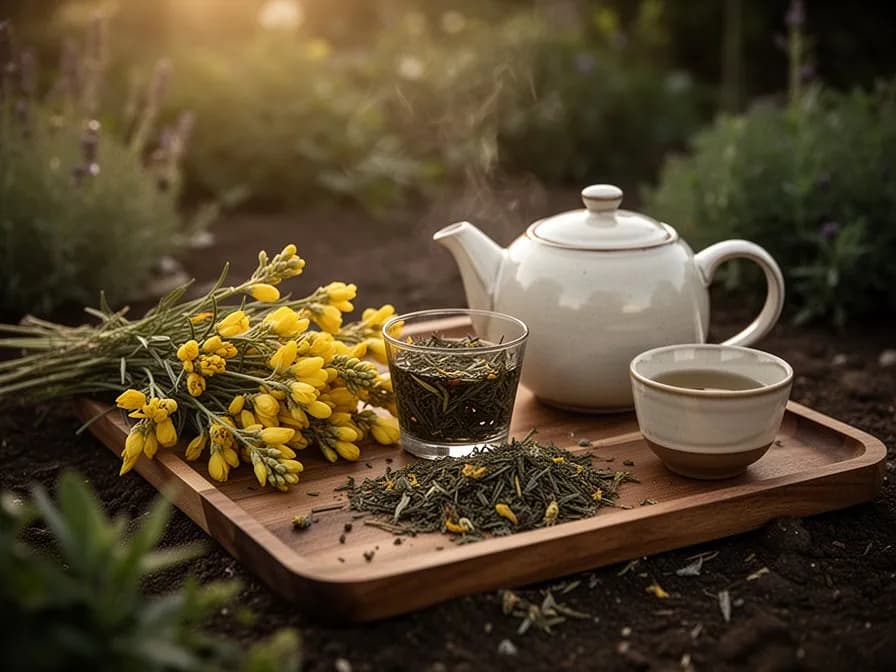
Klassischer Honigbusch-Tee
10 Min.Ein natürlich süßer, koffeinfreier Kräutertee mit warmen Noten von Honig, getrockneter Aprikose und Karamell. Honigbusch-Tee kann heiß oder als Eistee genossen werden und braucht dank seines mild-weichen Charakters keinen Süßungsmittelzusatz. Er eignet sich hervorragend als Ganztagsgetränk.
5 ZutatenEisgekühlter Honigbusch-Pfirsich-Cooler
15 Min. plus KühlenEin erfrischendes Sommergetränk, das die natürliche Süße des Honigbuschs mit reifen Pfirsichen kombiniert. Die Karamell- und Trockenfruchtnoten des Tees ergänzen Steinobst wunderbar und ergeben ein raffiniertes koffeinfreies Eisteegetränk, das perfekt für warme Nachmittage ist.
6 ZutatenHonigbusch-Rooibos-Gewürz-Latte
15 Min.Ein cremiges, wärmendes Getränk, das Honigbusch mit seinem südafrikanischen Verwandten Rooibos und einer Mischung aus wärmenden Gewürzen kombiniert. Das Ergebnis ist ein koffeinfreier Latte mit tiefem Karamellgeschmack und sanfter Würze, ideal als gemütliches Abendgetränk oder Kaffeealternative.
6 ZutatenKulinarische Verwendung
Übergießen Sie getrockneten fermentierten Honigbusch mit kochendem Wasser und lassen Sie ihn fünf bis acht Minuten ziehen – für einen natürlich süßen, koffeinfreien Tee mit Honig- und Karamellnoten. Honigbusch braucht dank seiner natürlichen Süße keinen Süßungsmittelzusatz. Servieren Sie ihn heiß oder als Eistee als erfrischendes Sommergetränk. Mischen Sie ihn mit Rooibos für eine klassische südafrikanische Kräuterteekombination. Verwenden Sie aufgebrühten Honigbusch als Basis für Smoothies, Cocktails oder Dessertsaucen. Infundieren Sie ihn in Puddings und Eiscreme für ein einzigartiges Aroma.
Was drinsteckt
Gesundheitsvorteile
- Reich an der Xanthon-Verbindung Mangiferin, einem starken Antioxidans, das in zahlreichen präklinischen Studien entzündungshemmende, antidiabetische und kardioprotektive Eigenschaften gezeigt hat.
- Enthält Phytoöstrogene einschließlich des Isoflavons Formononetin, das helfen kann, Wechseljahresbeschwerden wie Hitzewallungen zu lindern und das hormonelle Gleichgewicht bei Frauen zu unterstützen.
- Von Natur aus koffeinfrei mit minimalen Tanninen, was ihn zu einem milden Getränk macht, das für koffeinempfindliche Personen, Schwangere unter ärztlicher Aufsicht und Menschen mit Verdauungsempfindlichkeiten geeignet ist.
- Laborstudien deuten darauf hin, dass Honigbusch-Extrakte zur Regulierung des Blutzuckerspiegels beitragen können, indem sie die Insulinsensitivität verbessern und Enzyme hemmen, die am Kohlenhydratabbau beteiligt sind.
- Die Polyphenole und Flavonoide in Honigbusch haben antimikrobielle Aktivität gegen bestimmte Bakterien und Pilze gezeigt, was den traditionellen Einsatz des Tees bei Hals- und Atemwegsbeschwerden unterstützt.
- Regelmäßiger Konsum von Honigbusch-Tee liefert eine bedeutende Aufnahme von Antioxidantien, die oxidativen Stress bekämpfen und potenziell das Risiko chronischer Erkrankungen senken und die allgemeine Zellgesundheit unterstützen.
Woher Honigbusch stammt
Honigbusch (Cyclopia intermedia) ist ein immergrüner Strauch, der ausschließlich in den Fynbos-Gebieten und Berghängen der Provinzen Westkap, Ostkap und Teilen des Nordkaps von Südafrika beheimatet ist. Er gehört zur Familie der Fabaceae (Hülsenfrüchtler) und ist eine von mehr als zwanzig Arten der Gattung Cyclopia, die alle ausschließlich dort vorkommen. Die Pflanze wird seit Jahrhunderten von den indigenen Khoisan und später von europäischen Siedlern in der Kapkolonie verwendet. Die ersten schriftlichen Aufzeichnungen über den Konsum von Honigbusch-Tee stammen aus dem frühen 18. Jahrhundert, als niederländische Kolonisten notierten, dass lokale Gemeinschaften einen süßen, duftenden Aufguss aus den fermentierten Blättern und Stängeln wilder Bergsträucher zubereiteten. Gegen Ende des 18. Jahrhunderts war Honigbusch-Tee zu einem Grundnahrungsmittel in ländlichen Kapgemeinden geworden, geschätzt für seinen angenehmen Geschmack und seine wahrgenommenen gesundheitlichen Vorteile. Traditionell wurde er als Hausmittel gegen Husten, Halsschmerzen und Verdauungsbeschwerden verwendet, und stillende Mütter tranken ihn zur Förderung der Milchproduktion. Das kommerzielle Interesse an Honigbusch blieb bis in die 1990er Jahre begrenzt, als die wachsende globale Nachfrage nach natürlichen, koffeinfreien Kräutertees erneute Aufmerksamkeit auf diese einzigartig südafrikanische Pflanze lenkte. Kleinbauern und Wildsammler begannen, Nischenmärkte in Europa, Japan und Nordamerika zu beliefern. Heute produziert Südafrika jährlich etwa 200–400 Tonnen Honigbusch-Tee, obwohl dies von der Rooibos-Produktion in den Schatten gestellt wird. Nachhaltige Erntepraktiken sind ein kritisches Anliegen, da der meiste Honigbusch immer noch aus Wildpopulationen in ökologisch empfindlichem Bergfynbos gesammelt wird. Naturschutzforscher und Landwirtschaftsorganisationen arbeiten daran, kultivierte Pflanzungen auszuweiten und Best-Practice-Richtlinien zu erstellen, um wilde Bestände für zukünftige Generationen zu schützen und gleichzeitig die wachsende internationale Nachfrage zu bedienen.
Honigbusch: Schon gewusst?
Faszinierende Fakten über Honigbusch
Honigbusch ist endemisch im Fynbos-Biom der südafrikanischen Provinzen Westkap und Ostkap, einem der sechs anerkannten Florenreiche der Welt und einem UNESCO-Biodiversitäts-Hotspot.
Honigbusch: Fragen & Antworten
Wann sollte ich Honigbusch pflanzen?
Was sind gute Begleitpflanzen für Honigbusch?
In welchen Winterhärtezonen kann Honigbusch wachsen?
Wie viel Sonne braucht Honigbusch?
Welchen Abstand sollte ich zwischen Honigbusch lassen?
Welche Schädlinge und Krankheiten befallen Honigbusch?
Wie lagere ich Honigbusch nach der Ernte?
Was sind die besten Honigbusch-Sorten zum Anbauen?
Welchen Boden braucht Honigbusch?
Wie unterscheidet sich Honigbusch von Rooibos-Tee?
Wie lange dauert es, bis eine Honigbusch-Pflanze eine erntereife Ernte produziert?
Kann ich Honigbusch außerhalb von Südafrika anbauen?
Wie verarbeite ich Honigbusch-Blätter zu Hause zu Tee?
Ist Honigbusch-Tee sicher für Kinder und Schwangere?
Welche Schädlinge und Krankheiten befallen Honigbusch-Pflanzen?
Du hast die Theorie gelesen. Jetzt baue sie auf Autopilot an.
Alles, was Honigbusch knifflig macht — das Timing, die Abstände, die Begleiter, das Erntefenster — genau das übernimmt PlotMyGarden für dich, für jede Pflanze im Garten.
Ein Plan, der dein Wetter kennt
Standort einmal festlegen. Aussaat-, Dünge- und Erntedaten rund um deinen echten letzten Frosttermin und die Live-Vorhersage — kein Raten mehr nach Saattüte.
Aus dem Abschnitt „Pflanzzeit“Beetplaner per Drag & Drop
Beete auf einem Raster gestalten. Jede Pflanze rastet im richtigen Abstand ein, und du siehst die ganze Saison, bevor du einen Cent für Saatgut ausgibst.
Aus dem Abschnitt „Anbau“Begleiter-Konflikte früh erkannt
Über 200 gute und schlechte Kombinationen werden beim Pflanzen live geprüft — so landet ein saisonruinierender Fehler nie in der Erde.
Aus dem Abschnitt „Begleiter“Erinnerungen, nach denen du wirklich handelst
„Gieß die Bohnen.“ „Heute ernten, bevor's umschlägt.“ Pünktlich, konkret und auf deine echten Pflanzen bezogen.
Aus dem Abschnitt „Ernte“Staffel-Aussaat, geplant
Sechs Wochen ernten statt sechs Tage? Die App verteilt deine Aussaaten automatisch und erinnert dich, wenn der nächste Satz fällig ist.
Aus dem Abschnitt „Pflanzzeit“Ein Verlauf, der schlauer wird
Jede protokollierte Ernte bringt der App deinen Garten bei. Der Plan fürs nächste Jahr startet bei dem, was in deinem Boden wirklich funktioniert hat.
Aus dem Abschnitt „Überblick“Pflanze diese neben Honigbusch
Weitere Teekräuter
Bau deine beste Honigbusch an — und alles drumherum.
Starte heute kostenlos. Lege deine Beete an, setze deine Honigbusch ein und lass PlotMyGarden Timing, Abstände, Begleiter und Erinnerungen von der Saat bis zum Erntekorb übernehmen.