Gladiolo
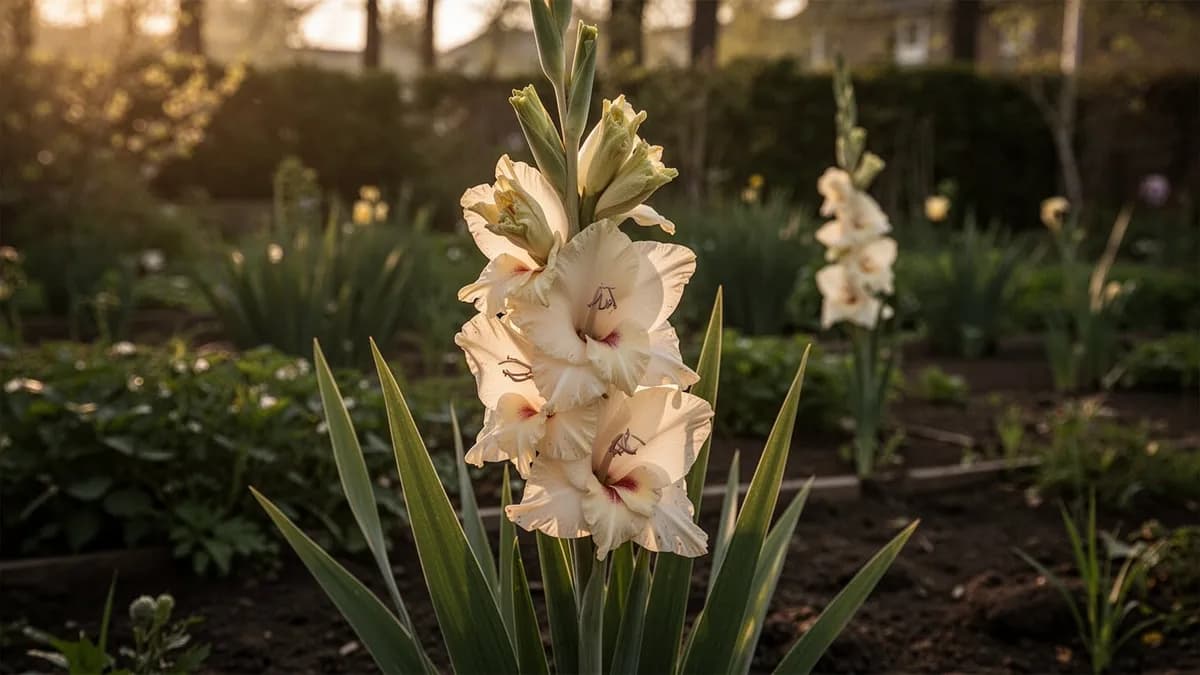
Un vistoso cormo de floración estival que produce espigas altas con flores en forma de embudo en prácticamente todos los colores imaginables.





En esta páginaResumen
Conoce Gladiolo
Un vistoso cormo de floración estival que produce espigas altas con flores en forma de embudo en prácticamente todos los colores imaginables. Plante los cormos de gladiolo en tandas sucesivas cada dos semanas desde la primavera hasta principios del verano para obtener una floración continua. En climas fríos, desentierre los cormos tras las heladas y guárdelos en un lugar fresco y seco durante el invierno.
Cuándo plantar Gladiolo
El gladiolo puede cultivarse a partir de semilla, aunque la mayoría de los jardineros plantan cormos para obtener resultados más rápidos. Las semillas sembradas en interior a finales del invierno tardan 2-3 años en producir cormos de tamaño florífero. Siembre con poca densidad en sustrato húmedo para semillas y mantenga a 18-21°C. Cultive las plántulas durante el primer año sin disturbarlas, luego levante y almacene los pequeños cormos durante el invierno para replantarlos la primavera siguiente.
Tu año de Gladiolo
Ajustado a Zona 7 · temporada típica · la helada se va hacia el 2 abr y vuelve hacia el 1 nov
Planta Gladiolo Abr – Jun y cosecha Jul – Sep. Consulta los métodos de plantación y elige tu clima para adaptar los periodos.
Cómo cultivar Gladiolo
Los cormos de gladiolo deben plantarse después de la última fecha de heladas, cuando el suelo se haya calentado a un mínimo de 13°C. Elija un lugar soleado y resguardado, ya que las espigas altas son vulnerables al daño por viento. Plante los cormos a 10-15 cm de profundidad y 15 cm de separación con el extremo puntiagudo hacia arriba.
Para obtener una floración continua, practique la siembra escalonada colocando nuevos cormos cada dos semanas desde mediados de la primavera hasta principios del verano. Esto prolonga la temporada de floración desde mediados del verano hasta principios del otoño. Riegue con regularidad durante el crecimiento activo, aportando unos 2.5 cm de agua por semana, y aumente el riego cuando las espigas florales comiencen a desarrollarse.
En las zonas 7 y más cálidas, los cormos de gladiolo pueden invernar en el suelo con una gruesa capa de mantillo. En regiones más frías, desentierre los cormos tras las primeras heladas suaves que ennegrezcan el follaje. Corte los tallos a 2.5 cm, cure durante dos semanas en un lugar cálido y seco, y luego guárdelos en bolsas de malla con turba seca a 2-7°C durante el invierno.
128 plantas caben en un bancal de 120 × 240 cm
Cada Gladiolo pide 15 cm de margen. El planificador guarda ese marco por ti — cada planta, cada bancal.
Los mejores vecinos de Gladiolo
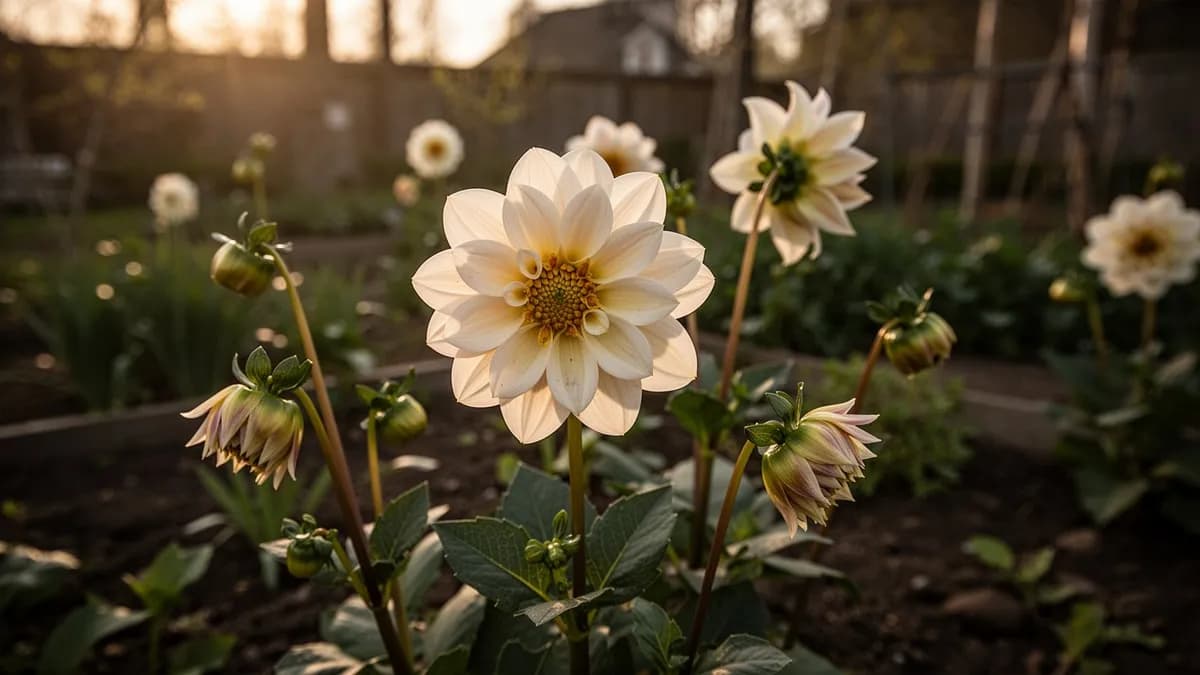
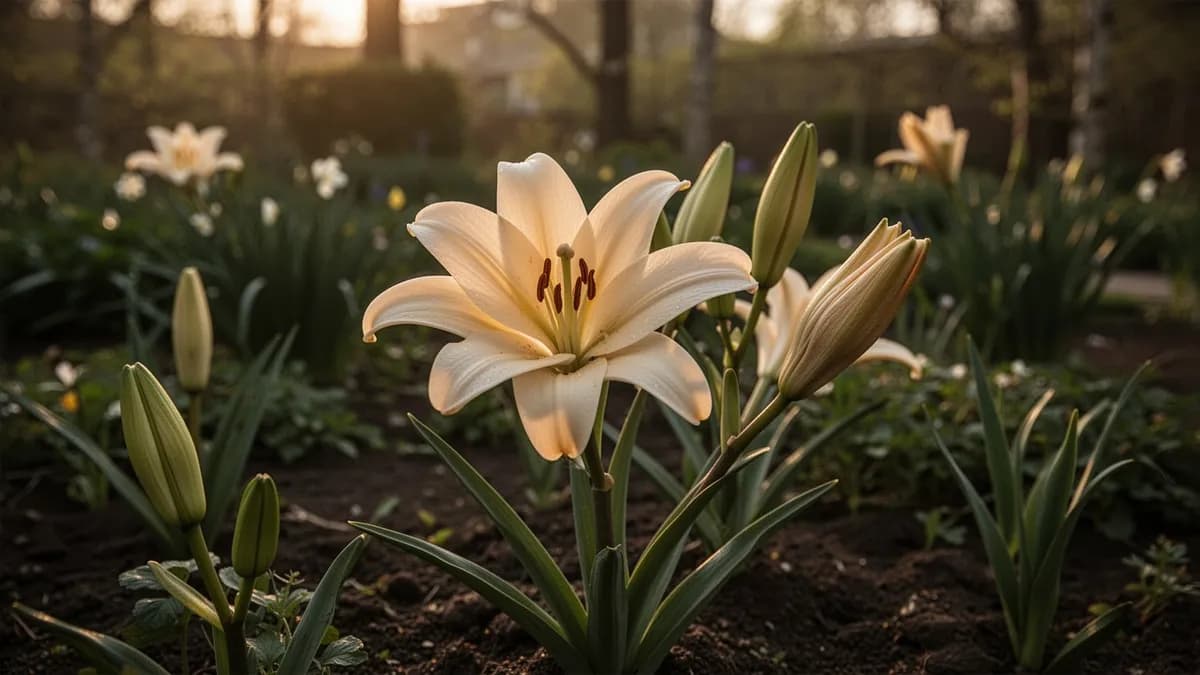
El gladiolo combina bien con otros bulbos de floración estival como las dalias y los lirios para conseguir arriates coloridos y llamativos. Plante anuales de porte bajo como aliso o lobelia alrededor de la base para disimular la parte inferior desnuda de los tallos. Evite plantarlo cerca de judías y guisantes, que pueden competir por los nutrientes. La intercalación con caléndulas ayuda a disuadir los trips y los nematodos que atacan habitualmente los cormos de gladiolo.
Dalia va a su lado.
Saber de huerto de siempre, cotejado con la tabla real de Gladiolo — prueba cualquier planta que cultives.
Prueba Gladiolo en un bancal, aquí mismo
Un bancal real del planificador con Gladiolo ya plantado. Toca una planta compañera para colocarla y mira cómo responde la comprobación de vecinos: verde para buenos vecinos, rojo si hay conflicto.


Guías de cultivo relacionadas
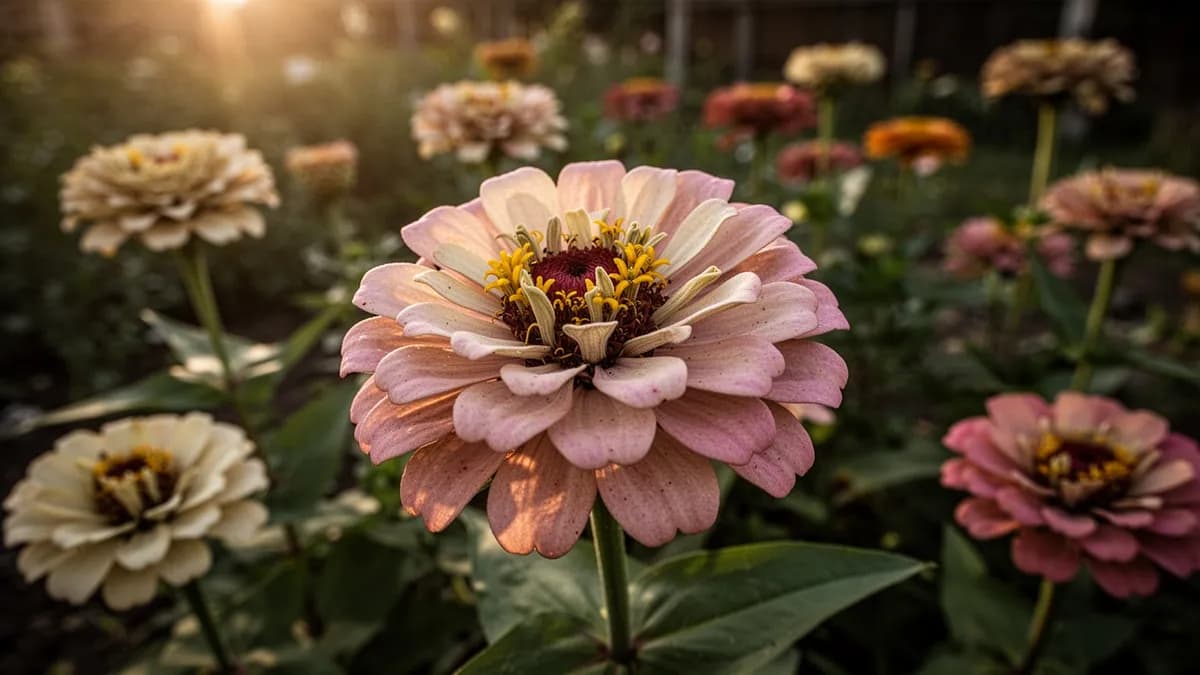
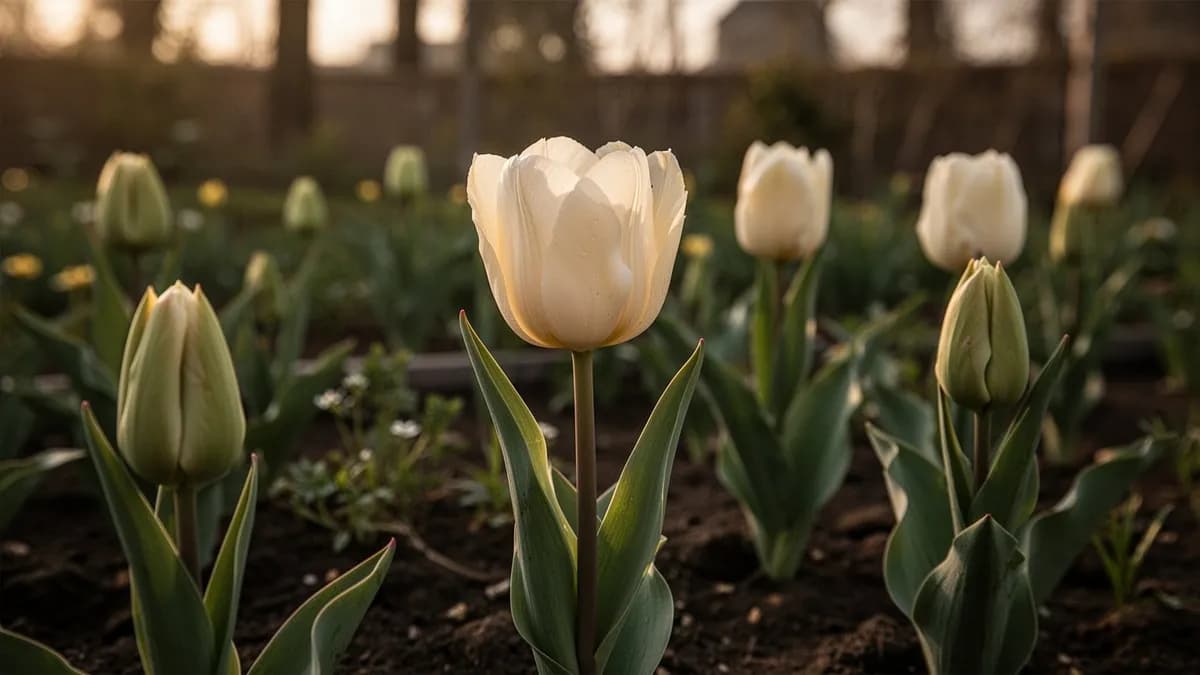
Abónalo bien
El gladiolo rinde mejor en suelos de marga arenosa bien drenados con un pH de 6.0-6.5. La arcilla pesada debe enmendarse con arena gruesa y compost para evitar el encharcamiento, que provoca la podredumbre del cormo. Incorpore un fertilizante equilibrado 5-10-10 al suelo en el momento de la plantación. Abone lateralmente con un fertilizante rico en potasio cuando las espigas florales comiencen a emerger, y de nuevo tras la floración para ayudar a los cormos a acumular reservas para la temporada siguiente.
Temperatura ideal
Compatibilidad de zonas de rusticidad
De la semilla a la cosecha, etapa por etapa
Plantación del cormo y desarrollo radicular
Los cormos de gladiolo se plantan a 10-15 cm de profundidad en suelo bien drenado tras la última fecha de heladas, cuando las temperaturas del suelo han alcanzado al menos 10°C. El cormo comienza a producir raíces adventicias desde su placa basal durante la primera semana. Un nuevo punto de crecimiento emerge desde la yema apical, empujando hacia arriba a través del suelo. Durante esta etapa, el cormo se vale de sus reservas de almidón almacenadas para impulsar el crecimiento inicial antes de que la planta pueda fotosintetizar.
Emergencia de hojas y crecimiento vegetativo
Las hojas en forma de espada emergen del suelo en una disposición en abanico, alcanzando típicamente 30-50 cm de altura durante esta fase. Las hojas son estrechas, lineales y de venación paralela, con una cresta central característica. La planta desarrolla un sistema radicular robusto y comienza a formar un nuevo cormo hijo encima del cormo madre original. La fotosíntesis impulsa ahora la mayor parte de las necesidades energéticas de la planta, a medida que las reservas del cormo original se agotan.
Desarrollo de la espiga y formación de capullos
La espiga floral emerge del centro del abanico de hojas y se alarga rápidamente, creciendo a veces varios centímetros al día. Los capullos de los flósculos individuales se desarrollan a lo largo de un lado de la espiga en un patrón alterno. Los capullos son inicialmente verdes y están firmemente cerrados, hinchándose gradualmente y comenzando a mostrar el color final de los pétalos a medida que maduran. La espiga puede llevar entre 12 y 20 capullos según el cultivar y las condiciones de cultivo.
Floración y plena antesis
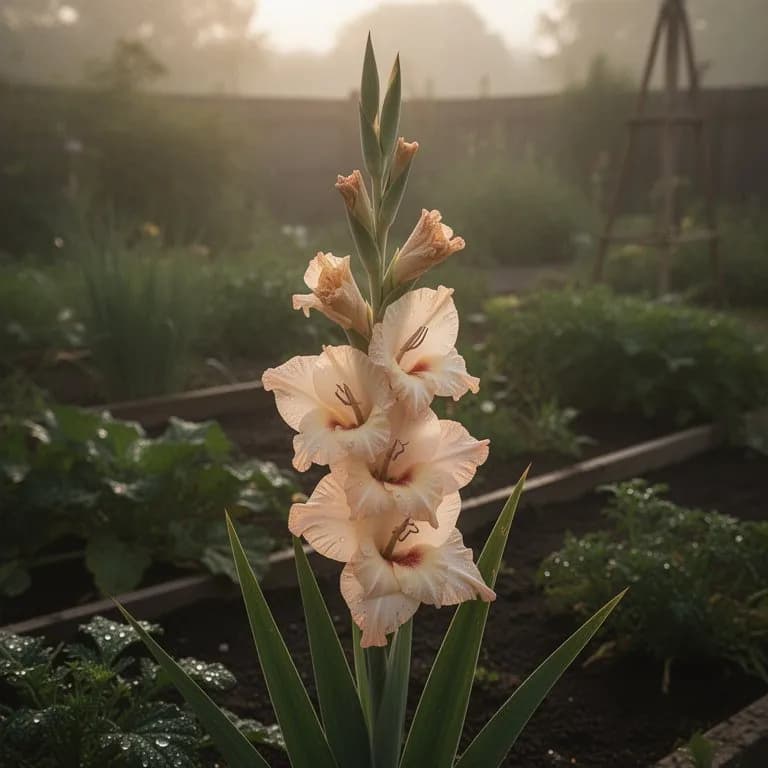
Los flósculos se abren secuencialmente desde la base de la espiga hacia arriba, durando cada flor individual tres o cuatro días. Una espiga sana tendrá entre tres y ocho flósculos abiertos simultáneamente en plena floración. Las flores tienen forma de embudo, a menudo rizadas o festoneadas, y oscilan en tamaño desde los 5 cm en las variedades miniatura hasta más de 15 cm en los grandes tipos de exhibición. Los insectos polinizadores, especialmente las abejas y las mariposas, se sienten atraídos por las flores abiertas. Esta es la etapa ideal para cortar las flores para arreglos interiores.
Maduración del cormo y senescencia
Tras la floración, la planta redirige su energía hacia la maduración del nuevo cormo hijo y la producción de pequeños cormos en su base. Las hojas permanecen verdes y continúan fotosintentizando durante cuatro a seis semanas después de que se desvanezca la última flor. Gradualmente el follaje amarillea y muere a medida que los nutrientes se translocan al almacenamiento. El nuevo cormo desarrolla una túnica papiracea protectora. En climas fríos (zonas USDA 7 e inferiores), los cormos deben levantarse antes de la primera helada fuerte para su almacenamiento invernal.
Dormancia y almacenamiento
Durante la dormancia, el cormo reposa en un estado deshidratado con una actividad metabólica mínima. Las condiciones de almacenamiento adecuadas son fundamentales para evitar la brotación prematura, la desecación o la infección fúngica. El cormo conserva toda la información genética y la energía almacenada necesaria para producir la planta de la temporada siguiente. Los pequeños cormos producidos en la base del cormo madre pueden separarse y cultivarse hasta alcanzar el tamaño florífero en dos o tres temporadas, lo que constituye una forma rentable de aumentar el stock.
Plante los cormos con el extremo puntiagudo hacia arriba al pleno sol. Riegue con moderación al plantar y evite el exceso de riego hasta que aparezcan los brotes, ya que la humedad excesiva puede causar podredumbre del cormo. Incorpore compost o fertilizante granular equilibrado en el hoyo de plantación.
Cuidar Gladiolo mes a mes
Qué hacer cada mes para tu Gladiolo
Octubre
Mes actualLevante los cormos en climas fríos tras las primeras heladas suaves o cuando el follaje haya amarilleado. Corte los tallos a 2 cm por encima del cormo. Retire la tierra y cure en un lugar cálido y seco durante 14 días.
Ten claro qué hacer en tu huerto, cada mes
Un correo al empezar cada mes: qué sembrar, plantar y hacer ahora mismo — para tu Gladiolo y todo lo que crece alrededor. Más un breve curso inicial para esquivar los errores clásicos.
- Qué hacer ahora mismo
- Ajustado a tu temporada
- Curso inicial incluido
Cosechar Gladiolo
Corte los gladiolos para arreglos florales cuando los dos o tres flósculos inferiores de la espiga se hayan abierto y los capullos restantes muestren color. Corte a primera hora de la mañana con un cuchillo limpio y afilado en ángulo. Deje al menos cuatro hojas en la planta para alimentar el cormo de cara al año siguiente. Coloque los tallos de inmediato en agua tibia con conservante floral. Los capullos irán abriéndose progresivamente a lo largo de la espiga durante 7-10 días en el jarrón.
se supone que plantas al comenzar el periodo — indica tu fecha real
A partir de bulbos, tubérculos o dientes
Cosecha Gladiolo a tiempo y la planta sigue produciendo.
Almacenamiento y conservación
Tras las primeras heladas suaves, corte el follaje a un centímetro por encima del cormo. Desentiérrelo con cuidado y sacuda la tierra suelta. Cure en un lugar cálido, seco y bien ventilado durante dos o tres semanas. Retire el viejo cormo arrugado que queda debajo del nuevo y deséchelo. Espolvoree con polvo fungicida y guarde en bolsas de malla o bandejas abiertas a 2-7°C con baja humedad. Revise mensualmente para detectar podredumbre o deshidratación durante el invierno.
Qué falla — y cómo solucionarlo
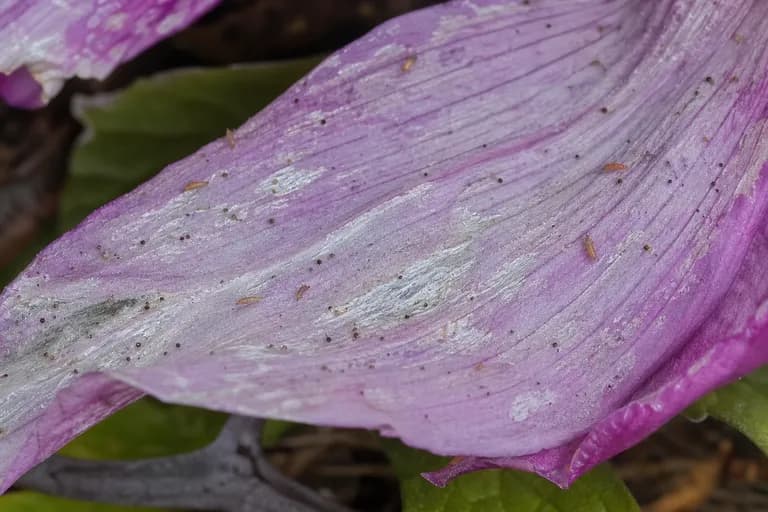
Trips
PlagaRayas plateadas en las hojas, flores deformadas o con bordes marrones, crecimiento atrofiado.
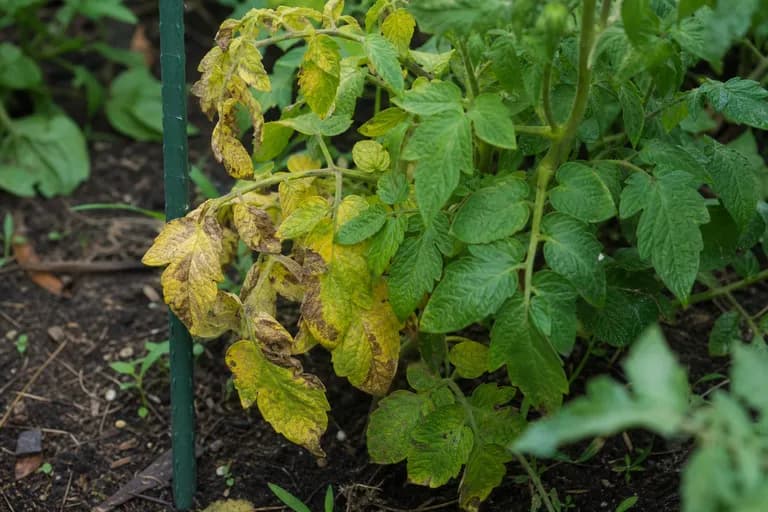
Marchitez por Fusarium
EnfermedadAmarillamiento y pardeamiento de las hojas inferiores, la planta se vence, el cormo muestra una podredumbre marrón oscura al cortarlo.
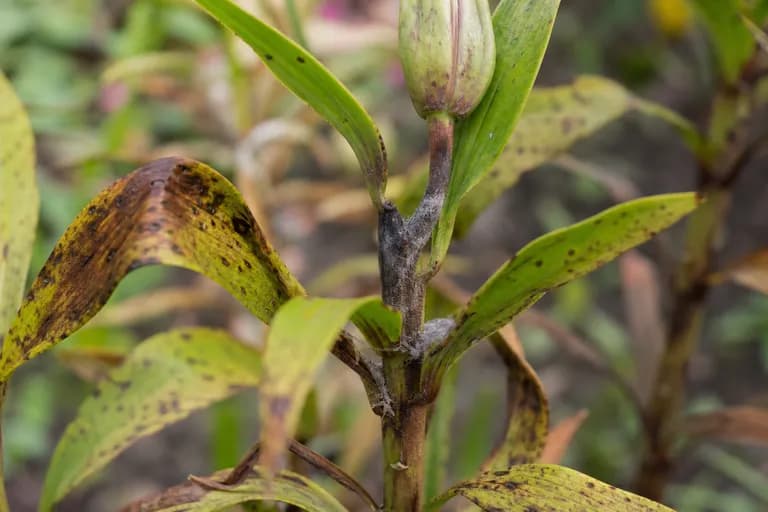
Botritis
EnfermedadManchas marrones en hojas y flores, moho gris difuso en condiciones húmedas, caída prematura de flores.

Roya del gladiolo
EnfermedadPústulas de color naranja pardusco en las hojas, muerte prematura del follaje, cormos debilitados.
Solución de problemas comunes
Las variedades altas se vuelcan con frecuencia ante el viento o la lluvia; tutore cuando los tallos alcancen 30 cm. La falta de floración suele deberse a cormos demasiado pequeños (plante solo cormos de más de 3 cm de diámetro), a demasiada sombra o a una refrigeración insuficiente en climas cálidos. Los brotes ciegos (sin flores) indican infección viral o daño por trips. Los cormos que quedan en suelo húmedo durante el invierno se pudren en zonas más frías que la 7.
Consejos de cultivo
- Plante los cormos en tandas sucesivas cada dos semanas desde mediados de la primavera hasta principios del verano para disfrutar de una floración continua desde mediados del verano hasta principios del otoño en lugar de un único y concentrado brote de flores.
- Elija un lugar de plantación que reciba al menos seis a ocho horas de luz solar directa diaria, ya que la luz insuficiente provoca tallos débiles, floración escasa y mayor susceptibilidad a las enfermedades fúngicas.
- Incorpore generosas cantidades de compost bien descompuesto en el área de plantación y asegúrese de que el suelo drene libremente, ya que los cormos de gladiolo son muy propensos a la podredumbre en condiciones de encharcamiento.
- Plante los cormos a 10-15 cm de profundidad y 15 cm de separación; una plantación más profunda proporciona un mejor anclaje para las variedades altas y reduce la necesidad de tutores externos.
- Instale los tutores en el momento de la plantación en lugar de después de que las plantas hayan crecido, ya que insertar los tutores más tarde puede dañar el cormo en desarrollo y el sistema radicular bajo el suelo.
- Monitoree de cerca los trips del gladiolo, pequeños insectos que causan rayas plateadas en las hojas y manchas marrones en los capullos florales. Trate las infestaciones temprano con jabón insecticida o spray de aceite de neem aplicado por la noche.
- Riegue abundante y regularmente, aportando aproximadamente 2.5 cm de agua por semana, y aplique una capa de 5 a 8 cm de mantillo orgánico para mantener una humedad uniforme del suelo y suprimir las malas hierbas competidoras.
- Tras la floración, deje el follaje en la planta durante al menos seis semanas para que pueda fotosintetizar y reponer las reservas energéticas del cormo para el crecimiento del año siguiente.
- En las zonas de rusticidad USDA 7 e inferiores, levante los cormos seis a ocho semanas después de la floración o tras las primeras heladas suaves, lo que ocurra primero, y guárdelos en un lugar fresco, seco y bien ventilado durante el invierno.
- Rote los lugares de plantación del gladiolo anualmente y evite plantarlo en el mismo sitio durante al menos tres años consecutivos para reducir la acumulación de enfermedades del suelo, en particular la marchitez por fusarium y la podredumbre del cormo por botritis.
Cultiva tu mejor Gladiolo — y todo lo que la rodea.
Empieza un plan gratis hoy. Diseña tus bancales, coloca tu Gladiolo y deja que PlotMyGarden gestione el momento, el espaciado, las asociaciones y los recordatorios de la semilla a la cesta.
Elige tu Gladiolo
Gladiolus 'Green Star'
Llamativas flores rizado-amarillentas de color verde chartreuse sobre tallos altos, favorita para arreglos florales únicos.
Gladiolus 'Black Star'
Flores de un profundo borgoña aterciopelado casi negro que crean un dramático contraste en arriates y ramos.
Gladiolus 'Priscilla'
Flores blancas rizadas con suaves bordes rosas y garganta amarilla, una elegante variedad clásica.
Gladiolus nanus 'Nymph'
Un gladiolo miniatura compacto de apenas 60 cm, con flores blanco crema sonrosadas. Resistente e ideal para macetas.
Gladiolus 'Espresso'
Flores de un rico color café con matices ahumados, inusuales y muy buscadas para arreglos de flores cortadas.
Un solo cormo de gladiolo que cuesta entre 0.50 y 2.00 € produce una espiga floral valorada en 3 a 8 € como flor cortada a precios de florista minorista. Cada cormo se multiplica anualmente, produciendo uno a tres cormos hijos y cinco a veinte pequeños cormos, lo que permite a los jardineros ampliar su colección sin coste adicional. Después de tres años, una inversión inicial de 25 cormos por aproximadamente 25 € puede rendir más de 200 cormos de tamaño florífero, proporcionando cientos de euros en flores cortadas cada temporada y convirtiendo al gladiolo en una de las flores más rentables para los aficionados a la jardinería que disfrutan de los ramos frescos.
Recetas rápidas
Ensalada con guarnición de pétalos de gladiolo
10 minutosLos pétalos frescos de gladiolo añaden un dramático toque de color a las ensaladas de verano. Utilice únicamente pétalos de plantas cultivadas orgánicamente que no hayan sido tratadas con pesticidas. Los pétalos tienen un sabor suave y ligeramente dulce con una textura crujiente similar a la lechuga. Enjuague con suavidad y seque con papel antes de disponerlos sobre ensaladas aliñadas justo antes de servir.
6 ingredientesSolución conservante para arreglos florales de gladiolo
5 minutosEsta solución casera para flores prolonga la vida en el jarrón de los gladiolos cortados aportando azúcares para la energía, un acidificante para mejorar la absorción de agua y un suave agente antimicrobiano para prevenir el crecimiento bacteriano. Cambie la solución cada dos o tres días y vuelva a cortar los tallos en ángulo de 45 grados para una máxima longevidad.
4 ingredientes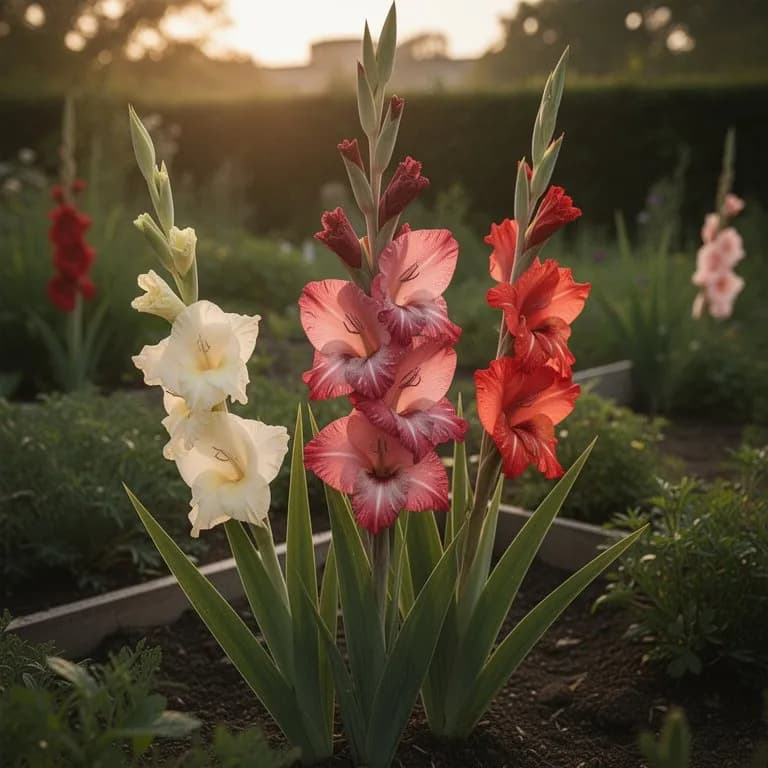
Arte botánico con gladiolos prensados
15 minutos activos, 3 semanas de prensadoLos flósculos individuales de gladiolo se prensan de forma magnífica debido a su forma relativamente plana y sus colores vivos que se conservan muy bien al secarse. Seleccione flósculos recién abiertos en su máximo color, prénselos entre capas de papel absorbente bajo libros pesados y utilice las piezas acabadas para arte botánico enmarcado, tarjetas de felicitación o marcadores de libros.
5 ingredientesQué contiene
Beneficios para la salud
- El cultivo del gladiolo proporciona un ejercicio físico moderado a través de la excavación, la plantación, la colocación de tutores y el levantamiento de los cormos, contribuyendo a la salud cardiovascular y la fuerza muscular
- Los vibrantes colores y las dramáticas formas florales del gladiolo han demostrado en estudios de horticultura terapéutica reducir el estrés y mejorar el estado de ánimo cuando se incorporan a entornos de jardín
- El cuidado de un jardín de gladiolos para flor cortada fomenta la actividad regular al aire libre y la exposición a la luz solar natural, lo que favorece la producción de vitamina D y la regulación del ritmo circadiano
- El proceso de planificar siembras escalonadas, supervisar las etapas de crecimiento y cuidar los cormos a lo largo de su ciclo anual promueve el compromiso cognitivo y la atención plena
- Los gladiolos cortados traídos al interior mejoran la percepción de la calidad del aire interior y se han asociado con una mayor sensación de bienestar y satisfacción en los espacios habitados
- Participar en exposiciones de gladiolos y comunidades de jardinería fomenta las conexiones sociales, que la investigación vincula consistentemente con una mejor salud mental y mayor longevidad
De dónde viene Gladiolo
El gladiolo pertenece a la familia del iris (Iridaceae) y engloba aproximadamente 300 especies, la gran mayoría nativas del África subsahariana, particularmente de la región del Cabo en Sudáfrica, con un número menor distribuido por la cuenca mediterránea y el oeste de Asia. El género se cultiva desde al menos el siglo XVIII, cuando los exploradores botánicos europeos comenzaron a recolectar especies sudafricanas y a enviar cormos a los jardines de Holanda, Inglaterra y Francia. El primer gladiolo híbrido registrado, Gladiolus × colvillei, fue creado en 1823 al cruzar G. tristis con G. cardinalis, produciendo una planta con flores más grandes y un crecimiento más vigoroso que cualquiera de los progenitores. A lo largo del siglo XIX, los criadores de Bélgica, Francia y más tarde Estados Unidos desarrollaron híbridos cada vez más llamativos cruzando múltiples especies sudafricanas, produciendo finalmente los grandes híbridos grandiflorus de flores vistosas que dominan los jardines y el comercio mundial de flores cortadas en la actualidad. A principios del siglo XX, el gladiolo se había convertido en uno de los cultivos florícolas más importantes del mundo, con miles de nuevos cultivares registrados cada década. La planta jugó un papel cultural significativo durante el período Art Déco, cuando su forma alta y arquitectónica la convirtió en símbolo de elegancia y modernidad. En Sudáfrica, las especies silvestres de gladiolo siguen siendo ecológicamente importantes como fuente de alimento para polinizadores especializados, y muchas están ahora protegidas por la legislación de conservación debido a la pérdida de hábitat por la agricultura y la urbanización. Hoy en día, los Países Bajos, Israel, Japón y Estados Unidos son los principales productores de cormos y flores cortadas de gladiolo, con una producción global anual estimada en miles de millones de tallos.
Gladiolo: ¿sabías que?
Datos fascinantes sobre Gladiolo
El nombre 'gladiolus' proviene de la palabra latina 'gladius', que significa espada, en referencia a las características hojas en forma de espada de la planta; los gladiadores romanos recibieron su nombre de la misma palabra.
Gladiolo: preguntas frecuentes
¿Cuándo debo plantar Gladiolo?
¿Cuáles son buenas plantas acompañantes para Gladiolo?
¿En qué zonas de rusticidad puede crecer Gladiolo?
¿Cuánto sol necesita Gladiolo?
¿A qué distancia debo espaciar Gladiolo?
¿Qué plagas y enfermedades afectan a Gladiolo?
¿Cómo almaceno Gladiolo después de la cosecha?
¿Cuáles son las mejores variedades de Gladiolo para cultivar?
¿Qué suelo necesita Gladiolo?
¿Cuál es el mejor momento para plantar los cormos de gladiolo?
¿Necesito desenterrar los cormos de gladiolo cada año?
¿Por qué se cayó mi gladiolo antes de florecer?
¿Qué son las rayas marrones en mis hojas y capullos de gladiolo?
¿Se puede cultivar el gladiolo en contenedores?
¿Cómo consigo la mayor duración posible de los gladiolos cortados en el jarrón?
Acabas de leer la teoría. Ahora cultívala en piloto automático.
Todo lo que hace que Gladiolo sea delicado — el momento, el espaciado, las asociaciones, la ventana de cosecha — es justo lo que PlotMyGarden resuelve por ti, para cada planta de tu huerto.
Un plan que conoce tu clima
Indica tu ubicación una vez. Recibe fechas de siembra, abonado y cosecha basadas en tu última helada real y el pronóstico en vivo — sin adivinar con un sobre genérico.
De la sección “Cuándo plantar”Planificador de bancales de arrastrar y soltar
Diseña bancales sobre una cuadrícula. Cada planta encaja con su espaciado correcto y ves toda la temporada antes de gastar un céntimo en semillas.
De la sección “Cultivo”Conflictos de asociación, detectados a tiempo
Más de 200 buenas y malas combinaciones comprobadas en vivo mientras plantas — para que un error que arruine la temporada nunca llegue a la tierra.
De la sección “Asociaciones”Recordatorios que sí vas a seguir
“Riega las judías.” “Recoge hoy antes de que se pase.” Oportunos, concretos y ligados a las plantas que de verdad cultivas.
De la sección “Cosecha”Escalonado, programado
¿Quieres cosechar seis semanas en vez de seis días? Reparte tus siembras automáticamente y te avisa cuando toca el siguiente lote.
De la sección “Cuándo plantar”Un registro que se vuelve más listo
Cada cosecha que registras le enseña tu huerto. El plan del año que viene parte de lo que de verdad funcionó en tu suelo, no en un manual.
De la sección “Resumen”Planta estos junto a Gladiolo
Más Bulbosas
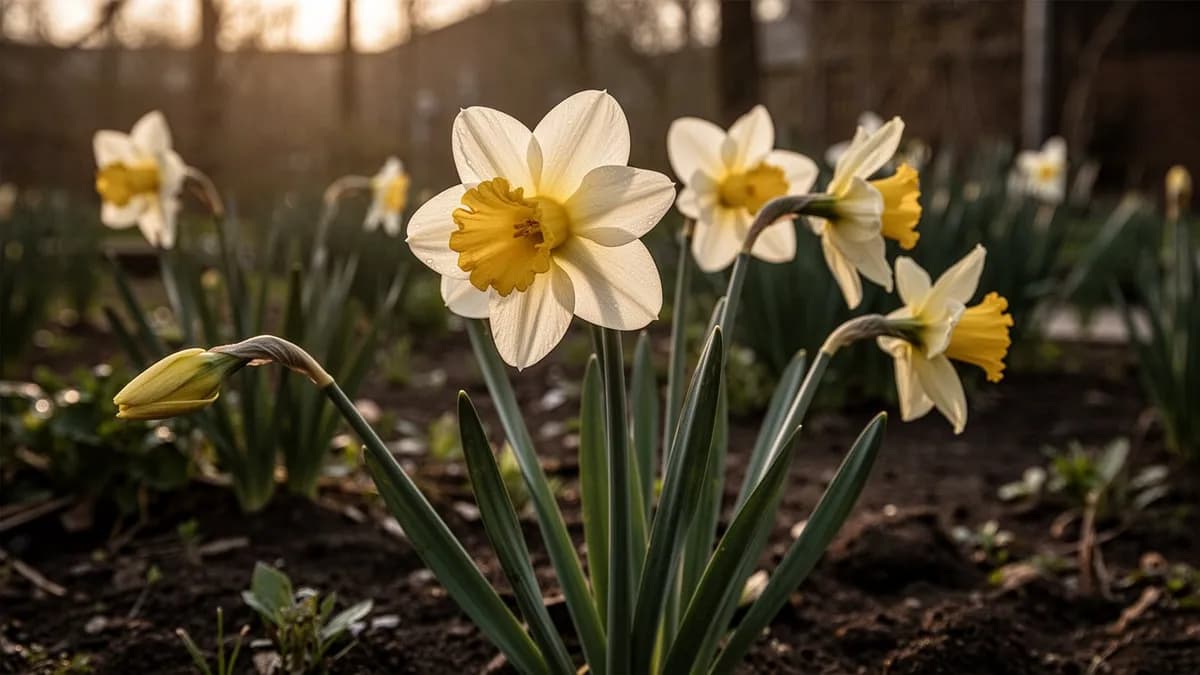
Cultiva tu mejor Gladiolo — y todo lo que la rodea.
Empieza un plan gratis hoy. Diseña tus bancales, coloca tu Gladiolo y deja que PlotMyGarden gestione el momento, el espaciado, las asociaciones y los recordatorios de la semilla a la cesta.