Eufrasia
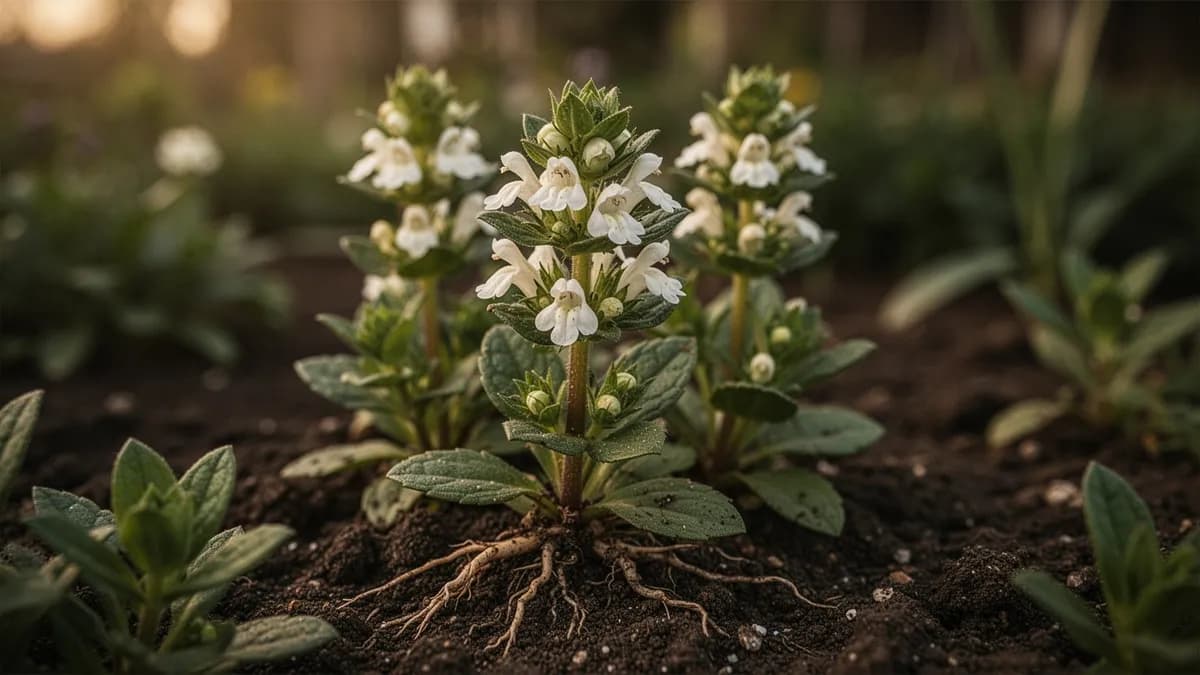
Una pequeña anual semiparásita con delicadas flores blancas y moradas, utilizada tradicionalmente en la medicina herbal europea para la salud ocular.





En esta páginaResumen
Conoce Eufrasia
Una pequeña anual semiparásita con delicadas flores blancas y moradas, utilizada tradicionalmente en la medicina herbal europea para la salud ocular. La eufrasia es difícil de cultivar porque necesita plantas hospedadoras de gramíneas para parasitar y obtener nutrientes. Siembre las semillas mezcladas con semilla de gramíneas en un entorno de prado para obtener los mejores resultados y recolecte las sumidades floridas en verano.
Cuándo plantar Eufrasia
Siembre las semillas de eufrasia directamente en un tapiz de hierba fina y establecido a principios de primavera o a finales de otoño. Mezcle las diminutas semillas con arena fina para una distribución uniforme. Presiónelas contra la superficie del suelo, ya que las semillas necesitan luz para germinar. No las cubra con tierra. Mantenga el área húmeda durante la germinación (2-4 semanas). Las semillas no se pueden iniciar en macetas o bandejas porque las plántulas deben establecer rápidamente conexiones parasitarias con las raíces de las gramíneas. La estratificación en frío (4-6 semanas en el refrigerador) puede mejorar la germinación de semillas almacenadas.
Tu año de Eufrasia
Ajustado a Zona 7 · temporada típica · la helada se va hacia el 2 abr y vuelve hacia el 1 nov
Planta Eufrasia Mar – May y cosecha Jul – Ago. Consulta los métodos de plantación y elige tu clima para adaptar los periodos.
Cómo cultivar Eufrasia
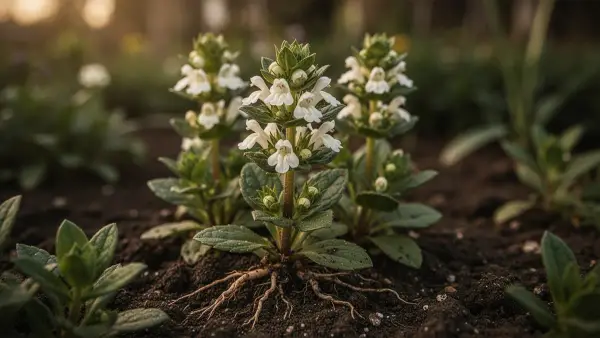
La eufrasia es una encantadora aunque difícil de cultivar pequeña anual, que crece apenas 5-20 cm de altura, con delicadas flores blancas o lila pálido rayadas de amarillo. La dificultad reside en su naturaleza semiparásita: la eufrasia no puede crecer de forma independiente y debe unir sus raíces a las de gramíneas hospedadoras para obtener parte de sus nutrientes. Esto hace que el cultivo en jardín convencional sea prácticamente imposible.
La única forma fiable de cultivar eufrasia es sembrar las semillas directamente en un prado, césped o camino de hierba establecido donde crezcan gramíneas hospedadoras. Mezcle las semillas con arena fina y esparza sobre un tapiz de hierba delgada a principios de primavera. Presione las semillas contra la superficie del suelo, pues necesitan luz para germinar. Las plántulas establecen conexiones parasitarias con las raíces de las gramíneas y comienzan a crecer.
La eufrasia prospera en praderas de baja fertilidad, ligeramente ácidas a neutras, donde se reduce la competencia de las gramíneas vigorosas. El suelo pobre en nutrientes y la siega regular favorecen a la eufrasia frente a las gramíneas agresivas. En los prados de siega tradicionales, la eufrasia era un componente habitual de la diversa comunidad de plantas silvestres. La agricultura intensiva moderna ha reducido drásticamente las poblaciones silvestres, por lo que el cultivo resulta importante para su conservación.
128 plantas caben en un bancal de 120 × 240 cm
Cada Eufrasia pide 15 cm de margen. El planificador guarda ese marco por ti — cada planta, cada bancal.
Los mejores vecinos de Eufrasia
La eufrasia crece de forma natural en prados ricos en especies junto a otras plantas silvestres de pastizal, entre ellas la cresta de gallo (otro semiparásito que debilita la hierba), el trefolio de pata de pájaro y la brunela. Crear un prado de flores silvestres mixtas con estas especies compañeras proporciona el mejor entorno para la eufrasia. La cresta de gallo es especialmente beneficiosa como coparásita que reduce el vigor de las gramíneas, liberando más espacio y recursos para la eufrasia y otras pequeñas flores de pradera.
Manzanilla va a su lado.
Saber de huerto de siempre, cotejado con la tabla real de Eufrasia — prueba cualquier planta que cultives.
Prueba Eufrasia en un bancal, aquí mismo
Un bancal real del planificador con Eufrasia ya plantado. Toca una planta compañera para colocarla y mira cómo responde la comprobación de vecinos: verde para buenos vecinos, rojo si hay conflicto.


Guías de cultivo relacionadas
Abónalo bien
La eufrasia requiere suelos pobres en nutrientes, ligeramente ácidos a neutros (pH 5.5-7.0), en asociación con gramíneas hospedadoras. No abone, pues la alta fertilidad favorece el crecimiento de las gramíneas, que ahogan las diminutas plantas de eufrasia. Su hábito semiparásito significa que la planta obtiene algunos nutrientes de las raíces de las gramíneas, complementando su propia fotosíntesis. Los mejores resultados provienen de prados o céspedes de baja fertilidad establecida que no han sido abonados durante varios años.
Temperatura ideal
Compatibilidad de zonas de rusticidad
De la semilla a la cosecha, etapa por etapa
Germinación
Las semillas de eufrasia son extremadamente pequeñas, casi polvo, y necesitan luz para germinar. Suelen brotar entre 14 y 21 días cuando se siembran en superficie sobre suelo húmedo en condiciones frescas. De forma crucial, la eufrasia es una planta hemiparásita y requiere la presencia de raíces hospedadoras de gramíneas cercanas para desarrollarse más allá de la etapa inicial de plántula. Los diminutos cotiledones emergen y la plántula comienza de inmediato a buscar contacto radicular con las gramíneas vecinas.
Fijación parasitaria
Una vez que las raíces de la plántula encuentran una gramínea hospedadora adecuada, unas estructuras especializadas llamadas haustorios penetran en el tejido radicular del hospedador para extraer agua y minerales. Esta conexión semiparásita es esencial para la supervivencia y el crecimiento vigoroso de la planta. La plántula permanece muy pequeña durante esta fase, con apenas 2-4 cm de altura, con diminutos pares opuestos de hojas ovaladas dentadas. La conexión no daña significativamente a la gramínea hospedadora.
Crecimiento vegetativo
Con la conexión parasitaria establecida, la planta crece más rápidamente, desarrollando un tallo delgado y ramificado de 5-25 cm de altura según las condiciones. Las pequeñas hojas profundamente dentadas se disponen en pares opuestos a lo largo de los tallos fibrosos. Toda la planta tiene un aspecto compacto, algo rígido, con finos pelos en los tallos y las hojas. En condiciones favorables, la eufrasia puede ramificarse ampliamente cerca de la base.
Floración
Las flores, pequeñas pero de exquisita belleza, aparecen en las axilas de las hojas a lo largo de los tallos superiores desde mediados del verano hasta el otoño. Cada flor mide 5-10 mm de diámetro, con pétalos blancos o lila pálido marcados con delicadas venas moradas y una característica mancha amarilla brillante en el labio inferior. Las flores son bilabiadas y recuerdan a una pequeña boca de dragón. La floración continúa de forma progresiva hacia arriba por el tallo durante varias semanas, y las flores inferiores fructifican mientras los capullos superiores siguen abriéndose.
Fructificación y senescencia
Tras la polinización, cada flor desarrolla una pequeña cápsula aplanada que contiene numerosas semillas diminutas. Las cápsulas se abren cuando maduran, liberando las semillas finísimas que se dispersan por el viento y la lluvia. Como planta anual, la eufrasia completa todo su ciclo vital en una sola estación de crecimiento, y la planta entera muere después de fructificar, típicamente con las primeras heladas otoñales.
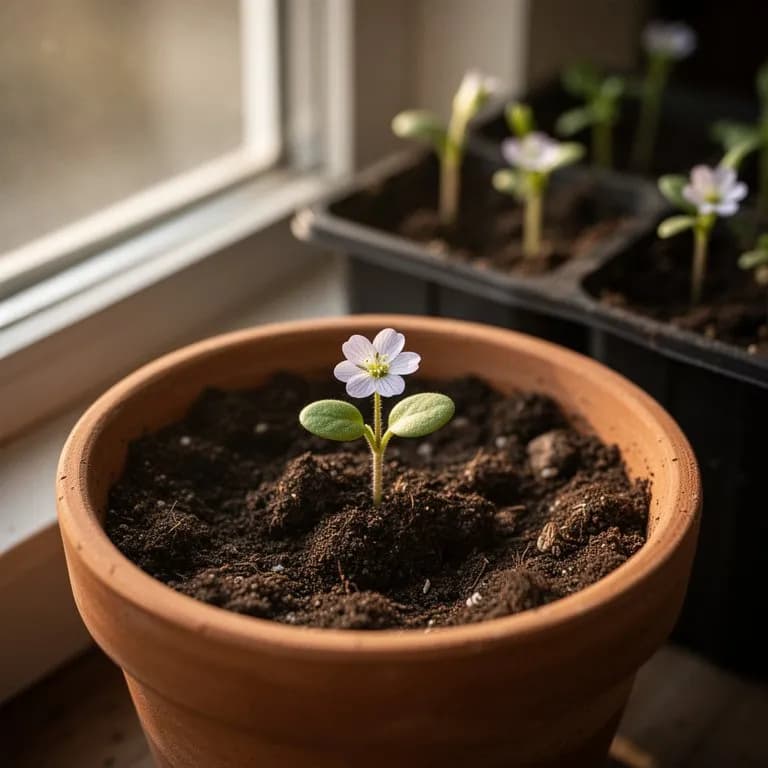
Siembre las semillas en superficie sobre suelo húmedo de baja fertilidad entre gramíneas cortas establecidas en otoño o a principios de primavera. No cubra las semillas: necesitan luz para germinar. Mantenga la superficie consistentemente húmeda con un vaporizador fino. Nunca siembre en suelo desnudo sin gramíneas hospedadoras presentes, pues las plántulas fracasarán sin una planta hospedadora.
Cuidar Eufrasia mes a mes
Qué hacer cada mes para tu Eufrasia
Octubre
Mes actualEl ciclo de vida anual está llegando a su fin a medida que las heladas otoñales matan el crecimiento aéreo restante. Si gestiona un prado de flores silvestres, este es el momento ideal para la siega anual: siegue el prado y retire los recortes para mantener las condiciones de baja fertilidad que la eufrasia necesita para competir con éxito frente a las gramíneas.
Ten claro qué hacer en tu huerto, cada mes
Un correo al empezar cada mes: qué sembrar, plantar y hacer ahora mismo — para tu Eufrasia y todo lo que crece alrededor. Más un breve curso inicial para esquivar los errores clásicos.
- Qué hacer ahora mismo
- Ajustado a tu temporada
- Curso inicial incluido
Cosechar Eufrasia
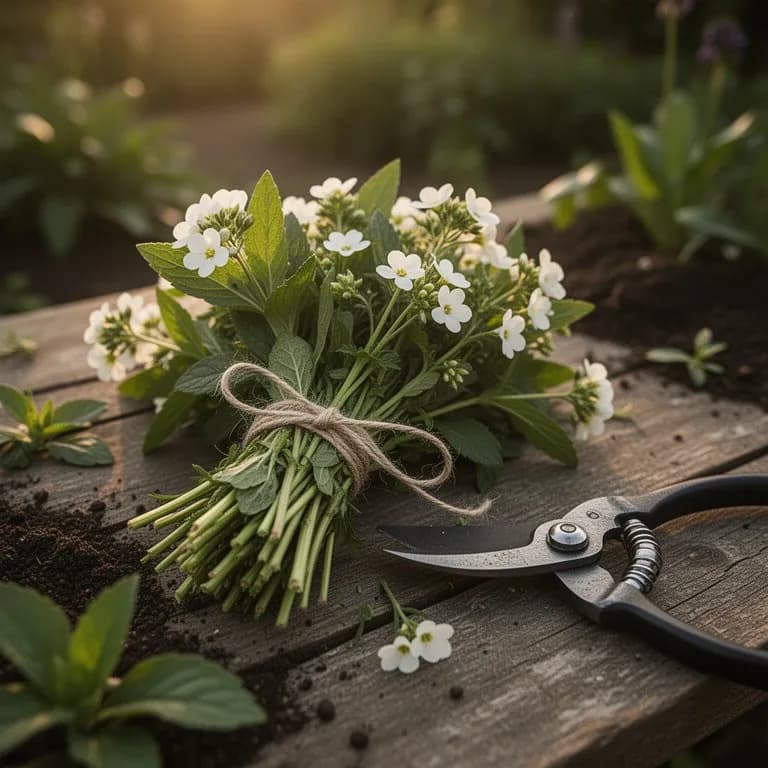
Recolecte la eufrasia cuando las plantas estén en plena floración a mediados del verano. Corte la planta entera por encima del suelo, ya que todas las partes aéreas se utilizan medicinalmente. Manipule con cuidado, pues las diminutas plantas son delicadas. Seque de inmediato extendiéndola en una sola capa sobre tamices finos en un lugar cálido, oscuro y bien ventilado. Las pequeñas flores conservan bien su color cuando se secan correctamente. Como la eufrasia es una anual que depende de la resiembra, deje algunas plantas sin cosechar para que produzcan semillas para el año siguiente.
se supone que plantas al comenzar el periodo — indica tu fecha real
Cosecha Eufrasia a tiempo y la planta sigue produciendo.
Almacenamiento y conservación
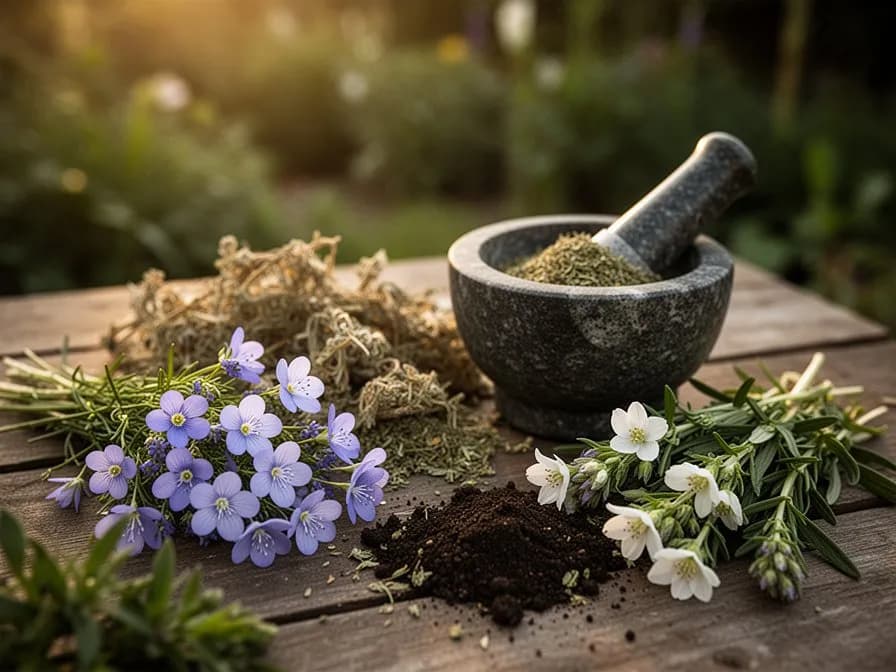
Seque la planta entera (flores, tallos y hojas) sobre tamices finos, alejada de la luz directa. El secado tarda entre 5 y 7 días. Guarde la eufrasia seca en tarros herméticos alejados de la luz hasta por un año. La hierba seca se usa tradicionalmente como infusión o en compresas. Prepare tintura con planta fresca o seca en alcohol para una preparación más concentrada. La calidad de la eufrasia recolectada en estado silvestre varía considerablemente; el material cultivado de fuentes conocidas es preferible.
Qué falla — y cómo solucionarlo
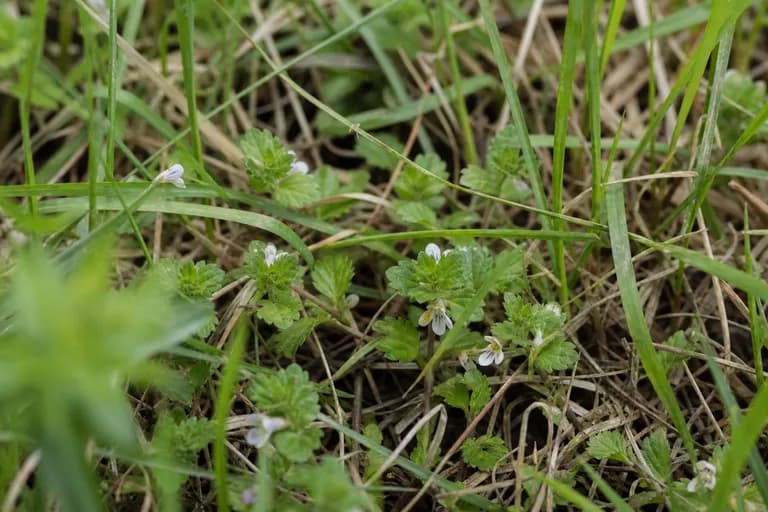
Competencia de gramíneas vigorosas
EnfermedadLa eufrasia es ahogada y superada por el crecimiento de hierba alta y densa en suelos fértiles.
Solución de problemas comunes
La necesidad absoluta de gramíneas hospedadoras hace que la eufrasia sea imposible de cultivar en arriates convencionales de hierbas, macetas o sistemas hidropónicos. Incluso en entornos de pradera, el éxito depende de lograr el equilibrio correcto entre las gramíneas hospedadoras (necesarias) y la competencia de las gramíneas (perjudicial). El suelo demasiado fértil es la razón más común del fracaso: la hierba crece demasiado vigorosamente y aplasta las diminutas plantas de eufrasia. La paciencia y una gestión adecuada del emplazamiento son esenciales.
Consejos de cultivo
- La eufrasia es una anual semiparásita que necesita raíces vivas de gramíneas cercanas para prosperar. Nunca intente cultivarla en suelo desnudo, arriates elevados o hileras de jardín convencionales: debe sembrarse directamente en pastizales cortos y establecidos o en una maceta que contenga hierba en crecimiento para formar las esenciales conexiones radiculares que necesita para sobrevivir.
- Elija un lugar de siembra con suelo pobre en nutrientes, bien drenado y a pleno sol. La eufrasia es superada en la competencia por las gramíneas vigorosas en suelo fértil, así que evite cualquier área que haya sido abonada. El césped fino y escaso en suelos calcáreos, arenosos o de brezal proporciona condiciones ideales para el establecimiento.
- Siembre las semillas extremadamente finas en la superficie del suelo en otoño o a principios de primavera, mezclándolas con arena seca para facilitar su manejo y lograr una distribución más uniforme. Presione las semillas ligeramente contra la superficie, pero no las cubra: la eufrasia necesita luz para germinar y las semillas son demasiado diminutas para emerger desde cualquier profundidad de tierra.
- Mantenga el área de siembra húmeda con nebulización fina durante la germinación, que típicamente tarda entre 14 y 21 días en condiciones frescas. Las plántulas están entre las más pequeñas de cualquier planta de jardín y son casi invisibles durante las primeras semanas: resista la tentación de segar, desherbar o perturbar el área durante esta crítica fase de establecimiento.
- Evite todos los fertilizantes y herbicidas en las áreas de cultivo de eufrasia. La planta prospera en condiciones bajas en nutrientes, y cualquier enriquecimiento del suelo hará que las gramíneas competidoras crezcan vigorosamente y ahoguen a las pequeñas plantas de eufrasia antes de que puedan establecerse.
- Gestione la hierba circundante segando una o dos veces durante la temporada de crecimiento a una altura de 5-10 cm, lo que evita que las gramíneas altas ensombrezcan a la diminuta eufrasia al tiempo que se mantienen las gramíneas hospedadoras que necesita. Programe las siegas con cuidado para evitar cortar la eufrasia durante su período de floración.
- La eufrasia se autosiembra libremente una vez establecida, creando colonias más grandes cada año. Para fomentar la regeneración natural, retrase la siega otoñal del prado hasta octubre, después de que las cápsulas de semillas se hayan abierto y liberado su contenido. Retire los recortes de la siega para mantener las condiciones de baja fertilidad que la planta prefiere.
- Cultivar eufrasia en recipientes es posible pero requiere un enfoque especial: siembre las semillas en una maceta grande que ya contenga gramíneas finas establecidas, como la festuca. Use una mezcla de compost de bajo contenido en nutrientes y buen drenaje, sin fertilizante añadido. Mantenga la maceta a pleno sol y riegue con regularidad, pero no abone.
- El cultivo asociado con otras flores silvestres de pradera como la cresta de gallo, la campanilla de los Pirineos y la escabiosa de campo crea un atractivo y ecológicamente beneficioso prado de flores silvestres. La cresta de gallo es especialmente útil ya que también parasita a las gramíneas, reduciendo su vigor y creando espacio para la eufrasia y otras pequeñas flores silvestres.
- Sea paciente al establecer la eufrasia: puede llevar de 2 a 3 años que una siembra se desarrolle en una colonia visible y productiva. Las plantas del primer año suelen ser muy pequeñas y escasas, pero sientan las bases para generaciones más fuertes mediante la autosiembra. Una vez establecidas, las colonias pueden persistir durante décadas con una gestión adecuada del prado.
Cultiva tu mejor Eufrasia — y todo lo que la rodea.
Empieza un plan gratis hoy. Diseña tus bancales, coloca tu Eufrasia y deja que PlotMyGarden gestione el momento, el espaciado, las asociaciones y los recordatorios de la semilla a la cesta.
Elige tu Eufrasia
Euphrasia officinalis (Eufrasia común)
La especie medicinal principal. Pequeña anual semiparásita con flores blanco-moradas en pastizales.
Euphrasia nemorosa
Una especie estrechamente emparentada que se encuentra en hábitats similares. Se usa de forma intercambiable en la práctica herbal.
La eufrasia seca se vende a entre 12 y 25 dólares por cada 100 g en farmacias herbarias y proveedores especializados de hierbas, lo que la convierte en una de las hierbas secas más caras del mercado debido a la dificultad de su cultivo comercial. Los colirios y suplementos de eufrasia elaborados previamente pueden costar entre 10 y 20 dólares por frasco pequeño. Una colonia de jardín establecida que produzca entre 50 y 100 g de hierba seca anuales reemplaza entre 10 y 25 dólares de hierba comprada cada año. Como la eufrasia se autosiembra de forma fiable una vez establecida, una inversión única en un sobre de semillas de entre 4 y 8 dólares puede proporcionar un suministro autosuficiente de esta valiosa hierba medicinal durante muchos años, con un ahorro fácil de entre 50 y 120 dólares a lo largo de un período de cinco años en comparación con la compra de hierba seca o preparados comerciales.
Recetas rápidas
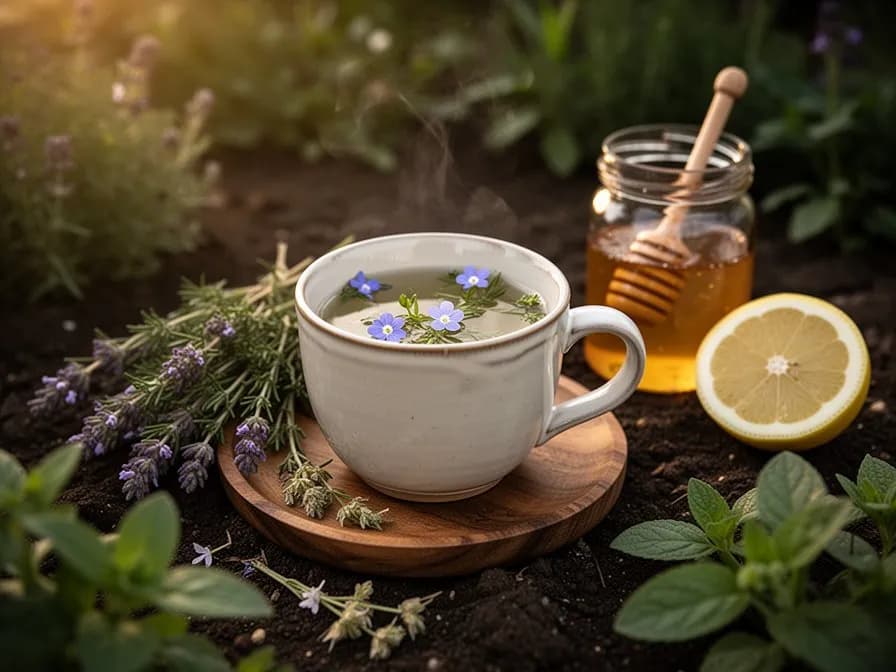
Infusión calmante de eufrasia
10 minUna infusión herbal ligera y suavemente amarga que se consume tradicionalmente para favorecer la salud ocular y aliviar los síntomas de alergia estacional que afectan a los ojos y los senos nasales. Esta preparación clásica ha sido la piedra angular del uso de la eufrasia en la herbolaria europea durante siglos, valorada por su acción suave pero eficaz sobre las mucosas irritadas.
4 ingredientesCompresa ocular tradicional de eufrasia
15 minUna preparación externa de probada eficacia que utiliza una infusión concentrada de eufrasia aplicada como compresa caliente sobre ojos cansados, irritados o hinchados. Este tratamiento calmante se basa en siglos de tradición popular, y los taninos astringentes ayudan a reducir el edema mientras los compuestos antiinflamatorios calman los tejidos oculares irritados. Use siempre una infusión recién preparada, correctamente filtrada y enfriada.
4 ingredientesTintura conservante de eufrasia
15 min (más 4-6 semanas de maceración)Un extracto líquido concentrado que preserva los compuestos activos de la eufrasia en alcohol para su uso durante todo el año cuando no se dispone de hierba fresca o seca. Las tinturas ofrecen una forma cómoda y duradera de tomar eufrasia y pueden añadirse al agua o a las infusiones. Este método de preparación tradicional extrae tanto los compuestos solubles en agua como los solubles en alcohol para una potencia máxima.
5 ingredientesQué contiene
Beneficios para la salud
- Tradicionalmente una de las hierbas más estimadas para la salud ocular en la herbolaria europea: las infusiones y compresas elaboradas con eufrasia se han utilizado durante siglos para calmar ojos cansados, irritados e inflamados, y la investigación moderna confirma la presencia de glucósidos iridoides antiinflamatorios que respaldan estos usos tradicionales.
- Contiene taninos astringentes que ayudan a tonificar y proteger las mucosas de todo el cuerpo, lo que convierte a la eufrasia en una hierba valiosa para controlar la producción excesiva de moco, los ojos llorosos y la congestión nasal asociada a la fiebre del heno y las alergias estacionales.
- Rica en flavonoides antioxidantes como la quercetina y la luteolina, que pueden ayudar a proteger los delicados tejidos oculares del estrés oxidativo causado por la exposición prolongada a pantallas, la luz UV y los contaminantes ambientales.
- Demuestra propiedades antimicrobianas en estudios de laboratorio, respaldando su uso tradicional como lavado suave para infecciones oculares menores como la conjuntivitis y la blefaritis: la combinación de acciones antiinflamatoria y antibacteriana aborda tanto los síntomas como las causas subyacentes.
- Utilizada en la herbolaria europea tradicional como tónico respiratorio para resfriados, sinusitis y congestión de las vías respiratorias superiores: los mismos compuestos astringentes y antiinflamatorios que benefician los ojos también ayudan a calmar las membranas nasales y de los senos nasales irritadas.
- Contiene ácido cafeico y otros compuestos fenólicos con documentada actividad antiinflamatoria, que pueden ayudar a reducir el enrojecimiento, la hinchazón y el malestar asociados a las reacciones alérgicas que afectan a los ojos, la nariz y la garganta.
De dónde viene Eufrasia
La eufrasia (Euphrasia officinalis) es originaria de los prados, pastizales y brezales de Europa, donde crece de forma silvestre desde Escandinavia hasta el Mediterráneo y hacia el este a través de Asia templada. El género Euphrasia pertenece a las Orobancháceas, la familia de las orobancas, un grupo notable por sus numerosos miembros parásitos y semiparásitos. El estilo de vida semiparásito de la eufrasia, que extrae nutrición suplementaria de las raíces de las gramíneas vecinas a través de conexiones radiculares especializadas llamadas haustorios, ha moldeado tanto su ecología como los desafíos de su cultivo a lo largo de la historia.
El uso medicinal de la eufrasia se remonta al menos al siglo XIV, cuando apareció por primera vez en los herbarios europeos como remedio específico para las dolencias oculares. La hierba se menciona en los escritos de Hildegarda de Bingen y ganó prominencia a través de las obras de herbolaristas posteriores como Matthaeus Platearius y el influyente médico alemán Leonhart Fuchs. Para los siglos XVI y XVII, la eufrasia se había convertido en una de las hierbas más ampliamente recomendadas en la medicina europea, prescrita para prácticamente todas las afecciones de los ojos, desde la simple irritación hasta la pérdida de visión en la vejez.
Nicholas Culpeper, el célebre herbolario inglés del siglo XVII, escribió extensamente sobre las virtudes de la eufrasia, recomendando el jugo o una decocción tomada internamente y aplicada externamente para fortalecer los ojos débiles y aclarar la visión borrosa. La hierba fue incorporada a la primera Farmacopea de Londres y permaneció como ingrediente farmacéutico estándar en toda Europa durante siglos. Las tradiciones populares en torno a la eufrasia eran igualmente ricas: en Escocia, las comunidades de las Highlands preparaban una infusión llamada 'lus nan leac' y la consideraban esencial para mantener la agudeza visual de los cazadores y pastores.
En la fitoterapia moderna, la eufrasia continúa siendo ampliamente utilizada en toda Europa, especialmente en Alemania, Austria y Suiza, donde aparece en numerosos preparados comerciales de colirios, infusiones de hierbas y remedios homeopáticos. La investigación científica ha identificado varias clases de compuestos activos en la eufrasia, entre ellos glucósidos iridoides, flavonoides, taninos y ácidos fenólicos, que en conjunto demuestran propiedades antiinflamatorias, antioxidantes y antimicrobianas que respaldan científicamente sus usos tradicionales.
Eufrasia: ¿sabías que?
Datos fascinantes sobre Eufrasia
El nombre Euphrasia proviene de la palabra griega 'euphrosyne', que significa alegría, y en la mitología griega Euphrosyne era una de las tres Gracias: se decía que la hierba traía alegría al devolver una visión clara a quienes la usaban.
Eufrasia: preguntas frecuentes
¿Cuándo debo plantar Eufrasia?
¿Cuáles son buenas plantas acompañantes para Eufrasia?
¿En qué zonas de rusticidad puede crecer Eufrasia?
¿Cuánto sol necesita Eufrasia?
¿A qué distancia debo espaciar Eufrasia?
¿Qué plagas y enfermedades afectan a Eufrasia?
¿Cómo almaceno Eufrasia después de la cosecha?
¿Cuáles son las mejores variedades de Eufrasia para cultivar?
¿Qué suelo necesita Eufrasia?
¿Es realmente eficaz la eufrasia para los problemas oculares?
¿Por qué es la eufrasia tan difícil de cultivar en comparación con otras hierbas?
¿Puedo usar preparados caseros de eufrasia directamente en mis ojos?
¿Qué tipo de gramínea necesita la eufrasia como planta hospedadora?
¿Cuándo debo recolectar la eufrasia para uso medicinal?
¿Volverá la eufrasia cada año una vez plantada?
Acabas de leer la teoría. Ahora cultívala en piloto automático.
Todo lo que hace que Eufrasia sea delicado — el momento, el espaciado, las asociaciones, la ventana de cosecha — es justo lo que PlotMyGarden resuelve por ti, para cada planta de tu huerto.
Un plan que conoce tu clima
Indica tu ubicación una vez. Recibe fechas de siembra, abonado y cosecha basadas en tu última helada real y el pronóstico en vivo — sin adivinar con un sobre genérico.
De la sección “Cuándo plantar”Planificador de bancales de arrastrar y soltar
Diseña bancales sobre una cuadrícula. Cada planta encaja con su espaciado correcto y ves toda la temporada antes de gastar un céntimo en semillas.
De la sección “Cultivo”Conflictos de asociación, detectados a tiempo
Más de 200 buenas y malas combinaciones comprobadas en vivo mientras plantas — para que un error que arruine la temporada nunca llegue a la tierra.
De la sección “Asociaciones”Recordatorios que sí vas a seguir
“Riega las judías.” “Recoge hoy antes de que se pase.” Oportunos, concretos y ligados a las plantas que de verdad cultivas.
De la sección “Cosecha”Escalonado, programado
¿Quieres cosechar seis semanas en vez de seis días? Reparte tus siembras automáticamente y te avisa cuando toca el siguiente lote.
De la sección “Cuándo plantar”Un registro que se vuelve más listo
Cada cosecha que registras le enseña tu huerto. El plan del año que viene parte de lo que de verdad funcionó en tu suelo, no en un manual.
De la sección “Resumen”Planta estos junto a Eufrasia
Más Hierbas medicinales
Cultiva tu mejor Eufrasia — y todo lo que la rodea.
Empieza un plan gratis hoy. Diseña tus bancales, coloca tu Eufrasia y deja que PlotMyGarden gestione el momento, el espaciado, las asociaciones y los recordatorios de la semilla a la cesta.