Watermelon Daikon
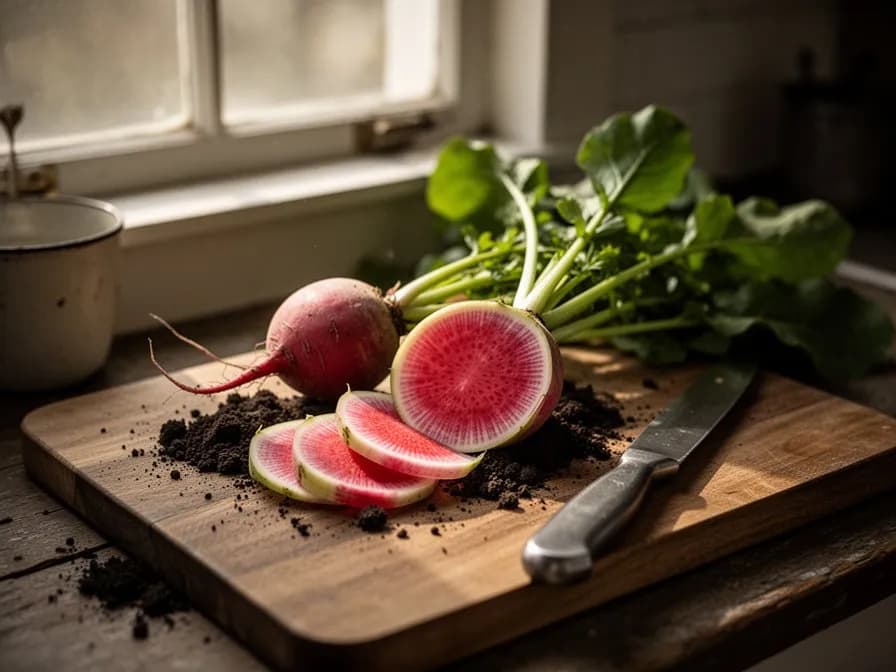
A stunning Chinese daikon variety with green and white skin concealing brilliant pink-magenta flesh that looks like watermelon when sliced.





On this pageOverview
Meet Watermelon Daikon
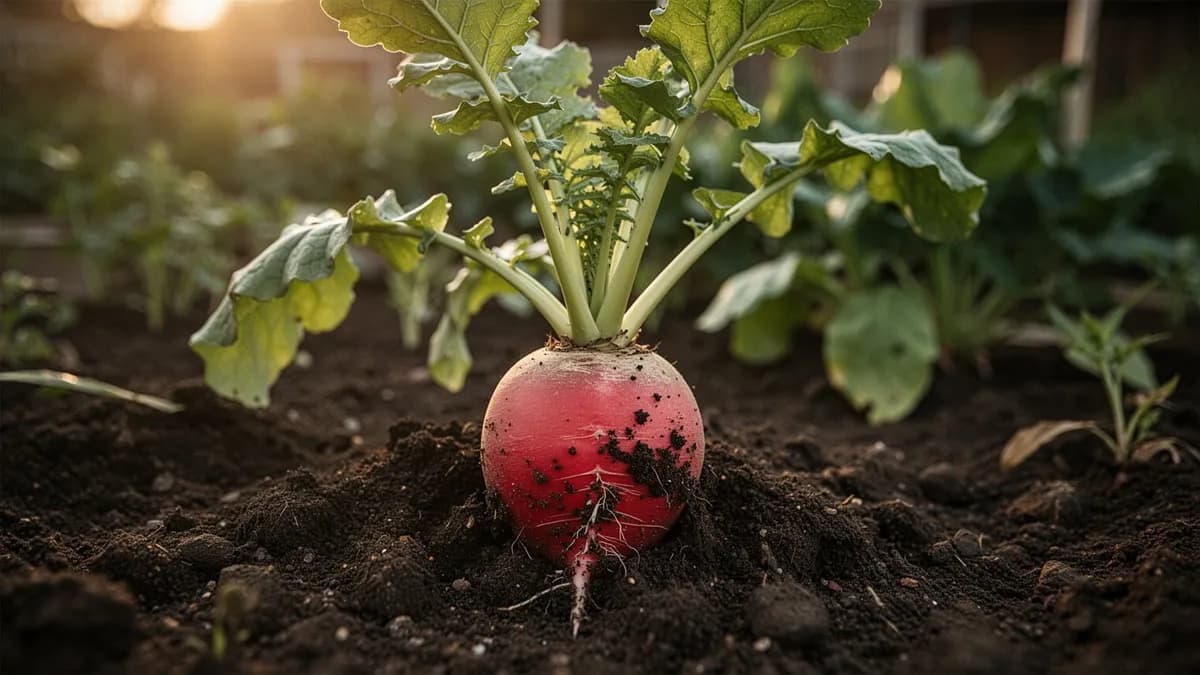
A stunning Chinese daikon variety with green and white skin concealing brilliant pink-magenta flesh that looks like watermelon when sliced. Best grown as a fall crop since spring plantings tend to bolt and produce pithy roots. Flavor is mild and slightly sweet, becoming more peppery toward the skin. Thin slices are a beautiful raw garnish, and the color holds well when pickled.
When to plant Watermelon Daikon
Always direct sow watermelon radish seeds, as they do not transplant well due to their taproot nature. Sow from July to September for autumn harvest, placing seeds 1.5 cm deep and 15 cm apart in rows 30 cm apart. Seeds germinate rapidly in 5-7 days. Thin promptly to prevent overcrowding. Do not attempt spring sowing as long days cause bolting before roots develop. In mild winter areas, a late September sowing may overwinter for early spring harvest. Seeds remain viable for four to five years in cool, dry storage.
Your Watermelon Daikon Year
Composed for Zone 7 · typical seasons · frost passes Apr 2, returns Nov 1
Plant Watermelon Daikon Jul – Sep, pick Oct – Dec. Check the planting methods below and set your climate to personalize these windows.
How to grow Watermelon Daikon
Watermelon radish is a Chinese heirloom daikon that must be grown as a fall crop for best results. Spring sowings frequently bolt before developing their signature pink interior. Sow seeds directly outdoors from July to September, placing them 1.5 cm deep and 15 cm apart in rows 30 cm apart. Seeds germinate quickly in 5-7 days. Thin seedlings to final spacing when they reach 5 cm tall, as overcrowding produces small, misshapen roots.
These radishes need 55-65 days of cool, shortening days to develop their best color and flavor. The brilliant pink-magenta flesh intensifies as temperatures cool in autumn. Provide full sun and consistent moisture throughout the growing period, as irregular watering causes cracked or pithy roots. A layer of mulch helps maintain even soil moisture and temperature.
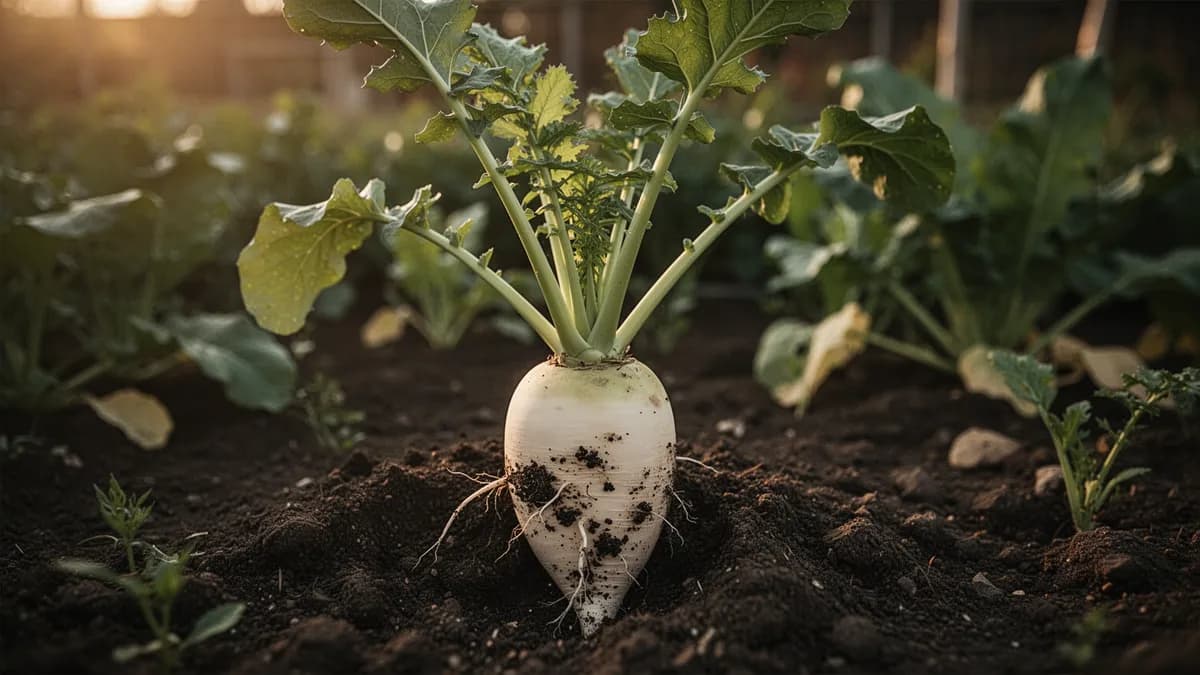
Watermelon radishes grow larger than common radishes, reaching 7-10 cm in diameter. The roots develop mostly underground with the top portion visible at the soil surface. Loose, deep, stone-free soil is essential for well-formed roots. Hill soil gently around exposed root shoulders to prevent greening. The best-quality roots develop during periods of steady, cool weather between 10-18°C. Light frost improves sweetness but harvest before hard freeze.
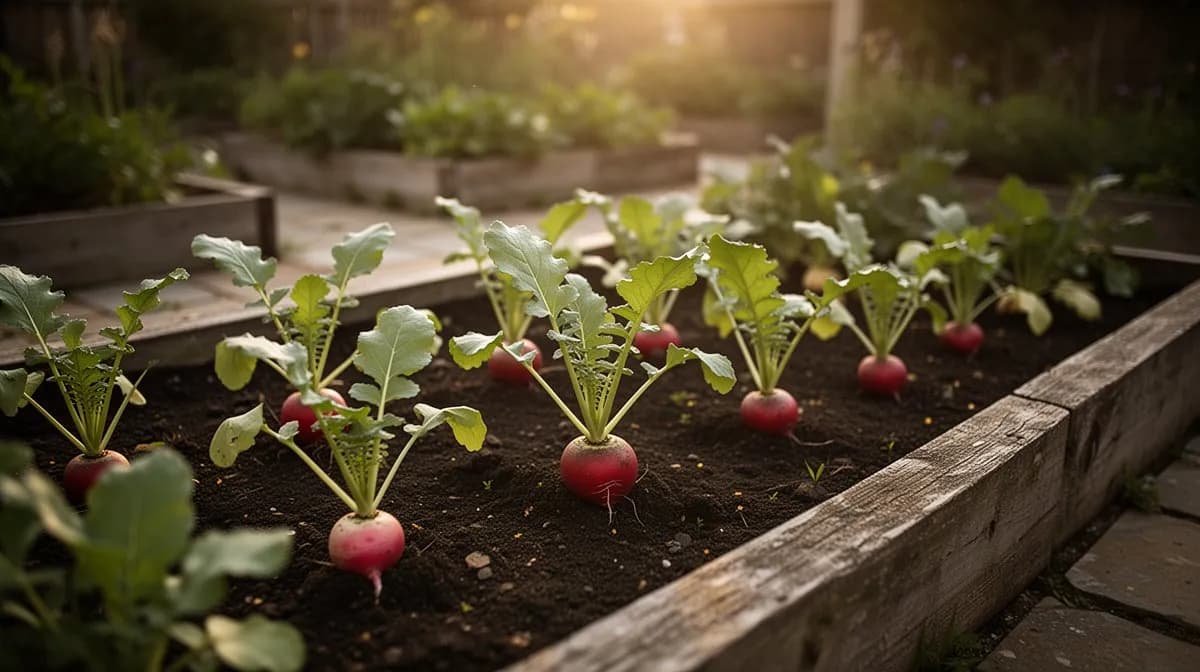
128 plants fit a 4 × 8 ft bed
Each Watermelon Daikon wants 15 cm of elbow room. The planner keeps that spacing for you — every plant, every bed.
Watermelon Daikon's best neighbours
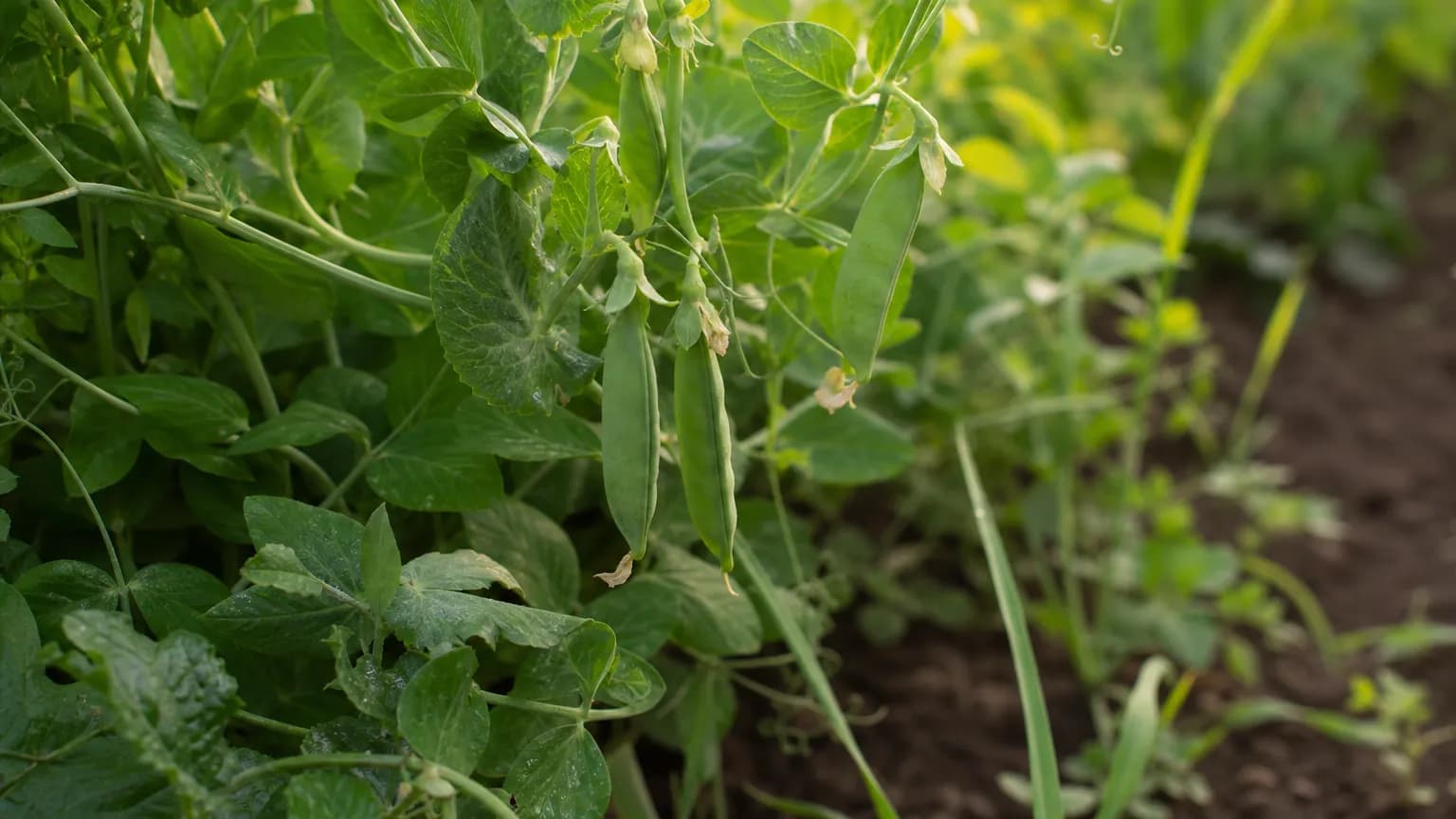
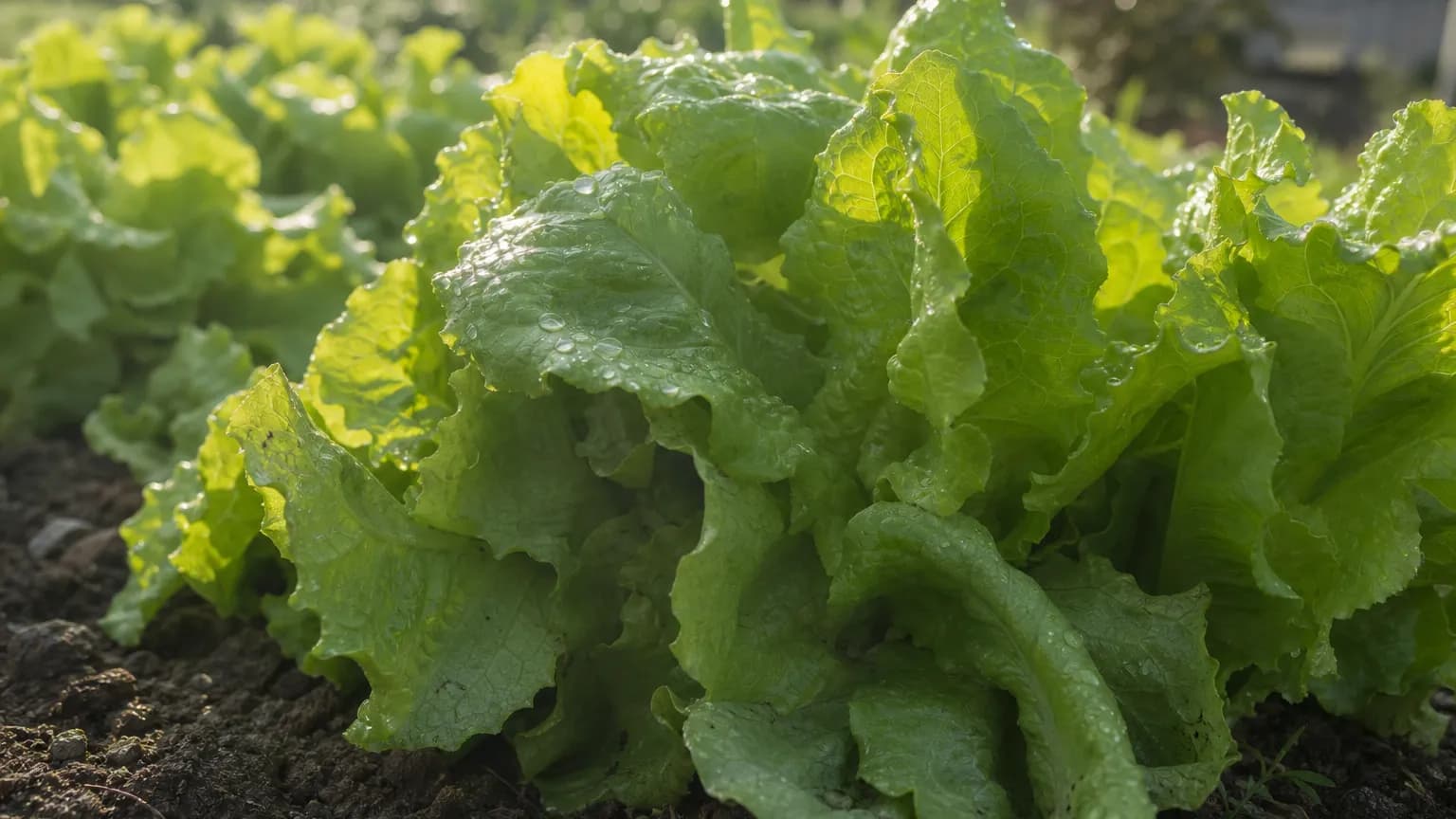
Watermelon radishes grow well alongside peas and lettuce. Peas fix nitrogen that benefits the radish foliage, while lettuce acts as a living mulch to conserve moisture. Avoid planting near other brassicas to reduce shared pest and disease pressure, particularly clubroot. Onions and garlic planted nearby may help deter flea beetles. Plant after summer crops like beans or squash to take advantage of residual soil fertility for the autumn growing season.
Peas belongs beside it.
Old growers' knowledge, checked against Watermelon Daikon's real companion table below — test any plant you're growing.
Try Watermelon Daikon in a bed — right here
A real planner bed with Watermelon Daikon already in it. Tap a companion to place it and watch the pairing checks answer — green for good neighbours, red for a clash.


Related growing guides
Feed it well
Watermelon radishes need deep, loose, stone-free soil for well-formed roots. Work the soil to a depth of 30 cm and remove any stones or debris before sowing. Incorporate well-rotted compost for moisture retention but avoid fresh manure which causes forking. The ideal pH is 6.0-7.0. Apply a low-nitrogen, higher-potassium fertilizer before sowing to promote root development over leaf growth. Avoid nitrogen-rich feeds that produce lush tops at the expense of the colorful root.
Ideal Temperature
Hardiness Zone Compatibility
From seed to harvest, stage by stage
Germination
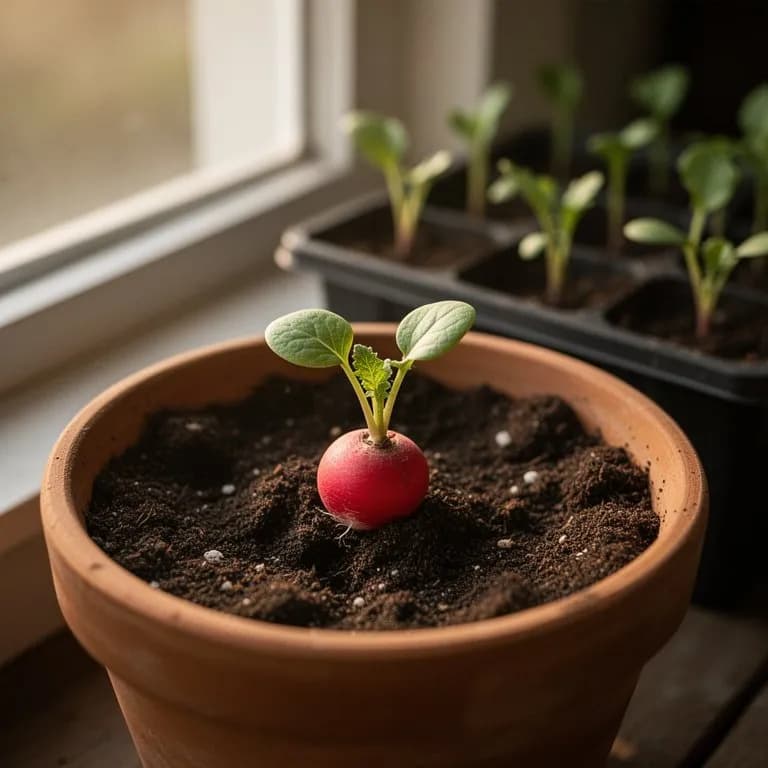
Watermelon radish seeds are relatively large for a radish and germinate reliably in cool, moist soil within 5-7 days. Stout seedlings emerge with broad cotyledons that are noticeably larger than those of common red radishes. Seeds prefer soil temperatures of 10-18°C (50-65°F) for optimal germination, though they will sprout in soil as cool as 4°C (40°F).
Seedling Development
True leaves develop rapidly, appearing rough-textured, lobed, and slightly hairy — characteristic of the daikon radish family. The seedlings grow more vigorously than common radishes and quickly form a spreading rosette. The taproot begins to thicken below the soil surface.
Foliage Expansion
Large, vigorous leaves form a rosette that can span 30-40 cm across. The foliage looks similar to turnip greens and functions as the solar engine driving root development below. Underground, the root transitions from a thin taproot to a thickening globe that begins to take on the characteristic round to slightly top-shaped form.
Root Bulking
The root swells rapidly, pushing its shoulders above the soil line. The exterior skin develops its distinctive coloring: pale green at the top fading to white at the bottom. Inside, the flesh begins its remarkable transformation from white to the vivid magenta-pink that gives the watermelon radish its name. Color intensity increases with cool temperatures and maturity.
Maturity and Harvest
Roots reach their ideal harvest size of 7-10 cm (3-4 inches) in diameter. The interior is now fully colored with brilliant magenta-pink flesh radiating from the center, separated from the pale green skin by a thin white ring. Flavor is mildly peppery with a pronounced sweetness, and texture is dense, crisp, and juicy. The color is most vivid when roots mature during cool autumn weather.
Overmaturity
If left unharvested, roots develop a spongy, pithy core and lose their crisp texture. The vivid interior color fades, and flavor becomes unpleasantly sharp and woody. In spring plantings, warm temperatures trigger bolting — a tall flower stalk emerges from the center of the rosette, and root quality declines rapidly. Autumn-grown roots hold quality somewhat longer in cool soil.
Sow seeds 1-1.5 cm deep and 2-3 cm apart in rows spaced 30 cm apart. Keep the soil surface moist but not waterlogged. Unlike quick-maturing salad radishes, watermelon radishes need room — plan for aggressive thinning later.
Caring for Watermelon Daikon month by month
What to do each month for your Watermelon Daikon
October
You are hereBegin checking roots for maturity at 55-60 days after sowing. Pull a test root and slice it open — the interior should be vibrant magenta-pink throughout. Harvest progressively as roots reach 7-10 cm diameter. Cool nights are intensifying the color and sweetness now.
Know exactly what to do in your garden — every month
One email at the start of each month: what to sow, plant, and tackle right now — for your Watermelon Daikon and everything growing around it. Plus a short starter course that helps you dodge the classic mistakes.
- What to do, right now
- Matched to your season
- Starter course included
Harvesting Watermelon Daikon
Harvest watermelon radishes 55-65 days after sowing when roots reach 7-10 cm in diameter. Gently lever them from the soil with a fork to avoid snapping the root. Check maturity by brushing soil from the top of a root to look for the characteristic pale green skin. The pink interior color develops best in cooler weather. Harvest before hard freezes, though light frost improves flavor. Overripe roots become pithy and hollow, so do not delay harvest once roots reach full size.
assuming you plant when the window opens — set your real date
Pick Watermelon Daikon promptly and the plant keeps producing.
Storage & Preservation
Watermelon radishes store well in the refrigerator for up to two weeks when wrapped in a damp paper towel inside a plastic bag. Remove leaves before storing as they draw moisture from the root. For longer storage, keep in boxes of damp sand in a cool, frost-free shed for up to two months. Pickle slices in rice vinegar with sugar and salt for a stunning preserved condiment that retains its bright pink color. Slices can be dehydrated to make colorful radish chips.
What goes wrong — and the fix
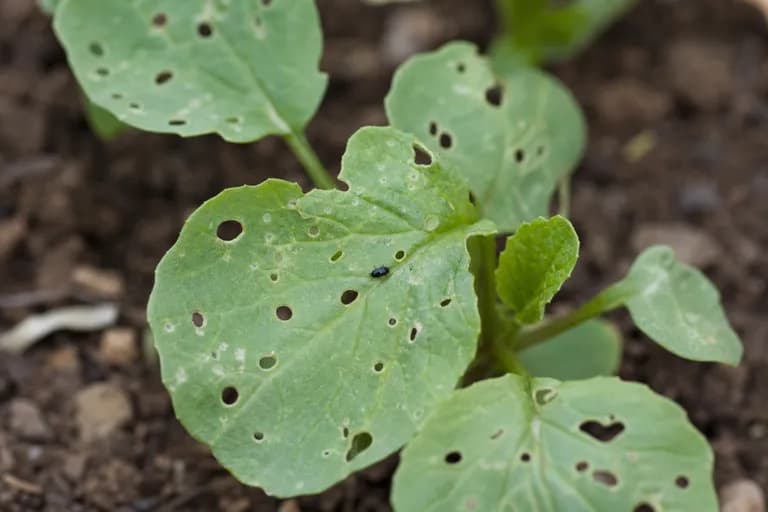
Flea Beetle
PestTiny round holes in seedling leaves creating a shotgun pattern. Can weaken young plants significantly.
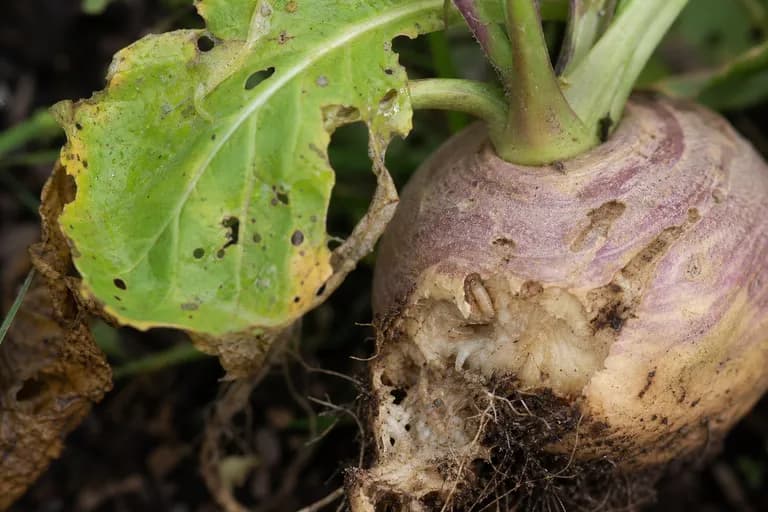
Cabbage Root Fly
PestMaggots tunneling into the root flesh, leaving brown channels. Plants may wilt despite adequate watering.
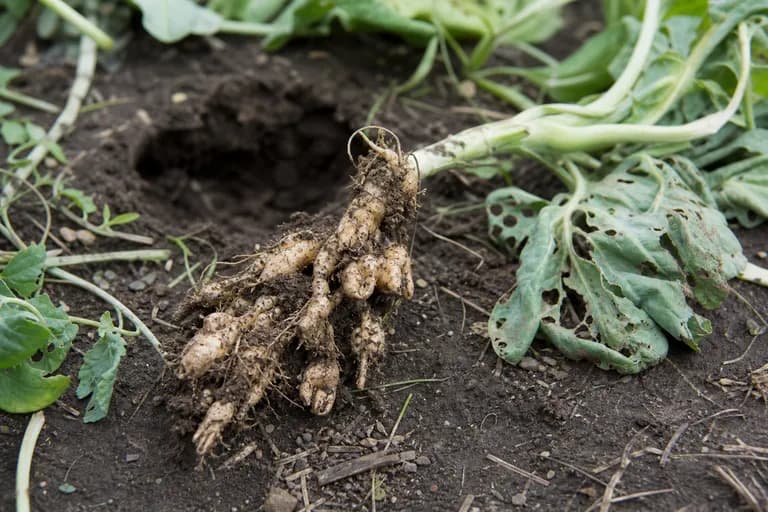
Clubroot
DiseaseSwollen, distorted roots with knobby galls. Plants wilt during the day and growth is severely stunted.
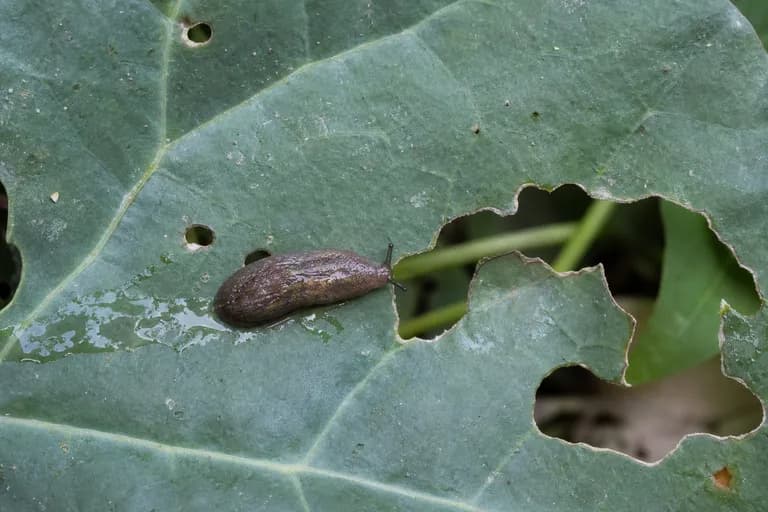
Slugs
PestHoles gnawed in the root flesh and leaves, especially in wet weather. Slime trails visible around plants.
Troubleshooting Common Problems
The most common issue is bolting when sown in spring or during long, warm days. Always grow as a fall crop for reliable results. Pithy, hollow roots result from delayed harvest, drought stress, or excessive heat. Pale interior flesh indicates insufficient cool weather during development. Forked or misshapen roots are caused by stony soil or recent manure application. Flea beetle can devastate seedlings, so cover beds with mesh at sowing time. Cracked roots result from heavy rain or irregular watering after a dry spell.
Growing Tips
- Grow watermelon radishes as an autumn crop for the best results — this is not optional if you want vivid interior color. Spring-sown roots often mature in warming conditions that produce disappointingly pale, washed-out interiors. Time your sowing so roots reach maturity during the coolest weeks of autumn.
- Provide generous spacing of 15-20 cm between plants. This is far wider than most radish varieties require, but watermelon radishes produce roots 3-4 times larger than common salad radishes and need room to develop their full globe shape without crowding.
- Prepare soil deeply — at least 20-25 cm of loose, fine, rock-free soil. Watermelon radishes form large, round roots that will fork, flatten, or become misshapen if they encounter compacted soil, stones, or chunky organic matter in the root zone.
- Maintain absolutely consistent moisture throughout the growing cycle. The dense, crisp flesh that makes watermelon radishes so appealing only develops with steady water. Drought followed by heavy rain causes devastating cracking and hollow, pithy centers.
- Be patient — these are not quick radishes. Watermelon radishes need 55-75 days to reach full maturity and develop complete interior color. Harvesting too early yields roots with white or barely pink interiors. Check maturity by pulling a test root and slicing it open at 55 days.
- Protect from cabbage root fly and flea beetles with floating row cover installed immediately after sowing. These pests can tunnel into developing roots or shred seedling foliage, and the long growing period gives them ample opportunity to cause damage.
- Apply a balanced organic fertilizer or compost tea every 2-3 weeks during the root bulking phase (days 40-65). Watermelon radishes are heavier feeders than common salad radishes due to their larger size and longer growing period.
- Store harvested roots with greens removed in perforated plastic bags in the refrigerator crisper drawer, where they keep their crunch and color for 2-3 weeks. Do not wash before storing — surface moisture promotes rot. The greens wilt quickly and should be used within 2-3 days.
Grow your best Watermelon Daikon yet — and everything around it.
Start a free plan today. Lay out your beds, drop in your Watermelon Daikon, and let PlotMyGarden handle the timing, spacing, companions and reminders from seed to harvest basket.
Pick your Watermelon Daikon
Red Meat
The classic watermelon radish with green and white exterior and vivid pink-magenta interior flesh.
Misato Rose
Japanese selection with particularly uniform pink coloring and mild, sweet flavor when autumn-grown.
Shinrimei
Chinese variety with intense magenta center and crisp texture, excellent for slicing and raw eating.
Beauty Heart
Popular Chinese name for the classic type, known for reliable interior color and good storage qualities.
Watermelon radish seeds cost $2-5 per packet (100-300 seeds), providing enough for multiple seasons of growing. At retail, watermelon radishes are a premium specialty item, typically selling for $4-7 per pound at farmers markets and $5-9 per pound at upscale grocery stores — when you can find them at all, as they are often unavailable outside autumn months. A single 3-meter garden row producing 15-20 roots easily yields 3-5 kg of radishes worth $30-70 at retail prices. Because these radishes store well for 2-3 weeks in the refrigerator, a single autumn harvest can supply your kitchen through much of the early winter season.
Quick recipes
Watermelon Radish Carpaccio with Citrus and Herbs
10 minPaper-thin slices of watermelon radish fanned across a plate reveal the stunning pink-to-green gradient. Dressed simply with good olive oil, flaky salt, and fresh herbs, this is as much a visual centerpiece as it is a refreshing appetizer that lets the radish's natural beauty do all the work.
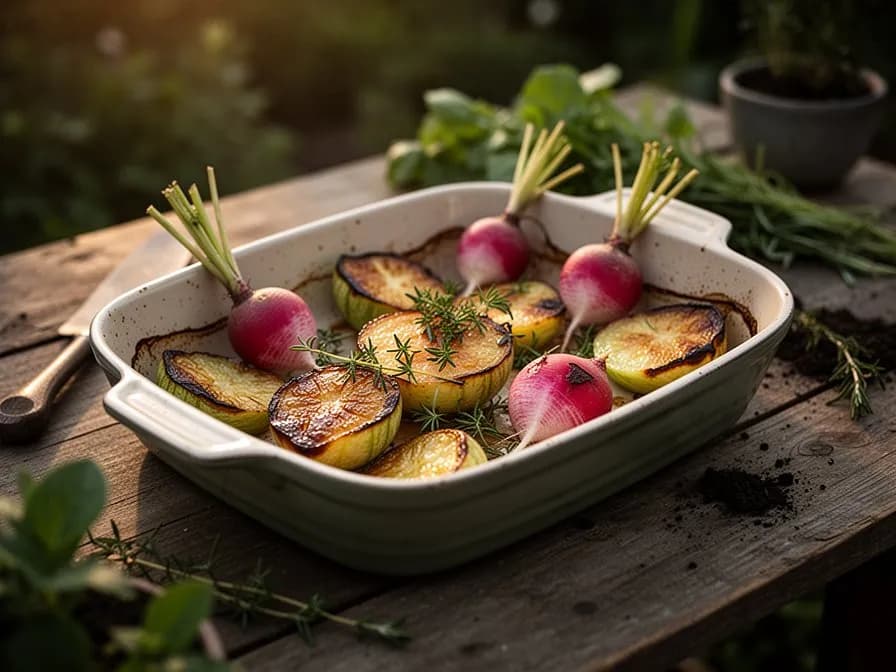
7 ingredientsHoney-Roasted Watermelon Radish Wedges
10 min prep + 25 min roastRoasting transforms watermelon radishes into something entirely unexpected — silky, sweet, and caramelized with golden edges. The peppery bite mellows completely, replaced by a rich, almost potato-like sweetness. The vivid pink fades to a soft rose, but the flavor more than compensates.
8 ingredientsQuick-Pickled Watermelon Radish with Rice Vinegar
15 min + 2 hours restThin half-moons of watermelon radish pickled in a sweet rice vinegar brine turn the entire jar a stunning hot pink within hours. These tangy, crunchy pickles are addictive on tacos, grain bowls, banh mi sandwiches, or simply eaten straight from the jar as a bright, palate-cleansing snack.
8 ingredientsCulinary Uses
Watermelon radish is prized for its stunning visual appeal. Slice thinly to reveal the brilliant pink interior for salads, garnishes, and charcuterie boards. The mild, slightly sweet flavor with gentle peppery notes near the skin makes it excellent raw. Pickle slices in seasoned rice vinegar for vibrant quick pickles. Roast wedges to caramelize the sugars and soften the texture. Add to grain bowls and poke bowls for color. Shave thin ribbons over tacos or avocado toast.
What's inside
Health Benefits
- The vivid magenta-pink flesh is loaded with anthocyanins — the same class of powerful antioxidant compounds found in blueberries and pomegranates — which research links to reduced inflammation, improved cardiovascular health, and enhanced cognitive function.
- Contains glucosinolates that are converted to isothiocyanates during chewing and digestion, compounds extensively studied for their role in supporting the body's natural detoxification enzymes and potential cancer-protective effects.
- Naturally rich in digestive enzymes including diastase and esterase, which may help break down starches and fats in the digestive tract — a property long recognized in traditional Chinese medicine where radishes are served alongside rich meals.
- Very low calorie density at just 20 calories per 100g combined with high water content and satisfying crunch, making watermelon radishes an excellent volume food for satiety without excess caloric intake.
- Good source of vitamin C providing about 24% of the daily value per 100g, supporting immune defense, skin health through collagen synthesis, and improved absorption of non-heme iron from plant foods.
- Provides prebiotic fiber that feeds beneficial gut bacteria, supporting a healthy microbiome. The combination of fiber and natural enzymes makes watermelon radishes particularly gentle on the digestive system compared to other cruciferous vegetables.
Where Watermelon Daikon comes from
The watermelon radish (Raphanus sativus) is an heirloom variety of Chinese daikon radish that has been cultivated in northern China for centuries, particularly in the regions around Beijing and Tianjin. Known in Mandarin as 'xin li mei' (心里美), meaning 'beauty in the heart,' this radish was treasured by Chinese farmers and cooks for its hidden surprise — a plain, unassuming green-and-white exterior that conceals a breathtakingly vivid magenta-pink interior.
The variety belongs to the broader family of Chinese daikon radishes, which have been cultivated in China for over 2,000 years. Chinese agricultural texts from the Han Dynasty (206 BC - 220 AD) describe various large radish cultivars grown for both fresh eating and winter storage. The watermelon radish likely emerged as a distinct landrace variety through centuries of selective cultivation in northern China's cool-climate growing regions, where farmers noticed and preserved specimens with particularly vivid interior color.
Traditionally served during Chinese New Year celebrations, the watermelon radish was valued both for its beauty when sliced and for its symbolic connection to good fortune — the hidden color inside representing hidden treasures and unexpected blessings. The radish was commonly served raw, thinly sliced as a palate cleanser between courses, or shredded into salads dressed with sesame oil and vinegar.
Watermelon radishes arrived in the West through Asian seed exchanges and specialty seed catalogs in the late 20th century. Their dramatic visual appeal made them an instant favorite among chefs, food stylists, and farmers market growers in the 2000s and 2010s. Today they are grown worldwide and have become one of the most photographed vegetables on social media, prized for adding natural, edible color to salads, grain bowls, and charcuterie boards without any artificial ingredients.
Watermelon Daikon: did you know?
Fascinating facts about Watermelon Daikon
The watermelon radish gets its name entirely from its appearance, not its flavor — when sliced open, the vivid magenta-pink interior surrounded by a pale green rind looks remarkably like a miniature watermelon, making it one of the most visually dramatic vegetables in the garden.
Watermelon Daikon questions, answered
When should I plant Watermelon Daikon?
What are good companion plants for Watermelon Daikon?
What hardiness zones can Watermelon Daikon grow in?
How much sun does Watermelon Daikon need?
How far apart should I space Watermelon Daikon?
What pests and diseases affect Watermelon Daikon?
How do I store Watermelon Daikon after harvest?
What are the best Watermelon Daikon varieties to grow?
What soil does Watermelon Daikon need?
Why is my watermelon radish white inside instead of pink?
Can I grow watermelon radishes in spring, or only in autumn?
How do I know when watermelon radishes are ready to harvest?
Do watermelon radishes taste like regular red radishes?
Can I eat watermelon radish greens?
How long do watermelon radishes keep after harvest?
You just read the theory. Now grow it on autopilot.
Everything that makes Watermelon Daikon fiddly — the timing, the spacing, the companions, the harvest window — is exactly what PlotMyGarden handles for you, for every plant in your garden.
A plan that knows your weather
Set your location once. Get sow, feed and harvest dates built around your real last-frost date and live forecast — no more guessing from a generic seed packet.
From the “When to plant” sectionDrag-and-drop bed planner
Design beds on a grid. Every plant snaps to its proper spacing, and you can see your whole season laid out before you spend a cent on seed.
From the “Growing guide” sectionCompanion conflicts, caught early
200+ good-and-bad pairings checked live as you plant — so a season-wrecking mistake never makes it into the ground.
From the “Companions” sectionReminders you'll actually act on
“Water the beans.” “Pick today before it turns.” Timely, specific, and tied to the plants you're really growing.
From the “Harvest” sectionSuccession, scheduled
Want a harvest for six weeks, not six days? It spaces your sowings automatically and reminds you when each new block is due.
From the “When to plant” sectionA record that gets smarter
Every harvest you log teaches it your garden. Next year's plan starts from what actually worked in your soil, not a textbook's.
From the “Overview” sectionPlant these alongside Watermelon Daikon
More Root Vegetables
Grow your best Watermelon Daikon yet — and everything around it.
Start a free plan today. Lay out your beds, drop in your Watermelon Daikon, and let PlotMyGarden handle the timing, spacing, companions and reminders from seed to harvest basket.