Crocosmia
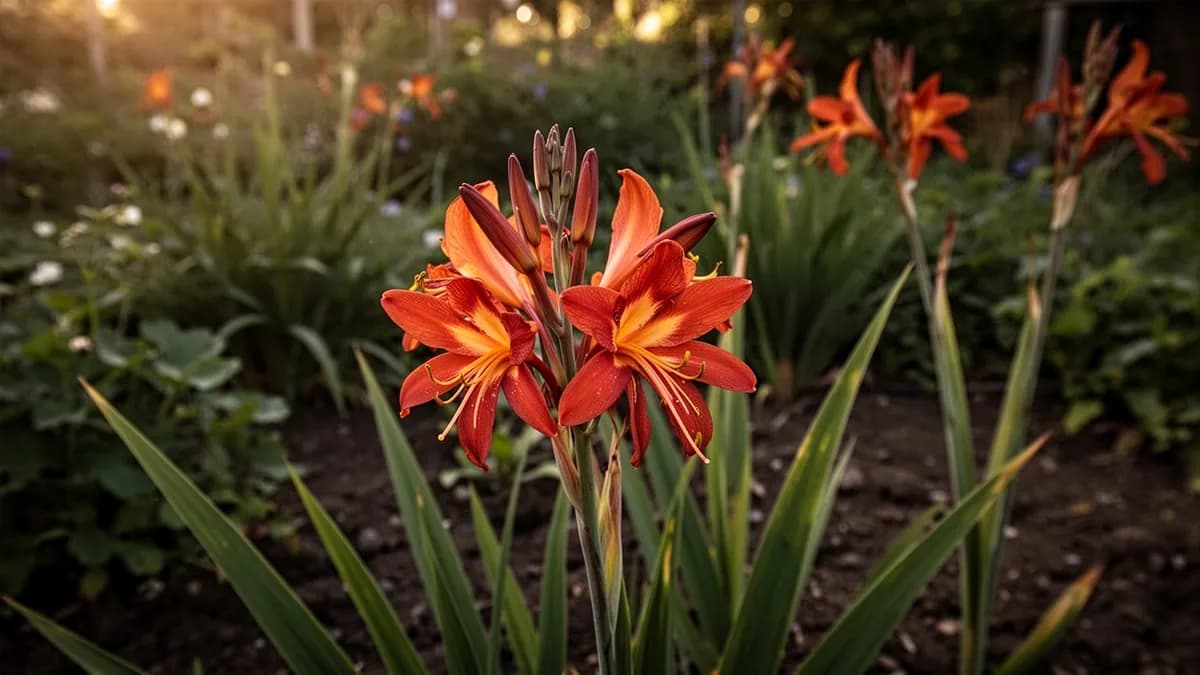
A graceful perennial with arching sprays of tubular orange, red, or yellow flowers on sword-like foliage.





On this pageOverview
Meet Crocosmia
A graceful perennial with arching sprays of tubular orange, red, or yellow flowers on sword-like foliage. Crocosmia multiplies rapidly from corms and naturalizes well in mild climates, creating impressive drifts of color. Provide winter mulch in colder zones and divide congested clumps every few years to maintain flowering.
When to plant Crocosmia
Crocosmia is most easily propagated by dividing congested clumps in spring, separating individual corms and cormlets. Replant corms 8-10cm deep. Even tiny cormlets will flower within 1-2 years. Seed propagation is possible—collect seed from mature pods in autumn and sow in spring in pots of gritty compost at 15-20°C. Germination takes 4-8 weeks. Seed-grown plants take 2-3 years to reach flowering size and may vary from the parent.
Your Crocosmia Year
Composed for Zone 7 · typical seasons · frost passes Apr 2, returns Nov 1
Plant Crocosmia Mar – Apr, pick Jul – Sep. Check the planting methods below and set your climate to personalize these windows.
How to grow Crocosmia
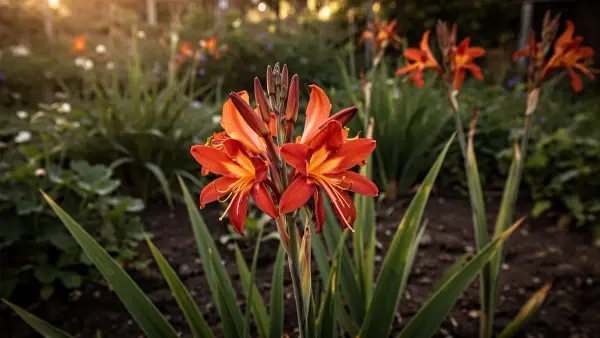
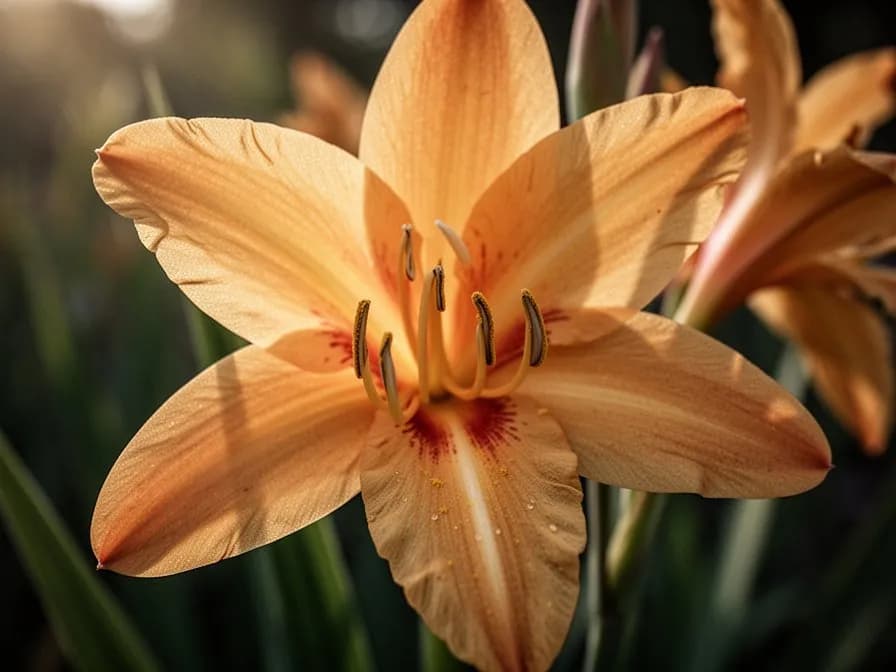
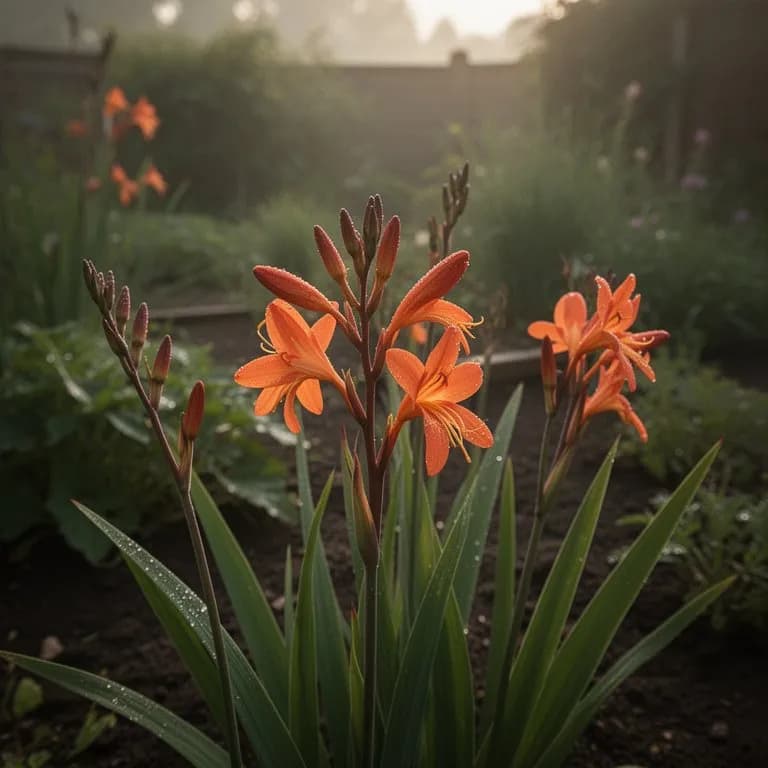
Crocosmia is a graceful South African cormous perennial that produces arching sprays of tubular flowers in brilliant shades of orange, red, and yellow above fans of sword-shaped leaves. The flowers open in succession along the arching stems from midsummer into early autumn, creating a distinctive and elegant display quite different from any other garden plant. Growing 60-90cm tall, crocosmia increases rapidly in mild climates.
Plant corms 8-10cm deep in spring in full sun or light shade with well-drained, moderately fertile soil. Crocosmia is adaptable but performs best in a sheltered, sunny spot. The corms multiply rapidly by offsets, and clumps can become dense and congested within a few years. Divide every 3-4 years in spring to maintain vigorous flowering.
In colder zones (5-6), apply a deep winter mulch of straw or bark chips over the planting to protect corms from freezing. Alternatively, grow in containers that can be stored in a frost-free location. The hardier varieties, particularly the common Crocosmia x crocosmiiflora, naturalize freely and can even become invasive in mild, wet climates—site carefully if spreading is a concern.
72 plants fit a 4 × 8 ft bed
Each Crocosmia wants 20 cm of elbow room. The planner keeps that spacing for you — every plant, every bed.
Crocosmia's best neighbours
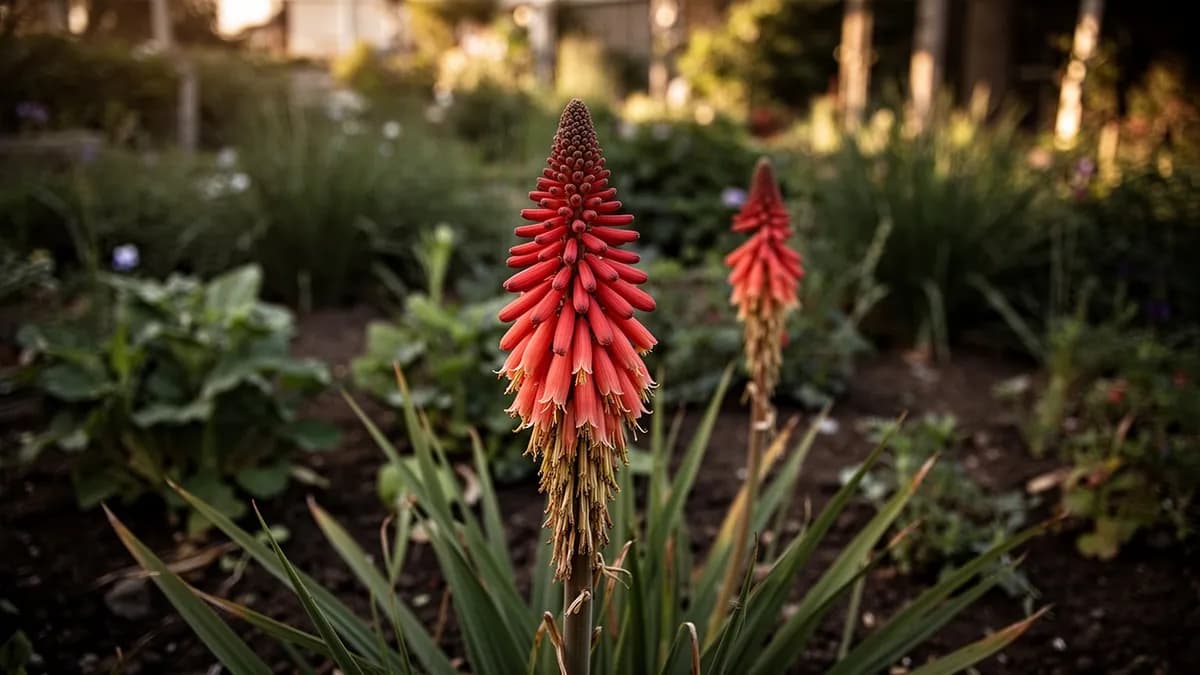
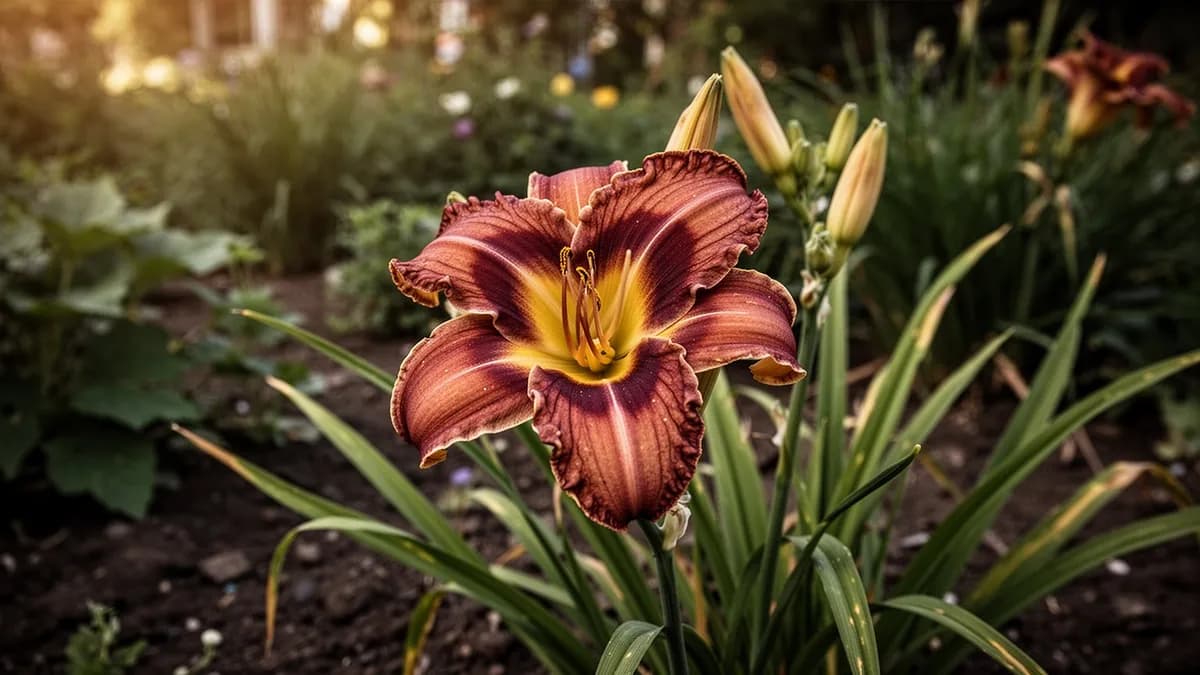
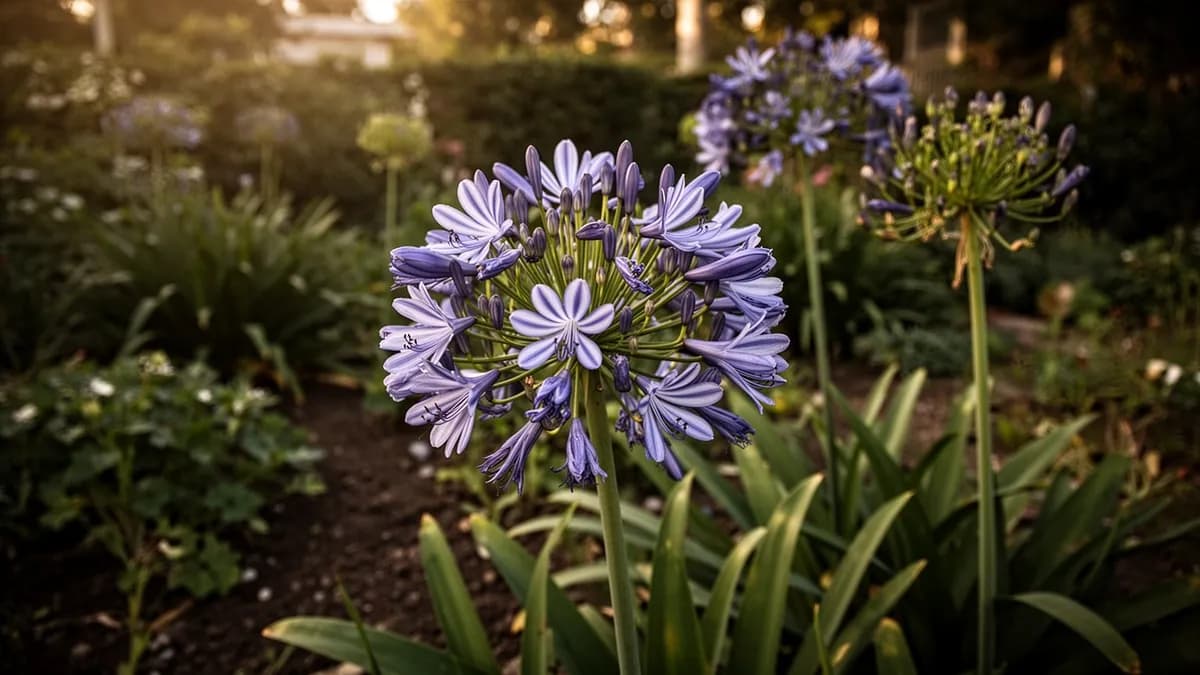
Crocosmia's arching habit and hot colors pair dramatically with blue agapanthus, purple salvia, and ornamental grasses. The fiery orange and red flowers create stunning combinations with deep blue delphiniums and violet asters. Plant alongside red hot pokers and daylilies for a bold, hot-colored border. In naturalistic settings, crocosmia looks beautiful drifting through ornamental grasses like Miscanthus and Molinia.
Red Hot Poker belongs beside it.
Old growers' knowledge, checked against Crocosmia's real companion table below — test any plant you're growing.
Try Crocosmia in a bed — right here
A real planner bed with Crocosmia already in it. Tap a companion to place it and watch the pairing checks answer — green for good neighbours, red for a clash.


Related growing guides
Feed it well
Crocosmia grows in average to fertile, well-drained soil with a pH of 6.0-7.5. It is adaptable to various soil types but needs reasonable drainage to prevent corm rot. Incorporate compost before planting and mulch annually. Feed in spring with a balanced slow-release fertilizer as new growth emerges. Too much nitrogen produces lush foliage at the expense of flowers. In containers, use a quality potting mix and feed fortnightly with a high-potassium liquid fertilizer during the growing season.
Ideal Temperature
Hardiness Zone Compatibility
From seed to harvest, stage by stage
Corm Dormancy and Planting
Crocosmia corms are planted in spring once the soil has warmed to at least 10°C (50°F). Corms are small, flattened, and often connected in chains. They should be planted 8-10 cm deep and 15-20 cm apart in well-drained soil. The corms begin developing new roots from the basal plate within the first two weeks after planting.
Foliage Emergence
Sword-shaped, pleated leaves emerge from the corm in a distinctive fan-like arrangement reminiscent of gladiolus foliage. Leaves are bright green, upright, and can reach 60-90 cm in height depending on the cultivar. The root system expands rapidly during this phase, and new cormels begin forming around the base of the parent corm.
Stem Elongation and Bud Formation
Wiry, branching flower stems begin to rise above the foliage, developing a characteristic arching habit. Flower buds form along one side of the stem in a zigzag pattern. The stems are remarkably strong despite their slender appearance. Depending on cultivar, stems reach 60-120 cm tall. Buds are initially green and tightly closed, gradually taking on their final color as they mature.
Flowering Period
Tubular flowers open sequentially from the base of each spray upward, providing an exceptionally long display period of 4-6 weeks. Flower colors range from bright yellow through orange to deep crimson red depending on cultivar. The flowers are rich in nectar and attract hummingbirds, butterflies, and bees. Each individual floret lasts several days, and a single stem may carry 15-30 individual flowers.
Seed Set and Corm Maturation
After flowering, round seed pods develop along the spent flower stems. If left in place, they add structural interest to the autumn garden and may self-sow in favorable conditions. Below ground, the corms are storing energy for next year's growth, and new daughter cormels are maturing. The foliage remains green and continues photosynthesizing to nourish the corms.
Dormancy and Winter Rest
As autumn temperatures drop, the foliage yellows and dies back naturally. The corms enter dormancy below ground, surviving winter cold depending on the cultivar's hardiness. Most crocosmia are hardy to USDA zones 5-9, with 'Lucifer' being among the most cold-tolerant. In colder regions, corms may need lifting and storing over winter.
Plant corms with the pointed end facing up. Incorporate compost or well-rotted organic matter into the planting hole to improve drainage and fertility. Water lightly after planting and avoid overwatering until active growth appears, as dormant corms are susceptible to rot in waterlogged soil.
Caring for Crocosmia month by month
What to do each month for your Crocosmia
October
You are hereFoliage begins to yellow and die back naturally. In zones 3-5, lift corms after the first light frost, cut back foliage, and allow corms to dry in a well-ventilated spot for several days before storing. In warmer zones, leave corms in the ground undisturbed.
Know exactly what to do in your garden — every month
One email at the start of each month: what to sow, plant, and tackle right now — for your Crocosmia and everything growing around it. Plus a short starter course that helps you dodge the classic mistakes.
- What to do, right now
- Matched to your season
- Starter course included
Harvesting Crocosmia
Crocosmia makes beautiful, long-lasting cut flowers. Cut stems when the first two or three florets have opened—the rest will continue opening in the vase. The arching habit creates natural elegance in arrangements. Stems last 7-10 days in water. The decorative seed pods can also be cut for autumn arrangements. For garden display, deadheading is optional—the arching stems and developing seed pods add late-season interest.
assuming you plant when the window opens — set your real date
Pick Crocosmia promptly and the plant keeps producing.
Storage & Preservation
Crocosmia seed pods dry attractively on the plant and can be cut for dried arrangements in autumn. In cold areas where corms must be lifted, dig after the first frost blackens the foliage, shake off soil, and store corms in dry peat or vermiculite in a frost-free, cool (5-10°C) location. Replant in spring after the last frost. In mild areas, corms can remain in the ground year-round with a winter mulch for extra protection.
What goes wrong — and the fix
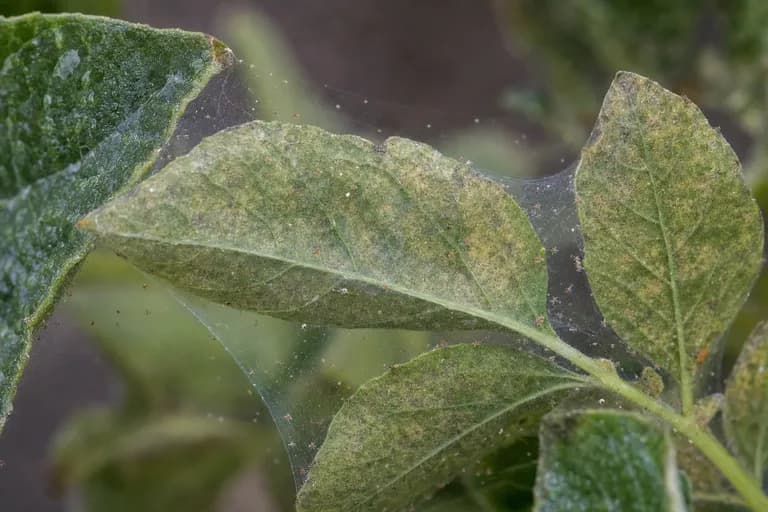
Red Spider Mite
PestFine stippling and bronzing of leaves, with tiny mites and webbing visible on leaf undersides. Worse in hot, dry conditions.
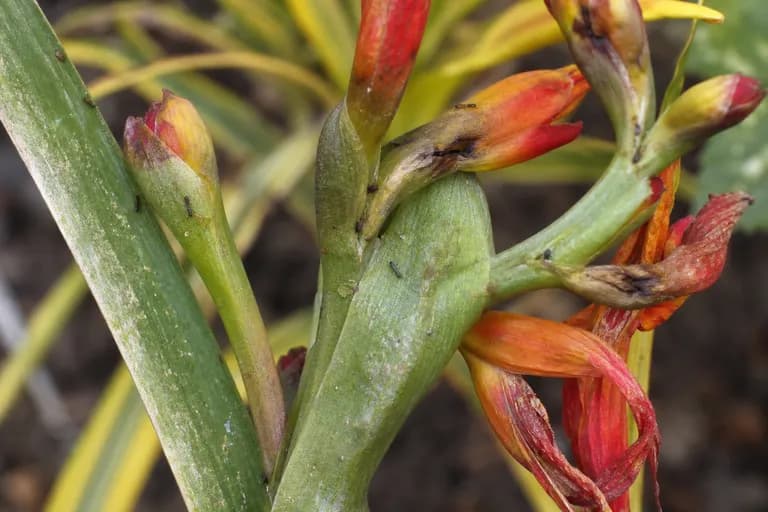
Gladiolus Thrips
PestSilvery streaking on leaves and distorted flowers. Tiny dark insects in flower buds and leaf sheaths.
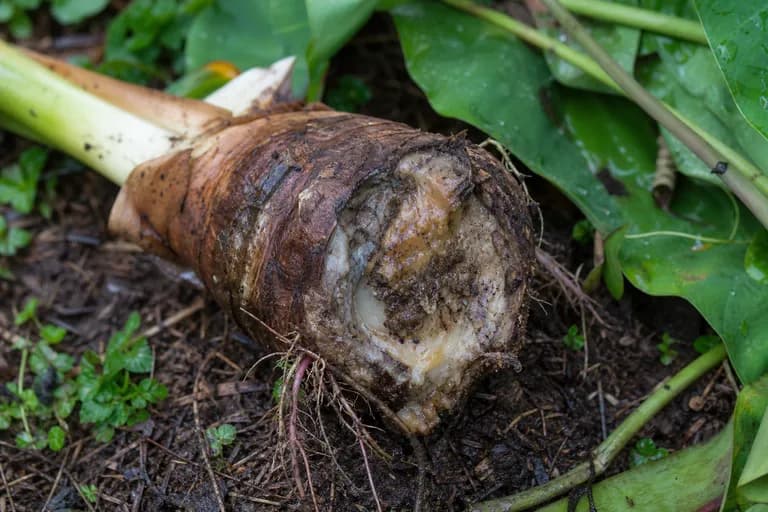
Corm Rot
DiseaseFailure to emerge in spring. Soft, brown, rotted corms when dug. Caused by waterlogged winter conditions or fungal infection.
Troubleshooting Common Problems
Congested clumps flower poorly—divide every 3-4 years to maintain bloom. Winter corm loss in cold, wet soils is the main threat; ensure drainage and mulch in borderline areas. In mild climates, crocosmia (especially common montbretia) can spread invasively—remove unwanted cormlets during division. Failure to flower may indicate too much shade, overcrowding, or excessive nitrogen. The large-flowered hybrid 'Lucifer' is hardier than most selections.
Growing Tips
- Plant crocosmia corms in groups of 10 or more spaced 15-20 cm apart for maximum visual impact, as scattered individual plants lack the dramatic massed effect that makes crocosmia so stunning in the garden.
- Choose a planting site that receives at least 6 hours of direct sunlight daily. Crocosmia tolerates light partial shade but produces significantly fewer flowers and weaker stems in shaded conditions.
- Ensure excellent soil drainage by incorporating coarse grit or perlite into heavy clay soils before planting. Crocosmia corms will rot in waterlogged winter soil, making drainage the single most important factor for long-term success.
- Divide congested clumps every 3-4 years in early spring just as new growth appears. Carefully separate the chains of corms, replanting the largest ones at the original spacing and sharing or composting the smallest cormels.
- In regions colder than USDA zone 6, apply a thick winter mulch of 10-15 cm of straw or shredded leaves after the foliage has died back to insulate corms from deep freezes and extend their hardiness range.
- Leave spent flower stems in place through autumn and early winter to enjoy the decorative seed pods, which add architectural interest to the garden and provide food for seed-eating birds.
- Pair crocosmia with ornamental grasses such as Miscanthus, Panicum, or Stipa for a naturalistic planting combination where the grasses provide a soft, airy backdrop for the bold flower sprays.
- Water crocosmia deeply but infrequently during the growing season, aiming for about 2.5 cm of water per week. Consistent moisture during bud formation is critical for maximizing flower production and stem length.
- Avoid high-nitrogen fertilizers which promote excessive foliage at the expense of flowers. Instead, apply a balanced or potassium-rich feed in spring and again when flower buds begin forming for the best floral display.
- Select cultivars carefully for your climate. 'Lucifer' is the most cold-hardy and vigorous, while smaller cultivars like 'Emily McKenzie' and 'George Davison' are better suited to containers and smaller gardens where their more compact habit is an advantage.
Grow your best Crocosmia yet — and everything around it.
Start a free plan today. Lay out your beds, drop in your Crocosmia, and let PlotMyGarden handle the timing, spacing, companions and reminders from seed to harvest basket.
Pick your Crocosmia
Crocosmia 'Lucifer'
The most dramatic variety with intense flame-red flowers on 120cm stems. Hardy and vigorous, the showiest crocosmia available.
Crocosmia x crocosmiiflora 'Emily McKenzie'
Large tangerine-orange flowers with dark mahogany markings. Compact at 60cm and exceptionally free-flowering.
Crocosmia 'George Davison'
Soft golden-yellow flowers that are less commonly seen than the typical orange varieties, adding a warm glow to borders.
Crocosmia x crocosmiiflora (Montbretia)
The common montbretia with orange flowers—the hardiest and most vigorous form, naturalizing freely in mild climates.
Crocosmia is one of the most economical perennial bulbs available. A single corm costing around $1-2 can multiply into a dense clump of 20 or more corms within 3-4 years, providing enough divisions to fill an entire garden border for free. When divided regularly, an initial investment of $10-15 in crocosmia corms can generate dozens of plants worth over $100 at retail nursery prices within just a few seasons. Their exceptional longevity as perennials means they return reliably year after year with minimal ongoing cost, and their prolific multiplication makes them ideal for swapping with other gardeners to diversify your collection without additional expense.
Quick recipes
Stunning Crocosmia Cut Flower Arrangement
15 minutesCreate a dramatic late-summer floral arrangement showcasing crocosmia's elegant arching stems. The tubular flowers create striking vertical lines and pair beautifully with rounded blooms and airy grasses. Cut stems last 7-10 days in a vase, with buds continuing to open sequentially along the stem for an evolving display.
7 ingredients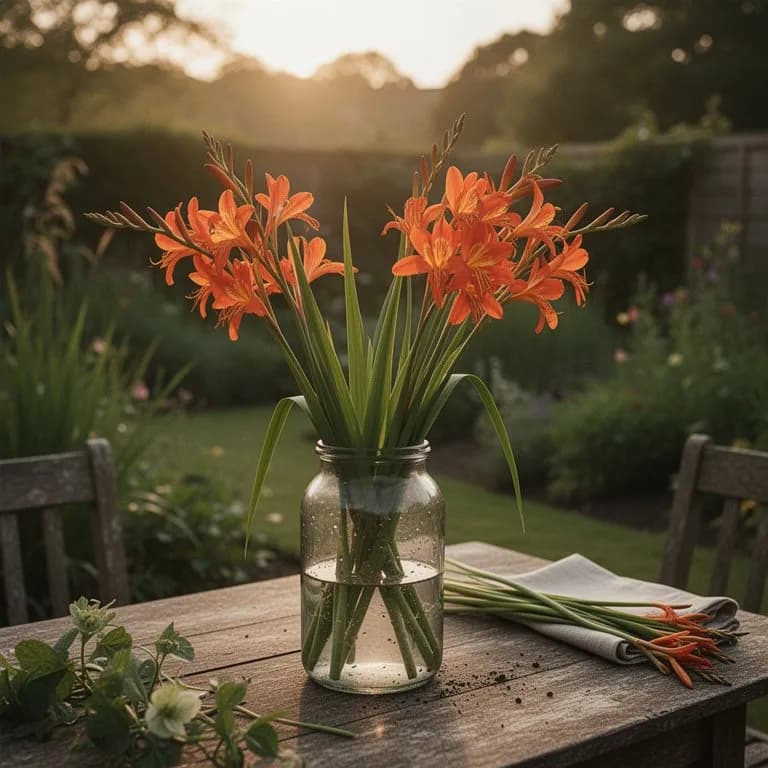
Dried Crocosmia Seed Pod Wreath
45 minutesTransform spent crocosmia flower stems with their distinctive round seed pods into a beautiful autumn wreath. The dried stems retain their elegant branching structure and add a sculptural, naturalistic quality. Combined with other dried garden materials, this wreath celebrates the beauty of the transitional season.
7 ingredients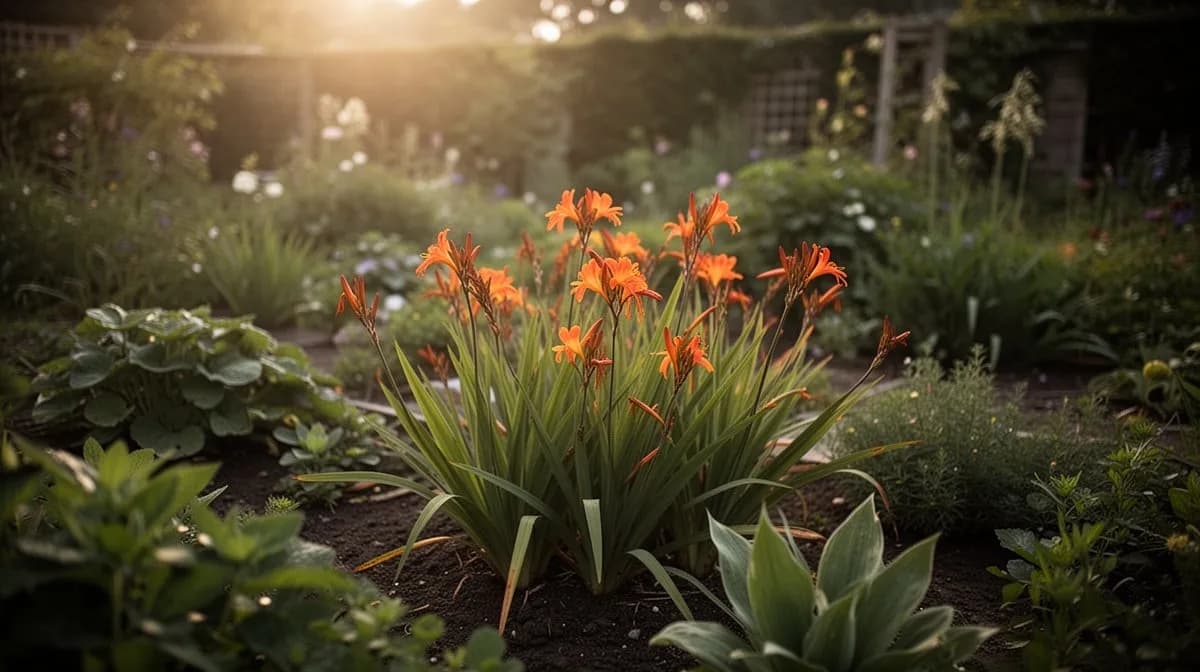
Crocosmia Hummingbird Garden Companion Planting
30 minutesDesign a vibrant container planting centered on crocosmia to attract hummingbirds to your patio or deck. This combination features complementary textures and colors that bloom in succession throughout summer, providing a continuous nectar source. The arching crocosmia stems create a dynamic focal point surrounded by supporting plants.
7 ingredientsWhat's inside
Health Benefits
- Crocosmia provides significant mental health and wellbeing benefits through gardening therapy, as tending ornamental plants has been shown in research to reduce cortisol levels and alleviate symptoms of stress, anxiety, and depression
- The vibrant warm colors of crocosmia flowers, spanning reds, oranges, and yellows, have been associated with positive mood enhancement and increased energy levels according to color psychology research
- Growing crocosmia encourages regular outdoor physical activity including bending, digging, and walking, which supports cardiovascular fitness, joint flexibility, and overall physical health
- Crocosmia's exceptional ability to attract hummingbirds and butterflies provides opportunities for mindful nature observation, which promotes relaxation and psychological restoration
- Creating and maintaining a crocosmia garden provides purposeful seasonal activity that supports cognitive engagement, forward planning, and a sense of accomplishment as plants establish and multiply year after year
- The social benefits of growing crocosmia are considerable, as the prolific corm multiplication makes it one of the most generous plants for sharing with neighbors, friends, and community garden projects, fostering social connections and community building
Where Crocosmia comes from
Crocosmia is a genus of flowering plants in the iris family (Iridaceae), native to the grasslands and forest margins of eastern and southern Africa. The genus comprises approximately nine species found primarily in South Africa, with some species extending into Mozambique, Tanzania, and Kenya. Wild crocosmia grow in a range of habitats from moist mountain meadows to rocky stream banks, typically at elevations between 500 and 2,500 meters. The plants were first introduced to European gardens in the early 19th century, when botanical collectors sent specimens back from South Africa during the great era of plant exploration. The pivotal moment in crocosmia's horticultural history came in 1880, when the renowned French hybridizer Victor Lemoine crossed Crocosmia aurea with Crocosmia pottsii to create Crocosmia x crocosmiiflora, commonly known as montbretia. This hybrid proved remarkably vigorous and adaptable, quickly becoming one of the most popular summer-flowering bulbs in European gardens. It naturalized so successfully in the mild, damp climates of western Ireland, Wales, and coastal Britain that it became a familiar feature of hedgerows and roadsides. Throughout the 20th century, breeders continued to expand the range of available cultivars. The legendary English nurseryman Alan Bloom of Bressingham Gardens developed many outstanding selections during the 1960s and 1970s, including the iconic 'Lucifer' in 1966, which remains the most widely grown crocosmia cultivar worldwide. Its tall stature, brilliant flame-red flowers, and exceptional cold hardiness transformed crocosmia from a somewhat tender curiosity into a mainstream garden perennial. Today, dozens of cultivars are available in colors spanning pale yellow through gold, orange, and bicolor forms to the deepest scarlet red, ensuring that this versatile South African genus has a secure place in gardens across the temperate world.
Crocosmia: did you know?
Fascinating facts about Crocosmia
Crocosmia belongs to the iris family (Iridaceae) and is native to the grasslands of eastern and southern Africa, where about 9 wild species grow in habitats ranging from forest margins to rocky stream banks in South Africa, Mozambique, and Tanzania.
Crocosmia questions, answered
When should I plant Crocosmia?
What are good companion plants for Crocosmia?
What hardiness zones can Crocosmia grow in?
How much sun does Crocosmia need?
How far apart should I space Crocosmia?
What pests and diseases affect Crocosmia?
How do I store Crocosmia after harvest?
What are the best Crocosmia varieties to grow?
What soil does Crocosmia need?
Is crocosmia invasive, and will it take over my garden?
When is the best time to plant crocosmia corms?
Why is my crocosmia not flowering?
Can I grow crocosmia in containers?
How do I overwinter crocosmia in cold climates?
What are the best companion plants for crocosmia?
You just read the theory. Now grow it on autopilot.
Everything that makes Crocosmia fiddly — the timing, the spacing, the companions, the harvest window — is exactly what PlotMyGarden handles for you, for every plant in your garden.
A plan that knows your weather
Set your location once. Get sow, feed and harvest dates built around your real last-frost date and live forecast — no more guessing from a generic seed packet.
From the “When to plant” sectionDrag-and-drop bed planner
Design beds on a grid. Every plant snaps to its proper spacing, and you can see your whole season laid out before you spend a cent on seed.
From the “Growing guide” sectionCompanion conflicts, caught early
200+ good-and-bad pairings checked live as you plant — so a season-wrecking mistake never makes it into the ground.
From the “Companions” sectionReminders you'll actually act on
“Water the beans.” “Pick today before it turns.” Timely, specific, and tied to the plants you're really growing.
From the “Harvest” sectionSuccession, scheduled
Want a harvest for six weeks, not six days? It spaces your sowings automatically and reminds you when each new block is due.
From the “When to plant” sectionA record that gets smarter
Every harvest you log teaches it your garden. Next year's plan starts from what actually worked in your soil, not a textbook's.
From the “Overview” sectionPlant these alongside Crocosmia
More Perennials
Grow your best Crocosmia yet — and everything around it.
Start a free plan today. Lay out your beds, drop in your Crocosmia, and let PlotMyGarden handle the timing, spacing, companions and reminders from seed to harvest basket.