Cocotero
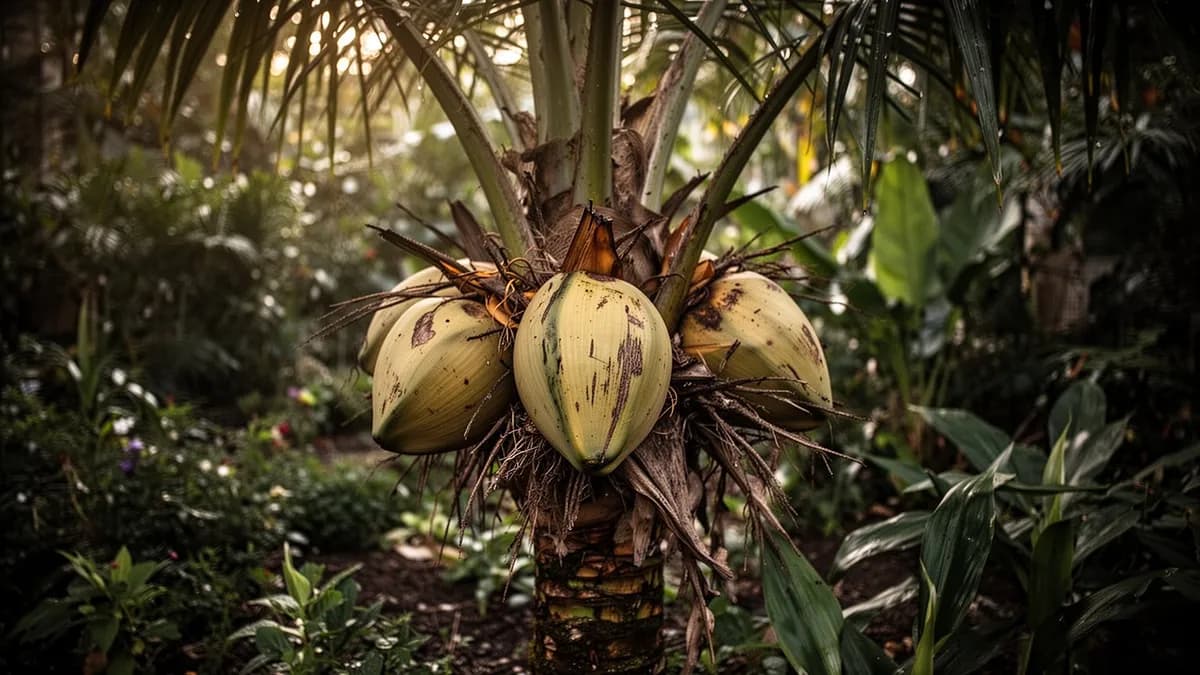
Una palmera tropical icónica que produce frutos versátiles utilizados para obtener agua, leche, aceite y pulpa deshidratada.





En esta páginaResumen
Conoce Cocotero
Una palmera tropical icónica que produce frutos versátiles utilizados para obtener agua, leche, aceite y pulpa deshidratada. Los cocoteros necesitan temperaturas cálidas constantes por encima de 21 °C y no toleran las heladas. Tardan entre seis y diez años en dar su primera cosecha, pero luego producen de forma continua durante décadas.
Cuándo plantar Cocotero
Elija un coco marrón maduro que haga chapoteo al agitarlo. Remoje el coco entero en agua durante dos o tres días. Colóquelo de lado en un recipiente con sustrato de semillero bien drenado, dejando la cáscara parcialmente expuesta. Manténgalo cálido, entre 32 y 38 °C, y con humedad constante. La germinación tarda de tres a seis meses. Cuando el brote emerja y alcance unos treinta centímetros, trasplántelo a un recipiente mayor o a su ubicación definitiva. Las plántulas necesitan pleno sol y riego regular.
Tu año de Cocotero
Ajustado a Zona 7 · temporada típica · la helada se va hacia el 2 abr y vuelve hacia el 1 nov
Planta Cocotero Mar – Jun y cosecha Ene – Dic. Consulta los métodos de plantación y elige tu clima para adaptar los periodos.
Cómo cultivar Cocotero
Los cocoteros prosperan en zonas costeras tropicales con calor constante, alta humedad y suelo arenoso con buen drenaje. Elija un lugar que reciba al menos seis a ocho horas de sol directo al día y que esté protegido de vientos fuertes y persistentes. Plante plántulas o cocos germinados en un hoyo el doble de ancho que el cepellón, asegurándose de que la base del tronco quede al nivel del suelo. Riegue en profundidad y con regularidad durante los dos primeros años de establecimiento.
Estas palmeras necesitan temperaturas sostenidas por encima de 21 °C y sufren daños por debajo de 4 °C. Toleran extraordinariamente bien la bruma salina y los suelos arenosos, lo que las hace ideales para plantaciones costeras. Aplique cada tres o cuatro meses un fertilizante específico para palmeras con alto contenido de potasio y manganeso. Acolche alrededor de la base para conservar la humedad, pero no deje que el mantillo toque el tronco para evitar podredumbres.
Los cocoteros se limpian hasta cierto punto por sí solos, pero retirar las frondas secas mejora el aspecto y reduce la presión de plagas. Espere los primeros frutos entre los seis y diez años desde semilla, con la producción principal entre los quince y los cincuenta años. Una palmera adulta sana puede producir entre cincuenta y doscientos cocos al año, según la variedad y las condiciones de cultivo.
Para Cocotero un bancal de 120 × 240 cm se queda corto
Cada Cocotero pide 900 cm de margen. El planificador guarda ese marco por ti — cada planta, cada bancal.
Guías de cultivo relacionadas
Abónalo bien
Los cocoteros prefieren suelos arenosos con buen drenaje y un pH entre 5.0 y 8.0. Toleran mejor que la mayoría de los frutales los suelos pobres, salinos y alcalinos. Aplique cada tres o cuatro meses un fertilizante equilibrado para palmeras con nitrógeno, fósforo, potasio, magnesio y micronutrientes. La deficiencia de potasio es el problema nutricional más común y causa amarilleo y necrosis en las frondas más viejas. En suelos deficientes, complemente con manganeso y boro.
Temperatura ideal
Compatibilidad de zonas de rusticidad
De la semilla a la cosecha, etapa por etapa
Germinación
La semilla de coco, que es el fruto entero, empieza a germinar. El embrión se hincha dentro de la cáscara y absorbe endospermo como energía. Se forma una masa blanca y esponjosa llamada haustorio, y el primer brote sale por el ojo del coco.
Plántula
La plántula desarrolla sus primeras hojas en forma de cinta y empieza a construir su sistema radicular. En esta etapa aún obtiene nutrientes del coco original. La planta es pequeña y delicada, y necesita protección frente a los vientos fuertes y el frío.
Joven
La palmera comienza a producir sus característicos penachos de frondas pinnadas y el tronco empieza a formarse en la base. El desarrollo radicular es vigoroso durante este periodo. La planta crece rápido cuando recibe calor, sol y nutrientes óptimos.
Floración
Después de 5–7 años, el cocotero empieza a producir inflorescencias encerradas en vainas leñosas llamadas espatas. Cada espata se abre y muestra flores masculinas y femeninas en la misma espiga. El viento y los insectos trasladan el polen de unas flores a otras.
Desarrollo del fruto
Tras la polinización, las flores femeninas se desarrollan en cocos. El fruto tarda unos 11–12 meses desde la polinización hasta la madurez completa. Durante su desarrollo, el coco pasa por la etapa de agua tierna (unos 6–8 meses) y después por la etapa madura con pulpa blanca y firme.
Cosecha
Los cocos maduros están listos para cosechar cuando la cáscara se vuelve marrón y seca. Para agua de coco, recoja el fruto verde a los 6–8 meses. Para copra y aceite, espere a la madurez completa. Una palmera adulta produce nuevos racimos cada mes y puede seguir siendo productiva durante 60–80 años.
Mantenga el coco parcialmente enterrado en arena húmeda y con buen drenaje o en un medio de germinación. Conserve el calor por encima de 27 °C y la humedad alta. No sumerja la semilla en agua.
Cuidar Cocotero mes a mes
Qué hacer cada mes para tu Cocotero
Octubre
Mes actualReduzca ligeramente el riego a medida que bajan las temperaturas. Aplique la última ronda de fertilizante equilibrado antes de la temporada fresca. En climas límite, tenga listos materiales de protección contra heladas, como manta térmica o lámparas de calor, para las noches frías. Coseche frutos tardíos.
Ten claro qué hacer en tu huerto, cada mes
Un correo al empezar cada mes: qué sembrar, plantar y hacer ahora mismo — para tu Cocotero y todo lo que crece alrededor. Más un breve curso inicial para esquivar los errores clásicos.
- Qué hacer ahora mismo
- Ajustado a tu temporada
- Curso inicial incluido
Cosechar Cocotero
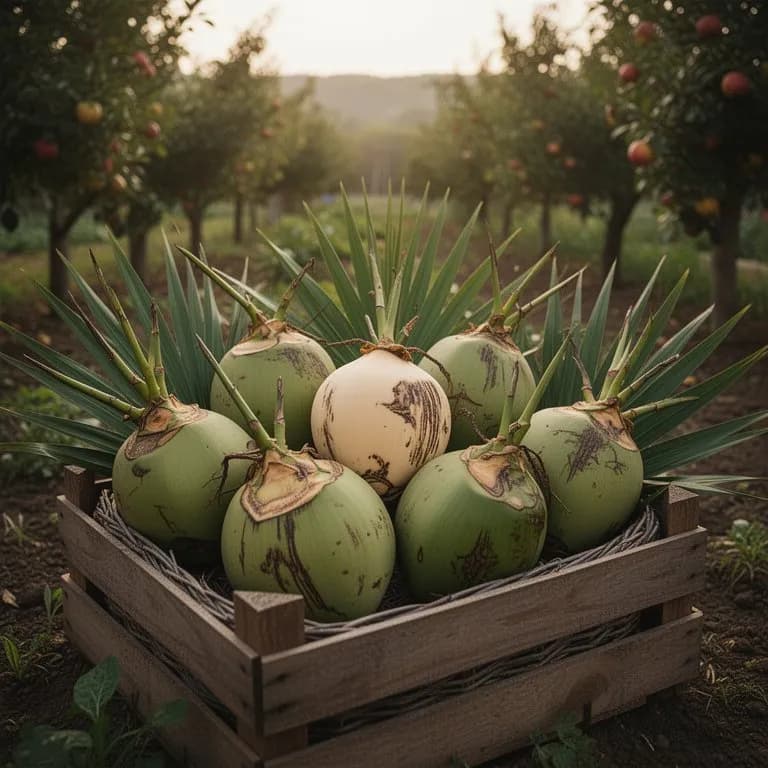
Los cocos se cosechan en distintas etapas de madurez según su uso. Para obtener agua de coco, recoja frutos verdes de seis a siete meses, cuando la cáscara aún está blanda. Para pulpa madura y aceite, espere a que la cáscara se vuelva marrón y seca a los once o doce meses. Los cocos cosechados deben recogerse con regularidad, ya que la caída de frutos puede ser peligrosa. Use una vara de cosecha larga con una cuchilla curva o trepe a la palmera para girar los frutos y soltarlos del racimo.
se supone que plantas al comenzar el periodo — indica tu fecha real
Cosecha Cocotero a tiempo y la planta sigue produciendo.
Almacenamiento y conservación
Los cocos maduros enteros con la cáscara intacta se conservan de dos a cuatro meses a temperatura ambiente. Los cocos pelados duran de dos a tres semanas a temperatura ambiente. La pulpa abierta puede conservarse en agua en el refrigerador hasta una semana. La pulpa de coco puede deshidratarse para obtener copra, rallarse y congelarse hasta seis meses, o prensarse para extraer aceite, que dura más de un año a temperatura ambiente. El agua de coco debe consumirse fresca o refrigerarse y utilizarse en un plazo de dos días.
Qué falla — y cómo solucionarlo
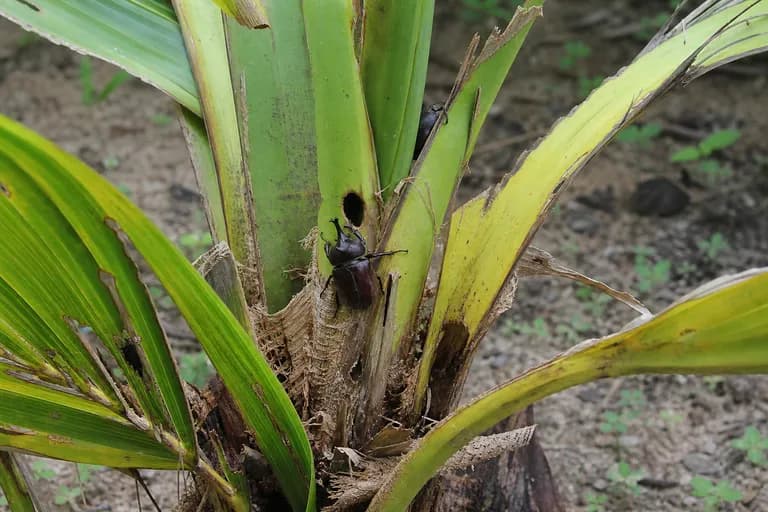
Escarabajo rinoceronte del cocotero
PlagaCortes en forma de V en las frondas, orificios de perforación en la corona, menor producción de hojas y crecimiento raquítico.
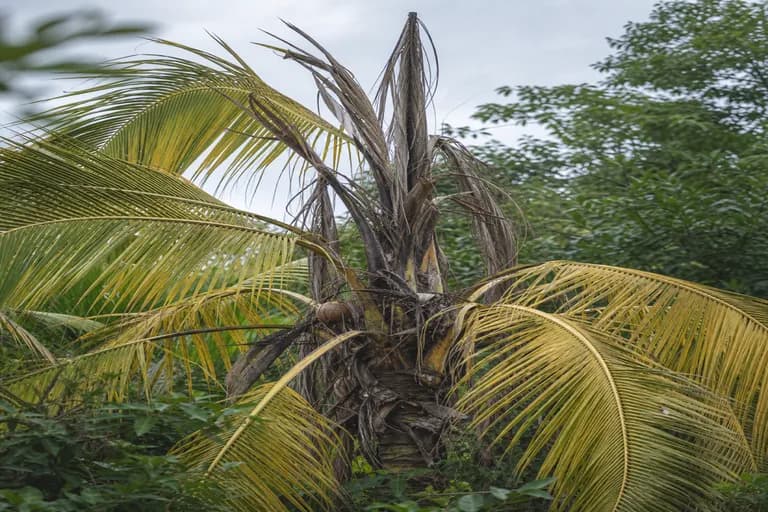
Amarillamiento letal
EnfermedadCaída prematura de frutos, ennegrecimiento de las inflorescencias, amarilleo progresivo de las frondas de abajo hacia arriba y muerte final de la corona.
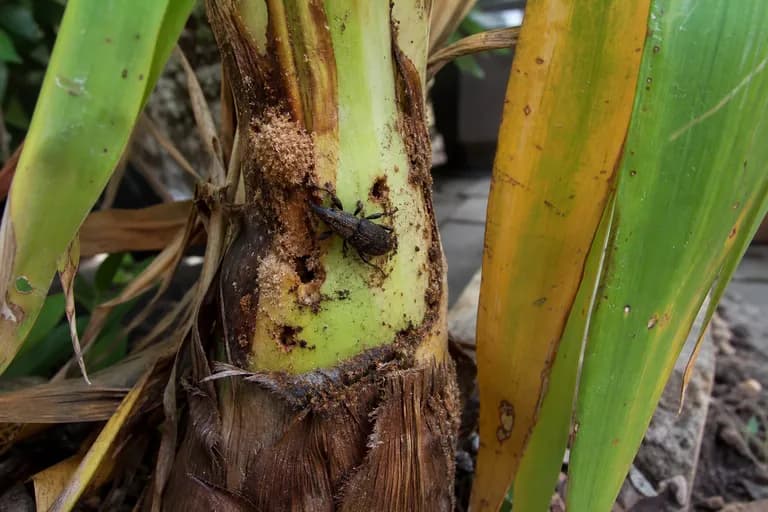
Picudo de las palmeras
PlagaMarchitez y colapso de la corona, galerías en el interior del tronco y serrín maloliente en los orificios de entrada.
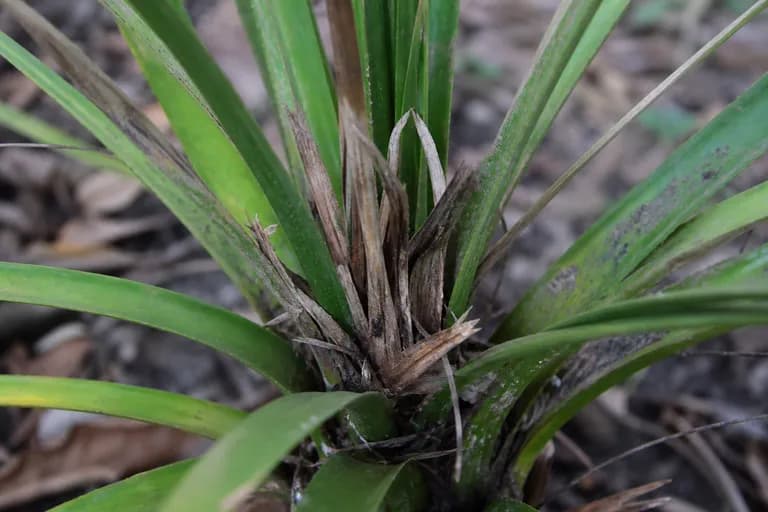
Podredumbre de la yema
EnfermedadPudrición del punto de crecimiento, mal olor procedente de la corona, colapso de las frondas más jóvenes y muerte final de la palmera.
Solución de problemas comunes
Los cocoteros suelen sufrir carencias de potasio y manganeso, lo que provoca amarilleo de las frondas y cuajado deficiente. Los rayos son una causa frecuente de muerte súbita de las palmeras en zonas tropicales. Los daños por huracanes pueden quebrar troncos o arrancar frondas. Las olas de frío por debajo de 4 °C causan daños graves en el follaje o la muerte. Las plantaciones demasiado densas reducen mucho la producción, por lo que conviene mantener una separación mínima de nueve metros en las variedades altas.
Consejos de cultivo
- Elija la variedad adecuada para su clima: las variedades enanas (Malayan Dwarf, King Coconut) son más compactas, empiezan a fructificar antes y toleran algo mejor el frío que las altas; son ideales para jardines domésticos o cultivo en maceta en climas límite.
- Empiece la germinación con un coco fresco y completamente maduro, uno que chapotee al agitarlo. Colóquelo de lado, parcialmente enterrado en una mezcla de arena gruesa y compost, dejando libre el tercio superior, y manténgalo en un lugar cálido por encima de 27 °C.
- Los cocoteros están entre los frutales más tolerantes a la sal y de hecho prosperan en suelos costeros arenosos y bien drenados que muchas otras plantas consideran inhóspitos. Evite los suelos arcillosos pesados que retienen agua alrededor de las raíces.
- El pleno sol no es negociable: los cocoteros necesitan al menos 8–10 horas diarias de luz solar directa. Un emplazamiento sombreado provoca crecimiento lento, mal cuajado y mayor susceptibilidad a enfermedades.
- Abone con regularidad con un fertilizante específico para palmeras rico en potasio (K), magnesio (Mg) y boro (B). La carencia de boro es uno de los problemas más comunes en cocoteros de jardín y causa brotes nuevos arrugados y deformados.
- Es mejor regar en profundidad y de forma espaciada que hacerlo superficialmente con frecuencia: así las raíces se animan a profundizar y el árbol adulto resiste mejor la sequía y el viento.
- Nunca retire frondas verdes de un cocotero. Cada fronda contribuye a la fotosíntesis, y quitar hojas sanas estresa al árbol y ralentiza el crecimiento. Retire solo las frondas completamente marrones y muertas.
- En cultivo en contenedor o en climas límite, use una maceta grande (al menos 100–200 litros para un árbol que ya produce) y traslade la planta al interior o a un invernadero calefactado cuando las temperaturas bajen de 15 °C.
- El escarabajo rinoceronte y el picudo de las palmeras son plagas graves: inspeccione la corona con regularidad y use trampas de feromonas para los picudos. Si aparecen escarabajos, retire la materia orgánica en descomposición cerca de la palmera y, si están disponibles, emplee controles biológicos como hongos Metarhizium.
- La siembra asociada con cubresuelos fijadores de nitrógeno, como leguminosas o hierbas perennes tropicales, puede mejorar la fertilidad del suelo alrededor de los cocoteros y reducir la necesidad de fertilizantes nitrogenados sintéticos.
Cultiva tu mejor Cocotero — y todo lo que la rodea.
Empieza un plan gratis hoy. Diseña tus bancales, coloca tu Cocotero y deja que PlotMyGarden gestione el momento, el espaciado, las asociaciones y los recordatorios de la semilla a la cesta.
Elige tu Cocotero
Malayan Dwarf
Una variedad enana resistente a enfermedades, de nueve a doce metros de altura, que produce agua de coco dulce. Empieza a fructificar a los tres o cuatro años y es resistente al amarillamiento letal.
Maypan
Un cruce entre Malayan Dwarf y Panama Tall que combina resistencia a enfermedades con frutos más grandes. Muy adecuado para producir agua y copra.
King Coconut
Una variedad de Sri Lanka conocida por sus cáscaras de color naranja brillante y su agua excepcionalmente dulce. Se cultiva sobre todo para cocos frescos de beber.
West Coast Tall
Una variedad alta y vigorosa que alcanza hasta veinticuatro metros y ofrece un excelente rendimiento de copra y aceite. Tarda de seis a ocho años en dar fruto, pero es muy productiva.
Cultivar su propio cocotero en un clima tropical o subtropical adecuado puede suponer ahorros considerables a largo plazo. Un árbol adulto que produzca 100–150 cocos al año sustituye compras regulares de agua de coco, leche de coco y coco deshidratado. Los cocos verdes jóvenes suelen costar entre 2 y 5 euros por unidad en los mercados occidentales, y el aceite de coco ecológico cuesta entre 10 y 20 euros por litro. Una palmera productiva puede reemplazar sin dificultad productos de coco por valor de 200–500 euros al año del supermercado. Además, el aceite de coco y la leche de coco caseros elaborados con frutos recién cosechados superan con creces la calidad y frescura de los productos comerciales. En los países tropicales donde el coco se cultiva en casa, las familias ahorran mucho en aceites de cocina, artículos ceremoniales y utensilios domésticos hechos con la palmera.
Recetas rápidas
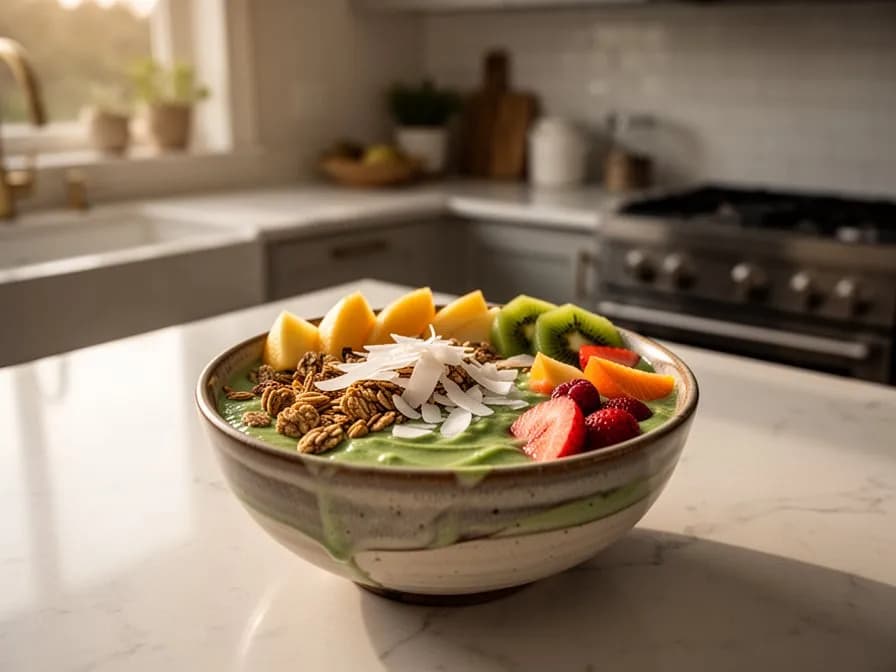
Bowl de batido de coco fresco
10 min.Un bowl de batido cremoso y tropical elaborado con pulpa fresca de coco y agua de coco, coronado con fruta fresca y copos de coco tostado. Un desayuno nutritivo listo en pocos minutos.
6 ingredientesCurry tailandés con leche de coco
30 min.Un curry aromático y cremoso de estilo tailandés con una base rica de leche de coco entera. Rápido de preparar e infinitamente versátil: añada pollo, tofu o verduras al gusto.
9 ingredientesMacarrones de coco
25 min.Macarrones clásicos, tiernos y masticables, con exterior dorado e interior húmedo. Naturalmente sin gluten y muy fáciles de hacer, son perfectos para aprovechar coco deshidratado o rallado de su propia cosecha.
6 ingredientesUsos culinarios
El coco es extraordinariamente versátil en la cocina. El agua se bebe fresca. La pulpa se come cruda, se deshidrata para hacer copra, se ralla para repostería o se prensa para obtener leche y crema de coco para curries y sopas. El aceite de coco se usa para cocinar y freír. La savia de las inflorescencias se fermenta para producir toddy o vinagre, y el azúcar de coco se elabora a partir de la savia reducida.
Qué contiene
Beneficios para la salud
- El ácido láurico del aceite de coco se convierte en monolaurina en el organismo, un compuesto con propiedades antivirales, antibacterianas y antifúngicas demostradas que apoyan las defensas inmunitarias.
- Los triglicéridos de cadena media (MCT) del coco se metabolizan directamente en el hígado en forma de cetonas, aportando energía rápida al cerebro y al cuerpo sin elevar la insulina.
- El consumo regular de fibra de coco favorece la salud intestinal al alimentar bacterias beneficiosas, reducir el estreñimiento y ayudar a mantener niveles saludables de colesterol al unirse a los ácidos biliares.
- El agua de coco es una de las mejores bebidas naturales con electrolitos y aporta potasio, magnesio, sodio y calcio para apoyar la hidratación, la función muscular y la regulación de la presión arterial.
- Los compuestos fenólicos y antioxidantes del aceite de coco virgen han mostrado en estudios de investigación propiedades antiinflamatorias y pueden ayudar a reducir marcadores de inflamación crónica.
- El manganeso del coco favorece la densidad ósea, la síntesis de colágeno y el sistema enzimático antioxidante del cuerpo, por lo que resulta beneficioso para la salud articular y la cicatrización.
De dónde viene Cocotero
El cocotero (Cocos nucifera) es uno de los cultivos domesticados más antiguos y extendidos de la humanidad, con una historia de al menos 3.000 años de uso documentado y, probablemente, mucho más larga en la tradición oral. Durante mucho tiempo, botánicos y arqueólogos debatieron su área de origen exacta, pero la evidencia genética actual apunta a dos centros principales de domesticación: la cuenca del océano Índico, especialmente las costas del sur de la India y Sri Lanka, y la región del Pacífico, que abarca el sudeste asiático insular y las islas del Pacífico occidental. Desde esos dos orígenes, el coco se expandió tanto de forma natural, transportado por las corrientes marinas, como mediante la acción deliberada de pueblos navegantes.
En el mundo del Índico, comerciantes árabes y marinos indios distribuyeron cocoteros por las costas del África oriental, el golfo Pérsico y la península arábiga mucho antes de la historia escrita. Antiguos textos sánscritos de la India mencionan el coco ya hacia 1500 a. C. y lo llaman 'kalpa vriksha', el árbol que proporciona todas las necesidades de la vida. En el Pacífico, los navegantes polinesios llevaban cocos como alimento en sus canoas y los plantaban en islas de toda Oceanía a medida que se extendían por el mayor océano de la Tierra.
El contacto europeo con el coco llegó durante la Era de los Descubrimientos. Los exploradores portugueses encontraron el coco en la costa occidental de África y en la India a finales del siglo XV, y los conquistadores españoles lo hallaron ya establecido en América Central y del Sur, prueba de que comerciantes polinesios habían alcanzado América siglos antes que Colón. En los siglos XVI y XVII, las potencias coloniales europeas plantaron cocoteros de forma activa en sus territorios tropicales para producir copra, la pulpa seca destinada a la extracción de aceite.
Los siglos XIX y principios del XX vieron el auge de grandes plantaciones de coco en el sudeste asiático, las islas del Pacífico y partes de África y América Latina, impulsado por la demanda de aceite de coco para fabricar jabón, cocinar y usar como combustible para lámparas. Hoy, Indonesia, Filipinas, India, Sri Lanka y Brasil figuran entre los principales productores mundiales. El coco sigue siendo un pilar de las economías agrícolas tropicales y de la identidad cultural en decenas de países.
Cocotero: ¿sabías que?
Datos fascinantes sobre Cocotero
Al cocotero se le suele llamar el 'árbol de la vida' porque prácticamente todas sus partes - tronco, frondas, raíces, flores y fruto - pueden utilizarse para alimento, refugio, herramientas o medicina.
Cocotero: preguntas frecuentes
¿Cuándo debo plantar Cocotero?
¿En qué zonas de rusticidad puede crecer Cocotero?
¿Cuánto sol necesita Cocotero?
¿A qué distancia debo espaciar Cocotero?
¿Qué plagas y enfermedades afectan a Cocotero?
¿Cómo almaceno Cocotero después de la cosecha?
¿Cuáles son las mejores variedades de Cocotero para cultivar?
¿Qué suelo necesita Cocotero?
¿Puedo cultivar un cocotero fuera de los trópicos?
¿Cuánto tarda un cocotero en dar fruto?
¿Cuál es la diferencia entre los cocos verdes jóvenes y los cocos marrones maduros?
¿Cómo hago aceite de coco en casa a partir de cocos frescos?
¿Por qué se ponen amarillas las frondas de mi cocotero?
¿Se pueden cultivar cocoteros en contenedores o macetas?
Acabas de leer la teoría. Ahora cultívala en piloto automático.
Todo lo que hace que Cocotero sea delicado — el momento, el espaciado, las asociaciones, la ventana de cosecha — es justo lo que PlotMyGarden resuelve por ti, para cada planta de tu huerto.
Un plan que conoce tu clima
Indica tu ubicación una vez. Recibe fechas de siembra, abonado y cosecha basadas en tu última helada real y el pronóstico en vivo — sin adivinar con un sobre genérico.
De la sección “Cuándo plantar”Planificador de bancales de arrastrar y soltar
Diseña bancales sobre una cuadrícula. Cada planta encaja con su espaciado correcto y ves toda la temporada antes de gastar un céntimo en semillas.
De la sección “Cultivo”Conflictos de asociación, detectados a tiempo
Más de 200 buenas y malas combinaciones comprobadas en vivo mientras plantas — para que un error que arruine la temporada nunca llegue a la tierra.
De la sección “Asociaciones”Recordatorios que sí vas a seguir
“Riega las judías.” “Recoge hoy antes de que se pase.” Oportunos, concretos y ligados a las plantas que de verdad cultivas.
De la sección “Cosecha”Escalonado, programado
¿Quieres cosechar seis semanas en vez de seis días? Reparte tus siembras automáticamente y te avisa cuando toca el siguiente lote.
De la sección “Cuándo plantar”Un registro que se vuelve más listo
Cada cosecha que registras le enseña tu huerto. El plan del año que viene parte de lo que de verdad funcionó en tu suelo, no en un manual.
De la sección “Resumen”Más Frutas tropicales
Cultiva tu mejor Cocotero — y todo lo que la rodea.
Empieza un plan gratis hoy. Diseña tus bancales, coloca tu Cocotero y deja que PlotMyGarden gestione el momento, el espaciado, las asociaciones y los recordatorios de la semilla a la cesta.