Kopfsalat (Buttersalat)
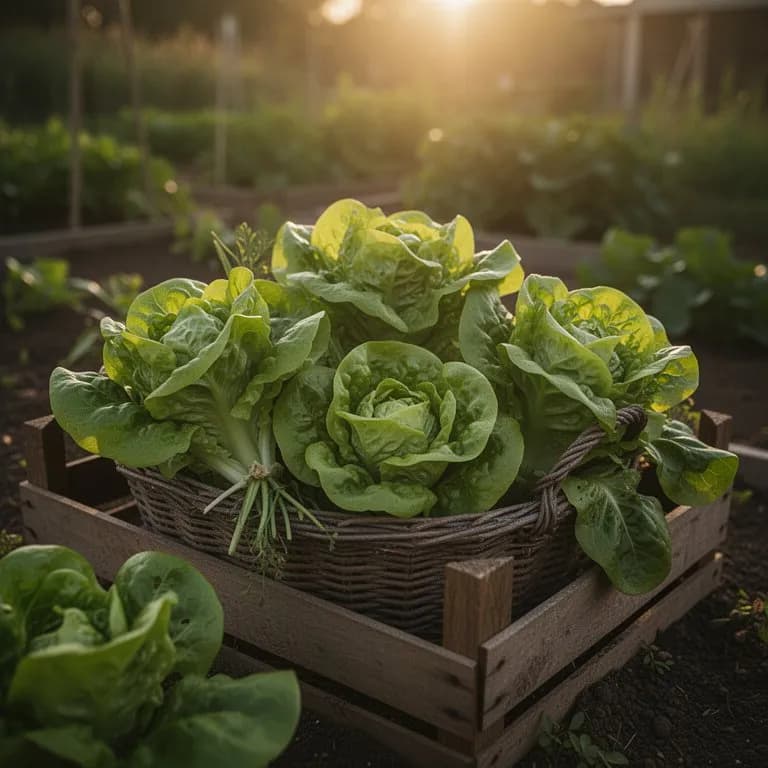
Ein weichköpfiger Salat mit samtigen, butterweichen Blättern, die lockere, zarte Köpfe bilden, perfekt für Wraps und Salate.





Auf dieser SeiteÜberblick
Kopfsalat (Buttersalat) im Überblick
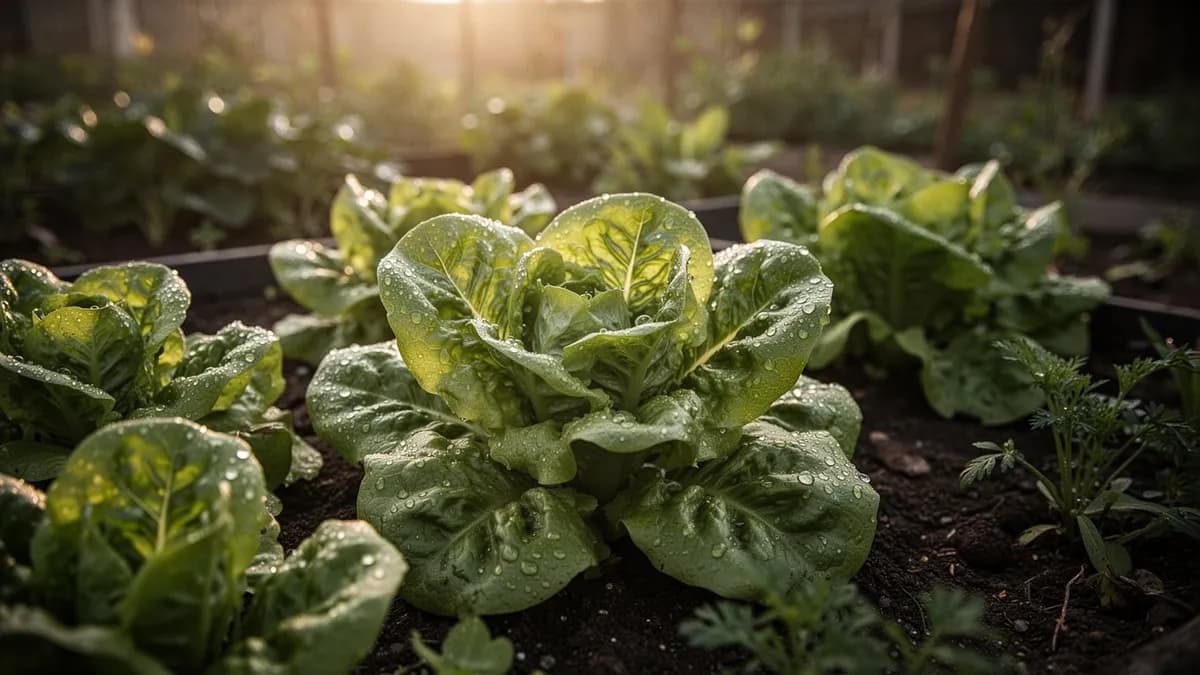
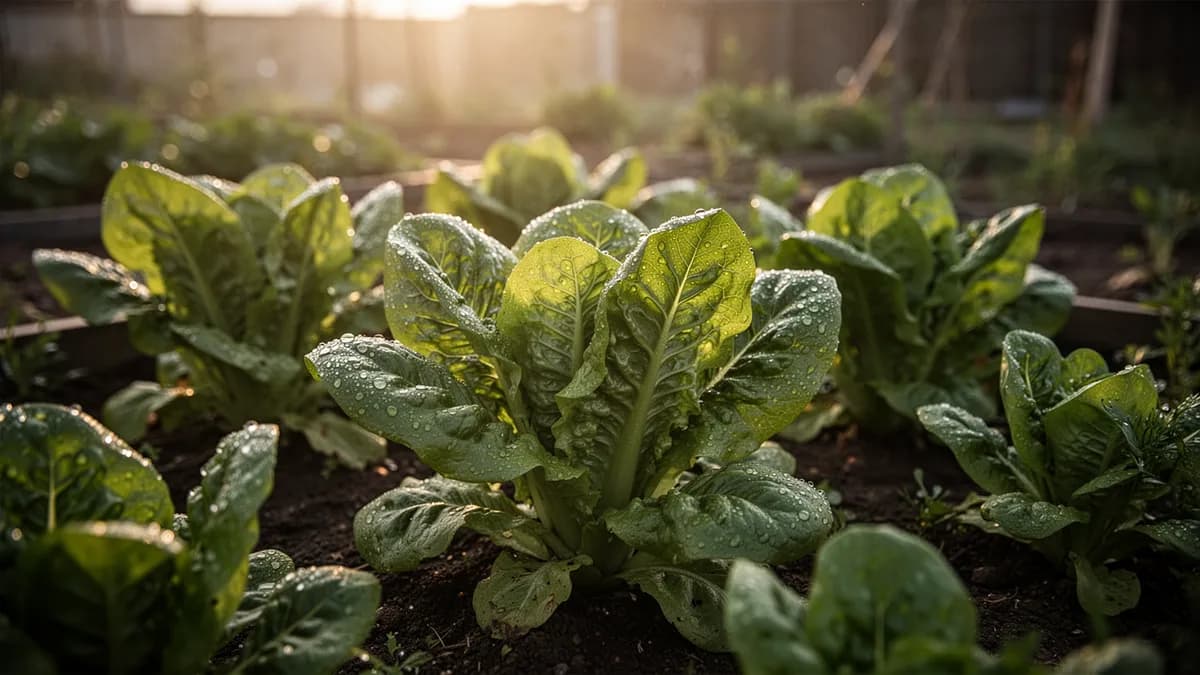
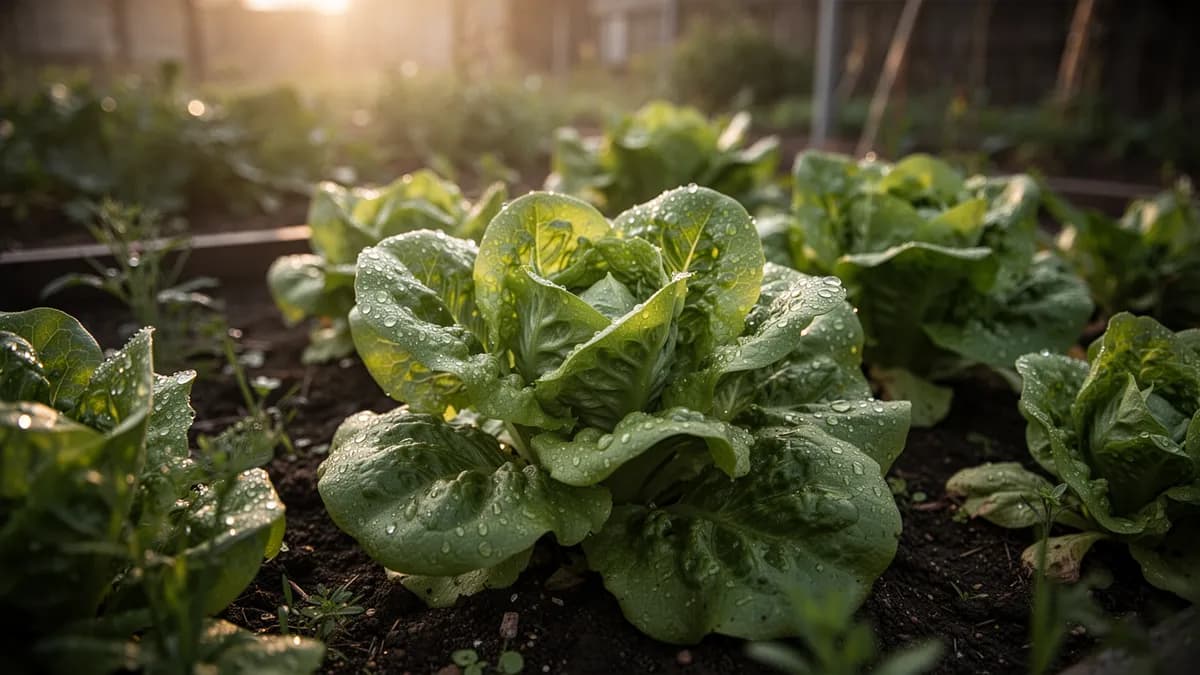
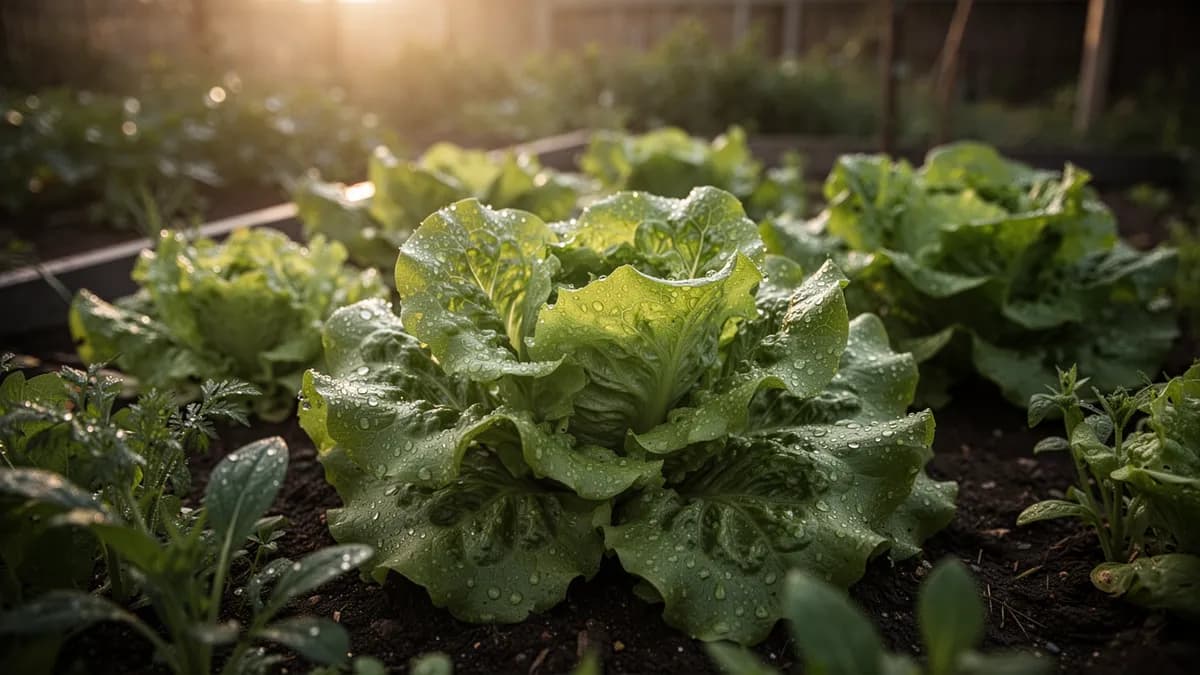
Ein weichköpfiger Salat mit samtigen, butterweichen Blättern, die lockere, zarte Köpfe bilden, perfekt für Wraps und Salate. Die zarte Textur und der süße, milde Geschmack machen ihn zu einem erstklassigen Salatgrün, das von Köchen geschätzt wird. Sorgen Sie für gleichmäßige Feuchtigkeit und Halbschatten bei warmem Wetter, um die Zartheit zu erhalten und bitteren Geschmack zu vermeiden. Ernten Sie, indem Sie den gesamten Kopf an der Basis abschneiden, oder pflücken Sie einzelne äußere Blätter für eine verlängerte Produktion.
Wann Kopfsalat (Buttersalat) pflanzen
Säen Sie Samen 3 mm tief in feuchte Aussaaterde bei 15 bis 20 Grad Celsius. Salat benötigt Licht zum Keimen, bedecken Sie die Samen daher nicht zu tief. Die Keimung dauert 5 bis 10 Tage. Ziehen Sie Sämlinge unter hellem Licht bei kühlen Temperaturen von 12 bis 18 Grad auf. Pflanzen Sie ins Freie um, wenn die Sämlinge 4 echte Blätter haben, nachdem Sie sie 5 bis 7 Tage abgehärtet haben. Direktsaat ist ebenfalls vom frühen Frühling bis zum Herbst wirksam.
Dein Kopfsalat (Buttersalat)-Jahr
Abgestimmt auf Zone 7 · typische Saison · Frost geht um den 2. Apr. und kehrt um den 1. Nov. zurück
Kopfsalat (Buttersalat) Mär – Apr, Sep – Okt pflanzen, Mai – Jun, Okt – Nov ernten. Beachte die Pflanzmethoden unten und wähle dein Klima für passende Zeiträume.
So baust du Kopfsalat (Buttersalat) an
Buttersalat, auch Kopfsalat oder Butterhead-Salat genannt, bildet lockere, zarte Köpfe mit weichen, samtigen Blättern und einem milden, süßen Geschmack. Säen Sie die Samen 4 bis 6 Wochen vor dem letzten Frost drinnen aus oder säen Sie im zeitigen Frühjahr direkt ins Freiland, sobald der Boden bearbeitet werden kann. Säen Sie die Samen 3 mm tief, da Salat Licht zum Keimen benötigt. Setzen Sie die Pflanzen in einem Abstand von 20 bis 25 cm in Reihen mit 30 cm Abstand.
Buttersalat bevorzugt kühles Wetter zwischen 12 und 18 Grad Celsius und schießt bei Temperaturen über 24 Grad leicht in die Höhe. Bieten Sie in wärmeren Klimazonen Nachmittagsschatten, um die Erntesaison zu verlängern. Halten Sie den Boden gleichmäßig feucht mit leichtem, häufigem Gießen, da die flachen Wurzeln schnell austrocknen.
Für eine kontinuierliche Versorgung säen Sie alle 2 Wochen vom frühen Frühling bis zum späten Herbst nach und lassen die heißesten Sommermonate aus. Der Anbau in Gefäßen eignet sich hervorragend für Buttersalat; verwenden Sie Töpfe mit mindestens 15 cm Tiefe. Geben Sie alle 2 Wochen einen leichten Flüssigdünger. Die Köpfe sind in 55 bis 70 Tagen erntereif, oder ernten Sie einzelne äußere Blätter ab 30 Tagen.
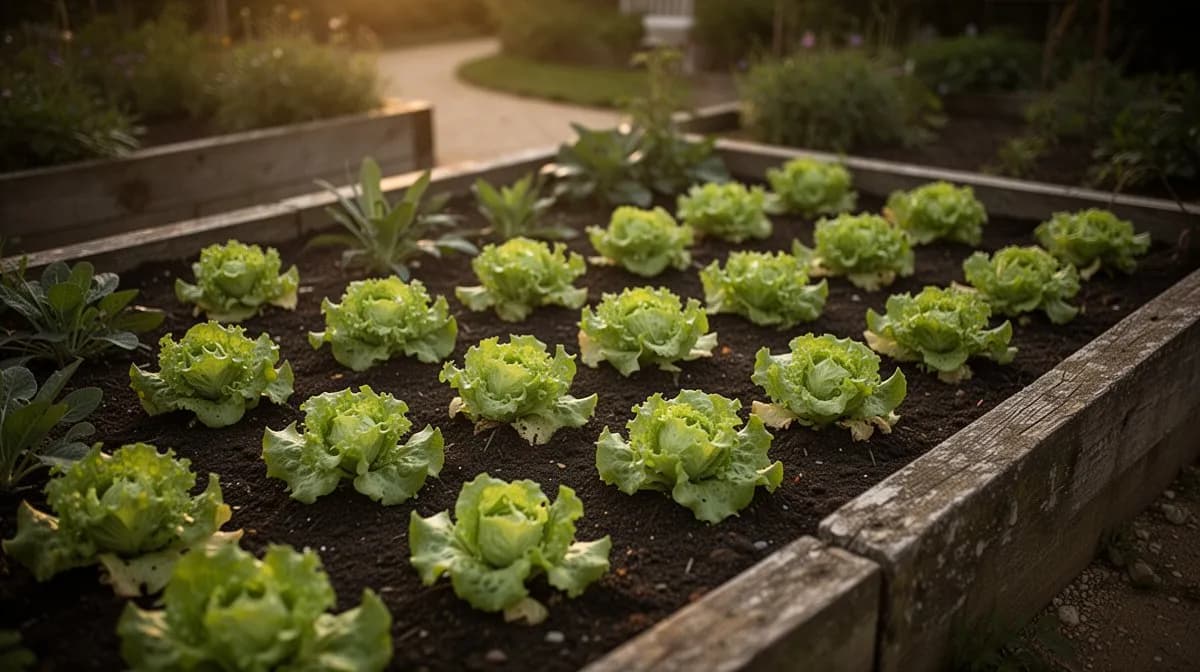
36 Pflanzen passen in ein Beet von 120 × 240 cm
Kopfsalat (Buttersalat) braucht 25 cm Platz pro Pflanze. Der Planer hält diesen Abstand für dich ein — jede Pflanze, jedes Beet.
Die besten Nachbarn für Kopfsalat (Buttersalat)
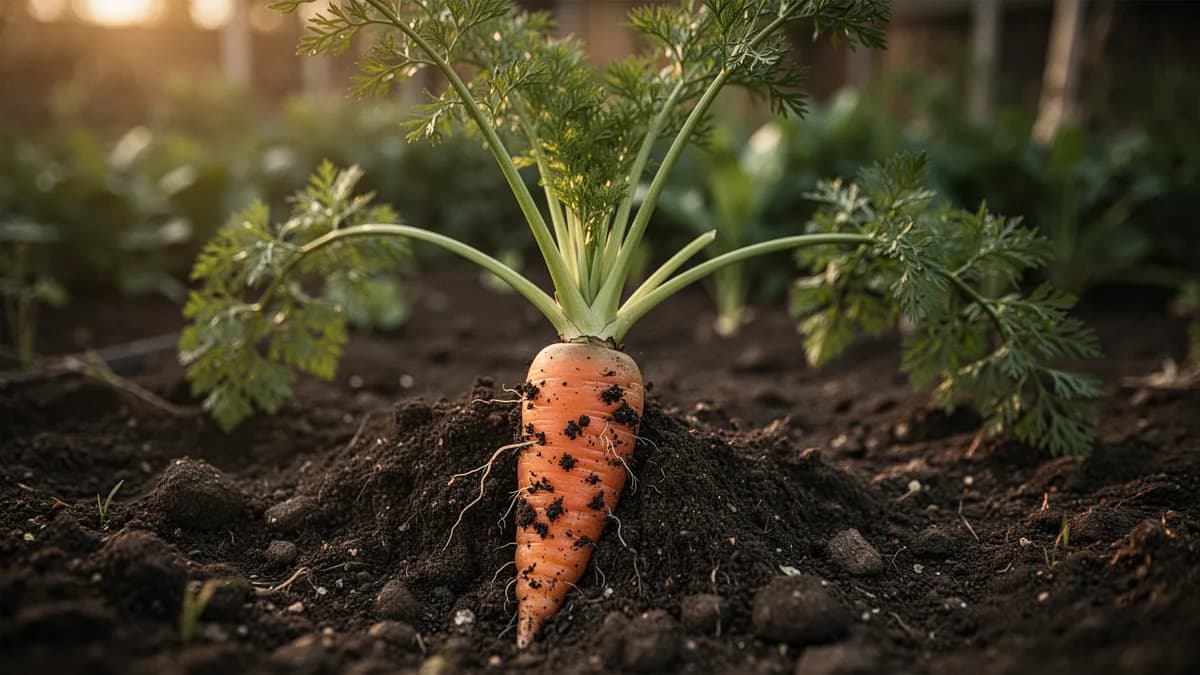
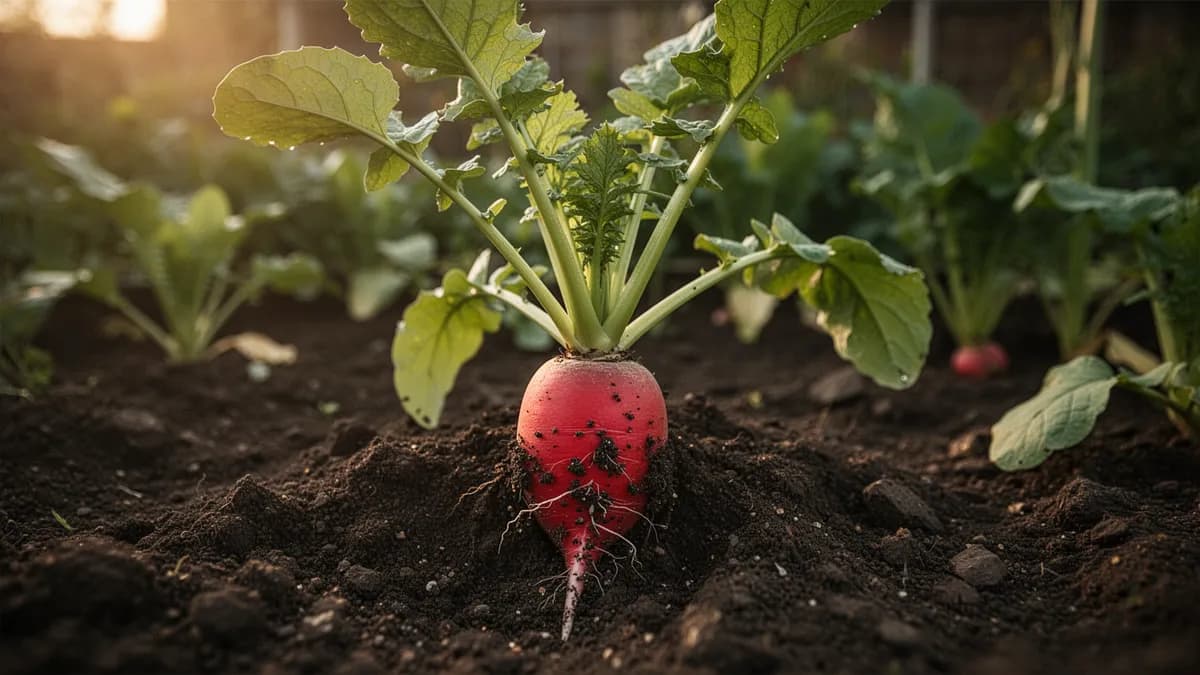
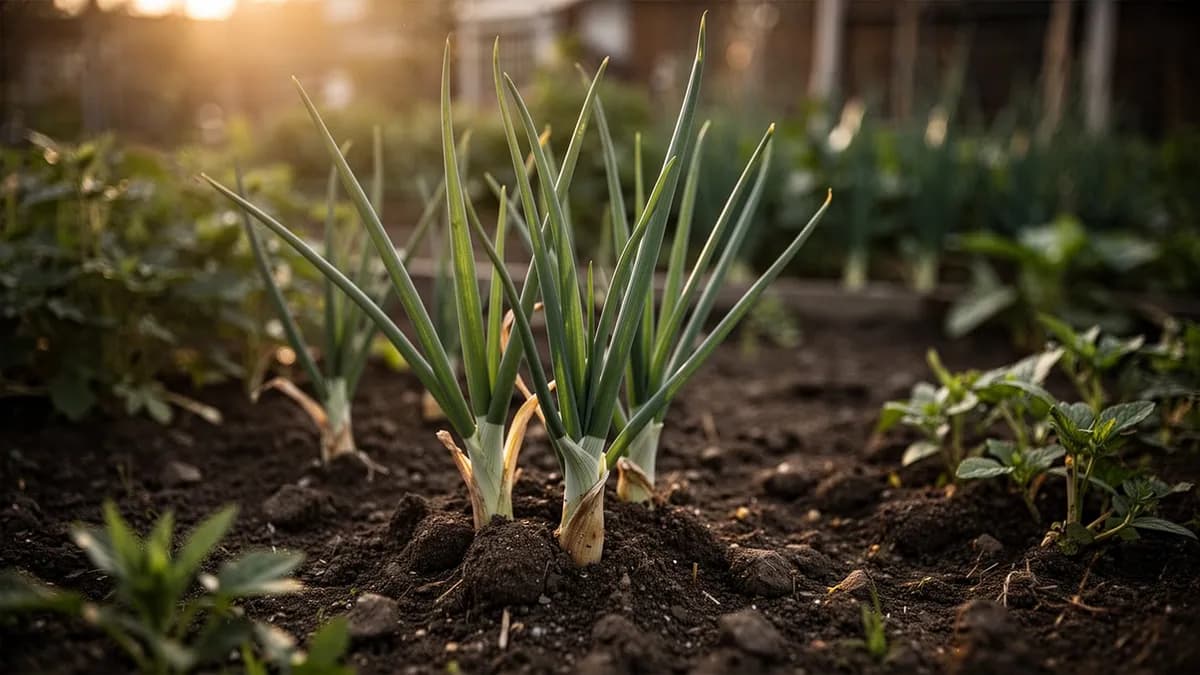
Pflanzen Sie Buttersalat neben Möhren, Radieschen und Erdbeeren. Höhere Kulturen wie Erbsen, Bohnen und Tomaten spenden wohltuenden Nachmittagsschatten. In der Nähe gepflanzter Schnittlauch und Knoblauch helfen, Blattläuse abzuwehren. Vermeiden Sie die Pflanzung neben Sellerie oder Petersilie, die um ähnliche Nährstoffe konkurrieren. Schnell wachsende Radieschen markieren Reihen und werden geerntet, bevor der Salat den Platz benötigt.
Karotte gehört daneben.
Altes Gärtnerwissen, geprüft an der echten Nachbartabelle von Kopfsalat (Buttersalat) — teste jede Pflanze, die du anbaust.
Probiere Kopfsalat (Buttersalat) direkt hier im Beet
Ein echtes Planer-Beet, Kopfsalat (Buttersalat) steht schon drin. Tippe einen Begleiter an, platziere ihn und sieh, wie die Nachbarschaftsprüfung antwortet — grün für gute Nachbarn, rot bei Streit.


Passende Anbau-Ratgeber
Richtig düngen
Buttersalat gedeiht in nährstoffreichem, gut durchlässigem Boden mit einem pH-Wert zwischen 6,0 und 7,0. Arbeiten Sie vor der Pflanzung 5 cm Kompost ein. Geben Sie alle 2 Wochen verdünnten Flüssigdünger für stetiges Wachstum. Vermeiden Sie starke Stickstoffdüngung, die lockere, schlapp hängende Köpfe verursachen kann. Ausreichend Kalzium verhindert Blattrandnekrose an den inneren Blättern. Halten Sie den Boden gleichmäßig feucht, aber nie staunass.
Ideale Temperatur
Winterhärtezone-Kompatibilität
Von der Saat zur Ernte, Schritt für Schritt
Aussaat
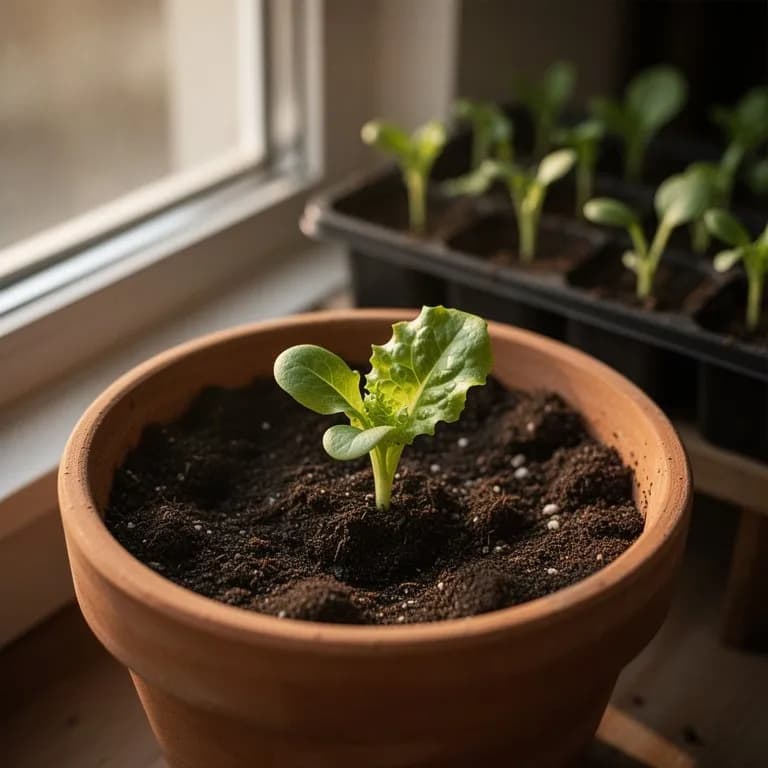
Winzige Samen werden oberflächlich gesät oder kaum bedeckt, da Buttersalat Licht zum Keimen benötigt. Die Samen keimen innerhalb von 3-10 Tagen je nach Bodentemperatur, wobei die optimale Keimung bei 15-18°C liegt. Das erste sichtbare Zeichen ist ein Paar schmaler, riemenförmiger Keimblätter, die durch die Bodenoberfläche dringen.
Sämlingsentwicklung
Echte Blätter erscheinen mit der charakteristischen abgerundeten, weichen Form, die Butterhead-Typen von anderen Salaten unterscheidet. Die Sämlinge entwickeln ein flaches, aber ausgebreitetes Wurzelsystem und beginnen, ein kleines Rosettenmuster zu bilden. Das Wachstum ist bei kühlen Bedingungen stetig, verlangsamt sich aber bei Hitze.
Rosettenbildung
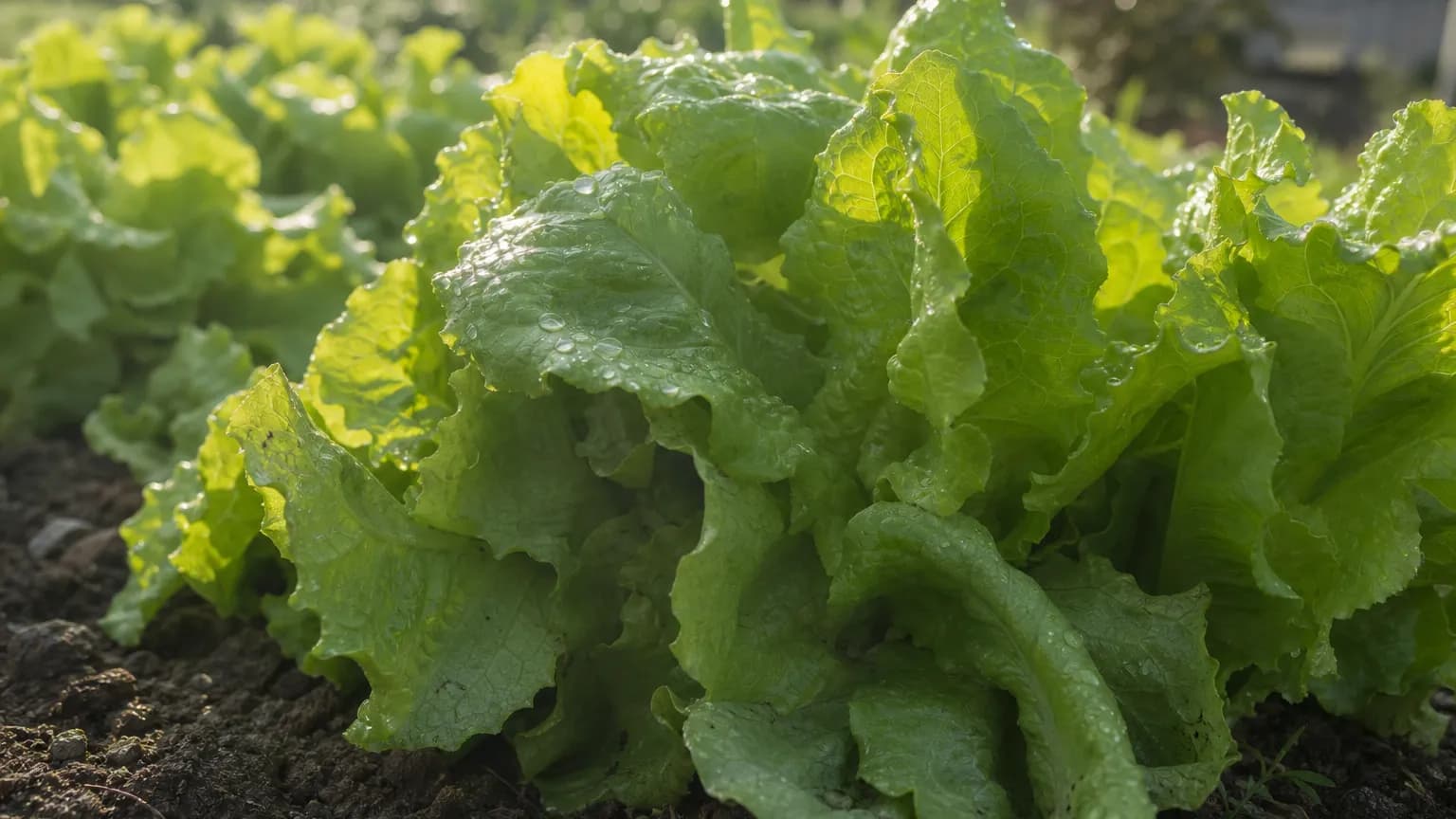
Die Blätter vermehren sich schnell und die Pflanze bildet eine zunehmend dichte, offene Rosette. Die äußeren Blätter breiten sich aus, während die inneren Blätter beginnen, sich zu überlappen und nach innen zu wölben. Die charakteristische seidige, zarte Textur entwickelt sich mit dem Wachstum der Blätter, und die buttergelbe Farbe des Herzens wird sichtbar.
Kopfbildung
Die inneren Blätter falten sich locker übereinander zu einem weichen, runden Kopf — viel weniger fest als Eisbergsalat, aber mit einem charakteristischen gebleichten, cremig-gelben Zentrum. Die äußeren Hüllblätter bleiben offen und dunkelgrün, während das Herz zunehmend zarter und blasser wird.
Erntefenster
Der Kopf erreicht seine volle Größe von 15-25 cm Durchmesser mit 10-15 überlappenden Hüllblättern, die ein zartes, gebleichtes Herz umgeben. Der Kopf fühlt sich beim sanften Drücken leicht locker und federnd an. Dieses Erntefenster dauert 5-10 Tage, bevor die Pflanze zu schießen beginnt, besonders bei warmem Wetter.
Schießen
Steigende Temperaturen oder länger werdende Tage lösen aus, dass sich der zentrale Stängel schnell streckt und durch den Kopf drückt. Kleine gelbe Blütengruppen bilden sich an der Spitze des schießenden Stängels. Die Blätter werden zunehmend bitter und zäh, sobald das Schießen beginnt. Die Pflanze produziert winzige löwenzahnartige Samen, wenn man sie ihren Lebenszyklus vollenden lässt.
Vergraben Sie die Samen nicht tief — drücken Sie sie vorsichtig auf feuchte Erde und bedecken Sie sie höchstens mit einer dünnen Schicht feinem Vermiculit. Halten Sie sie gleichmäßig feucht mit einem Sprühgerät. Die Keimung stockt über 25°C, beginnen Sie daher in den warmen Monaten an einem kühlen Ort mit der Aussaat.
Kopfsalat (Buttersalat) Monat für Monat pflegen
Was du jeden Monat für deine Kopfsalat (Buttersalat) tun solltest
Oktober
Aktueller MonatErnten Sie Herbstköpfe, sobald sie reif sind — im Herbst angebauter Buttersalat übertrifft oft die Frühjahrsqualität dank kühlerer Temperaturen und kürzerer Tage. Schützen Sie späte Pflanzungen mit Vliesabdeckung, wenn Frost droht. In milden Zonen können Sie für die Winterernte weitersäen.
Immer wissen, was jetzt im Garten zu tun ist
Eine E-Mail zum Monatsanfang: was du jetzt säen, pflanzen und anpacken solltest — für deine Kopfsalat (Buttersalat) und alles, was drumherum wächst. Dazu ein kurzer Startkurs, der dich vor den klassischen Fehlern bewahrt.
- Was jetzt zu tun ist
- Passend zu deiner Saison
- Startkurs inklusive
Kopfsalat (Buttersalat) ernten
Ernten Sie Buttersalat als ganze Köpfe, wenn sie sich weich, aber voll anfühlen, typischerweise 55 bis 70 Tage nach der Aussaat. Schneiden Sie den gesamten Kopf an der Basis mit einem scharfen Messer am Morgen ab, wenn die Blätter knackig und gut durchfeuchtet sind. Alternativ können Sie ab 30 Tagen einzelne äußere Blätter ernten und sich über mehrere Wochen nach innen vorarbeiten. Warten Sie nicht, bis sich die Mitte zu strecken beginnt, da dies das Schießen und bitteren Geschmack signalisiert.
angenommen, du pflanzt zu Beginn des Zeitraums — trage dein tatsächliches Datum ein
Ernte Kopfsalat (Buttersalat) zügig, dann trägt die Pflanze weiter.
Lagerung & Konservierung
Buttersalat ist empfindlich und sollte ungewaschen im Kühlschrank bis zu 1 Woche aufbewahrt werden. Legen Sie die Köpfe in einen lockeren Plastikbeutel mit einem leicht feuchten Papiertuch. Waschen Sie ihn erst kurz vor der Verwendung vorsichtig, da die zarten Blätter leicht Druckstellen bekommen. Buttersalat lässt sich nicht gut einfrieren oder trocknen. Für die längste Haltbarkeit ernten Sie mit dem Wurzelballen und lagern Sie ihn aufrecht in Wasser.
Was schiefgeht — und die Lösung
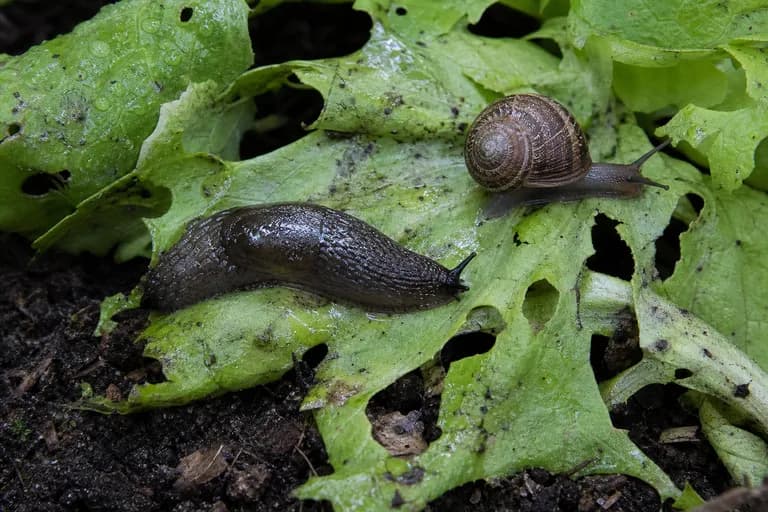
Schnecken und Nacktschnecken
SchädlingGroße, unregelmäßige Löcher in den Blättern, Schleimspuren, Schäden konzentriert auf die unteren äußeren Blätter.
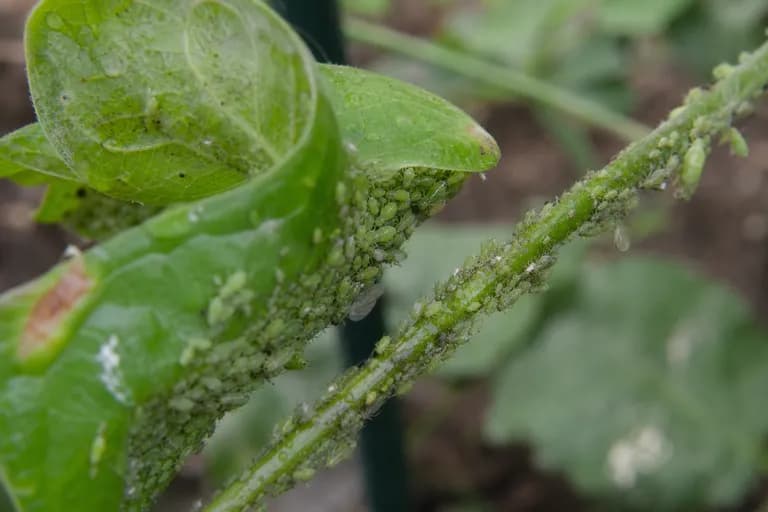
Blattläuse
SchädlingKleine grüne oder rote Insekten, die sich in Blattfalten und im Herz des Kopfes sammeln und gekräuselte Blätter verursachen.
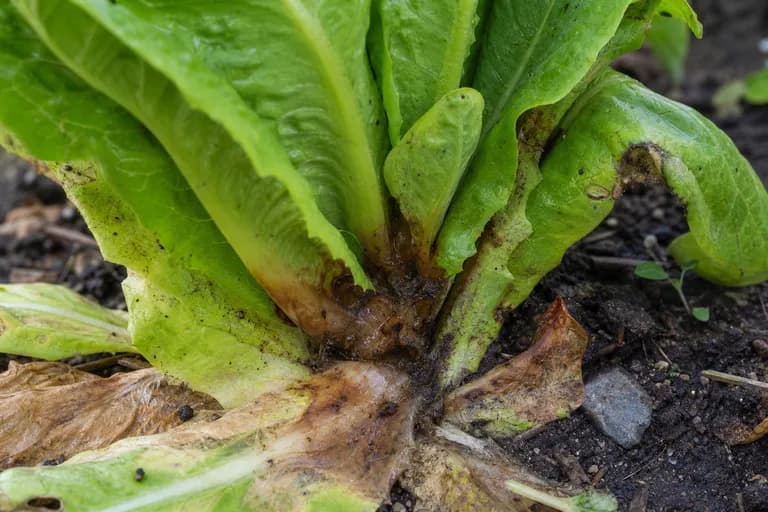
Bodenfäule
KrankheitBraune, schleimige Fäulnis, die dort beginnt, wo die unteren Blätter den nassen Boden berühren, und sich in den Kopf ausbreitet.
Fehlerbehebung bei häufigen Problemen
Schießen durch Hitze und lange Tage ist die größte Herausforderung und führt zu bitteren, gestreckten Köpfen. Blattrandnekrose an den inneren Blättern wird durch Kalziummangel oder unregelmäßiges Gießen verursacht. Schnecken können Pflanzungen verwüsten und sich in den lockeren Falten des Kopfes verstecken. Bodenfäule entwickelt sich, wenn die unteren Blätter auf nassem Boden liegen. Blattläuse, die sich in den Kopffalten verstecken, können bei der Ernte schwer zu entfernen sein.
Anbautipps
- Staffelaussaat ist die wichtigste Technik für den erfolgreichen Buttersalatanbau. Säen Sie alle 10-14 Tage eine kleine Charge vom frühen Frühling bis zum späten Herbst, anstatt eine große Pflanzung vorzunehmen — so ist eine kontinuierliche Versorgung mit Köpfen in bester Qualität gesichert, anstatt einer Schwemme gefolgt von nichts.
- Vergraben Sie Buttersalatsamen niemals. Sie benötigen Licht zum Keimen — drücken Sie die Samen einfach auf die feuchte Bodenoberfläche und besprühen Sie sie vorsichtig. Schon eine Abdeckung von nur 5 mm Erde kann die Keimrate von 90 % auf unter 30 % reduzieren.
- Hitze ist der Feind. Bauen Sie Buttersalat in warmen Klimazonen als Frühlings- und Herbstkultur an und überspringen Sie den Sommer komplett. Verwenden Sie 40-50 % Schattiernetz, um die Saison im Frühling um 2-3 Wochen zu verlängern und im Herbst 2-3 Wochen früher zu beginnen.
- Gießen Sie gleichmäßig und flach. Buttersalat hat ein flaches Wurzelsystem, das sich in den oberen 15 cm des Bodens konzentriert. Unregelmäßiges Gießen verursacht Blattrandnekrose (braune Blattränder) und bitteren Geschmack. Tropfbewässerung mit Zeitschaltuhr ist ideal.
- Ernten Sie ganze Köpfe am frühen Morgen, wenn die Blätter am kühlsten und prallsten sind. Am Nachmittag geernteter Salat welkt schneller und lagert schlecht. Tauchen Sie geerntete Köpfe sofort in kaltes Wasser, um die Frische um mehrere Tage zu verlängern.
- Pflanzen Sie Buttersalat zwischen langsamer wachsende Kulturen wie Tomaten, Paprika und Kohlgewächse. Der Salat reift und wird geerntet, bevor die größeren Pflanzen den Platz benötigen — so verdoppeln Sie die Produktivität Ihres Gartens pro Quadratmeter.
- Schützen Sie sich von Anfang an gegen Schnecken. Buttersalat ist ein Schneckenmagnet aufgrund seiner zarten, niedrig wachsenden Blätter und der feuchten Umgebung darunter. Verwenden Sie Kupferband an Beeträndern, Bierfallen oder Eisenphosphat-Köder, bevor Schäden auftreten.
- Anbau in Gefäßen gelingt hervorragend. Ein 20-25 cm großer Topf reicht für einen Kopf, und ein Blumenkasten kann 3-4 Pflanzen aufnehmen. Der Gefäßanbau erleichtert es, Pflanzen bei Hitzewellen in den Schatten zu stellen, und bringt frischen Salat auf Balkon oder Terrasse.
Bau deine beste Kopfsalat (Buttersalat) an — und alles drumherum.
Starte heute kostenlos. Lege deine Beete an, setze deine Kopfsalat (Buttersalat) ein und lass PlotMyGarden Timing, Abstände, Begleiter und Erinnerungen von der Saat bis zum Erntekorb übernehmen.
Finde deine Kopfsalat (Buttersalat)
Buttercrunch
Ein preisgekrönter Gewinner der All-America Selection mit kompakten, dickblättrigen Köpfen und ausgezeichneter Hitzetoleranz.
Tom Thumb
Eine kleine Erbsorte, die Miniaturköpfe produziert, perfekt für Einzelportionen und den Anbau in Gefäßen.
Winter Density
Eine kältetolerante Butterhead-Römersalat-Kreuzung mit hervorragendem Geschmack und der Fähigkeit, unter Abdeckung zu überwintern.
Speckled Amish
Eine wunderschöne Erbsorte mit grünen Blättern, die mit roten Sprenkeln übersät sind, und einer weichen, butterigen Textur.
Eine Packung Buttersalatsamen (2-4 €) enthält 500-1.000 Samen — genug für eine ganze Saison Staffelaussaat. Ein einzelner Kopf Bio-Buttersalat kostet im Supermarkt 3-5 € und welkt oft innerhalb weniger Tage nach dem Kauf. Der Anbau von nur 2 Köpfen pro Woche über eine 16-wöchige Frühling-bis-Herbst-Saison ergibt 32 Köpfe im Wert von 96-160 € zu Einzelhandelspreisen, alles aus einer 3-€-Samenpackung und minimalem Aufwand. Hydroponischer Buttersalat, der als "Living Lettuce" verkauft wird, kostet 4-6 € pro Kopf, was die Ersparnis beim Eigenanbau noch dramatischer macht.
Schnelle Rezepte
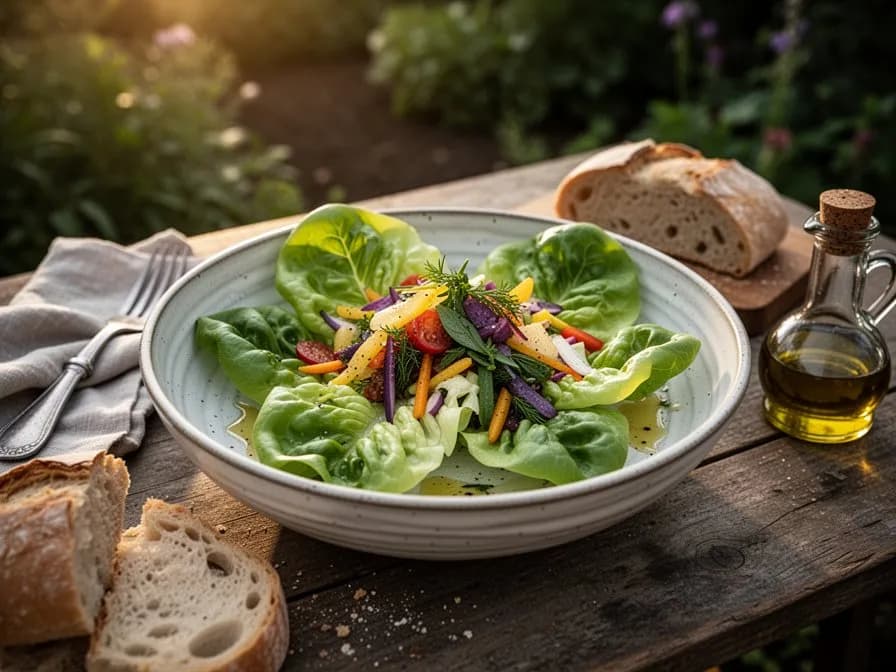
Klassischer Buttersalat mit Dijon-Vinaigrette
10 Min.Ein eleganter, französisch inspirierter Salat, der die seidige Textur des Buttersalats zur Geltung bringt. Die zarten Blätter passen perfekt zu einer cremigen Dijon-Vinaigrette, frischen Kräutern und einer Streuung gerösteter Walnüsse als Kontrast.
8 Zutaten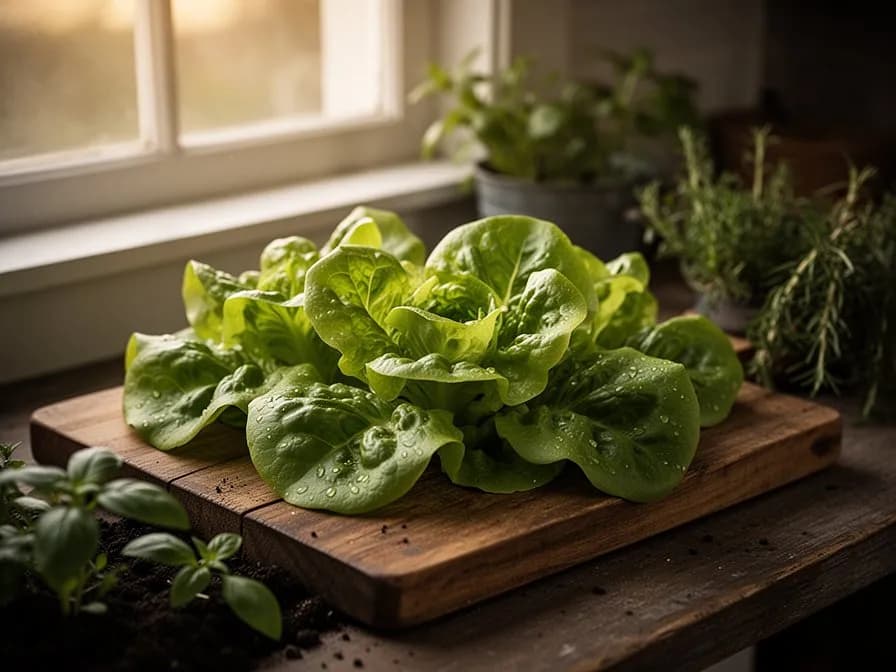
Asiatische Hähnchen-Salat-Wraps
25 Min.Herzhaft gebratenes Hähnchen in einer süß-salzigen Sauce, gelöffelt in becherförmige Buttersalatblätter — eine beliebte Vorspeise oder leichtes Abendessen. Der frische, kühle Salat bildet den perfekten Kontrast zur heißen, kräftig gewürzten Füllung.
10 ZutatenButtersalat mit Birnen, Blauschimmelkäse und Pekannüssen
15 Min.Ein raffinierter Herbstsalat, der die zartschmelzende Textur des Buttersalats mit reifen Birnenscheiben, zerbröseltem Blauschimmelkäse und kandierten Pekannüssen kombiniert. Eine Ahorn-Sherry-Vinaigrette verbindet alle Aromen wunderbar miteinander.
8 ZutatenKulinarische Verwendung
Buttersalat wird für seine weichen, zarten Blätter und seinen milden, süßen Geschmack geschätzt, der ihn ideal für feine Salate macht. Verwenden Sie ganze Blätter als Wraps für asiatische Salatschiffchen, gefüllt mit gebratenem Fleisch oder Tofu. Die becherförmigen Blätter eignen sich perfekt für kleine Salathäppchen. Kombinieren Sie ihn mit leichten Vinaigrettes, frischen Kräutern und mildem Käse.
Was drinsteckt
Gesundheitsvorteile
- Außergewöhnlich reich an Vitamin A als Beta-Carotin — ein einzelner Kopf liefert über 100 % des Tageswerts und unterstützt Augengesundheit, Immunfunktion und gesunde Hautzellproduktion.
- Hervorragende Quelle für Vitamin K, essenziell für die ordnungsgemäße Blutgerinnung und den Kalziumstoffwechsel in den Knochen. Regelmäßiger Verzehr unterstützt den Erhalt der Knochendichte, besonders wichtig mit zunehmendem Alter.
- Enthält Folsäure (Vitamin B9), die für die DNA-Synthese und die Bildung roter Blutkörperchen benötigt wird, was Buttersalat zu einem wertvollen Lebensmittel während der Schwangerschaft und für alle mit erhöhtem Folsäurebedarf macht.
- Der hohe Wassergehalt von etwa 96 % macht Buttersalat zu einem ausgezeichneten feuchtigkeitsspendenden Lebensmittel, das zur täglichen Flüssigkeitszufuhr beiträgt, besonders wichtig für Menschen, die Schwierigkeiten haben, genug Wasser zu trinken.
- Die Lactucarium-Verbindungen im Salat haben milde beruhigende Eigenschaften — obwohl kein Medikament, hat die traditionelle Verwendung von Salat als sanfte Schlafhilfe eine gewisse Grundlage in seinen natürlichen sedierenden Verbindungen.
- Liefert antioxidative Verbindungen wie Beta-Carotin, Lutein und Zeaxanthin, die die Augengesundheit schützen und bei regelmäßigem Verzehr das Risiko einer altersbedingten Makuladegeneration verringern können.
Woher Kopfsalat (Buttersalat) stammt
Buttersalat (Lactuca sativa var. capitata) gehört zur Butterhead-Gruppe der Salate, einem der ältesten kultivierten Gemüsetypen in der Menschheitsgeschichte. Wilder Salat (Lactuca serriola) stammt aus dem Mittelmeerraum und dem Nahen Osten, und seine Domestizierung begann im alten Ägypten um 2680 v. Chr. Ägyptische Grabmalereien zeigen hohe, schießende Salatpflanzen, die wegen ihrer ölhaltigen Samen und des milchigen Safts in ihren Stängeln angebaut wurden, der mit Fruchtbarkeit in Verbindung gebracht und in religiösen Ritualen verwendet wurde. Diese frühen Salate hatten kaum Ähnlichkeit mit modernen Kopfformen.
Die Römer trieben den Salatanbau erheblich voran und entwickelten Sorten mit breiteren, zarteren Blättern, wobei sie Pflanzen selektierten, die lockere Köpfe bildeten, anstatt sofort zu schießen. Der Name Lactuca leitet sich vom lateinischen "lac" (Milch) ab und bezieht sich auf den weißen Latex in den Stängeln. Im Mittelalter wurden in Klostergärten in Frankreich und den Niederlanden bereits eigenständige Butterhead-Typen mit weichen, sich faltenden Blättern angebaut. Europäische Pflanzenzüchter verfeinerten diese über die folgenden Jahrhunderte zu den glatten, kopfbildenden Buttersalaten, die wir heute kennen.
Zwei wegweisende amerikanische Butterhead-Sorten entstanden im 19. Jahrhundert, die bis heute beliebt sind. Boston-Salat wurde in den 1860er Jahren in den Gewächshäusern rund um Boston, Massachusetts, entwickelt und wurde zum Standardgewächshaussalat im Nordosten der Vereinigten Staaten. Bibb-Salat wurde von John Bibb, einem Hobbygärtner in Frankfort, Kentucky, um 1865 entwickelt — seine kleinere, dunkelblättrige Sorte wurde für ihre außergewöhnlich zarte Textur und ihren süßen Geschmack geschätzt. Heute wird Buttersalat auf jedem bewohnten Kontinent kommerziell angebaut, mit bedeutender Produktion in den Niederlanden, Frankreich, Spanien, den Vereinigten Staaten und zunehmend in hydroponischen Vertikalfarmen. Die moderne Züchtung bringt weiterhin Sorten mit verbesserter Schossresistenz, Krankheitstoleranz und Haltbarkeit hervor und bewahrt dabei die zartschmelzende Textur, die den Butterhead-Typ definiert.
Kopfsalat (Buttersalat): Schon gewusst?
Faszinierende Fakten über Kopfsalat (Buttersalat)
Buttersalat verdankt seinen Namen der bemerkenswert seidigen, fast öligen Textur seiner Blätter — sie fühlen sich buchstäblich butterweich an, eine Eigenschaft, die durch ihre ungewöhnlich dünnen Zellwände und den hohen Wassergehalt im Vergleich zu anderen Salattypen entsteht.
Kopfsalat (Buttersalat): Fragen & Antworten
Wann sollte ich Kopfsalat (Buttersalat) pflanzen?
Was sind gute Begleitpflanzen für Kopfsalat (Buttersalat)?
In welchen Winterhärtezonen kann Kopfsalat (Buttersalat) wachsen?
Wie viel Sonne braucht Kopfsalat (Buttersalat)?
Welchen Abstand sollte ich zwischen Kopfsalat (Buttersalat) lassen?
Welche Schädlinge und Krankheiten befallen Kopfsalat (Buttersalat)?
Wie lagere ich Kopfsalat (Buttersalat) nach der Ernte?
Was sind die besten Kopfsalat (Buttersalat)-Sorten zum Anbauen?
Welchen Boden braucht Kopfsalat (Buttersalat)?
Warum ist mein Buttersalat geschossen, bevor er einen richtigen Kopf gebildet hat?
Warum haben meine Buttersalatblätter braune Ränder (Blattrandnekrose)?
Kann ich Buttersalat ganzjährig drinnen anbauen?
Wie lagere ich geernteten Buttersalat, damit er am längsten frisch bleibt?
Was ist der Unterschied zwischen Boston- und Bibb-Buttersalat?
Lohnt sich der Eigenanbau von Buttersalat im Vergleich zum Kauf im Laden?
Du hast die Theorie gelesen. Jetzt baue sie auf Autopilot an.
Alles, was Kopfsalat (Buttersalat) knifflig macht — das Timing, die Abstände, die Begleiter, das Erntefenster — genau das übernimmt PlotMyGarden für dich, für jede Pflanze im Garten.
Ein Plan, der dein Wetter kennt
Standort einmal festlegen. Aussaat-, Dünge- und Erntedaten rund um deinen echten letzten Frosttermin und die Live-Vorhersage — kein Raten mehr nach Saattüte.
Aus dem Abschnitt „Pflanzzeit“Beetplaner per Drag & Drop
Beete auf einem Raster gestalten. Jede Pflanze rastet im richtigen Abstand ein, und du siehst die ganze Saison, bevor du einen Cent für Saatgut ausgibst.
Aus dem Abschnitt „Anbau“Begleiter-Konflikte früh erkannt
Über 200 gute und schlechte Kombinationen werden beim Pflanzen live geprüft — so landet ein saisonruinierender Fehler nie in der Erde.
Aus dem Abschnitt „Begleiter“Erinnerungen, nach denen du wirklich handelst
„Gieß die Bohnen.“ „Heute ernten, bevor's umschlägt.“ Pünktlich, konkret und auf deine echten Pflanzen bezogen.
Aus dem Abschnitt „Ernte“Staffel-Aussaat, geplant
Sechs Wochen ernten statt sechs Tage? Die App verteilt deine Aussaaten automatisch und erinnert dich, wenn der nächste Satz fällig ist.
Aus dem Abschnitt „Pflanzzeit“Ein Verlauf, der schlauer wird
Jede protokollierte Ernte bringt der App deinen Garten bei. Der Plan fürs nächste Jahr startet bei dem, was in deinem Boden wirklich funktioniert hat.
Aus dem Abschnitt „Überblick“Pflanze diese neben Kopfsalat (Buttersalat)
Weitere Blattgemüse
Bau deine beste Kopfsalat (Buttersalat) an — und alles drumherum.
Starte heute kostenlos. Lege deine Beete an, setze deine Kopfsalat (Buttersalat) ein und lass PlotMyGarden Timing, Abstände, Begleiter und Erinnerungen von der Saat bis zum Erntekorb übernehmen.