Brodiaea
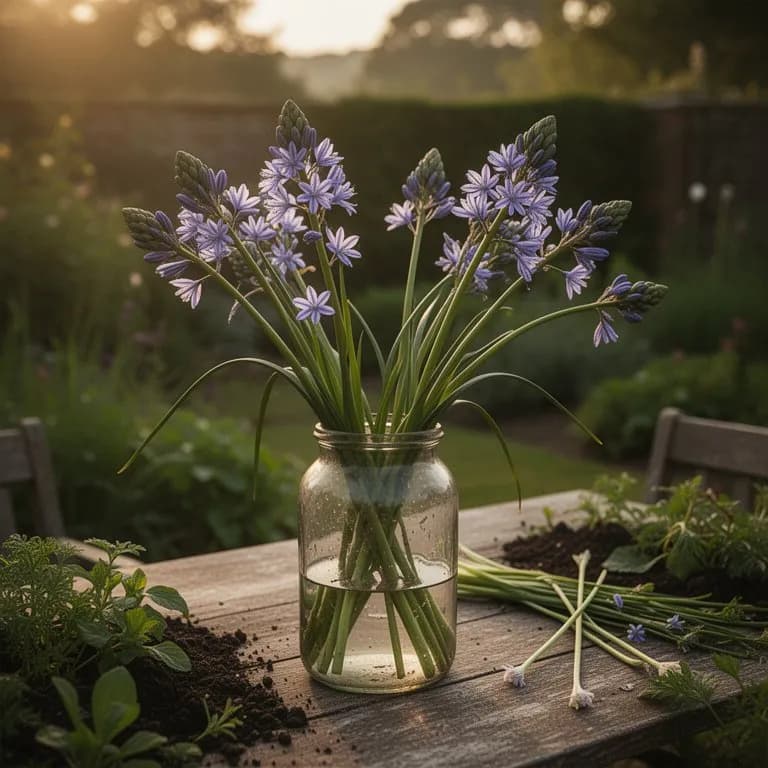
A California native corm producing open clusters of violet-blue tubular flowers on slender stems in late spring.





On this pageOverview
Meet Brodiaea
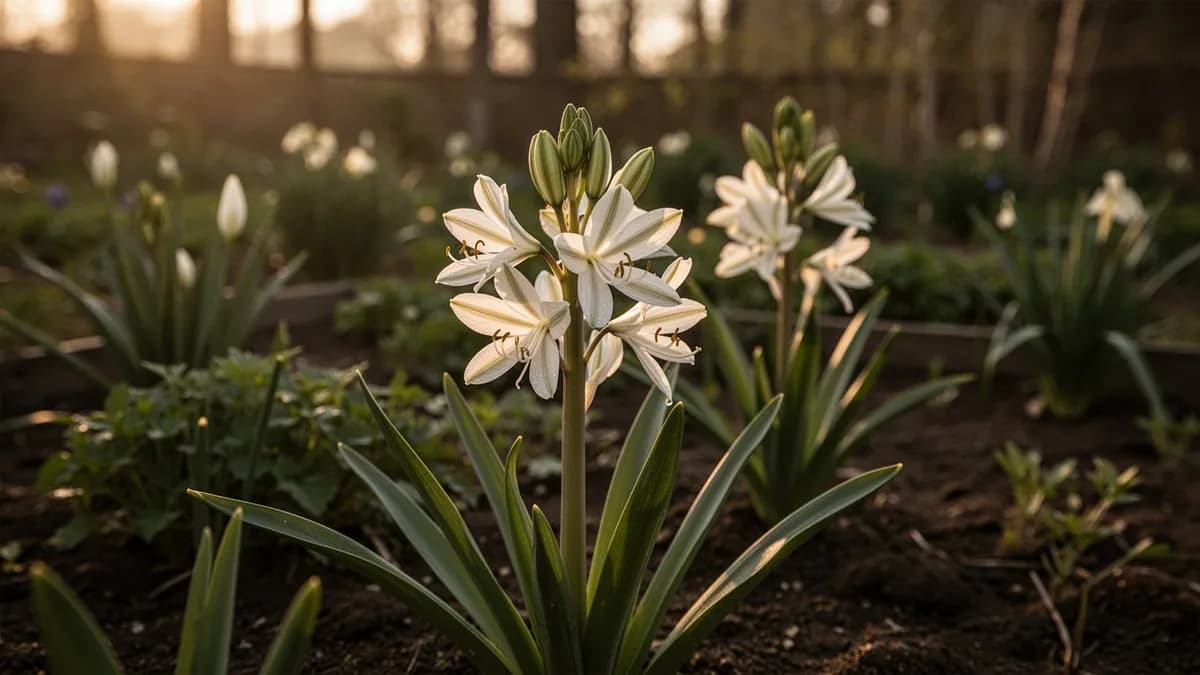
A California native corm producing open clusters of violet-blue tubular flowers on slender stems in late spring. Brodiaea prefers dry summers and well-drained soil, perfectly adapted to Mediterranean climate gardens. Plant in sunny rock gardens or grasslands where bulbs can bake dormant through summer.
When to plant Brodiaea
Brodiaea can be grown from seed sown in autumn in pots of gritty, well-drained mix. Sow on the surface and cover lightly with fine grit. Place pots outdoors where they will receive winter rains and cold temperatures needed for germination. Seedlings produce grass-like foliage in their first year and should be grown on undisturbed for two to three years before transplanting. Flowering typically begins in the third or fourth year from seed.
Your Brodiaea Year
Composed for Zone 7 · typical seasons · frost passes Apr 2, returns Nov 1
Plant Brodiaea Sep – Oct, pick May – Jun. Check the planting methods below and set your climate to personalize these windows.
How to grow Brodiaea
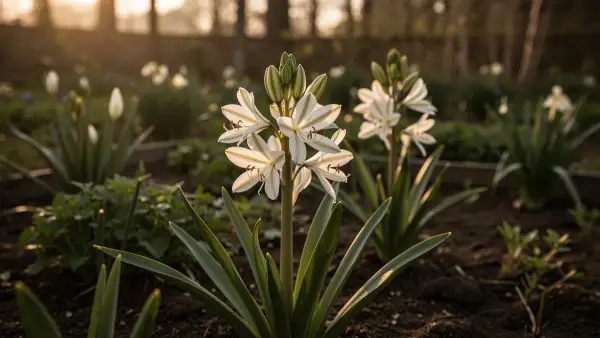
Plant brodiaea corms in autumn, setting them three to four inches deep and three to four inches apart in well-drained, gritty soil in full sun. These California natives are adapted to dry summers and wet winters, making them ideal for Mediterranean-climate gardens and rock gardens. Avoid sites with summer irrigation, as dormant corms can rot in persistently moist soil.
During the winter and spring growing season, brodiaea needs regular rainfall or supplemental watering to support leaf and flower development. Once the foliage begins to yellow in late spring, stop watering entirely and allow the corms to bake dry through the summer months. This dry dormancy is essential for survival and repeat flowering.
In areas with wet summers, grow brodiaea in raised beds amended with extra grit or in containers that can be moved to a sheltered, dry location after flowering. Plant in generous groups of twenty or more to create natural-looking drifts. The wiry stems and starry violet-blue flowers are charming in grassland settings where they emerge through low-growing grasses.
288 plants fit a 4 × 8 ft bed
Each Brodiaea wants 10 cm of elbow room. The planner keeps that spacing for you — every plant, every bed.
Brodiaea's best neighbours
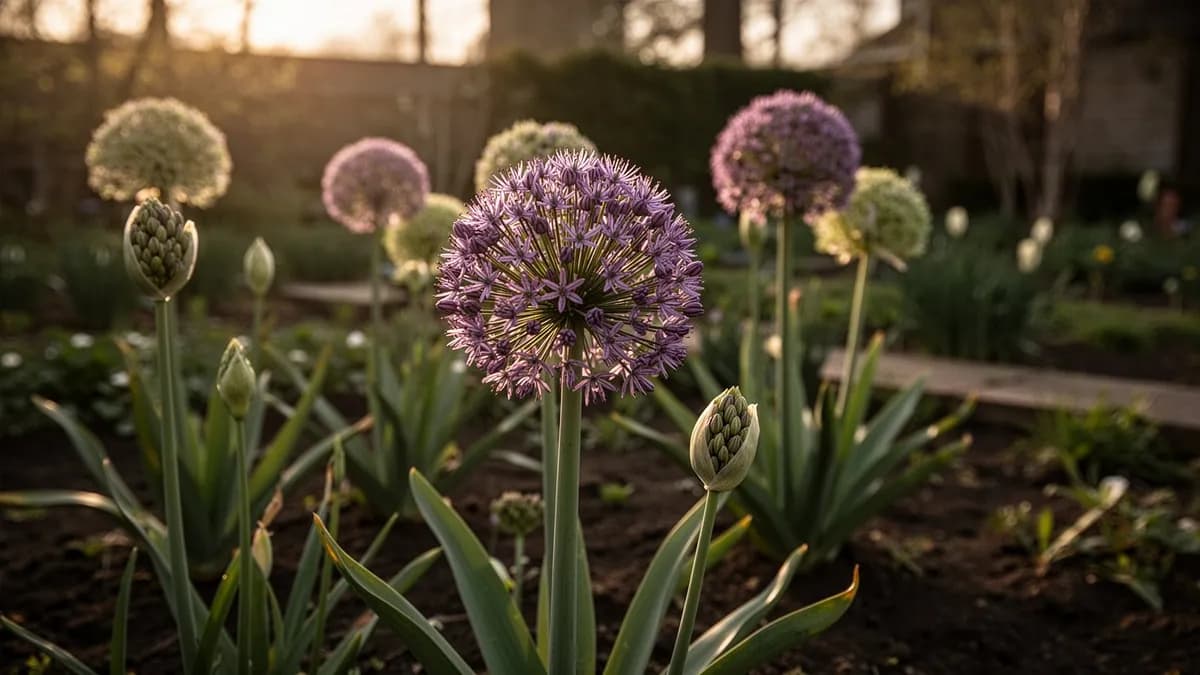
Brodiaea naturalizes beautifully with other California native bulbs such as calochortus and dichelostemma. Plant among low-growing Mediterranean herbs like thyme and oregano that share the same dry-summer preference. They look stunning emerging through gravel mulch alongside ornamental alliums and drought-tolerant grasses. Avoid pairing with moisture-loving perennials that require summer watering.
Ornamental Allium belongs beside it.
Old growers' knowledge, checked against Brodiaea's real companion table below — test any plant you're growing.
Try Brodiaea in a bed — right here
A real planner bed with Brodiaea already in it. Tap a companion to place it and watch the pairing checks answer — green for good neighbours, red for a clash.


Related growing guides
Feed it well
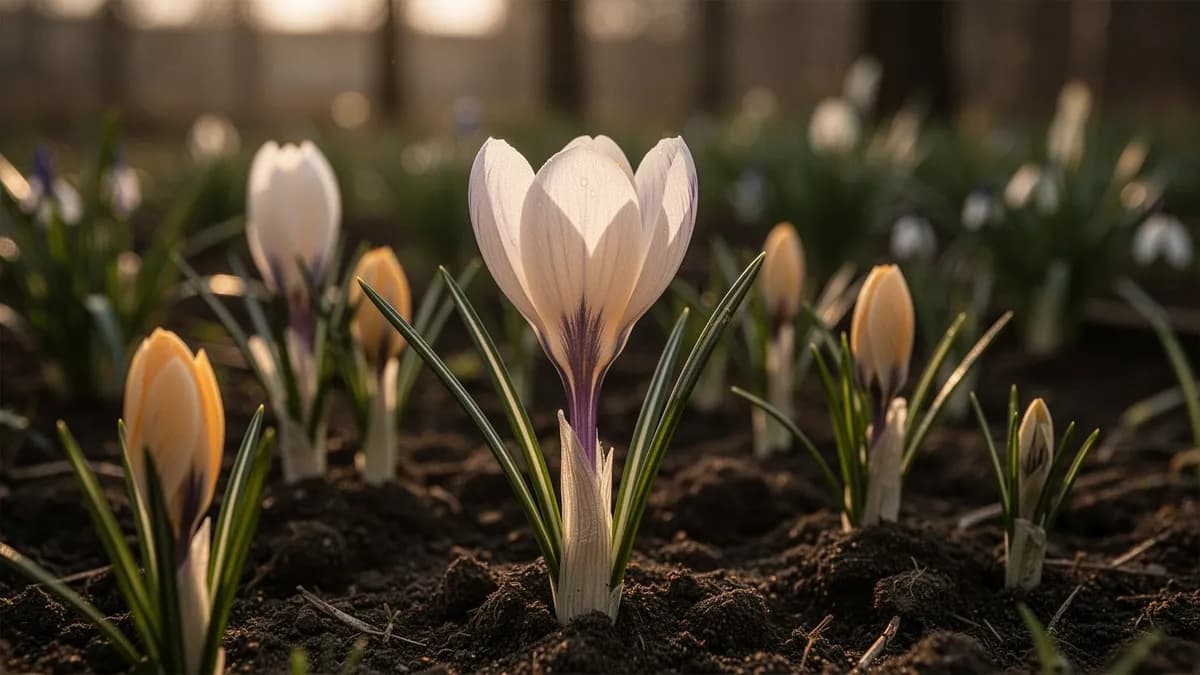
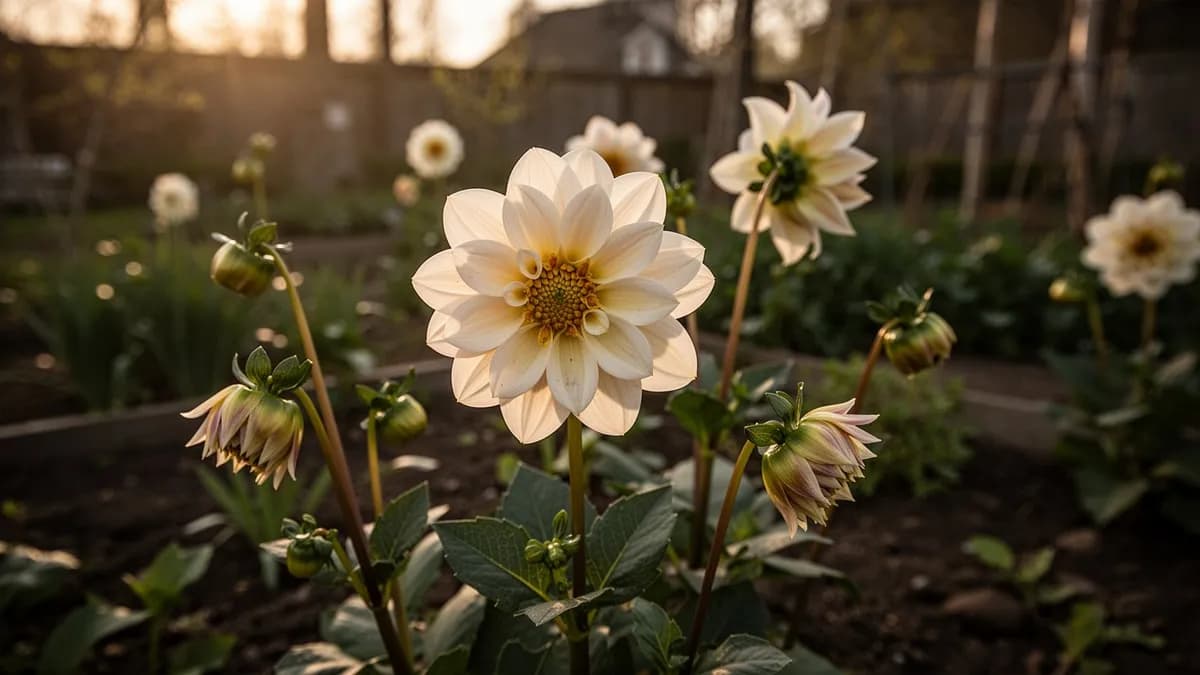
Brodiaea demands sharply drained, lean soil and actually performs better without rich amendments. Sandy or gravelly soil with a pH of 6.0 to 7.5 is ideal. Avoid adding compost or manure which retains too much moisture. A light dusting of bone meal at planting time provides sufficient phosphorus for root development. Do not fertilize during dormancy. In containers, use a gritty cactus mix or equal parts potting soil, perlite, and coarse sand.
Ideal Temperature
Hardiness Zone Compatibility
From seed to harvest, stage by stage
Winter Dormancy and Root Activation
Brodiaea corms rest dormant underground through autumn and early winter, protected by a fibrous outer tunic. As winter rains saturate the soil and temperatures drop below 10°C, the corms begin breaking dormancy. Fine feeder roots extend from the basal plate into the surrounding soil, absorbing moisture and nutrients in preparation for the rapid growth phase ahead. No above-ground growth is visible during this stage.
Leaf Emergence and Energy Gathering
In late winter to early spring, narrow grass-like basal leaves emerge from the soil, typically two to four per corm. These slender leaves, often 15-30 cm long, photosynthesize intensively during the cool, moist spring months to build up carbohydrate reserves in the corm below. The leaves resemble grass blades and can be easily overlooked in meadow settings. This vegetative phase is critical for corm enlargement and the production of daughter cormlets.
Foliage Senescence and Flower Stalk Development
In a pattern unusual among flowering plants, brodiaea leaves typically begin to yellow and wither before the flower stalk fully emerges. The plant redirects stored energy from the corm into producing a single wiry, leafless flower stalk (scape) that rises 15-50 cm above the ground. The developing flower buds are enclosed in papery bracts at the top of the scape. This separation of leaf and flower phases is an adaptation to California's Mediterranean climate, where spring moisture gives way to summer drought.
Flowering
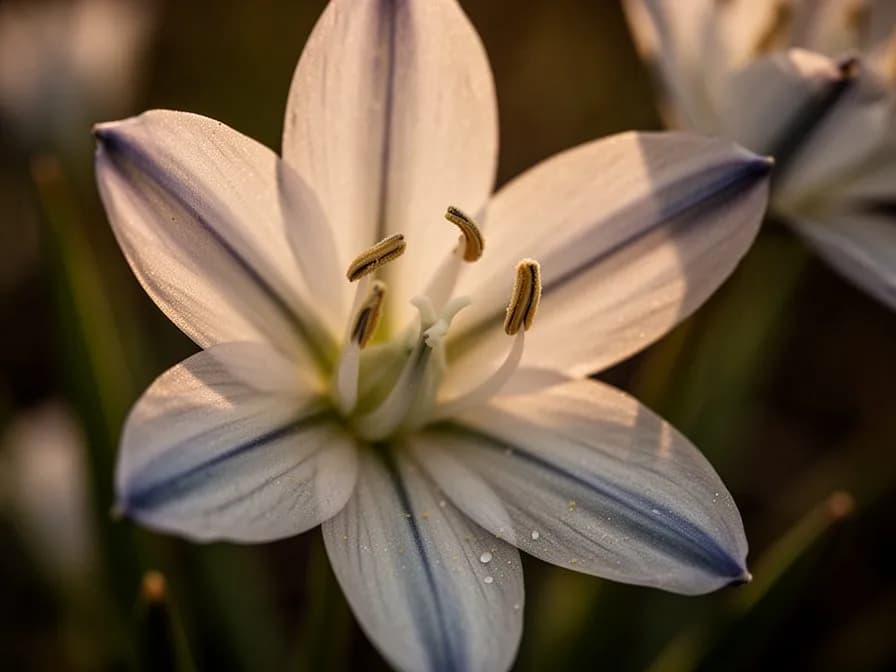
The flower stalk reaches its full height and the terminal umbel opens, revealing a loose cluster of 3 to 15 tubular flowers depending on species and corm vigor. Each flower has six violet-blue to purple tepals fused at the base into a funnel shape approximately 2-4 cm long. The flowers feature three fertile stamens alternating with three broad, petal-like staminodes — a distinctive feature of the Brodiaea genus. Flowers open progressively from the outside of the umbel inward over a period of one to three weeks, attracting native bees, butterflies, and other pollinators.
Seed Set and Capsule Maturation
Pollinated flowers develop into three-chambered seed capsules that gradually dry and turn papery brown as summer heat intensifies. Each capsule contains numerous small, angular black seeds. The flower stalk dries to a stiff, straw-colored structure that may persist upright for weeks, gradually splitting open to release seeds by wind and gravity. Meanwhile, underground, the mother corm has produced one or more daughter cormlets that will separate and grow independently in subsequent seasons.
Summer Dormancy
All above-ground plant material has withered and the corm enters a state of deep summer dormancy. The corm rests underground, protected by its fibrous tunic, through the hot, dry summer and early autumn months. This extended dormancy is a critical adaptation to the Mediterranean climate of western North America, where summer rainfall is negligible. The corm metabolizes slowly, maintaining its stored carbohydrate reserves until autumn rains trigger the next growth cycle. Daughter cormlets formed during the growing season are now independent structures ready to establish their own root systems.
Ensure the planting area receives natural rainfall or provide supplemental watering equivalent to 2-3 cm per week during winter if conditions are dry. Do not disturb the soil above dormant corms. Avoid applying heavy mulch directly over the corms, as brodiaea requires good air circulation at the soil surface and excessive moisture retention around the corm can promote fungal rot.
Caring for Brodiaea month by month
What to do each month for your Brodiaea
October
You are herePlant new corms as autumn rains begin. Set corms 8-10 cm deep and 8-10 cm apart in full sun with sharply drained soil. Water in lightly after planting to settle the soil. Underground, established corms are beginning to send out fine feeder roots in response to soil moisture and cooling temperatures.
Know exactly what to do in your garden — every month
One email at the start of each month: what to sow, plant, and tackle right now — for your Brodiaea and everything growing around it. Plus a short starter course that helps you dodge the classic mistakes.
- What to do, right now
- Matched to your season
- Starter course included
Harvesting Brodiaea
Brodiaea flowers can be cut for small arrangements when the first flowers in the cluster begin to open. Cut stems in the cool of morning and place immediately in water. The delicate violet-blue flowers last four to six days in a vase but are most appreciated in the garden where their natural, wildflower character shines. Allow foliage to die back naturally after flowering to replenish the corms for next year.
assuming you plant when the window opens — set your real date
From bulbs, tubers or cloves
Pick Brodiaea promptly and the plant keeps producing.
Storage & Preservation
Brodiaea corms are best left in the ground where conditions are favorable. In areas with wet summers, lift corms after foliage dies back and store in mesh bags with dry sand in a cool, dry location at 60 to 70 degrees Fahrenheit through summer. Replant in early autumn. Corms multiply slowly by offset production. Seed can be collected from dried capsules and stored dry for autumn sowing.
What goes wrong — and the fix
Gophers and Rodents
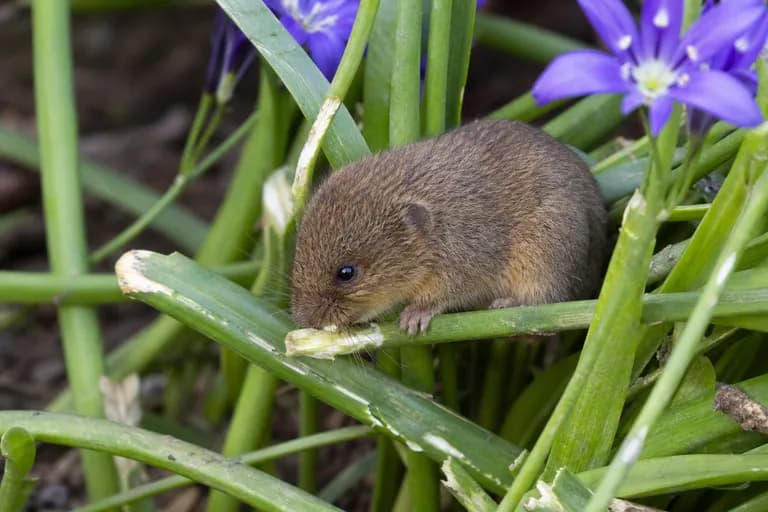
PestCorms disappear from the ground with no trace of foliage emerging in spring. Tunnel activity visible near planting areas.
Corm Rot
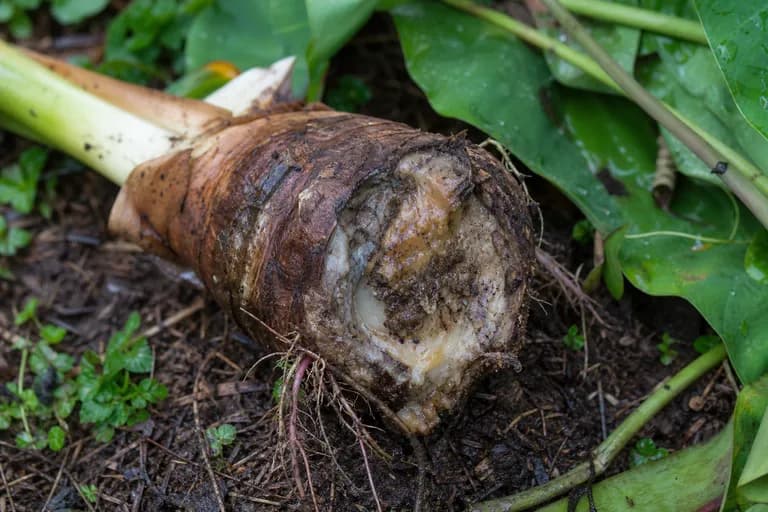
DiseaseSoft, mushy corms that smell foul when dug up. Foliage fails to emerge or yellows prematurely and collapses.
Troubleshooting Common Problems
The primary cause of failure with brodiaea is summer moisture reaching dormant corms, leading to rot. Overwatering during the growing season can also cause problems, as these corms prefer rainfall-level moisture rather than heavy irrigation. Rodent damage is significant in rural areas, and protective wire cages are often necessary. Plants may take a year to establish before flowering freely, so patience is needed after initial planting.
Growing Tips
- Plant brodiaea corms in autumn at a depth of 8-10 cm and spaced 8-10 cm apart in full sun with sharply drained soil. The single most important factor for success is drainage — brodiaea will not tolerate soggy soil, particularly during its summer dormancy period when wet conditions cause rapid corm rot.
- Choose a planting site that receives minimal or no summer irrigation. In garden settings, the best locations are raised beds, rock gardens, gravel strips along pathways, or dedicated dry meadow areas that are not on the same irrigation zone as thirsty summer plants.
- Brodiaea thrives in lean, mineral soils and does not require rich compost or heavy feeding. In fact, highly fertile soils promote competition from vigorous weeds and grasses that can overwhelm the small, slow-growing brodiaea foliage. A light annual top-dressing of decomposed granite or fine gravel is more beneficial than compost.
- Allow all foliage to die back naturally — never cut, mow, or tidy the grass-like leaves while they are still green. The brief spring foliage period is the only time the plant photosynthesizes and stores energy for the following year's bloom and corm development. Premature foliage removal leads to declining corm vigor and eventual death.
- Control invasive annual grasses aggressively in and around brodiaea colonies. European annual grasses such as wild oats and rye grass are the primary threat to brodiaea in both wild and garden settings, as they outcompete the slow-growing native for light, moisture, and nutrients during the critical spring growing window.
- Propagate brodiaea by dividing cormlets during summer dormancy in August or September. Lift dormant corms carefully with a garden fork, separate daughter cormlets from the mother corm, and replant immediately. Divisions establish and reach flowering size faster than seed-grown plants, typically blooming in their second year after division.
- Growing brodiaea from seed is rewarding but requires patience. Sow fresh seed in autumn in pots of gritty, free-draining mix and leave outdoors to experience natural winter cold stratification. Seedlings emerge in late winter as single thread-like leaves. Grow seedlings in pots for two full seasons before planting out, and expect the first flowers in year three or four from sowing.
- If gophers or voles are present in your garden, protect brodiaea corms by planting them inside wire mesh baskets made from half-inch hardware cloth. These underground rodents are highly attracted to the starchy corms and can devastate an entire colony in a single season if corms are unprotected.
- Combine brodiaea with other California native bulbs and wildflowers for a naturalistic, self-sustaining meadow garden. Excellent companions include California poppies, blue-eyed grass, native bunch grasses like purple needlegrass, and other Brodiaeaceae relatives such as Dichelostemma and Triteleia for a long succession of bloom from early spring through midsummer.
- Avoid the temptation to dig and store brodiaea corms over winter as you would with tender summer bulbs. Brodiaea corms need to remain in the ground year-round to complete their natural cycle of winter root growth, spring foliage, and summer dormancy. Lifting and storing disrupts this cycle and weakens the corms over time.
Grow your best Brodiaea yet — and everything around it.
Start a free plan today. Lay out your beds, drop in your Brodiaea, and let PlotMyGarden handle the timing, spacing, companions and reminders from seed to harvest basket.
Pick your Brodiaea
Queen Fabiola
The most widely available cultivar with deep violet-blue flowers on eighteen-inch stems, reliable and floriferous in well-drained conditions.
Corrina
A selection with particularly large flowers in rich purple-blue, excellent for naturalizing in dry grassland settings.
Brodiaea corms are rarely available commercially as a food product, making them essentially priceless in the marketplace — specialty foragers and Indigenous food suppliers occasionally offer them at premium prices of $30-60 per kilogram when available. A home colony of 50-100 corms, established from an initial investment of $40-80 in nursery-grown corms, can produce a self-sustaining and gradually expanding harvest within three to four years. Beyond their food value, brodiaea's ornamental worth is significant: cut stems of brodiaea flowers sell for $5-10 per bunch at farmers' markets, and established colonies provide reliable, zero-maintenance spring color year after year without the need to purchase and replant annual bulbs. The long-term cost savings come primarily from the plant's permanence — once established, a brodiaea colony requires no irrigation, no fertilizer, and no replanting, producing food and flowers indefinitely with minimal intervention.
Quick recipes
Roasted Brodiaea Corms with Herb Salt
30 minutesThe simplest and most traditional preparation for brodiaea corms — slow-roasting brings out their natural sweetness and produces a texture between a roasted chestnut and a small waxy potato. Indigenous peoples of California roasted corms directly in campfire coals, but a modern oven produces excellent results. The flavor is mild, nutty, and slightly sweet with an earthy undertone. Serve as a side dish or trail snack.
5 ingredientsBrodiaea Corm and Wild Mushroom Saute
25 minutesA seasonal foraged dish that pairs the starchy sweetness of brodiaea corms with the earthy depth of wild mushrooms. This recipe celebrates the flavors of the California landscape and works beautifully as a warm side dish alongside grilled meats or as a filling for savory tarts. Slice the corms thinly to ensure even cooking and a pleasant slightly crisp texture at the edges.
7 ingredientsMashed Brodiaea Corms with Roasted Garlic
40 minutesA smooth, creamy mash made from boiled brodiaea corms enriched with roasted garlic and butter. The result has a more delicate, slightly sweeter flavor than mashed potato with a silkier texture. This preparation transforms the humble wild corm into an elegant side dish and is an excellent way to use a large harvest. The mash pairs especially well with roasted poultry or braised lamb.
6 ingredientsWhat's inside
Health Benefits
- Brodiaea corms provide a sustained source of complex carbohydrates and dietary fiber, offering steady energy release without the rapid blood sugar spikes associated with refined starches — an important attribute that made them a dependable staple in traditional Indigenous diets
- The inulin-type fructans present in brodiaea corms function as prebiotic fiber, selectively feeding beneficial Bifidobacterium and Lactobacillus species in the gut and supporting improved digestive health, enhanced mineral absorption, and stronger immune function
- As a naturally low-sodium, potassium-rich food, brodiaea corms support cardiovascular health by helping maintain healthy blood pressure levels — the favorable sodium-to-potassium ratio is characteristic of unprocessed wild plant foods
- Brodiaea corms contain moderate levels of calcium and phosphorus in a bioavailable ratio, contributing to bone mineral density maintenance — nutrients that were especially critical in traditional diets lacking dairy products
- The high water content and low caloric density of brodiaea corms relative to grain-based starches make them a satiating food that supports healthy weight management when used as a starchy vegetable substitute in meals
- Traditional ethnobotanical records from several California Indigenous nations describe the use of brodiaea preparations for digestive complaints, suggesting the presence of bioactive compounds beyond basic macronutrients that may support gastrointestinal health
Where Brodiaea comes from
Brodiaea (Brodiaea elegans and related species) is native exclusively to western North America, with its center of diversity in California's Central Valley, Coast Ranges, and Sierra Nevada foothills. The genus encompasses approximately fifteen recognized species, all confined to the Pacific Coast from southern Oregon through Baja California. Brodiaea evolved in the unique Mediterranean climate of western North America, developing its characteristic growth cycle of winter root activity, spring foliage, late spring flowering, and prolonged summer dormancy as an adaptation to the region's pattern of cool wet winters and hot dry summers. Archaeological evidence demonstrates that brodiaea corms were a dietary staple for Indigenous peoples of California for at least eight thousand years. The Miwok, Pomo, Ohlone, Yokuts, Maidu, and numerous other nations harvested corms extensively using specialized hardwood digging sticks, and they actively managed brodiaea meadows through controlled autumn burning that reduced competing vegetation, recycled nutrients, and stimulated vigorous corm production the following season. This sophisticated land management created productive corm grounds that early European explorers mistook for naturally abundant meadows. Spanish missionaries in the eighteenth century documented Indigenous harvesting practices but largely displaced traditional land management as mission agriculture expanded. When Scottish botanist William Jackson Hooker formally described the genus in 1830, naming it after his colleague James Brodie of Brodie, much of the traditional ecological knowledge surrounding brodiaea cultivation was already being lost. During the California Gold Rush of 1849, miners and settlers adopted brodiaea corms as a trail food, roasting them over campfires. By the early twentieth century, intensive agriculture and urban expansion had destroyed vast areas of native California grassland, fragmenting many brodiaea populations. Today, several species including Brodiaea filifolia and Brodiaea pallida are listed under the federal Endangered Species Act. Conservation botanists and Indigenous land stewards are now collaborating to restore traditional burning practices and protect remaining brodiaea meadows. In the horticultural world, brodiaea has gained renewed appreciation as a low-maintenance, drought-adapted native bulb suitable for meadow gardens, restoration plantings, and waterwise landscapes throughout Mediterranean and summer-dry climates worldwide.
Brodiaea: did you know?
Fascinating facts about Brodiaea
Brodiaea corms were one of the most important wild plant foods for Indigenous peoples of California, including the Miwok, Pomo, Ohlone, and Yokuts nations, who managed brodiaea meadows through controlled burning and selective harvesting with hardwood digging sticks for thousands of years before European contact.
Brodiaea questions, answered
When should I plant Brodiaea?
What are good companion plants for Brodiaea?
What hardiness zones can Brodiaea grow in?
How much sun does Brodiaea need?
How far apart should I space Brodiaea?
What pests and diseases affect Brodiaea?
How do I store Brodiaea after harvest?
What are the best Brodiaea varieties to grow?
What soil does Brodiaea need?
Are brodiaea corms safe to eat, and how should they be prepared?
What is the difference between Brodiaea, Triteleia, and Dichelostemma?
Can I grow brodiaea outside of California or the western United States?
How deep should I plant brodiaea corms, and when is the best time?
Why did my brodiaea fail to flower this year even though the leaves appeared?
Is it ethical to harvest brodiaea corms from the wild?
You just read the theory. Now grow it on autopilot.
Everything that makes Brodiaea fiddly — the timing, the spacing, the companions, the harvest window — is exactly what PlotMyGarden handles for you, for every plant in your garden.
A plan that knows your weather
Set your location once. Get sow, feed and harvest dates built around your real last-frost date and live forecast — no more guessing from a generic seed packet.
From the “When to plant” sectionDrag-and-drop bed planner
Design beds on a grid. Every plant snaps to its proper spacing, and you can see your whole season laid out before you spend a cent on seed.
From the “Growing guide” sectionCompanion conflicts, caught early
200+ good-and-bad pairings checked live as you plant — so a season-wrecking mistake never makes it into the ground.
From the “Companions” sectionReminders you'll actually act on
“Water the beans.” “Pick today before it turns.” Timely, specific, and tied to the plants you're really growing.
From the “Harvest” sectionSuccession, scheduled
Want a harvest for six weeks, not six days? It spaces your sowings automatically and reminds you when each new block is due.
From the “When to plant” sectionA record that gets smarter
Every harvest you log teaches it your garden. Next year's plan starts from what actually worked in your soil, not a textbook's.
From the “Overview” sectionPlant these alongside Brodiaea
More Bulbs
Grow your best Brodiaea yet — and everything around it.
Start a free plan today. Lay out your beds, drop in your Brodiaea, and let PlotMyGarden handle the timing, spacing, companions and reminders from seed to harvest basket.