Bleeding Heart
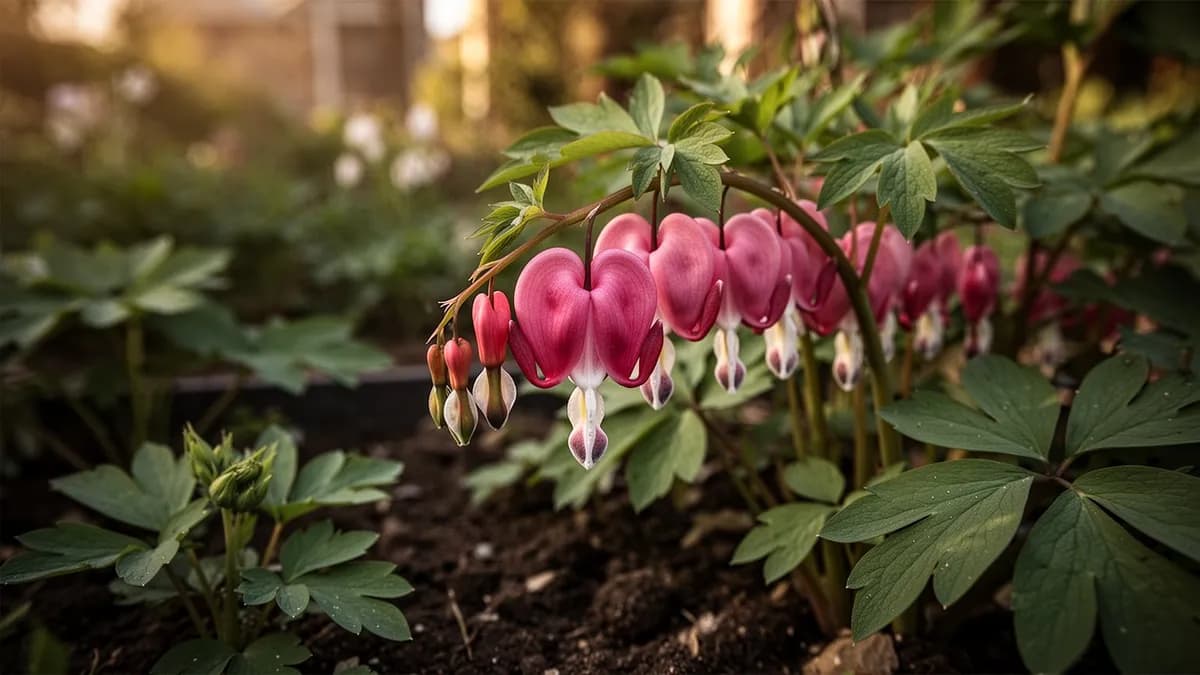
A beloved shade perennial with arching sprays of heart-shaped pink or white flowers that bloom in spring.





On this pageOverview
Meet Bleeding Heart
A beloved shade perennial with arching sprays of heart-shaped pink or white flowers that bloom in spring. Bleeding hearts go dormant in summer heat, so plant with hostas or ferns that will fill the gap left by their disappearing foliage. They prefer cool, moist, humus-rich soil and are long-lived once established.
When to plant Bleeding Heart
Bleeding heart seeds require cold stratification for reliable germination. Collect seed from ripe pods in summer and sow immediately in pots, leaving them outdoors over winter for natural stratification, or refrigerate in moist sand for 6 weeks before spring sowing. Germination is slow and erratic, taking 1-6 months. Division is far easier—lift and divide established clumps in early spring just as the pink shoots emerge, cutting the brittle root crown into sections with at least two growing points each. Replant immediately and water well.
Your Bleeding Heart Year
Composed for Zone 7 · typical seasons · frost passes Apr 2, returns Nov 1
Plant Bleeding Heart Mar – Apr, Sep, pick Apr – Jun. Check the planting methods below and set your climate to personalize these windows.
How to grow Bleeding Heart
Bleeding heart is a quintessential shade garden perennial that has enchanted gardeners for centuries with its arching racemes of pendulous, heart-shaped flowers. Native to Siberia, northern China, Korea, and Japan, this elegant plant grows 60-90cm tall and wide, with deeply cut blue-green foliage that creates a graceful mound beneath the dangling flower chains.
Plant in spring or early autumn in a sheltered, shaded position with cool, moist, humus-rich soil. Bleeding heart thrives in the dappled light of deciduous trees and shrubs, receiving morning sun but protection from hot afternoon exposure. Dig in generous amounts of leaf mold, compost, or well-rotted manure before planting, as the plant demands consistently moist, fertile soil to perform well.
Bleeding heart enters dormancy in summer as temperatures rise, with foliage yellowing and dying back completely by midsummer. This is entirely normal and not a sign of distress. Plan for this by interplanting with later-emerging companions like hostas, ferns, and astilbe that will expand to fill the gap. Mark the planting location to avoid accidentally digging into the dormant root crown during summer or autumn garden work.
8 plants fit a 4 × 8 ft bed
Each Bleeding Heart wants 60 cm of elbow room. The planner keeps that spacing for you — every plant, every bed.
Bleeding Heart's best neighbours
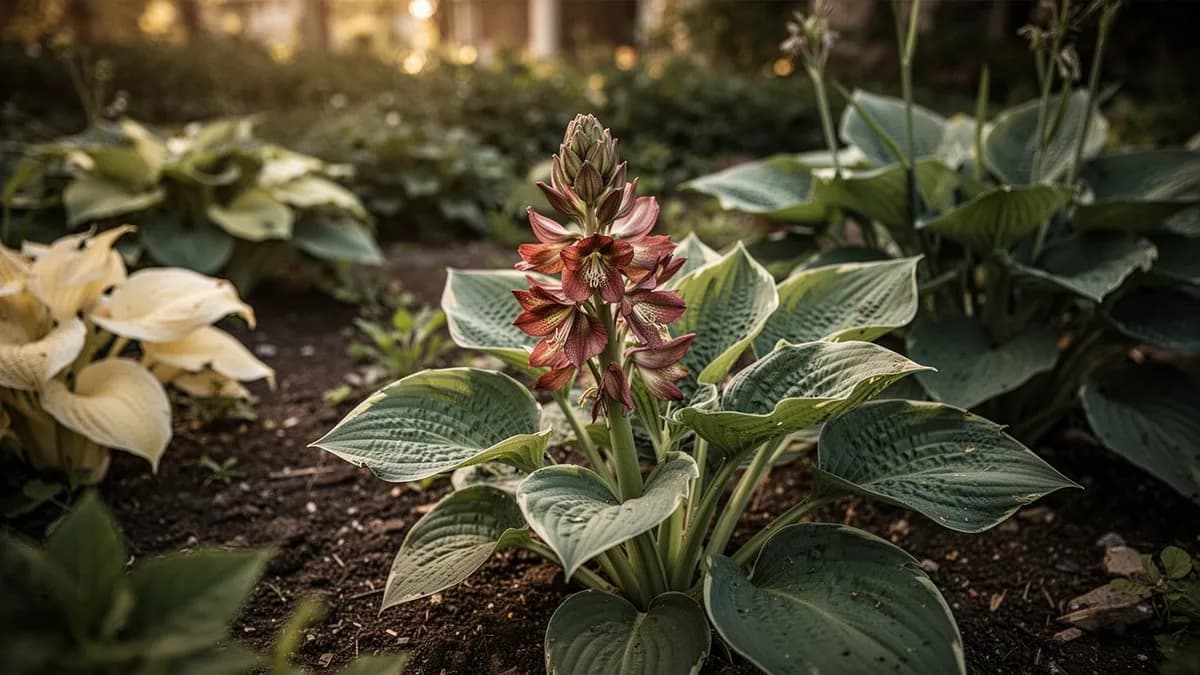
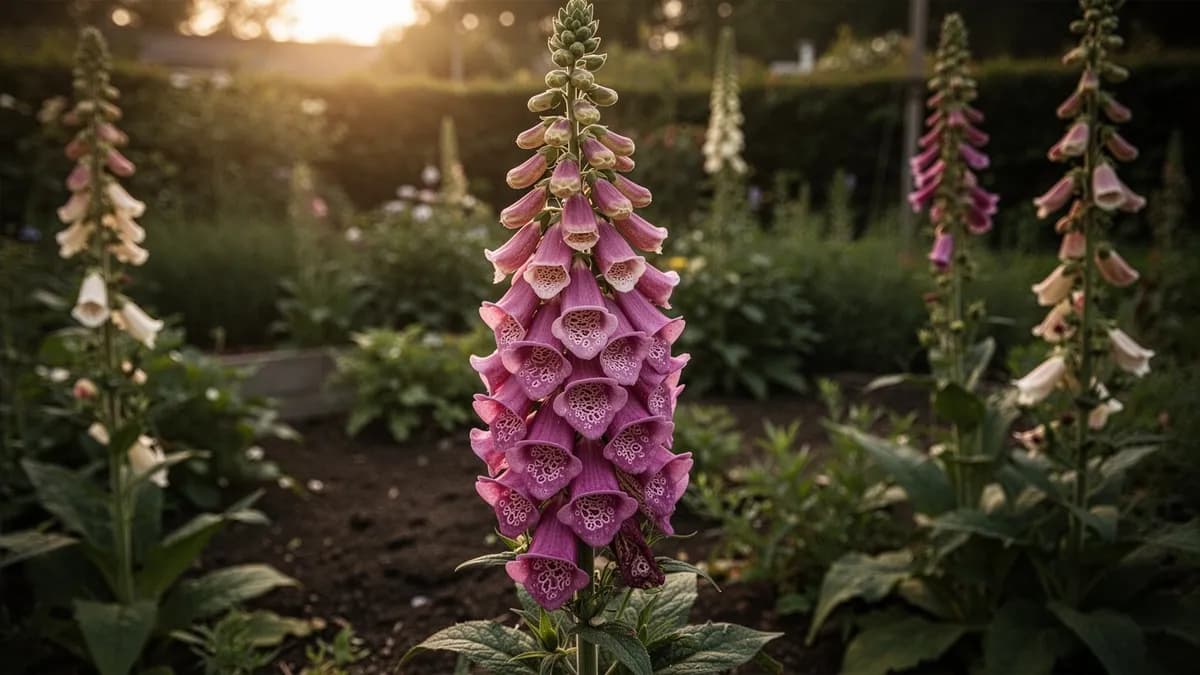
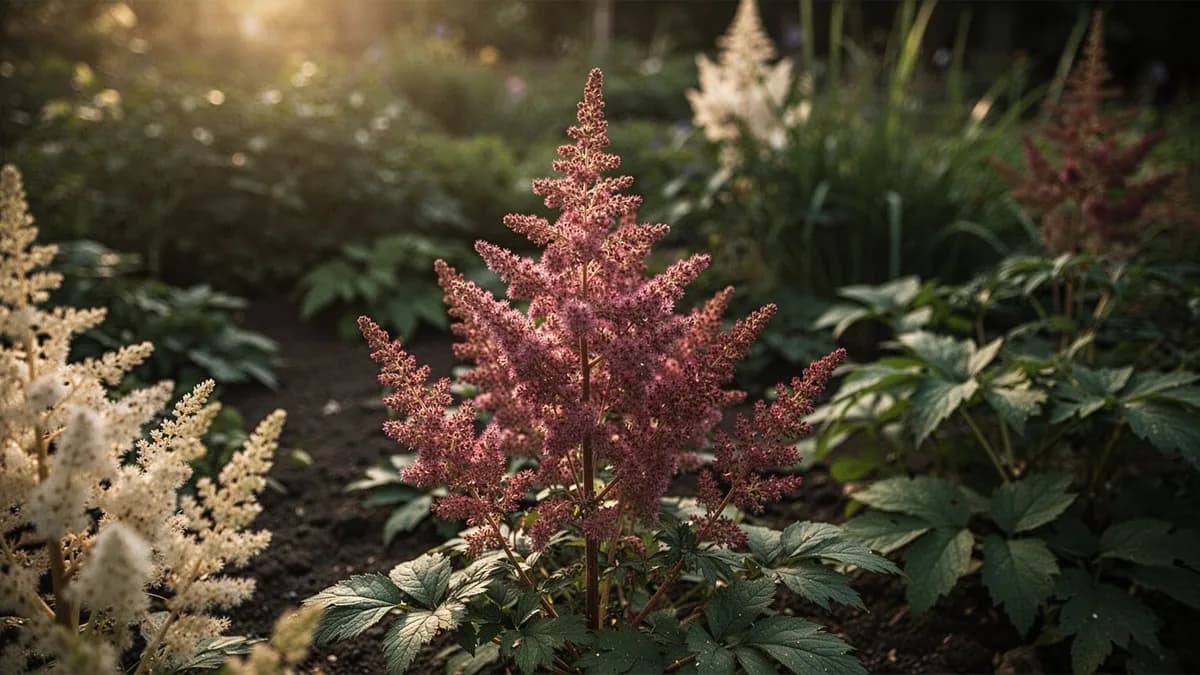
Bleeding heart is the quintessential companion for hostas, ferns, and astilbe in the shade garden. As it goes dormant in summer, partner with plants that fill the void: hostas, Japanese painted ferns, and brunnera expand to cover the bare space. Underplant with spring bulbs like scilla and snowdrops that bloom before the bleeding heart emerges. The combination of bleeding hearts, hellebores, and epimediums creates year-round shade garden interest.
Hosta belongs beside it.
Old growers' knowledge, checked against Bleeding Heart's real companion table below — test any plant you're growing.
Try Bleeding Heart in a bed — right here
A real planner bed with Bleeding Heart already in it. Tap a companion to place it and watch the pairing checks answer — green for good neighbours, red for a clash.


Related growing guides
Feed it well
Bleeding heart requires humus-rich, consistently moist but well-drained soil with a pH of 6.0-7.0. Amend planting areas generously with leaf mold, compost, or well-rotted manure to create the woodland floor conditions the plant craves. Mulch annually with a 5-8cm layer of organic material to conserve moisture and keep roots cool. Feed in early spring with a balanced slow-release fertilizer as new growth emerges. Avoid heavy clay that stays waterlogged, which causes root rot, and sandy soils that dry out quickly.
Ideal Temperature
Hardiness Zone Compatibility
From seed to harvest, stage by stage
Dormancy & Root Establishment
Bleeding heart roots are planted in autumn or early spring while the plant is dormant. Bare-root crowns should be placed 2-3 cm below the soil surface with the growing points facing upward. The fleshy, brittle roots begin establishing in cool, moist soil well before any top growth appears. This underground establishment period is critical for the plant's long-term health and vigor.
Spring Shoot Emergence
As soil temperatures rise above 4°C in early spring, distinctive reddish-pink shoots push through the soil surface. These early shoots are surprisingly frost-tolerant but can be damaged by severe late freezes. The shoots rapidly elongate and begin unfurling their characteristic finely divided, blue-green compound leaves. Plants may emerge as early as February in mild climates or as late as April in colder zones.
Vegetative Growth & Foliage Development
The plant rapidly develops its full canopy of deeply lobed, fern-like foliage. Stems are hollow, succulent, and somewhat brittle. A mature clump can reach 60-90 cm tall and equally wide during this stage. The blue-green compound leaves are ternately divided, giving the plant an airy, graceful appearance. Flower buds begin forming at the tips of arching stems.
Flowering
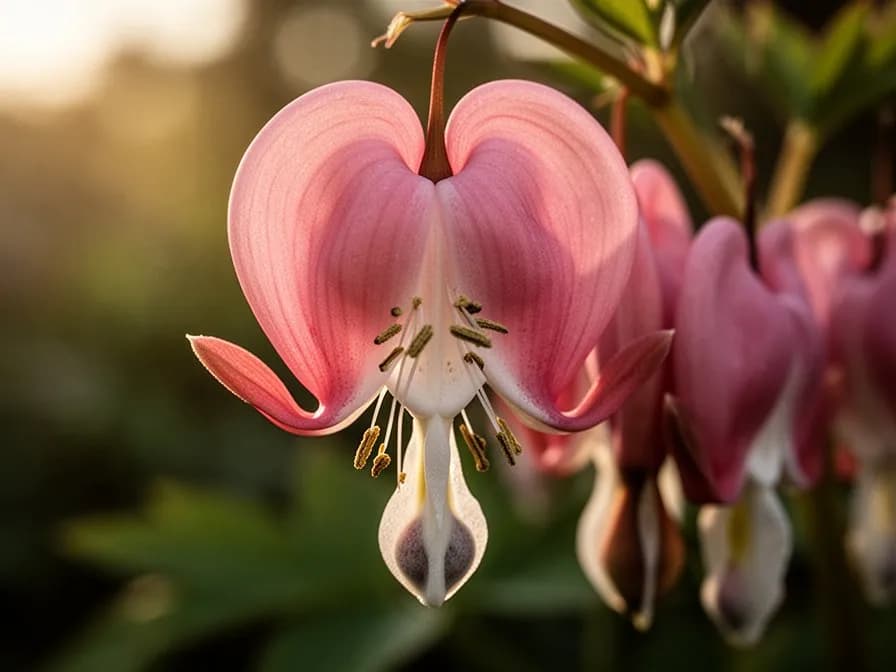
The main flowering display occurs from mid-spring to early summer, typically lasting 4-6 weeks. Gracefully arching racemes bear 5-15 pendant, heart-shaped flowers in pink, rose, or white depending on the cultivar. Each flower is approximately 2-3 cm long with two outer petals forming the heart shape and two inner petals that protrude at the base. Flowers open sequentially from the base of the raceme to the tip, extending the display period. Pollination is primarily by long-tongued bumblebees.
Seed Set & Foliage Decline
After flowering, elongated seed pods develop and swell. Seeds are shiny, black, and bear a fleshy appendage called an elaiosome that attracts ants, which disperse the seeds. As summer heat intensifies, the foliage begins to yellow and wither. This summer dormancy is completely normal and not a sign of disease. The entire above-ground portion of the plant may disappear by mid to late summer, especially in warmer climates or full sun positions.
Summer Dormancy
The plant enters a period of complete summer dormancy where no above-ground growth is visible. Below the surface, the fleshy root system remains alive and slowly stores energy reserves for the following spring. This dormancy is a natural adaptation to avoid the heat and drought stress of summer in its native East Asian woodland habitats. The empty space left by the dormant plant can be filled by companion plants.
Autumn Root Growth & Preparation
As temperatures cool in autumn, the root system enters a period of renewed activity. New root growth extends outward from the crown, and the plant begins developing the buds that will produce the following spring's shoots. This underground preparation phase is fueled by the carbohydrate reserves accumulated during the previous growing season. A period of winter chill is essential for proper bud development and vigorous spring emergence.
Handle the brittle roots carefully during planting as they snap easily. Water thoroughly after planting and apply a 5-7 cm layer of organic mulch to maintain consistent soil moisture and moderate temperature.
Caring for Bleeding Heart month by month
What to do each month for your Bleeding Heart
October
You are herePlant new bare-root crowns or transplant divisions. Water newly planted specimens thoroughly and mulch generously. Existing plants benefit from a light top-dressing of compost as a gentle autumn feed. Clean up any remaining dead foliage from the surface.
Know exactly what to do in your garden — every month
One email at the start of each month: what to sow, plant, and tackle right now — for your Bleeding Heart and everything growing around it. Plus a short starter course that helps you dodge the classic mistakes.
- What to do, right now
- Matched to your season
- Starter course included
Harvesting Bleeding Heart
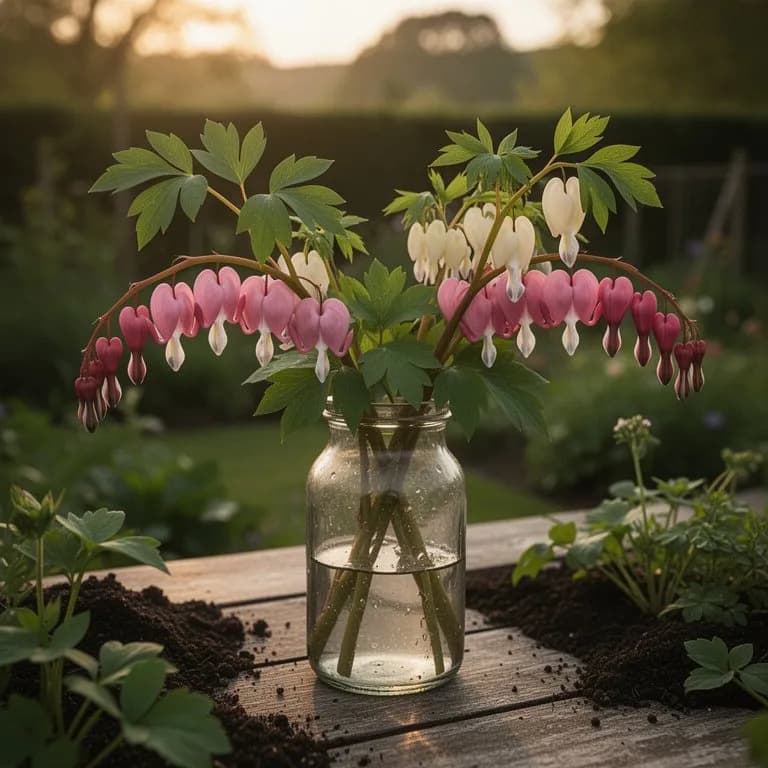
Bleeding heart flowers make charming, if short-lived, cut flowers. Cut stems when the lowest flowers on the raceme are fully open and the upper ones are still in bud. Cut in the morning and place immediately in lukewarm water. The flowers last 3-5 days in a vase. For garden display, deadheading is not strictly necessary as the plant will go dormant regardless, but removing spent flower stems keeps the garden looking tidy during the bloom period.
assuming you plant when the window opens — set your real date
Pick Bleeding Heart promptly and the plant keeps producing.
Storage & Preservation
Bleeding heart flowers can be pressed between heavy books for use in craft projects and botanical art—the heart shape makes them particularly popular for pressed flower arrangements. Individual flowers can be preserved in silica gel for three-dimensional dried arrangements. The plant is not used for culinary or medicinal purposes as all parts are toxic if ingested. For garden preservation, divide established clumps in early spring as growth emerges or in early autumn, replanting divisions immediately.
What goes wrong — and the fix
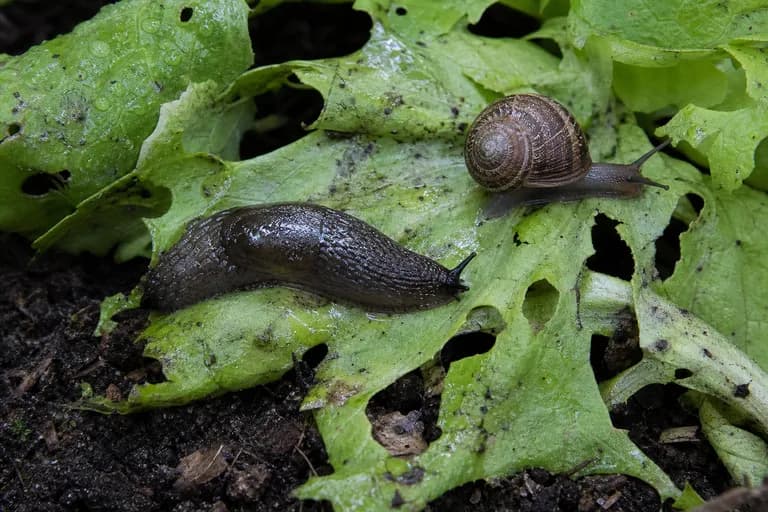
Slugs and Snails
PestRagged holes in the tender emerging spring foliage and slimy trails on leaves and soil around the plant.
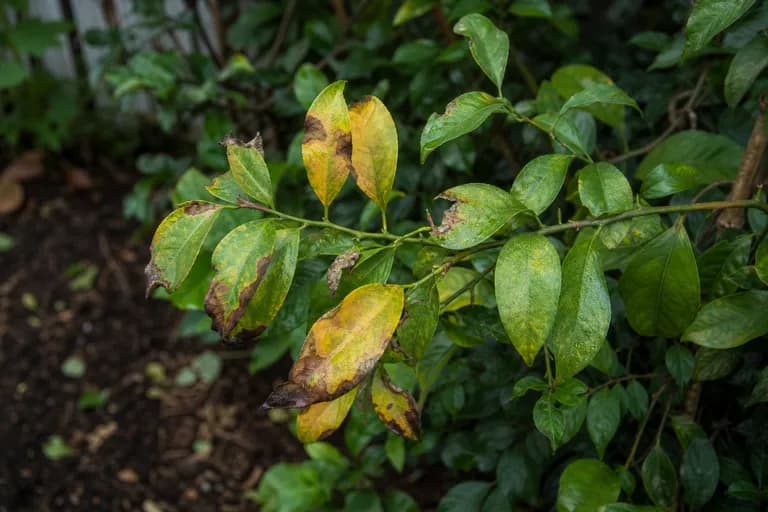
Verticillium Wilt
DiseaseSudden wilting of individual stems or the whole plant, with brown streaking visible in cut stem cross-sections. Often occurs during warm weather.
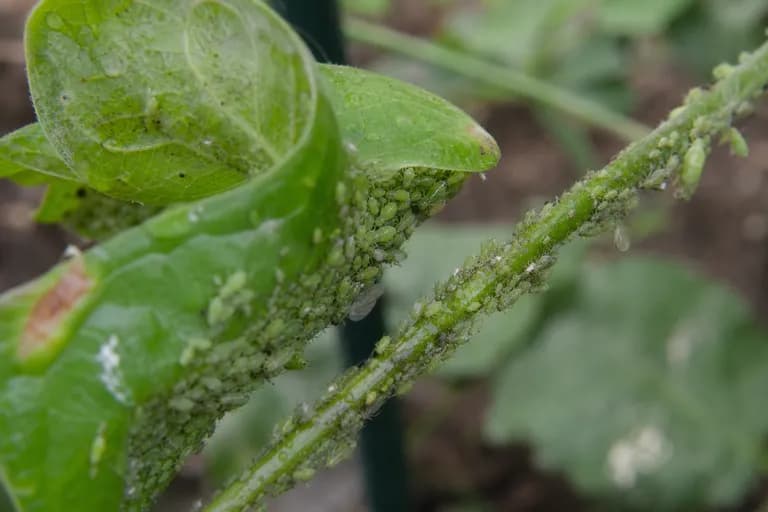
Aphids
PestClusters of small green insects on flower stems and tender new growth in spring. Distorted buds and sticky honeydew.
Troubleshooting Common Problems
The most common concern is the summer dormancy—new gardeners often assume the plant has died when foliage disappears in July. This is completely normal. Failure to bloom usually indicates too little light (deep shade reduces flowering) or recent transplanting (plants need a year to settle). Floppy growth results from too much shade or rich soil; provide some morning sun for sturdier stems. All parts of the plant are toxic to humans and pets if ingested, so site away from areas frequented by children and animals.
Growing Tips
- Plant bleeding heart in partial to full shade with rich, humus-laden soil that stays consistently moist but drains well — soggy soil causes root rot while dry soil triggers premature dormancy
- Amend heavy clay soils generously with aged compost, leaf mold, or well-rotted bark to improve drainage and create the loose, woodland-floor texture that bleeding heart roots prefer
- Space plants 60-75 cm apart to allow for mature spread, and position them where later-emerging companions like hostas and ferns will fill the gap when foliage dies back in summer
- Apply a 5-7 cm mulch layer of shredded leaves or bark in spring and replenish in autumn to maintain soil moisture, moderate root zone temperature, and suppress weeds around the shallow crown
- Water deeply once or twice per week during active growth rather than frequent shallow watering — consistent moisture extends the blooming period and delays summer dormancy by several weeks
- Avoid high-nitrogen fertilizers which promote leggy, weak growth prone to flopping — instead, top-dress with aged compost or apply a balanced slow-release organic fertilizer in early spring
- Always wear gloves when handling bleeding heart as the sap contains alkaloids that can cause contact dermatitis, and wash tools thoroughly after pruning or dividing plants
- Divide overgrown clumps every 3-5 years in early autumn or very early spring by carefully lifting the crown and separating it into sections with at least 2-3 growth buds each
- Protect emerging spring shoots from slugs and snails by using iron phosphate bait, copper tape barriers, or beer traps placed near the crown in early spring when new growth appears
- If growing from seed, fresh seeds require a warm stratification period of 6 weeks followed by 6-8 weeks of cold stratification at 1-4°C before sowing — germination is slow and erratic even under ideal conditions
Grow your best Bleeding Heart yet — and everything around it.
Start a free plan today. Lay out your beds, drop in your Bleeding Heart, and let PlotMyGarden handle the timing, spacing, companions and reminders from seed to harvest basket.
Pick your Bleeding Heart
Lamprocapnos spectabilis 'Alba'
The classic white-flowered form with pure white hearts on arching stems, creating an ethereal effect in the shade garden.
Lamprocapnos spectabilis 'Gold Heart'
A striking variety with golden-yellow foliage that provides a luminous backdrop for the traditional pink and white flowers.
Lamprocapnos spectabilis 'Valentine'
A newer selection with deep cherry-red flowers that are showier and more intensely colored than the species.
Dicentra eximia (Fringed Bleeding Heart)
A North American native species that blooms intermittently all summer and doesn't go dormant, with finely cut fern-like foliage.
Bleeding heart is a long-lived perennial that, once established, returns reliably for 10-20 years or more with minimal care. A single potted plant costing $8-15 can be divided every 3-5 years to produce multiple new plants, each of which would cost the same amount at a nursery. A mature clump can yield 4-6 divisions, effectively multiplying your initial investment several times over. Because the plant goes dormant in summer, it has very low water requirements compared to annuals and summer-blooming perennials, reducing irrigation costs. Its shade tolerance means it thrives in garden spots where many other ornamentals would fail, adding significant aesthetic and property value to otherwise underutilized areas.
Quick recipes
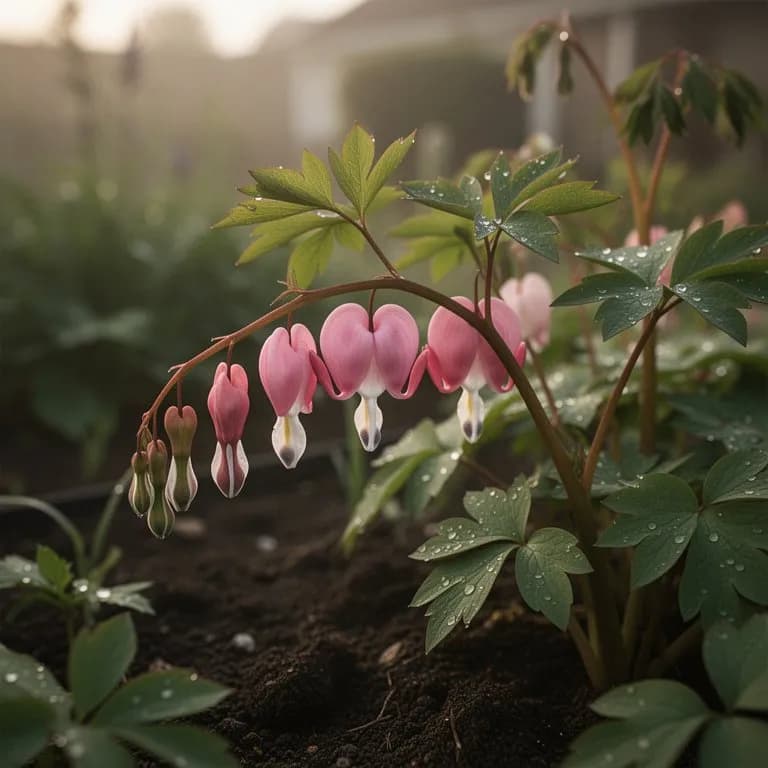
Pressed Bleeding Heart Flower Art
15 minutes active, 2-3 weeks pressingWARNING: Bleeding heart is toxic — this is a decorative craft only, not a food recipe. Create beautiful botanical art by pressing the distinctive heart-shaped flowers between sheets of parchment paper in a heavy book or flower press. The pressed flowers retain their shape remarkably well and can be used in framed artwork, greeting cards, or bookmarks. Always wear gloves when handling the flowers to avoid skin irritation from the alkaloid-containing sap.
4 ingredientsBleeding Heart Cut Flower Arrangement
20 minutesWARNING: Bleeding heart is toxic — this is for display only, not consumption. Harvest arching stems of bleeding heart early in the morning when flowers are fully hydrated. Cut stems at a 45-degree angle and immediately place in lukewarm water with floral preservative. The arching sprays of heart-shaped flowers create an elegant, romantic arrangement. Blooms typically last 5-7 days in a vase. Always wear gloves and wash hands thoroughly after handling. Keep arrangements out of reach of children and pets.
4 ingredientsBleeding Heart Propagation by Root Cuttings
30 minutesWARNING: Bleeding heart is toxic — wear gloves throughout this process. Propagate new plants from root cuttings taken in late autumn or early spring while the plant is dormant. Carefully lift an established clump and cut 5-8 cm sections of the thick, fleshy roots. Plant these sections horizontally about 2 cm deep in pots filled with moist, well-draining seed-starting mix. Place in a cold frame or sheltered outdoor spot. New shoots should emerge within 4-8 weeks in spring. This method produces exact clones of the parent plant.
4 ingredientsWhat's inside
Health Benefits
- TOXIC PLANT WARNING: Bleeding heart contains isoquinoline alkaloids and must never be ingested — it has no safe health benefits from consumption
- Historically used in very small doses in traditional Chinese and Korean herbal medicine, but self-medication is extremely dangerous and strongly discouraged
- The presence of bleeding heart in shade gardens supports pollinator health by providing early-season nectar for long-tongued bumblebees when few other food sources are available
- Gardening with bleeding heart and other shade perennials provides documented mental health benefits including stress reduction, improved mood, and enhanced cognitive function
- The plant's beautiful spring display contributes to biophilic design in home landscapes, which research links to lower blood pressure and reduced anxiety
- Growing ornamental plants like bleeding heart encourages time spent outdoors in nature, which is associated with improved immune function and overall well-being
Where Bleeding Heart comes from
Bleeding heart (Lamprocapnos spectabilis) is native to the temperate woodlands of eastern Asia, including Siberia, northern China, Korea, and Japan, where it grows naturally in moist, shaded forest understories and along rocky stream banks at elevations between 300 and 2400 meters. The plant has been cultivated in Chinese and Japanese gardens for centuries, valued for its elegant arching form and distinctive heart-shaped flowers. Western botanical science first encountered the species through dried herbarium specimens collected in the early 19th century, but living plants did not reach European gardens until 1846, when the renowned Scottish plant hunter Robert Fortune collected specimens during his travels through China on behalf of the Royal Horticultural Society. Fortune shipped the plants back to England, where they were first grown at the Chiswick gardens of the RHS and quickly became a horticultural sensation. The species was formally described and named Dicentra spectabilis by the German botanist Carl Friedrich Meissner, with the epithet 'spectabilis' meaning showy or spectacular. By the 1850s, bleeding heart had spread rapidly throughout European and North American gardens, becoming one of the most beloved shade perennials in the temperate world. In 1997, molecular phylogenetic studies by Magnus Lidén and colleagues demonstrated that the species was sufficiently distinct from other Dicentra to warrant its own genus, leading to the reclassification as Lamprocapnos spectabilis. Throughout its cultivated history, relatively few cultivars have been developed compared to other popular perennials, with the white-flowered 'Alba' and the golden-leaved 'Gold Heart' being among the most notable selections. The plant remains a staple of woodland and shade gardens worldwide, cherished for its graceful habit and fleeting but spectacular spring display.
Bleeding Heart: did you know?
Fascinating facts about Bleeding Heart
The genus name Lamprocapnos comes from the Greek words 'lampros' meaning brilliant and 'kapnos' meaning smoke, a poetic reference to the plant's translucent, luminous flowers.
Bleeding Heart questions, answered
When should I plant Bleeding Heart?
What are good companion plants for Bleeding Heart?
What hardiness zones can Bleeding Heart grow in?
How much sun does Bleeding Heart need?
How far apart should I space Bleeding Heart?
What pests and diseases affect Bleeding Heart?
How do I store Bleeding Heart after harvest?
What are the best Bleeding Heart varieties to grow?
What soil does Bleeding Heart need?
Is bleeding heart poisonous to people and pets?
Why does my bleeding heart die back and disappear in summer?
Can I grow bleeding heart in full sun?
How do I propagate bleeding heart?
What are the best companion plants for bleeding heart?
How long do bleeding heart plants live?
You just read the theory. Now grow it on autopilot.
Everything that makes Bleeding Heart fiddly — the timing, the spacing, the companions, the harvest window — is exactly what PlotMyGarden handles for you, for every plant in your garden.
A plan that knows your weather
Set your location once. Get sow, feed and harvest dates built around your real last-frost date and live forecast — no more guessing from a generic seed packet.
From the “When to plant” sectionDrag-and-drop bed planner
Design beds on a grid. Every plant snaps to its proper spacing, and you can see your whole season laid out before you spend a cent on seed.
From the “Growing guide” sectionCompanion conflicts, caught early
200+ good-and-bad pairings checked live as you plant — so a season-wrecking mistake never makes it into the ground.
From the “Companions” sectionReminders you'll actually act on
“Water the beans.” “Pick today before it turns.” Timely, specific, and tied to the plants you're really growing.
From the “Harvest” sectionSuccession, scheduled
Want a harvest for six weeks, not six days? It spaces your sowings automatically and reminds you when each new block is due.
From the “When to plant” sectionA record that gets smarter
Every harvest you log teaches it your garden. Next year's plan starts from what actually worked in your soil, not a textbook's.
From the “Overview” sectionPlant these alongside Bleeding Heart
More Perennials
Grow your best Bleeding Heart yet — and everything around it.
Start a free plan today. Lay out your beds, drop in your Bleeding Heart, and let PlotMyGarden handle the timing, spacing, companions and reminders from seed to harvest basket.