Westindischer Lorbeer
Ein tropischer Baum, dessen aromatische Blätter das ätherische Öl liefern, das für Bay-Rum-Kölnischwasser und die karibische Küche verwendet wird.





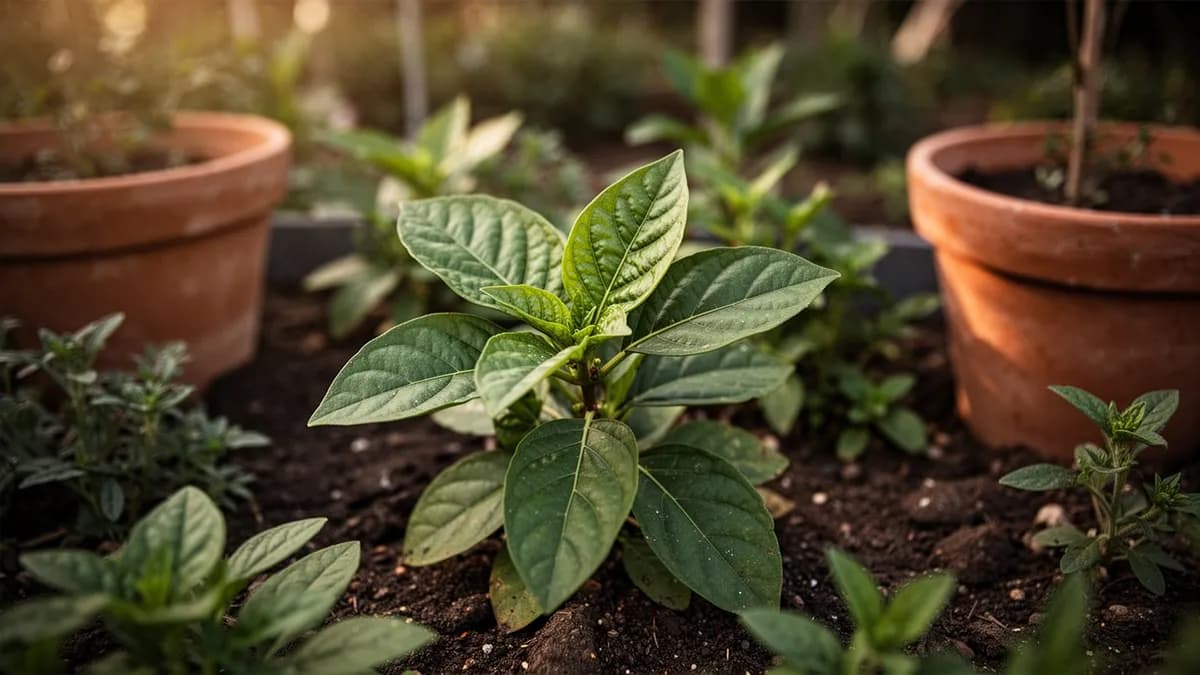
Auf dieser SeiteÜberblick
Westindischer Lorbeer im Überblick
Ein tropischer Baum, dessen aromatische Blätter das ätherische Öl liefern, das für Bay-Rum-Kölnischwasser und die karibische Küche verwendet wird. Nicht zu verwechseln mit dem mediterranen Lorbeer – die Blätter haben ein würziges, nelkenartiges Aroma. Nur in frostfreien tropischen Klimazonen oder als Kübelpflanze in gemäßigten Regionen kultivierbar.
Wann Westindischer Lorbeer pflanzen
Der westindische Lorbeer wird am häufigsten durch halbverholzte Stecklinge vermehrt und nicht durch Samen, da Samen unregelmäßig keimen und langsam wachsen. Um aus Samen zu züchten, frische Beeren ernten, wenn sie dunkel-violett-schwarz werden, die fleischige Außenhülle entfernen und Samen sofort pflanzen, da die Keimfähigkeit beim Trocknen schnell abnimmt. Samen einen halben Zentimeter tief in feuchte, gut durchlässige Anzuchterde säen und Temperaturen von 24–29 °C aufrechterhalten. Die Keimung dauert 4–8 Wochen. Für die Stecklingsanzucht im Spätsommer 15 cm lange halbverholzte Stecklinge nehmen, in Bewurzelungshormon tauchen und in eine warme, feuchte Vermehrungskammer mit Bodenheizung einsetzen.
Dein Westindischer Lorbeer-Jahr
Abgestimmt auf Zone 7 · typische Saison · Frost geht um den 2. Apr. und kehrt um den 1. Nov. zurück
Westindischer Lorbeer Apr – Mai pflanzen, Jan – Dez ernten. Beachte die Pflanzmethoden unten und wähle dein Klima für passende Zeiträume.
So baust du Westindischer Lorbeer an
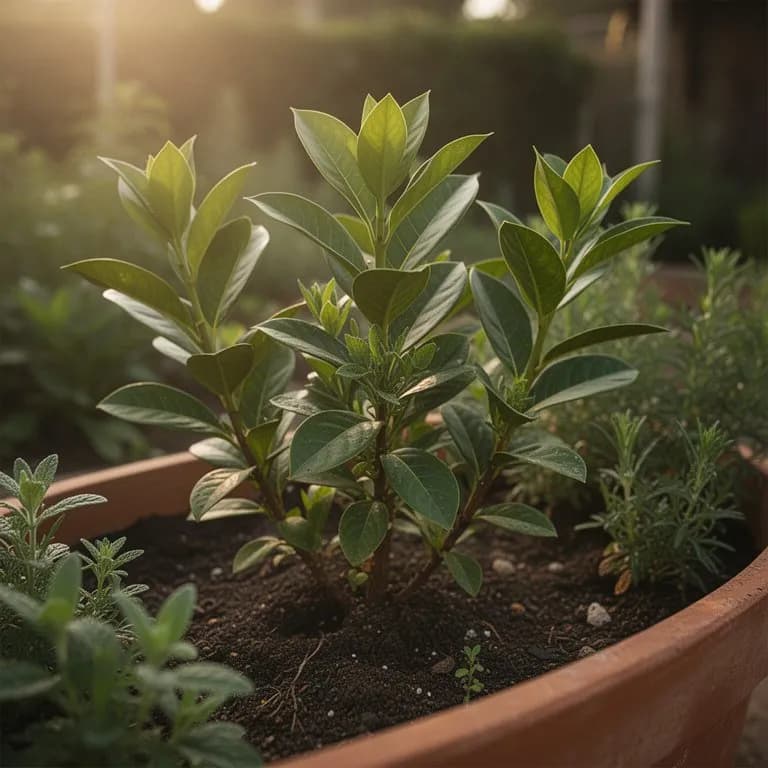
Der westindische Lorbeer (Pimenta racemosa) ist ein tropischer immergrüner Baum, der aus der Karibik stammt und in seinem natürlichen Lebensraum 8–15 Meter hoch wächst. Im Anbau kann er durch regelmäßigen Rückschnitt als kleineres Exemplar gehalten werden. Pflanzung in voller Sonne bis Halbschatten in gut durchlässigem, mit organischem Material angereichertem Boden. Der Baum eignet sich nur für die USDA-Zonen 10–12 oder den Innen- bzw. Gewächshausanbau in kühleren Klimazonen.
Beim Anbau in Kübeln einen großen Topf (mindestens 80 Liter) mit hervorragender Drainage und einer nährstoffreichen, lehmigen Pflanzerde verwenden. An den hellsten verfügbaren Standort stellen und die Temperatur das ganze Jahr über über 13 °C halten. Der Baum wächst unter tropischen Bedingungen mäßig schnell und legt im jungen Alter 30–60 cm pro Jahr zu. Während der Eingewöhnungsphase tief und regelmäßig gießen, dann auf mäßige Bewässerung reduzieren, sobald das Wurzelsystem gut etabliert ist.
Jährlicher Rückschnitt im Spätwinter erhält die Form und fördert buschiges Wachstum mit reichlich aromatischem Laub. Der Baum bildet kleine weiße Blüten in Doldentrauben, auf die dunkle Beeren folgen, obwohl die Fruchtbildung außerhalb tropischer Regionen unzuverlässig ist. Der westindische Lorbeer ist relativ schädlingsfrei und verträgt Salznebel, was ihn für tropische Küstengärten geeignet macht.
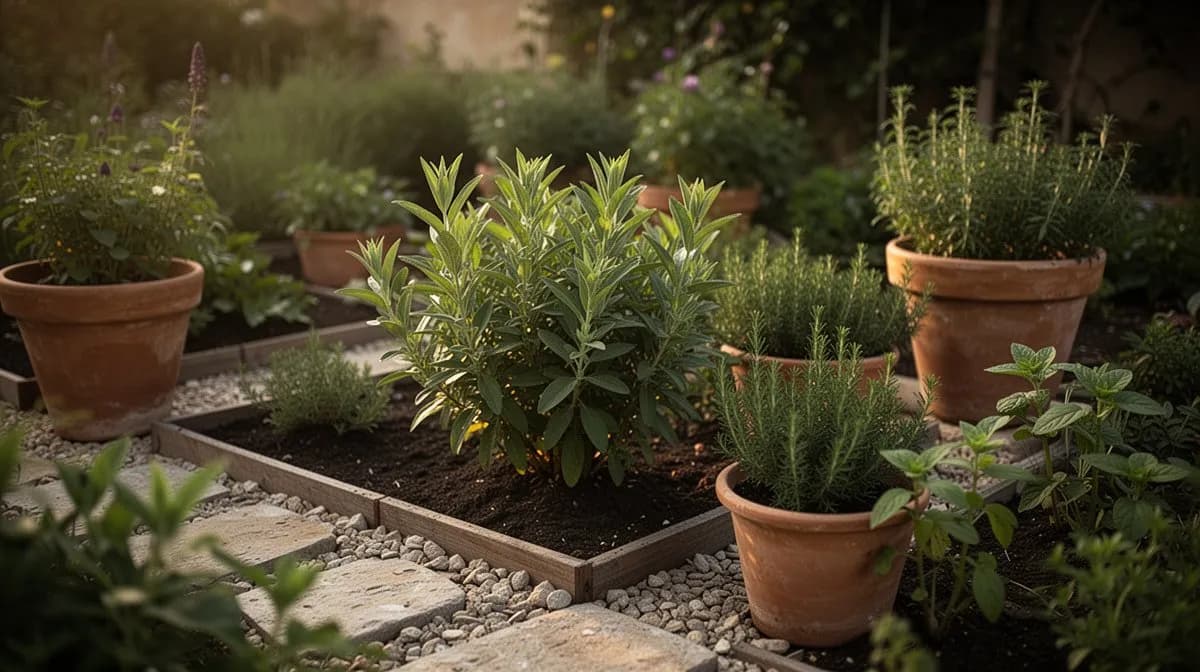
Für Westindischer Lorbeer ist ein Beet von 120 × 240 cm zu klein
Westindischer Lorbeer braucht 150 cm Platz pro Pflanze. Der Planer hält diesen Abstand für dich ein — jede Pflanze, jedes Beet.
Die besten Nachbarn für Westindischer Lorbeer
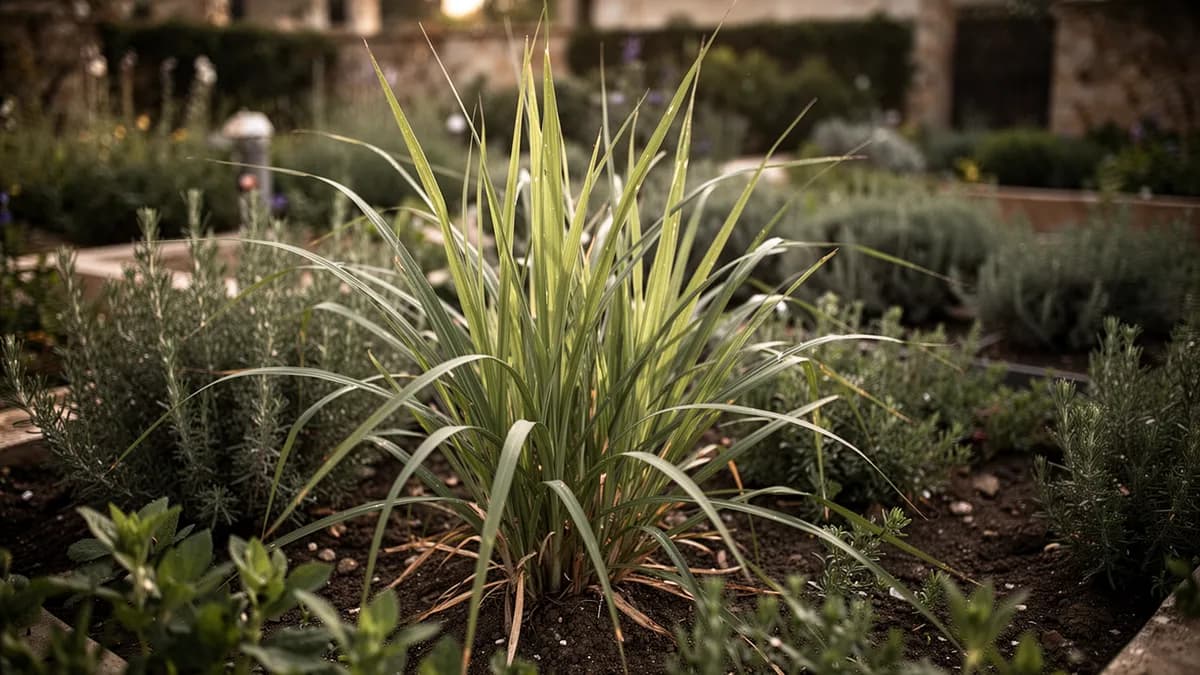
In tropischen Gärten bietet der westindische Lorbeer hervorragenden Halbschatten für Unterwuchspflanzen wie Ingwer, Kurkuma und schattentolerante Kräuter. Sein aromatisches Laub hilft, bestimmte fliegende Schädlinge von benachbarten Kulturen fernzuhalten. Zusammen mit anderen karibischen Arten wie Piment, Zitronengras und Scotch-Bonnet-Paprika pflanzen, um einen stimmigen tropischen Kräutergarten zu gestalten. Das tiefe Wurzelsystem des Baumes konkurriert nicht aggressiv mit flach verwurzelten Begleitpflanzen. Nicht zu nah an Gebäuden pflanzen, da der Baum in tropischen Bedingungen beträchtliche Größe erreichen kann.
Zitronengras gehört daneben.
Altes Gärtnerwissen, geprüft an der echten Nachbartabelle von Westindischer Lorbeer — teste jede Pflanze, die du anbaust.
Probiere Westindischer Lorbeer direkt hier im Beet
Ein echtes Planer-Beet, Westindischer Lorbeer steht schon drin. Tippe einen Begleiter an, platziere ihn und sieh, wie die Nachbarschaftsprüfung antwortet — grün für gute Nachbarn, rot bei Streit.


Passende Anbau-Ratgeber
Richtig düngen
Der westindische Lorbeer passt sich verschiedenen tropischen Bodenarten an, von sandig bis lehmig, solange die Drainage ausreichend ist. Der optimale pH-Bereich liegt bei 5,5–7,0. In tropischen Klimazonen dreimal jährlich einen ausgewogenen Langzeit-Dünger (10-10-10) ausbringen: zu Beginn der Regenzeit, zur Mitte der Saison und am Ende der Regenzeit. Einmal jährlich mit Magnesiumsulfat (Bittersalz) ergänzen, um gesundes Laub zu fördern. Rund um den Stammbereich mit Holzspänen oder Laubstreu dick mulchen, um Feuchtigkeit zu speichern und den Boden anzureichern. In Küstenpflanzungen salzhaltige Dünger vermeiden.
Ideale Temperatur
Winterhärtezone-Kompatibilität
Von der Saat zur Ernte, Schritt für Schritt
Keimung
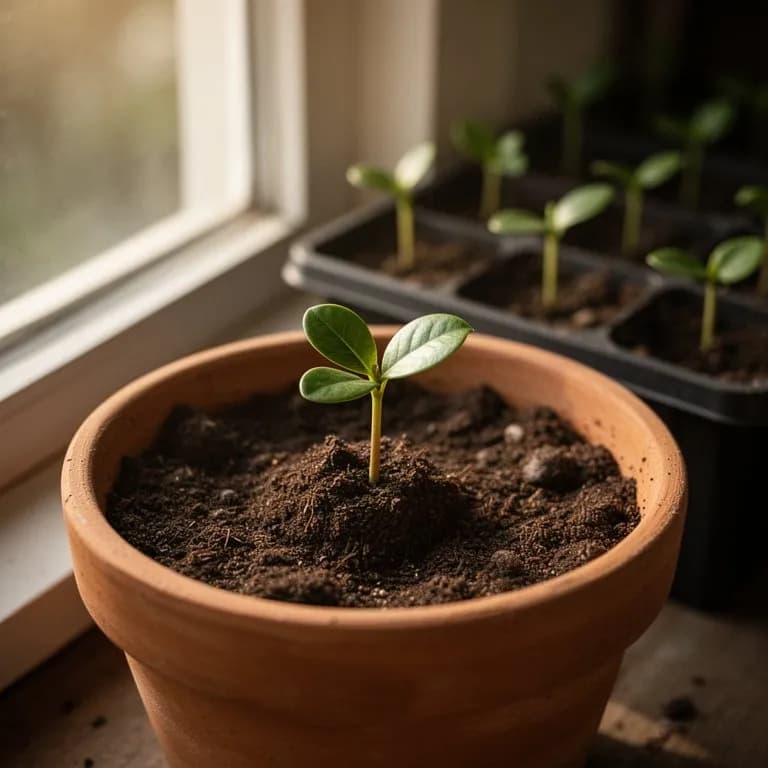
Westindische Lorbeer-Samen keimen langsam und etwas unregelmäßig, typischerweise 3–6 Wochen unter warmen, feuchten Bedingungen. Frische Samen haben deutlich bessere Keimraten als getrocknete. Die ersten Lebenszeichen sind eine kleine Keimwurzel, die durch die Samenschale bricht, gefolgt von einem Paar kleiner dunkelgrüner Keimblätter. Für eine zuverlässige Keimung sind Bodentemperaturen von 24–30 Grad Celsius erforderlich.
Sämlingsentwicklung
Sämlinge entwickeln sich in den ersten sechs Monaten langsam und bilden glänzende ovale Blätter an einem einzelnen dünnen Stiel. Die charakteristischen aromatischen Öle beginnen sich in diesem Stadium in den Blättern zu entwickeln, allerdings in geringeren Konzentrationen als bei ausgewachsenem Laub. Sämlinge sind frostempfindlich und benötigen gleichmäßige Wärme und Luftfeuchtigkeit zum Gedeihen.
Junges Wachstum
In den ersten zwei Jahren entwickelt der Jungbaum einen verholzten Stamm, beginnt zu verzweigen und baut ein kleines Kronendach mit hocharomatischem Laub auf. Die Wachstumsrate steigt im zweiten Jahr deutlich an, wenn sich das Wurzelsystem etabliert hat. Die glatte graue Rinde, die für die Art charakteristisch ist, wird sichtbar, und die Blätter beginnen, ätherische Öle in für die Ernte geeigneten Konzentrationen zu produzieren.
Jungbaum-Etablierung
Zwischen dem zweiten und fünften Jahr tritt der Baum in eine kräftige Wachstumsphase ein und fügt unter idealen Bedingungen 30–60 cm Höhe pro Jahr hinzu. Die Verzweigung wird dichter und das Kronendach füllt sich. Die ersten Blüten können bereits im dritten Jahr unter tropischen Bedingungen erscheinen, obwohl produktive Blüte typischerweise im vierten oder fünften Jahr beginnt. In dieser Phase kann die Blatternte ernsthaft aufgenommen werden.
Ausgereifte Produktion
Ab dem fünften Jahr erreicht der westindische Lorbeer produktive Reife mit regelmäßiger Blüte, Fruchtbildung und reichlicher aromatischer Blattproduktion. Ein ausgewachsener Baum kann im Boden tropischer Klimazonen 8–12 Meter erreichen, während Kübelpflanzen mit Rückschnitt typischerweise unter 3 Meter bleiben. Der Baum bildet weiße Blütendolden, auf die kleine dunkle Beeren folgen, die beide zu seinem wirtschaftlichen und kulinarischen Wert beitragen.
Samen vor der Aussaat 24 Stunden in warmem Wasser einweichen, um die Samenschale aufzuweichen. 1–2 cm tief in eine gut durchlässige Anzuchterde pflanzen und bei 25–30 Grad Celsius gleichmäßig feucht halten. Eine Heizmatte verbessert die Keimraten erheblich. Geduld ist gefragt, da manche Samen bis zu 8 Wochen benötigen.
Westindischer Lorbeer Monat für Monat pflegen
Was du jeden Monat für deine Westindischer Lorbeer tun solltest
Oktober
Aktueller MonatKübelpflanzen in gemäßigten Zonen vor dem ersten Frost nach drinnen bringen. Schrittweise über eine Woche überführen und die Sonnenexposition reduzieren. Letzte Blatternte zum Trocknen vor dem Einzug ins Haus vornehmen. Vor dem Einzug nach drinnen auf mitreisende Schädlinge prüfen.
Immer wissen, was jetzt im Garten zu tun ist
Eine E-Mail zum Monatsanfang: was du jetzt säen, pflanzen und anpacken solltest — für deine Westindischer Lorbeer und alles, was drumherum wächst. Dazu ein kurzer Startkurs, der dich vor den klassischen Fehlern bewahrt.
- Was jetzt zu tun ist
- Passend zu deiner Saison
- Startkurs inklusive
Westindischer Lorbeer ernten
Westindische Lorbeerblätter können ganzjährig geerntet werden, sobald der Baum mindestens 2–3 Jahre alt und gut etabliert ist. Einzelne ausgereifte Blätter nach Bedarf pflücken und dabei die dunkelgrünen, aromatischsten aus dem mittleren Kronenbereich auswählen. Für größere Ernten Asttriebe mit Blättern abschneiden und Blätter von den Stielen streifen. Die Morgenernte erfasst den höchsten ätherischen Ölgehalt. Blätter können frisch oder getrocknet für kulinarische und aromatische Zwecke verwendet werden. Zur Ernte für die Bay-Rum-Ölproduktion reife Blätter in größeren Mengen sammeln und durch Wasserdampfdestillation verarbeiten.
angenommen, du pflanzt zu Beginn des Zeitraums — trage dein tatsächliches Datum ein
Ernte Westindischer Lorbeer zügig, dann trägt die Pflanze weiter.
Lagerung & Konservierung
Frische westindische Lorbeerblätter können in einem verschlossenen Plastikbeutel im Kühlschrank bis zu 2 Wochen aufbewahrt werden. Zum Trocknen einzelne Blätter auf Gittern in einem warmen, dunklen, gut belüfteten Bereich 5–7 Tage ausbreiten, bis sie knusprig und spröde sind. Getrocknete Blätter ganz in luftdichten Glasgefäßen lichtgeschützt aufbewahren, wo sie ihre aromatischen Öle bis zu einem Jahr behalten. Blätter können auch bis zu 6 Monate in luftdichten Beuteln eingefroren werden mit minimalem Aromaverlust. Für die Bay-Rum-Zubereitung frische oder getrocknete Blätter mehrere Wochen mit Gewürzen in Rum einlegen, um die ätherischen Öle zu extrahieren.
Was schiefgeht — und die Lösung
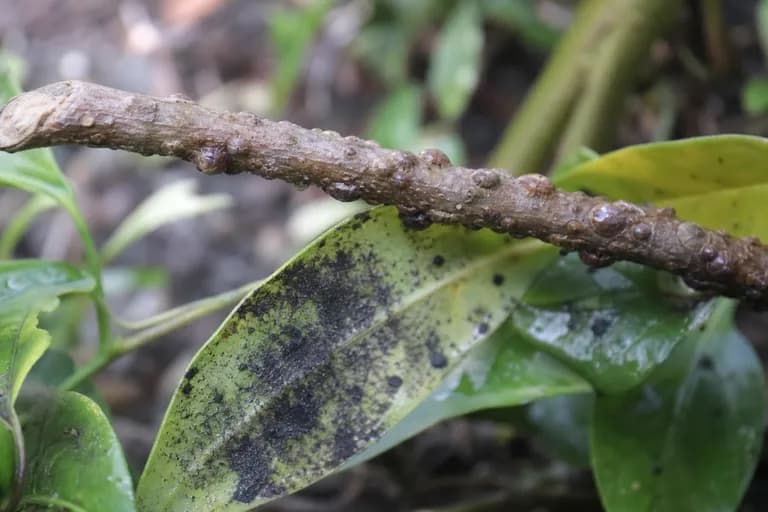
Schildläuse
SchädlingBraune oder weiße Erhebungen auf Blattunterseiten und Stielen, klebriger Honigtau auf Blättern unterhalb befallener Äste, Rußtaupilzwachstum.
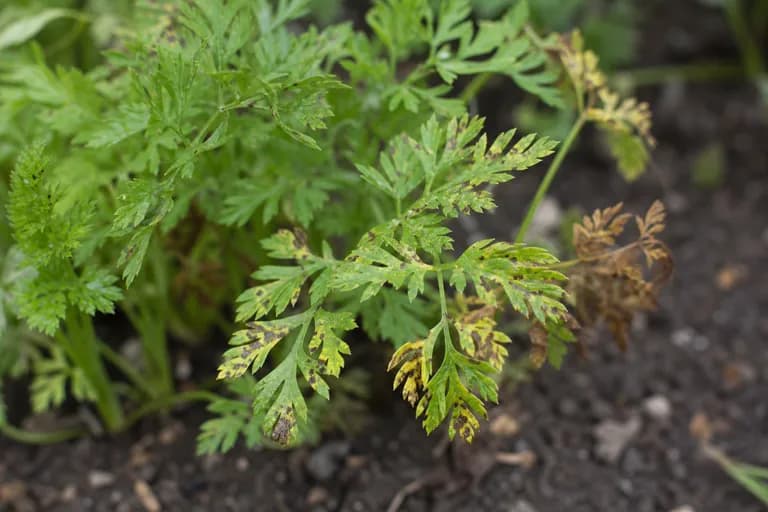
Blattbrand
KrankheitBraune nekrotische Flecken auf Blättern, die sich von den Rändern nach innen ausbreiten, vorzeitiger Blattfall bei nassem Wetter, Triebsterben.
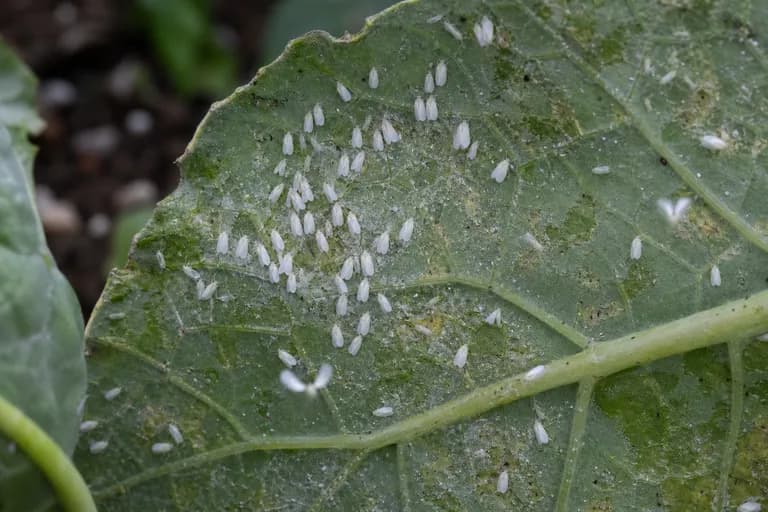
Weiße Fliegen
SchädlingWinzige weiße Fluginsekten auf Blattunterseiten, vergilbende Blätter, klebriger Honigtaurückstand, allgemein verminderter Pflanzenwuchs.
Fehlerbehebung bei häufigen Problemen
Kälteschäden sind das Hauptproblem außerhalb tropischer Zonen; selbst kurze Einwirkung von Temperaturen unter 4 °C kann Blattfall und Triebsterben verursachen. Kübelpflanzen leiden häufig unter Wurzelstau; alle 2–3 Jahre in schrittweise größere Behälter umpflanzen. Zimmerbäume lassen häufig Blätter aufgrund unzureichenden Lichts fallen; mindestens 6 Stunden helles Licht gewährleisten oder mit Pflanzenlampen ergänzen. Langsames Wachstum und blasses Laub deuten typischerweise auf Nährstoffmangel hin; einen vollständigen Dünger mit Spurenelementen ausbringen. Übermäßiges Gießen in Kübeln führt zu Wurzelfäule; Töpfe müssen nach dem Gießen vollständig ablaufen.
Anbautipps
- Wann immer möglich mit einer Gärtnereipflanze statt Samen beginnen. Westindische Lorbeer-Samen haben bekanntermaßen niedrige und langsame Keimraten, die oft 6–8 Wochen in Anspruch nehmen, während eine im Gartencenter gezogene Pflanze einen zwei Jahre langen Vorsprung bei der Blattproduktion bietet.
- Vor allem auf ausgezeichnete Drainage achten. Der westindische Lorbeer verträgt eine Bandbreite an Bodentypen, überlebt aber keine wassergesättigten Wurzeln. In Kübeln eine Mischung aus Pflanzerde, Perlite und Rindenmulch in ungefähr gleichen Teilen verwenden, um schnelle Drainage zu gewährleisten.
- Für maximale ätherische Ölproduktion in den Blättern in die volle Sonne stellen. Im Schatten gewachsene Bäume produzieren größere, aber weniger aromatische Blätter mit geringeren Konzentrationen der wertvollen Eugenol-Verbindung.
- Vor Kältewind und Frost um jeden Preis schützen. Selbst kurze Einwirkung von Gefriertemperaturen kann Asttriebe absterben und den Baum entlauben. In Grenzklimaten an einer nach Süden ausgerichteten Wand pflanzen, um bei Kälteeinbrüchen Strahlungswärmeschutz zu genießen.
- Regelmäßig schneiden, um eine kompakte, buschige Form zu erhalten, die für den Kübelbau geeignet ist. Ohne Rückschnitt wächst der Baum natürlich in eine hohe, schmale Form, die im Innenbereich schwer handhabbar wird. Jährlicher Rückschnitt im Spätwinter vor dem Frühjahrs-Wachstumsschub funktioniert am besten.
- Blätter morgens ernten, nachdem der Tau getrocknet, aber vor der Mittagshitze, wenn die ätherische Ölkonzentration in den Blättern ihren Höhepunkt erreicht. Scharfe Gartenschere zum Schneiden von Asttrieben verwenden, statt einzelne Blätter zu pflücken, was gesundes Nachwachsen stimuliert.
- Kübelpflanzen während der Wachstumsperiode alle 3–4 Wochen mit einem ausgewogenen Dünger düngen, aber von November bis Februar vollständig auf Düngung verzichten, um natürliche Dormanz zu ermöglichen. Überdüngung im Winter produziert schwaches, etioliertes Wachstum.
- Während des Winters Luftfeuchtigkeit um Zimmerbäume aufrechterhalten, indem sie mit anderen Tropenpflanzen gruppiert, ein Kieselsteintablett mit Wasser verwendet oder ein Zimmerluftbefeuchter betrieben wird. Niedrige Luftfeuchtigkeit ist die häufigste Ursache für Winterblattfall bei Zimmer-Lorbeerbäumen.
- Zur Vermehrung aus halbverholzten Stecklingen, die im Spätsommer genommen werden, für die besten Erfolgsquoten. Schnittenden in Bewurzelungshormon tauchen, in eine Mischung aus Perlite und Torf einsetzen und bei einer Bodentemperatur von 24–27 Grad Celsius mit hoher Luftfeuchtigkeit unter einer Plastikkuppel halten.
- Auf Schildläuse achten, die der häufigste Schädling beim westindischen Lorbeer sind. Blattunterseiten und Stiele regelmäßig kontrollieren. Befälle frühzeitig mit Hortikulturöl-Spray behandeln oder befallene Bereiche mit einem in Isopropylalkohol getauchten Wattestäbchen abtupfen.
Bau deine beste Westindischer Lorbeer an — und alles drumherum.
Starte heute kostenlos. Lege deine Beete an, setze deine Westindischer Lorbeer ein und lass PlotMyGarden Timing, Abstände, Begleiter und Erinnerungen von der Saat bis zum Erntekorb übernehmen.
Finde deine Westindischer Lorbeer
Gewöhnlicher Westindischer Lorbeer
Die Standardart, die in der gesamten Karibik weit verbreitet ist und hocharomatische Blätter mit starken Nelken- und Zimtnoten produziert. Die wichtigste Quelle für die kommerzielle Bay-Rum-Produktion.
Citrifolia
Eine Sorte mit einer ausgeprägteren Zitronennote im ätherischen Ölprofil, geschätzt für spezielle Bay-Rum-Mischungen und karibische Zitronen-Gewürzmischungen.
Ozua
Eine dominikanische Selektion, bekannt für ihren kräftigen Wuchs, das dichte Kronendach und den außergewöhnlich hohen ätherischen Ölgehalt der Blätter.
Westindisches Lorbeer-ätherisches Öl kostet im Einzelhandel 15–30 € pro 15-ml-Flasche, und handwerkliches Bay-Rum-Rasierwasser wird für 20–45 € pro Flasche verkauft. Ein einziger ausgewachsener Baum produziert jährlich genug Blattmaterial, um bei Destillation das Äquivalent von 100–200 € an ätherischem Öl zu ergeben, oder Dutzende Flaschen selbstgemachten Bay Rum. Frische westindische Lorbeerblätter sind außerhalb der Karibik kommerziell kaum erhältlich, was selbst angebaute Blätter zu einer unersetzlichen Zutat für authentische karibische Rezepte und natürliche Pflegeprodukte macht. Die Langlebigkeit des Baumes (50+ Jahre) bedeutet, dass eine einmalige Investition von 10–25 € für eine Gärtnereipflanze Jahrzehnte an Erträgen bringt.
Schnelle Rezepte
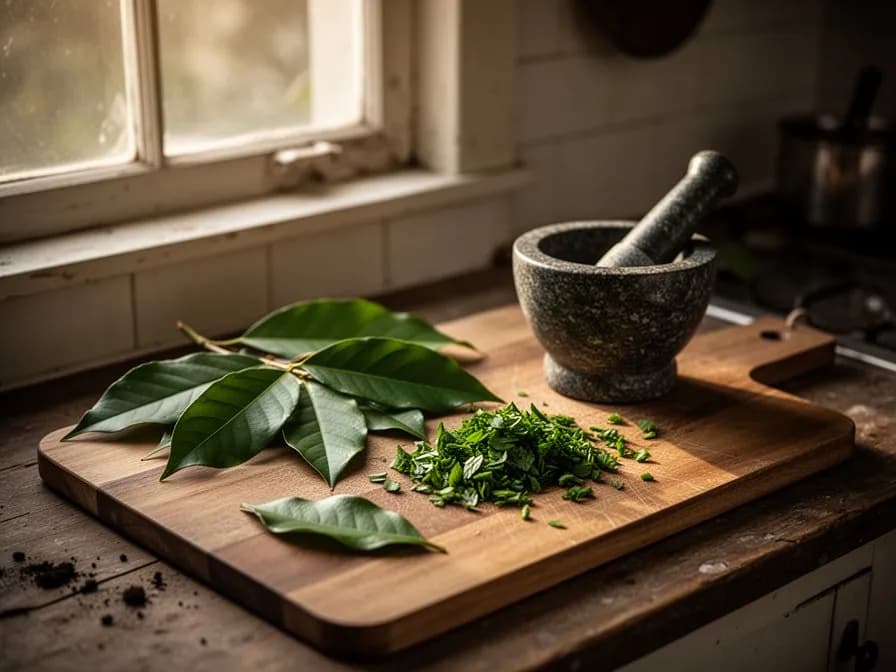
Karibisches Bay-Rum-Rasierwasser (Alkoholfreie Spülung)
15 Min. + 2 Wochen ZiehzeitEine traditionelle aromatische Infusion inspiriert vom berühmten karibischen Bay-Rum-Pflegeprodukt. Frische westindische Lorbeerblätter werden mit warmen Gewürzen eingelegt, um eine duftende Spülung zu erzeugen. Im Gegensatz zu echtem Bay Rum verwendet diese Version Zaubernuss-Extrakt statt Rum für eine mildere, alkoholfreie Zubereitung, die sich für empfindliche Haut eignet.
7 ZutatenWestindischer Lorbeerblatt-Tee
10 Min.Ein wärmender aromatischer Kräutertee, der in der gesamten Karibik traditionell wegen seiner beruhigenden Eigenschaften und seines würzig-süßen nelkenartigen Geschmacks geschätzt wird. Die beim Aufbrühen der frischen Blätter freigesetzten ätherischen Öle erzeugen eine duftende Tasse, die besonders nach Mahlzeiten oder vor dem Schlafengehen angenehm ist.
6 ZutatenJerk-Lorbeerblatt-Marinade
15 Min. + 4 Stunden MarinierzeitEine reichhaltig aromatische karibische Marinade, die frische westindische Lorbeerblätter zusammen mit traditionellen Jerk-Gewürzen verwendet. Die eugenolreichen Blätter verleihen eine warme, nelkenartige Tiefe, die die Schärfe der Scotch-Bonnet-Chilis und die Wärme des Piments ergänzt. Für Huhn, Schwein, Fisch oder Gemüse vor dem Grillen verwenden.
10 ZutatenKulinarische Verwendung
Westindische Lorbeerblätter verleihen Speisen ein warmes, würziges Nelken-Zimt-Aroma, das sich deutlich von mediterranem Lorbeer unterscheidet. Blätter in karibischen Jerk-Marinaden, Currys, Reisgerichten und Eintöpfen verwenden. Beim Kochen ein oder zwei getrocknete Blätter zu Suppen und Schmorgerichten hinzufügen und vor dem Servieren entfernen. Die Blätter sind ein wesentlicher Bestandteil traditioneller karibischer Rum-Punsche und Bay-Rum-Getränke. Zerdrückte frische Blätter können gegrillten Fisch und Geflügel aromatisieren, wenn sie direkt auf die Kohlen gelegt werden.
Was drinsteckt
Gesundheitsvorteile
- Das ätherische Öl Eugenol, das in hohen Konzentrationen in den Blättern vorkommt, hat in klinischen Studien bedeutende entzündungshemmende und analgetische Eigenschaften gezeigt, was die traditionelle karibische Verwendung von Lorbeerblattkompressen bei Gelenk- und Muskelschmerzen unterstützt.
- Westindischer Lorbeerblatt-Tee wird in der gesamten Karibik traditionell nach schweren Mahlzeiten als Verdauungshilfe konsumiert, und moderne Forschungen deuten darauf hin, dass die flüchtigen Öle die Sekretion von Verdauungsenzymen anregen und Darmkrämpfe reduzieren können.
- Laborstudien zeigen, dass das ätherische Öl des westindischen Lorbeers ein breites antimikrobielles Spektrum gegen sowohl gram-positive als auch gram-negative Bakterien sowie mehrere Pilzarten aufweist, was seine traditionelle Verwendung bei der Wundpflege und Hautgesundheit unterstützt.
- Die hohe Konzentration antioxidativer Verbindungen darunter Eugenol, Myrcen und verschiedene Flavonoide hilft, freie Radikale zu neutralisieren und kann oxidativen Stress reduzieren, der mit chronischer Entzündung und zellulärem Altern verbunden ist.
- Die traditionelle karibische Kräutermedizin verwendet Lorbeerblattaufgüsse, um den Blutzuckerspiegel nach Mahlzeiten zu regulieren, und vorläufige Tierstudien deuten darauf hin, dass bestimmte Verbindungen in den Blättern die Insulinsensitivität und den Glukosestoffwechsel verbessern können.
- Die aromatischen Verbindungen, die durch zerdrückte oder aufgebrühte Lorbeerblätter freigesetzt werden, haben in der Aromatherapieforschung anxiolytische (angstlindernde) Wirkungen gezeigt, was die jahrhundertealte karibische Tradition des Trinkens von Lorbeerblatt-Tee als beruhigendes Schlafgetränk unterstützt.
Woher Westindischer Lorbeer stammt
Der westindische Lorbeer (Pimenta racemosa) ist in den karibischen Inseln und den umliegenden Küstenregionen Mittelamerikas und Nordamerikas beheimatet. Der Baum hat sich in den warmen, feuchten tropischen Wäldern der Kleinen Antillen entwickelt, wo er natürlich sowohl in Küstentiefland als auch in bergigen Innenwäldern auf Höhen bis zu 800 Metern wächst. Indigene Carib- und Taino-Völker verwendeten die aromatischen Blätter jahrhundertelang vor dem europäischen Kontakt als Gewürz für Speisen, medizinischen Tee bei Verdauungsbeschwerden und als duftende Körpereinreibung, von der man glaubte, sie würde böse Geister und beißende Insekten abwehren.
Als europäische Kolonisten im 16. und 17. Jahrhundert in der Karibik ankamen, erkannten sie schnell den kommerziellen Wert des stark aromatischen Laubes des Baumes. Zu Beginn des 19. Jahrhunderts hatten dänische Siedler auf der Insel Saint Thomas im heutigen US-Jungferninseln den Prozess der Destillation von Lorbeerblättern mit Rum entwickelt, um Bay Rum herzustellen, ein duftendes Rasierwasser und Kölnischwasser, das in der gesamten Karibik und schließlich in ganz Europa und Nordamerika außerordentlich beliebt wurde. Die Bay-Rum-Industrie wurde zu einem bedeutenden Wirtschaftsmotor für mehrere karibische Inseln, insbesondere Saint Thomas, Saint Croix und Dominica, wo Destillerien Tausende von Kilogramm frischer Blätter jährlich verarbeiteten.
Der Baum verbreitete sich über sein ursprüngliches karibisches Verbreitungsgebiet hinaus sowohl durch bewusste Kultivierung als auch durch natürliche Samenverbreitung durch Vögel, die seine kleinen dunklen Beeren fressen. Heute wird der westindische Lorbeer in tropischen Regionen weltweit angebaut, von Südostasien bis Westafrika, wo immer das Klima die ganzjährige Wärme und Feuchtigkeit bietet, die er benötigt. In seinem natürlichen Verbreitungsgebiet sind wild lebende und halbkultivierte Bäume ein integraler Bestandteil der karibischen Volksmedizin und Küche. Die Blätter werden zu einem beruhigenden Tee gebrüht, von dem man glaubt, er lindere Magenbeschwerden, senke Fieber und beruhige Angstzustände. In der modernen Aromatherapie und Naturproduktindustrie hat das ätherische Öl des westindischen Lorbeers Anerkennung für sein komplexes chemisches Profil gewonnen, das von Eugenol, Myrcen und Chavicol dominiert wird – Verbindungen mit nachgewiesenen antimikrobiellen, entzündungshemmenden und analgetischen Eigenschaften, die viele seiner traditionellen medizinischen Anwendungen bestätigen.
Westindischer Lorbeer: Schon gewusst?
Faszinierende Fakten über Westindischer Lorbeer
Der westindische Lorbeer ist die Quelle des berühmten Bay-Rum-Rasierwassers, das seit den 1800er Jahren ein Grundnahrungsmittel karibischer Barbiergeschäfte ist. Frühe Kolonialseeleute entdeckten, dass das Reiben der aromatischen Blätter auf der Haut Insekten vertrieb und Körpergeruch auf langen Seereisen überdeckte, was zur Entwicklung der Bay-Rum-Destillation auf der Insel Saint Thomas in den heutigen US-Jungferninseln führte.
Westindischer Lorbeer: Fragen & Antworten
Wann sollte ich Westindischer Lorbeer pflanzen?
Was sind gute Begleitpflanzen für Westindischer Lorbeer?
In welchen Winterhärtezonen kann Westindischer Lorbeer wachsen?
Wie viel Sonne braucht Westindischer Lorbeer?
Welchen Abstand sollte ich zwischen Westindischer Lorbeer lassen?
Welche Schädlinge und Krankheiten befallen Westindischer Lorbeer?
Wie lagere ich Westindischer Lorbeer nach der Ernte?
Was sind die besten Westindischer Lorbeer-Sorten zum Anbauen?
Welchen Boden braucht Westindischer Lorbeer?
Ist der westindische Lorbeer dasselbe wie das Lorbeerblatt in der Küche?
Kann ich westindischen Lorbeer in einem kalten Klima anbauen?
Wie stellt man Bay Rum aus den Blättern her?
Wie lange dauert es, bis die Blatternte beginnen kann?
Zieht der westindische Lorbeer Insekten an oder hält er sie fern?
Warum werden die Blätter meines westindischen Lorbeerbaumes gelb und fallen ab?
Du hast die Theorie gelesen. Jetzt baue sie auf Autopilot an.
Alles, was Westindischer Lorbeer knifflig macht — das Timing, die Abstände, die Begleiter, das Erntefenster — genau das übernimmt PlotMyGarden für dich, für jede Pflanze im Garten.
Ein Plan, der dein Wetter kennt
Standort einmal festlegen. Aussaat-, Dünge- und Erntedaten rund um deinen echten letzten Frosttermin und die Live-Vorhersage — kein Raten mehr nach Saattüte.
Aus dem Abschnitt „Pflanzzeit“Beetplaner per Drag & Drop
Beete auf einem Raster gestalten. Jede Pflanze rastet im richtigen Abstand ein, und du siehst die ganze Saison, bevor du einen Cent für Saatgut ausgibst.
Aus dem Abschnitt „Anbau“Begleiter-Konflikte früh erkannt
Über 200 gute und schlechte Kombinationen werden beim Pflanzen live geprüft — so landet ein saisonruinierender Fehler nie in der Erde.
Aus dem Abschnitt „Begleiter“Erinnerungen, nach denen du wirklich handelst
„Gieß die Bohnen.“ „Heute ernten, bevor's umschlägt.“ Pünktlich, konkret und auf deine echten Pflanzen bezogen.
Aus dem Abschnitt „Ernte“Staffel-Aussaat, geplant
Sechs Wochen ernten statt sechs Tage? Die App verteilt deine Aussaaten automatisch und erinnert dich, wenn der nächste Satz fällig ist.
Aus dem Abschnitt „Pflanzzeit“Ein Verlauf, der schlauer wird
Jede protokollierte Ernte bringt der App deinen Garten bei. Der Plan fürs nächste Jahr startet bei dem, was in deinem Boden wirklich funktioniert hat.
Aus dem Abschnitt „Überblick“Pflanze diese neben Westindischer Lorbeer
Weitere Küchenkräuter
Bau deine beste Westindischer Lorbeer an — und alles drumherum.
Starte heute kostenlos. Lege deine Beete an, setze deine Westindischer Lorbeer ein und lass PlotMyGarden Timing, Abstände, Begleiter und Erinnerungen von der Saat bis zum Erntekorb übernehmen.