Avocadobaum
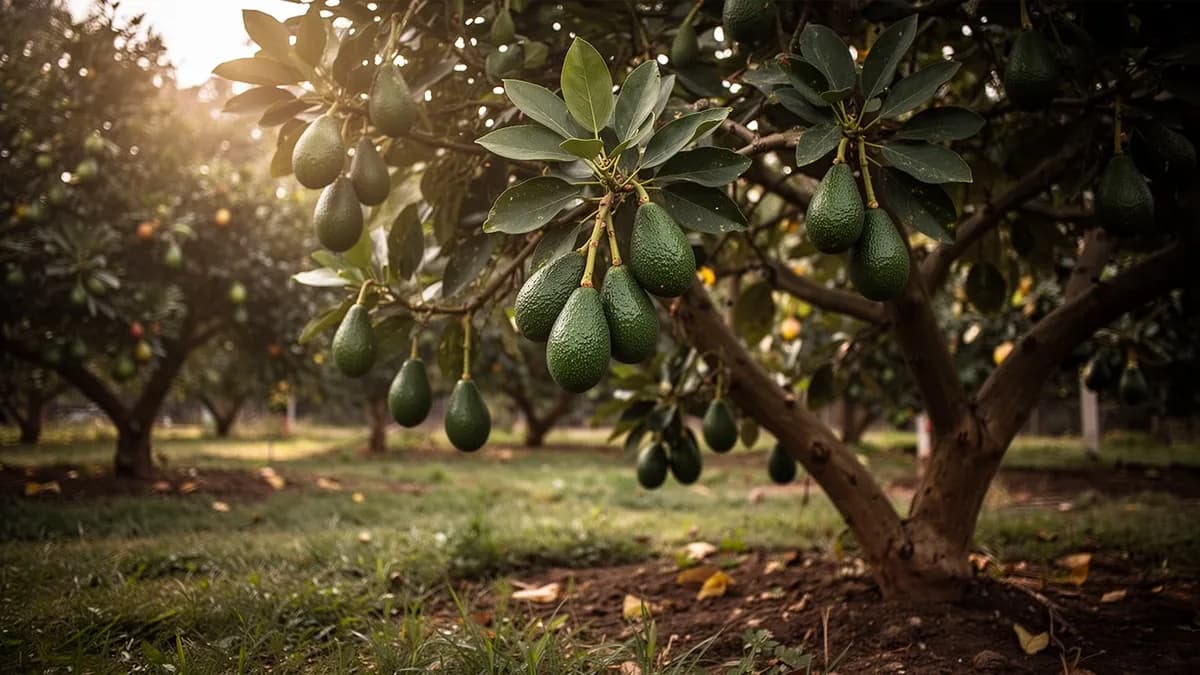
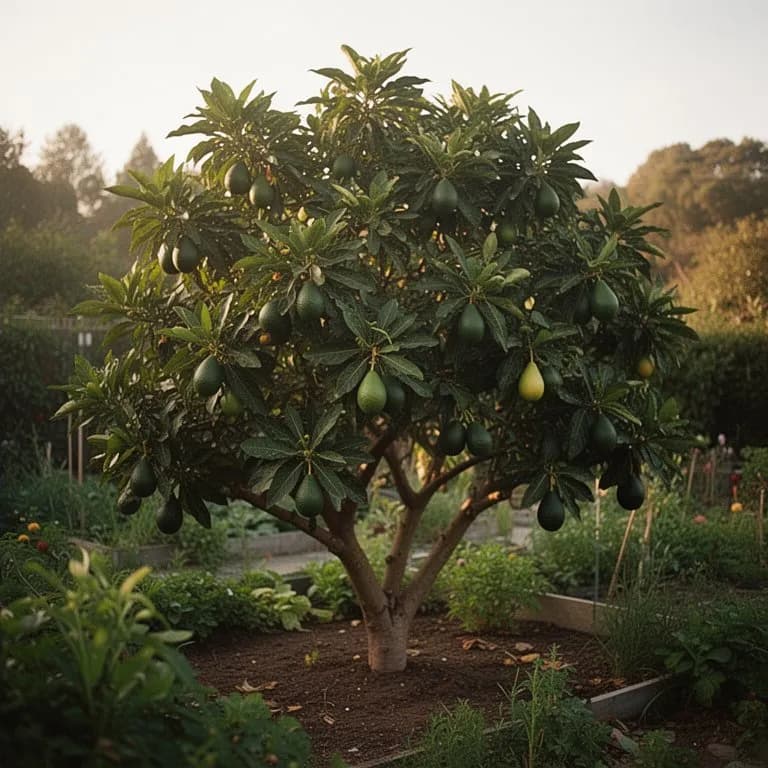
Ein subtropischer immergrüner Baum, der recht groß werden kann und über viele Monate cremige, nährstoffreiche Früchte produziert.





Auf dieser SeiteÜberblick
Avocadobaum im Überblick
Ein subtropischer immergrüner Baum, der recht groß werden kann und über viele Monate cremige, nährstoffreiche Früchte produziert. Avocados haben Blühmuster vom Typ A und Typ B, und das Pflanzen von je einem Exemplar beider Typen in der Nähe verbessert die Kreuzbestäubung und den Fruchtansatz. Sie benötigen eine ausgezeichnete Drainage und sind hochempfindlich gegenüber Wurzelfäule in staunassem Boden. In Grenzklimaten sollten kälteresistente Sorten wie Mexicola oder Bacon gewählt werden, die kurze Fröste bis in die niedrigen zwanzig Grad minus vertragen.
Wann Avocadobaum pflanzen
Obwohl das Keimen von Avocadokernen im Wasser Spaß macht, brauchen aus Samen gezogene Bäume 7 bis 15 Jahre bis zur Fruchtbildung und produzieren selten qualitativ hochwertige Früchte. Kaufen Sie veredelte Baumschulbäume für zuverlässige Produktion. Bäume, die auf krankheitsresistente Unterlagen wie Duke 7 oder Dusa veredelt sind, bieten bessere Resistenz gegen Phytophthora-Wurzelfäule. Pflanzen Sie containergewachsene Bäume im Frühjahr, wenn der Boden warm ist. Für den Anbau in kühlen Klimaten wählen Sie kälteresistente Sorten auf klonalen Unterlagen und seien Sie darauf vorbereitet, Frostschutz zu gewähren.
Dein Avocadobaum-Jahr
Abgestimmt auf Zone 7 · typische Saison · Frost geht um den 2. Apr. und kehrt um den 1. Nov. zurück
Avocadobaum Mär – Mai pflanzen, Feb – Sep ernten. Beachte die Pflanzmethoden unten und wähle dein Klima für passende Zeiträume.
So baust du Avocadobaum an
Avocadobäume benötigen einen frostfreien Standort mit ausgezeichneter Drainage, da sie extrem anfällig für Phytophthora-Wurzelfäule in staunassem Boden sind. Pflanzen Sie den Baum an einem Hang oder auf einem erhöhten Hügel in schwerem Boden, damit das Wasser von den Wurzeln abfließen kann. Volle Sonne ist unerlässlich, mit Schutz vor starkem Wind, der zerbrechliche Äste beschädigen und Blätter austrocknen kann. Halten Sie zwischen Standardsorten einen Abstand von 7,5 bis 9 Metern und zwischen Zwergtypen 4,5 Meter ein.
Pflanzen Sie containergewachsene Avocadobäume im Frühjahr, wenn die Bodentemperaturen warm sind. Graben Sie ein Loch, das etwas größer als der Wurzelballen ist, und setzen Sie den Baum so, dass die Wurzelkrone leicht über dem umgebenden Bodenniveau liegt. Fügen Sie keine Bodenverbesserungsmittel in das Pflanzloch ein, da dies einen Wanneneffekt erzeugen kann. Gießen Sie beim Pflanzen gründlich und tragen Sie eine 10 bis 15 cm dicke Schicht aus grobem Mulch auf, wobei Sie ihn vom Stamm fernhalten, um Kronenfäule zu vermeiden.
Avocadobäume benötigen gleichmäßige Bewässerung, vertragen aber kein Staunasser. Gießen Sie tief und selten, und lassen Sie die obersten mehrere Zentimeter Boden zwischen den Bewässerungen abtrocknen. Düngen Sie viermal jährlich mit einem ausgewogenen Zitrus- und Avocado-Dünger. Schneiden Sie leicht, um die Form zu erhalten und die Höhe zu kontrollieren, da Avocados 9 Meter oder mehr wachsen können. Pflanzen Sie sowohl einen Typ-A- als auch einen Typ-B-Kultivars für eine optimale Kreuzbestäubung und einen guten Fruchtansatz.
Für Avocadobaum ist ein Beet von 120 × 240 cm zu klein
Avocadobaum braucht 800 cm Platz pro Pflanze. Der Planer hält diesen Abstand für dich ein — jede Pflanze, jedes Beet.
Die besten Nachbarn für Avocadobaum
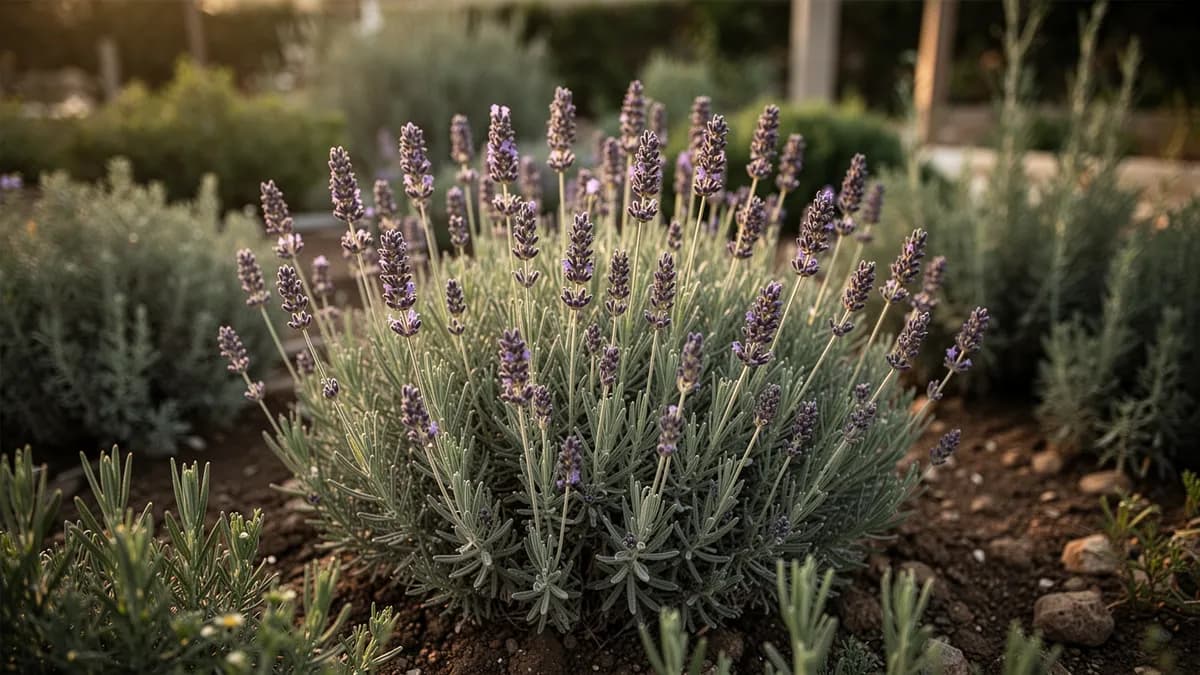
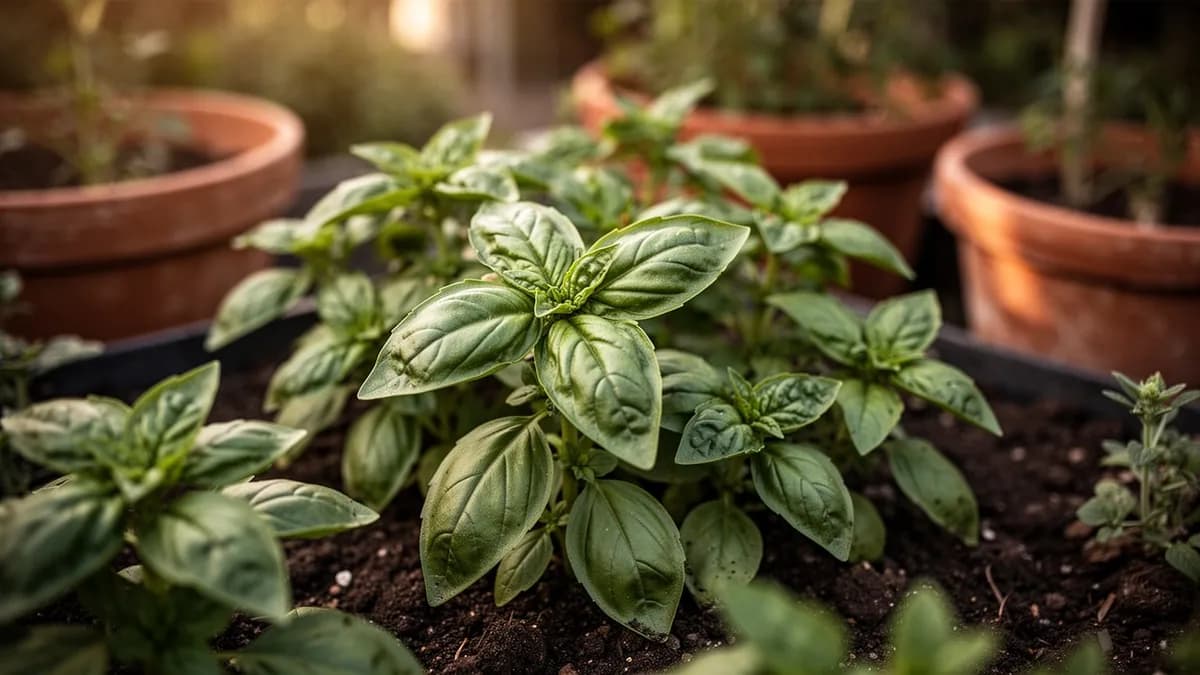
Pflanzen Sie Lavendel, Basilikum und Beinwell als Unterstandspflanzen unter Avocadobäume. Zitrusbäume sind kompatible Nachbarn mit ähnlichen Pflegeanforderungen. Weißklee zwischen den Bäumen bindet Stickstoff und dient als lebende Mulchschicht. Vermeiden Sie wasserintensive Arten in der Nähe von Avocados, und lassen Sie niemals Mulch oder Erde den Stamm berühren. Süßkartoffeln und Kürbis können saisonal im Unterstand junger Avocadoplantagen angebaut werden.
Lavendel gehört daneben. Walnussbaum nicht.
Altes Gärtnerwissen, geprüft an der echten Nachbartabelle von Avocadobaum — teste jede Pflanze, die du anbaust.
Probiere Avocadobaum direkt hier im Beet
Ein echtes Planer-Beet, Avocadobaum steht schon drin. Tippe einen Begleiter an, platziere ihn und sieh, wie die Nachbarschaftsprüfung antwortet — grün für gute Nachbarn, rot bei Streit.


Passende Anbau-Ratgeber
Richtig düngen
Avocadobäume verlangen vor allem gut drainiertem Boden. Sandiger Lehm ist ideal; schwerer Ton muss vermieden oder der Baum auf einem erhöhten Hügel gepflanzt werden. Der Boden-pH sollte zwischen 6,0 und 7,0 liegen. Avocado- oder Zitrusdünger mit Stickstoff, Phosphor, Kalium und Zink viermal jährlich auftragen. Junge Bäume benötigen jährlich etwa 225 g Stickstoff, bei ausgewachsenen Bäumen steigt der Bedarf auf 450 bis 900 g. Eisenchlorose in alkalischen Böden wird mit Chelat-Eisenapplikationen behandelt.
Ideale Temperatur
Winterhärtezone-Kompatibilität
Von der Saat zur Ernte, Schritt für Schritt
Samenkeimung
Der Avocadokern bricht auf und bildet zunächst eine Pfahlwurzel, dann einen Trieb. Ob im Wasser oder direkt im Boden gestartet, zieht der Samen Nährstoffe aus seinen großen Reserven, um die anfängliche Wurzelstruktur aufzubauen und einen blassgrünen Stiel nach oben zu treiben.
Sämlingsent wicklung
Die junge Avocado entwickelt ihre ersten echten Blätter und beginnt, ein stärkeres Wurzelsystem aufzubauen. Das Wachstum ist in dieser Phase relativ langsam, während sich die Pflanze an ihre Umgebung anpasst und eine verholzte Stängelbasis aufbaut.
Juveniles Wachstum
Der Baum tritt in eine kräftige vegetative Phase ein und gewinnt jedes Jahr an Höhe und Kronenbreite. Der Stamm verdickt sich und das Wurzelsystem expandiert erheblich. Blätter werden größer und dunkelgrüner, wenn der Baum der reproduktiven Reife entgegenreift.
Blüte und Bestäubung
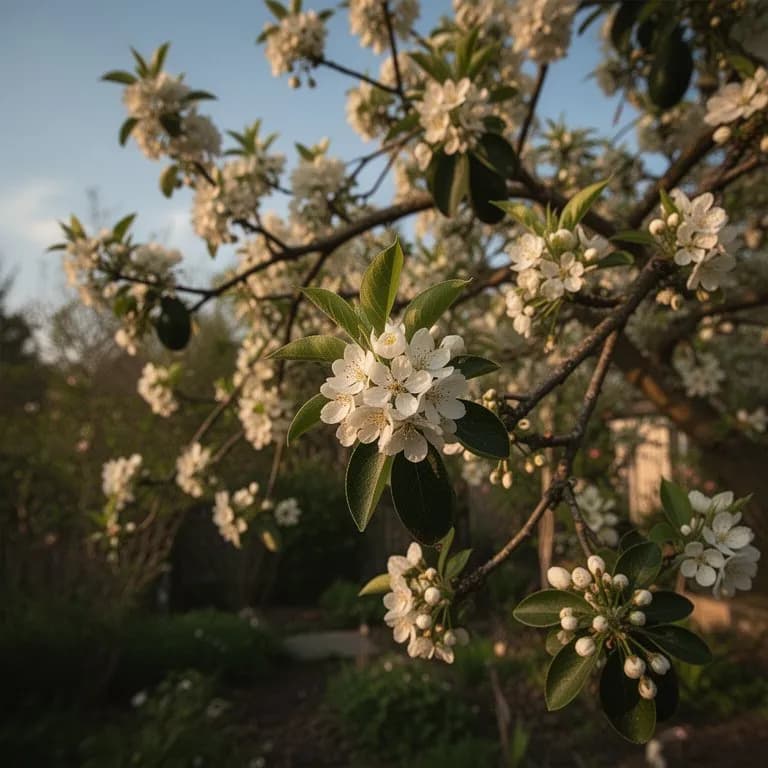
Veredelte Bäume können bereits nach drei Jahren blühen, während aus Samen gezogene Bäume fünf bis dreizehn Jahre brauchen können. Avocadoblüten zeigen Dichogamie und öffnen sich an verschiedenen Tagen zunächst als weiblich und dann als männlich. Jeder Baum kann über eine Million Blüten produzieren, aber nur ein Bruchteil davon setzt Früchte an.
Fruchtentwicklung
Nach erfolgreicher Bestäubung entwickeln sich Früchte je nach Sorte über zwölf bis achtzehn Monate. Die Frucht sammelt Öle an und nimmt während dieser Zeit an Größe zu. Avocados sind einzigartig darin, dass sie nicht am Baum reifen und nach Erreichen der Reife noch mehrere Wochen am Ast gelagert werden können.
Ausgereifte Produktion
Ein vollständig etablierter Avocadobaum erreicht seine Spitzenproduktivität und produziert unter guten Bedingungen zwischen 200 und 500 Früchte pro Jahr. Der Baum entwickelt ein alternierendes Traggerüst, bei dem einem reichen Erntejahr oft ein leichteres folgt. Ausgewachsene Bäume können ohne Schnitt 10 bis 20 Meter hoch werden.
Das Anzuchtmedium gleichmäßig feucht, aber nicht wasserdurchnässt halten. Bei der Wassermethode das Wasser alle fünf bis sieben Tage wechseln, um Bakterienwachstum zu verhindern.
Avocadobaum Monat für Monat pflegen
Was du jeden Monat für deine Avocadobaum tun solltest
Oktober
Aktueller MonatReife Früchte nach Bedarf weiterhin ernten, da Avocados gut am Baum lagern. Nach der Haupternte leichten strukturellen Schnitt durchführen, um die Krone zu formen. Abgefallene Blätter und Früchte harken, um überwinternden Schädlingsleben sbereiche zu reduzieren
Immer wissen, was jetzt im Garten zu tun ist
Eine E-Mail zum Monatsanfang: was du jetzt säen, pflanzen und anpacken solltest — für deine Avocadobaum und alles, was drumherum wächst. Dazu ein kurzer Startkurs, der dich vor den klassischen Fehlern bewahrt.
- Was jetzt zu tun ist
- Passend zu deiner Saison
- Startkurs inklusive
Avocadobaum ernten
Avocados sind unter den Früchten einzigartig, da sie erst nach dem Pflücken vom Baum reifen. Testen Sie die Reife, indem Sie eine Frucht pflücken und sie 7 bis 10 Tage bei Raumtemperatur liegen lassen. Wenn sie gleichmäßig weich wird, ohne zu schrumpeln oder Fehlaromen zu entwickeln, ist die Ernte bereit. Schneiden Sie Früchte mit einer Gartenschere vom Baum ab und lassen Sie einen kurzen Stiel daran. Verschiedene Sorten reifen zu unterschiedlichen Zeiten; Hass ist typischerweise vom Frühjahr bis Herbst erntereif. Früchte können nach Erreichen der Reife noch monatelang am Baum verbleiben.
angenommen, du pflanzt zu Beginn des Zeitraums — trage dein tatsächliches Datum ein
Ernte Avocadobaum zügig, dann trägt die Pflanze weiter.
Lagerung & Konservierung
Feste Avocados reifen bei Raumtemperatur in 4 bis 7 Tagen. Beschleunigen Sie die Reifung, indem Sie sie zusammen mit einer Banane in eine Papiertüte legen. Reife Avocados halten sich im Kühlschrank 3 bis 5 Tage. Pürierte Avocado lässt sich mit zugesetztem Zitronensaft gut einfrieren, um das Braunwerden zu verhindern. Avocadoöl kann aus überreifen Früchten gepresst werden. Für die Guacamole-Zubereitung Frischhaltefolie direkt auf die Oberfläche drücken, um die Oxidation zu minimieren. Kommerziell werden Avocados bei 4 bis 13 Grad gelagert, um die Reifung zu verlangsamen.
Was schiefgeht — und die Lösung
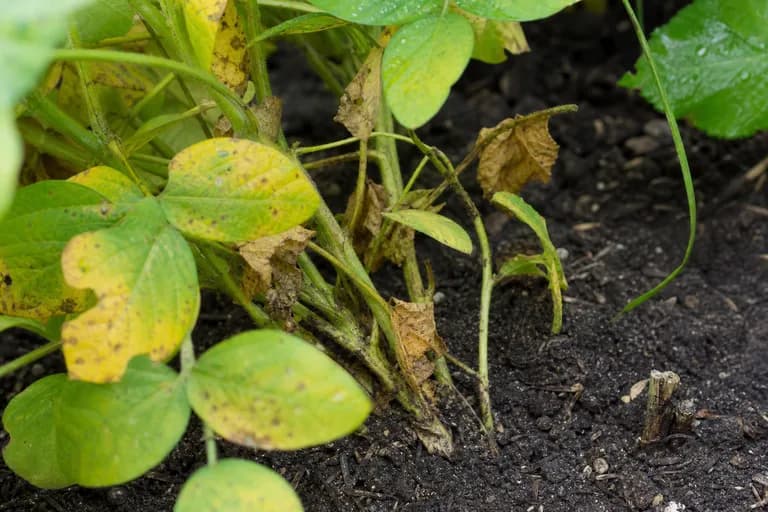
Phytophthora-Wurzelfäule
KrankheitAusdünnung des Blätterdachs, Vergilbung der Blätter, kleine blasse Früchte. Wurzeln werden schwarz und matschig. Der Baum geht langsam über 1 bis 2 Jahre ein.
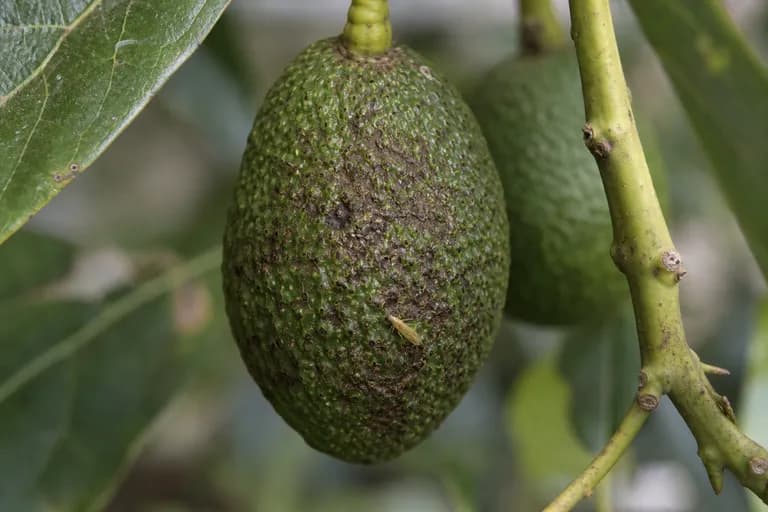
Avocado-Thrips
SchädlingNarbenbildung und Bronzierung auf jungen Früchten und Blättern. Fraßschäden erzeugen raue, lederartige Stellen auf der Fruchtschale.
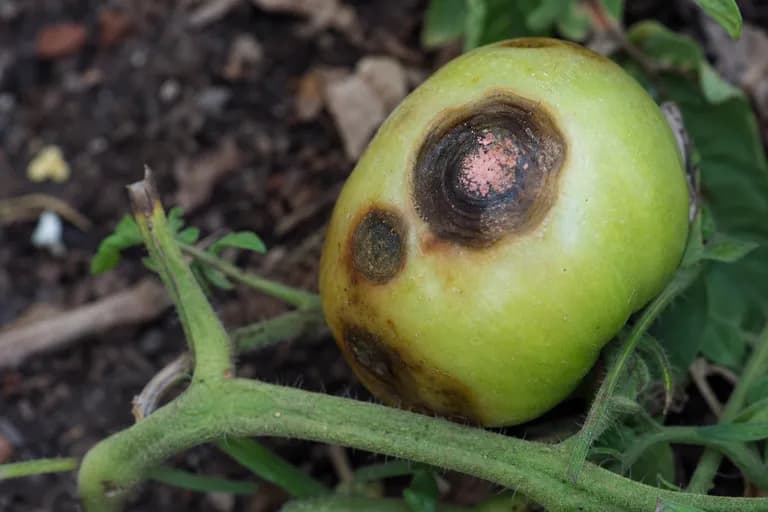
Anthraknose
KrankheitDunkle, eingesunkene Flecken auf Früchten, die sich nach der Ernte vergrößern. Das Fruchtfleisch entwickelt dunkle Streifen. Blätter können braune Flecken zeigen.
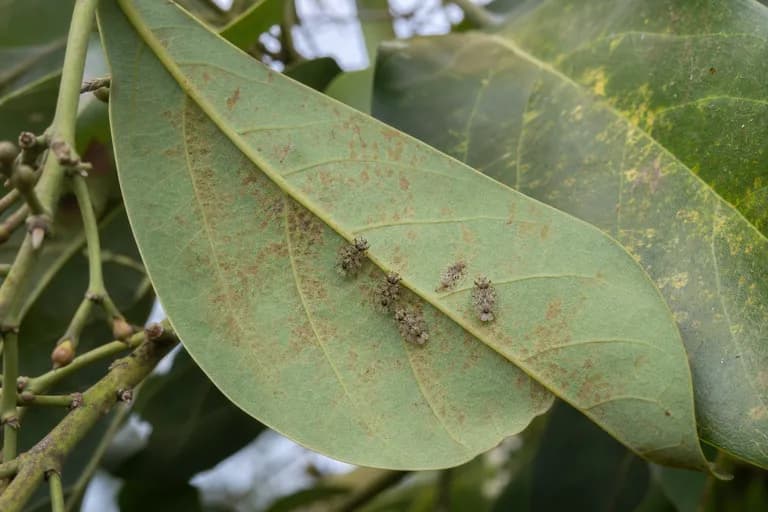
Avocado-Netzwanze
SchädlingGesprenkelte, blasse Bereiche auf den oberen Blattflächen. Schwarze Kotflecken auf den Blattunterseiten. Starker Fraß verursacht vorzeitigen Blattfall.
Fehlerbehebung bei häufigen Problemen
Wurzelfäule durch Überwässerung oder schlechte Drainage ist der häufigste Todesursache bei Avocadobäumen. Braune Blattspitzen weisen auf Salzverbrennungen durch Mineralablagerungen hin, die durch tiefes Auswaschen mit Wasser behandelt werden. Fruchtfall im Sommer ist normal, da Bäume weit mehr Früchte ansetzen, als sie tragen können. Sonnenbrand an exponierten Ästen und Früchten tritt auf, wenn schattenspendende Blätter verloren gehen. In kühlen Klimaten ist mangelnder Fruchtansatz oft auf unzureichende Wärme während der Blüte oder das Fehlen eines komplementären Bestäubertyps zurückzuführen.
Anbautipps
- Veredelte Bäume statt aus Samen anzuziehen, um zuverlässige Fruchtqualität und eine viel kürzere Zeit bis zur ersten Ernte zu erhalten, typischerweise drei bis fünf Jahre gegenüber sieben bis fünfzehn Jahren bei Sämlingen.
- Einen Pflanzstandort mit voller Sonneneinstrahlung und ausgezeichneter Drainage wählen, da Avocadowurzeln sehr anfällig für Phytophthora-Wurzelfäule in staunassen oder schlecht entwässernden Böden sind.
- Eine dicke Schicht groben Holzmulchs von der Tropflinie einwärts auftragen und dabei mindestens 15 Zentimeter Abstand vom Stamm halten, um Halsfäule zu verhindern und gleichzeitig die flachen Feinwurzeln zu schützen.
- Tief, aber selten gießen und die obersten Zentimeter Boden zwischen den Bewässerungen trocknen lassen. Avocados bevorzugen gleichmäßige Feuchtigkeit, vertragen aber kein Staunasser im Wurzelbereich.
- Sowohl einen Typ-A-Kultivars wie Hass als auch einen Typ-B-Kultivars wie Fuerte innerhalb von 10 Metern voneinander pflanzen, um die Kreuzbestäubung zu maximieren und den Fruchtansatz erheblich zu verbessern.
- Mit einer zitrus- und avocadospezifischen Formel viermal jährlich während der Wachstumszeit düngen und mit Zink- und Eisen-Blattsprays ergänzen, wenn Blätter interveinal vergilben.
- Konservativ beschneiden und vor allem abgestorbenes Holz, sich kreuzende Äste und tiefhängende Äste entfernen. Starker Schnitt reduziert fruchttragendes Holz und kann Rinde Sonnenbrandschäden aussetzen.
- Junge Bäume vor Frost schützen, indem Stämme mit Baumwickelband umwickelt und atmungsaktives Frostschutzvlies über die Krone gelegt wird, wenn nächtliche Temperaturen unter null Grad Celsius vorhergesagt werden.
- An windigen Standorten junge Bäume in den ersten zwei Jahren sicher abstützen und einen Windschutz in Betracht ziehen, da Avocadoäste brüchig sind und bei starken Böen leicht brechen.
- Regelmäßig auf häufige Schädlinge einschließlich Avocado-Thrips, Persea-Milben und Netzwanzen überwachen. Hortikulturelles Öl als erste Abwehrlinie verwenden und nützliche Raubinsekten fördern.
Bau deine beste Avocadobaum an — und alles drumherum.
Starte heute kostenlos. Lege deine Beete an, setze deine Avocadobaum ein und lass PlotMyGarden Timing, Abstände, Begleiter und Erinnerungen von der Saat bis zum Erntekorb übernehmen.
Finde deine Avocadobaum
Hass
Die weltweit beliebteste Avocado mit narbiger dunkler Schale, reichem cremigen Fruchtfleisch und nussigem Geschmack. Blühmuster Typ A. Produziert in idealen Klimaten ganzjährig.
Fuerte
Klassische grünschalige Avocado mit glattem, butterartigem Fruchtfleisch und leichterem Geschmack als Hass. Blühmuster Typ B; ausgezeichneter Bestäuberpartner für Hass.
Bacon
Kälteresistente Sorte, die kurze Fröste bis minus 4 Grad verträgt. Glatte grüne Schale mit mildem, leicht aromatischem Fruchtfleisch. Typ B. Gute Wahl für Grenzklimate.
Mexicola
Kälteverträglichste Avocadosorte, überlebt bis minus 8 Grad Celsius. Kleine, dünnschalige Früchte mit reichem Geschmack. Typ A. Schale ist bei dünner Haut essbar.
Lamb Hass
Hochertragreiche Sorte, die große Hass-ähnliche Früchte an einem kompakteren Baum produziert. Gute Windtoleranz und reicher Fruchtansatz machen sie ideal für Hausgärten.
Ein einziger ausgewachsener Avocadobaum kann jährlich 200 bis 500 Früchte produzieren. Da Avocados im Supermarkt durchschnittlich 1,50 bis 2,50 EUR pro Stück kosten, kann ein produktiver Gartenbaum 300 bis 1250 EUR an Früchten pro Jahr liefern. Nach einer anfänglichen Investition von 30 bis 60 EUR für einen veredelten Baum und drei bis fünf Jahren Wachstum bis zur ersten Frucht amortisiert sich der Baum viele Male über seine produktive Lebensdauer von 40 bis 50 Jahren oder mehr.
Schnelle Rezepte
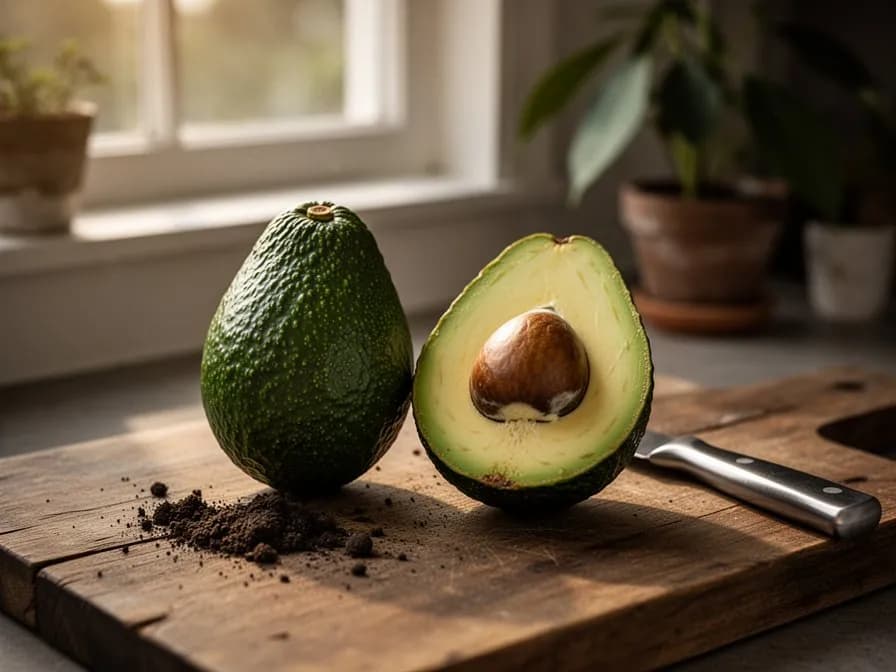
Klassische Guacamole
10 Min.Eine traditionelle mexikanische Guacamole mit reifen Avocados, die zu einer stückigen Textur zerdrückt und mit frischem Limettensaft, Koriander und einer Prise Schärfe aus Serrano-Pfeffer aufgehellt wird. Am besten sofort mit Tortilla-Chips oder als Topping für Tacos servieren.
8 ZutatenAvocado-Toast mit Pochiertem Ei
15 Min.Cremig zerdrückte Avocado auf geröstetem Sauerteigbrot verstrichen und mit einem perfekt pochierten Ei belegt. Mit roten Paprikaflocken und Flockensalz abgerundet ergibt das ein sättigendes Frühstück oder ein leichtes Mittagessen, das die butterartige Textur der Frucht in den Vordergrund stellt.
8 Zutaten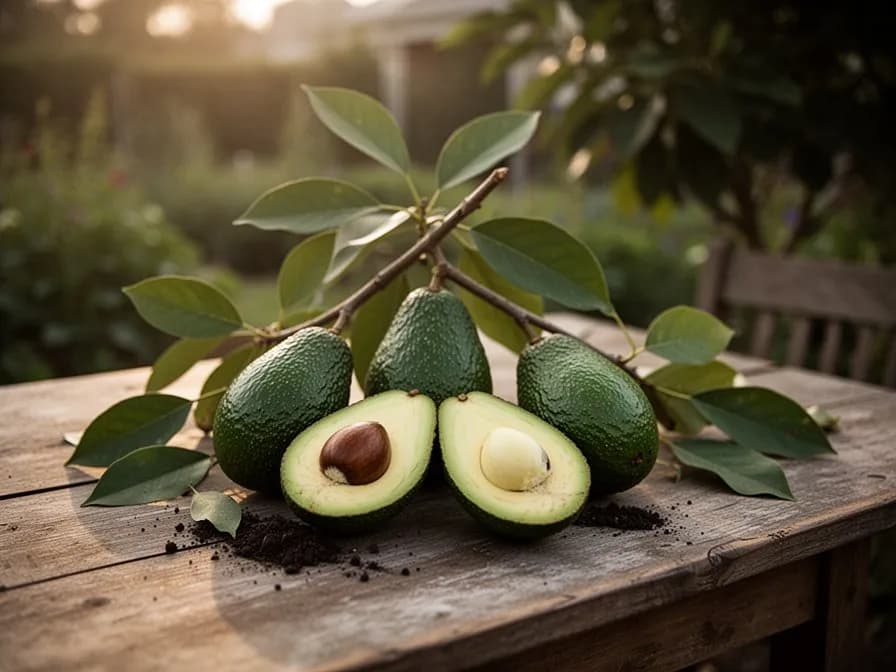
Gekühlte Avocadosuppe
15 Min.Eine erfrischende kalte Suppe, bei der reife Avocados mit Gemüsebrühe, Limette und Kreuzkümmel zu einer seidig glatten Vorspeise püriert werden. Kalt serviert und mit einem Klecks saurer Sahne und frischen Schnittlauch garniert, hebt diese Suppe den cremigen Reichtum der Avocado hervor.
8 ZutatenKulinarische Verwendung
Avocados werden für ihre cremige Textur und ihren milden, nussigen Geschmack geschätzt. Sie sind die Grundlage für Guacamole, ein Grundnahrungsmittel der mexikanischen Küche, und unverzichtbar auf Toast, in Sushi und in Salaten. Ihr hoher Gehalt an gesunden Fetten macht sie zu einer ernährungsphysiologischen Kraftpackung, reich an einfach ungesättigten Fetten, Kalium, Ballaststoffen und den Vitaminen K, C und E. Avocados passen gut zu Limette, Koriander, Chili, Tomate und Zitrusfrüchten. Sie können in Smoothies, Schokoladenmousse und Salatdressings verwendet werden.
Was drinsteckt
Gesundheitsvorteile
- Hoher Gehalt an einfach ungesättigten Fetten hilft, LDL-Cholesterin zu senken und HDL-Cholesterin zu erhöhen, was die Herzgesundheit unterstützt und das Risiko von Herzerkrankungen reduziert.
- Reich an Ballaststoffen mit fast 7 Gramm pro 100 Gramm, was eine gesunde Verdauung fördert, nützliche Darmbakterien ernährt und regelmäßigen Stuhlgang unterstützt.
- Enthält starke entzündungshemmende Verbindungen wie Phytosterole, Carotinoide und Omega-3-Fettsäuren, die chronische Entzündungen im Körper reduzieren können.
- Die Kombination aus gesunden Fetten und fettlöslichen Nährstoffen wie den Vitaminen E und K verbessert die Aufnahme von Carotinoiden aus anderen Gemüsesorten, wenn sie gemeinsam in einer Mahlzeit gegessen werden.
- Liefert erhebliche Mengen an Folsäure, einem B-Vitamin, das für die DNA-Synthese und -Reparatur unerlässlich ist, was Avocados besonders während der Schwangerschaft für die Entwicklung des fetalen Neuralrohrs vorteilhaft macht.
- Enthält Glutathion, eines der wichtigsten Antioxidantien des Körpers, das die Leberentgiftung unterstützt und dazu beiträgt, Zellen vor oxidativem Stress und Schäden durch freie Radikale zu schützen.
Woher Avocadobaum stammt
Die Avocado (Persea americana) stammt ursprünglich aus Süd-Zentralmexiko und Guatemala, wo archäologische Belege ihren Konsum durch den Menschen bis ins Jahr 5000 v. Chr. zurückverfolgen. Wilde Avocados waren klein, mit großen Kernen und dünnem Fruchtfleisch, aber durch jahrtausendelange Selektion durch die indigenen Völker Mesoamerikas entstanden allmählich größere, fleischigere Früchte. Die Azteken, Maya und Inka kultivierten Avocados alle und schätzten sie als nährstoffreiche Nahrungsquelle. Spanische Konquistadoren begegneten der Frucht im frühen 16. Jahrhundert und brachten sie nach Europa, obwohl der Baum in kühleren Klimaten Schwierigkeiten hatte. Spanische und portugiesische Händler führten Avocados anschließend während der Kolonialzeit in Südostasien, die Karibik und andere tropische Regionen ein. Die Frucht kam in den 1830er Jahren nach Florida und in den 1850er Jahren nach Kalifornien, aber der kommerzielle Anbau nahm erst im frühen 20. Jahrhundert Fahrt auf. Die Entwicklung der Hass-Sorte in den 1920er Jahren war für die Industrie transformativ. Rudolph Hass, ein Postbote und Hobbyhortikulturist, pflanzte in seinem Garten in La Habra Heights, Kalifornien, einen Sämling, der Früchte mit außergewöhnlich reichem Geschmack, cremiger Textur und dicker Schale produzierte, die Versandschäden widerstand. Er ließ die Sorte 1935 patentieren und markierte damit das erste Patent, das in den Vereinigten Staaten je für einen Baum erteilt wurde. Heute dominiert der Hass-Kultivars die weltweite Produktion. Mexiko bleibt der weltgrößte Produzent, gefolgt von der Dominikanischen Republik, Peru, Indonesien und Kolumbien. Die Weltproduktion übersteigt acht Millionen Tonnen jährlich, angetrieben durch steigende Nachfrage in Nordamerika, Europa und Asien, wo die Frucht für ihr Nährstoffprofil und ihre kulinarische Vielseitigkeit gefeiert wird.
Avocadobaum: Schon gewusst?
Faszinierende Fakten über Avocadobaum
Ein einziger ausgewachsener Avocadobaum kann zwischen 200 und 500 Früchte pro Jahr produzieren, wobei außergewöhnliche Bäume in einem reichen Erntejahr über 1000 Früchte liefern.
Avocadobaum: Fragen & Antworten
Wann sollte ich Avocadobaum pflanzen?
Was sind gute Begleitpflanzen für Avocadobaum?
In welchen Winterhärtezonen kann Avocadobaum wachsen?
Wie viel Sonne braucht Avocadobaum?
Welchen Abstand sollte ich zwischen Avocadobaum lassen?
Welche Schädlinge und Krankheiten befallen Avocadobaum?
Wie lagere ich Avocadobaum nach der Ernte?
Was sind die besten Avocadobaum-Sorten zum Anbauen?
Welchen Boden braucht Avocadobaum?
Kann ich einen Avocadobaum aus einem Supermarktkern anziehen?
Warum verliert mein Avocadobaum seine Blätter?
Woran erkenne ich, wann Avocados erntereif sind?
Können Avocadobäume in Behältern wachsen?
Was ist der Unterschied zwischen Typ-A- und Typ-B-Avocadobäumen?
Wie viel Wasser benötigt ein ausgewachsener Avocadobaum?
Du hast die Theorie gelesen. Jetzt baue sie auf Autopilot an.
Alles, was Avocadobaum knifflig macht — das Timing, die Abstände, die Begleiter, das Erntefenster — genau das übernimmt PlotMyGarden für dich, für jede Pflanze im Garten.
Ein Plan, der dein Wetter kennt
Standort einmal festlegen. Aussaat-, Dünge- und Erntedaten rund um deinen echten letzten Frosttermin und die Live-Vorhersage — kein Raten mehr nach Saattüte.
Aus dem Abschnitt „Pflanzzeit“Beetplaner per Drag & Drop
Beete auf einem Raster gestalten. Jede Pflanze rastet im richtigen Abstand ein, und du siehst die ganze Saison, bevor du einen Cent für Saatgut ausgibst.
Aus dem Abschnitt „Anbau“Begleiter-Konflikte früh erkannt
Über 200 gute und schlechte Kombinationen werden beim Pflanzen live geprüft — so landet ein saisonruinierender Fehler nie in der Erde.
Aus dem Abschnitt „Begleiter“Erinnerungen, nach denen du wirklich handelst
„Gieß die Bohnen.“ „Heute ernten, bevor's umschlägt.“ Pünktlich, konkret und auf deine echten Pflanzen bezogen.
Aus dem Abschnitt „Ernte“Staffel-Aussaat, geplant
Sechs Wochen ernten statt sechs Tage? Die App verteilt deine Aussaaten automatisch und erinnert dich, wenn der nächste Satz fällig ist.
Aus dem Abschnitt „Pflanzzeit“Ein Verlauf, der schlauer wird
Jede protokollierte Ernte bringt der App deinen Garten bei. Der Plan fürs nächste Jahr startet bei dem, was in deinem Boden wirklich funktioniert hat.
Aus dem Abschnitt „Überblick“Pflanze diese neben Avocadobaum
Weitere Obstbäume
Halte Avocadobaum von diesen fern
Bau deine beste Avocadobaum an — und alles drumherum.
Starte heute kostenlos. Lege deine Beete an, setze deine Avocadobaum ein und lass PlotMyGarden Timing, Abstände, Begleiter und Erinnerungen von der Saat bis zum Erntekorb übernehmen.