Hass Avocado
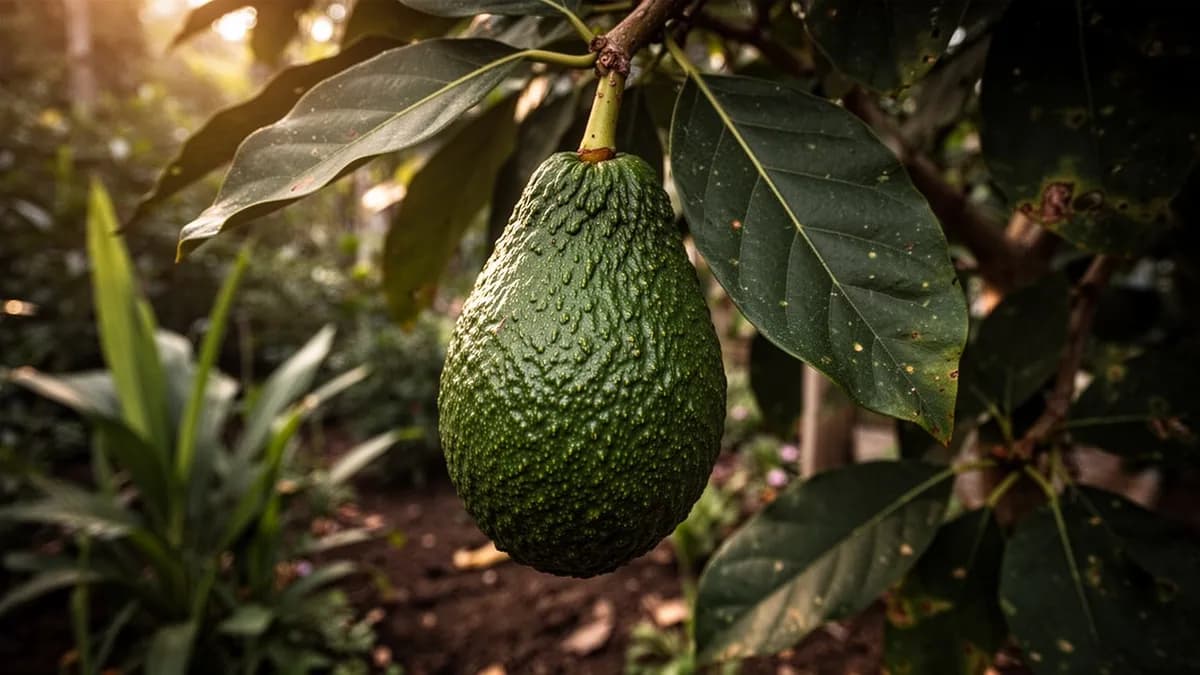
The world's most popular avocado variety, accounting for 80 percent of global production, with pebbly dark skin that turns nearly black when ripe.





On this pageOverview
Meet Hass Avocado
The world's most popular avocado variety, accounting for 80 percent of global production, with pebbly dark skin that turns nearly black when ripe. Hass avocados have a rich, buttery flavor and high oil content that makes them the gold standard for guacamole. The trees are A-type flowers and benefit from a B-type pollinator such as Fuerte or Bacon nearby.
When to plant Hass Avocado
While Hass avocado seeds can be sprouted using the toothpick-in-water method, seedlings will not produce true Hass fruit. Trees grown from Hass seeds take eight to fifteen years to fruit and produce variable, often inferior fruit. For true Hass avocados, purchase grafted nursery trees. Hass seedlings can be used as rootstock, but commercial growers prefer Zutano or Duke 7 rootstock for disease resistance. Propagation by grafting is the only way to reproduce the Hass variety.
Your Hass Avocado Year
Composed for Zone 7 · typical seasons · frost passes Apr 2, returns Nov 1
Plant Hass Avocado Mar – May, pick Feb – Sep. Check the planting methods below and set your climate to personalize these windows.
How to grow Hass Avocado
Hass avocado grows best in coastal Mediterranean and subtropical climates with mild winters. The tree reaches twenty-five to thirty-five feet tall with a spreading canopy. Plant in full sun with excellent drainage, as Hass is particularly susceptible to root rot in wet soils. Space trees at least twenty to twenty-five feet apart. Water deeply but infrequently, allowing the top few inches of soil to dry between irrigations.
Hass is a Guatemalan-type avocado and is more cold-sensitive than Mexican-type varieties, suffering damage below 30 degrees Fahrenheit. Protect young trees from frost with covers during cold events. Fertilize four times per year with a citrus and avocado fertilizer that includes zinc, iron, and manganese. The tree is an alternate bearer, producing a heavy crop one year followed by a lighter crop the next.
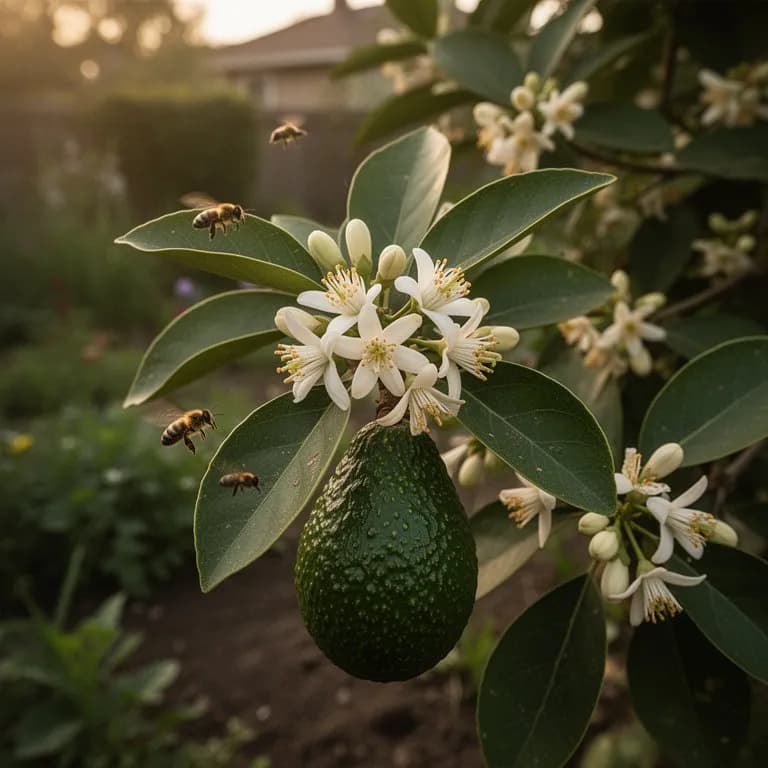
Hass is a Type A flowering variety, which means it benefits greatly from having a Type B pollinator such as Fuerte, Bacon, or Zutano planted nearby. Without cross-pollination, fruit set can be poor. Prune minimally, focusing on removing dead wood and maintaining a manageable canopy height. Hass avocados remain on the tree for months after maturity, so harvest can be spread over a long window from spring through fall.
Hass Avocado needs more room than a 4 × 8 ft bed gives
Each Hass Avocado wants 600 cm of elbow room. The planner keeps that spacing for you — every plant, every bed.
Hass Avocado's best neighbours
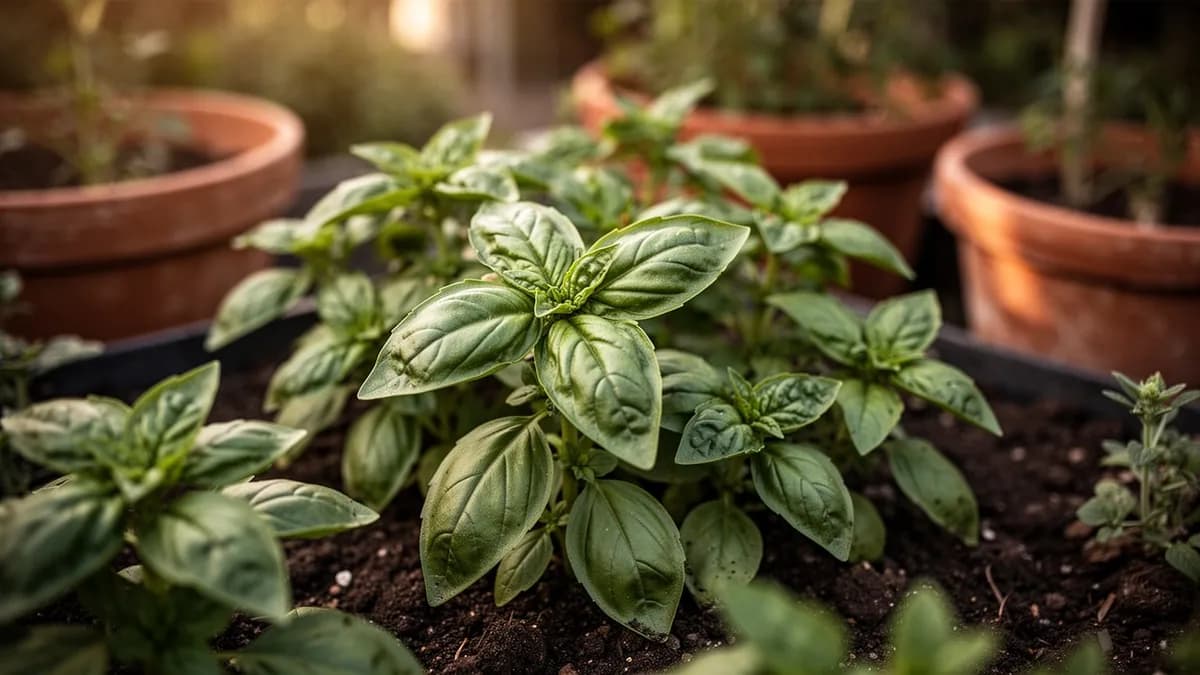
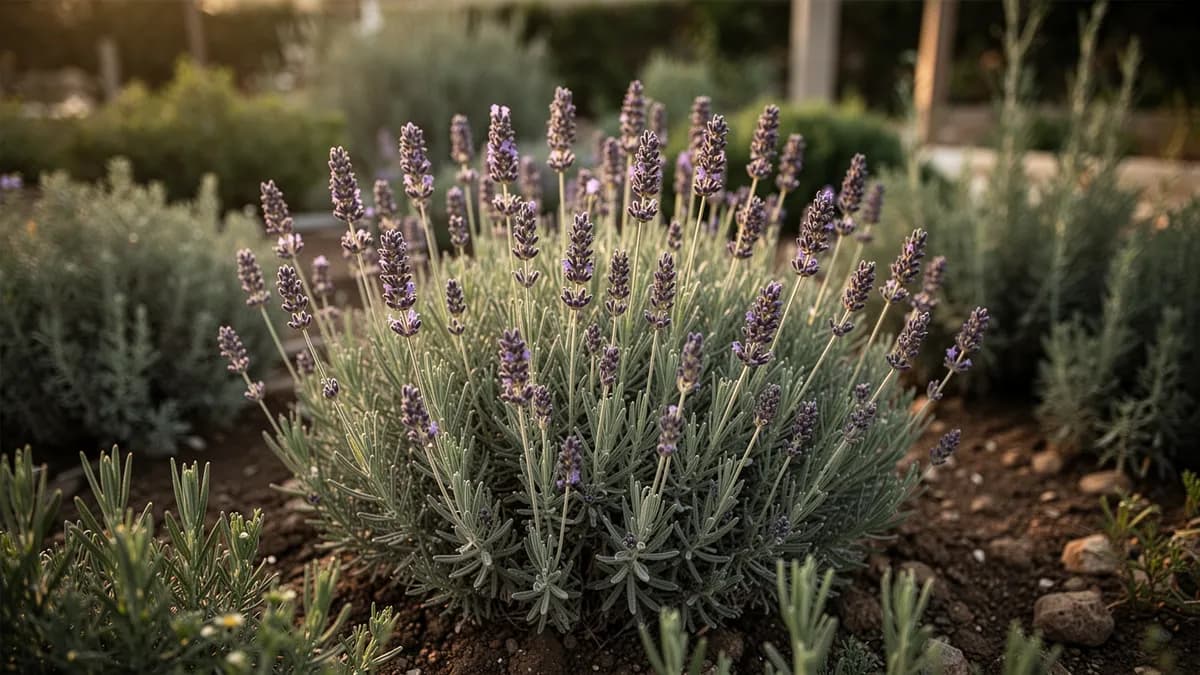
Plant a B-type pollinator such as Fuerte, Bacon, or Zutano within fifty feet of Hass trees for improved fruit set. Basil and lavender attract pollinators and grow well nearby. Low-growing cover crops like white clover suppress weeds without competing with the shallow root system. Avoid planting turf grass up to the trunk. Comfrey, yarrow, and borage planted at the drip line attract beneficial insects and provide mulch material when cut.
Basil belongs beside it.
Old growers' knowledge, checked against Hass Avocado's real companion table below — test any plant you're growing.
Try Hass Avocado in a bed — right here
A real planner bed with Hass Avocado already in it. Tap a companion to place it and watch the pairing checks answer — green for good neighbours, red for a clash.


Related growing guides
Feed it well
Hass avocado requires exceptionally well-draining soil, ideally sandy loam with a pH of 6.0 to 6.5. It is more sensitive to root rot than many other avocado varieties. Apply a complete avocado fertilizer four times per year with supplemental zinc. Avoid chloride-containing fertilizers, as avocados are salt-sensitive. Organic mulch extending to the drip line is essential but must never touch the trunk. Iron chlorosis occurs in alkaline soils and requires chelated iron treatment.
Ideal Temperature
Hardiness Zone Compatibility
From seed to harvest, stage by stage
Establishment and Root Development
Newly planted Hass avocado trees focus almost all energy on establishing a deep, spreading root system rather than producing above-ground growth. Avocados have sensitive, relatively shallow feeder roots concentrated in the top 30-60 cm of soil, and they are highly susceptible to root rot from prolonged saturation. During this phase the tree may appear to do very little, but underground activity is extensive as the plant anchors itself and begins building the root infrastructure needed to support decades of heavy fruiting.
Vegetative Growth and Canopy Building
Once roots are established, the tree puts on rapid vegetative growth in characteristic flushes. New growth emerges in waves of bronze-red foliage that gradually hardens to deep glossy green. Each flush extends branches and builds the framework needed to support a future crop. Grafted trees may produce their first exploratory flower clusters during this period, but these should generally be removed to redirect energy into canopy building and structural development.
First Flowering
Grafted Hass avocado trees typically produce their first significant flowering event 2-4 years after planting. Avocado flowers are unusual in that each flower opens twice over two days: on the first day it opens as a female, receptive to pollen, then closes and reopens the next day as a male, shedding pollen. This synchronized dichogamy means the tree rarely pollinates itself, and having a Type B pollinator variety nearby dramatically improves fruit set. Hass is a Type A flowering variety, pairing best with Bacon, Fuerte, or Zutano.
Fruit Set and Development
After successful pollination, tiny fruitlets begin to develop. Avocados have one of the longest fruit development periods of any common fruit tree, requiring 12-18 months from flower to harvest-ready fruit. The tree naturally drops the vast majority of set fruitlets within the first few weeks, retaining only a small fraction to maturity. Green, developing fruit hangs on the tree through summer and autumn, gradually sizing up while accumulating the characteristic oils that give Hass its rich, buttery flavor. Unlike most fruit, avocados do not ripen on the tree and can be left hanging for extended storage.
Harvest Maturity
Hass avocados reach physiological maturity when oil content in the flesh exceeds 8%, at which point they will ripen correctly after picking. The skin begins transitioning from bright green toward dark purplish-black at maturity. Unlike most fruit, avocados do not ripen on the tree and must be picked to initiate softening. The tree can act as a living refrigerator, holding mature fruit for up to 6-8 months without quality loss, giving the home grower an extended harvest window unavailable with commercial fruit.
Post-Harvest Recovery and Reflush
After the main harvest, the tree enters a brief recovery phase where it rebuilds carbohydrate reserves depleted by fruit production. A flush of new vegetative growth follows within weeks, extending branches and setting the framework for the next flowering cycle. Mature Hass trees often carry two cohorts of fruit simultaneously, with one crop approaching maturity while the next year's flowers are already developing, making year-round attention to nutrition and irrigation essential.
Plant in a raised mound or well-drained bed to keep the root crown above any waterlogging risk. Water deeply but infrequently, allowing the top 5 cm of soil to dry between irrigations. Never allow the root zone to remain waterlogged for more than 24 hours. Apply a 10 cm layer of coarse organic mulch around the drip line, keeping it well clear of the trunk to prevent collar rot.
Caring for Hass Avocado month by month
What to do each month for your Hass Avocado
October
You are hereMain harvest window for many Hass trees begins. Pick fruit with sharp, clean secateurs leaving a short stem stub. Commence post-harvest fertilization with a complete fertilizer to support recovery and next season's flower development. This is an ideal time to perform structural pruning to maintain a manageable tree height.
Know exactly what to do in your garden — every month
One email at the start of each month: what to sow, plant, and tackle right now — for your Hass Avocado and everything growing around it. Plus a short starter course that helps you dodge the classic mistakes.
- What to do, right now
- Matched to your season
- Starter course included
Harvesting Hass Avocado
Hass avocados are ready to harvest when the skin color changes from green to dark purplish-black, though this color change is gradual. The most reliable test is to pick one fruit and see if it ripens properly at room temperature within seven to ten days. Fruit can remain on the tree for many months after maturity, storing naturally until needed. Cut the stem with clippers rather than pulling. Leave a small stem stub attached to reduce decay.
assuming you plant when the window opens — set your real date
Pick Hass Avocado promptly and the plant keeps producing.
Storage & Preservation
Firm Hass avocados ripen at room temperature in five to seven days. Speed ripening by placing in a paper bag with an ethylene-producing fruit. Once the fruit yields to gentle pressure, it is ready to eat. Ripe fruit stores in the refrigerator for two to three days. Mashed flesh mixed with lemon juice freezes well for up to four months. Avocado oil extracted from the flesh has an extended shelf life and is a premium cooking and finishing oil.
What goes wrong — and the fix
Phytophthora Root Rot
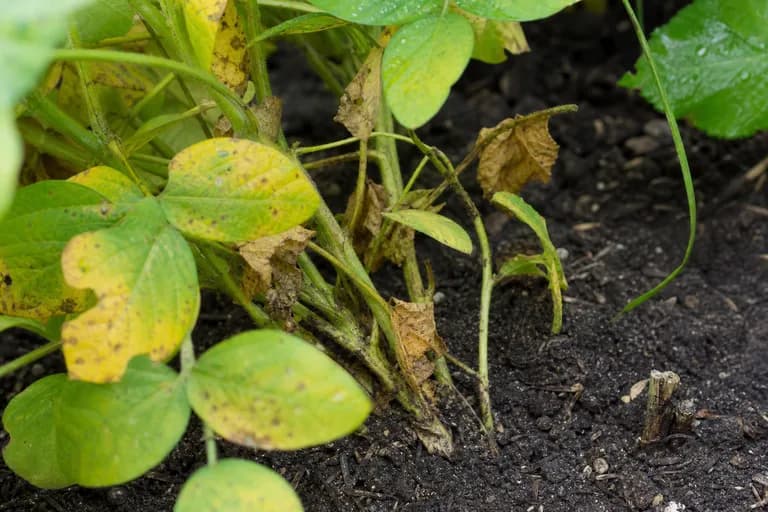
DiseaseSmall, pale, wilted leaves, branch dieback from the tips, dark mushy roots, overall tree decline.
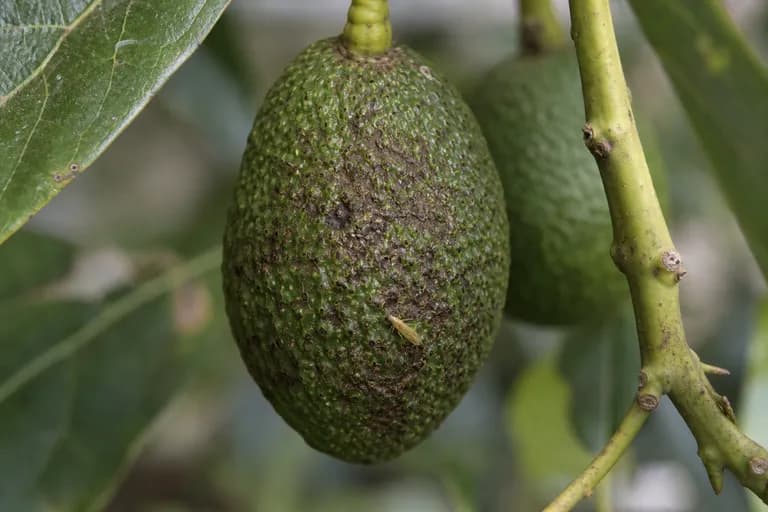
Avocado Thrips
PestScarring and roughening of fruit skin, brown leathery patches on young fruit, cosmetic damage that reduces market value.
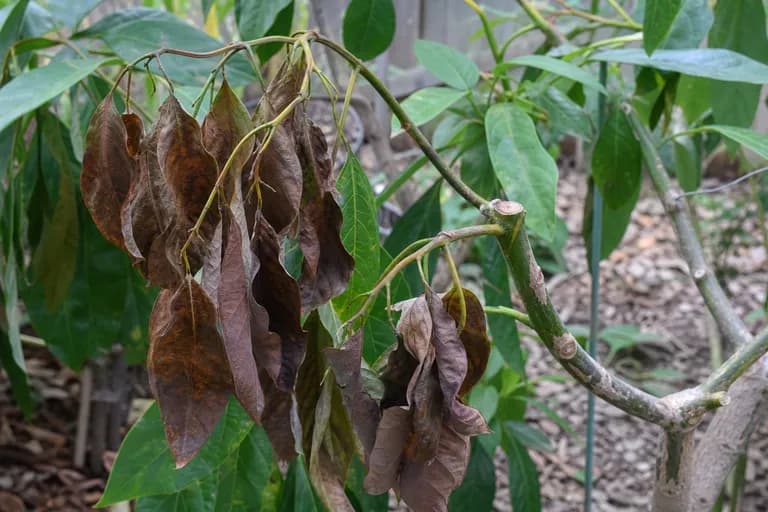
Laurel Wilt
DiseaseRapid wilting and browning of foliage, dark streaking in the sapwood, tree death within weeks of symptom onset.
Troubleshooting Common Problems
Alternate bearing is the most common frustration, with heavy and light crop years alternating regardless of care. Tip burn on leaf margins indicates salt damage from water or fertilizer. Hass is less cold-tolerant than many avocado varieties and suffers fruit and flower damage below 30 degrees Fahrenheit. The tree produces abundant fruit that naturally drops before maturity; this is normal and not a sign of problems. Sunburn on exposed fruit causes brown, leathery patches.
Growing Tips
- Always plant grafted Hass avocado trees rather than seed-grown specimens. Grafted trees begin fruiting in 3-4 years compared to 8-15 years for seed-grown trees, and they reliably produce fruit identical to the parent Hass variety. Seed-grown trees produce unknown, often inferior fruit and are not a practical choice for the home garden.
- Plant a Type B avocado pollinator variety such as Bacon, Fuerte, Zutano, or Ettinger within 5-10 meters of your Hass tree. Hass is a Type A variety and pairs best with Type B for optimal fruit set. While Hass trees will produce some fruit without a pollinator, yields are dramatically higher when a compatible variety is nearby and in simultaneous bloom.
- Avocado roots are extremely sensitive to waterlogging and Phytophthora cinnamomi root rot, the most serious disease threat to avocado worldwide. Always plant on a gentle slope, in a raised bed, or mound the soil at the planting site to ensure the root crown sits at least 20-30 cm above the winter water table. Never plant in a low-lying area that collects water.
- Maintain a thick, coarse organic mulch layer extending from 30 cm away from the trunk out to the drip line and beyond. Avocado feeder roots are mostly in the top 30 cm of soil and benefit enormously from the moisture retention, temperature moderation, and biological activity that a 10-15 cm deep mulch layer provides. Use wood chips rather than fine compost, which can mat and restrict water penetration.
- Feed Hass avocado trees with a fertilizer formulated specifically for avocados or citrus, applied in small amounts monthly rather than large applications quarterly. Avocados are particularly sensitive to salt burn from over-fertilization and to phosphorus toxicity, so choose a low-phosphorus formula. Ensure the fertilizer includes zinc and boron, which are critical micronutrients for avocado flowering and fruit set that are often deficient in garden soils.
- Keep mature Hass trees pruned to a manageable height of 4-5 meters to allow practical hand-picking without ladders and to improve light penetration throughout the canopy. Unlike many fruit trees, avocados can be pruned quite hard and will regenerate vigorously. Carry out major pruning immediately after the main harvest, thinning out crossing and shading branches and reducing overall height by removing the tallest leaders.
- Test avocado harvest readiness by picking one or two fruit when they reach full size and develop a slight darkening of the skin. Leave them at room temperature for 5-7 days. If they ripen to smooth, buttery, nutty-flavored flesh without stringiness or off-flavors, the rest of the crop is ready to harvest. Avocados left on the tree continue to accumulate oil and improve in quality for several months after reaching physiological maturity.
- Protect young avocado trees from frost during their first three winters, as frost sensitivity decreases with age and trunk diameter. Use horticultural frost cloth, old bedsheets, or specialized tree wraps on nights when temperatures are forecast to drop below 2°C. Running a string of outdoor lights inside the cloth cover can add several degrees of protection. Never use plastic sheeting, which can cause condensation damage.
- Water avocado trees deeply and infrequently rather than shallowly and often. The goal is to wet the entire root zone to a depth of 60-90 cm at each irrigation, then allow the top 5-8 cm of soil to dry before the next watering. Shallow, frequent irrigation encourages surface rooting and provides insufficient moisture to the deep feeder roots that sustain the tree during fruiting. A soil moisture probe is a worthwhile investment for avocado growers.
- Watch the leaves as the tree's primary health indicator. Healthy Hass avocado foliage is deep, glossy green. Pale yellowish leaves indicate nitrogen deficiency or root problems. Brown leaf tips suggest salt burn from over-fertilization or chlorinated water. Stippled, bronzed leaves indicate mite infestation. Blackened leaf margins after cold nights signal frost damage. Responding quickly to these signals prevents minor issues from becoming serious problems.
Grow your best Hass Avocado yet — and everything around it.
Start a free plan today. Lay out your beds, drop in your Hass Avocado, and let PlotMyGarden handle the timing, spacing, companions and reminders from seed to harvest basket.
Pick your Hass Avocado
Hass
The standard commercial variety. Pebbly skin turns from green to black when ripe. Rich, creamy flesh with 18 to 20 percent oil content. A-type flower.
Lamb Hass
A Hass offspring that produces larger fruit with similar quality. More upright tree form and slightly better heat tolerance. A-type flower.
GEM
A newer Hass offspring with excellent fruit quality and higher yield. The fruit has a slightly longer shelf life than standard Hass. A-type flower.
A mature Hass avocado tree in a suitable climate can produce 200-500 avocados per year, equivalent to $200-$700 worth of fruit at typical store prices of $1-$2 per avocado for conventional fruit and significantly more for organic. While the tree requires 3-4 years to begin fruiting and a 5-7 year wait to reach full production, it can remain productive for 40-80 years with proper care, making it one of the highest-value long-term investments available to the home gardener in suitable climates. Growing your own also provides access to fruit at true peak ripeness, a quality essentially unavailable in commercial supply chains where fruit is picked weeks early for transport.
Quick recipes
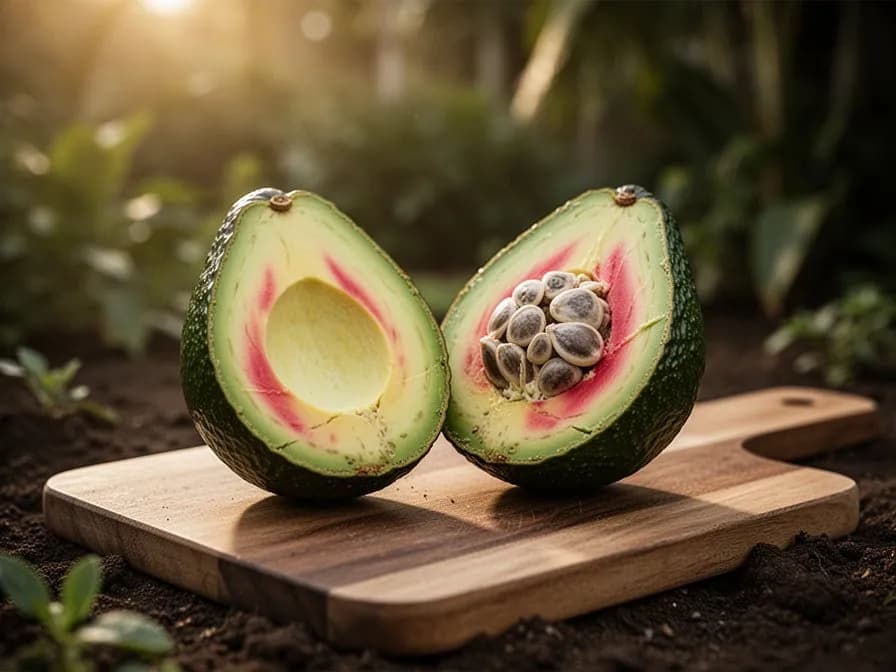
Classic Fresh Guacamole
10 minutesThe definitive preparation for garden-fresh Hass avocados, guacamole at its best is a simple celebration of ripe fruit with minimal additions. This recipe uses a traditional approach with a fork or molcajete rather than blending, preserving the chunky texture that distinguishes hand-made guacamole from commercial versions. The key is using avocados at absolute peak ripeness, which only garden-grown or farmer-direct fruit can reliably deliver.
8 ingredientsSmashed Avocado Toast with Poached Egg
15 minutesThe combination of creamy avocado, crusty sourdough, and a perfectly poached egg delivers a complete, nutrient-dense meal that showcases the versatility and richness of home-grown Hass avocados. Seasoned simply with lemon, flaky salt, and chili flakes, this recipe lets the quality of fresh, ripe avocado stand as the centrepiece rather than masking it with excessive additions.
8 ingredientsAvocado and Mango Summer Salsa
12 minutesA vibrant, colorful salsa that pairs the buttery richness of Hass avocado with the sweet acidity of ripe mango, balanced with fresh herbs, lime, and a hint of heat. This salsa works beautifully as a standalone dip, alongside grilled fish or chicken, spooned over tacos, or served simply with tortilla chips. The combination celebrates the tropical heritage of the avocado with complementary flavors.
8 ingredientsCulinary Uses
Hass avocado is considered the premium variety for guacamole due to its rich, buttery flavor and creamy texture. It is sliced for sandwiches and toast, diced for salads and salsas, and mashed as a spread. The high oil content makes it excellent for blending into smoothies and dressings. Hass avocado oil is a high-quality cooking oil with a high smoke point. The fruit is used in sushi, poke bowls, and countless modern culinary applications.
What's inside
Health Benefits
- Rich in monounsaturated oleic acid, the primary fatty acid in olive oil, regular avocado consumption is associated with reduced LDL cholesterol, increased HDL cholesterol, and significantly improved cardiovascular risk markers in multiple large clinical studies
- Contains exceptionally high levels of folate relative to most fruits, making Hass avocado one of the most important dietary sources of this critical B vitamin for pregnant women, supporting healthy neural tube development and reducing risk of birth defects
- The combination of healthy fats, fiber, and low sugar content gives avocado an extremely low glycemic impact, with research demonstrating that including avocado in meals reduces post-meal blood glucose and insulin spikes compared to carbohydrate-equivalent portions of other foods
- Provides lutein and zeaxanthin, carotenoid antioxidants that accumulate in the lens and retina of the eye and are associated with significantly reduced risk of age-related macular degeneration and cataracts, especially when consumed regularly over years
- The high potassium and magnesium content supports healthy blood pressure regulation, with epidemiological evidence linking regular avocado consumption to lower rates of hypertension and metabolic syndrome in large population studies
- Contains beta-sitosterol and other plant sterols that compete with dietary cholesterol for absorption in the intestine, providing a natural cholesterol-lowering mechanism that complements the fruit's beneficial fatty acid profile for comprehensive cardiovascular support
Where Hass Avocado comes from
The Hass avocado's story is uniquely modern within the long history of avocado cultivation. The avocado itself (Persea americana) has been cultivated in Mesoamerica for at least 5,000 years, with archaeological evidence of avocado consumption in the Tehuacan Valley of Mexico dating back 8,000 to 10,000 years. Ancient Aztec and Maya civilizations prized the fruit deeply, calling it ahuacatl in Nahuatl, and it was considered a symbol of fertility and prosperity. Spanish conquistadors encountered the fruit in the early 16th century and introduced it to Europe, though it remained a curiosity there due to climate limitations. The Spanish spread avocados throughout their colonial empire, reaching Peru, the Caribbean, and eventually Florida and Hawaii in the 18th and 19th centuries. California's commercial avocado industry began developing in earnest in the late 19th century, initially using older varieties including Fuerte, which dominated the market for decades.
The Hass variety itself emerged as a chance seedling in La Habra Heights, California, in the late 1920s, grown from a seed by Rudolph Hass, a mail carrier who had taken up amateur horticulture. The seedling produced fruit with an unusually thick, pebbly skin that darkened dramatically as it ripened, making harvest timing far more intuitive than the older green varieties. More importantly, the flesh was exceptionally rich, creamy, and oily, with a flavor profile that made it immediately superior to competing varieties. Hass patented the tree in 1935, the first avocado patent ever granted, and licensed budwood propagation to nurserymen. Though Hass himself never became wealthy from the variety, the Hass tree in his La Habra Heights yard continued producing fruit until 2002, when it succumbed to root rot at approximately 76 years of age. Today, Hass dominates global avocado production across California, Mexico, Chile, South Africa, Australia, Spain, and dozens of other producing regions, having transformed from one amateur grower's lucky seedling into one of the most economically significant fruit varieties in the world.
Hass Avocado: did you know?
Fascinating facts about Hass Avocado
The Hass avocado was discovered as a chance seedling by Rudolph Hass, a California mail carrier and amateur horticulturalist, who patented it in 1935. He sold the tree's budwood to nurserymen for a small royalty, and the variety now accounts for approximately 80% of all avocados produced and consumed worldwide.
Hass Avocado questions, answered
When should I plant Hass Avocado?
What are good companion plants for Hass Avocado?
What hardiness zones can Hass Avocado grow in?
How much sun does Hass Avocado need?
How far apart should I space Hass Avocado?
What pests and diseases affect Hass Avocado?
How do I store Hass Avocado after harvest?
What are the best Hass Avocado varieties to grow?
What soil does Hass Avocado need?
Can I grow a Hass avocado from a supermarket pit?
Why is my avocado tree flowering but not setting fruit?
How do I know when Hass avocados are ready to pick?
My avocado tree has yellowing leaves. What is wrong?
Can Hass avocado trees grow in containers?
How do I ripen picked Hass avocados quickly?
You just read the theory. Now grow it on autopilot.
Everything that makes Hass Avocado fiddly — the timing, the spacing, the companions, the harvest window — is exactly what PlotMyGarden handles for you, for every plant in your garden.
A plan that knows your weather
Set your location once. Get sow, feed and harvest dates built around your real last-frost date and live forecast — no more guessing from a generic seed packet.
From the “When to plant” sectionDrag-and-drop bed planner
Design beds on a grid. Every plant snaps to its proper spacing, and you can see your whole season laid out before you spend a cent on seed.
From the “Growing guide” sectionCompanion conflicts, caught early
200+ good-and-bad pairings checked live as you plant — so a season-wrecking mistake never makes it into the ground.
From the “Companions” sectionReminders you'll actually act on
“Water the beans.” “Pick today before it turns.” Timely, specific, and tied to the plants you're really growing.
From the “Harvest” sectionSuccession, scheduled
Want a harvest for six weeks, not six days? It spaces your sowings automatically and reminds you when each new block is due.
From the “When to plant” sectionA record that gets smarter
Every harvest you log teaches it your garden. Next year's plan starts from what actually worked in your soil, not a textbook's.
From the “Overview” sectionPlant these alongside Hass Avocado
More Tropical Fruits
Grow your best Hass Avocado yet — and everything around it.
Start a free plan today. Lay out your beds, drop in your Hass Avocado, and let PlotMyGarden handle the timing, spacing, companions and reminders from seed to harvest basket.