Judía Espárrago
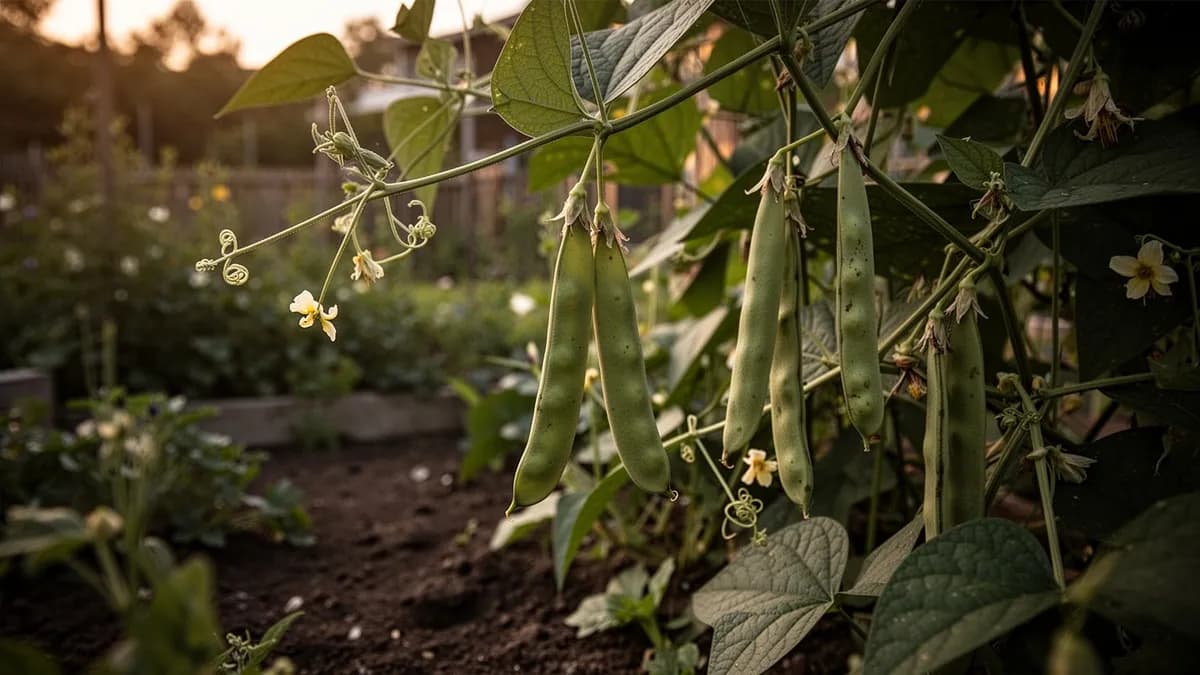
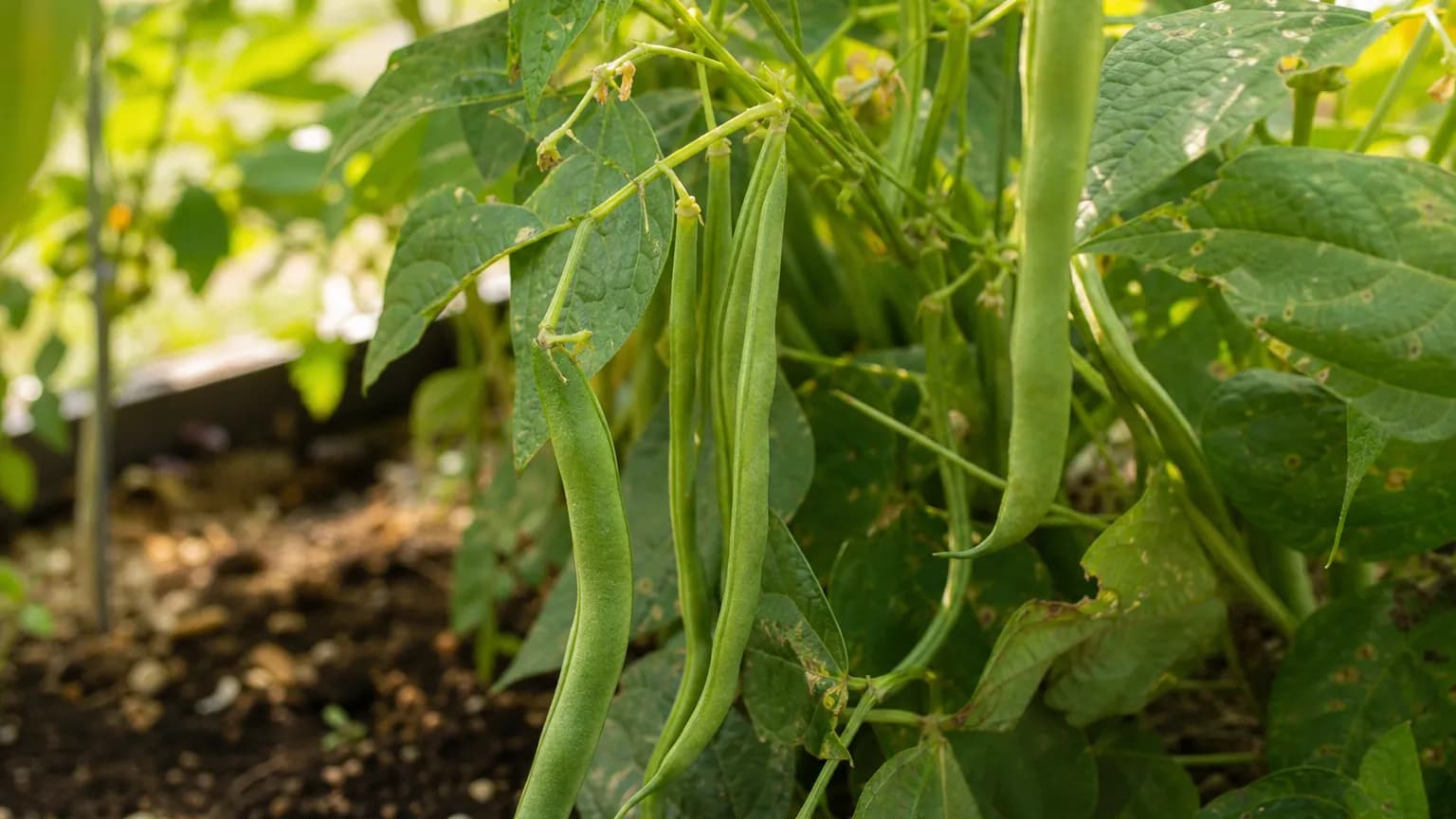
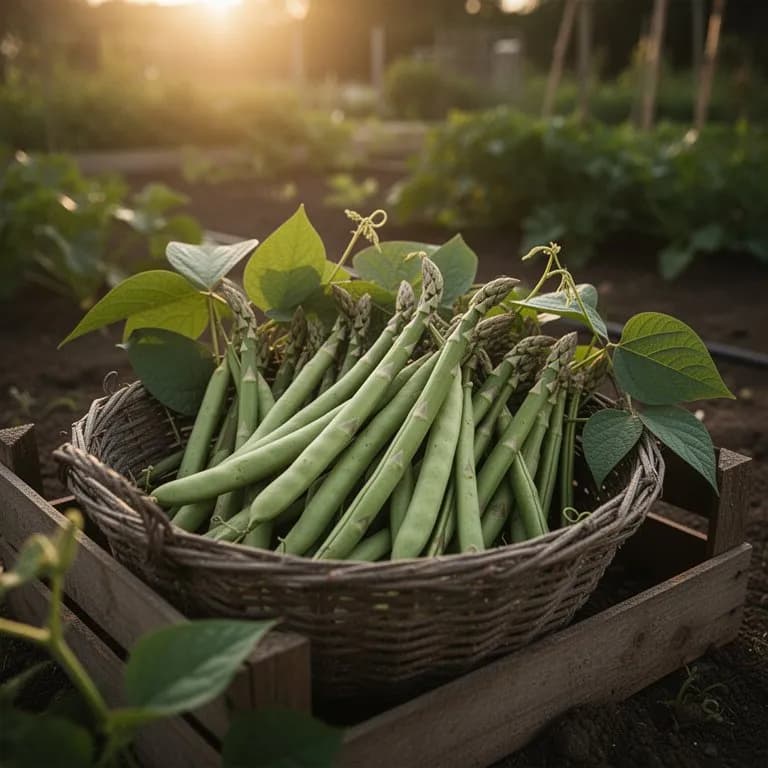
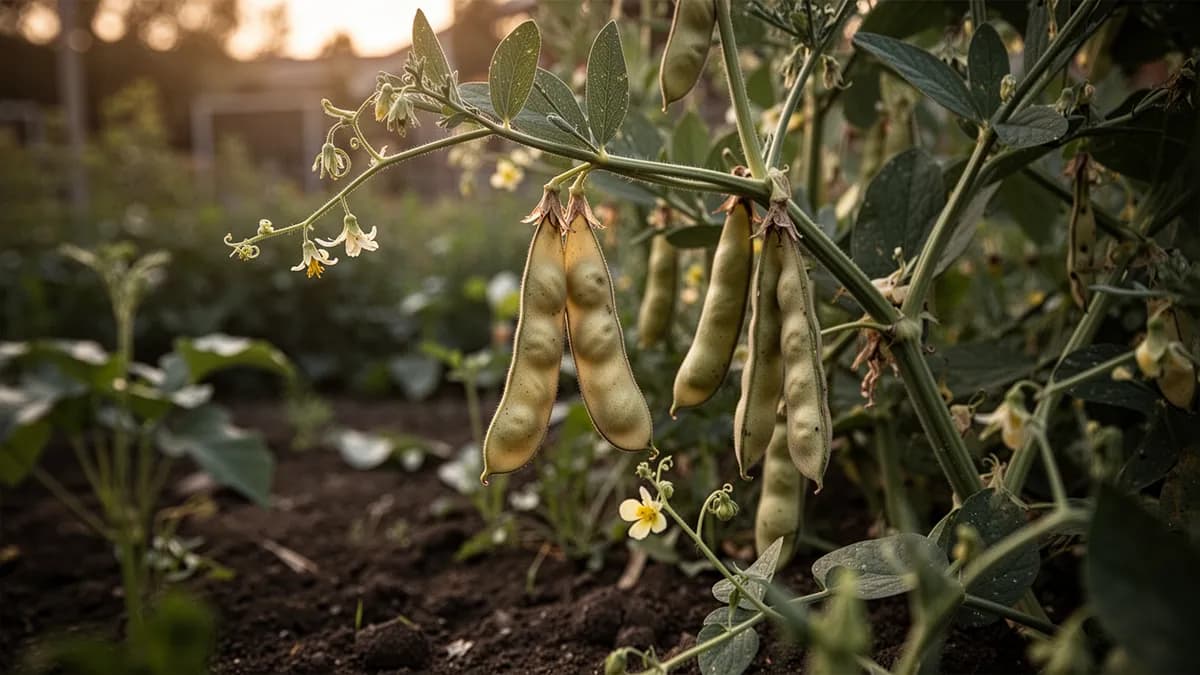
La judía espárrago (Vigna unguiculata subsp. sesquipedalis), también conocida como judía de metro, produce vainas extraordinariamente largas de 30-90 cm que cuelgan elegantemente de plantas trepadoras vigorosas.





En esta páginaResumen
Conoce Judía Espárrago
La judía espárrago (Vigna unguiculata subsp. sesquipedalis), también conocida como judía de metro, produce vainas extraordinariamente largas de 30-90 cm que cuelgan elegantemente de plantas trepadoras vigorosas. Originaria del sur de Asia, esta leguminosa tropical es un ingrediente fundamental de las cocinas china, tailandesa y filipina, apreciada por su textura crujiente y sabor dulce.
Cuándo plantar Judía Espárrago
Siembre directamente cuando el suelo supere 21 °C. No trasplanta bien. Remoje las semillas 12-24 horas antes para acelerar la germinación. Germinación en 7-10 días. Inocule con Rhizobium para mejorar la fijación de nitrógeno.
Tu año de Judía Espárrago
Ajustado a Zona 7 · temporada típica · la helada se va hacia el 2 abr y vuelve hacia el 1 nov
Planta Judía Espárrago May – Jun y cosecha Jul – Sep. Consulta los métodos de plantación y elige tu clima para adaptar los periodos.
Cómo cultivar Judía Espárrago
Siembre directamente cuando la temperatura del suelo supere 21 °C, ya que no tolera el frío. Plante a 2-3 cm de profundidad, espaciando 15-20 cm entre plantas en filas de 60-90 cm. Las plantas son trepadoras vigorosas que alcanzan 2-3 metros de altura.
Proporcione tutores altos, enrejados o mallas de al menos 2 metros. Riegue regularmente con 2,5-4 cm semanales, especialmente durante la floración y formación de vainas. Las plantas son muy productivas en climas cálidos y húmedos.
Fertilice ligeramente al plantar, ya que como leguminosa fija su propio nitrógeno. Un exceso de nitrógeno produce plantas frondosas sin vainas. Aplique abono bajo en nitrógeno y rico en fósforo y potasio al inicio de la floración. Coseche frecuentemente cada 2-3 días para mantener la producción.
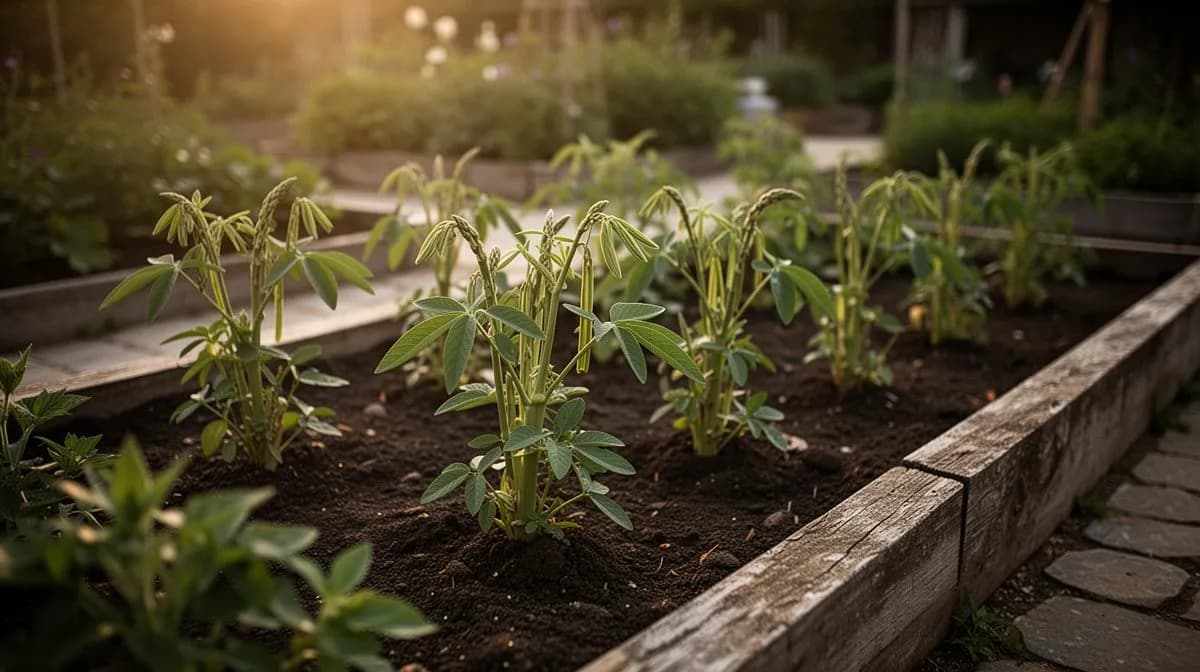
32 plantas caben en un bancal de 120 × 240 cm
Cada Judía Espárrago pide 30 cm de margen. El planificador guarda ese marco por ti — cada planta, cada bancal.
Los mejores vecinos de Judía Espárrago
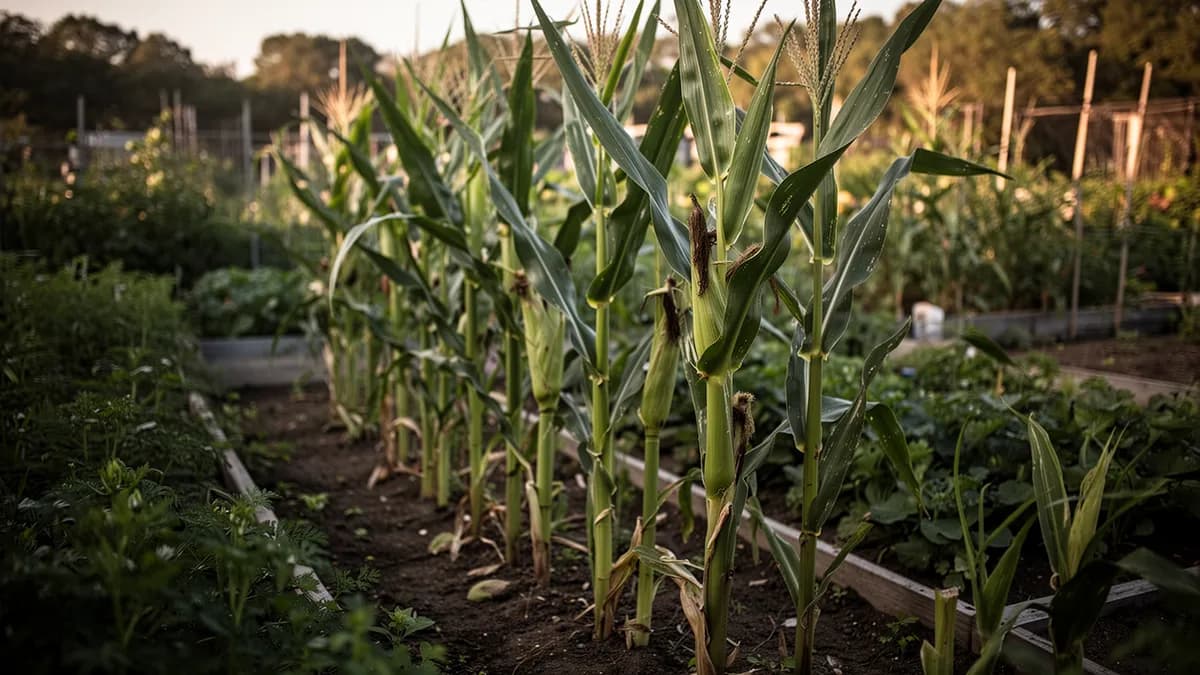
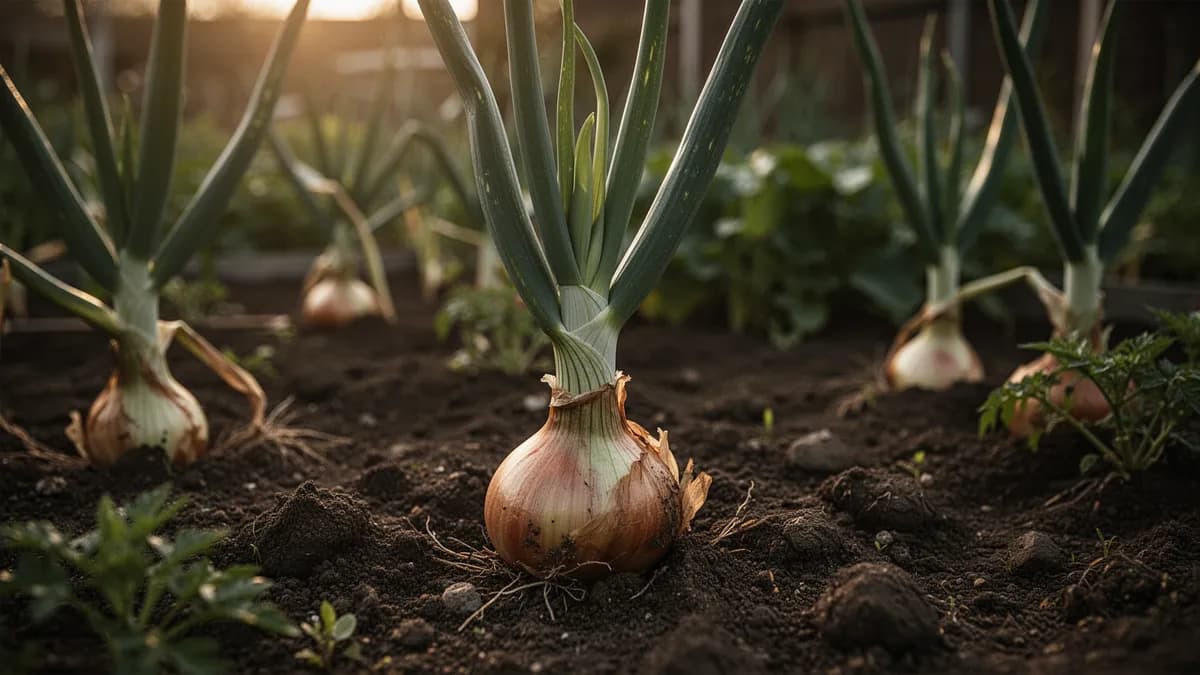
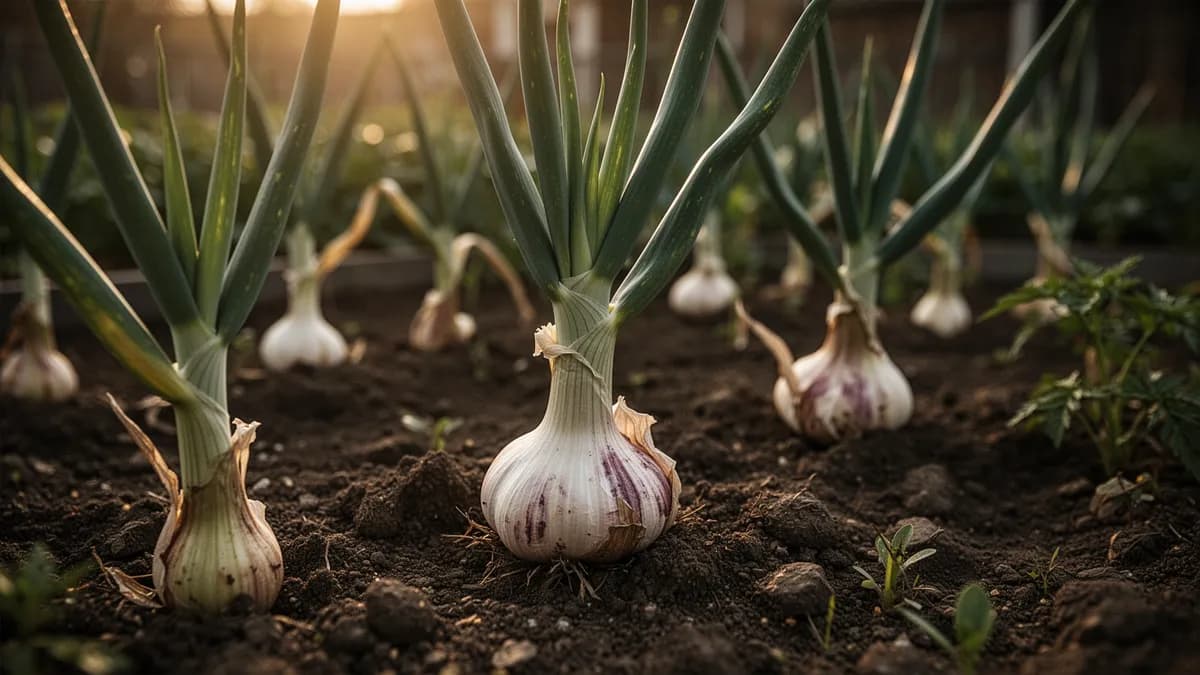
Crecen bien junto a maíz que sirve como tutor natural, y junto a calabazas que cubren el suelo. Como leguminosa, fija nitrógeno que beneficia a las plantas vecinas. Evite plantar junto a ajos y cebollas.
Maíz va a su lado. Cebolla no.
Saber de huerto de siempre, cotejado con la tabla real de Judía Espárrago — prueba cualquier planta que cultives.
Prueba Judía Espárrago en un bancal, aquí mismo
Un bancal real del planificador con Judía Espárrago ya plantado. Toca una planta compañera para colocarla y mira cómo responde la comprobación de vecinos: verde para buenos vecinos, rojo si hay conflicto.


Guías de cultivo relacionadas
Abónalo bien
Suelos bien drenados con pH 6,0-7,0. Como leguminosa fija su propio nitrógeno, así que use fertilizante bajo en nitrógeno y rico en fósforo y potasio. Enmiende con compost moderado antes de plantar.
Temperatura ideal
Compatibilidad de zonas de rusticidad
De la semilla a la cosecha, etapa por etapa
Siembra
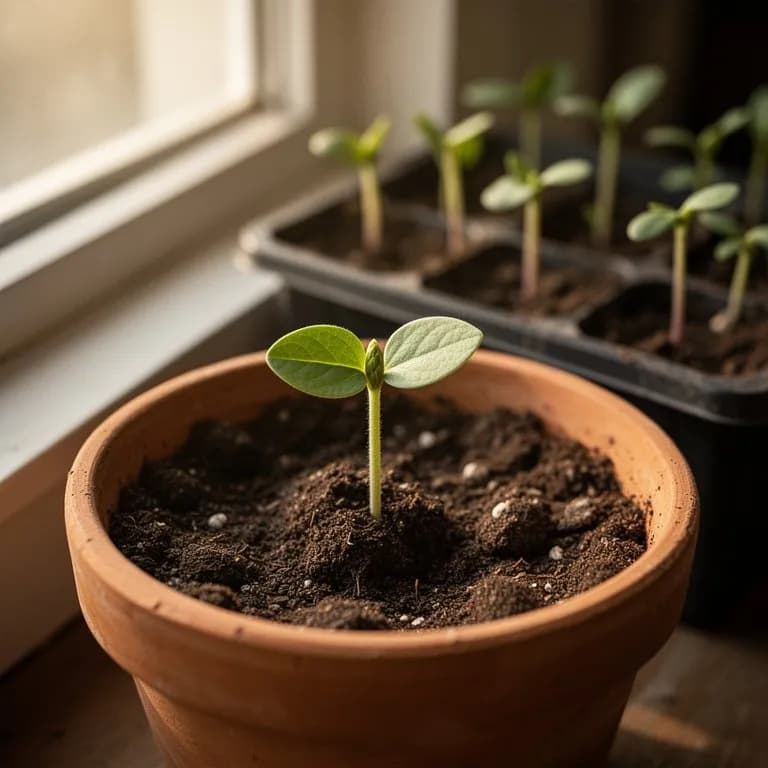
Las semillas grandes germinan rápidamente en suelo cálido y emiten un hipocótilo robusto en 5-7 días. El primer par de hojas simples se despliega con rapidez, seguido casi de inmediato por la primera hoja verdadera trifoliada. Las semillas se pudren en suelo frío y húmedo por debajo de 18°C (65°F), así que la calidez del suelo es esencial para una germinación fiable.
Establecimiento de la enredadera
La enredadera comienza su fase de escalada rápida, enrollándose en sentido antihorario alrededor de cualquier soporte disponible. Las hojas trifoliadas se expanden con rapidez y la planta puede añadir 10-15 cm de altura por día en clima cálido. El sistema radicular desarrolla nódulos fijadores de nitrógeno mediante su relación simbiótica con bacterias Rhizobium.
Crecimiento vigoroso
La enredadera alcanza toda su altura y se ramifica mucho, creando un dosel denso de hojas trifoliadas. Los brotes laterales se extienden hacia afuera y también trepan. La planta fija nitrógeno atmosférico mediante los nódulos de la raíz y requiere una fertilización nitrogenada mínima en esta etapa.
Floración
Racimos de flores ornamentales blanco violáceas aparecen en las partes superiores de la enredadera. Las flores suelen abrirse por la mañana y se autopolinan, aunque las abejas y otros polinizadores mejoran la formación de vainas. Las flores suelen aparecer en parejas, por lo que las vainas a menudo cuelgan también en pares.
Desarrollo de las vainas
Las vainas se alargan de forma asombrosamente rápida después de la polinización, creciendo 2-5 cm por día en clima cálido. Las vainas jóvenes son delgadas, lisas y flexibles. La ventana ideal de cosecha es breve: deben recogerse cuando midan 30-45 cm de largo y sigan tan finas como un lápiz, antes de que las semillas del interior empiecen a engordar visiblemente.
Cosecha continua
La enredadera entra en una producción sostenida, floreciendo y fructificando al mismo tiempo durante 6-10 semanas. Una sola planta sana puede producir 4-8 vainas por semana en el pico de producción. La enredadera sigue creciendo y ramificándose mientras surgen nuevos racimos de flores desde las axilas superiores de las hojas.
Siembra directa de las semillas a 2,5 cm de profundidad después de que haya pasado todo peligro de heladas y el suelo esté al menos a 21°C (70°F). Remojar las semillas durante 4-6 horas acelera la germinación, pero no es necesario: estas semillas tienen una cubierta menos dura que las judías comunes.
Cuidar Judía Espárrago mes a mes
Qué hacer cada mes para tu Judía Espárrago
Octubre
Mes actualFinal harvests in most zones as temperatures cool. Collect dried seed pods for next year — seeds store well for 3-4 years in a cool, dry place. Cut down spent vines but leave roots in the soil to decompose and release their fixed nitrogen.
Ten claro qué hacer en tu huerto, cada mes
Un correo al empezar cada mes: qué sembrar, plantar y hacer ahora mismo — para tu Judía Espárrago y todo lo que crece alrededor. Más un breve curso inicial para esquivar los errores clásicos.
- Qué hacer ahora mismo
- Ajustado a tu temporada
- Curso inicial incluido
Cosechar Judía Espárrago
Coseche cuando las vainas midan 30-45 cm de largo y estén aún tiernas, antes de que las semillas se hinchen visiblemente, unos 60-70 días tras la siembra. Las vainas más largas se vuelven fibrosas y duras. Coseche diariamente en el pico de producción cortando con tijeras.
se supone que plantas al comenzar el periodo — indica tu fecha real
Mantén una humedad uniforme del suelo durante la floración: el estrés por sequía en esta etapa provoca la caída de flores y reduce drásticamente la cosecha. Una aplicación ligera de fertilizante rico en potasio favorece el desarrollo floral.
Almacenamiento y conservación
Frescas en refrigerador 3-5 días en bolsa perforada. Para conservación, corte en trozos de 5-7 cm, escalde 2 minutos y congele. También se pueden encurtir o deshidratar para uso posterior.
Qué falla — y cómo solucionarlo
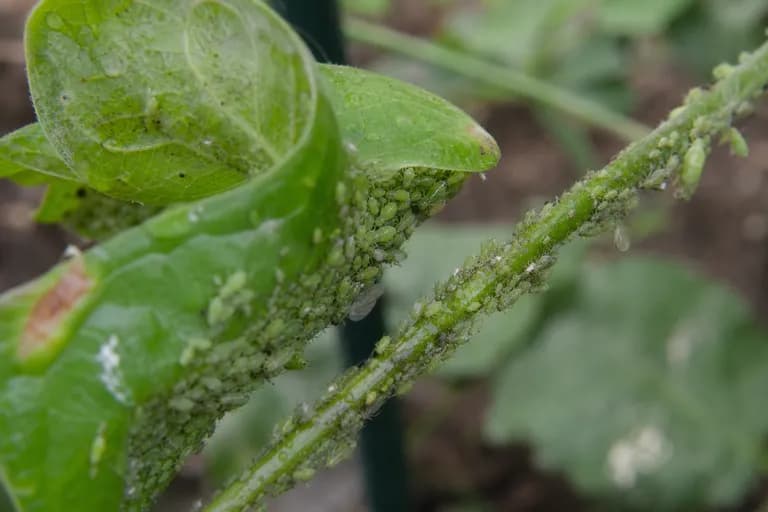
Pulgón negro de la judía (Aphis fabae)
PlagaColonias en brotes y vainas jóvenes, enrollamiento y deformación de hojas, melaza.
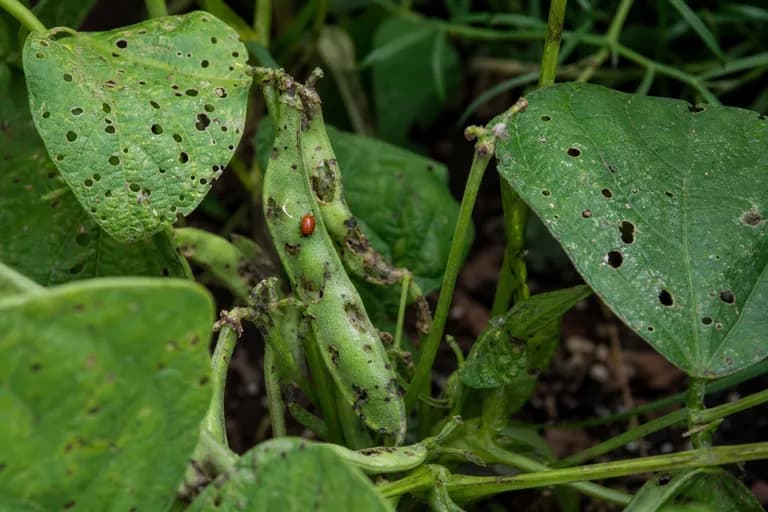
Roya de la judía (Uromyces appendiculatus)
EnfermedadPústulas marrones polvorientas en el envés de las hojas que causan amarillamiento y defoliación.
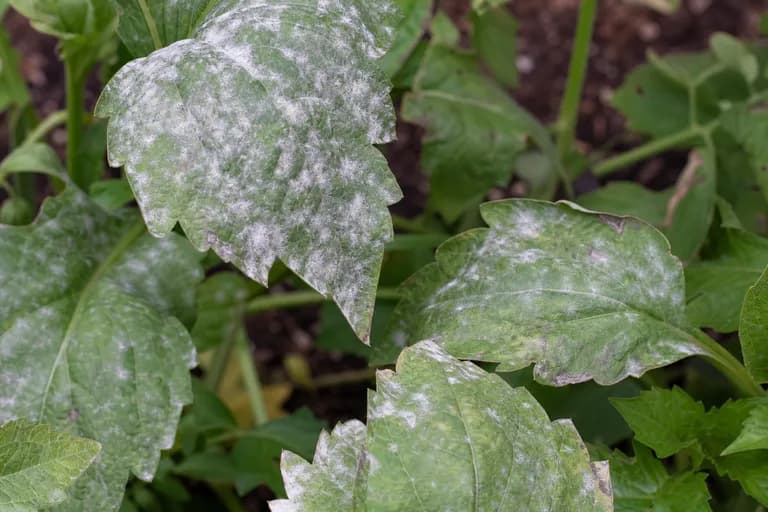
Mosca blanca (Bemisia tabaci)
PlagaMoscas blancas bajo las hojas, amarillamiento y debilitamiento general.
Solución de problemas comunes
No tolera el frío en absoluto: temperaturas por debajo de 10 °C detienen el crecimiento y pueden matar las plantas. Las vainas se vuelven fibrosas rápidamente si no se cosechan a tiempo. La falta de polinización produce vainas deformes y cortas.
Consejos de cultivo
- A tall, sturdy trellis is absolutely non-negotiable. Asparagus beans are vigorous climbers that reach 2.5-4 meters tall. Without adequate support, vines sprawl on the ground, pods rot from soil contact, and harvesting becomes a miserable chore. Install your trellis before planting.
- Do not plant too early. Asparagus beans are even more cold-sensitive than common beans. Wait until nighttime temperatures consistently stay above 15°C (60°F) and soil is at least 21°C (70°F). Cold soil causes seeds to rot and stunted seedlings never fully recover.
- Space plants generously — 15-20 cm apart along the trellis base with rows at least 90 cm apart. Crowded vines compete for light, have poor air circulation, and are more prone to fungal diseases and reduced pod set.
- Water consistently but avoid soaking the foliage. Drip irrigation or soaker hoses at the base of the trellis are ideal. Overhead watering promotes leaf diseases and can cause blossoms to drop during the critical flowering period.
- Harvest at the right size — 30-45 cm long and pencil-thin, before you can see the seeds bulging through the pod wall. Overripe pods become tough, stringy, and starchy. In peak summer heat, this means checking and picking every single day.
- Do not over-fertilize with nitrogen. As a legume, asparagus beans fix their own nitrogen from the air through root nodule bacteria. Excess nitrogen produces enormous vines with lush foliage but disappointing pod production. Use a phosphorus-rich fertilizer once flowering begins.
- Succession plant for an extended harvest. Sow a second round of seeds 3-4 weeks after the first planting to ensure fresh pods from midsummer through early autumn, rather than a single overwhelming flush followed by declining production.
- Save the roots when clearing spent vines at season's end. Cut the vines at soil level rather than pulling them up — the nitrogen-rich root nodules decompose in place and enrich the soil for the next crop, making the bed ideal for heavy feeders like tomatoes or squash.
Cultiva tu mejor Judía Espárrago — y todo lo que la rodea.
Empieza un plan gratis hoy. Diseña tus bancales, coloca tu Judía Espárrago y deja que PlotMyGarden gestione el momento, el espaciado, las asociaciones y los recordatorios de la semilla a la cesta.
Elige tu Judía Espárrago
Yard Long (Chinese Red Noodle)
Variedad de vainas rojas/moradas de hasta 60 cm. Visualmente espectacular y sabor dulce. Madura en 60 días.
Orient Extra Long
Vainas verde oscuro de 45-60 cm, muy tiernas. La variedad verde más popular. Madura en 58 días.
Liana
Variedad precoz con vainas verde claro de 30-40 cm en racimos. Muy productiva. Madura en 55 días.
Stickless Wonder
Variedad semitrepadora más compacta que necesita menos soporte. Vainas de 30-35 cm. Madura en 60 días.
Asparagus beans are a premium specialty vegetable that commands $4-8 per pound at Asian grocery stores and $6-12 per pound at farmers markets. A single seed packet ($3-5) produces 15-25 plants, and each plant can yield 1.5-3 kg of pods — meaning a small planting of 4-6 vines can easily produce $60-150 worth of fresh asparagus beans over one season. Since the pods are best eaten within 2-3 days of harvest, growing your own is the only way to enjoy them at peak freshness and crispness.
Recetas rápidas
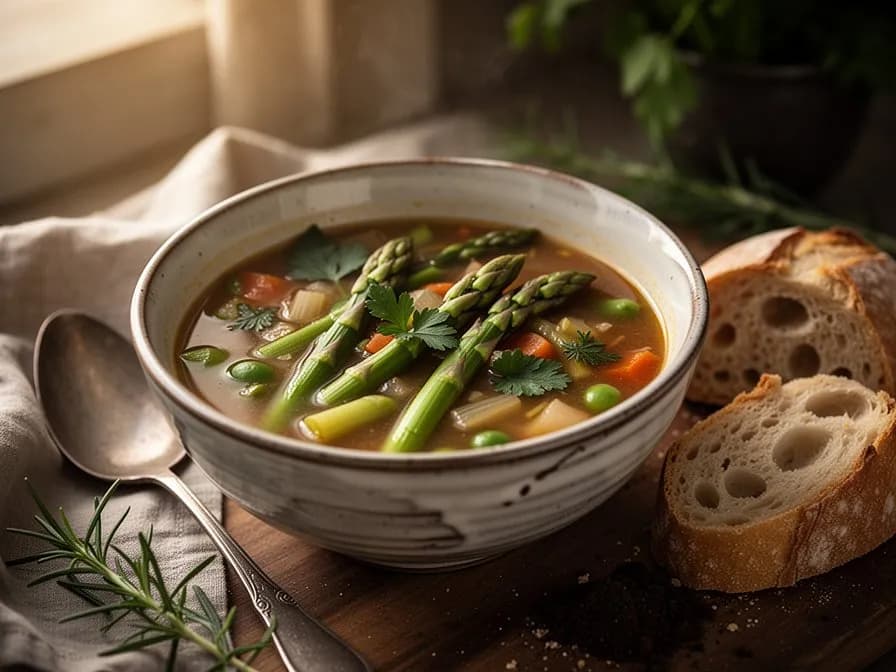
Garlic Stir-Fried Asparagus Beans
15 minThe classic Southeast Asian preparation — asparagus beans cut into bite-sized segments and flash-fried with garlic until blistered and tender-crisp. The high heat brings out a nutty sweetness that common green beans simply cannot match.
7 ingredientesAsparagus Bean and Coconut Curry
30 minA fragrant South Indian-inspired curry where asparagus bean segments are simmered in spiced coconut milk with mustard seeds and curry leaves. The beans absorb the creamy sauce while maintaining a satisfying bite.
9 ingredientesCold Sesame Asparagus Bean Salad
15 minBlanched asparagus bean segments tossed in a bold sesame-soy dressing — a refreshing Chinese-style cold dish perfect for hot summer days when the beans are at peak production in the garden.
8 ingredientesUsos culinarios
Las judías espárrago se cortan en trozos de 5-7 cm y se saltean al wok con ajo, jengibre y salsa de soja en la cocina china. En Tailandia se usan en pad thai y curris. En la cocina filipina se preparan en adobo vegetal. Su textura crujiente las hace ideales para stir-fry rápidos.
Qué contiene
Beneficios para la salud
- Higher in plant-based protein than common green beans at 2.8g per 100g, making asparagus beans a valuable addition to vegetarian and vegan diets for meeting daily protein needs alongside other legumes and grains.
- Rich in folate (vitamin B9), supporting healthy cell division and DNA synthesis — particularly important during pregnancy for reducing the risk of neural tube defects.
- Good source of dietary fiber (3.6g per 100g) that promotes digestive regularity, feeds beneficial gut bacteria, and helps moderate post-meal blood sugar spikes.
- Contains iron (1.0mg per 100g) along with vitamin C (18.8mg per 100g), a pairing that enhances non-heme iron absorption — important for preventing iron deficiency, especially in plant-based diets.
- Provides vitamin A as beta-carotene (865 IU per 100g), supporting eye health, immune function, and skin integrity.
- Low glycemic index food that provides sustained energy without blood sugar spikes, making asparagus beans a smart choice for people managing diabetes or insulin resistance.
De dónde viene Judía Espárrago
The asparagus bean (Vigna unguiculata subsp. sesquipedalis), also known as the yard-long bean, snake bean, or Chinese long bean, originated in tropical southern China and Southeast Asia. It is a subspecies of the cowpea, which itself is native to Africa, making the asparagus bean a fascinating example of a crop that was domesticated on one continent and then further developed into a distinct form on another. Archaeological and genetic evidence suggests that cowpeas first arrived in Asia via ancient trade routes, and selection by farmers in southern China and Southeast Asia over thousands of years produced the dramatically elongated pods that distinguish the asparagus bean from its African cowpea ancestors.
For at least 2,000 years, asparagus beans have been a staple food crop across tropical and subtropical Asia. They are deeply embedded in the culinary traditions of China, Thailand, Vietnam, Indonesia, the Philippines, India, and Malaysia, where they appear in stir-fries, curries, salads, soups, and pickles. The plant's ability to thrive in hot, humid conditions where many temperate vegetables fail made it indispensable in tropical agriculture. In many Southeast Asian markets, asparagus beans are far more common than Western-style green beans.
Asparagus beans reached the West relatively recently, arriving in Europe and the Americas primarily through Asian immigrant communities in the 19th and 20th centuries. They remain less well known in Western countries but are gaining popularity among adventurous gardeners and at farmers markets, valued for their vigorous growth, prolific yields, heat tolerance, and unique nutty flavor that differs markedly from common green beans. Today, the largest commercial production is concentrated in China, Southeast Asia, and South Asia, but asparagus beans are grown in home gardens and small farms across every tropical and warm-temperate region of the world.
Judía Espárrago: ¿sabías que?
Datos fascinantes sobre Judía Espárrago
Despite the name, asparagus beans are not related to asparagus at all — they are a subspecies of the cowpea (Vigna unguiculata subsp. sesquipedalis) and are closely related to black-eyed peas, lending them a distinctive nutty flavor that regular green beans lack.
Judía Espárrago: preguntas frecuentes
¿Cuándo debo plantar Judía Espárrago?
¿Cuáles son buenas plantas acompañantes para Judía Espárrago?
¿En qué zonas de rusticidad puede crecer Judía Espárrago?
¿Cuánto sol necesita Judía Espárrago?
¿A qué distancia debo espaciar Judía Espárrago?
¿Qué plagas y enfermedades afectan a Judía Espárrago?
¿Cómo almaceno Judía Espárrago después de la cosecha?
¿Cuáles son las mejores variedades de Judía Espárrago para cultivar?
¿Qué suelo necesita Judía Espárrago?
Are asparagus beans the same as regular green beans?
Why are my asparagus bean pods tough and stringy?
Can I grow asparagus beans without a trellis?
Why are my asparagus bean plants flowering but not setting pods?
How do I store harvested asparagus beans?
Can I eat the dried seeds from mature asparagus bean pods?
Acabas de leer la teoría. Ahora cultívala en piloto automático.
Todo lo que hace que Judía Espárrago sea delicado — el momento, el espaciado, las asociaciones, la ventana de cosecha — es justo lo que PlotMyGarden resuelve por ti, para cada planta de tu huerto.
Un plan que conoce tu clima
Indica tu ubicación una vez. Recibe fechas de siembra, abonado y cosecha basadas en tu última helada real y el pronóstico en vivo — sin adivinar con un sobre genérico.
De la sección “Cuándo plantar”Planificador de bancales de arrastrar y soltar
Diseña bancales sobre una cuadrícula. Cada planta encaja con su espaciado correcto y ves toda la temporada antes de gastar un céntimo en semillas.
De la sección “Cultivo”Conflictos de asociación, detectados a tiempo
Más de 200 buenas y malas combinaciones comprobadas en vivo mientras plantas — para que un error que arruine la temporada nunca llegue a la tierra.
De la sección “Asociaciones”Recordatorios que sí vas a seguir
“Riega las judías.” “Recoge hoy antes de que se pase.” Oportunos, concretos y ligados a las plantas que de verdad cultivas.
De la sección “Cosecha”Escalonado, programado
¿Quieres cosechar seis semanas en vez de seis días? Reparte tus siembras automáticamente y te avisa cuando toca el siguiente lote.
De la sección “Cuándo plantar”Un registro que se vuelve más listo
Cada cosecha que registras le enseña tu huerto. El plan del año que viene parte de lo que de verdad funcionó en tu suelo, no en un manual.
De la sección “Resumen”Planta estos junto a Judía Espárrago
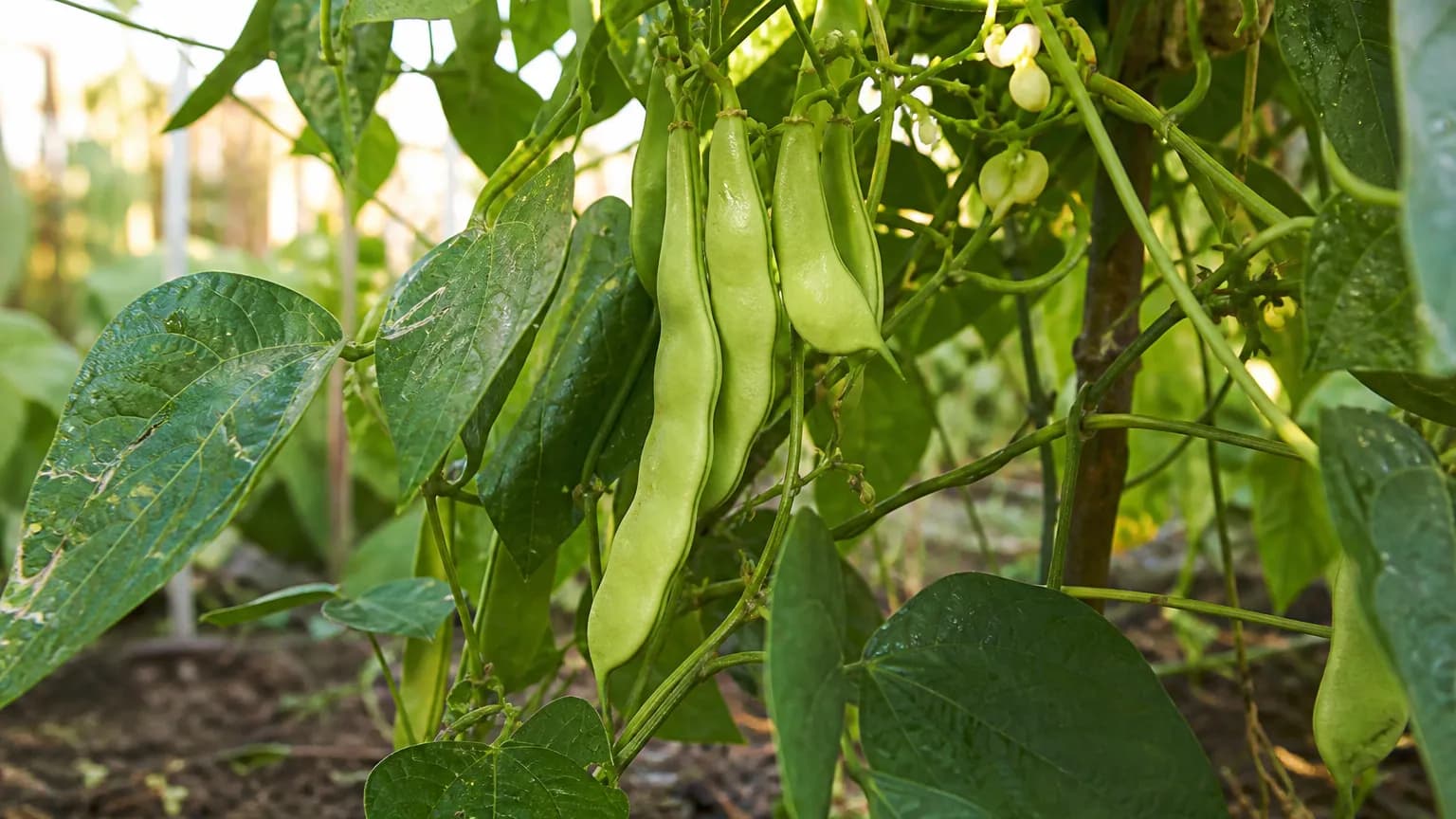
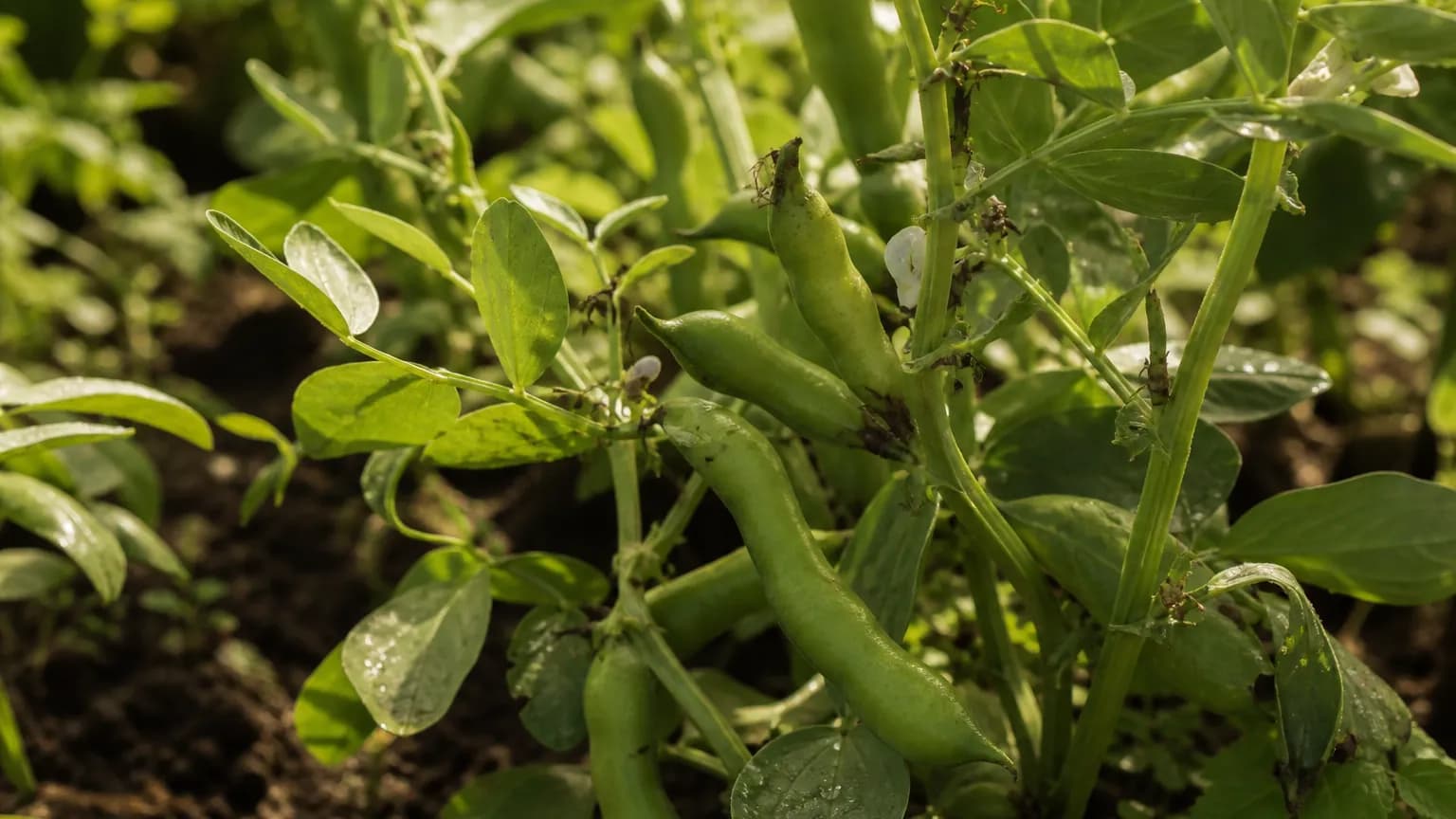
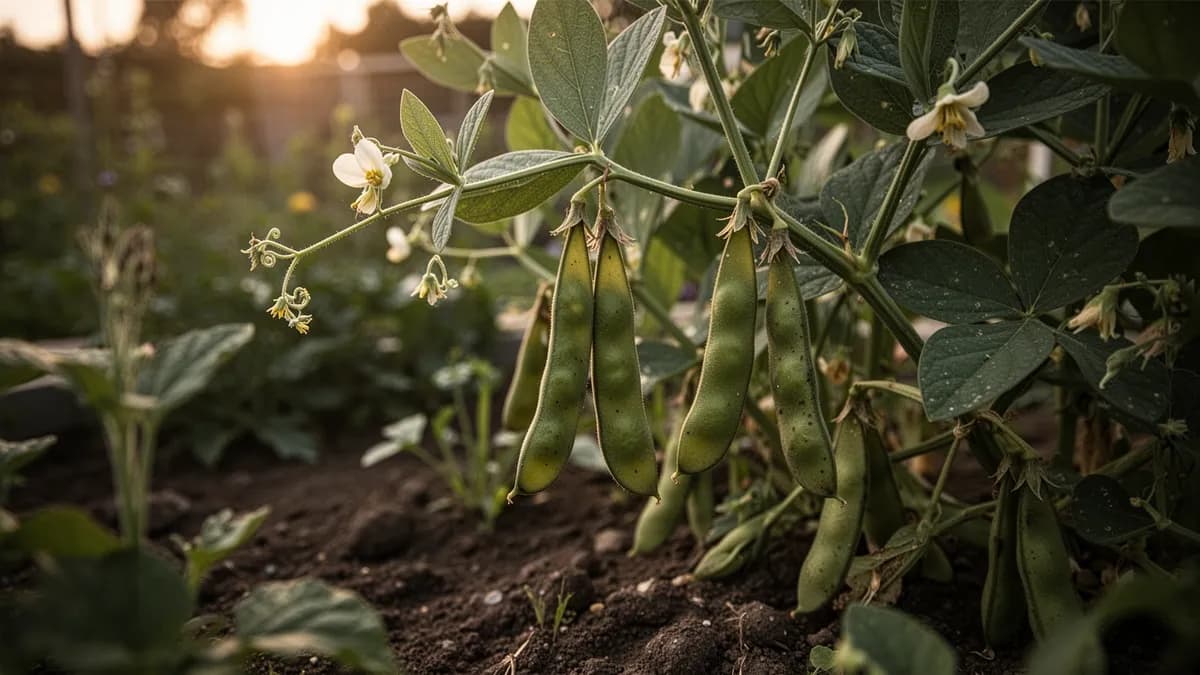
Más Legumbres
Mantén Judía Espárrago lejos de estos
Cultiva tu mejor Judía Espárrago — y todo lo que la rodea.
Empieza un plan gratis hoy. Diseña tus bancales, coloca tu Judía Espárrago y deja que PlotMyGarden gestione el momento, el espaciado, las asociaciones y los recordatorios de la semilla a la cesta.