Adzukibohne
Eine kleine rote Bohne, die in der japanischen und ostasiatischen Küche unverzichtbar ist und zur Herstellung von süßer roter Bohnenpaste für Desserts und Füllungen verwendet wird.





Auf dieser SeiteÜberblick
Adzukibohne im Überblick
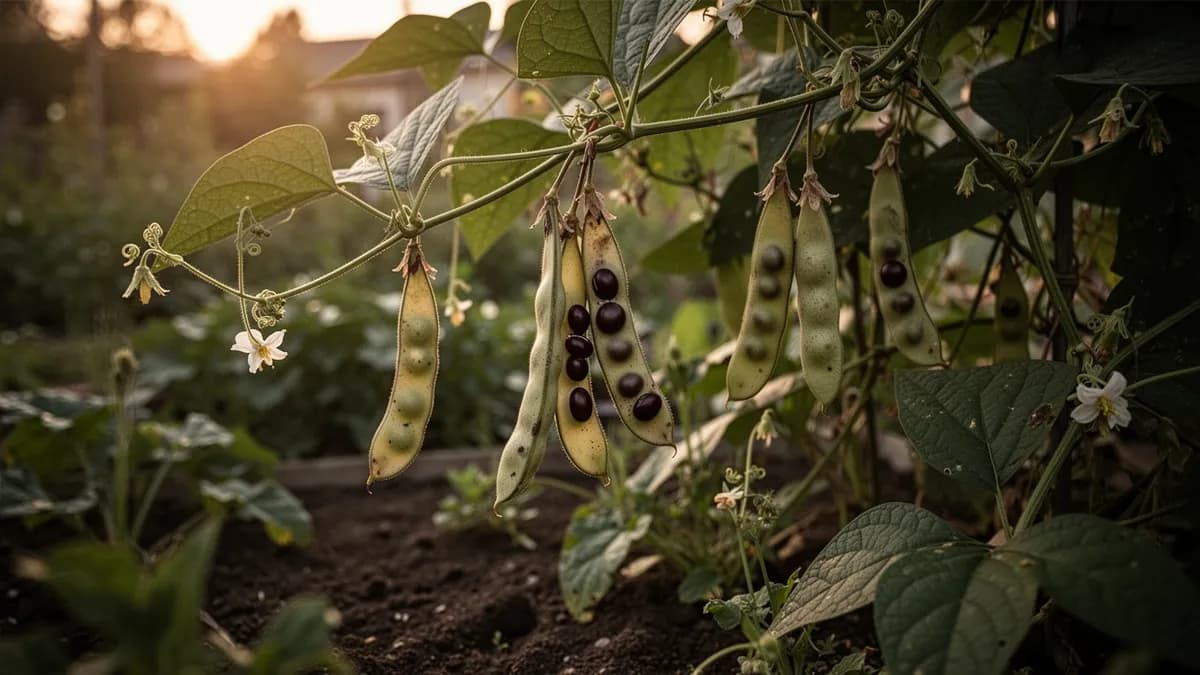
Eine kleine rote Bohne, die in der japanischen und ostasiatischen Küche unverzichtbar ist und zur Herstellung von süßer roter Bohnenpaste für Desserts und Füllungen verwendet wird. Die Pflanzen sind kompakte Buschtypen, die Hitze gut vertragen und Hülsen produzieren, die an der Rebe trocknen und sich leicht ernten lassen. Reich an Protein, Ballaststoffen und Folsäure gehören Adzukibohnen zu den am leichtesten verdaulichen aller Trockenbohnen. Nach Bodenerwärmung auf 15°C säen und ernten, wenn die Hülsen trocken sind und rasseln.
Wann Adzukibohne pflanzen
Adzukibohnen nach dem letzten Frost direkt ins Freiland säen, wenn die Bodentemperatur mindestens 15°C beträgt. Samen 2,5 cm tief und 8 cm auseinander pflanzen. Nicht drinnen vorziehen, da Bohnen wegen empfindlicher Wurzelsysteme schlecht umgepflanzt werden können. Vor der Pflanzung mit Rhizobium-Bakterien impfen für optimale Stickstofffixierung. Samen keimen in sieben bis vierzehn Tagen. Auf 15 cm Abstand ausdünnen. Für ein längeres Erntefenster eine zweite Aussaat zwei Wochen nach der ersten vornehmen.
Dein Adzukibohne-Jahr
Abgestimmt auf Zone 7 · typische Saison · Frost geht um den 2. Apr. und kehrt um den 1. Nov. zurück
Adzukibohne Mai – Jun pflanzen, Sep – Okt ernten. Beachte die Pflanzmethoden unten und wähle dein Klima für passende Zeiträume.
So baust du Adzukibohne an
Adzukibohnen sind Warmzeit-Hülsenfrüchte, die am besten unter heißen Sommerbedingungen gedeihen. Direktsaat der Samen 2,5 cm tief und 8 cm auseinander in Reihen mit 45-60 cm Abstand nach dem letzten Frost, wenn die Bodentemperatur mindestens 15°C erreicht. Die Samen keimen in sieben bis vierzehn Tagen. Auf 15 cm Abstand ausdünnen, sobald die Sämlinge etabliert sind. Als Hülsenfrucht binden Adzukibohnen Stickstoff im Boden und benötigen generell keinen Stickstoffdünger.
Die Pflanzen wachsen als kompakte Büsche von 45-60 cm Höhe mit kleinen gelben Blüten, die sich zu schlanken Hülsen entwickeln. Den Boden während der Blüte und des Hülsenansatzes gleichmäßig feucht halten, da Wasserstress in dieser Phase die Erträge erheblich reduziert. Mulchen, um Feuchtigkeit zu bewahren und Unkraut zu unterdrücken. Adzukibohnen vertragen Hitze gut und produzieren am besten, wenn die Sommertemperaturen konstant über 21°C liegen.
Die Hülsen vor der Ernte vollständig an den Pflanzen trocknen lassen. Die Hülsen werden braun und fühlen sich papierartig an, wenn sie reif sind. In feuchten Klimazonen ganze Pflanzen abschneiden und kopfüber an einem trockenen, belüfteten Ort zum Nachtrocknen aufhängen. Getrocknete Hülsen von Hand schälen oder in einem Beutel dreschen. Spreu durch Worfeln entfernen. Adzukibohnen reifen in etwa 90 Tagen und die gesamte Ernte erfolgt oft innerhalb eines Zeitfensters von zwei Wochen.
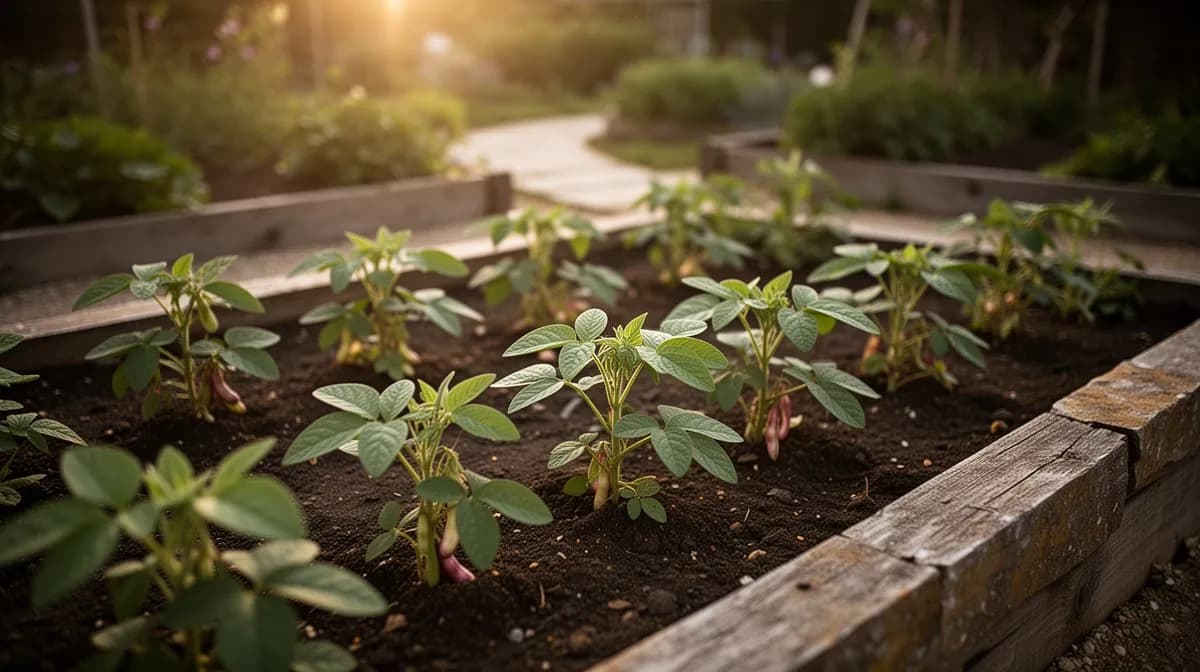
128 Pflanzen passen in ein Beet von 120 × 240 cm
Adzukibohne braucht 15 cm Platz pro Pflanze. Der Planer hält diesen Abstand für dich ein — jede Pflanze, jedes Beet.
Die besten Nachbarn für Adzukibohne
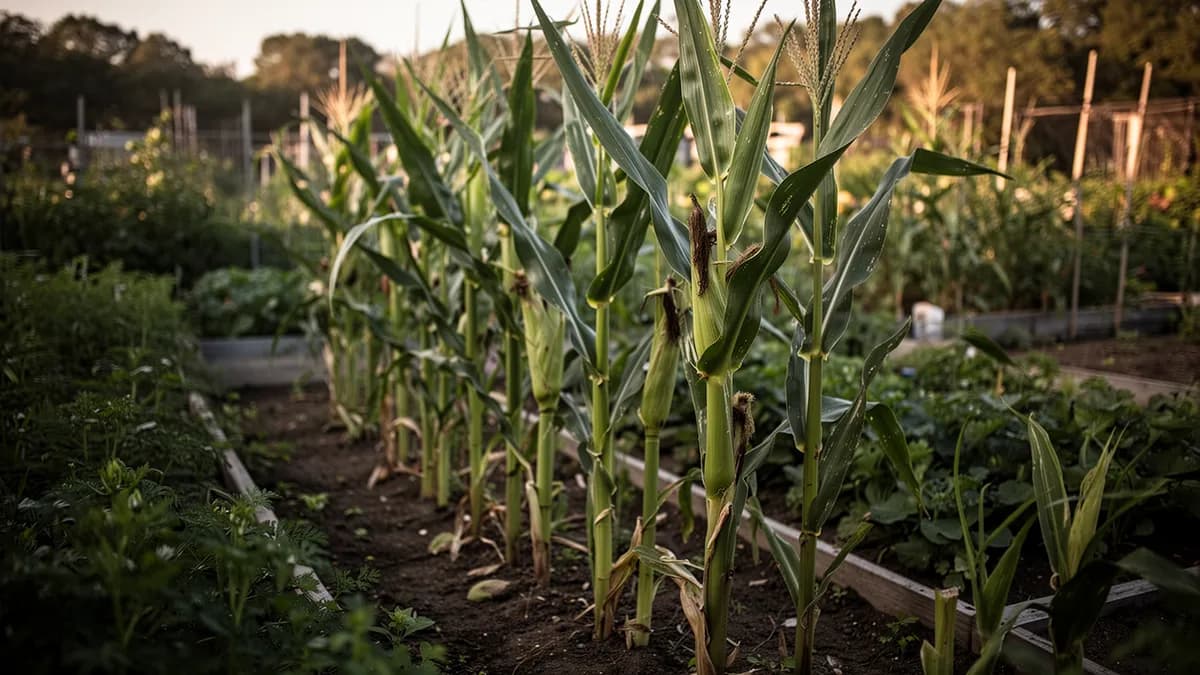
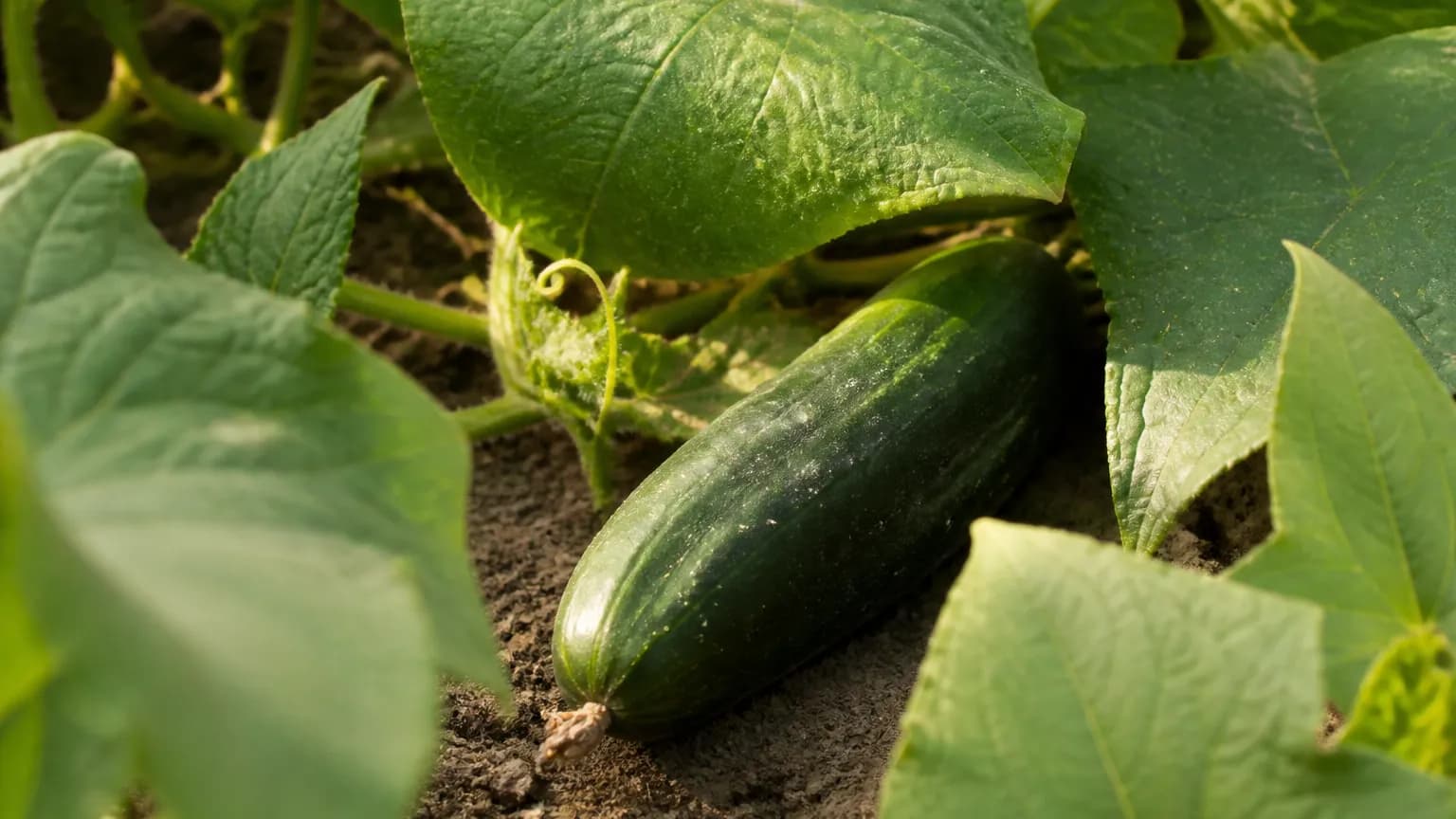
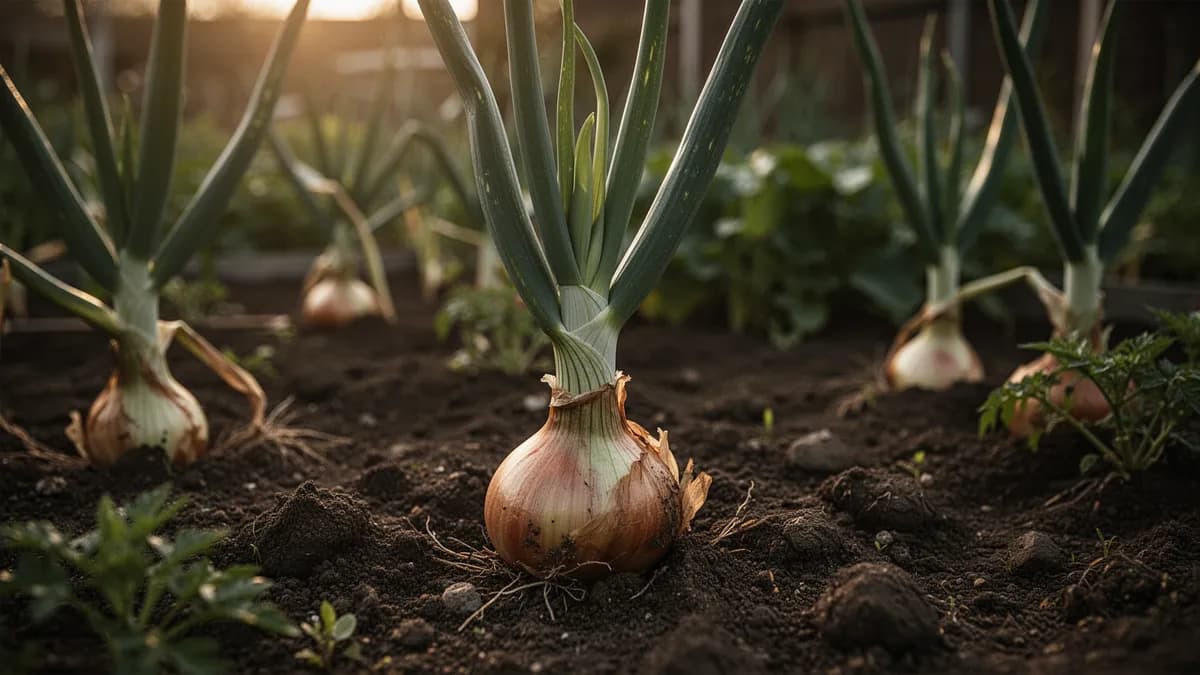
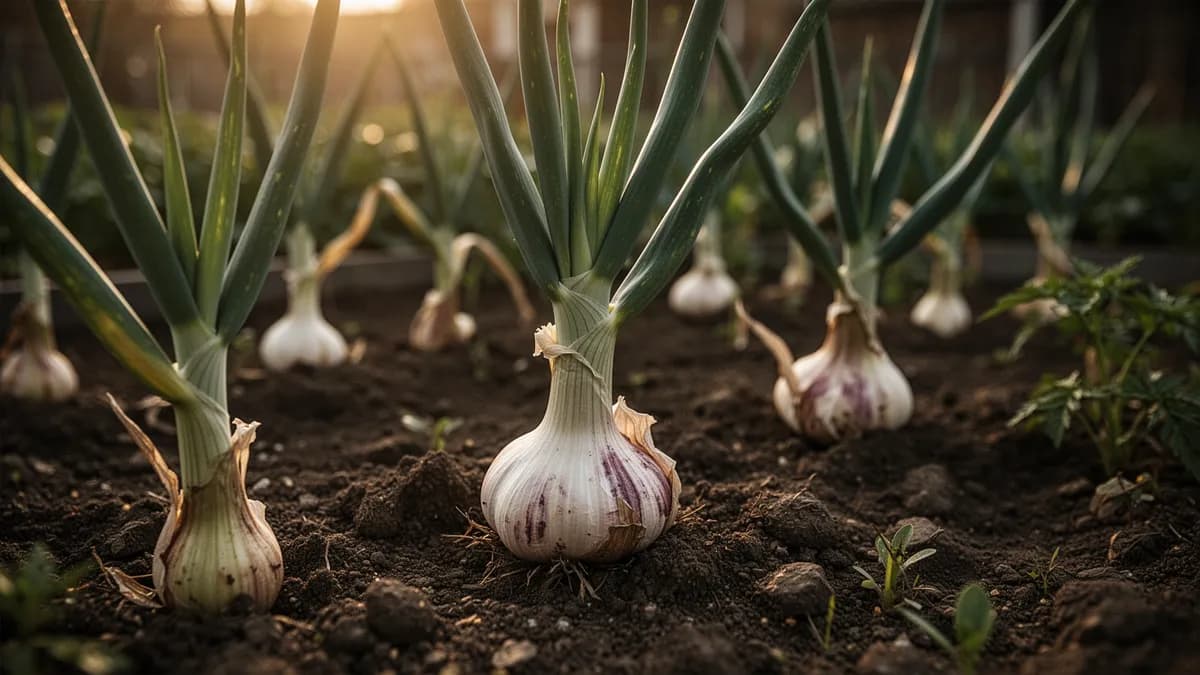
Adzukibohnen fixieren atmosphärischen Stickstoff und kommen benachbarten Kulturen zugute. Neben Mais pflanzen, der Halt bietet und vom Stickstoff profitiert. Gurken und Kürbis gedeihen gut in der Nähe. Nicht neben Zwiebeln, Knoblauch und anderen Lauchgewächsen pflanzen, die das Bohnenwachstum hemmen können. Tagetes zwischen den Bohnen helfen, einige Schadinsekten abzuwehren. Nach Adzukibohnen stickstoffhungrige Kulturen wie Kohlgewächse anbauen, um den im Boden verbliebenen Stickstoff zu nutzen.
Mais gehört daneben. Zwiebel nicht.
Altes Gärtnerwissen, geprüft an der echten Nachbartabelle von Adzukibohne — teste jede Pflanze, die du anbaust.
Probiere Adzukibohne direkt hier im Beet
Ein echtes Planer-Beet, Adzukibohne steht schon drin. Tippe einen Begleiter an, platziere ihn und sieh, wie die Nachbarschaftsprüfung antwortet — grün für gute Nachbarn, rot bei Streit.


Passende Anbau-Ratgeber
Richtig düngen
Adzukibohnen bevorzugen gut durchlässigen, fruchtbaren Boden mit einem pH-Wert von 6,0 bis 7,0. Als stickstofffixierende Hülsenfrüchte benötigen sie generell keinen Stickstoffdünger, und übermäßiger Stickstoff fördert das Blattwachstum auf Kosten der Hülsenproduktion. Samen vor der Pflanzung mit dem geeigneten Rhizobium impfen für optimale Stickstofffixierung. Phosphor und Kalium bei der Pflanzung ausbringen, um Blüte und Hülsenentwicklung zu unterstützen. Schwere Tonböden vermeiden, die staunass bleiben.
Ideale Temperatur
Winterhärtezone-Kompatibilität
Von der Saat zur Ernte, Schritt für Schritt
Samenkeimung
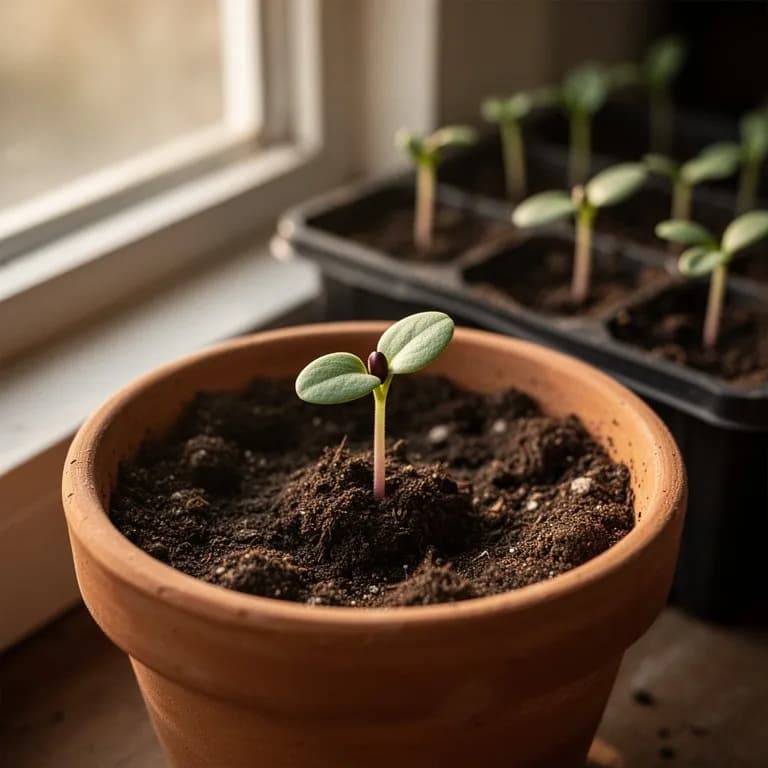
Die Samen quellen nach dem Pflanzen in warmem Boden schnell auf und bilden innerhalb von 3-4 Tagen eine weiße Keimwurzel. Der Hypokotylbogen drückt durch die Oberfläche und hebt die zwei großen ovalen Keimblätter ins Licht. Die Keimung erfordert konstante Bodentemperaturen von mindestens 15°C und dauert 7-10 Tage.
Sämlingsentwicklung
Das erste Paar einfacher, herzförmiger Blätter entfaltet sich, gefolgt von den für alle Bohnenpflanzen typischen dreiteiligen (trifoliaten) Verbundblättern. Der Stängel verdickt sich und seitliche Verzweigungen beginnen sich an der Basis zu bilden und erzeugen den buschigen Wuchs. Stickstofffixierende Wurzelknöllchen beginnen sich mit natürlichen Rhizobium-Bakterien zu bilden.
Vegetatives Wachstum
Die Pflanzen wachsen zu kompakten, buschigen Hügeln von 40-60 cm Höhe mit dichtem dreiteiligem Laub. Das Wurzelsystem dehnt sich aus und die stickstofffixierenden Knöllchen werden voll aktiv, sichtbar als kleine rosa oder weiße Beulen an den Wurzeln. Starke seitliche Verzweigung schafft mehrere Blühstellen für reiche Hülsenproduktion.
Blüte
Büschel kleiner, leuchtend gelber schmetterlingsförmiger Blüten erscheinen aus den Blattachseln entlang der Stängel und Zweige. Adzukibohnen sind hauptsächlich selbstbestäubend, obwohl Bienen und andere Bestäuber die Blüten besuchen können. Die Blüte erfolgt in Schüben über 2-3 Wochen, wobei jede Blüte 1-2 Tage hält, bevor sie eine Hülse ansetzt.
Hülsenentwicklung
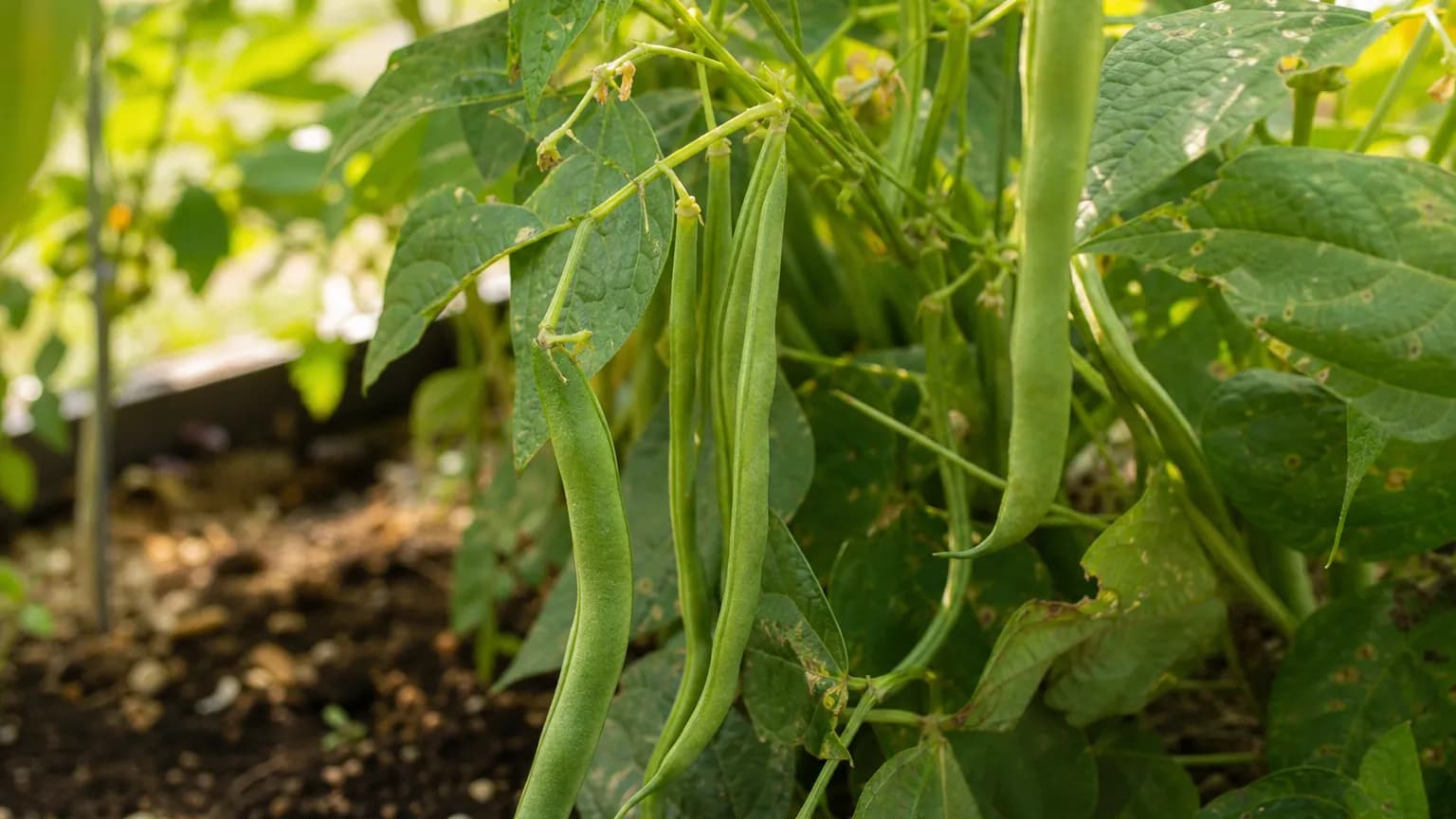
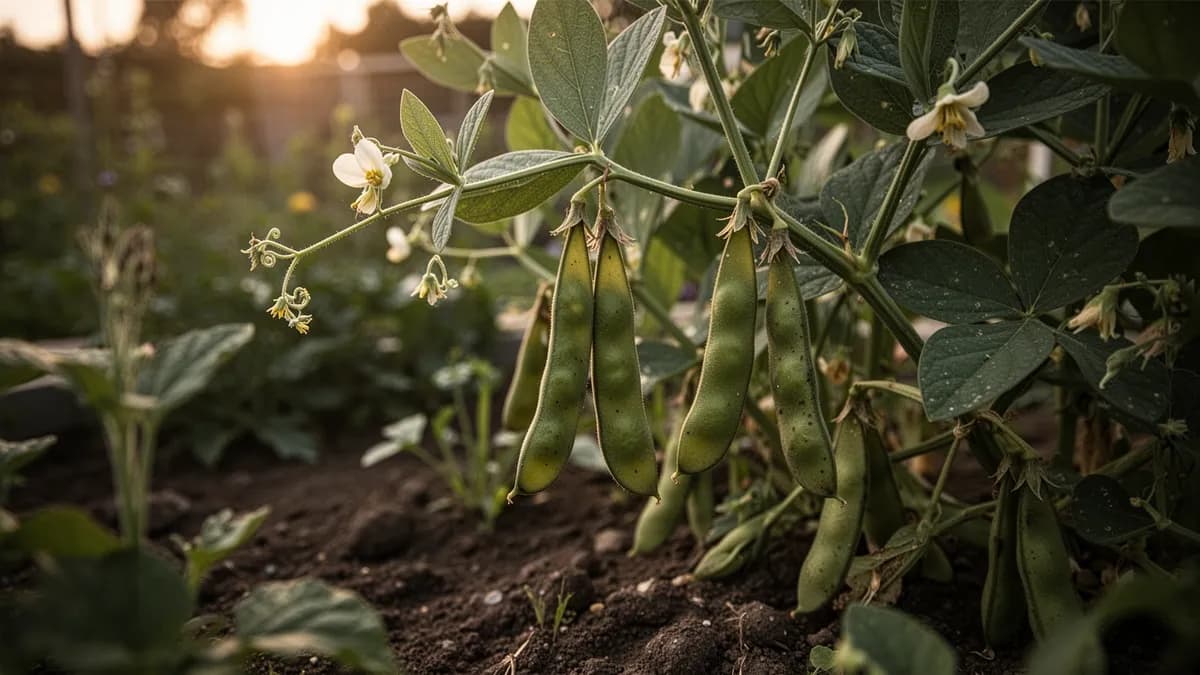
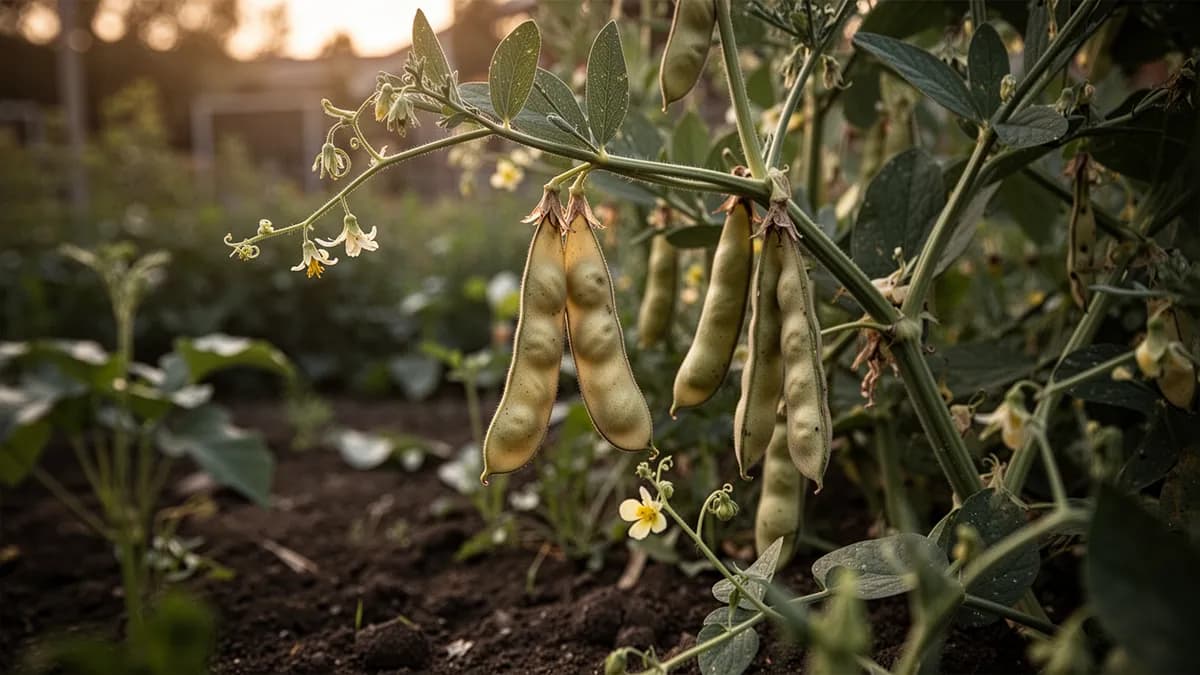
Schlanke grüne Hülsen von 5-12 cm Länge entwickeln sich in dichten Büscheln, die jeweils 4-12 sich entwickelnde Bohnen enthalten. Die Hülsen hängen nach unten von der Pflanze und schwellen allmählich an, während die Samen im Inneren sich füllen. Die Bohnen wechseln von grün zu ihrer endgültigen tiefroten Farbe in den reifenden Hülsen.
Ernte und Trocknung
Die Hülsen wechseln von grün über gelb zu bräunlich und papierartig, während die Bohnen im Inneren hart werden und ihre endgültige tiefe burgunderrote Farbe erreichen. Die Blätter vergilben und beginnen abzufallen, während die Pflanze alle Energie in die Samenreifung umleitet. Wenn die Hülsen beim Schütteln rasseln, sind die Bohnen vollständig getrocknet und erntereif.
Samen 2-3 cm tief in warmen, gut durchlässigen Boden pflanzen. Anders als viele Bohnen benötigen Adzukisamen kein Einweichen — ihre dünne Samenschale nimmt Feuchtigkeit schnell auf. Den Boden während der Keimung gleichmäßig feucht, aber nie staunass halten.
Adzukibohne Monat für Monat pflegen
Was du jeden Monat für deine Adzukibohne tun solltest
Oktober
Aktueller MonatHaupterntemonat für die meisten Zonen. Ganze Pflanzen am Boden abschneiden, wenn 80-90% der Hülsen trocken sind und rasseln. An einem trockenen, gut belüfteten Ort 1-2 Wochen nachtrocknen lassen. Bohnen schälen und Pflanzenreste aus dem Garten entfernen.
Immer wissen, was jetzt im Garten zu tun ist
Eine E-Mail zum Monatsanfang: was du jetzt säen, pflanzen und anpacken solltest — für deine Adzukibohne und alles, was drumherum wächst. Dazu ein kurzer Startkurs, der dich vor den klassischen Fehlern bewahrt.
- Was jetzt zu tun ist
- Passend zu deiner Saison
- Startkurs inklusive
Adzukibohne ernten
Adzukibohnen ernten, wenn die Hülsen an der Pflanze vollständig getrocknet sind und sich braun und papierartig anfühlen. Die Samen sollten beim Schütteln in den Hülsen rasseln. Hülsen einzeln pflücken, wenn sie trocknen, oder warten, bis die meisten Hülsen reif sind, und ganze Pflanzen abschneiden. In feuchten Klimazonen vor dem Herbstregen ernten, da dieser Schimmel verursachen kann. Von Hand schälen oder getrocknete Hülsen in einen Kissenbezug legen und vorsichtig zerdrücken. Durch Worfeln Bohnen von Spreu trennen.
angenommen, du pflanzt zu Beginn des Zeitraums — trage dein tatsächliches Datum ein
Ernte Adzukibohne zügig, dann trägt die Pflanze weiter.
Lagerung & Konservierung
Getrocknete Adzukibohnen halten sich jahrelang in luftdichten Behältern an einem kühlen, trockenen Ort. Vor der Lagerung sicherstellen, dass die Bohnen gründlich getrocknet sind, um Schimmel zu verhindern. Für beste Qualität innerhalb von ein bis zwei Jahren verbrauchen. Gekochte Adzukibohnen lassen sich bis zu sechs Monate gut einfrieren. Süße rote Bohnenpaste kann in Chargen hergestellt und portionsweise eingefroren werden. Gekeimte Adzukibohnen können ganzjährig angebaut und innerhalb weniger Tage frisch verwendet werden.
Was schiefgeht — und die Lösung
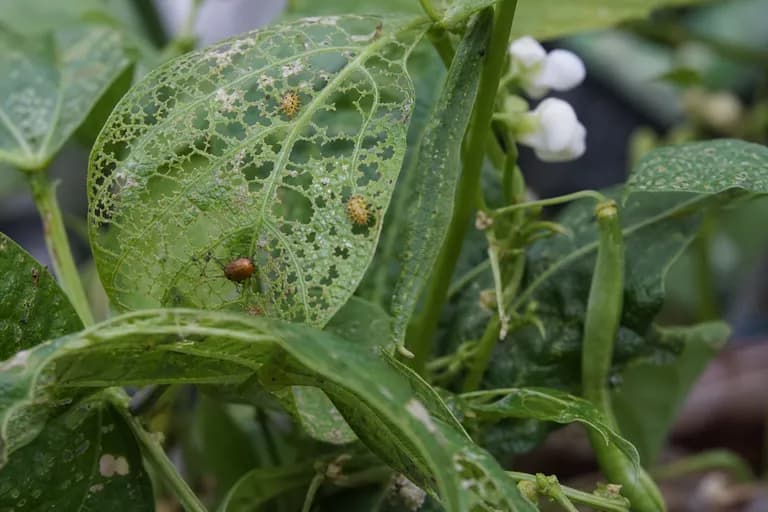
Mexikanischer Bohnenkäfer
SchädlingKupferfarbene Käfer und gelbe Larven skelettieren Blätter, fressen zwischen den Adern und hinterlassen ein spitzenartiges Muster.
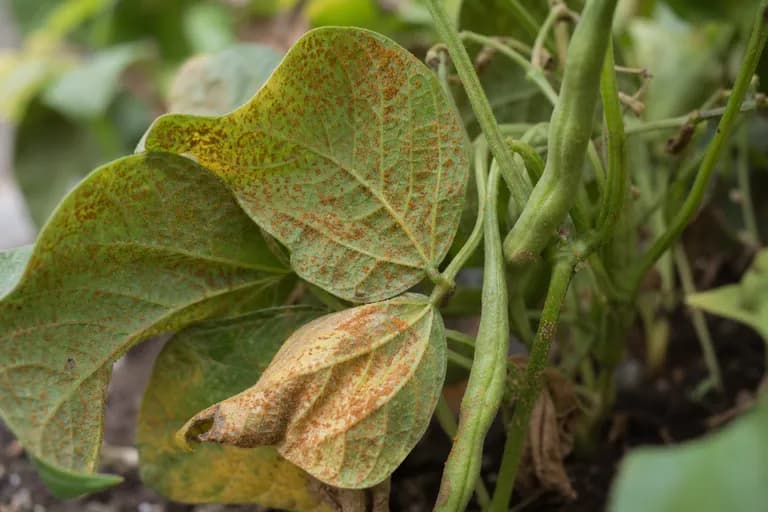
Bohnenrost
KrankheitRötlich-braune Pusteln auf Blattunterseiten, die pudrige Sporen freisetzen. Blätter vergilben und fallen bei schwerem Befall ab.
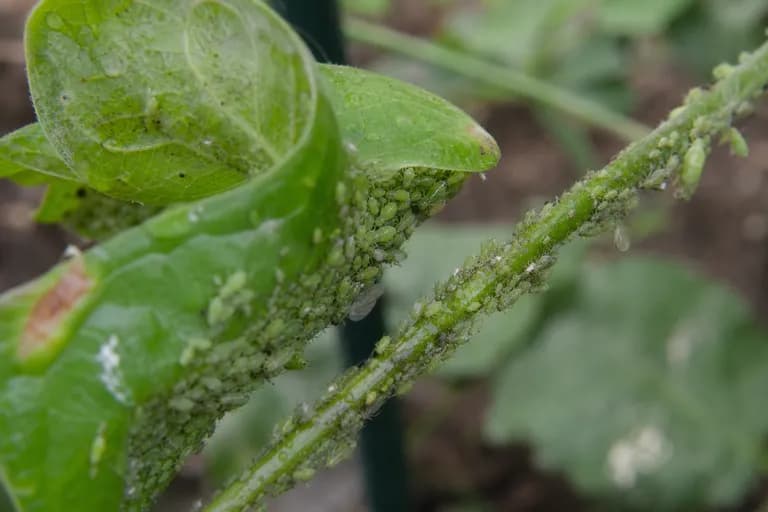
Blattläuse
SchädlingAnsammlungen kleiner grüner oder schwarzer Insekten an Triebspitzen und Blattunterseiten. Verursachen Blattkräuselung und übertragen Viruserkrankungen.
Fehlerbehebung bei häufigen Problemen
Schlechte Keimung resultiert oft aus dem Pflanzen in kaltem, nassem Boden. Warten, bis die Bodentemperatur 15°C erreicht. Blütenabwurf bei extremer Hitze über 35°C reduziert die Erträge. Ungleichmäßige Feuchtigkeit während der Blüte verursacht schlechten Hülsenansatz. In feuchten Klimazonen können Hülsen an der Pflanze schimmeln, wenn Herbstregen vor der Ernte einsetzt. Rehe und Kaninchen werden von Bohnenpflanzen angezogen und benötigen möglicherweise Zaunschutz.
Anbautipps
- Kurzzeit-Sorten wählen, wenn Sie in Zonen 3-6 gärtnern. Express und Erimo reifen in 90-100 Tagen, während traditionelle japanische Sorten 120-130 Tage benötigen können. Vom ersten erwarteten Herbstfrost rückwärts rechnen, um das späteste sichere Pflanzdatum zu bestimmen.
- Samen vor der Pflanzung mit Cowpea-Bradyrhizobium-Impfmittel impfen, besonders wenn in diesem Boden noch nie Adzukibohnen oder Augenbohnen angebaut wurden. Dies stellt sicher, dass sich die stickstofffixierenden Wurzelknöllchen richtig bilden.
- Nicht mit Stickstoff überdüngen. Als Hülsenfrüchte fixieren Adzukibohnen atmosphärischen Stickstoff durch ihre Wurzelknöllchenbakterien. Überschüssiger Stickstoffdünger produziert üppiges Laub, verzögert aber die Blüte und reduziert den Hülsenansatz.
- In voller Sonne mit ausgezeichneter Drainage pflanzen. Adzukibohnen sind empfindlicher gegenüber Staunässe als viele andere Bohnen. Hochbeete sind ideal in Gebieten mit schwerem Lehmboden oder hohem Niederschlag.
- Pflanzen 15-20 cm auseinander in Reihen mit 45-60 cm Abstand setzen. Adzukibohnen haben einen kompakten Buschwuchs (40-60 cm Höhe) und benötigen keine Rankhilfe, aber ausreichender Abstand ist für Luftzirkulation und Zugang bei der Ernte wesentlich.
- Während Blüte und Hülsenentwicklung gleichmäßig gießen — dies ist die kritische Phase, in der Feuchtigkeitsstress die größten Ertragsverluste verursacht. Sobald Hülsen zu trocknen beginnen, Bewässerung reduzieren.
- Der Erntezeitpunkt ist entscheidend für die Qualität. Warten, bis 80-90% der Hülsen trocken und bräunlich sind, bevor Pflanzen geschnitten werden. Zu frühe Ernte führt zu unreifen Bohnen, die schrumpeln; zu späte Ernte riskiert das Aufplatzen der Hülsen.
- Nach der Ernte die abgetragenen Pflanzen in den Boden einarbeiten, anstatt sie herauszuziehen. Die Wurzeln enthalten stickstoffreiche Knöllchen, die sich zersetzen und Stickstoff für die nächste Kultur freisetzen.
Bau deine beste Adzukibohne an — und alles drumherum.
Starte heute kostenlos. Lege deine Beete an, setze deine Adzukibohne ein und lass PlotMyGarden Timing, Abstände, Begleiter und Erinnerungen von der Saat bis zum Erntekorb übernehmen.
Finde deine Adzukibohne
Express
Frühreifende Sorte, bereit in etwa 85 Tagen. Kompakte Pflanzen mit guten Erträgen kleiner, dunkelroter Bohnen.
Erimo
Japanische Sorte mit gleichmäßigen, leuchtend roten Bohnen, ideal für die Herstellung von Anko-Paste. Standard für die Konfektverwendung.
Takara
Ertragreiche Sorte mit großen, gleichmäßigen roten Bohnen. Gute Hitzetoleranz und Krankheitsresistenz.
Dainagon
Premium-japanische Sorte mit größeren Bohnen, die beim Kochen ihre Form behalten. Geschätzt für traditionelle Süßwaren.
Getrocknete Adzukibohnen kosten im Lebensmittelhandel 8-16€ pro Kilogramm und 16-28€ pro Kilogramm für Premium-Bio- oder japanische Importbohnen. Ein Samenpaket für 3-5€ kann 15-20 Pflanzen hervorbringen, die 1-2 kg getrocknete Bohnen ergeben, im Einzelhandel 15-50€ wert. Die Einsparungen sind noch dramatischer bei Spezialprodukten — ein kleines Glas fertiges Anko kostet 6-12€, während eine selbstgemachte Charge aus eigenen Bohnen praktisch nichts kostet.
Schnelle Rezepte
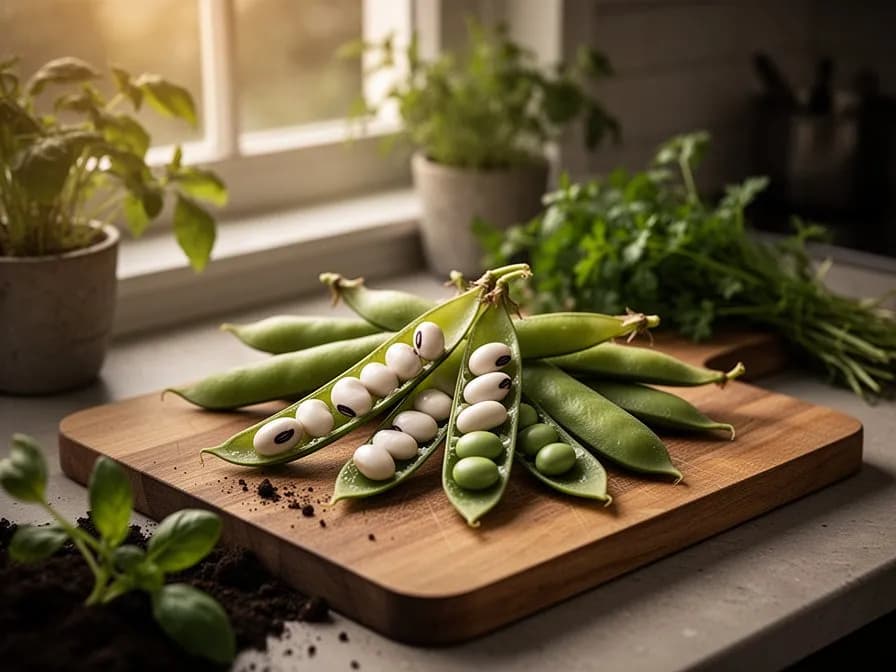
Klassisches Anko (Süße rote Bohnenpaste)
90 Min.Die essentielle japanische Konfektbasis — zarte Adzukibohnen weich gekocht und dann mit Zucker zu einer reichen, samtigen Paste verarbeitet. Diese vielseitige Füllung wird in Mochi, Dorayaki, Taiyaki und Dutzenden anderer traditioneller Süßwaren in ganz Ostasien verwendet.
4 Zutaten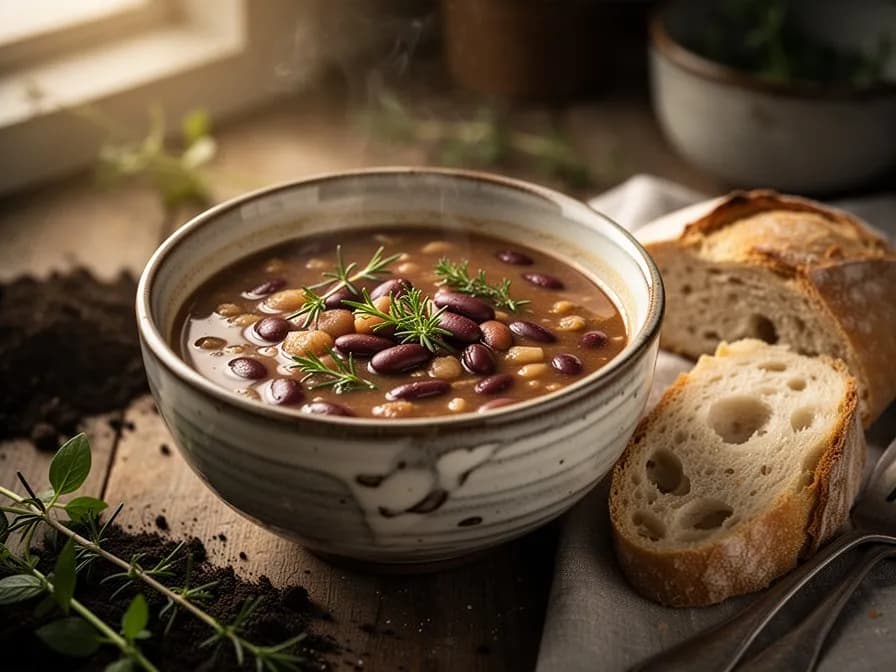
Chinesische süße rote Bohnensuppe (Hong Dou Tang)
75 Min.Eine beliebte chinesische Dessertsuppe, die im Winter warm oder im Sommer über zerstoßenem Eis gekühlt serviert wird. Langsam gekochte Adzukibohnen zerfallen zu einer tröstlichen, leicht süßen Suppe mit wunderschöner tiefer roter Farbe und cremiger Textur.
6 ZutatenAdzukibohnen-Naturreis-Bowl
50 Min.Eine herzhafte, proteinreiche Getreideschale, die erdige Adzukibohnen mit nussigem Naturreis, geröstetem Gemüse und einem würzigen Miso-Ingwer-Dressing kombiniert. Eine vollwertige Alltagsmahlzeit, die Adzukibohnen in einer herzhaften Zubereitung präsentiert.
9 ZutatenKulinarische Verwendung
Adzukibohnen sind am bekanntesten als Basis für japanisches Anko, eine süße rote Bohnenpaste, die in Mochi, Daifuku, Taiyaki und anderen Konfektspezialitäten verwendet wird. Bohnen weich kochen und mit Zucker zu glatter oder stückiger Paste verarbeiten. In herzhaften Zubereitungen zu Suppen, Eintöpfen und Reisgerichten hinzufügen. Gekeimte Adzukibohnen verleihen Salaten und Pfannengerichten Biss. Die Bohnen kochen schneller als die meisten Trockenbohnen und sind in etwa 45 Minuten ohne Einweichen fertig.
Was drinsteckt
Gesundheitsvorteile
- Außergewöhnlich hoher Folatgehalt (B9) mit 622mcg pro 100g — über 150% des Tageswertes — was Adzukibohnen zu einer der besten Nahrungsquellen für dieses Vitamin macht, das für Zellteilung, DNA-Synthese und Vorbeugung von Neuralrohrdefekten während der Schwangerschaft entscheidend ist.
- Reiche pflanzliche Proteinquelle mit fast 20g pro 100g getrockneter Bohnen, die alle essentiellen Aminosäuren außer Methionin enthält — mit Reis oder Getreide für ein vollständiges Protein kombinieren.
- Herausragender Kaliumgehalt (1254mg pro 100g, 36% TW) unterstützt gesunden Blutdruck, richtige Muskelfunktion und kardiovaskuläre Gesundheit.
- Hoher Gehalt an löslichen Ballaststoffen hilft bei der Regulierung des Blutzuckers durch Verlangsamung der Glukoseaufnahme nach den Mahlzeiten, was Adzukibohnen trotz ihres Kohlenhydratgehalts einen relativ niedrigen glykämischen Index verleiht.
- Enthält Proanthocyanidine und andere Polyphenol-Antioxidantien, die in der tiefroten Samenschale konzentriert sind und laut Forschung oxidativen Stress reduzieren, die Lebergesundheit unterstützen und Entzündungsmarker senken können.
- Ausgezeichnete Quelle für Eisen (4,98mg pro 100g, 28% TW) und Zink (5mg, 45% TW), zwei Mineralstoffe, die in pflanzlicher Ernährung häufig defizitär sind — regelmäßiger Verzehr hilft, Anämie vorzubeugen und die Immunfunktion zu unterstützen.
Woher Adzukibohne stammt
Die Adzukibohne (Vigna angularis) stammt aus Ostasien, höchstwahrscheinlich aus der Region, die das heutige China, Korea und Japan umfasst. Archäologische Belege datieren ihre Domestizierung auf etwa 3000 v. Chr., wobei einige der ältesten verkohlten Überreste an Jōmon-zeitlichen Fundstätten in Japan und neolithischen Stätten in Nordchina gefunden wurden. Wilde Adzukibohnen (Vigna angularis var. nipponensis) wachsen noch immer in einem weiten Verbreitungsgebiet vom Himalaya bis Japan.
Die Adzukibohne wurde zu einer der Grundkulturen der ostasiatischen Landwirtschaft und verbreitete sich zusammen mit dem Reisanbau in ganz China, Korea, Japan und schließlich Südostasien. In Japan erreichten Adzukibohnen einen kulturellen Status, der nur von Sojabohnen und Reis übertroffen wird — sie wurden tief in religiöse Zeremonien, saisonale Feste und die Kunst der Wagashi (traditionelle japanische Konfektkunst) eingewoben. Die Entwicklung von Anko während der Edo-Periode (1603-1868) verwandelte die bescheidene Adzukibohne in den Grundpfeiler der japanischen Dessertkultur.
In China folgte die Adzukibohne einem parallelen Weg der kulturellen Integration und wurde zu einer wesentlichen Zutat in süßen Suppen, Mondkuchen, Zongzi (Reisklößen) und der traditionellen Medizin. Die Bohnen verbreiteten sich entlang der Seidenstraße und maritimer Handelsrouten nach Südostasien. Europäische Händler lernten Adzukibohnen im 19. Jahrhundert kennen, und die Kultur erreichte Amerika im frühen 20. Jahrhundert. Heute ist China der weltweit größte Adzukibohnenproduzent, gefolgt von Japan, Südkorea und Taiwan. Japans Region Hokkaido ist berühmt für die Produktion der hochwertigsten Adzukibohnen.
Adzukibohne: Schon gewusst?
Faszinierende Fakten über Adzukibohne
Adzukibohnen werden seit über 5.000 Jahren in Ostasien angebaut, mit verkohlten Samen, die an antiken archäologischen Stätten in Japan und China gefunden wurden und auf 3000 v. Chr. datiert werden — was sie zu einer der ältesten domestizierten Bohnenkulturen der Welt macht.
Adzukibohne: Fragen & Antworten
Wann sollte ich Adzukibohne pflanzen?
Was sind gute Begleitpflanzen für Adzukibohne?
In welchen Winterhärtezonen kann Adzukibohne wachsen?
Wie viel Sonne braucht Adzukibohne?
Welchen Abstand sollte ich zwischen Adzukibohne lassen?
Welche Schädlinge und Krankheiten befallen Adzukibohne?
Wie lagere ich Adzukibohne nach der Ernte?
Was sind die besten Adzukibohne-Sorten zum Anbauen?
Welchen Boden braucht Adzukibohne?
Müssen Adzukibohnen vor dem Kochen eingeweicht werden?
Kann ich Adzukibohnen in einer kurzen Vegetationsperiode anbauen?
Was ist Anko und wie stelle ich es aus selbst angebauten Adzukibohnen her?
Sind Adzukibohnen dasselbe wie rote Kidneybohnen?
Warum blühen meine Adzukibohnenpflanzen, setzen aber keine Hülsen an?
Wie lange halten geerntete Adzukibohnen bei der Lagerung?
Du hast die Theorie gelesen. Jetzt baue sie auf Autopilot an.
Alles, was Adzukibohne knifflig macht — das Timing, die Abstände, die Begleiter, das Erntefenster — genau das übernimmt PlotMyGarden für dich, für jede Pflanze im Garten.
Ein Plan, der dein Wetter kennt
Standort einmal festlegen. Aussaat-, Dünge- und Erntedaten rund um deinen echten letzten Frosttermin und die Live-Vorhersage — kein Raten mehr nach Saattüte.
Aus dem Abschnitt „Pflanzzeit“Beetplaner per Drag & Drop
Beete auf einem Raster gestalten. Jede Pflanze rastet im richtigen Abstand ein, und du siehst die ganze Saison, bevor du einen Cent für Saatgut ausgibst.
Aus dem Abschnitt „Anbau“Begleiter-Konflikte früh erkannt
Über 200 gute und schlechte Kombinationen werden beim Pflanzen live geprüft — so landet ein saisonruinierender Fehler nie in der Erde.
Aus dem Abschnitt „Begleiter“Erinnerungen, nach denen du wirklich handelst
„Gieß die Bohnen.“ „Heute ernten, bevor's umschlägt.“ Pünktlich, konkret und auf deine echten Pflanzen bezogen.
Aus dem Abschnitt „Ernte“Staffel-Aussaat, geplant
Sechs Wochen ernten statt sechs Tage? Die App verteilt deine Aussaaten automatisch und erinnert dich, wenn der nächste Satz fällig ist.
Aus dem Abschnitt „Pflanzzeit“Ein Verlauf, der schlauer wird
Jede protokollierte Ernte bringt der App deinen Garten bei. Der Plan fürs nächste Jahr startet bei dem, was in deinem Boden wirklich funktioniert hat.
Aus dem Abschnitt „Überblick“Pflanze diese neben Adzukibohne
Weitere Hülsenfrüchte
Halte Adzukibohne von diesen fern
Bau deine beste Adzukibohne an — und alles drumherum.
Starte heute kostenlos. Lege deine Beete an, setze deine Adzukibohne ein und lass PlotMyGarden Timing, Abstände, Begleiter und Erinnerungen von der Saat bis zum Erntekorb übernehmen.