Nabo Purple Top
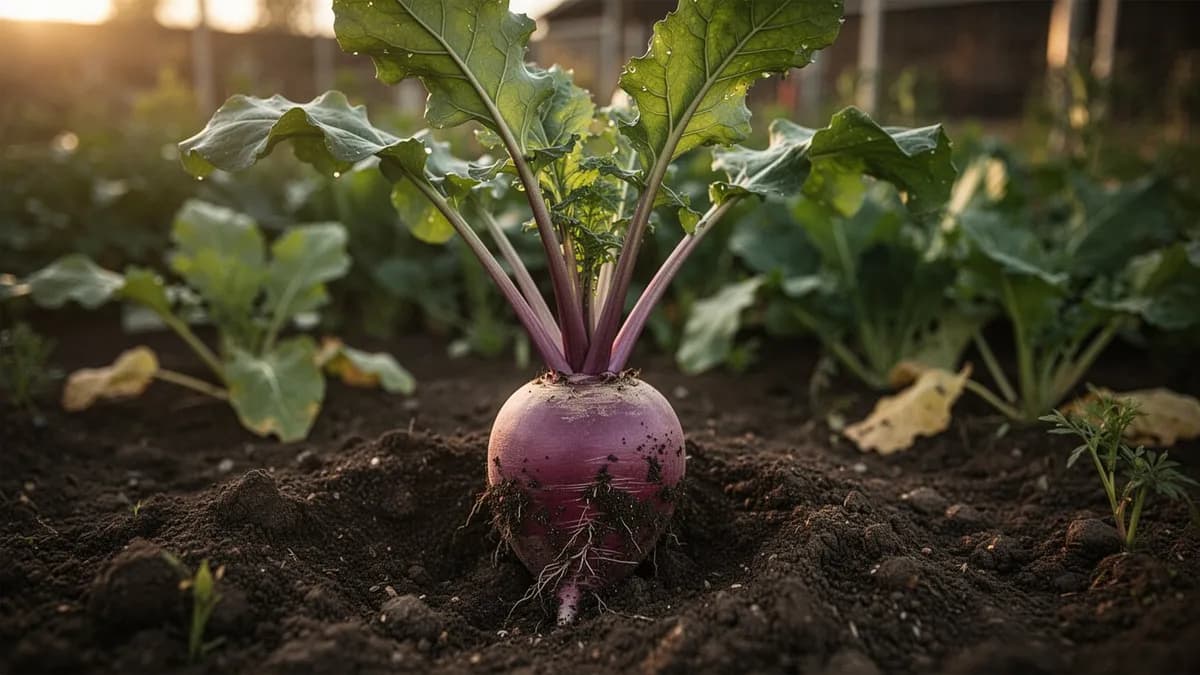
El nabo Purple Top (Brassica rapa subsp. rapa) es la variedad de nabo más clásica y popular del mundo, reconocible por su característica coloración bicolor con parte superior púrpura y parte inferior blanca.





En esta páginaResumen
Conoce Nabo Purple Top
El nabo Purple Top (Brassica rapa subsp. rapa) es la variedad de nabo más clásica y popular del mundo, reconocible por su característica coloración bicolor con parte superior púrpura y parte inferior blanca. Su sabor suave, ligeramente dulce y picante lo hace extraordinariamente versátil en la cocina, mientras que sus hojas verdes son igualmente nutritivas y comestibles.
Cuándo plantar Nabo Purple Top
Sembrar siempre directamente en el terreno definitivo a 1-2 cm de profundidad ya que el nabo no tolera bien el trasplante. Siembra de primavera: tan pronto como el suelo sea trabajable, 4-6 semanas antes de la última helada. Siembra de otoño: 8-10 semanas antes de la primera helada esperada. Aclarar las plántulas a 8-10 cm cuando tengan 5 cm de altura.
Tu año de Nabo Purple Top
Ajustado a Zona 7 · temporada típica · la helada se va hacia el 2 abr y vuelve hacia el 1 nov
Planta Nabo Purple Top Mar – Abr, Ago – Sep y cosecha May – Jun, Oct – Nov. Consulta los métodos de plantación y elige tu clima para adaptar los periodos.
Cómo cultivar Nabo Purple Top
El nabo Purple Top prefiere climas frescos con temperaturas entre 10 y 20 °C y crece rápidamente, lo que permite obtener dos cosechas al año: una en primavera y otra en otoño. Siembre directamente en el terreno definitivo ya que no tolera bien el trasplante, en hileras separadas 25-30 cm y aclarando las plántulas a 8-10 cm entre sí.
El riego debe ser regular y uniforme para un crecimiento continuo y evitar que las raíces se vuelvan leñosas o agrietadas. Evite el exceso de nitrógeno que favorece el crecimiento foliar en detrimento de la raíz, y mantenga el suelo libre de malas hierbas que compiten por los nutrientes.
Aplique un acolchado ligero para mantener la humedad y la frescura del suelo en épocas cálidas. La siembra otoñal, realizada 8-10 semanas antes de la primera helada, produce nabos de sabor más dulce ya que las noches frescas favorecen la conversión de almidones en azúcares dentro de la raíz.
200 plantas caben en un bancal de 120 × 240 cm
Cada Nabo Purple Top pide 12 cm de margen. El planificador guarda ese marco por ti — cada planta, cada bancal.
Los mejores vecinos de Nabo Purple Top
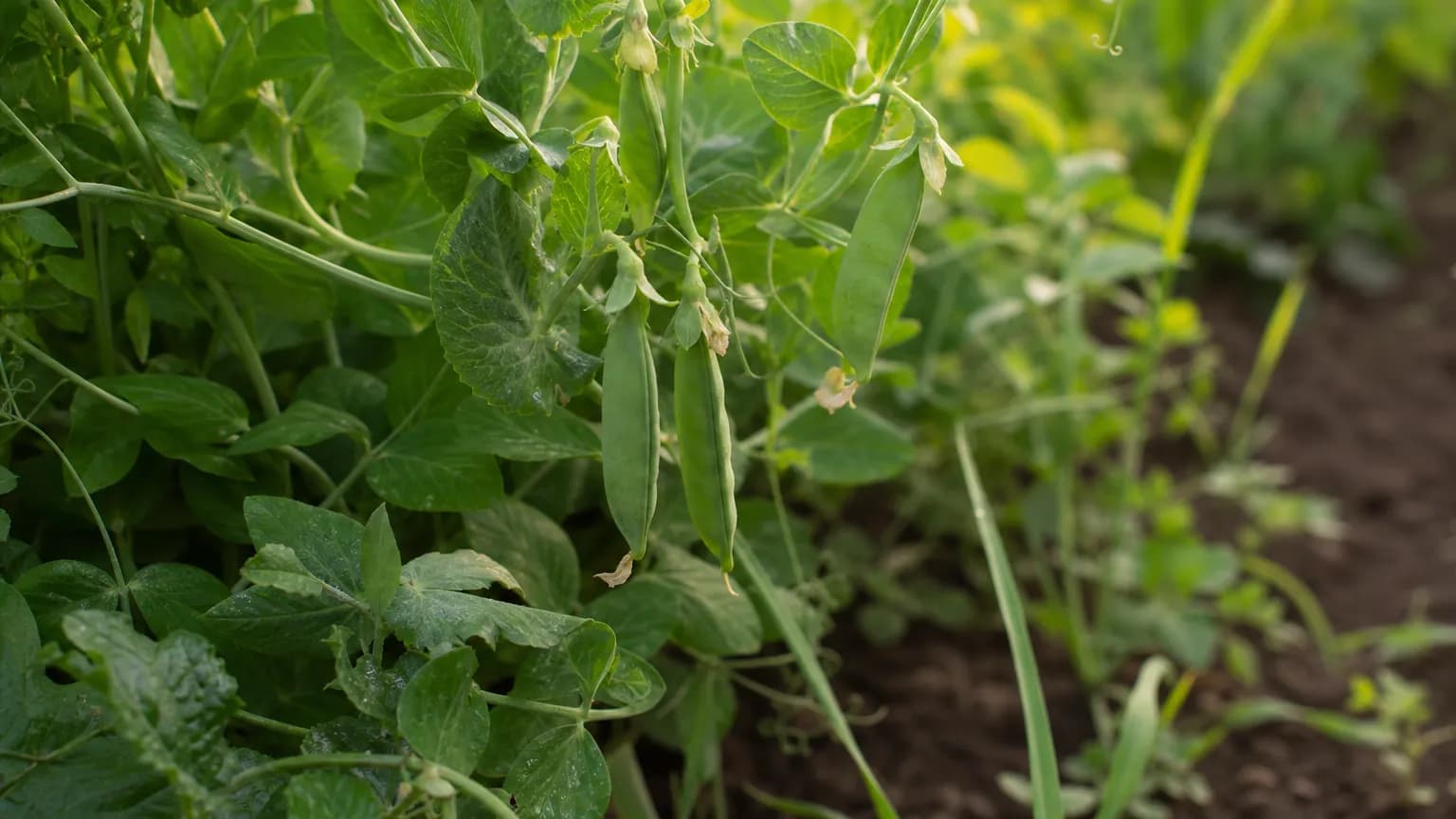
Se asocia muy bien con guisantes y lechugas que no compiten por espacio radicular y se benefician mutuamente. Las hierbas aromáticas como el tomillo y la menta repelen las pulguillas, mientras que debe evitarse plantar junto a otras crucíferas para prevenir la acumulación de plagas y enfermedades específicas.
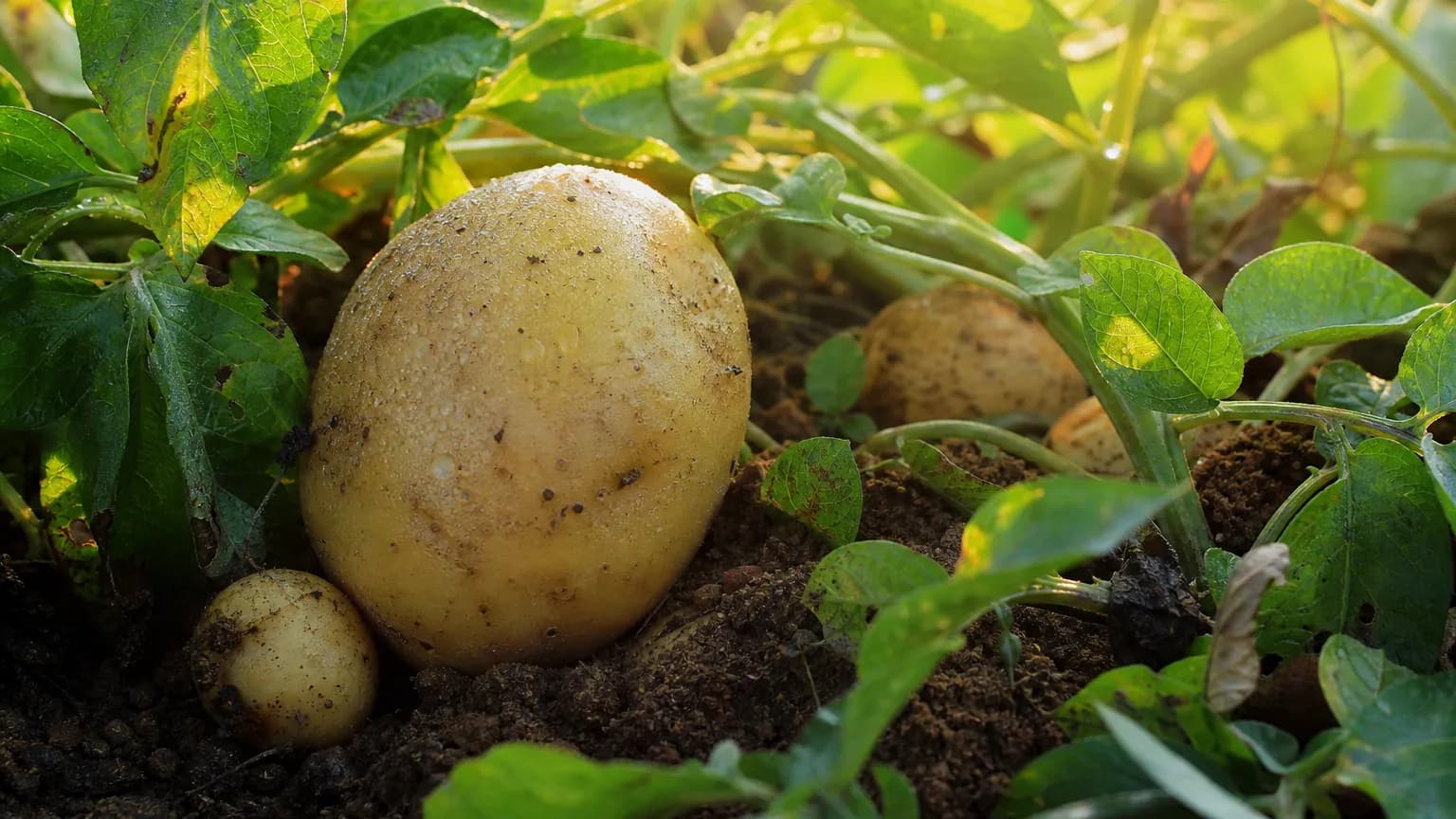
Guisantes va a su lado. Papa no.
Saber de huerto de siempre, cotejado con la tabla real de Nabo Purple Top — prueba cualquier planta que cultives.
Prueba Nabo Purple Top en un bancal, aquí mismo
Un bancal real del planificador con Nabo Purple Top ya plantado. Toca una planta compañera para colocarla y mira cómo responde la comprobación de vecinos: verde para buenos vecinos, rojo si hay conflicto.


Guías de cultivo relacionadas
Abónalo bien
Requiere un suelo suelto, bien drenado y libre de piedras con pH entre 6,0 y 7,0 para un desarrollo uniforme de las raíces. Enriquezca con compost bien descompuesto antes de la siembra pero evite estiércol fresco que causa raíces bifurcadas. Aplique un fertilizante bajo en nitrógeno y alto en fósforo y potasio para favorecer el desarrollo radicular.
Temperatura ideal
Compatibilidad de zonas de rusticidad
De la semilla a la cosecha, etapa por etapa
Germinación
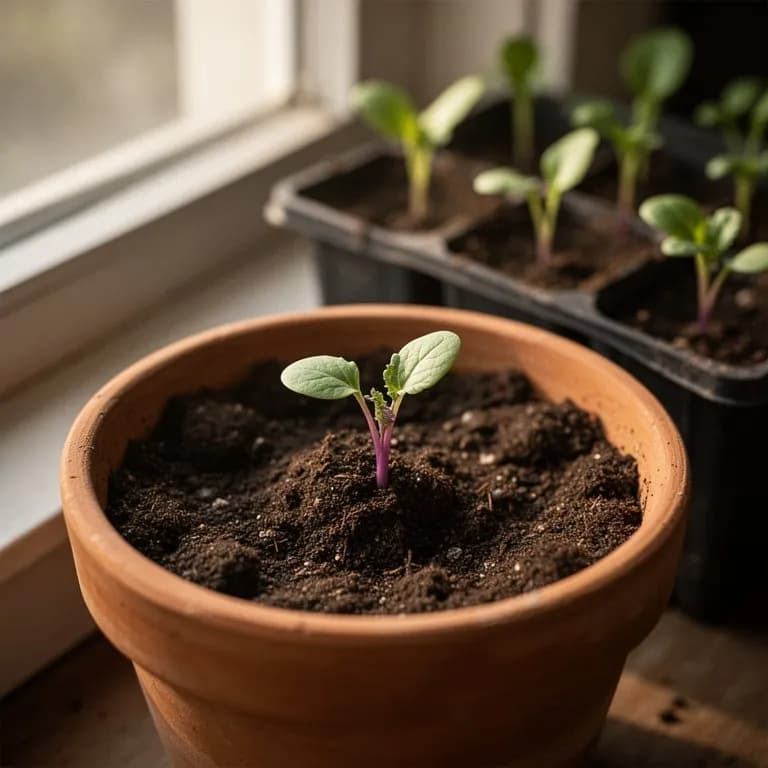
Las semillas de nabo son pequeñas pero vigorosas y germinan rápido en suelo fresco y húmedo. La plántula desarrolla de inmediato una raíz pivotante delgada.
Desarrollo de plántula
Se desarrollan las hojas verdaderas mientras la plántula concentra su energía en formar una copa foliar sana y la raíz pivotante empieza a engrosarse.
Crecimiento de hojas
La planta desarrolla una roseta completa de hojas anchas mientras la raíz empieza a engrosarse bajo la superficie del suelo.
Engrosamiento de la raíz
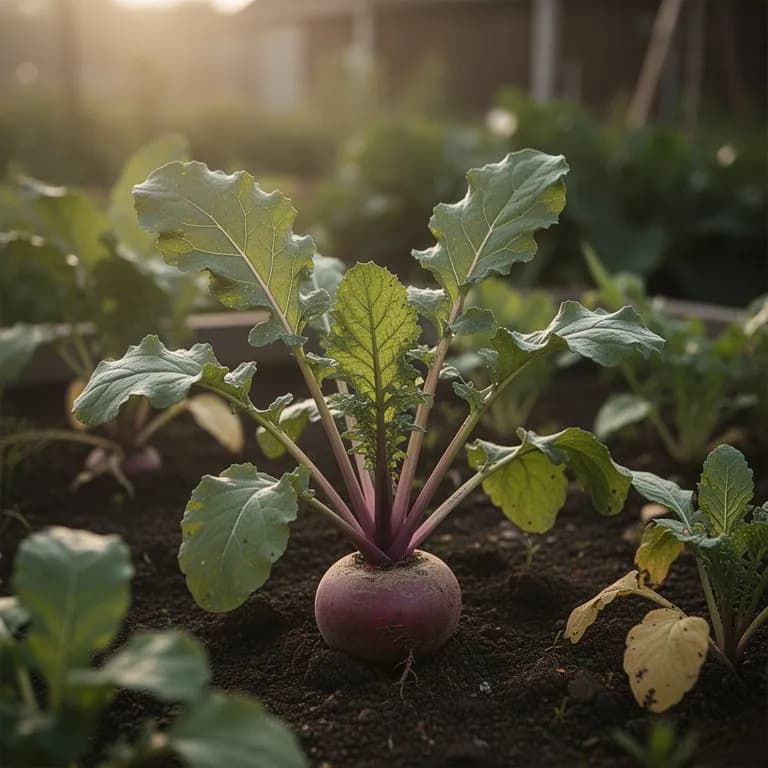
La raíz se ensancha rápidamente y desarrolla su corona púrpura por encima de la línea del suelo, mientras la parte subterránea permanece de color blanco cremoso.
Cosechado
El nabo es una hortaliza de temporada fresca y maduración rápida que normalmente se cultiva como anual.
Siembra las semillas a 1 cm de profundidad y mantén la superficie del suelo constantemente húmeda hasta la germinación. Evita el riego fuerte que forma costra en el suelo.
Cuidar Nabo Purple Top mes a mes
Qué hacer cada mes para tu Nabo Purple Top
Octubre
Mes actualPeak autumn harvest month. Pull roots at 5-8 cm diameter for the sweetest flavor — light frosts convert starches to sugars, noticeably improving taste. Harvest greens generously now as plants approach maturity. Begin storing roots in a cool, humid location.
Ten claro qué hacer en tu huerto, cada mes
Un correo al empezar cada mes: qué sembrar, plantar y hacer ahora mismo — para tu Nabo Purple Top y todo lo que crece alrededor. Más un breve curso inicial para esquivar los errores clásicos.
- Qué hacer ahora mismo
- Ajustado a tu temporada
- Curso inicial incluido
Cosechar Nabo Purple Top
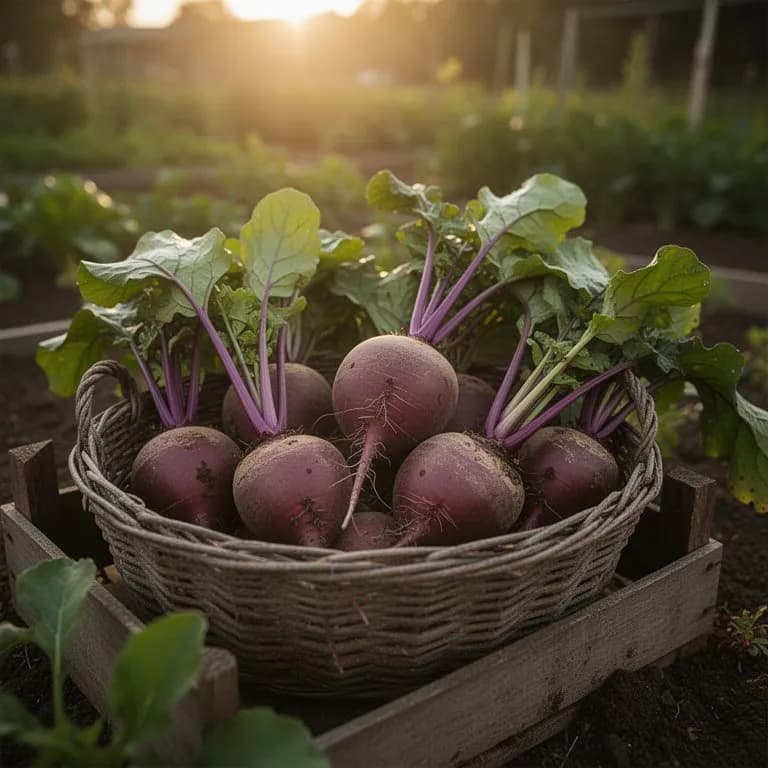
Cosechar cuando las raíces alcanzan 5-8 cm de diámetro, generalmente entre 50 y 60 días después de la siembra, tirando firmemente de la base del follaje o aflojando la tierra con una horca. No dejar crecer demasiado ya que las raíces grandes se vuelven leñosas y amargas; las hojas tiernas también se cosechan regularmente como verdura.
se supone que plantas al comenzar el periodo — indica tu fecha real
Cosecha las raíces cuando tengan 5–8 cm de diámetro, idealmente unos 50 días después de la siembra.
Almacenamiento y conservación
Las raíces se conservan en el refrigerador dentro de una bolsa perforada durante 2-3 semanas, o se pueden almacenar en arena húmeda en un lugar fresco y oscuro durante 2-3 meses. Para conservación prolongada, pelar, cortar en cubos, blanquear durante 2 minutos y congelar; también se pueden preparar encurtidos o fermentados.
Qué falla — y cómo solucionarlo
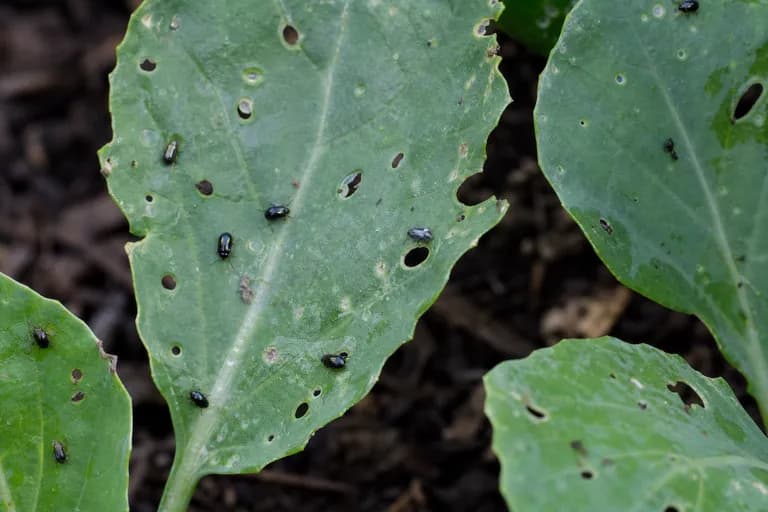
Pulguilla de las crucíferas
PlagaPequeños escarabajos saltadores que producen multitud de agujeros diminutos en las hojas jóvenes, debilitando las plántulas y pudiendo destruirlas en infestaciones severas.
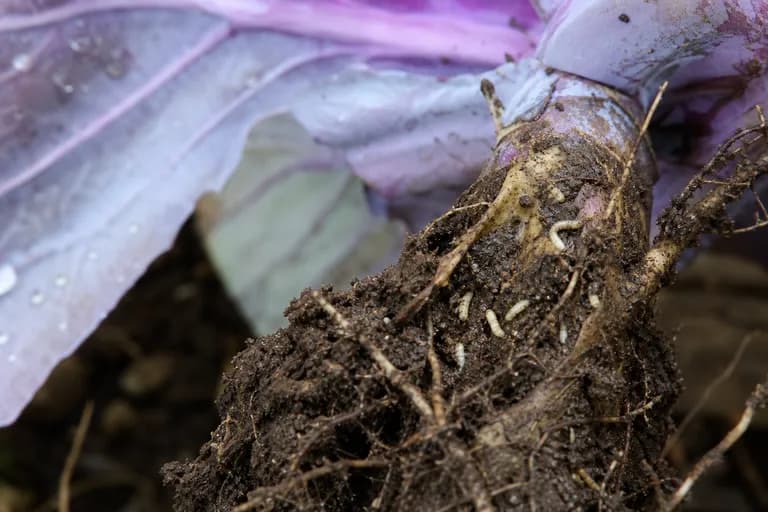
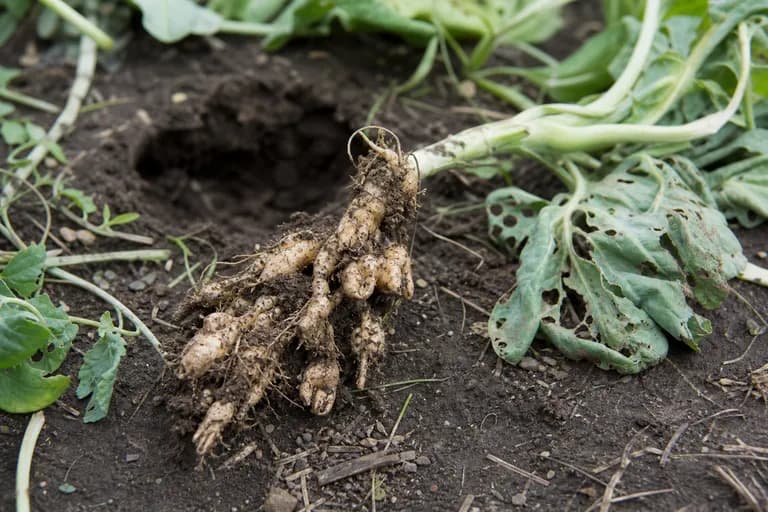
Hernia de las crucíferas
EnfermedadEngrosamiento anormal y deformación de las raíces que impiden su desarrollo correcto, acompañado de marchitez del follaje en horas calurosas y crecimiento raquítico.
Oruga de la col
PlagaOrugas verdes de la mariposa de la col que devoran las hojas dejando solo las nervaduras, reduciendo significativamente la capacidad fotosintética y el vigor de la planta.
Solución de problemas comunes
Las temperaturas superiores a 25 °C provocan que las raíces se vuelvan leñosas, fibrosas y de sabor amargo, por lo que es esencial cultivar en las estaciones frescas. La siembra demasiado densa sin aclareo produce raíces pequeñas y deformes que no alcanzan un tamaño comercial adecuado.
Consejos de cultivo
- Sow directly into the garden — turnips strongly dislike transplanting. Their taproot is easily damaged during transplant, resulting in forked, misshapen roots. Direct sowing in prepared beds is always the best approach for straight, well-formed roots.
- Thin ruthlessly and early. Crowded turnips produce small, tough roots that never reach full size. Thin to 10-15 cm apart when seedlings are 5 cm tall and enjoy the thinnings as baby greens — they are tender and mild with a pleasant peppery bite.
- Time your plantings for cool weather maturation. Spring-sown turnips often turn bitter and woody as summer heat arrives, while autumn crops maturing in cooling temperatures are significantly sweeter and more tender. For the best eating quality, prioritize autumn planting.
- Keep soil consistently moist but never waterlogged. Irregular watering causes roots to crack, become pithy, or develop a harsh, overly pungent flavor. Mulch with straw to maintain even soil moisture and suppress weeds between rows.
- Harvest at golf-ball to tennis-ball size (5-8 cm diameter) for the best flavor and texture. Turnips larger than 10 cm become increasingly fibrous and strong-tasting. Younger roots are mild enough to eat raw, sliced thinly in salads.
- Use floating row cover from sowing through harvest if flea beetles are a problem in your area. These tiny black beetles chew small holes in turnip leaves and can severely damage young seedlings, but mature plants usually outgrow light infestations.
- Rotate turnips with non-brassica crops on a 3-4 year cycle to prevent clubroot disease and reduce cabbage maggot populations. Never plant turnips where cabbage, broccoli, kale, or radishes grew in the previous two seasons.
- Harvest turnip greens as a bonus crop throughout the growing period. Begin picking outer leaves once the rosette has 8-10 leaves, taking no more than one-third at a time. The greens are highly nutritious and cook down beautifully like spinach or collards.
Cultiva tu mejor Nabo Purple Top — y todo lo que la rodea.
Empieza un plan gratis hoy. Diseña tus bancales, coloca tu Nabo Purple Top y deja que PlotMyGarden gestione el momento, el espaciado, las asociaciones y los recordatorios de la semilla a la cesta.
Elige tu Nabo Purple Top
Purple Top White Globe
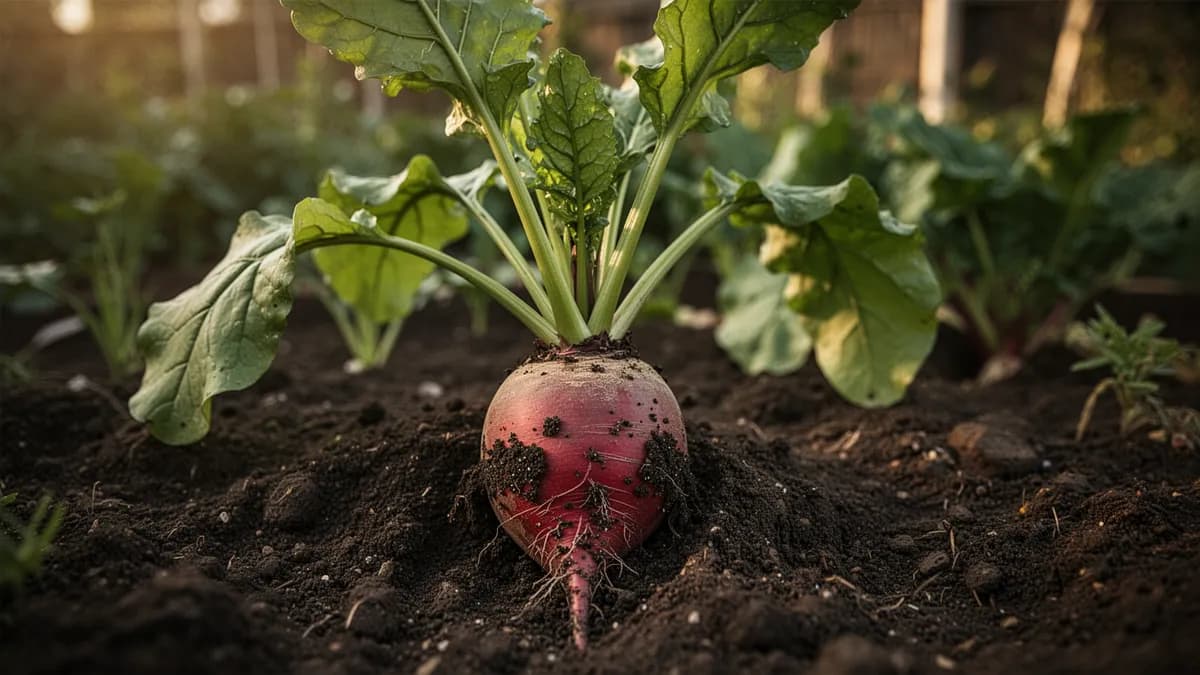
La variedad clásica por excelencia con raíz redondeada bicolor púrpura y blanca de 8-10 cm y sabor suave y dulce. Muy productiva y fiable, madura en 50-55 días.
Purple Top Milan
Variedad precoz con raíz aplanada de corona púrpura y base blanca, especialmente tierna y de sabor suave. Ideal para cosecha temprana, madura en 35-45 días.
Scarlet Queen
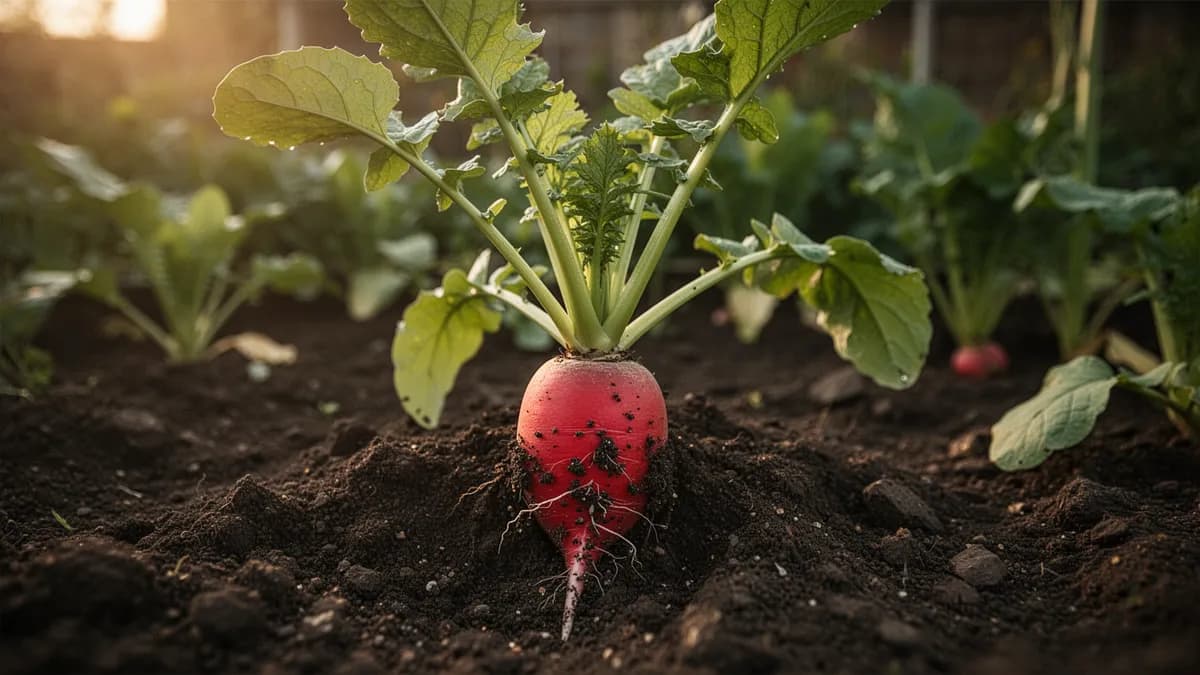
Variedad híbrida de piel completamente roja brillante y pulpa blanca crujiente con sabor suave ligeramente dulce. Atractiva en ensaladas, madura en 40-50 días.
White Egg
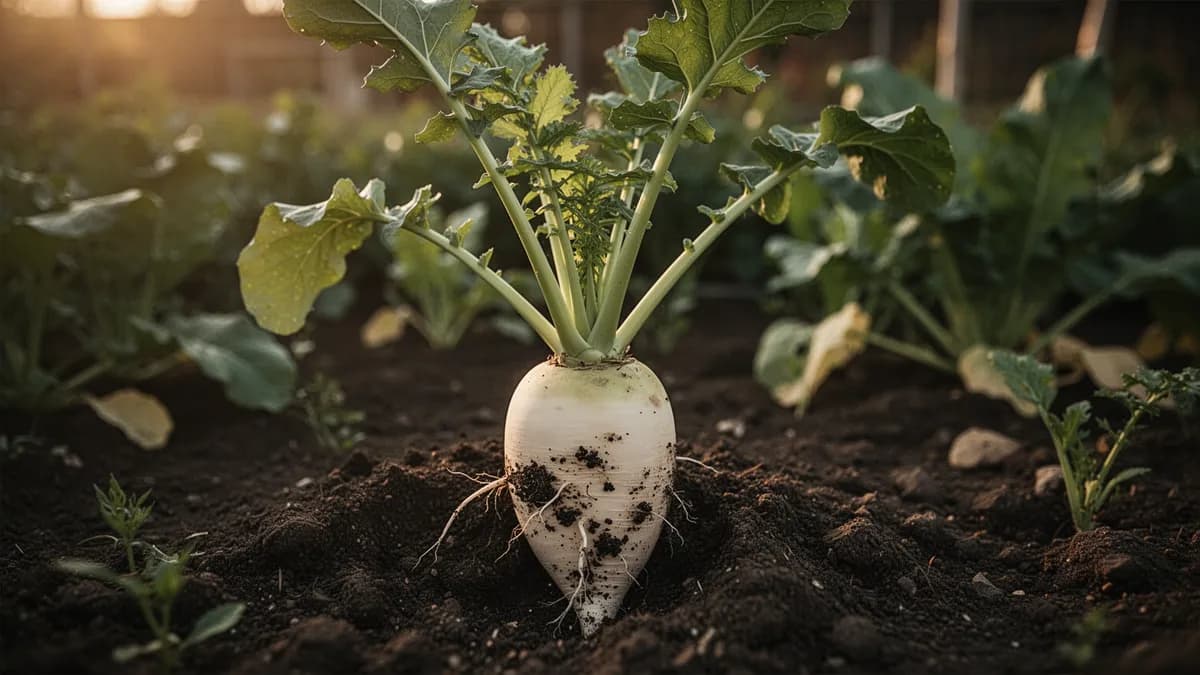
Variedad reliquia de raíz blanca pura en forma de huevo con textura suave y sabor dulce delicado. Excelente cruda o cocinada, madura en 45-55 días.
A packet of Purple Top turnip seeds costs $2-4 and contains 500-1,000 seeds — enough to plant dozens of rows. Fresh turnips sell for $2-4 per pound at grocery stores, and organic turnip greens command $3-5 per bunch at farmers markets. A single 3-meter row produces 4-8 kg of roots plus several harvests of greens, representing $20-40 in produce from a few cents worth of seed. With succession planting across spring and autumn, a family can easily save $60-100 per season on fresh produce while enjoying the superior flavor of garden-fresh turnips.
Recetas rápidas
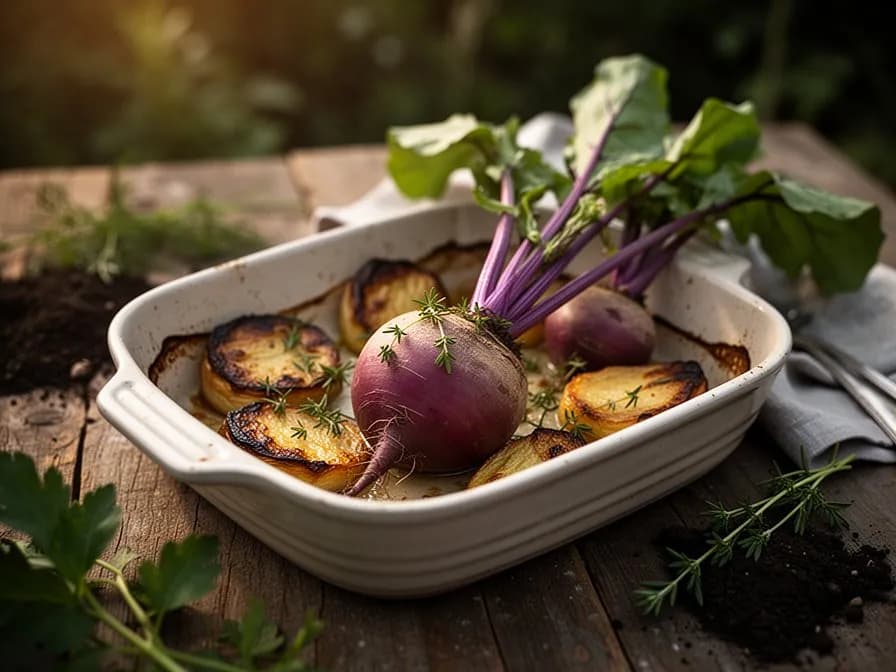
Creamy Mashed Turnips with Roasted Garlic
30 minA silky, lower-carb alternative to mashed potatoes with a delicate, slightly sweet flavor. Roasted garlic adds depth without overwhelming the turnip's natural taste. Contains roughly 60% fewer carbohydrates than traditional mashed potatoes.
6 ingredientesHoney-Glazed Roasted Turnips
40 minHigh-heat roasting caramelizes turnips' natural sugars while a honey glaze adds a golden, slightly sweet crust. The result is nutty, tender, and converts even turnip skeptics into fans.
7 ingredientesTurnip and Potato Gratin
55 minThinly sliced turnips layered with potatoes in a bubbling, cheesy cream sauce. The turnip adds a subtle peppery note that balances the richness of the gratin beautifully.
7 ingredientesUsos culinarios
Es un ingrediente fundamental en sopas y guisos invernales como el cocido y el pot-au-feu, aportando sabor dulce y textura. También es excelente en puré como alternativa a la patata con menos calorías, asado al horno con miel y hierbas, salteado en cubos, rallado crudo en ensaladas y encurtido en vinagre.
Qué contiene
Beneficios para la salud
- Turnips are rich in glucosinolates, sulfur-containing compounds that break down into isothiocyanates during digestion — these bioactive compounds have been extensively studied for their potential to inhibit cancer cell growth and support the body's natural detoxification pathways.
- The high vitamin C content (23% DV per 100g) in turnip roots supports immune function, collagen production for healthy skin and joints, and enhances iron absorption from plant-based foods.
- Turnip greens are an exceptional source of vitamin K (one cup provides over 250% DV), which is essential for proper blood clotting, bone metabolism, and may play a role in reducing arterial calcification.
- The combination of fiber, potassium, and low sodium in turnips supports cardiovascular health by helping to regulate blood pressure and reduce LDL cholesterol levels.
- Both the root and greens provide anti-inflammatory compounds including vitamin C, beta-carotene (in greens), and various phenolic acids that may help reduce chronic inflammation linked to arthritis, heart disease, and metabolic disorders.
- Extremely low caloric density (28 calories per 100g) with satisfying fiber content makes turnips an excellent food for weight management — they provide volume and nutrition with minimal caloric impact.
De dónde viene Nabo Purple Top
The Purple Top White Globe turnip (Brassica rapa subsp. rapa) belongs to one of the oldest cultivated root vegetable species. Wild turnips likely originated in the region spanning Central Asia to the Mediterranean, with evidence of cultivation dating back over 4,000 years. Ancient Greek and Roman writers including Pliny the Elder and Columella described multiple turnip varieties and cultivation techniques, and turnips were a staple food of the Roman legions — easy to grow, fast to mature, and storable through winter.
For centuries, turnips were the most important root vegetable in Europe. Before the potato's introduction from the Americas in the 16th century, turnips filled the role that potatoes occupy today — mashed, roasted, added to stews, and stored in root cellars for winter sustenance. The crop was so important that entire agricultural movements revolved around it. In 18th-century Britain, Charles 'Turnip' Townshend championed the Norfolk four-course rotation system with turnips as a key component, helping spark the British Agricultural Revolution that transformed farming across Europe.
The Purple Top White Globe variety was developed in the United States in the mid-1800s and quickly became the dominant turnip in American gardens. Its combination of reliable performance, attractive appearance, sweet flavor, mild enough for raw eating, rapid maturity (55-65 days), and excellent storage qualities made it the gold standard. It remains the most widely planted turnip variety in North America today. Modern gardeners are rediscovering turnips as a versatile, fast-growing, cool-season crop that provides both nutritious greens and flavorful roots from a single planting — a remarkable two-for-one vegetable.
Nabo Purple Top: ¿sabías que?
Datos fascinantes sobre Nabo Purple Top
The Purple Top White Globe turnip has been the most popular turnip variety in North America for over 150 years — it was already widely grown before the American Civil War and remains the standard against which all other turnip varieties are measured.
Nabo Purple Top: preguntas frecuentes
¿Cuándo debo plantar Nabo Purple Top?
¿Cuáles son buenas plantas acompañantes para Nabo Purple Top?
¿En qué zonas de rusticidad puede crecer Nabo Purple Top?
¿Cuánto sol necesita Nabo Purple Top?
¿A qué distancia debo espaciar Nabo Purple Top?
¿Qué plagas y enfermedades afectan a Nabo Purple Top?
¿Cómo almaceno Nabo Purple Top después de la cosecha?
¿Cuáles son las mejores variedades de Nabo Purple Top para cultivar?
¿Qué suelo necesita Nabo Purple Top?
Why are my turnips woody and tough instead of tender?
Can I eat turnip greens, and are they nutritious?
Why do my turnips taste bitter or overly peppery?
How should I store turnips after harvest?
Can I grow turnips in containers?
When is the best time to plant turnips for the sweetest flavor?
Acabas de leer la teoría. Ahora cultívala en piloto automático.
Todo lo que hace que Nabo Purple Top sea delicado — el momento, el espaciado, las asociaciones, la ventana de cosecha — es justo lo que PlotMyGarden resuelve por ti, para cada planta de tu huerto.
Un plan que conoce tu clima
Indica tu ubicación una vez. Recibe fechas de siembra, abonado y cosecha basadas en tu última helada real y el pronóstico en vivo — sin adivinar con un sobre genérico.
De la sección “Cuándo plantar”Planificador de bancales de arrastrar y soltar
Diseña bancales sobre una cuadrícula. Cada planta encaja con su espaciado correcto y ves toda la temporada antes de gastar un céntimo en semillas.
De la sección “Cultivo”Conflictos de asociación, detectados a tiempo
Más de 200 buenas y malas combinaciones comprobadas en vivo mientras plantas — para que un error que arruine la temporada nunca llegue a la tierra.
De la sección “Asociaciones”Recordatorios que sí vas a seguir
“Riega las judías.” “Recoge hoy antes de que se pase.” Oportunos, concretos y ligados a las plantas que de verdad cultivas.
De la sección “Cosecha”Escalonado, programado
¿Quieres cosechar seis semanas en vez de seis días? Reparte tus siembras automáticamente y te avisa cuando toca el siguiente lote.
De la sección “Cuándo plantar”Un registro que se vuelve más listo
Cada cosecha que registras le enseña tu huerto. El plan del año que viene parte de lo que de verdad funcionó en tu suelo, no en un manual.
De la sección “Resumen”Planta estos junto a Nabo Purple Top
Más Hortalizas de raíz
Mantén Nabo Purple Top lejos de estos
Cultiva tu mejor Nabo Purple Top — y todo lo que la rodea.
Empieza un plan gratis hoy. Diseña tus bancales, coloca tu Nabo Purple Top y deja que PlotMyGarden gestione el momento, el espaciado, las asociaciones y los recordatorios de la semilla a la cesta.