Cebolla Egipcia
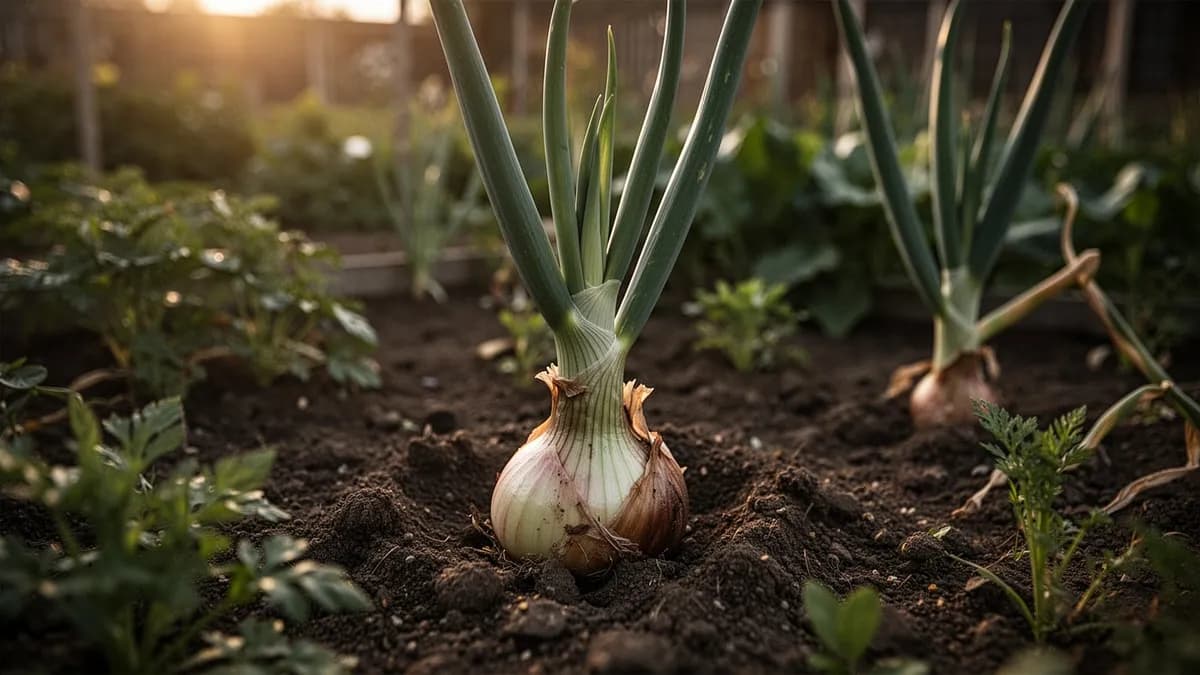
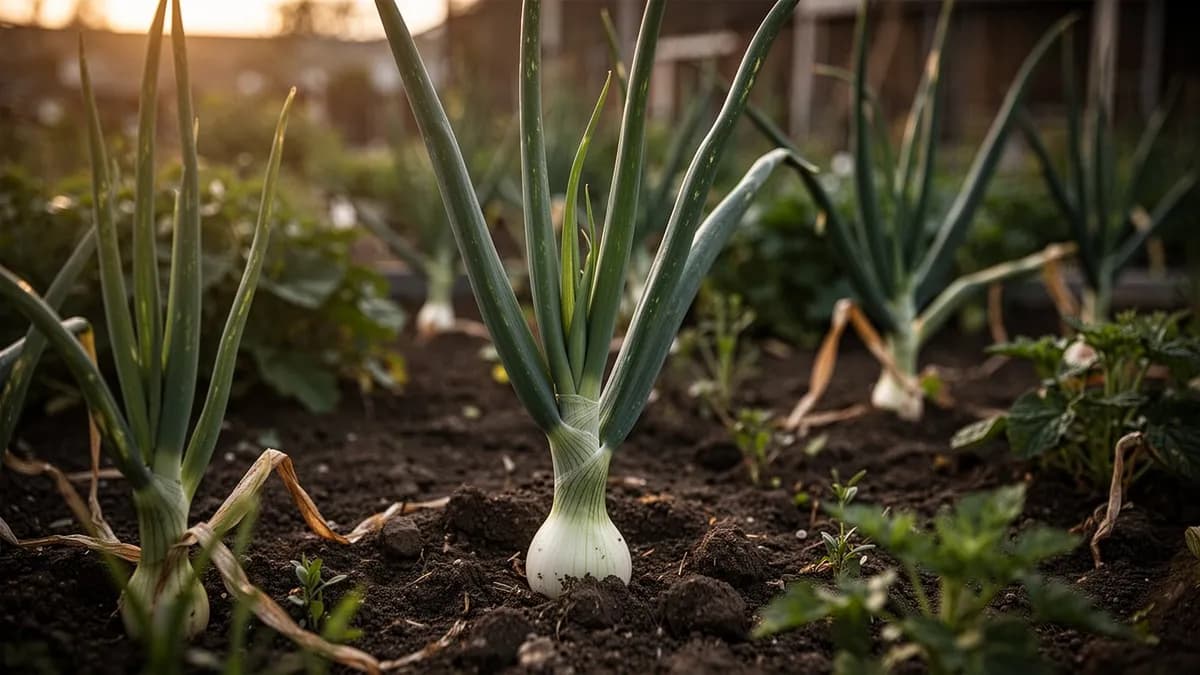
La cebolla egipcia o cebolla de árbol (Allium × proliferum) es una especie perenne fascinante que produce racimos de pequeños bulbillos aéreos en la punta de sus tallos en lugar de flores, dándole una apariencia de árbol en miniatura.





En esta páginaResumen
Conoce Cebolla Egipcia
La cebolla egipcia o cebolla de árbol (Allium × proliferum) es una especie perenne fascinante que produce racimos de pequeños bulbillos aéreos en la punta de sus tallos en lugar de flores, dándole una apariencia de árbol en miniatura. Es un cruce natural entre la cebolla común y la cebolla galesa, extremadamente resistente al frío y capaz de producir hojas comestibles durante casi todo el año.
Cuándo plantar Cebolla Egipcia
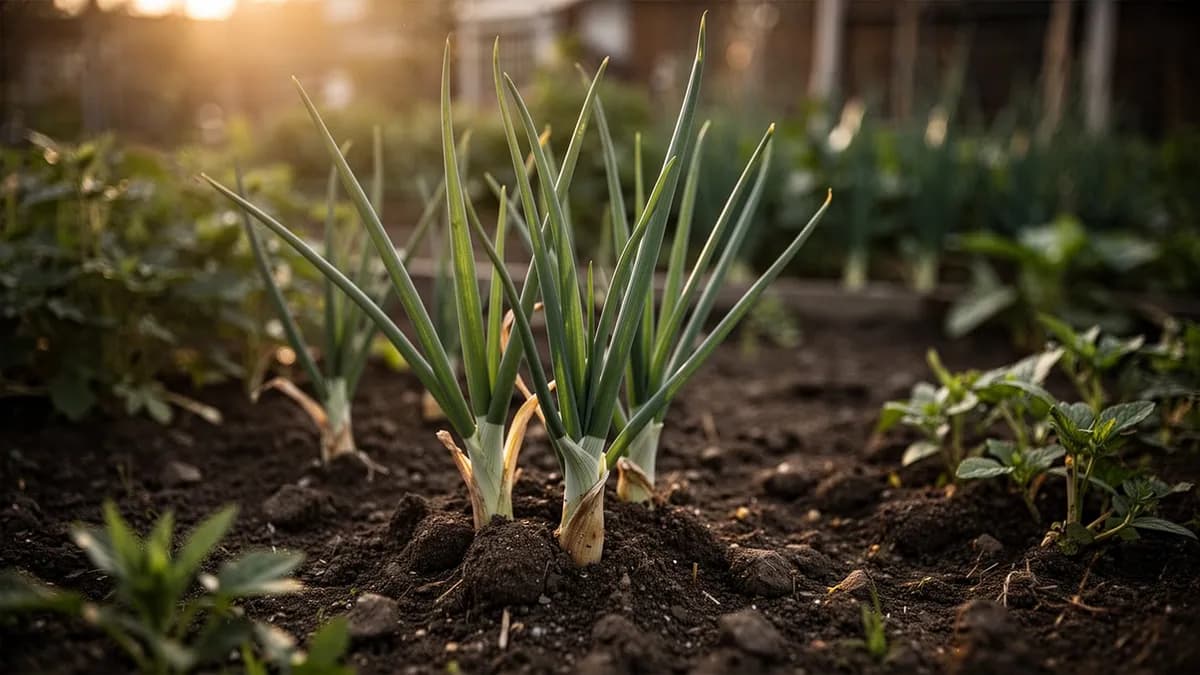
Se propaga exclusivamente por bulbillos aéreos o división de bulbos base, ya que rara vez produce semillas viables. Plante los bulbillos a 3-5 cm de profundidad en otoño para cosecha temprana en primavera, o en primavera para producción el mismo año. Los bulbillos enraízan rápidamente y producen hojas cosechables en 4-6 semanas.
Tu año de Cebolla Egipcia
Ajustado a Zona 7 · temporada típica · la helada se va hacia el 2 abr y vuelve hacia el 1 nov
Planta Cebolla Egipcia Mar – Abr, Sep – Oct y cosecha May – Sep. Consulta los métodos de plantación y elige tu clima para adaptar los periodos.
Cómo cultivar Cebolla Egipcia
La cebolla egipcia es una de las hortalizas más fáciles de cultivar, prosperando tanto a pleno sol como en semisombra parcial en prácticamente cualquier tipo de suelo bien drenado. Plante los bulbillos aéreos o las divisiones del bulbo base a 3-5 cm de profundidad y 20-25 cm de separación en otoño o principios de primavera.
Riegue regularmente durante el establecimiento pero reduzca el riego una vez establecida, ya que tolera bien la sequía moderada. Las plantas forman colonias densas con el tiempo, produciendo nuevas hojas desde la base y tallos de hasta 1 metro coronados por racimos de bulbillos que se curvan hacia el suelo para enraizarse y colonizar nuevas áreas.
Aplique compost o abono orgánico alrededor de las plantas en primavera y otoño para mantener la fertilidad del suelo. Divida las matas cada 3-4 años para rejuvenecerlas y controlar su expansión. Es una planta extraordinariamente resistente a plagas y enfermedades, requiriendo mínimo mantenimiento una vez establecida.
72 plantas caben en un bancal de 120 × 240 cm
Cada Cebolla Egipcia pide 20 cm de margen. El planificador guarda ese marco por ti — cada planta, cada bancal.
Los mejores vecinos de Cebolla Egipcia
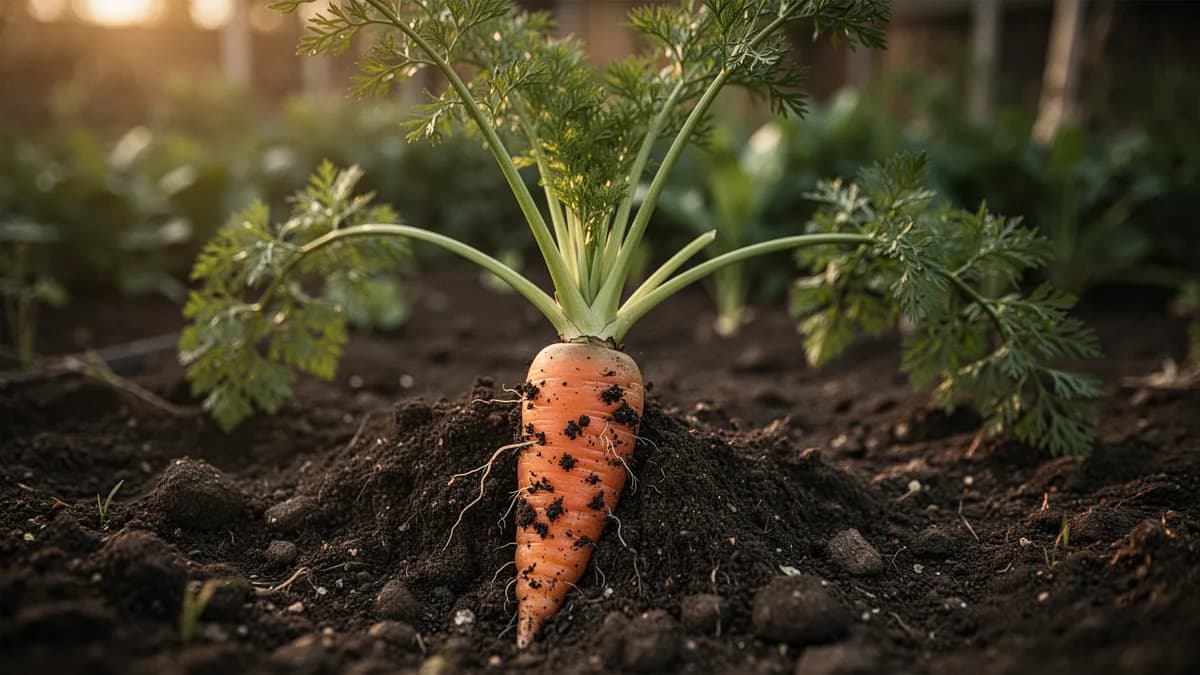
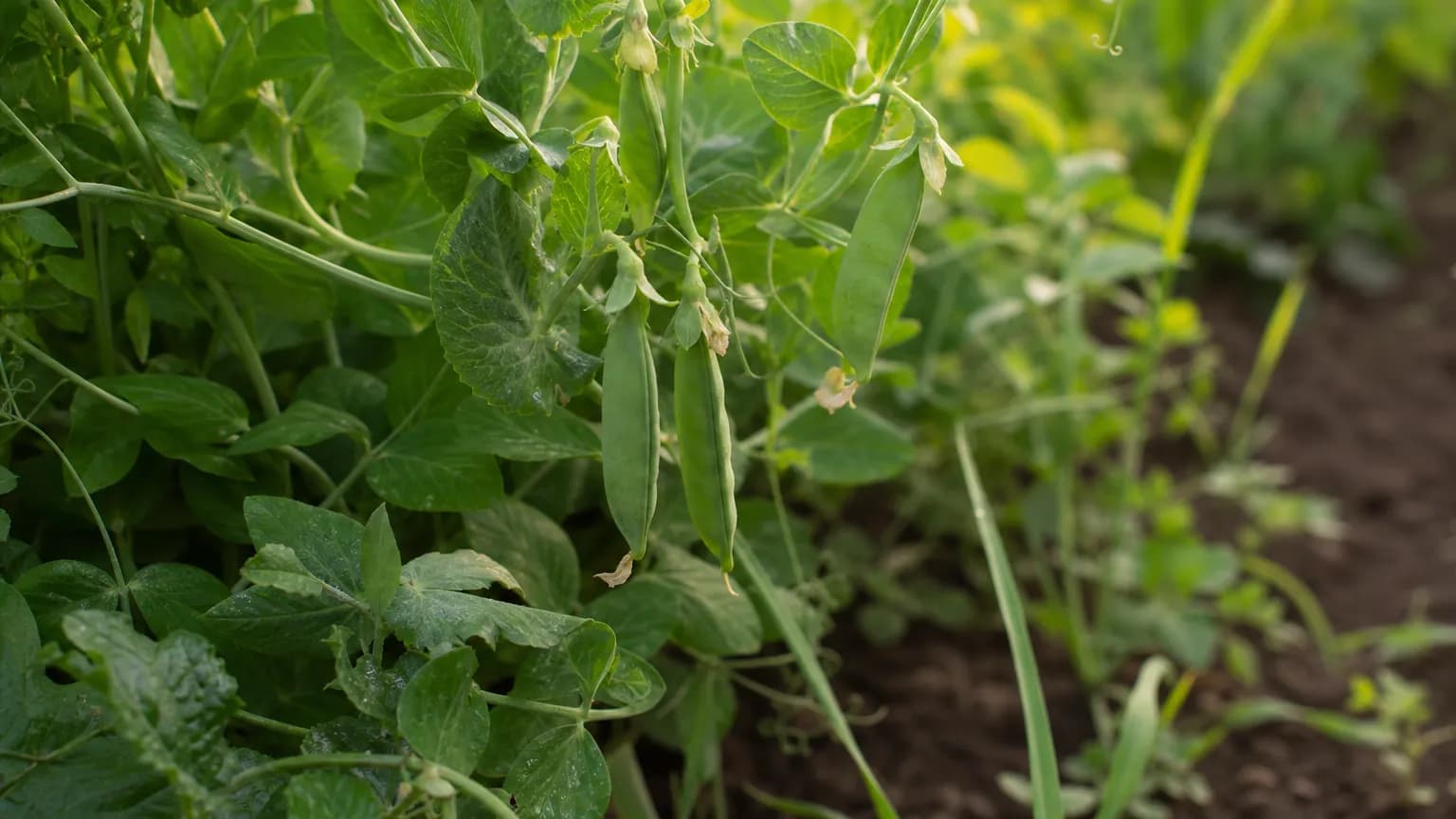
Es una excelente compañera para zanahorias y lechugas, ya que su aroma fuerte repele la mosca de la zanahoria y otros insectos dañinos. También se asocia bien con fresas, remolachas y tomates, mientras que debe evitarse plantar cerca de leguminosas como guisantes y judías.
Zanahoria va a su lado. Guisantes no.
Saber de huerto de siempre, cotejado con la tabla real de Cebolla Egipcia — prueba cualquier planta que cultives.
Prueba Cebolla Egipcia en un bancal, aquí mismo
Un bancal real del planificador con Cebolla Egipcia ya plantado. Toca una planta compañera para colocarla y mira cómo responde la comprobación de vecinos: verde para buenos vecinos, rojo si hay conflicto.


Guías de cultivo relacionadas
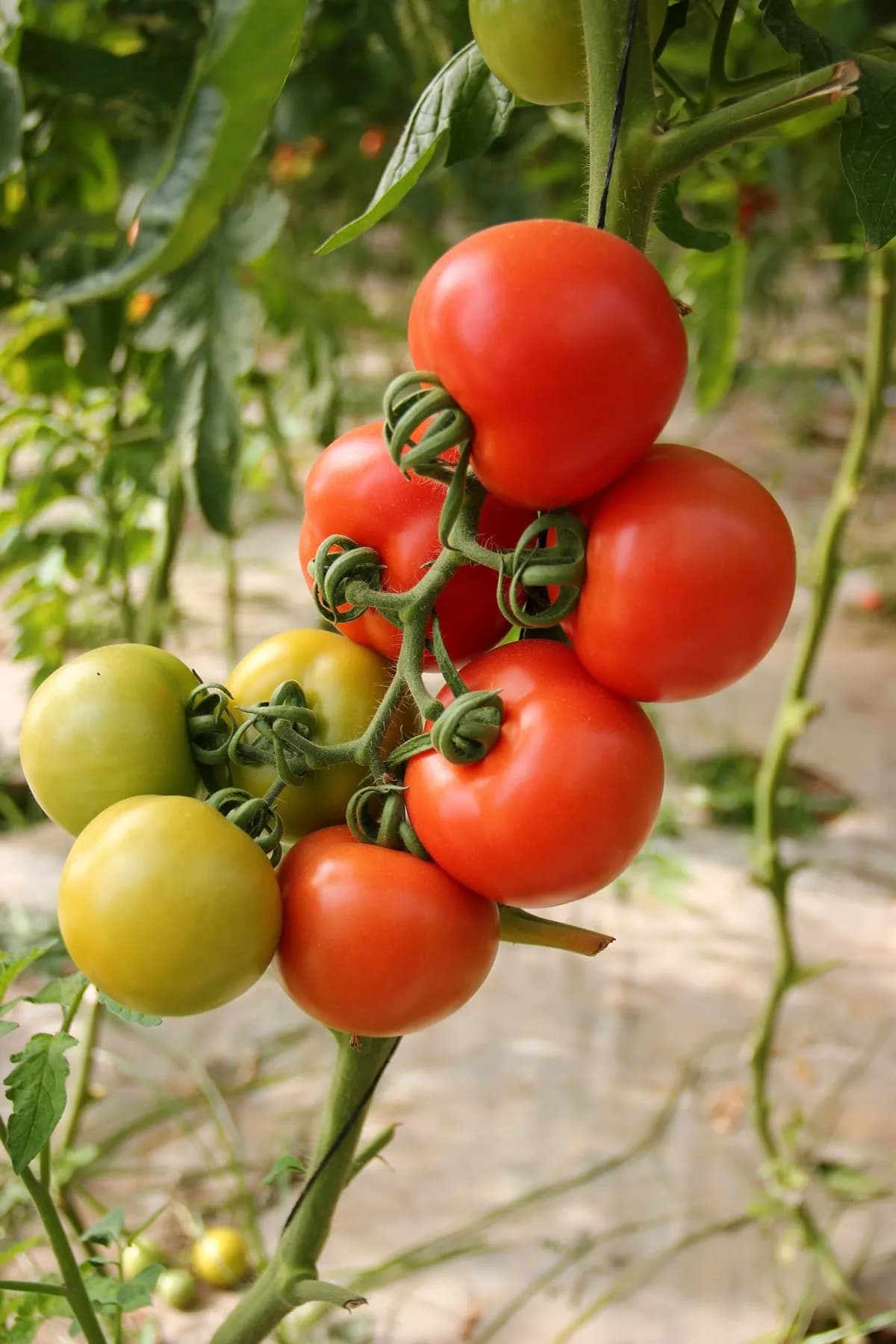
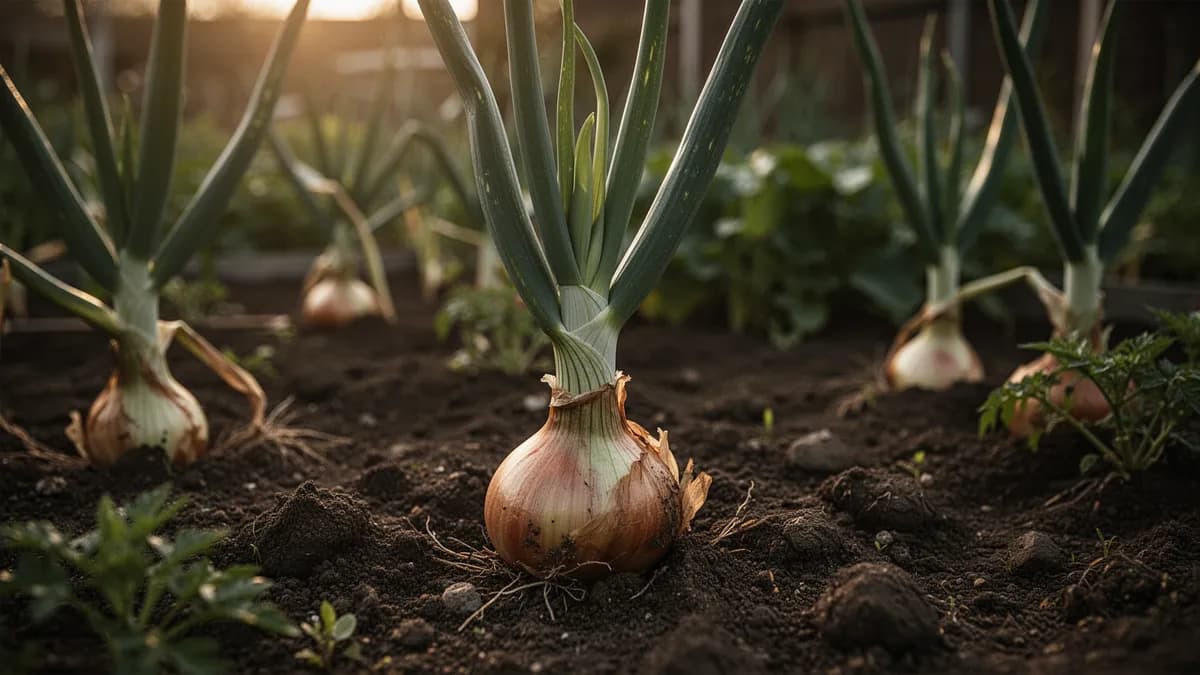
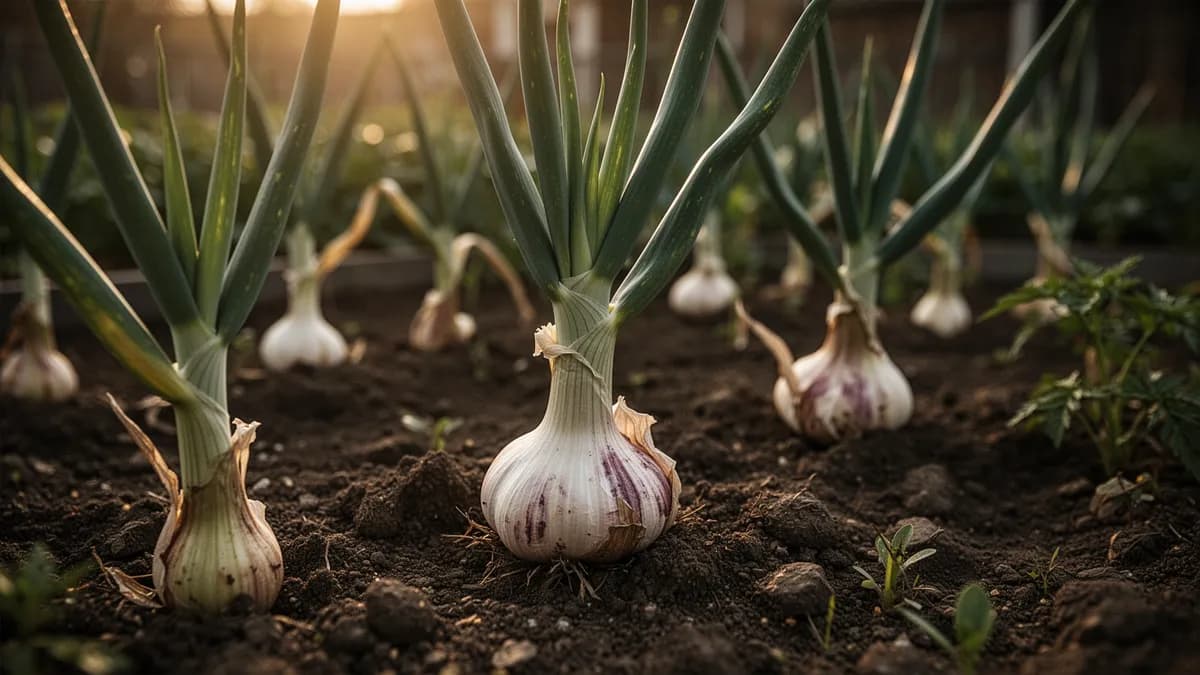
Abónalo bien
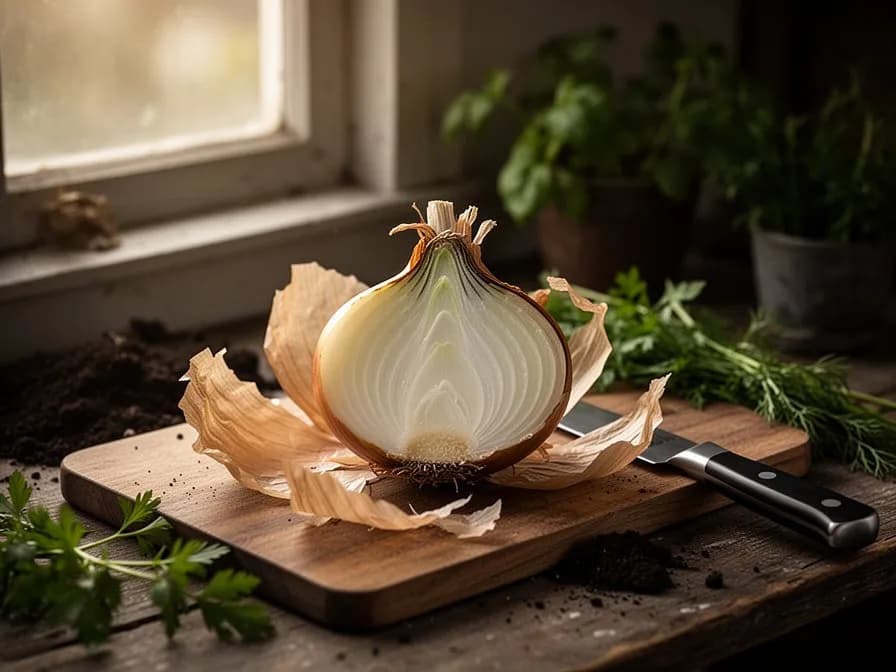
Se adapta a casi cualquier tipo de suelo bien drenado con pH entre 6,0 y 7,0, aunque prefiere suelos ricos en materia orgánica. Aplique compost o estiércol bien descompuesto en primavera y otoño como cobertura alrededor de las plantas. Es poco exigente en fertilización una vez establecida.
Temperatura ideal
Compatibilidad de zonas de rusticidad
De la semilla a la cosecha, etapa por etapa
Plantación y establecimiento
Las cebollas árbol se propagan plantando bulbillos superiores o divisiones del bulbo basal subterráneo. Los bulbillos se plantan a 2-3 cm de profundidad con la punta hacia arriba, mientras que las divisiones del bulbo basal se plantan a la misma profundidad a la que crecían antes. Las raíces se desarrollan en 7-10 días y los brotes verdes aparecen poco después. La plantación de otoño (septiembre-octubre) es ideal porque permite que las raíces se establezcan antes de la dormancia invernal.
Crecimiento vegetativo
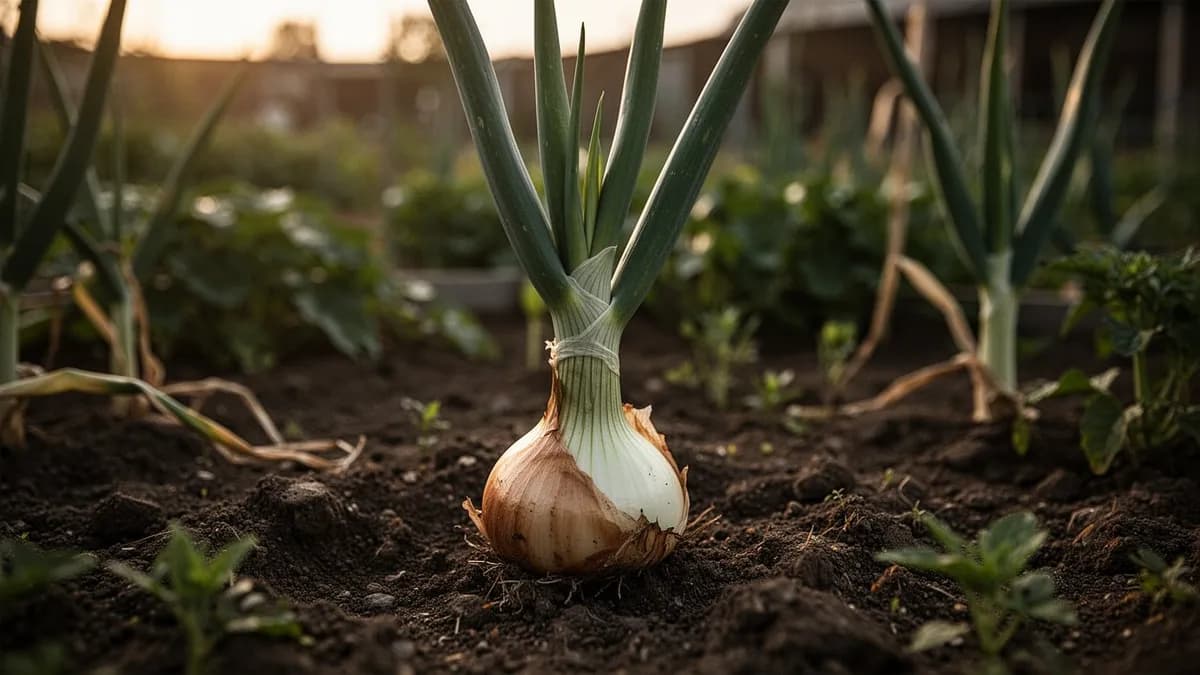
Las hojas verdes, huecas y tubulares crecen con vigor en primavera y alcanzan 30-50 cm de altura. El bulbo subterráneo se expande y puede empezar a dividirse en varios brotes laterales. En esta fase la planta se parece a una cebolla de verdeo robusta o a una cebolla perenne, produciendo 4-8 hojas firmes por división.
Alargamiento del tallo
A finales de la primavera y comienzos del verano emerge del centro de la planta un tallo floral grueso y hueco que alcanza 60-120 cm de altura. En lugar de formar una cabeza floral típica de las aliáceas, la punta del tallo empieza a producir un racimo de pequeños bulbillos, diminutos bulbos que se desarrollan en el aire. Algunos tallos pueden producir además un pequeño racimo floral junto con los bulbillos.
Desarrollo de los bulbillos
Los bulbillos aéreos se hinchan y maduran en la parte superior del tallo, formando racimos compactos de 3-20 pequeños bulbos de piel rojiza a púrpura, con un tamaño que va de una canica a una pelota de golf. Cada bulbillo desarrolla su propia piel papirácea e incluso puede emitir pequeños brotes verdes mientras aún está unido a la planta madre. El racimo se vuelve pesado, lo que hace que el tallo se arquee y termine doblándose hacia el suelo.
Caminar y enraizar
Si no se cosechan, el peso de los bulbillos maduros hace que los tallos se doblen hasta que el racimo toca el suelo. Los bulbillos enraízan rápidamente donde caen y establecen nuevas plantas a 30-90 cm de la planta madre; este comportamiento de “caminar” es el que da a la cebolla árbol su otro nombre, “cebolla caminante”. Con el paso de varias temporadas, una colonia puede desplazarse por un bancal.
Dormancia e invernada
A finales del otoño, el follaje aéreo se seca y el bulbo subterráneo entra en dormancia. El sistema radicular permanece vivo y sano durante todo el invierno, incluso en climas muy fríos de hasta -40°C. El crecimiento verde se reanuda a muy comienzos de la primavera; las cebollas árbol están entre las primeras plantas comestibles en brotar, a menudo atravesando la nieve que aún queda.
Planta los bulbillos a 15-20 cm de distancia en un suelo bien drenado enriquecido con compost. Riega bien al plantar y mantén la tierra húmeda pero no encharcada durante el establecimiento. Las plantas sembradas en otoño desarrollan sistemas radiculares más fuertes que las plantadas en primavera.
Cuidar Cebolla Egipcia mes a mes
Qué hacer cada mes para tu Cebolla Egipcia
Octubre
Mes actualComplete all planting and dividing. Apply a 5-8 cm layer of mulch after the first hard frost to insulate root zones. Continue harvesting late greens until foliage begins to yellow and die back naturally.
Ten claro qué hacer en tu huerto, cada mes
Un correo al empezar cada mes: qué sembrar, plantar y hacer ahora mismo — para tu Cebolla Egipcia y todo lo que crece alrededor. Más un breve curso inicial para esquivar los errores clásicos.
- Qué hacer ahora mismo
- Ajustado a tu temporada
- Curso inicial incluido
Cosechar Cebolla Egipcia
Las hojas verdes se pueden cortar durante todo el año cuando alcanzan 20-25 cm de longitud, utilizándolas como cebolletas frescas. Los bulbillos aéreos se cosechan en verano-otoño cuando están firmes y comienzan a desprenderse del tallo, y los bulbos subterráneos se pueden dividir y cosechar en cualquier momento.
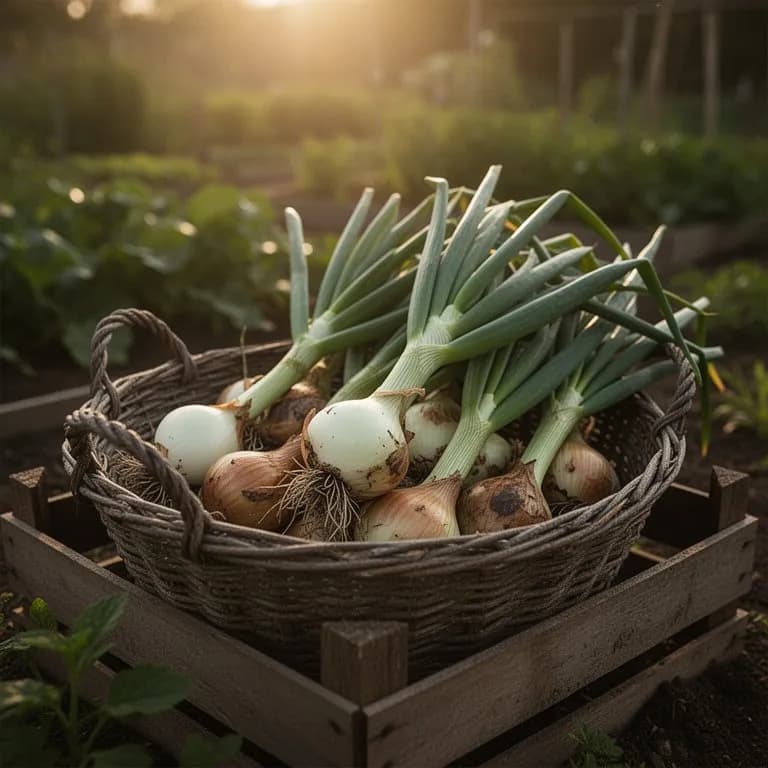
se supone que plantas al comenzar el periodo — indica tu fecha real
A partir de bulbos, tubérculos o dientes
Cosecha los bulbillos aéreos en verano cuando formen racimos firmes del tamaño de una canica en la punta de los tallos, normalmente en julio o agosto.
Almacenamiento y conservación
Los bulbillos aéreos se conservan en un lugar fresco, seco y ventilado durante varias semanas, o se pueden plantar directamente para propagar nuevas plantas. Las hojas frescas se consumen inmediatamente o se pueden picar y congelar en bandejas de cubitos de hielo con aceite para uso posterior en la cocina.
Qué falla — y cómo solucionarlo
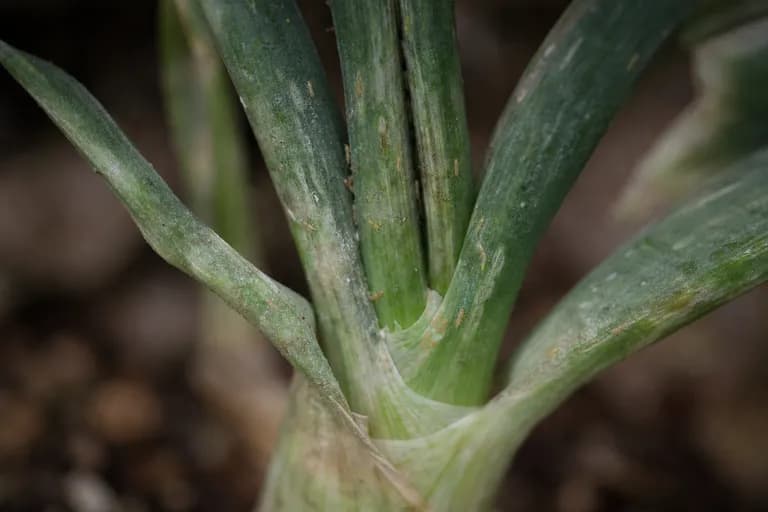
Mosca de la cebolla
PlagaLas larvas blanquecinas excavan galerías en los bulbos y la base de los tallos, provocando amarillamiento, marchitez y pudrición de las partes subterráneas de la planta.
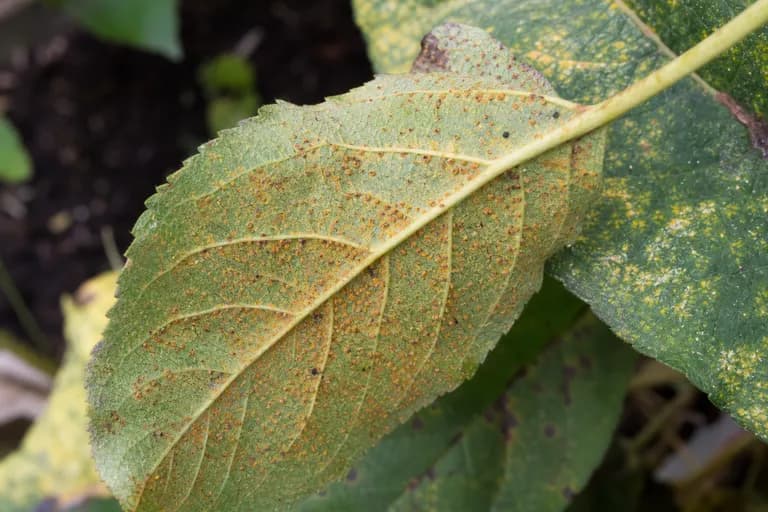
Roya
EnfermedadPústulas anaranjadas o pardas en las hojas que liberan esporas pulverulentas al tocarlas, debilitando la planta y reduciendo la producción de bulbillos.
Solución de problemas comunes
Su principal inconveniente es su tendencia a expandirse vigorosamente colonizando áreas adyacentes cuando los bulbillos aéreos caen y enraízan espontáneamente. Plante en un área delimitada con bordes enterrados o en macetas grandes para controlar su expansión si el espacio es limitado.
Consejos de cultivo
- Plant in autumn rather than spring for the strongest results. Fall-planted bulbils develop extensive root systems during the cool months and emerge in spring with far more vigor than spring-planted ones, often producing harvestable greens and top-sets in their very first full season.
- Give tree onions a permanent home in the garden. As perennials, they do not belong in annual vegetable rotations. Plant them in a dedicated perennial bed, along a fence line, or at the edge of an herb garden where they can remain undisturbed for years.
- Control the walking habit to prevent garden takeover. Tree onions spread aggressively by toppling and rooting. Harvest bulbils before stalks bend to the ground, or place a physical barrier (edging, raised bed walls) around the patch to contain the colony.
- Divide clumps every 3-4 years to maintain vigor. Overcrowded clumps produce smaller greens, smaller bulbils, and less overall yield. Lift the entire clump in early autumn, separate the divisions, replant the best ones at proper spacing, and eat or share the rest.
- Harvest greens throughout the season but never take more than one-third of any plant's foliage at once. The leaves are the plant's energy factory — over-harvesting weakens the underground bulb and reduces bulbil production.
- Well-drained soil is essential. Tree onions tolerate poor soil, drought, and extreme cold, but they will not tolerate waterlogged ground. In heavy clay soils, plant in raised beds or amend heavily with compost and coarse sand to improve drainage.
- Mulch in winter and pull mulch back in spring. A 5-8 cm layer of straw or shredded leaves protects roots during freeze-thaw cycles, but must be drawn back in late winter so emerging shoots are not smothered.
- Save your largest, healthiest bulbils for replanting and eat the smaller ones. This simple selection pressure over several years gradually improves the size and vigor of your colony — a form of low-effort plant breeding that homesteaders have practiced for centuries.
Cultiva tu mejor Cebolla Egipcia — y todo lo que la rodea.
Empieza un plan gratis hoy. Diseña tus bancales, coloca tu Cebolla Egipcia y deja que PlotMyGarden gestione el momento, el espaciado, las asociaciones y los recordatorios de la semilla a la cesta.
Elige tu Cebolla Egipcia
Egyptian Walking Onion
La variedad clásica con tallos robustos de hasta 1 metro que producen racimos de 5-20 bulbillos aéreos. Extremadamente resistente al frío hasta -35 °C, perenne y de bajo mantenimiento.
Catawissa
Variedad que produce múltiples niveles de bulbillos apilados en los tallos, creando una estructura de pisos muy decorativa. Sabor suave, ideal para jardines ornamentales comestibles.
McCullar's White Topset
Selección con bulbillos aéreos más grandes y de color blanco plateado con sabor más suave que la variedad estándar. Excelente para encurtidos y consumo fresco.
Tree onions are the ultimate value crop because they never need replanting. A one-time investment of $5-10 for a starter batch of bulbils creates a self-perpetuating colony that produces fresh onion greens, shallot-like base bulbs, and pearl-onion-sized bulbils indefinitely. Pearl onions sell for $3-5 per pound, fresh chives and scallions cost $2-3 per bunch, and shallots run $4-8 per pound — a single established tree onion patch replaces all three. Over a 10-year lifespan (and they will last far longer than that), the return on a $5 investment easily exceeds $200 in equivalent purchased alliums.
Recetas rápidas
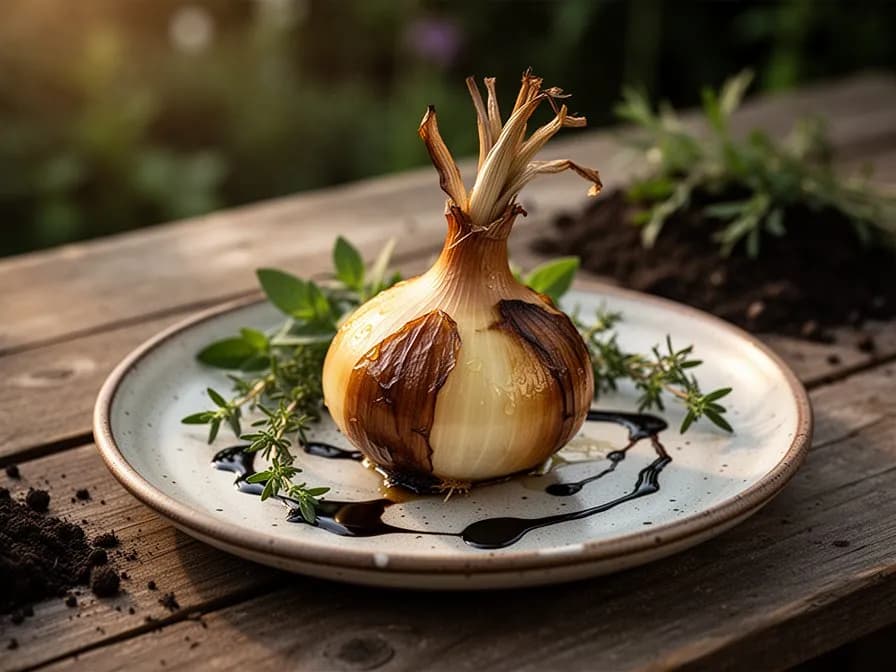
Pickled Tree Onion Bulbils
20 minTiny tree onion bulbils pickled in a tangy white wine vinegar brine with peppercorns, bay leaves, and thyme. These pearl-onion-sized pickles deliver an intense, sweet-sharp onion bite that is perfect on charcuterie boards, in salads, or alongside grilled meats.
9 ingredientesTree Onion and Potato Soup
35 minA comforting, creamy soup using both the base bulbs and green tops of tree onions. The bulbs are sweated until soft and sweet, simmered with potatoes until tender, then blended smooth and finished with a scatter of chopped green tops for fresh onion flavor.
7 ingredientesStir-Fried Tree Onion Greens and Bulbils with Ginger
15 minA quick, intensely flavored side dish where halved bulbils are seared until golden then tossed with sliced green tops, fresh ginger, and a splash of soy sauce. The combination of caramelized and fresh onion flavors is outstanding over steamed rice.
8 ingredientesUsos culinarios
Las hojas verdes se utilizan exactamente igual que las cebolletas, cortadas finas sobre sopas, ensaladas, tortillas y platos asiáticos con un sabor ligeramente más intenso. Los bulbillos aéreos son excelentes encurtidos en vinagre como aperitivo, salteados enteros con mantequilla, o picados como sustituto de cebolla pequeña en guisos y sofritos.
Qué contiene
Beneficios para la salud
- Rich in quercetin, one of the most potent dietary flavonoid antioxidants, which research has linked to reduced inflammation, lower blood pressure, and antihistamine effects that may help manage seasonal allergies.
- Contains organosulfur compounds, particularly allicin and its derivatives, that form when onion tissue is cut or crushed — these compounds have been studied for cardiovascular benefits including improved cholesterol ratios and reduced platelet aggregation.
- The green tops provide significantly more vitamin A, vitamin C, and vitamin K than the bulbs alone, making the whole-plant harvest nutritionally superior to using bulbs only.
- Provides prebiotic fructo-oligosaccharides (FOS) and inulin-type fibers that selectively feed beneficial Bifidobacterium and Lactobacillus species in the gut, supporting digestive health and immune function.
- Allium vegetables including tree onions have been associated in epidemiological studies with reduced risk of several cancers, particularly gastric and colorectal cancers, likely due to the combined effects of organosulfur compounds and flavonoid antioxidants.
- Low in calories yet intensely flavored, tree onions allow cooks to add rich savory depth to dishes while contributing minimal calories — supporting healthy eating patterns and weight management.
De dónde viene Cebolla Egipcia
The tree onion (Allium x proliferum) is a naturally occurring hybrid believed to have arisen from a cross between the common onion (Allium cepa) and the Welsh onion or Japanese bunching onion (Allium fistulosum). The exact time and place of this hybridization are lost to history, but the plant has been cultivated in Europe for centuries, with written records of top-setting onions appearing in European herbals and garden manuals dating back to at least the 17th century. The hybrid nature of the tree onion gives it a unique combination of traits: the ability to form a proper underground bulb from its A. cepa parentage, and the extreme cold hardiness, perennial habit, and vigorous green growth from its A. fistulosum parentage.
Tree onions were widely grown in European cottage gardens and were brought to North America by early colonists, where they became a staple of homestead gardens across the northern United States and Canada. Their ability to survive brutal winters without replanting, combined with the ease of propagation through top-set bulbils, made them invaluable on isolated farms where purchasing new seed each year was impractical or impossible. They spread along pioneer migration routes and became especially common in Appalachian communities, the upper Midwest, and rural Canada, often passed between neighbors and across generations as living heirlooms.
Today, tree onions remain a beloved perennial vegetable among permaculture practitioners, homesteaders, and gardeners interested in self-sustaining food systems. They are rarely found in commercial agriculture or grocery stores because the bulbs are small and irregular compared to standard onions. Instead, they persist primarily in home gardens, seed exchanges, and specialty nurseries. Interest in tree onions has surged in recent decades as the permaculture movement embraces perennial food plants that produce year after year without replanting, and as gardeners in cold climates seek the earliest possible spring harvests.
Cebolla Egipcia: ¿sabías que?
Datos fascinantes sobre Cebolla Egipcia
Tree onions are also called 'walking onions' because they literally walk across the garden — the top-set bulbils weigh down the stalk until it touches the ground, rooting a new plant 30-90 cm from the parent. Over several years, a colony can traverse an entire garden bed.
Cebolla Egipcia: preguntas frecuentes
¿Cuándo debo plantar Cebolla Egipcia?
¿Cuáles son buenas plantas acompañantes para Cebolla Egipcia?
¿En qué zonas de rusticidad puede crecer Cebolla Egipcia?
¿Cuánto sol necesita Cebolla Egipcia?
¿A qué distancia debo espaciar Cebolla Egipcia?
¿Qué plagas y enfermedades afectan a Cebolla Egipcia?
¿Cómo almaceno Cebolla Egipcia después de la cosecha?
¿Cuáles son las mejores variedades de Cebolla Egipcia para cultivar?
¿Qué suelo necesita Cebolla Egipcia?
What is the difference between a tree onion and a walking onion?
Can I eat tree onion bulbils raw or do they need to be cooked?
How do I peel the tiny tree onion bulbils without losing my mind?
Will tree onions survive in very cold climates?
How long does it take for a tree onion colony to become fully productive?
Do tree onions attract pollinators or beneficial insects?
Acabas de leer la teoría. Ahora cultívala en piloto automático.
Todo lo que hace que Cebolla Egipcia sea delicado — el momento, el espaciado, las asociaciones, la ventana de cosecha — es justo lo que PlotMyGarden resuelve por ti, para cada planta de tu huerto.
Un plan que conoce tu clima
Indica tu ubicación una vez. Recibe fechas de siembra, abonado y cosecha basadas en tu última helada real y el pronóstico en vivo — sin adivinar con un sobre genérico.
De la sección “Cuándo plantar”Planificador de bancales de arrastrar y soltar
Diseña bancales sobre una cuadrícula. Cada planta encaja con su espaciado correcto y ves toda la temporada antes de gastar un céntimo en semillas.
De la sección “Cultivo”Conflictos de asociación, detectados a tiempo
Más de 200 buenas y malas combinaciones comprobadas en vivo mientras plantas — para que un error que arruine la temporada nunca llegue a la tierra.
De la sección “Asociaciones”Recordatorios que sí vas a seguir
“Riega las judías.” “Recoge hoy antes de que se pase.” Oportunos, concretos y ligados a las plantas que de verdad cultivas.
De la sección “Cosecha”Escalonado, programado
¿Quieres cosechar seis semanas en vez de seis días? Reparte tus siembras automáticamente y te avisa cuando toca el siguiente lote.
De la sección “Cuándo plantar”Un registro que se vuelve más listo
Cada cosecha que registras le enseña tu huerto. El plan del año que viene parte de lo que de verdad funcionó en tu suelo, no en un manual.
De la sección “Resumen”Planta estos junto a Cebolla Egipcia
Más Aliáceas
Mantén Cebolla Egipcia lejos de estos
Cultiva tu mejor Cebolla Egipcia — y todo lo que la rodea.
Empieza un plan gratis hoy. Diseña tus bancales, coloca tu Cebolla Egipcia y deja que PlotMyGarden gestione el momento, el espaciado, las asociaciones y los recordatorios de la semilla a la cesta.