Salsifí Negro
El salsifí negro (Scorzonera hispanica), también conocido como escorzonera, es una hortaliza de raíz perenne originaria del sur de Europa.





En esta páginaResumen
Conoce Salsifí Negro
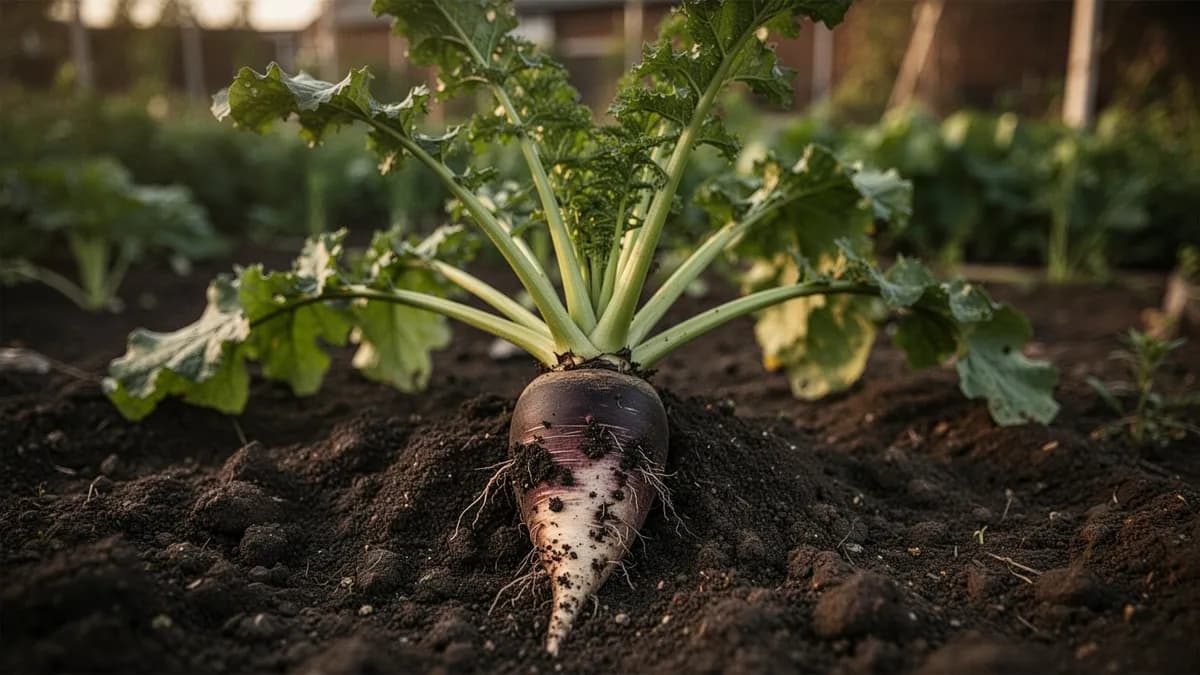
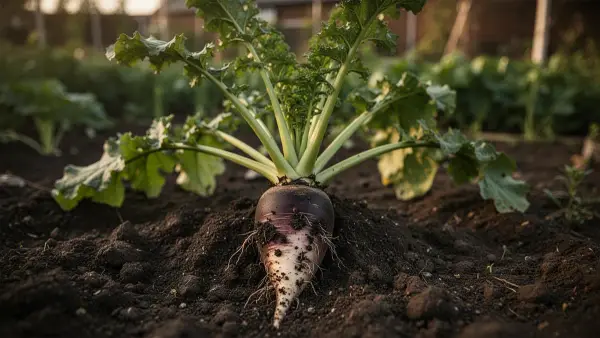
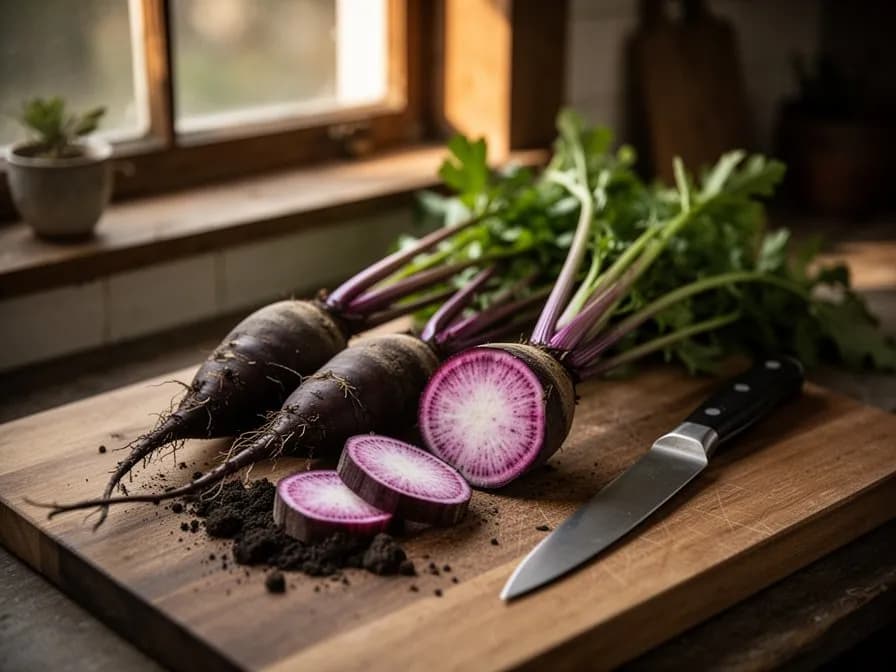
El salsifí negro (Scorzonera hispanica), también conocido como escorzonera, es una hortaliza de raíz perenne originaria del sur de Europa. Se distingue por su piel negra que contrasta con una pulpa blanca cremosa de sabor delicado y ligeramente dulce, más suave que el salsifí blanco. Es muy popular en la cocina belga, francesa y alemana.
Cuándo plantar Salsifí Negro
Siembre siempre de forma directa en primavera temprana, ya que el salsifí negro no tolera el trasplante. Use semillas frescas del año, pues pierden viabilidad rápidamente. Colóquelas a 2 cm de profundidad y 3-5 cm de separación en hileras a 30-40 cm. La germinación tarda 10-20 días y es a menudo irregular. Aclare a 10-15 cm cuando las plántulas tengan 5-8 cm.
Tu año de Salsifí Negro
Ajustado a Zona 7 · temporada típica · la helada se va hacia el 2 abr y vuelve hacia el 1 nov
Planta Salsifí Negro Mar – Abr y cosecha Oct – Dic. Consulta los métodos de plantación y elige tu clima para adaptar los periodos.
Cómo cultivar Salsifí Negro
El salsifí negro se cultiva de manera similar al salsifí blanco pero es más tolerante y puede dejarse en el suelo como perenne. Elija un lugar a pleno sol con suelo profundo, suelto y bien drenado, con pH entre 6,0 y 7,0. Prepare el suelo cavando a 30-40 cm de profundidad y eliminando piedras.
Siembre las semillas frescas en primavera a una profundidad de 2 cm en hileras separadas 30-40 cm. Aclare las plántulas a 10-15 cm de separación cuando alcancen 5-8 cm de altura. Las semillas son alargadas con un penacho plumoso y pierden viabilidad rápidamente, así que utilice siempre semillas del año.
Mantenga el suelo uniformemente húmedo durante toda la temporada y aplique acolchado para conservar la humedad y suprimir las malas hierbas. Al ser perenne, si no cosecha todas las raíces el primer año, crecerán más grandes el segundo. Las raíces mejoran su sabor tras las primeras heladas, que convierten los almidones en azúcares.
288 plantas caben en un bancal de 120 × 240 cm
Cada Salsifí Negro pide 10 cm de margen. El planificador guarda ese marco por ti — cada planta, cada bancal.
Los mejores vecinos de Salsifí Negro
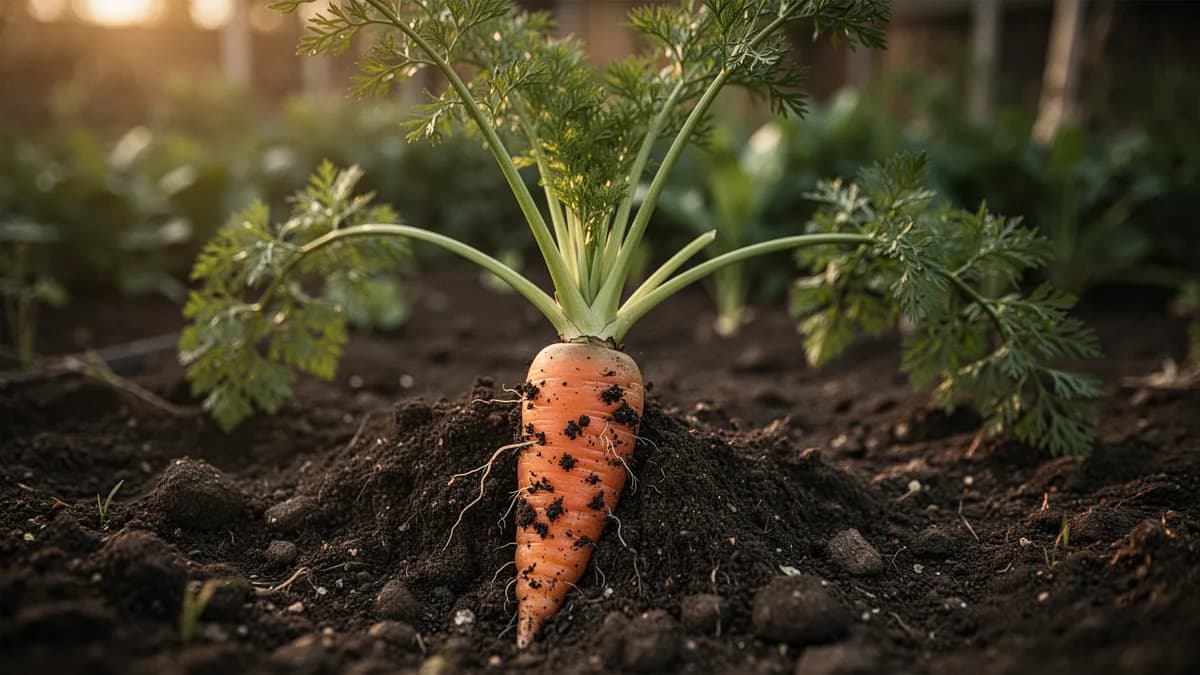
El salsifí negro crece bien junto a zanahorias, lechugas y cebollas, ya que las dos primeras se cosechan antes y liberan espacio para las raíces en desarrollo. Sus raíces profundas ayudan a romper suelos compactos, beneficiando a cultivos posteriores. Evite asociarlo con otras raíces profundas como chirivías para evitar competencia subterránea.
Zanahoria va a su lado.
Saber de huerto de siempre, cotejado con la tabla real de Salsifí Negro — prueba cualquier planta que cultives.
Prueba Salsifí Negro en un bancal, aquí mismo
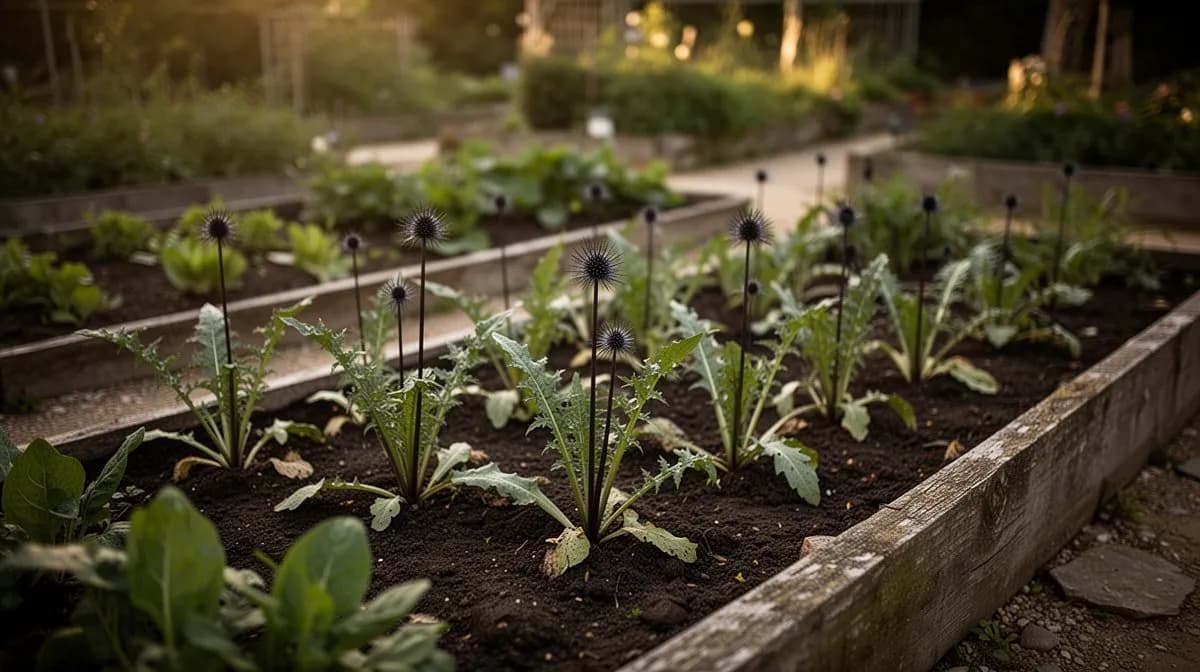
Un bancal real del planificador con Salsifí Negro ya plantado. Toca una planta compañera para colocarla y mira cómo responde la comprobación de vecinos: verde para buenos vecinos, rojo si hay conflicto.


Guías de cultivo relacionadas
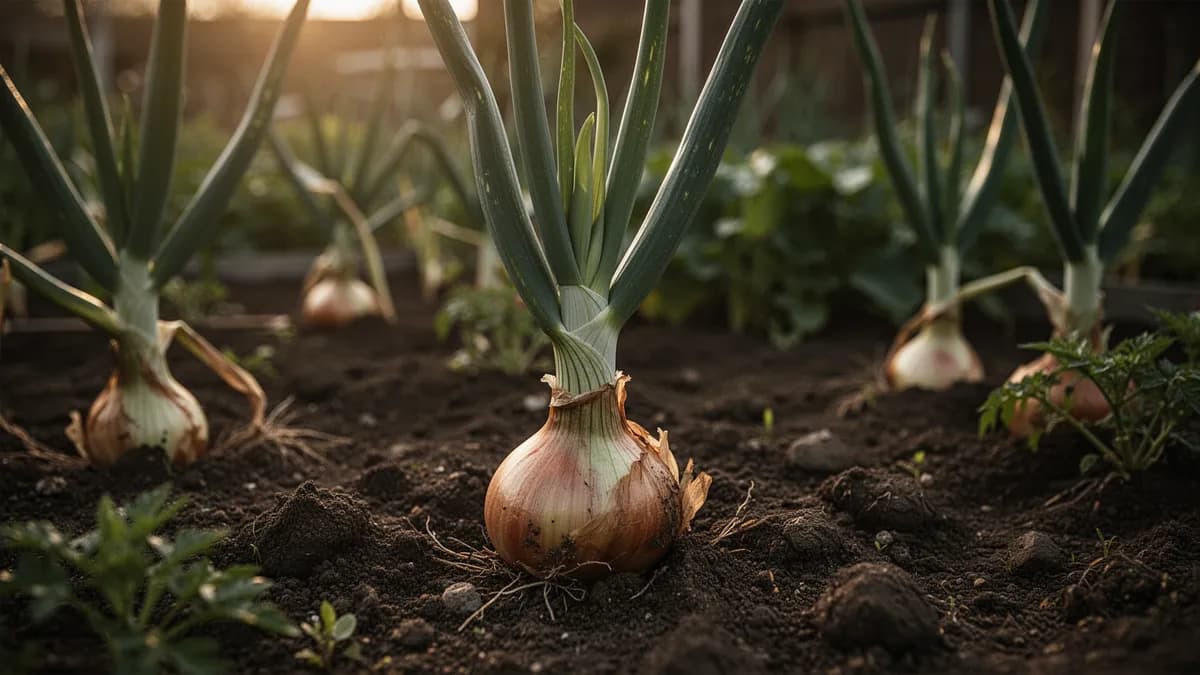
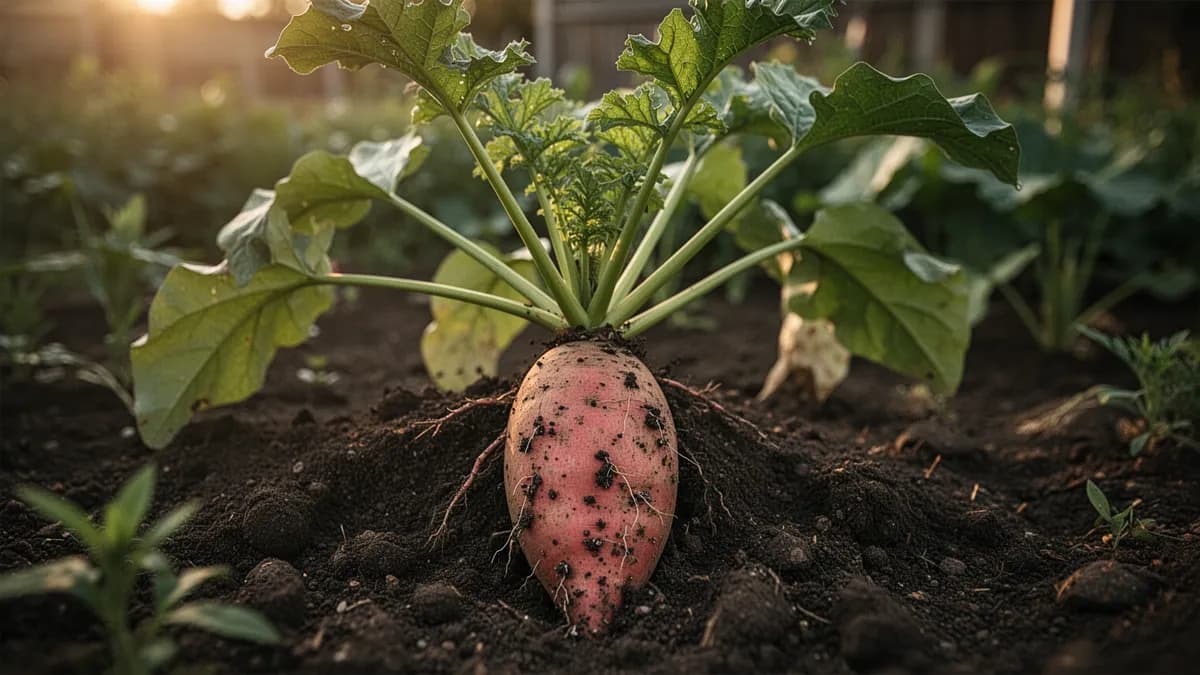
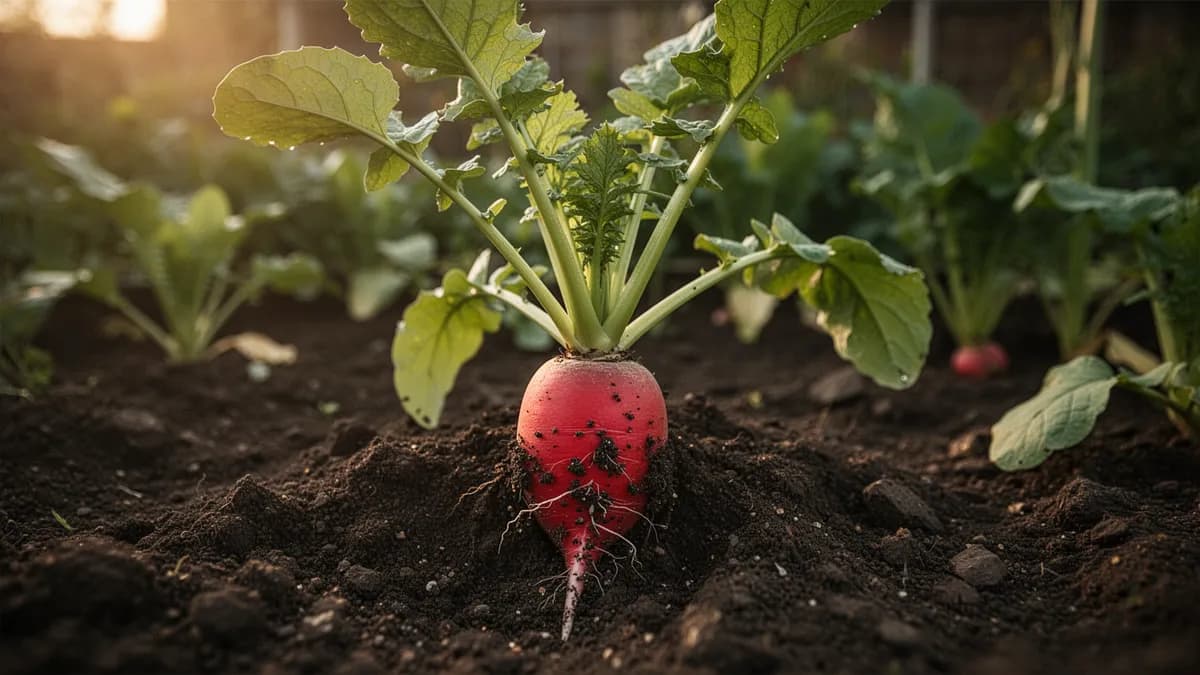
Abónalo bien
Requiere un suelo profundo (30-40 cm mínimo), suelto, franco-arenoso y libre de piedras, con pH entre 6,0 y 7,0. Enriquezca con compost bien descompuesto en el otoño anterior a la siembra, pero evite el estiércol fresco que causa raíces bifurcadas. Aplique un fertilizante equilibrado bajo en nitrógeno al momento de la siembra y una cobertura de potasio a mitad de temporada.
Temperatura ideal
Compatibilidad de zonas de rusticidad
De la semilla a la cosecha, etapa por etapa
Germinación
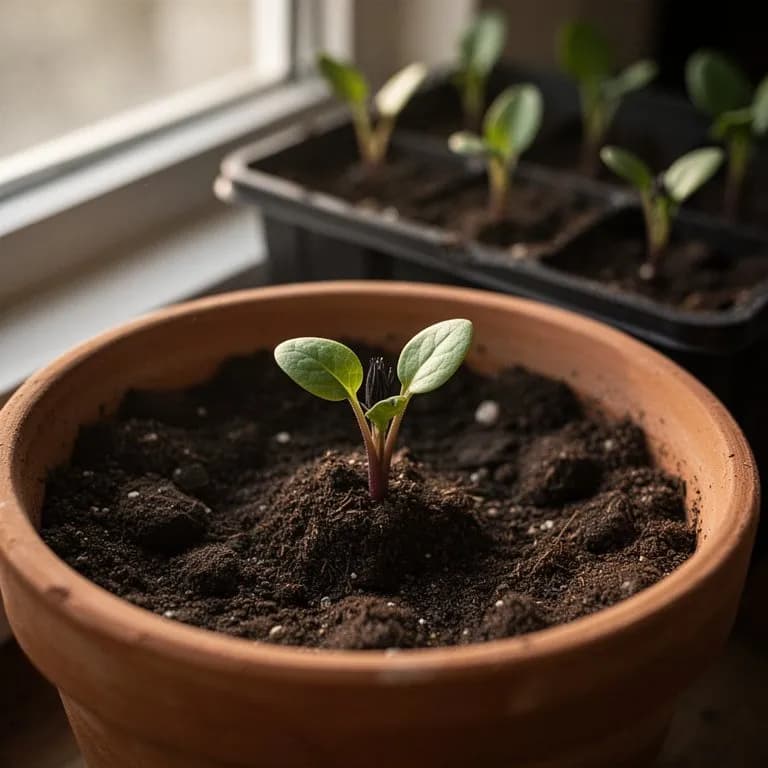
Las semillas de salsifí negro son alargadas y plumosas, parecidas a pequeños volantes. Germinan lenta e irregularmente durante 10-21 días en suelo primaveral fresco, a 10-15°C. Lo primero que aparece es una sola hoja cotiledonar delgada, parecida a una brizna de hierba, que se confunde fácilmente con una maleza.
Establecimiento de plántulas
Las hojas verdaderas, estrechas y parecidas a briznas de hierba, se desarrollan lentamente formando una roseta dispersa. Bajo la superficie, la delgada raíz pivotante comienza su recorrido hacia abajo. El crecimiento sobre el suelo parece frustrantemente lento en esta fase, pero el sistema radicular se está estableciendo en profundidad.
Crecimiento vegetativo
La roseta de hojas se vuelve más densa con hojas alargadas, más oscuras y en forma de cinta, que alcanzan 30-40 cm. Bajo tierra, la raíz se engrosa gradualmente, formando la raíz pivotante de piel oscura que finalmente llegará a medir 25-40 cm de largo. La planta permanece baja y discreta durante esta fase.
Engrosamiento de la raíz
La raíz principal alcanza su longitud completa y empieza a engrosarse notablemente, hasta un diámetro de 2-4 cm. La piel marrón oscura y negra desarrolla su característica textura áspera y corchosa. La inulina y los azúcares se acumulan en la raíz, formando el sabor dulce y complejo que se intensifica con el frío.
Listo para cosechar
Las raíces están completamente maduras, con 25-40 cm de largo y 2-4 cm de diámetro. Las partes aéreas pueden empezar a amarillear y secarse en otoño. Las raíces pueden cosecharse desde finales de otoño durante todo el invierno: la exposición a las heladas convierte los almidones en azúcares y mejora notablemente el sabor. En el segundo año, las raíces no cosechadas se espigan y producen flores amarillas.
Floración (segundo año)
Si no se cosecha, el salsifí negro se comporta como una planta bianual y emite un tallo floral alto de 90-120 cm rematado con flores compuestas de color amarillo brillante parecidas a las del diente de león. Cada capítulo produce semillas plumosas que se dispersan con el viento como vilanos de diente de león. La raíz se vuelve leñosa e incomestible una vez que la planta espiga.
Usa solo semilla fresca: la viabilidad de las semillas de salsifí negro cae bruscamente después de un año. Siembra directamente al aire libre a comienzos de la primavera, a 1-2 cm de profundidad, ya que las plántulas no toleran bien el trasplante por su frágil raíz pivotante. Mantén el suelo constantemente húmedo durante el largo periodo de germinación.
Cuidar Salsifí Negro mes a mes
Qué hacer cada mes para tu Salsifí Negro
Octubre
Mes actualMain harvest season begins. Loosen soil deeply alongside the row with a digging fork before gently lifting roots. Handle carefully — roots are brittle and snap easily. Damaged roots exude sticky white latex that stains everything it touches.
Ten claro qué hacer en tu huerto, cada mes
Un correo al empezar cada mes: qué sembrar, plantar y hacer ahora mismo — para tu Salsifí Negro y todo lo que crece alrededor. Más un breve curso inicial para esquivar los errores clásicos.
- Qué hacer ahora mismo
- Ajustado a tu temporada
- Curso inicial incluido
Cosechar Salsifí Negro
Coseche el salsifí negro a partir de los 120-150 días después de la siembra, idealmente tras las primeras heladas que mejoran su sabor. Use una horca para aflojar profundamente el suelo antes de extraer las raíces, ya que son largas y frágiles. Las raíces que se dejan en el suelo rebrotarán en primavera y pueden cosecharse más grandes el segundo año.
se supone que plantas al comenzar el periodo — indica tu fecha real
Después de unos 150 días, normalmente a finales de otoño, tras las heladas que endulzan el sabor; en climas suaves, cosecha durante todo el invierno.
Almacenamiento y conservación
Las raíces se conservan mejor en el propio suelo durante el invierno, cubiertas con una gruesa capa de paja o acolchado. Una vez cosechadas, guárdelas sin lavar en el refrigerador envueltas en papel de cocina húmedo durante 1-2 semanas. Para conservación prolongada, almacénelas en cajas con arena húmeda a 1-4 °C durante varios meses.
Qué falla — y cómo solucionarlo
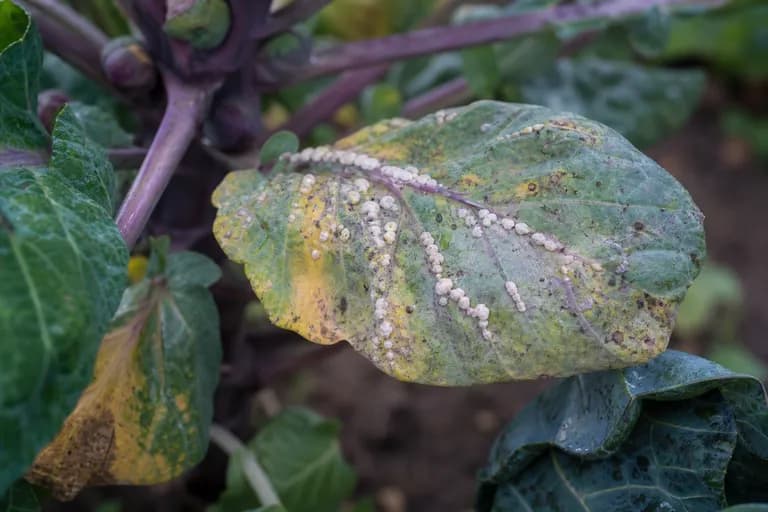
Roya (Puccinia scorzonerae)
EnfermedadPústulas anaranjadas o marrones en el haz y envés de las hojas que liberan esporas pulverulentas. Las hojas se debilitan y secan prematuramente, reduciendo el desarrollo de la raíz.
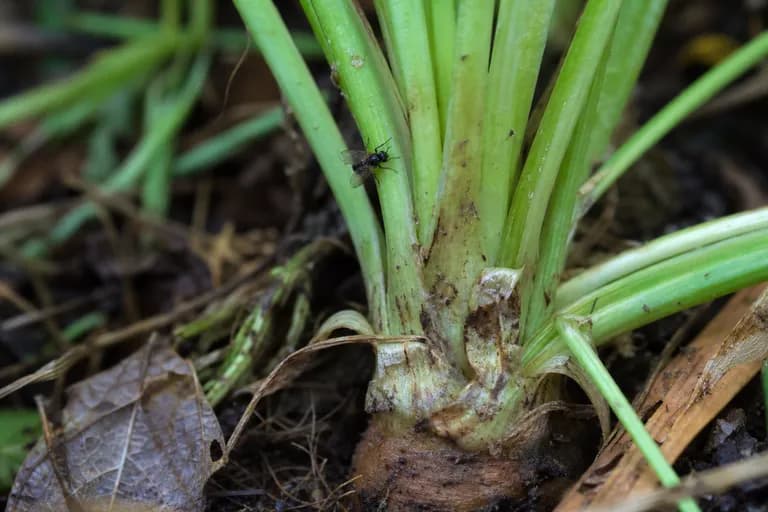
Pulgones de la raíz (Pemphigus spp.)
PlagaColonias de insectos blanquecinos cerosos adheridos a las raíces. Las plantas muestran crecimiento lento, amarillamiento foliar y raíces de menor tamaño.
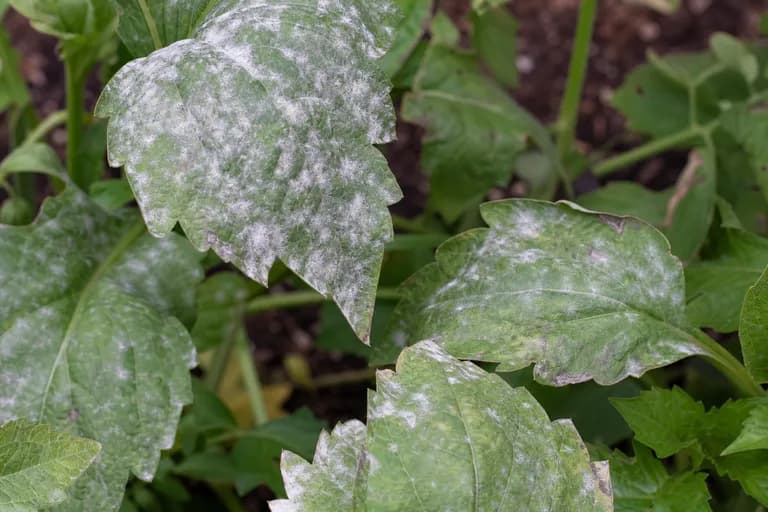
Mildiú polvoriento (Erysiphe spp.)
EnfermedadRecubrimiento blanquecino polvoriento en la superficie de las hojas que reduce la fotosíntesis. En casos graves, las hojas se deforman y secan.
Solución de problemas comunes
La piel negra exuda un látex pegajoso al pelarla que mancha las manos; use guantes o pele bajo agua corriente. Las raíces se oxidan rápidamente al contacto con el aire, por lo que deben sumergirse en agua con limón inmediatamente después de pelarlas. La germinación es lenta e irregular, y las semillas deben ser siempre frescas del año en curso.
Consejos de cultivo
- Use only fresh seed — this is the single most important rule for black salsify. Seed viability drops from 80% to below 30% after just one year of storage. Always buy new seed each spring and sow generously to compensate for naturally uneven germination.
- Soil preparation makes or breaks your harvest. Double-dig or broadfork beds to a depth of at least 40 cm and remove every stone, twig, and root fragment. Any obstacle causes roots to fork, split, or twist, making them difficult to harvest and a nightmare to peel.
- Never transplant black salsify. The brittle taproot cannot survive disturbance, and transplanted seedlings produce stubby, forked roots. Always direct-sow where the plants will grow for the entire season.
- Be patient with germination — 14-21 days is normal and some seeds may take even longer. Do not give up and resow too early. Keep the seedbed consistently moist with gentle watering or a light row cover to prevent surface crusting.
- Weed early and often while seedlings are small. The narrow, grass-like leaves are easily overwhelmed by weeds. A thin layer of fine mulch between rows after thinning drastically reduces weeding labor for the rest of the season.
- Harvest with care and never pull roots by the tops. Use a long-handled digging fork and loosen soil 15-20 cm beside the row to a full spade depth before gently levering roots upward. Broken roots bleed sticky white latex and deteriorate quickly in storage.
- Leave roots in the ground through winter rather than storing them indoors — the garden is the best root cellar. A thick mulch of straw over the bed keeps the soil workable in freezing weather and allows you to harvest fresh roots on demand all winter.
- Wear gloves and old clothing when peeling and processing black salsify. The sticky white latex that oozes from cut roots stains skin brown for days and is nearly impossible to wash out of fabric. Peel roots under running water into a bowl of lemon-acidulated water to prevent both staining and oxidation.
Cultiva tu mejor Salsifí Negro — y todo lo que la rodea.
Empieza un plan gratis hoy. Diseña tus bancales, coloca tu Salsifí Negro y deja que PlotMyGarden gestione el momento, el espaciado, las asociaciones y los recordatorios de la semilla a la cesta.
Elige tu Salsifí Negro
Duplex
Variedad productiva con raíces largas, gruesas y de piel negra lisa. Pulpa blanca cremosa de excelente sabor. Resistente al espigado. Madurez en 120-140 días.
Hoffmanns Schwarze Pfahl
Variedad alemana tradicional con raíces muy largas y rectas de hasta 35 cm. Sabor dulce y cremoso, muy popular en el mercado centroeuropeo. 130-150 días.
Russian Giant
Variedad vigorosa que produce raíces excepcionalmente grandes con excelente sabor. Muy resistente al frío, ideal para climas continentales. 140-160 días.
Vulkan
Variedad moderna con buena resistencia a la roya y raíces uniformes de piel lisa. Fácil de pelar y con mínima oxidación de la pulpa. 120-130 días.
Black salsify is a premium specialty vegetable that commands $8-15 per kilogram ($4-7 per pound) at European specialty markets and upscale grocers, and it is virtually impossible to find fresh in most North American stores. A single packet of seed costing $3-5 can produce 30-50 roots worth $15-40 at market prices. Growing your own is often the only reliable way to obtain this prized vegetable, making the cost savings secondary to the simple fact that home growing provides access to a world-class ingredient that money often cannot buy.
Recetas rápidas
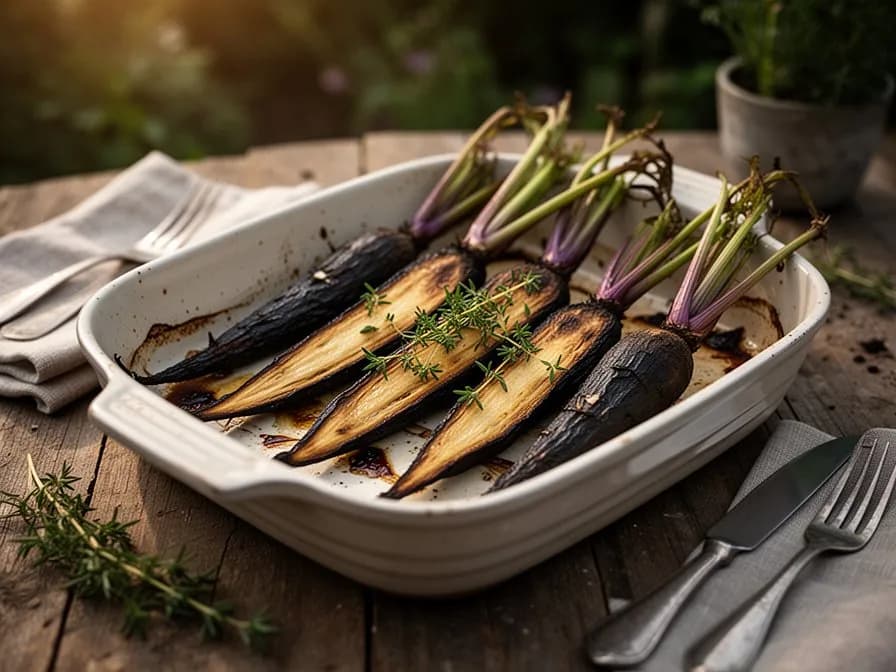
Pan-Roasted Black Salsify with Brown Butter
30 minThe classic European preparation that earned black salsify its reputation as the 'poor man's oyster.' Peeled roots are gently simmered, then pan-roasted in nutty brown butter until golden and caramelized. The result is silky, sweet, and hauntingly savory.
7 ingredientesCreamy Black Salsify Soup
45 minA refined, velvety winter soup that showcases the root's delicate, slightly sweet flavor. Leeks and potato add body while a drizzle of truffle oil or toasted hazelnuts elevate this humble root to elegant dinner-party status.
8 ingredientesBlack Salsify Gratin with Gruyère
50 minTender black salsify batons layered in a rich Gruyère cream sauce and baked until bubbling and golden. This gratin makes an impressive winter side dish that pairs beautifully with roasted meats or stands alone as a satisfying vegetarian main course.
8 ingredientesUsos culinarios
El salsifí negro se pela y cocina de formas diversas. Hervido y salteado con mantequilla y perejil es un clásico belga. Se prepara en sopas crema aterciopeladas, gratinados con bechamel y como puré suave y aromático. También puede asarse al horno o rebozarse en tempura. Su sabor cremoso y ligeramente dulce combina especialmente bien con nuez moscada, limón y hierbas finas.
Qué contiene
Beneficios para la salud
- Exceptionally high in inulin, a prebiotic soluble fiber that selectively nourishes beneficial Bifidobacteria and Lactobacillus in the gut, improving digestive health and supporting a balanced microbiome.
- The inulin content supports improved calcium and magnesium absorption in the large intestine — studies show that regular inulin consumption can increase calcium absorption by 15-20%, benefiting bone density.
- Low glycemic index despite its natural sweetness, as the inulin fiber slows carbohydrate absorption and prevents blood sugar spikes — making black salsify an excellent root vegetable choice for people managing diabetes.
- Provides iron and copper, two minerals that work together to support red blood cell formation, oxygen transport, and prevention of iron-deficiency anemia.
- Contains antioxidant compounds including polyphenols in the dark skin that may help reduce oxidative stress and support cardiovascular health.
- High potassium content (380mg per 100g) helps regulate blood pressure by counterbalancing dietary sodium, supporting heart health and reducing the risk of hypertension.
De dónde viene Salsifí Negro
Black salsify (Scorzonera hispanica) is native to southern Europe and western Asia, with its wild ancestors found across the Mediterranean basin from Spain to the Caucasus. The species name 'hispanica' reflects its early association with Spain, where it was first documented as a cultivated plant in the 16th century. However, the root was known to herbalists and apothecaries long before it entered the kitchen — medieval physicians prescribed scorzonera as an antidote to snake venom and plague, and the plant's name likely derives from the old Catalan 'escorso' or Italian 'scorzone,' both meaning venomous snake.
The transition from medicinal curiosity to culinary vegetable occurred gradually during the 17th century, when Spanish and Italian gardeners began selecting varieties with thicker, longer roots and better flavor. French and Belgian horticulturists embraced the crop enthusiastically, and by the 18th century black salsify had largely displaced the older white salsify (Tragopogon porrifolius) in northern European gardens. The root became a fixture of bourgeois French cuisine, where it was prepared with cream sauces and gratins that highlighted its subtle, oyster-like sweetness.
Black salsify reached its peak popularity in the 19th and early 20th centuries across Germany, Belgium, the Netherlands, and Scandinavia, where it filled the 'vegetable gap' of late winter when fresh produce was scarce. The root's ability to overwinter in frozen ground and actually improve in flavor after frost made it invaluable in cold northern climates. Belgian farmers developed the most advanced commercial cultivation techniques, growing black salsify in deep sandy soils for straight, unbranched roots.
Today, black salsify remains a beloved winter staple in Belgium, the Netherlands, Germany, and Scandinavia, while it has largely fallen out of favor in southern Europe and remains virtually unknown in North America and Asia. A recent revival of interest in heritage and forgotten vegetables has brought renewed attention to this remarkable root, with specialty growers and farm-to-table restaurants rediscovering its unique flavor and culinary versatility.
Salsifí Negro: ¿sabías que?
Datos fascinantes sobre Salsifí Negro
Black salsify (Scorzonera hispanica) gets its name from the Italian 'scorzone' meaning 'venomous snake' — it was originally cultivated in medieval Spain and Italy as a supposed remedy for snakebites before anyone realized how delicious the roots actually were.
Salsifí Negro: preguntas frecuentes
¿Cuándo debo plantar Salsifí Negro?
¿Cuáles son buenas plantas acompañantes para Salsifí Negro?
¿En qué zonas de rusticidad puede crecer Salsifí Negro?
¿Cuánto sol necesita Salsifí Negro?
¿A qué distancia debo espaciar Salsifí Negro?
¿Qué plagas y enfermedades afectan a Salsifí Negro?
¿Cómo almaceno Salsifí Negro después de la cosecha?
¿Cuáles son las mejores variedades de Salsifí Negro para cultivar?
¿Qué suelo necesita Salsifí Negro?
Why did my black salsify roots come out short, forked, or twisted?
Is black salsify the same as regular salsify or oyster plant?
How do I prevent the sticky white sap from staining everything?
When is the best time to harvest black salsify?
Can I grow black salsify in containers?
Why won't my black salsify seeds germinate?
Acabas de leer la teoría. Ahora cultívala en piloto automático.
Todo lo que hace que Salsifí Negro sea delicado — el momento, el espaciado, las asociaciones, la ventana de cosecha — es justo lo que PlotMyGarden resuelve por ti, para cada planta de tu huerto.
Un plan que conoce tu clima
Indica tu ubicación una vez. Recibe fechas de siembra, abonado y cosecha basadas en tu última helada real y el pronóstico en vivo — sin adivinar con un sobre genérico.
De la sección “Cuándo plantar”Planificador de bancales de arrastrar y soltar
Diseña bancales sobre una cuadrícula. Cada planta encaja con su espaciado correcto y ves toda la temporada antes de gastar un céntimo en semillas.
De la sección “Cultivo”Conflictos de asociación, detectados a tiempo
Más de 200 buenas y malas combinaciones comprobadas en vivo mientras plantas — para que un error que arruine la temporada nunca llegue a la tierra.
De la sección “Asociaciones”Recordatorios que sí vas a seguir
“Riega las judías.” “Recoge hoy antes de que se pase.” Oportunos, concretos y ligados a las plantas que de verdad cultivas.
De la sección “Cosecha”Escalonado, programado
¿Quieres cosechar seis semanas en vez de seis días? Reparte tus siembras automáticamente y te avisa cuando toca el siguiente lote.
De la sección “Cuándo plantar”Un registro que se vuelve más listo
Cada cosecha que registras le enseña tu huerto. El plan del año que viene parte de lo que de verdad funcionó en tu suelo, no en un manual.
De la sección “Resumen”Planta estos junto a Salsifí Negro
Más Hortalizas de raíz
Cultiva tu mejor Salsifí Negro — y todo lo que la rodea.
Empieza un plan gratis hoy. Diseña tus bancales, coloca tu Salsifí Negro y deja que PlotMyGarden gestione el momento, el espaciado, las asociaciones y los recordatorios de la semilla a la cesta.