Nabo Sueco Americano (Rutabaga)
Brassica napus var. napobrassica, conocida como rutabaga o nabo sueco americano, es un tubérculo de raíz grande originario del cruce natural entre el nabo y la col.





En esta páginaResumen
Conoce Nabo Sueco Americano (Rutabaga)
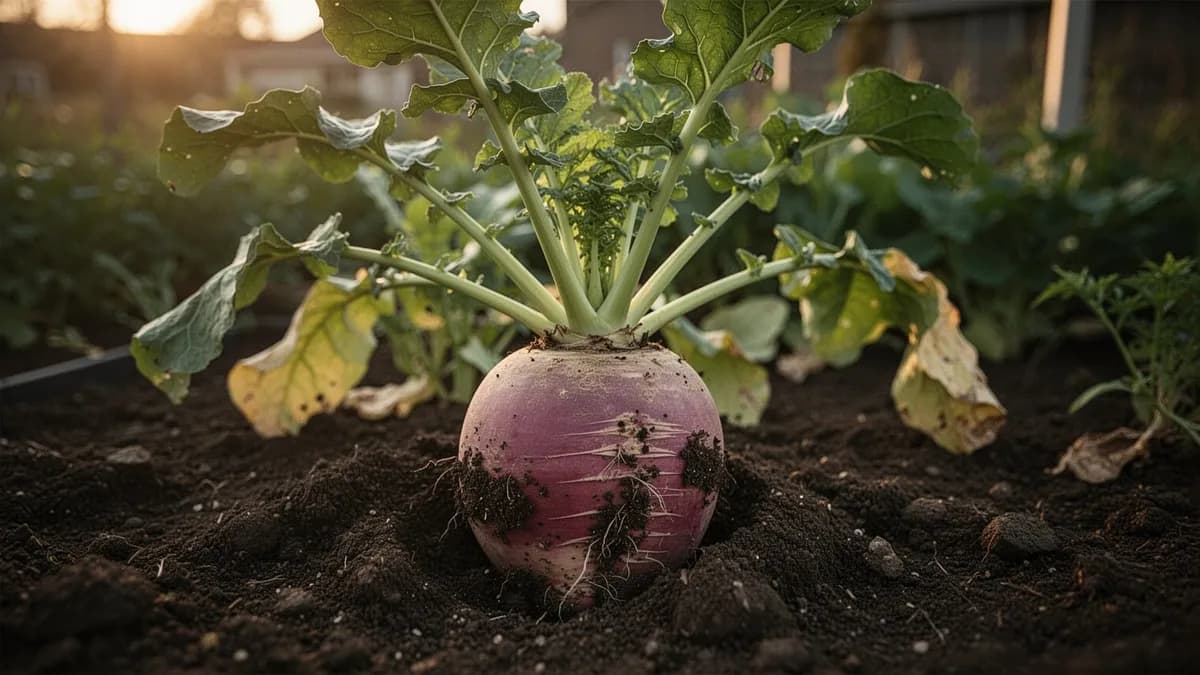
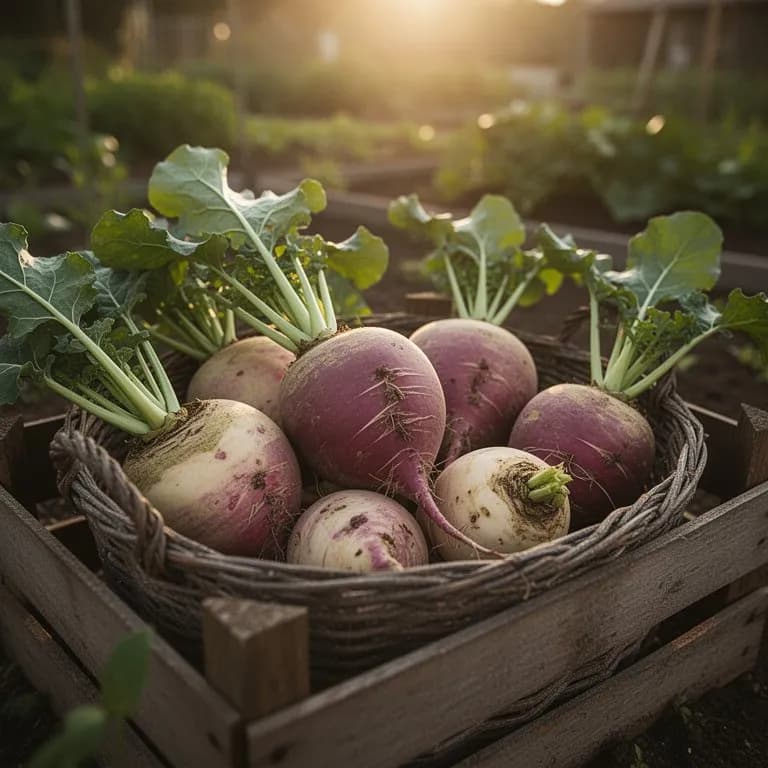
Brassica napus var. napobrassica, conocida como rutabaga o nabo sueco americano, es un tubérculo de raíz grande originario del cruce natural entre el nabo y la col. La variedad americana se distingue por su pulpa amarilla dulce y su piel bicolor púrpura y crema, siendo un cultivo de clima frío fundamental en la agricultura norteamericana.
Cuándo plantar Nabo Sueco Americano (Rutabaga)
Siembre las semillas directamente en el suelo a mediados o finales de verano, calculando 90-100 días antes de la primera helada prevista. Coloque las semillas a una profundidad de 1-1,5 cm en hileras separadas 45-60 cm. Mantenga el suelo húmedo hasta la germinación, que ocurre en 5-10 días. Aclare progresivamente las plántulas hasta alcanzar una separación final de 20-25 cm. La siembra directa es preferible al trasplante, ya que las rutabagas no toleran bien el trasplante.
Tu año de Nabo Sueco Americano (Rutabaga)
Ajustado a Zona 7 · temporada típica · la helada se va hacia el 2 abr y vuelve hacia el 1 nov
Planta Nabo Sueco Americano (Rutabaga) May – Jul y cosecha Sep – Nov. Consulta los métodos de plantación y elige tu clima para adaptar los periodos.
Cómo cultivar Nabo Sueco Americano (Rutabaga)
La rutabaga americana necesita una temporada de crecimiento larga de 90-100 días y produce las raíces más dulces cuando madura durante el clima fresco del otoño. Siembre las semillas directamente en el suelo a mediados o finales del verano, calculando hacia atrás desde la primera helada esperada. Siembre a una profundidad de 1-1,5 cm en hileras separadas 45-60 cm.
Aclare las plántulas a 20-25 cm de distancia cuando tengan 5-7 cm de altura para permitir que las raíces se desarrollen completamente. Mantenga el suelo uniformemente húmedo durante todo el período de crecimiento, ya que la sequía produce raíces leñosas, fibrosas y de sabor amargo. Aplique un acolchado orgánico para conservar la humedad y mantener las temperaturas del suelo frescas.
Las rutabagas mejoran notablemente su sabor después de ser expuestas a algunas heladas ligeras, que convierten parte del almidón en azúcares. A diferencia de los nabos comunes, las rutabagas requieren más tiempo para madurar pero producen raíces considerablemente más grandes y de sabor más dulce y complejo. La parte superior de la raíz que sobresale del suelo se torna púrpura con la exposición al sol.
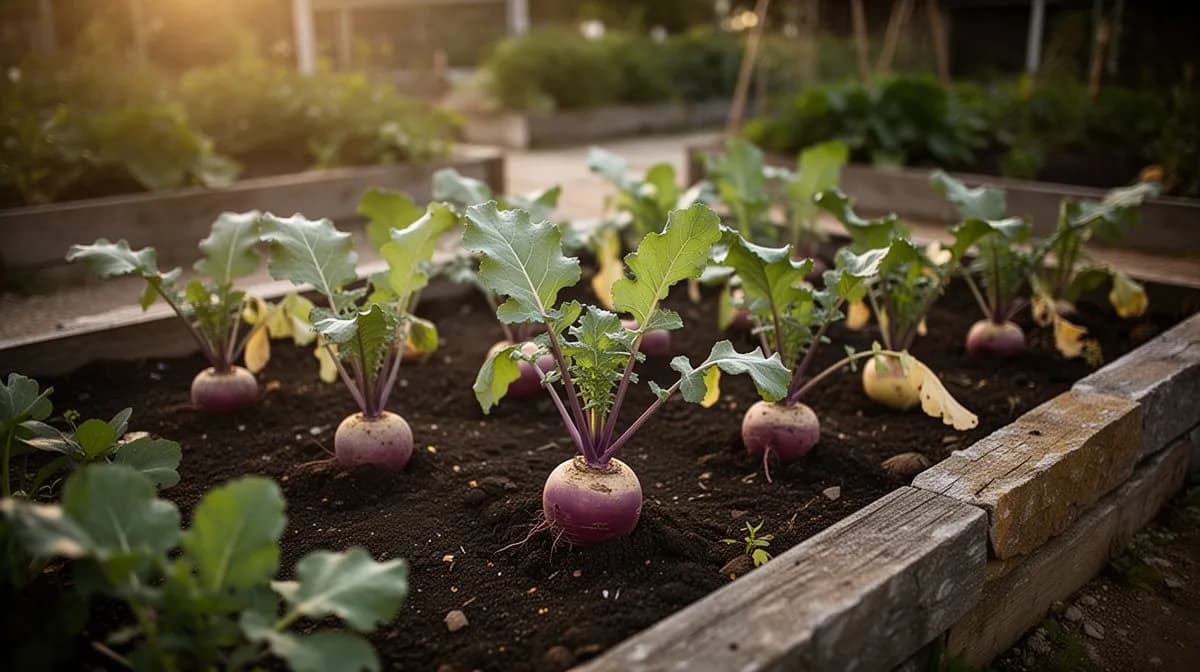
72 plantas caben en un bancal de 120 × 240 cm
Cada Nabo Sueco Americano (Rutabaga) pide 20 cm de margen. El planificador guarda ese marco por ti — cada planta, cada bancal.
Los mejores vecinos de Nabo Sueco Americano (Rutabaga)
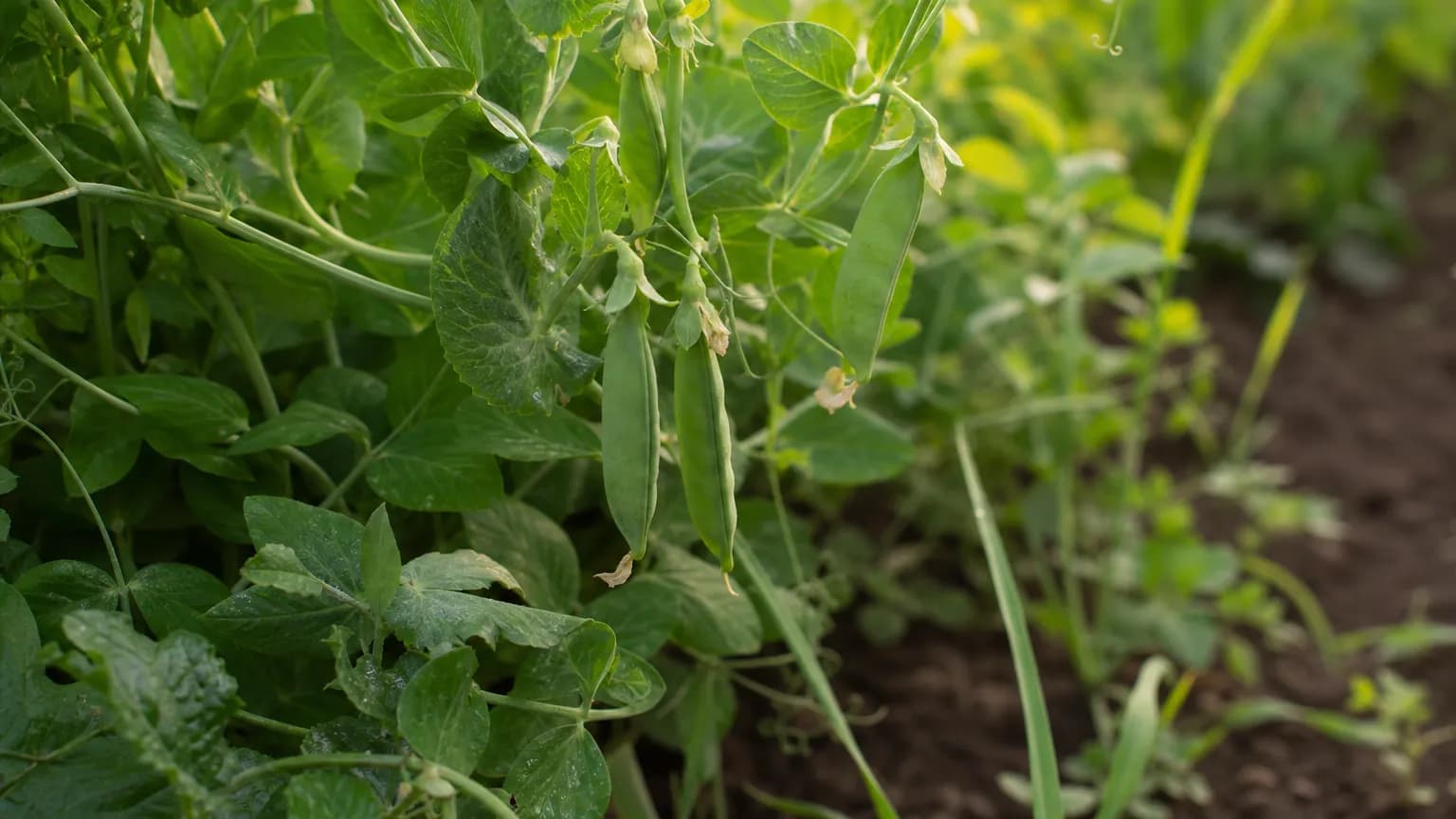
La rutabaga se beneficia de la compañía de guisantes y frijoles, que fijan nitrógeno en el suelo mejorando su fertilidad. Plántela junto a hierbas aromáticas como tomillo, salvia y menta, cuyos aceites esenciales ayudan a repeler la mosca de la col. Evite asociarla con otras crucíferas como coles y brócoli para reducir la presión de plagas y enfermedades compartidas.
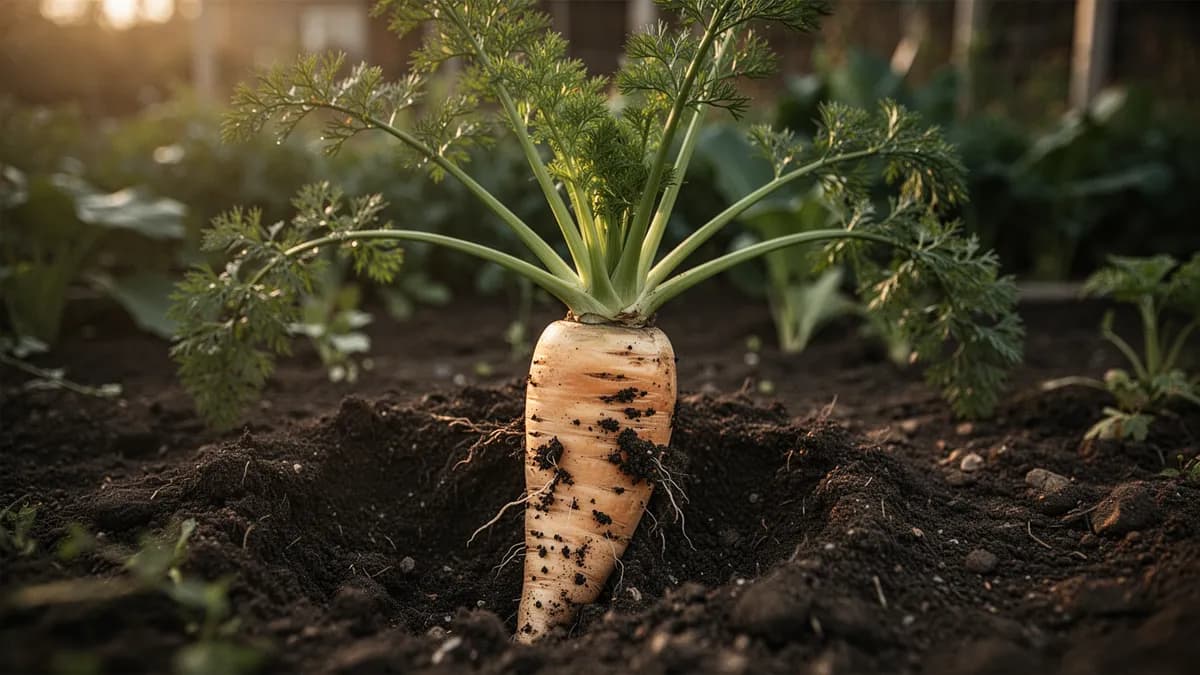
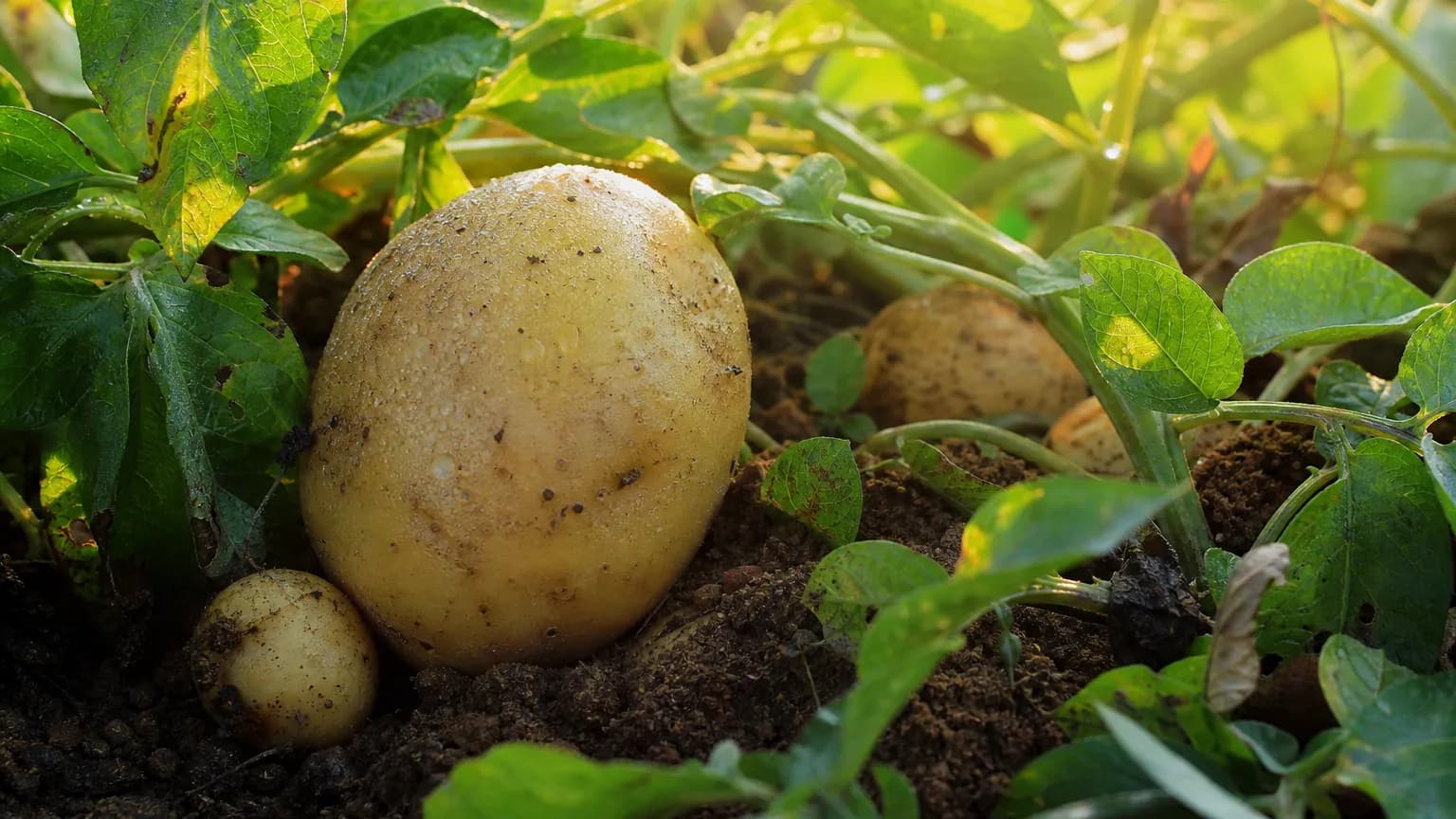
Guisantes va a su lado. Papa no.
Saber de huerto de siempre, cotejado con la tabla real de Nabo Sueco Americano (Rutabaga) — prueba cualquier planta que cultives.
Prueba Nabo Sueco Americano (Rutabaga) en un bancal, aquí mismo
Un bancal real del planificador con Nabo Sueco Americano (Rutabaga) ya plantado. Toca una planta compañera para colocarla y mira cómo responde la comprobación de vecinos: verde para buenos vecinos, rojo si hay conflicto.


Guías de cultivo relacionadas
Abónalo bien
La rutabaga necesita un suelo profundo, suelto y bien drenado con un pH entre 6,0 y 7,0 para desarrollar raíces grandes y sin deformaciones. Incorpore compost maduro antes de la siembra pero evite el estiércol fresco que puede causar raíces bifurcadas. Asegure un aporte adecuado de boro, ya que su deficiencia causa el corazón pardo, un trastorno interno común en rutabagas. Aplique un fertilizante equilibrado al momento de la siembra.
Temperatura ideal
Compatibilidad de zonas de rusticidad
De la semilla a la cosecha, etapa por etapa
Siembra
Las semillas de rutabaga son pequeñas y redondas, y germinan en 5-10 días en suelo fresco a templado. Aparecen primero dos cotiledones anchos, parecidos a los de otras plántulas de brassica. Las semillas deben sembrarse directamente al aire libre unos 90-120 días antes de la primera helada otoñal prevista, ya que las rutabagas necesitan una temporada de crecimiento larga y fresca para desarrollar raíces de tamaño completo.
Crecimiento de plántulas
Las hojas verdaderas desarrollan el característico aspecto azul verdoso y ceroso que distingue la rutabaga del nabo. Las hojas son ligeramente lobuladas y lisas. La plántula establece durante esta fase un sistema de raíz pivotante fuerte, por lo que el aclareo es esencial antes de que las plantas compitan por espacio.
Crecimiento vegetativo
La planta produce una roseta de hojas grandes y vigorosas de color azul verdoso que pueden alcanzar 30-40 cm de altura. El dosel foliar se vuelve lo bastante denso como para sombrear la mayoría de las malezas. Bajo el suelo, la raíz pivotante comienza a engrosarse mientras la planta almacena los carbohidratos producidos por su abundante follaje.
Maduración y cosecha
Las raíces alcanzan su tamaño completo de 10-15 cm de diámetro y pesan 0,5-1,5 kg cada una. El sabor mejora de forma notable después de la primera helada ligera, que provoca que la planta convierta los almidones en azúcares como una respuesta natural anticongelante. La piel de la raíz se endurece y adquiere por completo su color púrpura sobre amarillo.
Después de la cosecha
Las raíces almacenadas pueden conservarse durante meses y utilizarse según se necesiten después de la cosecha. La rutabaga se cultiva como un cultivo de raíz de estación fresca y completa su ciclo de vida en una sola temporada.
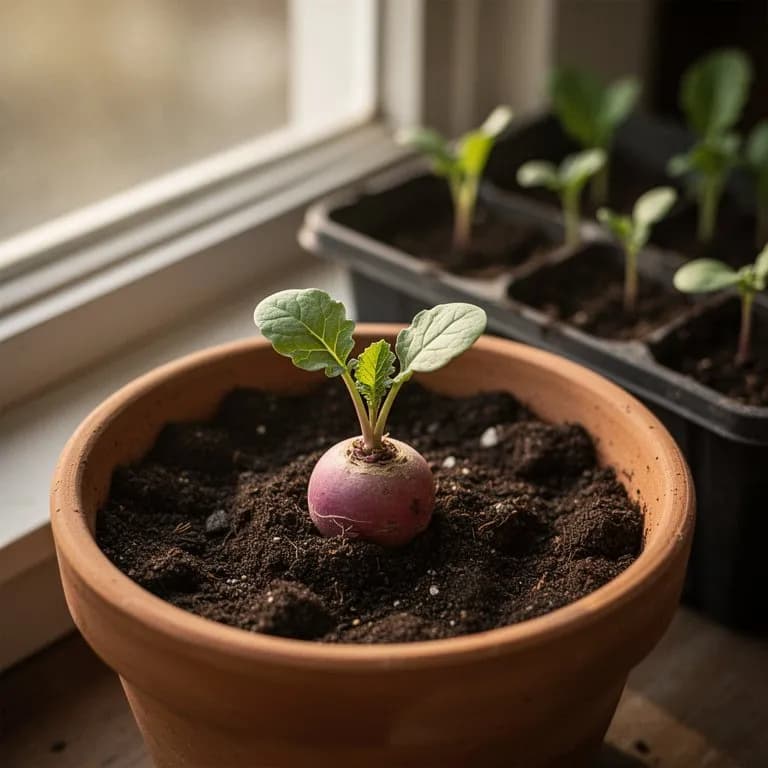
Sembre las semillas a 1 cm de profundidad en suelo suelto y bien drenado. Mantenga la cama de siembra constantemente húmeda hasta la germinación; el suelo seco provoca una emergencia irregular y desigual. Evite iniciar en interior, porque las rutabagas no toleran bien el trasplante debido a su raíz pivotante sensible.
Cuidar Nabo Sueco Americano (Rutabaga) mes a mes
Qué hacer cada mes para tu Nabo Sueco Americano (Rutabaga)
Octubre
Mes actualPrime harvest month in most zones. Harvest after one or two light frosts for the sweetest flavor. Twist off foliage, brush off soil, and cure roots at cool room temperature for 2-3 days before transferring to cold storage. Roots can remain in the ground until temperatures drop below -5°C (23°F).
Ten claro qué hacer en tu huerto, cada mes
Un correo al empezar cada mes: qué sembrar, plantar y hacer ahora mismo — para tu Nabo Sueco Americano (Rutabaga) y todo lo que crece alrededor. Más un breve curso inicial para esquivar los errores clásicos.
- Qué hacer ahora mismo
- Ajustado a tu temporada
- Curso inicial incluido
Cosechar Nabo Sueco Americano (Rutabaga)
Coseche las rutabagas cuando las raíces alcancen un diámetro de 10-15 cm, generalmente 90-100 días después de la siembra. Las raíces más pequeñas suelen ser más tiernas y de mejor textura. Si es posible, espere a que las plantas reciban algunas heladas ligeras antes de cosechar, ya que esto mejora considerablemente la dulzura. Extraiga las raíces con una horquilla de jardín, sacudiendo el exceso de tierra.
se supone que plantas al comenzar el periodo — indica tu fecha real
Coseche cuando las raíces midan 8-13 cm de diámetro, idealmente después de una o dos heladas ligeras.
Almacenamiento y conservación
Las rutabagas se conservan excepcionalmente bien en almacenamiento fresco. Corte las hojas dejando 2-3 cm de tallo, elimine el exceso de tierra sin lavar y almacene en un sótano fresco o refrigerador a 0-4°C con alta humedad, donde se mantienen durante 4-6 meses. También pueden cortarse en cubos y congelarse tras un blanqueado de 3 minutos. Para un almacenamiento tradicional, pueden encerase con una fina capa de cera de parafina alimentaria.
Qué falla — y cómo solucionarlo
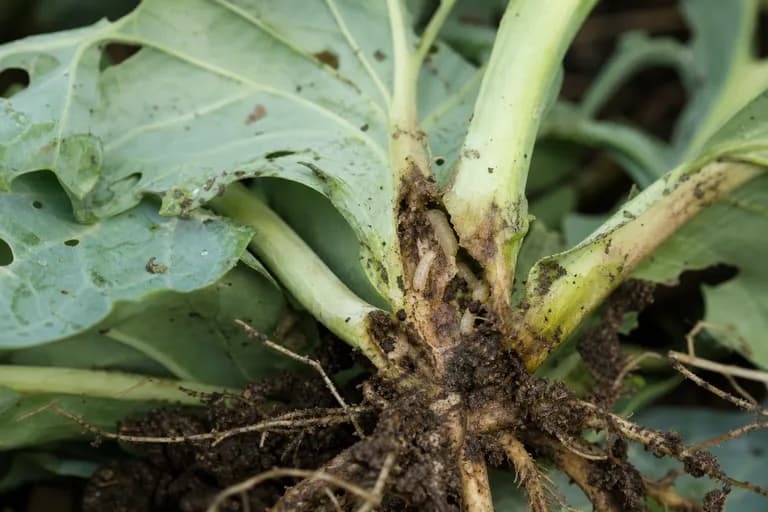
Mosca de la col
PlagaLas larvas blancas sin patas excavan túneles en la raíz, causando daño interno extenso y pudriciones secundarias. Las plantas afectadas pueden marchitarse y las raíces presentan galerías marrones al cortarlas.
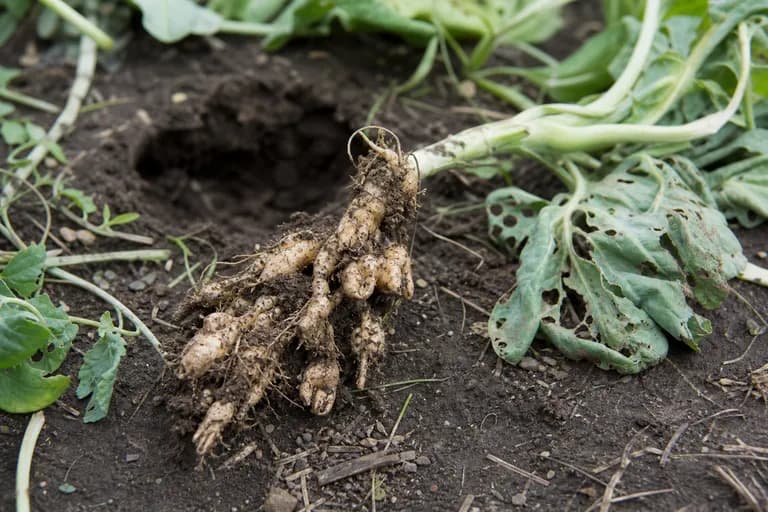
Hernia de la col
EnfermedadLas raíces desarrollan agallas y deformaciones grotescas que impiden la absorción de agua y nutrientes. Las plantas muestran marchitamiento diurno que se recupera parcialmente por la noche, y un crecimiento severamente retardado.
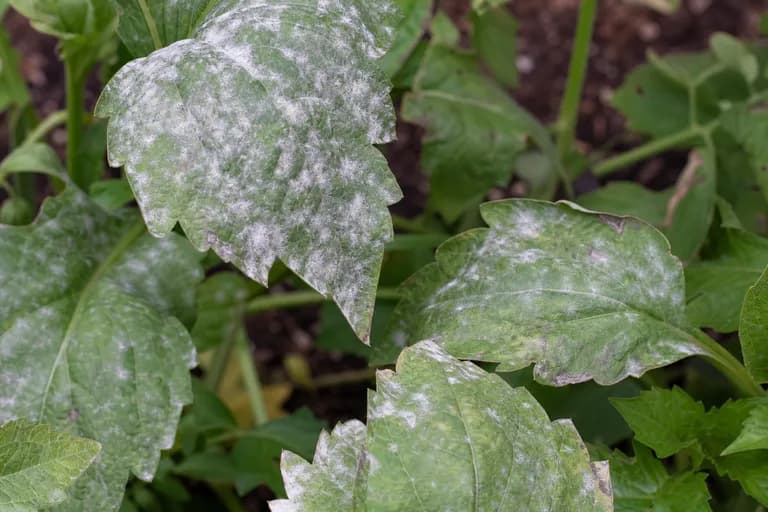
Pulgón ceroso de la col
PlagaColonias de pulgones grisáceos cubiertos de una cera blanquecina en el envés de las hojas y en la corona de la raíz. Causan amarillamiento, enrollamiento de hojas y pueden transmitir virus.
Solución de problemas comunes
El estrés hídrico durante el crecimiento produce raíces leñosas, fibrosas y de sabor amargo, por lo que el riego constante es esencial. La deficiencia de boro causa corazón pardo, un oscurecimiento interno de la pulpa que la hace incomestible, prevenible con aplicaciones de bórax diluido. Las raíces agrietadas resultan de lluvias abundantes después de un período de sequía, causando un crecimiento desigual.
Consejos de cultivo
- Time your planting for a fall harvest — this is the single most important decision for rutabaga quality. Count back 90-120 days from your average first fall frost date and direct-sow seeds on that date. Roots that mature in cool weather are dramatically sweeter and more tender than those maturing in summer heat.
- Do not transplant rutabagas. Like most root crops, they develop the best-shaped, smoothest roots when direct-sown in place. Transplanting damages the taproot and leads to forked, misshapen, or stunted roots. Always sow seeds directly where they will grow.
- Prepare loose, deep, rock-free soil before planting. Work compost into the top 30 cm (12 inches) and remove any stones larger than a marble. Rocks and hard soil clumps cause rutabaga roots to fork, crack, or develop irregular shapes.
- Thin ruthlessly to 15-20 cm (6-8 inches) apart once seedlings have 3-4 true leaves. Crowded rutabagas produce small, undersized roots that are not worth the garden space. Use scissors to snip unwanted seedlings rather than pulling them to avoid disturbing neighboring roots.
- Apply boron if your soil is deficient — boron deficiency causes 'brown heart,' a condition where the interior of the root develops hollow, brown, corky patches that ruin the crop. Dissolve 1 tablespoon of household borax in 4 liters of water and apply along 30 meters of row before planting.
- Mulch around plants with straw or shredded leaves once they are well established. Mulch retains moisture, suppresses weeds, and keeps the soil cool in late summer — all conditions that help rutabagas develop the smooth, dense roots gardeners prize.
- Leave roots in the ground through the first fall frosts. Frost exposure converts stored starches to sugars, producing the sweet, mellow flavor that makes rutabaga a beloved winter vegetable. Harvest before the ground freezes solid, however, as deeply frozen soil makes extraction impossible and hard freezes damage the root.
- For the longest storage life, harvest on a dry day and allow roots to air-dry for 2-3 days in a cool, shaded area before storing. Trim foliage to 2 cm stubs but do not wash — just brush off loose soil. Store at 0-2°C (32-35°F) with 90-95% humidity. Properly stored rutabagas keep for 4-6 months.
Cultiva tu mejor Nabo Sueco Americano (Rutabaga) — y todo lo que la rodea.
Empieza un plan gratis hoy. Diseña tus bancales, coloca tu Nabo Sueco Americano (Rutabaga) y deja que PlotMyGarden gestione el momento, el espaciado, las asociaciones y los recordatorios de la semilla a la cesta.
Elige tu Nabo Sueco Americano (Rutabaga)
American Purple Top
La variedad más popular en Norteamérica, con raíces grandes de piel bicolor púrpura y crema, pulpa amarilla dulce y suave. Madura en 90-100 días y se conserva excepcionalmente bien.
Laurentian
Variedad canadiense clásica con raíces uniformes de forma globular y pulpa amarilla de textura fina. Muy resistente al frío y con excelente sabor después de las heladas.
Joan
Variedad moderna resistente a la hernia de la col con raíces de buen tamaño y pulpa de color amarillo intenso. Ideal para zonas con historial de esta enfermedad en el suelo.
Helenor
Variedad sueca de alta calidad con pulpa amarillo dorado muy dulce y sin fibrosidad. Produce raíces uniformes y es muy apreciada en la cocina nórdica.
Rutabaga seeds cost just $2-4 per packet, with each packet containing enough seeds for 60-100 plants. A single rutabaga at the grocery store costs $2-4, so even a modest planting of 10-15 roots saves $20-50 per season. The real savings come from storage — homegrown rutabagas kept in a cool root cellar or refrigerator provide fresh, vitamin-C-rich vegetables for 4-6 months through winter, reducing grocery trips and replacing expensive out-of-season produce. Growing your own also gives you access to the superior flavor of frost-kissed, freshly harvested roots that no store-bought rutabaga can match.
Recetas rápidas
Classic Mashed Rutabaga with Butter and Chives
35 minSilky, golden mashed rutabaga with a naturally sweet, earthy flavor that rivals mashed potatoes with a fraction of the carbohydrates. A pat of butter and fresh chives elevate this humble root into an elegant side dish worthy of any holiday table.
6 ingredientesHoney-Roasted Rutabaga Cubes
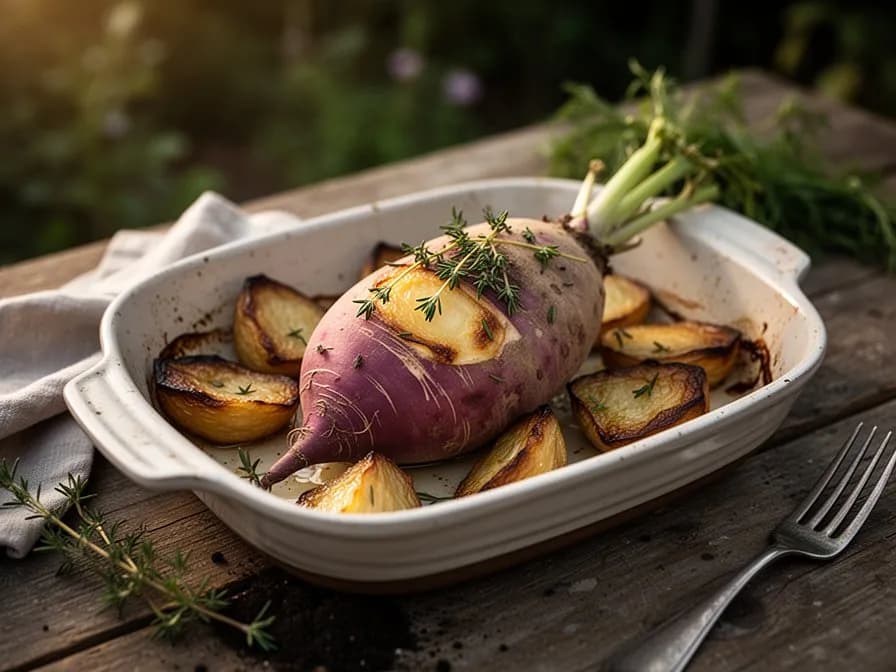
45 minRutabaga cubes roasted at high heat until caramelized and golden brown on the edges, then finished with a light drizzle of honey and a sprinkle of fresh thyme. The roasting intensifies the natural sweetness and creates irresistible crispy corners.
6 ingredientesRutabaga and Potato Gratin
60 minThinly sliced rutabaga layered with potatoes in a rich, creamy garlic sauce and baked until bubbly and golden on top. The rutabaga adds a subtle sweetness and peppery depth that transforms an ordinary gratin into something extraordinary.
7 ingredientesUsos culinarios
La rutabaga americana es extraordinariamente versátil en la cocina. Se prepara en puré suave y cremoso, sola o mezclada con patatas, mantequilla y nuez moscada. Es un ingrediente clásico de guisos y estofados de invierno, donde aporta dulzura natural y textura firme. Cortada en bastones y asada al horno con aceite de oliva se carameliza deliciosamente. También se utiliza en sopas cremas, gratinados y como sustituto bajo en carbohidratos de las patatas.
Qué contiene
Beneficios para la salud
- Rutabaga is an excellent source of vitamin C, providing 28% of the daily value per 100g — making it one of the best root vegetables for supporting immune function during the cold and flu season when fresh fruits are less available.
- Contains glucosinolates, the sulfur-containing compounds characteristic of cruciferous vegetables, which break down into biologically active compounds (isothiocyanates) that are being studied extensively for their potential anticancer properties.
- Rich in potassium (305mg per 100g) while being naturally low in sodium, supporting healthy blood pressure regulation and reducing the risk of cardiovascular disease.
- Significantly lower in calories and carbohydrates than potatoes (37 vs. 77 calories per 100g), making rutabaga an excellent substitute for those managing blood sugar, following low-carb diets, or aiming for weight control.
- Good source of both soluble and insoluble dietary fiber (2.3g per 100g), promoting healthy digestion, feeding beneficial gut bacteria, and helping maintain steady blood sugar levels after meals.
- Provides manganese and phosphorus, two minerals essential for strong bones, energy metabolism, and proper functioning of enzymes involved in antioxidant defense throughout the body.
De dónde viene Nabo Sueco Americano (Rutabaga)
Rutabaga (Brassica napus var. napobrassica) is a relatively young vegetable in botanical terms, believed to have originated as a natural cross between the turnip (Brassica rapa) and wild cabbage (Brassica oleracea) sometime during the late Middle Ages in Europe. The exact location of its origin is debated, but most evidence points to Scandinavia or Russia, where both parent species grew in close proximity in medieval garden plots. The Swiss botanist Gaspard Bauhin provided the first known written description of rutabaga in 1620, noting it growing in Sweden.
The vegetable spread rapidly across Northern Europe during the 17th and 18th centuries, becoming a dietary staple in Sweden, Finland, Scotland, and the Baltic states — regions where its cold hardiness made it invaluable as a winter food. Swedish farmers championed its cultivation so effectively that it became known as the 'Swedish turnip' or simply 'swede' throughout the British Isles. Rutabaga arrived in North America in the early 1800s, where it was embraced by farmers in New England and Canada for the same reasons Europeans valued it: it grew well in cool climates, tolerated poor soils, survived frost, and stored through entire winters in root cellars.
The American Purple Top variety was developed in the United States during the 19th century and became the dominant cultivar for home gardens and commercial production across North America. Its distinctive purple crown and creamy yellow flesh made it easy to distinguish from turnips at market. While rutabaga's popularity declined in the mid-20th century as grocery stores made warm-weather produce available year-round, it has experienced a revival among home gardeners and chefs who appreciate its versatility, nutritional value, and the fact that it thrives during the fall and winter months when few other fresh vegetables can be harvested from the garden.
Nabo Sueco Americano (Rutabaga): ¿sabías que?
Datos fascinantes sobre Nabo Sueco Americano (Rutabaga)
Rutabaga is a natural hybrid between a cabbage and a turnip (Brassica napus var. napobrassica) — a cross that likely occurred spontaneously in medieval European gardens, combining the turnip's root-forming ability with the cabbage's hardiness and nutritional density.
Nabo Sueco Americano (Rutabaga): preguntas frecuentes
¿Cuándo debo plantar Nabo Sueco Americano (Rutabaga)?
¿Cuáles son buenas plantas acompañantes para Nabo Sueco Americano (Rutabaga)?
¿En qué zonas de rusticidad puede crecer Nabo Sueco Americano (Rutabaga)?
¿Cuánto sol necesita Nabo Sueco Americano (Rutabaga)?
¿A qué distancia debo espaciar Nabo Sueco Americano (Rutabaga)?
¿Qué plagas y enfermedades afectan a Nabo Sueco Americano (Rutabaga)?
¿Cómo almaceno Nabo Sueco Americano (Rutabaga) después de la cosecha?
¿Cuáles son las mejores variedades de Nabo Sueco Americano (Rutabaga) para cultivar?
¿Qué suelo necesita Nabo Sueco Americano (Rutabaga)?
What is the difference between a rutabaga and a turnip?
Why are my rutabagas woody and bitter instead of sweet?
Why are my rutabaga roots cracked or forked?
Can I eat rutabaga leaves as well as the root?
How do I store rutabagas through the winter?
When is the best time to plant rutabaga seeds?
Acabas de leer la teoría. Ahora cultívala en piloto automático.
Todo lo que hace que Nabo Sueco Americano (Rutabaga) sea delicado — el momento, el espaciado, las asociaciones, la ventana de cosecha — es justo lo que PlotMyGarden resuelve por ti, para cada planta de tu huerto.
Un plan que conoce tu clima
Indica tu ubicación una vez. Recibe fechas de siembra, abonado y cosecha basadas en tu última helada real y el pronóstico en vivo — sin adivinar con un sobre genérico.
De la sección “Cuándo plantar”Planificador de bancales de arrastrar y soltar
Diseña bancales sobre una cuadrícula. Cada planta encaja con su espaciado correcto y ves toda la temporada antes de gastar un céntimo en semillas.
De la sección “Cultivo”Conflictos de asociación, detectados a tiempo
Más de 200 buenas y malas combinaciones comprobadas en vivo mientras plantas — para que un error que arruine la temporada nunca llegue a la tierra.
De la sección “Asociaciones”Recordatorios que sí vas a seguir
“Riega las judías.” “Recoge hoy antes de que se pase.” Oportunos, concretos y ligados a las plantas que de verdad cultivas.
De la sección “Cosecha”Escalonado, programado
¿Quieres cosechar seis semanas en vez de seis días? Reparte tus siembras automáticamente y te avisa cuando toca el siguiente lote.
De la sección “Cuándo plantar”Un registro que se vuelve más listo
Cada cosecha que registras le enseña tu huerto. El plan del año que viene parte de lo que de verdad funcionó en tu suelo, no en un manual.
De la sección “Resumen”Planta estos junto a Nabo Sueco Americano (Rutabaga)
Más Hortalizas de raíz
Mantén Nabo Sueco Americano (Rutabaga) lejos de estos
Cultiva tu mejor Nabo Sueco Americano (Rutabaga) — y todo lo que la rodea.
Empieza un plan gratis hoy. Diseña tus bancales, coloca tu Nabo Sueco Americano (Rutabaga) y deja que PlotMyGarden gestione el momento, el espaciado, las asociaciones y los recordatorios de la semilla a la cesta.