Rábano Huevo de Pascua
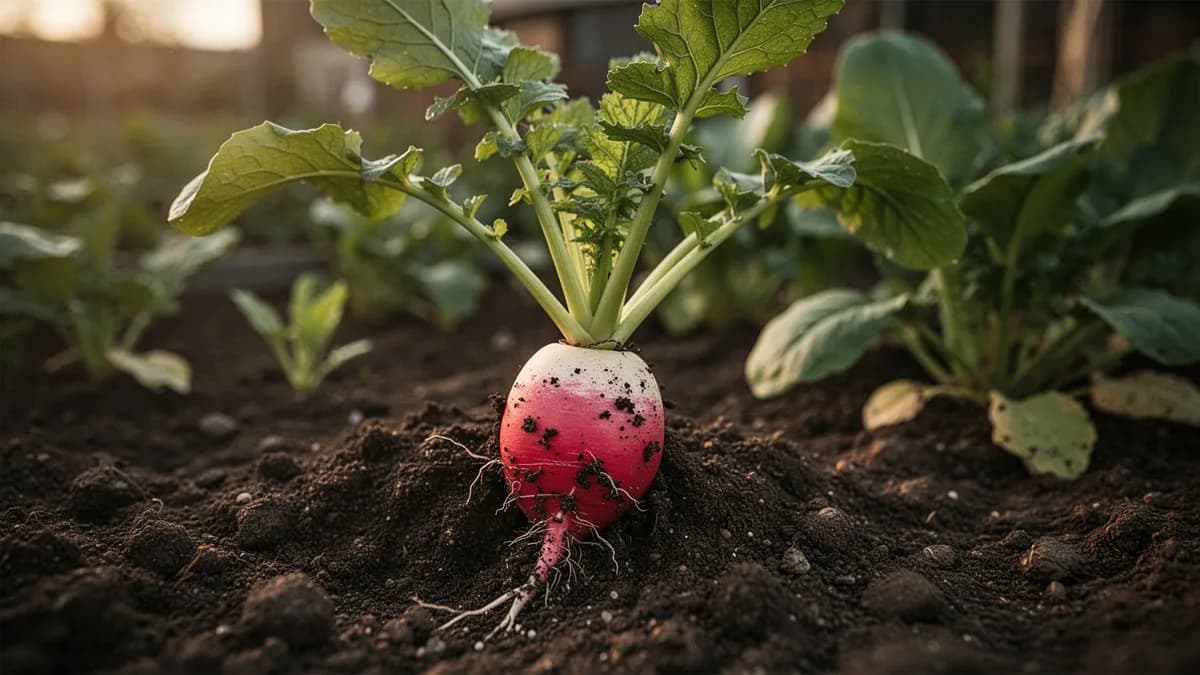
El rábano Easter Egg es una mezcla colorida de variedades redondas que producen raíces en tonos rojo, púrpura, rosa, blanco y bicolor.





En esta páginaResumen
Conoce Rábano Huevo de Pascua
El rábano Easter Egg es una mezcla colorida de variedades redondas que producen raíces en tonos rojo, púrpura, rosa, blanco y bicolor. Originario de cruces selectivos modernos, ofrece una presentación espectacular en ensaladas y platos decorativos, manteniendo el sabor ligeramente picante y crujiente característico de los rábanos.
Cuándo plantar Rábano Huevo de Pascua
Siembre siempre de forma directa, ya que los rábanos no toleran el trasplante. Coloque las semillas a 1 cm de profundidad y 2-3 cm de separación. La germinación ocurre en 4-7 días a temperaturas de 10-18 °C. Para una cosecha continua durante toda la temporada, realice siembras sucesivas cada 2-3 semanas desde principios de primavera hasta mediados de otoño.
Tu año de Rábano Huevo de Pascua
Ajustado a Zona 7 · temporada típica · la helada se va hacia el 2 abr y vuelve hacia el 1 nov
Planta Rábano Huevo de Pascua Mar – Abr, Ago – Sep y cosecha Abr – May, Sep – Oct. Consulta los métodos de plantación y elige tu clima para adaptar los periodos.
Cómo cultivar Rábano Huevo de Pascua
Siembre los rábanos Easter Egg en un suelo suelto, bien drenado y libre de piedras, en una ubicación con sol pleno o sombra parcial ligera. Prepare el lecho con compost bien descompuesto y asegúrese de que el pH esté entre 6,0 y 7,0. Estos rábanos prefieren temperaturas frescas entre 10 y 18 °C.
Siembre las semillas directamente a 1 cm de profundidad con una separación de 2-3 cm entre ellas y 15-20 cm entre hileras. Realice siembras sucesivas cada 2-3 semanas para disfrutar de una cosecha continua. Aclare las plántulas cuando tengan 3-4 cm de altura, dejando 4-5 cm entre plantas.
Mantenga el suelo uniformemente húmedo pero sin encharcamientos, ya que la irregularidad en el riego produce raíces agrietadas o de textura esponjosa. Aplique un acolchado ligero para conservar la humedad y mantener las raíces frescas. Evite el exceso de nitrógeno, que favorece el crecimiento foliar en detrimento de las raíces.
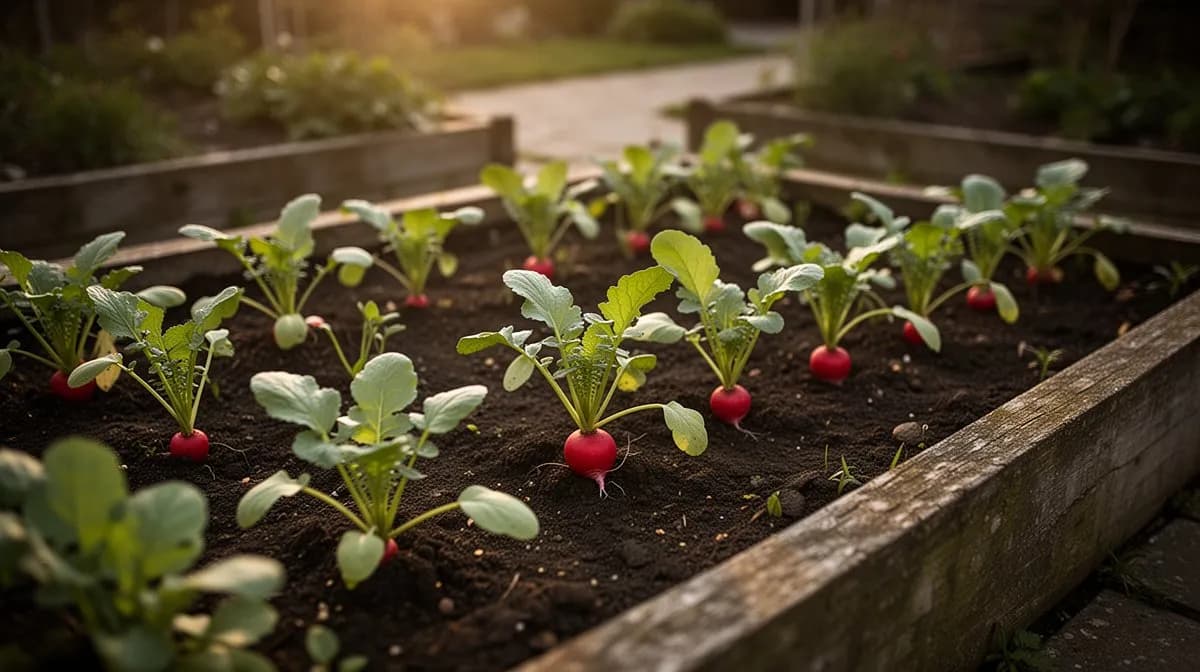
1152 plantas caben en un bancal de 120 × 240 cm
Cada Rábano Huevo de Pascua pide 5 cm de margen. El planificador guarda ese marco por ti — cada planta, cada bancal.
Los mejores vecinos de Rábano Huevo de Pascua
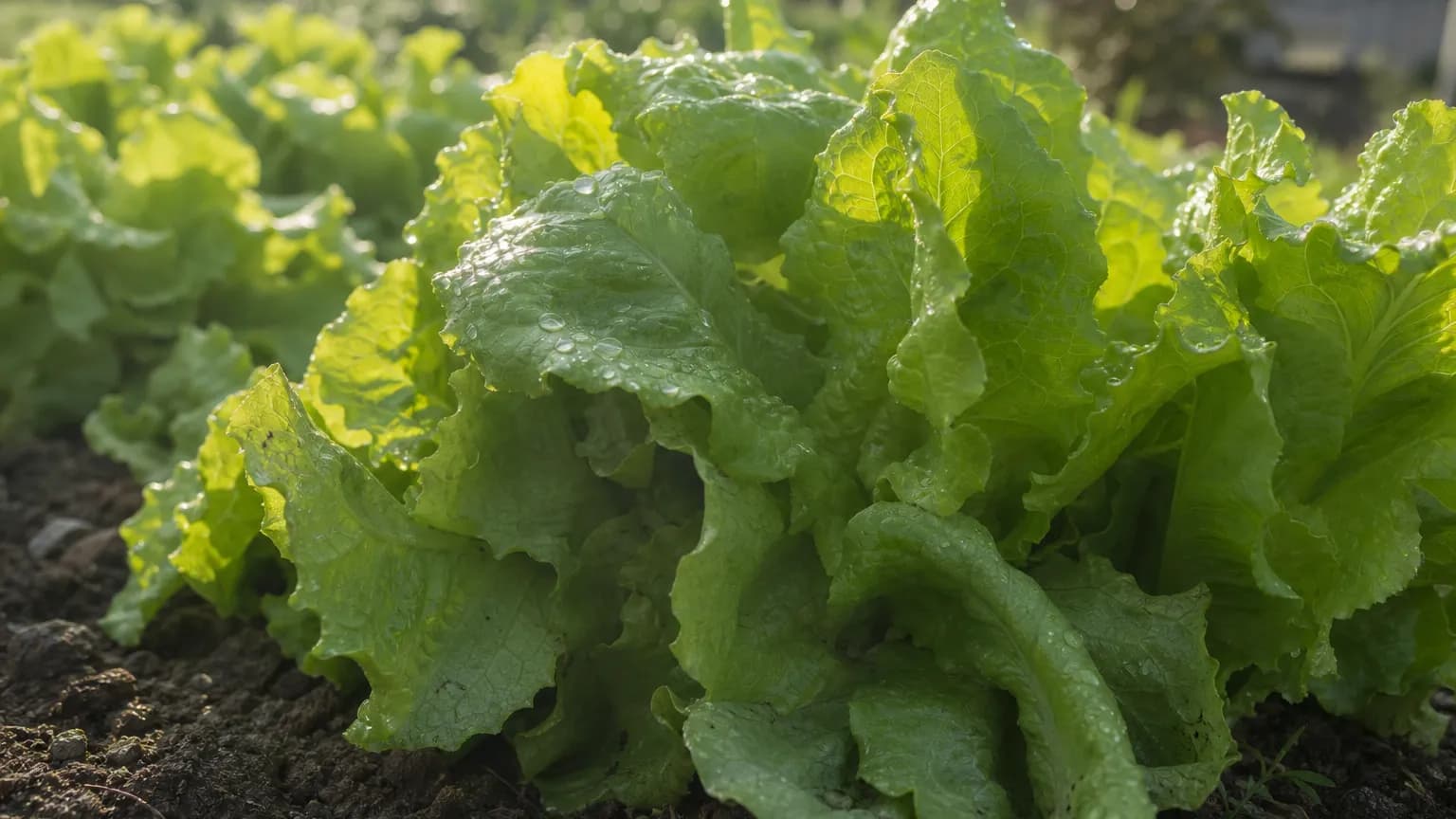
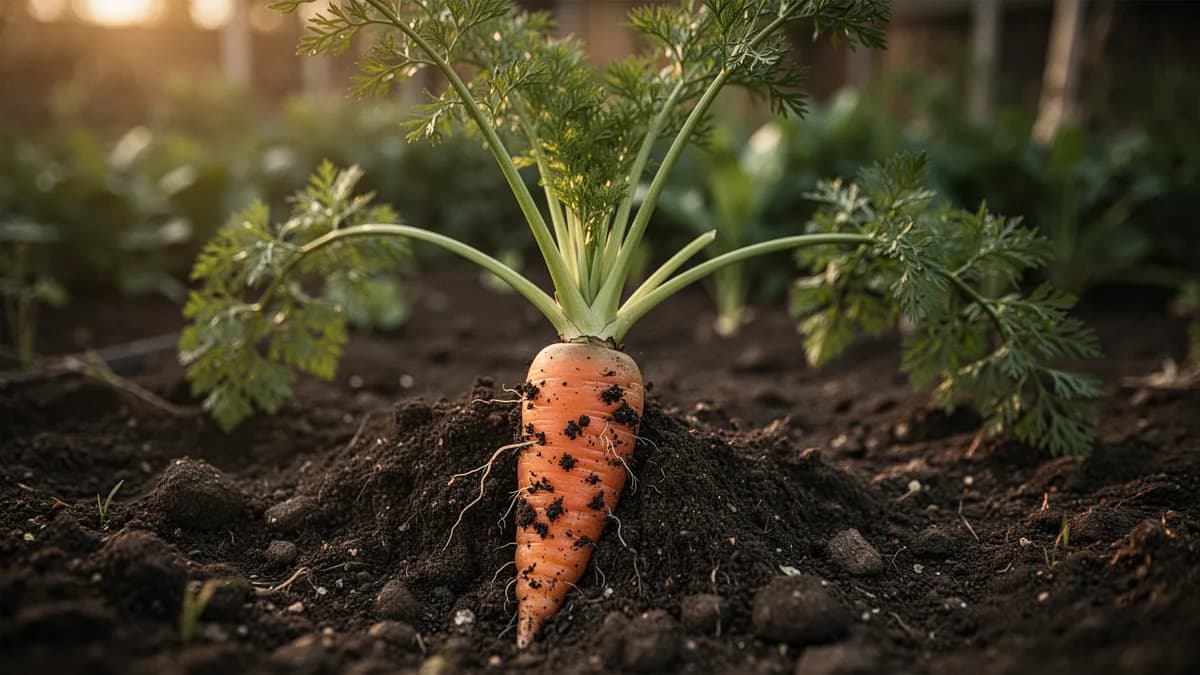
Excelentes compañeros de lechugas, espinacas y zanahorias, ya que los rábanos se cosechan antes de que estas plantas necesiten más espacio. Plantados entre pepinos y calabazas, ayudan a repeler ciertos escarabajos. Evite plantarlos cerca de hisopo o junto a otras crucíferas para reducir la presión de plagas.
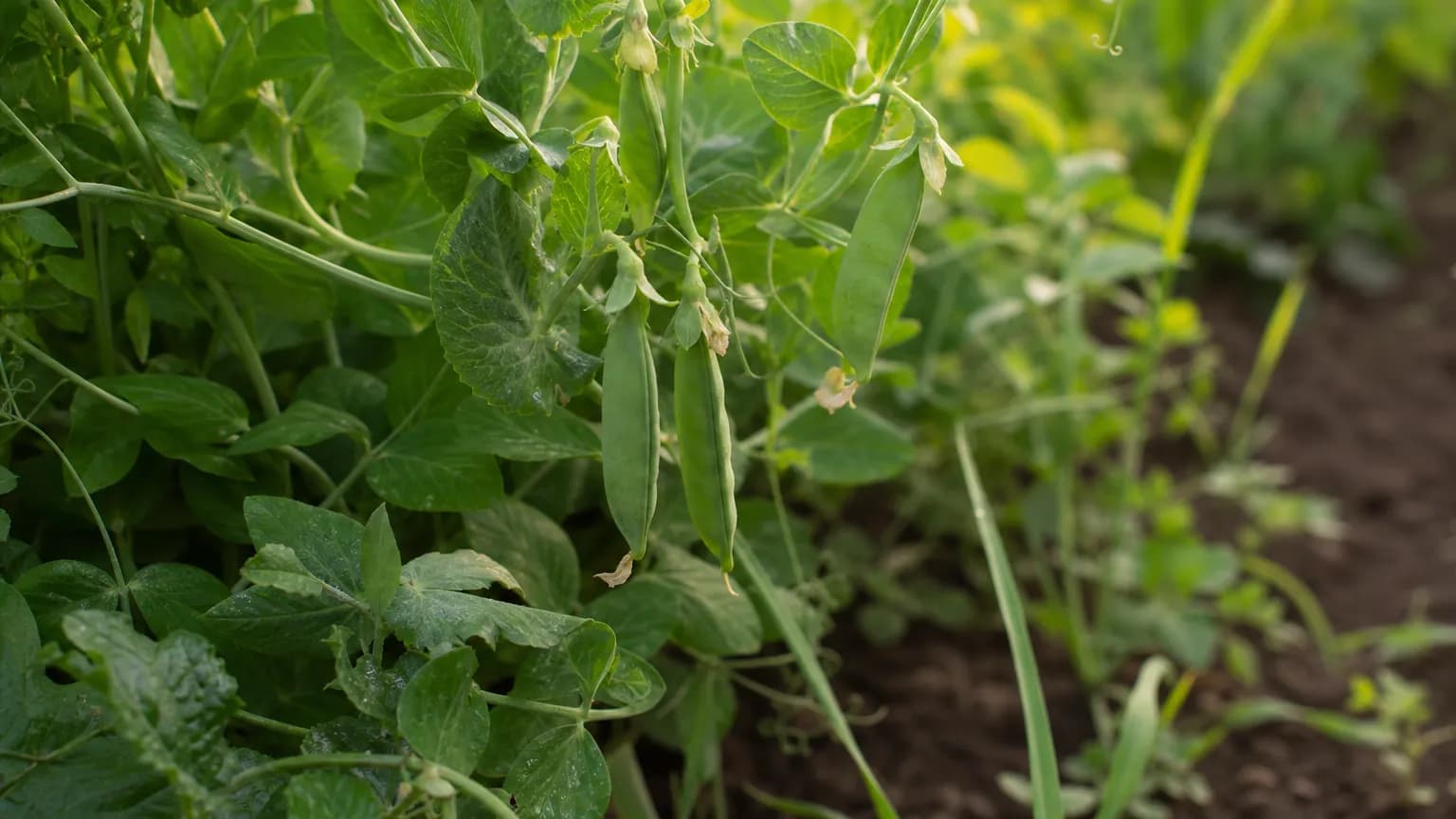
Guisantes va a su lado.
Saber de huerto de siempre, cotejado con la tabla real de Rábano Huevo de Pascua — prueba cualquier planta que cultives.
Prueba Rábano Huevo de Pascua en un bancal, aquí mismo
Un bancal real del planificador con Rábano Huevo de Pascua ya plantado. Toca una planta compañera para colocarla y mira cómo responde la comprobación de vecinos: verde para buenos vecinos, rojo si hay conflicto.


Guías de cultivo relacionadas
Abónalo bien
El suelo ideal es franco-arenoso, suelto y libre de piedras, con pH entre 6,0 y 7,0. Incorpore compost bien descompuesto antes de la siembra, pero evite el estiércol fresco que causa raíces bifurcadas. No aplique fertilizantes altos en nitrógeno; una aplicación ligera de fertilizante equilibrado 10-10-10 antes de la siembra es suficiente.
Temperatura ideal
Compatibilidad de zonas de rusticidad
De la semilla a la cosecha, etapa por etapa
Germinación
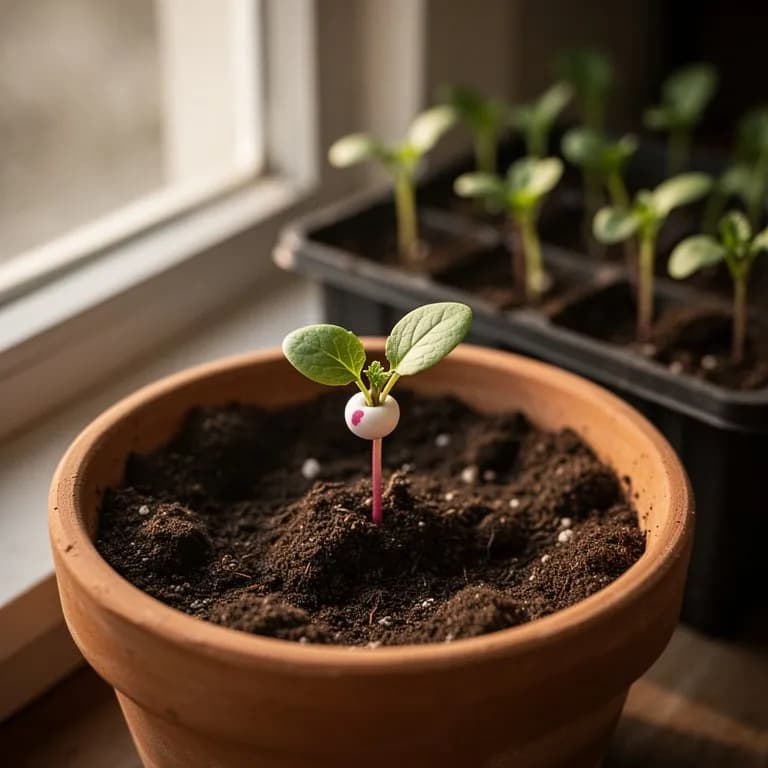
Las semillas de rábano están entre las más rápidas de germinar de cualquier hortaliza. Entre 3 y 5 días después de la siembra, la radícula pálida crece hacia abajo mientras los cotiledones redondeados se despliegan sobre la superficie del suelo. Las semillas germinan con facilidad incluso en suelos tan fríos como 4 °C, aunque el rango óptimo es de 10-18 °C.
Desarrollo de hojas
Las hojas verdaderas aparecen con una textura rugosa y ligeramente lobulada, claramente distinta de los cotiledones lisos. La raíz pivotante comienza a alargarse y engrosarse bajo la superficie del suelo. El follaje se desarrolla rápidamente en clima fresco, formando una pequeña roseta de 4-6 hojas que impulsa la fase de engrosamiento de la raíz.
Engrosamiento de la raíz
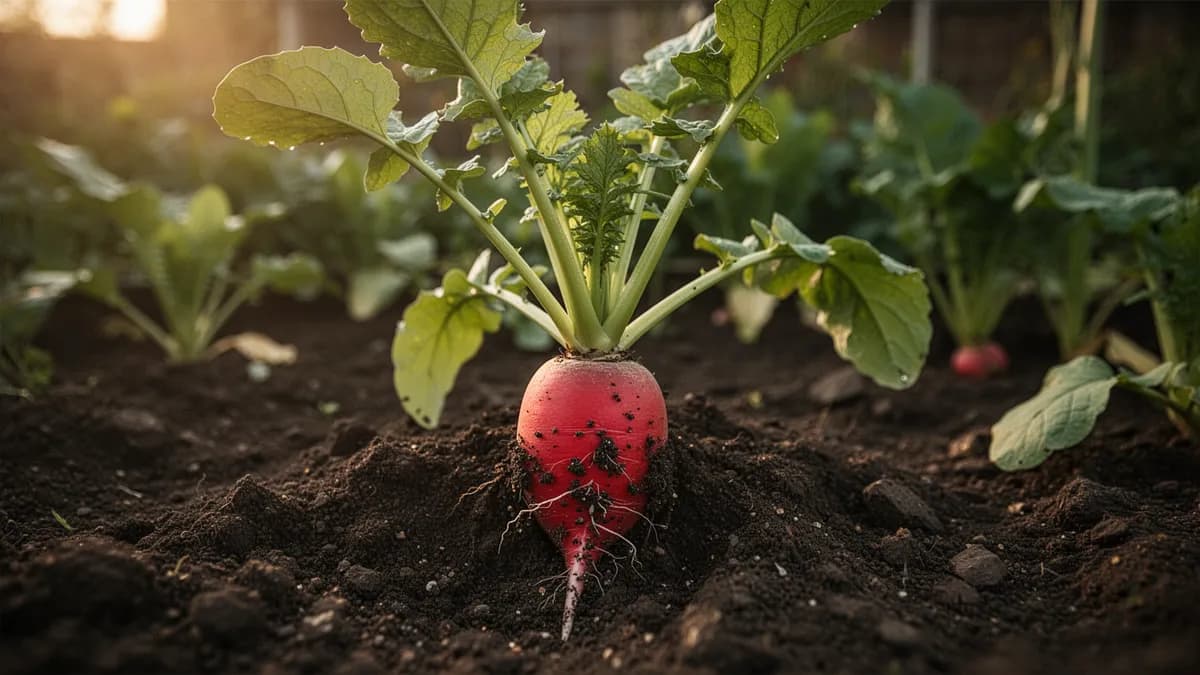
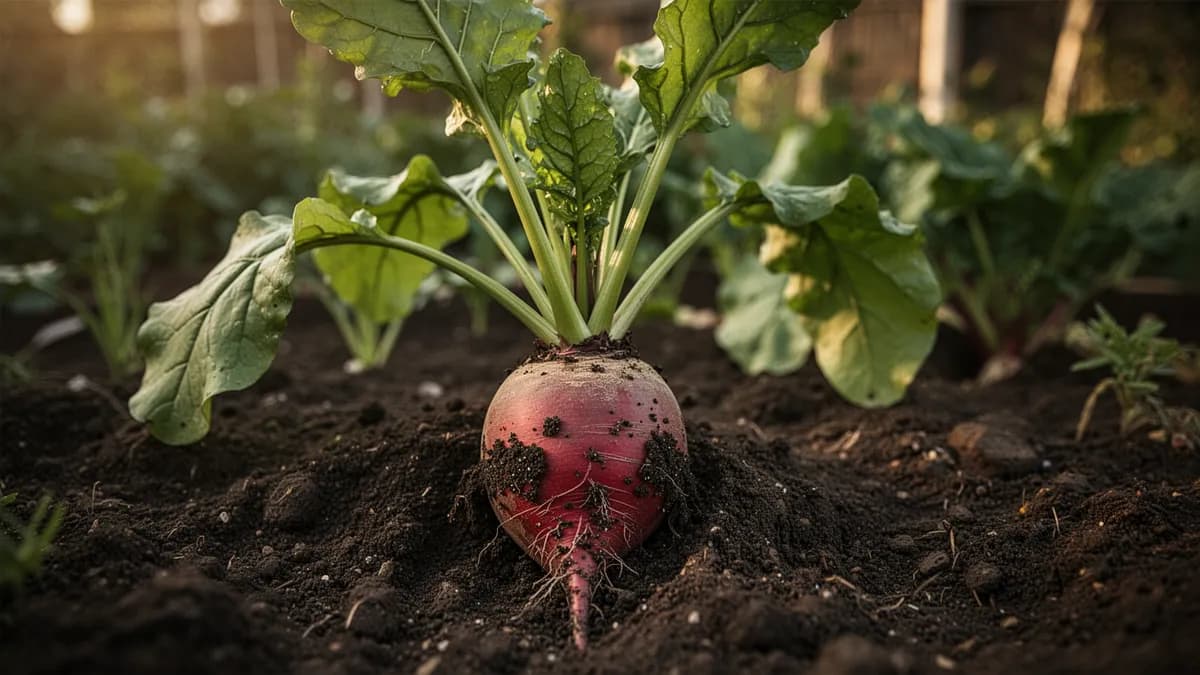
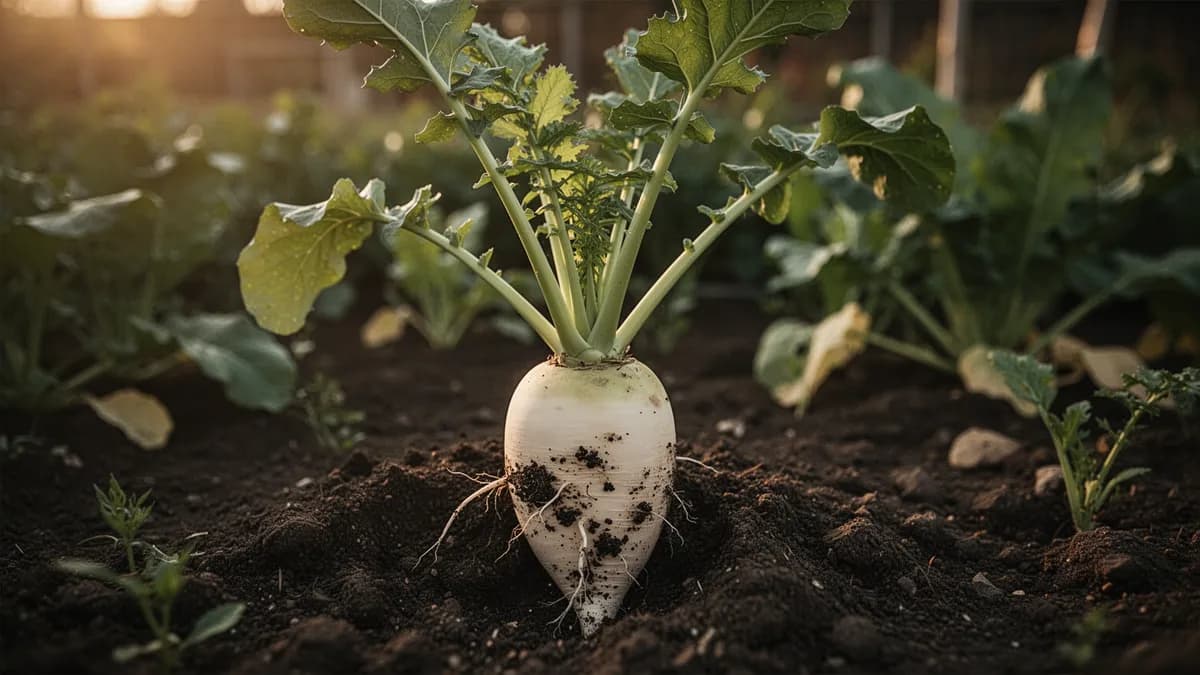
El hipocótilo se expande rápidamente hasta adoptar la conocida forma redonda del rábano. En esta fase crítica se desarrollan los colores característicos de la mezcla: cada raíz expresa al azar uno de los genes de color del paquete, produciendo piel roja, púrpura, rosa, violeta o blanca. La raíz se engrosa visiblemente día tras día y, a menudo, sobresale ligeramente de la línea del suelo.
Ventana de cosecha
Las raíces alcanzan su tamaño ideal de cosecha, con un diámetro de 2,5 a 4 cm. La pulpa está en su punto máximo de crocancia y el sabor picante es brillante, pero no demasiado fuerte. La ventana de cosecha para los rábanos de primavera es estrecha: normalmente solo 5-7 días antes de que la calidad disminuya y las raíces se vuelvan esponjosas o leñosas.
Espigado (Pasado de maduro)
Si se dejan en la tierra más allá de su punto óptimo, los rábanos emiten un tallo floral central que se alarga rápidamente hasta 60-90 cm. Las pequeñas flores de cuatro pétalos, blancas o lila pálido, atraen a los polinizadores. La raíz se vuelve leñosa, hueca y desagradablemente picante. Aunque esto termina la calidad de la raíz, las vainas de semillas en desarrollo (llamadas "cola de rata") son comestibles y crujientes.
Siembra las semillas directamente al aire libre a 1 cm de profundidad y a 2,5 cm de distancia. Mantén el suelo constantemente húmedo, pero no encharcado, durante la germinación. No hace falta iniciarlos en interior: los rábanos resienten el trasplante y crecen tan rápido que la siembra directa siempre es la mejor opción.
Cuidar Rábano Huevo de Pascua mes a mes
Qué hacer cada mes para tu Rábano Huevo de Pascua
Octubre
Mes actualHarvest autumn-sown radishes at their peak. In mild-winter zones, continue sowing for late-season harvests. Protect late-season plantings from early frosts with row cover fabric, which can extend the growing season by 2-3 weeks.
Ten claro qué hacer en tu huerto, cada mes
Un correo al empezar cada mes: qué sembrar, plantar y hacer ahora mismo — para tu Rábano Huevo de Pascua y todo lo que crece alrededor. Más un breve curso inicial para esquivar los errores clásicos.
- Qué hacer ahora mismo
- Ajustado a tu temporada
- Curso inicial incluido
Cosechar Rábano Huevo de Pascua
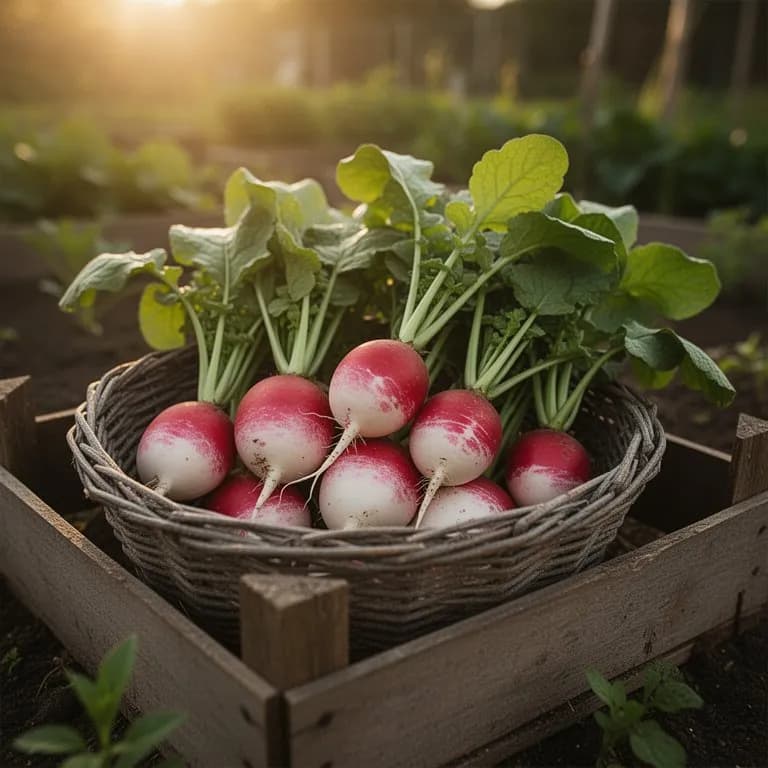
Coseche los rábanos Easter Egg cuando alcancen 2-3 cm de diámetro, generalmente entre 25 y 30 días después de la siembra. Tire suavemente de la base del tallo para extraer la raíz completa. No deje que maduren en exceso, ya que se vuelven leñosos y excesivamente picantes.
se supone que plantas al comenzar el periodo — indica tu fecha real
Aproximadamente 25 días después de la siembra, cuando las raíces midan entre 2,5 y 4 cm de diámetro.
Almacenamiento y conservación
Retire las hojas inmediatamente después de la cosecha para evitar que extraigan humedad de las raíces. Guárdelos en el cajón de verduras del refrigerador envueltos en un paño húmedo durante 1-2 semanas. También pueden conservarse en escabeche rápido con vinagre, azúcar y especias para prolongar su vida útil varias semanas.
Qué falla — y cómo solucionarlo
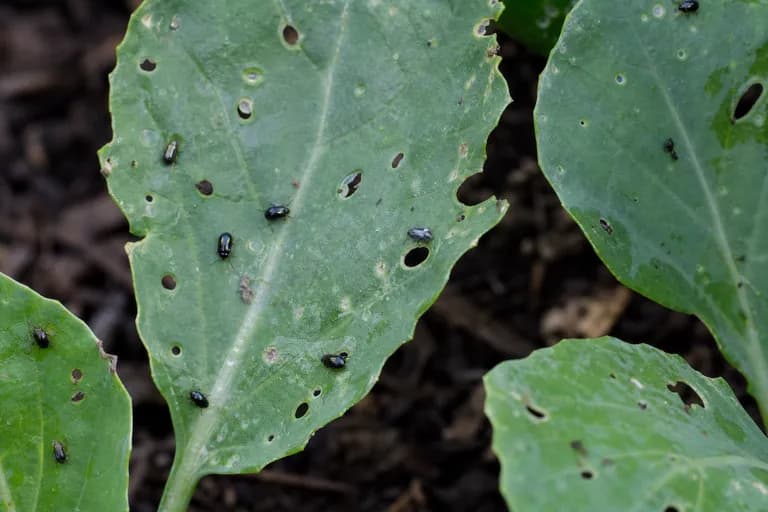
Pulguilla (Phyllotreta spp.)
PlagaPequeños agujeros redondos en las hojas que dan un aspecto de perdigonada. Las plántulas jóvenes pueden quedar completamente defoliadas en infestaciones graves.
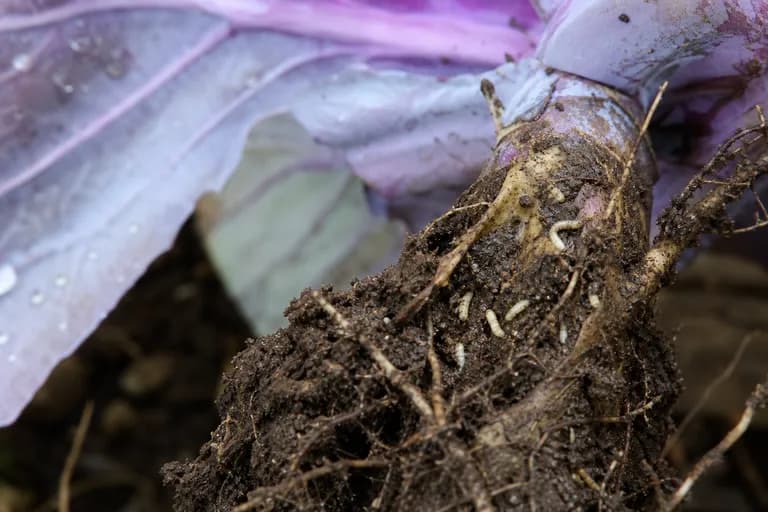
Mosca de la col (Delia radicum)
PlagaLas larvas blancas excavan túneles en las raíces, causando marchitez, retraso en el crecimiento y pudrición secundaria. Las plantas afectadas se arrancan fácilmente.
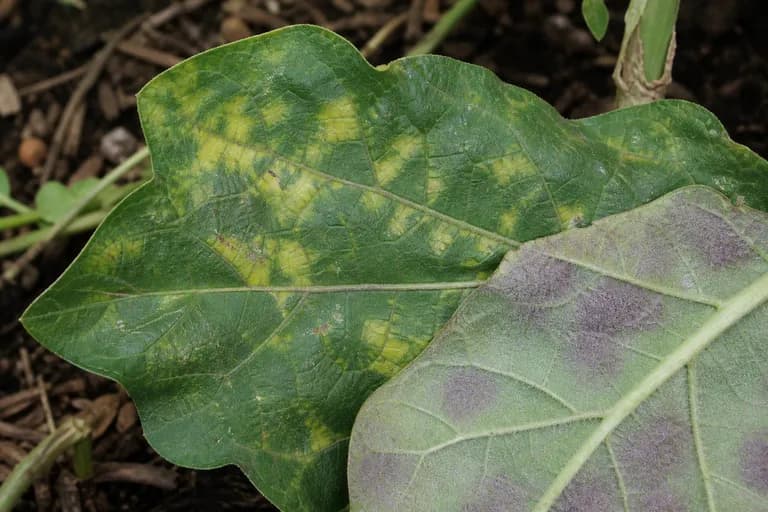
Mildiú velloso (Peronospora parasitica)
EnfermedadManchas amarillentas en el haz de las hojas con un moho grisáceo-violáceo en el envés. Las hojas se necrosan progresivamente.
Solución de problemas comunes
Las raíces se vuelven leñosas y excesivamente picantes si se dejan demasiado tiempo en el suelo o si las temperaturas superan los 25 °C. La irregularidad en el riego causa agrietamiento de las raíces. La siembra demasiado densa produce raíces pequeñas y deformes, por lo que es esencial aclarar las plántulas a tiempo.
Consejos de cultivo
- Direct sow always — never transplant. Radishes develop a slender taproot from day one, and any disturbance to this root causes forked, misshapen, or stunted roots. Sow seeds exactly where you want them to grow and thin to proper spacing.
- Thin ruthlessly and early. Once seedlings have their first true leaves, thin to 5 cm (2 inches) apart without hesitation. Overcrowded radishes produce only leaves and no usable roots — this is the single most common reason for radish failure in home gardens.
- Prepare the soil deeply and remove all stones, clumps, and debris to a depth of at least 15 cm (6 inches). Radish roots fork and deform around any obstruction they encounter. Loose, friable soil is the foundation of perfectly round, smooth radishes.
- Maintain consistent, even moisture throughout the entire 25-30 day growing cycle. Even a single day of drought stress followed by heavy watering causes roots to crack and split. Water lightly and frequently rather than deeply and infrequently.
- Avoid high-nitrogen fertilizers, which promote lush leafy tops at the expense of root development. Radishes grow so quickly that they need very little supplemental feeding — a bed amended with compost before planting provides everything they need.
- Succession plant every 10-14 days from early spring through late May, then resume in mid-August through October. This provides a continuous harvest and avoids the feast-or-famine cycle of a single large planting that all matures at once.
- Harvest promptly at 2.5-4 cm diameter — do not wait for radishes to grow larger. Unlike many root vegetables, radishes decline rapidly once they pass peak maturity. Check daily during the harvest window, as roots can go from perfect to pithy in just 2-3 days.
- Use radishes as companion plants throughout the garden. Interplant with slow-growing carrots and parsnips to mark rows, tuck them between transplanted tomatoes and peppers as a catch crop, or plant around squash hills where their scent helps deter cucumber beetles.
Cultiva tu mejor Rábano Huevo de Pascua — y todo lo que la rodea.
Empieza un plan gratis hoy. Diseña tus bancales, coloca tu Rábano Huevo de Pascua y deja que PlotMyGarden gestione el momento, el espaciado, las asociaciones y los recordatorios de la semilla a la cesta.
Elige tu Rábano Huevo de Pascua
Easter Egg II
Mezcla mejorada con colores más uniformes y brillantes. Raíces redondas de 2-3 cm, textura crujiente y sabor suave. Madurez en 28 días.
Rainbow Mix
Selección que incluye variedades rojas, púrpuras, rosadas y blancas en proporciones equilibradas. Excelente para presentaciones decorativas. 25-30 días hasta la cosecha.
Sparkler
Variedad bicolor roja con punta blanca que añade contraste visual. Forma redondeada, sabor moderadamente picante. Lista en 25 días.
Plum Purple
Rábano de color púrpura intenso con interior blanco. Textura muy crujiente y sabor ligeramente dulce. Madurez en 28 días.
A packet of Easter Egg radish seeds costs $2-4 and contains 200-500 seeds — enough for an entire season of succession plantings. At grocery store prices of $3-5 per bunch (typically 8-10 radishes), even a single row of home-grown radishes pays for the seed packet many times over. The real savings multiply with succession planting: six sowings from one packet can yield 120+ radishes worth $36-60 at retail. Because radishes mature in under 30 days, they also serve as valuable interplanting and catch crops that generate yield from garden space that would otherwise sit empty between main-season plantings.
Recetas rápidas
Rainbow Radish and Butter Tartines
10 minThe classic French snack that celebrates the radish in its purest form — thinly sliced Easter Egg radishes fanned across good crusty bread spread with salted butter. The cool butter mellows the peppery bite while the colorful slices make each tartine a small work of art.
6 ingredientesQuick-Pickled Easter Egg Radishes
15 min + 1 hr restA vibrant refrigerator pickle that intensifies the radishes' natural colors into stunning jewel tones. The quick brine tames the raw heat into a tangy, crisp condiment perfect for tacos, grain bowls, sandwiches, and charcuterie boards. Pink and red radishes turn the brine a beautiful magenta.
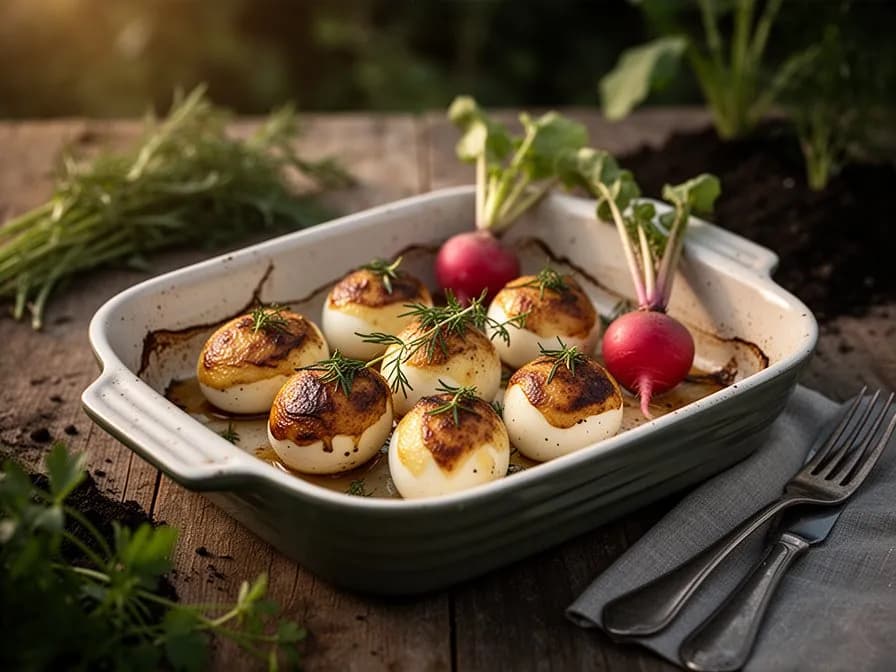
8 ingredientesRoasted Easter Egg Radishes with Herbs
25 minRoasting completely transforms radishes from sharp and peppery to mellow, sweet, and almost turnip-like. The high heat caramelizes the natural sugars while the colorful skins soften but retain their hue. A revelation for anyone who thinks they dislike radishes.
8 ingredientesUsos culinarios
Los rábanos Easter Egg son ideales para consumo crudo en ensaladas, donde su variedad de colores crea presentaciones espectaculares. Se utilizan como crudités con salsas, en tacos y bowls decorativos. También pueden asarse ligeramente con aceite de oliva y hierbas, lo que suaviza su picor y resalta su dulzor natural.
Qué contiene
Beneficios para la salud
- Radishes are exceptionally low in calories (just 16 per 100g) while providing satisfying crunch and flavor, making them an ideal snack for weight management — virtually unlimited consumption without caloric impact.
- Rich in glucosinolates and isothiocyanates — the sulfur compounds that create the peppery taste — which have demonstrated anticancer properties in laboratory studies, particularly against stomach, colon, and breast cancer cell lines.
- The anthocyanin pigments in purple and red Easter Egg varieties are potent antioxidants linked to reduced cardiovascular inflammation, improved blood vessel function, and lower risk of heart disease in epidemiological studies.
- Good source of vitamin C at 16% of the daily value per 100g, supporting immune defense, collagen synthesis for healthy skin and joints, and enhanced iron absorption from plant-based foods when eaten together.
- Contains compounds that stimulate bile production and support liver function — traditional medicine systems from Ayurveda to European herbalism have used radish juice as a digestive tonic and liver cleanser for centuries.
- Provides dietary fiber that feeds beneficial gut bacteria and supports regular digestion, while the high water content (95%) contributes to hydration and helps maintain healthy kidney function.
De dónde viene Rábano Huevo de Pascua
The radish (Raphanus sativus) is one of humanity's oldest cultivated vegetables, with origins tracing back to Southeast Asia and the eastern Mediterranean region. Wild forms of the species still grow across western Asia from Turkey to central China. Radishes were domesticated independently in several regions, and by 2500 BCE they were a well-established crop in ancient Egypt — historical records suggest radish, onion, and garlic were staple foods for the workers who built the Great Pyramids. From Egypt, radish cultivation spread throughout the ancient Mediterranean world. The Greeks and Romans prized radishes and developed multiple varieties, with the Roman naturalist Pliny the Elder documenting round, long, and wild forms in his first-century writings.
The Easter Egg radish mix is a modern seed industry creation that captures the diversity of spring radish breeding in a single, playful packet. It typically blends four to six open-pollinated varieties — Cherry Belle (red), Plum Purple, White Globe, Pink Beauty, and similar cultivars — each selected for similar maturity timing (25-30 days) so the entire mix can be harvested at once. The concept emerged from American seed companies in the latter half of the 20th century, designed to add visual excitement to salads and gardens while introducing growers to the full spectrum of radish colors.
Radishes have played a practical role in agriculture well beyond their value as food. Farmers have long used fast-growing radishes as cover crops to break up compacted soil with their taproots, suppress weeds, and recycle nutrients. The daikon and oilseed radish varieties can penetrate hardpan clay to depths of 60 cm or more, earning them the nickname 'tillage radishes.' In home gardens, radishes serve as trap crops for flea beetles and as row markers for slow-germinating seeds. Today, radishes are grown on every inhabited continent, with China, Japan, South Korea, and India leading world production. The Easter Egg mix remains one of the most popular home garden radish offerings, beloved for its speed, simplicity, and the childlike delight of discovering which color each root will be.
Rábano Huevo de Pascua: ¿sabías que?
Datos fascinantes sobre Rábano Huevo de Pascua
Easter Egg radishes are not a single variety but a carefully blended seed mix of multiple radish cultivars selected to produce a rainbow of colors — red, purple, violet, pink, and white — from the same packet. Each seed is genetically predetermined to produce one color, making every harvest a colorful surprise.
Rábano Huevo de Pascua: preguntas frecuentes
¿Cuándo debo plantar Rábano Huevo de Pascua?
¿Cuáles son buenas plantas acompañantes para Rábano Huevo de Pascua?
¿En qué zonas de rusticidad puede crecer Rábano Huevo de Pascua?
¿Cuánto sol necesita Rábano Huevo de Pascua?
¿A qué distancia debo espaciar Rábano Huevo de Pascua?
¿Qué plagas y enfermedades afectan a Rábano Huevo de Pascua?
¿Cómo almaceno Rábano Huevo de Pascua después de la cosecha?
¿Cuáles son las mejores variedades de Rábano Huevo de Pascua para cultivar?
¿Qué suelo necesita Rábano Huevo de Pascua?
Why do my Easter Egg radishes produce all leaves and no roots?
Can I grow Easter Egg radishes in containers?
Why are my radishes woody, pithy, or hollow inside?
Will all the colors in the mix taste the same?
How do I store harvested Easter Egg radishes to keep them crisp?
Are the radish greens (tops) edible?
Acabas de leer la teoría. Ahora cultívala en piloto automático.
Todo lo que hace que Rábano Huevo de Pascua sea delicado — el momento, el espaciado, las asociaciones, la ventana de cosecha — es justo lo que PlotMyGarden resuelve por ti, para cada planta de tu huerto.
Un plan que conoce tu clima
Indica tu ubicación una vez. Recibe fechas de siembra, abonado y cosecha basadas en tu última helada real y el pronóstico en vivo — sin adivinar con un sobre genérico.
De la sección “Cuándo plantar”Planificador de bancales de arrastrar y soltar
Diseña bancales sobre una cuadrícula. Cada planta encaja con su espaciado correcto y ves toda la temporada antes de gastar un céntimo en semillas.
De la sección “Cultivo”Conflictos de asociación, detectados a tiempo
Más de 200 buenas y malas combinaciones comprobadas en vivo mientras plantas — para que un error que arruine la temporada nunca llegue a la tierra.
De la sección “Asociaciones”Recordatorios que sí vas a seguir
“Riega las judías.” “Recoge hoy antes de que se pase.” Oportunos, concretos y ligados a las plantas que de verdad cultivas.
De la sección “Cosecha”Escalonado, programado
¿Quieres cosechar seis semanas en vez de seis días? Reparte tus siembras automáticamente y te avisa cuando toca el siguiente lote.
De la sección “Cuándo plantar”Un registro que se vuelve más listo
Cada cosecha que registras le enseña tu huerto. El plan del año que viene parte de lo que de verdad funcionó en tu suelo, no en un manual.
De la sección “Resumen”Planta estos junto a Rábano Huevo de Pascua
Más Hortalizas de raíz
Cultiva tu mejor Rábano Huevo de Pascua — y todo lo que la rodea.
Empieza un plan gratis hoy. Diseña tus bancales, coloca tu Rábano Huevo de Pascua y deja que PlotMyGarden gestione el momento, el espaciado, las asociaciones y los recordatorios de la semilla a la cesta.