Rábano Cherry Belle
El rábano Cherry Belle (Raphanus sativus) es una de las variedades más populares y fiables del mundo, galardonada con el premio All-America Selections en 1949.





En esta páginaResumen
Conoce Rábano Cherry Belle
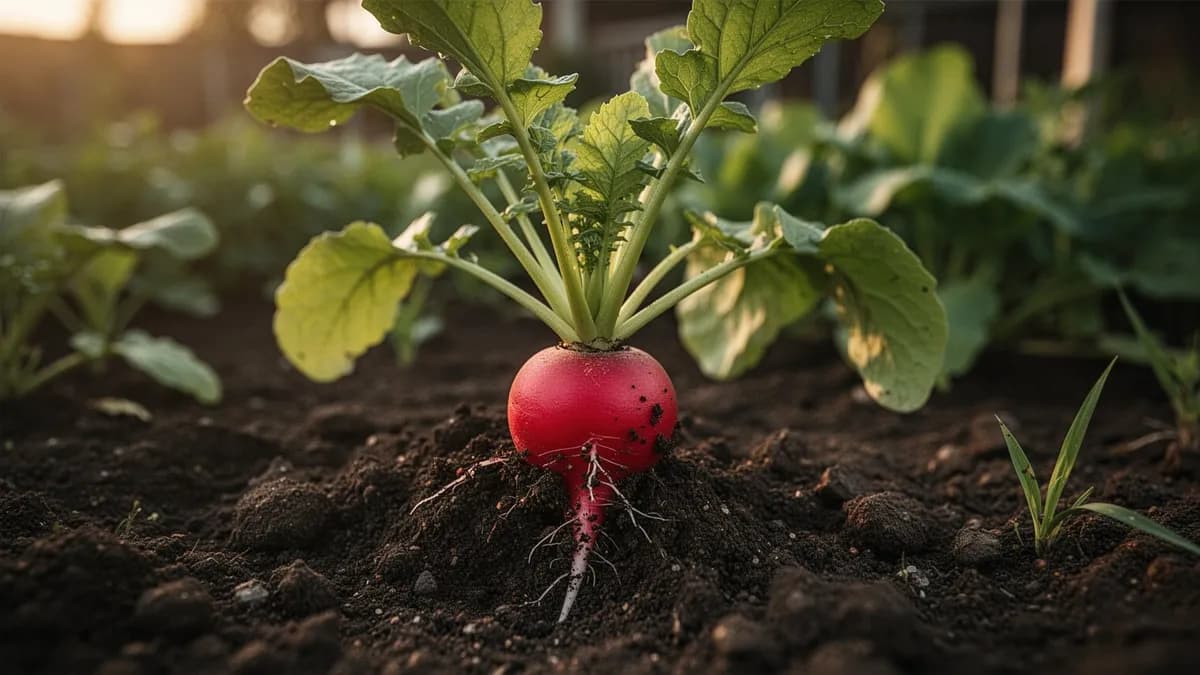
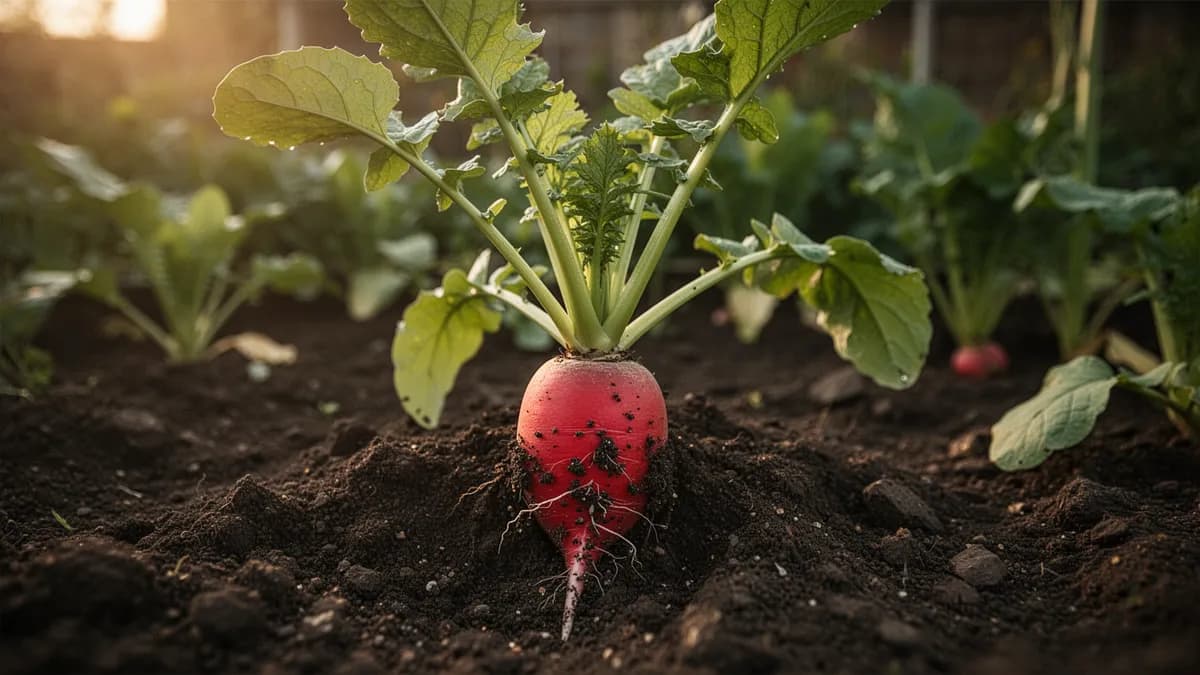
El rábano Cherry Belle (Raphanus sativus) es una de las variedades más populares y fiables del mundo, galardonada con el premio All-America Selections en 1949. Produce raíces redondas de color rojo cereza brillante con pulpa blanca, crujiente y de sabor suave a ligeramente picante. Es excepcionalmente rápido, madurando en solo 22-28 días, lo que lo convierte en un cultivo ideal para principiantes y para siembras sucesivas.
Cuándo plantar Rábano Cherry Belle
Siembre siempre directamente en el exterior, ya que los rábanos no toleran el trasplante. Deposite las semillas a 1 cm de profundidad y 2,5 cm de distancia en hileras separadas 15-20 cm. Las semillas germinan en 3-7 días dependiendo de la temperatura del suelo. Para una cosecha continua, realice siembras sucesivas cada 10-14 días desde principios de primavera hasta finales de otoño, evitando los meses más calurosos del verano.
Tu año de Rábano Cherry Belle
Ajustado a Zona 7 · temporada típica · la helada se va hacia el 2 abr y vuelve hacia el 1 nov
Planta Rábano Cherry Belle Mar – May, Ago – Sep y cosecha Abr – Jun, Sep – Oct. Consulta los métodos de plantación y elige tu clima para adaptar los periodos.
Cómo cultivar Rábano Cherry Belle
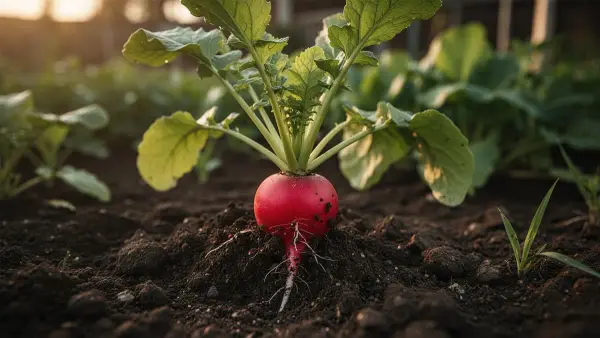
El rábano Cherry Belle es uno de los cultivos más fáciles y rápidos del huerto, ideal para iniciarse en la horticultura. Siembre directamente en el exterior tan pronto como el suelo pueda trabajarse en primavera, ya que las semillas germinan con temperaturas del suelo tan bajas como 4°C, aunque la temperatura óptima es de 10-18°C. Siembre a 1 cm de profundidad en hileras separadas 15-20 cm, y aclare las plántulas a 2,5-4 cm de distancia.
Para una cosecha continua durante toda la primavera y el otoño, realice siembras sucesivas cada 10-14 días. Evite sembrar durante los meses más calurosos del verano, ya que las temperaturas superiores a 25°C causan que los rábanos se vuelvan leñosos, picantes y suban a flor prematuramente. Riegue de forma regular y uniforme para un crecimiento rápido y consistente.
Los rábanos tienen raíces poco profundas y necesitan riego frecuente pero ligero. El suelo debe mantenerse uniformemente húmedo pero nunca encharcado. No es necesario fertilizar si el suelo ha sido enriquecido previamente con compost, ya que un exceso de nitrógeno favorece el crecimiento foliar a expensas de la raíz. Los rábanos maduran tan rápido que raramente tienen problemas serios de plagas o enfermedades.
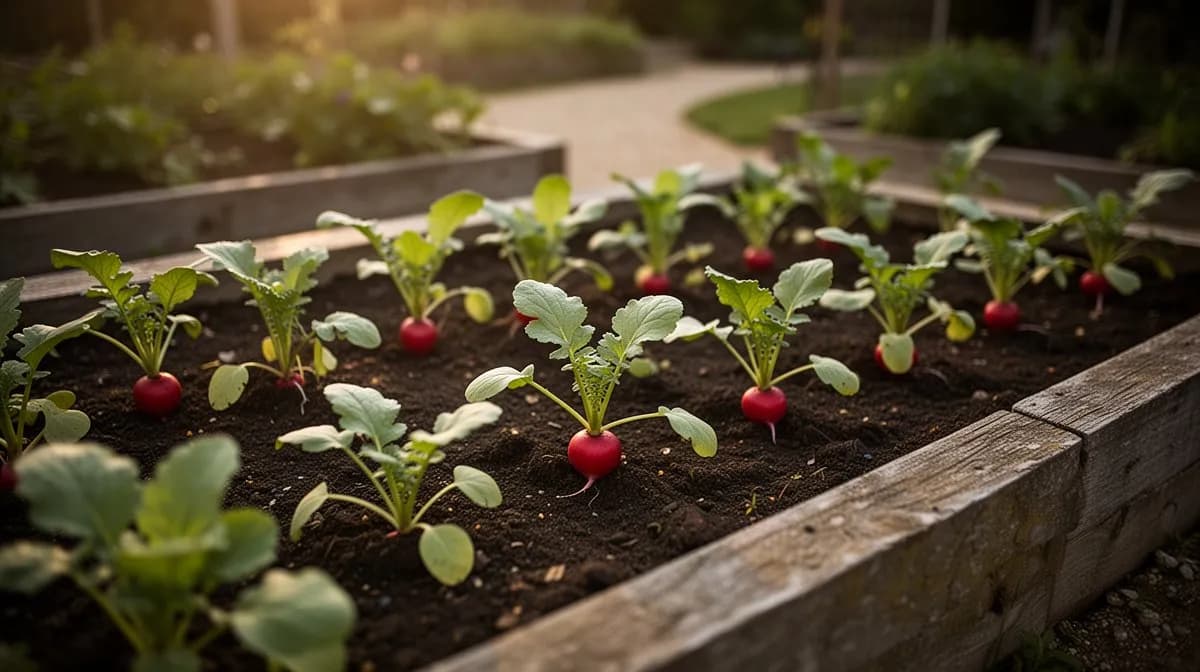
1152 plantas caben en un bancal de 120 × 240 cm
Cada Rábano Cherry Belle pide 5 cm de margen. El planificador guarda ese marco por ti — cada planta, cada bancal.
Los mejores vecinos de Rábano Cherry Belle
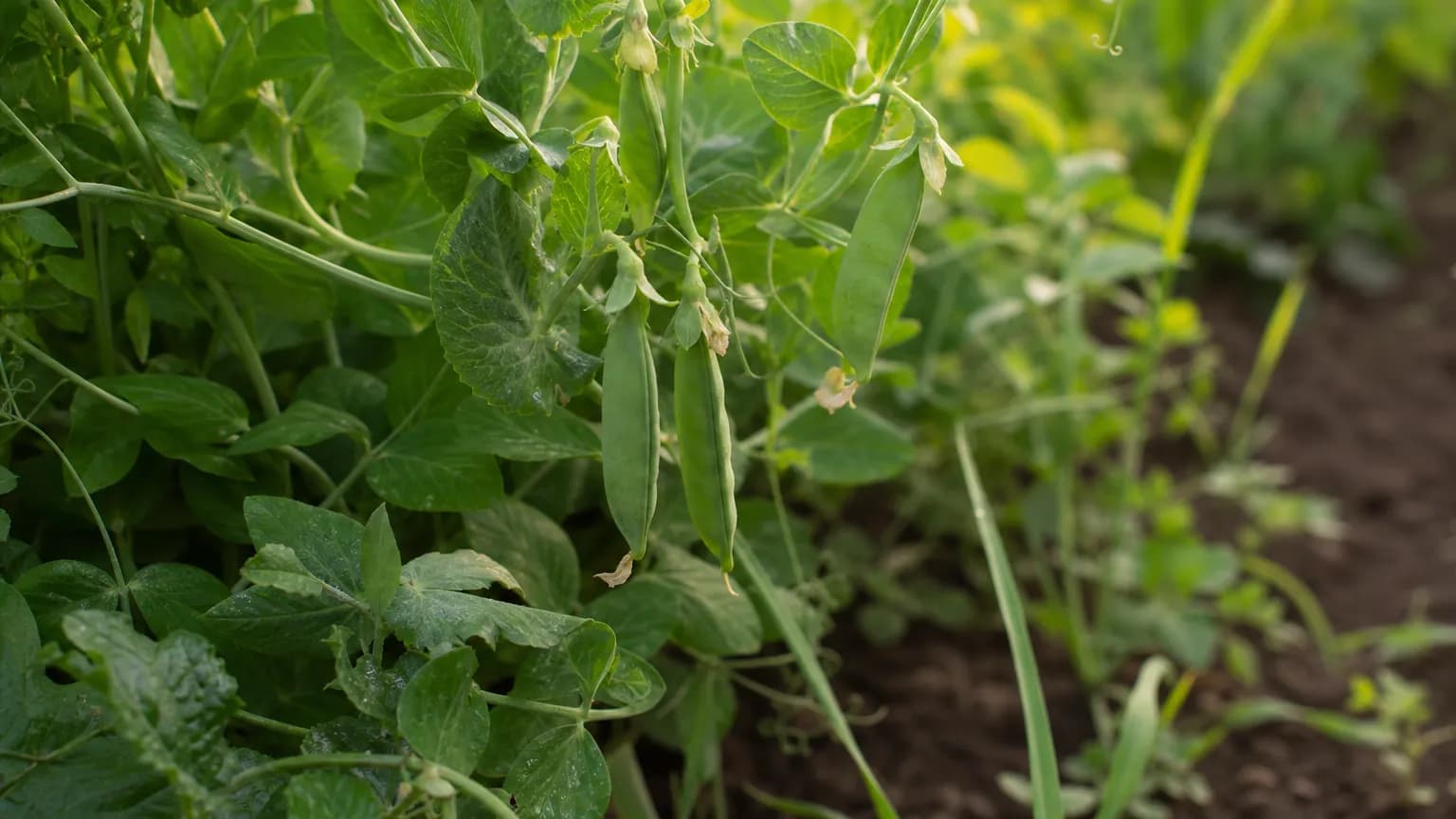
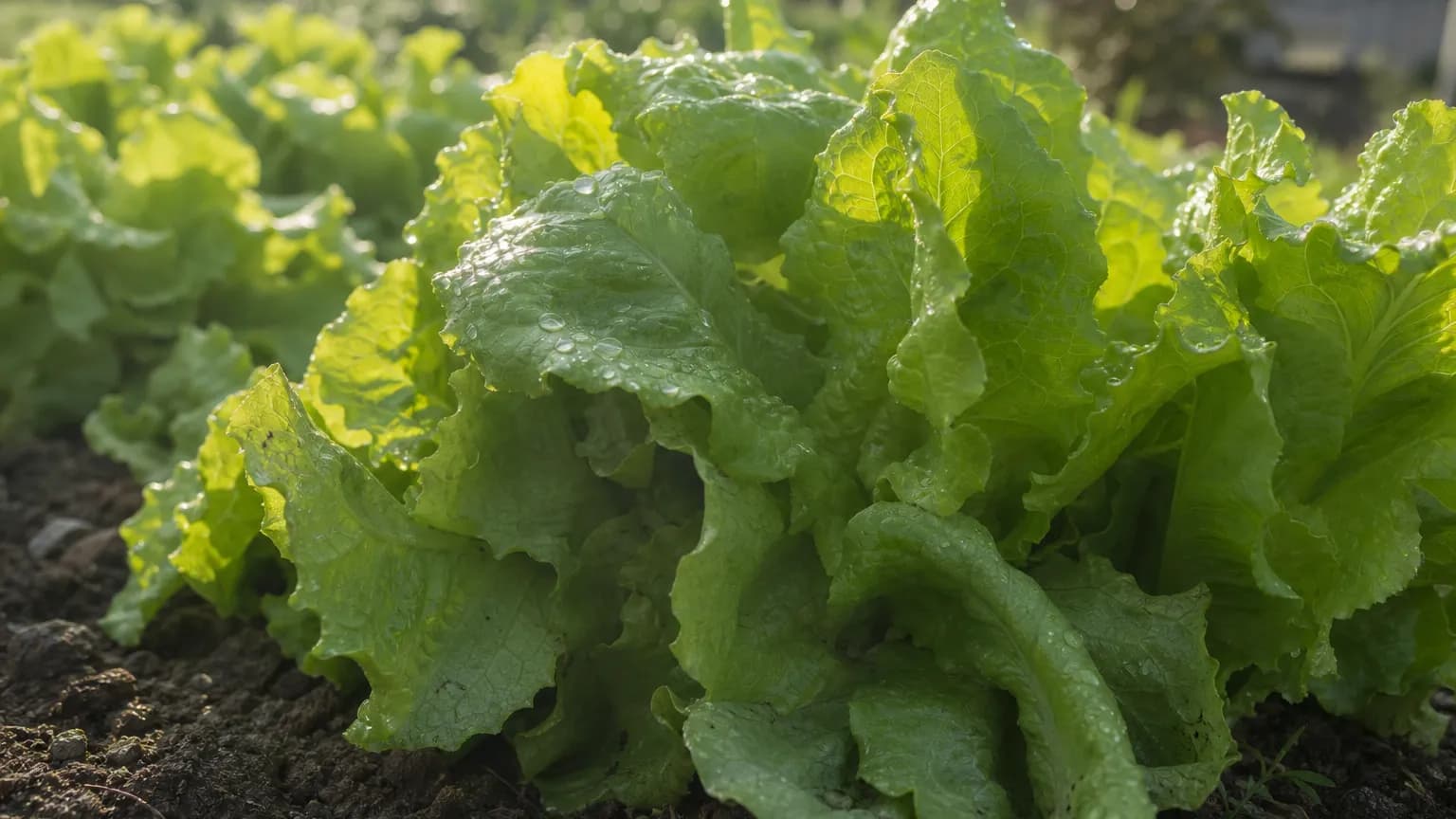
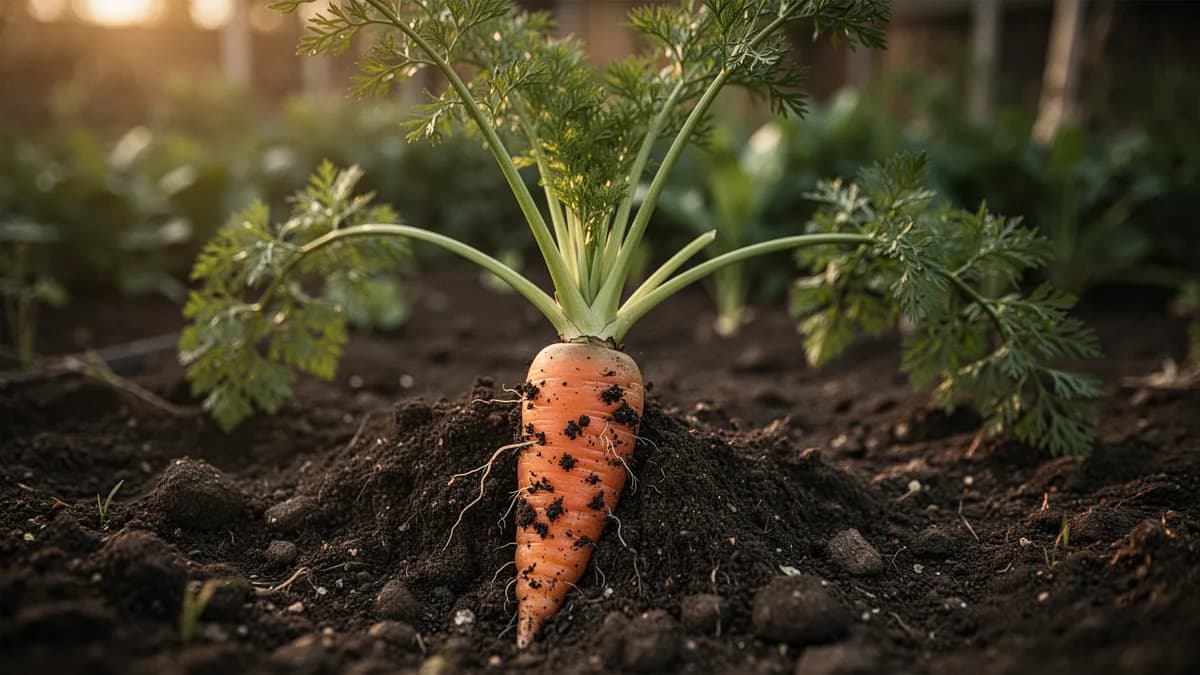
Los rábanos son excelentes compañeros de cultivo para lechugas, zanahorias, espinacas y guisantes, ya que su rápido crecimiento marca las hileras de cultivos de germinación lenta y aprovecha el espacio mientras otros cultivos se establecen. Funcionan como cultivo trampa para las pulguillas, protegiendo otras brassicáceas más valiosas. Evite plantar junto a hisopo y otras brassicáceas de ciclo largo.
Guisantes va a su lado.
Saber de huerto de siempre, cotejado con la tabla real de Rábano Cherry Belle — prueba cualquier planta que cultives.
Prueba Rábano Cherry Belle en un bancal, aquí mismo
Un bancal real del planificador con Rábano Cherry Belle ya plantado. Toca una planta compañera para colocarla y mira cómo responde la comprobación de vecinos: verde para buenos vecinos, rojo si hay conflicto.


Guías de cultivo relacionadas
Abónalo bien
El rábano Cherry Belle requiere un suelo suelto, bien drenado y libre de piedras para un desarrollo uniforme de la raíz, con un pH entre 6,0 y 7,0. Evite suelos recién enmendados con estiércol fresco o excesivamente ricos en nitrógeno, que favorecen el crecimiento foliar en detrimento de la raíz. Una ligera aplicación de compost maduro antes de la siembra es suficiente. El suelo compactado o pedregoso causa raíces deformes y bifurcadas.
Temperatura ideal
Compatibilidad de zonas de rusticidad
De la semilla a la cosecha, etapa por etapa
Germinación
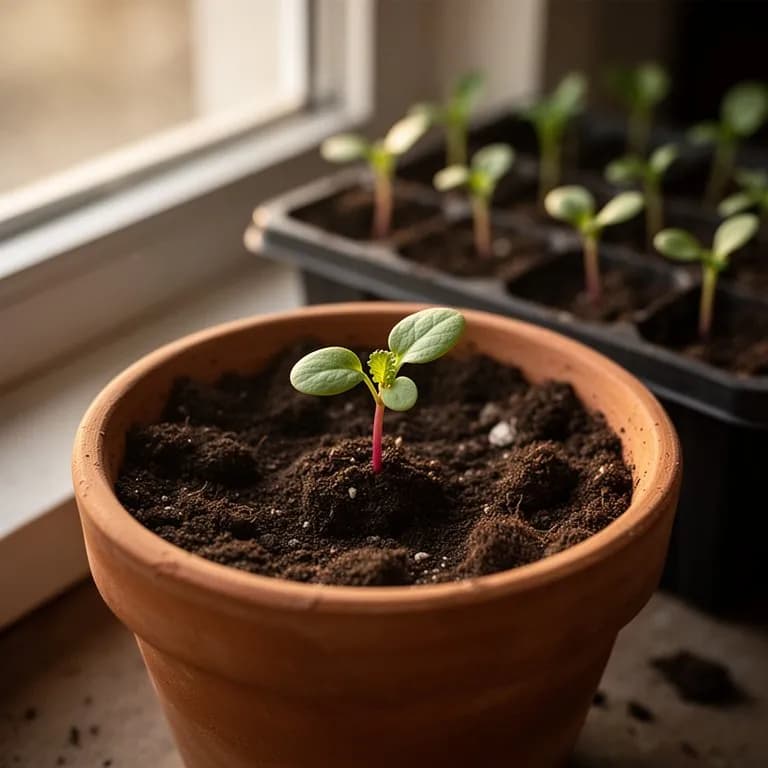
Las semillas de rábano Cherry Belle están entre las hortalizas que germinan más rápido del huerto. En 3–5 días después de la siembra, pequeños cotiledones verdes asoman a través de la superficie del suelo. Las semillas germinan en suelos tan frescos como 4 °C (40 °F), pero emergen más rápido a 18–24 °C (65–75 °F). Las semillas diminutas deben sembrarse solo a 1 cm de profundidad en un suelo suelto y bien trabajado.
Etapa de cotiledones
Las hojas de cotiledón, con forma de corazón, se expanden y comienzan a fotosintetizar. En esta etapa, la pequeña raíz principal ya empieza a engrosarse. Las plántulas crecen muy rápido y necesitarán aclararse en pocos días. Las plántulas demasiado juntas producen raíces alargadas y deformes en lugar de la forma redonda característica.
Desarrollo de hojas verdaderas
Aparecen las primeras hojas verdaderas: hojas lobuladas y de textura áspera, claramente distintas de los cotiledones lisos. La raíz empieza a engrosarse de forma visible bajo la superficie del suelo. La humedad adecuada y las temperaturas frescas durante esta etapa son fundamentales para producir raíces lisas y sin grietas.
Engrosamiento de la raíz
La raíz se expande rápidamente hasta adoptar su característica forma redonda de globo. La piel de color rojo cereza brillante adquiere su tono intenso a medida que la raíz queda expuesta a la luz en la superficie del suelo. La pulpa interior permanece blanca como la nieve, crujiente y jugosa. Las raíces pueden duplicar su tamaño cada 2–3 días durante esta etapa.
Ventana de cosecha
Los rábanos alcanzan su tamaño ideal de cosecha con 2–3 cm de diámetro. La piel es lisa, roja brillante y firme. La pulpa es crujiente, jugosa y ligeramente picante. La ventana de cosecha es estrecha: solo unos 5–7 días antes de que las raíces se vuelvan harinosas, leñosas o se agrieten.
Sobremadurez y espigado
Si se dejan en la tierra más allá de su punto óptimo, los rábanos se vuelven cada vez más harinosos, leñosos y picantes. Un tallo floral comienza a surgir desde el centro de la roseta de hojas: eso es el espigado, provocado por días largos, temperaturas cálidas o estrés por raíces confinadas. Una vez que comienza el espigado, la raíz ya no merece la pena comerla.
Mantén el semillero constantemente húmedo, pero nunca encharcado durante la germinación. Un rociado ligero una o dos veces al día evita la formación de costra. No cubras las semillas demasiado profundamente: los rábanos necesitan una siembra superficial para emerger con rapidez.
Cuidar Rábano Cherry Belle mes a mes
Qué hacer cada mes para tu Rábano Cherry Belle
Octubre
Mes actualContinue harvesting fall plantings. In zones 7-12, make final succession sowings that will mature before hard frost. Protect late plantings with row cover or cold frames to extend the season. Pull and compost any bolted or overgrown plants.
Ten claro qué hacer en tu huerto, cada mes
Un correo al empezar cada mes: qué sembrar, plantar y hacer ahora mismo — para tu Rábano Cherry Belle y todo lo que crece alrededor. Más un breve curso inicial para esquivar los errores clásicos.
- Qué hacer ahora mismo
- Ajustado a tu temporada
- Curso inicial incluido
Cosechar Rábano Cherry Belle
Coseche los rábanos Cherry Belle cuando alcancen 2-3 cm de diámetro, generalmente entre 22 y 28 días después de la siembra. Tire firmemente de las hojas para extraer la raíz del suelo o utilice una horquilla de mano si el suelo es compacto. No deje los rábanos demasiado tiempo en el suelo después de la madurez, ya que se vuelven leñosos, huecos y excesivamente picantes. Coseche por la mañana temprano cuando las raíces están más crujientes y jugosas.
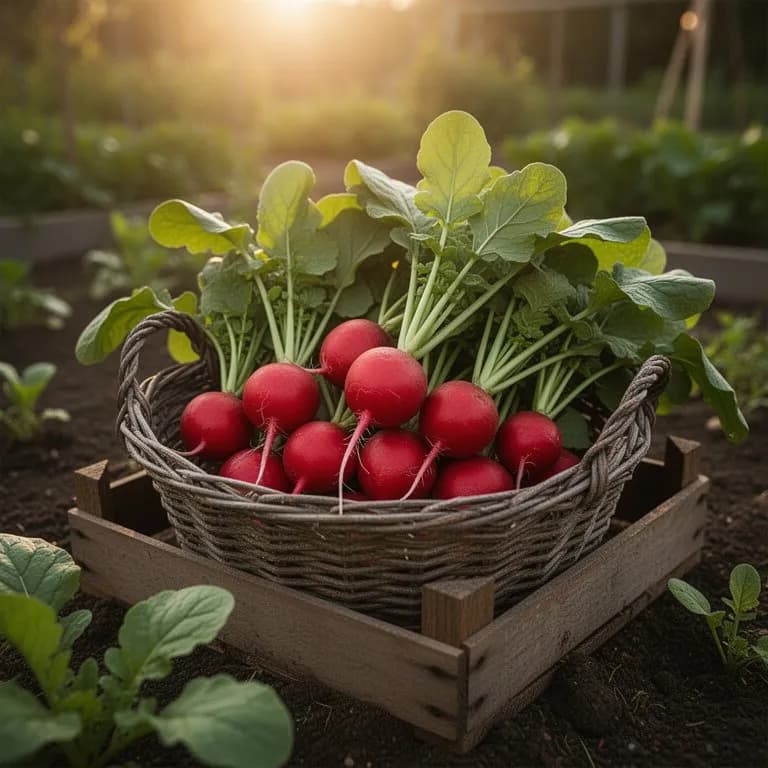
se supone que plantas al comenzar el periodo — indica tu fecha real
Cosecha cuando las raíces midan unos 2,5 cm de diámetro, normalmente entre 22 y 25 días después de la siembra.
Almacenamiento y conservación
Retire las hojas inmediatamente después de la cosecha, dejando 1 cm de tallo, ya que las hojas drenan la humedad de la raíz. Almacene los rábanos en el refrigerador en una bolsa perforada o envueltos en papel húmedo durante 1-2 semanas. Para conservación más prolongada, encúrtalos en vinagre con sal, azúcar y especias para obtener pickles crujientes y coloridos. Las hojas jóvenes también son comestibles y pueden añadirse a ensaladas o salteados.
Qué falla — y cómo solucionarlo
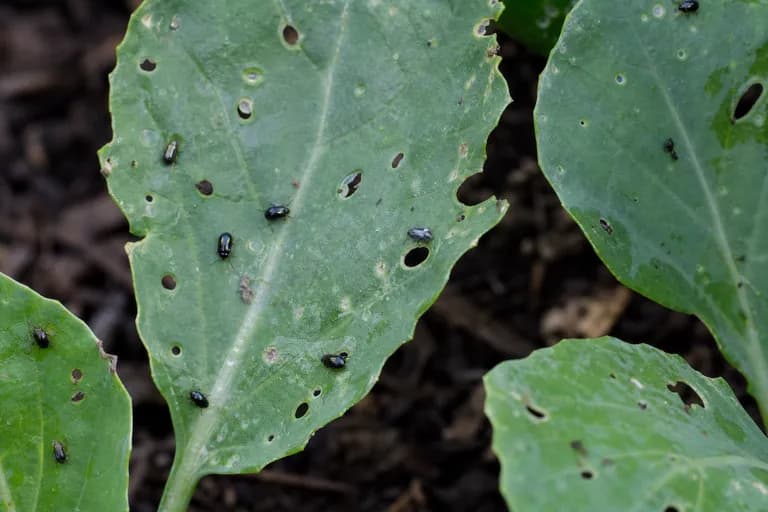
Pulguilla (escarabajo saltador)
PlagaPequeños agujeros redondos en las hojas, dando un aspecto de perdigonada. Los adultos son diminutos escarabajos negros brillantes que saltan cuando se les molesta. El daño es principalmente estético en plantas adultas pero puede matar plántulas jóvenes.
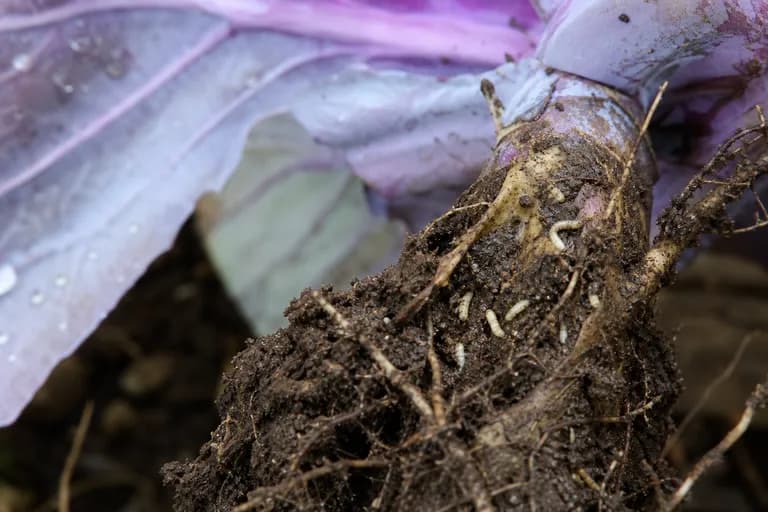
Gusano de la raíz de la col
PlagaLarvas blancas que excavan túneles en las raíces del rábano, dejando galerías marrones y provocando pudrición secundaria. Las plantas afectadas muestran marchitez y crecimiento deficiente.
Solución de problemas comunes
El problema más frecuente es el subido a flor (espigado) causado por temperaturas altas, días largos o estrés hídrico, que hace que la planta produzca un tallo floral en lugar de engrosar la raíz. Las raíces se vuelven leñosas, huecas y excesivamente picantes si se dejan demasiado tiempo en el suelo después de alcanzar la madurez. El riego irregular causa agrietamiento de las raíces, mientras que el exceso de nitrógeno produce abundantes hojas pero raíces pequeñas.
Consejos de cultivo
- Succession sow every 10-14 days for a continuous harvest rather than planting all at once. Radishes have a narrow harvest window of just 5-7 days, so staggered planting ensures a steady supply without waste.
- Soil preparation is everything for perfect round radishes. Remove all rocks, clods, and debris from the top 15 cm — any obstruction causes forked, misshapen roots. Loose sandy loam produces the smoothest radishes.
- Avoid high-nitrogen fertilizers at all costs. Excess nitrogen produces lush, beautiful leaf tops with tiny, underdeveloped roots underneath. If your soil needs amending, use balanced compost worked in before planting.
- Thin seedlings without mercy. Crowded radishes compete for space underground and produce long, skinny, woody roots instead of the plump round globes you want. Thin to 3-5 cm apart when seedlings are 3 cm tall — and eat the thinnings.
- Water consistently and evenly — this is the single most important factor after proper thinning. Alternating dry and wet conditions cause roots to crack and split. Aim for consistently moist (not soggy) soil throughout the short growing cycle.
- Interplant radishes between rows of slower-growing crops like carrots, parsnips, or brassicas. The radishes germinate fast, mark the rows for you, break up crusted soil for slower germinators, and are harvested long before the main crop needs the space.
- Use floating row cover from the moment of sowing if flea beetles are a problem in your garden. These tiny jumping beetles chew small holes in radish leaves and can devastate a planting in days. Row cover blocks them completely without chemicals.
- For the sweetest, mildest flavor, harvest radishes in the morning when they are fully hydrated and cool. Radishes pulled in afternoon heat taste noticeably more pungent and may be slightly less crisp.
Cultiva tu mejor Rábano Cherry Belle — y todo lo que la rodea.
Empieza un plan gratis hoy. Diseña tus bancales, coloca tu Rábano Cherry Belle y deja que PlotMyGarden gestione el momento, el espaciado, las asociaciones y los recordatorios de la semilla a la cesta.
Elige tu Rábano Cherry Belle
Cherry Belle
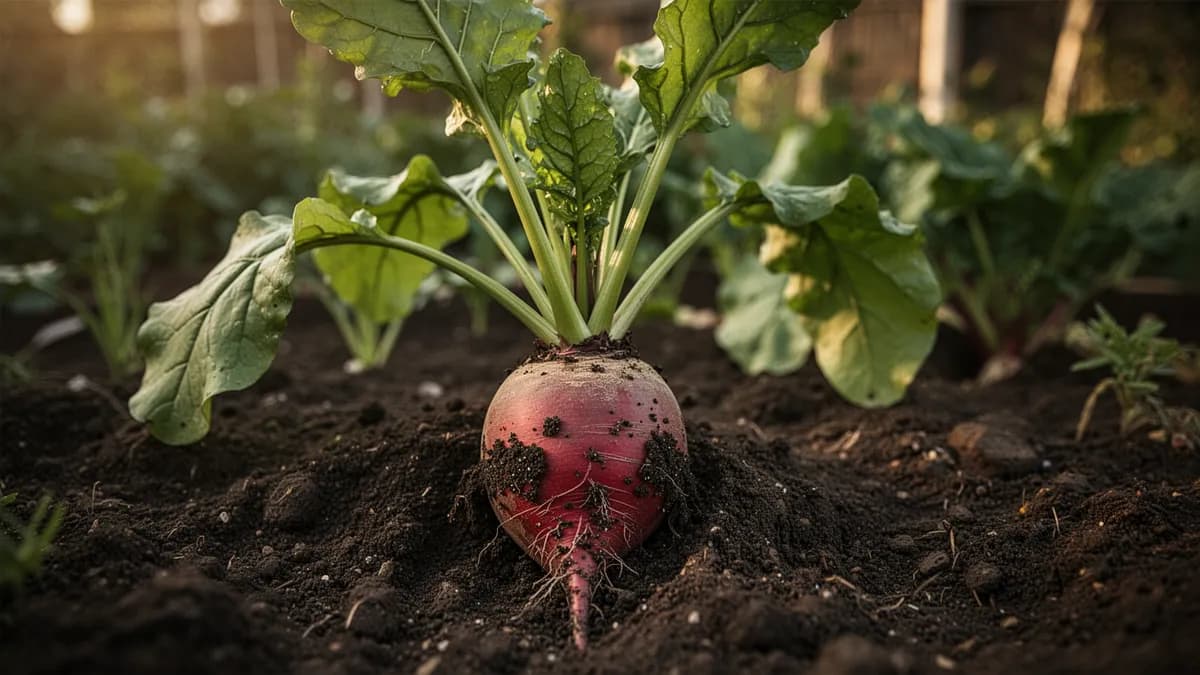
La variedad clásica galardonada con el premio AAS. Raíces perfectamente redondas de 2-3 cm, color rojo cereza brillante y pulpa blanca crujiente. Madura en 22-25 días con notable uniformidad.
Early Scarlet Globe
Variedad heritage muy similar con raíces redondas a ligeramente ovaladas de color escarlata. Pulpa blanca y crujiente con sabor suave. Madura en 23-28 días, excelente para siembras tempranas.
Crimson Giant
Versión más grande que Cherry Belle, alcanzando 5-6 cm de diámetro sin volverse hueco ni esponjoso. Sabor suave y dulce incluso cuando es grande. Madura en 28-30 días.
Rover
Híbrido moderno con excepcional uniformidad y color rojo intenso. Raíces perfectamente redondas de 2-3 cm, resistentes al agrietamiento. Madura en 21-25 días, uno de los más rápidos disponibles.
A single packet of Cherry Belle radish seeds costs $2-4 and contains 200-500 seeds — enough to produce several hundred radishes worth $15-30 at grocery store prices of $2-4 per bunch. With succession planting, one seed packet can supply an entire season of radishes. The savings are modest per harvest but accumulate significantly over a full growing season, especially since store-bought radishes often arrive wilted and lack the crisp snap of garden-fresh ones. Radishes also serve as excellent interplanting companions, making productive use of garden space between slower crops at zero additional cost.
Recetas rápidas
French Radish Butter Board
10 minThe classic French bistro snack — whole fresh radishes served with softened salted butter and flaky sea salt. The cool crunch of the radish against the rich, creamy butter is a perfect pairing that has been a Parisian café staple for centuries. No cooking required.
5 ingredientesQuick-Pickled Radishes
15 min + 1 hour restingThinly sliced radishes transformed into tangy, magenta-pink pickles in just one hour. The pickling mellows the peppery heat and turns the brine a stunning pink. Perfect as a taco topping, sandwich condiment, or snack straight from the jar.
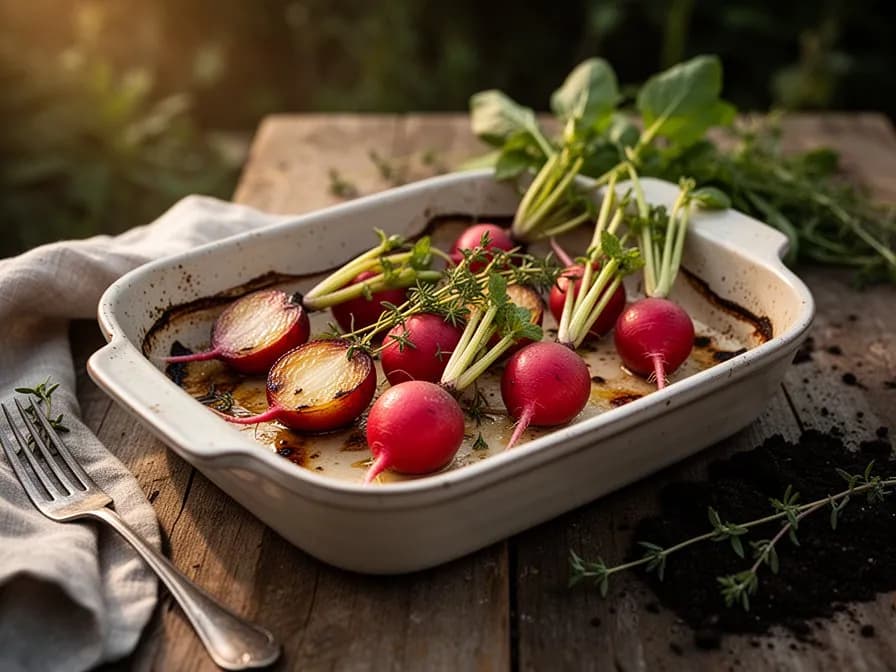
8 ingredientesRoasted Radishes with Herb Butter
25 minRoasting completely transforms radishes — the peppery bite mellows into a sweet, almost turnip-like flavor and the texture becomes tender and buttery. Many people who dislike raw radishes love them roasted. A revelation for anyone with a radish surplus.
8 ingredientesUsos culinarios
El rábano Cherry Belle es excepcional crudo en ensaladas, aportando un crujido refrescante y un toque picante suave. Es perfecto cortado en rodajas finas sobre pan con mantequilla y sal marina al estilo francés, o como componente de platos de crudités y aperitivos. También se puede saltear brevemente, asar al horno con aceite de oliva y hierbas, o encurtir en vinagre para acompañamientos asiáticos. Las hojas jóvenes son comestibles y nutritivas en ensaladas o salteados.
Qué contiene
Beneficios para la salud
- Rich in vitamin C, providing 16% of the daily value per 100g — this antioxidant supports immune function, collagen production for healthy skin, and enhances iron absorption from plant-based foods.
- Contains glucosinolates (isothiocyanates), the sulfur compounds responsible for the peppery flavor, which have been extensively studied for their potential to support the body's natural detoxification enzymes and may have anti-cancer properties.
- The anthocyanin pigments in Cherry Belle's red skin are potent antioxidants associated with reduced inflammation, improved cardiovascular health, and protection against oxidative cellular damage.
- Extremely low in calories (16 per 100g) while providing satisfying crunch and flavor, making radishes an ideal snack for weight management and healthy eating patterns.
- Provides natural digestive support — radishes have been used in traditional medicine for centuries to stimulate bile production and support liver function, and modern research confirms their choleretic (bile-promoting) effects.
- Good source of potassium (233mg per 100g) which helps regulate blood pressure, supports proper muscle and nerve function, and counters the effects of excess dietary sodium.
De dónde viene Rábano Cherry Belle
The radish (Raphanus sativus) is believed to have originated in Southeast Asia or the eastern Mediterranean region, with wild ancestor species still found in both areas. Radishes were among the earliest cultivated root vegetables, with evidence of domestication stretching back over 4,000 years. Ancient Egyptian records from around 2,000 BCE describe radishes as a common food crop, and they were well established in ancient China by 700 BCE.
The Greeks and Romans valued radishes highly — Pliny the Elder documented multiple varieties in his Natural History, and the Greek physician Dioscorides prescribed radish preparations for digestive ailments. Roman farmers developed techniques for growing radishes year-round, and the crop spread throughout Europe with the expansion of the Roman Empire. During the Middle Ages, European monasteries maintained radish varieties as both food and medicine, selecting for different shapes, sizes, and pungency levels.
The Cherry Belle variety was developed in the mid-20th century through careful selection for its perfectly round shape, vivid cherry-red color, crisp white flesh, and remarkably fast maturity of just 22-24 days. It won the All-America Selections award in 1949, instantly establishing it as the benchmark spring radish. Today, Cherry Belle remains the most widely planted radish variety worldwide — a staple in home gardens, school gardens, and market farms alike. Its unmatched reliability, attractive appearance, and mild flavor have kept it at the top of seed catalogs for over seven decades, a record few vegetable varieties can match.
Rábano Cherry Belle: ¿sabías que?
Datos fascinantes sobre Rábano Cherry Belle
Cherry Belle won the prestigious All-America Selections award in 1949, making it one of the oldest AAS-winning vegetable varieties still widely grown today — a testament to its exceptional reliability, flavor, and performance that has endured for over 75 years.
Rábano Cherry Belle: preguntas frecuentes
¿Cuándo debo plantar Rábano Cherry Belle?
¿Cuáles son buenas plantas acompañantes para Rábano Cherry Belle?
¿En qué zonas de rusticidad puede crecer Rábano Cherry Belle?
¿Cuánto sol necesita Rábano Cherry Belle?
¿A qué distancia debo espaciar Rábano Cherry Belle?
¿Qué plagas y enfermedades afectan a Rábano Cherry Belle?
¿Cómo almaceno Rábano Cherry Belle después de la cosecha?
¿Cuáles son las mejores variedades de Rábano Cherry Belle para cultivar?
¿Qué suelo necesita Rábano Cherry Belle?
Why are my radishes all tops and no bottoms?
Why are my radishes pithy and hollow inside?
Can I grow Cherry Belle radishes in containers?
Why do my radishes taste extremely spicy and bitter?
How many times can I plant radishes in a season?
Are radish greens edible and nutritious?
Acabas de leer la teoría. Ahora cultívala en piloto automático.
Todo lo que hace que Rábano Cherry Belle sea delicado — el momento, el espaciado, las asociaciones, la ventana de cosecha — es justo lo que PlotMyGarden resuelve por ti, para cada planta de tu huerto.
Un plan que conoce tu clima
Indica tu ubicación una vez. Recibe fechas de siembra, abonado y cosecha basadas en tu última helada real y el pronóstico en vivo — sin adivinar con un sobre genérico.
De la sección “Cuándo plantar”Planificador de bancales de arrastrar y soltar
Diseña bancales sobre una cuadrícula. Cada planta encaja con su espaciado correcto y ves toda la temporada antes de gastar un céntimo en semillas.
De la sección “Cultivo”Conflictos de asociación, detectados a tiempo
Más de 200 buenas y malas combinaciones comprobadas en vivo mientras plantas — para que un error que arruine la temporada nunca llegue a la tierra.
De la sección “Asociaciones”Recordatorios que sí vas a seguir
“Riega las judías.” “Recoge hoy antes de que se pase.” Oportunos, concretos y ligados a las plantas que de verdad cultivas.
De la sección “Cosecha”Escalonado, programado
¿Quieres cosechar seis semanas en vez de seis días? Reparte tus siembras automáticamente y te avisa cuando toca el siguiente lote.
De la sección “Cuándo plantar”Un registro que se vuelve más listo
Cada cosecha que registras le enseña tu huerto. El plan del año que viene parte de lo que de verdad funcionó en tu suelo, no en un manual.
De la sección “Resumen”Planta estos junto a Rábano Cherry Belle
Más Hortalizas de raíz
Cultiva tu mejor Rábano Cherry Belle — y todo lo que la rodea.
Empieza un plan gratis hoy. Diseña tus bancales, coloca tu Rábano Cherry Belle y deja que PlotMyGarden gestione el momento, el espaciado, las asociaciones y los recordatorios de la semilla a la cesta.