Chile Ghost (Bhut Jolokia)
El chile ghost o bhut jolokia (Capsicum chinense) es uno de los pimientos más picantes del mundo, originario del noreste de India, con más de 1.000.000 de unidades Scoville.





En esta páginaResumen
Conoce Chile Ghost (Bhut Jolokia)
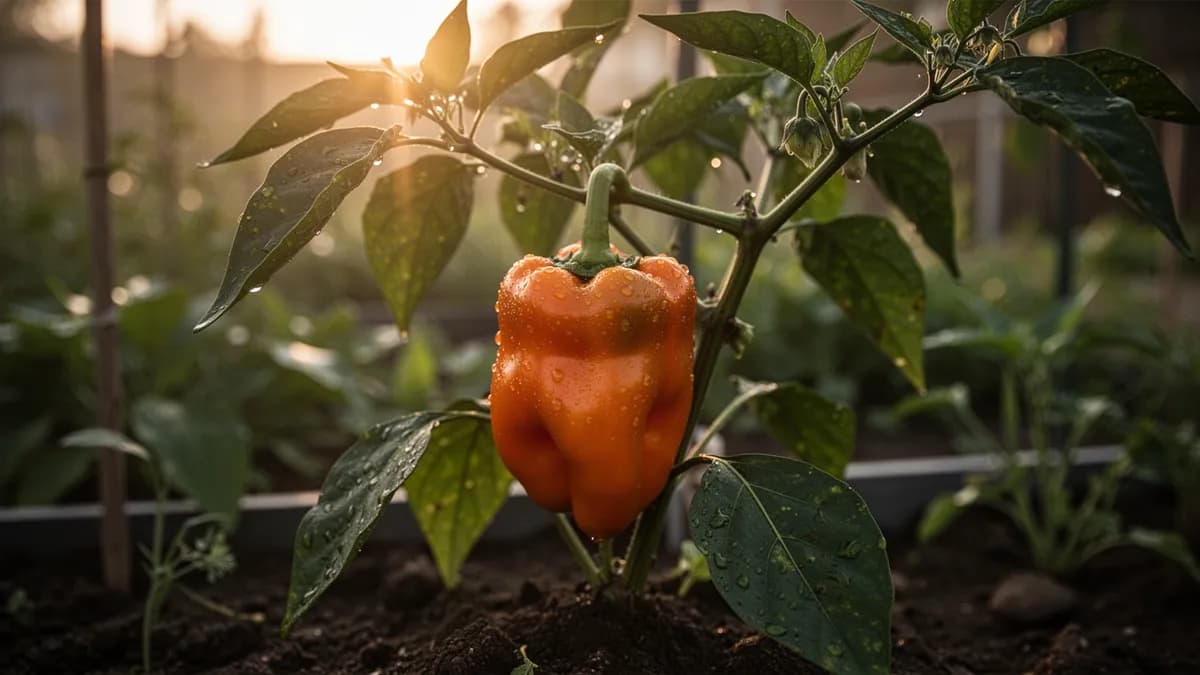
El chile ghost o bhut jolokia (Capsicum chinense) es uno de los pimientos más picantes del mundo, originario del noreste de India, con más de 1.000.000 de unidades Scoville. Sus frutos arrugados de 6-8 cm maduran de verde a rojo intenso, y su sabor combina un picor extremo con notas frutales y ahumadas que han cautivado a los entusiastas del picante en todo el mundo.
Cuándo plantar Chile Ghost (Bhut Jolokia)
Siembre en interiores 10-12 semanas antes de la última helada. Use sustrato estéril a 28-32 °C con esterilla térmica. La germinación tarda 14-35 días y es irregular; no descarte las bandejas prematuramente. Las semillas pueden remojarse en agua tibia 24 horas antes para acelerar el proceso.
Tu año de Chile Ghost (Bhut Jolokia)
Ajustado a Zona 7 · temporada típica · la helada se va hacia el 2 abr y vuelve hacia el 1 nov
Planta Chile Ghost (Bhut Jolokia) Ene – Abr y cosecha Ago – Oct. Consulta los métodos de plantación y elige tu clima para adaptar los periodos.
Cómo cultivar Chile Ghost (Bhut Jolokia)
El bhut jolokia requiere una temporada de crecimiento excepcionalmente larga y cálida. Inicie las semillas en interiores 10-12 semanas antes de la última helada, a 0,5 cm de profundidad en sustrato estéril a 28-32 °C. La germinación es lenta e irregular, tardando 14-35 días; use una esterilla térmica y sea paciente.
Trasplante cuando las noches superen 18 °C de forma estable, espaciando 60-90 cm. Las plantas alcanzan 60-120 cm de altura y necesitan pleno sol intenso con al menos 8 horas diarias. Riegue regularmente pero sin exceso; permita que la capa superficial seque ligeramente entre riegos.
Fertilice cada 2 semanas con abono rico en calcio y potasio. Los ghost peppers maduran lentamente (120-150 días desde trasplante) y necesitan mucho calor acumulado. En climas con veranos cortos, cultive en macetas negras contra paredes soleadas o en invernaderos para maximizar el calor. Use guantes al manipular los frutos maduros.
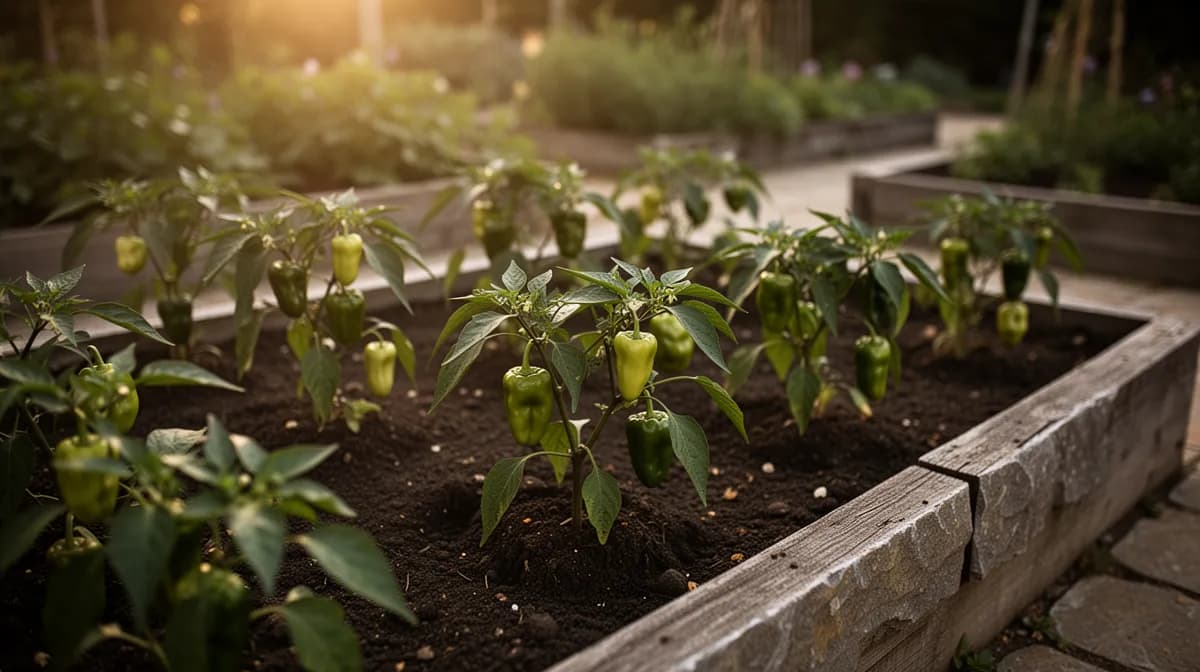
8 plantas caben en un bancal de 120 × 240 cm
Cada Chile Ghost (Bhut Jolokia) pide 60 cm de margen. El planificador guarda ese marco por ti — cada planta, cada bancal.
Los mejores vecinos de Chile Ghost (Bhut Jolokia)
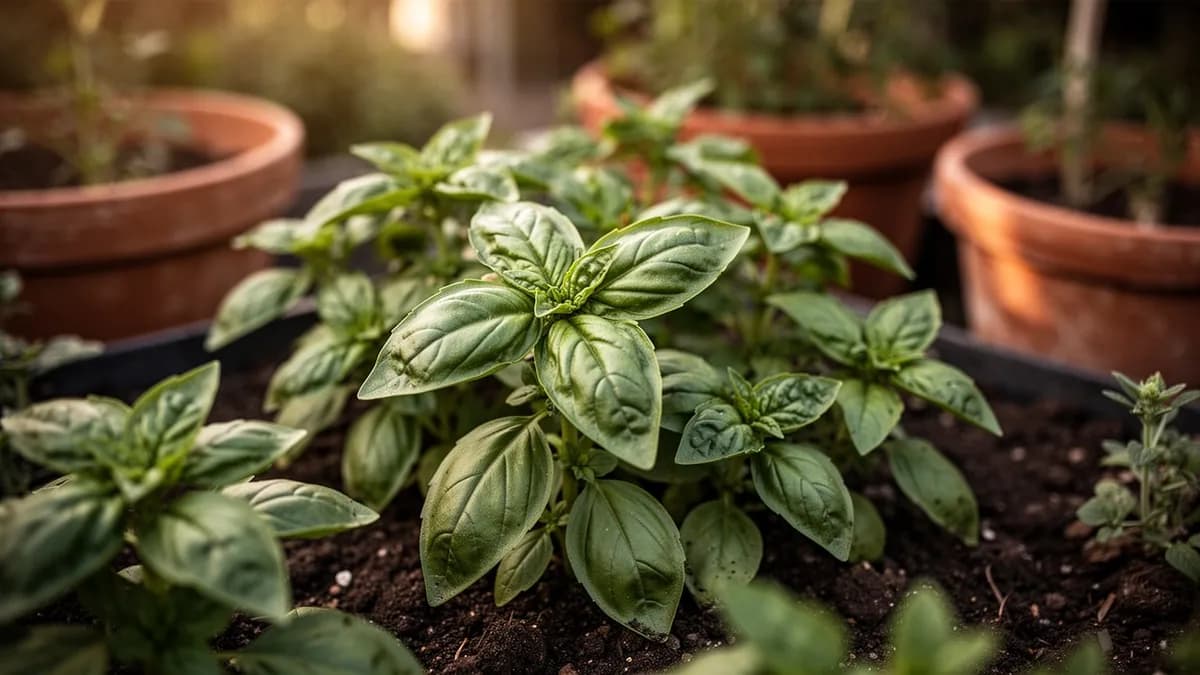
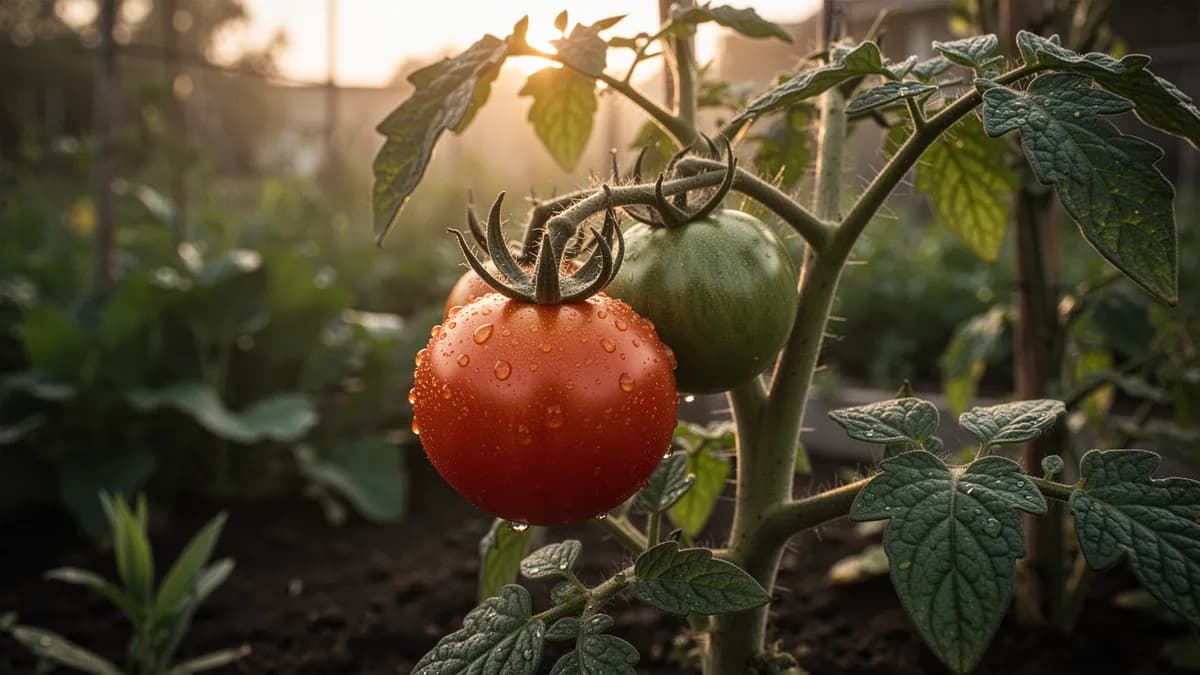
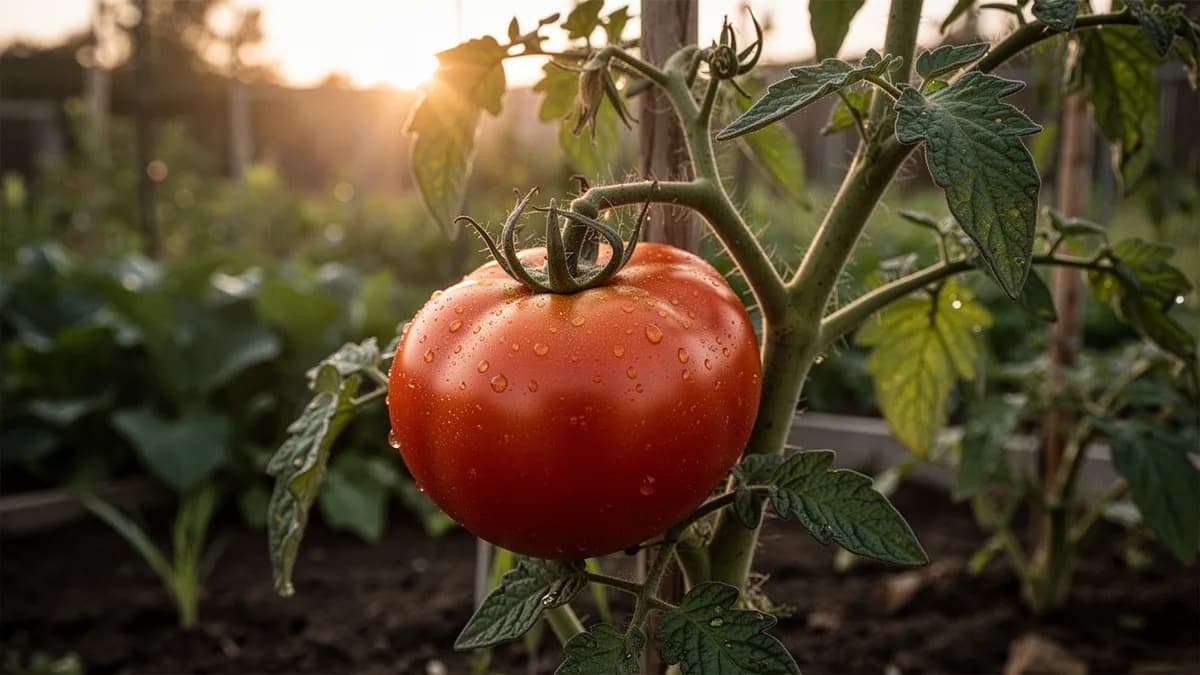
Plante junto a tomates y albahaca que ayudan a repeler plagas. Las caléndulas disuaden nematodos y otros insectos. Evite plantar junto a otros Capsicum chinense para evitar polinización cruzada si desea guardar semillas.
Tomate va a su lado. Hinojo no.
Saber de huerto de siempre, cotejado con la tabla real de Chile Ghost (Bhut Jolokia) — prueba cualquier planta que cultives.
Prueba Chile Ghost (Bhut Jolokia) en un bancal, aquí mismo
Un bancal real del planificador con Chile Ghost (Bhut Jolokia) ya plantado. Toca una planta compañera para colocarla y mira cómo responde la comprobación de vecinos: verde para buenos vecinos, rojo si hay conflicto.


Guías de cultivo relacionadas
Abónalo bien
Suelos bien drenados, ricos en materia orgánica con pH 6,0-6,8. Enmiende con compost y harina de hueso. Fertilice con abono rico en calcio y potasio durante la fructificación. Evite exceso de nitrógeno que produce plantas enormes con pocos frutos.
Temperatura ideal
Compatibilidad de zonas de rusticidad
De la semilla a la cosecha, etapa por etapa
Germinación de semillas
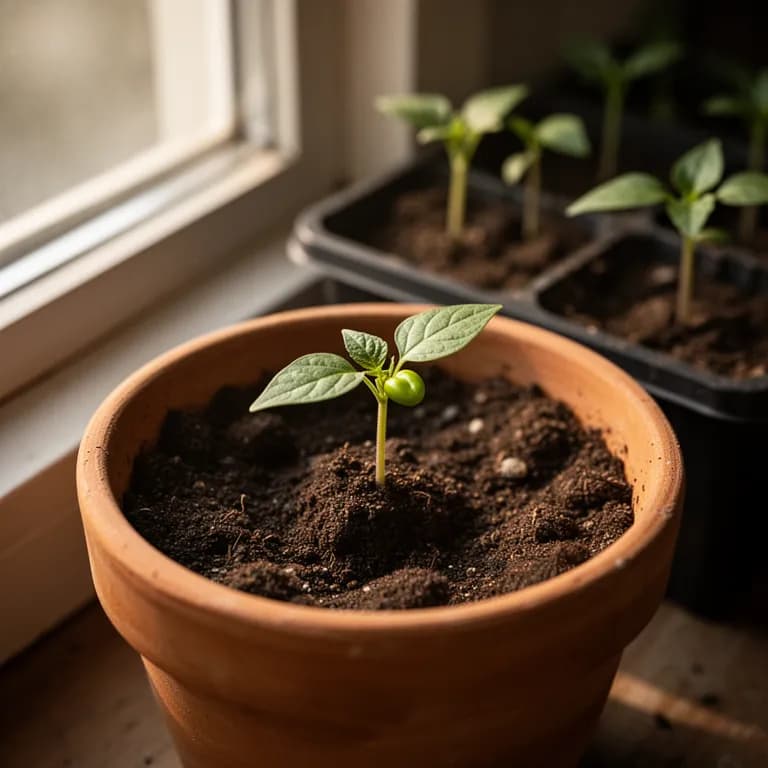
Las semillas de chile fantasma germinan de forma notoriamente lenta e irregular. Tras remojarlas durante 24 horas, se siembran superficialmente en un sustrato cálido y estéril. Primero emerge la radícula y después los cotiledones atraviesan la superficie. La germinación requiere temperaturas constantes del suelo de 29-32 °C (85-90 °F) y puede tardar entre 14 y 35 días.
Desarrollo de plántulas
Las hojas verdaderas se desarrollan lentamente con un aspecto compacto y verde oscuro. Las plántulas de chile fantasma crecen mucho más despacio que los pimientos annuum y requieren calor sostenido y mucha luz. El tallo se engrosa gradualmente y el sistema radicular se establece durante esta fase prolongada.
Crecimiento vegetativo
Después del trasplante a un suelo cálido del jardín o a contenedores finales, las plantas entran en una fase vegetativa vigorosa. La estructura de ramificación se expande significativamente y las plantas pueden alcanzar 60-90 cm de altura. Las hojas son medianas, de color verde oscuro y ligeramente arrugadas. El crecimiento se acelera notablemente con calor sostenido por encima de 27 °C (80 °F).
Floración
Aparecen pequeñas flores blancas con centros verde-amarillentos en los nudos de las ramas. Las flores de Capsicum chinense suelen aparecer en racimos de 2 a 5 por nudo, a diferencia de las flores individuales típicas de C. annuum. Las flores se autopolinan, pero se benefician del movimiento suave del aire o de la vibración para liberar el polen. La caída de flores es común si las temperaturas bajan de 16 °C (60 °F) o superan 38 °C (100 °F).
Maduración y cosecha
Los chiles pasan de verde a tonos intermedios hasta su color final: rojo brillante, marrón chocolate, melocotón o amarillo, según la variedad. Los frutos maduros se sienten ligeramente blandos y pueden mostrar más arrugas. Una sola planta puede producir 50-100 chiles durante el largo periodo de cosecha, con frutos que maduran de forma sucesiva durante varias semanas.
Después de la cosecha
Las plantas de chile fantasma terminan su ciclo tras la cosecha en la mayoría de los huertos y normalmente se cultivan como anuales de estación cálida.
Usa una manta térmica con termostato y mantén el medio constantemente húmedo, pero nunca empapado. Una campana de humedad ayuda a conservar el calor y la humedad. Remojar las semillas en peróxido de hidrógeno diluido o té de manzanilla antes de sembrarlas mejora la germinación.
Cuidar Chile Ghost (Bhut Jolokia) mes a mes
Qué hacer cada mes para tu Chile Ghost (Bhut Jolokia)
Octubre
Mes actualPeak harvest month in most zones. Harvest ripe peppers regularly to encourage continued production. Begin drying and preserving the harvest. Before first frost, harvest all remaining peppers — green fruits will ripen slowly on a sunny windowsill. Move container plants indoors in cooler zones.
Ten claro qué hacer en tu huerto, cada mes
Un correo al empezar cada mes: qué sembrar, plantar y hacer ahora mismo — para tu Chile Ghost (Bhut Jolokia) y todo lo que crece alrededor. Más un breve curso inicial para esquivar los errores clásicos.
- Qué hacer ahora mismo
- Ajustado a tu temporada
- Curso inicial incluido
Cosechar Chile Ghost (Bhut Jolokia)
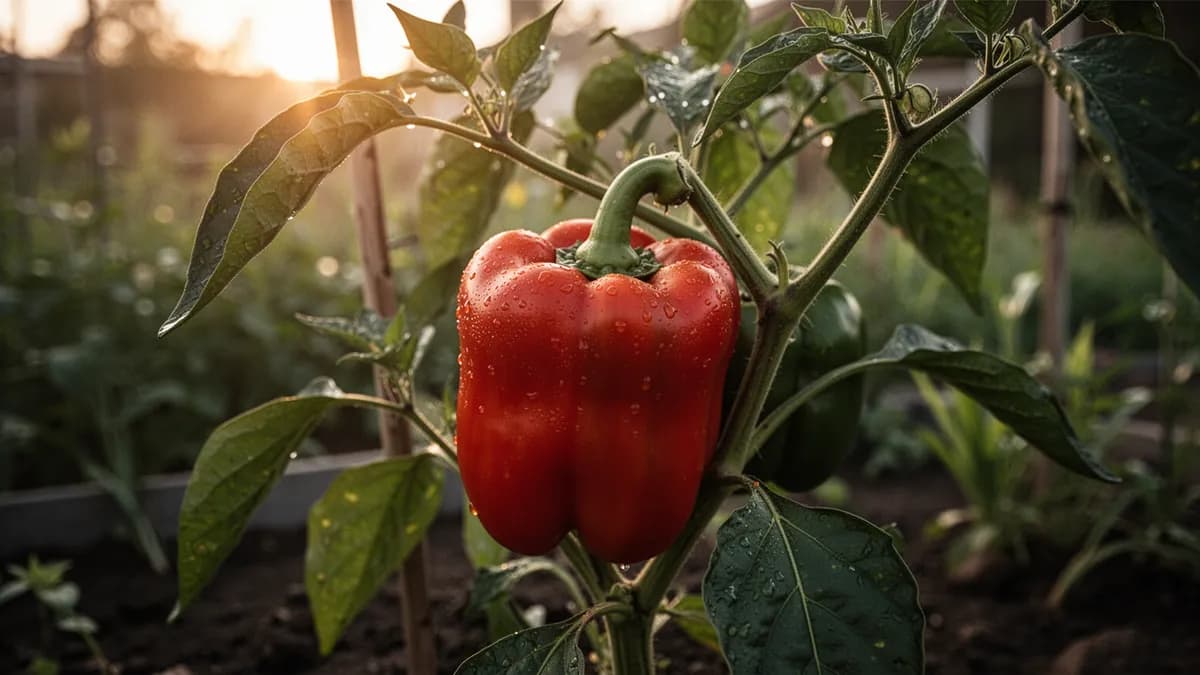
Los ghost peppers maduran 120-150 días tras el trasplante. Coseche cuando los frutos estén completamente rojos (o del color final de la variedad), arrugados y firmes. Use SIEMPRE guantes al cosechar y evite tocarse los ojos. Corte con tijeras dejando 1 cm de pedúnculo.
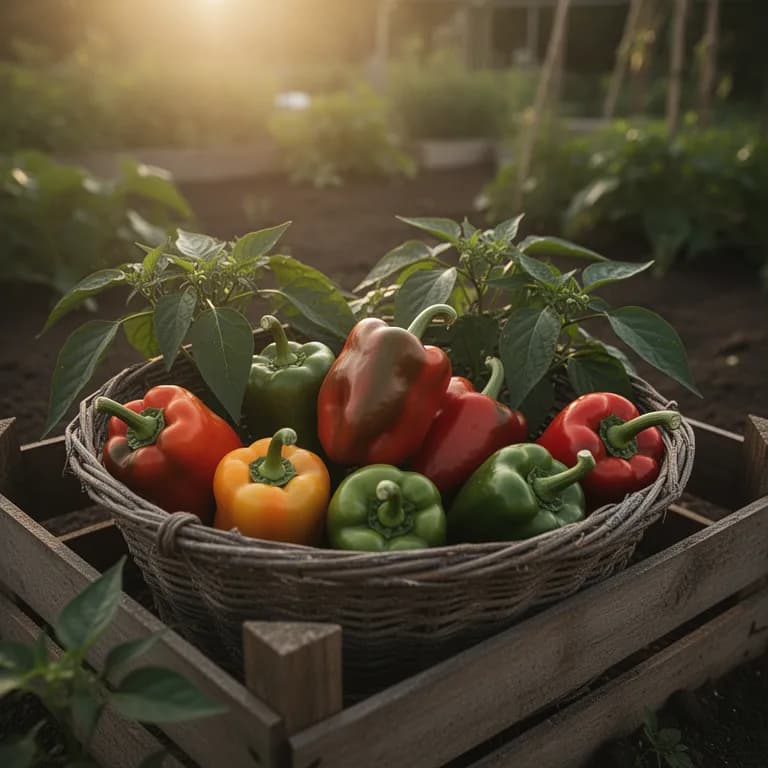
se supone que plantas al comenzar el periodo — indica tu fecha real
Cosecha cuando los frutos pasen de verde a su color final y se sientan ligeramente blandos.
Almacenamiento y conservación
Frescos en refrigerador 1-2 semanas. Para conservación, deshidrate enteros o en mitades en deshidratador a 55 °C para hacer polvo de ghost pepper. También se pueden congelar, encurtir o preparar en salsas picantes fermentadas. Manipule siempre con guantes.
Qué falla — y cómo solucionarlo
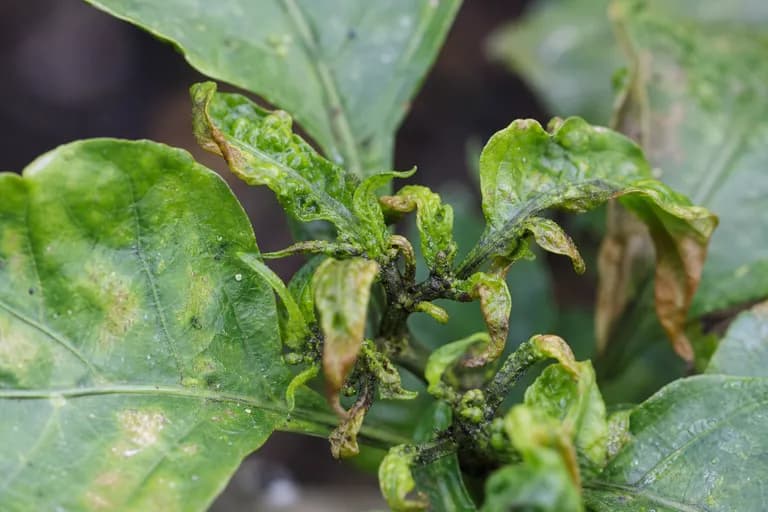
Pulgón (Myzus persicae)
PlagaColonias en brotes y envés de hojas, enrollamiento y deformación foliar.
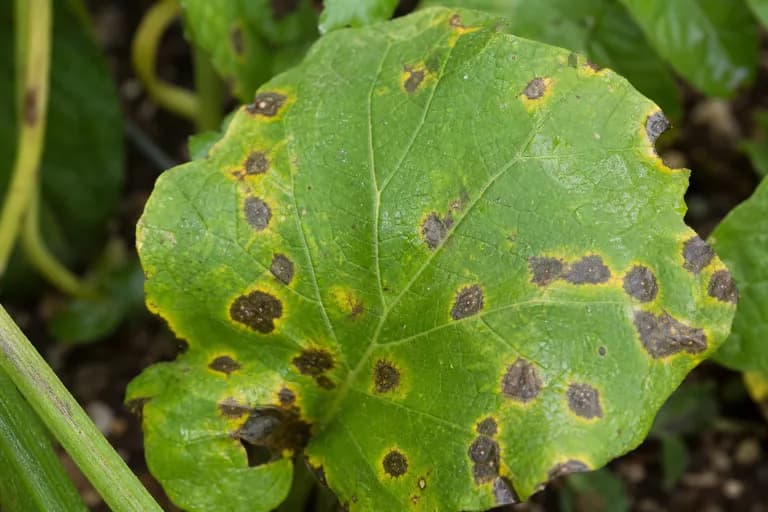
Marchitez bacteriana (Ralstonia solanacearum)
EnfermedadMarchitez rápida e irreversible sin amarillamiento previo. Al cortar el tallo, exuda flujo bacteriano lechoso.
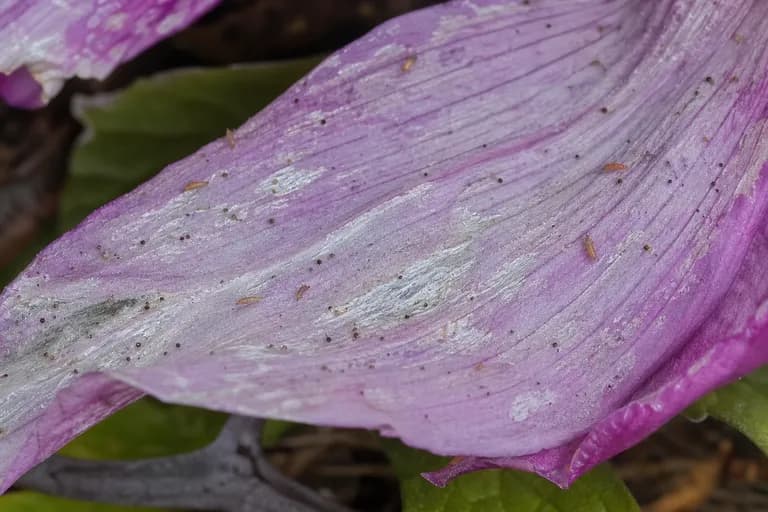
Mosca blanca (Bemisia tabaci)
PlagaMoscas blancas al agitar hojas, amarillamiento foliar, melaza y fumagina.
Solución de problemas comunes
La germinación lenta e irregular (14-35 días) es el primer desafío; muchos cultivadores se dan por vencidos demasiado pronto. La temporada de crecimiento extremadamente larga limita el cultivo en climas fríos. Las plantas detienen su crecimiento por debajo de 18 °C y mueren con la primera helada.
Consejos de cultivo
- Start seeds absurdly early. Ghost peppers need 12-14 weeks of indoor growing before transplanting, which means starting seeds in January or February in most climates. This is not optional — plants that are too small at transplant time will not produce ripe fruit before frost.
- Heat mats are non-negotiable for germination. Ghost pepper seeds will not germinate reliably below 29°C (85°F). Invest in a thermostat-controlled heat mat and maintain 29-32°C (85-90°F) consistently. Without supplemental bottom heat, germination rates plummet to near zero.
- Accept erratic germination. Even with perfect conditions, ghost pepper seeds sprout unevenly over 2-5 weeks. Plant extra seeds and do not give up on a tray that seems dead — seeds can surprise you at 30+ days. Keep the medium warm and moist throughout.
- Grow in containers if you are in zones 7 or cooler. Black 20-liter (5-gallon) containers absorb solar heat, can be positioned against south-facing walls for reflected warmth, and can be moved indoors when autumn frost threatens — extending the harvest by weeks or months.
- Overwinter your best plant. Ghost peppers are perennial in their native tropical habitat. Before frost, cut the plant back by two-thirds, repot if needed, and bring indoors near a bright window. The plant will defoliate and go semi-dormant, then regrow vigorously in spring with a significant head start over seedlings.
- Never handle ghost peppers without nitrile gloves. Latex gloves are insufficient as capsaicin penetrates latex. Avoid touching your face, eyes, or any sensitive skin for hours after handling. If you accidentally make skin contact, wash with dish soap and rubbing alcohol — water alone does not remove capsaicin oils.
- Pollinate manually in greenhouses or indoors. Ghost pepper flowers are self-fertile but benefit from physical agitation to release pollen. Gently vibrate each flower cluster with an electric toothbrush or cotton swab to dramatically improve fruit set in still-air environments.
- Dry peppers for the most practical long-term storage. Dehydrate whole or halved peppers at 60°C (135°F) for 12-24 hours. Grind into powder using a dedicated spice grinder while wearing a face mask and eye protection — airborne capsaicin dust from ghost peppers can cause intense coughing and eye irritation.
Cultiva tu mejor Chile Ghost (Bhut Jolokia) — y todo lo que la rodea.
Empieza un plan gratis hoy. Diseña tus bancales, coloca tu Chile Ghost (Bhut Jolokia) y deja que PlotMyGarden gestione el momento, el espaciado, las asociaciones y los recordatorios de la semilla a la cesta.
Elige tu Chile Ghost (Bhut Jolokia)
Bhut Jolokia Rojo
La variedad original de Assam, India. Frutos arrugados de 6-8 cm, rojo intenso al madurar. Más de 1.000.000 Scoville. Madura en 120-150 días.
Bhut Jolokia Chocolate
Mutación natural con frutos marrón chocolate oscuro y sabor más ahumado e intenso. Ligeramente más picante que el rojo. Madura en 130 días.
Bhut Jolokia Peach
Variedad con frutos de color melocotón/salmón, sabor más afrutado y picor ligeramente menor. Muy atractiva visualmente. Madura en 125 días.
Bhut Jolokia Yellow
Variedad amarilla con sabor cítrico pronunciado y picor comparable al rojo. Frutos ligeramente más pequeños. Madura en 130 días.
A ghost pepper plant grown from a $3-5 seed packet can produce 50-100 peppers per season. Fresh ghost peppers sell for $15-30 per pound at specialty markets, and a single plant yields 2-4 pounds. Ghost pepper powder costs $20-40 per ounce at gourmet shops, and one plant's harvest can produce 3-5 ounces of dried powder. Artisanal ghost pepper hot sauces retail for $8-15 per small bottle — your homegrown harvest can produce 20-40 bottles. The total value from a single plant easily exceeds $100-200, making ghost peppers one of the highest-value crops per square foot in any garden.
Recetas rápidas
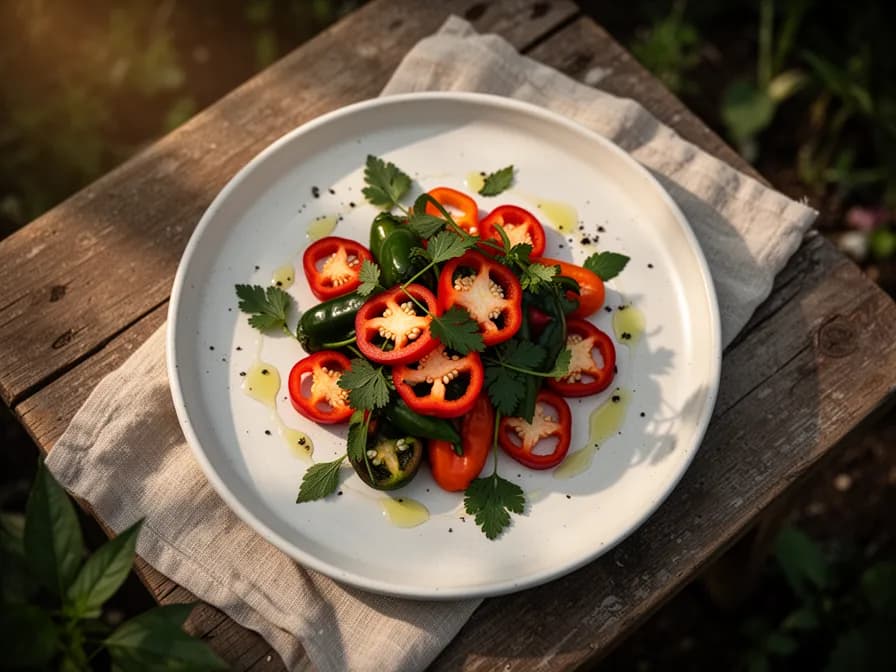
Ghost Pepper Hot Sauce
30 minA fiery vinegar-based hot sauce that concentrates the fruity, smoky flavor of ghost peppers while allowing precise heat control. The vinegar and salt preserve the sauce for months, making this the ideal way to enjoy your ghost pepper harvest year-round. Use just drops at a time.
7 ingredientesGhost Pepper Mango Chutney
45 minA sweet-heat condiment that pairs the tropical fruitiness of ghost peppers with ripe mango. The sugar and acid balance the extreme capsaicin, creating a chutney that adds complex warmth to grilled meats, cheese boards, and curries. A single ghost pepper provides sufficient heat for the entire batch.
8 ingredientesSmoked Ghost Pepper Powder
4 hours (mostly passive)Smoking and drying ghost peppers produces a deeply complex seasoning with layered heat and rich smoky flavor. A tiny pinch transforms chili, barbecue rubs, and soups. This powder keeps for over a year in an airtight container and makes an excellent gift for heat-loving friends.
6 ingredientesUsos culinarios
Los ghost peppers se usan con extrema moderación: una pequeña cantidad añade calor extraordinario a salsas, curris, chutneys y adobos. En India se utilizan en el famoso chutney de bhut jolokia de Assam. Deshidratados y molidos, una pizca transforma cualquier plato. También se preparan salsas picantes artesanales muy valoradas.
Qué contiene
Beneficios para la salud
- Capsaicin in ghost peppers is a potent anti-inflammatory agent that blocks substance P, a neuropeptide associated with pain signaling — topical capsaicin creams derived from hot peppers are clinically proven treatments for arthritis, neuropathic pain, and muscle soreness.
- Consuming capsaicin-rich peppers temporarily boosts metabolic rate by 5-8% through thermogenesis, increasing calorie expenditure and fat oxidation — research suggests regular hot pepper consumption is associated with lower rates of obesity.
- Ghost peppers are extraordinarily rich in vitamin C, providing over 150% of the daily value per 100g, which supports immune function, collagen production, and iron absorption from plant-based foods.
- Capsaicin has demonstrated antimicrobial properties against a broad spectrum of foodborne pathogens including Salmonella, E. coli, and Listeria — a practical reason hot peppers have been used as food preservatives for centuries in tropical climates.
- Studies published in the British Medical Journal found that people who regularly consumed spicy foods had a 14% lower risk of premature death compared to those who ate spicy foods less than once a week, with the strongest protective effects seen for cardiovascular and respiratory mortality.
- Capsaicin triggers endorphin release in the brain — the same natural opioid-like compounds produced during exercise — which explains the euphoric 'pepper high' experienced by chili enthusiasts and may contribute to improved mood and stress relief.
De dónde viene Chile Ghost (Bhut Jolokia)
The ghost pepper (Bhut Jolokia) is native to the Northeastern Indian states of Assam, Nagaland, and Manipur, where it has been cultivated for centuries by indigenous communities as both a food source and a natural preservative in the hot, humid monsoon climate. The Naga people of Nagaland have the longest documented history of ghost pepper cultivation, using the peppers in traditional chutneys, dried spice blends, and as a preservative for smoked meats and fermented fish. The extreme heat served a practical purpose in a region where refrigeration was unavailable — capsaicin's antimicrobial properties helped prevent food spoilage.
Ghost peppers remained virtually unknown outside of Northeast India until 2000, when researchers at the Defence Research Laboratory in Tezpur, Assam, submitted samples for Scoville testing. The results stunned the chili world: initial tests showed heat levels exceeding 855,000 SHU, and subsequent testing at New Mexico State University's Chile Pepper Institute in 2005 confirmed a measurement of 1,001,304 SHU — nearly double the previous hottest pepper, the Red Savina habanero. In 2007, Guinness World Records officially certified the Bhut Jolokia as the world's hottest chili pepper, catapulting it from regional obscurity to global fame.
The ghost pepper's reign as the world's hottest was eventually surpassed by the Trinidad Moruga Scorpion in 2012 and later by the Carolina Reaper, but it remains one of the most iconic superhot peppers and is still widely regarded as the variety that launched the global superhot pepper craze. Today, ghost peppers are commercially cultivated in India, where they are a significant export crop, as well as in the United States, Mexico, and Southeast Asia. The Indian military's development of ghost pepper grenades for crowd control and the widespread use of Bhut Jolokia paste as an elephant deterrent in Assam have further cemented the pepper's legendary status. Multiple color variants — red, chocolate, peach, yellow, and orange — have been stabilized by breeders, each offering subtle differences in flavor and heat intensity while maintaining the characteristic deeply wrinkled skin and slow-building, devastating burn.
Chile Ghost (Bhut Jolokia): ¿sabías que?
Datos fascinantes sobre Chile Ghost (Bhut Jolokia)
The ghost pepper (Bhut Jolokia) held the Guinness World Record for the hottest chili pepper from 2007 to 2011, measuring over 1,041,427 Scoville Heat Units — roughly 400 times hotter than Tabasco sauce and 200 times hotter than a jalapeño.
Chile Ghost (Bhut Jolokia): preguntas frecuentes
¿Cuándo debo plantar Chile Ghost (Bhut Jolokia)?
¿Cuáles son buenas plantas acompañantes para Chile Ghost (Bhut Jolokia)?
¿En qué zonas de rusticidad puede crecer Chile Ghost (Bhut Jolokia)?
¿Cuánto sol necesita Chile Ghost (Bhut Jolokia)?
¿A qué distancia debo espaciar Chile Ghost (Bhut Jolokia)?
¿Qué plagas y enfermedades afectan a Chile Ghost (Bhut Jolokia)?
¿Cómo almaceno Chile Ghost (Bhut Jolokia) después de la cosecha?
¿Cuáles son las mejores variedades de Chile Ghost (Bhut Jolokia) para cultivar?
¿Qué suelo necesita Chile Ghost (Bhut Jolokia)?
Why are my ghost pepper seeds not germinating?
Can I grow ghost peppers in a cold climate?
How do I safely handle and cook with ghost peppers?
Why are my ghost pepper plants dropping their flowers?
How hot are ghost peppers compared to other peppers?
Can I overwinter a ghost pepper plant indoors?
Acabas de leer la teoría. Ahora cultívala en piloto automático.
Todo lo que hace que Chile Ghost (Bhut Jolokia) sea delicado — el momento, el espaciado, las asociaciones, la ventana de cosecha — es justo lo que PlotMyGarden resuelve por ti, para cada planta de tu huerto.
Un plan que conoce tu clima
Indica tu ubicación una vez. Recibe fechas de siembra, abonado y cosecha basadas en tu última helada real y el pronóstico en vivo — sin adivinar con un sobre genérico.
De la sección “Cuándo plantar”Planificador de bancales de arrastrar y soltar
Diseña bancales sobre una cuadrícula. Cada planta encaja con su espaciado correcto y ves toda la temporada antes de gastar un céntimo en semillas.
De la sección “Cultivo”Conflictos de asociación, detectados a tiempo
Más de 200 buenas y malas combinaciones comprobadas en vivo mientras plantas — para que un error que arruine la temporada nunca llegue a la tierra.
De la sección “Asociaciones”Recordatorios que sí vas a seguir
“Riega las judías.” “Recoge hoy antes de que se pase.” Oportunos, concretos y ligados a las plantas que de verdad cultivas.
De la sección “Cosecha”Escalonado, programado
¿Quieres cosechar seis semanas en vez de seis días? Reparte tus siembras automáticamente y te avisa cuando toca el siguiente lote.
De la sección “Cuándo plantar”Un registro que se vuelve más listo
Cada cosecha que registras le enseña tu huerto. El plan del año que viene parte de lo que de verdad funcionó en tu suelo, no en un manual.
De la sección “Resumen”Planta estos junto a Chile Ghost (Bhut Jolokia)
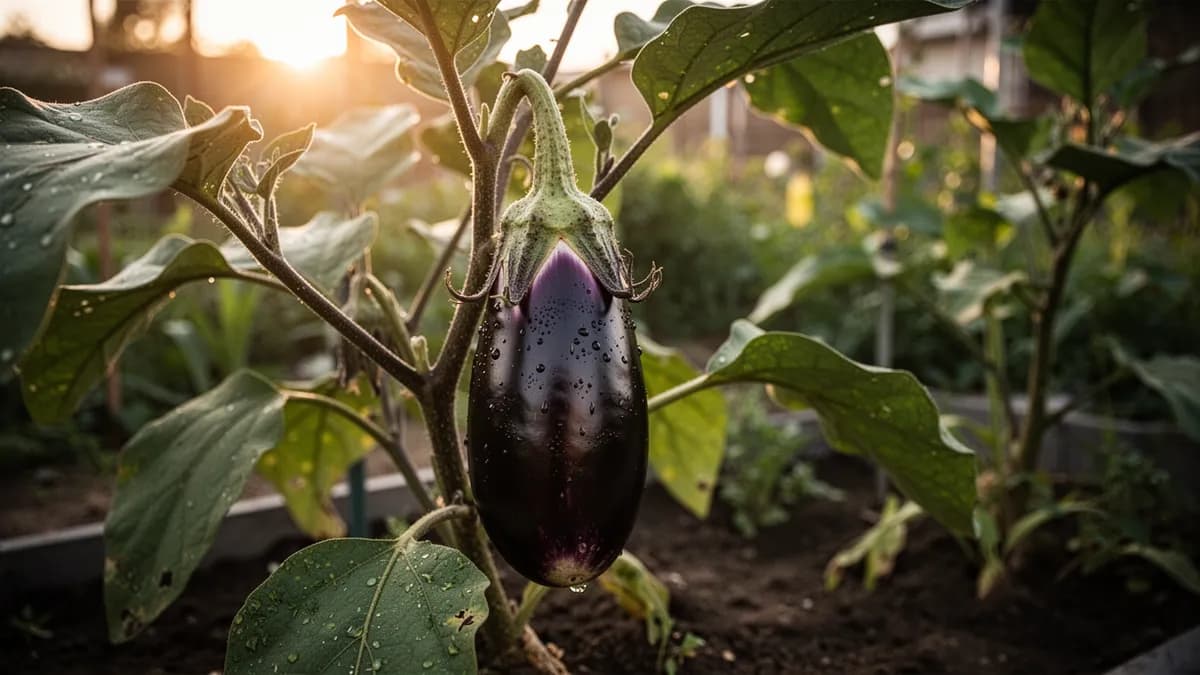
Más Solanáceas
Mantén Chile Ghost (Bhut Jolokia) lejos de estos
Diseños de jardín con Chile Ghost (Bhut Jolokia)
Cultiva tu mejor Chile Ghost (Bhut Jolokia) — y todo lo que la rodea.
Empieza un plan gratis hoy. Diseña tus bancales, coloca tu Chile Ghost (Bhut Jolokia) y deja que PlotMyGarden gestione el momento, el espaciado, las asociaciones y los recordatorios de la semilla a la cesta.