Lechuga Little Gem
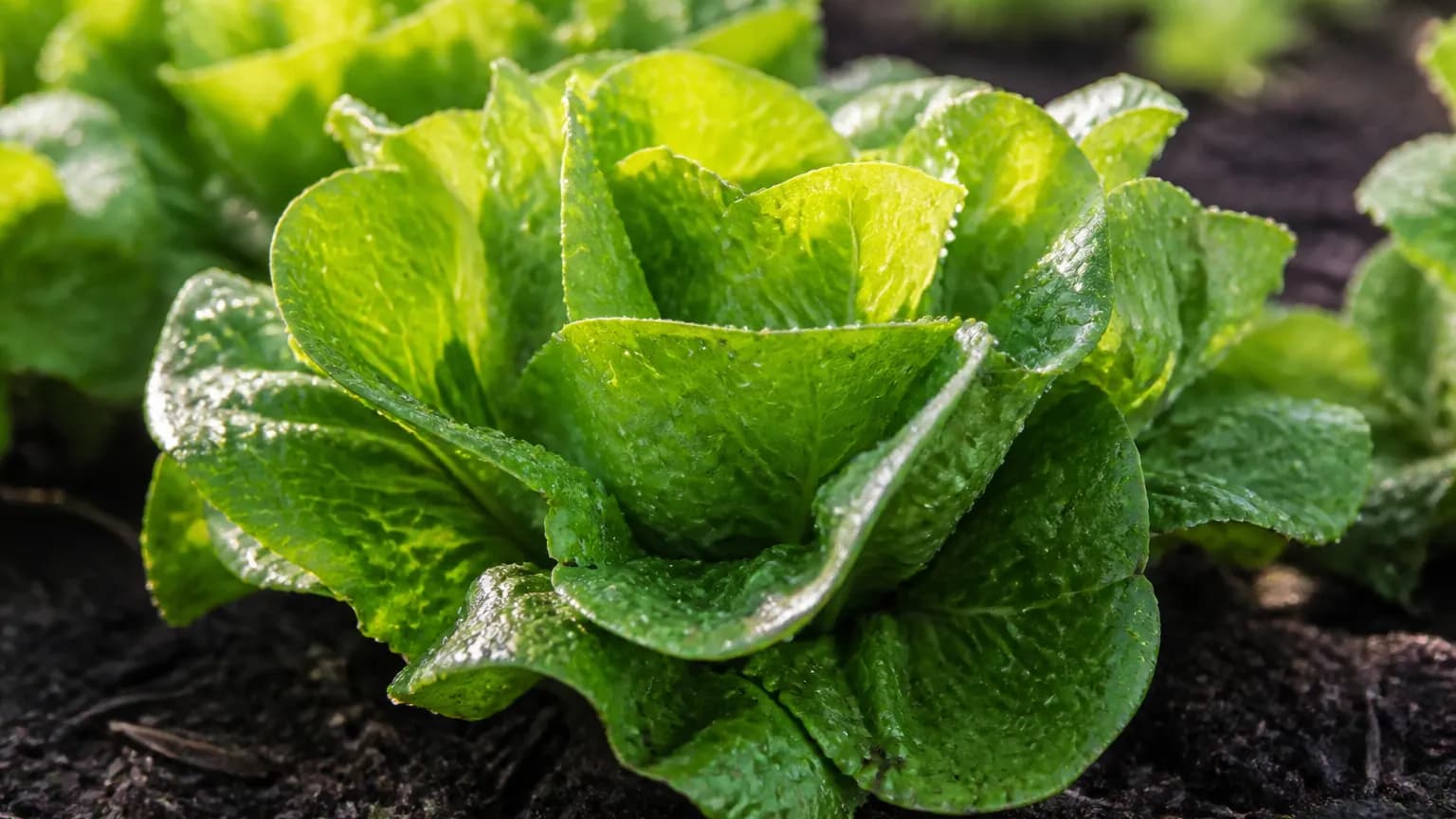
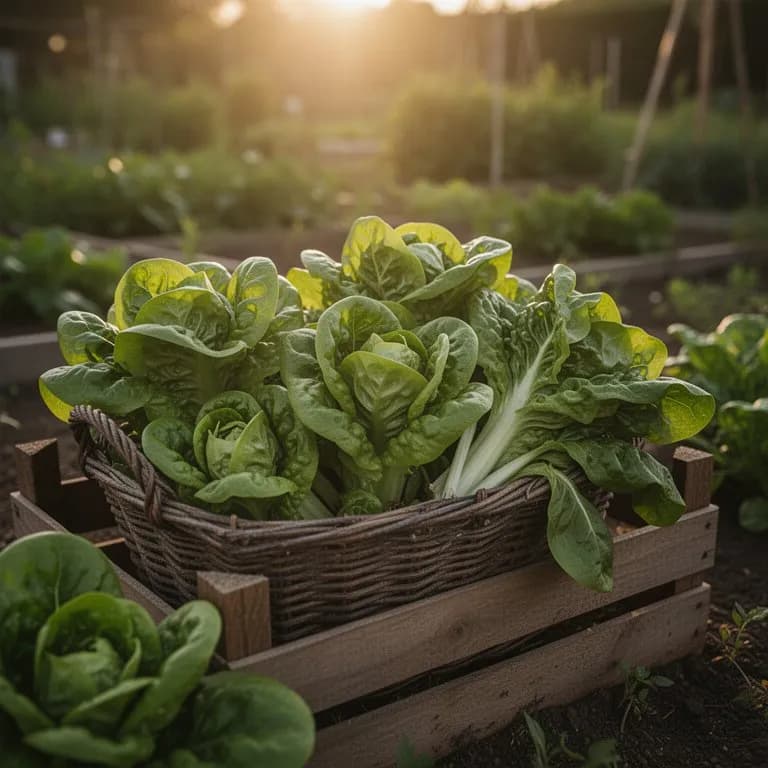
La lechuga Little Gem es una variedad miniatura de tipo romano (cos) que combina la textura crujiente de la lechuga romana con la dulzura de la mantecosa, formando cogollos compactos de 15-20 cm.





En esta páginaResumen
Conoce Lechuga Little Gem
La lechuga Little Gem es una variedad miniatura de tipo romano (cos) que combina la textura crujiente de la lechuga romana con la dulzura de la mantecosa, formando cogollos compactos de 15-20 cm. Originaria de Europa, es una de las lechugas más populares en la gastronomía mediterránea y británica por su versatilidad, sabor delicado y facilidad de cultivo.
Cuándo plantar Lechuga Little Gem
Siembre en interior en bandejas de alvéolos con sustrato fino y húmedo, esparciendo las semillas en la superficie y cubriéndolas apenas con vermiculita. Mantenga a 15-18°C para una germinación óptima en 5-7 días. Trasplante al exterior cuando las plántulas tengan 4-5 hojas verdaderas, endureciéndolas progresivamente durante una semana.
Tu año de Lechuga Little Gem
Ajustado a Zona 7 · temporada típica · la helada se va hacia el 2 abr y vuelve hacia el 1 nov
Planta Lechuga Little Gem Mar – Abr, Sep – Oct y cosecha May – Jun, Oct – Nov. Consulta los métodos de plantación y elige tu clima para adaptar los periodos.
Cómo cultivar Lechuga Little Gem
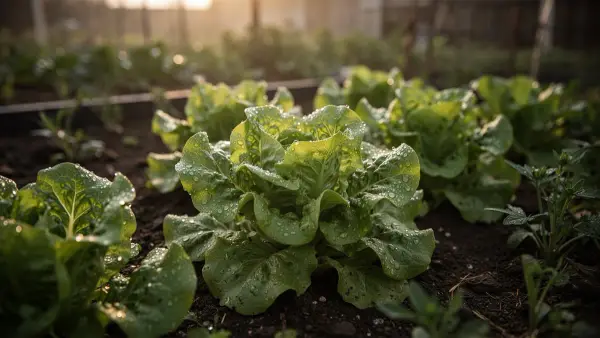
La lechuga Little Gem se puede sembrar en interior 4-6 semanas antes de la última helada o directamente en el exterior cuando la temperatura del suelo alcance al menos 7°C. Las semillas necesitan luz para germinar, por lo que deben cubrirse apenas con una fina capa de sustrato o vermiculita. Mantenga el suelo húmedo pero no encharcado; la germinación ocurre en 5-10 días.
Trasplante las plántulas al exterior cuando tengan 4-5 hojas verdaderas, espaciándolas 20-25 cm entre sí y 30 cm entre hileras. Esta variedad compacta es ideal para espacios reducidos, macetas y jardineras. Riegue regularmente con riego por goteo o en la base para evitar mojar las hojas, lo que reduce el riesgo de enfermedades fúngicas.
Para una cosecha continua, realice siembras escalonadas cada 2-3 semanas desde principios de primavera hasta mediados de otoño. Evite sembrar en pleno verano, ya que las altas temperaturas provocan la espigadura prematura. Use malla de sombreo al 30-50% en los meses más calurosos para prolongar la temporada de cultivo.
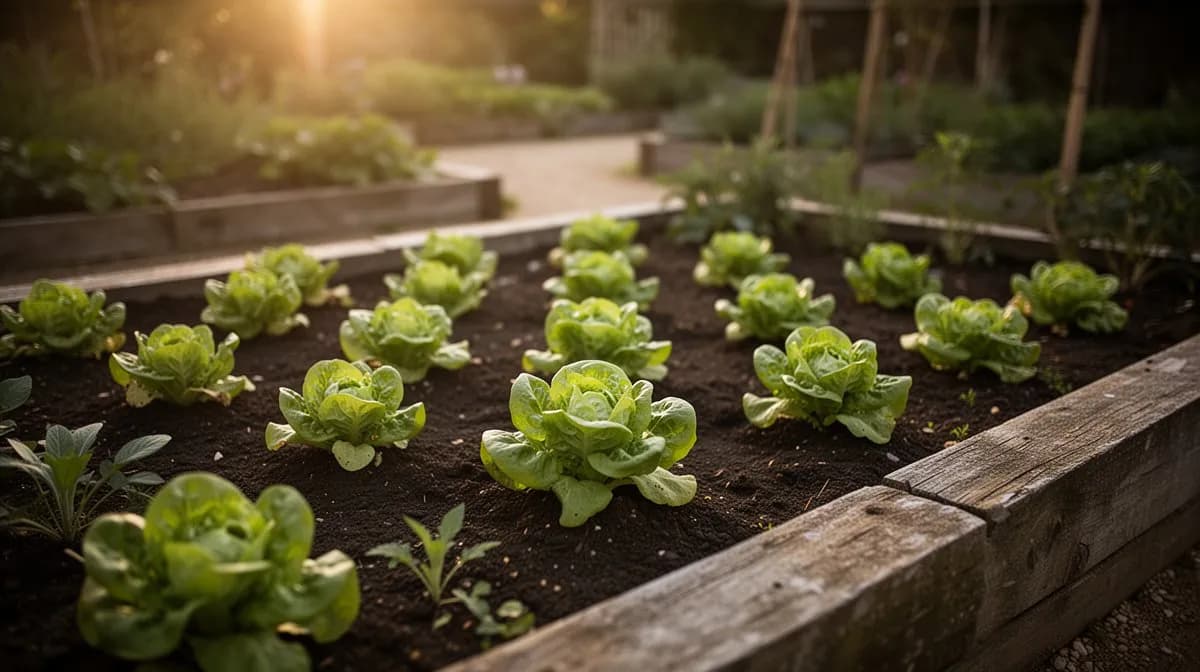
72 plantas caben en un bancal de 120 × 240 cm
Cada Lechuga Little Gem pide 20 cm de margen. El planificador guarda ese marco por ti — cada planta, cada bancal.
Los mejores vecinos de Lechuga Little Gem
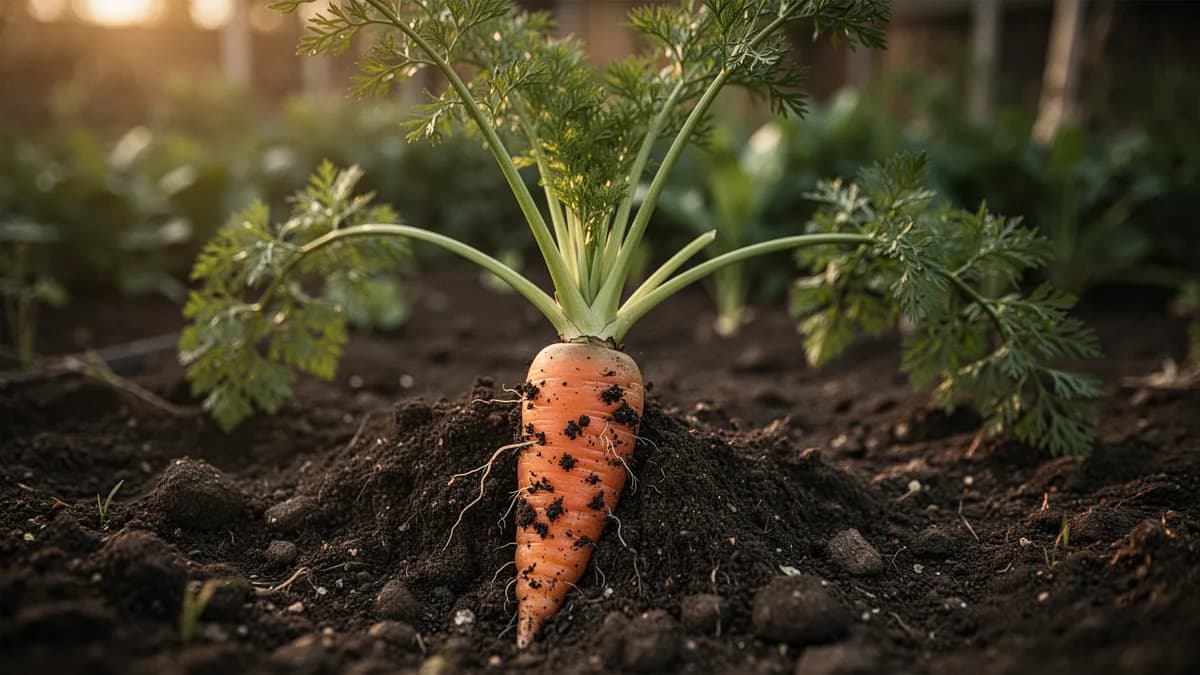
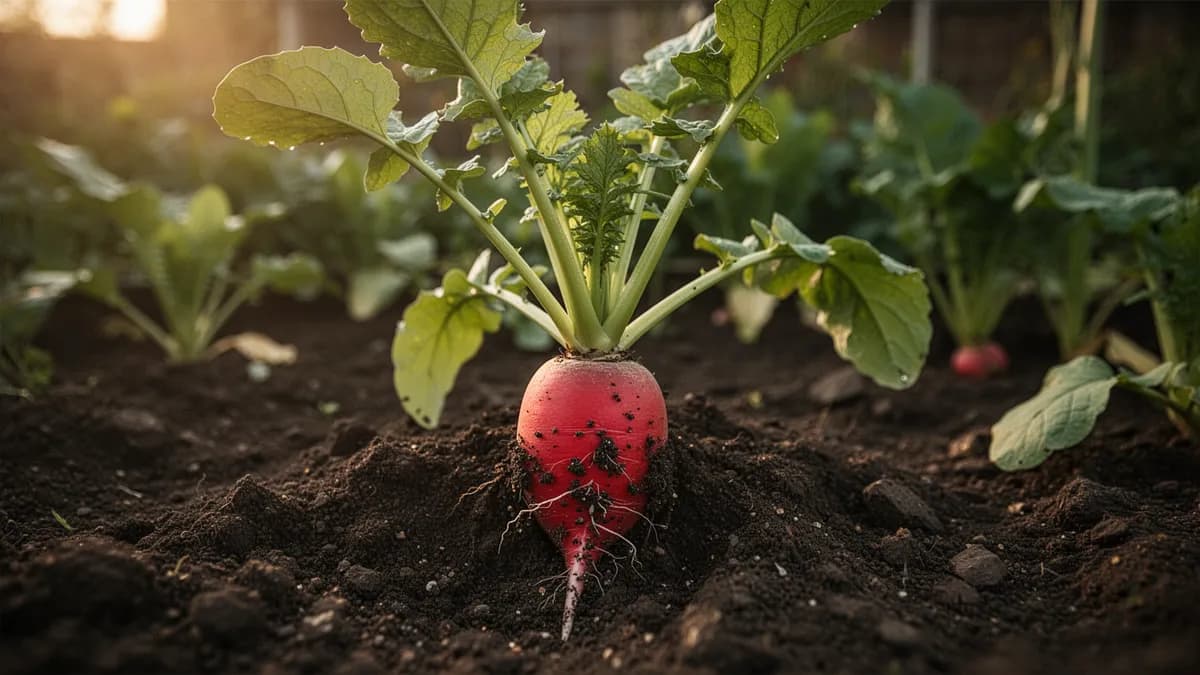
Crece bien junto a rábanos, zanahorias, fresas y hierbas aromáticas como el cebollino y el eneldo, que ayudan a repeler pulgones. Evite plantarla cerca de perejil o apio, que compiten por los mismos nutrientes. Las flores de caléndula y tagetes plantadas cerca atraen insectos benéficos.
Zanahoria va a su lado.
Saber de huerto de siempre, cotejado con la tabla real de Lechuga Little Gem — prueba cualquier planta que cultives.
Prueba Lechuga Little Gem en un bancal, aquí mismo
Un bancal real del planificador con Lechuga Little Gem ya plantado. Toca una planta compañera para colocarla y mira cómo responde la comprobación de vecinos: verde para buenos vecinos, rojo si hay conflicto.


Guías de cultivo relacionadas
Abónalo bien
Requiere un suelo fértil, suelto y bien drenado, rico en materia orgánica, con pH entre 6,0 y 7,0. Incorpore compost maduro al suelo antes de la plantación y aplique un fertilizante equilibrado (10-10-10) o un abono orgánico rico en nitrógeno cada 3-4 semanas para promover un follaje abundante y tierno.
Temperatura ideal
Compatibilidad de zonas de rusticidad
De la semilla a la cosecha, etapa por etapa
Germinación
Las semillas germinan rápidamente en condiciones frescas y húmedas, a menudo en 2-5 días. Primero emerge la diminuta radícula blanca, que se ancla en el suelo, seguida de delicadas hojas cotiledonares que se abren para comenzar la fotosíntesis. Las semillas de lechuga necesitan luz para germinar y deben sembrarse en la superficie o apenas cubrirse con una fina capa de tierra o vermiculita.
Desarrollo de plántula
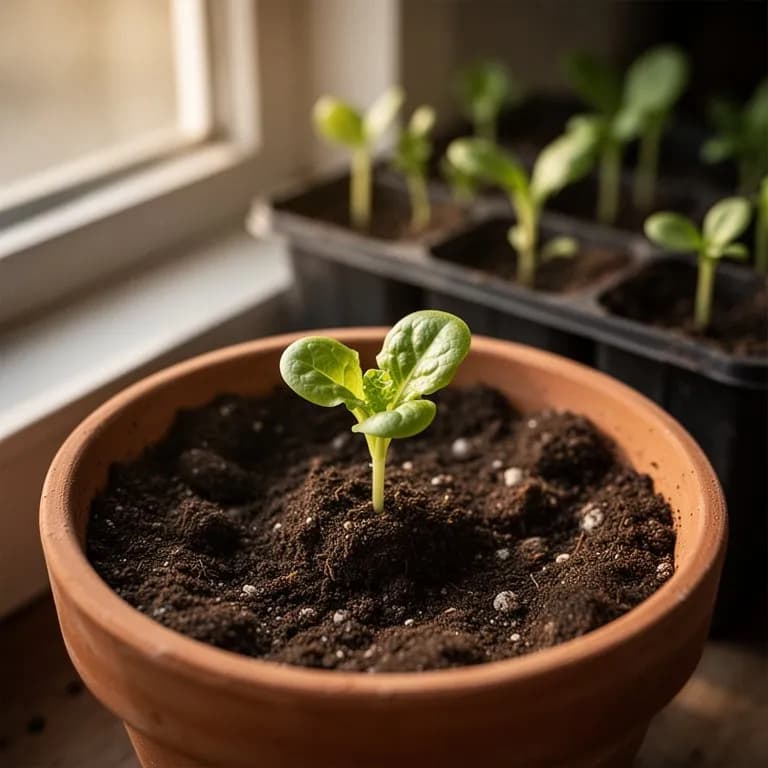
Aparecen las hojas verdaderas con la forma suave y ligeramente cóncava característica de la lechuga tipo romana. Las plántulas desarrollan un sistema radicular superficial pero fibroso. El crecimiento es constante en condiciones frescas y los primeros rasgos del hábito erguido comienzan a aparecer a medida que las hojas se orientan más en vertical que en horizontal.
Formación de roseta
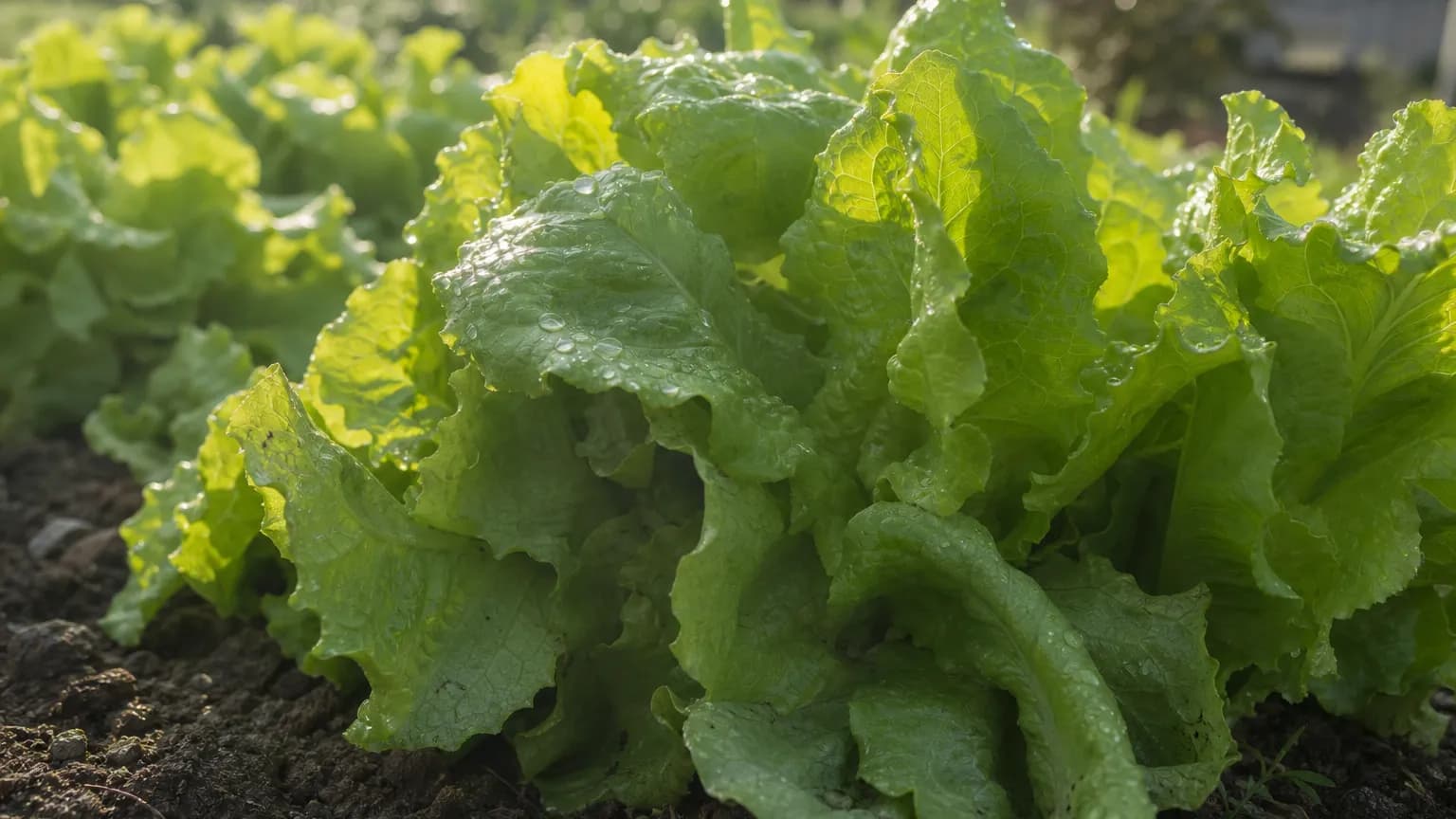
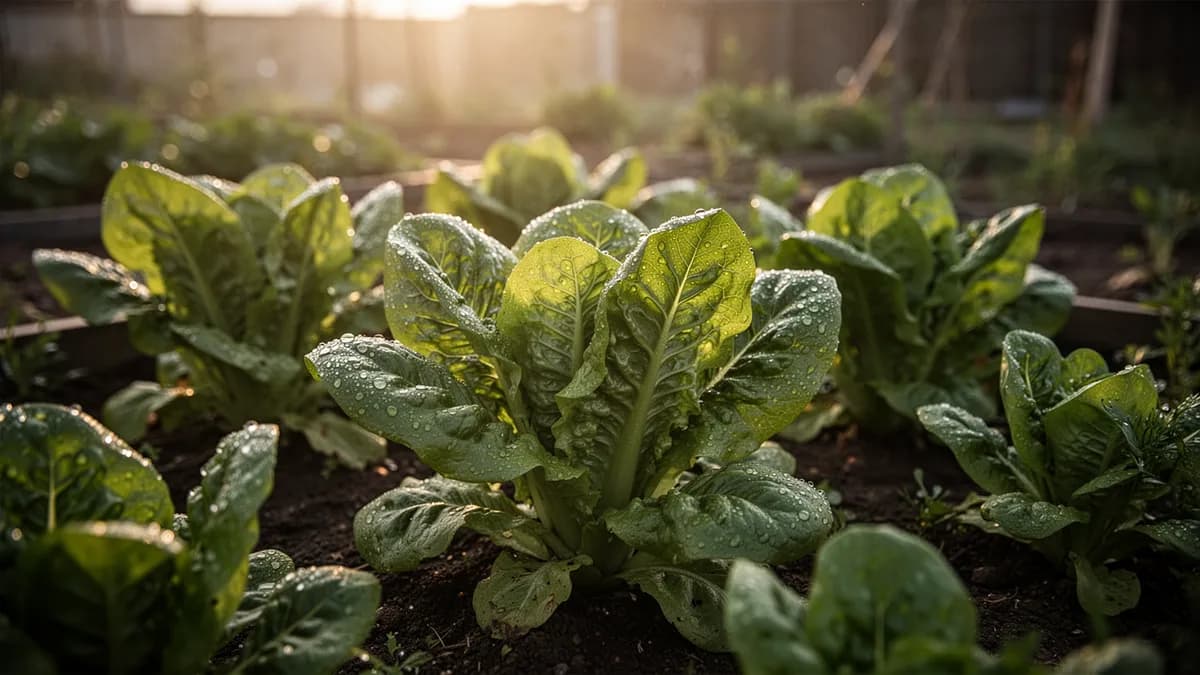
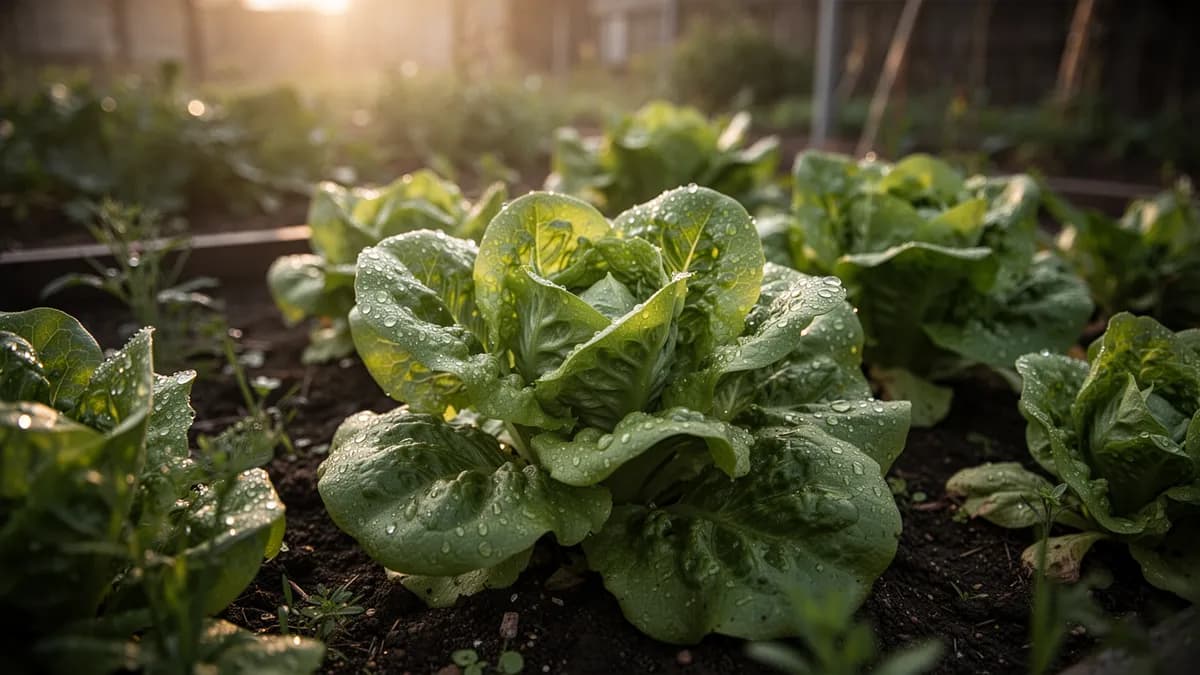
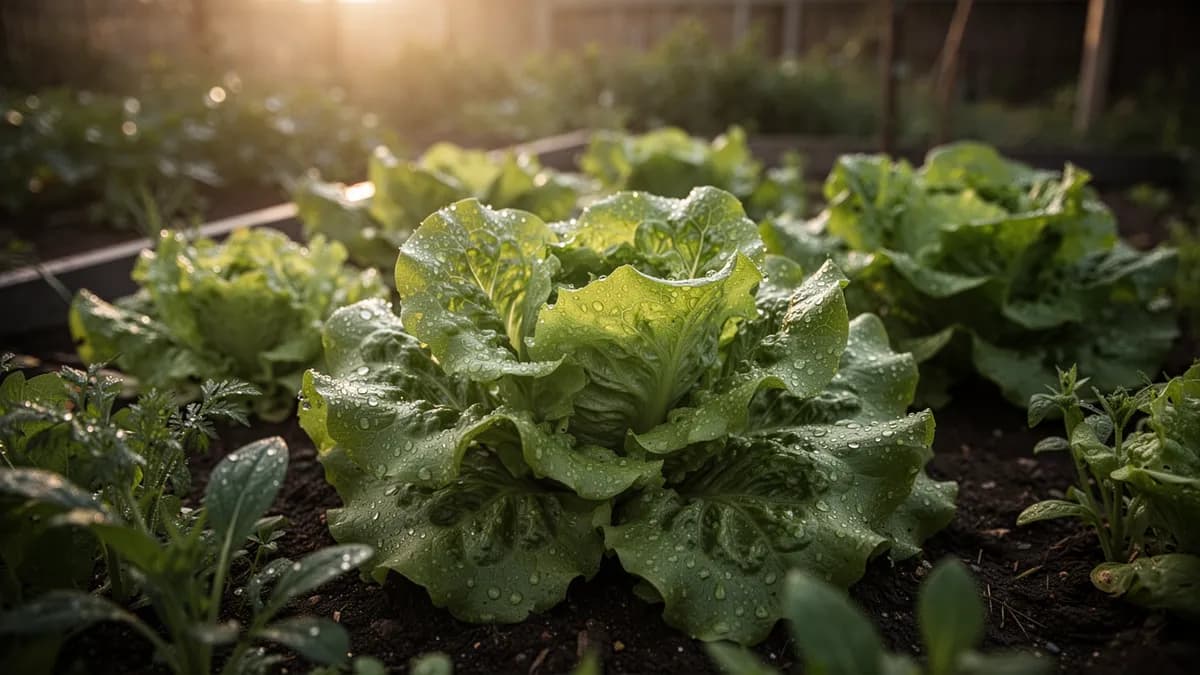
La planta produce rápidamente nuevas hojas desde el punto de crecimiento central, formando una roseta vertical y compacta, claramente más pequeña que una romana estándar. Las hojas exteriores se oscurecen hasta un verde medio mientras las interiores permanecen más claras. El característico crujido dulce de Little Gem comienza a desarrollarse a medida que las hojas se engrosan.
Formación del corazón
Las hojas más internas empiezan a doblarse firmemente hacia adentro, formando el corazón denso y blanqueado que hace tan apreciada a Little Gem. Las hojas envolventes exteriores protegen el corazón del sol, creando un efecto natural de blanqueo que produce un interior pálido, dulce y excepcionalmente crujiente. La cabeza se nota más firme al apretarla suavemente.
Ventana de cosecha
Las cabezas alcanzan su tamaño ideal de cosecha con 12 a 15 cm de alto y 8 a 10 cm de ancho, con un peso de 150 a 200 g cada una. La cabeza debe sentirse firme y densa al apretarla suavemente por los lados. Little Gem se mantiene bien en el huerto durante 7 a 10 días después de alcanzar la madurez antes de mostrar signos de espigado, ofreciendo una ventana de cosecha generosa en comparación con muchas variedades de lechuga.
Espigado
Si no se cosecha, el tallo central se alarga rápidamente cuando la planta pasa a la floración. La cabeza se afloja y se abre, las hojas se vuelven cada vez más amargas y aparece un tallo floral alto con pequeñas flores amarillas parecidas a margaritas. Aunque la lechuga ya no sirve para comer, las flores atraen insectos beneficiosos y se pueden guardar semillas para futuras siembras.
Siembra las semillas a no más de 3 mm de profundidad: la lechuga necesita luz para germinar y enterrarlas demasiado es la causa más común de una mala germinación. Mantén el sustrato constantemente húmedo con un pulverizador de niebla fina para no desplazar las semillas diminutas.
Cuidar Lechuga Little Gem mes a mes
Qué hacer cada mes para tu Lechuga Little Gem
Octubre
Mes actualHarvest autumn-maturing heads at their peak — cool-grown Little Gem is often the best of the entire year. In mild climates (zones 7-10), continue sowing for late autumn and early winter harvest under protection. Apply row covers or cloches to extend the season.
Ten claro qué hacer en tu huerto, cada mes
Un correo al empezar cada mes: qué sembrar, plantar y hacer ahora mismo — para tu Lechuga Little Gem y todo lo que crece alrededor. Más un breve curso inicial para esquivar los errores clásicos.
- Qué hacer ahora mismo
- Ajustado a tu temporada
- Curso inicial incluido
Cosechar Lechuga Little Gem
Coseche la lechuga Little Gem cuando el cogollo esté firme y compacto al tacto, generalmente entre 50 y 65 días después de la siembra. Corte la planta completa a nivel del suelo con un cuchillo afilado, preferiblemente por la mañana temprano cuando las hojas están más crujientes e hidratadas.
se supone que plantas al comenzar el periodo — indica tu fecha real
Cosecha cuando las cabezas estén firmes y compactas, unos 50 a 60 días después de la siembra, antes de que el centro empiece a alargarse.
Almacenamiento y conservación
Conserve los cogollos enteros sin lavar en el cajón de verduras del refrigerador, envueltos en papel de cocina húmedo dentro de una bolsa perforada, donde duran de 7 a 10 días. Lave las hojas justo antes de consumir. No es apta para congelación ni deshidratación, por lo que se consume siempre fresca.
Qué falla — y cómo solucionarlo
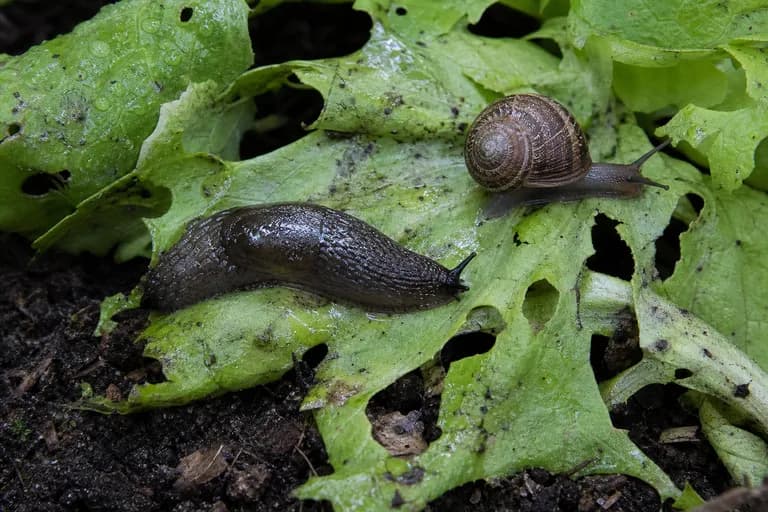
Caracoles y babosas
PlagaAgujeros irregulares en las hojas, especialmente en las más bajas y tiernas. Rastros de baba brillante visibles por la mañana en el suelo y sobre las plantas.
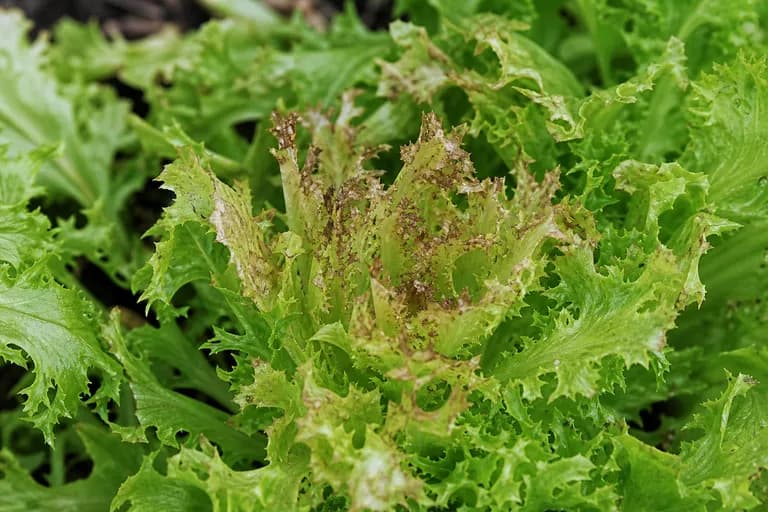
Mildiu velloso (Bremia lactucae)
EnfermedadManchas amarillas angulares en el haz de las hojas con un moho blanco grisáceo en el envés. Las hojas afectadas se secan y mueren prematuramente.
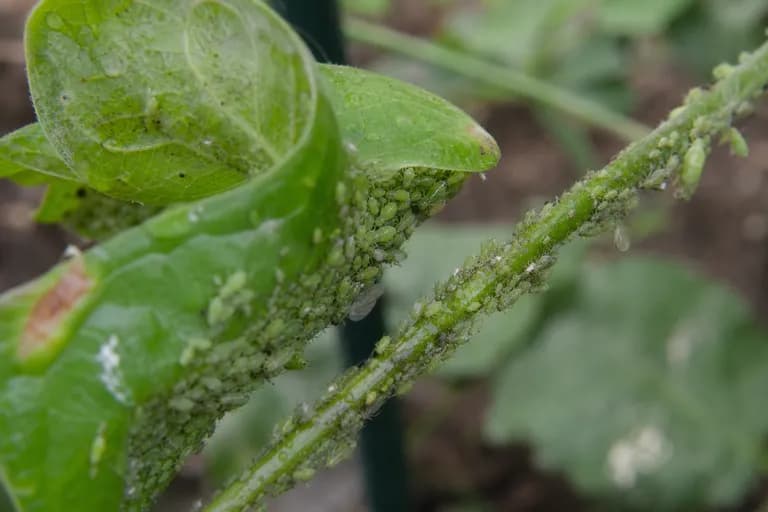
Pulgón de la lechuga
PlagaColonias de pequeños insectos verdes o rosados en el envés de las hojas y entre las hojas internas del cogollo. Causan enrollamiento y deformación de las hojas.
Solución de problemas comunes
El problema más común es la espigadura prematura causada por temperaturas superiores a 25°C o estrés hídrico, que hace que la planta produzca un tallo floral y las hojas se vuelvan amargas. También es susceptible a la podredumbre basal en suelos encharcados y al quemado de los bordes de las hojas por falta de calcio o riego irregular.
Consejos de cultivo
- Succession sow every 2-3 weeks from early spring to late summer for a continuous harvest. A single sowing produces heads that all mature within the same narrow window, so staggering plantings is essential to avoid a feast-or-famine cycle.
- Sow seeds on the surface and press gently into the soil — never bury them. Lettuce is a light-dependent germinator and seeds covered by more than 3-5mm of soil will have dramatically reduced germination rates.
- If sowing in summer when soil temperatures exceed 25°C (77°F), pre-chill seeds in the refrigerator for 24-48 hours before sowing and sow in the late afternoon when soil is cooling. This breaks heat-induced dormancy that prevents germination.
- Space plants 15-20 cm apart in all directions for the most efficient use of space. Little Gem's compact upright habit means it needs significantly less room than a standard romaine, making it ideal for intensive raised bed planting and square-foot gardening.
- Maintain even soil moisture throughout the growing period — lettuce has a shallow root system and cannot draw water from deep soil layers. Irregular watering causes bitter flavor, tip burn on inner leaves, and premature bolting.
- Apply a thin layer of organic mulch (straw, grass clippings, or compost) around plants after transplanting to keep roots cool, retain moisture, and suppress weeds. In hot weather, mulch can reduce soil temperature by 3-5°C, significantly delaying bolting.
- Provide 30-50% shade cloth in summer heat to extend the growing season into warmer months. Little Gem is more heat-tolerant than most lettuces, but shade keeps roots cool and flavor sweet when temperatures exceed 24°C (75°F).
- Harvest the whole head by cutting at the base with a sharp knife, leaving a 2 cm stump. Little Gem can sometimes regenerate a smaller second head from the stump within 3-4 weeks, giving you a bonus harvest from the same planting.
Cultiva tu mejor Lechuga Little Gem — y todo lo que la rodea.
Empieza un plan gratis hoy. Diseña tus bancales, coloca tu Lechuga Little Gem y deja que PlotMyGarden gestione el momento, el espaciado, las asociaciones y los recordatorios de la semilla a la cesta.
Elige tu Lechuga Little Gem
Little Gem
La variedad clásica original con cogollos compactos de color verde brillante, hojas crujientes y corazón dulce y tierno. Madura en 50-60 días.
Little Gem Pearl
Versión mejorada con mayor resistencia al mildiu y espigadura. Cogollos algo más grandes y uniformes, ideales para producción comercial. Madura en 55-65 días.
Mini Green
Variedad similar a Little Gem pero con hojas más oscuras y mayor tolerancia al calor. Excelente para cultivo de verano con protección solar. Madura en 50-58 días.
Sucrine
Variedad mediterránea emparentada, muy popular en Francia y España. Cogollos alargados con hojas gruesas, extremadamente dulce y crujiente. Madura en 55-65 días.
Little Gem lettuce heads retail for $2-4 each or $5-8 per bag of two at grocery stores, and premium organic heads fetch even more at farmers markets. A single $3 packet of seeds contains 500-1000 seeds — enough to grow an entire season of lettuce from spring to autumn. Growing 10-15 plants in succession throughout the season can save $80-150 on fresh lettuce, and the flavor of garden-fresh Little Gem harvested minutes before serving is incomparably superior to anything available in stores, where heads are typically 3-7 days old by the time they reach the shelf.
Recetas rápidas
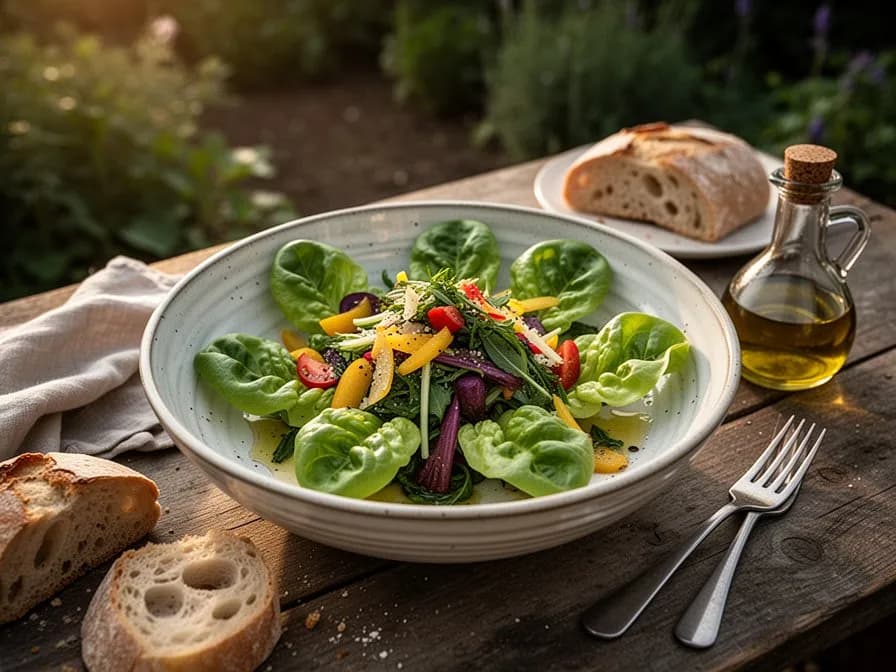
Grilled Little Gem with Anchovy Dressing
15 minLittle Gem's sturdy leaves hold up brilliantly on a hot grill — charring the cut surface caramelizes the natural sugars while the dense heart stays cool and crunchy. A punchy anchovy-lemon dressing and shaved Parmesan make this a showstopping side dish or light main.
8 ingredientesLittle Gem Lettuce Cups with Asian Chicken
20 minThe cupped leaves of Little Gem make them nature's perfect edible bowls. Filled with savory minced chicken in a sweet-salty sauce, they deliver a satisfying crunch in every bite with no utensils required — perfect as a light dinner or party appetizer.
9 ingredientesClassic Little Gem Caesar Salad
15 minLittle Gem was practically made for Caesar salad — the compact hearts can be halved or quartered and dressed without wilting, and their natural sweetness pairs beautifully with the bold, garlicky dressing. A modern bistro staple that elevates this classic.
8 ingredientesUsos culinarios
La Little Gem es perfecta para ensaladas César individuales, ya que sus cogollos compactos pueden servirse cortados por la mitad o en cuartos como base. Su textura crujiente la hace ideal para sándwiches, wraps y hamburguesas. También se puede asar brevemente a la parrilla con aceite de oliva, creando un plato sofisticado con bordes caramelizados.
Qué contiene
Beneficios para la salud
- Extremely rich in vitamin A and beta-carotene — the darker outer leaves provide up to 120% of the daily value per 100g, supporting healthy vision, immune function, and skin cell renewal.
- Good source of vitamin K (approximately 85% DV per 100g), which plays a critical role in blood clotting and calcium regulation for maintaining strong bones.
- Contains lutein and zeaxanthin, two carotenoid antioxidants concentrated in the retina that are strongly linked to reduced risk of age-related macular degeneration and cataracts.
- Provides folate (vitamin B9) important for DNA synthesis and cell division, making lettuce a valuable dietary component during pregnancy and for cardiovascular health.
- Very high water content (approximately 95%) combined with dietary fiber makes Little Gem an excellent food for hydration, satiety, and digestive regularity while contributing virtually no calories.
- Contains small amounts of the natural compound lactucarium in the milky stem sap, which has been traditionally associated with mild calming and sleep-promoting properties — ancient Egyptians and Romans used lettuce as a mild sedative.
De dónde viene Lechuga Little Gem
Little Gem lettuce is a heritage variety that originated in England during the mid-1800s, where it was first cataloged as a compact, sweet-hearted lettuce ideal for small kitchen gardens. It is classified as a semi-cos (romaine) type, sitting uniquely between the butterhead and romaine categories with characteristics of both — the tender sweetness of a butterhead and the crisp, upright structure of a romaine. The variety quickly became a staple in British and French market gardens, where its compact size, reliable performance, and exceptional flavor earned it lasting popularity among both amateur gardeners and professional growers.
In France, where it is known as Sucrine, Little Gem became deeply embedded in bistro and home cooking traditions. French chefs prized it for its dense, naturally blanched hearts that could be halved and served as an elegant single portion — a presentation that remains a hallmark of French and Mediterranean salad courses to this day. The variety spread throughout Europe and eventually to North America, Australia, and beyond, though it remained relatively obscure in the United States until the farm-to-table restaurant movement of the early 2000s introduced it to American diners and home cooks.
Today, Little Gem enjoys worldwide popularity and is grown commercially across Europe, North America, and parts of Asia and Australia. In the United Kingdom, it consistently ranks as one of the top-selling lettuce varieties, outselling iceberg in many supermarket chains. Modern plant breeders have developed improved strains with enhanced disease resistance and even greater bolt tolerance, but the essential character of Little Gem — compact, sweet, crunchy, and perfectly portioned — remains true to the original Victorian-era variety that charmed English gardeners more than 150 years ago.
Lechuga Little Gem: ¿sabías que?
Datos fascinantes sobre Lechuga Little Gem
Little Gem is a true miniature romaine that was developed in England in the mid-19th century, and despite the rise and fall of countless lettuce varieties over the decades, it has remained continuously popular for over 150 years — a remarkable testament to its exceptional flavor and adaptability.
Lechuga Little Gem: preguntas frecuentes
¿Cuándo debo plantar Lechuga Little Gem?
¿Cuáles son buenas plantas acompañantes para Lechuga Little Gem?
¿En qué zonas de rusticidad puede crecer Lechuga Little Gem?
¿Cuánto sol necesita Lechuga Little Gem?
¿A qué distancia debo espaciar Lechuga Little Gem?
¿Qué plagas y enfermedades afectan a Lechuga Little Gem?
¿Cómo almaceno Lechuga Little Gem después de la cosecha?
¿Cuáles son las mejores variedades de Lechuga Little Gem para cultivar?
¿Qué suelo necesita Lechuga Little Gem?
Why are my Little Gem lettuce seeds not germinating?
Why is my Little Gem lettuce bitter?
Can I grow Little Gem lettuce in containers?
How long does Little Gem lettuce last after harvesting?
What is the difference between Little Gem and romaine lettuce?
Can I grow Little Gem lettuce year-round?
Acabas de leer la teoría. Ahora cultívala en piloto automático.
Todo lo que hace que Lechuga Little Gem sea delicado — el momento, el espaciado, las asociaciones, la ventana de cosecha — es justo lo que PlotMyGarden resuelve por ti, para cada planta de tu huerto.
Un plan que conoce tu clima
Indica tu ubicación una vez. Recibe fechas de siembra, abonado y cosecha basadas en tu última helada real y el pronóstico en vivo — sin adivinar con un sobre genérico.
De la sección “Cuándo plantar”Planificador de bancales de arrastrar y soltar
Diseña bancales sobre una cuadrícula. Cada planta encaja con su espaciado correcto y ves toda la temporada antes de gastar un céntimo en semillas.
De la sección “Cultivo”Conflictos de asociación, detectados a tiempo
Más de 200 buenas y malas combinaciones comprobadas en vivo mientras plantas — para que un error que arruine la temporada nunca llegue a la tierra.
De la sección “Asociaciones”Recordatorios que sí vas a seguir
“Riega las judías.” “Recoge hoy antes de que se pase.” Oportunos, concretos y ligados a las plantas que de verdad cultivas.
De la sección “Cosecha”Escalonado, programado
¿Quieres cosechar seis semanas en vez de seis días? Reparte tus siembras automáticamente y te avisa cuando toca el siguiente lote.
De la sección “Cuándo plantar”Un registro que se vuelve más listo
Cada cosecha que registras le enseña tu huerto. El plan del año que viene parte de lo que de verdad funcionó en tu suelo, no en un manual.
De la sección “Resumen”Planta estos junto a Lechuga Little Gem
Más Hortalizas de hoja
Diseños de jardín con Lechuga Little Gem
Cultiva tu mejor Lechuga Little Gem — y todo lo que la rodea.
Empieza un plan gratis hoy. Diseña tus bancales, coloca tu Lechuga Little Gem y deja que PlotMyGarden gestione el momento, el espaciado, las asociaciones y los recordatorios de la semilla a la cesta.