Frijol Ojo de Cabra
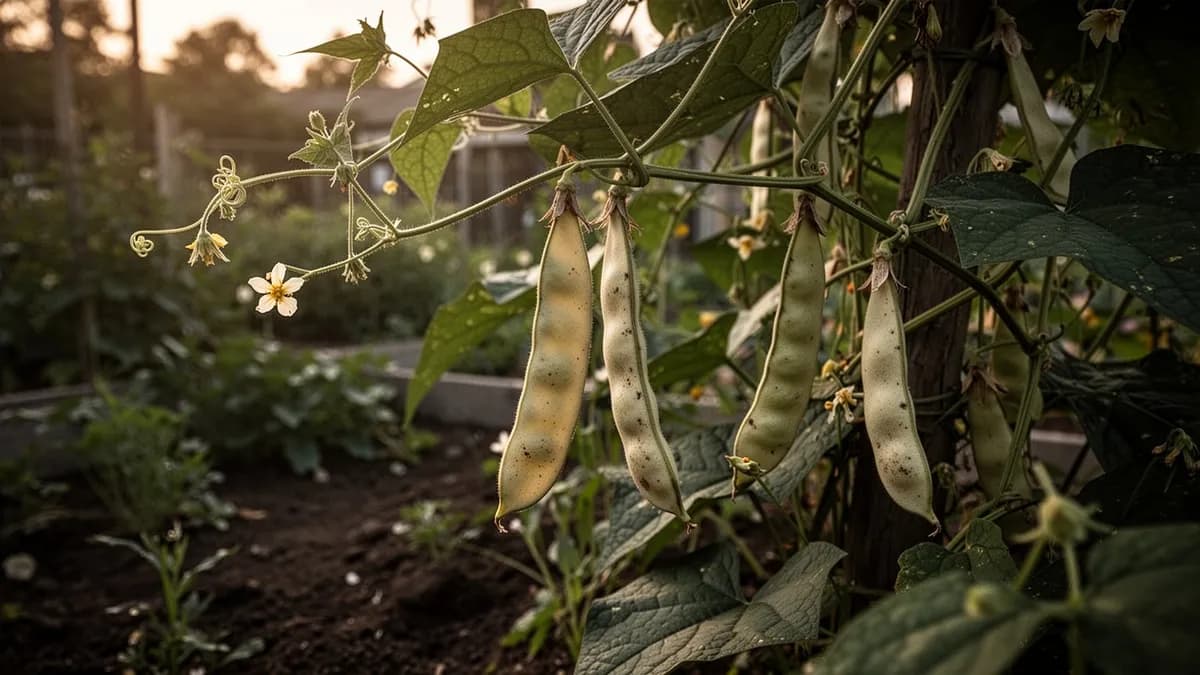
El frijol ojo de cabra (Phaseolus vulgaris) es una variedad heredada y rara de frijol seco originaria de América Central, caracterizada por sus semillas redondeadas de color crema con un llamativo patrón circular marrón que recuerda al ojo de una cabra.





En esta páginaResumen
Conoce Frijol Ojo de Cabra
El frijol ojo de cabra (Phaseolus vulgaris) es una variedad heredada y rara de frijol seco originaria de América Central, caracterizada por sus semillas redondeadas de color crema con un llamativo patrón circular marrón que recuerda al ojo de una cabra. Además de su valor ornamental, es un frijol de excelente sabor cremoso y textura suave, muy apreciado en la cocina tradicional latinoamericana.
Cuándo plantar Frijol Ojo de Cabra
Siembre directamente en el lugar definitivo después de la última helada, cuando el suelo alcance 18°C. Remoje las semillas durante 8-12 horas antes de la siembra para acelerar la germinación. Plante a 3-5 cm de profundidad, con la semilla orientada con el ojo hacia abajo. La germinación ocurre en 7-14 días dependiendo de la temperatura del suelo.
Tu año de Frijol Ojo de Cabra
Ajustado a Zona 7 · temporada típica · la helada se va hacia el 2 abr y vuelve hacia el 1 nov
Planta Frijol Ojo de Cabra May – Jun y cosecha Ago – Sep. Consulta los métodos de plantación y elige tu clima para adaptar los periodos.
Cómo cultivar Frijol Ojo de Cabra
El frijol ojo de cabra se siembra directamente en el suelo después de que haya pasado todo riesgo de heladas y la temperatura del suelo alcance al menos 18°C. Siembre las semillas a 3-5 cm de profundidad y con un espaciado de 10-15 cm entre plantas, en hileras separadas 60-75 cm. Como variedad trepadora, necesita tutores, enrejados o postes de al menos 2 metros de altura para su correcto desarrollo.
Durante el crecimiento, mantenga el suelo uniformemente húmedo pero no encharcado, especialmente durante la floración y la formación de vainas. Aplique una capa de mantillo orgánico para conservar la humedad y controlar las malas hierbas. Evite fertilizantes ricos en nitrógeno, ya que las leguminosas fijan su propio nitrógeno mediante bacterias simbióticas en las raíces.
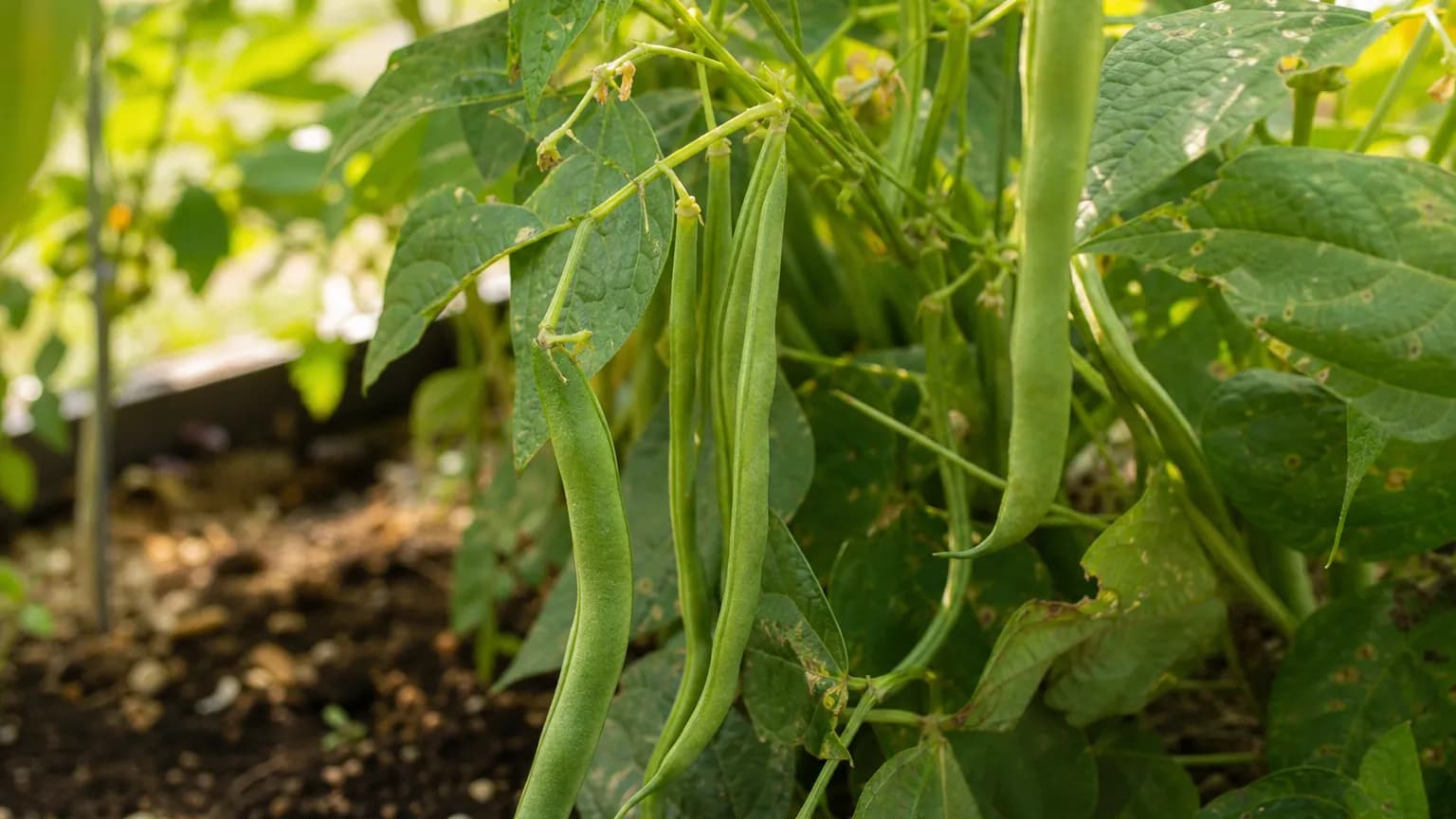
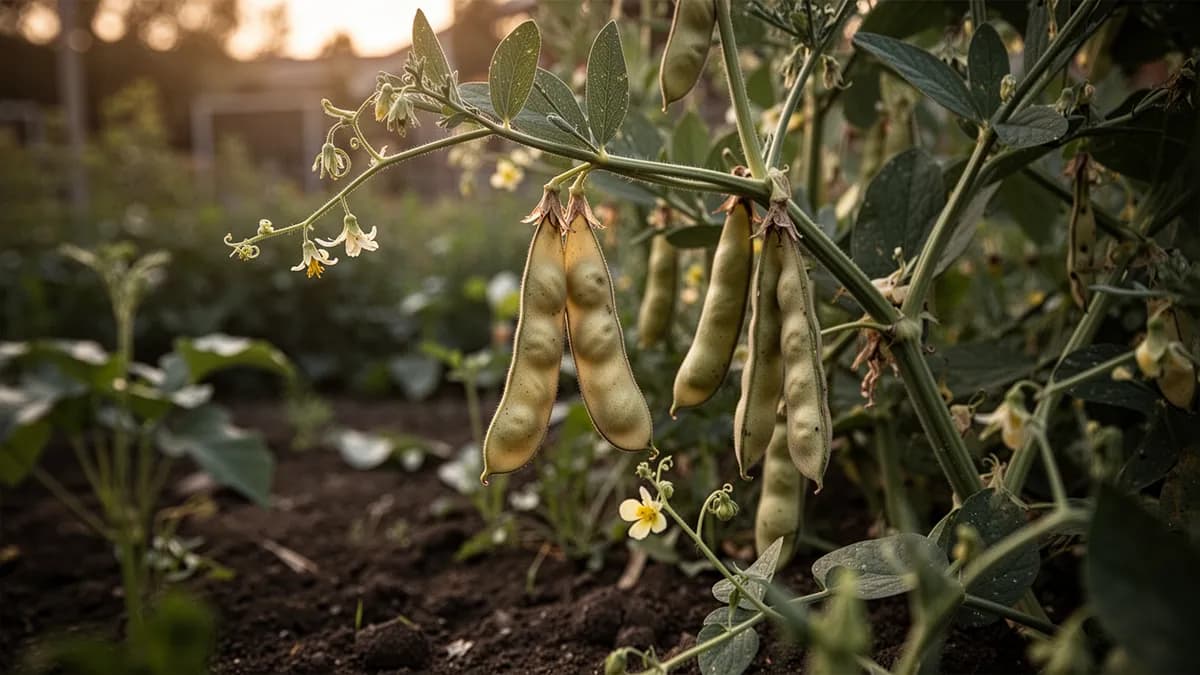
La planta produce flores blancas o lilas seguidas de vainas largas y delgadas que contienen 4-6 semillas cada una. Para obtener frijoles secos, deje las vainas en la planta hasta que estén completamente secas y crujientes. Si el clima es lluvioso durante la maduración, corte las plantas enteras y cuélguelas boca abajo en un lugar seco y ventilado para completar el secado.
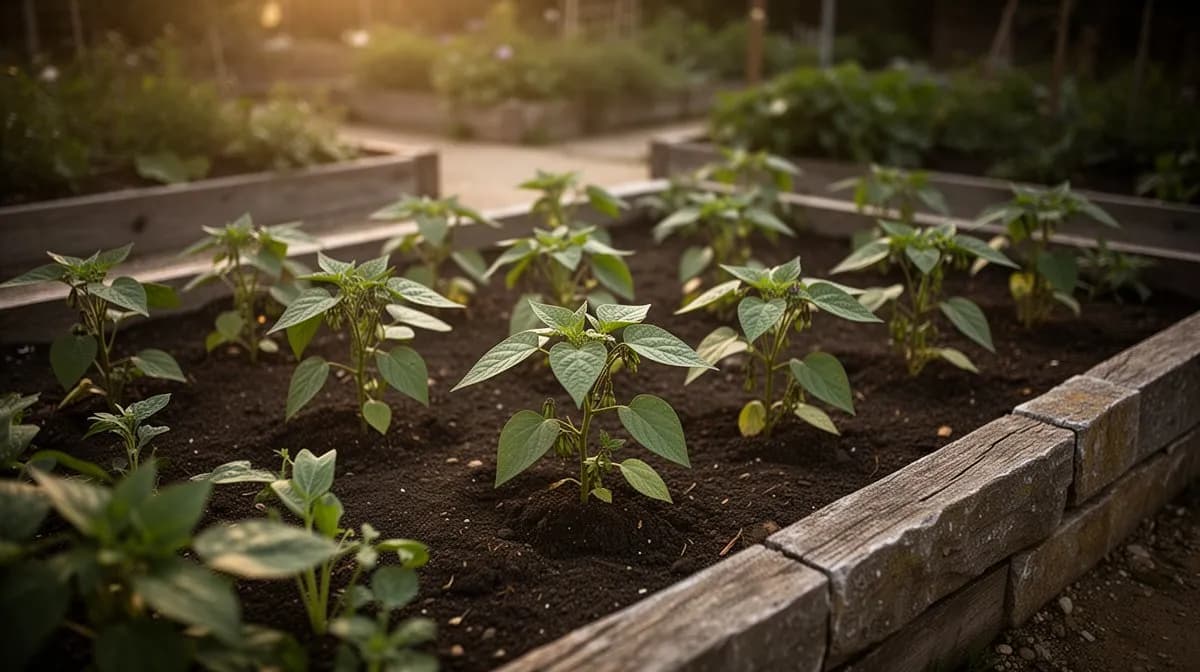
128 plantas caben en un bancal de 120 × 240 cm
Cada Frijol Ojo de Cabra pide 15 cm de margen. El planificador guarda ese marco por ti — cada planta, cada bancal.
Los mejores vecinos de Frijol Ojo de Cabra
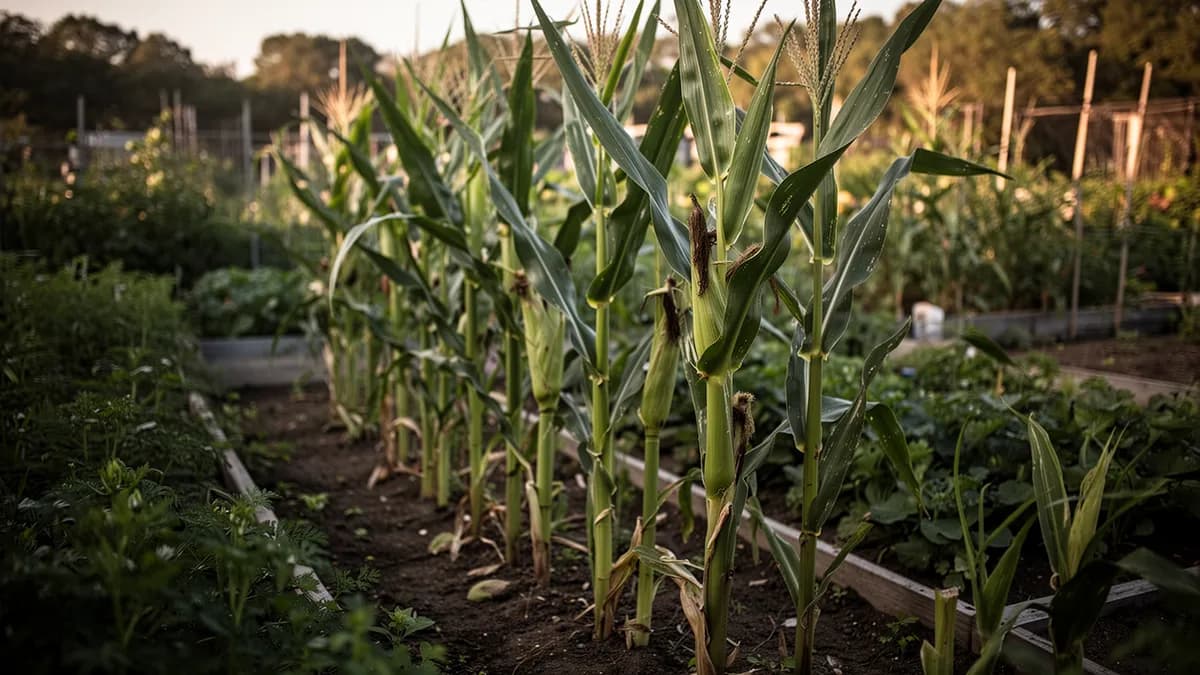
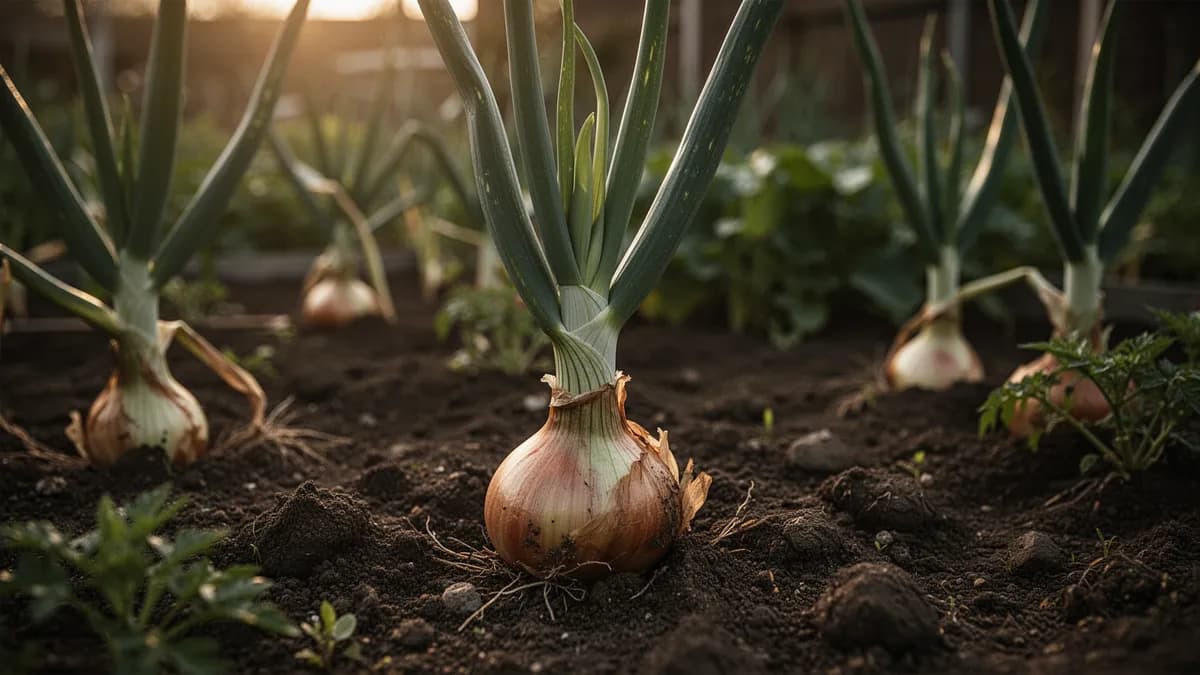
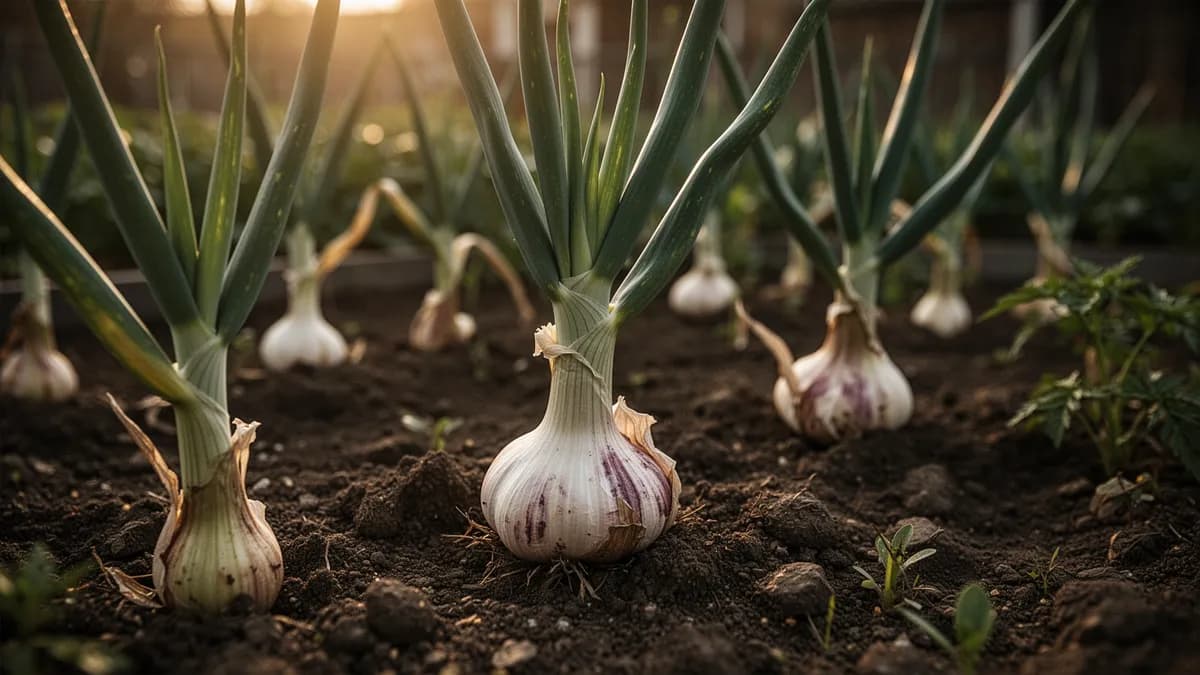
Se beneficia enormemente de la asociación con maíz, que sirve de tutor natural, y calabaza, que sombrea el suelo y retiene la humedad, formando la clásica milpa mesoamericana. También prospera junto a zanahorias, remolachas y hierbas aromáticas. Evite plantar cerca de cebollas, ajos y otras alliums que pueden inhibir el crecimiento de leguminosas.
Maíz va a su lado. Cebolla no.
Saber de huerto de siempre, cotejado con la tabla real de Frijol Ojo de Cabra — prueba cualquier planta que cultives.
Prueba Frijol Ojo de Cabra en un bancal, aquí mismo
Un bancal real del planificador con Frijol Ojo de Cabra ya plantado. Toca una planta compañera para colocarla y mira cómo responde la comprobación de vecinos: verde para buenos vecinos, rojo si hay conflicto.


Guías de cultivo relacionadas
Abónalo bien
Requiere un suelo bien drenado, suelto y moderadamente fértil con un pH entre 6,0 y 7,0. Como leguminosa, fija nitrógeno atmosférico a través de nódulos bacterianos en las raíces, por lo que no necesita fertilización nitrogenada adicional. Aplique fósforo y potasio según las necesidades del suelo, y enriquezca con compost antes de la siembra.
Temperatura ideal
Compatibilidad de zonas de rusticidad
De la semilla a la cosecha, etapa por etapa
Germinación
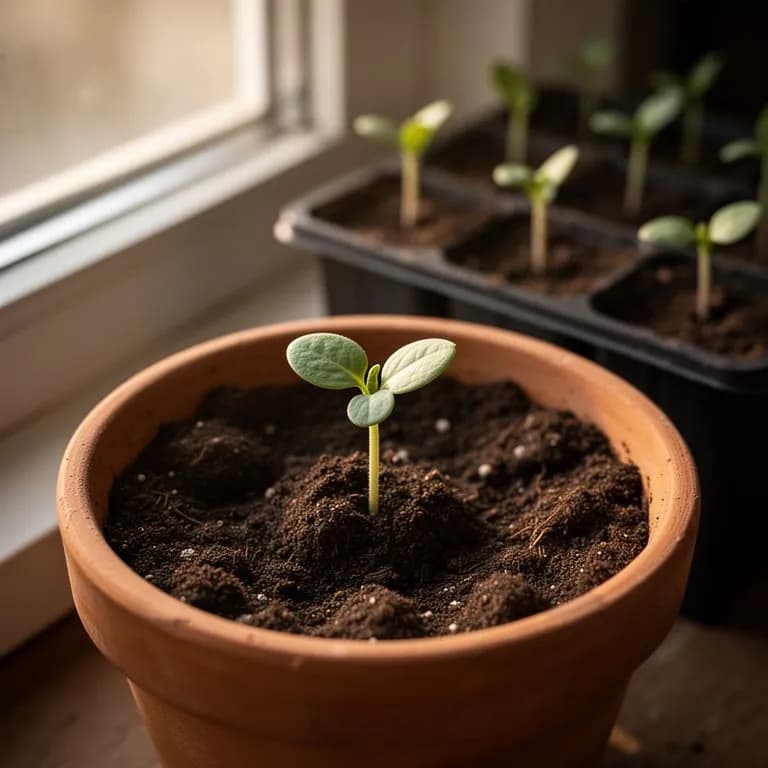
Las semillas se hinchan y se abren en un suelo cálido y húmedo. Primero emerge la radícula, seguida por el hipocótilo que eleva los cotiledones sobre la superficie del suelo.
Desarrollo de plántulas
Las primeras hojas verdaderas se despliegan y comienzan a formarse los nódulos radiculares mientras se establece la simbiosis fijadora de nitrógeno.
Crecimiento de la planta
Las plantas crecen rápidamente, llenándose de follaje denso y adoptando una forma de mata fuerte y compacta.
Desarrollo de las vainas
Las vainas verdes se forman rápidamente y las semillas se hinchan en su interior; pueden cosecharse tiernas o dejarse madurar para grano seco.
Cosecha y secado
Las vainas se vuelven marrones y papiráceas mientras las semillas se endurecen y la planta entra en senescencia.
Almacenamiento y conservación de semilla
Las judías secas se curan y almacenan para el invierno, mientras se seleccionan las mejores semillas para la próxima siembra.
Siembra las semillas a 5 cm de profundidad en suelo bien drenado cuando las temperaturas sean de forma estable cálidas. Remojarlas antes de sembrar puede acelerar la germinación.
Cuidar Frijol Ojo de Cabra mes a mes
Qué hacer cada mes para tu Frijol Ojo de Cabra
Octubre
Mes actualComplete dry bean harvest. Shell beans from dried pods and spread in a single layer on screens to cure for 5-7 days in a dry, well-ventilated area. Remove spent vines but leave roots in the soil — the nitrogen-rich nodules will decompose and feed next season's crops.
Ten claro qué hacer en tu huerto, cada mes
Un correo al empezar cada mes: qué sembrar, plantar y hacer ahora mismo — para tu Frijol Ojo de Cabra y todo lo que crece alrededor. Más un breve curso inicial para esquivar los errores clásicos.
- Qué hacer ahora mismo
- Ajustado a tu temporada
- Curso inicial incluido
Cosechar Frijol Ojo de Cabra
Para frijoles secos, deje las vainas en la planta hasta que estén completamente secas y se escuche el traqueteo de las semillas al agitarlas, generalmente entre 85-95 días después de la siembra. Coseche en un día seco y extienda las vainas al sol para un secado final antes de desgranar. Para frijoles frescos tipo shell bean, coseche cuando las vainas estén llenas pero aún verdes, alrededor de los 70 días.
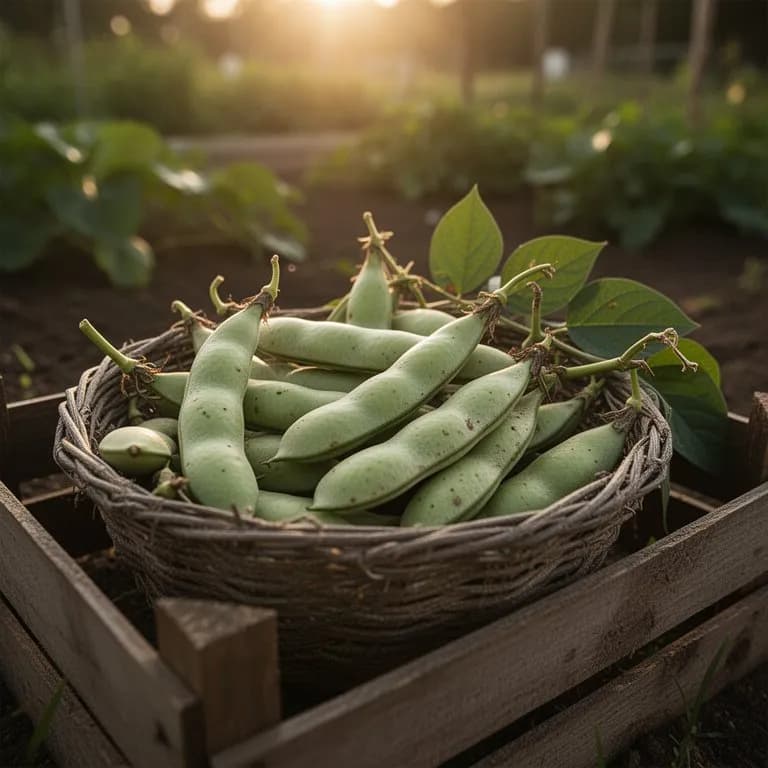
se supone que plantas al comenzar el periodo — indica tu fecha real
Cosecha las judías verdes cuando las vainas estén gruesas y aún verdes, o deja que las vainas se sequen para obtener judías secas
Almacenamiento y conservación
Los frijoles secos se almacenan en recipientes herméticos en un lugar fresco, oscuro y seco, donde se conservan durante 2-3 años manteniendo su viabilidad culinaria. Para mayor protección contra gorgojos, congele los frijoles durante 48 horas antes de almacenarlos. Los frijoles frescos tipo shell bean se refrigeran hasta una semana o se blanquean y congelan para conservación prolongada.
Qué falla — y cómo solucionarlo
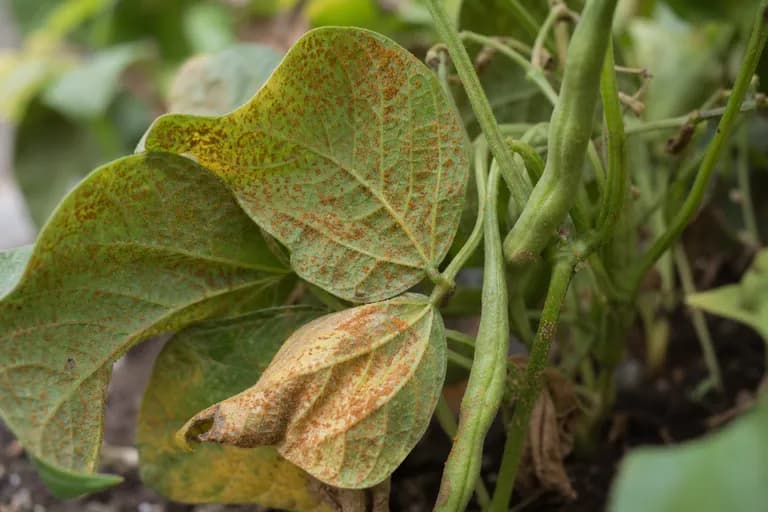
Gorgojo del frijol
PlagaPequeños agujeros redondos en las semillas almacenadas, con presencia de polvo fino. Las larvas se desarrollan dentro de los granos, destruyendo el interior y dejando las semillas huecas e inservibles.
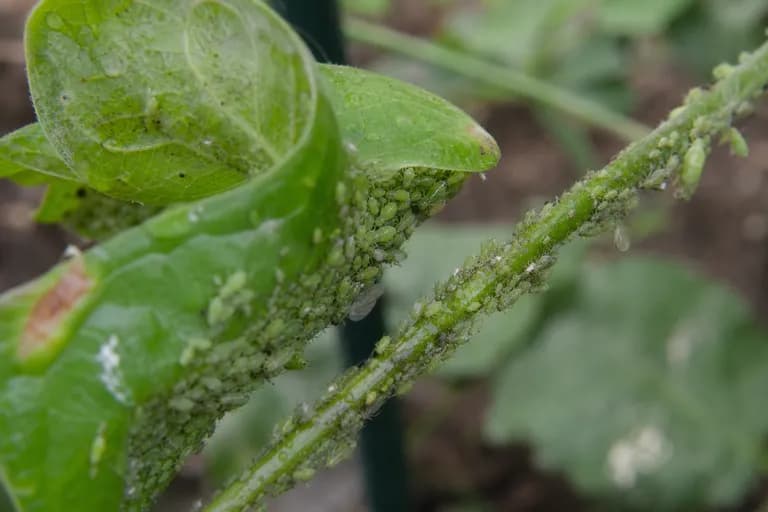
Antracnosis
EnfermedadManchas oscuras hundidas de color marrón a negro en vainas, tallos y hojas, a menudo con bordes rojizos. En condiciones húmedas, las manchas producen esporas rosadas. Las vainas severamente afectadas producen semillas manchadas y deformes.
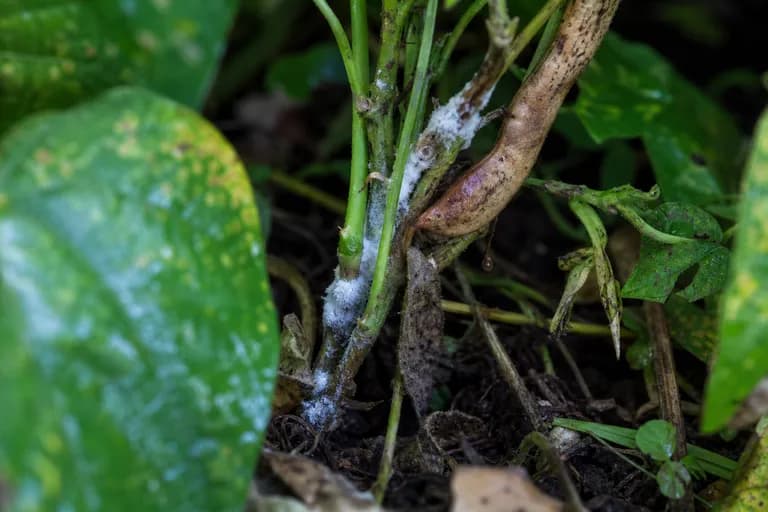
Mosca blanca
PlagaPequeños insectos blancos alados en el envés de las hojas que vuelan al moverlas. Producen melaza pegajosa que favorece el crecimiento de fumagina negra. Las hojas se amarillean y la planta pierde vigor.
Solución de problemas comunes
La pudrición de vainas es el problema más común cuando el clima es lluvioso durante la maduración, lo que puede arruinar toda la cosecha de frijoles secos. Coseche rápidamente si se pronostican lluvias prolongadas. Otro problema frecuente es el bajo rendimiento por polinización inadecuada o estrés hídrico durante la floración.
Consejos de cultivo
- Direct-sow only — never start beans indoors. Eye of Goat beans, like all common beans, have sensitive taproots that are easily damaged during transplanting, leading to stunted plants and reduced yields. Always sow seeds directly where they will grow.
- Inoculate seeds with Rhizobium leguminosarum inoculant before planting, especially if beans have not been grown in that bed within the past 3 years. This inexpensive treatment ensures the nitrogen-fixing symbiosis establishes quickly, eliminating the need for nitrogen fertilizer.
- Provide sturdy support from day one. Eye of Goat is a vigorous pole-type bean that will reach 2-3 meters. Use bamboo teepees, sturdy trellises, or string supports attached to a strong overhead frame. Flimsy supports will collapse under the weight of a mature, pod-laden vine.
- Water deeply at the soil level and avoid wetting foliage. Drip irrigation or soaker hoses are ideal. Overhead sprinklers promote bacterial blight, anthracnose, and other foliar diseases that can devastate a bean crop. Morning watering is best if overhead irrigation is your only option.
- Never work among bean plants when the foliage is wet from rain or dew. Walking through wet bean rows spreads bacterial and fungal diseases from plant to plant with alarming speed. Wait until leaves are completely dry before harvesting, training vines, or weeding.
- Practice strict 3-4 year crop rotation. Do not plant beans in the same bed where any legume (beans, peas, lentils) grew within the past 3 years. Soil-borne diseases like white mold, root rot, and bean common mosaic virus persist in soil and build up with repeated plantings.
- For the best dried beans, stop watering once 75% of pods have turned from green to tan. The final drying phase on the vine concentrates flavor and ensures even moisture content across the harvest. Beans dried on the plant cook more evenly than those pulled green and dried artificially.
- Save your own seed by selecting the healthiest, most productive plants and allowing their best pods to dry completely on the vine. Eye of Goat is an open-pollinated heirloom that breeds true from saved seed, saving you money and preserving this important variety for future generations.
Cultiva tu mejor Frijol Ojo de Cabra — y todo lo que la rodea.
Empieza un plan gratis hoy. Diseña tus bancales, coloca tu Frijol Ojo de Cabra y deja que PlotMyGarden gestione el momento, el espaciado, las asociaciones y los recordatorios de la semilla a la cesta.
Elige tu Frijol Ojo de Cabra
Ojo de Cabra Clásico
La variedad tradicional con el patrón circular marrón sobre fondo crema. Frijol de mata alta trepadora con vainas de 15-18 cm que contienen 5-6 semillas. Madura en aproximadamente 90 días.
Steuben Yellow Eye
Variedad heredada emparentada con patrón de ojo amarillo-dorado. Crecimiento semi-determinado que requiere soporte mínimo. Excelente para horneado al estilo Boston.
Yin Yang
Variedad decorativa bicolor en blanco y negro con patrón simétrico. Además de ornamental, ofrece un sabor suave y cremoso ideal para ensaladas de frijoles.
Good Mother Stallard
Variedad heredada de los Apalaches con semillas moteadas en púrpura y blanco. Trepadora vigorosa muy productiva con excelente sabor para sopas y guisos.
Heirloom dried beans like Eye of Goat sell for $8-16 per pound at specialty stores and farmers markets, and are rarely available in conventional grocery stores at any price. A single $3-4 seed packet produces 10-15 plants yielding 2-4 kg of dried beans total — equivalent to $35-130 worth of specialty market beans. Beyond the direct savings, homegrown beans are fresher (current-year harvest cooks faster and tastes better than multi-year-old commercial beans) and you can save seed year after year, eliminating future seed costs entirely.
Recetas rápidas
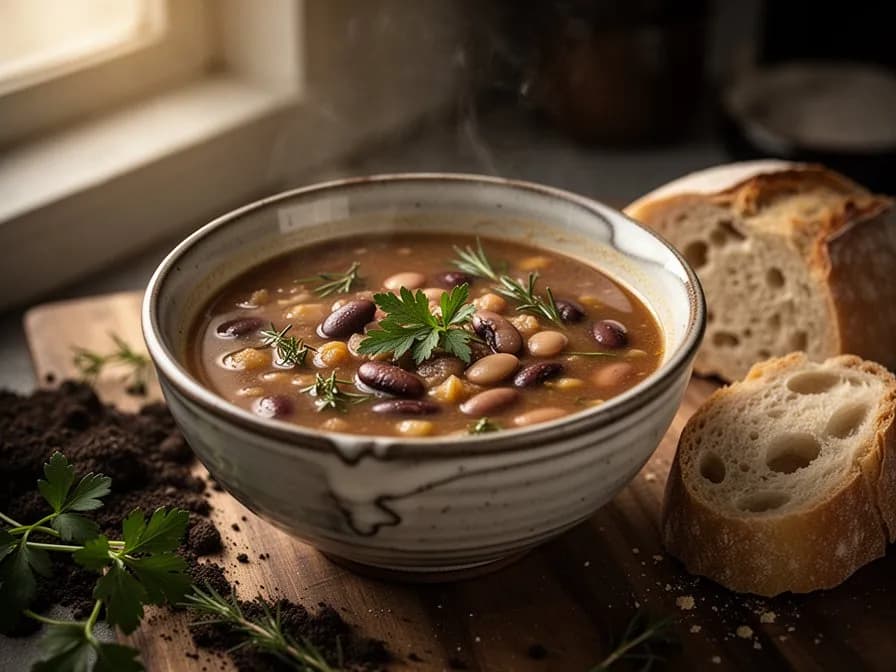
Eye of Goat Bean Stew with Tomatoes and Herbs
50 minA hearty, rustic bean stew where the Eye of Goat beans hold their shape beautifully while absorbing the rich flavors of tomatoes, garlic, and fresh herbs. The beans develop a creamy interior with a satisfying bite that makes this a standout one-pot meal.
11 ingredientesEye of Goat Bean Salad with Lemon Vinaigrette
25 minA bright, protein-packed salad that showcases the beautiful markings of these heirloom beans. The firm texture holds up perfectly when tossed with crunchy vegetables and a sharp lemon dressing, making it ideal for meal prep or summer entertaining.
9 ingredientesSmoky Refried Eye of Goat Beans
30 minA flavorful twist on classic refried beans using the naturally creamy Eye of Goat variety. Mashed with smoky spices and caramelized onion, these make an irresistible filling for burritos, a dip for tortilla chips, or a side for grilled meats.
9 ingredientesUsos culinarios
Los frijoles ojo de cabra son excelentes en sopas, guisos y estofados tradicionales, donde desarrollan una textura cremosa y un sabor suave y ligeramente dulce. Se utilizan en platos como frijoles charros, minestrone y cassoulet. También son ideales para ensaladas de frijoles fríos, hummus de frijoles y como guarnición horneada con hierbas.
Qué contiene
Beneficios para la salud
- Exceptional plant-based protein source providing roughly 23g per 100g of dried beans — when paired with rice or corn tortillas, Eye of Goat beans form a complete protein with all essential amino acids.
- Very high in dietary fiber (over 15g per 100g), which promotes digestive regularity, feeds beneficial gut bacteria, and has been shown to reduce cholesterol levels and improve cardiovascular health markers.
- Rich in folate (vitamin B9), providing over 90% of the daily value per 100g serving — essential for DNA synthesis, cell division, and particularly critical during early pregnancy for preventing neural tube defects.
- Contains resistant starch that passes through the upper digestive tract undigested, acting as a prebiotic in the colon and helping to regulate blood sugar response after meals — beneficial for people managing type 2 diabetes.
- Excellent source of iron (5-7mg per 100g) and zinc, two minerals often lacking in plant-based diets — pairing beans with vitamin C-rich foods like tomatoes or peppers significantly enhances iron absorption.
- Regular bean consumption is strongly associated with reduced risk of heart disease, colorectal cancer, and metabolic syndrome in large population studies — partly due to the combined effects of fiber, potassium, magnesium, and phytochemicals.
De dónde viene Frijol Ojo de Cabra
The Eye of Goat bean (Ojo de Cabra) is an heirloom variety of the common bean (Phaseolus vulgaris) with deep roots in the agricultural traditions of northern Mexico and the American Southwest. Common beans were first domesticated in Mesoamerica at least 7,000 years ago, with a secondary center of domestication in the Andes region of South America. Archaeological bean remains from caves in the Tehuacan Valley of Mexico and the Guitarrero Cave in Peru provide evidence of this ancient relationship between humans and beans that stretches back millennia.
The Eye of Goat variety specifically evolved in the arid highlands of Chihuahua, Durango, and Zacatecas in northern Mexico, where indigenous Tarahumara, Tepehuan, and other farming communities selected it over generations for its ability to thrive in harsh, dry conditions with extreme temperature swings between day and night. The bean's drought tolerance made it an essential food security crop in a region where rainfall is scarce and unpredictable. Spanish colonial records from the 16th and 17th centuries mention distinctively marked beans traded in regional markets, and Ojo de Cabra has been a fixture in northern Mexican cuisine ever since — prized in frijoles de olla, refried beans, and hearty ranch-style stews.
The variety spread northward along trade routes into what is now New Mexico, Arizona, and Texas, where it was adopted by both Native American communities and later by Anglo settlers drawn by its reliable performance in hot, dry climates. Today, Eye of Goat beans are experiencing a resurgence among heirloom seed savers, small-scale farmers, and chefs who value their beautiful appearance, superior cooking qualities, and rich cultural heritage. Seed libraries and organizations like Native Seeds/SEARCH actively preserve and distribute this variety, recognizing it as an important piece of living agricultural history adapted to the challenging growing conditions of the American Southwest and northern Mexico.
Frijol Ojo de Cabra: ¿sabías que?
Datos fascinantes sobre Frijol Ojo de Cabra
The Eye of Goat bean (Ojo de Cabra) gets its evocative name from the distinctive brown ring pattern on each cream-colored bean that closely resembles the slit-pupiled eye of a goat — no two beans have exactly the same marking, making each one uniquely beautiful.
Frijol Ojo de Cabra: preguntas frecuentes
¿Cuándo debo plantar Frijol Ojo de Cabra?
¿Cuáles son buenas plantas acompañantes para Frijol Ojo de Cabra?
¿En qué zonas de rusticidad puede crecer Frijol Ojo de Cabra?
¿Cuánto sol necesita Frijol Ojo de Cabra?
¿A qué distancia debo espaciar Frijol Ojo de Cabra?
¿Qué plagas y enfermedades afectan a Frijol Ojo de Cabra?
¿Cómo almaceno Frijol Ojo de Cabra después de la cosecha?
¿Cuáles son las mejores variedades de Frijol Ojo de Cabra para cultivar?
¿Qué suelo necesita Frijol Ojo de Cabra?
Do Eye of Goat beans need to be soaked before cooking?
Can Eye of Goat beans be eaten as green beans or only as dried beans?
Why are the leaves on my Eye of Goat bean plants turning yellow?
How do I store dried Eye of Goat beans for maximum shelf life?
Are Eye of Goat beans good for nitrogen fixing in my garden?
What pests and diseases should I watch for with Eye of Goat beans?
Acabas de leer la teoría. Ahora cultívala en piloto automático.
Todo lo que hace que Frijol Ojo de Cabra sea delicado — el momento, el espaciado, las asociaciones, la ventana de cosecha — es justo lo que PlotMyGarden resuelve por ti, para cada planta de tu huerto.
Un plan que conoce tu clima
Indica tu ubicación una vez. Recibe fechas de siembra, abonado y cosecha basadas en tu última helada real y el pronóstico en vivo — sin adivinar con un sobre genérico.
De la sección “Cuándo plantar”Planificador de bancales de arrastrar y soltar
Diseña bancales sobre una cuadrícula. Cada planta encaja con su espaciado correcto y ves toda la temporada antes de gastar un céntimo en semillas.
De la sección “Cultivo”Conflictos de asociación, detectados a tiempo
Más de 200 buenas y malas combinaciones comprobadas en vivo mientras plantas — para que un error que arruine la temporada nunca llegue a la tierra.
De la sección “Asociaciones”Recordatorios que sí vas a seguir
“Riega las judías.” “Recoge hoy antes de que se pase.” Oportunos, concretos y ligados a las plantas que de verdad cultivas.
De la sección “Cosecha”Escalonado, programado
¿Quieres cosechar seis semanas en vez de seis días? Reparte tus siembras automáticamente y te avisa cuando toca el siguiente lote.
De la sección “Cuándo plantar”Un registro que se vuelve más listo
Cada cosecha que registras le enseña tu huerto. El plan del año que viene parte de lo que de verdad funcionó en tu suelo, no en un manual.
De la sección “Resumen”Planta estos junto a Frijol Ojo de Cabra
Más Legumbres
Mantén Frijol Ojo de Cabra lejos de estos
Cultiva tu mejor Frijol Ojo de Cabra — y todo lo que la rodea.
Empieza un plan gratis hoy. Diseña tus bancales, coloca tu Frijol Ojo de Cabra y deja que PlotMyGarden gestione el momento, el espaciado, las asociaciones y los recordatorios de la semilla a la cesta.