Rábano Daikon Japonés
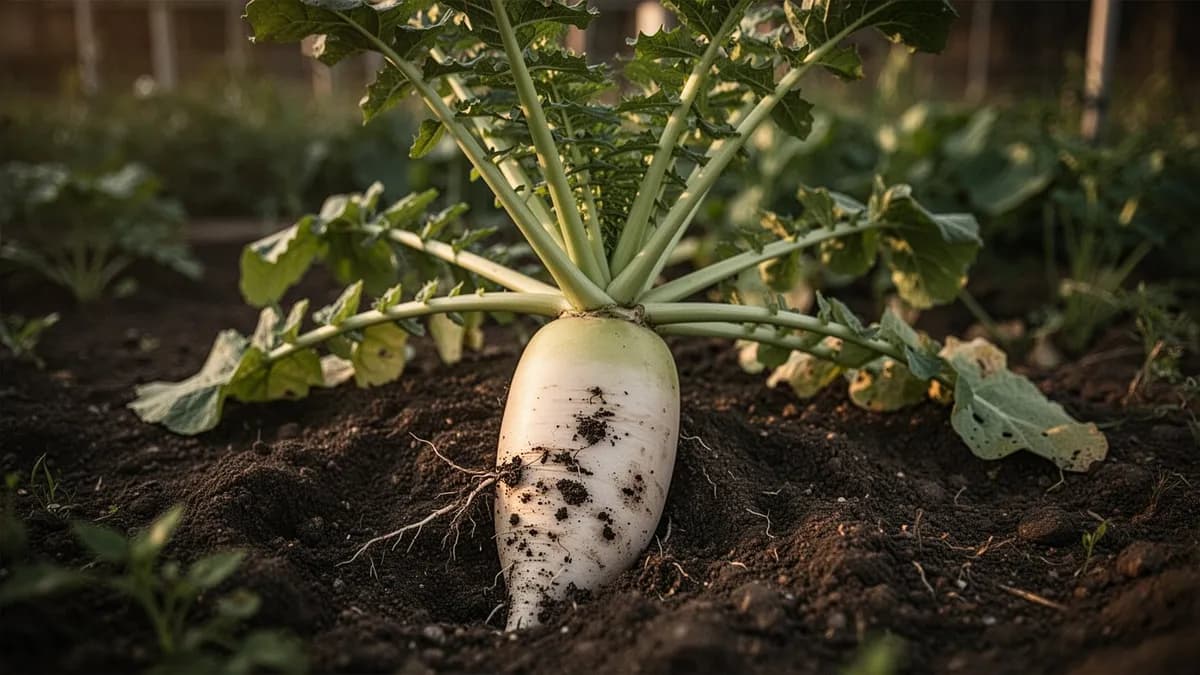
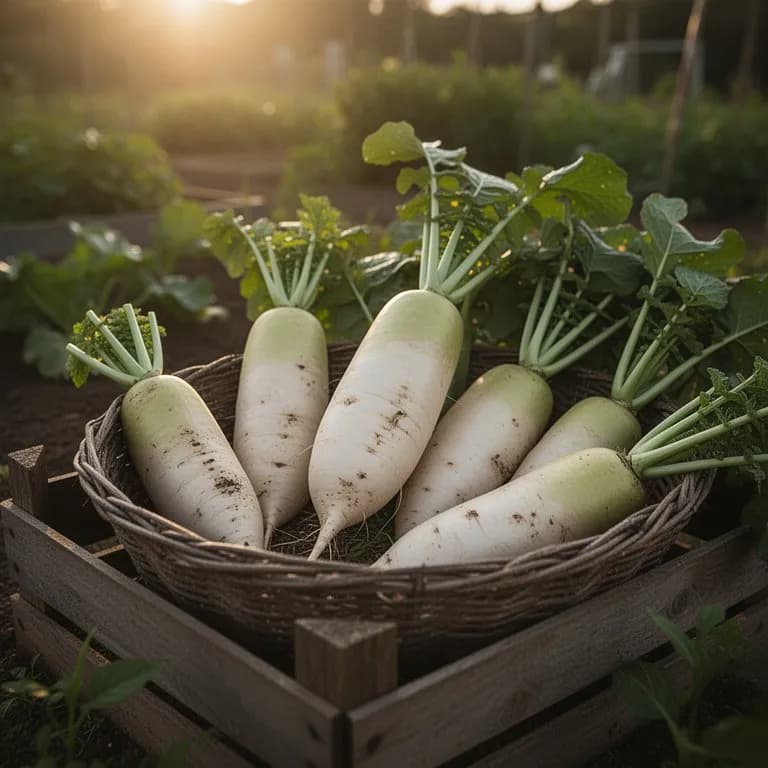
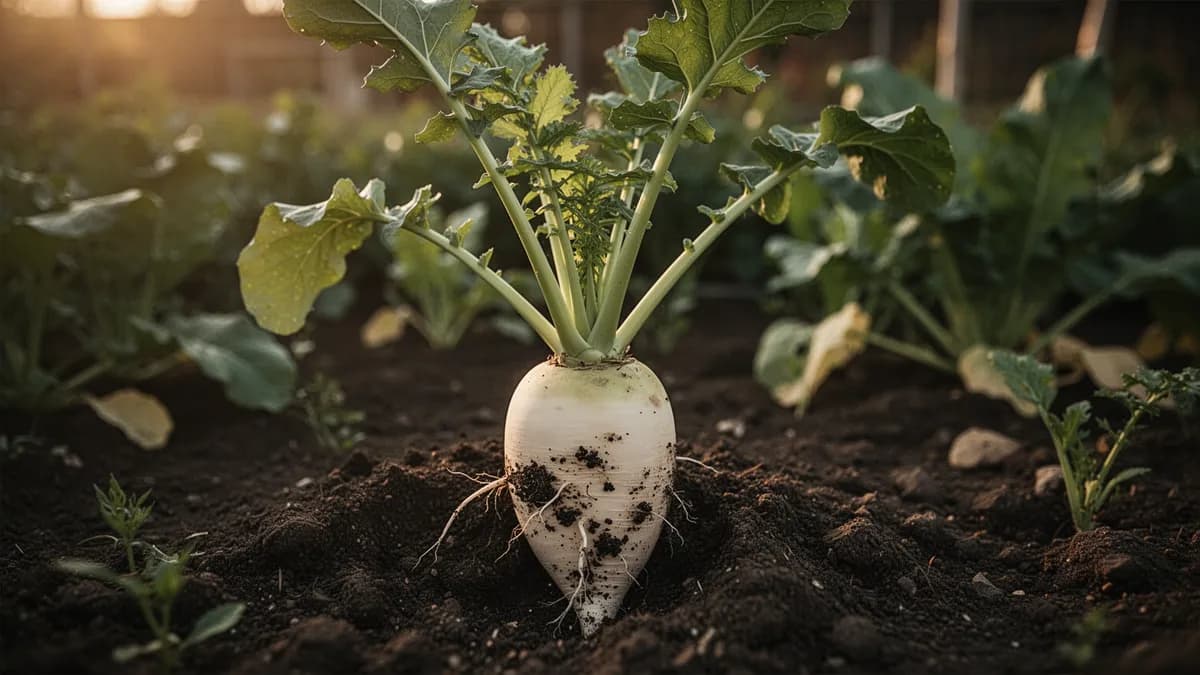
El daikon japonés (Raphanus sativus var. longipinnatus) es un rábano blanco de gran tamaño que puede alcanzar 30-60 cm de longitud y 5-10 cm de diámetro, con carne blanca, jugosa y de sabor suave y ligeramente picante.





En esta páginaResumen
Conoce Rábano Daikon Japonés
El daikon japonés (Raphanus sativus var. longipinnatus) es un rábano blanco de gran tamaño que puede alcanzar 30-60 cm de longitud y 5-10 cm de diámetro, con carne blanca, jugosa y de sabor suave y ligeramente picante. Es una hortaliza fundamental en la cocina japonesa, utilizada cruda rallada, cocida en sopas y estofados, y encurtida como acompañamiento tradicional.
Cuándo plantar Rábano Daikon Japonés
Siembre directamente en el lugar definitivo entre finales de julio y septiembre, ya que el daikon no tolera el trasplante debido a su raíz pivotante. Plante a 1-2 cm de profundidad, distribuyendo 2-3 semillas cada 15 cm. La germinación ocurre en 4-7 días y se aclara dejando la plántula más vigorosa.
Tu año de Rábano Daikon Japonés
Ajustado a Zona 7 · temporada típica · la helada se va hacia el 2 abr y vuelve hacia el 1 nov
Planta Rábano Daikon Japonés Jul – Sep y cosecha Oct – Dic. Consulta los métodos de plantación y elige tu clima para adaptar los periodos.
Cómo cultivar Rábano Daikon Japonés
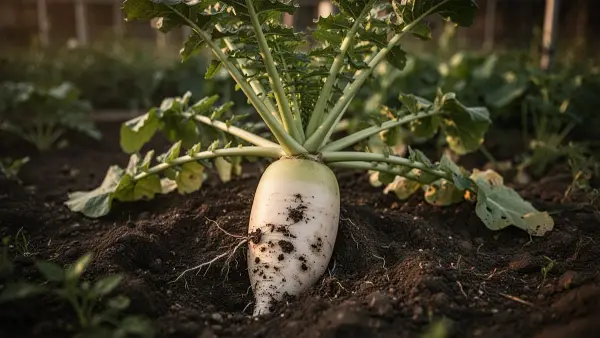
El daikon japonés se cultiva preferentemente como cultivo de otoño, sembrando entre finales de verano y principios de otoño, ya que las temperaturas frescas favorecen raíces largas y suaves sin espigarse. Siembre directamente a 1-2 cm de profundidad en hileras separadas 30-40 cm, aclarando a 15-20 cm entre plantas.
La preparación del suelo es crítica. Trabaje la tierra a una profundidad mínima de 40-50 cm, eliminando piedras, terrones y raíces. Incorpore compost bien descompuesto semanas antes de la siembra, nunca estiércol fresco que provoca ramificación de las raíces.
Mantenga el riego constante y uniforme, ya que la alternancia entre sequía y humedad provoca agrietamiento. Aplique mantillo para conservar la humedad y cuando las raíces empiecen a sobresalir del suelo, apórquelas ligeramente para evitar el verdeo de la parte superior expuesta al sol.
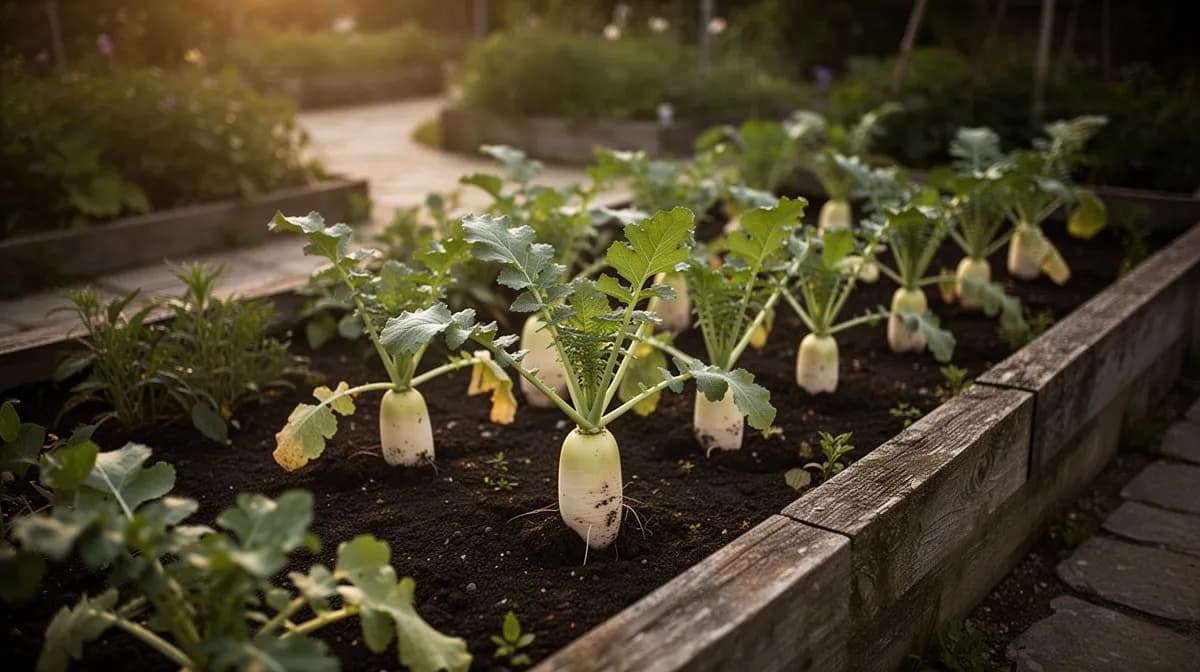
128 plantas caben en un bancal de 120 × 240 cm
Cada Rábano Daikon Japonés pide 15 cm de margen. El planificador guarda ese marco por ti — cada planta, cada bancal.
Los mejores vecinos de Rábano Daikon Japonés
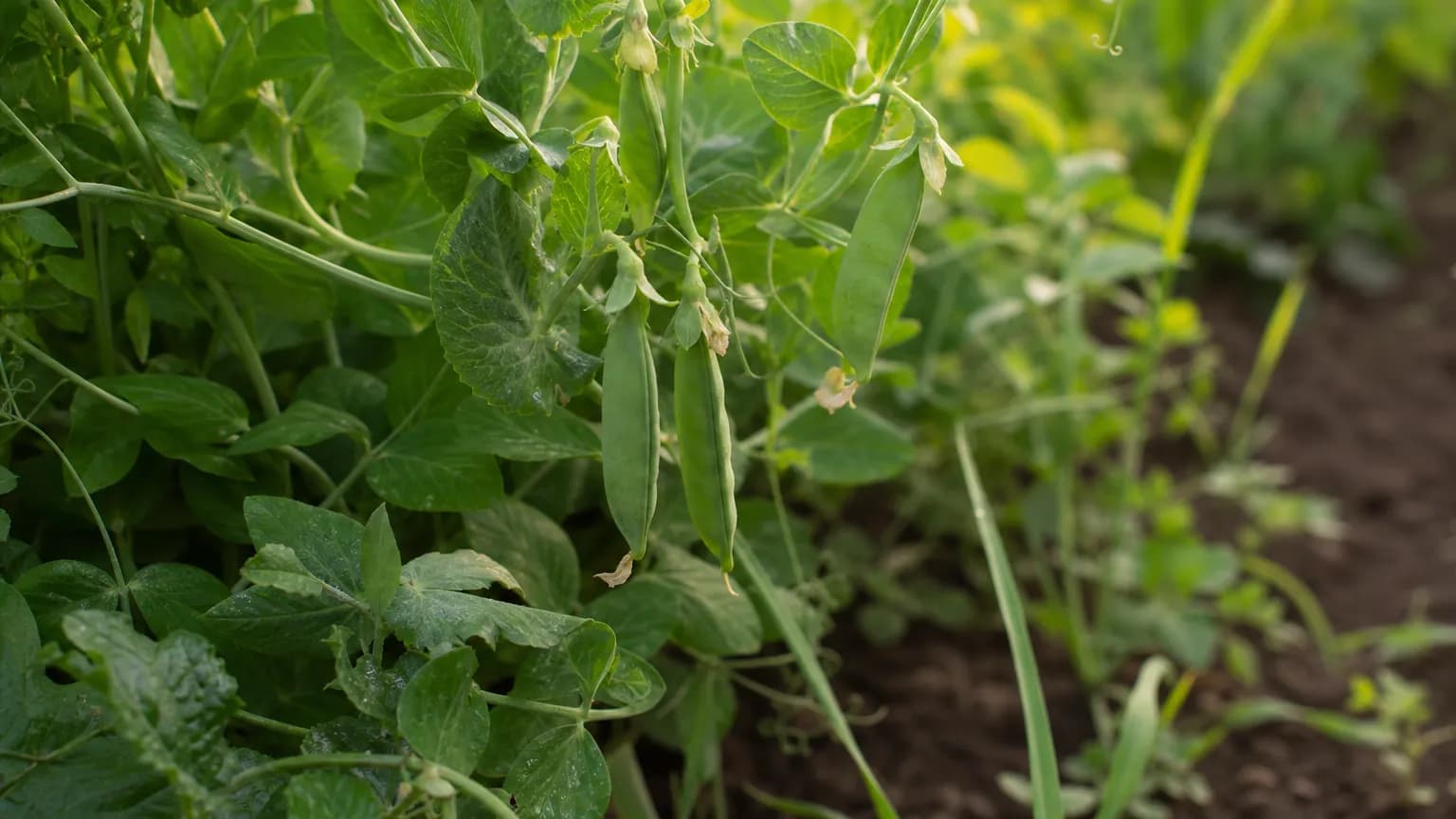
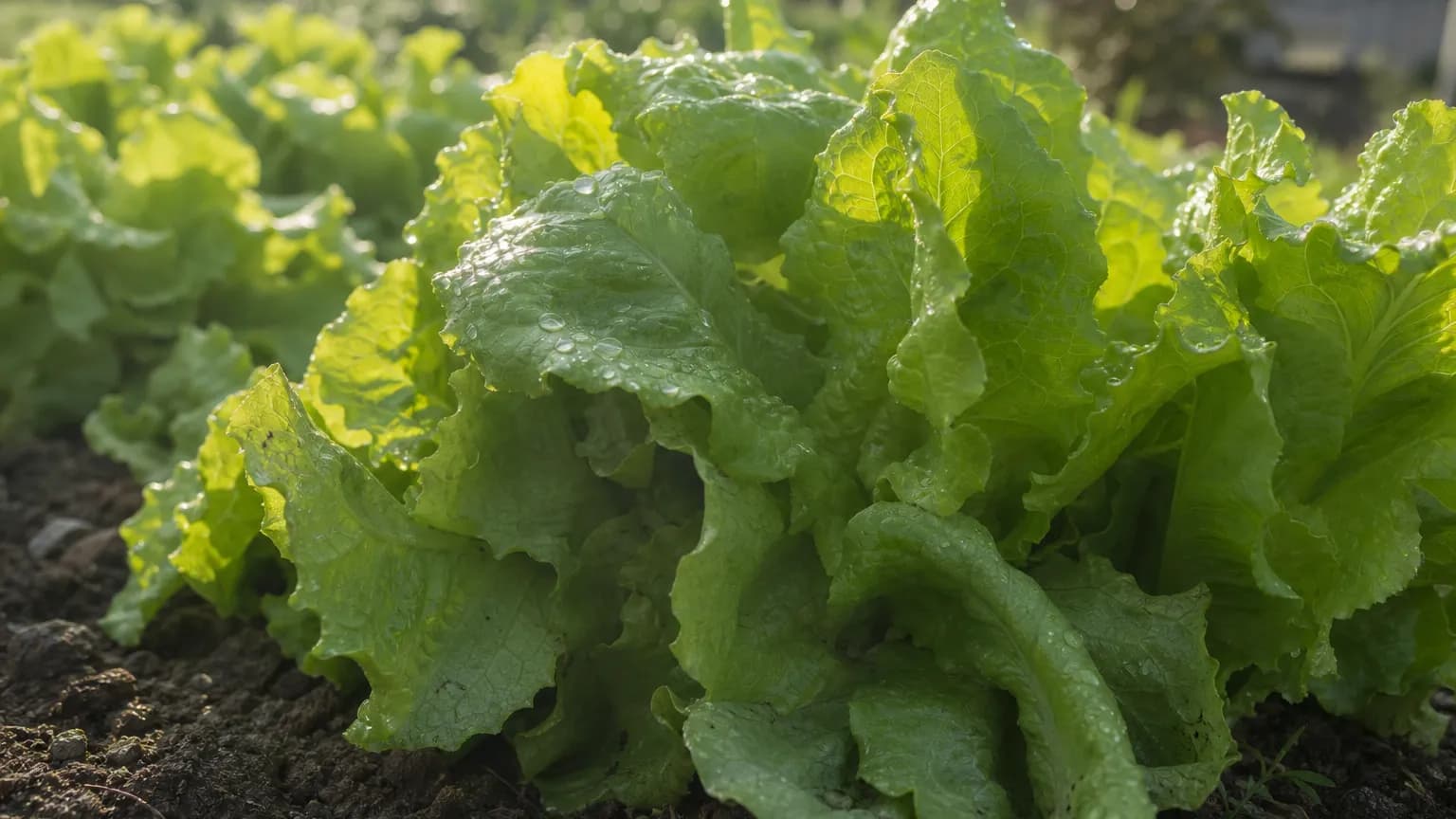
Se asocia bien con guisantes y habas que fijan nitrógeno, lechugas y espinacas que aprovechan el espacio entre hileras, y cilantro como hierba aromática. Evite plantar cerca de otros miembros de la familia de las crucíferas para prevenir la acumulación de plagas compartidas.
Guisantes va a su lado.
Saber de huerto de siempre, cotejado con la tabla real de Rábano Daikon Japonés — prueba cualquier planta que cultives.
Prueba Rábano Daikon Japonés en un bancal, aquí mismo
Un bancal real del planificador con Rábano Daikon Japonés ya plantado. Toca una planta compañera para colocarla y mira cómo responde la comprobación de vecinos: verde para buenos vecinos, rojo si hay conflicto.


Guías de cultivo relacionadas
Abónalo bien
Requiere suelo profundo, suelto y bien drenado con un pH entre 6,0 y 7,0. La preparación profunda es esencial para raíces largas y rectas. Incorpore compost maduro semanas antes de la siembra y evite el estiércol fresco. Aplique fertilizante bajo en nitrógeno y alto en fósforo y potasio.
Temperatura ideal
Compatibilidad de zonas de rusticidad
De la semilla a la cosecha, etapa por etapa
Germinación
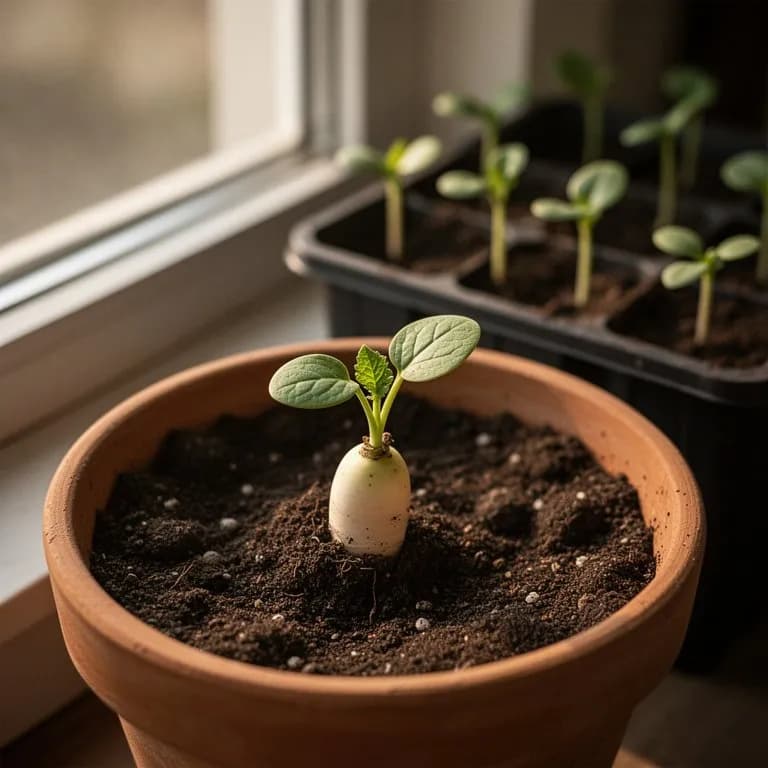
Las semillas de daikon germinan rápidamente en un suelo fresco a templado, y los cotiledones con forma de corazón asoman en tan solo 3-5 días. El daikon se siembra directamente porque su larga raíz principal no tolera el trasplante. La temperatura óptima del suelo para germinar es de 15-25 °C.
Aclareo de plántulas
Las hojas verdaderas desarrollan la forma característica rugosa y lobulada del follaje de las brassicas. Esta es la ventana crítica para el aclareo: las plántulas demasiado apiñadas producen raíces finas y deformes. La raíz principal comienza su rápido crecimiento hacia abajo, y cualquier compactación del suelo o las piedras provocarán bifurcación.
Desarrollo de la roseta foliar
La planta forma una roseta vigorosa de hojas profundamente lobuladas y de textura áspera que puede extenderse 45-60 cm de ancho. El follaje funciona como el motor que impulsa la rápida expansión de la raíz bajo el suelo. Un buen desarrollo de las hojas se correlaciona directamente con el tamaño de la raíz en la cosecha.
Expansión de la raíz
La raíz pivotante entra en su fase de crecimiento más rápido, engrosándose de forma notable y alargándose 1-2 cm por día en condiciones frescas ideales. La corona de la raíz comienza a sobresalir por encima de la línea del suelo. La pulpa interna va formando su textura crujiente y jugosa, así como el sabor suave y dulce que distingue al daikon japonés de otros rábanos más pequeños.
Maduración
Las raíces alcanzan su tamaño completo, normalmente de 30-45 cm de largo y 5-8 cm de diámetro en los tipos Minowase estándar. La piel es lisa, blanca como la porcelana, y la pulpa es densa, jugosa y ligeramente dulce con un suave toque picante. El momento de cosecha es crítico: las raíces demasiado maduras se vuelven esponjosas y huecas.
Ventana de cosecha
La ventana óptima de cosecha dura unas 2 semanas. Al principio de este período, las raíces están en su punto máximo de crujiente y dulzor. A medida que se cierra la ventana, las raíces empiezan a desarrollar una médula esponjosa en el centro y el sabor se vuelve más intensamente picante. Una helada ligera mejora el dulzor porque la planta convierte los almidones en azúcares.
Siembra las semillas a 1-2 cm de profundidad y a 5 cm de distancia en un suelo profundamente aflojado. El daikon debe sembrarse directamente; nunca lo empieces en macetas o bandejas, ya que cualquier alteración de la raíz provoca bifurcación y un crecimiento raquítico.
Cuidar Rábano Daikon Japonés mes a mes
Qué hacer cada mes para tu Rábano Daikon Japonés
Octubre
Mes actualPrime harvest month for autumn-sown daikon. Roots are at peak sweetness after the first light frosts convert starches to sugars. Loosen soil deeply with a fork before pulling. Store in the refrigerator or in damp sand in a cool root cellar.
Ten claro qué hacer en tu huerto, cada mes
Un correo al empezar cada mes: qué sembrar, plantar y hacer ahora mismo — para tu Rábano Daikon Japonés y todo lo que crece alrededor. Más un breve curso inicial para esquivar los errores clásicos.
- Qué hacer ahora mismo
- Ajustado a tu temporada
- Curso inicial incluido
Cosechar Rábano Daikon Japonés
Coseche el daikon cuando las raíces alcancen 30-45 cm de largo y 5-8 cm de diámetro, generalmente entre 50-70 días después de la siembra. Las raíces deben estar firmes y la parte superior que sobresale del suelo debe medir 3-5 cm. Afloje la tierra alrededor antes de tirar para evitar romper la raíz larga y frágil.
se supone que plantas al comenzar el periodo — indica tu fecha real
50 a 70 días después de la siembra, cuando las raíces midan 25 a 40 cm de largo y 5 a 8 cm de diámetro.
Almacenamiento y conservación
El daikon fresco se conserva excelentemente en el refrigerador durante 2-3 meses envuelto en papel húmedo. También puede almacenarse en arena húmeda en un sótano fresco. Para conservación prolongada, se puede encurtir en salmuera, fermentar como takuan, o cortar en tiras y secar al sol para preparar kiriboshi daikon.
Qué falla — y cómo solucionarlo
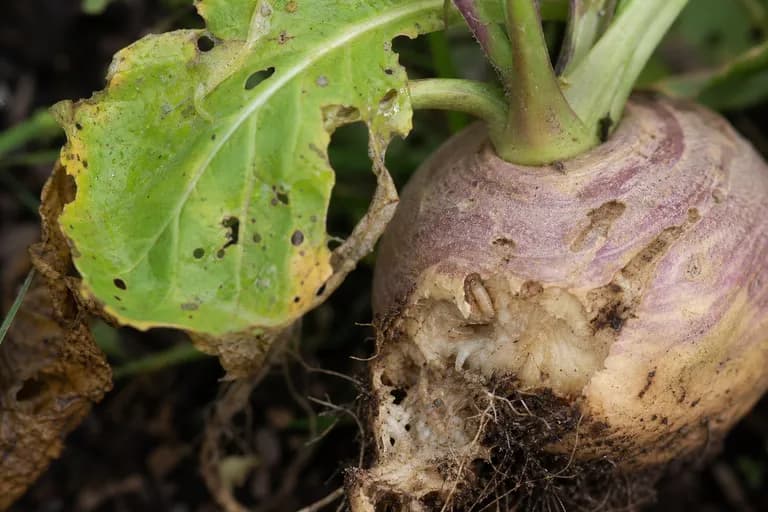
Mosca de la col (Delia radicum)
PlagaLas larvas blancas excavan túneles en la raíz del daikon, creando galerías marrones que favorecen la pudrición secundaria. Las hojas se marchitan y amarillean sin causa aparente.
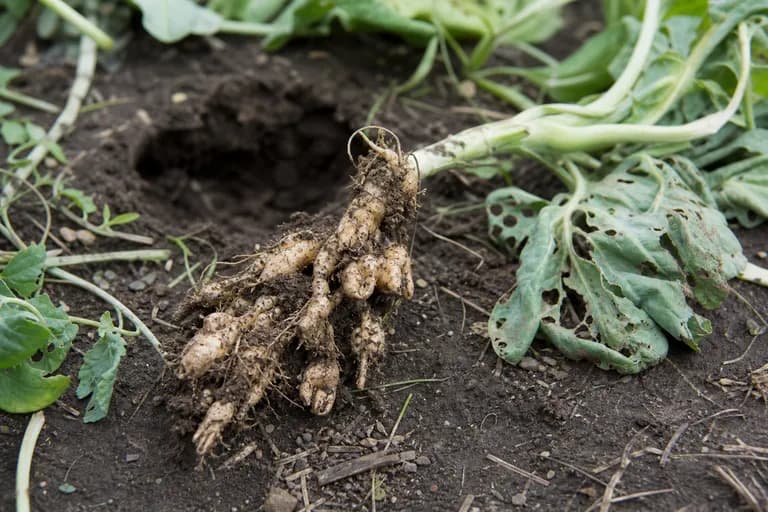
Alternariosis
EnfermedadManchas circulares oscuras con anillos concéntricos en las hojas que se expanden progresivamente. El follaje se deteriora rápidamente reduciendo el tamaño de las raíces.
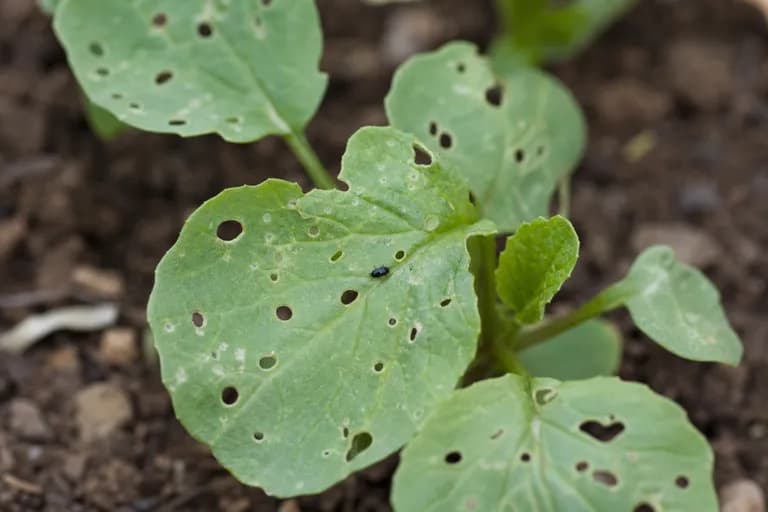
Pulguilla de las crucíferas
PlagaPequeños escarabajos saltadores que perforan numerosos agujeros diminutos en las hojas jóvenes, dándoles aspecto de criba. En plántulas pueden causar daños fatales.
Solución de problemas comunes
Las raíces se ramifican o deforman en suelos compactados, pedregosos o con estiércol fresco. Trabaje la tierra profundamente y elimine obstáculos. El espigado prematuro ocurre con siembras tempranas en primavera. El agrietamiento se produce por riego irregular.
Consejos de cultivo
- Always direct-sow daikon — never start in pots or trays. The long taproot cannot tolerate any transplant disturbance. Even slight root damage causes forking, splitting, and stunted growth that no amount of care can correct.
- Deep soil preparation is the single most important factor for straight, well-formed roots. Double-dig or deeply fork the bed to at least 40-45 cm. Remove every stone, root fragment, and hard clump — any obstacle causes the taproot to fork around it.
- Autumn sowing (July-August in most zones) produces dramatically better daikon than spring sowing. Cool autumn temperatures promote sweet, dense roots, while spring plantings often bolt in summer heat before roots reach full size.
- Thin without mercy and on schedule. Crowded daikon roots push against each other and produce thin, twisted, unmarketable roots. Thin to 25-30 cm apart when seedlings have 2-3 true leaves — the thinnings make excellent spicy microgreens.
- Maintain perfectly consistent soil moisture throughout the growing period. Irregular watering causes roots to crack, split, or develop a harsh pungency. Aim for 2.5 cm of water per week through rain or irrigation.
- Hill soil around the root shoulder as it emerges above the soil surface. Exposed root portions turn green from chlorophyll production and develop a tougher, more bitter texture compared to the snow-white flesh below ground.
- Harvest using a deep fork, not by pulling. Daikon roots can extend 40+ cm into the soil, and pulling without loosening first will snap the root, leaving the tender bottom portion in the ground. Insert a fork 15 cm away from the root and lever the soil loose.
- Do not waste the leaves. Daikon greens contain five times more vitamin C than the root and are rich in calcium and iron. Stir-fry them with sesame oil and soy sauce, chop into miso soup, or salt-pickle them as a rice topping (furikake).
Cultiva tu mejor Rábano Daikon Japonés — y todo lo que la rodea.
Empieza un plan gratis hoy. Diseña tus bancales, coloca tu Rábano Daikon Japonés y deja que PlotMyGarden gestione el momento, el espaciado, las asociaciones y los recordatorios de la semilla a la cesta.
Elige tu Rábano Daikon Japonés
Miyashige
Variedad clásica japonesa con raíces cilíndricas de 35-45 cm de color blanco puro y sabor suave. Muy versátil en la cocina, madura en 50-55 días.
Minowase
Variedad de gran tamaño que alcanza 60 cm con carne blanca, jugosa y sabor dulce. Ideal para rallado y cocido, tolerante al calor, madura en 55-60 días.
Shogoin
Variedad redonda y achatada de 10-15 cm de diámetro, diferente a los daikon largos típicos. Textura firme y sabor suave, ideal para suelos poco profundos.
April Cross
Variedad híbrida resistente al espigado prematuro que permite siembras tempranas en primavera. Raíces de 30-35 cm con excelente sabor dulce y textura crujiente.
A single packet of daikon seeds ($2-4) yields 100-200 roots over multiple sowings, while a single fresh daikon costs $2-5 at grocery stores and $3-7 at Asian specialty markets. Growing a 3-meter row produces 8-15 kg of daikon worth $20-50 at retail prices. The savings multiply dramatically when you factor in specialty products like fresh daikon oroshi (grated condiment), takuan pickles ($5-8 per package), and kiriboshi daikon (dried strips, $4-7 per bag) — all easily made from your homegrown harvest at essentially zero cost.
Recetas rápidas
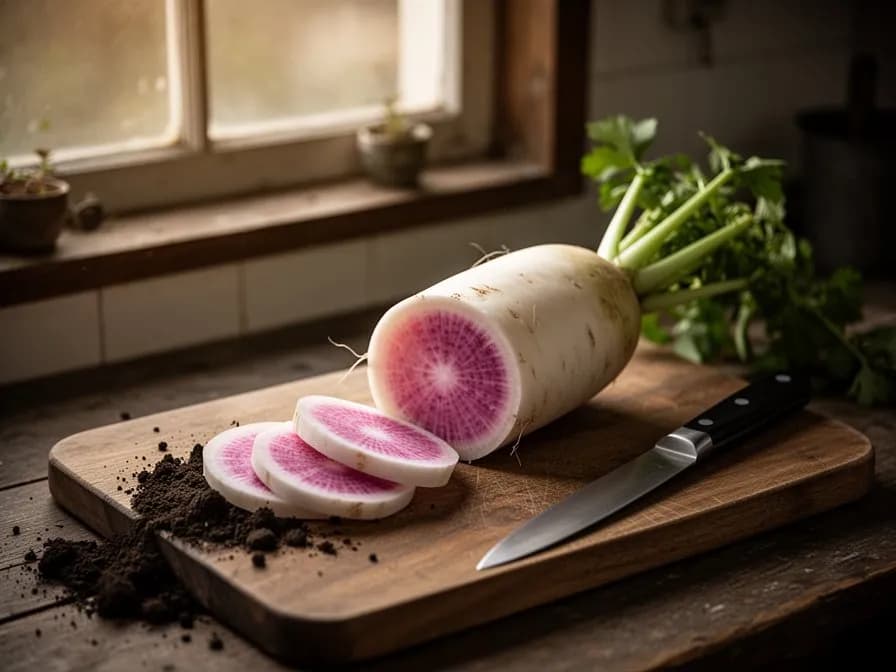
Classic Oden Daikon
90 minThick daikon rounds simmered low and slow in kombu-dashi broth until they turn translucent and meltingly tender, absorbing deep umami flavor throughout. This is the most beloved oden ingredient in Japan and the ultimate cold-weather comfort food.
7 ingredientes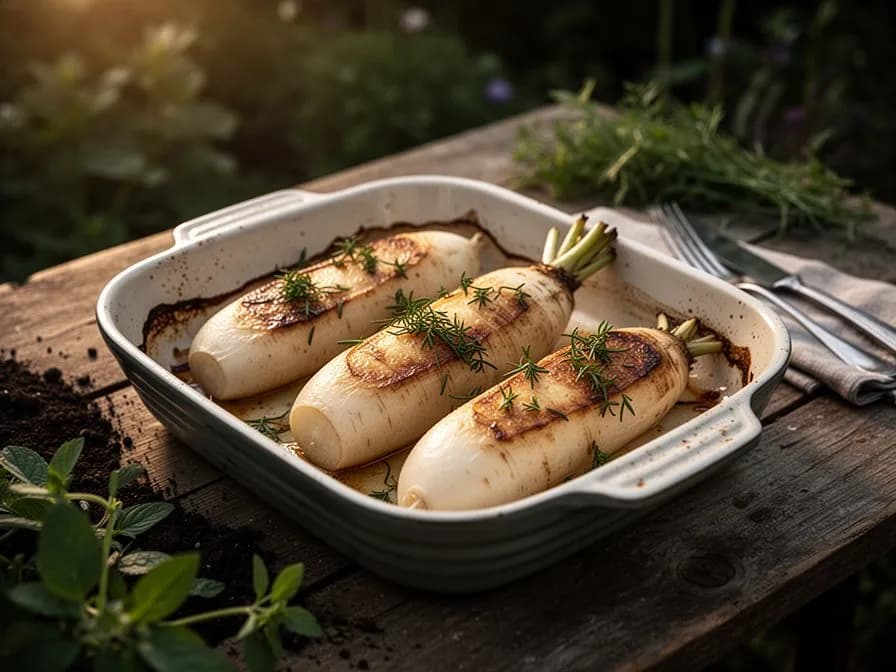
Quick Pickled Daikon (Asazuke)
15 min + 2 hr restA light, refreshing Japanese quick pickle that brings crisp texture and bright flavor to any meal. Ready in just a couple of hours, these tangy-sweet daikon slices are the perfect palate cleanser alongside rice, grilled fish, or bento boxes.
6 ingredientesDaikon Oroshi (Grated Daikon Condiment)
5 minFreshly grated daikon — the essential Japanese condiment served alongside grilled fish, tempura, and noodles. The natural enzymes in raw grated daikon aid digestion of rich and fried foods, while its clean peppery bite cuts through oiliness.
4 ingredientesUsos culinarios
En la cocina japonesa, el daikon rallado acompaña tempura, sashimi y tofu como condimento refrescante. Cocido en oden y estofados absorbe maravillosamente los sabores del caldo. Encurtido como takuan es un acompañamiento clásico del arroz. También se consume en ensaladas, sopas miso y como ingrediente en kimchi coreano.
Qué contiene
Beneficios para la salud
- Contains active digestive enzymes (diastase and amylase) that break down starches and fats — eating raw grated daikon with fried or heavy foods measurably improves digestion and reduces bloating.
- Extremely low calorie density (18 calories per 100g) with high water content (94%), making daikon an excellent food for weight management and hydration support.
- Rich in vitamin C, providing 24% of the daily value per 100g, supporting immune defense, collagen production, and enhanced iron absorption from plant-based foods.
- Contains glucosinolates and isothiocyanates — sulfur-containing compounds being actively researched for their potential to support the body's natural detoxification pathways and anti-inflammatory responses.
- Good source of folate (B9), essential for DNA synthesis, red blood cell formation, and particularly important during pregnancy for preventing neural tube defects.
- The fiber in daikon supports healthy digestion and regular bowel function, while its high potassium content (227mg per 100g) helps regulate blood pressure and maintain electrolyte balance.
De dónde viene Rábano Daikon Japonés
Daikon (Raphanus sativus var. longipinnatus) traces its ancestry to the wild radish species native to the Mediterranean and Central Asian regions, but it was in China and Japan where it was transformed into the large, mild-flavored root vegetable known today. Chinese texts from around 400 BC describe cultivated radishes, and the crop likely traveled to Japan via the Korean Peninsula sometime before the 8th century AD. By the Nara period (710-794 AD), daikon was already documented as a staple food crop in Japanese agriculture.
Japanese farmers and gardeners spent over a thousand years selectively breeding daikon for increased size, milder flavor, and crisp texture, ultimately producing varieties dramatically different from the small, pungent radishes of the Mediterranean. The cool, wet climate of Japan proved ideal for daikon cultivation, and by the Edo period (1603-1868) it had become the single most important vegetable in Japanese agriculture and cuisine. More than 100 distinct regional varieties emerged, from the massive Sakurajima daikon of southern Kyushu to the slender Nerima daikon of Tokyo, each adapted to local growing conditions and culinary uses.
Today, Japan produces approximately 1.2 million tonnes of daikon annually, making it the nation's most-produced vegetable by volume. Daikon is also widely cultivated across China, South Korea, Taiwan, and Southeast Asia, with growing popularity in Western markets where it is used in salads, stir-fries, and as a low-calorie substitute for potatoes and turnips. Modern Japanese varieties like Minowase and April Cross have become the global standard, prized for their uniform shape, mild sweetness, and crisp juicy texture that develops best in the cool temperatures of autumn cultivation.
Rábano Daikon Japonés: ¿sabías que?
Datos fascinantes sobre Rábano Daikon Japonés
Japanese daikon is the most consumed vegetable in Japan by weight — the average Japanese person eats over 10 kg of daikon per year, consumed raw, pickled, simmered, dried, and grated across hundreds of traditional dishes.
Rábano Daikon Japonés: preguntas frecuentes
¿Cuándo debo plantar Rábano Daikon Japonés?
¿Cuáles son buenas plantas acompañantes para Rábano Daikon Japonés?
¿En qué zonas de rusticidad puede crecer Rábano Daikon Japonés?
¿Cuánto sol necesita Rábano Daikon Japonés?
¿A qué distancia debo espaciar Rábano Daikon Japonés?
¿Qué plagas y enfermedades afectan a Rábano Daikon Japonés?
¿Cómo almaceno Rábano Daikon Japonés después de la cosecha?
¿Cuáles son las mejores variedades de Rábano Daikon Japonés para cultivar?
¿Qué suelo necesita Rábano Daikon Japonés?
Why are my daikon roots forked or misshapen?
Why did my daikon bolt before the roots were ready?
How can I store daikon after harvest?
Why is my daikon root pithy or hollow inside?
Can I grow daikon in containers?
What is the difference between daikon and regular radish?
Acabas de leer la teoría. Ahora cultívala en piloto automático.
Todo lo que hace que Rábano Daikon Japonés sea delicado — el momento, el espaciado, las asociaciones, la ventana de cosecha — es justo lo que PlotMyGarden resuelve por ti, para cada planta de tu huerto.
Un plan que conoce tu clima
Indica tu ubicación una vez. Recibe fechas de siembra, abonado y cosecha basadas en tu última helada real y el pronóstico en vivo — sin adivinar con un sobre genérico.
De la sección “Cuándo plantar”Planificador de bancales de arrastrar y soltar
Diseña bancales sobre una cuadrícula. Cada planta encaja con su espaciado correcto y ves toda la temporada antes de gastar un céntimo en semillas.
De la sección “Cultivo”Conflictos de asociación, detectados a tiempo
Más de 200 buenas y malas combinaciones comprobadas en vivo mientras plantas — para que un error que arruine la temporada nunca llegue a la tierra.
De la sección “Asociaciones”Recordatorios que sí vas a seguir
“Riega las judías.” “Recoge hoy antes de que se pase.” Oportunos, concretos y ligados a las plantas que de verdad cultivas.
De la sección “Cosecha”Escalonado, programado
¿Quieres cosechar seis semanas en vez de seis días? Reparte tus siembras automáticamente y te avisa cuando toca el siguiente lote.
De la sección “Cuándo plantar”Un registro que se vuelve más listo
Cada cosecha que registras le enseña tu huerto. El plan del año que viene parte de lo que de verdad funcionó en tu suelo, no en un manual.
De la sección “Resumen”Planta estos junto a Rábano Daikon Japonés
Más Hortalizas de raíz
Cultiva tu mejor Rábano Daikon Japonés — y todo lo que la rodea.
Empieza un plan gratis hoy. Diseña tus bancales, coloca tu Rábano Daikon Japonés y deja que PlotMyGarden gestione el momento, el espaciado, las asociaciones y los recordatorios de la semilla a la cesta.