Lechuga Tallo
La lechuga tallo o celtuce (Lactuca sativa var. angustana) es una variedad de lechuga originaria de China donde se cultiva desde hace más de mil años.





En esta páginaResumen
Conoce Lechuga Tallo
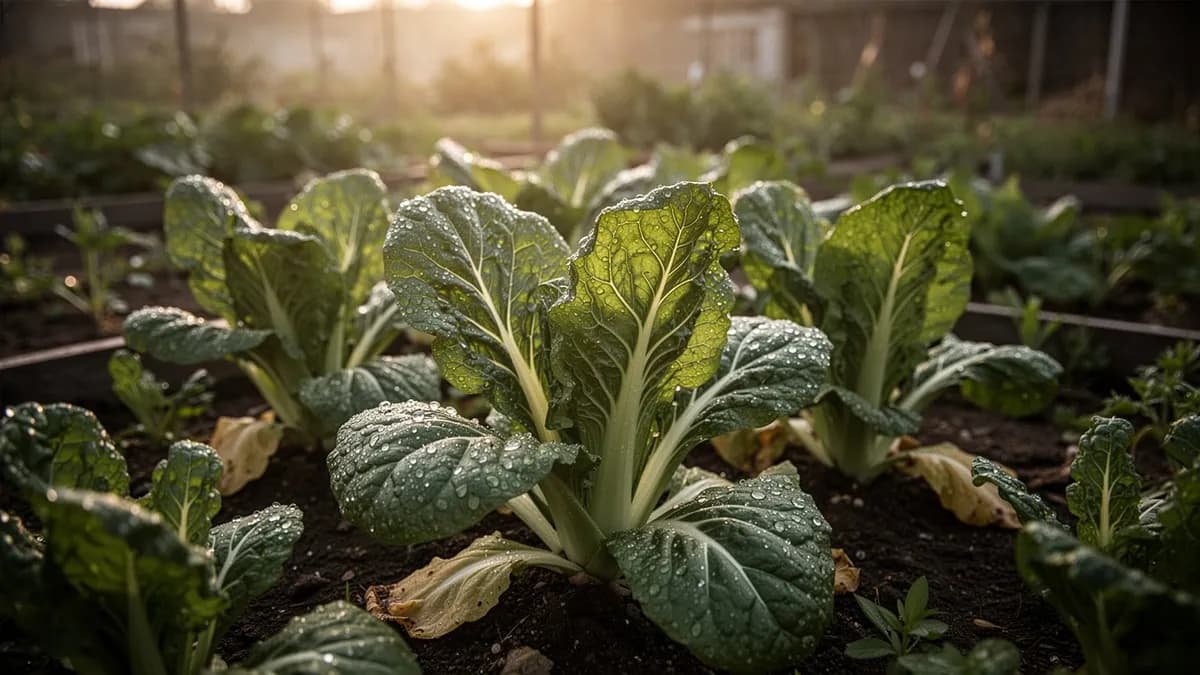
La lechuga tallo o celtuce (Lactuca sativa var. angustana) es una variedad de lechuga originaria de China donde se cultiva desde hace más de mil años. A diferencia de otras lechugas, se cultiva principalmente por su tallo grueso y carnoso que puede alcanzar 30-40 cm de longitud, con un sabor fresco y crujiente que recuerda al pepino y al apio.
Cuándo plantar Lechuga Tallo
Las semillas requieren luz para germinar, por lo que se siembran en superficie presionándolas ligeramente sobre el sustrato húmedo sin cubrirlas o con una capa finísima de vermiculita. La germinación ocurre en 7-14 días a temperaturas de 15-20°C. Se recomienda iniciar en semillero y trasplantar cuando las plántulas tengan 4-5 hojas verdaderas, espaciándolas 25-30 cm en el huerto.
Tu año de Lechuga Tallo
Ajustado a Zona 7 · temporada típica · la helada se va hacia el 2 abr y vuelve hacia el 1 nov
Planta Lechuga Tallo Mar – Abr, Ago – Sep y cosecha May – Jun, Oct – Nov. Consulta los métodos de plantación y elige tu clima para adaptar los periodos.
Cómo cultivar Lechuga Tallo
La lechuga tallo se cultiva de forma similar a otras lechugas, pero requiere un período de crecimiento más largo para desarrollar su tallo carnoso característico. Se siembra en semillero o directamente en el huerto a una profundidad de 0,5 cm, apenas cubriendo las semillas, ya que necesitan luz para germinar. Las plántulas se aclaran o trasplantan a una distancia de 25-30 cm entre plantas y 40 cm entre hileras.
Prefiere temperaturas frescas entre 10°C y 20°C y tolera heladas ligeras, pero el calor excesivo provoca espigadura prematura. El riego debe ser regular y constante para promover un crecimiento uniforme del tallo; la irregularidad en el riego produce tallos fibrosos y amargos. Se recomienda aplicar un acolchado orgánico para mantener la humedad del suelo y reducir las malas hierbas que compiten con la planta.
A medida que el tallo se desarrolla, se pueden ir retirando las hojas inferiores para consumirlas como verdura de hoja y para favorecer el engrosamiento del tallo. Es importante no retirar más de un tercio de las hojas a la vez para no debilitar la planta. Las siembras sucesivas cada 2-3 semanas desde principios de primavera hasta mediados de verano aseguran un suministro continuo durante la temporada.
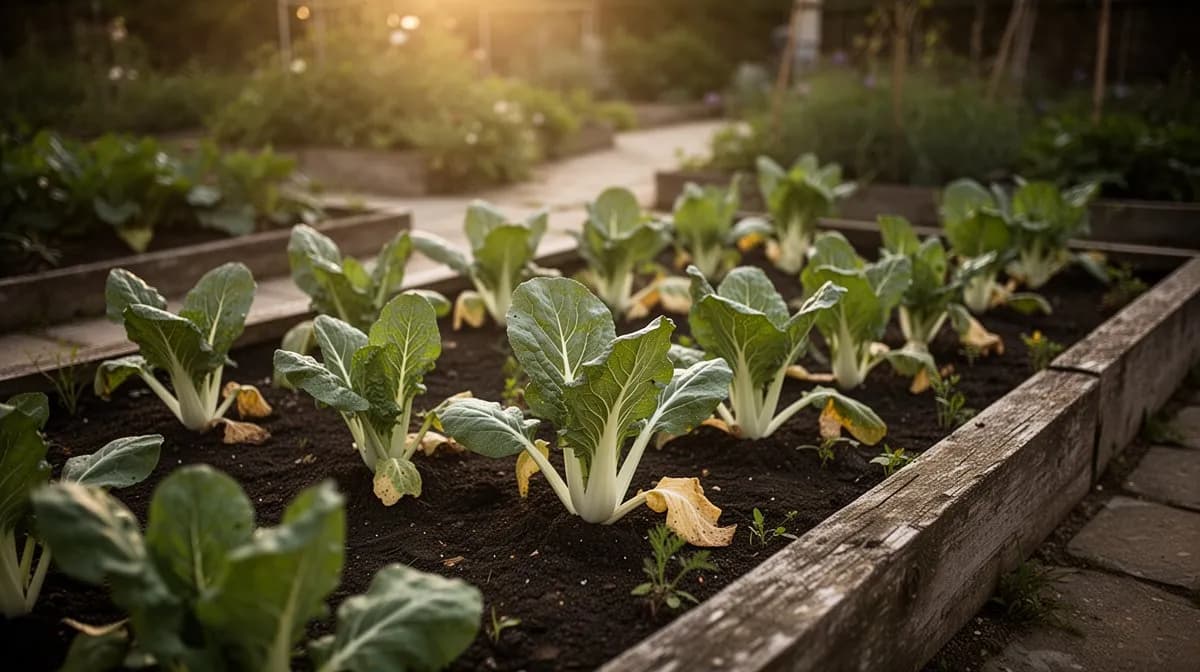
32 plantas caben en un bancal de 120 × 240 cm
Cada Lechuga Tallo pide 30 cm de margen. El planificador guarda ese marco por ti — cada planta, cada bancal.
Los mejores vecinos de Lechuga Tallo
Crece bien junto a pepinos, rábanos, zanahorias y fresas, que se benefician mutuamente al compartir el espacio del huerto. Evitar cultivar junto a plantas de la familia Asteraceae como girasoles, ya que comparten plagas y enfermedades similares.
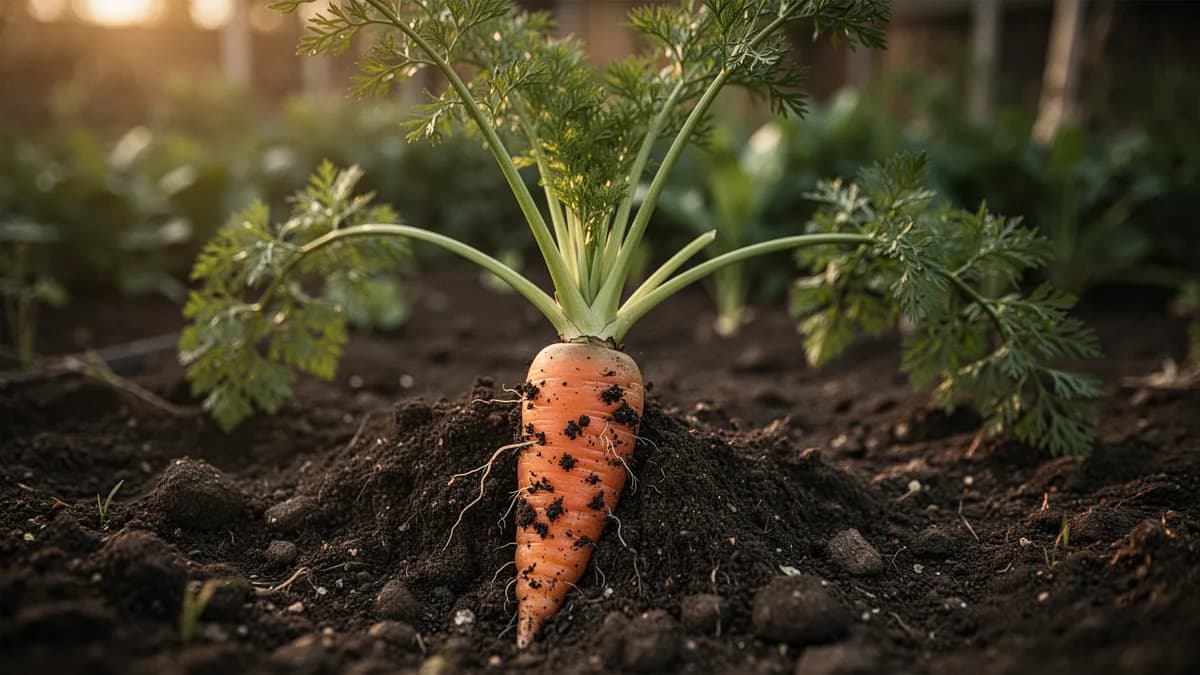
Zanahoria va a su lado.
Saber de huerto de siempre, cotejado con la tabla real de Lechuga Tallo — prueba cualquier planta que cultives.
Prueba Lechuga Tallo en un bancal, aquí mismo
Un bancal real del planificador con Lechuga Tallo ya plantado. Toca una planta compañera para colocarla y mira cómo responde la comprobación de vecinos: verde para buenos vecinos, rojo si hay conflicto.


Guías de cultivo relacionadas
Abónalo bien
La lechuga tallo prefiere un suelo rico en materia orgánica, bien drenado pero con buena retención de humedad, y un pH entre 6,0 y 7,0. Incorporar compost maduro generosamente antes de la siembra y aplicar un fertilizante equilibrado cada 2-3 semanas durante el crecimiento activo. Un aporte extra de potasio durante el engrosamiento del tallo favorece tallos más firmes y crujientes.
Temperatura ideal
Compatibilidad de zonas de rusticidad
De la semilla a la cosecha, etapa por etapa
Siembra
Las semillas diminutas germinan rápido en condiciones frescas y húmedas. Las semillas de celtuce necesitan luz para germinar; deben sembrarse en la superficie o cubrirse apenas con una fina capa de vermiculita fina. La germinación ocurre en 5 a 10 días a temperaturas del suelo de 15-20°C (60-68°F). Las semillas pueden entrar en reposo si la temperatura del suelo supera los 25°C (77°F).
Etapa de plántula y roseta
Las plántulas desarrollan una roseta de hojas anchas, ligeramente onduladas y parecidas a la lechuga. En esta etapa la planta es casi indistinguible de una lechuga de hoja suelta. El sistema radicular se establece y las hojas crecen rápidamente en clima fresco, alcanzando 15-20 cm de ancho.
Elongación del tallo
El tallo central comienza a alargarse y engrosarse de forma notable: esta es la fase definitoria del crecimiento del celtuce. El tallo se eleva a través de la roseta de hojas y alcanza 3-5 cm de diámetro. Las hojas inferiores pueden amarillear de manera natural mientras la planta redirige energía al desarrollo del tallo. Esta etapa se desencadena por el aumento de las horas de luz y temperaturas ligeramente más cálidas.
Maduración del tallo
El tallo alcanza su grosor máximo de 5-8 cm de diámetro y 25-40 cm de largo. La piel exterior se vuelve un poco fibrosa, mientras que el interior sigue crujiente, jugoso y de color verde pálido. La parte superior del tallo puede empezar a mostrar señales de espigado con un punto de crecimiento visible que se alarga en la punta.
Ventana de cosecha
La ventana óptima de cosecha es estrecha: aproximadamente 1 a 2 semanas cuando el tallo ya alcanzó su tamaño completo pero antes de que se alargue la vara floral. El tallo debe sentirse firme y pesado al apretarlo. El diámetro ideal de cosecha es de 5-8 cm y el interior debe ser uniformemente verde pálido y crujiente, sin núcleo hueco.
Espigado y producción de semillas
Si no se cosecha, la planta emite una vara floral ramificada coronada por pequeñas flores amarillas compuestas típicas de la familia de las lechugas. Cada cabezuela produce semillas diminutas con un papus plumoso para dispersión por el viento. Guardar semilla es sencillo: deja que las cabezas se sequen en la planta antes de recolectarlas.
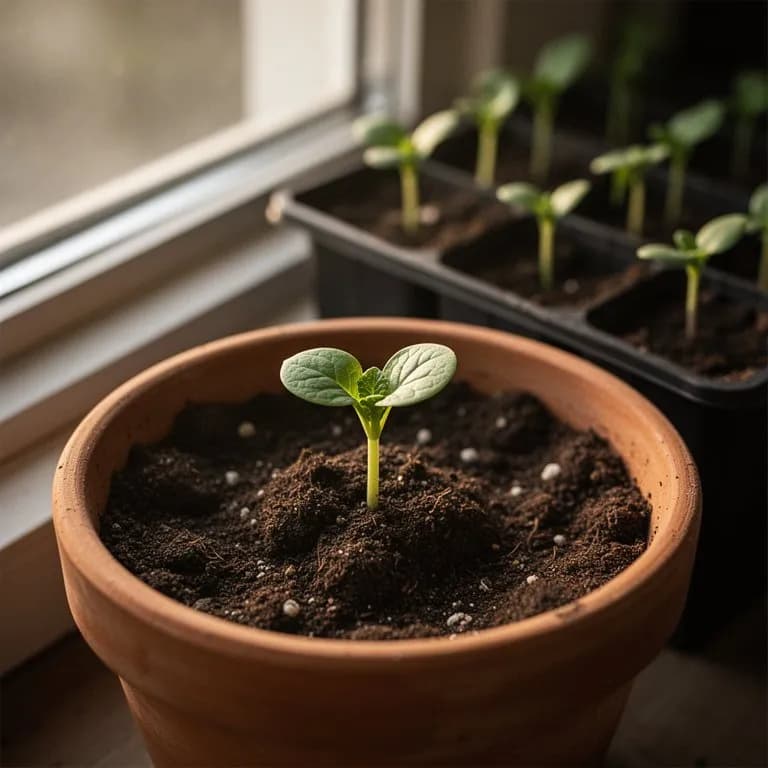
Siembra las semillas sobre la superficie del sustrato húmedo para semilleros y presiónalas suavemente sin cubrirlas. Mantén las bandejas con luz indirecta brillante a 15-20°C (60-68°F). Pulveriza con frecuencia para evitar que la superficie se seque.
Cuidar Lechuga Tallo mes a mes
Qué hacer cada mes para tu Lechuga Tallo
Octubre
Mes actualHarvest fall-crop stems before hard frost. Stems can tolerate light frost which actually sweetens the flavor slightly. Store unpeeled stems in the refrigerator wrapped in damp cloth for up to 2 weeks.
Ten claro qué hacer en tu huerto, cada mes
Un correo al empezar cada mes: qué sembrar, plantar y hacer ahora mismo — para tu Lechuga Tallo y todo lo que crece alrededor. Más un breve curso inicial para esquivar los errores clásicos.
- Qué hacer ahora mismo
- Ajustado a tu temporada
- Curso inicial incluido
Cosechar Lechuga Tallo
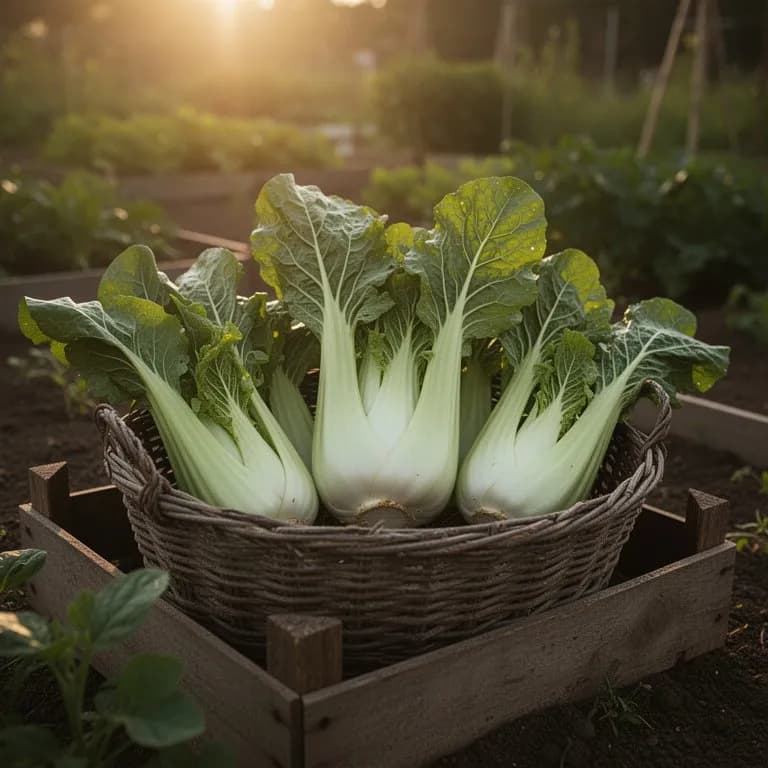
La lechuga tallo se cosecha cuando el tallo ha alcanzado un grosor de 3-5 cm y una longitud de 25-35 cm, generalmente entre 60 y 80 días después de la siembra. Se corta la planta entera a nivel del suelo antes de que aparezca el tallo floral. Es preferible cosechar antes de la floración, ya que el tallo se vuelve amargo y fibroso una vez que la planta comienza a espigar.
se supone que plantas al comenzar el periodo — indica tu fecha real
Cosecha cuando el tallo mida entre 1 y 2 pulgadas de diámetro y entre 10 y 14 pulgadas de alto, antes de que la planta espigue.
Almacenamiento y conservación
El tallo pelado se conserva en el refrigerador envuelto en papel húmedo durante 1-2 semanas. Para conservación prolongada, se puede pelar, cortar en rodajas y deshidratar para uso posterior en sopas y guisos. También se presta bien al encurtido en salmuera o vinagre, método muy popular en la cocina china tradicional.
Qué falla — y cómo solucionarlo
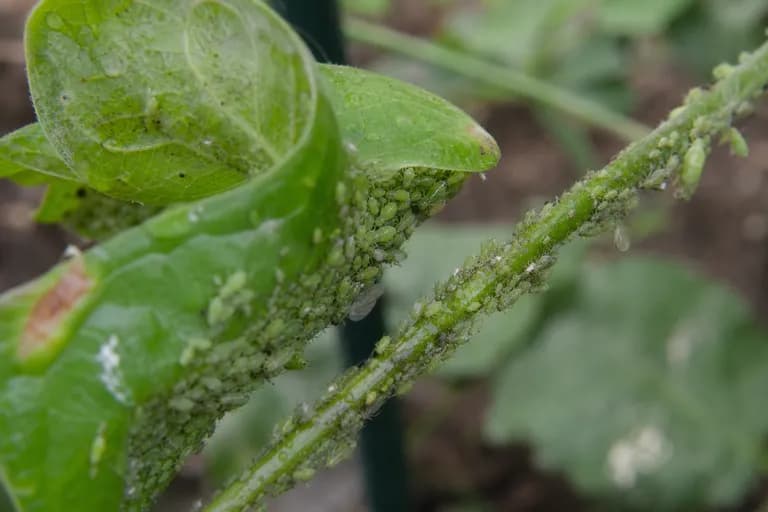
Pulgón verde de la lechuga (Nasonovia ribisnigri)
PlagaColonias de pulgones en el envés de las hojas y entre las hojas internas del cogollo, causando enrollamiento foliar, secreción de melaza pegajosa y aparición de fumagina negra.
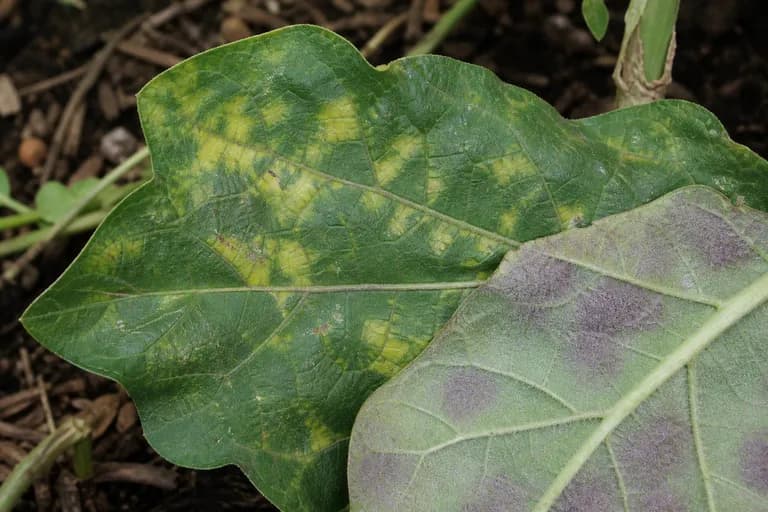
Mildiu velloso (Bremia lactucae)
EnfermedadManchas angulares de color amarillo pálido en la superficie superior de las hojas con una pelusilla blanco-grisácea en el envés. Las hojas afectadas se marchitan y mueren progresivamente.
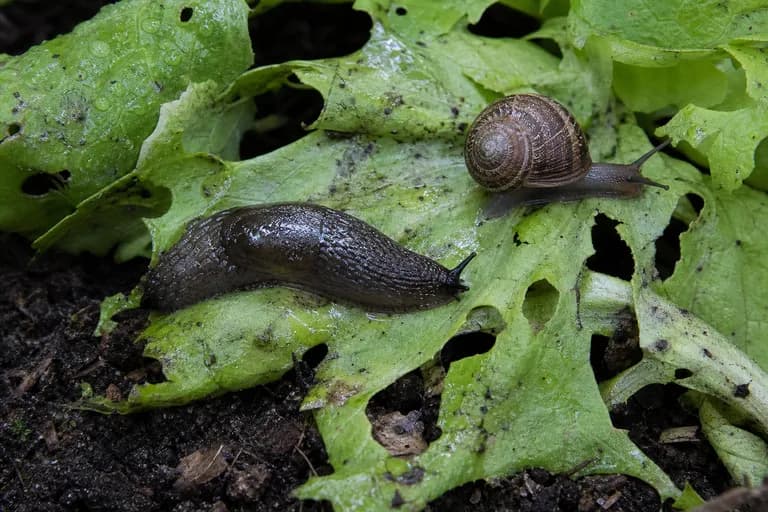
Caracoles y babosas (Gastropoda)
PlagaAgujeros irregulares en las hojas con rastros brillantes de baba, especialmente visibles por la mañana. Los daños son más severos en plántulas jóvenes y en condiciones húmedas.
Solución de problemas comunes
La espigadura prematura es el principal problema, provocada por temperaturas superiores a 22°C o por un fotoperíodo largo de más de 14 horas diarias de luz. También es frecuente que los tallos se vuelvan huecos y fibrosos por riego irregular o por cosechar demasiado tarde, perdiendo su textura crujiente característica.
Consejos de cultivo
- Surface-sow seeds and do not cover them — celtuce seeds are light-dependent germinators that will not sprout if buried. Press seeds gently onto moist soil and mist regularly to keep the surface damp until germination occurs in 5-10 days.
- Time your planting for cool weather. Celtuce bolts prematurely in sustained heat above 30°C (86°F), so spring and fall plantings work best in most climates. In hot regions, treat it exclusively as a fall crop sown in late summer.
- Consistent moisture is the single most important factor for quality stems. Irregular watering causes the stem to develop a pithy, hollow core that ruins the eating quality. Water deeply and evenly, providing 2.5 cm per week minimum.
- Do not neglect the leaves — they are a bonus crop. Harvest outer leaves throughout the growing cycle for salads and stir-fries. This does not harm stem development as long as you leave the inner rosette of 6-8 leaves intact.
- Harvest the stem at the right moment. The window is narrow — once the tip of the plant shows signs of elongating into a flower stalk, harvest within 2-3 days. Bolted stems turn bitter and fibrous very quickly.
- Peel the stem before eating. The outer 2-3mm layer is tough and fibrous with a bitter milky latex. Use a vegetable peeler or paring knife to strip this layer, revealing the crisp, jade-green, sweet interior flesh.
- Succession-plant every 2-3 weeks for a continuous harvest rather than sowing all at once. Since each plant produces only one stem, staggered plantings ensure you have fresh celtuce over several months instead of a single glut.
- Pair celtuce with taller companion plants like tomatoes or trellised beans in summer to provide the afternoon shade it craves during warm weather. This natural shade reduces bolting and extends the harvest window significantly.
Cultiva tu mejor Lechuga Tallo — y todo lo que la rodea.
Empieza un plan gratis hoy. Diseña tus bancales, coloca tu Lechuga Tallo y deja que PlotMyGarden gestione el momento, el espaciado, las asociaciones y los recordatorios de la semilla a la cesta.
Elige tu Lechuga Tallo
Woh Baku
Variedad china tradicional con tallos gruesos de color verde claro y sabor suave. Madura en 55-65 días y es muy apreciada tanto por sus hojas como por su tallo carnoso.
Balady
Variedad egipcia de tallo largo y delgado con hojas más estrechas. Excelente tolerancia al calor, madura en 60-70 días y produce tallos de textura particularmente crujiente.
Celtuce Red
Variedad decorativa con hojas teñidas de rojo-púrpura y tallos verdes con tonalidades rojizas. Sabor ligeramente más intenso que las variedades verdes, lista en 65-75 días.
Amerigrass
Variedad moderna seleccionada para producir tallos más anchos y cortos con menor tendencia a la fibrosidad. Buena resistencia al mildiu, madura en 50-60 días.
Celtuce is rarely found in Western supermarkets and when available at Asian grocery stores typically costs $3-6 per stem. A single packet of seeds ($3-5) grows 50-100 plants, each producing a stem worth $3-6 at market price. Growing just 10 plants yields $30-60 worth of fresh celtuce from a few dollars of seed. The real value is access — most gardeners simply cannot buy celtuce locally at any price, making home-grown celtuce a true luxury crop that costs almost nothing to produce.
Recetas rápidas
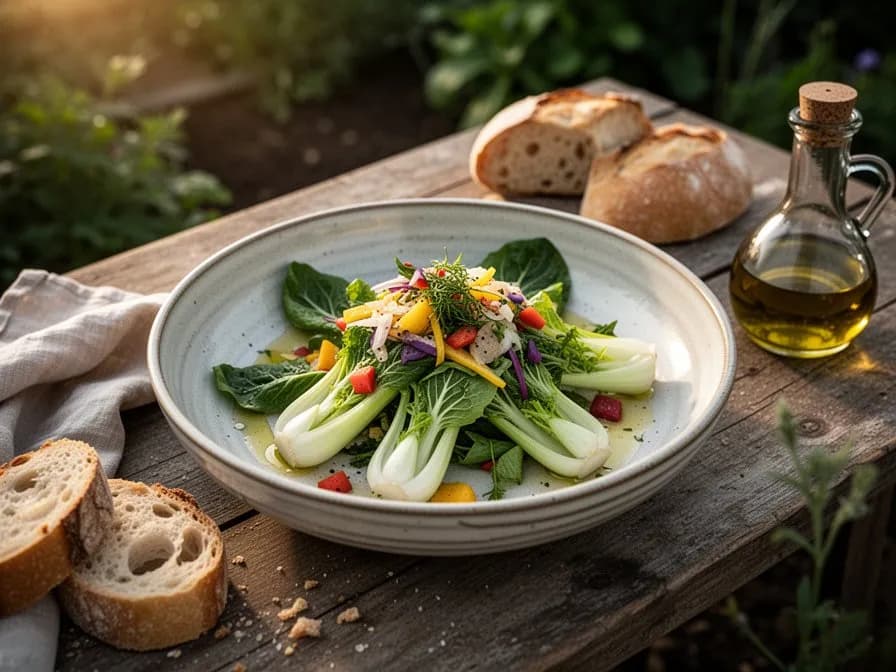
Stir-Fried Celtuce with Garlic and Sesame
15 minThe classic Chinese preparation that showcases celtuce at its best — thick slices of peeled stem seared in a screaming-hot wok with garlic, a splash of soy sauce, and a finishing drizzle of toasted sesame oil. The stem retains its satisfying crunch while picking up smoky wok hei flavor.
7 ingredientes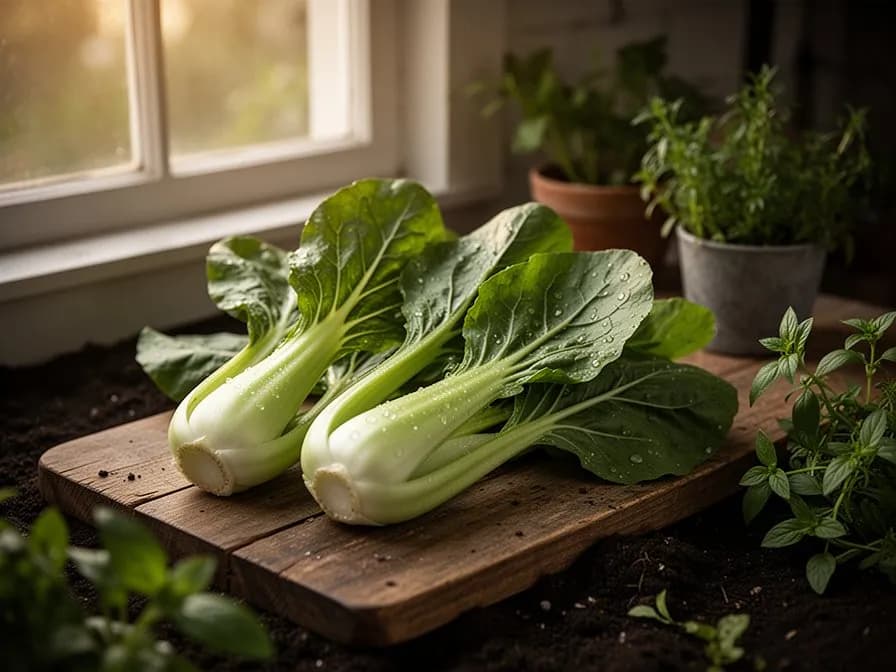
Cold Celtuce Salad with Chili Oil
10 minA refreshing Sichuan-style cold dish where matchstick-cut celtuce stem is tossed with a bright, spicy dressing of chili oil, black vinegar, and a touch of sugar. The clean crunch of raw celtuce paired with the numbing heat of Sichuan pepper is irresistible on a warm day.
8 ingredientesCeltuce and Pork Stir-Fry (Wosun Chao Roupian)
20 minA hearty weeknight dish from Sichuan province where thin-sliced pork is velveted and quickly stir-fried with celtuce stem, wood ear mushrooms, and a savory doubanjiang sauce. The celtuce provides cool crunch against the tender, flavorful pork.
8 ingredientesUsos culinarios
El tallo pelado se consume crudo en ensaladas cortado en juliana fina, salteado en wok con ajo y salsa de ostras, o cocido al vapor como acompañamiento. En la cocina china es un ingrediente básico en numerosos salteados y sopas. Las hojas tiernas se utilizan como cualquier otra lechuga en ensaladas frescas, y las hojas más maduras se cocinan brevemente como espinacas.
Qué contiene
Beneficios para la salud
- Exceptionally low in calories (18 per 100g of stem) with high water content over 95%, making celtuce one of the most hydrating and weight-management-friendly vegetables available.
- Celtuce leaves are remarkably rich in beta-carotene and vitamin A, providing up to 70% of the daily value per 100g — supporting vision health, immune function, and skin cell renewal.
- Good source of vitamin C in both stem and leaves, contributing to antioxidant defense, collagen synthesis, and enhanced iron absorption from plant-based foods.
- Contains meaningful amounts of folate (vitamin B9), essential for DNA synthesis, red blood cell formation, and particularly important for fetal development during pregnancy.
- Provides potassium that helps regulate blood pressure and counterbalances sodium intake — the stem delivers about 10% of daily potassium needs per 100g serving.
- Rich in dietary fiber that supports healthy digestion, promotes satiety, and feeds beneficial gut bacteria — the stem's crisp texture comes from both soluble and insoluble fiber.
De dónde viene Lechuga Tallo
Celtuce (Lactuca sativa var. augustana) originated in China, where it has been cultivated for well over a thousand years. The earliest written references to stem lettuce appear in Chinese agricultural texts from the Tang Dynasty (618-907 CE), though its cultivation almost certainly predates these records. China remains overwhelmingly the center of celtuce production and consumption — the vegetable is a staple in Sichuan, Yunnan, Guizhou, and Hunan provinces, where it is known as wosun and appears in everyday home cooking, restaurant dishes, and street food.
Celtuce arrived in Europe in the early twentieth century, brought back by plant explorers who recognized its unusual dual-purpose nature — edible leaves above and a thick, succulent stem below. Despite initial curiosity, it never established itself in European or American mainstream agriculture. The W. Atlee Burpee seed company introduced celtuce to American home gardeners in 1942, promoting it as an ideal Victory Garden vegetable because it produced both salad greens and a cooked vegetable from one plant. Interest spiked briefly but faded after the war.
In recent decades, celtuce has experienced a revival of interest in Western countries, driven by the growing influence of Chinese cuisine, the farm-to-table movement, and adventurous gardeners seeking unusual crops. High-end restaurants in New York, London, and San Francisco have featured celtuce on their menus, introducing it to a new audience. Meanwhile, in China, celtuce remains as popular as ever — it is sold in virtually every wet market and supermarket, consumed raw, stir-fried, pickled, dried, and braised. Annual Chinese production is estimated in the millions of tonnes, making it one of the most widely grown vegetables in the world despite its obscurity elsewhere.
Lechuga Tallo: ¿sabías que?
Datos fascinantes sobre Lechuga Tallo
Celtuce is one of the most popular vegetables in China — consumed daily by hundreds of millions of people — yet remains virtually unknown in Western supermarkets. It is sold under names including wosun, stem lettuce, and asparagus lettuce in Asian groceries.
Lechuga Tallo: preguntas frecuentes
¿Cuándo debo plantar Lechuga Tallo?
¿Cuáles son buenas plantas acompañantes para Lechuga Tallo?
¿En qué zonas de rusticidad puede crecer Lechuga Tallo?
¿Cuánto sol necesita Lechuga Tallo?
¿A qué distancia debo espaciar Lechuga Tallo?
¿Qué plagas y enfermedades afectan a Lechuga Tallo?
¿Cómo almaceno Lechuga Tallo después de la cosecha?
¿Cuáles son las mejores variedades de Lechuga Tallo para cultivar?
¿Qué suelo necesita Lechuga Tallo?
What does celtuce taste like?
Why is my celtuce bolting before the stem gets thick?
Can I eat the leaves or just the stem?
How do I store celtuce after harvest?
Where can I find celtuce seeds?
Is celtuce difficult to grow compared to regular lettuce?
Acabas de leer la teoría. Ahora cultívala en piloto automático.
Todo lo que hace que Lechuga Tallo sea delicado — el momento, el espaciado, las asociaciones, la ventana de cosecha — es justo lo que PlotMyGarden resuelve por ti, para cada planta de tu huerto.
Un plan que conoce tu clima
Indica tu ubicación una vez. Recibe fechas de siembra, abonado y cosecha basadas en tu última helada real y el pronóstico en vivo — sin adivinar con un sobre genérico.
De la sección “Cuándo plantar”Planificador de bancales de arrastrar y soltar
Diseña bancales sobre una cuadrícula. Cada planta encaja con su espaciado correcto y ves toda la temporada antes de gastar un céntimo en semillas.
De la sección “Cultivo”Conflictos de asociación, detectados a tiempo
Más de 200 buenas y malas combinaciones comprobadas en vivo mientras plantas — para que un error que arruine la temporada nunca llegue a la tierra.
De la sección “Asociaciones”Recordatorios que sí vas a seguir
“Riega las judías.” “Recoge hoy antes de que se pase.” Oportunos, concretos y ligados a las plantas que de verdad cultivas.
De la sección “Cosecha”Escalonado, programado
¿Quieres cosechar seis semanas en vez de seis días? Reparte tus siembras automáticamente y te avisa cuando toca el siguiente lote.
De la sección “Cuándo plantar”Un registro que se vuelve más listo
Cada cosecha que registras le enseña tu huerto. El plan del año que viene parte de lo que de verdad funcionó en tu suelo, no en un manual.
De la sección “Resumen”Planta estos junto a Lechuga Tallo
Más Hortalizas de hoja
Cultiva tu mejor Lechuga Tallo — y todo lo que la rodea.
Empieza un plan gratis hoy. Diseña tus bancales, coloca tu Lechuga Tallo y deja que PlotMyGarden gestione el momento, el espaciado, las asociaciones y los recordatorios de la semilla a la cesta.