
Weeping Willow
Salix babylonica
At a Glance
An iconic ornamental shade tree with long, cascading branches that sweep the ground and sway gracefully in the breeze. Weeping willows are among the fastest-growing shade trees but need ample space and a reliable water source, making them ideal for lakeside or riverside planting. Their invasive root systems can damage underground pipes and foundations, so plant at least fifty feet from structures. Despite their short lifespan of thirty to fifty years, they create an unmatched romantic atmosphere in the landscape.
Planting & Harvest Calendar
Growth Stages
From Seed to Harvest
Cutting & Rooting
Days 0–21
Weeping willows are most commonly propagated from hardwood cuttings taken in late winter or softwood cuttings in summer. Cuttings 30-45 cm long root readily when placed in moist soil or even a jar of water. Willows contain high levels of indolebutyric acid, a natural rooting hormone, which makes them among the easiest trees to propagate from cuttings.
💡 Care Tip
Take cuttings from healthy one-year-old growth about pencil-thickness. Insert at least half the cutting into consistently moist soil. Keep in partial shade and maintain moisture; roots typically emerge within 10-21 days.
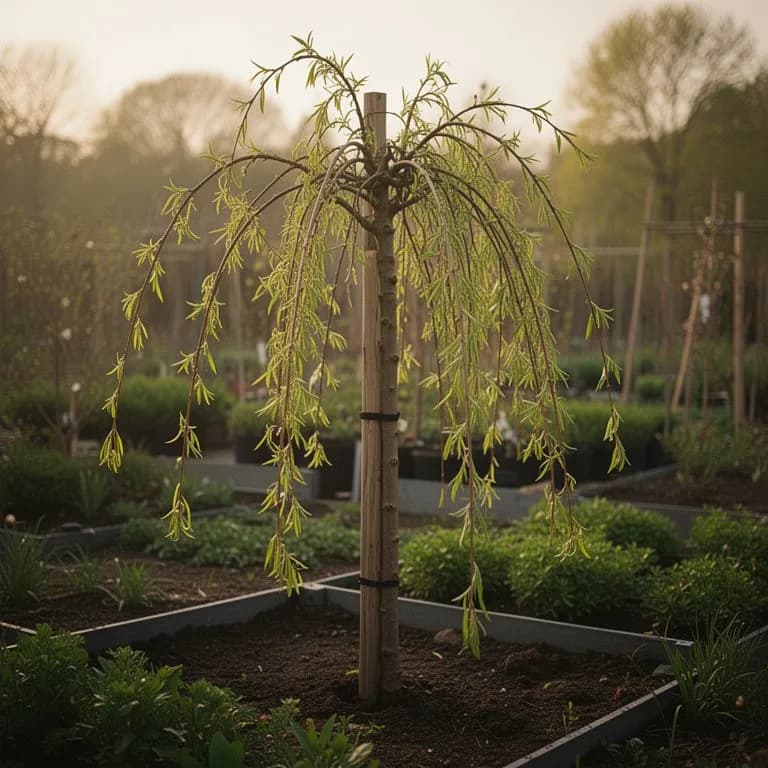
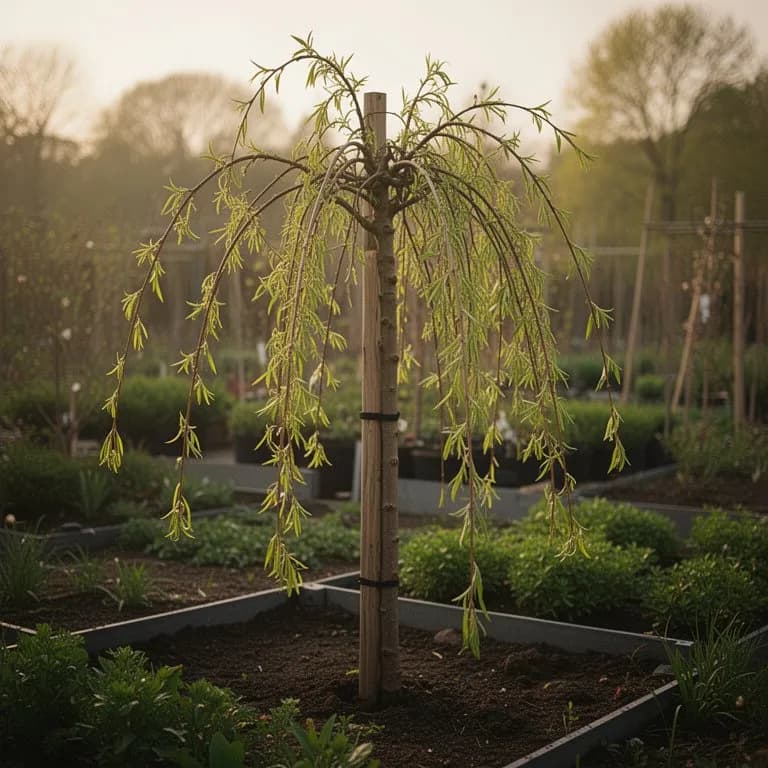
A one-year-old weeping willow sapling beginning to develop its signature weeping form
Monthly Care Calendar
What to do each month for your Weeping Willow
May
You are hereTrain young trees by selecting a strong central leader. Remove any water sprouts growing vertically from horizontal branches. Check for willow leaf beetle larvae feeding on the undersides of leaves and treat with targeted insecticidal soap if needed.
Did You Know?
Fascinating facts about Weeping Willow
Willow bark contains salicin, a natural compound that was the original basis for aspirin (acetylsalicylic acid), first synthesized by Bayer in 1897. Hippocrates prescribed chewing willow bark for pain relief around 400 BCE.
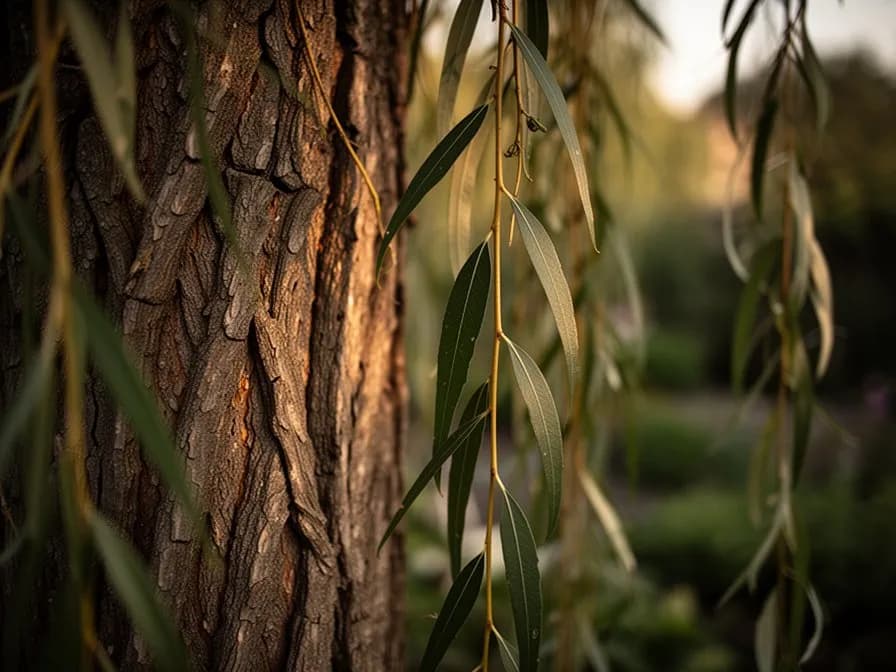
The rough, fissured bark of a mature weeping willow trunk showing its distinctive gray-brown texture
Plant weeping willows in full sun near a permanent water source such as a pond, lake, or stream. They require consistently moist to wet soil and struggle in dry conditions. Soil type is flexible, as weeping willows grow in clay, loam, or sandy soil with a pH of 5.5 to 8.0. Plant container-grown or bare-root trees in spring, allowing at least 50 feet from buildings, sewer lines, and septic systems to prevent root damage.
Weeping willows grow explosively fast, often adding 6 to 8 feet of height per year in their first decade. They reach 30 to 50 feet tall with an equal or greater spread of cascading branches. Water newly planted trees generously during the first year, though trees near permanent water features need little supplemental irrigation.
Prune regularly to remove dead, damaged, and low-hanging branches that obstruct walkways. The long trailing branches may need periodic shortening to keep them off the ground. Head back the canopy to reduce wind resistance and minimize storm damage from the inherently brittle wood. Despite their maintenance needs, weeping willows are among the most recognized and beloved ornamental trees, creating a uniquely graceful and romantic landscape presence.
The weeping willow (Salix babylonica) is native to arid regions of northern China, where it has been cultivated for thousands of years along riverbanks, canals, and palace gardens. It holds deep cultural significance in Chinese art and poetry, symbolizing grace, resilience, and the bittersweet nature of parting. Ancient travelers along the Silk Road would break off willow branches as farewell gifts, a tradition that contributed to the tree's spread westward across Central Asia. The species was introduced to Europe via the ancient trade routes, with early specimens reaching the Middle East and Turkey by the medieval period. It arrived in England around 1730, reportedly from a cutting attached to a package of figs sent from the Levant to the landscape gardener Alexander Pope, who planted it at his famous garden in Twickenham along the Thames. From England the tree spread rapidly across Europe and was brought to North America by colonial settlers in the early 18th century. George Washington is documented to have planted weeping willows at Mount Vernon. Napoleon Bonaparte was famously fond of the weeping willow at his place of exile on Saint Helena, and cuttings from that tree were distributed widely after his death. Throughout history the willow has been valued not only for its ornamental beauty but for its medicinal properties. Ancient Egyptian, Sumerian, and Greek texts all reference the use of willow bark and leaves to treat pain and fever. Today the weeping willow remains one of the most recognizable and widely planted ornamental trees in temperate regions worldwide, gracing parks, cemeteries, lakeshores, and residential landscapes on every inhabited continent.
Weeping willows propagate effortlessly from hardwood cuttings, making seed starting unnecessary. Take 12 to 18 inch cuttings of one-year-old wood in late winter and insert the lower half into moist soil or simply stand them in a jar of water. Roots emerge within 1 to 3 weeks. This is the standard propagation method as it preserves the weeping habit of the parent tree, while seedlings may not inherit the pendulous form. Plant rooted cuttings in their permanent lakeside or riverside location in spring.
Weeping willows thrive in moist to wet, fertile soil of any texture from heavy clay to sandy loam. They prefer a pH of 5.5 to 8.0 and tolerate periodic flooding. Rich soil produces the fastest growth and most vigorous cascading habit. Apply balanced fertilizer in early spring for young trees to promote rapid establishment. Mature trees near water sources rarely need fertilization. Compost top-dressing benefits trees in average garden soil that may dry out periodically.
Check Your Zone
See if Weeping Willow is suitable for your location.
-29°C – 38°C
-20°F – 100°F
Weeping willows are hardy in USDA zones 4 through 9, tolerating winter lows down to approximately -29°C (-20°F) once fully established. They perform best in areas with moderate summers between 20-32°C (68-90°F) and adequate moisture. While they can survive brief periods above 38°C (100°F), sustained extreme heat combined with drought will cause leaf scorch and branch dieback. In cold climates young trees may suffer tip damage on the most pendulous branches during severe winters, but willows regenerate vigorously in spring.
Common issues affecting Weeping Willow and how to prevent and treat them organically.
Aggressive root systems are the most significant drawback, capable of invading and clogging sewer lines, septic systems, and drainage pipes from distances of 50 feet or more. Brittle wood results in frequent branch breakage during storms, creating ongoing cleanup. The short lifespan of 30 to 50 years means the tree may decline relatively quickly compared to oaks or maples. Willows are messy trees, dropping twigs, catkins, and leaves throughout the growing season. Multiple pest and disease issues require monitoring.
Weeping willows create a dramatic backdrop for moisture-loving perennials planted nearby. Japanese iris, Siberian iris, astilbe, and ligularia complement the graceful form. Daylilies and ornamental grasses planted around the outer canopy edge provide contrast. Avoid planting vegetables or ornamental gardens within the root zone, which extends far beyond the canopy. Water-edge plantings of native rushes, sedges, and marsh marigolds naturalize beautifully around lakeside weeping willows.
The extensive root system of a weeping willow helps stabilize streambanks and prevent erosion
- 1Plant weeping willows at least 15 meters away from buildings, septic systems, sewer lines, and underground utilities, as their aggressive root systems will seek out any source of moisture and can infiltrate pipes and foundations.
- 2The fastest way to start a weeping willow is from a hardwood cutting taken in late winter. Select a straight, healthy branch about 30-45 cm long and the thickness of a pencil, and push it halfway into moist ground. No rooting hormone is needed.
- 3Weeping willows thrive in full sun with at least six hours of direct sunlight per day. They tolerate partial shade but develop a thinner canopy and less pronounced weeping habit in low-light conditions.
- 4These trees perform best in moist to wet soils and are ideal for rain gardens, pond edges, and low-lying areas where other trees struggle. They tolerate brief flooding but not permanently waterlogged, anaerobic soil.
- 5Prune in late winter while the tree is dormant to maintain structure and remove deadwood. Avoid pruning in spring when sap flow is heaviest, as fresh cuts will bleed heavily and attract boring insects.
- 6Young weeping willows benefit from staking for the first one to two years to establish a straight central leader. Once the trunk is self-supporting, remove stakes to allow natural trunk strengthening through wind movement.
- 7Apply a 7-10 cm layer of organic mulch such as wood chips or shredded bark around the root zone to retain moisture and suppress weeds, but keep mulch at least 15 cm away from the trunk to prevent bark rot.
- 8Monitor for common pests including willow leaf beetles, aphids, and gypsy moth caterpillars. Most infestations can be managed with targeted insecticidal soap or by encouraging natural predators such as ladybugs and parasitic wasps.
- 9If your soil is heavy clay, amend the planting area with compost to improve drainage and root penetration. In sandy soils, add compost to improve water retention. Willows are adaptable to a wide pH range from 5.5 to 8.0.
- 10To create a living willow structure such as an arbor, tunnel, or fedge (fence-hedge), push fresh willow rods into moist ground in late winter spaced 15-20 cm apart. They will root and leaf out, forming a green living structure by midsummer.
Weeping willows are ornamental trees not grown for edible harvest. The long, flexible trailing branches can be harvested for craft use in basket weaving and decorative arrangements. Cut young one-year-old shoots in late winter for the most pliable material. Branches also root easily in water for propagation. The bark contains salicin and has been used traditionally in herbal medicine. Fallen branches from storm cleanup can be chipped for garden mulch or composted.
Fresh-cut weeping willow branches for propagation should be placed in water or planted immediately, as they root extremely readily. Branches for craft use can be dried standing upright in bundles and stored indefinitely in dry conditions, then soaked to restore flexibility before weaving. Wood chips from pruning make acceptable mulch after aging for several months. The wood is soft, light, and generally not useful for lumber but makes acceptable biomass fuel when dried.
Plan your garden with ease
Love growing Weeping Willow? Use our free garden planner to design your beds, track planting dates, and get personalized care reminders.
Nutritional Info
Per 100g serving
0
Calories
Health Benefits
- Weeping willow is not a food crop and its leaves, bark, and wood are not consumed as a dietary source
- Willow bark contains salicin (typically 1-11% by dry weight), a glycoside that metabolizes into salicylic acid in the body
- Willow bark tea has been used historically as a folk remedy for headaches, inflammation, and fever
- Willow bark extract is available as a standardized herbal supplement in many countries
- Young willow leaves contain trace amounts of tannins, flavonoids, and phenolic glycosides with antioxidant properties
- Willow is not classified as edible and should not be used as a food substitute; bark preparations should be used under guidance of a qualified herbalist
💰 Why Grow Your Own?
Weeping willows are extremely easy to propagate from free cuttings, eliminating nursery costs entirely. A pencil-thick branch section placed in moist soil in spring will typically root within two to three weeks. Once established, the tree requires no fertilizer, no irrigation if planted near water, and minimal maintenance beyond annual pruning. A single mature weeping willow can reduce summer cooling costs for a nearby home by 15-35% through its dense shade canopy, and its root system provides thousands of dollars worth of erosion control and stormwater management over its lifetime.
Quick Recipes
Simple recipes using fresh Weeping Willow
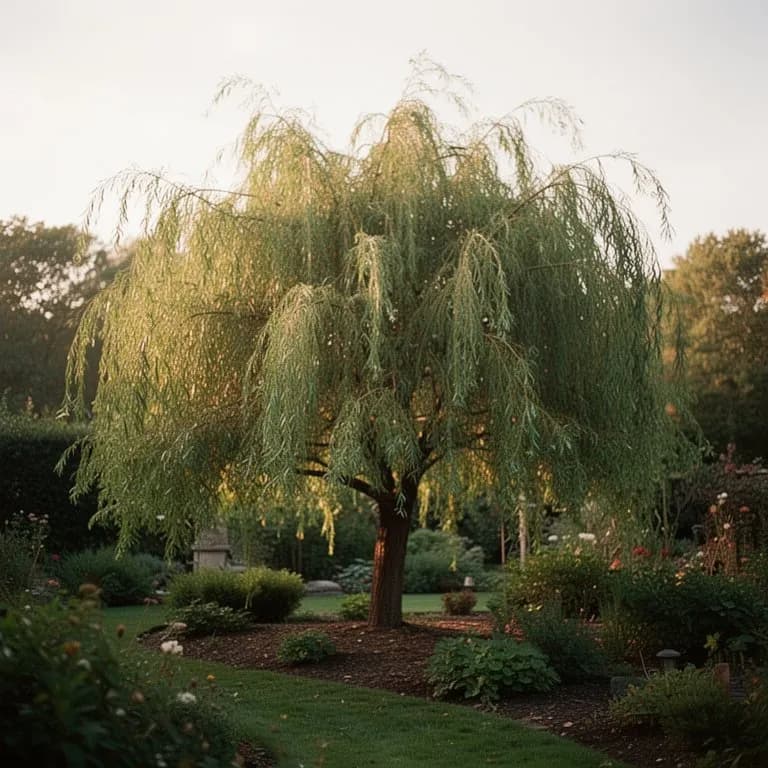
Traditional Willow Bark Tea
15 minutesA centuries-old herbal preparation used traditionally for mild pain relief and as an anti-inflammatory. The salicin in willow bark is gentler on the stomach than synthetic aspirin. Always consult a healthcare provider before using willow bark medicinally.
Willow Water Rooting Solution
24-48 hours (steeping time)A natural rooting hormone solution made by steeping willow twigs in water. The indolebutyric acid and salicylic acid released by the willow stimulate root growth in cuttings from other plants and help prevent bacterial infection at cut surfaces.

Woven Willow Garden Border
2-3 hoursA living or decorative woven border made from fresh willow withies (one-year-old flexible stems). When done with living willow cuttings pushed into moist ground, the border can root and sprout, creating a growing green fence or bed edging over time.
Willow bark has been used for centuries as a natural source of salicin, the precursor to modern aspirin
Yield & Spacing Calculator
See how many Weeping Willow plants fit in your garden bed based on the recommended 1000cm spacing.
0
Weeping Willow plants in a 4×4 ft bed
0 columns × 0 rows at 1000cm spacing
Popular Varieties
Some of the most popular weeping willow varieties for home gardeners, each with unique characteristics.
Golden Weeping Willow (Salix x sepulcralis Chrysocoma)
The most widely planted weeping willow with brilliant golden-yellow bark on young branches. Vigorous hybrid with classic cascading form.
Wisconsin Weeping Willow (Salix x pendulina)
Hardier than Babylonian willow, suitable for zones 4 to 8. Excellent cold-weather performance with long, graceful pendulous branches.
Niobe Golden Weeping Willow
Selected for enhanced golden bark color and strong weeping habit. More cold-tolerant than the species and widely available in nurseries.
Babylon Weeping Willow (Salix babylonica)
The original species with dark green foliage and long trailing branches. Slightly less cold-hardy than hybrid selections.
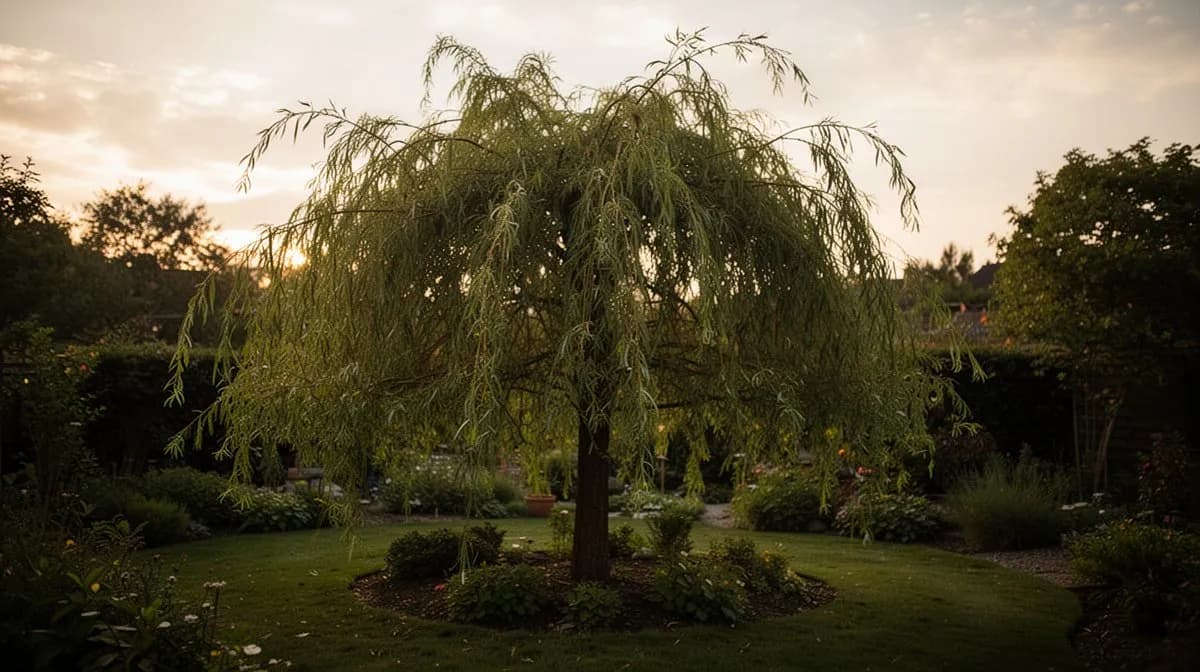
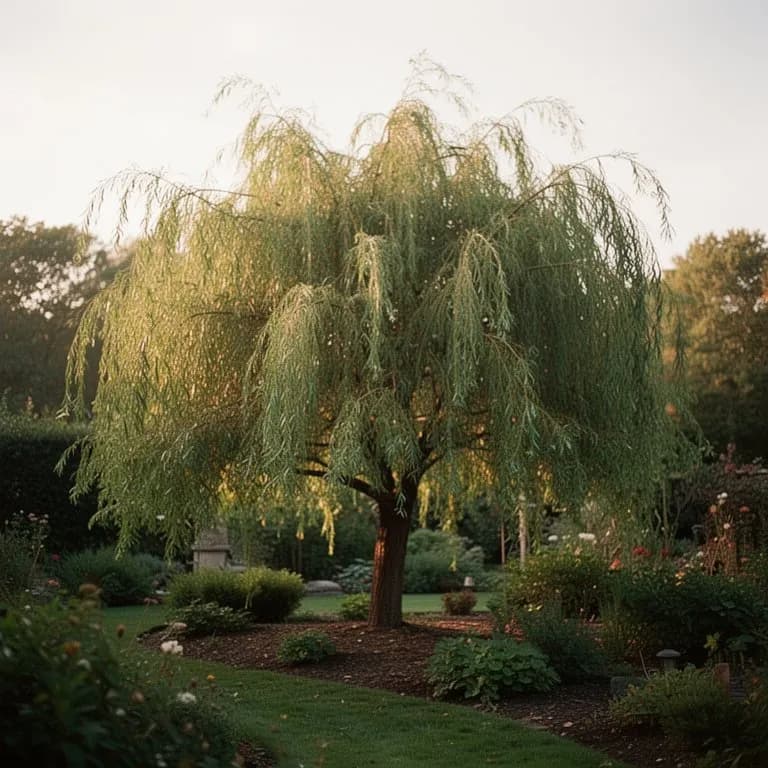
A full summer canopy of narrow lanceolate leaves creates a cool, shaded retreat beneath the tree
When should I plant Weeping Willow?
Plant Weeping Willow in March, April, October, November. It takes approximately 1460 days to reach maturity, with harvest typically in .
What are good companion plants for Weeping Willow?
Weeping Willow grows well alongside Daffodil. Companion planting can improve growth, flavor, and natural pest control.
What hardiness zones can Weeping Willow grow in?
Weeping Willow thrives in USDA hardiness zones 4 through 9. With greenhouse protection, it may be grown in zones 2 through 10.
How much sun does Weeping Willow need?
Weeping Willow requires Full Sun (6-8h+). This means at least 6-8 hours of direct sunlight daily.
How far apart should I space Weeping Willow?
Space Weeping Willow plants 1000cm (394 inches) apart for optimal growth and air circulation.
What pests and diseases affect Weeping Willow?
Common issues include Willow Blight Complex, Gypsy Moth, Cytospora Canker. Prevention through good garden practices like crop rotation, proper spacing, and companion planting is the best approach. See the detailed pests and diseases section above for symptoms, prevention, and treatment for each.
How do I store Weeping Willow after harvest?
Fresh-cut weeping willow branches for propagation should be placed in water or planted immediately, as they root extremely readily. Branches for craft use can be dried standing upright in bundles and stored indefinitely in dry conditions, then soaked to restore flexibility before weaving. Wood chips...
What are the best Weeping Willow varieties to grow?
Popular varieties include Golden Weeping Willow (Salix x sepulcralis Chrysocoma), Wisconsin Weeping Willow (Salix x pendulina), Niobe Golden Weeping Willow, Babylon Weeping Willow (Salix babylonica). Each has unique characteristics suited to different growing conditions and culinary preferences. See the varieties section above for detailed descriptions.
What soil does Weeping Willow need?
Weeping willows thrive in moist to wet, fertile soil of any texture from heavy clay to sandy loam. They prefer a pH of 5.5 to 8.0 and tolerate periodic flooding. Rich soil produces the fastest growth and most vigorous cascading habit. Apply balanced fertilizer in early spring for young trees to prom...
How far from my house should I plant a weeping willow?
Plant a weeping willow at least 15 meters (50 feet) from your house, and even farther from septic tanks, sewer lines, and underground water pipes. Weeping willow roots are extremely aggressive moisture seekers and can extend 30 meters or more from the trunk. They are well known for infiltrating drain pipes, cracking foundations, and clogging septic systems. If you have a small property, consider a smaller willow species or a weeping cultivar grafted onto a less vigorous rootstock.
How long do weeping willows live and how big do they get?
Weeping willows typically live 30-50 years, which is relatively short for a tree. They grow very quickly, often adding 2-3 meters of height per year in favorable conditions, and reach a mature height of 12-18 meters (40-60 feet) with an equal or greater crown spread. The trunk can reach over 1 meter in diameter. Their fast growth rate comes at the cost of somewhat brittle wood, which makes them prone to storm damage in later years.
Why is my weeping willow dropping leaves or turning yellow in summer?
Summer leaf drop or yellowing in weeping willows is most commonly caused by drought stress, as these trees have exceptionally high water demands. A mature tree can transpire over 375 liters per day. Other causes include willow scab (a fungal disease causing brown-black lesions on leaves), iron chlorosis in alkaline soils, or root disturbance from nearby construction. Ensure the tree receives deep watering during dry periods, and inspect leaves for signs of fungal infection. If scab is present, rake and destroy fallen leaves to break the disease cycle.
Can I grow a weeping willow from a branch cutting?
Yes, weeping willows are among the easiest trees in the world to propagate from cuttings. Simply cut a healthy branch 30-45 cm long and about pencil-thickness from one-year-old growth, ideally in late winter or early spring. Push the cutting halfway into moist soil or even place it in a jar of water. Roots will typically appear within 10-21 days. Willows naturally contain high levels of indolebutyric acid, a rooting hormone, which is why they root so readily. No commercial rooting hormone is needed.
Are weeping willows messy trees?
Weeping willows are considered moderately messy landscape trees. They shed small twigs, leaves, and catkins throughout the growing season, and their fine foliage can clog gutters and pool filters. Large limbs may break in storms due to the relatively brittle wood. They also drop leaves late in autumn, extending the cleanup season. However, many gardeners find the graceful beauty of the tree well worth the maintenance, and the dropped organic matter enriches the soil over time.
Is willow bark safe to use as a natural pain reliever?
Willow bark has been used for thousands of years as a natural analgesic and anti-inflammatory, and it is available as a standardized herbal supplement in many countries. However, it should be used with caution. People allergic to aspirin should avoid willow bark entirely, as salicin is chemically related to aspirin. It is not recommended for children under 16 due to the risk of Reye's syndrome, and it can interact with blood-thinning medications. Pregnant or nursing women should avoid it. Always consult a qualified healthcare provider or herbalist before using willow bark medicinally.
Ready to Grow Weeping Willow?
Add Weeping Willow to your garden plan and start designing your perfect layout.

Vladimir Kusnezow
Gardener and Software Developer
Zone 6b gardener. Growing vegetables and fruits in soil and hydroponics for 6 years. I built PlotMyGarden to plan my own gardens.
Jump to Section