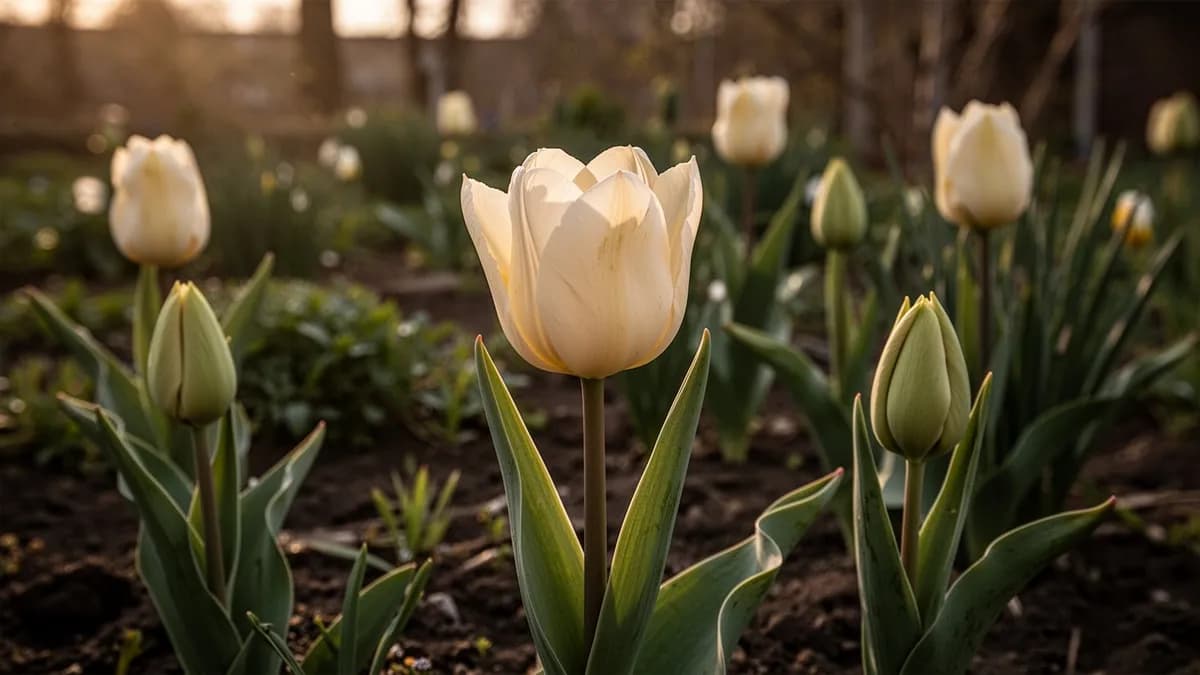
Darwin Hybrid Tulip
Tulipa 'Apeldoorn'
At a Glance
The most reliable perennial tulips with large, classic egg-shaped blooms on sturdy stems that return year after year. Darwin hybrids are the best choice for gardeners who want tulips that naturalize and increase over time. Plant deeply in well-drained soil and allow foliage to ripen fully for strong return blooms.
Planting & Harvest Calendar
Growth Stages
From Seed to Harvest
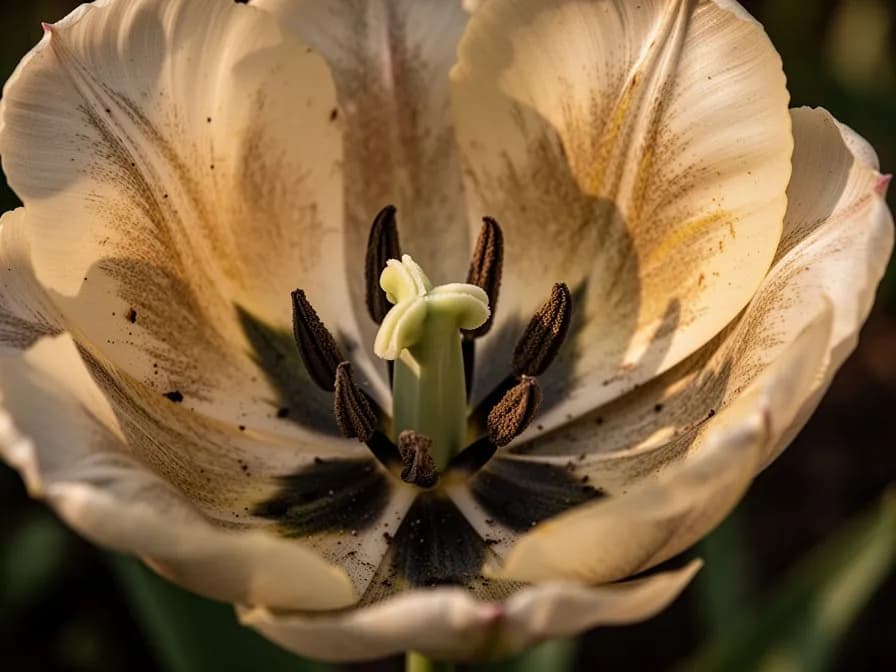
Bulb Planting and Root Establishment
Days 0–30
Darwin Hybrid tulip bulbs are planted in autumn, typically October through November, when soil temperatures have cooled to below 15°C (60°F). Once planted 15-20 cm deep, the bulbs begin developing an extensive root system throughout the fall. This root establishment phase is critical for anchoring the bulb and preparing nutrient uptake channels for spring growth.
💡 Care Tip
Plant bulbs pointed end up at a depth of three times the bulb height, spacing them 10-15 cm apart. Water thoroughly after planting to settle the soil and initiate root growth. Add a layer of mulch to insulate the soil and maintain consistent moisture levels through autumn.
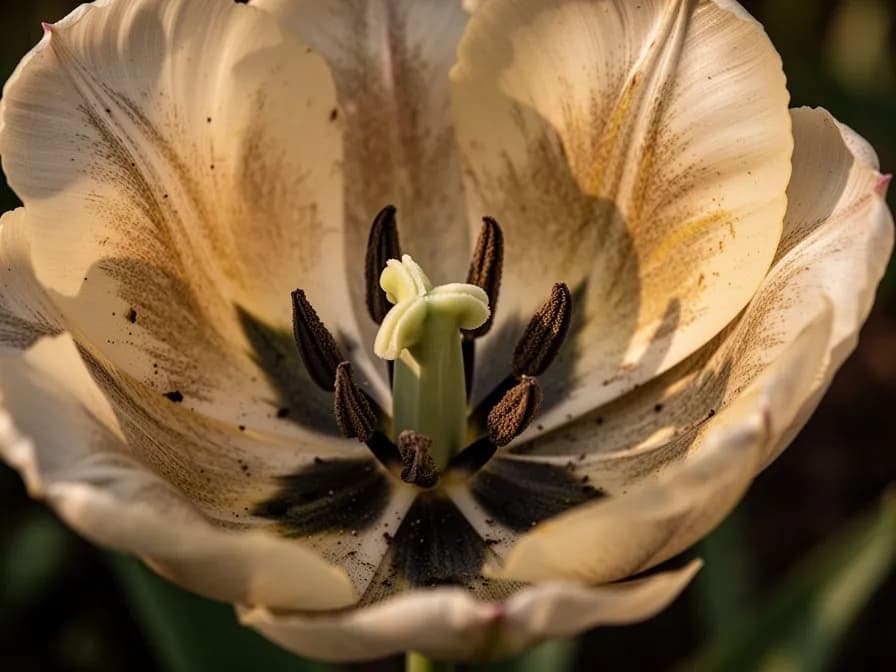
Planting Darwin Hybrid tulip bulbs 15-20 cm deep in well-drained soil during the autumn months
Monthly Care Calendar
What to do each month for your Darwin Hybrid Tulip
May
You are hereDeadhead spent flowers immediately by snapping off the flower head just below the bloom, leaving the stem and all foliage intact. Continue watering and feeding with a potassium-rich fertilizer to support bulb regeneration. Do not cut, fold, or braid the green leaves regardless of how untidy they appear.
Did You Know?
Fascinating facts about Darwin Hybrid Tulip
Darwin Hybrid tulips were created in the 1950s by crossing Darwin tulips with Fosteriana (Emperor) tulips, combining the elegant flower form of Darwins with the vigor, large bloom size, and perennial reliability of the wild Fosteriana species from Central Asia.
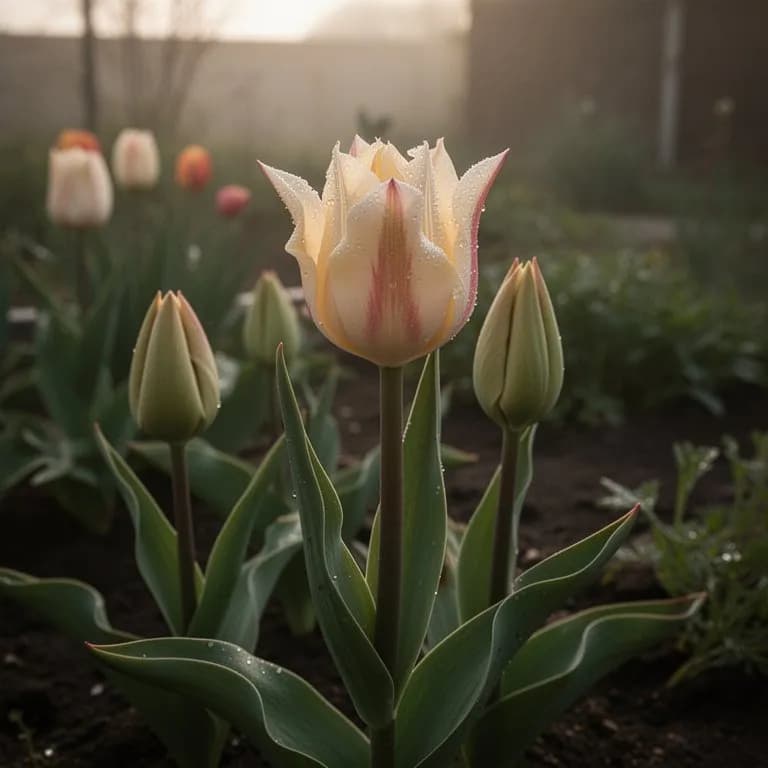
The elegant cup-shaped flower of a Darwin Hybrid tulip revealing its silky petals and contrasting dark basal blotch
Darwin hybrid tulips are the gold standard for gardeners who want tulips that come back reliably year after year. These robust hybrids combine the hardiness and perennializing ability of Tulipa fosteriana with the elegant flower form of traditional Darwin tulips. Growing 50-60cm tall on sturdy stems, they produce large, classic egg-shaped blooms in bold, saturated colors that resist weather damage.
Plant bulbs 20cm deep in autumn—the deep planting is key to perennialization. Choose well-drained soil in full sun. The extra depth protects bulbs from temperature fluctuations and rodents, and encourages the development of strong, deep root systems. Space 12-15cm apart in groups of 15-25 for the most impactful display.
After flowering, remove the developing seed pod but allow the foliage to continue growing for at least 6 weeks to nourish the bulb for next year's flowers. Feed with high-potassium liquid fertilizer as flowers fade. With proper care, Darwin hybrid tulips can return for 5-10+ years, often multiplying to produce larger clumps.
Darwin Hybrid tulips represent one of the most successful achievements in 20th-century ornamental plant breeding. They originated in the 1950s when Dutch hybridizers, most notably D.W. Lefeber of Lisse in the Netherlands, crossed the stately Darwin tulips with the wild Tulipa fosteriana, a robust species native to the mountains of Uzbekistan and Tajikistan in Central Asia. The goal was to combine the refined flower form and brilliant colors of the Darwin class with the exceptional vigor, enormous blooms, and perennial nature of the wild Fosteriana species. The results exceeded all expectations. The first Darwin Hybrid cultivars, including the legendary Apeldoorn and its many color sports, were introduced commercially in the early 1950s and quickly became the most popular tulips for large-scale landscape plantings. Their tall, sturdy stems, massive flowers, and remarkable ability to return year after year set them apart from virtually all other hybrid tulip classes. The original Darwin tulips themselves had a distinguished history, having been selected from old mixed tulip plantings in France and Belgium during the late 19th century and named after Charles Darwin by the prominent Dutch firm E.H. Krelage and Son in 1889. These Darwins were already prized for their strong stems and pure, saturated colors. By crossing them with the wild Fosteriana species, breeders unlocked a new level of garden performance. Today, Darwin Hybrids are grown in parks, public gardens, and home landscapes across every temperate region of the world, from North America and Europe to Japan, New Zealand, and southern Australia. Dozens of cultivars are available in colors ranging from pure white through yellow, orange, pink, red, and bicolors. Their consistent excellence has made them the standard recommendation for gardeners seeking tulips that will reliably perennialize and deliver outstanding spring displays year after year.
Darwin hybrid tulips are propagated from bulbs. The large bulbs produce offset bulblets that can be separated when lifting and grown on for 1-2 years to reach flowering size. Seed propagation is theoretical but impractical, taking 5-7 years to flowering and producing variable results.
Plant in fertile, well-drained soil with a pH of 6.0-7.0. Add bone meal at planting depth when planting bulbs. Top-dress in spring with balanced bulb fertilizer. Feed with high-potassium liquid fertilizer after flowering to strengthen bulbs for next year. Good drainage is essential for long-term perennialization.
Check Your Zone
See if Darwin Hybrid Tulip is suitable for your location.
-20°C – 20°C
-4°F – 68°F
Darwin Hybrid tulips are cold-hardy perennial bulbs that require a winter chilling period of 12-16 weeks at temperatures between 1-10°C (34-50°F) to flower successfully. They thrive in USDA zones 3-7, tolerating winter lows down to -35°C (-30°F) when properly mulched. Optimal spring growing temperatures are 10-18°C (50-65°F). Blooms last longest when daytime temperatures stay below 20°C (68°F). Summer dormancy begins as temperatures climb above 25°C. In warm climates (zones 8-9), bulbs must be pre-chilled in a refrigerator for 8-10 weeks before autumn planting to simulate winter conditions.
Common issues affecting Darwin Hybrid Tulip and how to prevent and treat them organically.
Declining vigor over years is usually caused by shallow planting, removing foliage too early, or failure to feed after flowering. Plant at least 20cm deep, allow leaves to ripen for 6 weeks, and feed consistently. Squirrels are the main pest—protect with wire mesh. Darwin hybrids are the most perennial tulip class, but performance still declines after 5-10 years in most gardens.
Darwin hybrid tulips are spectacular mass-planted in formal beds and borders. Underplant with forget-me-nots, wallflowers, or pansies for a classic spring combination. Plant among emerging perennials whose expanding foliage will camouflage the dying tulip leaves. In mixed borders, they combine beautifully with late daffodils, crown imperials, and spring-flowering shrubs.
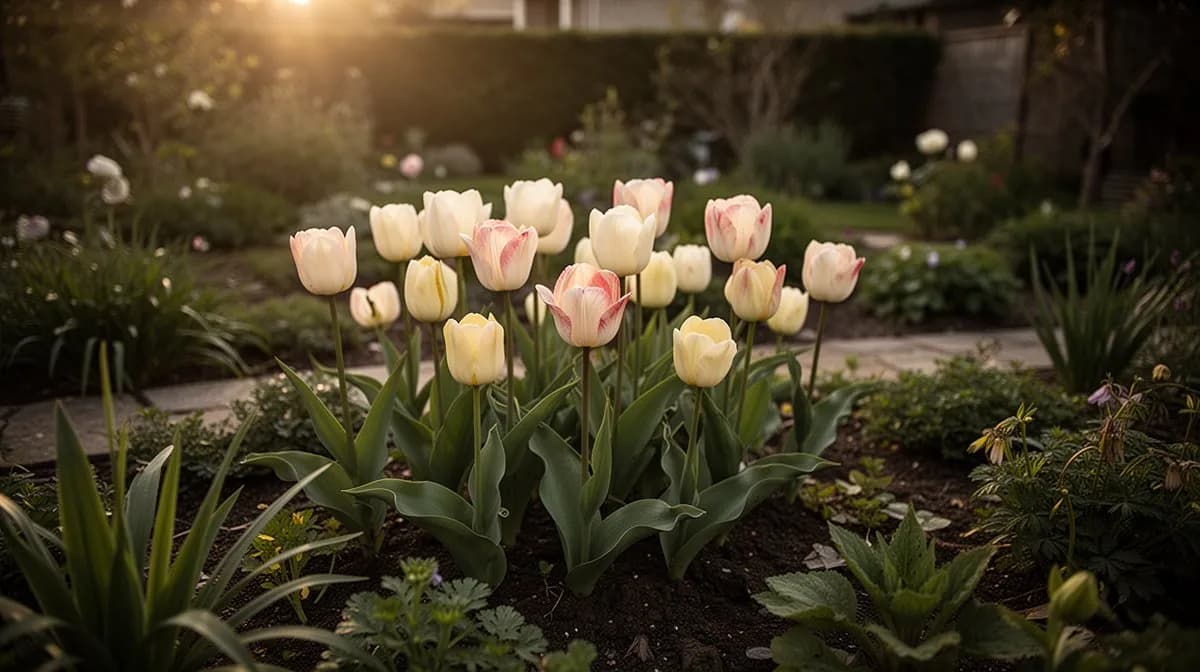
A stunning mass planting of Darwin Hybrid tulips in red, yellow, orange, and pink creating a bold spring border
- 1Plant Darwin Hybrid tulip bulbs in autumn when soil temperatures have cooled to below 15°C (60°F), typically late September through November depending on your climate zone. Planting too early in warm soil promotes premature root growth and increases the risk of fungal disease.
- 2Set bulbs at a depth of 15-20 cm (6-8 inches) measured from the base of the bulb. Deep planting insulates bulbs from temperature fluctuations, discourages squirrel digging, and helps maintain larger bloom size in subsequent years compared to shallow planting.
- 3Choose a planting site with full sun (at least 6 hours of direct sunlight daily) and excellent soil drainage. Darwin Hybrid tulips will tolerate partial shade but produce shorter stems and smaller flowers. Soggy soil is the leading cause of bulb rot and planting failure.
- 4Amend heavy clay soil with generous amounts of coarse sand, perlite, or fine gravel before planting to ensure rapid water drainage away from the bulbs. A raised bed or sloped site is ideal for areas with naturally heavy or poorly drained soil.
- 5Apply a balanced bulb fertilizer (9-9-6 or 10-10-10) at planting time and again when shoots emerge in spring. Avoid high-nitrogen fertilizers, which encourage lush foliage at the expense of flower quality and can reduce the bulb's ability to store energy for future years.
- 6For the most natural and visually appealing garden display, scatter bulbs randomly across the planting area and plant them where they fall rather than in formal rows or geometric patterns. Group at least 10-15 bulbs of the same variety for maximum landscape impact.
- 7Deadhead flowers promptly after petals begin to drop by snapping off the seed head while leaving the stem and all foliage intact. Seed production diverts significant energy away from the bulb and reduces flower quality in subsequent years.
- 8Never remove, cut, fold, or braid green tulip foliage after flowering. The leaves must remain intact for 4-6 weeks to photosynthesize and replenish the bulb with nutrients for next year's bloom. Interplant with emerging perennials like hostas or daylilies to disguise ripening tulip foliage.
- 9Protect newly planted bulbs from squirrels and rodents by laying chicken wire or hardware cloth flat over the planting area, securing it with landscape staples. The mesh allows shoots to grow through in spring while preventing animals from digging up the bulbs in autumn.
- 10In climates warmer than USDA zone 7, pre-chill Darwin Hybrid bulbs in the refrigerator at 4-7°C (40-45°F) for 10-12 weeks before planting. Store bulbs in a paper bag away from ripening fruit, as ethylene gas from apples and bananas can destroy the embryonic flower inside the bulb.
Darwin hybrid tulips make excellent cut flowers. Cut when buds are fully colored but still closed—they open over several days in the vase, giving 7-10 days of display. Cut stems long and place in cool water. The sturdy stems and weather-resistant flowers make them the most reliable tulips for cutting.
If bulbs are performing well in the ground, leave them undisturbed. For lifting and storing, wait until foliage has fully yellowed, dig carefully, clean, and dry in a shaded, well-ventilated location for a week. Store in mesh bags in a cool (15-20°C), dry place until autumn replanting. Inspect monthly and discard any soft bulbs.
Plan your garden with ease
Love growing Darwin Hybrid Tulip? Use our free garden planner to design your beds, track planting dates, and get personalized care reminders.
Nutritional Info
Per 100g serving
83
Calories
Health Benefits
- Tulip bulbs are starchy and were historically eaten during food shortages in the Netherlands, containing approximately 83 calories per 100g, comparable to potatoes
- Tulip petals are edible and used as a garnish in gourmet cuisine, containing small amounts of vitamin C and antioxidant flavonoids
- Bulbs provide a moderate source of potassium (470 mg per 100g) which supports heart function and fluid balance
- The starch content of tulip bulbs is approximately 60-70% of dry weight, similar to other root vegetables and tubers
- Tulip petals contain anthocyanins and carotenoids responsible for their vivid colors, which function as antioxidant compounds
- Note: tulip bulbs contain the glycoside tuliposide which can cause digestive irritation if consumed raw; they must be thoroughly cooked with the bitter center removed before eating
💰 Why Grow Your Own?
A single Darwin Hybrid tulip bulb costs $0.50-1.50 depending on variety and quantity purchased, yet it reliably produces spectacular blooms for 3-5 years or more without replacement. Compared to annual bedding plants costing $3-6 per plant each spring, a planting of 50 Darwin Hybrid bulbs ($25-50 initial investment) can provide five or more years of stunning spring displays, saving $300-600 over the same period. Buying bulbs in bulk quantities of 100 or more reduces the per-bulb cost by 30-50%. Additionally, Darwin Hybrids produce offset bulbs that can be separated and replanted, gradually expanding your display at no extra cost.
Quick Recipes
Simple recipes using fresh Darwin Hybrid Tulip
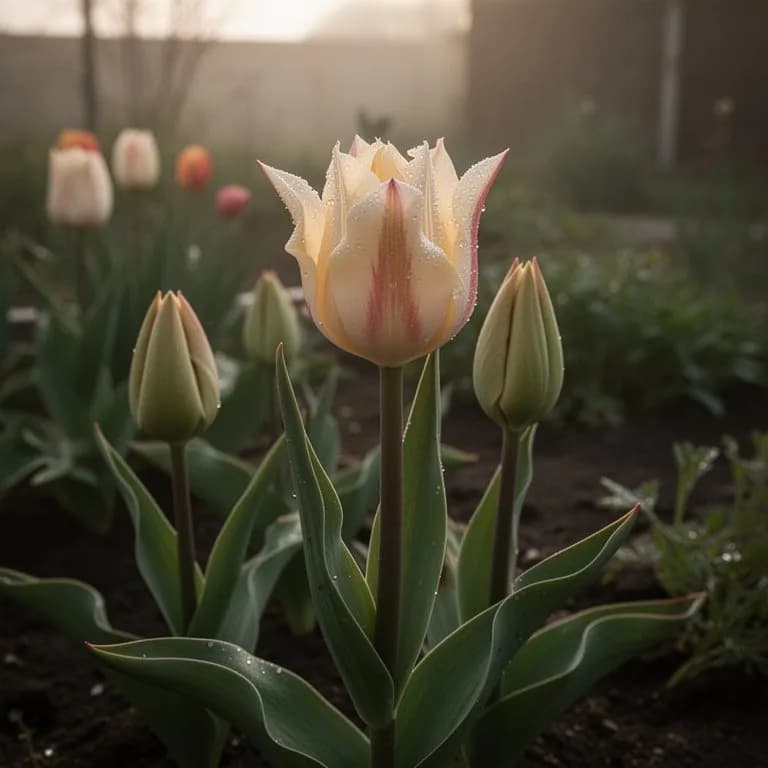
Tulip Petal Spring Salad
10 minutesA delicate and visually stunning spring salad that uses fresh tulip petals as both a colorful ingredient and edible garnish. Tulip petals have a mild, slightly sweet flavor reminiscent of fresh lettuce with subtle pea-like notes. Use only organically grown tulips that have never been treated with pesticides or other chemicals.
Stuffed Tulip Petal Appetizers
15 minutesElegant bite-sized appetizers using large Darwin Hybrid tulip petals as edible cups filled with a savory herbed cream cheese mixture. These beautiful hors d'oeuvres are perfect for spring garden parties and make a memorable conversation starter. Ensure all tulips are unsprayed and grown without systemic pesticides.
Tulip Petal Infused Spring Syrup
20 minutes plus coolingA beautifully colored floral syrup made by steeping fresh tulip petals in a simple sugar syrup. The resulting syrup captures the delicate color of the petals and a subtle floral fragrance. Use it to sweeten spring cocktails, drizzle over pancakes, or add to sparkling water for a garden-inspired beverage.
Darwin Hybrid tulips make exceptional cut flowers, lasting 7-10 days in a vase with proper care
Yield & Spacing Calculator
See how many Darwin Hybrid Tulip plants fit in your garden bed based on the recommended 12cm spacing.
100
Darwin Hybrid Tulip plants in a 4×4 ft bed
10 columns × 10 rows at 12cm spacing
Popular Varieties
Some of the most popular darwin hybrid tulip varieties for home gardeners, each with unique characteristics.
Tulipa 'Apeldoorn'
The classic orange-scarlet Darwin hybrid with a black base, perhaps the most widely planted tulip in the world.
Tulipa 'Golden Apeldoorn'
Brilliant golden-yellow flowers on tall sturdy stems, as reliable and vigorous as its red cousin.
Tulipa 'Pink Impression'
Soft rose-pink flowers on 55cm stems, one of the most elegant and reliable pink perennial tulips.
Tulipa 'Hakuun'
Pure white with a creamy base, an outstanding and long-lasting white Darwin hybrid for elegant plantings.
Popular Darwin Hybrid varieties: red Apeldoorn, golden Yellow Parade, and soft Pink Impression
When should I plant Darwin Hybrid Tulip?
Plant Darwin Hybrid Tulip in October, November. It takes approximately 180 days to reach maturity, with harvest typically in April, May.
What are good companion plants for Darwin Hybrid Tulip?
Darwin Hybrid Tulip grows well alongside Tulip, Daffodil, Pansy. Companion planting can improve growth, flavor, and natural pest control.
What hardiness zones can Darwin Hybrid Tulip grow in?
Darwin Hybrid Tulip thrives in USDA hardiness zones 3 through 8. With greenhouse protection, it may be grown in zones 1 through 9.
How much sun does Darwin Hybrid Tulip need?
Darwin Hybrid Tulip requires Full Sun (6-8h+). This means at least 6-8 hours of direct sunlight daily.
How far apart should I space Darwin Hybrid Tulip?
Space Darwin Hybrid Tulip plants 12cm (5 inches) apart for optimal growth and air circulation.
What pests and diseases affect Darwin Hybrid Tulip?
Common issues include Tulip Fire, Squirrels, Basal Rot (Fusarium). Prevention through good garden practices like crop rotation, proper spacing, and companion planting is the best approach. See the detailed pests and diseases section above for symptoms, prevention, and treatment for each.
How do I store Darwin Hybrid Tulip after harvest?
If bulbs are performing well in the ground, leave them undisturbed. For lifting and storing, wait until foliage has fully yellowed, dig carefully, clean, and dry in a shaded, well-ventilated location for a week. Store in mesh bags in a cool (15-20°C), dry place until autumn replanting. Inspect month...
What are the best Darwin Hybrid Tulip varieties to grow?
Popular varieties include Tulipa 'Apeldoorn', Tulipa 'Golden Apeldoorn', Tulipa 'Pink Impression', Tulipa 'Hakuun'. Each has unique characteristics suited to different growing conditions and culinary preferences. See the varieties section above for detailed descriptions.
What soil does Darwin Hybrid Tulip need?
Plant in fertile, well-drained soil with a pH of 6.0-7.0. Add bone meal at planting depth when planting bulbs. Top-dress in spring with balanced bulb fertilizer. Feed with high-potassium liquid fertilizer after flowering to strengthen bulbs for next year. Good drainage is essential for long-term per...
Will Darwin Hybrid tulips come back every year?
Darwin Hybrid tulips are among the best perennializing tulips available, reliably returning for 3-5 years or even longer when given proper care. The keys to successful repeat blooming are deep planting (15-20 cm), excellent drainage, deadheading spent flowers immediately, allowing foliage to die back naturally for six weeks after blooming, and applying bulb fertilizer in spring. In optimal conditions, many gardeners report Darwin Hybrids blooming reliably for 6-8 years before flower size begins to decline.
When is the best time to plant Darwin Hybrid tulip bulbs?
Plant Darwin Hybrid bulbs in autumn after soil temperatures have dropped to 15°C (60°F) or below but before the ground freezes solid. In most temperate climates, this means October through November. Planting too early when soil is still warm can promote fungal disease and premature growth. In warmer climates (USDA zones 8-9), delay planting until late November or December and pre-chill bulbs in the refrigerator for 10-12 weeks beforehand. The bulbs need 12-16 weeks of cold temperatures to bloom properly.
How deep should I plant Darwin Hybrid tulip bulbs?
Plant Darwin Hybrid tulip bulbs 15-20 cm (6-8 inches) deep, measured from the base of the bulb to the soil surface. This is deeper than many other spring bulbs and is important for several reasons: deep planting insulates bulbs from extreme temperature fluctuations, discourages squirrels from digging them up, and has been shown to significantly improve perennial return and flower size in subsequent years. In very sandy soils, you can plant slightly deeper at 20-22 cm. Space bulbs 10-15 cm apart.
Why did my Darwin Hybrid tulips bloom well the first year but not the second?
The most common reasons for declining tulip performance are removing foliage too early after flowering, failing to deadhead spent blooms, inadequate sunlight, and poor soil drainage. After flowering, the leaves must remain intact for at least 4-6 weeks to replenish the bulb through photosynthesis. If seed heads are left on, the plant diverts energy to seed production instead of bulb regeneration. Ensure your tulips receive at least 6 hours of direct sun and that the soil drains freely. Apply a balanced bulb fertilizer when shoots emerge in spring.
Can I grow Darwin Hybrid tulips in containers?
Yes, Darwin Hybrid tulips grow well in containers, though they require some special care. Use a pot at least 30 cm deep with drainage holes, and plant bulbs at the standard 15 cm depth using a well-draining potting mix amended with coarse sand or perlite. In cold climates, container-grown bulbs need winter protection because pots freeze more thoroughly than garden soil. Move containers to an unheated garage or wrap them in insulating material. Water sparingly during winter dormancy. Container-grown bulips may be less likely to perennialize, so treat them as annuals or transplant to the garden after flowering.
How do I prevent squirrels from digging up my tulip bulbs?
Squirrels are persistent tulip bulb thieves, but several effective deterrents exist. The most reliable method is laying chicken wire or hardware cloth flat over the planting area immediately after planting, securing it with landscape staples. The mesh openings allow shoots to grow through in spring while preventing digging. Other strategies include planting bulbs deeply (20 cm), covering the area with a thick mulch layer, interplanting with daffodil bulbs (which squirrels avoid due to their toxic alkaloids), and sprinkling crushed red pepper flakes or commercial animal repellent over the planting site after installation.
Ready to Grow Darwin Hybrid Tulip?
Add Darwin Hybrid Tulip to your garden plan and start designing your perfect layout.

Vladimir Kusnezow
Gardener and Software Developer
Zone 6b gardener. Growing vegetables and fruits in soil and hydroponics for 6 years. I built PlotMyGarden to plan my own gardens.
Jump to Section