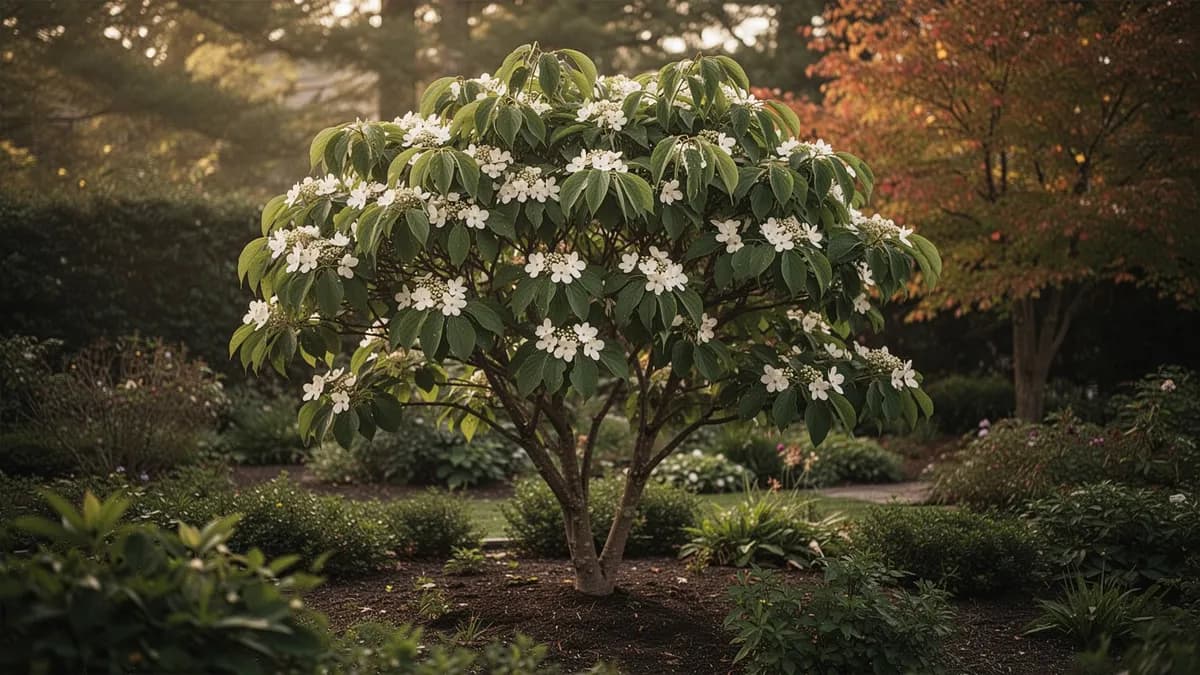
Stewartia Tree
Stewartia pseudocamellia
At a Glance
A connoisseur's tree offering camellia-like white flowers in midsummer, spectacular red-orange-purple fall foliage, and stunning mottled exfoliating bark that provides year-round beauty. Stewartias are slow-growing and somewhat difficult to establish, requiring acidic, moist, well-drained soil and protection from afternoon sun and wind. Once established, they are remarkably trouble-free and become more beautiful with each passing year as the bark develops its characteristic patchwork pattern. They resent transplanting, so choose the planting site carefully and avoid disturbing the roots.
Planting & Harvest Calendar
Growth Stages
From Seed to Harvest
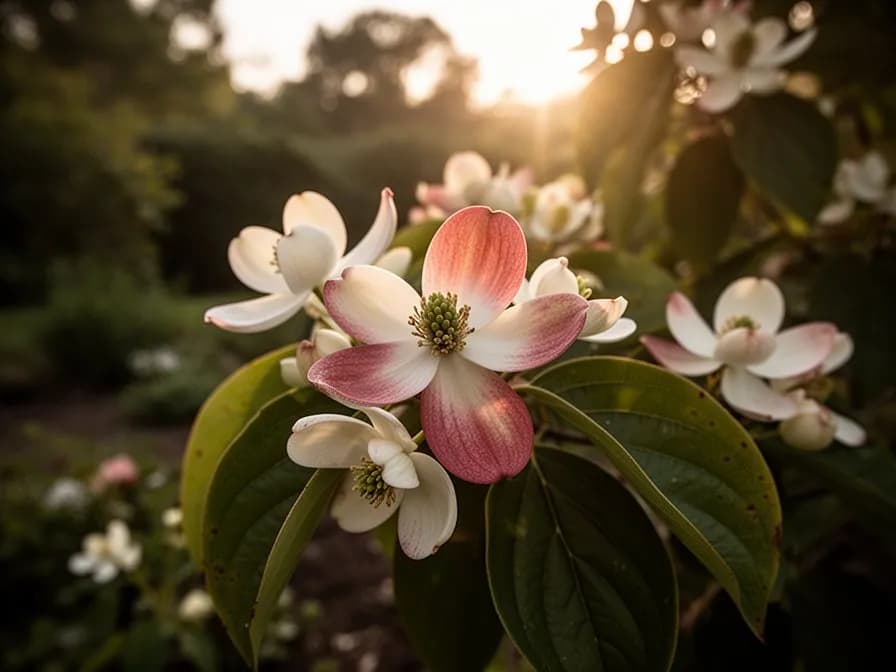
Seed Germination and Stratification
Days 0–180
Stewartia seeds have a double dormancy requiring both warm and cold stratification periods before germination occurs. Seeds collected in autumn are first held in warm moist conditions for 3-5 months to break the outer seed coat dormancy, followed by 3-4 months of cold stratification at 1-5°C (34-41°F). Germination is slow and often erratic, with emergence sometimes delayed until the second spring after sowing.
💡 Care Tip
Mix fresh seeds with damp peat moss or vermiculite and store in a sealed bag at room temperature for 120-150 days, then transfer to the refrigerator for 90-120 days. Alternatively, sow seeds outdoors in autumn and allow natural winter cycles to break dormancy over one to two seasons.
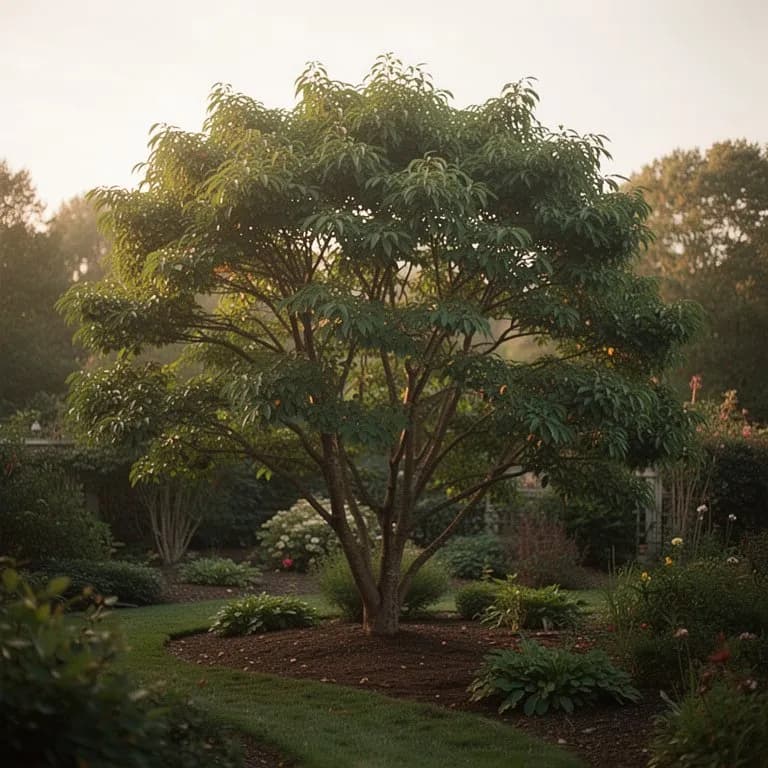
The multi-colored exfoliating bark of Japanese stewartia is one of its most celebrated ornamental features, providing year-round visual interest
Monthly Care Calendar
What to do each month for your Stewartia Tree
May
You are hereWatch for scale insects on branches and treat with horticultural oil if detected. Ensure consistent moisture as flower buds develop. Avoid any root disturbance or soil compaction near the tree.
Did You Know?
Fascinating facts about Stewartia Tree
Stewartia pseudocamellia is named for its flowers that closely resemble those of its relative the camellia — both belong to the tea family Theaceae, making stewartia a distant cousin of the tea plant Camellia sinensis.
Japanese stewartia is widely regarded as the finest four-season ornamental tree available, prized by discerning gardeners and landscape architects for its camellia-like summer flowers, brilliant fall color, and extraordinary mottled exfoliating bark. It is slow-growing, reaching 20 to 40 feet over many decades, and requires patience during establishment. Choose a site with morning sun and afternoon shade or consistent dappled light, with moist, acidic, well-drained soil with a pH of 5.0 to 6.5.
Site selection is permanently important, as stewartias resent transplanting once established. Plant container-grown specimens in spring, digging a hole 3 times wider than the root ball. Set at grade level and backfill with native soil amended with compost and pine bark. Water deeply at planting and maintain consistent moisture, as stewartias do not tolerate drought, especially during establishment.
Mulch with 4 inches of acidic organic matter extending well beyond the drip line to protect the shallow root system. Stewartia requires virtually no pruning; its natural pyramidal to rounded form is perfectly symmetrical and beautiful. The white flowers appear in June through July when few other trees are blooming. The bark begins developing its signature patchwork pattern of gray, orange, tan, and cinnamon as the tree matures, becoming increasingly dramatic with age.
Stewartia pseudocamellia is native to the warm-temperate forests of Japan and Korea, where it grows as an understory or woodland-edge tree in mountainous regions at elevations of 300-1,200 meters. In Japan it is known as natsu-tsubaki, meaning summer camellia, reflecting both its flowering season and its botanical kinship with the true camellias in the tea family Theaceae. The species was first described by the German botanist Philipp Franz von Siebold and Joseph Gerhard Zuccarini in their monumental Flora Japonica, published between 1835 and 1870, based on specimens collected during Siebold's residence in Japan. The genus name Stewartia honors John Stuart, 3rd Earl of Bute, an eighteenth-century British statesman and avid botanist who helped establish the Royal Botanic Gardens at Kew. Japanese stewartia was introduced to Western cultivation in the mid-nineteenth century but remained a collector's rarity for decades due to its slow growth and difficult propagation. It was not until the mid-twentieth century that the species gained wider recognition among landscape designers and plantsmen, particularly after influential American horticulturists such as Donald Wyman of the Arnold Arboretum championed it as one of the best small ornamental trees for temperate gardens. Today it is planted in botanical gardens and estate landscapes across North America, Europe, and temperate East Asia, prized for its rare combination of summer flowers, spectacular autumn foliage, and extraordinary exfoliating bark that provides year-round visual interest.
Stewartia seeds are challenging to germinate and require specific treatment. Collect woody capsules in fall when they begin to split and extract the small seeds. Seeds require a double dormancy treatment: warm stratification at 70 degrees for 90 to 150 days followed by cold stratification at 35 to 40 degrees for 90 to 120 days. This means seeds typically require two seasons to germinate. Sow treated seeds a quarter inch deep in acidic seedling mix. Germination is slow, erratic, and may take months even after proper stratification. Seedlings grow very slowly, reaching only 2 to 4 inches in the first year. Most nurseries propagate stewartia by softwood cuttings taken in early summer, though rooting percentages are low.
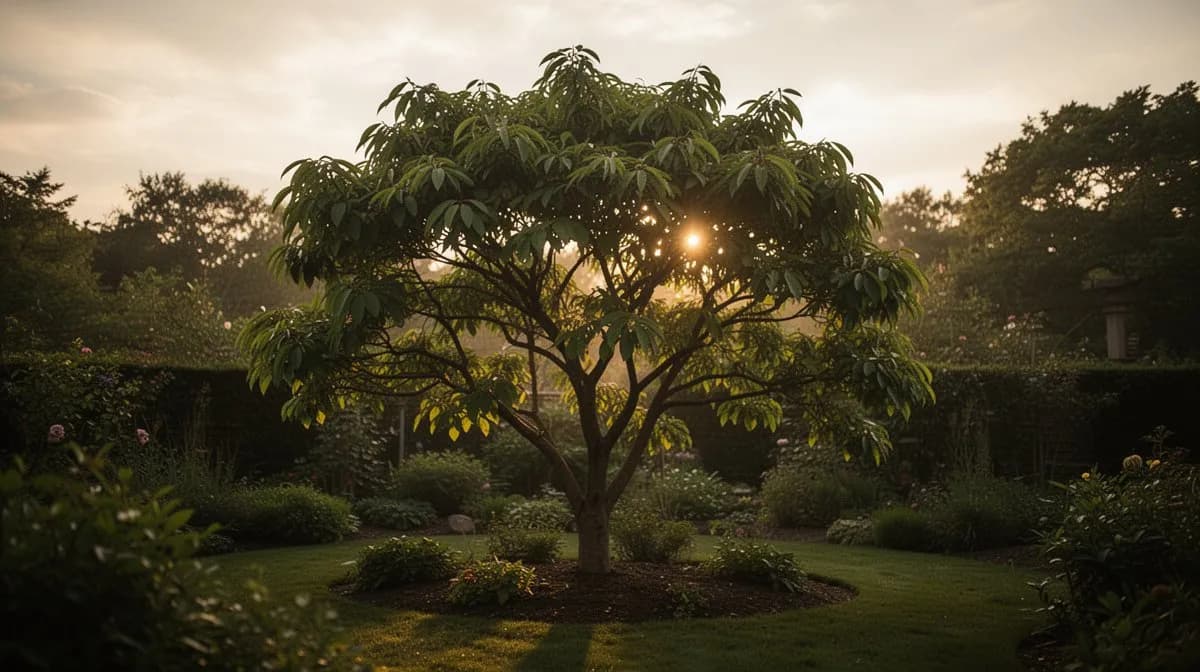
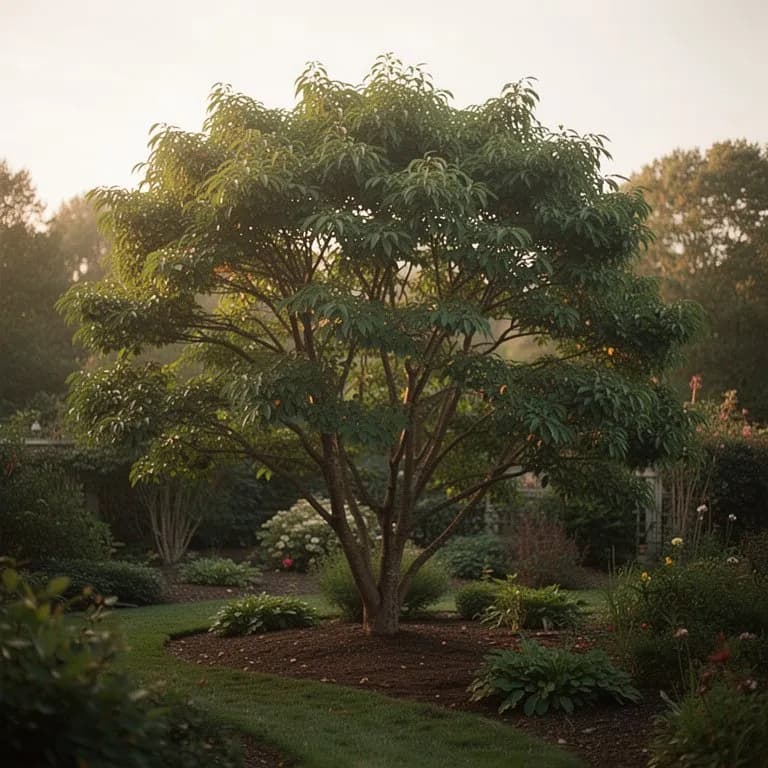
As a specimen tree, Japanese stewartia provides multi-season interest with flowers, bark, fall color, and an elegant form
Stewartia demands acidic, moist, well-drained soil with a pH of 5.0 to 6.5 and high organic matter content. It will not tolerate alkaline conditions, poor drainage, or drought. Amend the planting area generously with pine bark, composted leaves, and peat moss. Mulch heavily with 4 inches of acidic organic matter extending to the drip line and beyond to protect shallow roots. Fertilize sparingly in early spring with an acidifying fertilizer at half the recommended rate. Established trees in organically rich soil rarely need feeding. Never apply lime or alkaline amendments near stewartia.
Check Your Zone
See if Stewartia Tree is suitable for your location.
-20°C – 30°C
-4°F – 86°F
Japanese stewartia is hardy in USDA zones 5 through 8, tolerating winter lows to approximately -20°C (-4°F) once established. It thrives in moderate summer temperatures of 20-30°C (68-86°F) and benefits from some protection from intense afternoon sun and drying winds in hotter climates. In zones 7-8, afternoon shade is strongly recommended to prevent leaf scorch and heat stress.
Common issues affecting Stewartia Tree and how to prevent and treat them organically.
Difficulty of establishment is the primary challenge with stewartia. Trees planted in unsuitable conditions, including hot afternoon sun, alkaline soil, dry sites, or poor drainage, decline rapidly and are nearly impossible to save. Once happily established, however, stewartia is remarkably trouble-free. Drought stress during the first 3 to 5 years is the leading cause of failure; consistent moisture is absolutely critical during establishment. Transplanting established trees almost always fails due to their sensitive root systems. Bark development is slow, taking 5 to 10 years before the mottled pattern becomes prominent.
Stewartia's woodland preferences make it an ideal companion for other acid-loving, shade-tolerant plants. Rhododendrons, azaleas, and mountain laurel thrive in the same conditions and provide spring bloom before stewartia flowers in summer. Underplant with ferns, hostas, heucheras, and astilbes for layered textural interest. Japanese maples are classic companions with complementary fall color and similar cultural requirements. Spring-blooming woodland wildflowers like trillium, bloodroot, and hepatica naturalize beautifully beneath stewartia's light canopy.
- 1Select a planting site with morning sun and afternoon shade, or dappled light throughout the day — stewartia performs best with 4-6 hours of direct sunlight but is susceptible to leaf scorch in full afternoon sun in hot climates.
- 2Plant stewartia in acidic, well-drained soil with a pH between 5.0 and 6.5. Amend alkaline soils with elemental sulfur, peat moss, or composted pine bark before planting to achieve the correct pH range.
- 3Never transplant an established stewartia — the species has a deep, sensitive root system that does not recover well from disturbance. Choose the permanent planting site carefully and plant young specimens no larger than 1.5-2 meters for best establishment.
- 4Mulch generously with 7-10 cm of acidic organic material such as pine bark nuggets, composted oak leaves, or pine needle straw. Maintain the mulch ring at least 90 cm from the trunk in all directions but keep it 10 cm away from the bark itself.
- 5Water deeply and consistently during the first three to five years after planting. Even established stewartias prefer evenly moist soil and will show drought stress through premature leaf drop and reduced fall color.
- 6Avoid heavy pruning — stewartia develops a naturally elegant pyramidal-to-oval form that requires minimal shaping. Remove only dead, crossing, or damaged branches in late winter before new growth begins.
- 7Protect young trees from harsh winter winds in USDA zones 5 and 6 by planting on the south or east side of a building or evergreen windbreak. Wrap the trunk of newly planted trees with tree guard for the first two winters.
- 8Do not fertilize after midsummer — late-season fertilization stimulates tender new growth that is vulnerable to early frost damage. Apply acid-forming fertilizer once in early spring as buds begin to swell.
- 9Be patient with growth rate. Japanese stewartia grows slowly for the first five to seven years, adding only 15-30 cm annually, but growth accelerates once the root system is fully established and can reach 30-45 cm per year.
- 10Pair stewartia with understory companions that share its preference for acidic soil and partial shade, such as rhododendrons, azaleas, ferns, hostas, and woodland wildflowers for a cohesive planting design.
Stewartia is grown purely for ornamental value and has no edible or medicinal harvest. The primary aesthetic harvest is the breathtaking bark display that develops on mature trees. The camellia-like flowers, while beautiful, are not practical for cutting as individual blooms last only 1 to 2 days. Small woody seed capsules form in late summer and can be collected for propagation attempts or dried for decorative use. The spectacular fall foliage in shades of red, orange, purple, and gold rivals any tree in the landscape.
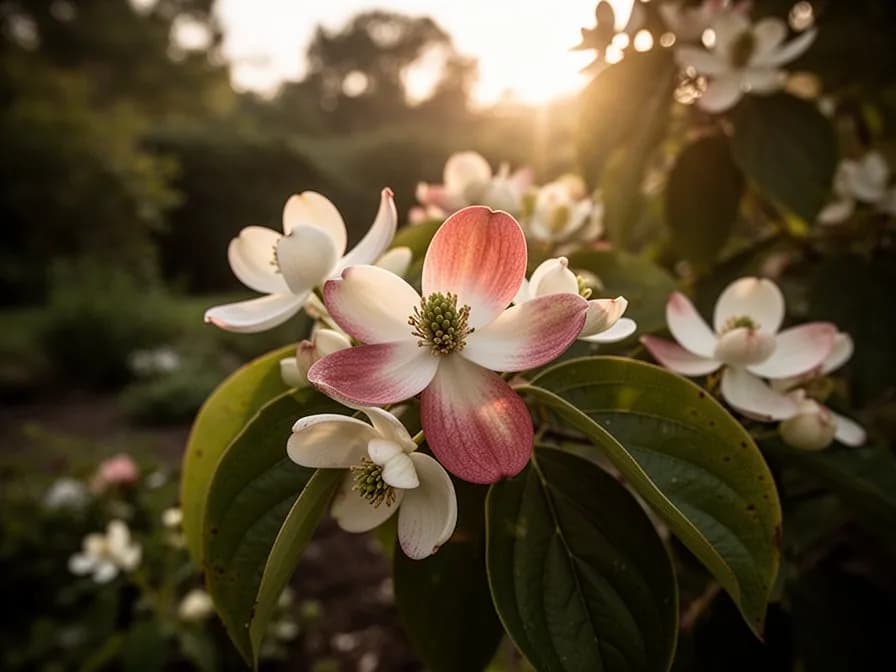
Star-shaped woody capsules split open in autumn, releasing small winged seeds that require cold stratification to germinate
Stewartia has limited harvest applications. Seed capsules can be collected when they turn brown in fall and dried for ornamental use. Seeds should be extracted promptly and stratified for propagation. Fall leaves can be pressed for botanical crafts, as the multi-colored foliage preserves well between sheets of paper. The exfoliating bark fragments that naturally shed can be collected for craft projects or as decorative mulch.
Plan your garden with ease
Love growing Stewartia Tree? Use our free garden planner to design your beds, track planting dates, and get personalized care reminders.
Nutritional Info
Per 100g serving
0
Calories
Health Benefits
- Stewartia pseudocamellia is grown exclusively as an ornamental tree and is not cultivated for food or medicinal use
- The flowers, leaves, bark, and seeds are not consumed and have no established nutritional profile
- As a member of the tea family Theaceae, it shares a botanical relationship with Camellia sinensis (tea), but stewartia itself is not used to make beverages
- The primary value of this tree is aesthetic — its flowers, bark, and foliage provide exceptional ornamental interest across all four seasons
💰 Why Grow Your Own?
Japanese stewartia is a long-term landscape investment rather than a food-producing plant. A nursery-grown specimen of 1.5-2 meters typically costs $150-$400 depending on size and cultivar, but a single well-placed stewartia can increase residential property values by several thousand dollars according to studies on mature ornamental tree contributions to real estate appraisals. Its multi-season interest eliminates the need for multiple seasonal plantings, and its longevity of 100+ years means it is a once-in-a-lifetime planting that will serve generations.
Quick Recipes
Simple recipes using fresh Stewartia Tree
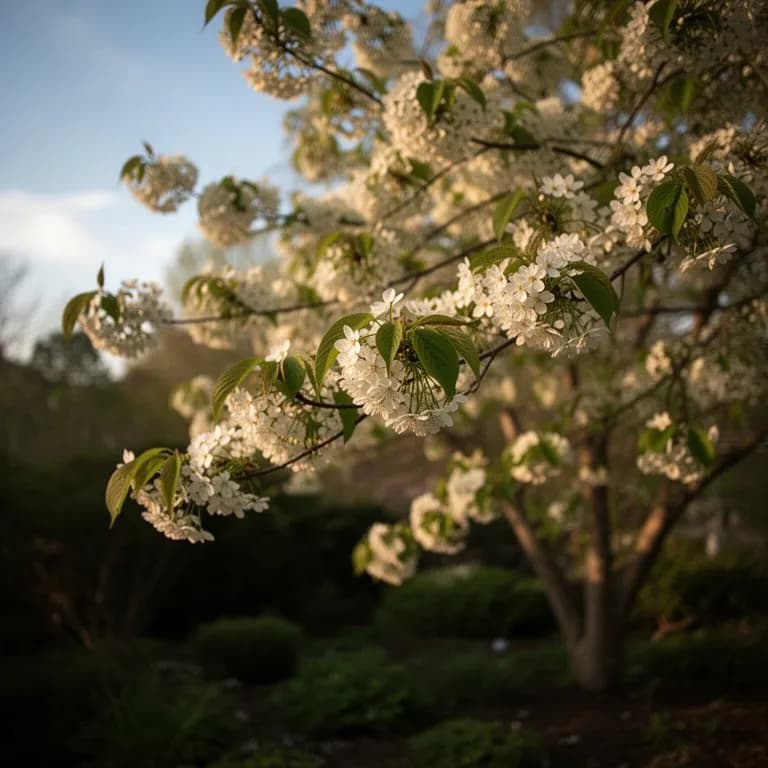
Stewartia Flower Pressing for Botanical Art
15 minutes active, 2-3 weeks dryingPreserve the ephemeral camellia-like blooms of stewartia by pressing them for use in framed botanical art, greeting cards, or nature journals. Since each flower lasts only a day or two on the tree, pressing captures their fleeting beauty permanently.
Stewartia Bark Mulch Blend for Acid-Loving Plants
30 minutesCollect naturally shed bark flakes from mature stewartia trees and blend them with pine bark and composted oak leaves to create a decorative, acidic mulch perfect for azaleas, rhododendrons, and blueberries growing nearby.
Stewartia Seed Starting Mix
20 minutesPrepare an optimized growing medium for stewartia seed germination that provides the acidic pH, moisture retention, and drainage these slow-germinating seeds require during their extended stratification and emergence period.
Yield & Spacing Calculator
See how many Stewartia Tree plants fit in your garden bed based on the recommended 500cm spacing.
0
Stewartia Tree plants in a 4×4 ft bed
0 columns × 0 rows at 500cm spacing
Popular Varieties
Some of the most popular stewartia tree varieties for home gardeners, each with unique characteristics.
Japanese Stewartia (S. pseudocamellia)
The most commonly available species with white flowers, brilliant fall color, and the finest bark display. Pyramidal form to 20 to 40 feet. The standard against which all stewartias are measured.
Korean Stewartia (S. koreana)
Very similar to Japanese stewartia but with slightly larger, more open flowers and a broader, more spreading habit. Bark exfoliation is equally spectacular. Outstanding orange-red fall color.
Tall Stewartia (S. monadelpha)
Smaller flowers but smoother, more cinnamon-colored bark than S. pseudocamellia. Faster growing with a more upright habit. Excellent choice for smaller gardens.
Ballet
A selected form of S. pseudocamellia with a particularly well-branched, symmetrical habit and reliable heavy flowering. Excellent bark development and fall color.
When should I plant Stewartia Tree?
Plant Stewartia Tree in March, April. It takes approximately 2555 days to reach maturity, with harvest typically in .
What are good companion plants for Stewartia Tree?
Stewartia Tree grows well alongside Daffodil. Companion planting can improve growth, flavor, and natural pest control.
What hardiness zones can Stewartia Tree grow in?
Stewartia Tree thrives in USDA hardiness zones 5 through 8. With greenhouse protection, it may be grown in zones 3 through 9.
How much sun does Stewartia Tree need?
Stewartia Tree requires Partial Sun (3-6h). This means 3-6 hours of sunlight, ideally morning sun with afternoon shade.
How far apart should I space Stewartia Tree?
Space Stewartia Tree plants 500cm (197 inches) apart for optimal growth and air circulation.
What pests and diseases affect Stewartia Tree?
Common issues include Leaf Spot, Root Rot, Scale Insects. Prevention through good garden practices like crop rotation, proper spacing, and companion planting is the best approach. See the detailed pests and diseases section above for symptoms, prevention, and treatment for each.
How do I store Stewartia Tree after harvest?
Stewartia has limited harvest applications. Seed capsules can be collected when they turn brown in fall and dried for ornamental use. Seeds should be extracted promptly and stratified for propagation. Fall leaves can be pressed for botanical crafts, as the multi-colored foliage preserves well betwee...
What are the best Stewartia Tree varieties to grow?
Popular varieties include Japanese Stewartia (S. pseudocamellia), Korean Stewartia (S. koreana), Tall Stewartia (S. monadelpha), Ballet. Each has unique characteristics suited to different growing conditions and culinary preferences. See the varieties section above for detailed descriptions.
What soil does Stewartia Tree need?
Stewartia demands acidic, moist, well-drained soil with a pH of 5.0 to 6.5 and high organic matter content. It will not tolerate alkaline conditions, poor drainage, or drought. Amend the planting area generously with pine bark, composted leaves, and peat moss. Mulch heavily with 4 inches of acidic o...
Why is my Japanese stewartia not flowering?
Stewartia pseudocamellia typically does not begin flowering until it reaches seven to ten years of age, and sometimes longer for seed-grown trees. If your tree is mature enough to flower but is not producing blooms, check that it receives at least four hours of direct sunlight daily — too much shade will reduce flowering. Soil that is too alkaline (pH above 6.5) can also inhibit bloom production. Excessive nitrogen fertilization may promote leaf growth at the expense of flowers.
Can I transplant a Japanese stewartia that has been growing in my yard for several years?
Transplanting established stewartia trees is strongly discouraged because the species develops a deep, sensitive root system that responds poorly to disturbance. Trees moved after three to five years in the ground have a high failure rate. If transplanting is absolutely necessary, attempt it in early spring while the tree is still dormant, dig as large a root ball as possible, and provide attentive aftercare with consistent watering for at least two full growing seasons.
What causes the leaves on my stewartia to turn brown at the edges in summer?
Leaf scorch — brown, crispy leaf margins — is the most common issue with stewartia and is typically caused by excessive sun exposure, heat stress, drought, or drying winds. The remedy is to ensure consistent soil moisture through deep watering and thick organic mulch, and to provide afternoon shade if the tree is planted in a fully exposed location. In USDA zones 7-8, afternoon shade protection is especially important.
How fast does Japanese stewartia grow?
Japanese stewartia is considered a slow to moderate grower. Young trees typically add 15-30 cm (6-12 inches) per year for the first five to seven years as they establish their root system. Once established, growth rate increases to approximately 30-45 cm (12-18 inches) per year. A ten-year-old tree is usually 2.5-4 meters (8-13 feet) tall. Mature specimens eventually reach 6-12 meters (20-40 feet) over several decades.
Is Japanese stewartia susceptible to any serious pests or diseases?
Stewartia pseudocamellia is remarkably pest and disease resistant, which is one of the reasons it is so highly valued by horticulturists. It has no serious insect or disease problems in most regions. Occasional minor issues include scale insects on branches, which can be managed with horticultural oil, and leaf spot in very humid conditions. The primary cultural challenge is not pests but rather environmental stress from improper soil pH, drought, or excessive sun exposure.
When is the best time to plant a Japanese stewartia?
Early spring, just as buds begin to swell but before active growth starts, is the ideal planting time for Japanese stewartia. This gives the tree a full growing season to establish roots before its first winter. Container-grown trees can also be planted in early autumn, at least six to eight weeks before the first hard frost, provided they receive consistent watering through the fall. Avoid planting in the heat of summer or during winter dormancy.
Ready to Grow Stewartia Tree?
Add Stewartia Tree to your garden plan and start designing your perfect layout.

Vladimir Kusnezow
Gardener and Software Developer
Zone 6b gardener. Growing vegetables and fruits in soil and hydroponics for 6 years. I built PlotMyGarden to plan my own gardens.
Jump to Section