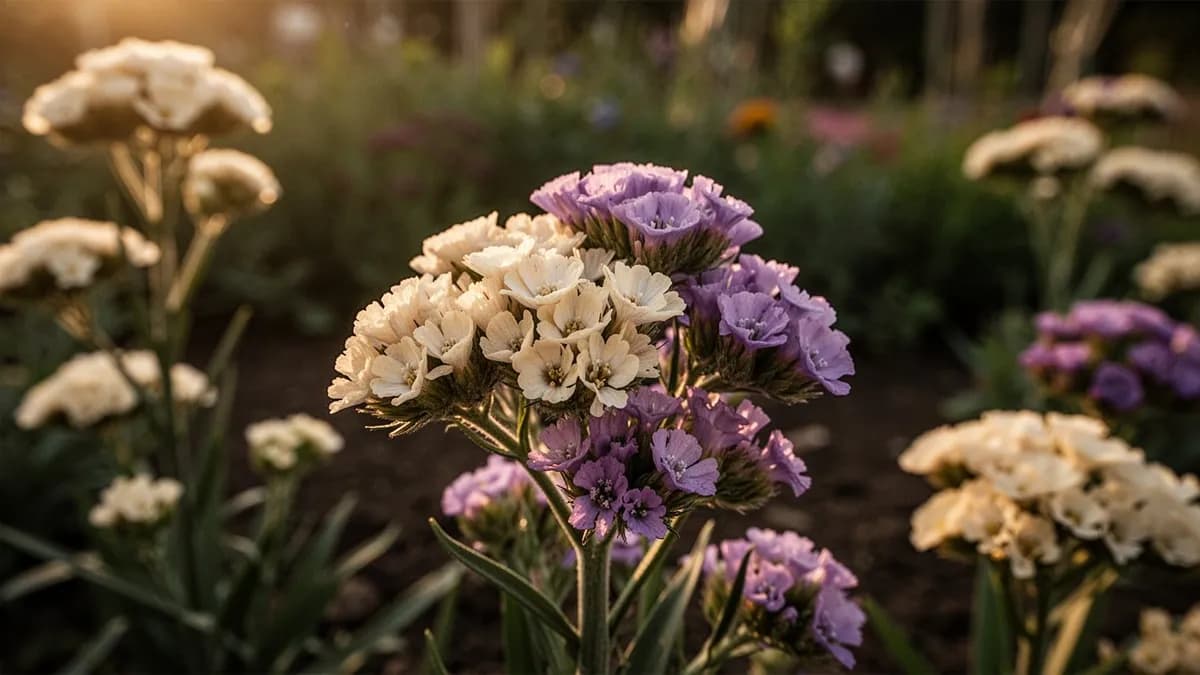
Statice
Limonium sinuatum
At a Glance
An everlasting flower with papery blooms in purple, blue, pink, and white that retain their color perfectly when dried. Statice is drought-tolerant and thrives in full sun with well-drained soil, making it a low-maintenance border plant. Harvest stems when most flowers on the spike have opened for the best dried arrangements.
Planting & Harvest Calendar
Growth Stages
From Seed to Harvest
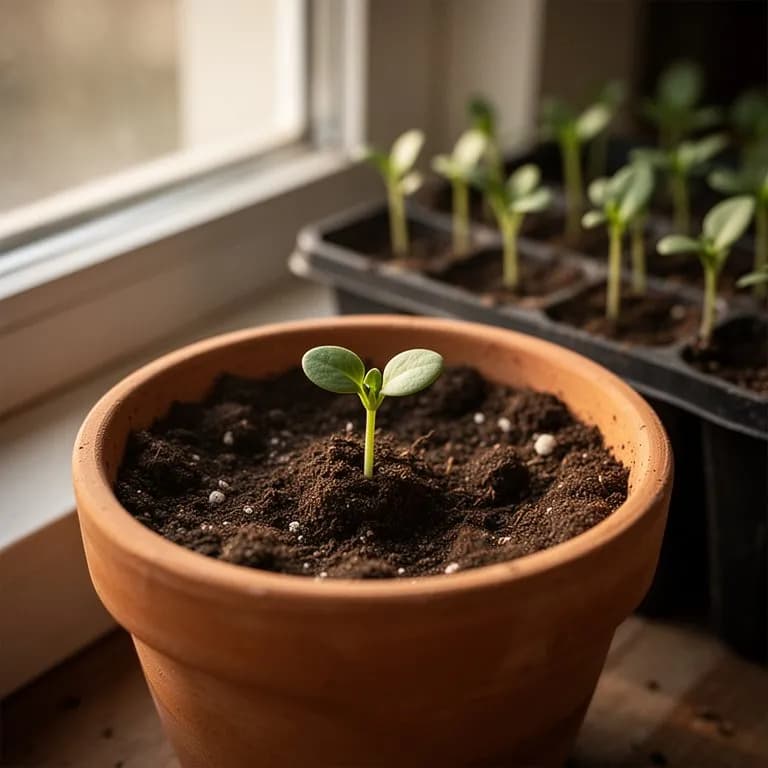
Seed Germination
Days 0–18
Statice seeds are slow and somewhat erratic to germinate. Seeds require light for germination and should be pressed gently onto the surface of moist seed-starting mix without covering. Maintain consistent moisture and warmth around 18-21°C (65-70°F). Germination rates are typically 50-70%.
💡 Care Tip
Soak seeds in warm water for 12-24 hours before sowing to soften the seed coat and improve germination rates. Use a humidity dome to maintain consistent moisture.
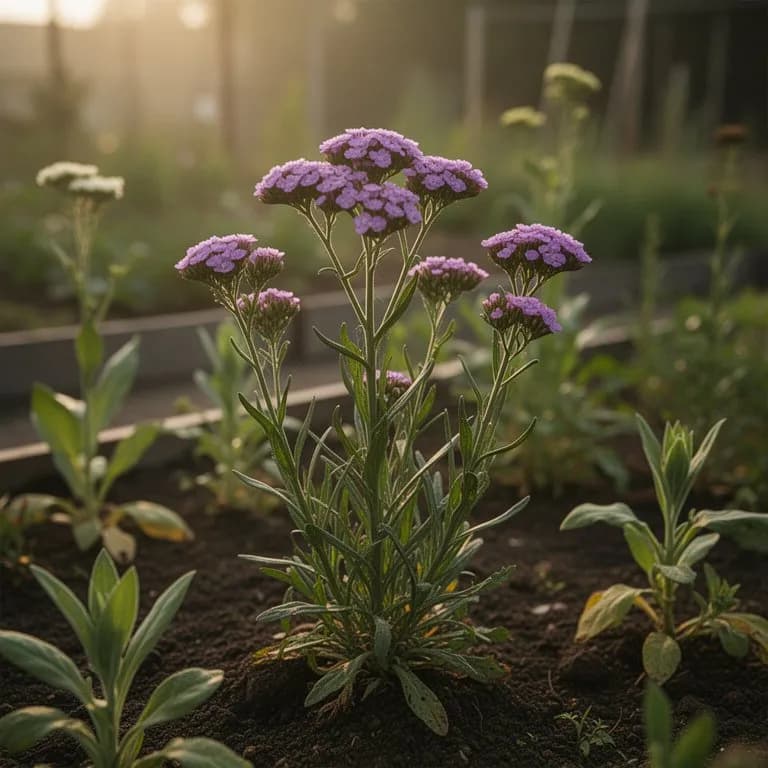
The characteristic basal rosette with deeply lobed, wavy-edged leaves
Monthly Care Calendar
What to do each month for your Statice
June
You are hereNo specific care tasks for this month.
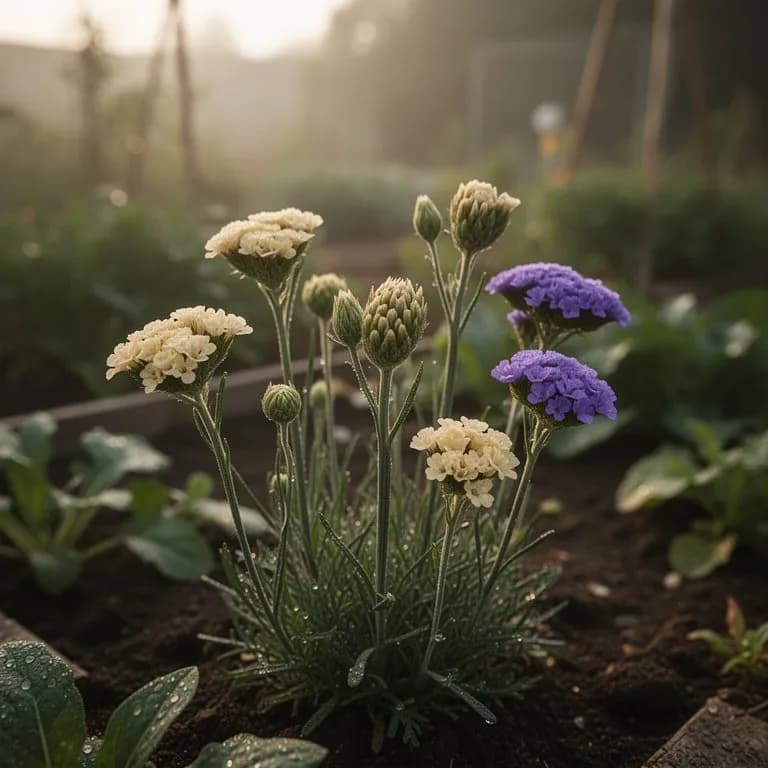
Classic purple statice displaying its vivid papery calyxes with tiny white inner flowers
Did You Know?
Fascinating facts about Statice
Statice belongs to the family Plumbaginaceae and is native to the Mediterranean region, where it grows wild on coastal cliffs, salt marshes, and sandy shorelines exposed to sea spray.
Statice is best started indoors eight to ten weeks before the last frost, as it has a long growing season requirement. Sow seeds in individual cells or pots, barely covering them with a thin layer of vermiculite. Seeds germinate in fourteen to twenty-one days at 65 to 70 degrees Fahrenheit. Transplant outdoors after the last frost into a sunny location with very well-drained soil, spacing plants twelve to fifteen inches apart.
Statice is exceptionally drought-tolerant once established and performs best in full sun with lean, sandy soil. Avoid rich, moist conditions which promote weak, floppy growth and fungal diseases. Water sparingly, allowing the soil to dry out between waterings. The rosette of basal leaves develops first, followed by wiry, winged flower stems that emerge in midsummer.
Feed lightly at planting time with a balanced slow-release fertilizer and avoid additional feeding during the season. Statice does not require deadheading and blooms continuously from midsummer through frost. The papery flower calyxes surrounding tiny true flowers give statice its everlasting quality. Stake tall varieties in windy locations. Leave some plants to self-sow for the following year's crop.
Statice (Limonium sinuatum) is native to the Mediterranean region, where it grows wild along coastal areas from Portugal and Morocco eastward through southern Europe, North Africa, and into western Asia. The plant thrives naturally on rocky sea cliffs, salt marshes, sandy dunes, and dry coastal meadows, environments that have shaped its remarkable tolerance for salt, wind, drought, and poor soils.
The plant has been gathered from the wild for centuries by Mediterranean peoples who recognized its unique ability to retain color long after being cut and dried. Ancient Greeks and Romans are believed to have used wild-gathered statice in dried garlands and decorative arrangements. The genus name Limonium derives from the Greek word 'leimon,' meaning meadow, while the species name sinuatum refers to the deeply wavy or sinuate margins of its basal leaves.
Statice entered formal cultivation in European gardens during the 17th and 18th centuries, initially grown in botanical collections as a curiosity from the Mediterranean coast. By the Victorian era, it had become an essential component of the popular 'everlasting flower' arrangements that decorated parlors and drawing rooms. The Victorians assigned statice the symbolic meaning of remembrance, making it a staple of sympathy bouquets and memorial wreaths.
Modern breeding programs, particularly in the Netherlands, Germany, Japan, and the United States, have dramatically expanded the color range beyond the original wild purple-blue. Today, cultivated varieties are available in deep violet, lavender, rose pink, apricot, bright yellow, pure white, and bicolor combinations. The development of the QIS and Fortress series brought improved stem length, uniformity, and vigor that made statice a commercially important cut flower crop grown on every inhabited continent. Annual global production is estimated at over 500 million stems, with major growing regions in the Netherlands, Colombia, Israel, Kenya, and California.
Start statice seeds indoors eight to ten weeks before the last frost for the longest bloom season. Sow on the surface of moist seed-starting mix and cover very lightly with vermiculite. Seeds germinate in fourteen to twenty-one days at 65 to 70 degrees Fahrenheit with consistent moisture. Some growers recommend chilling seeds in the refrigerator for two weeks before sowing to improve germination. Transplant seedlings outdoors after the last frost, handling carefully to avoid disturbing the taproot. Direct sowing is possible but results in later blooming.
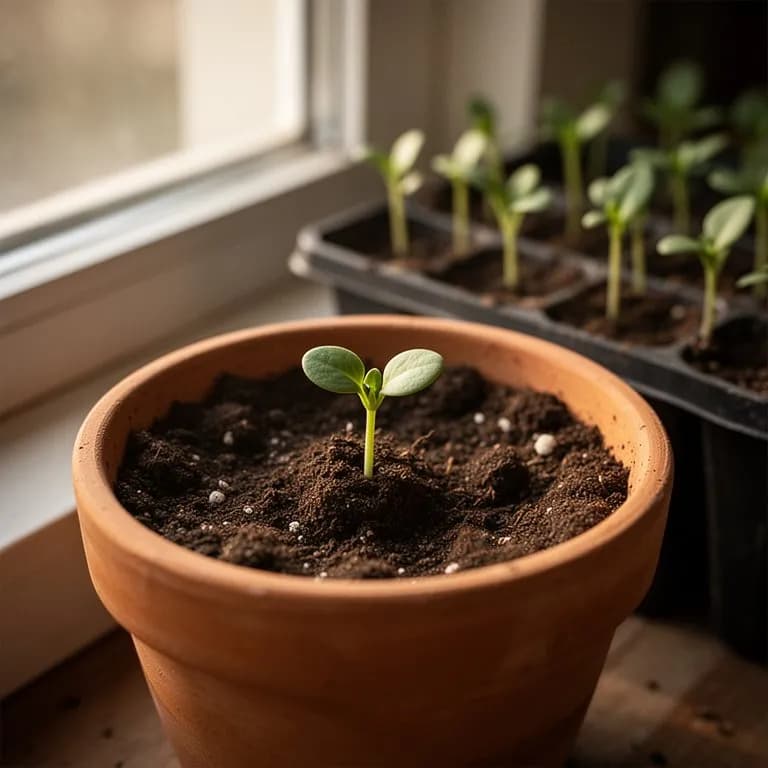
Young statice seedlings developing their first true leaves after germination
Statice thrives in lean, sandy, well-drained soil with a pH of 6.0 to 7.0. It is tolerant of poor, dry, and even saline soil, reflecting its Mediterranean coastal origins. Avoid rich, heavily amended soil which produces weak stems and increases disease susceptibility. A light application of balanced granular fertilizer at planting is sufficient for the entire season. Container plants may need light monthly feeding. Excellent drainage is the single most important soil requirement.
Check Your Zone
See if Statice is suitable for your location.
5°C – 30°C
41°F – 86°F
Statice grows best in daytime temperatures between 15-25°C (60-77°F) and can tolerate brief exposure down to about 5°C (41°F) without damage. Plants perform well in warm, dry conditions and are heat-tolerant up to 30°C (86°F) provided they have good air circulation. Prolonged exposure to temperatures below freezing will kill annual varieties, though the plant is grown as a short-lived perennial in USDA zones 8-11. Cool night temperatures between 10-15°C (50-59°F) promote the strongest stem development and most vivid flower colors.
Common issues affecting Statice and how to prevent and treat them organically.
The most common issue is poor germination due to old seed or incorrect sowing technique. Use fresh seed and provide consistent moisture during the germination period. Crown rot from overwatering or poor drainage is the primary disease concern. Statice planted in heavy, wet soil will not thrive. Stems may become floppy in rich soil or shade. In short-season climates, the long time from seed to bloom may require very early indoor starting to flower before frost.
Statice pairs naturally with other everlasting flowers like strawflowers, globe amaranth, and celosia in both the garden and dried arrangements. Its vertical flower spikes contrast well with the rounded forms of dusty miller and silver-foliage plants. Statice attracts butterflies and beneficial pollinators while requiring minimal water, making it ideal for xeriscape and Mediterranean-style gardens. Plant with lavender and ornamental grasses for a drought-tolerant, low-maintenance border.
- 1Start seeds indoors 8-10 weeks before your last frost date for the earliest blooms. Statice has a long growing season and benefits from an early start, especially in short-summer climates.
- 2Do not cover seeds when sowing — statice requires light to germinate. Press seeds gently onto the surface of moist seed-starting mix and cover the tray with a clear humidity dome.
- 3Soak seeds in warm water for 12-24 hours before planting to soften the hard seed coat and improve germination rates, which are naturally around 50-70%.
- 4Choose the sunniest spot in your garden with sharp drainage. Statice evolved on Mediterranean coastal cliffs and will rot quickly in heavy, waterlogged soil. Amend clay soil with coarse sand and compost.
- 5Space plants 25-30 cm (10-12 inches) apart to ensure adequate air circulation, which is critical for preventing botrytis and powdery mildew in humid climates.
- 6Water deeply but infrequently once plants are established. Statice is genuinely drought-tolerant and overwatering is the most common cause of failure. Allow the top 5 cm of soil to dry between waterings.
- 7Avoid high-nitrogen fertilizers, which promote lush foliage at the expense of flowers. Use a balanced or low-nitrogen formula (such as 5-10-10) applied sparingly every 3-4 weeks during the growing season.
- 8Harvest stems for drying when about 75% of the tiny true flowers in each cluster have opened. Cut in the morning after dew has evaporated for the longest vase and drying life.
- 9Hang harvested stems upside down in small bundles of 5-8 stems in a warm, dark, well-ventilated area. Complete drying takes 2-3 weeks, and no chemical preservatives are needed to retain color.
- 10Grow statice alongside other cut flowers like zinnias, snapdragons, cosmos, and celosia for a productive cutting garden. Statice serves as an excellent filler flower in both fresh and dried arrangements.
Cut statice stems for drying when most of the tiny flowers within the colorful calyxes have opened along the spike. Harvest on a dry day in late morning after dew has evaporated. Cut stems as long as possible and strip the lower leaves. Bundle five to ten stems together with a rubber band and hang upside down in a dark, warm, well-ventilated area. Drying takes one to two weeks. The papery flowers retain their vivid color for months to years when properly dried.
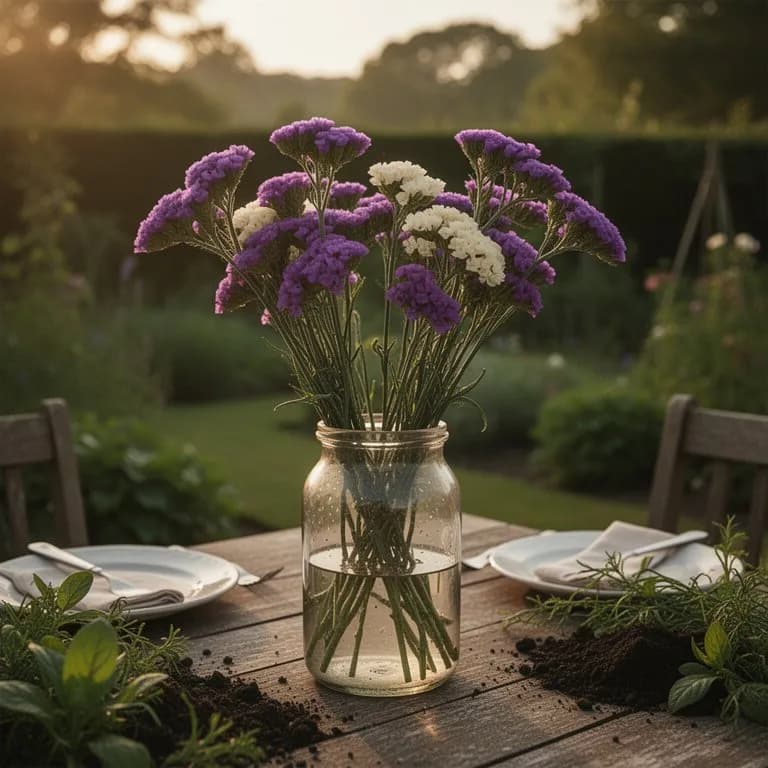
Cut statice stems ready for fresh arrangements or drying
Statice is one of the premier everlasting flowers and dries perfectly with virtually no color loss. Air-dry by hanging bundles in a dark, warm space for one to two weeks. Store dried stems upright in a dry location away from direct sunlight and humidity, where they last a year or more. Fresh-cut statice also lasts ten to fourteen days in a vase. Seeds remain viable for two to three years in cool, dry storage. The dried flowers can also be used in potpourri and wreaths.
Plan your garden with ease
Love growing Statice? Use our free garden planner to design your beds, track planting dates, and get personalized care reminders.
Nutritional Info
Per 100g serving
0
Calories
Health Benefits
- Statice is grown exclusively as an ornamental and dried flower; it is not consumed as a food crop
- Some Limonium species have been used in traditional herbal medicine as astringents and for treating digestive complaints, but L. sinuatum is not typically used medicinally
- The plant's primary value is aesthetic and economic as a cut and dried flower rather than nutritional
- Statice is not classified as toxic to humans or pets, but it is not intended for consumption
💰 Why Grow Your Own?
A single packet of statice seeds (approximately 50-100 seeds) costs $2-4 and can produce 30-60 plants, each yielding 15-25 stems per season. A single stem of dried statice sells for $1-3 at florist shops, while dried bunches cost $8-15. Growing your own can yield $300-800 worth of dried flowers per season from a $3 seed investment. Dried statice arrangements last 2-5 years, replacing the need for fresh-cut flowers and saving $20-50 per month on floral purchases. The plants require minimal inputs once established — no expensive fertilizers, minimal water, and no pest treatments in most cases.
Quick Recipes
Simple recipes using fresh Statice
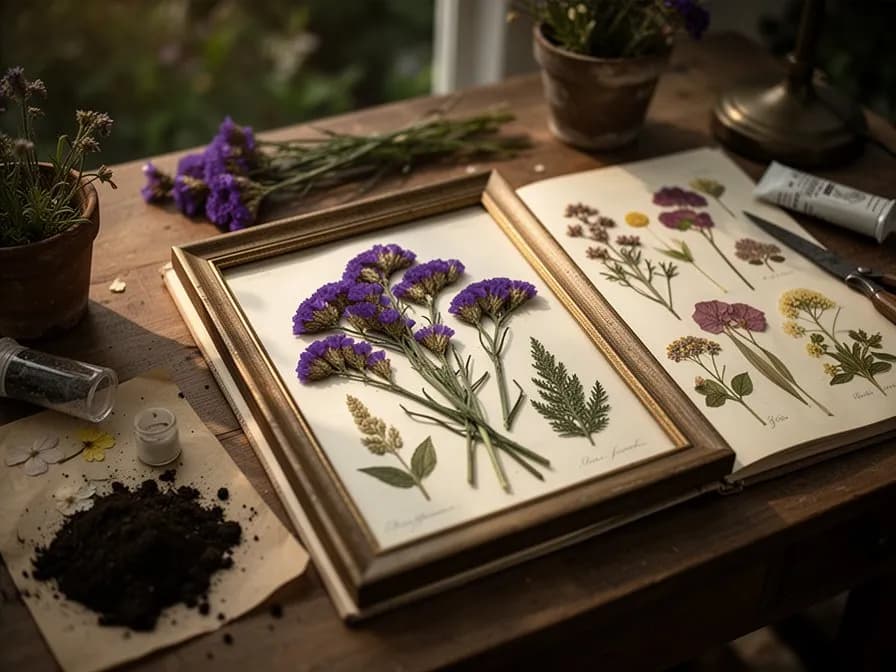
Classic Dried Statice Wreath
45 minutesCreate a stunning everlasting wreath using dried statice in multiple colors. The papery flowers hold their color for years, making this a long-lasting decorative piece for doors, walls, or table centerpieces throughout every season.
Statice and Lavender Potpourri Sachets
30 minutesCombine dried statice florets with dried lavender, rose petals, and essential oils to create fragrant sachets for drawers, closets, and gifts. The statice adds vibrant color while the lavender provides a calming scent.
Mixed Everlasting Flower Bouquet
20 minutesArrange a vibrant dried flower bouquet combining statice with complementary everlasting flowers. This no-water arrangement lasts for years and makes an excellent gift or home decoration that requires zero maintenance.
Yield & Spacing Calculator
See how many Statice plants fit in your garden bed based on the recommended 30cm spacing.
16
Statice plants in a 4×4 ft bed
4 columns × 4 rows at 30cm spacing
Popular Varieties
Some of the most popular statice varieties for home gardeners, each with unique characteristics.
Pacific Mix
The standard tall variety reaching twenty-four to thirty inches with large flower clusters in blue, purple, rose, yellow, and white.
QIS Series
Bred for cut-flower production with strong, straight stems and uniform colors in separate shades for professional arrangements.
Soiree Mix
A compact series growing twelve to fifteen inches tall, ideal for containers, border edging, and smaller garden spaces.
Fortress Mix
Extra-large flower heads on sturdy twenty-four inch stems in a vibrant mix of colors, excellent for both fresh and dried use.
When should I plant Statice?
Plant Statice in March, April. It takes approximately 80 days to reach maturity, with harvest typically in July, August, September.
What are good companion plants for Statice?
Statice grows well alongside Strawflower, Dusty Miller, Bachelor's Button. Companion planting can improve growth, flavor, and natural pest control.
What hardiness zones can Statice grow in?
Statice thrives in USDA hardiness zones 5 through 11. With greenhouse protection, it may be grown in zones 3 through 12.
How much sun does Statice need?
Statice requires Full Sun (6-8h+). This means at least 6-8 hours of direct sunlight daily.
How far apart should I space Statice?
Space Statice plants 30cm (12 inches) apart for optimal growth and air circulation.
What pests and diseases affect Statice?
Common issues include Botrytis Gray Mold, Crown Rot, Aphids. Prevention through good garden practices like crop rotation, proper spacing, and companion planting is the best approach. See the detailed pests and diseases section above for symptoms, prevention, and treatment for each.
How do I store Statice after harvest?
Statice is one of the premier everlasting flowers and dries perfectly with virtually no color loss. Air-dry by hanging bundles in a dark, warm space for one to two weeks. Store dried stems upright in a dry location away from direct sunlight and humidity, where they last a year or more. Fresh-cut sta...
What are the best Statice varieties to grow?
Popular varieties include Pacific Mix, QIS Series, Soiree Mix, Fortress Mix. Each has unique characteristics suited to different growing conditions and culinary preferences. See the varieties section above for detailed descriptions.
What soil does Statice need?
Statice thrives in lean, sandy, well-drained soil with a pH of 6.0 to 7.0. It is tolerant of poor, dry, and even saline soil, reflecting its Mediterranean coastal origins. Avoid rich, heavily amended soil which produces weak stems and increases disease susceptibility. A light application of balanced...
Why are my statice seeds not germinating?
Statice seeds are notoriously slow and erratic germinators with typical rates of 50-70%. The most common mistakes are covering the seeds (they need light to germinate) and not pre-soaking them. Soak seeds in warm water for 12-24 hours, then press them onto the surface of moist seed-starting mix without covering. Maintain consistent temperatures of 18-21°C (65-70°F) and keep the medium evenly moist under a humidity dome. Be patient — germination can take 14-21 days.
Can statice be grown in containers or pots?
Yes, statice grows well in containers provided you use a well-draining potting mix amended with extra perlite or coarse sand. Choose pots at least 20 cm (8 inches) deep to accommodate the taproot, with excellent drainage holes. Place containers in full sun and water only when the top few centimeters of soil are dry. Container-grown plants may produce slightly fewer stems than garden-grown ones but are otherwise equally productive.
How do I dry statice flowers so they keep their color?
Statice is one of the easiest flowers to dry successfully. Cut stems when about three-quarters of the tiny white true flowers in each cluster have opened. Strip lower leaves, bundle 5-8 stems together with a rubber band, and hang upside down in a warm, dark, well-ventilated room. Avoid direct sunlight during drying, as it can fade colors. Flowers dry completely in 2-3 weeks and will retain their vivid color for 2-5 years without any chemical treatment.
Is statice a perennial or an annual?
Limonium sinuatum is technically a short-lived perennial in its native Mediterranean climate and in USDA hardiness zones 8-11, where it may survive mild winters and bloom again the following year. However, in most temperate gardens (zones 3-7), it is grown as an annual because it cannot survive freezing temperatures. Even in mild zones, plants tend to decline in vigor after the second year, so most growers treat statice as an annual and start fresh from seed each spring.
What colors does statice come in?
Modern statice varieties are available in a wide spectrum of colors including deep purple-blue (the most classic color), lavender, rose pink, salmon, apricot, bright yellow, creamy white, and various bicolor combinations. Popular seed mixes like 'Pacific Mix' and 'Soiree Mix' include multiple colors in one packet. The QIS Series offers individual colors with excellent stem length and uniformity, ideal for more coordinated garden designs or floral arrangements.
Why are my statice plants wilting or turning brown at the base?
Wilting and browning at the base almost always indicate root rot caused by overwatering or poor drainage. Statice is native to sandy, well-drained coastal soils and is extremely sensitive to waterlogged conditions. Improve drainage immediately by reducing watering frequency, amending soil with coarse sand or perlite, or transplanting to a raised bed. Remove any severely affected plants to prevent the spread of fungal pathogens. In the future, allow soil to dry out between waterings and avoid overhead irrigation.
Ready to Grow Statice?
Add Statice to your garden plan and start designing your perfect layout.

Vladimir Kusnezow
Gardener and Software Developer
Zone 6b gardener. Growing vegetables and fruits in soil and hydroponics for 6 years. I built PlotMyGarden to plan my own gardens.
Jump to Section