Salad Burnet
Sanguisorba minor
At a Glance
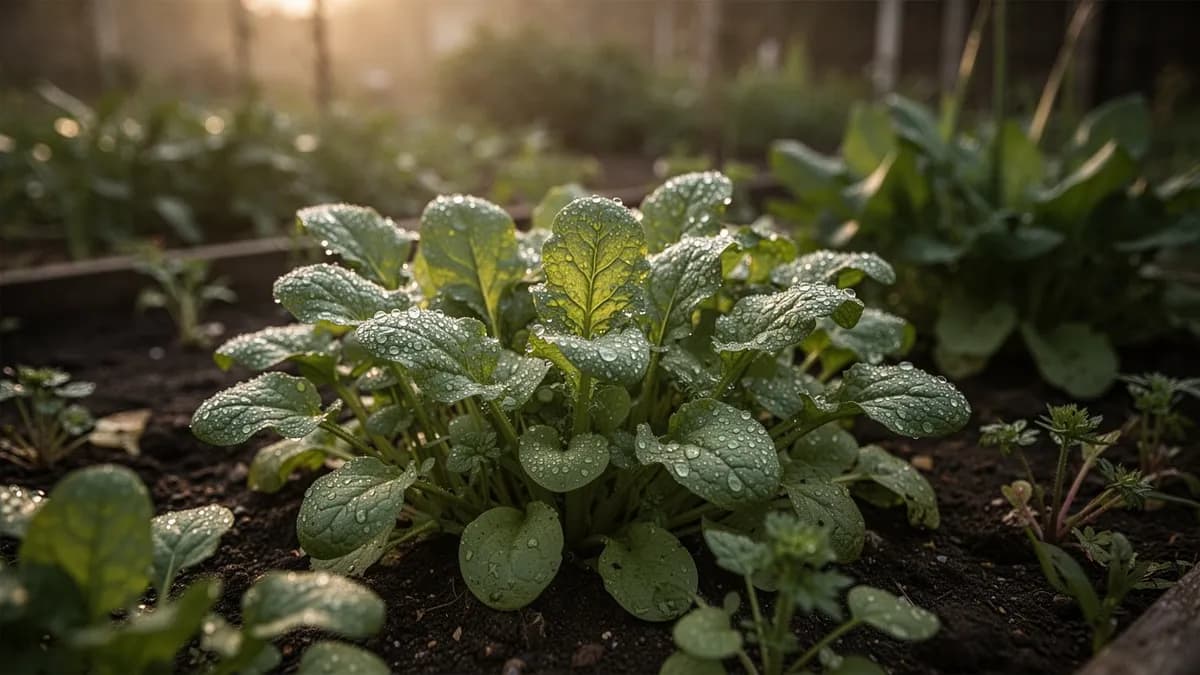
A perennial salad herb with delicate, cucumber-flavored leaves arranged in attractive rosettes of small, round leaflets. Young leaves are tender and add a refreshing cucumber taste to salads, drinks, and compound butters. Plants are evergreen in mild climates, providing fresh greens even in winter when other salad crops are dormant. Remove flower stalks promptly to encourage continued production of tender new leaves.
Planting & Harvest Calendar
Growth Stages
From Seed to Harvest
Germination
Days 0–14
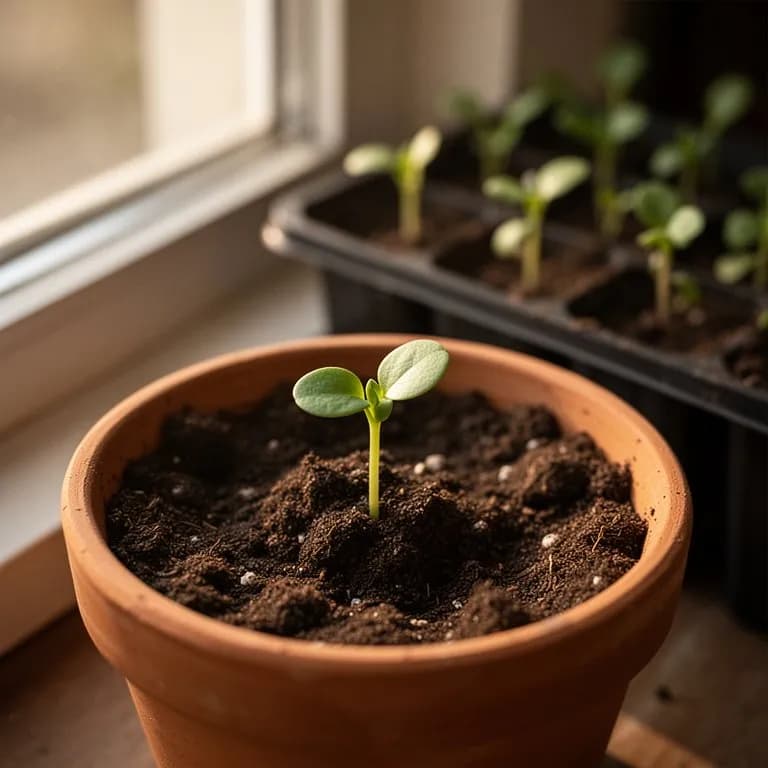
Seeds germinate in cool to moderate soil temperatures, typically within 7-14 days. The small, ridged seeds produce rounded cotyledon leaves first, followed by the first pair of true leaflets with their characteristic toothed margins. Germination is most reliable in spring or early autumn when soil temperatures are 10-20°C (50-68°F).
💡 Care Tip
Sow seeds shallowly — just 3-6mm deep — and keep soil consistently moist until germination. Seeds benefit from light to germinate, so do not bury deeply. Thin seedlings to 25-30 cm apart once they have two sets of true leaves.
Salad burnet seedlings emerge with distinctive rounded cotyledons followed by delicate toothed leaflets
Monthly Care Calendar
What to do each month for your Salad Burnet
May
You are herePeak spring harvest season. Remove flower stalks as they appear to maintain the best leaf flavor and prevent the plant from becoming leggy. Water during dry spells, though established plants are remarkably drought-tolerant. Mulch lightly to conserve moisture.
Did You Know?
Fascinating facts about Salad Burnet
Salad burnet (Sanguisorba minor) gets its genus name from the Latin 'sanguis' (blood) and 'sorbere' (to absorb), reflecting centuries of use as a wound herb — medieval physicians applied crushed leaves to cuts and battlefield injuries believing the tannins would staunch bleeding.
Salad burnet is a hardy evergreen perennial native to grasslands across Europe. Sow seeds directly outdoors in spring or autumn, pressing them lightly into well-drained soil. Germination takes 10-21 days and is best at 15-18°C. Space plants 25 cm apart, as mature rosettes spread to fill the available space. Salad burnet tolerates poor, dry soils and is one of the most drought-tolerant salad crops available.
Once established, plants form attractive low rosettes of pinnate leaves with pairs of small, round, toothed leaflets. The cucumber-flavored leaves are best harvested young, as older leaves develop a bitter edge. Remove flower stalks as they appear in summer to keep the plant focused on producing tender new foliage rather than setting seed. If left to flower, the round, reddish-pink blooms attract pollinators.
Salad burnet is remarkably low-maintenance and thrives in partial shade to full sun. It is evergreen in mild winters, providing fresh salad leaves when most other crops are dormant. Divide established clumps every three to four years in spring to maintain vigor. Plants self-seed freely if flowers are left on, so manage seed heads if you want to prevent spreading. This is an excellent choice for edible borders, herb gardens, and wildflower meadows.
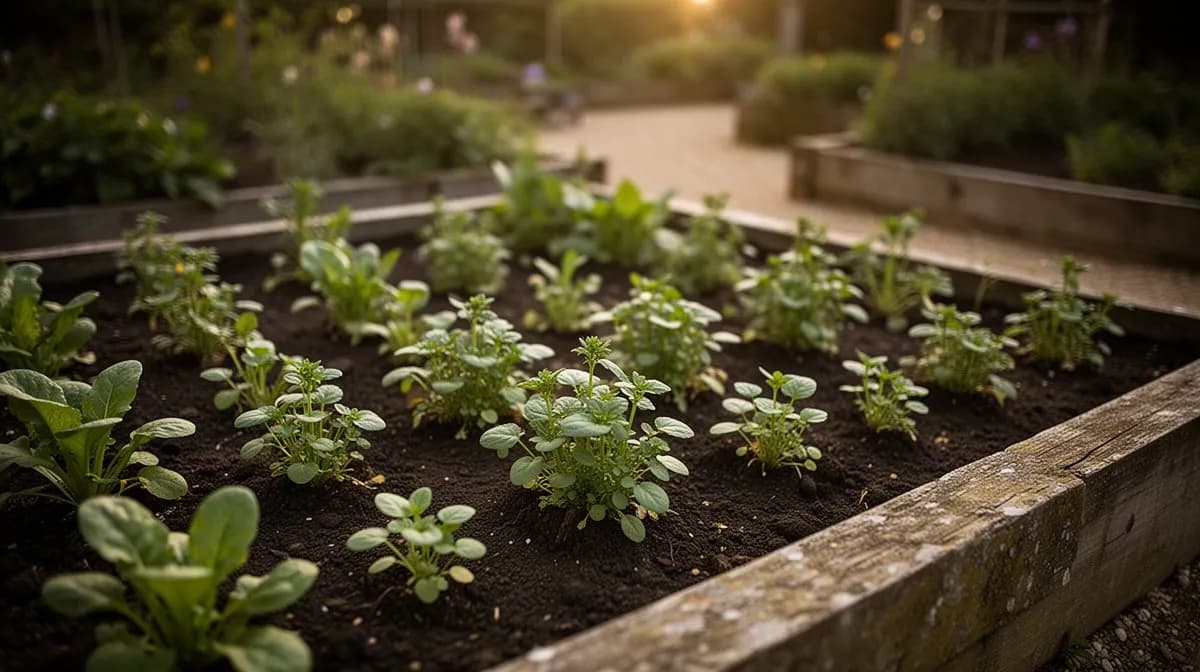
With its tidy rosette form and blue-green foliage, salad burnet is equally at home in herb gardens and flower borders
Salad burnet (Sanguisorba minor) is native to western, central, and southern Europe, as well as parts of western Asia and northwest Africa, where it grows wild in dry grasslands, chalky meadows, and limestone hillsides. The plant thrives in poor, alkaline soils and has been gathered from the wild since prehistory — archaeological evidence suggests it was among the herbs used by Neolithic peoples in Europe.
The Romans cultivated salad burnet as both a salad herb and a medicinal plant, and Roman soldiers reportedly drank burnet-infused wine before battle, believing it would protect them from excessive bleeding if wounded. This military association persisted through the Middle Ages, when crusaders carried the herb on campaigns and battlefield surgeons applied poultices of crushed burnet leaves to wounds. The plant's Latin name Sanguisorba — literally 'blood absorber' — speaks directly to this longstanding medicinal reputation.
Salad burnet became a staple of medieval European herb gardens, valued both for its cucumber-flavored leaves in salads and its medicinal properties. The great herbalist John Gerard wrote in 1597 that it was 'a capital wound herb' and recommended it for both culinary and therapeutic use. It was a fixture of Elizabethan knot gardens, where its compact rosette form made it ideal for edging. English colonists brought salad burnet to North America in the 1600s, and Thomas Jefferson cultivated it at Monticello in the late 1700s.
While salad burnet fell out of mainstream culinary use during the 20th century — displaced by the year-round availability of fresh cucumbers — it has never disappeared entirely. It remains common in traditional European kitchen gardens, particularly in Italy, France, and Germany. Today, the herb is enjoying renewed interest among permaculture practitioners, who value its drought tolerance, nitrogen-fixing ability, and role as a pollinator plant, and among chefs rediscovering heritage herbs for modern cuisine.
Sow seeds directly outdoors in spring or autumn, pressing them into the soil surface without covering, as they need light to germinate. Germination takes 10-21 days at 15-18°C. Thin seedlings to 25 cm apart. Alternatively, start seeds in small pots or modules indoors six weeks before the last frost. Seeds can also be started in autumn for establishment before winter. Fresh seed germinates best; viability declines significantly after the first year. Established plants self-seed readily, providing a natural succession of new plants.
Salad burnet is remarkably adaptable, thriving in poor, chalky, sandy, or clay soils with a pH of 6.0-8.0. It actually produces the most flavorful leaves in lean, well-drained soil rather than rich conditions. Avoid heavy fertilizing which produces lush but bland growth. A single light application of general-purpose compost in spring is sufficient for established plants. For container growing, use a free-draining multipurpose compost mixed with perlite. No supplemental feeding is typically necessary.
Check Your Zone
See if Salad Burnet is suitable for your location.
10°C – 25°C
50°F – 77°F
Salad burnet is a cool-season herb that produces its best-quality leaves at moderate temperatures between 10-25°C (50-77°F). The plant is extraordinarily cold-hardy, surviving winters down to -30°C (-22°F) as a fully evergreen perennial. Growth slows above 30°C (86°F) and leaves may become tougher and more bitter in prolonged heat, but the plant survives summer heat well and rebounds vigorously when cooler weather returns in autumn.
Common issues affecting Salad Burnet and how to prevent and treat them organically.
The most common issue is bitter-tasting leaves, which occurs when plants are allowed to flower or when older leaves are harvested instead of young ones. Regular deadheading prevents this. Plants can become leggy and sprawling in overly rich soil or too much shade. Self-seeding can be prolific if flower heads are not removed, leading to unwanted volunteers throughout the garden. In very hot summers, leaves may become small and bitter, so provide afternoon shade in warm climates.
Salad burnet grows well alongside lettuce and spinach as part of a mixed salad bed. Its deep taproot helps break up compacted soil, benefiting neighboring shallow-rooted crops. The flowers attract beneficial pollinators and predatory insects when allowed to bloom. Plant near strawberries and other fruit as the flowers attract pollinators. Avoid growing in very fertile beds intended for heavy feeders, as burnet prefers leaner conditions than most vegetables.
- 1Start with seeds or nursery plants — salad burnet is one of the easiest herbs to grow from seed and germinates reliably in cool soil. Sow directly in the garden in early spring or autumn, pressing seeds lightly into the surface since they benefit from light to germinate.
- 2Choose a spot with full sun to partial shade and well-drained soil. Salad burnet actually thrives in poor, chalky, or alkaline soils where many other herbs struggle — rich soil produces lush but less flavorful leaves. Avoid heavy clay that stays waterlogged.
- 3Remove flower stems the moment they appear. Flowering causes the leaves to become noticeably bitter and the plant to become tall and leggy. Consistent deadheading keeps the rosette compact, attractive, and productive throughout the season.
- 4Harvest by picking the youngest outer leaves and working inward, always leaving the growing center intact. Young leaves have the best cucumber flavor — older, larger leaves become progressively tougher and more astringent.
- 5Cut the entire plant back hard to 5-8 cm above ground in midsummer if it becomes leggy or bitter from heat. Water well afterward and fresh, tender regrowth will appear within 2-3 weeks, providing excellent autumn harvests.
- 6Be aware that salad burnet self-sows enthusiastically. Remove spent flower heads before seeds drop if you want to control its spread. Alternatively, embrace the self-sowing habit as a way to establish a permanent, self-renewing herb patch.
- 7Use salad burnet as an ornamental edging plant along garden paths and borders — the compact blue-green rosettes are attractive year-round and release a pleasant scent when brushed against. It is beautiful combined with thyme, lavender, and other Mediterranean herbs.
- 8In containers, use a gritty, well-drained potting mix and a pot at least 20 cm deep to accommodate the taproot. Salad burnet performs well in containers on a sunny balcony or patio and requires less watering than most potted herbs due to its drought tolerance.
Pick individual young leaves from the outside of the rosette as needed, leaving the central growing point to produce new foliage. Harvest regularly to encourage fresh, tender growth. Young leaves up to about 10 cm long have the best cucumber flavor, while older leaves become bitter and tougher. In mild climates, harvesting continues year-round, including through winter. Cut back entire rosettes to 5 cm above ground in late spring to rejuvenate the plant and stimulate a flush of tender new leaves.
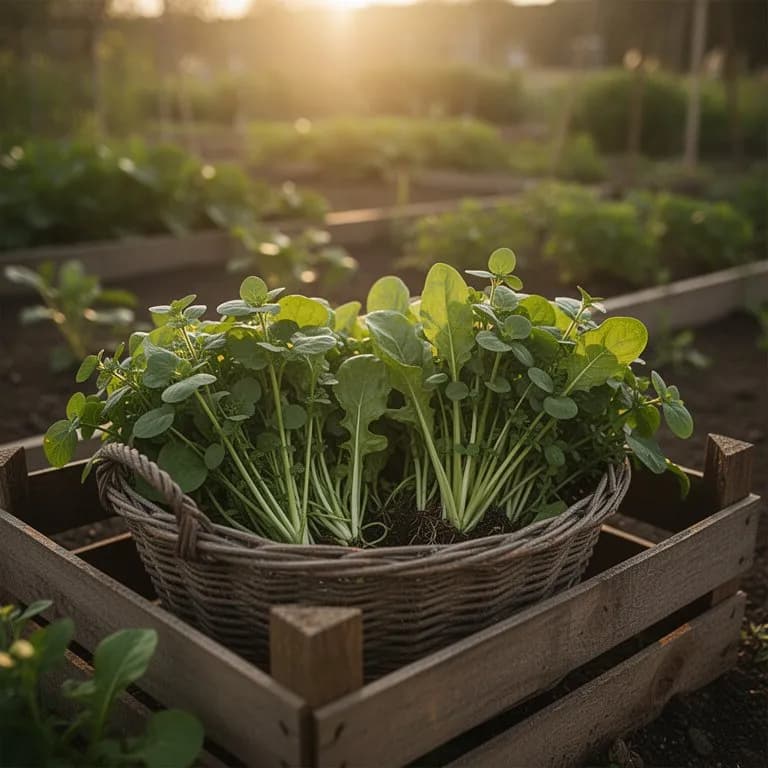
Harvest the youngest outer leaves regularly for the best cucumber-like flavor
Salad burnet is best used fresh as the delicate cucumber flavor fades quickly after picking. Store freshly picked leaves in a sealed container with a damp paper towel in the refrigerator for up to three days. The leaves do not dry or freeze well as both methods destroy the characteristic flavor and texture. For year-round fresh supply, rely on the evergreen nature of the plant rather than preservation. Leaves can be infused into vinegar or added to compound butter and frozen for up to two months.
Plan your garden with ease
Love growing Salad Burnet? Use our free garden planner to design your beds, track planting dates, and get personalized care reminders.
Nutritional Info
Per 100g serving
26
Calories
Health Benefits
- Exceptionally rich in vitamin C, providing over 60% of the daily value per 100g — historically used to prevent scurvy on long sea voyages and military campaigns
- Outstanding source of vitamin A and beta-carotene, supporting eye health, immune function, and skin integrity
- Contains significant tannins and flavonoids with astringent and anti-inflammatory properties used in traditional herbal medicine for centuries
- Good source of dietary fiber that supports healthy digestion and promotes a balanced gut microbiome
- Provides calcium and iron in moderate amounts, contributing to bone health and oxygen transport in the blood
- Rich in antioxidant polyphenols that help neutralize free radicals and may reduce the risk of chronic inflammatory conditions
💰 Why Grow Your Own?
Salad burnet is rarely sold in grocery stores, making it nearly impossible to buy fresh — when it does appear at specialty markets or farmers markets, small bunches command $3-5. A single plant costs $3-5 at a nursery or just pennies from seed, and because it is a hardy perennial that self-sows freely, one initial planting provides fresh cucumber-flavored herbs for years without any additional cost. Growing your own eliminates the need to buy fresh cucumbers solely for garnishing or flavoring drinks and salads, saving an additional $15-25 per season on cucumber purchases.
Quick Recipes
Simple recipes using fresh Salad Burnet
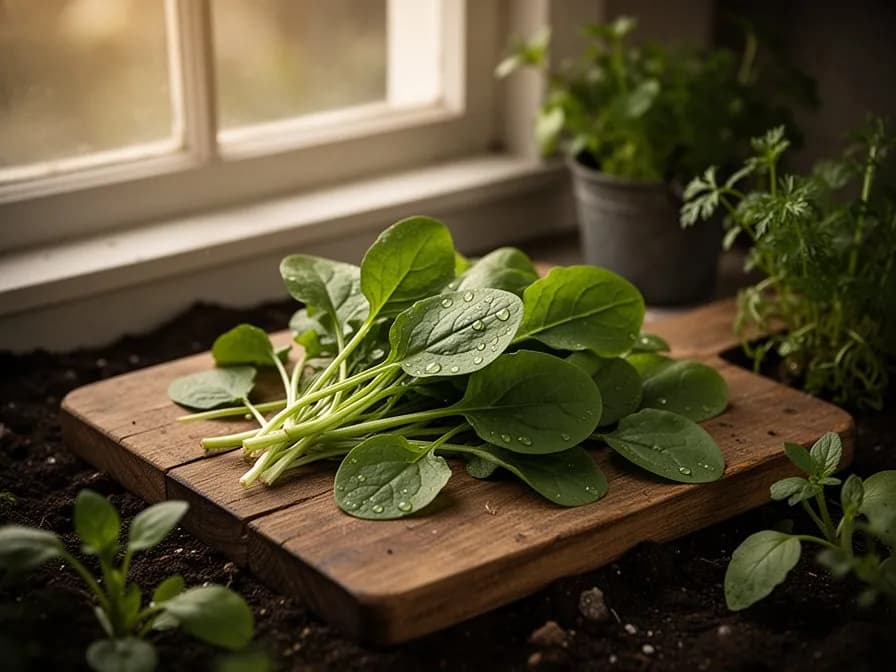
Salad Burnet Cucumber Water
5 minAn elegantly refreshing infused water that captures salad burnet's signature cucumber essence without any actual cucumbers. Simply steep sprigs in chilled water for a sophisticated drink that has been enjoyed since Elizabethan times as a cooling summer beverage.
Salad Burnet Herb Butter
10 minA delicate compound butter infused with salad burnet's cucumber-nutty flavor — perfect melted over grilled fish, spread on fresh bread, or tossed with steamed new potatoes. The subtle flavor pairs beautifully with other mild herbs like chervil and dill.
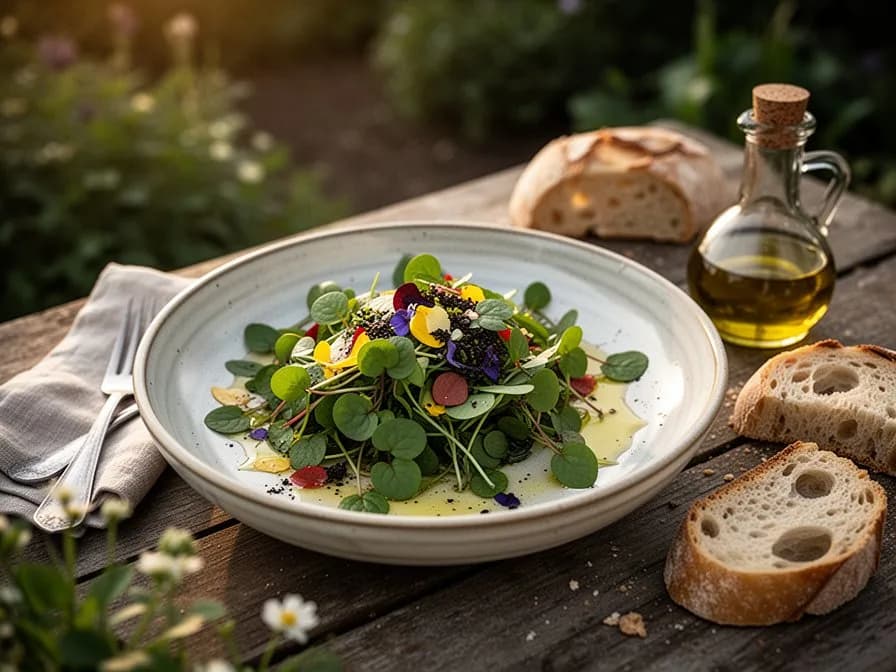
Spring Herb Salad with Salad Burnet
10 minA classic European herb salad showcasing salad burnet alongside other tender spring greens. The cucumber flavor of the burnet leaves pairs perfectly with a light vinaigrette, making this salad taste remarkably fresh and garden-pure.
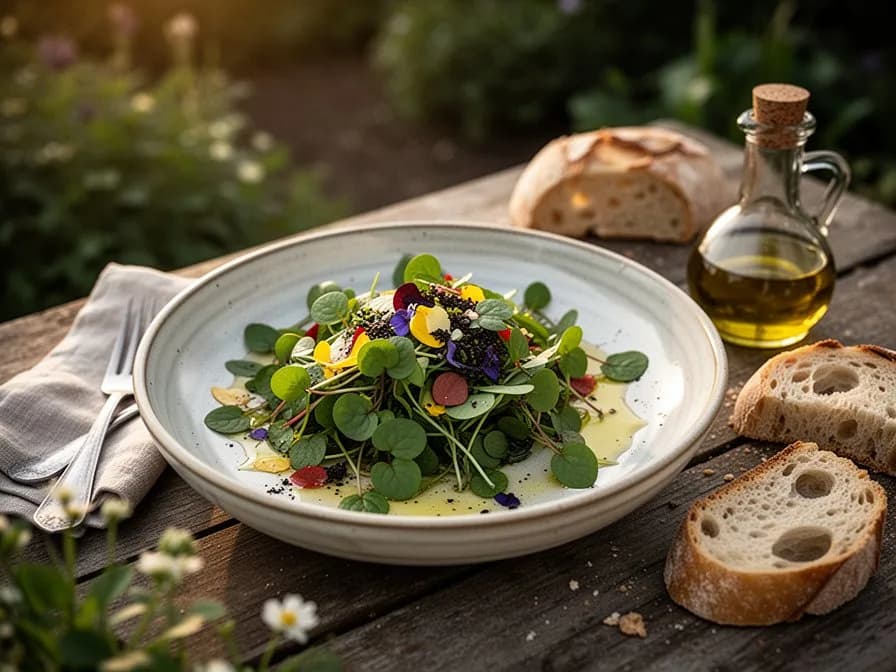
Salad burnet adds a refreshing cucumber note to salads without the bulk of actual cucumbers
Yield & Spacing Calculator
See how many Salad Burnet plants fit in your garden bed based on the recommended 25cm spacing.
16
Salad Burnet plants in a 4×4 ft bed
4 columns × 4 rows at 25cm spacing
Popular Varieties
Some of the most popular salad burnet varieties for home gardeners, each with unique characteristics.
Common Salad Burnet
The standard species with small, round, serrated leaflets and reliable cucumber flavor.
Great Burnet
The larger relative (Sanguisorba officinalis) with elongated flower heads, more ornamental but less flavorful for salads.
Pink Tanna
An ornamental cultivar with attractive pink flower spikes, edible leaves with the same cucumber taste.
The young leaves have a refreshing cucumber flavor that enhances green salads without adding the water content of actual cucumber. Add to drinks like Pimms and summer cocktails as a garnish. Chop finely into cream cheese, compound butter, or yogurt dips. Float leaves in cool summer soups. Salad burnet was traditionally used to flavor wine cups and vinegar. The mild flavor pairs well with fish, eggs, and light summer dishes.
When should I plant Salad Burnet?
Plant Salad Burnet in March, April, September. It takes approximately 60 days to reach maturity, with harvest typically in April, May, June, July, October, November.
What are good companion plants for Salad Burnet?
Salad Burnet grows well alongside Lettuce, Spinach. Companion planting can improve growth, flavor, and natural pest control.
What hardiness zones can Salad Burnet grow in?
Salad Burnet thrives in USDA hardiness zones 3 through 9. With greenhouse protection, it may be grown in zones 1 through 10.
How much sun does Salad Burnet need?
Salad Burnet requires Partial Sun (3-6h). This means 3-6 hours of sunlight, ideally morning sun with afternoon shade.
How far apart should I space Salad Burnet?
Space Salad Burnet plants 25cm (10 inches) apart for optimal growth and air circulation.
What pests and diseases affect Salad Burnet?
Common issues include Powdery Mildew, Slugs and Snails, Aphids. Prevention through good garden practices like crop rotation, proper spacing, and companion planting is the best approach. See the detailed pests and diseases section above for symptoms, prevention, and treatment for each.
How do I store Salad Burnet after harvest?
Salad burnet is best used fresh as the delicate cucumber flavor fades quickly after picking. Store freshly picked leaves in a sealed container with a damp paper towel in the refrigerator for up to three days. The leaves do not dry or freeze well as both methods destroy the characteristic flavor and ...
What are the best Salad Burnet varieties to grow?
Popular varieties include Common Salad Burnet, Great Burnet, Pink Tanna. Each has unique characteristics suited to different growing conditions and culinary preferences. See the varieties section above for detailed descriptions.
What soil does Salad Burnet need?
Salad burnet is remarkably adaptable, thriving in poor, chalky, sandy, or clay soils with a pH of 6.0-8.0. It actually produces the most flavorful leaves in lean, well-drained soil rather than rich conditions. Avoid heavy fertilizing which produces lush but bland growth. A single light application o...
What does salad burnet taste like?
Salad burnet has a distinctive fresh cucumber flavor with a mild, slightly nutty undertone. The youngest leaves have the most pronounced cucumber taste, while older leaves become progressively more astringent and less pleasant. The flavor is delicate enough to use raw in salads, sandwiches, and as a garnish for drinks. Many people describe it as tasting like a combination of cucumber and walnut with a refreshing, slightly tannic finish.
Is salad burnet the same as great burnet?
No — salad burnet (Sanguisorba minor) and great burnet (Sanguisorba officinalis) are related but distinct species. Salad burnet is the smaller plant (20-40 cm rosette) with the prized cucumber-flavored leaves used in salads and cooking. Great burnet is a much larger wildflower (60-100 cm tall) with elongated dark crimson flower heads, primarily valued as a medicinal herb and wildlife plant. While both have historical medicinal uses, salad burnet is the species cultivated specifically for culinary purposes.
Can salad burnet survive winter outdoors?
Yes — salad burnet is one of the hardiest culinary herbs available, surviving winter temperatures down to -30°C (-22°F) in USDA zones 3-9. It is fully evergreen in all but the most severe climates, retaining its foliage and even producing small amounts of new growth through winter. This makes it exceptionally valuable as one of the very few herbs providing fresh leaves in December, January, and February when virtually everything else in the garden is dormant.
Why do my salad burnet leaves taste bitter instead of like cucumber?
Bitter leaves are almost always caused by one of three issues: the plant has been allowed to flower (flowering triggers a chemical shift that makes leaves bitter), the leaves are too old and large (harvest only the young, tender inner and outer leaves), or the plant is heat-stressed (leaves become more astringent above 30°C/86°F). The fix is straightforward — cut the entire plant back to 5-8 cm, remove all flower stems, water well, and harvest only the fresh young regrowth that appears within 2-3 weeks.
How do I use salad burnet in cooking?
Salad burnet is best used raw or added at the very end of cooking, as heat destroys its delicate cucumber flavor. Add fresh leaves to green salads, potato salads, cream cheese spreads, and herb butter. Float sprigs in drinks — it is traditional in wine cups, gin cocktails, and infused water. Use as a garnish for chilled soups, smoked salmon, and fresh cheeses. In Frankfurt, Germany, salad burnet is one of the seven essential herbs in the traditional Grüne Soße (green sauce), a beloved regional specialty.
Does salad burnet spread aggressively in the garden?
Salad burnet spreads primarily through self-sowing rather than by runners or root expansion. Individual plants stay as compact rosettes 25-40 cm across and do not creep. However, if flower heads are allowed to mature and drop seeds, you may find dozens of seedlings appearing the following spring. Control spread by consistently removing flower stems before seeds set. Unwanted seedlings are easy to pull or transplant. Many gardeners consider the self-sowing habit a benefit rather than a problem, as it creates a self-renewing herb patch with no effort.
Ready to Grow Salad Burnet?
Add Salad Burnet to your garden plan and start designing your perfect layout.

Vladimir Kusnezow
Gardener and Software Developer
Zone 6b gardener. Growing vegetables and fruits in soil and hydroponics for 6 years. I built PlotMyGarden to plan my own gardens.
Jump to Section