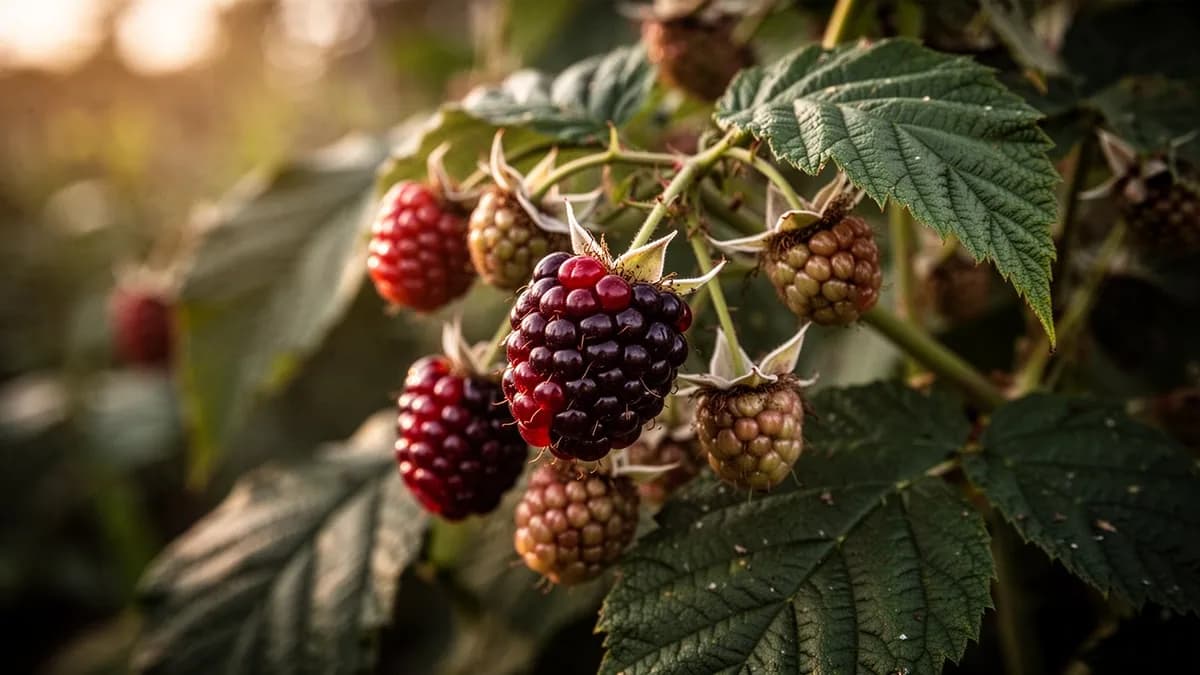
Black Raspberry
Rubus occidentalis
At a Glance
A native North American bramble producing small, dark berries with a rich, distinctive flavor often used in jams and ice cream. Black raspberries propagate by tip-layering rather than suckering, making them easier to contain than red varieties. Keep them separated from other Rubus species to prevent disease transmission.
Planting & Harvest Calendar
Growth Stages
From Seed to Harvest
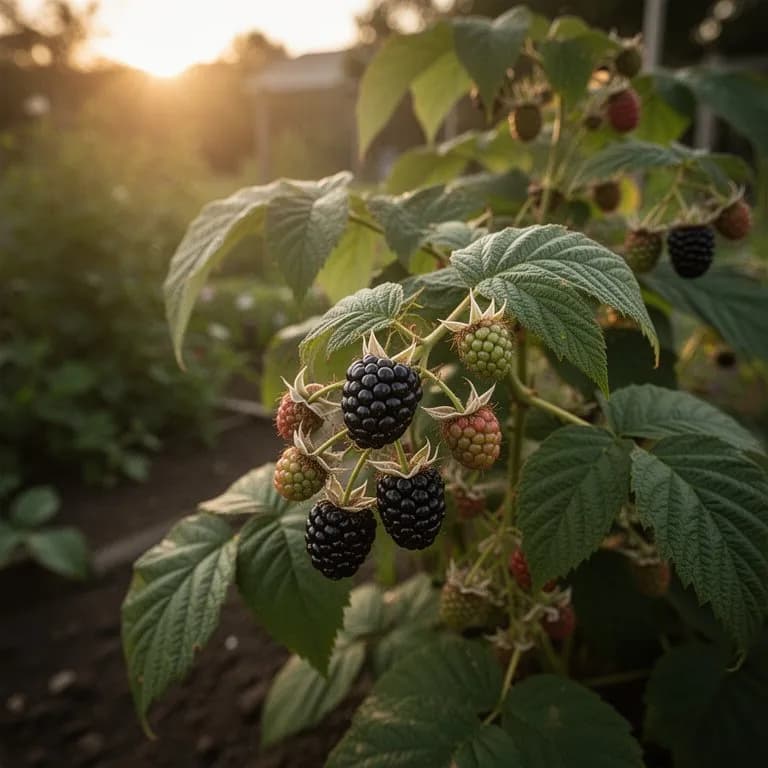
Dormant / Planting
Days 0–21
Bare-root or potted transplants are established while still dormant in early spring. Roots begin anchoring to the soil, and the crown swells in preparation for new growth.
💡 Care Tip
Plant in well-drained soil amended with compost. Set crowns 1 inch below soil level and water thoroughly. Mulch immediately to conserve moisture and suppress weeds.
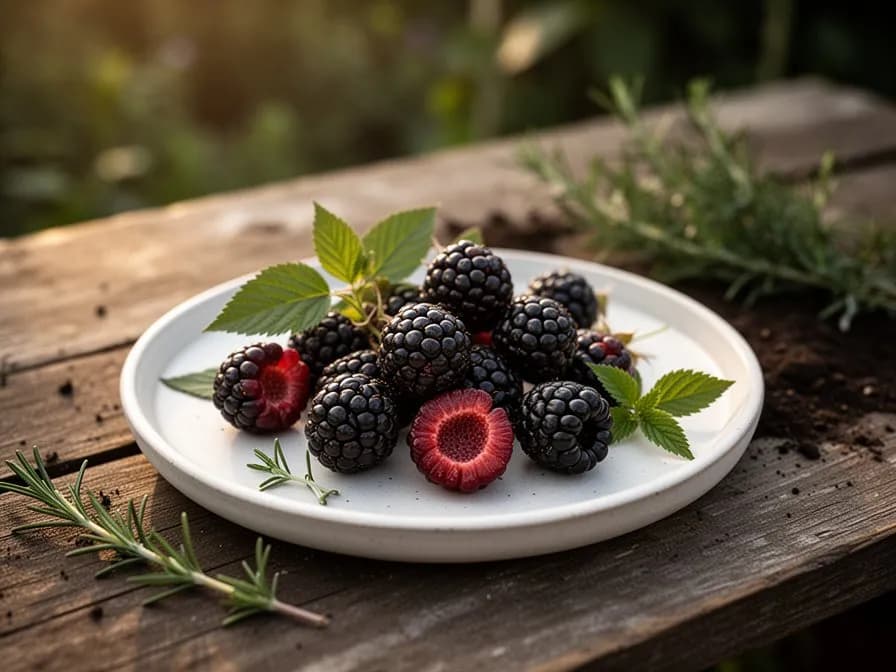
New primocanes pushing up from the crown in early spring
Monthly Care Calendar
What to do each month for your Black Raspberry
May
You are hereTie new primocane growth to trellis supports. Watch for the first signs of anthracnose or spur blight on lower canes in wet seasons; apply copper-based fungicide if needed. Floricanes will begin flowering — protect pollinators by avoiding pesticide use.
Did You Know?
Fascinating facts about Black Raspberry
Black raspberries (Rubus occidentalis) are native to North America and are an entirely different species from blackberries — they have a hollow core when picked, just like red raspberries.
Black raspberries are a distinct species native to eastern North America, prized for their uniquely rich, wine-like flavor that differs dramatically from red or golden types. Unlike red raspberries that spread by root suckers, black raspberries propagate by tip-layering, where arching cane tips root when they touch the ground. This growth habit makes them easier to contain but requires a different pruning approach. Plant dormant crowns in early spring in well-drained, fertile soil with full sun, spacing plants three to four feet apart.
Provide a sturdy post-and-wire trellis to support the arching canes, which grow five to seven feet long. Summer-tip black raspberry canes when they reach about thirty inches tall by pinching off the growing tip. This forces lateral branches to develop, which produce fruit the following summer. In late winter, shorten these lateral branches to eight to twelve inches. After harvest, remove all spent floricanes at ground level to make room for new primocanes.
Black raspberries are more susceptible to viral diseases than red types, so plant certified virus-free stock and maintain a minimum separation of three hundred feet from wild brambles if possible. They are also less cold-hardy than red raspberries and benefit from winter mulch protection in zone 4. Water regularly but avoid overhead irrigation, which promotes fungal diseases. The plants are relatively short-lived, typically declining after eight to ten years, so plan for periodic replanting with fresh stock.
Black raspberry (Rubus occidentalis) is a species native to the temperate woodlands and thicket edges of eastern and central North America, with its range stretching from Quebec and Ontario in the north down through the Appalachian highlands and into the Ozarks. Long before European settlement, nations including the Iroquois, Ojibwe, Cherokee, and many others harvested wild black caps as a seasonal staple. They consumed the fruit fresh during the brief summer window, dried it into pemmican-like cakes for winter sustenance, and prepared root and leaf decoctions for medicinal purposes. The plants were so valued that some communities actively managed woodland edges to encourage productive stands.
European colonists quickly adopted the fruit, noting its more intense flavor compared to the red raspberry cultivars they had brought from the Old World. By the early nineteenth century, horticulturists in New York and Ohio were selecting superior wild forms for garden culture. The cultivar 'Ohio Everbearing' appeared in nursery catalogs as early as the 1830s, and by the late 1800s, varieties like 'Gregg', 'Munger', and 'Cumberland' had been developed and were widely grown on small farms across the Midwest and Mid-Atlantic states.
The commercial black raspberry industry centered on Ohio, Oregon, and western New York during the late nineteenth and early twentieth centuries, supplying canneries and jam producers. Oregon, with its mild, moist summers, eventually became the dominant production region and remains so today, particularly around the Willamette Valley.
Despite their extraordinary nutritional profile — now extensively documented by food scientists at institutions including Ohio State and Oregon State Universities — black raspberries never became a mainstream supermarket commodity. Their extremely short postharvest life, sensitivity to handling, and narrow harvest window make commercial distribution prohibitively difficult. This has kept them as a prized home-garden and farmers-market crop: something gardeners grow because no amount of money can easily buy them fresh.
Modern breeding programs have produced improved varieties such as 'Jewel', 'MacBlack', 'Niwot', and 'Bristol', offering larger berries, improved disease resistance, and adaptability to a wider range of climates. For the home gardener, black raspberries remain one of the most rewarding perennial fruits possible — establishing quickly, requiring minimal space, and delivering a harvest of extraordinary flavor and health value that is genuinely difficult to obtain any other way.
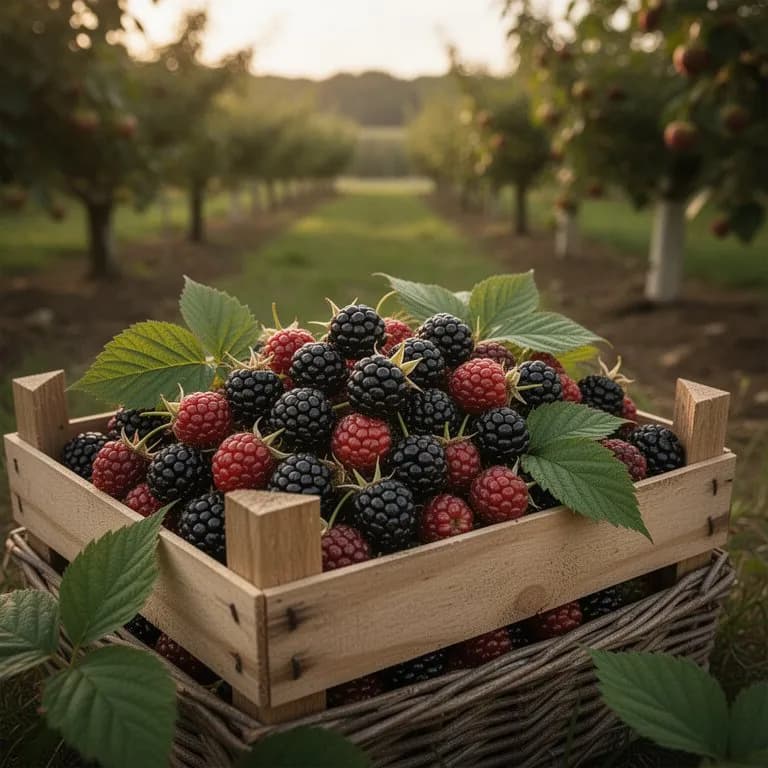
Ripe black raspberries ready for harvest in midsummer
Black raspberries propagate naturally by tip-layering, making this the easiest and most reliable method for home gardeners. In late summer, bend the tip of a healthy, vigorous primocane to the ground and bury it two to three inches deep, securing with a wire pin or small stone. Roots and a new shoot emerge within four to six weeks. Sever the new plant from the parent cane in early spring and transplant to its permanent location. Root cuttings and tissue culture are also possible but less practical for home propagation.
Black raspberries prefer well-drained, fertile loam with a pH of 6.0 to 6.8. Excellent drainage is essential, as these plants are particularly vulnerable to root rot in heavy, wet soils. Raised beds or mounded rows improve drainage in less-than-ideal sites. Apply balanced fertilizer in early spring and side-dress with compost at bloom. Avoid excessive nitrogen, which promotes susceptible soft growth and increases disease pressure. Mulch with straw or wood chips but keep mulch several inches from the crown to prevent moisture-related crown diseases.
Check Your Zone
See if Black Raspberry is suitable for your location.
-34°C – 30°C
-29°F – 86°F
Black raspberries are cold-hardy to approximately -34°C (-30°F) when fully dormant, making them suitable for USDA zones 4–8. They require 800–1,600 chilling hours below 7°C (45°F) to break dormancy and fruit reliably. Summer heat above 30°C (86°F) during fruit development can cause berries to dry on the cane and reduces fruit quality; afternoon shade or consistent irrigation helps in warmer climates. Late spring frosts below -2°C (28°F) during flowering can kill blossoms and eliminate the year's crop, so avoid planting in low frost-pocket locations.
Common issues affecting Black Raspberry and how to prevent and treat them organically.
Viral diseases are the greatest threat to black raspberries and are the primary reason plantings decline. Infected plants show mottled leaves, crumbly fruit, and progressive weakening. There is no cure; prevention through certified stock and aphid control is essential. Anthracnose is extremely common and requires preventive fungicide sprays. Tip-layering can cause a tangled mess if arching canes are not managed, so tip them at thirty inches to promote controlled lateral branching. Plants are shorter-lived than red raspberries.
Garlic and marigolds planted near black raspberry canes help deter aphids, which are not only a pest but the primary vector for devastating viral diseases. Keep black raspberries physically isolated from red raspberries, blackberries, and wild brambles to minimize disease transmission between Rubus species. Tansy and rue are traditional companions believed to repel insects. Clover planted as a cover crop between rows adds nitrogen to the soil and suppresses weeds.
- 1Plant in full sun — a minimum of 6 hours of direct sunlight per day is necessary for strong cane growth and maximum fruit production. Partial shade reduces yield significantly and increases disease pressure.
- 2Space plants 2.5–3 feet apart within rows and keep rows 8–10 feet apart. Black raspberries spread by tip-layering (arching canes that root where they touch the soil), so maintain a defined planting boundary by regularly removing rooted tips from outside your intended row.
- 3Install a trellis before or immediately after planting. A simple two-wire system with posts every 15–20 feet and wires at 30 and 54 inches works well. Training canes to the trellis dramatically improves air circulation, reduces disease, and makes harvesting far easier.
- 4Tip primocanes when they reach 24–30 inches — this single practice is the most impactful thing you can do for productivity. Cutting off the top 2–3 inches of the growing tip redirects energy into 6–8 lateral branches that become the following year's fruiting wood.
- 5Keep black raspberries isolated from red raspberries and wild Rubus species. Black raspberries are highly susceptible to raspberry mosaic virus, which is transmitted by aphids from infected red raspberries nearby. A buffer of at least 75–100 feet is recommended.
- 6Mulch heavily and consistently. A 3–4 inch layer of wood chips or straw conserves soil moisture, moderates root-zone temperature, suppresses competing weeds, and reduces the splash dispersal of soil-borne fungal spores onto lower canes.
- 7Water deeply and infrequently rather than shallowly and often. Black raspberries have moderately deep root systems and benefit from 1–1.5 inches of water per week delivered at soil level. Overhead irrigation wets foliage and promotes fungal diseases — use drip or soaker hose if possible.
- 8After harvest, remove all spent floricanes immediately. Do not leave them standing through summer or fall. Prompt removal eliminates the primary overwintering habitat for cane borers, scale insects, and the spores of spur blight and anthracnose.
- 9In autumn, shorten lateral branches to 12–18 inches. Overly long laterals are prone to wind whip and winter dieback. Shorter, stout laterals produce larger, better-quality fruit clusters the following summer.
- 10Renovate aging patches every 10–12 years by taking tip layers from the healthiest, most productive canes and establishing a new row in a fresh location. This resets the disease clock and typically results in a significant productivity improvement over the declining original planting.
Harvest black raspberries when they have turned a deep, glossy purple-black and detach from the receptacle with a very gentle tug, leaving the hollow core behind. Ripe berries are incredibly fragile and stain everything they touch, so wear old clothing and use shallow containers. Pick every two to three days during the relatively short harvest period of two to three weeks in midsummer. Black raspberries do not ripen further once picked, so only harvest fully colored fruit.
Black raspberries are the most perishable of all raspberries, keeping only one to two days in the refrigerator. Process immediately after harvest for best results. Freeze by spreading berries on a tray and bagging once solid. Black raspberry jam is a prized preserve with a uniquely rich, complex flavor. The juice makes outstanding syrup, ice cream base, and wine. Dried black raspberries retain their intense flavor well and are sold as a premium health food due to their extremely high anthocyanin content.
Plan your garden with ease
Love growing Black Raspberry? Use our free garden planner to design your beds, track planting dates, and get personalized care reminders.
Nutritional Info
Per 100g serving
70
Calories
Health Benefits
- Exceptionally high in anthocyanins — among the richest dietary sources of these protective pigments
- Significant source of ellagic acid, a polyphenol associated with antioxidant and anti-inflammatory activity
- High dietary fiber content supports digestive health and healthy blood sugar regulation
- Provides folate, manganese, and magnesium in meaningful amounts
- Low glycemic index makes them suitable for most diabetic-friendly eating plans
- Natural source of salicylates, which have mild anti-inflammatory properties
💰 Why Grow Your Own?
Fresh black raspberries, when available at specialty grocers or farmers markets, typically sell for $8–$14 per half-pint (roughly 170g). A single mature black raspberry plant, once established in its second or third year, can produce 1.5–3 quarts of fruit across the harvest season. At retail pricing, that represents $50–$150 worth of fruit from one plant annually. A modest 10-plant row — occupying roughly 20 linear feet — can yield 15–30 quarts per season, a retail equivalent of $500–$900 or more. After the initial cost of plants ($5–$12 each) and a simple trellis, the patch sustains itself for 8–12 years with only basic annual maintenance.
Black raspberries contain the highest anthocyanin levels of any Rubus species
Quick Recipes
Simple recipes using fresh Black Raspberry
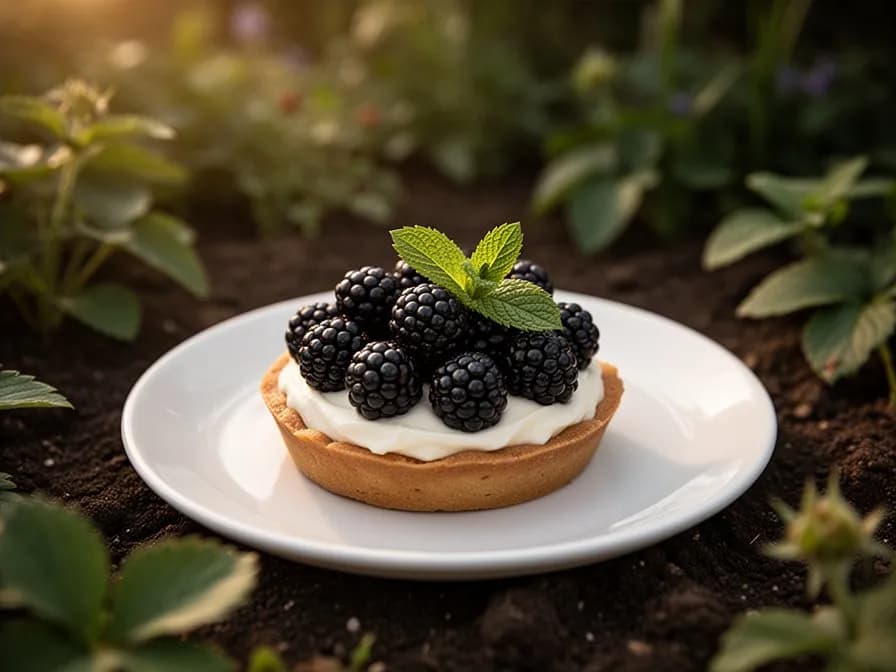
Black Raspberry Freezer Jam
30 minutesA no-cook jam that preserves the fresh, intense flavor of black raspberries without heating away delicate anthocyanins. Stores in the freezer for up to a year.
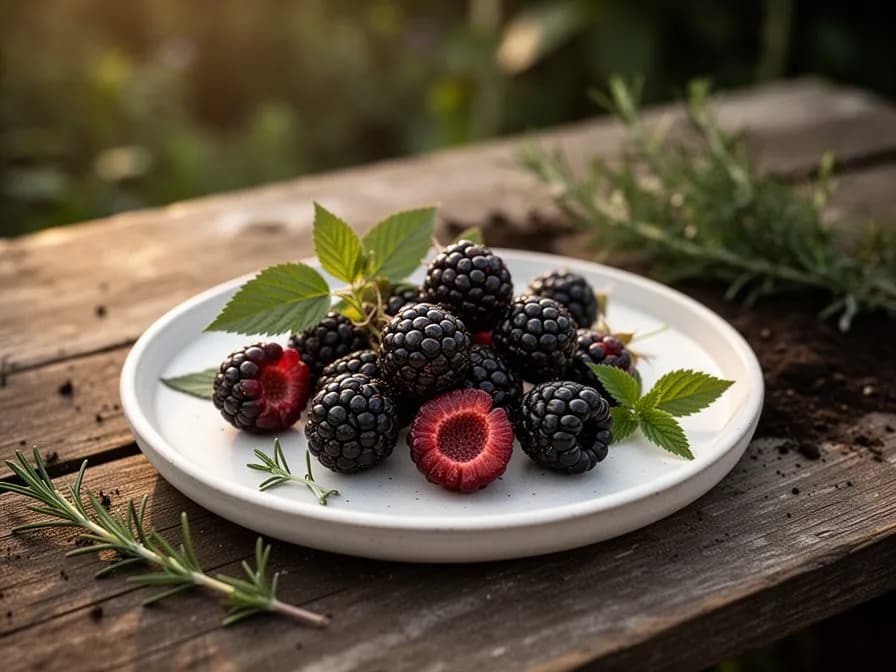
Black Raspberry Vinaigrette
10 minutesA vibrant, tangy dressing that transforms a simple green salad. The deep purple color and complex berry flavor pair beautifully with bitter greens and soft goat cheese.
Black Raspberry Oat Crumble
45 minutesA rustic, lightly sweetened crumble that lets the fruit's bold flavor shine. Excellent warm with a scoop of vanilla ice cream or a dollop of plain Greek yogurt.
Flash-freeze harvested berries in a single layer before bagging
Yield & Spacing Calculator
See how many Black Raspberry plants fit in your garden bed based on the recommended 75cm spacing.
1
Black Raspberry plants in a 4×4 ft bed
1 columns × 1 rows at 75cm spacing
Popular Varieties
Some of the most popular black raspberry varieties for home gardeners, each with unique characteristics.
Jewel
The leading black raspberry variety for the eastern United States with large, firm berries and excellent resistance to powdery mildew.
Bristol
A mid-season variety producing firm, glossy berries with classic black raspberry flavor, adaptable across a wide range of climates.
Mac Black
An early-ripening cultivar with above-average hardiness and large berries, extending the black raspberry season northward.
Niwot
A rare primocane-fruiting black raspberry that produces a fall crop, extending the harvest season into September.
Black raspberries have a deep, complex, wine-like flavor that is distinctive among all bramble fruits. They are the traditional flavor of black raspberry ice cream and chocolate-raspberry desserts. The intensely colored juice makes vibrant sorbets, syrups, and cocktail mixers. Use in pies, cobblers, and tarts where their bold flavor stands up to sugar and spice. Black raspberries pair exceptionally well with chocolate, vanilla, and aged cheeses.
When should I plant Black Raspberry?
Plant Black Raspberry in March, April. It takes approximately 365 days to reach maturity, with harvest typically in June, July.
What are good companion plants for Black Raspberry?
Black Raspberry grows well alongside Garlic, Marigold. Companion planting can improve growth, flavor, and natural pest control.
What hardiness zones can Black Raspberry grow in?
Black Raspberry thrives in USDA hardiness zones 4 through 8. With greenhouse protection, it may be grown in zones 2 through 9.
How much sun does Black Raspberry need?
Black Raspberry requires Full Sun (6-8h+). This means at least 6-8 hours of direct sunlight daily.
How far apart should I space Black Raspberry?
Space Black Raspberry plants 75cm (30 inches) apart for optimal growth and air circulation.
What pests and diseases affect Black Raspberry?
Common issues include Anthracnose, Raspberry Crown Borer, Raspberry Mosaic Virus Complex. Prevention through good garden practices like crop rotation, proper spacing, and companion planting is the best approach. See the detailed pests and diseases section above for symptoms, prevention, and treatment for each.
How do I store Black Raspberry after harvest?
Black raspberries are the most perishable of all raspberries, keeping only one to two days in the refrigerator. Process immediately after harvest for best results. Freeze by spreading berries on a tray and bagging once solid. Black raspberry jam is a prized preserve with a uniquely rich, complex fla...
What are the best Black Raspberry varieties to grow?
Popular varieties include Jewel, Bristol, Mac Black, Niwot. Each has unique characteristics suited to different growing conditions and culinary preferences. See the varieties section above for detailed descriptions.
What soil does Black Raspberry need?
Black raspberries prefer well-drained, fertile loam with a pH of 6.0 to 6.8. Excellent drainage is essential, as these plants are particularly vulnerable to root rot in heavy, wet soils. Raised beds or mounded rows improve drainage in less-than-ideal sites. Apply balanced fertilizer in early spring ...
What is the difference between black raspberries and blackberries?
Although they look superficially similar, black raspberries (Rubus occidentalis) and blackberries (Rubus allegheniensis and related species) are distinct plants. The clearest way to tell them apart at harvest: when you pick a black raspberry, it pulls free from the plant and is hollow at the center — just like a red raspberry. When you pick a blackberry, the white core (receptacle) comes with the fruit, so the berry is solid. Black raspberry canes also have a distinctive waxy, blue-white "glaucous" bloom that coats the young stems, which blackberry canes lack.
Why are my black raspberry canes dying back in winter even though I live in zone 5?
Black raspberries are cold-hardy to zone 4 (about -34°C / -30°F) but they are particularly vulnerable to desiccation injury — tissue damage caused by cold, drying winds rather than by absolute low temperatures. Canes with high moisture content going into winter are also prone to bark splitting during freeze-thaw cycles. To minimize winter dieback: stop nitrogen fertilization after July; allow the plant to harden off naturally in autumn; mulch crowns; and in zone 4–5, consider shortening canes to 4–5 feet before the first hard freeze to reduce wind exposure. Some dieback of lateral tips is normal; as long as the crown and lower cane sections are intact, the plant will recover.
My black raspberries produced well in year two but almost nothing in year three. What went wrong?
This is almost always a pruning issue. Black raspberries fruit exclusively on second-year canes (floricanes). If spent floricanes were not removed promptly after harvest, they create a dense, tangled thicket that shades out new primocanes, reducing their vigor and the number of productive laterals they form for the following season. Additionally, if primocanes were not tipped at 24–30 inches, they produce few or no fruiting laterals. Review your tipping and cane removal timing. Consistent tipping in July and removal of spent canes in August will restore productivity within one growing cycle.
Can I grow black raspberries in a container?
Black raspberries can be grown in large containers (25 gallons or more) but it is challenging and not ideal. They have vigorous, spreading root systems and produce tall canes that require trellising. In a container, you will need to water frequently (potentially daily in summer), fertilize more often than in-ground plants, and provide a substantial support structure. Container plants also show reduced winter hardiness because root zones are more exposed to cold. For gardeners with limited space, dwarf or trailing varieties bred for container culture are a better fit. If you do container-grow black raspberries, choose the largest container practical and use a well-draining, high-organic-matter growing mix.
What diseases should I watch for most closely with black raspberries?
The three most damaging diseases of black raspberries are anthracnose (Elsinoë veneta), spur blight (Didymella applanata), and orange rust (Arthuriomyces peckianus). Anthracnose causes grey, sunken lesions on canes and defoliates plants in wet seasons; maintain tipping and good air circulation, and apply lime-sulfur before growth begins in spring. Spur blight kills lateral buds and reduces fruiting; remove and destroy infected canes. Orange rust, identifiable by vivid orange spore pustules on the undersides of leaves, is systemic — there is no cure, and affected plants must be dug out and destroyed immediately to prevent spread. The best defense against all three is good sanitation, adequate plant spacing, and avoiding overhead irrigation.
When is the right time to harvest, and how do I know if a berry is ripe?
Black raspberries pass through green, red, and finally deep, glossy black as they ripen. Color alone is not enough — wait until the berry also has a slight dusky "bloom" on its surface and releases cleanly from the stem with the lightest touch. Under-ripe berries will be tart and require more force to pick; over-ripe berries will be soft, mushy, and may have already dropped. Harvest every 2–3 days during the peak season, which typically lasts 2–4 weeks in midsummer. Berries do not ripen further after picking, so pick only what is fully black and ready. Cool harvested fruit immediately — ideally to refrigerator temperature within 1–2 hours — to maximize shelf life and preserve anthocyanin content.
Ready to Grow Black Raspberry?
Add Black Raspberry to your garden plan and start designing your perfect layout.

Vladimir Kusnezow
Gardener and Software Developer
Zone 6b gardener. Growing vegetables and fruits in soil and hydroponics for 6 years. I built PlotMyGarden to plan my own gardens.
Jump to Section