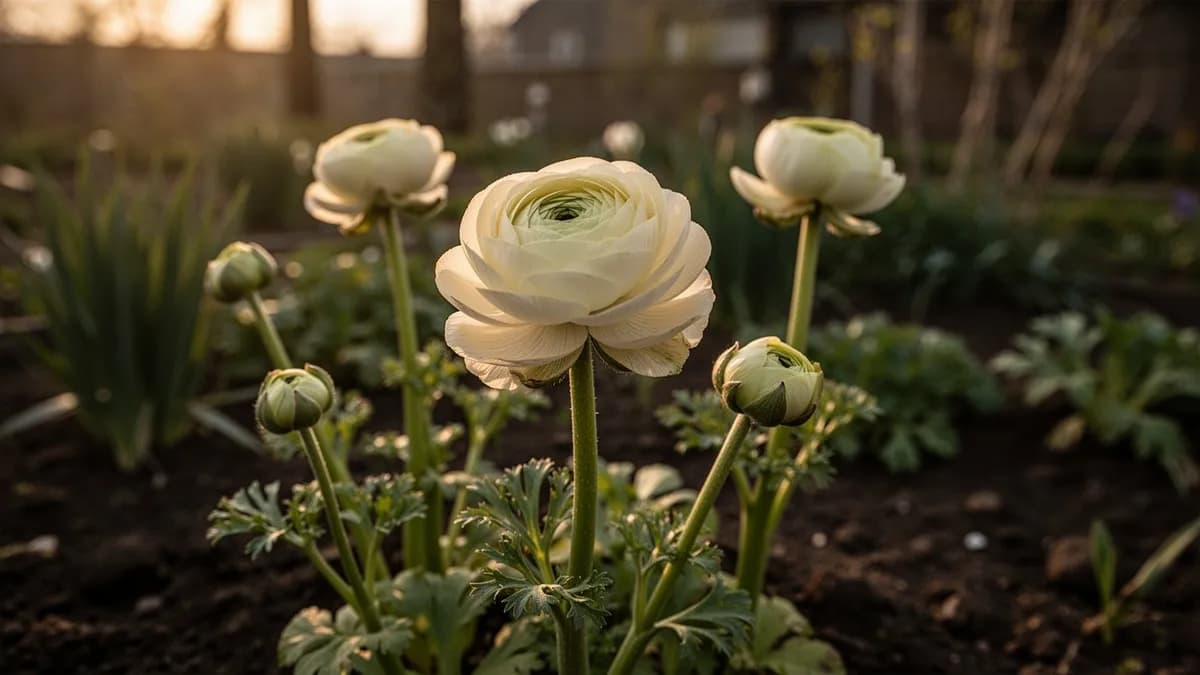
Ranunculus
Ranunculus asiaticus
At a Glance
A Persian buttercup with tissue-paper thin petals layered into rose-like blooms in every color of the rainbow. Ranunculus is a favorite of florists for its incredible vase life lasting up to two weeks when cut. Soak the claw-like tubers overnight before planting and provide cool growing conditions for the best blooms.
Planting & Harvest Calendar
Growth Stages
From Seed to Harvest
Corm Pre-Soaking & Planting
Days 0–7
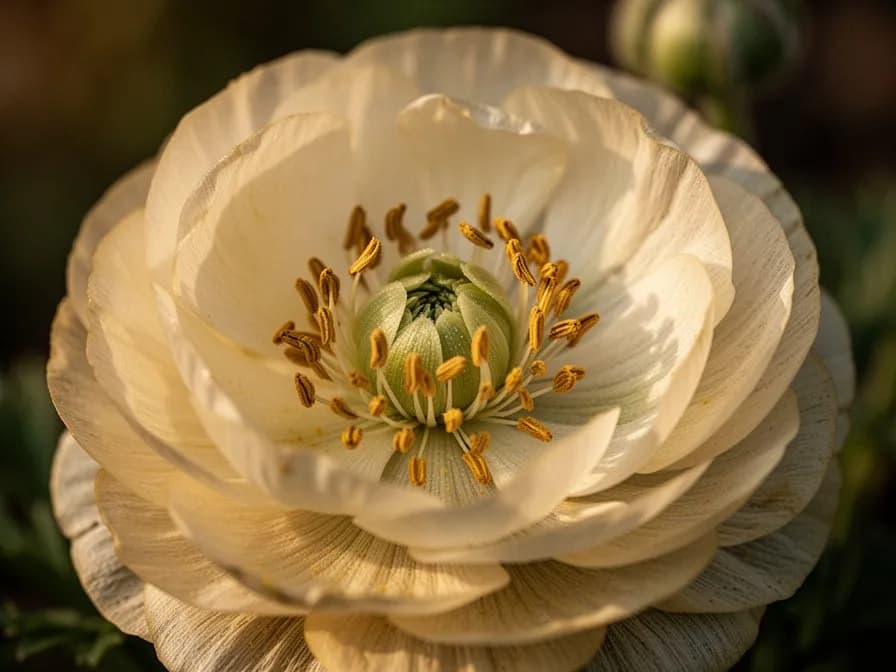
Dried ranunculus corms are hard, lightweight, and claw-shaped. Before planting, they must be rehydrated by soaking in room-temperature water for 3-4 hours — they will roughly double in size. Oversoaking beyond 6 hours can cause rot. Plant corms 5 cm deep with the claw-like projections pointing downward, spaced 10-15 cm apart in well-drained soil. In mild-winter climates (zones 8-10), plant in autumn for spring blooms. In colder zones, start indoors in late winter or plant out after the last hard frost.
💡 Care Tip
Add a splash of hydrogen peroxide to the soaking water to discourage fungal issues. If corms float, they may be hollow or dead — discard them. Plant immediately after soaking; do not let rehydrated corms dry out again.
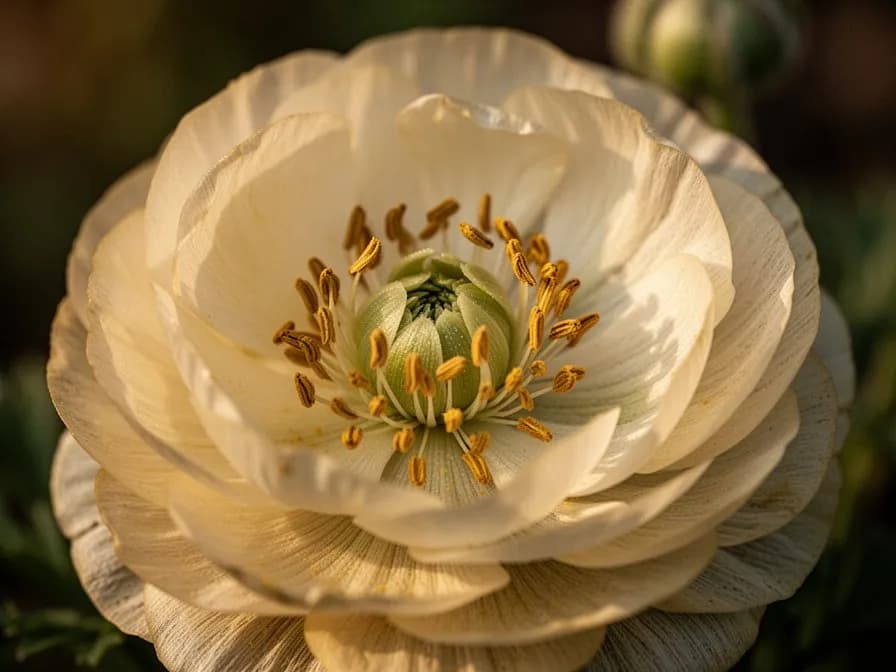
Ranunculus corms resemble tiny dried octopuses — soak them for 3-4 hours before planting with the claws facing downward
Monthly Care Calendar
What to do each month for your Ranunculus
June
You are hereNo specific care tasks for this month.
Did You Know?
Fascinating facts about Ranunculus
Ranunculus asiaticus is native to the eastern Mediterranean, southwestern Asia, and northeastern Africa — it was first brought to Western Europe by Crusaders returning from the Holy Land in the 13th century.
Ranunculus tubers resemble tiny dried octopus claws and need pre-soaking before planting. Soak in room-temperature water for 3-4 hours (no longer, or they may rot) until they swell to roughly double their size. Plant with the claws pointing downward, 2 inches deep and 6 inches apart.
In mild-winter areas (zones 8-11), plant tubers in autumn for late-winter and spring blooms. In colder climates, start tubers indoors in late winter or plant out after the last frost for early summer flowers. Ranunculus prefer cool growing conditions—they produce the best blooms when daytime temperatures are 55-65°F (13-18°C) and struggle in summer heat above 80°F (27°C).
Provide consistent moisture during active growth but avoid waterlogging, which causes tuber rot. Once flowering finishes and foliage yellows, reduce watering and allow tubers to go dormant. In cold climates, dig tubers after foliage dies back, dry, and store in a cool place for replanting the following season.
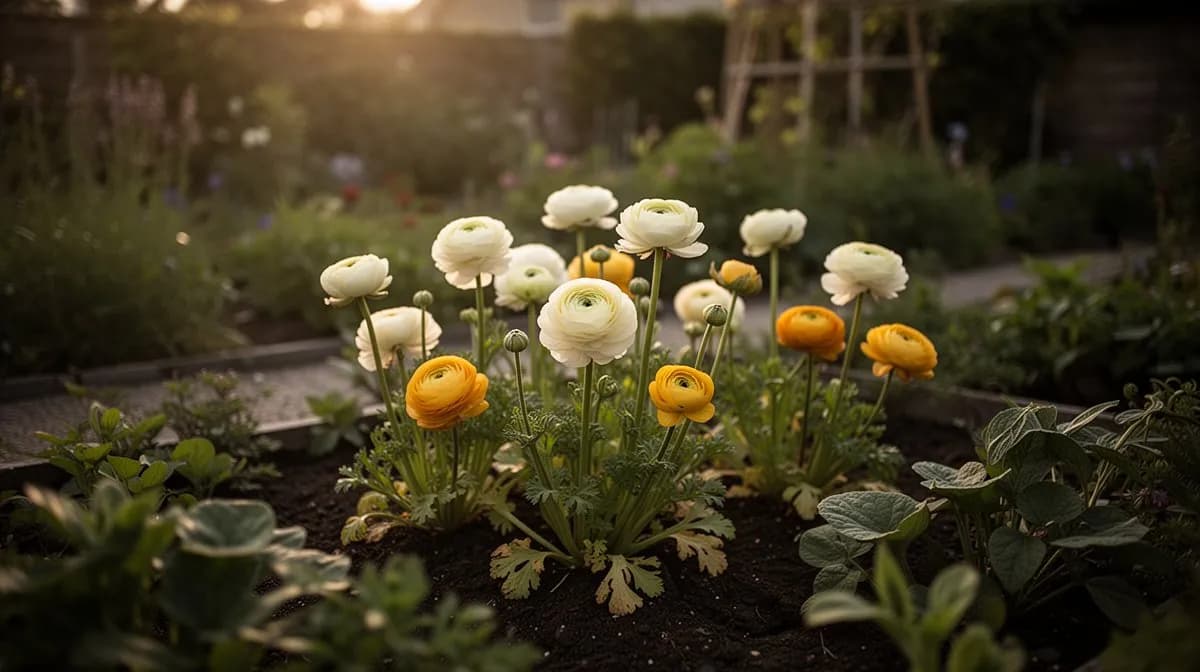
Mass plantings create a stunning tapestry of color — space corms 10-15 cm apart for maximum impact
Ranunculus asiaticus, the Persian buttercup, originates from a broad arc spanning the eastern Mediterranean basin, Turkey, Iran, and into Central Asia, with scattered native populations in North Africa. Archaeological evidence suggests the species was cultivated in Ottoman palace gardens as early as the 15th century, where double-flowered forms were prized alongside tulips and hyacinths during a period of intense horticultural development. French and Dutch traders introduced ranunculus to Western Europe in the late 1500s, and by the 1700s, the flower had become a sensation among European collectors. During the 18th century, hundreds of named varieties existed in France, England, and the Netherlands, with devoted growers forming societies and publishing detailed classification systems rivaling those of tulip fanciers. Interest in ranunculus waned during the 19th century as other ornamentals rose to fashion, but the flower was revitalized in the early 20th century when Luther Gage and Frank Frazee began large-scale breeding in Southern California, eventually developing the iconic Tecolote strain at what became the Carlsbad Flower Fields. Italian breeders later transformed the market by creating the elegant, densely petaled Elegance, Cloni, and Butterfly series, which now dominate the global cut flower trade. Today, major production centers include Israel, Italy, Japan, and the western United States, with ranunculus ranking among the top ten most popular wedding flowers worldwide. The species continues to be actively bred, with recent focus on expanding the color range into soft pastels, bicolors, and novel picotee patterns.
Ranunculus are almost exclusively grown from tubers rather than seed, as seed germination is slow and erratic. If attempting from seed, sow on the surface of moist seed-starting mix in late winter and keep at 50-55°F (10-13°C)—they require cool temperatures and light to germinate. Germination takes 2-4 weeks. Seedlings grow slowly and typically take a full year to produce flowering-size tubers.
Ranunculus need rich, well-drained soil with a pH of 6.0-6.5. Amend planting beds with compost and a slow-release balanced fertilizer before planting. In heavy clay, grow in raised beds or containers with a mix of compost, perlite, and garden soil. Feed every two weeks with a liquid fertilizer high in potassium once buds begin forming to boost flower production and quality.
Check Your Zone
See if Ranunculus is suitable for your location.
7°C – 18°C
45°F – 64°F
Ranunculus thrives in cool growing conditions between 7-18°C (45-65°F). The plants produce the longest stems and largest blooms when nighttime temperatures remain around 7-10°C and daytime highs stay below 20°C. Temperatures consistently above 25°C (77°F) trigger premature dormancy and foliage dieback. In hot climates, ranunculus performs best as a late-winter to early-spring crop. Corms are surprisingly cold-hardy in well-drained soil, tolerating brief dips to -10°C (14°F), but sustained wet cold causes rot. Cool greenhouse production at 8-13°C (46-55°F) night temperature yields premium-quality stems.
Common issues affecting Ranunculus and how to prevent and treat them organically.
Tubers rotting before sprouting is the most common issue, usually from over-soaking or poor drainage. In hot climates, ranunculus finish flowering quickly and go dormant—timing planting for cool-season bloom is essential. Leggy, floppy stems result from too little light or overcrowding. Birds sometimes pull at newly emerged shoots; protect with netting until plants are established.
Ranunculus are classic cut-flower garden companions alongside anemones, sweet peas, and snapdragons, all sharing similar cool-season growing preferences. In ornamental beds, pair with forget-me-nots, violas, and stock for a romantic cottage-garden effect. The low, bushy foliage of ranunculus fills gaps nicely between taller spring flowers like tulips and foxgloves.
- 1Always plant ranunculus corms with the claw-like projections pointing downward — planting them upside down is the most common beginner mistake and results in delayed or failed emergence.
- 2Pre-soak corms for exactly 3-4 hours in room-temperature water before planting. Oversoaking beyond 6 hours dramatically increases the risk of fungal rot and can kill the corm before it ever sprouts.
- 3Excellent drainage is the single most critical factor for ranunculus success. If your native soil is heavy clay, grow ranunculus in raised beds or containers filled with a mix of 60% potting soil, 20% perlite, and 20% coarse sand.
- 4Pre-sprout corms indoors in cell trays at 10-13°C (50-55°F) for 2-3 weeks before transplanting outdoors. This gives a significant head start in cold climates and lets you identify and discard any corms that fail to root.
- 5Ranunculus strongly prefer cool growing conditions. In zones 7 and warmer, plant in autumn for a late-winter to early-spring bloom season rather than fighting summer heat with a spring planting.
- 6Apply a balanced liquid fertilizer (10-10-10 or similar) every two weeks once foliage is actively growing. Switch to a high-potassium formula (such as 5-10-10) once buds are visible to promote larger, longer-lasting blooms.
- 7Install a single layer of horizontal flower netting (such as Hortonova) at 25-30 cm height when stems are young. This prevents the hollow, brittle stems from bending or snapping in wind or rain, which is the second most common cause of crop loss.
- 8Wear gloves when cutting or handling fresh ranunculus stems and foliage. The sap contains protoanemonin, which can cause contact dermatitis, redness, and blistering on bare skin, especially with repeated exposure.
- 9Cut stems for bouquets when the bud is showing color and feels slightly soft when gently squeezed, but before the flower is fully open. Flowers cut at this stage last 7-10 days in a clean vase with fresh water and floral preservative.
- 10After the blooming season ends and foliage yellows completely, dig corms carefully with a garden fork, brush off soil, and cure in a warm (20-25°C), dry, airy location for two weeks. Store in paper bags with dry peat moss at 10-15°C — never in sealed plastic, which traps moisture and causes rot.
Ranunculus are prized cut flowers with an extraordinary vase life of 7-12 days. Cut when buds feel like a soft marshmallow when gently squeezed—firm enough to hold shape but showing color. Cut in early morning with stems as long as possible. Strip lower foliage and place immediately in cool water. The flowers will continue to open fully in the vase, revealing layer upon layer of delicate petals.
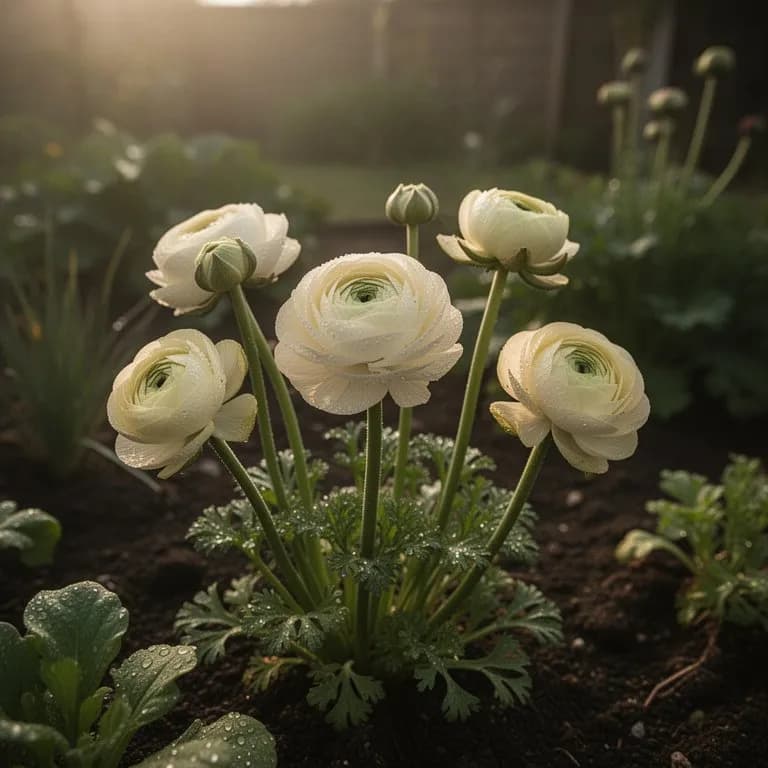
Ranunculus are among the most prized cut flowers, lasting 7-10 days in a vase with proper care
In zones 7-11, tubers can remain in the ground year-round if soil drainage is excellent. In colder zones, dig tubers after foliage yellows completely, brush off soil, and cure in a dry, shaded area for a week. Store in paper bags with dry peat moss or vermiculite at 50-55°F (10-13°C). Check monthly for rot and discard any soft tubers. Re-soak before replanting the following season.
Plan your garden with ease
Love growing Ranunculus? Use our free garden planner to design your beds, track planting dates, and get personalized care reminders.
Nutritional Info
Per 100g serving
0
Calories
Health Benefits
- WARNING: Ranunculus asiaticus is TOXIC and must never be consumed. All parts of the plant contain protoanemonin, a potent irritant that causes severe blistering of the mouth, throat, and digestive tract if ingested.
- Protoanemonin is released when plant tissue is crushed or chewed, causing immediate burning pain and inflammation of mucous membranes — contact a poison control center immediately if any part is swallowed.
- Skin contact with fresh sap can cause contact dermatitis, redness, and blistering in sensitive individuals — always wear gloves when handling fresh stems and foliage.
- The toxin protoanemonin is unstable and breaks down into the less harmful anemonin when the plant is dried, which is why dried ranunculus in herbarium specimens or potpourri is considered low risk.
- Ranunculus is listed as toxic to cats, dogs, horses, and other livestock by the ASPCA and veterinary toxicology references — keep corms and plants away from pets and grazing animals.
- Despite its toxicity, some Ranunculus species were used in traditional folk medicine as external counter-irritant poultices — this practice is dangerous and no longer recommended by any modern medical authority.
💰 Why Grow Your Own?
Ranunculus are among the most expensive cut flowers at retail, typically selling for $4-8 per stem at florists and $12-25 per bunch at farmers markets. A single $0.50-1.00 corm can produce 10-35 stems over a 4-6 week season, representing a potential savings of $40-200 per corm compared to buying equivalent stems at retail. For a wedding requiring 200 stems, growing your own ranunculus from 15-20 corms ($15-20 total) could save $600-1,400 versus purchasing from a florist. Corms also multiply through offsets each year, so your investment grows — a starting stock of 50 corms can become 150-200 within two to three seasons at no additional cost.
Quick Recipes
Simple recipes using fresh Ranunculus
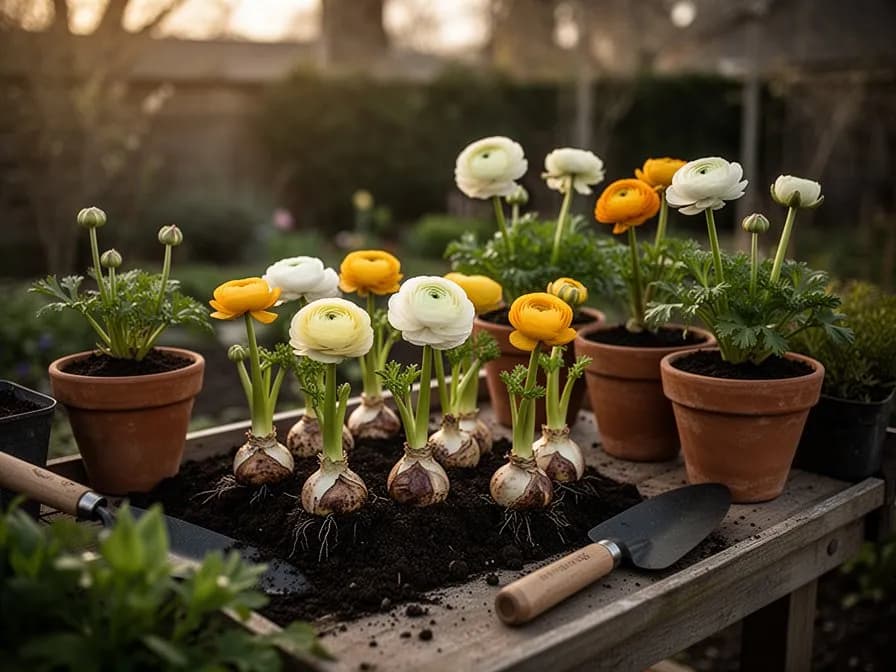
Classic Ranunculus Bridal Bouquet
25 minutesA lush, romantic hand-tied bouquet featuring ranunculus as the star bloom, complemented by eucalyptus and dusty miller for texture. This design showcases the layered petal structure of ranunculus at its best and stays fresh through a full wedding day when properly conditioned.
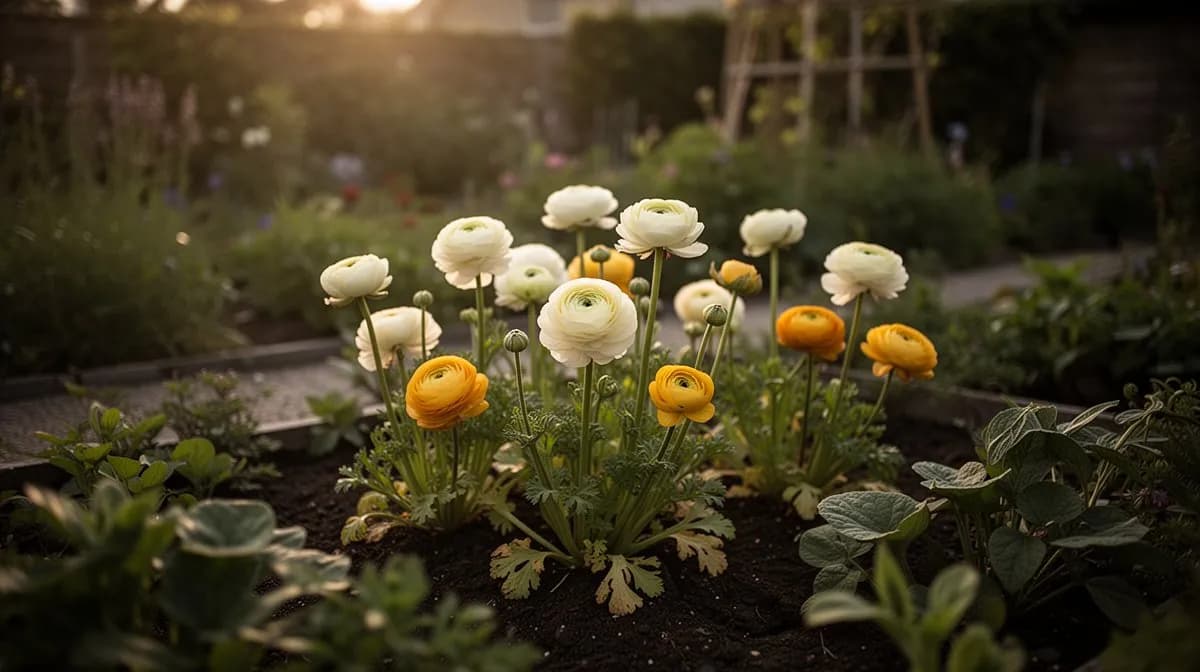
Spring Garden Ranunculus Container Display
30 minutesA vibrant mixed container planting combining ranunculus with cool-season companions for a long-lasting spring display on a patio or doorstep. The combination provides color from early spring through late spring as each plant reaches its peak at slightly different times.
Dried Ranunculus Petal Confetti
5 minutes active + 3-5 days dryingDelicate, naturally colorful petal confetti made from spent ranunculus blooms. The tissue-thin petals dry beautifully and retain much of their color, making them ideal for eco-friendly wedding confetti, craft projects, or decorative potpourri. Note: protoanemonin degrades during drying, making dried petals low-risk, but they are still not edible.
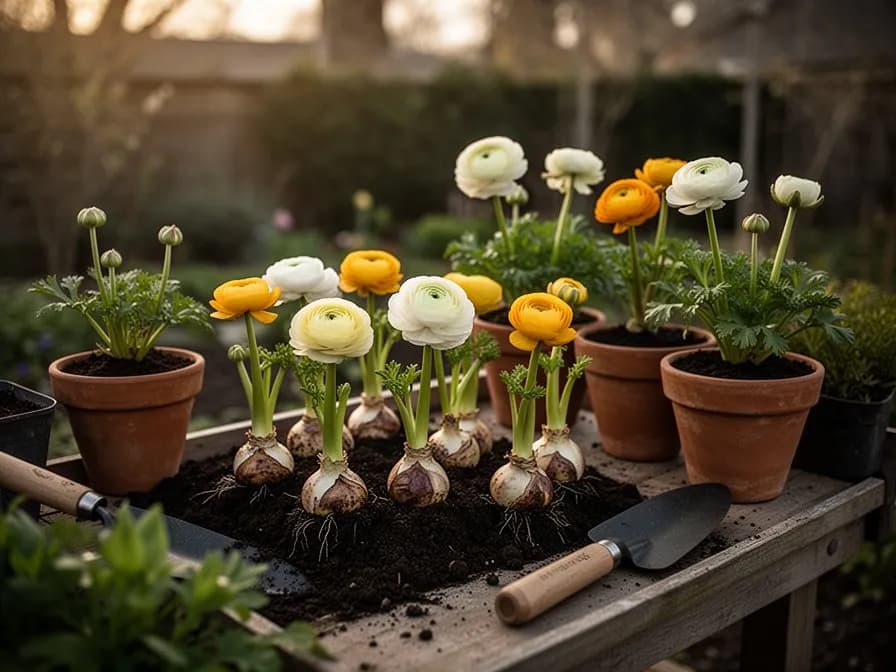
The rose-like form and vivid palette of ranunculus make them a favorite for wedding and event floristry
Yield & Spacing Calculator
See how many Ranunculus plants fit in your garden bed based on the recommended 15cm spacing.
64
Ranunculus plants in a 4×4 ft bed
8 columns × 8 rows at 15cm spacing
Popular Varieties
Some of the most popular ranunculus varieties for home gardeners, each with unique characteristics.
Ranunculus 'Picotee'
White flowers edged in delicate pink or rose, giving each bloom a hand-painted appearance. A florist favorite.
Ranunculus 'Champagne'
Soft blush-pink flowers with a vintage, romantic quality. The petals have a subtle shimmer in sunlight.
Ranunculus 'Café au Lait'
Creamy caramel flowers with peach undertones. Pairs beautifully with dahlias in warm-toned arrangements.
Ranunculus 'Amandine' series
Tightly petaled, rose-like blooms in a wide color range. More heat-tolerant than standard varieties with longer stems.
Ranunculus 'Cloni Success' series
Italian-bred for uniformity and productivity, producing high yields of large, fully double flowers on strong stems.
When should I plant Ranunculus?
Plant Ranunculus in October, November, February, March. It takes approximately 90 days to reach maturity, with harvest typically in April, May, June.
What are good companion plants for Ranunculus?
Ranunculus grows well alongside Anemone (De Caen), Tulip, Daffodil. Companion planting can improve growth, flavor, and natural pest control.
What hardiness zones can Ranunculus grow in?
Ranunculus thrives in USDA hardiness zones 7 through 11. With greenhouse protection, it may be grown in zones 5 through 12.
How much sun does Ranunculus need?
Ranunculus requires Full Sun (6-8h+). This means at least 6-8 hours of direct sunlight daily.
How far apart should I space Ranunculus?
Space Ranunculus plants 15cm (6 inches) apart for optimal growth and air circulation.
What pests and diseases affect Ranunculus?
Common issues include Aphids, Botrytis Blight, Tuber Rot. Prevention through good garden practices like crop rotation, proper spacing, and companion planting is the best approach. See the detailed pests and diseases section above for symptoms, prevention, and treatment for each.
How do I store Ranunculus after harvest?
In zones 7-11, tubers can remain in the ground year-round if soil drainage is excellent. In colder zones, dig tubers after foliage yellows completely, brush off soil, and cure in a dry, shaded area for a week. Store in paper bags with dry peat moss or vermiculite at 50-55°F (10-13°C). Check monthly ...
What are the best Ranunculus varieties to grow?
Popular varieties include Ranunculus 'Picotee', Ranunculus 'Champagne', Ranunculus 'Café au Lait', Ranunculus 'Amandine' series, Ranunculus 'Cloni Success' series. Each has unique characteristics suited to different growing conditions and culinary preferences. See the varieties section above for detailed descriptions.
What soil does Ranunculus need?
Ranunculus need rich, well-drained soil with a pH of 6.0-6.5. Amend planting beds with compost and a slow-release balanced fertilizer before planting. In heavy clay, grow in raised beds or containers with a mix of compost, perlite, and garden soil. Feed every two weeks with a liquid fertilizer high ...
Are ranunculus poisonous to people and pets?
Yes. All parts of Ranunculus asiaticus contain protoanemonin, a toxic compound that causes severe irritation, blistering, and inflammation if ingested or if fresh sap contacts skin or mucous membranes. The ASPCA lists ranunculus as toxic to cats, dogs, and horses. Always wear gloves when handling fresh stems and keep corms and plants out of reach of children and animals. If ingestion occurs, contact a poison control center or veterinarian immediately.
Can I leave ranunculus corms in the ground year-round?
In USDA zones 8-10 with excellent soil drainage, corms can overwinter in the ground successfully. However, in areas with wet winters or heavy clay soil, corms are far more likely to rot than to freeze. In zones 7 and colder, corms must be dug after foliage dies back, cured, and stored indoors over winter. Even in mild climates, many experienced growers dig and replant annually for the strongest performance.
Why are my ranunculus corms rotting before they sprout?
The most common causes are oversoaking (more than 6 hours), waterlogged soil, planting too deep (deeper than 5 cm), or cold wet conditions after planting. Ensure your soil drains freely — water should never pool around corms. Adding perlite or coarse sand to the planting hole improves drainage. Pre-sprouting in damp (not wet) potting mix in cell trays indoors gives you more control over moisture levels during the critical rooting stage.
How do I get the most stems from each ranunculus corm?
Start with the largest corms you can find (grade 6-7 or larger). Pre-sprout indoors for a 2-3 week head start. Provide consistently cool temperatures (7-18°C), regular feeding with balanced fertilizer every two weeks, and cut blooms frequently — cutting the primary stem encourages the plant to push secondary and tertiary flower stems from lower nodes. Avoid heat stress, which triggers early dormancy and cuts the bloom season short.
When is the best time to plant ranunculus corms?
Timing depends on your climate. In mild-winter areas (zones 8-10), plant in October through November for blooms from February to April. In cold-winter areas (zones 4-7), pre-sprout corms indoors in February or March and transplant outdoors after the last hard frost, or direct-plant corms outdoors in April. The key is that ranunculus need 8-12 weeks of cool (7-18°C) growing conditions to produce quality stems before warm weather triggers dormancy.
Can I grow ranunculus from seed instead of corms?
Technically yes, but it is rarely practical for home gardeners. Ranunculus seeds are tiny, require light for germination, take 14-21 days to sprout at 10-15°C, and seedlings grow very slowly — expect 9-12 months from seed to first flower. Commercial growers almost exclusively use corms because they bloom in 60-90 days from planting and produce far more stems. For home gardens, purchasing corms is more reliable and cost-effective.
Ready to Grow Ranunculus?
Add Ranunculus to your garden plan and start designing your perfect layout.

Vladimir Kusnezow
Gardener and Software Developer
Zone 6b gardener. Growing vegetables and fruits in soil and hydroponics for 6 years. I built PlotMyGarden to plan my own gardens.
Jump to Section