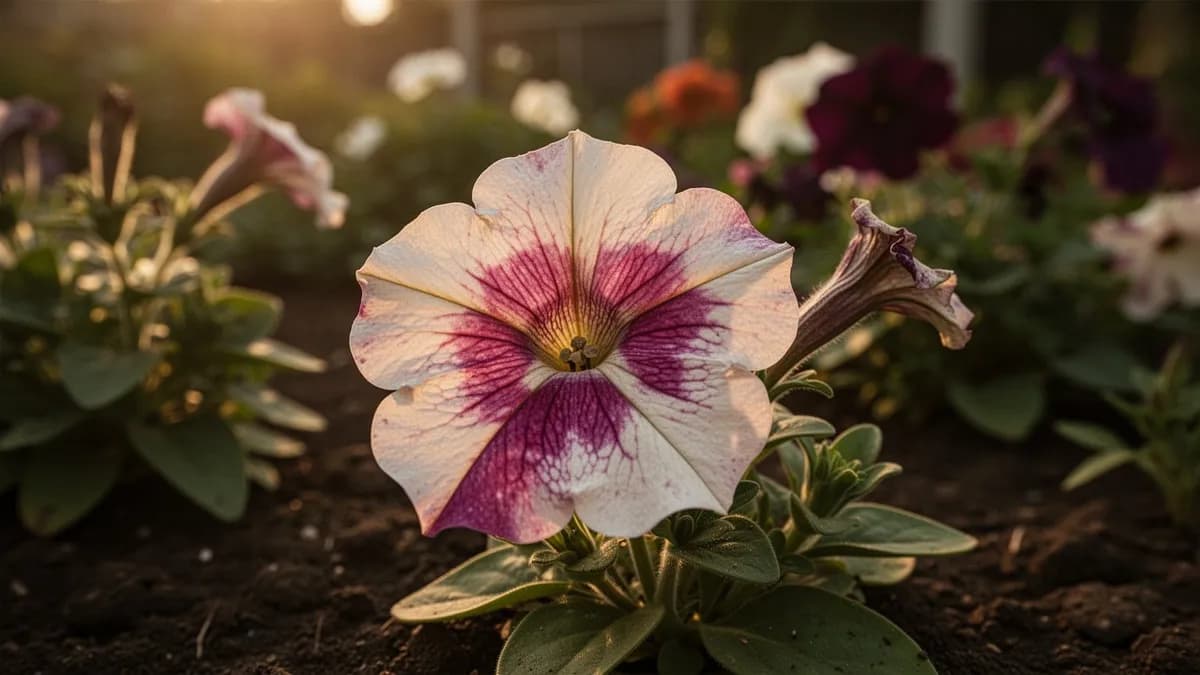
Petunia
Petunia x hybrida
At a Glance
It's planting season for Petunia! Start planning your garden now.
A prolific annual bedding plant with trumpet-shaped flowers in nearly every color, perfect for containers and borders. Petunias prefer full sun and well-drained soil, and benefit from regular feeding with a balanced liquid fertilizer every two weeks during the growing season. Deadhead spent blooms and cut back leggy stems by half in midsummer to stimulate a fresh flush of flowers. Spreading and trailing types are excellent for hanging baskets and window boxes, while grandiflora varieties produce the largest individual blooms.
Planting & Harvest Calendar
Growth Stages
From Seed to Harvest
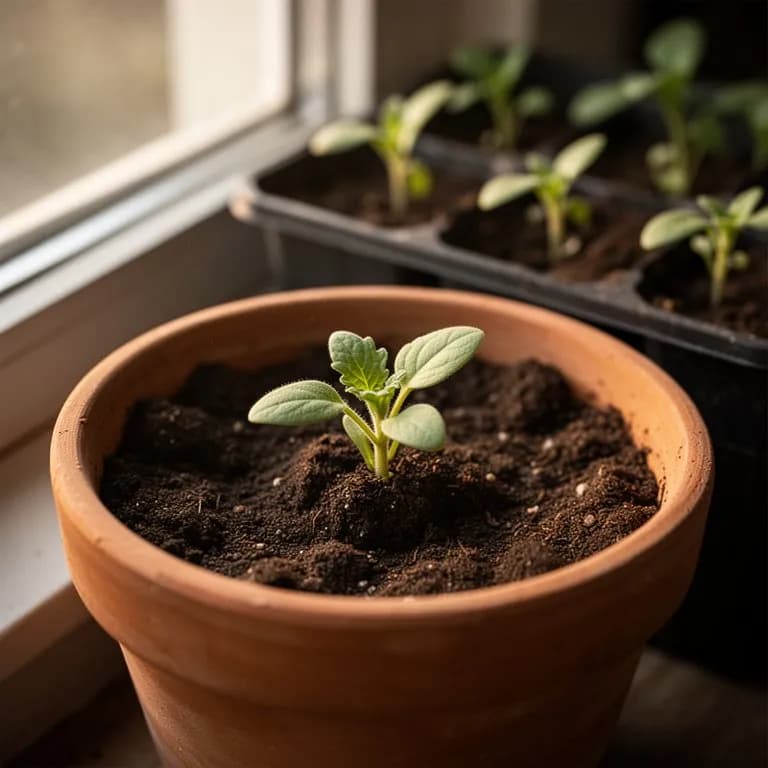
Seed Sowing
Days 0–10
Petunia seeds are extremely small, almost dust-like, and require light to germinate. They should be surface-sown on fine, moist seed-starting mix without being covered. Germination occurs best at temperatures between 22-26°C (72-78°F) with consistent moisture and bright indirect light.
💡 Care Tip
Do not cover seeds with soil as they need light to germinate. Mist the surface gently with a spray bottle to avoid displacing the tiny seeds. Cover the tray with clear plastic wrap or a humidity dome to maintain consistent moisture levels until sprouts appear.
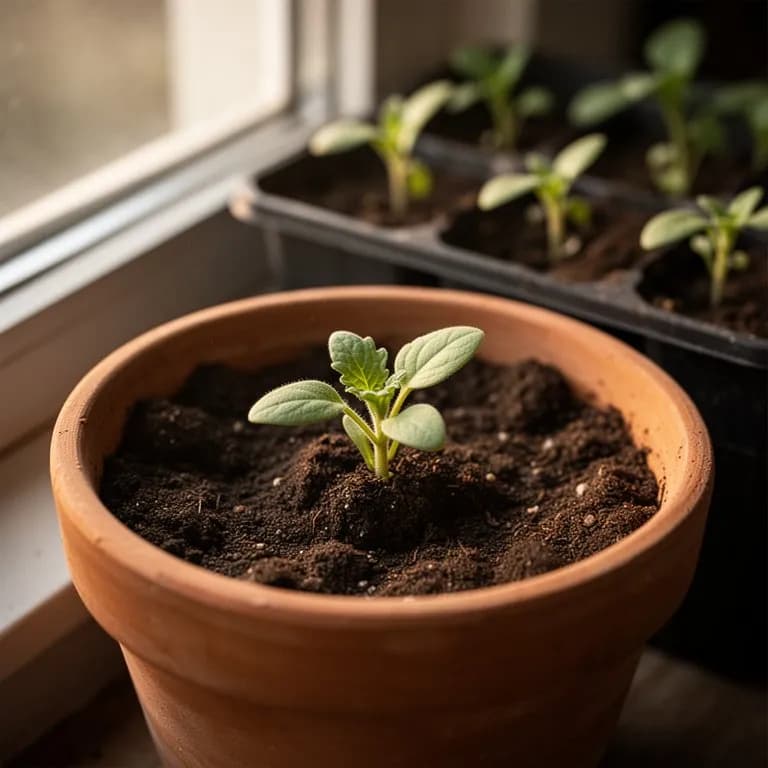
Petunia seedlings developing their first true leaves about two weeks after germination
Monthly Care Calendar
What to do each month for your Petunia
May
You are herePlant out remaining transplants and purchased starts. Water deeply and consistently as plants establish. Begin weekly liquid feeding with a balanced fertilizer. Deadhead spent blooms regularly to promote continuous flowering.
Did You Know?
Fascinating facts about Petunia
Petunias belong to the Solanaceae family, making them relatives of tomatoes, peppers, potatoes, and tobacco, which explains the slightly sticky, fuzzy texture of their leaves and stems.
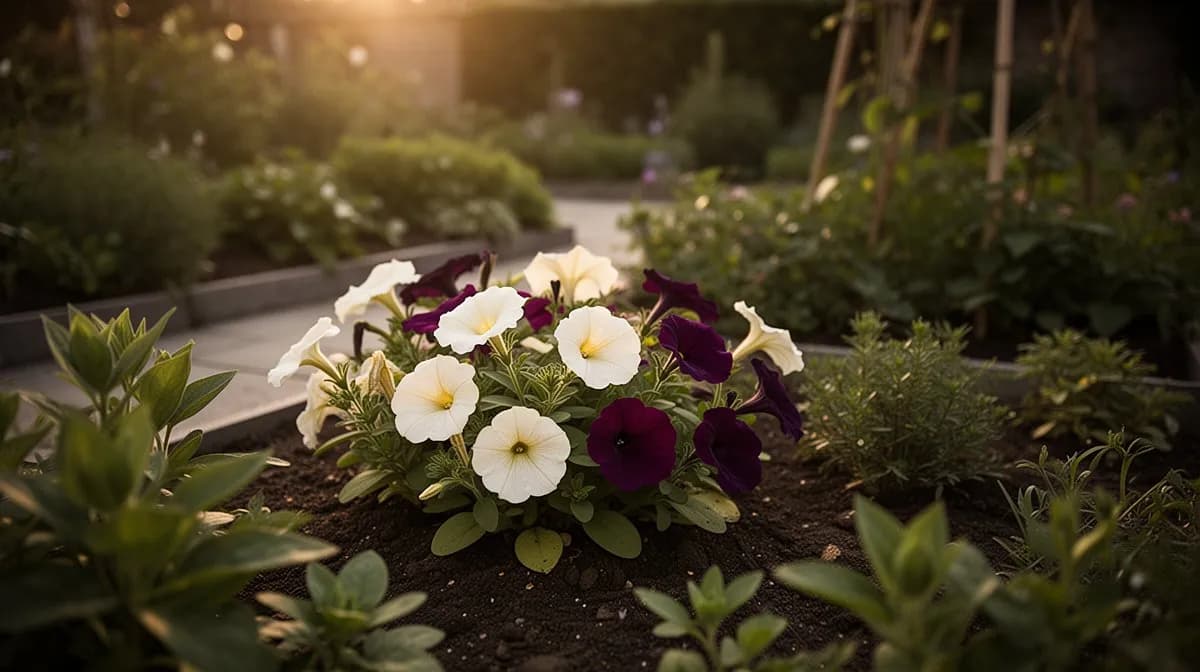
Trailing petunias creating a spectacular display in a large patio container planting
Purchase transplants or start seeds indoors ten to twelve weeks before the last frost date. Petunia seeds are extremely fine and need light to germinate, so press them onto the surface of moist seed-starting mix without covering. Maintain consistent moisture and a temperature of 70 to 75 degrees Fahrenheit for germination in seven to ten days. Transplant hardened-off seedlings outdoors after all danger of frost has passed.
Plant in full sun in well-drained, fertile soil or high-quality potting mix for containers. Space plants twelve inches apart in beds or use three to five plants per twelve-inch hanging basket. Petunias are heavy feeders, especially in containers, and benefit from liquid fertilizer every seven to fourteen days throughout the growing season.
By midsummer, many petunia varieties become leggy and sparse. Rejuvenate them by cutting stems back by half, which stimulates a vigorous flush of new growth and flowers within two weeks. Deadhead spent blooms regularly on grandiflora types, though many modern spreading varieties are self-cleaning. Water at the base when possible, as wet foliage and heavy rain can damage large-flowered types.
Petunias are native to South America, with wild species found primarily in Argentina, Brazil, Uruguay, Paraguay, and Bolivia. The genus Petunia contains approximately 20 recognized wild species that grow in a variety of habitats ranging from coastal dunes to subtropical grasslands and rocky outcrops. The first petunia species collected by European botanists was Petunia axillaris, a white-flowered, sweetly fragrant species discovered in Argentina and Uruguay in the early 1800s. Shortly afterward, Petunia integrifolia, a smaller purple-flowered species, was collected from southern Brazil. Both species were sent to European botanical gardens, where breeders quickly recognized their ornamental potential. By the 1830s and 1840s, European horticulturists had begun crossing these two species, producing the first hybrid petunias that displayed a remarkable range of colors and flower forms far exceeding what either parent species could offer. The resulting Petunia x hybrida became one of the most commercially important bedding plants in the world. Throughout the 20th century, intensive breeding programs in the United States, Japan, and Europe produced thousands of cultivars organized into distinct classes: Grandiflora types with large individual blooms, Multiflora types with abundant smaller flowers and superior weather tolerance, Milliflora types with compact growth and miniature blooms, and the groundbreaking spreading or Wave types introduced in the 1990s that could cover large areas without pinching. The introduction of vegetatively propagated varieties like Supertunia and Surfinia further expanded the palette of available colors, patterns, and growth habits while improving garden performance.
Petunia seeds are dust-like and require light for germination. Sow on the surface of moist, fine seed-starting mix ten to twelve weeks before the last frost. Do not cover with soil. Mist gently and cover trays with clear plastic to maintain humidity. Seeds germinate in seven to ten days at 70 to 75 degrees Fahrenheit. Transplant seedlings into individual pots when they develop two true leaves. Pinch the growing tip when seedlings have six to eight leaves to encourage branching. Harden off before transplanting outdoors after the last frost.
Petunias thrive in fertile, well-drained soil with a pH of 6.0 to 7.0. In containers, use a premium potting mix with good drainage and moisture retention. Feed container petunias weekly with a water-soluble balanced fertilizer at half strength, or every two weeks at full strength. In-ground petunias benefit from a slow-release granular fertilizer worked into the soil at planting and supplemental liquid feeding monthly. Iron deficiency causes yellowing leaves and is corrected with chelated iron applications.
Check Your Zone
See if Petunia is suitable for your location.
10°C – 30°C
50°F – 86°F
Petunias thrive in warm conditions between 16-24°C (60-75°F) during the day and tolerate nighttime temperatures down to 10°C (50°F). They perform best with warm days and slightly cooler nights. Growth slows significantly below 10°C and plants suffer heat stress above 35°C. Petunias are frost-tender annuals and will be killed by temperatures below 0°C. In regions with very hot summers, they may benefit from light afternoon shade to prevent bloom fading and heat exhaustion.
Common issues affecting Petunia and how to prevent and treat them organically.
Leggy, sparse growth by midsummer is the most common complaint and is resolved by cutting plants back by half to stimulate fresh growth. Tobacco budworm is particularly damaging because the caterpillars feed inside closed buds where sprays cannot reach them. Grandiflora types with large flowers are easily damaged by heavy rain and wind, making them less suitable for exposed locations. Petunias in containers dry out quickly in hot weather and may need daily watering during heat waves.
Petunias complement a wide range of container and bedding companions. Pair trailing varieties with upright plants like salvia, angelonia, and ornamental grasses for contrast in mixed containers. In the vegetable garden, petunias attract hummingbirds and beneficial insects while their sticky stems trap small pest insects. Their fragrance is said to repel certain garden pests including aphids, tomato hornworms, and squash bugs when planted nearby.
Petunias grown near squash and beans to attract pollinators and repel certain garden pests
- 1Start petunia seeds indoors 10-12 weeks before your last frost date, as they have a long lead time from germination to flowering and benefit greatly from an early indoor start.
- 2Surface-sow petunia seeds without covering them, as they require light to germinate. Press seeds gently onto moist seed-starting mix and cover the tray with clear plastic to maintain humidity.
- 3Pinch young petunia plants when they reach 15 cm tall by removing the top growth just above a leaf node. This encourages branching and results in fuller, bushier plants with many more flower stems.
- 4Water petunias at the base of the plant rather than overhead to keep foliage dry and reduce the risk of botrytis blight, powdery mildew, and other fungal diseases that thrive on wet leaves.
- 5Feed petunias weekly with a water-soluble balanced fertilizer during the growing season, as they are heavy feeders that require consistent nutrition to sustain their prolific blooming habit.
- 6Deadhead spent petunia flowers regularly by pinching off the faded bloom along with the developing seed pod behind it. This redirects the plant's energy from seed production into producing new flowers.
- 7Cut back leggy petunias by one-third to one-half in midsummer when they become sparse and stretched. Apply fertilizer after pruning and new growth with fresh buds will emerge within two weeks.
- 8Choose the right petunia class for your purpose: Grandiflora for large statement blooms in sheltered containers, Multiflora for weather-resistant mass plantings, and spreading types for ground cover and hanging baskets.
- 9Protect petunias from tobacco budworm caterpillars, their most destructive pest, by inspecting buds regularly for small holes and applying Bacillus thuringiensis (Bt) spray at the first sign of damage.
- 10Improve container drainage by using a high-quality potting mix with perlite and ensuring pots have adequate drainage holes. Petunias dislike waterlogged roots and are prone to root rot in poorly drained conditions.
Petunias are primarily garden display flowers rather than cut flowers, as individual blooms are short-lived in arrangements. However, small bouquets can be made by cutting stems in the morning with several buds about to open. Deadhead regularly by pinching off spent blooms and their developing seed pods to redirect energy into new flower production. For seed saving, allow a few flowers to develop seed pods and collect when they turn brown and begin to split open.
Fresh petunia stems last only two to three days in a vase, making them impractical as cut flowers. Their beauty is best enjoyed in the garden or container. Petunia flowers can be pressed between parchment paper for botanical crafts, retaining their color reasonably well. Trailing petunia varieties can be brought indoors before frost, cut back, and grown as houseplants on a sunny windowsill through winter, then returned outdoors the following spring.
Plan your garden with ease
Love growing Petunia? Use our free garden planner to design your beds, track planting dates, and get personalized care reminders.
Nutritional Info
Per 100g serving
0
Calories
Health Benefits
- Petunias are grown as ornamental plants and are not cultivated for human consumption.
- While petunia flowers are technically non-toxic and occasionally used as edible garnishes, they have no significant nutritional value.
- Some petunia flowers are used in specialty culinary presentations for color, but they contribute negligible calories or nutrients.
- The primary value of petunias is aesthetic, ecological, and horticultural rather than nutritional.
- Petunias attract pollinators including hummingbirds and hawk moths, supporting garden biodiversity indirectly.
💰 Why Grow Your Own?
Growing petunias from seed costs as little as $2-4 per packet, yielding 50-100 plants that would cost $3-5 each as nursery transplants. A single $3 seed packet can produce $150-500 worth of plants, making seed starting an exceptional value. Even purchasing transplants, petunias provide months of continuous color for a one-time investment, replacing the need for costly cut flower arrangements throughout the growing season.
Quick Recipes
Simple recipes using fresh Petunia
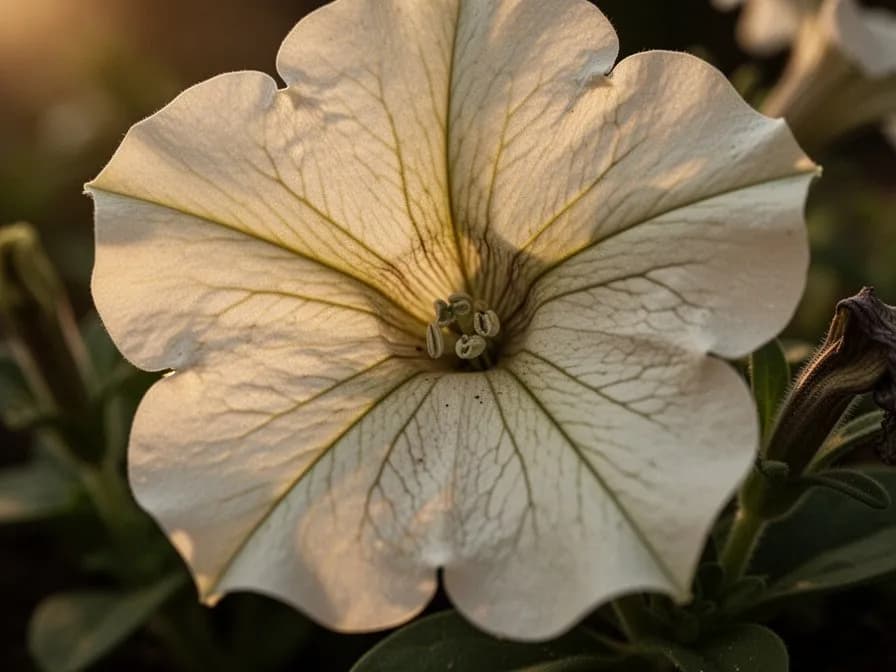
Candied Petunia Blossoms
30 minutes plus drying timeDelicate petunia flowers preserved with a light sugar coating, perfect as edible decorations for cakes, cupcakes, and dessert platters. The flowers retain their vibrant color and add an elegant touch to special occasion treats.
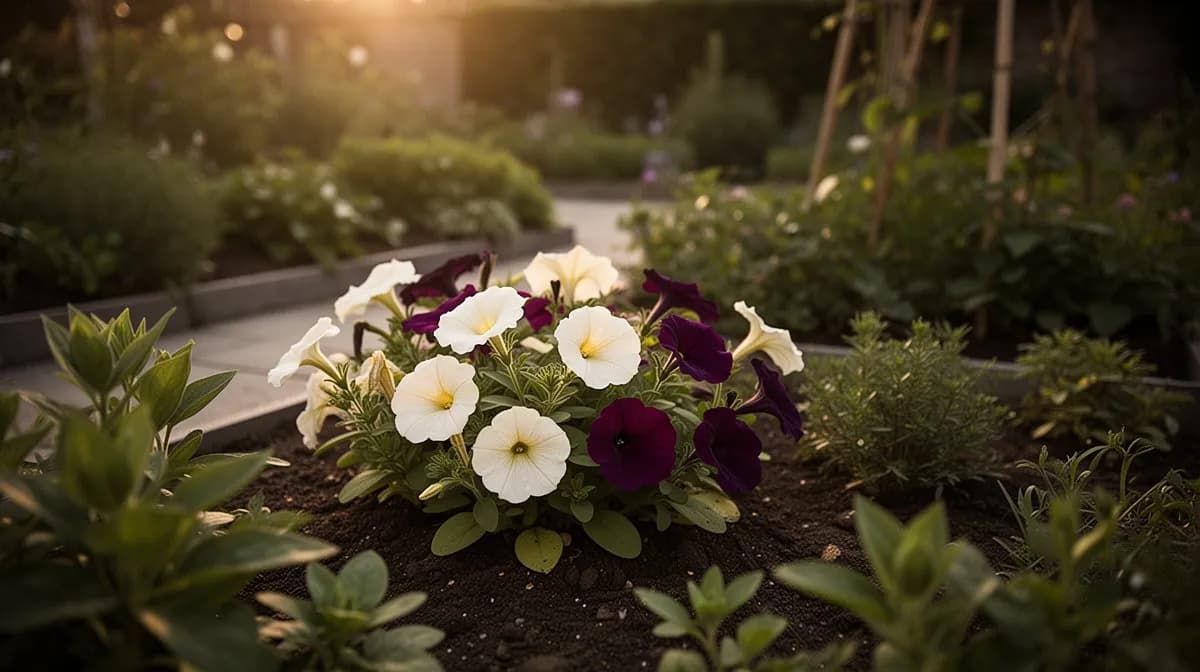
Petunia Flower Ice Cubes
15 minutes plus freezing timeBeautiful frozen cubes featuring whole petunia blossoms suspended in clear ice, ideal for adding a floral touch to lemonade, punch, or sparkling water at garden parties and summer gatherings.
Petunia Potpourri Sachets
20 minutes plus 2 weeks dryingFragrant dried petunia petals combined with complementary botanicals to create lovely scented sachets for drawers, closets, and gift giving. A wonderful way to preserve the beauty and light fragrance of your garden petunias.
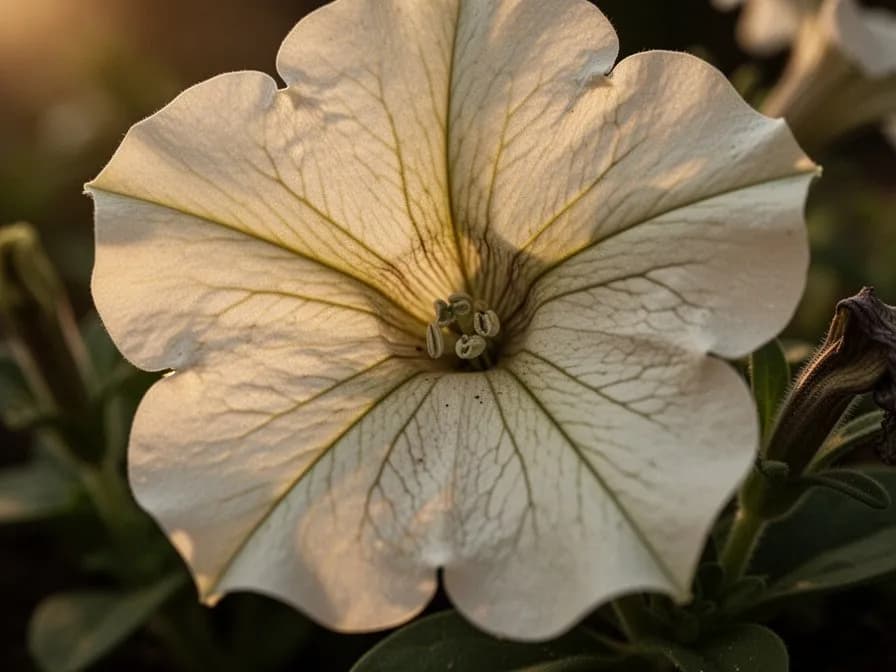
Deadheading petunias by pinching off faded flowers to promote continuous blooming throughout the season
Yield & Spacing Calculator
See how many Petunia plants fit in your garden bed based on the recommended 30cm spacing.
16
Petunia plants in a 4×4 ft bed
4 columns × 4 rows at 30cm spacing
Popular Varieties
Some of the most popular petunia varieties for home gardeners, each with unique characteristics.
Wave Series
Groundbreaking spreading petunias that trail up to four feet, covering ground or spilling from hanging baskets. Vigorous, weather-tolerant, and available in many colors.
Supertunia Vista Bubblegum
A vigorous spreading variety with bright pink flowers that can cover a four-foot area from a single plant. Excellent heat tolerance and self-cleaning habit.
Night Sky
A unique variety with deep purple flowers speckled with white spots that resemble a starry night sky. Pattern varies with temperature, becoming more speckled in cool weather.
Surfinia Series
The original trailing petunia series with vigorous growth and prolific blooming. Self-cleaning and weather-resistant, ideal for hanging baskets and window boxes.
Prism Sunshine
A grandiflora type with large, clear yellow flowers, an unusual color in petunias. Compact growth habit suitable for containers and border fronts.
Popular petunia types: Grandiflora for large blooms, Multiflora for abundant flowers, and Wave for ground cover
When should I plant Petunia?
Plant Petunia in April, May. It takes approximately 60 days to reach maturity, with harvest typically in May, June, July, August, September, October.
What are good companion plants for Petunia?
Petunia grows well alongside Marigold, Zinnia, Geranium. Companion planting can improve growth, flavor, and natural pest control.
What hardiness zones can Petunia grow in?
Petunia thrives in USDA hardiness zones 9 through 12. With greenhouse protection, it may be grown in zones 7 through 13.
How much sun does Petunia need?
Petunia requires Full Sun (6-8h+). This means at least 6-8 hours of direct sunlight daily.
How far apart should I space Petunia?
Space Petunia plants 30cm (12 inches) apart for optimal growth and air circulation.
What pests and diseases affect Petunia?
Common issues include Tobacco Budworm, Botrytis Blight, Aphids, Root Rot (Phytophthora). Prevention through good garden practices like crop rotation, proper spacing, and companion planting is the best approach. See the detailed pests and diseases section above for symptoms, prevention, and treatment for each.
How do I store Petunia after harvest?
Fresh petunia stems last only two to three days in a vase, making them impractical as cut flowers. Their beauty is best enjoyed in the garden or container. Petunia flowers can be pressed between parchment paper for botanical crafts, retaining their color reasonably well. Trailing petunia varieties c...
What are the best Petunia varieties to grow?
Popular varieties include Wave Series, Supertunia Vista Bubblegum, Night Sky, Surfinia Series, Prism Sunshine. Each has unique characteristics suited to different growing conditions and culinary preferences. See the varieties section above for detailed descriptions.
What soil does Petunia need?
Petunias thrive in fertile, well-drained soil with a pH of 6.0 to 7.0. In containers, use a premium potting mix with good drainage and moisture retention. Feed container petunias weekly with a water-soluble balanced fertilizer at half strength, or every two weeks at full strength. In-ground petunias...
Why are my petunia flowers getting smaller as the season progresses?
Declining flower size typically indicates nutrient depletion or the plant putting energy into seed production. Increase your fertilizing frequency to weekly applications of a balanced water-soluble fertilizer, deadhead all spent blooms consistently, and perform a mid-season cutback to stimulate vigorous new growth with full-sized flowers.
Can petunias survive frost or be grown as perennials?
Petunias are tender annuals that cannot survive frost and will be killed by temperatures below 0°C (32°F). In USDA zones 10-11, they may behave as short-lived perennials, but in most climates they are replanted each spring. You can take stem cuttings in early fall and root them indoors to overwinter favorite plants on a sunny windowsill.
Why are my petunia stems getting long and leggy with few flowers?
Leggy growth is usually caused by insufficient light, inadequate pinching during early growth, or the natural tendency of petunias to stretch by midsummer. The best remedy is to cut the stems back by one-third to one-half, fertilize after pruning, and ensure the plants receive at least 6 hours of direct sunlight daily. New compact growth will emerge within 10-14 days.
How often should I water petunias in containers and hanging baskets?
Container petunias typically need watering once daily during warm weather and twice daily during hot spells above 30°C (86°F). Check soil moisture by inserting your finger 2-3 cm into the potting mix; water thoroughly when it feels dry. Hanging baskets dry out faster than ground-level containers and may need more frequent attention. Always water until it drains from the bottom holes.
What is the difference between grandiflora, multiflora, and spreading petunias?
Grandiflora petunias produce the largest flowers at 10-12 cm across but are more susceptible to rain damage and produce fewer blooms overall. Multiflora petunias bear smaller 5-7 cm flowers in much greater numbers and handle wet weather better. Spreading or Wave-type petunias grow low and wide, covering large areas with medium-sized flowers and requiring minimal deadheading, making them ideal for ground cover and hanging baskets.
Are petunias safe around pets and children?
Yes, petunias are considered non-toxic to dogs, cats, horses, and humans by the ASPCA and most poison control resources. They are one of the safest ornamental flowers to plant in family and pet-friendly gardens. However, petunias treated with pesticides or systemic insecticides should still be kept away from pets and children until any specified safety intervals have passed.
Ready to Grow Petunia?
Add Petunia to your garden plan and start designing your perfect layout.

Vladimir Kusnezow
Gardener and Software Developer
Zone 6b gardener. Growing vegetables and fruits in soil and hydroponics for 6 years. I built PlotMyGarden to plan my own gardens.
Jump to Section